What is the difference between engine torque and power
Everyone knows it: the performance of a particular car is often measured only in horsepower. The question of power is usually the first one asked when discussing the actual power of a vehicle. Young drivers, in particular, like to show off power figures and think that the vehicle with the most power under the hood also surpasses all others in terms of acceleration and performance. Is that really the case? Because there is also torque, which should not be overlooked. So, if you really want to compare engines with each other, you must not only pay attention to the number of horses in your vehicle but also take into consideration the factors of speed and torque.
WHAT EXACTLY IS TORQUE?
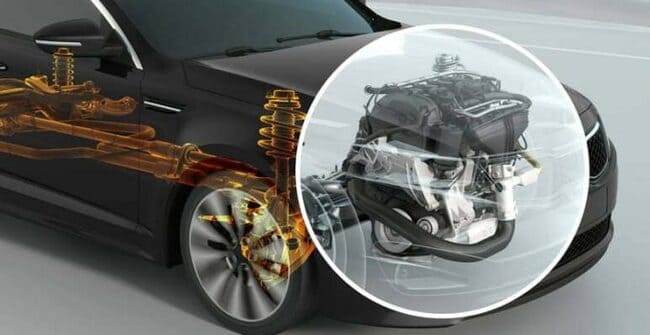
We must first address the question of what we are actually dealing with when we use the term “torque.” It describes the rotational equivalent of force. This force accelerates things, and torque sets them in motion. Torque is therefore composed of the actual force and the lever arm, which can set things in motion, but the time factor must not be overlooked here either. In terms of the engine, torque indicates how quickly the engine responds to the accelerator pedal. Modern engines must deliver as much torque as possible in the lower speed range as well as a “wide” speed range. The torque curve of the 1.4L TSI Twincharger engine meets these requirements: high torque from low RPMs (250 Nm at 1,500 rpm) and a constant curve up to high RPMs (up to 4,500 rpm).
Torque describes the effect of a force on a body. However, this force does not act directly on the body but in a rotational movement. In a car engine, the amount of torque is the effect of the combustion pressure on the piston, which in turn sets the crankshaft in motion. The torque of an engine is mainly influenced by the piston displacement. But it is the interaction of torque and speed that gives the engine its actual power. The engine speed indicates the revolutions of the crankshaft per minute. In an internal combustion engine for cars, it is between 500 and 900 revolutions per minute.
PETROL OR DIESEL, WHICH HAS MORE TORQUE?
In general, most people know that a diesel car has more to offer in terms of torque than a petrol car. Because as a compression-ignition engine, which a diesel vehicle is after all, the torque is always greater, even if the displacement is the same. This naturally also results in faster acceleration. Another reason for this is the special design of a diesel engine where the cylinders are rather narrow and tall. It can also be noted that the combustion pressure that builds up is higher. This, of course, also has a positive effect on torque.
TURBOCHARGED ENGINES – WHERE DOES ALL THAT POWER COME FROM?
Supercharging allows for increasing the power of the internal combustion engine. During the intake phase, the engine is supplied with air by a compressor, which is itself driven by a turbine powered by the energy of the exhaust gases. So, it can be said that a turbocharger brings a power increase for the same displacement. Furthermore, a turbocharger can also be useful for achieving a specific engine performance with a lightweight engine. A vehicle with a turbo engine is particularly popular with drivers of towing vehicles. Indeed, high torque at low RPM can bring significant advantages when towing a trailer.
WILL PETROL ENGINES BE LEFT IN THE DUST?
Definitely not. Although a petrol engine without a turbocharger has lower torque at low RPM, it can still deliver the same power. However, this requires high engine speeds, in which case a petrol engine can also achieve quite good acceleration. And then there are also modern petrol engines that have a turbocharger and thus compensate for this disadvantage, as then the high RPMs can also be eliminated. So, if the question is how fast your vehicle can accelerate from 0 to 100 km/h, a power comparison should be preferred over a torque comparison.
WHICH VEHICLES ARE POPULAR TODAY?
Today, people want vehicles that are flexible and can be driven with high torque even at low RPM, but can also be driven quite fuel-efficiently at low RPM. Because when it comes to performance parameters, they are only essential when high acceleration and top speed are absolute priorities. For a few drivers, this may be the priority, but in general, fast acceleration or top speed is usually impossible to achieve in practice. Nevertheless, performance parameters remain important factors when comparing vehicles.
How to Adjust Headlights: A Simple Step-by-Step Guide
It is undeniable that car headlights are essential for increasing and maintaining visibility while driving. However, if your car’s lights are not aimed in the right direction, they could actually make visibility more difficult for you and other road users. You must ensure that the angle is correct to avoid blinding other drivers and prevent collisions.
Lights often need to be realigned after being replaced, but they can also be affected by simple things such as heavy loads, tire pressure, minor collisions, and worn or damaged components. Even modern adaptive headlights require adjustment from time to time. Fortunately, most car owners will only need to adjust one set of headlights, as adjusting the low beams often resets the high beams.
Some vehicles are also equipped with bubble levels or diaphragms to make this task easier. This way, all you have to do is align the bubble or angle indicator with the reference marks. For vehicles that do not have these alignment features, there are a few additional steps to follow, which are outlined in the guide below. The adjustment process varies depending on the vehicle’s make and model. Therefore, it is advisable to read the manufacturer’s instructions in the vehicle owner’s manual before starting. Different countries will also have different regulations regarding cutoff lines for beams.
SIGNS OF MISALIGNED HEADLIGHTS
If other drivers frequently flash their lights at you when you are driving in the dark, it is probably because they are blinded by your lights or because there is a problem with the bulbs. If the headlights only illuminate 20 feet or less of the road ahead, they are aimed too low. If they are aimed at the ground, this can also cause glare due to reflection from the road, affecting the driver’s view.
TOOLS AND EQUIPMENT
Essential items list:
A measuring tape
Masking tape
A ratchet or screwdriver
A wall or garage door
At least 10 meters of driving space
HOW TO ADJUST HEADLIGHTS
Prepare the vehicle. The first step is to ensure that the tire pressure is correct and your fuel tank should be half full. Make sure to leave the items you normally carry inside your car where they are, including heavy tools and the spare tire, as this weight can change the tilt of your vehicle, affecting the beam angle.
Shake the suspension. To do this, you need to stand at the bumper support or grille support and bounce the vehicle up and down several times to ensure it settles into the correct position.
Park the vehicle. Park it as close as possible to the target wall/door, facing it head-on. It should also be parked on a flat surface. Measure the distance between the headlights and the target. The distance should be the same on both sides.
Turn on the low beams. Note: if you are doing this outside, you will need to wait until it is dark enough so that you can clearly see the headlights. Fog lights and high beams must remain off.
Mark the center lines. Use the tape around the center line of the beams on the wall/door. To mark the horizontal center line, place the first piece of tape directly above the top of the headlight pattern on the driver’s side, then do the same for the other headlight on the other side. Then, you will need to mark the vertical lines. Use the tape to mark the lines going down the center of the lights.
Reverse the vehicle. You will then need to reverse to about 8 meters (or 25 feet) from the target surface in a straight line. You can measure this distance using the measuring tape.
Locate and access the adjustment screws. The location should be specified in the owner’s manual.
Compare the beams with the marks and adjust the lights accordingly. For vertical adjustments, the top of the most intense point of the light beam should be below or aligned with the horizontal center line. You should refer to the vertical line when making horizontal adjustments. In countries with right-hand drive cars, such as the UK, the lights point to the left, while left-hand drive lights point to the right. The direction is important because if the lights are aimed in the wrong direction, it could affect oncoming traffic.
Electric or hybrid – which is best for me
Have you thought about buying a new car? Brand and model have always been the first thing that comes to mind. Nowadays, we have to make another decision. Should I buy an electric or hybrid car? Here are some points to consider to help you make the right decision.
ELECTRIC CARS – ADVANTAGES
The development of electric cars is progressing more and more. Due to their advantages, more and more customers are enthusiastic about electric cars. There are several reasons for this; driving pleasure thanks to powerful acceleration from a complete stop and reduced noise. The main argument for buying an electric car is that it is environmentally friendly. The car becomes a purchase that is both a status symbol and an expression of one’s idealism. Thanks to the electric motor, which does not require combustion, no CO2 or other greenhouse gases are emitted. Even in the overall CO2 balance, which takes into account the entire lifespan of the electric car, it beats normal combustion engines.
The electric motor is also very energy efficient: integrated motors have an efficiency of up to 90%. This means that 90% of the energy input can also be used. This value is only 20 to 40% for combustion engines. Furthermore, electric cars do not consume oil in the form of gasoline or diesel, thus preserving this resource.
THE DISADVANTAGES
The range of electric cars is not yet close to that of diesel and gasoline. Electric cars are still more expensive than combustion engines, and recharging the batteries is not always easy. These are facts that still hinder the sale of electric and plug-in hybrid cars in most countries, but they are on the rise.
Most of the disadvantages of electric cars are due to the current state of technology. The most important cost factor remains the vehicle’s battery. The production of lithium-ion batteries, which are being installed, is not only expensive but also leaves a significant CO2 footprint that weighs on the overall environmental balance of electric cars.
HYBRID CARS – ADVANTAGES
Hybrid cars aim to combine the advantages of combustion engines and electric propulsion. Since an electric motor is already very efficient in the low-speed range, it is particularly well-suited for starting and low speeds. At high speeds, on the other hand, the combustion engine performs better. Most hybrid cars can automatically switch between the two engines or operate both together when it is most efficient.
With the synthesis of the two types of drive, fuel consumption and emissions can be reduced, dynamic driving performance created, and a long range achieved at a reasonable additional cost. The electric motor assists or replaces the combustion engine – especially when it is inefficient – and serves as a performance booster in certain situations.
THE DISADVANTAGES
Even before taking a closer look at a hybrid car, one thing immediately catches your attention: its high price. Many models are now offered in classic internal combustion engines and hybrid versions, and the price difference is often several thousand euros more for the hybrid model. One reason for this is that both electric technology and combustion technology need to be installed.
This brings us to the next disadvantage, weight. Precisely because both systems are installed, the hybrid weighs significantly more than a classic model. The extra weight becomes a problem especially when driving on the highway, as fuel consumption increases sharply here and can even be higher than that of a combustion model. Two systems also mean that more space is needed. The battery has to be stored somewhere, which is usually at the expense of the trunk space. The fuel tank is also smaller, and therefore the fuel is no longer sufficient for long journeys. From an ecological point of view, a hybrid is only cost-effective if you drive it for a long time and especially on short distances and in city traffic.
ELECTRIC OR HYBRID – WHICH IS THE BETTER OPTION?
An electric vehicle consumes up to 50% less energy than a hybrid. Studies show that operating an electric car produces up to 70% fewer greenhouse gases, nitrogen oxides, and particulates than a hybrid car. So, if you are concerned about emissions, you should invest in an electric vehicle.
Top 5 Rated Electric Vehicles in the UK:
Hyundai Ioniq 5 – With high charging speed, numerous assistance systems, and generous interior space, Hyundai is even tackling the electric luxury class.
Kia EV6 – The Kia EV6 is equipped with cutting-edge 800-volt technology and a bold design.
Skoda Enyaq – The Skoda benefits from its rear-wheel drive design, and winding maneuvers are no problem.
Tesla Model 3 – The “base model” of the rear-wheel drive Model 3 is quite impressive. The “Standard Range Plus” version offers 239 kW or 325 hp. Ford Mustang Mach-E – It takes you through everyday life entirely electrically and impresses with its appearance, technology, and performance.
Top 5 Rated Hybrids in the UK:
Toyota Prius – It is still an aerodynamically optimized compact-class sedan.
Renault Captur – The entire powertrain offers agility, very good driving comfort, and enough power for all everyday situations.
Kia Niro PHEV – In terms of connectivity and assistance systems, the crossover is once again state-of-the-art, making it an attractive choice.
Skoda Octavia iV – The vehicle is striking with a lush grille and a touch of luxury inside. BMW 330e – It may not be the most economical plug-in hybrid, but it offers a lot of dynamics with the concentrated power of its drive units.
Causes of interior leaks (water inside your car)
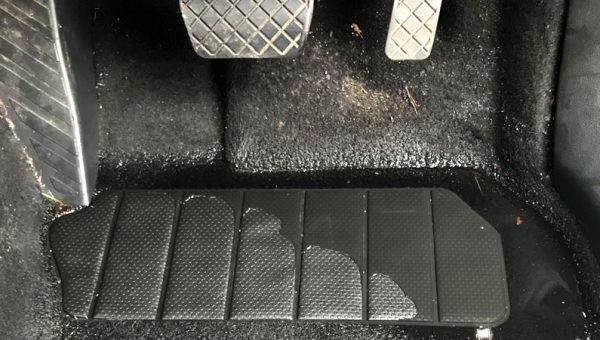
Few things damage a car’s interior faster than water leaks. Water inside your car can cause foul odors of mold and mildew. In extreme cases, mold growth can be harmful to your health.
If you have water leaking into your cabin, don’t wait to fix the problem. Here are some common sources of interior water leaks.
Sources of Interior Water Leaks
1) Convertibles
If you have a soft-top convertible, you know how difficult it can be to keep water out of the car. Water often leaks through the windows into the cabin or through the seal where the top meets the windshield frame (at the top of the A-pillar).
Most convertibles offer several adjustments that allow the top to seal tightly against the windows and A-pillar. If your top doesn’t fit quite right, it may just need a simple adjustment. Punctured soft tops may need to be repaired or replaced.
The adjustment procedure will be different on each car. For example, early Mazda MX-5 Miatas allowed you to adjust the top latches and window height.
2) T-Tops, Removable Hard Tops, and Targa Tops
Similar to soft-top convertibles, T-tops, removable hard tops, and Targa tops all have sealing gaskets around the removable roof. Over time, these gaskets can deteriorate.
When transferring a top from one car to another, you may need to make slight adjustments to the latch tension to keep the top firmly attached to the car. Sometimes, replacing the weatherstripping is necessary.
3) Pressure Washing Past Seals
Pressure washing is a great way to detail a car, provided you use the pressure washer correctly. If you use the pressure washer too close to window seals or weatherstripping, or if you hold the pressure washer in one spot for too long, you risk forcing water inside.
If you’ve accidentally introduced water into the cabin, run the air conditioner for a while. This dries the air and helps remove excess water before it becomes a problem.
4) Sunroof Seals
Sunroofs and moonroofs have the unfortunate task of blocking rain, while being directly exposed to the worst weather 100% of the time.
Since sunroofs sit on top of the car, water must drain through rain rails. If these rails become clogged, you may notice water accumulating inside the car, particularly in the headliner.
While they make special tools to unclog sunroof drains, you might be able to unclog them yourself using a long piece of weed trimmer line and air from an air compressor.
5) Automatic Car Washes
Automatic car washes are convenient, but they aren’t particularly gentle on the car. Some touchless car washes spray water on the car at very high pressure.
After going through an automatic car wash, you might notice that a bit of water has seeped into the cabin. After checking that none of the windows are cracked, you can simply run the air conditioner for a while to dry the wet parts.
If you don’t notice any leaks until after you’ve been through a car wash, it’s probably not a cause for concern and isn’t something that needs to be fixed.
6) Air Conditioning Drain
When you run the air conditioner, condensation forms on the unit as it cools. This condensation needs a place to drain out of the car. Typically, you’ll notice a small puddle of water under the car after running the air conditioning.
When this drain is clogged, the condensation may have nowhere to go but inside the car. You might be able to unclog the drain by placing the drain under the car. Some vehicles will need to be lifted off the ground to give you enough space to do this.
7) Door Weather Stripping and Vapor Barrier
The weather stripping on your doors has two purposes: to eliminate noise, vibration, and harshness (NVH) and to seal out water. This rubber lining is very similar to what you’ll find on the sunroof, hatchback, or convertible top seals.
Doors also contain a vapor barrier behind the door panels. This plastic sheet prevents the door card from getting wet. The vapor barrier is glued to the door using a black sticky substance that sticks to everything (seriously, don’t get it in your hair).
Vapor barriers are often peeled back during aftermarket stereo installations, which weakens the bond between the barrier and the door. If you have a leak in your vapor barrier, you might want to remove the door card and check that you still have a vapor barrier and that it’s properly installed.
8) Windshield Molding
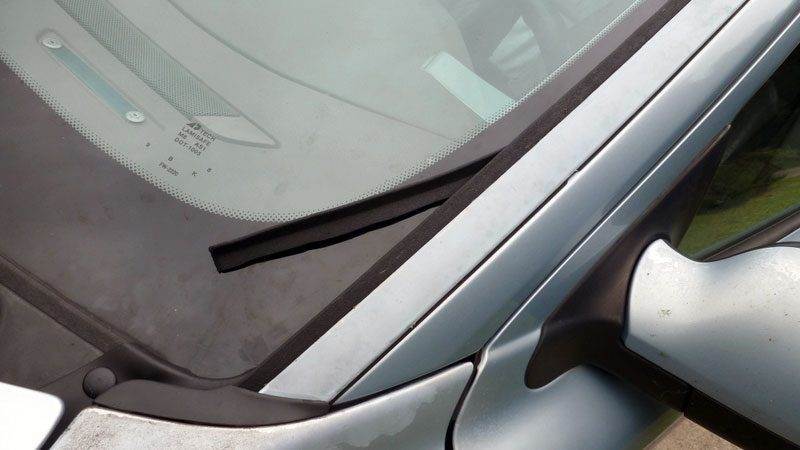
Windshields need to be both airtight and waterproof. Windshields are sealed in place using a combination of a windshield gasket and adhesive that holds them in place.
When this seal starts to fail, you might notice water on the dashboard or condensation on the edges of the windshield. You might also hear a whistling sound that gets louder as you drive faster, as air leaks past the seal.
9) Flying Water Bottles
This might seem silly, but before spending a lot of time or money looking for a problem, check that there are no liquid containers in the car that might have leaked. When driving, it’s quite easy for a water bottle to leak as it’s jostled by bumps in the road.
Conclusion
There are many causes of water leaks in a cabin, but you can usually tell where the leak is coming from. You’ll usually feel more moisture near the source of the leak. Many of these leaks can usually be fixed at home, and it’s often something you can do yourself at low cost.
Low tire pressure warning, but tires are correct
According to the National Highway Transportation Safety Administration, there are approximately 11,000 accidents and 200 deaths each year that can be attributed to tire failure, the majority of which are caused by underinflated tires. To ensure optimal stability, control, handling, and braking performance, your tires must be consistently inflated to the optimal air pressure specified by your vehicle manufacturer.
To ensure this, most newer vehicles are equipped with a tire pressure monitoring system that displays a warning light on your dashboard when a tire is significantly low on air. However, there is a common problem of seeing the low tire pressure light, but the tires are fine.
So what is the reason for this issue and how to fix it? Continue reading to find out. However, before diving into the reasons why the tire pressure light keeps coming on and its solutions, you must first understand the basics of the technology measuring tire pressure inside the car.
Tire Pressure Monitoring System: What is it for?
Car tires must be properly inflated to the optimal air pressure specified by your vehicle manufacturer. Underinflated tires and overinflated tires can impair handling and braking, accelerate the wear of your tires and unevenly, and thus compromise your safety on the roads. Underinflated tires are more problematic and account for the majority of tire-related accidents. Underinflation means more contact with the road surface, leading to rapid heat buildup, which can, in the worst case, completely separate the tread from the wheel and make the vehicle uncontrollable.
You might know that most new vehicles are equipped with a TPMS, which stands for Tire Pressure Monitoring System, which is an electronic unit mounted on the tire rim. Its main function is to generate tire pressure information for the car’s computer system.
Note that such a system turns on a light on your dashboard to warn if a tire’s pressure is significantly lower than the recommended pressure specified by your vehicle manufacturer and does not allow you to check the exact pressure. So, just because the light is not on does not mean your tire pressure has been set correctly. Also note that if your car is from an older model year, it may not be equipped with a tire pressure monitoring system like newer models.
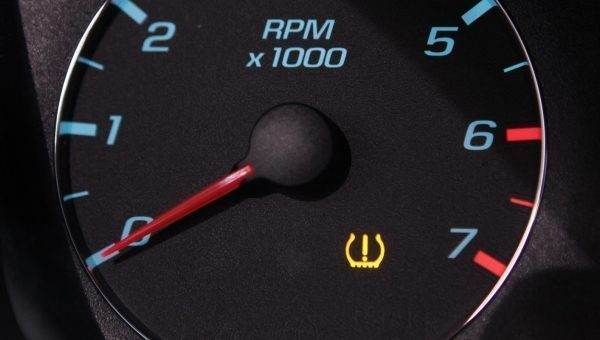
Available in two different technological forms, TPMS can either determine the pressure directly or calculate it indirectly using tire rotation information. When the car starts, the TPMS light normally comes on for a second or two. This indicator often looks like a tire seen from the front with an exclamation point inside. Sometimes it will simply say “TPMS”.
If a tire is underinflated, the dashboard TPMS light comes on. It may flash or stay on. So what causes the TPMS light to come on but the tires are fine?
Reasons for Low Tire Pressure Light But Tires Are Fine
Often, when the tires are not flat or underinflated, the low pressure light on the dashboard comes on. There are many perfect reasons why this might happen:
Extreme Cold Weather
It is quite common for the low tire pressure light to come on, but the tires are fine problem to occur on very cold winter mornings. Hot air expands, takes up more space, and is less dense, but inside the confined space of a tire, this expansion means increased air pressure. In contrast, cold air becomes denser and takes up less space, so inside a tire, this condensation means a decrease in air pressure.
A car tire may measure 30 PSI at 80-degree temperatures during the day, but early the next morning when the temperature drops to 30 degrees because it is often colder at night, it may return a reading of only 25 PSI.
On days when the temperature varies considerably, say about 40 to 50 degrees F between day and night, your tire pressure can vary by about 3 PSI to 5 PSI. This is why it is quite normal that, on a cold winter morning, your dashboard’s low pressure light comes on, but once you start driving, the tires warm up. The air inside the tire will expand, thus increasing the air pressure and the light will go out. So, you see the low tire pressure light, but the tires are fine.
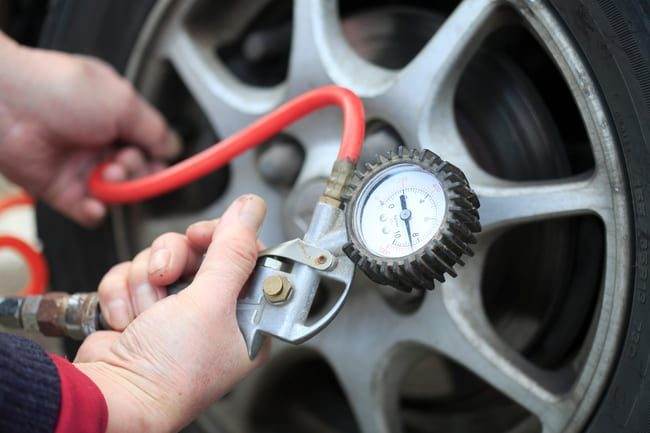
However, if the light does not go out once the tires are warmed up, you should grab your pressure gauge to measure the exact pressure of your tires and inflate them to the correct optimal pressure level.
Recent Tire Rotation or Replacement
As mentioned earlier, the TPMS is located on the tire rim. So, there is a chance that this electronic unit could be damaged during the tire rotation or replacement process. So, whenever you are going to change a car’s tires, check on the spot for the low tire pressure light but tires are good problem to avoid the hassle of returning to the auto shop later.
Furthermore, you might replace old tires with a different tire that does not have a TPMS like the others, or that does not have the correct TPMS as specified by your car manufacturer. When this happens, it is as if your vehicle needs to go through a relearning process, which can trigger the TPMS light but the tire pressure is good.
In this case, all it takes to turn off the light is to take your vehicle for a relaxed drive at a constant speed for about 10 minutes. If this does not solve the problem, you will probably need to take your car to a mechanic for external recalibration.
Faulty TPMS Sensor
If you have used a pressure gauge and confirmed that all four tires are properly inflated to the optimal level specified by your car manufacturer, but every time you start the car, the pressure light comes on and stays on, it means the TPMS is not working properly. In this case, it is best to consult a mechanic to inspect and possibly replace the TPMS.
Physical sensors are subject to wear and tear over time, especially the seals, gaskets, valve caps, or sensor core. These sensors also run on onboard batteries, which have a limited lifespan of about 5 to 7 years (up to 10 years in the best case). Low battery power and age-related wear can cause the TPMS sensor to malfunction and cause the low tire pressure light, but tires are fine problem.
Another reason for TPMS sensor malfunction is the presence of a substance other than air or nitrogen in the tire, such as tire repair sealants used when fixing a flat tire.
Forgotten Spare Tire
You might have just swapped your spare tire, which has been sitting for a while without attention or care. Not all spare tires are equipped with TPMS, but if it is and the tire pressure in the spare tire is too low, it can trigger the warning light.
Almost all tires gradually lose air pressure over time through the inflation valve, even with a spare tire or if the vehicle is stored and rarely driven. There is a cap, but the role of the valve stem dust cap is to keep dirt out rather than better keeping air in. So, although it is recommended to check your tire pressure at least once a month, it is still a good idea to check your spare tire as well and inflate it to the optimal pressure so that you always have a properly inflated spare tire to swap at any time.
Air Loss Due to Physical Impacts
A sudden loss of air pressure in tires is quite common and can cause the TPMS light to come on even if you just properly inflated your tires a few days ago. The pressure loss is likely caused by driving on very rough terrain or hitting a curb, which can cause the momentary separation of the seal between the tire and the rim, thus letting a small amount of air escape.
Other common reasons for air leaks that can cause the low tire pressure light, but tires are fine problem, include damage to the wheel rim due to physical impacts on the road like flying pebbles or debris, or a faulty tire valve that bleeds air gradually.
Low Tire Pressure Light But Tires Are Fine: How to Fix It
Now that we are well informed about the causes of the low tire pressure light but tires are in good condition, let’s address this issue.
You have the choice to reset the TPMS yourself or seek professional help. But be aware that by law, any auto shop must fix the problem before letting you go. So, in the rare cases where troubleshooting and repair take longer than expected, your car will be held hostage until the issue is resolved.
Locate the Reset Button
Placed inside the glove box (a compartment inside the dashboard), you can easily find it in front of the passenger seat. In case you cannot locate it, find the button with “SET” marked on it or consult the car manual.
Note: The position of this button may vary depending on the car’s make and model.
Press the Reset Button
The next step in the process is to press the located button for three seconds. Once the light flashes three times on the dashboard, it means the TPMS is reset. After that, turn off the engine and restart it after five seconds (from the time the light flashes).
This would solve the problem. But, it is important here to note that the TPMS reset process may vary depending on the car model. Therefore, consult the vehicle manual before proceeding.
However, if the above solution does not work for you, take your car to the nearest mechanic for a thorough inspection.
Sometimes, you can’t do it yourself…
Some vehicles like Subarus do not allow you to reset your TPMS sensors yourself. You will need a special tool, which is only available at auto repair shops, auto parts stores, and tire dealers.
In this case, the TPMS sensor receives a unique identifier that must be registered with the ECU, along with pressure information as well as the position and temperature of the tires at that time. Once you rotate or replace your tire, to fill your tire, one or more of this information changes, which requires the sensor to be recalibrated with the special tool above.
Reasons why your car stalls while driving
Having your car shut off while driving is a dangerous situation. There are several reasons for this headache. Discover the most likely culprits for random car stalling, how to fix it and avoid it in the future with proper car maintenance, and the steps to take to ensure your safety and that of others on the road when your car shuts off while you’re driving in traffic.
In this article, we will address the issue of the car shutting off while driving. It’s a different matter than when your car shuts off after you stop. This happens when the engine is very sensitive at idle and can be caused by many things, but the most common reasons are a faulty throttle body or a lean fuel mixture that causes the idle to drop too low.
7 Reasons Why Your Car Shuts Off While Driving
Faulty Crankshaft Position Sensor
One of the most common reasons for the car stalling problem while driving is a faulty crankshaft position sensor. The role of the crankshaft position sensor is to monitor the many moving parts of the engine, including the crankshaft, engine valves, and pistons. It tracks the speed and location of the crankshaft to facilitate optimal timing of fuel injection and ignition.
In short, this mechanism is essential for optimal engine performance. A failing crankshaft position sensor cannot provide the correct information about the piston positioning in the engine to the engine control unit, causing a cylinder misfire.
If the crankshaft position sensor is not working properly, the check engine light may come on. Another sign that the crankshaft position sensor is faulty is that the tachometer does not work correctly. The tachometer is the gauge usually located next to your speedometer on your dashboard that reads the RPMs in your car. The tachometer usually increases every time you rev your engine. When the intended speed is reached, the tachometer stays in place.
After receiving engine speed information from the crankshaft position sensor, the ECU will then relay the information to the tachometer. So, if the crankshaft position sensor is faulty, it will send incorrect and abnormal data to the ECU, which will then be relayed and cause the tachometer to start erratically or sporadically.
Other common symptoms of a faulty crankshaft position sensor are that fuel efficiency will be compromised and the engine might run very roughly, misfire before stalling completely while driving.
One way to check if your crankshaft position sensor is faulty is to use an OBD scanner and read the error codes from the ECU. If you get diagnostic codes between P0335 and P0338, your crankshaft position sensor has a problem. Although an OBD scanner won’t help you pinpoint the exact problem, it is still a great tool for identifying culprits.
Faulty Engine Control Unit
Another source of problems that can cause the car to stall while driving and the Check Engine light to come on is a faulty Engine Control Unit (ECU) or Powertrain Control Module. Your car’s ECU is a computer that collects information from different parts of an internal combustion engine to ensure that the entire system is working properly, optimally, and accurately to maximize efficiency.
A faulty ECU can cause sudden drops in power, fuel efficiency, and loss of spark, causing your car to randomly stall and restart. Another common symptom of a faulty ECU is your car stalling and jerking while driving. The check engine light may also come on on your dashboard.
Unfortunately, testing and inspecting your ECU is not easy. A check engine light does not necessarily mean an ECU problem. If you want to try to troubleshoot it yourself, the only thing you can do is use an OBD scanner to see what diagnostic code you get. However, the code may still not be clear for a failing ECU. Your only option is to take it to a professional mechanic. A mechanic will have the right tools, software, and understanding to diagnose your ECU.
Faulty Alternator
Your car’s alternator is responsible for producing a constant flow of electricity from the car’s mechanical energy. It uses this electrical energy to operate various electrical components such as dashboard lights, dome lights, the air conditioning unit, the stereo system, … and to charge the battery. If, for some reason, the alternator is not doing its job properly, your car will not receive the electrical energy it needs, leading to the problem of the car stalling while driving. When this happens, you get a flashing dash.
It is important to note that if your battery is working properly and can step in to provide power after your alternator dies, your car may still run for a while without an alternator, so you might not realize right away what you’re dealing with.
But your car can only last a short period when running on battery, as the battery is not designed to power the entire car. Once your battery dies, your car stalls and eventually shuts off completely.
If you pay enough attention to how your car is running, you should be able to detect when an alternator is not working properly, meaning your car will start to receive intermittent power. In any case, a basic car maintenance job is to use a multimeter or voltmeter to test your battery with your alternator at regular intervals, say every 4 to 6 months.
To test an alternator, let the engine idle, turn off all lights, including the dashboard, and all accessories like the stereo system that may consume electricity. Perform the battery test with the multimeter. A good alternator should produce between 13.1 V and 14.6 V at normal idle. If not, you should have it further inspected by a professional.
Next, test the alternator to see if it will function properly under heavy use. Have your assistant rev the engine to 2,000 RPM. Turn on all accessories, including headlights, interior lights, radio, windshield wipers… and plug the voltmeter back in. If it reads 13.0 volts and above, the alternator is powerful enough. Anything below 13.0 signals a faulty alternator that needs to be replaced. Make sure you have the best catalytic converters.
Empty Fuel Tank but Faulty Fuel Gauge
You might be surprised to learn that thousands of people every year have their car shut off while driving due to an empty fuel tank. While some may be too busy or forgetful to regularly check the fuel level and refuel as soon as possible, there are cases where your fuel gauge is faulty and does not indicate the actual fuel level in the tank.
One of the common reasons you have a faulty fuel gauge is due to a failure of the sending unit. This will usually cause your fuel gauge to stick in one position regardless of the fuel level, which is usually at the “F” or “E” mark in most cases.
If you think there is a problem with your fuel gauge or fuel level sensor, try filling up 1 gallon or 4 liters of gasoline to see if your car restarts.
Clogged or Faulty Fuel Pump or Fuel System
If your car shuts off while driving but suddenly restarts, it can often be due to a bad fuel pump. Your engine needs a precise fuel supply at a precise time as input for combustion to generate power, and the fuel pump is the part that supplies the engine with the right amount of fuel. If the engine does not receive the right amount of fuel at the right time, the engine stalls, and when this happens, it feels a lot like your car running out of gas. The bad news is that if you are dealing with a faulty fuel pump, there is no workaround for it. You will have to repair or replace it.
Another reason could be that your fuel filter is clogged. The role of the fuel filter is to clean the fuel entering the engine. Over time, it can become clogged with contaminants in old gasoline, so the fuel pump cannot pump the sufficient amount of fuel through it, spoiling the engine’s ability to produce power and shutting off your car while driving.
If your fuel filter is made of nylon or paper, you should simply replace it, which is cheap. If it is metal, you can simply clean it and reuse it.
Most fuel pumps are installed inside the fuel tank. A quick way to check if the fuel pump is really the culprit when your car shuts off while driving is to kick the fuel tank. If the car starts then, there is most likely a problem with your fuel pump. But don’t hit it hard with a metal tool because the tank is plastic and you wouldn’t want to damage it.
Faulty Ignition Switch
When you turn the key to start the car, the ignition switch, which is installed behind the ignition lock, is turned. Inside the ignition switch are many small metal plates that can rust over time. When this happens, one of these plates may lose connection and all contact will be cut off. Or the ignition relay may deteriorate and the mechanism that controls the amount of electricity passing through them will stop working. These will cause the engine to shut off abruptly while driving.
Fortunately, it is quite easy to check if a faulty ignition switch is the reason your car shuts off while driving. When the car shuts off, check if there are still any lights on your dashboard. If the dashboard instrument is dead, a faulty ignition switch is likely. And put your car keys back in the ignition after the car has stalled and try to turn them. If it doesn’t start the engine, you probably have an ignition failure.
Faulty Spark Plugs
The tiny spark plugs are another essential component that allows your engine to generate power. They are the parts that ignite the air-fuel mixture in the engine’s combustion chamber to generate combustions. Each cylinder has its own spark plug.
If you only have one faulty spark plug, you can still start your car and drive. But when more than one spark plug is malfunctioning, your car may start, but it probably won’t run for long. Several faulty spark plugs will cause your engine to stall and shut off while driving.
Before your engine shuts off completely and leaves you stranded, in most cases, there are other telltale signs you need to watch out for, including reduced engine performance, lack of acceleration, engine misfires, and engine knocking.
If you experience these symptoms, it is quite easy to determine if you have a bad spark plug: you just need to locate and inspect them. Once you can physically see your spark plugs, you can determine the condition of your spark plugs. A bad spark plug is one that is blistered because it overheated or is covered with a substance like oil, fuel, or carbon.
Steps to Take When Your Car Shuts Off While Driving
Needless to say, having your car shut off while you’re driving can leave you stranded in the middle of nowhere or become a safety hazard if you are driving at high speed or on the highway with heavy traffic. Follow the steps below to ensure your safety as well as that of other vehicles on the road:
Pull Your Car Over to the Side of the Road
The very first thing you need to do when your car shuts off while driving is to try not to panic and guide your car to the side of the road or onto the shoulder. As you slow down to a stop, pull over to prevent vehicles behind you from crashing into the rear, as cars on the highway often travel at high speed. Note that your car will lose the ability to brake and steer, but this is your only course of action.
In the case where slowing your car down is too difficult, try to find a safe spot in sight on the side of the road to guide your car, then engage the emergency brake. This will cause a sudden stop, but it is a hundred times better than stalling abruptly in the middle of the road.
Try to Restart Your Car
Now that your car is safely on the side of the road, the next step is to check if you can restart your car so you can at least get to the nearest auto repair shop. If you are lucky and can determine or narrow down the culprit, you might in some cases be able to get your car started again.
Use Hazard Lights to Alert Other Drivers
But if you cannot restart your vehicle, you must use your hazard lights to inform other drivers that your car is stationary and that you won’t end up in traffic. This will keep you safe while you determine the next steps.
Call Your Emergency Number or a Roadside Assistance Service
When a car is stranded on the road and there is no help in sight, it is best to seek help from an emergency number or a roadside assistance service like AAA, which usually have 24/7 assistance. Alternatively, if you cannot reach either, be aware that the police can also help you contact roadside assistance if you have no service or your phone is dead, and they will ensure your car is safe.
And if you are a bit lucky, your car may shut off while driving but restart so you can get home, you can use an OBD2 scanner at the first opportunity to check for fault codes in the engine control unit. Continue diagnosing the fault code if you get one.
The car won’t start Anti-theft system: what to do
The anti-theft system is designed to protect your car from theft and vandalism. Its mechanism involves an electrical circuit that disconnects in case of suspicious activity. It interrupts the power supply in such a way that your car does not start or even die so soon. Sometimes the system can trigger without any threat and immobilize the engine. What should you do about the problem of the car not starting The anti-theft system
The car does not start The anti-theft system: what to do?
What should I do when the anti-theft system does not let my car start? It is possible that the system triggers the car alarm or prevents the engine from turning over for no apparent reason. You need to turn it off if it is not working properly. The car will not return to normal operation unless you resolve the problem of the anti-theft car not starting.
How to disable the anti-theft system? These tips will help you:
Check the battery.
The first thing you should check when the anti-theft system car does not start is the car battery. It may be dead or weak and needs to be recharged. In this case, the car system will not be able to read the security code on the key fob. Check the battery connections. If they prove to be good, try restarting it. It is likely to solve the problem.
When you are inside the car.
Apply this trick when you have access to the inside of the car and the “Anti-theft System” light on the dashboard is on. Insert the key into the ignition slot and turn it slightly to the right. Keep it in this position for 10 minutes or a little longer. It is likely to turn off the light and start the car.
Remember that this is the state where the vehicle is on but the engine is off. All necessary components like the radio and dashboard lights will be powered on, allowing you to bypass the anti-theft alarm.
When you are outside the car.
Insert your car key into the driver’s side door slot and hold it for a few seconds after turning it to unlock the door. This trick sometimes works and helps to override the factory alarm. It allows the car system to detect that you have the original key. It mainly works in Volkswagen, Mercedes-Benz, and BMW models and applies even when the key fob is damaged or has a dead battery.
In the case where you are driving a Honda Accord, the trick needs a little modification. After inserting the key into the driver’s door lock, turn the key to unlock, lock, and then lock again. Then, turn it back to the unlock position and the alarm is likely to be disabled now. Drive the car for at least 10 minutes after starting the engine to allow the car to reset the alarm.
Reset the car’s computer.
This is another way to solve the problem of the car’s anti-theft system not starting. Disconnect the positive terminal of the battery for a minute or two. Reconnect it and make sure the anode and cathode terminals are securely fastened. This will reset the computer system and your car is likely to start.
If the trick fails, reset the factory alarm by activating its built-in circuit breaker.
Use the key trick with the steering wheel.
Sometimes the anti-theft system locks the steering wheel and does not let the key turn inside the slot. This annoying problem is mainly exclusive to Hondas. It mostly happens when you move the steering wheel after turning off the car. It locks the wheel in that position and does not allow you to move it the next time you try to start the car.
The wheel is likely to be stuck in one direction. Try to move it in the opposite direction and it will move. Try to pull the car in that direction. At the same time, insert the key into the ignition slot and try to turn it. If the key is stubborn, pull the wheel as hard as possible and keep trying with the key. At some point, you will be able to turn on the ignition and start the engine.
Check the key.
The key itself could be the culprit of the car’s anti-theft system not starting. Keys have a built-in chip that sends a code to the alarm system when you insert it into the ignition. This chip will not work if the key is broken or damaged. If one key does not respond, try the other. If nothing happens, take them to the dealer to check that their transmission system is working.
Another trick you can try is to use the key to start the engine. If the engine does not respond or dies immediately after starting, leave the key in that position for 10 minutes. When the security light goes out, turn off the ignition, wait 20 seconds, and then start the engine.
These are the most popular ways to solve the problem of the anti-theft system. Most cars are likely to respond to at least one of these tricks
How fast does rust spread on a car?
All metals are capable of undergoing a complex electrochemical process. This process can easily lead to the deterioration of their aesthetic and physical properties. In short, corrosion can weaken the structural integrity and strength of a metal, making it less aesthetically pleasing. The material used in automotive construction is metal.
As such, cars have a higher risk of corrosion. Therefore, any sensible car owner must learn how quickly rust spreads on a car and how to prevent it from becoming incurable. This not only preserves the vehicle’s longevity and structural integrity but can also help maintain the overall aesthetics and value of the car. So let’s dive into rusty insights with Car From Japan right now.
How Quickly Does Rust Spread on a Car
A rusty car will never bring car owners a pleasant experience. If your car is at risk of rusting or if you feel suspicious about certain spots, you need to keep a close eye on these areas to ensure you are ahead of the rust, not the rush itself.
We will show you some common reasons that contributed to the speed at which rust spreads on a car:
The cleanliness of metal parts
The grade of steel used
Presence of contaminants in the metal
The electrolyte on metal surfaces
Temperature
Aerobic and anaerobic factors
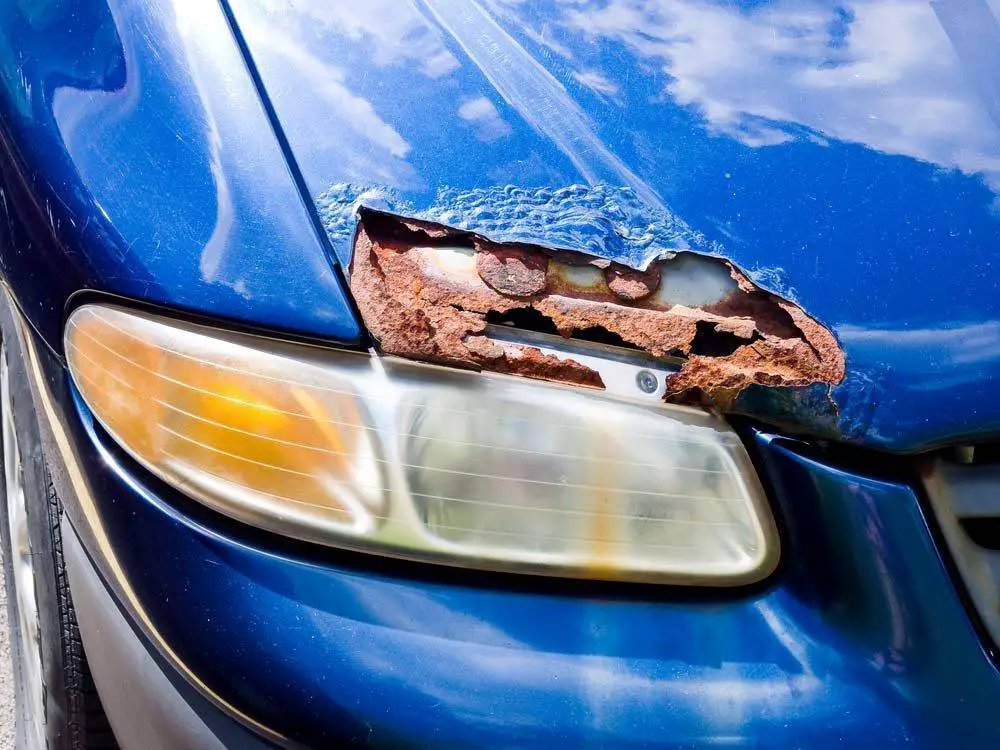
Rust spots can appear anywhere on a car’s body. Since oxidation can form inside car parts or metal components and spread quickly, you need to know that the car’s rusty surface is just the beginning of the problem. The bubbling of the outer paint is one of the visible signs of corrosion, so keep a close watch.
There are a few vulnerable spots on your automobile that you should pay special attention to. You should inspect the following components on your vehicle to have a chance to prevent rust as soon as possible.
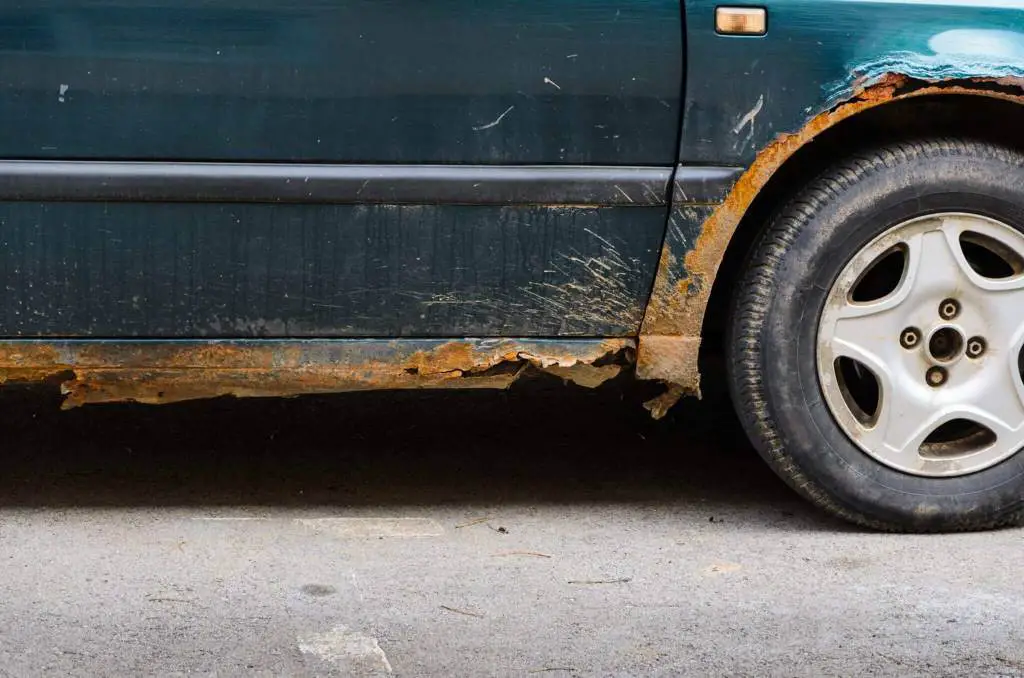
Car frame rails. These are the rails that run under the doors on both sides of an automobile.
Wheel arches: The curves above your tires are prone to rust, especially in cars used for a long time without wheel arch liners.
Exhausts: Moisture from inside and outside the vehicle can accumulate in your exhaust pipe, which can be trapped by mud and debris.
Suspension. Due to its proximity to the tires, which kick up dirt and other particles under the automobile. This part is prone to contact with moisture.
Car floor. Make sure to clean your carpet and inspect the underside for signs of rust.
Windshield/Windscreen. Prone to contact with the environment and long-forming chemicals.
Doors. Check both inside and outside for that nasty dark flaky orange area that rust produces.
If your car’s operating environment often contains a lot of water, salt, and oxygen, its protective paint will soon leave rust marks on the surface. What determines how long rust spreads on a car is when it corrodes the metal and the exposed environmental conditions.
The car’s exterior is often primarily made of steel, meaning it can start to rust in as little as 5 to 6 days. However, this fast rusting timeframe is rare. Unless the car’s paint is scratched, damaged in a few places, or the car is old, some may take a few months for things to change.
However, some climates will make your car rust faster than others. For example, if you live near the sea, the salty air will cause the vehicle to rust faster and even more severely than a vehicle operated in the desert.
The secret to preventing rust on a car
Here are some notes to help stop or at least minimize the rusted area on your car.
Perform Regular Car Rust Checks
One of the first things you need to do is perform a thorough inspection of your vehicle. The best way to prevent rust is to ensure you have nothing for it to occur. If there are already rust spots on your car, then prevention will be less effective. Therefore, when detecting rust, you must handle it immediately to prevent this process from happening more quickly and spreading to other locations.
Car Wheels and Rims
To check for rust locations on the car, it’s best to start with the bumper and rims. These areas are easy to overlook because they may not be easy to see. The main issue is that some parts of the car may have a lot of dirt that can cover any rust developing underneath.
You may want to remove the tires one by one to check. This will give you a better view of each wheel. First, clean the inner wheel by spraying it with water. Make sure to dry the surface thoroughly before proceeding with the test. Shine a beam of light on the inner surface of the wheel to help visualize areas of rust or corrosion. While you’re at it, make sure to check the inner surface of the housing as well.
Areas Where Vehicle Parts Connect
Another area where you might want to check for rust is any part where two components, constructions, or materials are connected. These can include door frames, the area between the fenders and hood, and bumpers added after purchase. To prevent rust, manufacturers apply paint to eliminate the risk of friction between two metal surfaces. Unfortunately, with constant rubbing action, the car’s paint can wear out faster than you think. This exposes the underlying metal and causes it to rust. Look for signs of bubbling paint, as rust may have developed under that bubble.
Drain Hole
Modern cars always have drain holes in the passenger cabin floor. They are typically found along the bottoms of the rocker panels and doors. Drain holes facilitate the drainage of rainwater. If your car is equipped with a sunroof, you know that a clogged sunroof drain tube is a frequent issue. Removing obstructions in these drain holes and drains will help prevent water accumulation in your vehicle.
If your car’s floor is flooded, quickly go to professional car maintenance centers to perform interior car cleaning services.
The Underside of the Car
One last area you need to check regularly is the underbody of your vehicle. This part of any car receives the most abuse every day. They are exposed to a lot of road salt, winter de-icers, moisture, and other elements that can accelerate rust formation. The best time to check for rust on the underside of your car is during a car wash or a comprehensive seasonal inspection. Additionally, you should also check the engine compartment to prevent the rust layer from affecting the engine bay.
Wash your car often
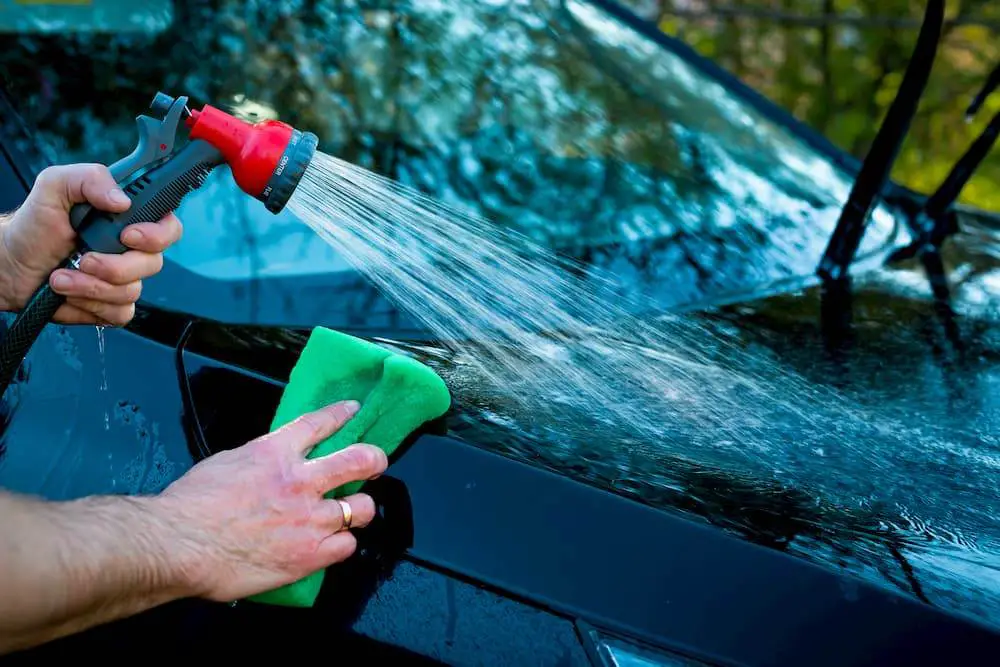
If you want to prevent rust from forming or spreading, you need to get into the habit of washing more frequently. Washing your car should always require a very thorough drying of all wet parts. Residual moisture on all metal surfaces of your vehicle can cause rust.
It’s important to understand that dirt itself will not cause corrosion. However, it can rub against the car’s protective paint. The paint is not very thick. With constant friction from road debris, this thin protective coating can also wear away. And that’s when corrosion can develop faster than ever.
Bird droppings may seem like benign organic matter. But the organic compounds present in these animal droppings can also cause a chemical reaction on the vehicle’s clear coat. The same goes for automotive fluids such as brake fluid, automatic transmission fluid, and fuel, among others. If any of these fluids spill onto the vehicle’s metal parts, corrosion is likely.
Of course, the rust we’re talking about will develop over time, not overnight. So it’s crucial to clean your car and wash it occasionally; a weekly frequency may be ideal. This act will help remove dirt, sand, and road debris that may have accumulated in hard-to-reach areas like wheel arches. The inside of the bumper as well as the underside of the car are also areas that need to be washed very thoroughly.
If you notice bird droppings or chemical spills on your car, don’t wait a few weeks before starting to wash it. These chemicals and compounds can eat away at the paint that protects your vehicle.
To learn how to prevent rust on cars, regular and frequent washing often helps. However, a more important operation after washing is drying the car. Under no circumstances should you leave your vehicle wet. It’s an open invitation for rust to start forming.
And since you’re prepared to wash and dry your car, you can also invest in the best anti-rust sprays for cars. Waxing your car after washing also benefits it greatly. This provides a smooth surface layer acting as a barrier between the body paint and water.
It’s also wise to keep the interior surfaces of your car dry and free from moisture. If there are spills in the cabin, dry them all at once. Don’t let water sit for a long time on the floor as this can lead to rust on the car floor. Let’s combine cleaning under the engine compartment!
Apply anti-rust products to your car
All modern automobiles undergo intensive application of anti-rust technologies even before reaching the assembly line. Some manufacturers apply multiple layers of anti-corrosion car paint on the body. Some carmakers apply phosphate-converted chassis coatings, while most quality underbody coatings must use a zinc coating as it is cheaper.
However, as we mentioned, exposure to the elements can corrode a vehicle’s paint. Similar compounds can interact with an anti-rust treatment. So it’s a good idea to apply one of the best anti-rust sprays for cars that you can buy.
Before applying these products to your vehicle, make sure you have first cleaned, washed, and dried your vehicle. It makes no sense to apply rust protection to a car on surfaces containing dust particles. So you should always follow the product instructions for the smoothest process and best result.
What to Do When the Car Starts Showing Signs of Rust?
If you detect signs of corrosion on your vehicle, you need to take care of it immediately. Hesitating or waiting for it to get worse will prevent you from maintaining your car’s integrity, and you won’t have to waste more time after fixing the issue.
There are rust repair kits available on the market. Be aware that these products only work on minor rust. These remove rust to prepare the surface for a replacement primer application. If you don’t wish to use such a rust repair kit or if the rust is more severe, you can use sandpaper instead.
Start with 180-grit sandpaper, then 320-grit, before finishing with 400-grit. This will help remove rust from the surface while smoothing it as a final step.
After removing the rust, you can apply a primer to the affected area. Let it dry completely. Then, get a car paint touch-up that matches the body color. Apply the paint according to the manual instructions.
The final step in managing minor rust on your vehicle is applying a high-quality clear coat. You can buy a clear car coat spray at your automotive supply store. Again, follow the coating instructions to facilitate the process and save you more time.
A quick reminder is that you can repair minor rust areas on your vehicle yourself. Nevertheless, if the corrosion is a bit severe that it has penetrated the body metal, or if there is significant damage, it’s better to have the body repaired by professionals.
Additionally, to prevent rust on your car, you need to clean it regularly with suitable methods and tools. You can also regularly inspect rust-prone areas to prevent and notice the problem first.
Overall, it’s always better to prevent it in advance rather than only fixing things after everything has happened before.
Conclusion on How Quickly Rust Spreads on a Car
We’ve gone through some important information about how quickly rust spreads on a car. We hope you have a better understanding of this issue and will prepare well for any rusty and dusty areas that may occur in the future.
The cheapest car with the best fuel consumption
The cheapest car with the best fuel consumption, In the era of electric cars and fuel-efficient cars becoming increasingly trendy, countless questions arise. The most fuel-efficient cars or the most fuel-efficient cars are the models that are becoming increasingly popular topics. Finding a fuel-efficient car model will help you reduce operating expenses and fuel costs, while protecting the environment. It is these benefits that make fuel-efficient cars increasingly sought after. Let’s take a look at the list of cheapest cars with the best fuel consumption in 2022.
Note that the price and fuel consumption figures presented below are only recorded in the ideal environment. Take these figures as references because you will be the one to experience and evaluate the car in the most convenient and accurate way.
The cheapest car with the best fuel consumption
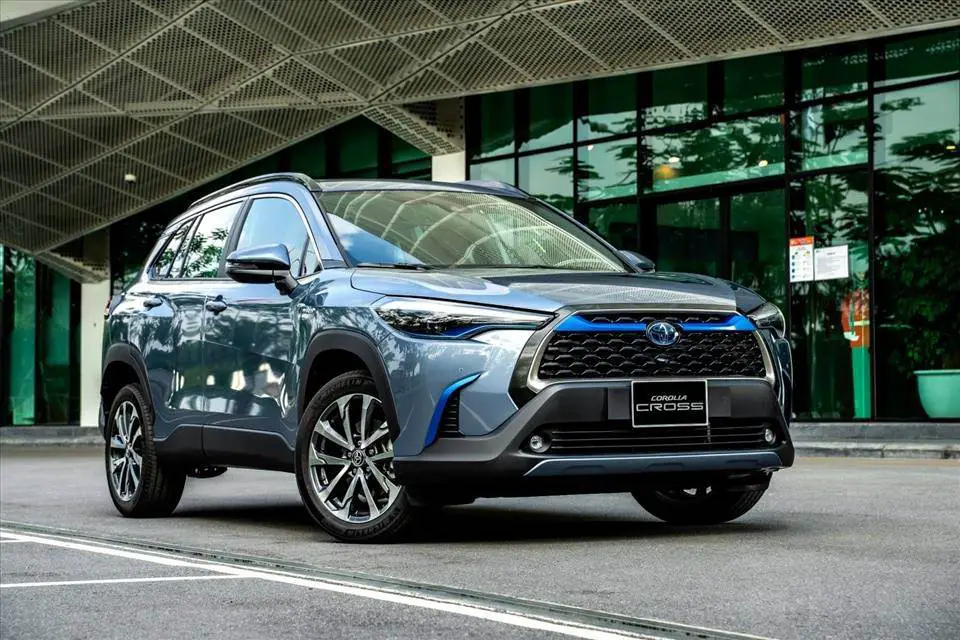
Toyota Corolla Cross (4.2 liters / 100 km)
The first appearance on the list of the most fuel-efficient cars with good prices is the Toyota Corolla Cross. The Corolla Cross has a fuel consumption difference of 4.2 liters of gasoline per 100 km. This is an impressive number in the current B and C class segments.
The Toyota Corolla Cross is a first-rate choice for those who want to own a raised vehicle with good performance and exceptional fuel economy. Using a 1.8 L inline 4-cylinder engine with electronic fuel injection, this engine system helps the car easily reach a maximum capacity of 140 horsepower and a maximum torque of 175 Nm, accompanied by a CVT variable transmission.
Toyota Corolla Cross has good fuel consumption and exceptional performance. (Photo: Toyota)
In addition to the gasoline engine system, this model also has a hybrid gasoline engine system. This is the e-CVT continuous variable transmission that helps the car operate stably, save fuel, and move on many terrains.
Toyota Camry (4.6 liters / 100 km)
The Toyota Camry is the second model on the list of cheapest cars with the best fuel consumption. It has a fuel consumption of 4.6 liters of gasoline for a distance of 100 km.
On the market, a Toyota Camry appears in 4 versions. It can be said that its superior engine system is one of the reasons for optimizing the fuel consumption coefficient to the best level. The Camry becomes a timeless model in a segment of D-segment cars with variable styles and characteristics.
With the most fuel-efficient version of the Toyota Camry, which is the Toyota Camry 2.5 HV version, the car uses the A25A-FXS engine system, electronic fuel filling combined with an E-CVT continuous variable transmission. All helped the car operate optimally and produce a maximum capacity of 131 horsepower and a maximum torque of 221 Nm. With the above parameters, the Toyota Camry deserves to be an exceptional model that shows its class and functions very well.
Mazda Demio (4.62 liters / 100km)
In the list of the most fuel-efficient cars, Mazda Demio is probably a name that causes many surprises because it is a small B-segment car. It has a fuel consumption of only 4.62 liters for a distance of 100 km. In the B segment with many big names such as Toyota Yaris, Honda City, Hyundai Accent, Mitsubishi Attrage, etc., Mazda stands out with the advantage of a fuel-efficient model.
One of the reasons why the Demio is on the list of fuel-efficient models is its 1.5 engine system combined with an automatic transmission. This engine system allows the car to reach a maximum capacity of 110 horsepower and 144 Nm of torque. The price fluctuation of this model on the market is from $19,200 to $24,800.
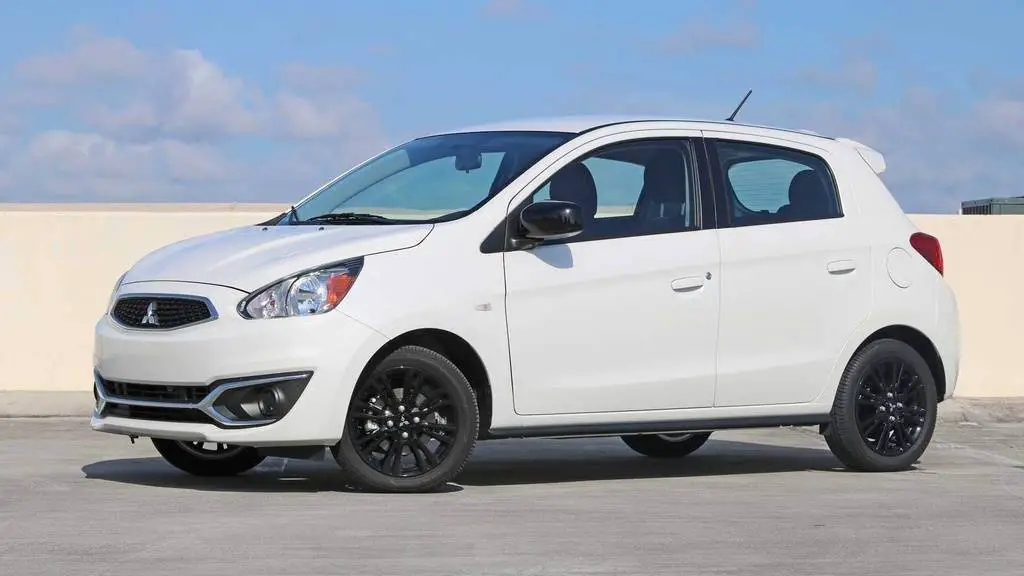
Mitsubishi Mirage (5.09 liters / 100 km)
According to Auto Register data, for every 100 km, the Mitsubishi Mirage will have a fuel consumption of 5.09 liters of gasoline. This is an impressive number for a 5-seater B-class car. Consequently, this fuel consumption is found in the manual version of the Mirage. For the automatic version, the fuel consumption will be 5.36 liters of gasoline / 100 km on mixed road terrain with a beautiful comfortable interior and spacious space. These are the advantages of many people when it comes to Mitsubishi Attrage.
The Mitsubishi Mirage manual transmission has an impressive fuel consumption coefficient. (Photo: motor1)
One of the main reasons why the Mitsubishi Mirage can achieve such an impressive fuel consumption figure and enter the list of cheapest cars with the best fuel consumption is the 1.2 L MIVEC engine system combined with the MIVEC engine system. This is considered the soul of this model, which can optimize fuel economy and achieve a maximum capacity of 78 horsepower and a torque of 100 Nm. On the market, the new model is often distributed in 3 versions with prices ranging from $15,000 to $19,500.
Nissan Almera (5.1l/100km)
The Nissan Almera is on the list of cheapest cars with the best fuel economy in 2022. The fuel consumption coefficient of the Nissan Almera reaches 5.1 liters of gasoline/100 km (for every 100 km, the Nissan Almera consumes 5.1 liters of gasoline).
The Nissan Almera is a B-class car with many exceptional features. But the most important of these features is the impressive fuel economy – capturing the trend of a new range of economical cars while operating stably and durably.
The success of this fuel-saving function of the Nissan Almera depends on the 1.0 L turbocharged engine that Nissan favors in this model. This engine system can produce a maximum capacity of 100 horsepower and a maximum torque of 152 Nm.
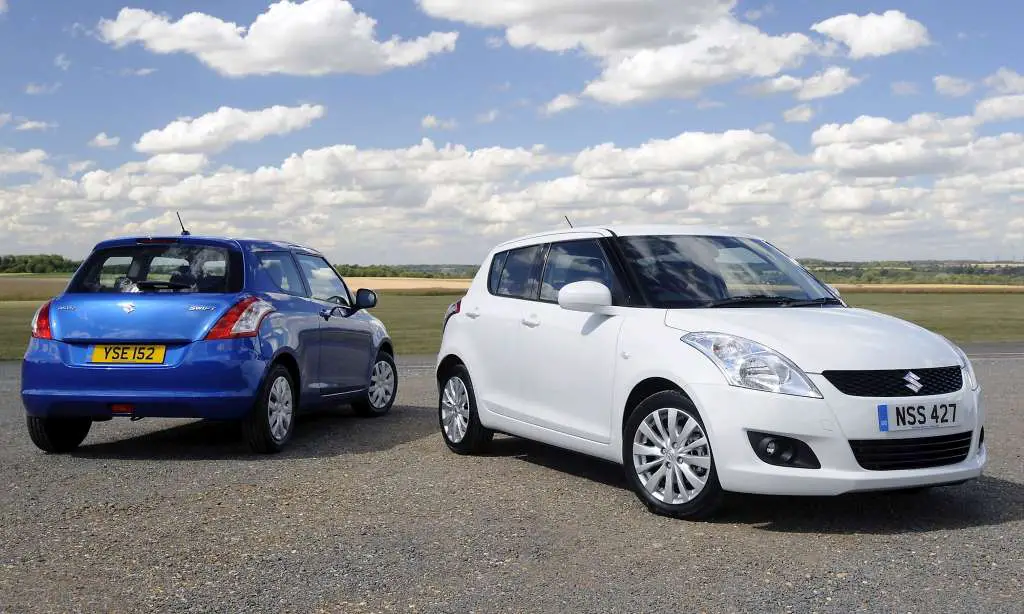
Suzuki Swift (5.19 liters / 100 km)
For every 100 km, the Suzuki Swift will consume about 5.19 liters of gasoline. This is an impressive number for a car in the hatchback segment, one of the most competitive car segments on the market. Since its launch, the Suzuki Swift has been a formidable competitor to many other names such as the Toyota Yaris, Mitsubishi Mirage, and Mazda Demio.
Suzuki Swift is a valid choice for those looking to buy a fuel-efficient sedan. (Photo: Drive)
Suzuki Swift uses a 1.2 L engine system for a maximum capacity of 61 horsepower and a maximum torque of 113 Nm. This engine system helps the car save fuel well, operate stably, and last over time. It can be said that as a model on the list of the most fuel-efficient cars today, the Suzuki Swift is still a valid choice in the price range. Thus, on the automobile market, a brand new Suzuki Swift has a selling price of $22,000 (excluding taxes and fees).
Hyundai Elantra Hybrid (5.2 liters / 100 km)
Another offering from Hyundai naming the cheapest car with the best fuel consumption list, Hyundai Elantra Hybrid. This is a sedan offering performance similar to the Ioniq but with a longer and more elegant body and sharper lines. Both the Elantra and Ioniq use the same 1.6-liter four-cylinder engine, which is the key to excellent fuel economy.
The Elantra Hybrid Blue trim offers front-wheel drive and totals up to 139 hp and 195 lb-ft of torque, which is pretty good in a hybrid chassis. The model is equipped with a hands-free smart trunk opening, a blind-spot collision avoidance system, and heated front seats are standard features. The infotainment system also maintains a harmonious balance between buttons, dials, and touch screens that many users appreciate.
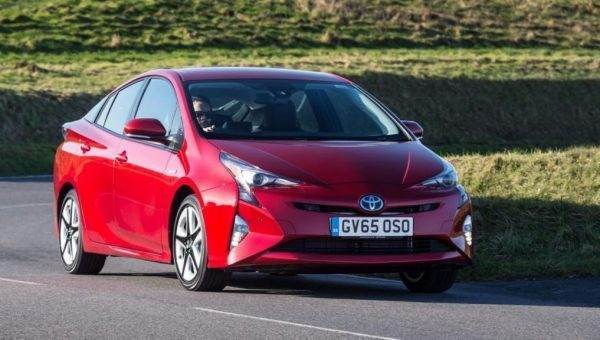
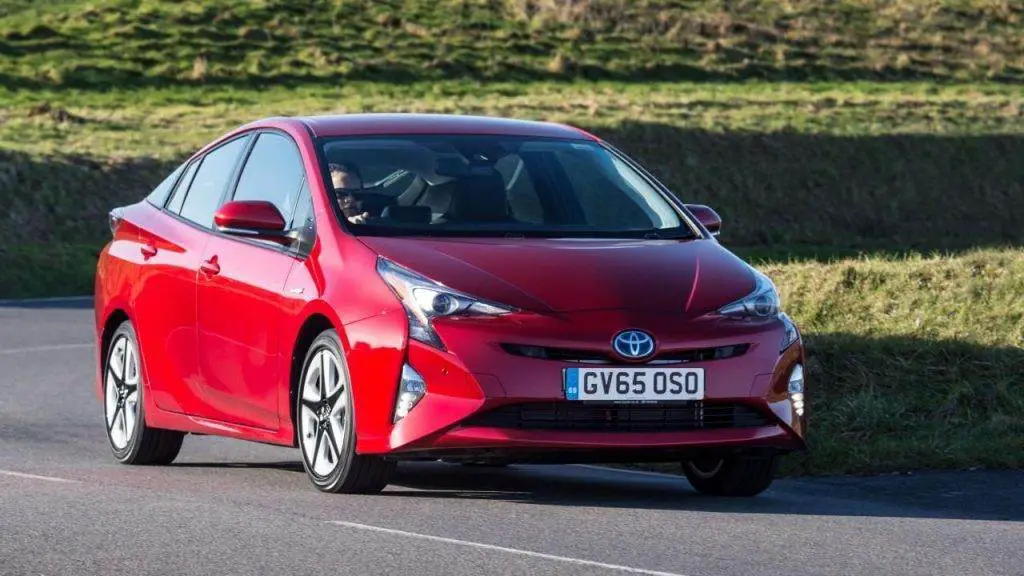
Toyota Prius (5.04 liters / 100 km)
For more than two decades, the Toyota Prius has been at the top in terms of value, economy, and efficiency for hybrid vehicles. While others are quickly catching up, including Korean giants like Hyundai and Kia, Toyota continues to offer reasonable performance in the form of its Prius Eco.
The Toyota Prius has been at the top in terms of value, economy, and efficiency for hybrid vehicles. (Photo: Craig Cole/Roadshow)
What seems most annoying about the Prius is its unusual shape. If you don’t mind that, you can focus on excellent features such as LED daytime running lights, keyless entry and push-button start, as well as pollen control and climate-smart airflow filtering. There is a rearview camera display, easy smartphone connectivity, hill start assist, and Toyota’s Safety Sense 2.0 package that offers ADAS and excellent safety features.
Honda Accord / Accord Hybrid (4.9 liters / 100 km)
Another Japanese product from 2021 that can compete with the Toyota Camry is the Honda Accord. The car comes with a 1.5 L turbocharged 4-cylinder engine with a capacity of 192 horsepower combined with a CVT gearbox. And with a highway driving rate of 38 mpg, it’s an ideal commuter, while keeping over 30 mpg even in the city.
This is one of the highest-rated sedans on the market with a new front style, new wheel designs, and new chrome accents everywhere. The interior includes an 8-inch infotainment screen, 2 USB ports in the front, and smartphone compatibility for Android and Apple systems. However, you must get the highest trim to enjoy it wirelessly.
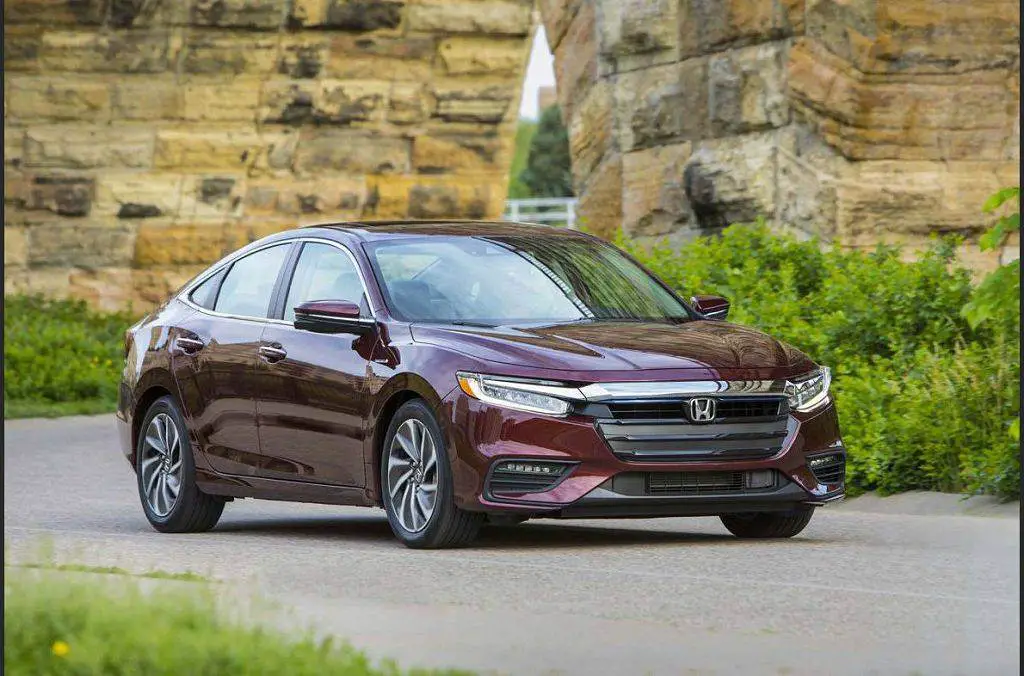
Honda Insight (4.52 liters / 100 km)
After the Toyota Prius, the Honda Insight is the next hybrid model with the longest lifespan and good fuel consumption. Despite its slightly higher price, it has a more conventional sedan appearance that has made it a popular choice while offering impressive fuel consumption. It has less cargo space because it doesn’t have the hatchback style of the Prius, but the slightly larger size and design of the Insight give it almost universal appeal.
It is quite rare for a sedan of this size to have such fuel economy. (Photo: Honda Motor)
Furthermore, the Honda Insight’s engine is one of the most powerful in the hybrid category. The 1.5 L 4-cylinder engine produces a maximum capacity of 151 horsepower, operating with a CVT continuous variable transmission with Sport Mode transmission mode. Placing its position in the cheapest car with the best fuel consumption range, its synergy can be very useful and offer drivers an enjoyable ride on all types of roads.
Kia Niro Hybrid (4.7 liters / 100 km)
If it’s a multi-segment/SUV that you want, it may not get much better benefits in terms of fuel consumption than the Kia Niro LX hybrid, even for an SUV that starts at just over $24,000. The model is equipped with a 1.6 L 4-cylinder engine with a 6-speed automatic transmission and an FWD drive system. Furthermore, the futuristic grille and headlights, as well as additional details like the small rear spoiler, make the Niro irresistible.
The car uses standard 16-inch wheels, with LED daytime running lights, projector headlights with automatic lighting control, roof rails, and wireless smartphone connectivity with Android Auto and Apple CarPlay. It also comes with USB ports, cruise control, and a drive mode with shift paddles.
Conclusion on the cheapest car with the best fuel consumption
Finding the most fuel-efficient car model is always the choice of many people in the current trend. Hopefully, with this review of the cheapest car with the best fuel consumption, we will help you have a better overview and be able to choose the most suitable car model yourself. And if you need to buy used cars of all kinds.
The Best Ways to Get Wi-Fi in Your Car in 2022
Getting Wi-Fi in your car is convenient in many ways, including using a navigation app, checking real-time traffic conditions, or requesting help in an emergency. While many simply use their 3G-capable smartphone for these purposes, you would need other methods to get a reliable Wi-Fi connection in your car so your passengers can use it too.
We are fortunate to live in 2021, when Wi-Fi in your car is easier and more affordable than ever, with many choices to suit your budget and data consumption demand. This article will explain in detail the different options available so you can compare and make the decision yourself. Each method involves a one-time expense for hardware and recurring costs for the data plan, and comes with its own distinct set of advantages and disadvantages, so there’s something for everyone.
Getting Wi-Fi in Your Car: What You Should Consider
Why Get Wi-Fi for Your Car?
If you only need to use navigation apps occasionally or request help if your car breaks down, you might as well use your smartphone to connect to the internet, as most of us have a smartphone today. But there are other circumstances where you would want to have internet access in your vehicle at all times, for example, if you have children and need to entertain them (thus keeping them contained!), or if you often travel with your spouse or family on long camping trips.
Many people may need the most powerful and reliable service possible to work on their laptop when not in the office or at home, such as sales representatives. And in a time when most of us are working from home due to COVID, having Wi-Fi in your car would offer more possibilities in terms of redesigning how you coordinate working from home with time spent elsewhere.
Furthermore, using your smartphone to surf the net or as a mobile hotspot to provide a connection to other devices has many drawbacks, as will be explained later. Before diving into the details of the different ways to get Wi-Fi in your car, there are a few things you need to know firsthand, as they are relevant regardless of the method you choose.
Sometimes, you need a Wi-Fi connection in your car so many devices can connect at the same time. Credit: allconnect.com
Data Costs
Data cost essentially means how much you have to pay each month for a maximum amount of data you can use. If you have high demand, there are plenty of data plans with unlimited data, and once you’ve used up the allocation for limited high-speed data, you won’t have to pay extra, but you might only get slow speeds if the network is busy. The monthly cost and allocation for high-speed data vary from plan to plan, so you need a balance between what you pay and the bandwidth provided by the provider.
Sometimes, when you buy a smartphone or a brand new car with built-in Wi-Fi (yes, it’s the new thing), you can get a free data plan with a limited amount of data or a complementary data allocation for a limited time. Data is only free in these limited circumstances, so you will eventually need to look for a solution.
Each country has a few major cellular service providers and smaller ones, and bigger doesn’t mean better when it comes to data plans. The common opinion is that you don’t necessarily need to go with the giant companies to get good service, but you should always check different providers and different data plans to get one that offers the best value for your situation.
Limited High-Speed Data
As above, don’t just look at the maximum hotspot data amount of a plan, but look at the actual amount of data that will be available at the fastest possible speed. There’s no point in getting a plan advertised as “unlimited” if it only offers a small monthly allocation of high-speed data, after which you’ll get extremely slow service.
Network Coverage
Another important factor to consider when getting a data plan for your car is the coverage or network availability of a provider. It refers to where the provider has service and where it has good data speeds.
Many providers advertise very wide-coverage networks, meaning you can get very good connections almost everywhere you go in your country, but it’s not uncommon to find that you can only get the fastest data speeds in certain geographic areas. Many others have large high-speed networks but have huge “dead zones” where no cellular service is available, as they haven’t built the necessary facilities in those locations yet.
Getting a data plan from a mobile carrier with good network coverage would offer you more flexibility and possibilities to prepare for whatever will happen in the future. This is especially important if you often take long car trips to hard-to-reach places or live in a rural area. You will need to look for a data plan that will cover you.
Security
A note for using your car’s Wi-Fi once you have it. When you have a Wi-Fi connection in your vehicle, remember that someone in nearby cars might have access to your mobile Wi-Fi connection. At all times, treat your onboard Wi-Fi connection like public Wi-Fi: do not enter any sensitive information (credit card details, bank account ID, as well as your full name and date of birth, which is enough to be used in identity theft). For extra protection, you can use a VPN.
The Easiest Way to Get Wi-Fi in Your Car: From a Smartphone Hotspot
Unless you’ve been living under a rock, it’s now common knowledge that you can use your smartphone as a hotspot to provide a Wi-Fi connection in your car. This is absolutely the simplest, most readily available, and cheapest method, as you wouldn’t have to pay for hardware like with other options if you already have a smartphone.
Although you can do this if your smartphone isn’t capable of acting as a hotspot, but that’s rare for smartphones nowadays, and even if it is, you might as well consider upgrading your phone. Because if you only need Wi-Fi occasionally without having to use too much data, then having a hotspot-capable smartphone would be a versatile and cost-effective option.
When the hotspot feature is active, your phone essentially acts as both a portable modem and a router, thus creating a localized ad hoc wireless internet connection that other devices like iPads, laptops, or even Wi-Fi-capable head units can connect to. This is called tethering. Most smartphones have the option to be enabled in the phone settings or, in some cases, may require downloading an app for this purpose.
So, basically, there’s still only one connection, which is the same data connection that lets you surf the web on your phone, but now it’s shared with all other Wi-Fi-capable devices that you or your passengers have. For this reason, the main drawback of turning your phone into a mobile hotspot is the risk of your cellular data allocation for the month being used up quickly, as it’s shared. For example, after a long car trip when your passengers watched many YouTube videos in the back seat, later in the month, you might find that you’ve used up your high-speed data allocation and can’t even check and reply to emails on your landline phone.
The second drawback is that tethering is very bad for your phone, as it excessively strains the battery. Doing this constantly will drain your battery and cause it to deteriorate faster.
Tethering is available with virtually all mobile carriers, whether included in the base data plan or sometimes offered as an add-on. With some providers, when you use your phone as a hotspot, any device connected to it will only get a slower download speed. So, sometimes even if the phone is capable of 4G, you’ll only get 3G data in your car. If you decide to use your phone for tethering, remember to ask about this when comparing data plans and read the fine print to be safer.
Get Wi-Fi in Your Car: Use a Dedicated Mobile Hotspot
If you don’t want to stress your phone’s battery and/or need a fast and reliable connection, getting a dedicated mobile hotspot would be a great way to get Wi-Fi in your car. A mobile or portable hotspot works basically the same way as your phone’s tethering function.
They are easy to use and have many advantages. For one, these devices can usually connect more devices than a phone’s hotspot would allow, typically up to eight devices, including phones, tablets, laptops, and cameras. Compared to your phone, a mobile hotspot usually provides a better Wi-Fi signal via 4G LTE networks, and there are many plans with more data allocation.
It’s not a drawback at all, but note that a mobile hotspot is a device solely for connectivity, so you don’t get an all-in-one multifunctional device like your smartphone.
While you use the same network and data plan when using your phone as a hotspot, a dedicated mobile hotspot requires a hardware cost for the device itself and, in addition, a monthly plan with a mobile carrier. The average recurring cost is between $20 and $90 per month for typically 2GB to 10GB of data. Most mobile carriers allow you to add a hotspot to your current phone plan, or if that doesn’t meet your needs, you can totally get a separate data plan for the mobile hotspot with another provider.
A dedicated mobile hotspot offers faster speed and connection to more devices. Credit: iTech Post
Here, it’s helpful to understand the difference between two main types of dedicated mobile hotspots: cellular dongles and standalone devices.
Cellular Dongles
Cellular dongles are portable USB devices usually designed to plug into laptops or other devices with a USB power source to create a localized Wi-Fi network. During initial setup, some units can even be plugged into any USB port you might have or have added to your car, such as your head unit, a powered USB connector, or the OBD-II port.
An example that plugs into your car’s OBD-II port is Sprint Drive. This cellular dongle provides a connection for up to eight devices, and you can opt for an unlimited monthly data plan. Convenient additional features include virtual vehicle maintenance and roadside assistance services. Another popular product on the U.S. market is the Alcatel LinkZone 4G LTE, which plugs into your car’s cigarette lighter socket via a USB port to stay charged at all times.
Standalone Units
Being more portable than dongles, dedicated standalone mobile hotspots are usually available at a higher price. Although these standalone units are designed to be plugged into any 12-volt accessory socket for power, they come with built-in batteries. They don’t need an external power source at all times, meaning if you need to, you can easily move your Wi-Fi network away from your car, like working or streaming music in your camping tent.
A notable example is Verizon’s MiFi. The advice is that if you prioritize better services, more data, and wider coverage, it’s better to go with major cell providers like Verizon and AT&T, given that you’re willing to pay a higher price for them, of course. Otherwise, if you don’t ask for much, opting for a smaller carrier like Freedompop would be more economical, as it offers a small amount of free data.
The Most Reliable Way to Get Wi-Fi in Your Car: Install a Permanent Wireless Modem and Travel Router
The two methods above are portable and convenient. But if you really need a lot of high-speed data and reliable services at all times, the best option is to permanently install a wireless modem and router in your car.
This option has many valuable advantages. The only drawback is that it is by far more expensive. The hardware alone will cost between $200 and $600, and on top of that, you’ll also pay installation fees and recurring monthly data fees, which vary from carrier to carrier.
These car wireless routers are also not as versatile and portable as phone hotspots and mobile hotspots. Later, we’ll talk about the most high-tech option currently available, i.e., vehicles with built-in Wi-Fi connectivity. Such convenience is possible because these cars are equipped with one of these devices.
Most of the time, these car routers are wired, however. That said, there is a way to make them more portable to some extent, i.e., by permanently wiring a dock in your car, which allows the device to be easily removed and installed in another dock in another vehicle.
Some popular products in this category include the $20.50 GL.iNET GL-MT300N-V2 portable wireless single-band travel mini router, the $40 HooToo FileHub single-band, the $40 TP-Link AC750 portable wireless dual-band nano travel router, and the $50 RAVPower FileHub dual-band.
Advantages of a Permanently Installed Modem/Travel Router
Stronger Signal: The main selling point of permanently installed travel routers is that you get stronger Wi-Fi and cellular radio signals compared to previous methods. While a mobile hotspot uses a built-in antenna to receive a signal, a modem/travel router essentially turns your vehicle into an antenna, and this mechanism usually provides more reliable signals and better speeds.
Wi-Fi All the Time: Instead of having to, say, enable the hotspot function on your phone, you won’t have to do anything with a travel router. Whenever your car is turned on, Wi-Fi will be instantly available, as these devices run on your vehicle’s power.
Multifunctional: A modem/travel router usually has a dual or triple function as a range extender to amplify weak Wi-Fi signals, as a portable charger for phones and tablets, as a memory card, and even as a cloud sharing hub for external hard drives. If you work remotely on long trips, you’ll love these convenient features.
USB or Ethernet Connection: Although these permanent devices are not portable, they offer another versatility. Some car modem/router combos include USB or Ethernet ports, so it’s also possible to connect various mobile devices via USB or Ethernet.
Doesn’t Drain Your Phone’s Battery: As above, turning your phone into a mobile hotspot would significantly drain your battery and, over time, could deteriorate it prematurely. Of course, you can always keep a charger in your car, but long-term damage to your battery is still inevitable, and keeping your phone charged at all times means no one else can charge their devices either.
Save Your Mobile Plan Data: If you only need Wi-Fi occasionally and don’t need to consume data, a smartphone with hotspot features can help. But if you travel with others on long trips in your truck or van, you should get a permanent modem/router combo with a separate data plan to make the most of everything, while saving data on your mobile plan for when you need it, including in emergencies.
Convenient Services for Your Vehicle: Some carriers offer devices with useful additional features such as sharing location and driving history, and collision response, like Verizon’s Hum.
Get Wi-Fi in Your Car Using an OBD-II Device
If you’re still considering between a dedicated mobile hotspot and a built-in modem/router combo, check out OBD-II Wi-Fi devices. In terms of portability, they fall right between mobile hotspots and permanently installed devices, and they also offer unique features that other options lack.
These devices plug into your car’s OBD-II port. If you’re not familiar with this technology, an OBD-II port is the connector where you can easily plug in your smartphone and run a dedicated app for computer diagnostics of your car’s health.
A car OBD-II Wi-Fi device, like the Delphi Connect, creates a localized Wi-Fi network to various mobile devices, and another interesting feature is that it allows you to use an app on your smartphone to perform a health check on your vehicle (kind of like a mobile hotspot and an ELM 327 scanner all in one).
These devices also provide vehicle tracking data so you can track your vehicle’s location in real-time as well as in the past.
If You’re Considering Upgrading Your Car: Think About Cars with Built-in Wi-Fi
Again, depending on your situation, you may not need an in-car Wi-Fi connection at all times. That said, as we are now in 2021, and if you’re looking to buy a new car in the near future, you will most likely come across a few models with built-in Wi-Fi technology in your search, whether you’re specifically looking for one or not. If you sometimes need to use Wi-Fi in your car, it might