P041E EGR Temperature Sensor B Circuit Intermittent

What does it mean?

This is a generic diagnostic trouble code (DTC) that generally applies to OBD-II vehicles. This may include, but is not limited to, vehicles from Mazda, VW, Audi, Mercedes Benz, Ford, Dodge, Ram, etc.

Although generic, the exact repair steps may vary depending on the year, make, model, and powertrain configuration.

Before EGR (Exhaust Gas Recirculation) systems were effectively introduced in vehicles in the 1970s, engines actively wasted unburned fuel and expelled it into the atmosphere. Nowadays, however, a vehicle must meet certain emission standards to proceed with production.

The use of EGR systems has significantly improved emissions by recycling fresh exhaust gases from the exhaust manifold and/or other parts of the exhaust system and reusing or burning them again to ensure we efficiently burn the fuel we pay for with our hard-earned money!

The function of the EGR temperature sensor is essentially to provide a way for the ECM (Engine Control Module) to monitor the temperature in the EGR system and/or adjust the flow accordingly using the EGR valve. It does this easily by using a common temperature-sensitive resistance-type sensor.

Your OBD (On-Board Diagnostic) scan tool may display P041E and related active codes when the ECM detects a fault in the EGR temperature sensor or its circuits. As I mentioned earlier, the system involves the exhaust, which is hot—not only that, but you’re dealing with one of the hottest areas of the vehicle, so be aware of where your hands/fingers are even with the engine off for a short period of time.

The P041E code for the intermittent/erratic Exhaust Gas Recirculation Temperature Sensor B Circuit is set by the ECM when it detects an intermittent or erratic reading from the sensor in the EGR temperature sensor B circuit. Refer to a vehicle-specific repair manual to determine what the “B” part of the circuit is for your particular application.
How severe is this DTC?

The severity here varies significantly depending on your specific issue, but I wouldn’t classify it as severe given that the entire system was introduced in vehicles simply as an emission reduction strategy. That said, exhaust leaks are not “good” for your vehicle, nor are leaking or faulty EGR temperature sensors, so maintenance is key here, sooner or later!

An example of an EGR temperature sensor:

What are some of the symptoms of the code?

Symptoms of a P041E trouble code may include:

  • Failure of state/provincial smog or emissions test
  • Engine noise (knocking, ticking, rattling, etc.)
  • Louder exhaust
  • Excessive exhaust odors

What are some common causes of the code?

Causes of this P041E engine code may include:

  1. Faulty or damaged EGR (Exhaust Gas Recirculation) temperature sensor
  2. Leak from the EGR temperature sensor gasket
  3. Cracked or leaking exhaust pipe where the sensor is mounted
  4. Burned wiring harness and/or sensor
  5. Damaged wire(s) (open, short to power, short to ground, etc.)
  6. Damaged connector
  7. ECM (Engine Control Module) issue
  8. Poor connections

What are the troubleshooting steps for P041E?

Basic Step #1

The first thing I would do here is check everything we can see by simply inspecting the sensor and the surrounding EGR system, looking especially for exhaust leaks. Also, check the sensor and its harness while you’re at it. Remember what I said about those high temperatures? They can wreak havoc on plastic and rubber-insulated wires, so inspect them carefully.

TIP: Black soot can indicate an exhaust leak around the area.
Basic Step #2

Many EGR issues I’ve seen in the past have been caused by soot buildup in the exhaust, potentially caused by a number of things (poor maintenance, low-quality fuel, etc.). In this case, it’s no exception, so it may be wise to clean your EGR system or at the very least the temperature sensor. Be aware that sensors mounted in exhaust systems can feel seized when you try to loosen them.

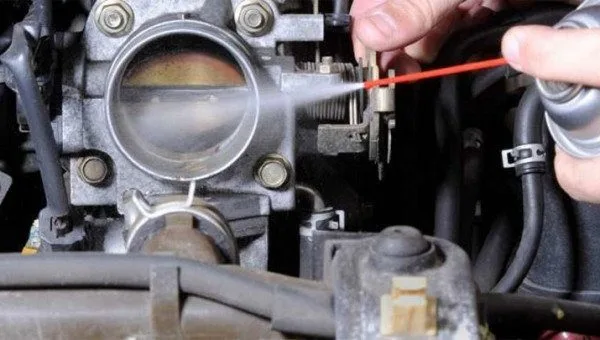
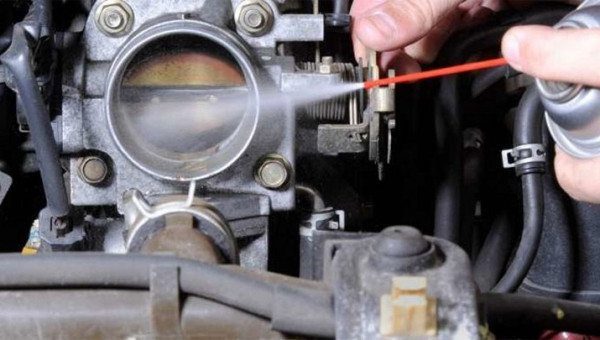
Remember, these sensors are subjected to significant temperature fluctuations, so a bit of heat using an oxyacetylene torch (not for the layperson) can help loosen the sensor. Once the sensor is removed, use carburetor cleaner or a similar product to effectively soak the soot. Use a wire brush to dislodge soot in heavily built-up areas. When reinstalling the cleaned sensor, be sure to apply some anti-seize compound to the threads to help prevent seizing.

NOTE: The last thing you want to do here is break the sensor inside the manifold/exhaust. This could be a costly mistake, so be careful when loosening the sensor.
Basic Step #3

Check the sensor’s integrity by measuring the actual electrical values against the manufacturer-specific desired values. To do this, use your multimeter and follow the manufacturer-specific pin testing procedures.

P041F Low Circuit Value of Secondary Air Injection System Switching Valve A

What does it mean?

This diagnostic trouble code (DTC) is a generic powertrain code, meaning it applies to vehicles equipped with OBD-II. Although generic, specific repair steps may vary by make/model.

The secondary air injection (AIR) system switching valve is the computer-controlled valve that controls air injection into the engine’s exhaust system (this valve may be integrated with the AIR pump). This code deals with an issue in the SOLENOID circuit, not the operation of the AIR pump itself.

The AIR injection system reduces hydrocarbon (HC), carbon monoxide (CO), and nitrogen oxide (NOx) emissions by injecting fresh air into the exhaust ports of a cold engine or the catalytic converter of a hot engine. This helps convert hydrocarbons into water vapor (H2O) and carbon monoxide into carbon dioxide (CO2).

Generally, the electric air pump is the most common type, although there may be belt-driven air pumps with an electric clutch. The electric air pump is controlled by the PCM (powertrain control module), which grounds the AIR pump relay control circuit and provides voltage to the AIR pump and solenoid valve (which may control a vacuum-operated shut-off valve or directly control airflow). There is a check valve in the fresh air supply tube that prevents exhaust gases from flowing back into the AIR pump. The PCM monitors the driver that activates the AIR pump for faults. When the PCM commands the AIR pump relay on, the control circuit voltage is naturally pulled near zero. When the relay is commanded off, the control circuit would have battery voltage present. If the PCM detects a voltage lower than expected, P041F will be set.

Other secondary air injection system fault codes include P0410, P0411, P0413, P0414, P0415, P0416, P0417, P0418, P0419, P041F, P044F, P0491, P0492.

Symptoms

Symptoms of a P041F DTC may include:

    MIL (Malfunction Indicator Lamp) illumination
    Increased exhaust emissions
    Rich running engine

Causes

Potential causes of a P041F code include:

    Short to ground in the control circuit
    Short to voltage in the control circuit
    Open control circuit due to damage, etc.
    Open or short circuit in the battery supply circuit to the solenoid
    Open or short circuit in the battery supply to relay control circuit

Possible Solutions

If you have access to a scan tool, with KOEO (Key On Engine Off), activate and deactivate the AIR pump solenoid. If the solenoid does not operate, disconnect the solenoid and using a voltmeter, check that voltage is supplied to the solenoid when commanded and also for a good ground. If there is voltage supplied and a good ground, check for a good connection at the solenoid wiring harness connector. If the connection is good, replace the solenoid. If there is no voltage supplied to the connector when commanding the solenoid, locate the AIR pump relay and check that there is fused battery voltage on the switched side of the circuit that powers the AIR pump; if not, check for a blown fuse or open in the wiring. Repair and retest.

If battery voltage is present on the voltage supply side of the relay, a quick way to check proper solenoid and AIR pump operation is to use a fused jumper and manually activate it. To do this, connect battery voltage to the switched AIR pump voltage supply. This is typically terminals 30 and 87 on the relay diagram (not always). If the solenoid (and possibly the AIR pump) operates, then you know your wiring and solenoid are correct. If it does not activate, open the wiring harness and find the open or short circuit in the AIR pump solenoid supply and fix it. If connecting the solenoid to battery voltage activates the solenoid, it’s time to check for voltage present with KOEO on the PCM-controlled side of the relay. If there is none, again repair open or shorted in the circuit and retest.

To check the AIR pump solenoid PCM wiring, grounding the control circuit that is normally operated by the PCM will tell you if the wiring is intact. Grounding the circuit at the PCM connector with KOEO should activate the AIR pump relay, which in turn should activate the AIR pump and solenoid. If this does not work, there is an open or short in the PCM control circuit. If grounding the control circuit makes the AIR pump and solenoid operate, check that the PCM has good ground paths and no connector damage or water intrusion. If this checks out, suspect an open driver in the PCM.

P0420 Catalyst System Efficiency Below Threshold

What does it mean?

This diagnostic code (DTC) is a generic powertrain code. It is considered generic because it applies to all makes and models of vehicles (1996 and newer), although specific repair steps may vary slightly by model. Therefore, this engine code article applies to Nissan, Toyota, Chevrolet, Ford, Honda, GMC, Subaru, VW, etc.

P0420 is one of the most common trouble codes we see. Other popular codes include P0171, P0300, P0455, P0442, etc. So be sure to bookmark this site for future reference!

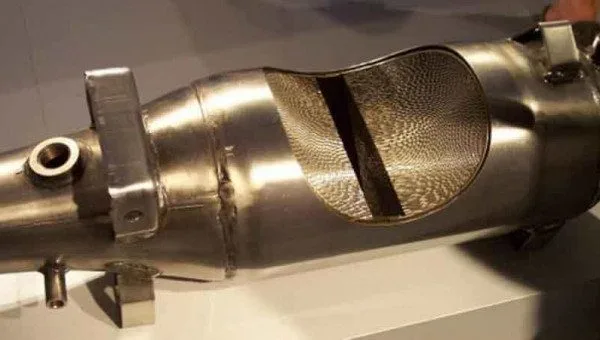
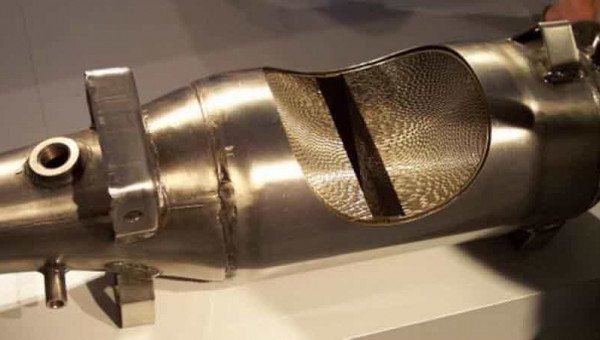
The catalytic converter is part of the exhaust system that looks somewhat like a muffler, although its job is very different from a muffler’s. The job of a catalytic converter is to reduce exhaust gas emissions.

The catalytic converter has an oxygen sensor at the front and rear. When the vehicle is hot and running in closed-loop mode, the upstream oxygen sensor waveform reading should fluctuate. The downstream O2 sensor reading should be fairly stable. Typically, the P0420 code triggers the Check Engine light if the readings from both sensors are similar. Oxygen sensors are also called O2 sensors.

This indicates (among other things) a converter that is not operating as efficiently as it should (according to specifications). Catalytic converters are normally not a “wear” item, meaning they are not designed to wear out and need replacement. If they have failed, it is likely due to something else that caused their failure. This is what a P0420 means in simplified terms.

Symptoms

The main symptom for the driver is the illumination of the MIL (Malfunction Indicator Light). You will probably not notice any driving issues, although there may be symptoms. For example, if the substance inside the catalytic converter is broken or failing, it can restrict the exhaust, which will result in a feeling of reduced vehicle power.

P0420 DTC Code

Causes

A P0420 code can mean that one or more of the following events have occurred:

  • Lead fuel was used where unleaded was required (unlikely)
  • A damaged or faulty oxygen/O2 sensor
  • Damaged or poorly connected downstream oxygen sensor (HO2S) wiring
  • The engine coolant temperature sensor is not working properly
  • Damaged or leaking exhaust manifold/catalytic converter/muffler/exhaust pipe
  • Faulty or underperforming catalytic converter (likely)
  • Retarded ignition timing
  • The oxygen sensors in front of and behind the converter report values that are too similar
  • Leaking fuel injector or high fuel pressure
  • Cylinder misfire
  • Oil contamination

Possible Solutions

Some suggested steps for troubleshooting and fixing a P0420 error code include:

  • Check for exhaust leaks at the manifold, pipes, and catalytic converter. Repair as needed.
  • Use an oscilloscope to diagnose the oxygen sensor operation (Tip: the oxygen sensor located in front of the catalytic converter normally has a fluctuating waveform. The waveform of the sensor behind the converter should be more stable).
  • Inspect the heated downstream oxygen sensor, replace if necessary
  • Replace the catalytic converter

Diagnostic Tip

Generally, you can look at the exhaust temperature just before and just after the converter using an infrared gun. The output should be about 100 degrees Fahrenheit hotter when the engine is fully warmed up.

Overall, the biggest mistake vehicle owners make when they have a P0420 code is simply replacing an oxygen sensor (O2 sensor). It is important to perform proper diagnostics so as not to waste money unnecessarily replacing parts.

If you need to replace the catalytic converter, we highly recommend replacing it with an original manufacturer brand unit (i.e., get it from a dealer). The second choice would be a high-quality replacement part like a 50-state legal cat. There are many stories in our forums where people replaced the cat with a cheaper aftermarket one only for the code to return shortly after.

One thing to note is that many automakers offer a longer warranty on emissions-related parts. So, if you have a newer car but it’s out of its bumper-to-bumper warranty, there may still be a warranty on this type of issue. Many manufacturers offer a five-year, unlimited mileage warranty on these items. It’s worth checking.

P0421 Catalyst Heater Efficiency Below Threshold

Diagnostic Code P0421: What Does It Mean?

Diagnostic code P0421 is a generic powertrain code, meaning it applies to all OBD-II compatible vehicles, regardless of brand. However, specific repair steps may vary depending on the vehicle manufacturer and model.

This code indicates that the oxygen sensor located after the catalytic converter (bank 1) detects that it is not functioning as efficiently as it should, according to the manufacturer’s standards. This malfunction is part of the vehicle’s emission control system.


Possible Symptoms

In many cases, no visible symptoms will be noticeable while driving. However, certain conditions may trigger the code, including:

  • Repeated cold starts in recent days.
  • A slight drop in performance may sometimes be observed (rarely).

Common Causes

The P0421 code can be triggered by one of the following issues:

  • Catalytic converter failure: the catalytic converter is no longer performing its function correctly.
  • Oxygen sensor defect: the downstream O2 sensor is not reading the exhaust gases accurately.
  • Fouled or worn spark plugs: poor combustion can disrupt gas analysis.

Possible Solutions and Repairs

Here are some avenues to explore to resolve this code:

  1. Check the oxygen sensor voltage (bank 1, sensor after the catalytic converter).
  2. Test all the vehicle’s O2 sensors, even those that do not seem directly involved.
  3. Inspect the condition of the spark plugs, replace them if necessary.
  4. Check the proper functioning of the catalytic converter, especially if the vehicle is older or has high mileage.

Tip: Consider the Warranty!

Good to know: some manufacturers offer an extended warranty on emission-related components, often up to 5 years with unlimited mileage. Even if the vehicle’s general warranty has expired, this type of coverage may still be in effect. Check with your dealership or consult your car’s maintenance manual.

P0422 Main Catalyst Efficiency Below Threshold (Bank 1)

The code P0422 means that the efficiency of the main catalyst (Bank 1) is below the required threshold according to the manufacturer’s specifications.


🔍 Decoding the P0422 Code

  • Generic OBD-II code: It applies to all OBD-II compatible vehicles, but the causes/repairs may vary by brand.
  • Inefficient catalyst (Bank 1): The PCM (Powertrain Control Module) detected that the gases exiting the catalyst are too similar to those entering, meaning the catalyst is no longer effectively converting pollutants (HC, CO, NOx).
  • Bank 1 = The side of the engine where cylinder #1 is located.

⚠️ Symptoms of the P0422 Code

  • Check Engine light illuminated,
  • Increased pollutant emissions,
  • In some cases: higher fuel consumption or reduced engine performance,
  • Failure of the emissions test (technical inspection).

🔧 Possible Causes

  1. Faulty or worn-out catalyst (very common),
  2. Faulty or misread downstream oxygen sensor (after catalyst),
  3. Abnormal air/fuel ratio due to:
    • Injector issues,
    • Airflow meter (MAF) problem,
    • Air intake leak,
    • Poor ignition,
    • Bad condition of spark plugs, filters, or coils,
  4. Use of a low-quality replacement catalyst (very common on Toyota, Subaru, etc.),
  5. Exhaust leak before or around the catalyst.

🛠️ Possible Solutions

1. Diagnose the Problem at the Source

  • OBD-II scan: confirm if the downstream oxygen sensor is switching too quickly (almost like the upstream one),
  • Check for exhaust leaks before the catalyst,
  • Check the condition and response of the oxygen sensors.

2. Check Engine Condition

  • Ensure the engine is running optimally: air/fuel mixture, ignition, compression, etc.
  • Perform a tune-up: spark plugs, coils, injectors, filters.

3. Catalyst Replacement

  • If the catalyst is indeed faulty:
    • Replace with an original (OEM) or certified catalyst (especially for Toyota/Subaru),
    • Avoid “universal” or cheap models if your vehicle is sensitive.

Conclusion

The P0422 code indicates that your catalyst is no longer doing its job correctly. Before replacing it, ensure the engine is running well, otherwise a new catalyst may fail quickly.

P0423 Heated Catalyst Efficiency Below Threshold (Bank 1)

P0423 Catalyst Efficiency The computer in your vehicle (the PCM) has detected that the catalyst (or “catalytic converter”) on bank 1 (the side of the engine where cylinder #1 is located) is not operating efficiently enough to reduce polluting emissions.


Role of the Catalytic Converter

  • It is a part of the exhaust system whose mission is to transform polluting gases (carbon monoxide, unburned hydrocarbons) into non-toxic gases (carbon dioxide, water vapor) using precious metals (like platinum) and heat.
  • To do its job, it must reach a very high temperature (at least 800 °F or 427 °C).

How Does the Computer Detect It?

The computer uses two oxygen sensors (lambda sensors):

  1. An upstream sensor (before the catalyst) that measures the gases exiting the engine.
  2. A downstream sensor (after the catalyst) that measures the gases after they have passed through the catalyst.
  • If the catalyst is working WELL: It “cleans” the gases. The downstream sensor sends a signal that is stable and very different from that of the upstream sensor.
  • If the catalyst is working POORLY: It no longer transforms the gases. The signals from both sensors become too similar. The computer deduces that the catalyst is inefficient and triggers the P0423 code and illuminates the check engine light.

Severity and Symptoms

  • Severity: Serious. This code should not be ignored, as it indicates a pollution problem and can mask other engine issues.
  • Possible Symptoms:
    • 🚨 Check engine light illuminated (the most common symptom).
    • Increased fuel consumption.
    • 🐌 Loss of engine power.
    • Sometimes, no noticeable symptoms other than the light.

Possible Causes (in order of likelihood)

The causes are not limited to the catalyst itself:

  1. Engine Problems: Unresolved misfires send too much unburned fuel into the exhaust, which overheats and destroys the catalyst. This is often the root cause!
  2. Exhaust Leaks: A leak before the catalyst (manifold, pipe) lets in cold air, preventing it from reaching its operating temperature.
  3. Faulty Oxygen Sensors: A downstream sensor sending a bad signal can trick the computer. (This is more common than a dead catalyst).
  4. Air Intake Problems: A faulty mass air flow (MAF) sensor or manifold absolute pressure (MAP) sensor can disrupt the air/fuel mixture and damage the catalyst.
  5. Wiring: Damaged or corroded electrical wires going to the oxygen sensors.
  6. The Catalyst Itself: As a last resort after eliminating all other causes. It could be clogged, melted, or “poisoned” (by engine oil or an unsuitable fuel additive).

What To Do? Diagnostic Procedure

Warning: Diagnosis requires an automotive scanner, a multimeter, and mechanical knowledge.

  1. Read All Codes: If there are other codes (especially for misfires, O2 sensor, MAF, MAP), repair them first. Clear the codes and perform a road test to see if the P0423 returns.
  2. Visual Inspection:
    • Check for exhaust leaks (hissing sounds, black soot) before the catalyst.
    • Inspect the wiring and connectors of the oxygen sensors for burns or damage.
  3. Use a Scanner:
    • Observe the live data from both oxygen sensors.
    • If the signals from both sensors are identical or very similar once the engine is warm, the catalyst is most likely dead.
    • If the downstream sensor is slow to react or its signal is flat, it might be faulty.
  4. Test the Oxygen Sensors with a multimeter if possible.

Conclusion: Don’t rush to replace the catalyst! It is a very expensive part. In the majority of cases, the P0423 code is a consequence of another problem (misfires, leak, sensor). Always start by inspecting and repairing the other possible causes.

If everything else is eliminated, then replacing the catalyst will be necessary. Prefer a new, quality catalytic converter over a refurbished one, which is often less reliable.

P0424 Heated Catalyst Temperature Below Threshold (Bank 1)

What does it mean?

This diagnostic trouble code (DTC) is a generic powertrain code, meaning it applies to OBD-II equipped vehicles (Dodge, Ram, Ford, GMC, Chevrolet, VW, Audi, Toyota, etc.). Although generic, specific repair steps may vary by make/model.

When I diagnosed a P0424 code, I found that the Powertrain Control Module (PCM) detected a problem with the heated catalytic converter temperature for engine bank one. Bank 1 indicates the problem occurred in the engine bank containing cylinder number one.

While I cannot state with absolute certainty that a P0424 code only applies to diesel engine vehicles; I have never seen it exposed in anything other than diesel engine vehicles.

Heated catalytic converters are used to reduce exhaust emissions produced by diesel engines. A filtration block, composed of ceramic fibers interwoven with platinum and other precious metals, enclosed in an inline steel housing and placed in the exhaust system, is the key component of the heated catalytic converter. Beyond the heat created as a byproduct of engine exhaust, diesel engine exhaust frequently needs to be heated further to sufficiently reduce nitrogen oxide particles (N2O), carbon monoxide, and unburned hydrocarbons into harmless ions of nitrogen, oxygen, carbon dioxide, and water. Temperatures inside the heated catalytic converter are often designed to reach a minimum of 1,200 degrees Fahrenheit. To produce the extreme temperatures needed to reduce emissions from diesel engines, diesel exhaust fluid is injected into the heated catalyst at intervals controlled by the PCM.

Upstream and downstream exhaust temperature sensors are used by the PCM to monitor the heated catalytic converter threshold. This is necessary to ensure the filtration element (catalyst) is sufficiently heated.

Exhaust gases are pushed through the manifold, into the exhaust pipe, past the upstream exhaust temperature sensor, and through the heated catalytic converter. After passing through the heated catalytic converter, they pass the downstream exhaust temperature sensor. The PCM is programmed with specific minimum requirements regarding the temperature differential between exhaust gases entering the catalyst and exhaust gases exiting the catalyst. These programmed requirements are referred to here as the heated catalyst temperature threshold.

If the heated catalyst temperature variation (between the upstream and downstream exhaust temperature sensors) is below the minimum allowed threshold, a P0424 code will be stored and a Malfunction Indicator Lamp (MIL) may be illuminated.

Other Bank 1 catalyst malfunction codes include P0420, P0421, P0422, P0423, P0425, P0426, P0427, P0428, and P0429.

Code Severity and Symptoms

If a P0424 code has been stored in your vehicle, it may indicate that the diesel exhaust fluid injection system is not functioning. This code should be classified as severe.

Symptoms of this code may include:

  • Decreased fuel efficiency
  • Lack of overall engine performance
  • Excessive black smoke from the exhaust
  • Other related diagnostic codes
  • MIL (Malfunction Indicator Lamp) illumination

Causes

Possible causes for this code being set are as follows:

  • Faulty diesel exhaust fluid injection system
  • Inadequate diesel exhaust fluid
  • Faulty exhaust temperature sensor(s)
  • Burned, broken, or disconnected wiring and/or connectors

Diagnostic and Repair Procedures

To diagnose a P0424 code, I would need a diagnostic scanner, a digital volt/ohmmeter (DVOM), an infrared thermometer (preferably with a laser pointer), and a reliable vehicle information source (such as All Data DIY).

Before attempting to diagnose a stored P0424 code, all codes related to the diesel exhaust fluid injection system should be addressed, and the engine must be running efficiently.

I normally start with a visual inspection of the system’s wiring harnesses and connectors, focusing on harnesses routed near hot exhaust pipes and manifolds, as well as those near sharp objects like exhaust shields.

Next, I would connect the scanner to the vehicle’s diagnostic port and retrieve all stored trouble codes and freeze frame data. I’ve found that writing down this information can prove helpful later in my diagnosis. Now, I would clear the codes and test drive the vehicle to see if the P0424 immediately resets.

I would start the engine and allow it to reach normal operating temperature if the P0424 is reset. I would test drive the vehicle while carefully using the scanner’s data stream to observe the exhaust temperature sensor input data. Limiting the data stream to include only relevant data will provide a more accurate data sample.

Once the PCM enters closed-loop operation and driving conditions are met for the diesel exhaust fluid injection system to be activated, the exhaust gas temperature sensor signals should reach an acceptable threshold and remain relatively stable. If not, access the catalytic converter by placing the vehicle on a lift or hoist and use the infrared thermometer to take a manual temperature reading of the exhaust pipe in the immediate vicinity of the exhaust temperature sensor(s). Compare the temperature displayed on the infrared thermometer with the data presented on the scanner to determine if there is a problem with either exhaust temperature sensor.

Consult your vehicle information source for the vehicle’s recommended specifications and use the DVOM to check the resistance of the exhaust temperature sensor in question.

Additional diagnostic notes:

  • The presence of a stored P0424 does not often condemn the catalytic converter
  • Exhaust temperature sensor failure is more common than catalytic converter failure
  • Diesel exhaust fluid must be present and of the correct type before diagnosing a P0424
  • Disconnect all associated controllers before attempting to test system circuit resistance with the DVOM

P0425 Catalyst Temperature Sensor Circuit Malfunction (Bank 1, Sensor 1)

What does it mean?

This diagnostic trouble code (DTC) is a generic powertrain code, meaning it applies to OBD-II equipped vehicles that have a catalytic converter temperature sensor (Subaru, Ford, Chevy, Jeep, Nissan, Mercedes-Benz, Toyota, Dodge, etc.). Although generic, the specific repair steps may vary by make/model.

The catalytic converter is one of the most important emission control devices on a vehicle. Exhaust gases pass through the catalytic converter where a chemical reaction occurs. This reaction transforms carbon monoxide (CO), hydrocarbons (HC), and nitrogen oxides (NOx) into harmless water (H2O) and carbon dioxide (CO2).

The converter’s efficiency is monitored by two oxygen sensors; one mounted upstream of the converter and one mounted downstream. By comparing the signals from the oxygen sensor (O2), the Powertrain Control Module (PCM) can determine if the catalytic converter is functioning correctly. A standard zirconia pre-catalyst O2 sensor will rapidly switch its output signal between approximately 0.1 and 0.9 volts. A reading of 0.1 volt indicates a lean air/fuel mixture, while 0.9 volt indicates a rich mixture. If the converter is working properly, the downstream sensor should read steadily around 0.45 volts.

The efficiency and temperature of the catalytic converter go hand in hand. If the converter is working as it should, the outlet temperature should be slightly higher than the inlet. The old rule of thumb was a 100-degree Fahrenheit difference. However, many modern vehicles might not show that much difference.

There is no actual “catalytic converter temperature sensor.” What the codes described in this article refer to is the oxygen sensor. The “Bank 1” part of the code indicates the issue is with the engine’s first bank. That is, the bank which includes cylinder number 1. “Sensor 1” refers to the sensor mounted upstream of the catalytic converter.

Trouble code P0425 is set when the PCM detects a malfunction in the Bank 1 Sensor 1 catalytic temperature sensor circuit.

Related diagnostic trouble codes include:

P0426 Catalytic Converter Temperature Sensor Circuit Range/Performance (Bank 1, Sensor 1)
P0427 Catalytic Converter Temperature Sensor Circuit Low (Bank 1, Sensor 1)
P0428 Catalytic Converter Temperature Sensor Circuit High (Bank 1, Sensor 1)

Code Severity and Symptoms

The severity of this code is moderate. Symptoms of a P0425 engine code may include:

Check Engine Light illuminated
Poor engine performance
Reduced fuel economy
Increased emissions

Causes

Possible

causes of this P0425 code include:

Faulty oxygen sensor
Wiring issues
Unbalanced air/fuel mixture
PCM programming / Faulty PCM

Diagnostic and Repair Procedures

Start by visually inspecting the upstream oxygen sensor and its associated wiring. Look for loose connections, damaged wiring, etc. Also check for exhaust leaks visually and audibly. An exhaust leak can cause a false oxygen sensor code. If damage is found, repair as needed, clear the code, and see if it returns.

Next, check for Technical Service Bulletins (TSBs) regarding the issue. If nothing is found, you will need to proceed with step-by-step diagnosis of the system. The following is a generalized procedure, as tests for this code vary by vehicle. To accurately test the system, you will need to refer to a diagnostic flowchart specific to your vehicle’s make/model.
Check for Other DTCs

Oxygen sensor codes can often be set due to engine performance issues causing an unbalanced air/fuel mixture. If other trouble codes are stored, you should address those first before proceeding with oxygen sensor diagnosis.
Check Sensor Operation

To do this, it’s best to use a scan tool or, better yet, an oscilloscope. Since most individuals don’t have access to an oscilloscope, we will cover diagnosing the oxygen sensor using a scan tool. Connect the scan tool to the OBD port under the dashboard. Turn the scan tool on and choose the parameter for Bank 1 Sensor 1 voltage from the data list. Bring the engine to operating temperature and view the sensor’s operation on the scan tool in graph mode. The sensor should switch rapidly between rich and lean (0.1 volts and 0.9 volts). If the sensor’s response is slow, it is likely faulty and needs replacement.

If the sensor reads above 0.55 volts consistently, either the sensor is faulty, the air/fuel mixture is too rich, or there is an open in the sensor’s signal circuit. If the sensor reads below 0.35 volts consistently, either the sensor is faulty, the air/fuel mixture is too lean, or there is high resistance or a short in the signal wire to the PCM.

Check the Circuit

Oxygen sensors produce their own voltage signal which is sent back to the PCM. Before continuing, you will want to consult factory wiring diagrams to determine which wires are which. Autozone offers free online repair manuals for many vehicles and ALLDATADIY offers single-vehicle subscriptions. To check for continuity between the sensor and the PCM, turn the ignition key to the “off” position and disconnect the O2 sensor connector. Connect a digital multimeter set to ohms (ignition off) between the PCM’s O2 sensor signal terminal and the signal wire. If the meter reads Out of Limits (OL), there is an open circuit between the PCM and the sensor that will need to be located and repaired. If the meter reads a numerical value, there is continuity.

Next, you will want to check the ground side of the circuit. To do this, turn the ignition key to the “off” position and disconnect the O2 sensor connector. Connect a digital multimeter set to ohms (ignition off) between the O2 sensor connector ground terminal (harness side) and chassis ground. If the meter reads Out of Limits (OL), there is an open circuit on the ground side of the circuit that will need to be located and repaired. If the meter reads a numerical value, there is continuity to ground.

Finally, you will want to verify that the PCM is processing the O2 sensor signal correctly. To do this, leave all connectors connected and insert a back-probing pin into the PCM’s signal terminal. Set the digital multimeter to the DC volts setting. With the engine warmed up, compare the voltage reading on the meter to that on the scan tool. If the two do not match, the PCM is likely faulty or requires reprogramming.

P0426 Catalyst Temperature Sensor Circuit Range Performance (Bank 1, Sensor 1)

What does it mean?

This diagnostic trouble code (DTC) is a generic powertrain code, meaning it applies to OBD-II equipped vehicles that have a catalytic converter temperature sensor (Subaru, Ford, Chevy, Jeep, Nissan, Mercedes-Benz, Toyota, Dodge, etc.). Although generic, the specific repair steps may vary by make/model.

The catalytic converter is one of the most important emission devices on a vehicle. Exhaust gases pass through the catalytic converter where a chemical reaction occurs. This reaction transforms carbon monoxide (CO), hydrocarbons (HC), and nitrogen oxides (NOx) into harmless water (H2O) and carbon dioxide (CO2).

The converter’s efficiency is monitored by two oxygen sensors; one mounted upstream of the converter and one mounted downstream. By comparing the oxygen sensor (O2) signals, the powertrain control module (PCM) can determine whether the catalytic converter is functioning properly. A standard zirconia pre-catalyst O2 sensor will rapidly switch its output signal between approximately 0.1 and 0.9 volts. A reading of 0.1 volt indicates a lean air/fuel mixture, while 0.9 volt indicates a rich mixture. If the converter is working correctly, the downstream sensor should read steadily around 0.45 volts.

The catalytic converter’s efficiency and temperature go hand in hand. If the converter is working as it should, the outlet temperature should be slightly higher than the inlet. The old rule of thumb was a 100-degree Fahrenheit difference. However, many modern vehicles might not show that much difference.

There is no actual “catalytic converter temperature sensor.” What the codes described in this article refer to is the oxygen sensor. The “Bank 1” part of the code indicates the problem is with the engine’s first bank. That is, the bank that includes cylinder number 1. “Sensor 1” refers to the sensor mounted upstream of the catalytic converter.

Trouble code P0426 is set when the PCM detects a malfunction with the catalytic converter temperature sensor.

Related diagnostic trouble codes include:

P0425 Catalytic converter temperature sensor circuit malfunction (Bank 1, Sensor 1)
P0427 Catalytic converter temperature sensor circuit low (Bank 1, Sensor 1)
P0428 Catalytic converter temperature sensor circuit high (Bank 1, Sensor 1)

Code Severity and Symptoms

The severity of this code is moderate. Symptoms of a P0426 engine code may include:

Check Engine Light illuminated
Poor engine performance
Reduced fuel economy
Increased emissions

Causes

Possible causes for this P0426 code include:

Faulty oxygen sensor
Wiring issues
Unbalanced air/fuel mixture
PCM programming / faulty PCM

Diagnostic and Repair Procedures

Start by visually inspecting the upstream oxygen sensor and its corresponding wiring. Look for loose connections, damaged wiring, etc. Also check for exhaust leaks visually and audibly. An exhaust leak can cause a false oxygen sensor code. If damage is found, repair as needed, clear the code, and see if it returns.

Next, check for Technical Service Bulletins (TSBs) regarding the issue. If nothing is found, you will need to move on to step-by-step diagnosis of the system. The following is a generalized procedure, as tests for this code vary by vehicle. To accurately test the system, you will need to refer to a diagnostic flowchart specific to the vehicle’s make/model.
Check for Other DTCs

Oxygen sensor codes can often be set due to engine performance problems causing an unbalanced air/fuel mixture. If other trouble codes are stored, you should address them first before proceeding with oxygen sensor diagnosis.
Check Sensor Operation

To do this, it’s best to use a scan tool or, even better, an oscilloscope. Since most individuals don’t have access to an oscilloscope, we will cover diagnosing the oxygen sensor using a scan tool. Connect the scan tool to the OBD port under the dashboard. Turn the scan tool on and choose the Bank 1 Sensor 1 voltage parameter from the data list. Bring the engine to operating temperature and view the sensor’s operation on the scan tool in graph mode. The sensor should switch rapidly between rich and lean (0.1 volts and 0.9 volts). If the sensor’s response is slow, it is likely faulty and needs replacement.

If the sensor reads above 0.55 volts constantly, either the sensor is faulty, the air/fuel mixture is too rich, or there is an open in the sensor’s signal circuit. If the sensor reads below 0.35 volts constantly, either the sensor is faulty, the air/fuel mixture is too lean, or there is high resistance or a short in the signal wire to the PCM.

Check the Circuit

Oxygen sensors produce their own voltage signal which is sent back to the PCM. Before proceeding, you will want to consult factory wiring diagrams to determine which wires are which. Autozone offers free online repair manuals for many vehicles and ALLDATADIY offers single vehicle subscriptions. To check continuity between the sensor and the PCM, turn the ignition key to the “off” position and disconnect the O2 sensor connector. Connect a digital multimeter set to ohms (ignition off) between the PCM’s O2 sensor signal terminal and the signal wire. If the meter reads Out of Limits (OL), there is an open circuit between the PCM and the sensor which will need to be located and repaired. If the meter reads a numerical value, there is continuity.

Next, you will want to check the ground side of the circuit. To do this, turn the ignition key to the “off” position and disconnect the O2 sensor connector. Connect a digital multimeter set to ohms (ignition off) between the O2 sensor connector ground terminal (harness side) and chassis ground. If the meter reads Out of Limits (OL), there is an open circuit on the ground side of the circuit which will need to be located and repaired. If the meter reads a numerical value, there is continuity to ground.

Finally, you will want to verify that the PCM is processing the O2 sensor signal correctly. To do this, leave all connectors connected and insert a back-probing pin into the PCM’s signal terminal. Set the digital multimeter to the DC volts setting. With the engine warmed up, compare the voltage reading on the meter to the one on the scan tool. If the two do not match, the PCM is likely faulty or requires reprogramming.

Low Catalyst Temperature Sensor Circuit (Bank 1, Sensor 1)

What Does It Mean?

This diagnostic code (DTC) is a generic powertrain code, meaning it applies to OBD-II equipped vehicles that have a catalytic converter temperature sensor (Subaru, Ford, Chevy, Jeep, Nissan, Mercedes-Benz, Toyota, Dodge, etc.). Although generic, the exact repair steps may vary by make/model.

The catalytic converter is one of the most important emission devices on a vehicle. Exhaust gases pass through the catalytic converter where a chemical reaction occurs. This reaction transforms carbon monoxide (CO), hydrocarbons (HC), and nitrogen oxides (NOx) into harmless water (H2O) and carbon dioxide (CO2).

The converter’s efficiency is monitored by two oxygen sensors; one mounted upstream of the converter and one mounted downstream. By comparing the oxygen sensor (O2) signals, the Powertrain Control Module (PCM) can determine if the catalytic converter is functioning correctly. A standard zirconia pre-catalyst O2 sensor will rapidly switch its output signal between approximately 0.1 and 0.9 volts. A reading of 0.1 volt indicates a lean air/fuel mixture, while 0.9 volt indicates a rich mixture. If the converter is working properly, the downstream sensor should read steadily around 0.45 volts.

Catalytic converter efficiency and temperature go hand in hand. If the converter is working as it should, the outlet temperature should be slightly higher than the inlet. The old rule of thumb was a 100-degree Fahrenheit difference. However, many modern vehicles might not show that much difference.

There is no actual “catalyst temperature sensor.” What the codes described in this article refer to is the oxygen sensor. The “Bank 1” part of this code indicates the problem is coming from the engine’s first bank. That is, the bank that includes cylinder number 1. “Sensor 1” refers to the sensor mounted upstream of the catalytic converter.

Trouble code P0427 is set when the PCM detects a low catalyst temperature sensor signal. This typically indicates the circuit is shorted.

Related diagnostic codes include:

P0425 Catalyst Temperature Sensor Circuit Malfunction (Bank 1, Sensor 1)
P0426 Catalyst Temperature Sensor Circuit Range/Performance (Bank 1, Sensor 1)
P0428 Catalyst Temperature Sensor Circuit High (Bank 1, Sensor 1)

Code Severity and Symptoms

The severity of this code is moderate. Symptoms of a P0427 engine code may include:

Check Engine Light illuminated
Poor engine performance
Reduced fuel economy
Increased emissions

Causes

Possible causes of this P0427 code include:

Faulty oxygen sensor
Wiring issues
Unbalanced air/fuel mixture
PCM programming / Faulty PCM

Diagnostic and Repair Procedures

Start by visually inspecting the upstream oxygen sensor and its corresponding wiring. Look for loose connections, damaged wiring, etc. Also check for exhaust leaks visually and audibly. An exhaust leak can cause a false oxygen sensor code. If damage is found, repair as necessary, clear the code, and see if it returns.

Next, check for Technical Service Bulletins (TSBs) regarding the issue. If nothing is found, you will need to proceed with step-by-step diagnosis of the system. The following is a generalized procedure, as tests for this code vary by vehicle. To accurately test the system, you will need to refer to a diagnostic flowchart specific to the vehicle’s make/model.
Check for Other DTCs

Oxygen sensor codes can often be set due to engine performance issues causing an unbalanced air/fuel mixture. If other trouble codes are stored, you should address those first before proceeding with oxygen sensor diagnosis.
Check Sensor Operation

To do this, it is best to use a scan tool or, even better, an oscilloscope. Since most individuals do not have access to an oscilloscope, we will cover diagnosing the oxygen sensor using a scan tool. Connect the scan tool to the OBD port under the dashboard. Turn on the scan tool and choose the Bank 1 Sensor 1 voltage parameter from the data list. Bring the engine to operating temperature and view the sensor’s operation on the scan tool in graph mode. The sensor should rapidly switch between rich and lean (0.1 volts and 0.9 volts). If the sensor’s response is slow, it is likely faulty and needs replacement.

If the sensor reads above 0.55 volts consistently, either the sensor is faulty, the air/fuel mixture is too rich, or there is an open in the sensor’s signal circuit. If the sensor reads below 0.35 volts consistently, either the sensor is faulty, the air/fuel mixture is too lean, or there is high resistance or a short in the signal wire to the PCM.

Check the Circuit

Oxygen sensors produce their own voltage signal which is sent back to the PCM. Before continuing, you will want to consult factory wiring diagrams to determine which wires are which. Autozone offers free online repair manuals for many vehicles and ALLDATADIY offers single-vehicle subscriptions. To check continuity between the sensor and the PCM, turn the ignition key to the “off” position and disconnect the O2 sensor connector. Connect a digital multimeter set to ohms (ignition off) between the PCM’s O2 sensor signal terminal and the signal wire. If the meter reads Out of Limits (OL), there is an open circuit between the PCM and the sensor which will need to be located and repaired. If the meter reads a numerical value, there is continuity.

Next, you will want to check the ground side of the circuit. To do this, turn the ignition key to the “off” position and disconnect the O2 sensor connector. Connect a digital multimeter set to ohms (ignition off) between the O2 sensor connector ground terminal (harness side) and chassis ground. If the meter reads Out of Limits (OL), there is an open circuit on the ground side of the circuit which will need to be located and repaired. If the meter reads a numerical value, there is continuity to ground.

Finally, you will want to verify that the PCM is processing the O2 sensor signal correctly. To do this, leave all connectors connected and insert a back-probing pin into the PCM’s signal terminal. Set the digital multimeter to the DC volts setting. With the engine warmed up, compare the voltage reading on the meter to that on the scan tool. If the two do not match, the PCM is likely faulty or requires reprogramming.