P062D Fuel Injector Control Circuit Performance, Bank 1

P062D Fuel Injector Driver Circuit Performance, Bank 1

What Does It Mean?

This is a generic diagnostic trouble code (DTC) and applies to many OBD-II vehicles (1996-newer). This may include, but is not limited to, vehicles from Ford, Honda, Hyundai, Kia, Land Rover, Toyota, Volkswagen, etc. Although generic, the exact repair steps may vary depending on the year, make, model, and powertrain configuration.

If your OBD-II vehicle has stored a P062D code, it means the Powertrain Control Module (PCM) has detected a performance problem with the fuel injector driver circuit for engine bank one. Bank 1 refers to the engine bank that contains cylinder number one.

The fuel injector driver is an integral part of the PCM or the Electronic Fuel Injection (EFI) controller (if applicable).

The PCM controls the injector timing and pulse width by applying a ground pulse to the circuit at precisely the right moment. Since a constant supply of battery voltage is already present on the circuit (whenever the ignition is on), this triggers a precise spray of fuel from the pressurized fuel injector. This action occurs for each cylinder in sequential repetition.

In addition to controlling the fuel injection system, the PCM also monitors the feedback resistance of the individual fuel injector circuit for signs of malfunction. This can allow the PCM to detect a problem before it presents itself as a driving issue.

If the PCM detects a fuel injector feedback signal that is not within the expected parameters, a P062D code will be stored and a Malfunction Indicator Lamp (MIL) may be illuminated. MIL illumination typically occurs upon the initial failure of such a code.

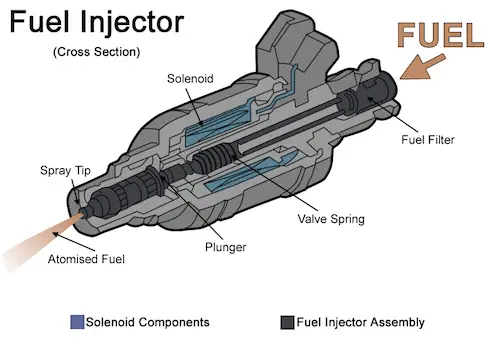
A typical fuel injector:


P062D Fuel Injector
How severe is this DTC?


A stored P062D code, or any code related to fuel injection, should be classified as severe and investigated urgently.

What are some of the symptoms of the code?

Symptoms of a P062D trouble code may include:

  • Reduced fuel efficiency
  • Engine misfires (with stored codes)
  • Hesitation or stalling during acceleration
  • Decreased engine performance

What are some of the common causes of the code?

Causes of this code may include:

  • Open or shorted wiring or connector in the injector driver circuit for bank 1
  • Faulty fuel injector
  • Defective PCM or EFI controller
  • Controller programming error

What are the troubleshooting steps for P062D?

To accurately diagnose a stored P062D code, a diagnostic scanner, a digital volt/ohmmeter (DVOM), an oscilloscope, and a source of vehicle diagnostic information will be necessary. A scanner, like the Snap-On Modis, with a built-in DVOM and oscilloscope will work well for this task. Without an oscilloscope, it will be impossible to monitor the injector’s function and arrive at a successful diagnosis.

I like to start my diagnosis by connecting the scanner to the vehicle’s diagnostic port and retrieving all stored codes and associated freeze frame data. Before clearing the codes, I write this information down for reference purposes. After clearing the codes from the PCM, I test drive the vehicle until the PCM enters readiness mode or the code resets.

If the PCM enters readiness mode without the code resetting:
There is a high likelihood that you have an intermittent problem. If the code does not reset within a reasonable time, the condition may need to worsen before an accurate diagnosis can be made.

If the code is immediately reset:

Perform a visual inspection of all associated wiring and connectors. You will want to replace any burnt or damaged components as needed. Attempting to patch a fuel injector wiring harness often results in the PCM receiving an asymmetrical fuel injector driver feedback signal and additional stored codes.

If the system wiring and connectors appear functional, use the oscilloscope to test each individual fuel injector. Consult your vehicle information source for diagnostic flowcharts, wiring diagrams, connector face views, connector pinout diagrams, and recommended testing procedures/specifications for the vehicle in question. Once the oscilloscope test leads are connected, note any inconsistency in the waveform (voltage) pattern. Replace faulty fuel injectors as necessary. If no anomalies are discovered in the fuel injector operation, proceed to the next step.

After testing the fuel injectors, disconnect all controllers from the injector driver circuit and use the DVOM to test the system circuits. Replace wiring and/or connectors as needed.

If all fuel injectors and system circuits are operating as expected, suspect a controller failure or a controller programming error.

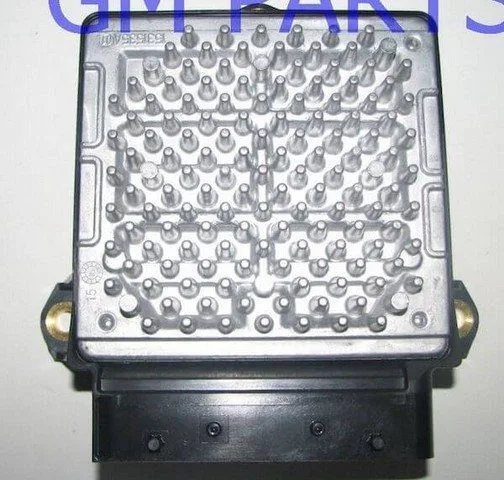
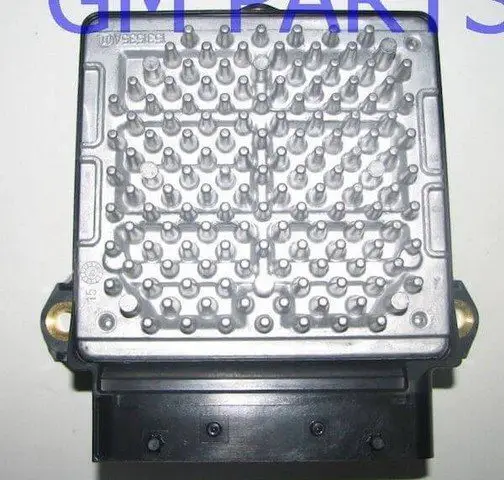
The fuel injector driver/controller is typically integrated into the PCM
Fuel Injector Control Circuit, Row 2 Performance

What Does It Mean?

This is a generic diagnostic trouble code (DTC) and applies to many OBD-II vehicles (1996-newer). This may include, but is not limited to, vehicles from Ford, Honda, Hyundai, Kia, Land Rover, Toyota, Volkswagen, etc. Although generic, the exact repair steps may vary depending on the year, make, model, and powertrain configuration.

If your OBD-II vehicle has stored a P062E code, it means that the Powertrain Control Module (PCM) has detected a performance issue with the fuel injector control circuit for engine bank 2. The second bank indicates the engine bank that does not contain cylinder number 1.

The fuel injector driver is an integral part of the PCM or the Electronic Fuel Injection controller (EFI) (if applicable).

The PCM controls the injector timing and pulse width by applying a ground pulse to the circuit at precisely the right moment. Since a constant supply of battery voltage is already present on the circuit (whenever the ignition is on), this triggers a precise spray of fuel from the pressurized fuel injector. This action occurs for each cylinder in sequential repetition.

In addition to controlling the fuel injection system, the PCM also monitors the feedback resistance of the individual fuel injector circuit to detect signs of malfunction. This can allow the PCM to detect a problem before it manifests as a driving issue.

If the PCM detects a fuel injector confirmation signal that is not within the expected parameters, a P062E code will be stored and a Malfunction Indicator Lamp (MIL) may be illuminated. The MIL illumination typically occurs upon the initial failure of such a code.

A typical fuel injector:


P062E Fuel Injector
How Severe is this DTC?

A stored P062E code, or any code related to fuel injection, should be classified as severe and investigated urgently.
What are some of the symptoms of the code?

Symptoms of a P062E fault code may include:

Reduced fuel efficiency
Engine misfires (with stored codes)
Hesitation or stalling during acceleration
Decreased engine performance

What are some of the common causes of the code?

Causes

of this code may include:

Open or shorted wiring or connector in the injector control circuit for bank 2
Faulty fuel injector
Defective PCM or EFI controller
Controller programming error

What are the P062E troubleshooting steps?

To accurately diagnose a stored P062E code, a diagnostic scanner, a digital volt/ohmmeter (DVOM), an oscilloscope, and a source of vehicle diagnostic information will be necessary. A scanner, like the Snap-On Modis, with a built-in DVOM and oscilloscope will work well for this task. Without an oscilloscope, it will be impossible to monitor the injector’s function and achieve a successful diagnosis.

I like to start my diagnosis by connecting the scanner to the vehicle’s diagnostic port and retrieving all stored codes and associated freeze frame data. Before clearing the codes, I write down this information for reference. After clearing the codes from the PCM, I test drive the vehicle until the PCM enters readiness mode or the code resets.

If the PCM enters readiness mode without the code resetting:
There is a strong chance you have an intermittent problem. If the code does not reset within a reasonable time, the condition may need to worsen before an accurate diagnosis can be made.

If the code resets immediately:
Perform a visual inspection of all associated wiring and connectors. You will want to replace any burnt or damaged components as necessary. Attempting to patch a fuel injector wiring harness often results in the PCM receiving an asymmetrical fuel injector driver confirmation signal and additional stored codes.

If the system wiring and connectors appear functional, use the oscilloscope to test each individual fuel injector. Consult your vehicle information source for diagnostic flowcharts, wiring diagrams, connector face views, connector pinout diagrams, and recommended testing procedures/specifications for the vehicle in question. Once the oscilloscope test leads are connected, note any inconsistencies in the waveform (voltage) pattern. Replace faulty fuel injectors as needed. If no anomalies are discovered in the fuel injector operation, proceed to the next step.

After testing the fuel injectors, disconnect all controllers from the injector control circuit and use the DVOM to test the system circuits. Replace wiring and/or connectors as necessary.

If all fuel injectors and system circuits are functioning as expected, suspect a controller failure or a controller programming error.

The fuel injector driver/controller is typically integrated into the PCM

P062F Internal Control Module EEPROM Error

What does it mean?

This is a generic diagnostic trouble code (DTC) for the powertrain and generally applies to OBD-II vehicles. This may include, but is not limited to, vehicles from Buick, Chevy, GMC, Ford, Toyota, Nissan, Mercedes, Honda, Cadillac, Suzuki, Subaru, etc. Although generic, the exact repair steps may vary depending on the year, make, model, and powertrain configuration.

When a P062F code is stored, it means that the Powertrain Control Module (PCM) has detected an internal performance error with the Electrically Erasable Programmable Read-Only Memory (EEPROM). Other controllers may also detect an internal PCM performance error (in the EEPROM) and cause a P062F to be stored.

The internal control module monitoring processors are responsible for various controller self-test tasks and the overall responsibility of the internal control module. EEPROM input and output signals are self-tested and are constantly monitored by the PCM and other associated controllers. The Transmission Control Module (TCM), Traction Control System Module (TCSM), and other controllers also interact with the EEPROM.

In automotive applications, EEPROM provides a way to read, erase, and rewrite small amounts (bytes) of programmable memory. Using specific programming, the EEPROM (or any part of the EEPROM) can be erased and rewritten in sequence. The EEPROM is a bank of transistors consisting of three parts. It is generally removable and locks into a specially designed socket inside the PCM. When a faulty PCM is replaced, the EEPROM usually must be removed and reused in the new PCM. The EEPROM and the new PCM will need to be programmed as a unit. Even though the EEPROM is capable of more than a million programming changes and is designed to last for hundreds of years, it can be sensitive to excessive heat and humidity.

Whenever the ignition is turned on and the PCM is powered up, EEPROM self-tests are initiated. In addition to running internal controller self-tests, the Controller Area Network (CAN) also compares the signals from each individual module to ensure each controller is functioning correctly. These tests are performed simultaneously.

If the PCM detects anomalies in EEPROM functionality, a P062F code will be recorded and a Malfunction Indicator Lamp (MIL) may be illuminated. Additionally, if the PCM detects a problem between any of the onboard controllers, which would indicate an internal EEPROM error, a P062F code will be stored and a Malfunction Indicator Lamp (MIL) may be illuminated. Multiple failure cycles may be required for the MIL to illuminate, depending on the perceived severity of the malfunction.

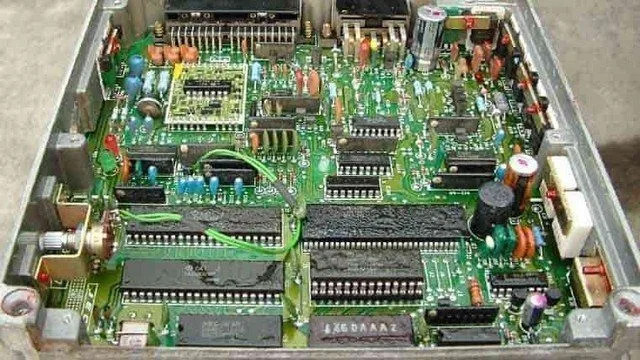
Photo of a PCM with the cover removed:

How severe is this DTC?

Internal control module processor codes should be classified as severe. A stored P062F code can lead to various driving issues.

What are some of the symptoms of the code?

Symptoms of a P062F fault code may include:

  • Many engine/transmission driving problems
  • No-start condition
  • Reduced fuel efficiency
  • Engine stalling or dying at idle
  • Lack of cooling fan operation

What are some common causes of the code?

Causes of this P062F DTC code may include:

  • Faulty controller or programming error
  • Overheated PCM
  • Water damage
  • A faulty controller power relay or blown fuse
  • Open or shorted circuit or connectors in the CAN bus
  • Insufficient control module ground
  • Faulty EEPROM

What are the P062F troubleshooting steps?

Even for the most experienced and well-equipped professional technician, diagnosing a P062F code can be very challenging. There is also the issue of reprogramming. Without the necessary reprogramming equipment, it will be impossible to replace a faulty controller and perform a successful repair.

If ECM/PCM power codes are present, they will obviously need to be corrected before attempting to diagnose a P062F.

Several preliminary tests can be performed before declaring an individual controller faulty. A diagnostic scanner, a digital volt/ohmmeter (DVOM), and a reliable source of vehicle information will be necessary.

Connect the scanner to the vehicle’s diagnostic port and retrieve all stored codes and freeze frame data. You will want to note this information, just in case the code proves to be intermittent. After recording all relevant information, clear the codes and test the vehicle until the code resets or the PCM enters readiness mode. If the PCM enters readiness mode, the code is intermittent and will be more difficult to diagnose. The condition that caused the P062F to be stored may even need to worsen before a diagnosis can be made. If the code resets, continue with this short list of preliminary tests.

When trying to diagnose a P062F, information can be your best tool. Consult your vehicle information source for Technical Service Bulletins (TSBs) that correlate the stored code, the vehicle (year, make, model, and engine), and the symptoms presented. If you find the right TSB, it can provide diagnostic information that will significantly assist you.

Use your vehicle information source to obtain connector face views, connector pinout diagrams, component locators, wiring schematics, and diagnostic flowcharts related to the specific code and vehicle.

Use the DVOM to test the controller power fuses and relays. Test and replace blown fuses as needed. Fuses should be tested under load.

If all fuses and relays appear to be functioning as expected, a visual inspection of the wiring and harnesses related to the controller is necessary. You will also want to check the chassis and engine ground junctions. Use your vehicle information source to obtain ground locations for the related circuits. Use the DVOM to test ground integrity.

Visually inspect the system controllers for signs of water, heat, or collision damage. Any damaged controller, especially by water, should be considered faulty.

If the controller power and ground circuits are intact, suspect a faulty controller or a controller programming error. Replacing the controller will require reprogramming. In some cases, you can purchase pre-programmed controllers through aftermarket sources. Other vehicles/controllers will require onboard reprogramming that can only be performed by a dealership or another qualified source.

Unlike most other codes, P062F is likely caused by a faulty controller or a controller programming error
Test the system ground integrity by connecting the DVOM’s negative test lead to ground and the positive test lead to battery voltage

P0630 VIN not programmed or incompatible – ECM / PCM

What Does It Mean?

This is a generic diagnostic trouble code (DTC) and applies to many OBD-II vehicles (1996-newer). This may include, but is not limited to, vehicles from Ford, Hyundai, Toyota, Lotus, Dodge, Ram, Honda, Cummins, etc. Although generic, the exact repair steps may vary depending on the year, make, model, and powertrain configuration.

When a P0630 code is stored, it means that the Engine Control Module (ECM) or Powertrain Control Module (PCM) does not recognize the 17-character Vehicle Identification Number (VIN).

Every vehicle produced in North America is assigned a VIN. This series of numbers and letters indicates the country of manufacture, year, make, and model of the vehicle, as well as any special equipment and the engine size/type. The last six digits at the end of the VIN provide the sequence in which each vehicle was produced. No vehicle is assigned exactly the same number.

Since the creation of OBD-II diagnostic systems, the VIN has been programmed into each ECM/PCM (after its installation in the vehicle). Other controllers may also be programmed to recognize the VIN, but a federal mandate requires that the ECM/PCM be programmed as such.

The main reason why the government and the automotive industry insist that the ECM/PCM be programmed to recognize the VIN is to deter vehicle and controller theft and to prevent odometer tampering. System controllers cannot be swapped between vehicles without being programmed to match the vehicle. The vehicle’s mileage is also programmed into the ECM/PCM. If controllers could be swapped between vehicles, odometer readings would be much less accurate, if not completely unreliable. When an ECM/PCM is replaced, it must be programmed with the vehicle’s mileage and VIN (among other things).

If the ECM/PCM fails to find or recognize the VIN, a P0630 code will be stored, and a Malfunction Indicator Lamp (MIL) may illuminate. The ECM/PCM searches for the VIN when the key is turned on and the self-test is performed. In most cases, the ECM/PCM will not operate without VIN recognition.

Photo of a PCM with the cover removed:


P0630 Powertrain Control Module PCM
How Severe Is This DTC?

Since the ECM/PCM will likely not operate without VIN recognition, a stored P0630 code should be classified as severe.
What Are Some of the Symptoms of the Code?

Symptoms of a P0630 trouble code may include:

No start condition
The vehicle security system may be activated
Other diagnostic trouble codes will likely be stored

What Are Some of the Common Causes of the Code?

Causes

of this code may include:

ECM/PCM programming error
ECM/PCM swapped between vehicles or replaced without being properly programmed
ECM/PCM failure

What Are the P0630 Troubleshooting Steps?

Unlike most other stored codes, P0630 is usually related to an ECM/PCM failure or some type of programming error. Due to the sensitive nature of certain parameters that must be programmed into the ECM/PCM (VIN and mileage), access to reprogramming equipment should be limited to qualified personnel. Without the means to reprogram the controller in question, a successful repair will be very unlikely.

You will need a diagnostic scanner and a reliable source of vehicle information to arrive at a reasonable diagnosis for a P0630 code. Use the vehicle information source to look up applicable Technical Service Bulletins (TSBs). If you find a TSB that matches the vehicle’s make and model, the symptoms presented, and the stored code, it will help guide you in the right direction.

I would connect the diagnostic scanner to the vehicle’s diagnostic port and read the VIN as perceived by the ECM/PCM. Compare the diagnostic scanner’s VIN with the actual VIN (driver’s side lower corner of the windshield). If the engraved VIN label does not match the VIN displayed on the scanner, suspect that the ECM/PCM has been replaced with one from another vehicle.

IF the VIN is not displayed on the scanner, suspect that the ECM/PCM was replaced without programming it to match the vehicle. If not, you may suspect an ECM/PCM failure or a programming error.

In some cases, aftermarket replacement ECMs/PCMs (which have been reprogrammed to match the vehicle in question) can be purchased. If this is possible, you will need to provide the parts supplier with the vehicle’s mileage and VIN, as well as any other relevant data.

Unfortunately, there is no foolproof method for testing the ECM/PCM. Nevertheless, it is relatively safe to assume that, unless the controller was replaced without proper programming, some type of controller failure has occurred.

Any OBD-II controller replacement will likely require reprogramming

P0631 VIN not programmed or incompatible – TCM

Code P0631: Explanation, Severity, and Solutions

The code P0631 is a generic OBD-II code indicating that the Transmission Control Module (TCM) does not recognize the Vehicle Identification Number (VIN). This code primarily concerns vehicles equipped with automatic transmissions and involves a communication or programming issue between the TCM and the vehicle’s other controllers.


Meaning of Code P0631

  • The VIN is a unique 17-character identifier programmed into the PCM/ECM (Powertrain Control Module).
  • The TCM must also be programmed to recognize this VIN to ensure data consistency (e.g., mileage, powertrain configuration).
  • If the TCM fails to read or validate the VIN, code P0631 is stored, and the Malfunction Indicator Lamp (MIL) illuminates.

Purpose of the VIN in Controllers:

  • Anti-Theft: Prevents swapping controllers between vehicles.
  • Mileage Reliability: Mileage is recorded in the PCM/ECM and must match other modules.
  • Compatibility: Ensures controllers (PCM, TCM, etc.) are specific to the vehicle.

Severity of Code P0631

  • Severe: Without VIN recognition, the TCM may disable certain automatic transmission functions, leading to:
  • Irregular or stuck gear shifts.
  • Engine stalling (especially at idle).
  • Activation of the anti-theft system or other error codes.

Common Symptoms

  • Transmission not shifting gears correctly.
  • Illuminated Malfunction Indicator Lamp.
  • Unstable idle or stalling.
  • Error messages related to security or the transmission system.

Possible Causes

  1. TCM not programmed or incorrectly programmed (e.g., replacement without VIN update).
  2. TCM failure (internal malfunction).
  3. Communication problem between PCM and TCM (damaged wires, corroded connectors).
  4. Incompatible VIN: TCM from another vehicle without reprogramming.

Diagnostic Procedures and Solutions

Step 1: VIN Verification

  • Use a diagnostic scanner to read the VIN stored in the TCM.
  • Compare it with the actual VIN (engraved on the windshield or manufacturer’s plate).
  • Mismatch → TCM replaced without reprogramming.
  • Missing VIN → TCM faulty or not programmed.

Step 2: Check Technical Service Bulletins (TSB)

  • Consult manufacturer TSBs for known programming errors.

Step 3: TCM Reprogramming

  • If the TCM has been replaced, it must be reprogrammed with:
  • The vehicle’s VIN.
  • The current mileage.
  • The specific engine and transmission configuration.
  • This operation requires a professional diagnostic tool (e.g., Snap-On, OEM-specific).

Step 4: TCM Replacement

  • In case of internal TCM failure, install a new or used module that is pre-programmed to match the vehicle.

Important Notes

  • Restricted Access: Controller reprogramming is reserved for professionals with appropriate tools.
  • Compatibility: Used or aftermarket TCMs must be reconfigured for the target vehicle.
  • Costs: Replacing and reprogramming a TCM can be expensive (expect between €500 and €1500 depending on the model).

Summary of Actions

  1. Read the VIN via a scanner and compare it with the original.
  2. Reprogram the TCM if necessary.
  3. Replace the TCM if a failure is confirmed.

To avoid major malfunctions, consult an authorized garage or an automotive electronics specialist.

P0632 Odometer Not Programmed – ECM / PCM

What Does It Mean?

This is a generic diagnostic trouble code (DTC) and applies to many OBD-II vehicles (1996-newer). This may include, but is not limited to, vehicles from Mercedes Benz, Ford, Dodge, Ram, Jeep, Hyundai, etc. Although generic, the exact repair steps may vary depending on the year, make, model, and powertrain configuration.

When a P0632 code is stored, it means that the Engine Control Module (ECM) or Powertrain Control Module (PCM) has detected an incorrect or non-existent odometer reading (mileage).

Since the creation of OBD-II diagnostic systems, a method of recording the vehicle’s mileage has been programmed into each ECM/PCM. Other controllers (including the Instrument Panel Control – IPC module) may also be programmed to record mileage, but a federal mandate requires the ECM/PCM to be programmed as such.

The main reason why the government and the automotive industry insist that the ECM/PCM be programmed to record mileage is to prevent odometer tampering. System controllers cannot be swapped between vehicles without being programmed with the correct vehicle mileage. If controllers could be randomly swapped between vehicles, odometer readings would be much less accurate, if not completely unreliable. When an ECM/PCM is replaced, it must be programmed with the vehicle’s odometer reading and VIN (among other things).

If the ECM/PCM fails to find or recognize an acceptable odometer reading, a P0632 code will be stored, and a Malfunction Indicator Lamp (MIL) may be illuminated. The ECM/PCM checks the odometer reading and compares it with the IPC odometer figure whenever the key is turned on and the self-test function is activated.

Photo of a PCM with the cover removed:


Powertrain Control Module P0632 PCM
How Severe Is This DTC?

A stored P0632 code should be classified as severe, especially if you are not familiar with the vehicle’s history. Odometer inconsistencies can lead to serious vehicle registration issues.
What are some of the symptoms of the code?

Symptoms of a P0632 trouble code may include:

No odometer display (or intermittent)
Incorrect odometer reading
Erratic speedometer operation
The vehicle security system may be activated
Other diagnostic codes will likely be stored

What are some common causes of the code?

Causes

of this code may include:

ECM/PCM programming error
ECM/PCM swapped between vehicles and/or replaced without proper programming
ECM/PCM failure
IPC programming error
Instrument cluster replacement without proper reprogramming

What are the troubleshooting steps for P0632?

Unlike most other stored codes, P0632 is usually related to a controller failure or some type of controller programming error. Due to the sensitive nature of certain parameters that must be programmed into the associated controllers (VIN and mileage), access to reprogramming equipment should be limited to qualified personnel. Without the means to reprogram the controller in question, performing a successful repair will be very difficult (if not impossible).

You will need a diagnostic scanner and a reliable source of vehicle information to arrive at a reasonable diagnosis for a P0632 code. Use the vehicle information source to look up applicable Technical Service Bulletins (TSBs). If you find a TSB that matches the vehicle’s make and model, the symptoms presented, and the stored code, it will help guide you in the right direction.

I would connect the diagnostic scanner to the vehicle’s diagnostic port and read the odometer as perceived by the ECM/PCM and the IPC. Compare the mileage on the diagnostic scanner to the odometer reading in the IPC and on the dashboard. If these figures are not consistent, suspect that a mileage recording component (IPC controller or instrument cluster) has been replaced without proper reprogramming.

IF the mileage is not displayed on the scanner, suspect that the ECM/PCM has been replaced without programming it for the vehicle. If not, you may suspect an ECM/PCM failure or a programming error.

In some cases, reprogrammed controllers, aftermarket replacement controllers, and instrument clusters can be purchased. If this is possible, you will need to provide the parts supplier with the vehicle’s mileage and VIN, along with any other relevant data.

Unfortunately, there is no foolproof method for testing the odometer output signal or the controllers. Nevertheless, it is relatively safe to assume that, unless a controller was replaced without proper programming, some type of controller failure has occurred.

Replacing any mileage recording component or controller will require system reprogramming.

P0633 Unprogrammed Immobilizer Key – ECM / PCM

What Does It Mean?

This is a generic diagnostic trouble code (DTC) and applies to many OBD-II vehicles (1996-newer). This may include, but is not limited to, Dodge, Ram, Chrysler, Jeep, Chevy, GMC, Cadillac vehicles, etc. Although generic, the exact repair steps may vary depending on the year, make, model, and powertrain configuration.

When a P0633 code is stored, it means that the Engine Control Module (ECM) or Powertrain Control Module (PCM) has detected an immobilizer key that it does not recognize.

The immobilizer key is used to prevent vehicle theft and eliminate the need to place a physical metal key into door lock cylinders or the ignition cylinder. A transponder is embedded in the immobilizer key fob. When the key fob is within a certain range of the vehicle, the transponder emits a signal to the ECM/PCM and other controllers. Typically, when the transponder signal is received, the doors unlock and the push-to-start button is activated. When the immobilizer key is away from the vehicle, the doors lock and the push-to-start function is automatically disabled. The immobilizer key transponder is powered by a small battery.

Each immobilizer key emits a unique transponder signal. For the onboard controllers to recognize the transponder signal, they must be properly programmed. The ECM/PCM and the Security Control Module are responsible for engine starting, and the Body Control Module (BCM) is responsible for door and trunk lock/unlock functions.

Obviously, when an ECM/PCM or an immobilizer key is replaced, it will need to be programmed.

If the ECM/PCM fails to find or recognize an immobilizer key, and vehicle entry or starting is attempted, a P0633 code will be stored and a Malfunction Indicator Lamp (MIL) may be illuminated. The immobilizer key’s transponder signature is compared between the ECM/PCM and the other controllers whenever the security system is activated and the self-test function is initiated.

Photo of a PCM with the cover removed:


P0633 Powertrain Control Module PCM
How Severe is this DTC?

A stored P0633 code should be classified as severe. If the controllers do not recognize the immobilizer key, important functions (engine starting and door unlocking) could be disabled.
What are some of the symptoms of the code?

Symptoms of a P0633 trouble code may include:

No start condition
Lock/unlock functions may be disabled
The vehicle security system may be activated
Other diagnostic trouble codes will likely be stored

What are some of the common causes of the code?

Causes

of this code may include:

Weak immobilizer key battery
Malfunctioning immobilizer key
Replaced immobilizer key without being programmed
ECM/PCM programming error
ECM/PCM swapped between vehicles and/or replaced without being properly programmed
ECM/PCM failure

What are the P0633 troubleshooting steps?

Due to the sensitive nature of certain parameters that must be programmed into the associated controllers (VIN and mileage), access to reprogramming equipment should be limited to qualified personnel. If controller replacement is necessary, performing a successful repair will be impossible without the means to reprogram the controller in question.

Although the stored P0633 code could be attributed to a controller failure or some type of controller programming error, it is most likely due to an issue with the immobilizer key or transponder battery.

To arrive at an accurate diagnosis of a P0633 code, you will need a diagnostic scanner and a reliable source of vehicle information.

Use the vehicle information source to look up applicable Technical Service Bulletins (TSBs). If you find a TSB that matches the vehicle’s make and model, the symptoms presented, and the stored code, it will help guide you toward a correct diagnosis.

Note: There are several known TSBs, one for Dodge/Chrysler/Jeep vehicles #08-030-06 and one for GM vehicles #PIT4660B.

By connecting the diagnostic scanner to the vehicle’s diagnostic port, you can find out if the ECM/PCM (and other controllers) actually recognizes the immobilizer key. This information is usually presented as a yes or no, without a specific transponder description. If the ECM/PCM does not recognize any immobilizer key, suspect that the battery in the key fob is dead or that an incorrect immobilizer key is being used.

If an inadvertent “yes” for immobilizer key signal appears on the scanner screen, suspect that the ECM/PCM was replaced without programming it to the vehicle. If not, you may suspect an ECM/PCM failure or a programming error.

In some cases, reprogramming, replacement parts, replacement fobs, and immobilizer keys can be purchased. If this is possible, you will need to provide the parts vendor with the vehicle’s mileage and VIN, as well as a secondary (factory-programmed) immobilizer key.

Replacement of any vehicle security system component or controller typically requires system reprogramming.

P0634 PCM / ECM / TCM Internal Temperature Too High

What Does It Mean?

This is a generic powertrain diagnostic trouble code (DTC) that applies to many OBD-II vehicles (1996-newer). This may include, but is not limited to, vehicles from GMC, Audi, Chevy, Ford, VW, etc. Although generic, the exact repair steps may vary depending on the year, make, model, and powertrain configuration.

OBD-II trouble codes P0634, P0666, P0667, P0668, and P0669 are associated with the internal temperature sensor/circuit of various modules. This circuit includes the Powertrain Control Module (PCM), Engine Control Module (ECM), and/or Transmission Control Module (TCM).

The purpose of the PCM/ECM/TCM internal temperature sensor is to monitor the temperature of various sensors housed within the control modules. Malfunctions are identified by the control module’s self-test failure process. On some automobiles, all three modules are integrated into a single consolidated unit, typically referred to as the PCM.

When the PCM, ECM, or TCM detects an excessively high internal temperature of a PCM/ECM/TCM, code P0634 is set, and the check engine light or transmission warning light illuminates.

An example of a Transmission Control Module (TCM):


P0634 TCM
How Severe Is This DTC?

The severity of this code can vary greatly, from a simple check engine light or transmission warning light on a vehicle that starts and runs, to a vehicle that may stall or not start at all. The code can be serious depending on the specific nature of the problem.
What Are Some of the Symptoms of the Code?

Symptoms of a P0634 trouble code may include:

Engine does not start
Engine may stall
Incorrect shifting
Transmission warning light illuminated
Check engine light illuminated

What Are Some of the Common Causes of the Code?

Causes

of this P0634 code may include:

Corroded or damaged connector
Loose or faulty control module ground strap
Faulty or damaged wiring
Faulty PCM, ECM, or TCM

What Are the P0634 Troubleshooting Steps?

The first step in the troubleshooting process for any malfunction is to search for Technical Service Bulletins (TSBs) for the specific vehicle by year, model, and powertrain. In some circumstances, this can save a lot of time in the long run by pointing you in the right direction.

The second step is to locate all control modules within this circuit and perform a thorough visual inspection of the associated wiring, looking for obvious defects such as chafing, rubbing, bare wires, or burn marks. This process should also include ground straps and wires. Next, check the connectors for security, corrosion, and damaged pins. This process should include the PCM, ECM, and TCM depending on the specific vehicle and control module configuration. Vehicle-specific technical data will help you locate components and the control module configuration.
Advanced Steps

Advanced steps become very vehicle-specific and require appropriate advanced equipment to perform accurately. These procedures require a digital multimeter and vehicle-specific technical references. The specific technical data will include troubleshooting charts and the proper sequence to follow to help you make an accurate diagnosis.
Voltage Checks

Specific troubleshooting guidelines must be referenced to determine the required voltage ranges for the different control modules. These references will include pin numbers and voltage requirements associated with the PCM/ECM/TCM internal temperature sensor/circuit. Most, but not all, control modules require a reference voltage of around 9 volts. Voltage requirements vary depending on the specific year and model of the vehicle.

If this process identifies a missing power source or ground, continuity tests may be required to check the integrity of the wiring, connectors, and other components. Continuity tests should always be performed with the power disconnected from the circuit, and normal readings for wiring and connections should be 0 ohms of resistance. Resistance or lack of continuity indicates faulty wiring that is open or shorted and must be repaired or replaced. A continuity test between the different control modules and the chassis will confirm the serviceability of the ground straps and wires. The presence of resistance indicates a loose connection or possible corrosion.
What Are the Common Repairs for This Code?

Clean corrosion from connectors
Repair or replace faulty wiring
Repair or replace faulty ground straps
Flashing or replacing the PCM, ECM, or TCM

Misdiagnosis can lead to the PCM, ECM, or TCM being replaced unnecessarily, often done in error when faulty wiring connections are the actual cause of this code. Furthermore, on vehicles equipped with two or more control modules, the wrong module may be mistakenly replaced.

I hope the information in this article has been helpful in pointing you in the right direction to correct the issue with your PCM/ECM/TCM internal temperature sensor/circuit error code. This article is strictly informational, and the technical data and service bulletins specific to your vehicle should always take priority.

P0635 Power Steering Control Circuit

What does it mean?

This is a generic powertrain diagnostic trouble code (DTC) that applies to many OBD-II vehicles (1996-newer). This may include, but is not limited to, vehicles from Saturn, Renault, Dodge, Ford, Nissan, Mercedes, etc. Although generic, the exact repair steps may vary depending on the year, make, model, and powertrain configuration.

OBD-II trouble codes P0635, P0636, and P0637 are associated with the power steering control circuit.

When the Powertrain Control Module (PCM) detects incorrect signals in the power steering control circuit, code P0635 will be set and the Check Engine light will illuminate.

The purpose of the power steering control circuit is to provide the appropriate voltage to various power steering components. The PCM monitors voltage signals from the power steering controller, sensors, and switches. These components provide the correct fluid pressure in the power steering system. This process is essential to avoid damaging power steering components. The power steering control circuit facilitates the adaptation of the power steering system to various driving conditions and prevents stiff or erratic steering. This circuit alerts the PCM that possible problems exist that require immediate attention.

An electric power steering motor:


Electric Power Steering Motor P0635
How severe is this DTC?

The severity of this code can vary greatly from a simple Check Engine light on a vehicle that operates normally to a stiff or irregular steering problem. Steering issues can become a safety concern when they do not receive immediate attention.
What are some of the symptoms of the code?

Symptoms of a P0635 trouble code may include:

Stiff or erratic steering
Noise when turning
Check Engine light illuminated

What are some of the common causes of the code?

Causes

of this P0635 code may include:

Faulty power steering pressure switch
Faulty power steering position switch
Faulty power steering control
A broken control module ground strap or ground wire
Insufficient fluid level or leak
Blown fuse or fusible link (if applicable)
Corroded or damaged connector
Faulty or damaged wiring
Faulty PCM

What are the troubleshooting steps for P0635?

The first step in the troubleshooting process for any malfunction is to search for Technical Service Bulletins (TSBs) for the specific vehicle by year, model, and powertrain. In some circumstances, this can save you a lot of time in the long run by pointing you in the right direction.

The second step is to check the power steering fluid level and look for any possible leaks that could negatively impact the pressure supplied to the power steering controller and associated components. Proper fluid pressure plays a key role in the operation of this circuit. Then locate all components of this circuit and perform a thorough visual inspection to check that the associated wiring does not show obvious defects such as scraping, rubbing, bare wires, or burn marks. Next, check the connectors for security, corrosion, and damaged pins. This process should include the power steering controller, associated sensors, switches, and the PCM. The condition of the Controller Area Network (CAN) bus is essential to this troubleshooting process because a damaged wiring harness makes it very difficult to identify faulty components.
Advanced Steps

Advanced steps become very vehicle-specific and require appropriate advanced equipment to perform accurately. These procedures require a digital multimeter and vehicle-specific technical references. Voltage requirements vary depending on the specific year and model of the vehicle.
Voltage Checks

Specific troubleshooting guidelines must be referenced to determine the required voltage ranges in the power steering control circuit. Based on the configuration, several power steering components are incorporated. Power steering controllers, pressure switches, and position sensors require different voltages to operate correctly depending on the specific vehicle involved.

If this process identifies the absence of a power source or ground, continuity tests may be required to verify the integrity of the wiring, connectors, and other components. Continuity tests should always be performed with the power disconnected from the circuit, and normal readings for wiring and connections should be 0 ohms of resistance. Resistance or lack of continuity is an indication of faulty wiring that is open or shorted and must be repaired or replaced.
What are the common repairs for this code?

p> Replacing the power steering pressure switch
Replacing the power steering position switch
Replacing the blown fuse or fusible link (if applicable)
Repairing the power steering leak
Cleaning corrosion from connectors
Repairing or replacing faulty wiring
Replacing the power steering controller
Flashing or replacing the PCM

Note: Code P0635 often prevents a control module from communicating properly; other trouble codes may be triggered. CAN bus issues can be very difficult to pinpoint, causing misdiagnosis in some circumstances.

I hope the information in this article has been helpful in pointing you in the right direction to correct the issue with your power steering circuit error code. This article is strictly informational, and the technical data and service bulletins specific to your vehicle should always take priority.

P0636 Low Power Steering Control Circuit

What Does It Mean?

This is a generic powertrain diagnostic trouble code (DTC) that applies to many OBD-II vehicles (1996-newer). This may include, but is not limited to, vehicles from Saturn, Renault, Dodge, Ford, Nissan, Mercedes, etc. Although generic, the exact repair steps may vary depending on the year, make, model, and powertrain configuration.

OBD-II trouble codes P0635, P0636, and P0637 are associated with the power steering control circuit.

When the powertrain control module (PCM) detects too low voltage, signals in the power steering control circuit, the P0636 code will be set and the check engine light will illuminate.

The purpose of the power steering control circuit is to provide the appropriate voltage to various power steering components. The PCM monitors voltage signals from the power steering controller, sensors, and switches. These components provide the correct fluid pressure in the power steering system. This process is essential to avoid damaging power steering components. The power steering control circuit facilitates the adaptation of the power steering system to various driving conditions and prevents stiff or erratic steering. This circuit alerts the PCM that possible problems exist that require immediate attention.

An electric power steering motor:


P0636 Electric Power Steering Motor
How Severe Is This DTC?

The severity of this code can vary greatly from a simple check engine light on a vehicle that operates normally to a stiff or irregular steering problem. Steering issues can become a safety concern when they do not receive immediate attention.
What Are Some of the Symptoms of the Code?

Symptoms of a P0636 trouble code may include:

Stiff or irregular steering
Noise when turning
Check engine light illuminated

What Are Some of the Common Causes of the Code?

Causes

of this P0636 code may include:

Faulty power steering pressure switch
Faulty power steering position switch
Faulty power steering control
A broken powertrain control module ground strap or ground wire
Insufficient fluid level or leak
Blown fuse or fusible link (if applicable)
Corroded or damaged connector
Faulty or damaged wiring
Faulty PCM

What Are the P0636 Troubleshooting Steps?

The first step in the troubleshooting process for any malfunction is to search for Technical Service Bulletins (TSBs) for the specific vehicle by year, model, and powertrain. In some circumstances, this can save you a lot of time in the long run by pointing you in the right direction.

The second step is to check the power steering fluid level and look for any possible leaks that could negatively impact the pressure supplied to the power steering controller and associated components. Proper fluid pressure plays a key role in the operation of this circuit. Then locate all components of this circuit and perform a thorough visual inspection to check that the associated wiring does not have obvious defects such as scraping, rubbing, bare wires, or burn marks. Next, check the connectors for security, corrosion, and damaged pins. This process should include the power steering controller, associated sensors, switches, and the PCM. The condition of the Controller Area Network (CAN) bus is essential to this troubleshooting process as a damaged wiring harness makes it very difficult to identify faulty components.
Advanced Steps

Advanced steps become very vehicle-specific and require appropriate advanced equipment to perform accurately. These procedures require a digital multimeter and the vehicle-specific technical references. Voltage requirements vary depending on the specific year and model of the vehicle.
Voltage Checks

Specific troubleshooting guidelines must be referenced to determine the required voltage ranges in the power steering control circuit. Based on the configuration, multiple power steering components are incorporated. Power steering controllers, pressure switches, and position sensors require different voltages to operate correctly depending on the specific vehicle involved.

If this process identifies the absence of a power source or ground, continuity tests may be required to verify the integrity of the wiring, connectors, and other components. Continuity tests should always be performed with the power disconnected from the circuit and normal readings for wiring and connections should be 0 ohms of resistance. Resistance or lack of continuity is an indication of faulty wiring that is open or shorted and must be repaired or replaced.
What Are the Common Repairs for This Code?

Replacing the power steering pressure switch
Replacing the power steering position switch
Replacing the blown fuse or fusible link (if applicable)
Repairing the power steering leak
Cleaning corrosion from connectors
Repairing or replacing faulty wiring
Replacing the power steering controller
Flashing or replacing the PCM

Note: The P0636 code often prevents a control module from communicating properly; other trouble codes may be triggered. CAN bus issues can be very difficult to pinpoint, causing misdiagnosis in some circumstances.

I hope the information in this article has been helpful in pointing you in the right direction to correct the issue with your power steering circuit error code. This article is strictly informational, and the technical data and service bulletins specific to your vehicle should always take priority.