P0114 Intermittent IAT Circuit

What is the P0114 code?

The P0114 trouble code is a generic powertrain (OBD-II) code that indicates an intermittent signal from the Intake Air Temperature (IAT) sensor circuit. The Powertrain Control Module (PCM) has detected abnormal and irregular variations in the signal sent by this sensor.

Role of the IAT sensor and symptoms

The IAT sensor is crucial for calculating the air-fuel ratio (typically 14:1) and ignition timing. Therefore, a malfunction can cause:

  • Decreased engine performance (especially when cold)
  • Hesitation or stumbling during acceleration
  • Increased fuel consumption
  • Irregular idle
  • Illumination of the Malfunction Indicator Lamp (MIL)

Possible causes of the P0114 code

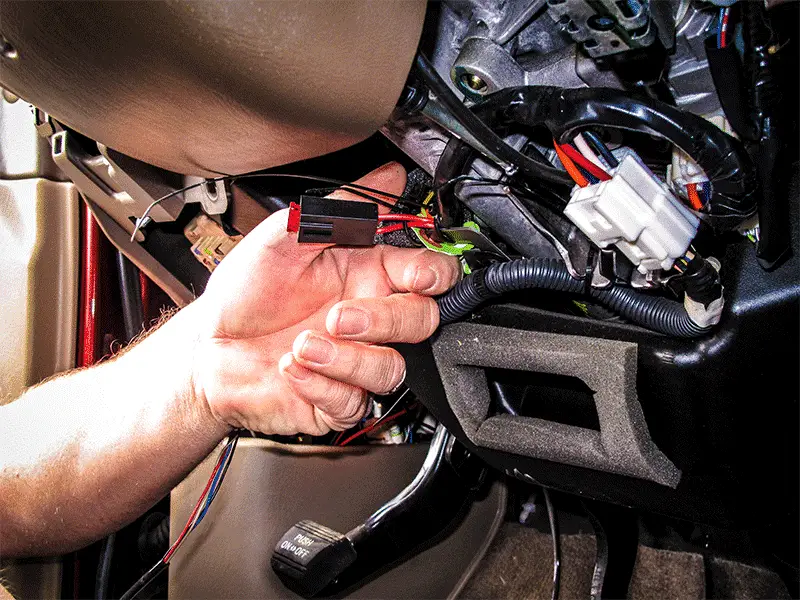
  • Disconnected or corroded IAT sensor connector (most common cause)
  • Damaged wiring, short circuit, or open circuit
  • Faulty IAT sensor
  • Problem with the Mass Air Flow (MAF) sensor if integrated
  • Clogged air filter or damaged air duct
  • Rare PCM failure

Diagnostic procedure

1. Preliminary check:

  • Consult the manufacturer’s Technical Service Bulletins (TSBs).
  • Visually inspect the connector, wiring, air filter, and intake duct.

2. Test with diagnostic tool:

  • Using an OBD2 scanner, read the live data (PID) from the IAT sensor.
  • Compare the displayed temperature with the actual ambient temperature using a thermometer.
  • If the value is inconsistent or erratic, proceed with further tests.

3. Sensor electrical test:

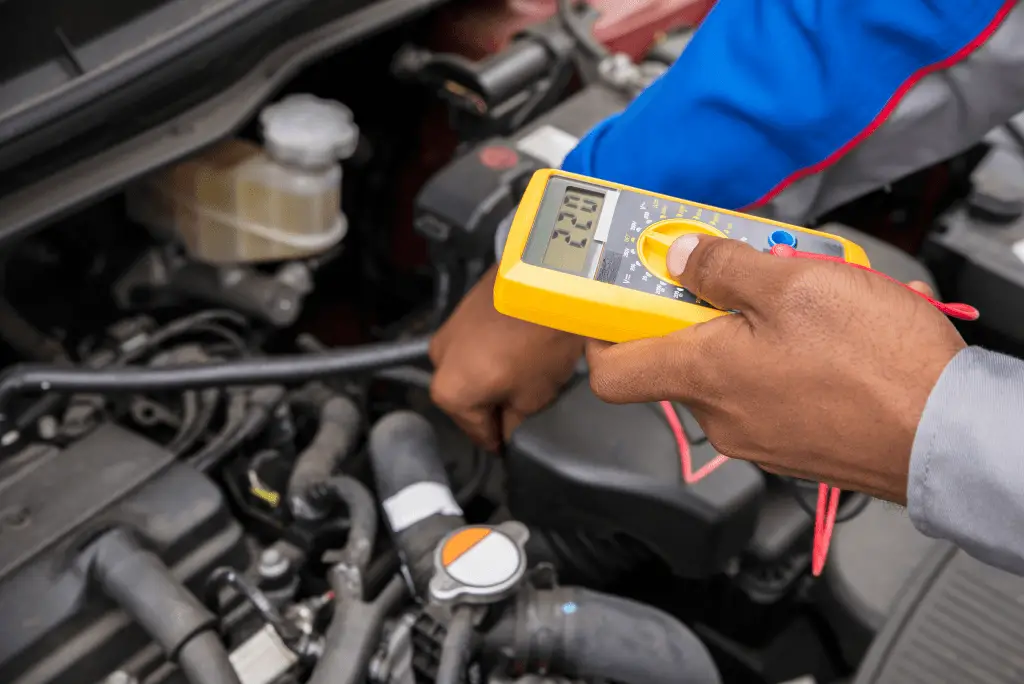
  • Use a digital multimeter to measure the sensor’s resistance (thermistor). Compare it with the manufacturer’s reference values (resistance generally decreases as temperature rises).
  • Check for the presence of the reference voltage (5V) and ground at the connector.

4. Circuit verification:

  • If the sensor appears functional, test for continuity and the absence of short circuits in the wires between the sensor and the PCM.

Repair and tips

Replace the IAT sensor if it is out of specifications. Clean or secure the connectors if necessary. After repair, clear the codes and perform a road test to verify that the fault does not reappear.

💡 Tip: If the air filter was recently changed, check that the IAT sensor connector was not forgotten!

Related codes

P0110, P0111, P0112, P0113, P0095, P0096, P0097, P0098, P0099

Need help diagnosing your vehicle? Consult a professional equipped with a suitable scanner for an accurate and risk-free diagnosis.

P0115 Engine Coolant Temperature Sensor Circuit Malfunction

What is the P0115 Code?

The generic diagnostic trouble code (DTC) P0115 indicates a malfunction in the Engine Coolant Temperature (ECT) sensor circuit. This code applies to all vehicles equipped with the OBD-II standard (from 1996 onwards). Troubleshooting procedures may vary slightly depending on the make and model.

ECT Sensor Operation

The ECT (Engine Coolant Temperature) sensor is a thermistor whose resistance changes with temperature. It is typically a two-wire sensor: one wire receives a 5-volt reference voltage from the Powertrain Control Module (PCM), and the other sends a return signal to the PCM.

Note: This sensor is separate from the temperature sender that powers the dashboard gauge, although their operating principle is similar.

When the engine is cold, the sensor’s resistance is high. When it is hot, the resistance is low. The PCM continuously monitors this value. If the signal voltage falls outside the expected ranges (too high or too low), the P0115 code is stored and the Malfunction Indicator Lamp (MIL) illuminates.

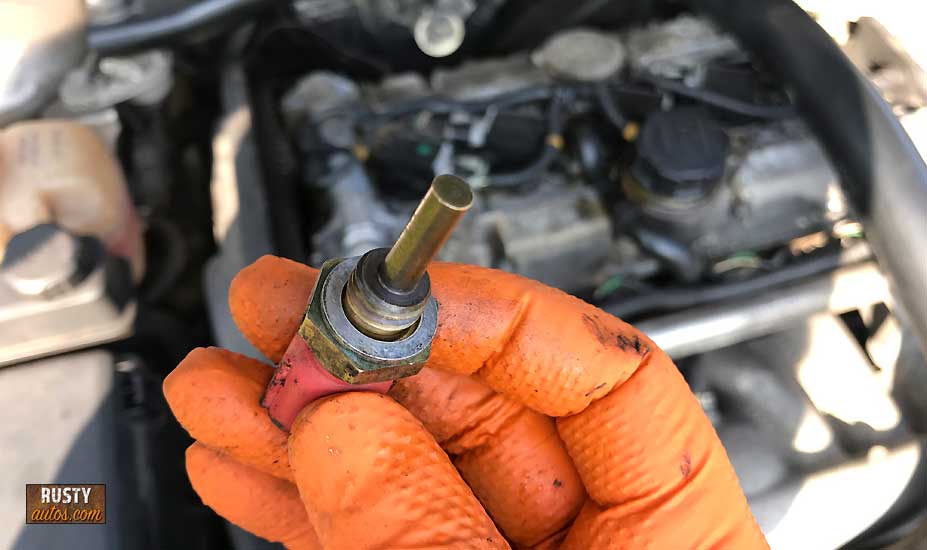
Example of an engine coolant temperature ECT sensor

Symptoms of the P0115 Code

A P0115 code may present with several symptoms:

  • Illumination of the Malfunction Indicator Lamp (MIL)
  • Difficult vehicle starting
  • Excessive black smoke from the exhaust (overly rich mixture)
  • Unstable idle, stalling
  • Poor cooling fan operation (continuous running or failure to operate)
  • Possible increase in NOx emissions (detectable with a gas analyzer)

Possible Causes of the Fault

The most common causes of a P0115 code are:

  • Faulty ECT sensor
  • Damaged wiring or corroded/faulty connector
  • Short circuit or open circuit in the reference (5V) wire or signal (ground) wire
  • Internal PCM problem (less common)

How to Diagnose and Repair the P0115 Code?

Here is a step-by-step troubleshooting procedure to identify and resolve the cause of the P0115 code.

Step 1: Visual Inspection

Visually inspect the sensor, its connector, and the wiring. Look for signs of damage, corrosion, or loose wires. Repair or replace as necessary.

Step 2: Verification with a Diagnostic Tool

Using an OBD-II scanner, read the displayed coolant temperature.

  • If the reading is abnormally high (e.g., ~140°C / 280°F): Disconnect the sensor connector. If the reading drops sharply (e.g., to -45°C / -50°F), the sensor is likely internally shorted and should be replaced. If the reading remains high, there is a short to ground in the signal wiring.
  • If the reading is abnormally low (e.g., -45°C / -50°F): Check for the presence of the 5V reference voltage at the sensor connector (engine off, ignition on). If it is absent, check the circuit back to the PCM. If it is present, the sensor or the signal circuit may be open.

Step 3: Electrical Tests

To confirm the sensor’s condition, measure its resistance with a multimeter and compare it to the manufacturer’s reference values for the current engine temperature. Infinite resistance (open circuit) or zero resistance (short circuit) indicates a faulty sensor.

Step 4: PCM Verification

If all circuits and the sensor are in good condition, an internal PCM fault is possible, although rare.

Conclusion and Call to Action

The P0115 code is often resolved by replacing the ECT sensor, a typically inexpensive part. However, accurate diagnosis helps avoid unnecessary part replacements.

Experiencing this issue? If you do not have the necessary tools or skills, it is recommended to entrust the diagnosis to a professional mechanic for a reliable repair.

Related codes: P0115, P0116, P0117, P0118, P0119, P0125, P0128

P0116 ECT Sensor Circuit Range / Performance

Code P0116: Definition and Explanations

The error code P0116 is a generic powertrain code. It indicates a problem with the range or performance of the ECT (Engine Coolant Temperature) sensor circuit. This generic code applies to most vehicles built after 1996 (Ford, Hyundai, Kia, Mazda, Mercedes-Benz, etc.). Although common, specific diagnostic procedures may vary depending on the vehicle’s make and model.

Role and Operation of the ECT Sensor

The ECT sensor is a thermistor, a component whose electrical resistance varies depending on the temperature of the coolant it is in contact with. It is typically located in the engine block or on a coolant passage. It is usually a two-wire sensor:

  • One wire receives a 5-volt reference voltage from the PCM (Powertrain Control Module).
  • The other wire provides a ground signal to the PCM.

When the temperature changes, the sensor’s resistance changes, thus altering the voltage of the signal sent back to the PCM. The PCM interprets this voltage to determine the engine’s exact temperature, a crucial piece of information for managing fuel, ignition, and idle.

The PCM expects a slow and gradual change in this signal, consistent with the engine’s normal warming up. The P0116 code is triggered when the PCM detects a voltage variation that is too rapid, illogical, or shows no variation at all, which does not match the engine’s thermal reality.

Symptoms of Code P0116

Symptoms may be absent if the problem is intermittent, but they generally include:

  • Illumination of the Malfunction Indicator Lamp (MIL) on the dashboard.
  • Poor drivability and loss of engine performance.
  • Black smoke from the exhaust (overly rich mixture).
  • Increased fuel consumption.
  • Problems with unstable idle or engine stalling.
  • Engine misfires.

Possible Causes of the P0116 Fault

Several elements can be the cause of this code:

  • A faulty, missing, or stuck-open thermostat.
  • A faulty ECT sensor.
  • A short circuit or open circuit in the signal or ground wire.
  • Oxidized, loose, or corroded electrical connections.
  • An internal problem with the PCM (rare).
Photo of an engine coolant temperature sensor (ECT)
Example of an ECT sensor

Diagnosis and Solutions for Resolving P0116

Warning: If other codes related to the ECT sensor (such as P0115, P0117, P0118, P0119, P0125, P0128) are present, diagnose them first.

Step 1: Checking Live Data

Using an OBD2 diagnostic tool, observe the live data reading of the coolant temperature on a cold engine. It should be close to the ambient temperature and roughly match the reading from the Intake Air Temperature (IAT) sensor.

Step 2: Analyzing Freeze Frame Data

Check the data recorded at the time of the fault (Freeze Frame). This will tell you the precise value of the ECT sensor when the code was stored.

  • If the indicated value is extremely low (e.g., -40°C / -40°F): This suggests an excessively high and intermittent resistance. Check the signal circuit for an open circuit or poor connection. If the wiring is intact, the ECT sensor is likely faulty.
  • If the indicated value is extremely high (e.g., > 150°C / 300°F): This suggests an excessively low resistance. Look for a short to ground on the signal circuit. If the wiring is good, replace the ECT sensor.

Step 3: Testing the Sensor and Circuit

To confirm:

  1. Measure the resistance of the ECT sensor when cold and when hot using a multimeter. Compare the obtained values with those specified by the manufacturer.
  2. Visually inspect the sensor’s connector and wiring for any signs of corrosion, damage, or looseness.
  3. Check the condition and operation of the thermostat.

Conclusion and Call to Action

The P0116 code is often resolved by replacing a faulty ECT sensor or repairing a damaged wire. Accurate diagnosis with a scan tool is essential to avoid replacing parts unnecessarily.

Experiencing this issue? Share your experience or ask your questions in the comments below. For complex diagnostics, do not hesitate to consult a professional mechanic equipped with the appropriate tools.

P0117 Low Input of ECT Sensor Circuit

What is the P0117 Code?

The P0117 trouble code is a generic powertrain code that indicates a low input from the Engine Coolant Temperature (ECT) sensor circuit. It applies to most vehicles built after 1996 (Honda, Toyota, Volkswagen, Ford, etc.). Although generic, specific diagnostic procedures may vary by make and model.

Role and Operation of the ECT Sensor

The Engine Coolant Temperature (ECT) sensor is a thermistor located in the engine block or a coolant passage. Its electrical resistance varies with the coolant temperature. It is typically a two-wire sensor: one receives a 5-volt reference voltage from the Powertrain Control Module (PCM), and the other serves as ground.

When the engine is cold, the sensor’s resistance is high. When it is hot, its resistance is low. The P0117 code is triggered when the PCM detects an abnormally low signal voltage, indicating an excessively “hot” condition.

Engine Coolant Temperature ECT Sensor
Example of an ECT Sensor

Symptoms of the P0117 Code

  • Malfunction Indicator Lamp (MIL) illuminated
  • Poor fuel economy
  • Engine misfiring or stalling
  • Rough or impossible idling
  • Black smoke from the exhaust
  • Hard starting or stalling after starting

Possible Causes

  • Faulty ECT sensor
  • Short to ground in the signal circuit
  • Oxidized, damaged, or loose connectors
  • Damaged or chafed wiring harness
  • 5V reference issue from the PCM
  • Engine overheating (rare)
  • Faulty PCM (very rare)

Diagnosis and Solutions

The P0117 code indicates an abnormal “hot” condition. The first step is to determine whether the problem is with the sensor, the wiring, or, more rarely, actual overheating.

Step 1: Verification with a Diagnostic Tool

With the ignition on (engine off, KOEO), observe the ECT sensor temperature reading on the diagnostic tool. On a cold engine, it should be close to ambient temperature and match the Intake Air Temperature (IAT) sensor reading. A significant discrepancy indicates a likely issue with the ECT sensor.

Step 2: Testing the Sensor and Wiring

If the reading shows an excessively hot temperature (e.g., > 125°C), disconnect the ECT sensor connector. The reading on the diagnostic tool should drop to an extreme cold value (e.g., -40°C).

  • If the reading drops: The ECT sensor has an internal short circuit. It must be replaced.
  • If the reading does not change: There is a short to ground in the wiring between the sensor and the PCM. Visually inspect the harness for signs of wear, chafing, or melting. Repair or replace the damaged wiring.

Step 3: Checking the 5V Reference Circuit

If the wiring appears intact, check the voltage at the signal wire pin on the PCM connector. An absent or low voltage may indicate a PCM issue or a short on the 5-volt reference circuit shared with other sensors. If other sensor codes are present, disconnect the sensors one by one to identify the one causing the short.

Step 4: Intermittent Issue

If the reading seems normal, the problem may be intermittent. Shake the wiring harness and manipulate the connectors while monitoring the ECT reading. Use the “freeze frame data” function of your diagnostic tool to see the value recorded at the time of the fault.

Related Codes

P0115, P0116, P0118, P0119, P0125, P0128

🔧 Need Help?

Electrical diagnosis can be complex. If you are not comfortable using a multimeter or a scan tool, consult a professional mechanic for an accurate diagnosis and to avoid damaging your PCM.

P0118 – Engine Coolant Temperature Circuit High Input

What is the P0118 Code?

The P0118 trouble code is a generic powertrain code. It indicates that the Powertrain Control Module (PCM) has detected an abnormally high voltage in the Engine Coolant Temperature (ECT) sensor circuit. This code applies to most vehicles built from 1996 onwards (Honda, Toyota, Volkswagen, Ford, BMW, etc.). Although generic, specific diagnostic procedures may vary by make and model.

ECT Sensor Operation

The ECT sensor is a thermistor located in a coolant passage, typically on the engine cylinder head. Its principle is simple: its electrical resistance is high when the engine is cold and decreases as the coolant temperature rises.

The PCM sends a 5-volt reference voltage to the sensor and monitors the return voltage. This measurement allows it to calculate the temperature in real-time. If the received signal indicates a constantly very low temperature (below freezing) when the engine is hot, or if the resistance is out of specifications, the PCM logs the P0118 code and illuminates the Malfunction Indicator Lamp (MIL).

Photo of an Engine Coolant Temperature (ECT) sensor
Example of an Engine Coolant Temperature (ECT) sensor

Symptoms of the P0118 Code

A fault in the ECT sensor circuit can cause several symptoms:

  • Poor fuel economy: The PCM, receiving incorrect information, excessively enriches the air-fuel mixture.
  • 🚗 Starting problems: Difficulty starting when cold or hot.
  • Poor engine performance: Rough idle, hesitation, misfires, and black smoke emissions.
  • ⚠️ Warning light: Illumination of the check engine light on the dashboard.

Possible Causes of the Fault

Several elements can be the cause of the P0118 code:

  • 🔌 Connection problem: Loose, corroded, or oxidized sensor connector.
  • Circuit problem: Short to voltage in the signal wire between the sensor and the PCM, or an open ground circuit.
  • 🔧 Faulty sensor: Internally shorted ECT sensor (most common cause).
  • 🤖 PCM failure: An internal problem with the control module is rare but possible.

Diagnosis and Solutions

To diagnose and resolve a P0118 code, follow this step-by-step procedure:

1. Verification with a Diagnostic Tool

Connect an OBD2 scan tool and observe the live temperature value displayed. If it is logical (increases gradually as the engine warms up), the problem is likely intermittent. Wiggle the sensor harness and connector while monitoring the scan tool. A sudden drop in the reading confirms a bad connection.

2. Sensor Test

If the reading is illogical (e.g., constant -40°C), unplug the sensor and measure its resistance with a multimeter. Compare the measured value to the manufacturer’s specifications for ambient temperature. An out-of-spec resistance indicates a faulty sensor that needs replacement.

3. Circuit Test

If the sensor seems good, the problem is in the circuit. With the engine off, disconnect the sensor connector. Using a jumper wire, short the two pins of the connector on the harness side. If the scan tool now displays a very high temperature (above 120°C), the circuit and PCM are functional, confirming the sensor is faulty.

4. Voltage and Ground Check

With the ignition on, use the multimeter to check for the presence of the 5V reference voltage and a good ground at the sensor connector (wires disconnected).

  • If the 5V and ground are absent at the connector, check for their presence directly at the PCM connector.
  • If they are present at the PCM, there is a break or short in the wiring that needs repair.
  • If the 5V is absent at the PCM even after disconnecting the connector, the PCM is likely faulty.

Important Note: Although a bad sensor is the most common cause of the P0118 code, it is essential to check the circuit before replacing it to avoid an ineffective repair. If you are not comfortable with these electrical procedures, entrust the diagnosis to a professional mechanic.

Related Codes

Codes related to the engine coolant temperature sensor circuit: P0115, P0116, P0117, P0119, P0125, P0128.

💡 Need help? Can’t resolve the P0118 code on your vehicle? Share your measurements and symptoms in the comments or consult a partner garage for a professional diagnosis.

Engine Coolant Temperature Sensor Circuit Intermittent

Definition of Code P0119

The trouble code P0119 is a generic OBD-II code from the powertrain group. It indicates a problem with the Engine Coolant Temperature (ECT) sensor circuit, manifesting as an intermittent or erratic signal sent to the engine control module (PCM or ECU).

Role of the Engine Coolant Temperature Sensor

  • Function: Precisely measure the coolant temperature to allow the PCM to regulate essential functions:
    • The air-fuel mixture (rich when cold, lean when hot).
    • Ignition timing.
    • Idle speed.
    • Activation and speed of the cooling fan.
    • Regeneration of the diesel particulate filter (DPF) or EGR valve on some engines.
  • Technical Principle: It is a Negative Temperature Coefficient (NTC) thermistor. Its electrical resistance decreases as the coolant temperature increases. The PCM sends a reference voltage (usually 5V) and interprets the returned voltage to determine the temperature.
  • Sensor Types:
    • 2-wire: Reference voltage (5V) and ground (signal for the PCM).
    • 3-wire: Adds a dedicated wire to power the dashboard gauge.

Symptoms of Code P0119

  • 🚨 Check Engine Light illuminated (MIL) on the dashboard.
  • ❄️ Very unstable idle, especially during a cold start.
  • ⚠️ Hesitation, stumbling, and power loss during acceleration.
  • Excessive fuel consumption and smell of gasoline (overly rich mixture).
  • 🌡️ Cooling system malfunction: Cooling fan running continuously or not at all, risk of engine overheating.
  • ⚠️ Difficulty starting in cold weather.

Possible Causes of Code P0119

Electrical and Mechanical Problems

  1. Faulty ECT Sensor: The thermistor is damaged, providing a resistance value outside the manufacturer’s specifications.
  2. Wiring Problems:
    • Cut, frayed, or chafed electrical wires.
    • Short circuits or faulty ground connections.
    • Oxidized, loose, or corroded connectors (caused by coolant leaks).
  3. Low Coolant Level: A leak in the system can prevent the sensor from being properly immersed, skewing its reading.
  4. Faulty Thermostat: If it remains stuck open, the engine never reaches its optimal operating temperature, disrupting the system.
  5. Problem with the PCM: Although rare, an internal fault in the control module can be the cause.

Diagnosis and Repair Procedure

Required Tools

  • OBD2 scanner to read codes and live data.
  • Digital multimeter (DVOM) to measure resistance and voltage.
  • Infrared thermometer to check the actual engine temperature.
  • Basic tool kit, coolant, and contact cleaner spray.

Diagnostic Steps

  1. Preliminary Checks: Check the coolant level and condition. Look for any obvious signs of leaks.
  2. Visual Inspection: Carefully inspect the ECT sensor wiring and connector along their entire length. Look for physical damage, corrosion, or loose pins. Clean the connectors.
  3. Test with OBD2 Scanner:
    • Read the live data. Compare the temperature value displayed by the sensor with the actual engine temperature measured with the infrared thermometer on the thermostat or radiator.
    • A significant discrepancy or an erratic, jumping value indicates a problem.
  4. Electrical Tests (engine cold and disconnected):
    • Resistance Test: Measure the resistance between the sensor pins. Compare it to the manufacturer’s reference values (e.g., ~2000-3000 Ω at 20°C). An infinite value (open circuit) or zero (short circuit) confirms a faulty sensor.
    • Voltage Test: Reconnect the connector, ignition on. Measure the voltage between the signal wire and ground. It should be around 3V when cold and gradually decrease as the engine warms up.

Repair

  • Replacing the ECT Sensor:
    1. Locate its position (usually on the engine block, cylinder head, intake manifold, or thermostat housing).
    2. Turn the ignition OFF. Disconnect the electrical connector.
    3. Carefully unscrew the old sensor. A small coolant leak is normal; catch it.
    4. Screw in the new sensor (use a new seal if necessary). Reconnect the connector.
  • Repairing the Wiring: Solder and use heat-shrink tubing or replace damaged wire sections.
  • Refilling Coolant: After replacement, top up the level with the appropriate mixture (often 50/50) and bleed the system of air.

Validating Repairs

  1. Clear the trouble codes with the scanner.
  2. Start the cold engine and let it warm up to normal operating temperature.
  3. Monitor the scanner data: the temperature should rise progressively and stabilize around 90°C.
  4. Perform a road test to verify that the symptoms (unstable idle, hesitation) have disappeared and that the Check Engine Light does not come back on.

Important Recommendations and Precautions

  • 🔧 Priority: Do not ignore this code. A faulty signal can lead to severe overheating, damage the catalytic converter, and increase engine wear.
  • ⚠️ Quality Parts: Prefer OEM quality or reputable brand sensors. Low-end parts often have an imprecise resistance curve and can cause the code to reappear.
  • 🧤 Safety: Never open a radiator cap on a hot engine. Risk of severe burns. Handle coolant with gloves.
  • 📄 Related Codes: Also diagnose codes P0115, P0116, P0117, or P0118 if present, as they relate to the same circuit.

💡 Need Help? This diagnosis can be complex. If you are unsure, consult a professional or use a platform like AllDataDIY to access wiring diagrams and procedures specific to your vehicle model.

References: Always consult your vehicle’s repair manual for precise resistance values and specifications.

P011A Engine Coolant Temperature Sensor Correlation 1/2

Code P011A: Definition and Explanations

The P011A trouble code is a generic powertrain code found in most OBD-II vehicles (Mazda, Land Rover, GMC, Chevrolet, Ford, Dodge, Chrysler, Toyota, Honda, etc.). It indicates that the Powertrain Control Module (PCM) has detected an inconsistency between the signals from two Engine Coolant Temperature (ECT) sensors, often referred to as Sensor A and Sensor B (or primary and secondary). This code only appears on engines equipped with multiple ECT sensors.

ECT Sensor Operation

An Engine Coolant Temperature (ECT) sensor is a thermistor whose resistance varies with temperature. It is typically housed in a metal or plastic casing and installed in the engine block, cylinder head, intake manifold, or radiator.

When the coolant temperature increases, the sensor’s resistance decreases, causing an increase in the signal voltage sent to the PCM. The PCM uses this data to regulate the air-fuel mixture, idle speed, cooling fan operation, and sometimes the dashboard display.

Severity Level of Code P011A

This code is considered severe. A correlation fault between the ECT sensors can lead to poor engine management, overheating, increased fuel consumption, or higher pollutant emissions. It is recommended to perform diagnostics promptly.

Symptoms of Code P011A

  • Air-fuel mixture too rich or too lean
  • Irregular idle (especially when cold)
  • Decreased engine performance
  • Increased fuel consumption
  • Illumination of the Malfunction Indicator Lamp (MIL)

Possible Causes of Code P011A

  • Faulty ECT sensor
  • Damaged sensor wires or connectors (short circuit or open circuit)
  • Insufficient coolant level
  • Faulty thermostat (stuck open or closed)
  • Defective water pump
  • Air pocket in the cooling system
  • PCM failure or programming error

Diagnostic Procedure for Code P011A

Required Tools

For effective diagnostics, it is recommended to have an OBD2 scanner, a digital multimeter (DVOM), and manufacturer technical data (wiring diagrams, resistance values).

Steps to Follow

  1. Cooling System Check: Check the coolant level and condition. Verify the proper operation of the thermostat, water pump, and fans. Bleed the system if there are air pockets.
  2. Visual Inspection: Examine the ECT sensor connectors and wiring for any signs of corrosion, damage, or disconnection.
  3. Reading Codes and Live Data: Using the scanner, retrieve all trouble codes and freeze frame data. Note this information, clear the codes, and perform a road test to see if P011A reappears.
  4. ECT Sensor Testing: When cold, measure the sensor resistance with a multimeter and compare it to the manufacturer’s specified values. A sensor outside specifications should be replaced.
  5. Electrical Circuit Testing: Check for continuity and the absence of short circuits in the wires connecting the sensors to the PCM. Look for a reference voltage supply (typically 5V) and a good ground.
  6. PCM: A PCM module failure or the need for a software update should only be considered as a last resort, after all other possible causes have been eliminated.

Important Diagnostic Notes

  • ⚠️ Safety: Never open the radiator cap on a hot engine. The system is under pressure and can cause serious burns.
  • 🔌 Electrical Precautions: Always disconnect the sensor connector before measuring its resistance with a multimeter.
  • 📄 Technical Bulletins: Consult your vehicle’s Technical Service Bulletins (TSB), as some manufacturers may have released software fixes for this issue.

Conclusion and Call to Action

Code P011A indicates a correlation problem between the engine coolant temperature sensors. Although diagnostics can be performed by an experienced DIYer, the complexity of modern systems often makes intervention by a professional safer and more effective.

Need help diagnosing or repairing this trouble code? Consult a qualified mechanic or a specialized garage for accurate diagnostics and reliable repairs.

P011B Correlation Between Coolant and Air Temperature

Code P011B: Definition and Meaning

The error code P011B is a generic powertrain code found on all vehicles equipped with the OBD-II standard (Toyota, Honda, Ford, GMC, etc.). It indicates that the Powertrain Control Module (PCM) has detected an inconsistency or incorrect correlation between the signals from the Engine Coolant Temperature (ECT) sensor and the Intake Air Temperature (IAT) sensor.

Operation of ECT and IAT Sensors

The ECT sensor is a thermistor housed in a metal or plastic casing, screwed into the engine block or cylinder head. Its resistance decreases as the coolant temperature increases, which the PCM interprets to regulate the air-fuel mixture, idle speed, and fan activation.

The IAT sensor operates on the same principle but measures the temperature of the air entering the intake. It is typically located in the air filter housing or the intake duct.

Code P011B is triggered when the signals from these two sensors show an abnormal deviation, as predefined by the manufacturer.

Severity Level of Code P011B

This fault is considered moderate to serious. Prolonged driving with this code active can damage the catalytic converter, increase fuel consumption, and degrade performance. It is recommended to perform a diagnosis promptly.

Symptoms of Code P011B

  • Unstable idle, especially when cold
  • Reduced performance and sluggish acceleration
  • Increased fuel consumption
  • Rich or lean exhaust mixture
  • Illumination of the check engine light (MIL)
  • Other temperature-related codes

Possible Causes of Code P011B

  • Faulty ECT or IAT sensor
  • Damaged wires or connectors (short circuit, corrosion)
  • Low coolant level
  • Faulty thermostat (stuck open or closed)
  • Inefficient water pump
  • Air pocket in the cooling system
  • PCM failure or need for update

Diagnosis and Troubleshooting of Code P011B

To diagnose this code, you will need an OBD2 scanner, a digital multimeter (DVOM), and your vehicle’s technical data.

Steps to Follow:

  1. Cooling System Check: Check the level and condition of the coolant. Bleed the system to remove any air pockets. Ensure the thermostat, water pump, and radiator are functioning correctly.
  2. Visual Inspection: Examine the connectors and wiring of the ECT and IAT sensors for any signs of corrosion, damage, or poor contact.
  3. Reading Codes and Data: Use your scanner to read all fault codes and freeze frame data. Note this information before clearing the codes.
  4. Sensor Testing: Using the multimeter, measure the resistance of the ECT and IAT sensors (with the engine cold and then hot) and compare them to the manufacturer’s specified values. A sensor out of specification should be replaced.
  5. Circuit Testing: If the sensors are good, test the electrical circuits (voltage, continuity) between the sensors and the PCM.
  6. PCM Verification: If everything else is in order, a PCM failure or programming error is plausible. Consult your manufacturer’s Technical Service Bulletins (TSB).

Important Notes and Pro Tips

  • The IAT sensor is often forgotten or improperly reconnected after an air filter replacement.
  • Always disconnect the sensor connector before measuring its resistance with a multimeter.
  • Handle the cooling system with caution, when the engine is cold, to avoid burns.
  • Always consult Technical Service Bulletins (TSB) for your model, as known issues may exist.

Need help diagnosing your vehicle? Consult a qualified mechanic for an accurate diagnosis if you are not comfortable with these procedures.

P011C Charge Air / Intake Air Temperature Sensor 1 Correlation

What is the P011C Code?

The P011C error code is a generic OBD-II powertrain code. It indicates that the Powertrain Control Module (PCM) has detected an abnormal difference between the signals from the Charge Air Temperature (CAT) sensor and the Intake Air Temperature (IAT) sensor for engine bank 1.

Symptoms of the P011C Code

When this fault code is stored, you may observe one or more of the following symptoms:

  • Noticeable decrease in engine performance
  • Air-fuel mixture too rich or too lean
  • Hard starting, especially when cold
  • Reduced fuel efficiency (increased consumption)
  • Possible illumination of the Malfunction Indicator Lamp (MIL)

Possible Causes of the Fault

Several factors can cause the P011C code:

  • Sensor failure (CAT or IAT)
  • Wiring problem (short circuit or open circuit) on the sensors
  • Defective, corroded, or loose connectors
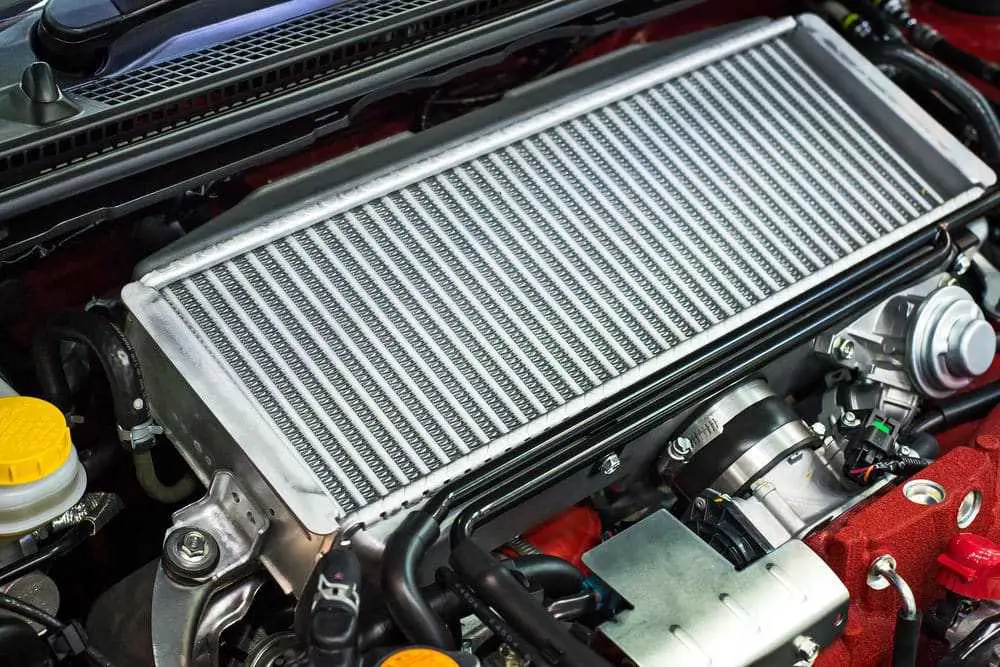
  • Clogged or damaged intercooler
  • Software issue or internal PCM failure

How to Diagnose the P011C Code

Diagnosis requires an OBD2 scanner, a digital multimeter (DVOM), and the vehicle’s technical data.

Diagnostic Steps:

  1. Visual Inspection: Check the condition of the CAT and IAT sensor connectors and wiring. Ensure the air filter is clean and there are no obstructions in the intercooler.
  2. Code Reading: Use the scanner to read all fault codes and record the freeze frame data.
  3. Clearing and Retest: Clear the codes and perform a road test to see if the P011C code returns.
  4. Sensor Testing: If the code reappears, test the resistance of the CAT and IAT sensors (engine off, sensors disconnected) with a multimeter. Compare the measured values with the manufacturer’s specifications.
  5. Circuit Testing: Check for the presence of reference voltage (5V) and ground at the sensor connectors. Test the signal from each sensor (engine running) and compare it to reference curves.
  6. PCM Verification: If all sensors and circuits are within specifications, a programming error or PCM failure is suspected. Consult technical service bulletins (TSB) for the vehicle.

Conclusion and Call to Action

The P011C code is a serious fault that should not be ignored, as it directly affects performance and fuel economy. Accurate diagnosis is essential to avoid unnecessary part replacement.

Need help diagnosing this code on your vehicle? Consult a qualified mechanic or use our tool to get model-specific advice.

P011D Charge Air Temperature / Intake Air Temperature Correlation Bank 2

What is the P011D Code?

The P011D trouble code is a generic OBD-II powertrain code. It indicates that the Powertrain Control Module (PCM) has detected an abnormal difference between the signals from the Charge Air Temperature sensor (CAT) and the Intake Air Temperature sensor (IAT) for engine bank 2.

This code specifically applies to vehicles equipped with forced air induction systems (turbocharger or supercharger) and multiple air intakes (throttle bodies). Bank 2 refers to the side of the engine that does not contain cylinder number 1.

Symptoms of the P011D Code

Common symptoms include:

  • Reduced engine performance
  • Air-fuel mixture too rich or too lean
  • Hard starting (particularly when cold)
  • Decreased fuel efficiency
  • Illumination of the check engine light (MIL)

Possible Causes of the P011D Code

The main causes of this fault are:

  • Sensor failure (CAT or IAT)
  • Wiring or connector issue (short circuit or open circuit)
  • Clogged or faulty intercooler
  • PCM failure or programming error

Diagnosis and Troubleshooting of the P011D Code

Diagnosis requires an OBD2 scanner, a digital multimeter (DVOM), and the vehicle’s technical data.

Diagnostic Steps:

  1. Visual Inspection: Check the condition of the air filter, ensure the intercooler is not obstructed, and inspect the condition of the sensor wiring/connectors.
  2. Code Reading: Use the scanner to read all trouble codes and freeze frame data. Note this information before clearing the codes.
  3. Sensor Testing:
    • Disconnect the CAT and IAT sensors
    • Measure their resistance with a multimeter and compare to manufacturer specifications
    • Replace any sensor that is out of specification
  4. Circuit Testing:
    • Check for the presence of reference voltage (5V) and ground at the connectors
    • Test the signal circuit with the engine running and compare with expected values
  5. PCM Verification: If all components are good, suspect a PCM failure or consult manufacturer technical bulletins.

Important Tip:

The IAT sensor is sometimes forgotten after an air filter replacement. Verify that it is properly connected.

Conclusion

The P011D code directly affects engine performance and should be addressed promptly. Although the described steps cover the main causes, the complexity of modern systems may require intervention from a professional equipped with specialized diagnostic tools.

⚠️ Need help with this trouble code? Consult a qualified mechanic for an accurate diagnosis or search for technical bulletins specific to your vehicle.