What is a subframe on a car

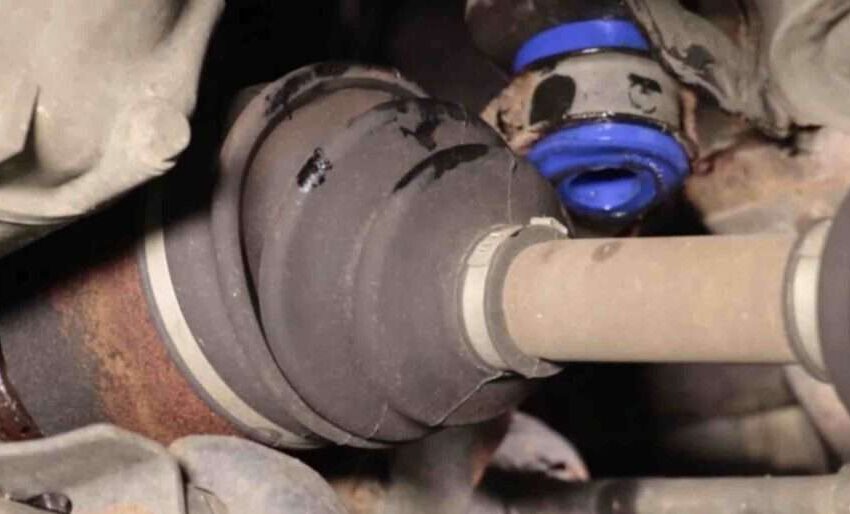
A subframe is a frame that holds the suspension components together. This includes the shock absorbers, springs, and struts. A subframe has two functions. First, it ensures the structural integrity of the vehicle. Second, it allows the body to move freely without affecting the suspension system.
When a car hits something hard, the body moves forward and downward. If the subframe were not there, the entire chassis would move forward and downward at the same time. In this case, the suspension would have no way to absorb the impact.

Subframes are typically made of steel, but they can be made from other materials like aluminum. They are attached to the chassis using bolts.

What is a subframe lift?

A subframe lift is a device that allows you to raise your chassis off the ground without having to remove the entire vehicle chassis. This can be useful if you are working on the underside of the car or performing other work requiring access to the undercarriage.

To use this approach, a jack stand (or something similar) must be placed under the vehicle. The jack stand is inserted into the subframe hole and the bolts are tightened until the subframe is secure.

The jack stand is then repositioned and the subframe lift is attached to the jack stand. Finally, you lower the frame onto the lift and secure it with the bolts.
Subframe lifts are used to raise and lower the front of a car, truck, or SUV. They allow taller vehicles to have ground clearance while maintaining a low center of gravity.

What is a subframe drop?

A subframe drop occurs when your car’s frame (or chassis) drops due to a lack of proper suspension components. This can happen if the shock absorbers are worn or broken, causing the vehicle to lose its ability to absorb shocks. If this happens, the car may feel like it has lost control while driving.

What is the purpose of a subframe drop?

The purpose of a subframe drop is to prevent the vehicle from rolling over. To do this, the front wheels are lifted off the ground and the rear wheels are lowered to the ground. This allows the vehicle to roll without the risk of tipping over.

What is a subframe drop used for?

The subframe drop is used to replace the entire suspension system. In this case, the subframe drop would result in the removal of the front half of the car’s chassis. If the subframe drops, the bolts holding the lower control arm and the axle spindle come out of the frame.

This allows the upper control arms to move freely and can cause damage if not handled properly. When this happens, the front suspension system fails to keep the vehicle straight. This causes the wheels to lose grip and slide under the vehicle.

If you notice any kind of shaking or wobbling while driving, you should stop immediately. You may have a damaged subframe drop.

What is a subframe on a car?

Subframes are used to hold your vehicle’s suspension components. Subframes are used to attach the shock absorbers to the car’s body. This way, the shock absorbers can move freely without being affected by the car’s chassis.

The subframe connects the axle spindle to the control arm. This allows the wheel to move independently of the car’s body. Additionally, the subframe contains the spring and shock absorbers.

Subaru S-Ambar Lift Kit.

The Subaru S-AMBAR lift kit was created to increase the power and performance of your vehicle! This lift kit includes everything needed to connect this system, including front and rear subframe connectors, crossmember brackets, upper control arms, lower control arms, axle spindle bolts, sway bar links, and much more!
Features:
• Lower control arms: They are used to connect the axle spindle to the frame. They allow the suspension system to move up and down freely without getting stuck.
• Upper control arm bushings: They are used to attach the upper control arms to the frame.
• Subframe connectors: They are used to attach the subframe to the frame.

What is a rear subframe on a car

A rear subframe is a frame that supports the engine and transmission assembly. It connects the front suspension components to the body structure. A rear subframe is usually bolted directly to the chassis and can be welded or riveted together.
In some vehicles, this frame is integrated into the body structure. This type of chassis is typically used in front-wheel-drive cars.

How to fix a subframe on a car

  1. Remove the bolts from the frame.
  2. 2. Use a hammer and chisel to remove the old fasteners.
  3. Thoroughly clean the area using compressed air. Apply a small amount of penetrating oil to the fastener threads.
  4. Insert the fastener into the hole until it touches the bottom.
  5. Remove the wheel from the vehicle.
  6. Use a screwdriver to remove all the screws holding the frame together.
  7. Replace the vehicle’s wheel.
  8. Tighten the bolts with a socket wrench
  9. Start the vehicle again.
  10. If the problem persists, take your vehicle to a mechanic.

FAQ

What is a subframe on a vehicle?

Subframes are the frames that hold your car’s suspension system. They are usually located under the vehicle’s body. Subframes are used to connect the frame and the suspension components. This allows them to move independently of each other. There are two types of subframes: front and rear.
Front Subframe
The front subframe contains the axle spindles, control arms, sway bar, and shock absorbers. The front subframe connects the engine and transmission to the rest of the car.

Rear Subframe

The rear subframe contains the axle assembly and the driveshaft. The rear subframe connects the differential to the transmission.

How much does a subframe cost?

A subframe can cost between $150 and $500, depending on the type of subframe you want. The price of a subframe varies depending on the type of material it is made from. A welded steel subframe would be cheaper than a bolted aluminum subframe.

What is a subframe used for on a car?

Subframes are used to hold the front suspension components together. They are usually attached to the frame using bolts that go through holes in the subframe. Subframes can be made of steel, aluminum, or magnesium. Aluminum is lighter than steel but heavier than magnesium. Magnesium is the lightest material used to make subframes.

Where is the subframe on a car?

Subframes are located under the front bumper and behind the engine compartment.

What is a subframe for a car?

A subframe is a frame that supports a vehicle’s suspension system. In cars, they are usually located under the vehicle’s body. They have two purposes: to provide a mounting point for the shock absorbers and to help distribute weight evenly across the chassis.

What is a car subframe?

The car subframe has two main functions. First, it provides structural rigidity to the vehicle. Second, it transfers the weight of the engine and transmission to the chassis. This allows the engine and transmission to function properly without putting excessive stress on the vehicle’s body.

What is a subframe on a car?

Subframes are the frames that hold the engine and transmission together. They are usually located under the vehicle’s hood and can be removed if the engine needs to be replaced.

What is a front subframe on a car?

A front subframe is a frame that attaches directly to the front of the vehicle. They are used to provide additional structural support to the front suspension system. Front subframes can be made of steel or aluminum.

Aluminum subframes are lighter than their steel counterparts, but they do not have the same strength. Steel subframes are stronger than aluminum ones, but they weigh much more.
Front subframes are used in cars like the Ford Mustang, Chevrolet Camaro, Dodge Challenger, and many others. They are visible at the bottom of the hood.

How much does a subframe car cost?

The price of a subframe car ranges between $150 and $500. However, the price of a subframe varies depending on its size, type, and weight.

Is a subframe expensive?

No, subframes are not expensive. They typically cost between $150 and $500 each; depending on how many you buy.

Where is the rear subframe located on a car?

The rear subframe is located behind the engine and transmission. This is where the differential gearbox is mounted. The differential gearbox is responsible for transferring power from the front wheels to the rear wheels.

Can you drive with a bad subframe?

Yes! You can drive with a bad subframe. But if your car has been sitting for a while, it’s possible that the rubber bushings have dried out and become hard. This means they will no longer hold the suspension components together. If this happens, you will need to replace them before hitting the road again.

What is subframe damage?

Subframe damage is caused by excessive engine vibrations that can damage your vehicle’s suspension system. This can lead to uneven tire wear, premature failure of suspension components, and other problems.

Can a subframe be replaced on a car?

Yes, you can replace a subframe on a car. However, it depends on the mechanic, especially if the person has experience working on a car subframe. If you want to replace your entire frame, that would be a much better option than trying to do it yourself.

What is a subframe used for?

Subframes are used to connect your frame to other frames. They allow you to attach different parts of your rigging. Subframes come in many shapes and sizes, but have two things in common. First, they are designed to keep your frame securely in place. Second, they are designed to prevent your frame from moving too much.

Conclusion

Subframe lifting is a great way to increase traction, but it can damage your vehicle if not done correctly. If you are considering doing this, make sure you have the proper equipment and the know-how to fix it. You should always use proper equipment and follow the instructions provided by the manufacturer.
Once you notice your car making strange noises while driving, check the subframe. A bent subframe can damage other parts of the vehicle, including the engine mounts and the transmission mount.
Remove the wheel assembly and the wheels to repair a bent subframe. After that, the brake caliper and the axle spindle must be removed from the frame.

Can the ABS sensor cause transmission problems

How to test an ABS sensor with a multimeter? If you have thought about the question, what are the causes of wheel speed sensor failure? “Can the ABS sensor cause transmission problems? or how to fix ABS sensor problems, then you are on the right track by reading this article. However, the failure or malfunction of any vehicle component will likely affect the entire system and could cause serious problems in the system. It is important to note that ABS brakes are one of the most essential braking systems in automobiles.

The ABS are located in the brake assembly monitor and measure the wheel rotation speed while transmitting the information to the ECM before relaying it to the hydraulic control unit. However, most vehicles are equipped with one sensor per wheel for anti-lock braking, not for the car’s traction.

If the ABS sensors become faulty, the entire braking system (all 4 wheels) will also fail. Similarly, when the ABS is faulty, you will see an ABS sensor light on your vehicle’s dashboard. This notification indicates that a problem has occurred with one of the sensors.

Nevertheless, this article will elevate your knowledge level on the following content such as: what can a faulty ABS sensor cause, can the ABS sensor cause transmission problems, how to repair the ABS sensor, ABS sensor location, ABS sensor price, can a faulty ABS sensor cause vibrations, what are the causes of wheel speed sensor failure, how to know which ABS sensor is bad without a scanner and many others.

Let’s get started immediately! * symptoms, repair and reset guide

What can a faulty ABS sensor cause?

A faulty ABS sensor can cause the following:

  • Loss of stability during acceleration.
  • Incorrect gear shifting.
  • TCS or ABS light coming on.
  • Skidding during braking.

Can the ABS sensor cause transmission problems?

Essentially, there is a link between the ABS and the transmission; if the ABS is bad, the transmission will be affected. The wheel speed sensors work to keep an eye on the wheel speed and transmit the information to the ABS in all vehicles.

Similarly, the ABS transmits data to the traction control system while the ECU controls their functions. Essentially, the ABS controls and manages the retrieval of information from the vehicle’s ECU, which triggers the speed information in certain situations.

So, suppose the ABS sensors can provide inaccurate data to the ECU if they malfunction. In that case, your transmission system could receive incorrect signals about the sensors being faulty, thus causing transmission problems.

ABS sensors are vital but prone to transmission problems; you must entrust your vehicle to a professional if the ABS warning appears on your dashboard. However, this light could be a troubleshooting indicator, and you need to use a multimeter to diagnose ABS troubleshooting.

ABS Sensor Location

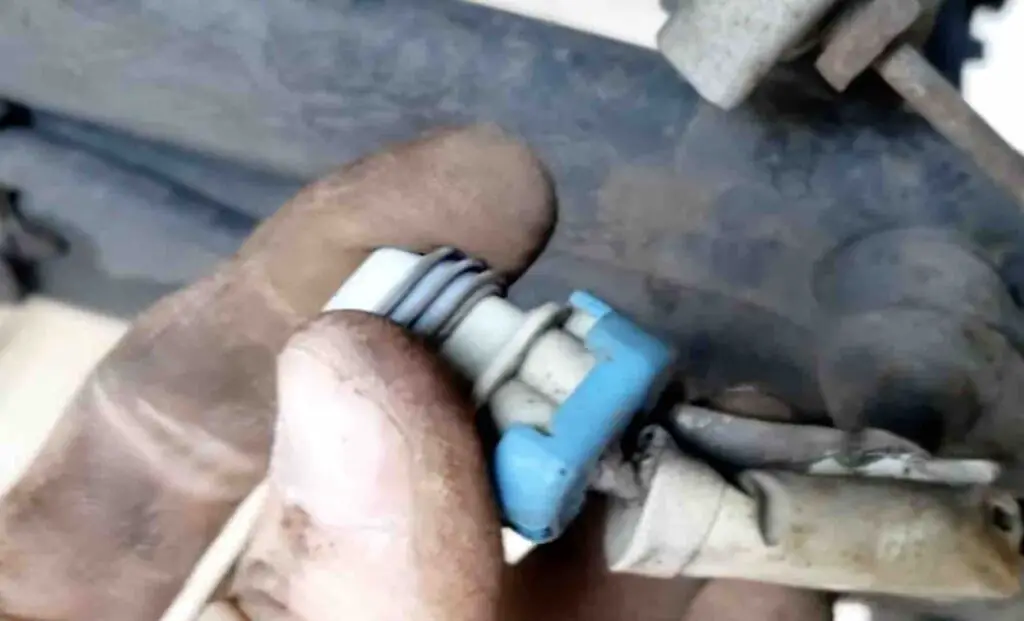
The ABS sensor location is on the inner side of the wheel hub as it mounts on the axle or steering knuckle in various vehicles. The ABS sensor is accessible or found when you lift your car’s wheel or turn your tire in one direction.

How to Repair the ABS Sensor

It is very important to remove/repair/fix the ABS sensor if it is faulty or defective, and this requires the following procedures below:

Removing the Bad ABS Sensor

  • Lift the vehicle using a jack while you remove the wheels to easily access the wheel hub.
  • Loosen your tire’s lug nuts and remove the wheel from the vehicle with a wrench.
  • Access the sensor by locating it along the wheel hub body.
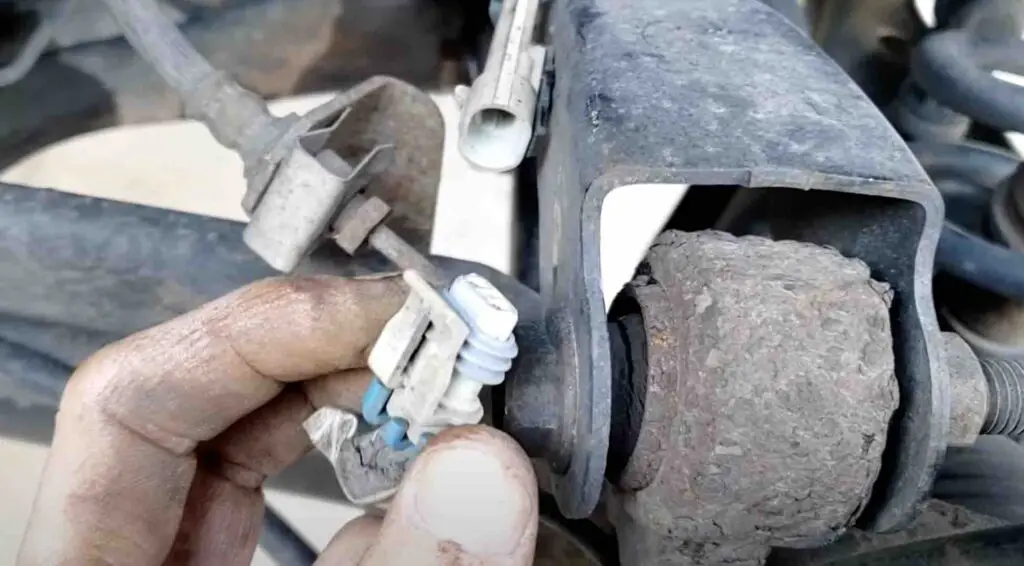
  • Loosen the bolt holding the ABS sensor while you disassemble the sensor with an Allen key.
  • Using a pair of pliers, wiggle the sensor while
  • Remove any dirt from the sensor housing while you blow canned air into its housing, or gently use a wire brush to remove rust.

Installing a New ABS Sensor

  • Push a new sensor into the lodge while positioning it securely.
  • Connect the wiring to the new sensor.
  • Replace and turn the bolt while securely fastening the sensor using a wrench.
  • Reposition the wheels and make sure to screw the lug nuts back in place.
  • You must repeat the process on each wheel until the ABS light stops.

ABS Sensor Price

Each sensor costs between $200 and $400 in any auto parts store, while your mechanic or technician might charge you around $150 to $200 for labor as it is time-consuming. Perhaps ABS sensors should be replaced every 30,000 to 50,000 miles.

Although you are competent and experienced, you can do it yourself. Make sure to use the manufacturer’s guide!

Can a Bad ABS Sensor Cause Vibrations?

Of course, yes! A bad ABS sensor can cause vibrations. If the ABS fails, an ABS light will appear on the dashboard, and if it stays on when starting the vehicle.

The vehicle’s speed and acceleration will drop very low since the ABS function monitors and measures the vehicle’s speed and relays the information to the computer, the ECU.

A bad ABS will set the vehicle’s acceleration once it fails and cause it to vibrate. Thus, you can install a new ABS sensor; the Powertrain Control Module (PCM) will reset. You can use the scan tool to retrieve the PCM’s memory to perform proper diagnostics.

What are the Causes of Wheel Speed Sensor Failure?

However, many damages occur to the hub or wheel bearing component of the internal wheel speed sensor and the external sensors of your vehicle.

However, the causes of wheel speed sensor failure are as follows:

  • Metal debris particles are attached to your wheel speed sensor’s magnetic encoder ring.
  • Corrosion weakens the sensor’s signal strength due to the air gap spacing.
  • Excessive bearing end play in your wheel bearing.
  • A mechanical problem results from the sensors’ inability to read back due to road debris.

How to Know Which ABS Sensor is Faulty Without a Scanner

Indeed, the quickest way to know which is the faulty ABS sensor is with a digital multimeter, but you can use an ohmmeter for testing without the multimeter.

Essentially, to perform this test, you will remove the sensors from the vehicle and connect each to the ohmmeter. Once connected, check the resistance of such a sensor. Therefore, such a sensor is bad if the reading is very high or low.

Symptoms of a Bad ABS Wheel Speed Sensor or Signs of a Bad ABS Sensor

Different ABS sensors will be used on different cars. Some older vehicles may only have one or two sensors, while newer cars will have one at each wheel. Although individual sensors on each wheel provide more accurate readings and operations, this can make the system more vulnerable to problems. An ABS sensor that is failing will usually give you a few warning signs, and here are the signs of a bad ABS sensor or the symptoms of a bad ABS wheel speed sensor.

1. ABS Light is Now On

The ABS light will illuminate as the most obvious sign of a problem. The ABS Light is a version of the Check Engine Light but only for the ABS. The ABS light comes on when the ABS has a problem.

2. Brakes Take Longer to Stop a Car

The ABS system should activate automatically to slow down the vehicle under intense braking conditions. Loss of traction and skidding should also be minimized. It is important to avoid over-braking. However, if the vehicle takes longer to stop under sudden braking conditions or in case of loss of traction, it could indicate a problem with the ABS system. The ABS typically consists of only a few components, the module and the sensors. A problem with its operation can stem from either the module or the sensor.

3. Wet or Icy Driving Conditions Can Harm Stability

Most drivers will soon become comfortable with the vehicle in different conditions. A properly functioning ABS system will reduce any loss of traction, especially in wet or icy conditions. The ABS system may not be working correctly if you notice tire skidding or loss of traction while driving on wet or icy roads. This is usually due to a problem in the module or, more likely, a problem with the sensors.

How to Test an ABS Sensor with a Multimeter

Test an ABS Sensor: Get Your Readings

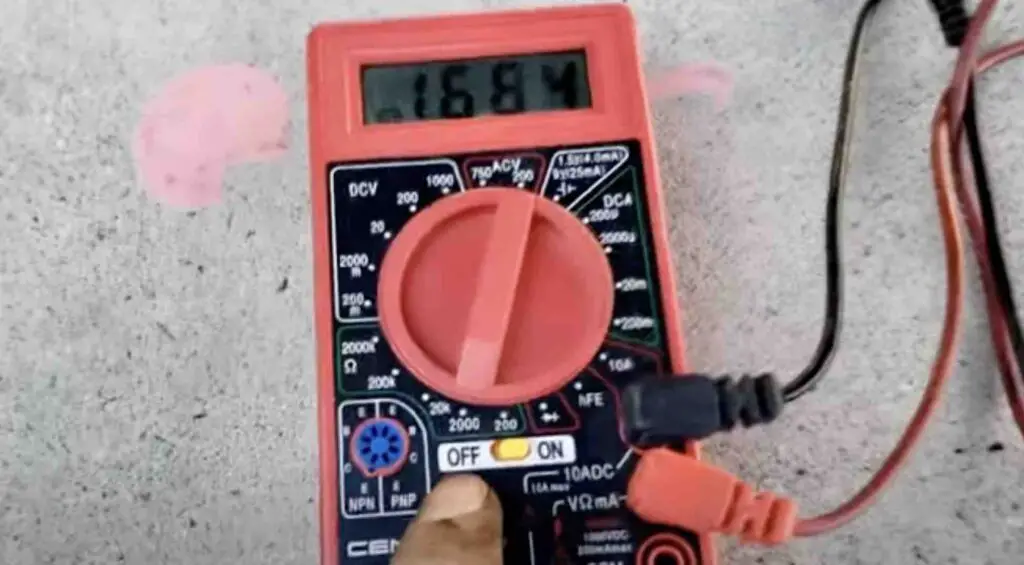
The display, selection button, and ports are the three main components of a multimeter. Displays often show 4 digits but can also show negative readings.

To select the unit you want to measure, turn the button. It can be voltage, current, or resistance.

Two probes are plugged into the ports of a multimeter, and they are labeled MAV and COM.

The COM is usually black and connected to the circuit ground.

The current reading can be connected to the MAV resistance probe, which could be red.

These simple steps will help you test ABS sensors with a multimeter. Read the manual and check that all ABS sensors are present on your vehicle.

Take note of their standard Ohm values.

Here are the steps:

  1. Before turning off your engine, park your car in “park” or neutral mode. Then, activate your emergency brakes.
  2. The jack can be used to lift the wheel near the sensor you want to test. It’s a good idea to place a mat on the ground under the car so you can easily perform repair work. Make sure you have your safety equipment.
  3. Remove the ABS sensor cover and connect it to the wires using brake cleaning fluid. The sensor looks like a cartridge with connecting wires.
  4. Set the multimeter to Ohms. Gently adjust the knob to adjust the Ohms setting. An “O” symbol denotes resistance or Ohm.
  5. Regularly turn the zero adjustment knob to set your multimeter’s display.
  6. Place the probe wires on the ABS sensor pins. It doesn’t matter where you place each probe because resistance is not directional.
  7. To get the correct reading, move them as far apart as possible. You will get a consistent reading if you wait.
  8. Take note of the Ohm readings. Compare this with the standard Ohm value for your sensor in the manual. The difference should not exceed 10%. You must replace the ABS sensor.

Alternatively, you can also set your multimeter to AC mode (voltage reading).

Connect the probes to the ABS sensors and spin the wheel to get a voltage reading.

ABS Sensor FAQ

Can You Drive with a Bad ABS Sensor?

No! As a certified mechanic, I recommend that you do not drive with a faulty/defective ABS sensor, as it can prevent you from controlling your vehicle. Do not assume to follow the advice of an uncertified mechanic who tells you to drive if the ABS system fails. Indeed, a failing ABS sensor is a dangerous long-term threat!

Can a Faulty ABS Sensor Cause Brake Locking?

Yes, of course! Since a bad ABS sensor can behave erratically, causing your brakes to lock even under standard braking. The random rattling noise produced by the brakes is a reality to justify the failure of the ABS sensors. It is paramount that the function of the ABS is to prevent the wheels of your vehicle from locking. If this locking occurs, then an ABS is failing.

Is It Possible to Drive with a Faulty ABS Sensor?

Your car’s ABS sensor may be faulty. This means your Anti-lock Braking System (ABS) will not function properly. Even though you can drive with a faulty ABS sensor, it is not recommended. Safety must be your top priority when driving. If you have an ABS sensor that is not working correctly, it is best, for safety reasons, to have it repaired as soon as possible.

Is It Possible to Clean ABS Sensors?

Although you can clean the ABS sensor, it is unlikely to solve the problem. The most common reasons for ABS sensor failure are electrical issues and open circuits. The sensor may read incorrectly if the ABS reluctor ring becomes very rusty.

What Causes ABS Sensors to Fail?

ABS sensors can fail for several reasons. The buildup of dirt and debris on the sensor or connector is one cause. The sensor is often mounted in an exposed area, which can cause this, especially if there is a lot of dirt or dust. Corrosion can also occur if water enters the system. The sensor can also fail if it is physically damaged.

Is the ABS Sensor Capable of Influencing Acceleration?

It’s unlikely, but it’s possible. ABS sensors can also be used to control traction. If a wheel has a bad speed, the ABS sensor will reduce engine power as a safety measure.

Conclusion

Indeed, the components of a vehicle do not last forever. So far, to know if your vehicle’s ABS is erroneous or failing, a digital multimeter (scan tool) is used to diagnose the sensor(s), as the case may be.

However, faulty ABS sensors indicate certain symptoms or signs like an ABS light on the dashboard, stalling acceleration or low speed, your vehicle skidding during system braking, and to name a few. Similarly, malfunctioning ABS sensors can cause a transmission problem since a bad Anti-lock Brake (ABS) can interfere with how your vehicle shifts gears.

Nevertheless, it would be helpful to keep an eye on the dashboard and never ignore the warning lights it may give you. You should consult a certified mechanic if a problem you cannot solve arises in your vehicle, and your manufacturer’s guide could be helpful.

I hope this article on how to repair ABS sensors and whether ABS sensors can cause transmission problems will be helpful to you. In this article, we explained what a faulty ABS sensor can cause, the ABS sensor location in your vehicle, and how to know which ABS sensor is faulty without a scanner. Please share this post if you find it useful!

Common Symptoms of Fuel Injector Problems

Common symptoms of fuel injector problems, in this article, we will examine the common symptoms and signs of bad fuel injectors and also provide solutions for them.

You will recall that vehicles manufactured before 1980 had carburetors. But modern vehicles now have complex electronic fuel injection systems. The function of the fuel injector is to spray fuel into the engine.

Therefore, if problems occur, it will affect engine performance and the car will become difficult to drive.

To avoid damage to your car and being stranded on the highway, it is important to detect a fuel injector problem before it happens.

Or even being able to identify the problem when it eventually occurs spontaneously.

What is the purpose of a fuel injector?

It supplies the engine with fuel to facilitate the internal combustion process. It is equipped with nozzles that spray fuel into the engine cylinder. Furthermore, the vehicle’s Engine Control Unit (ECU) monitors the injector’s functions and ensures the exact amount of fuel reaches the engine on time.

5 Common Symptoms of Fuel Injector Problems + Solutions to All Signs of Bad Fuel Injectors

Symptoms of a Bad Fuel Injector

When the fuel injector is faulty, it means the engine will not receive enough fuel. This will affect the combustion process and cause engine misfires among other issues related to the vehicle’s proper operation. Some problems include stalling after you press the accelerator, difficulty accelerating, and poor fuel economy.

Most of these issues are due to an inadequate air/fuel ratio. Furthermore, any delay could lead to overheating and the engine might stall.

What Happens When Fuel Injectors Fail

Rough Idle

This occurs due to insufficient fuel supply to the engine, and you will notice that the car’s revolutions per minute (RPM) will drop below the optimal level when idling. This, in turn, causes the car to have a shaky or irregular idle. And the engine might shut off if the RPM drops more than necessary.

Engine Vibrations

It is the fuel sprayed into the engine by the injectors and used for combustion. When the engine is denied fuel because the injector is malfunctioning on one side, the corresponding cylinder does not fire. And the result will be an interruption or continuous engine vibration when you are driving the car.

Vibration is a symptom of a fuel injector problem that matches other engine issues from other sources. So you may need to perform further checks to confirm that it is indeed the injector causing the vibration.

Fuel Leak

Old age can cause a defect, hole, or damage to the injector. When this happens, oil leaks from the injector body. Oil could also leak if there is a damaged seal that deteriorates over time. When you visually inspect the injector, you will see traces of fuel on the surface of the injector or the fuel rail.

Fuel Smell

Due to fuel leaking from the injector, you will perceive a fuel smell due to either the leak at the seal or at the injector. This happens because the fuel is not burning properly due to a malfunctioning injector. Another thing that could cause a fuel smell is a bad sensor or a faulty fuel line.

Failed Emissions Test

Symptoms of a fuel injector problem can occur when there are excessive emissions due to incomplete or irregular fuel combustion. This happens when the air/fuel ratio is skewed to one side, making it too rich and risking burning out the catalytic converter.

Solutions to Bad Fuel Injector Problems

Most fuel injector problems occur because they are not cleaned regularly. To avoid any form of blockage, clean it every time you drive 30,000 miles. Furthermore, you can get a bottle of fuel injector cleaner for less than $15. Meanwhile, a professional mechanic may charge you between $50 and $100 to clean a very dirty injector.

Additionally, you should be happy to learn that cleaning is the remedy for most fuel injector problems. Another thing you can do is change the O-rings if there is a leak. And finally, the worst-case scenario is to replace the faulty fuel injectors, which could cost you between $800 and $1,500, depending on the vehicle type.

How Long Does It Take to Replace Fuel Injectors?

Whenever you turn the ignition key and run your car, you are using the fuel injector to supply the engine with the fuel it needs to do its job. So, the fuel injectors in your car will last between 50,000 and 100,000 miles.

But if you need to replace the old fuel injector with a new one, by yourself, with intermediate skills, it will take you between 1 and 2 hours.

This guide is for a vehicle with an engine fuel supply system. Furthermore, you will need to have an intermediate skill level to perform this routine. And it will take about 1 to 2 hours to complete this project. Let’s begin.

What you will need

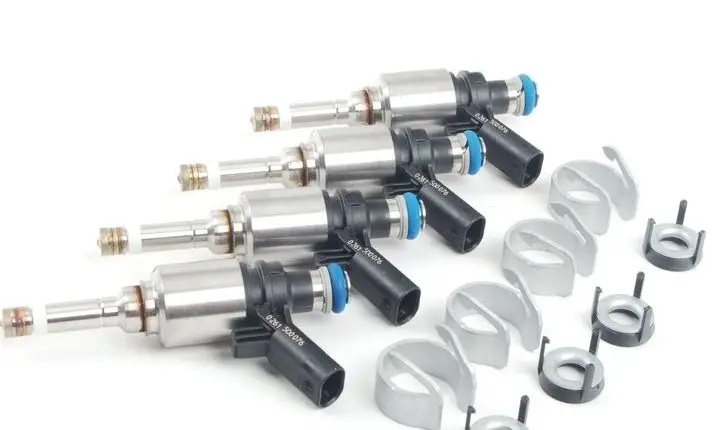
  • Replacement fuel injectors
  • And fuel injector seals
  • A set of ratchets and sockets
  • A flat-head screwdriver
  • A pair of pliers
  • A piece of shop towels

Steps to Replace a Fuel Injector

First Step

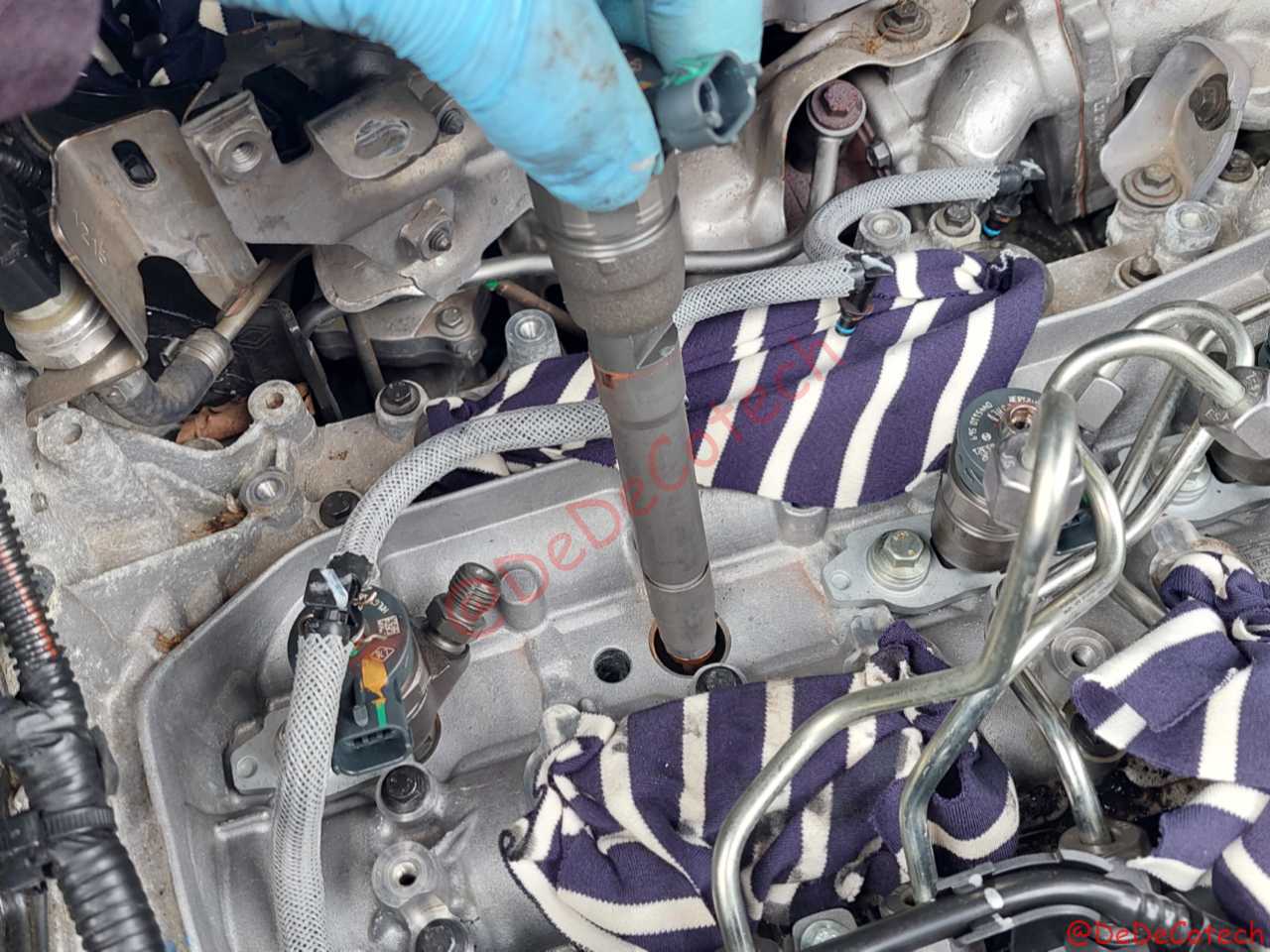
You will see a metal rod on the fuel injector. This is called the fuel rail. Now, use the socket and ratchet to loosen the bolts and brackets that hold the fuel rail in place. However, depending on the models, on some engines, you will need to disconnect the fuel line from the fuel rail to remove the rail.

Pro Tip: Following this step normally depressurizes the fuel system in multi-port fuel injected vehicles. However, this might be different for your engine, so consult the manufacturer’s manual to confirm.

Second Step

Make sure the engine is cool to the touch. Then, you can disconnect the battery.

Third Step

Remove the plastic engine cover using the appropriate socket.

Fourth Step

Now that the entire cover is removed, next use pliers to detach the electrical connector from each injector.

Fifth Step

Remove the fuel rail from the intake manifold by lifting the injectors with it. You will use a bit of pressure or a fair amount of force here. The reason is that the injectors are connected to the rail and the sprayer tips are snugly fitted into the intake manifold. Be careful not to bend the fuel rail, so don’t use too much force.

Sixth Step

Inspect the injector. And, if you see a small metal clip that looks like a staple, use a small flat-head screwdriver to remove or push the clip. Then, with your gloves on, grasp the injector and work it back and forth while pulling it to remove it from the fuel rail. The injector and rail will have fuel drips, so use the shop towels to clean the fuel.

Pro Tip: Before installing the new fuel injectors, dip the tip of the injector (using the sprayer end) into a small amount of engine oil. This will lubricate the seals and prevent leaks. But if the new injectors you bought do not come with seals, purchase new injector seals separately instead of reusing the old ones.

Seventh Step

Now, press the injector into the rail until it stops. Attach the metal clip if it has one.

Eighth Step

Next, reinstall the fuel rail. Note that this can be difficult. First, align all the injectors with their respective holes, then push each injector until they slide into place.

Ninth Step

Tighten the fuel rail bolt. And secure the fuel line in place. Also, don’t forget to plug in the fuel injector electrical connections.

Tenth Step

Finally, reconnect the battery to the correct terminals.

Eleventh Step

Now insert the key and turn it to the ON position and wait 10 seconds before turning the engine to the start position. The slight delay allows the fuel pump to fill the fuel lines and rails before starting the engine.

Twelfth Step

Let the engine run for a bit and when it reaches normal idle speed, turn off the engine. Finally, inspect the injectors with a flashlight for any fuel leaks.

Can a Faulty Fuel Injector Damage the Engine?

Yes, a bad fuel injector can damage your car’s engine to the extent that the car can no longer operate unless it is repaired. Normally, before a bad fuel injector damages your car’s engine, you will receive many signs and symptoms like the ones we discussed above.

So take the time to observe all the signs so you know what is triggering a specific problem.

Usually, a faulty fuel injector on an older car model will show signs that cause a cylinder misfire.

This is due to the new fuel injection structures; the injectors operate in sequence, so if the car’s engine misses a dose of fuel, it will not run properly and could suffer damage over time.

This is less problematic on older cars running with simultaneous injection systems.

And that’s because good fuel injectors can sometimes compensate for weaker injectors, allowing the engine to recover its sequence more quickly.

Conclusion on 5 Common Symptoms of Fuel Injector Problems

In this article, we have shown you 5 common symptoms of fuel injector problems and provided you with solutions. We also discussed what happens when fuel injectors fail and the time required to replace fuel injectors. Finally, we showed you how to replace a fuel injector. I hope it was

Engine oil cooler installation procedure

The oil cooler is a small device placed in the vehicle’s radiator design. As its name suggests, its function is to cool the temperature of the oil entering the engine. In this way, it helps maintain the optimal temperature and viscosity of the fuel before it is used for engine and transmission lubrication.

Moreover, its importance in the automotive vehicle has made its proper installation in the vehicle essential. And, in order to verify its configuration, it is essential to understand how to install engine oil coolers.

Systematic Installation of the Engine Oil Cooler

Before starting the installation of the engine oil cooler, it is essential to understand that if this small radiator is not installed carefully, it can also lead to engine failure.

Tip: the position of the engine oil cooler should not be close to or next to exhaust components, flying gravel, ice, water, or road dirt.

List of Required Parts

To ensure a correct and smooth installation process, make sure you have the tools mentioned below.

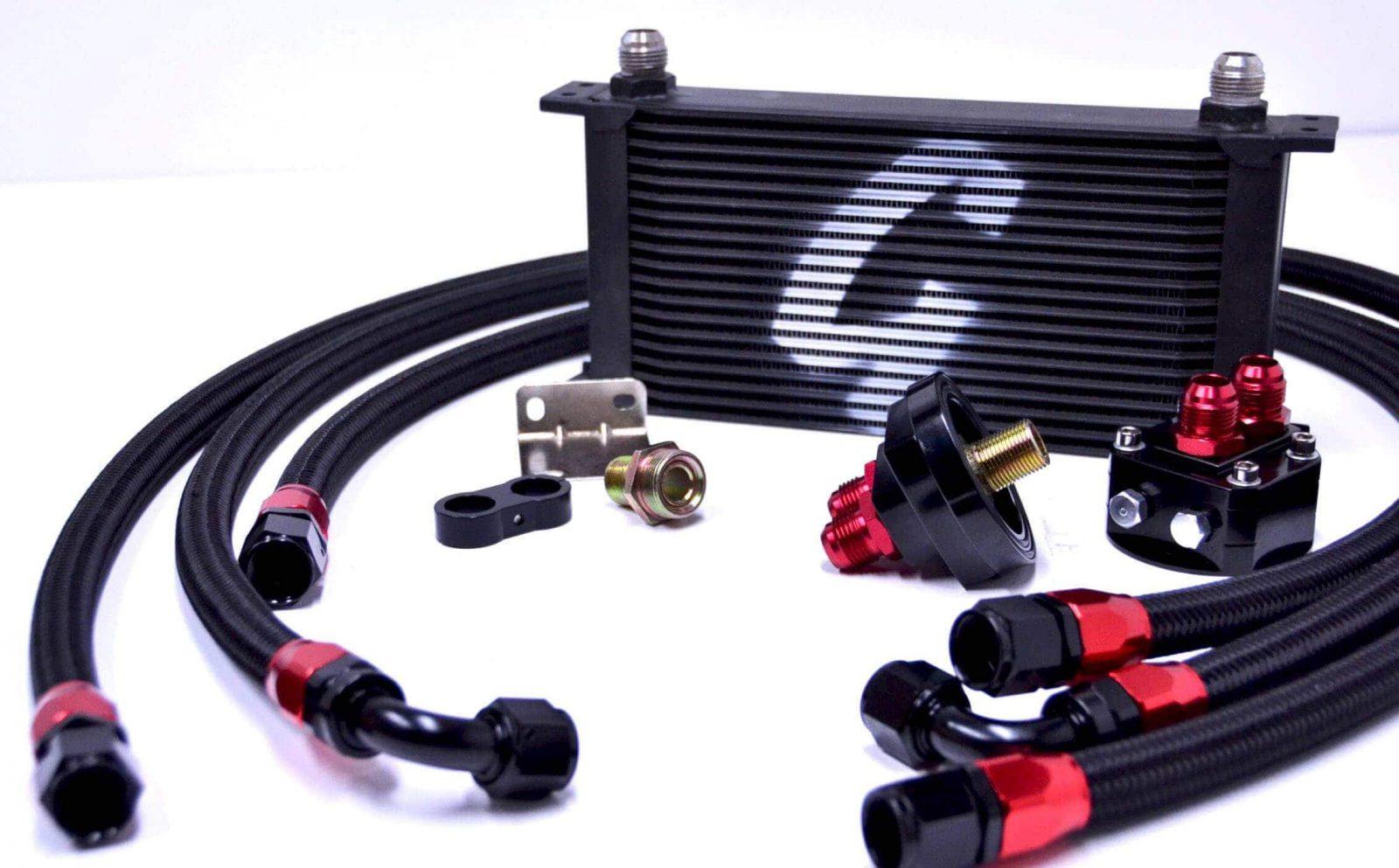
Oil cooler with barbed fittings (quantity-1)

O-ring (one each of two different sizes)

Instruction sheet (quantity-1)

Neoprene oil hose (quantity-1)

Adapter plate (quantity 1)

Hose adapter fitting (quantity-2)

Mounting nuts (quantity -5)

Pipe thread

Apart from that, the hardware installation kit (each in quantity of four) includes:

Nylon washer

Jam nut

Mounting bolt

Rubber spacer

Note: The dimensions of each component vary depending on the size of the vehicle in which the engine oil cooler is installed.

How to Install Engine Oil Coolers

To begin, check for sharp edges in the work area and ensure not to expose the oil hose to hot surfaces. Also, keep the hose lengths longer than the measurements taken and always use pipe thread on all fittings. However, it is advised not to overtighten the fittings.

1. Decide on the Mounting Location

To get the best location for the cooler in the system, it is recommended to install it where it will receive the most fresh air from the vehicle’s fan and engine.

2. Filter Inspection

First, insert the sandwich adapter deep into the oil filter to confirm its clearance. In case the clearance in the filter is insufficient, remote mounting is performed or a short filter is used. Here, the short thread of the filter must fit the adapter.

3. Mount the Engine Oil Cooler

Step 1: Install the threaded fitting into the sandwich adapter and the cooler. Then, simply place the engine oil cooler (not yet installed) in the location where you want to install it.

Step 2: Apply engine oil to the O-ring of the sandwich adapter.

Step 3: Then, with the ring of the correct color, insert the adapter and tighten it onto the cylinder block on the adapter.

Step 4: Next, for the routed hose, make sure to position all fittings on the sandwich adapter and tighten the nuts on them.

Step 5: Then, cut the hoses longer than the approximate length and insert them into the cooler with 90° turns or with a larger radius. This way, it would allow easy flow of oil through the cooler.

Step 6: Use two wrenches. With one, support the cooler and with the other, secure the bolts on it. In addition to this, use an electric drill for inserting the bolts.

Step 7: Place and secure all fittings on the engine oil cooler.

4. Test the Engine Oil Cooler Installation

To test the oil cooler, start the engine and check for oil pressure and the cooling radiator in the system. If both ends of the cooler are hot after some time, it confirms its proper installation. Otherwise, troubleshoot the issue and consult the instruction guide again.

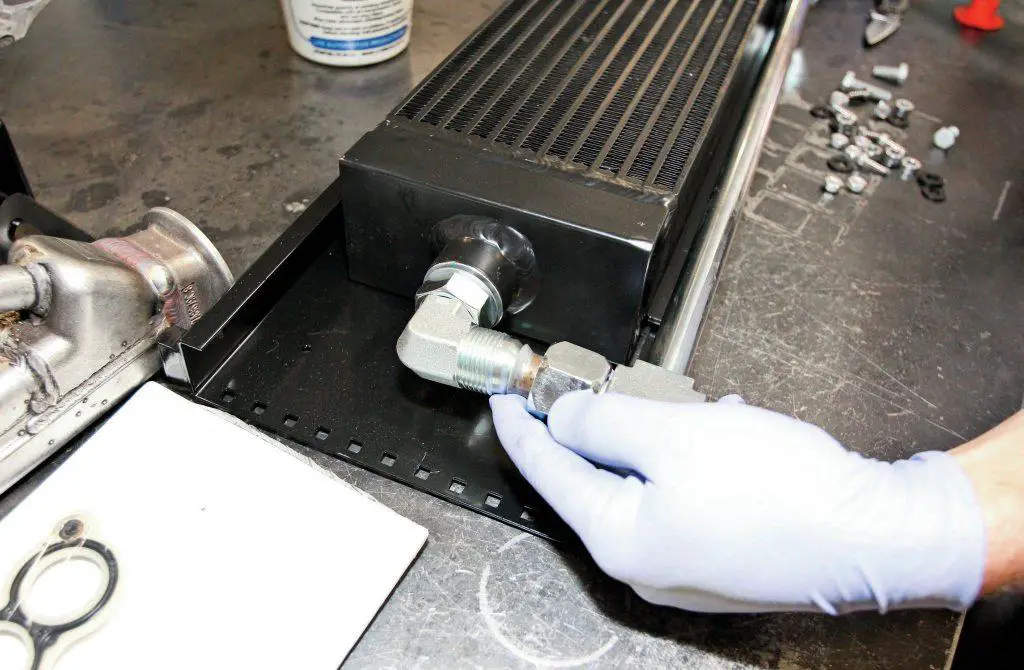
How to install engine oil coolers in the car. Source: Truck Trend

Thus, after learning how to install engine oil coolers, if this system is checked regularly, it is also easy to follow its maintenance over a longer period.

Advantages and Disadvantages of Installing an Iridium or Platinum Spark Plug in Your Car

By delving into Iridium vs Platinum spark plugs, we will learn more about your car’s electrical spark.

Did you know that an engine runs on a high-voltage spark? Yes! Fuel and pressure mix inside the engine to move the car significantly. A car engine consists of thousands of metal parts, small or large.

Manufacturers fuse these small parts to make the vehicle roar on the roads. The spark plug and ignition coil produce a high-voltage electrical spark in the engine to ignite the fuel and form combustion pressure.

This pressure inside the engine is the main reason for your smoother long drives. There are many types of spark plugs, among which iridium, copper, and platinum are at the top of the list. All these types have their pros and cons!

Iridium VS Platinum Spark Plug: Which One is the Best?

The production and use of high-voltage current take place inside the combustion chamber. A metal spark plug ignites the mixture of fuel vapor and air to start the engine.

The spark plug and ignition coil produce a high-voltage spark inside the chamber to move the car. All spark plugs have the same role of igniting the mixture inside the engine.

The different types of metals used to design spark plugs have advantages and disadvantages. Let’s talk about the pros and cons of different metal spark plugs!

1. Lifespan

Iridium spark plugs offer the longest lifespan for your vehicle. These spark plugs are well known for crossing the 50,000-mile mark without any problem.

Platinum spark plugs last a bit longer than copper plugs but do not cover 25,000 miles. This can be the main difference between iridium and platinum spark plugs. Choosing Iridium spark plugs over platinum ones would be the ultimate choice.

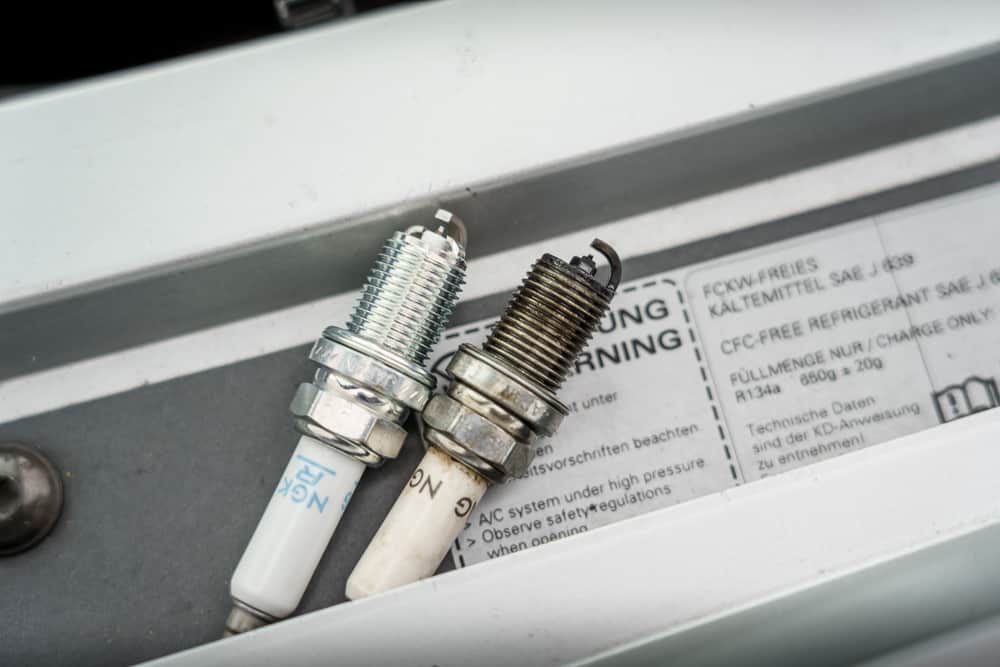
The Iridium spark plug lasts longer than the platinum one. (Photo: Bike Restart)

2. Performance

Iridium spark plugs are the most commonly used plugs nowadays. Spark plugs made from other metals can lead to a shaky engine start, while iridium plugs make ignition smoother.

Platinum spark plugs are not as reliable as Iridium plugs. This results in a jerky engine start which certainly affects the car’s performance.

3. Price

Iridium spark plugs are a bit more expensive than copper and platinum ones. These plugs may be the most widespread spark plugs on the market, but they are also very expensive. Price is another major difference when comparing Iridium and Platinum spark plugs.

Platinum spark plugs are an excellent choice when you are looking for cheap and affordable spark plugs on the market.

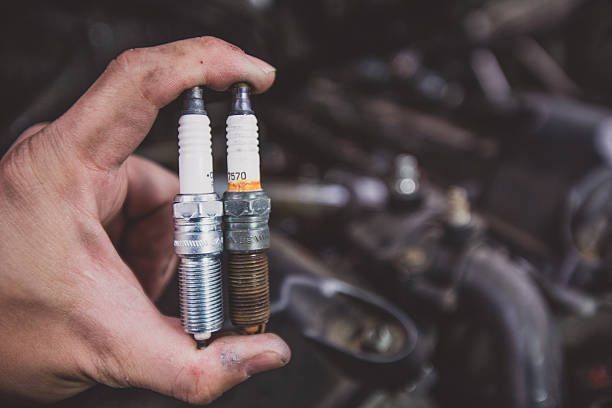
Holding old and new car spark plugs on engine

FAQ on Iridium and Platinum Spark Plugs

  1. Are Iridium spark plugs worth the higher cost?

Iridium spark plugs are generally more expensive than platinum or copper plugs. However, they often offer better performance, better fuel efficiency, and a longer lifespan.

Whether the higher cost is worth it depends on your specific driving needs and budget.

  1. When should I replace the iridium or platinum spark plug?

Iridium and platinum spark plugs have a longer lifespan than copper plugs. Manufacturers generally recommend replacing iridium plugs versus platinum plugs every 60,000 to 100,000 miles (96,000 to 160,000 kilometers).

However, it is essential to follow the vehicle manufacturer’s recommendations for your specific make and model.

  1. Can I switch between iridium and platinum spark plugs in my car?

In most cases, you can switch between the two without issue, provided they are compatible with your vehicle’s engine.

It is advisable to consult your vehicle’s manual or a mechanic to ensure the best plug type for your specific engine and driving conditions.

  1. Are there any disadvantages to using Iridium or Platinum spark plugs?

Although both types of spark plugs offer many advantages, their cost is higher than standard copper plugs.

Some might consider this cost a disadvantage. Furthermore, platinum and iridium spark plugs may not offer substantial performance gains in older or less demanding engines.

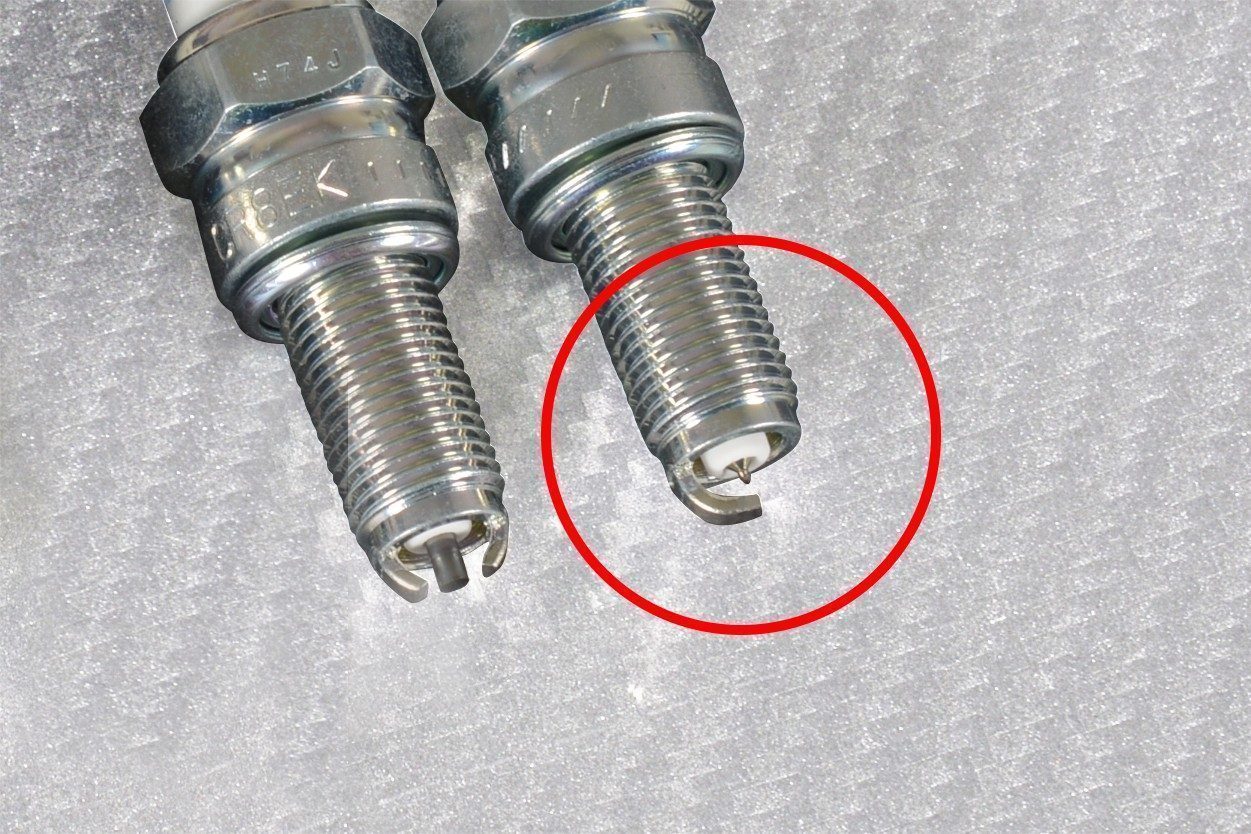
Both types of spark plugs offer many advantages and several disadvantages. (Photo: Veso Engine)
  1. Can iridium or platinum spark plugs improve my car’s performance?

Iridium and platinum spark plugs can improve ignition performance and fuel efficiency, which can lead to a slight increase in overall engine performance.

The extent of the improvement varies depending on the engine’s condition and other factors.

  1. Can I install iridium or platinum spark plugs myself, or should I leave it to a professional?

If you have experience replacing spark plugs and have the necessary tools, you can install iridium or platinum spark plugs yourself.

If you are unsure or uncomfortable with the process, it is best to leave the installation to a professional mechanic to avoid any potential issues.

  1. Do iridium spark plugs and platinum spark plugs require special maintenance or care?

Iridium and platinum spark plugs require relatively little maintenance, but it is essential to follow the manufacturer’s recommendations regarding gap specifications and replacement intervals.

Regular inspections during routine maintenance can help ensure they operate optimally. Also, avoid over-tightening when installing the spark plugs to avoid damaging the threads.

  1. Are there specific driving conditions where iridium or platinum spark plugs are particularly beneficial?

These spark plugs can offer benefits in various driving conditions, but they are particularly useful in modern, high-performance engines and vehicles with advanced ignition systems.

They excel in conditions requiring consistent ignition performance, such as city driving with stops and starts, highway cruising, and extreme temperatures.

In contrast, their benefits may be less pronounced in older vehicles with less demanding ignition requirements.

Watch this video from Project Farm to learn more about the best spark plug design!

https://youtube.com/watch?v=jcVF3xL_fzk%3Ffeature%3Doembed

That’s all! These are some main differences that are highlighted when comparing Iridium and Platinum spark plugs. Therefore, keep these essential tips in mind to make your choice for a spark plug of incredible value.

How to Fix Steam Blockage

Vapor lock is the real problem with older engine automobiles. Newer vehicles are equipped with unique fuel injection systems. The issue is not so familiar with modern technological vehicles. Vapor lock occurs when the car’s engine heats up with continuous acceleration and deceleration. The automobile engine has to work harder during hot summer days.

An automobile’s engine heats up more than usual in stop-and-go traffic. This extreme heat vaporizes the fuel in the carburetor and fuel pump. This prevents fuel from reaching the specific fuel lines and causes the engine to stop. One might wonder how to easily fix vapor lock. Why don’t we find the causes and ways to fix it in detail?

Let’s understand vapor lock, its causes, and its impact.

How to Fix Vapor Lock? The Process and Preventive Measures

Modern cars have an electric fuel injection system. The latest fuel injection technology releases fuel according to the engine’s requirements. The carburetor supplies the engine with an appropriate amount of fuel. This also prevents modern engines from having vapor lock issues. Vapor lock causes the engine to stop in older cars due to fuel overheating.

The location of the carburetor inside the engine system is very important. The problem is more significant in engines where the carburetors are located next to the entire fuel system. Fuel lines and pumps become extremely hot during hot days. This results in vapor lock in an automobile.

Fuel turns into vapor due to excessive heat in the engine system. These vapors prevent fuel from entering the fuel pump and stop the engine from running. A vehicle may run roughly or stop when fuel no longer reaches the combustion chamber. You might think that cooling fans can cool the engine in traffic jams.

Cooling fans are ineffective during constant car acceleration and deceleration. These fans are unable to cool the engine properly. That’s when vapor lock occurs. Modern vehicles have an electrical system that controls fuel intake and temperature. It automatically detects the temperature and cools the engine if it overheats.

A popular home solution for vapor lock

Let’s talk here about preventive measures regarding how to fix vapor lock:

1. Modern Electric Fan

Installing a state-of-the-art electric fan can be helpful. These cooling fans work automatically when the engine overheats. It is useful to get rid of vapor lock and prevent the engine from stopping.

2. Low-Pressure Electric Fuel Pump

Adding another low-pressure electric fuel pump in the engine compartment is also a preventive measure. It will keep the engine running when the original pump heats up. The car will continue to run until the engine compartment cools down. One can easily turn it on when the original pump fails.

3. Heat Shield

Heat shields are readily available on the market. It keeps heat away from the fuel combustion chamber. Installing a heat shield helps stay away from vapor lock. It is the most important preventive measure according to expert maintenance tips.

4. Additional Fuel Lines

Fuel lines get blocked due to excessive heat present inside the chamber. Adding an additional fuel line could be helpful in solving the dilemma. One can also protect the fuel line with available insulation methods.

5. Carburetor to Carburetor Fuel Line

A longer carburetor to carburetor fuel line is another measure one can take. The longer fuel line will take enough time to heat up. This will prevent the fuel from vaporizing and blocking the fuel pump. Additional fuel lines can be installed to prevent the engine from stopping. This will also allow your car to run longer.

Using a large carburetor can help your car run longer

How to Fix Vapor Lock?

Vapor lock is a problem that can occur in a car’s fuel system, typically in older vehicles or under high heat conditions. It happens when the fuel in the lines or carburetor turns into vapor instead of remaining liquid, which can disrupt proper fuel flow and cause the engine to stall or malfunction.

Let’s divide the repair process into simple steps regarding how to fix vapor lock.

1. Cool the Fuel Pump

Pouring cold water on the fuel pump will cool the system in no time. Make sure the ignition is off while you perform the process.

The cold water will liquefy the vapors quickly. It removes the blockage of vapors present inside the fuel pump and lines. One should wait a bit before turning on the ignition. Do not pour cold water for an extended period as it could cause engine-related issues.

2. Start the Engine

You will be able to start the vehicle once the vapors have returned to liquid form. You should gently press the accelerator at the same time as you turn on the ignition. Gently pressing the accelerator will release the appropriate amount of fuel into the combustion chamber. One should not press the accelerator hard.

This would release too much fuel into the chamber, which might not be good for the engine. Press the accelerator until the engine runs properly. The engine may produce strange noises for a while. This is because the fuel will clear the remaining vapors from the fuel line.

Final Note

That’s all! This is comprehensive information on how to properly fix vapor lock. Following the preventive measure will help stay away from dilemmas. You could get into trouble if the engine stops in the middle of traffic. So, stay safe.

Why It Is Bad to Fill Up with Gasoline

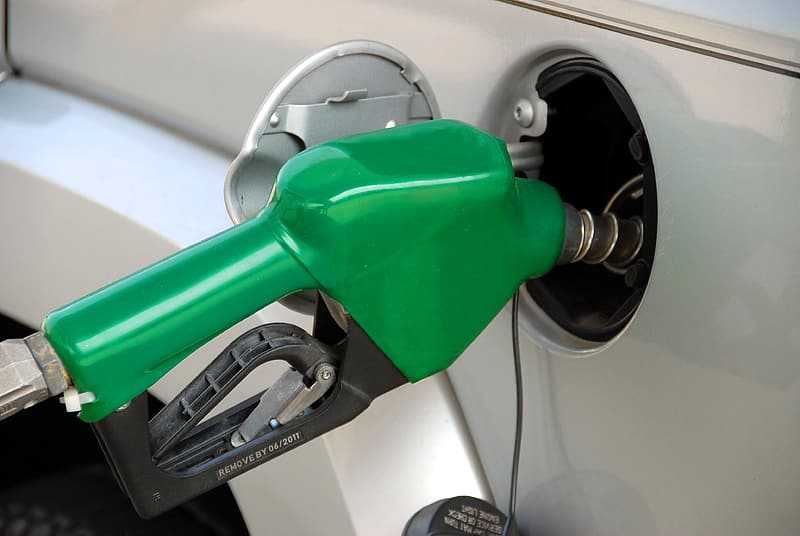
Why is it bad to top off gas? Almost all car owners have refueled at a gas station. When the pump stops, indicating a “full” tank, most people can’t resist the temptation to add a little more gas. It’s universal. People do this to round up the gallon or the bill. However, should you top off gas? Does it have harmful effects on a vehicle?

Overfilling the gas tank is downright harmful, both to the environment and your car. Here is a discussion on the reasons why you should drop the habit of adding a few extra drops.

What happens if you overfill your gas tank

You might be thinking about the damage a little extra fuel can cause. After all, you can only fill a tank as much as it can hold, right?

Technically, yes. But gasoline has certain properties that can have disastrous effects on filling the gas tank.

Two specific properties make overfilling problematic:

Vapor in gasoline.

Gasoline emits vapor, essential for its proper combustion in a vehicle’s engine. But this vapor escapes when there isn’t enough room inside the tank.

The lack of vapor hinders the combustion process, affecting the vehicle’s performance, as the fuel cannot burn properly to produce adequate power.

Gas vapors contribute to air pollution. (Photo: Motor1.com UK)

Another issue is air pollution. The vapor released into the environment produces smog by reacting with sunlight. For this reason, most gas stations use a vapor recovery system to reduce their harmful effects. Some car gas tanks also minimize vapor emissions by using a charcoal canister that collects the vapor and sends it back to the combustion chamber to burn it.

Expansion of gasoline.

Can you overfill your gas tank? You can but shouldn’t because of the vapor. Another reason is the expanding nature of gasoline.

Heat causes gasoline to expand. Gas stations store gasoline supplies in underground tanks to keep them cool. But the ambient temperature and the inside of a car’s gas tank cause the gas to expand a bit. So, overfilling will cause the gas to create unnecessary pressure on the gas tank walls.

Topping off gas: why is it bad?

Is it bad to overfill the gas tank? Of course, it is.

Many drivers still mistakenly believe that topping off gas will help the car improve its performance, but in reality, it severely affects the car. Overfilling is bad for your car. The gas tank needs some leeway for vapor and expanded gasoline.

Let’s find out what problems a filled gas tank can cause on your vehicle.

Ruining the charcoal canister

The vapor recovery system cannot fulfill its function when a tank is full. An overfilled tank causes the charcoal canister to suck in liquid fuel, causing damage. Furthermore, when there’s no room for the gas to evaporate in the tank, it will happen in the vapor collection system (or in the charcoal canister), leading to its failure.

A bad charcoal canister is one of the reasons for high emissions and poor vehicle performance. You may need to replace the canister, which can be expensive, costing between $190 and $560, including parts and labor.

Excess gasoline in the system can cause other harmful effects. An overflowing charcoal canister can not only break the vapor system but also create excessive pressure on the fuel combustion system. If this happens, you may need to change many engine components, or even the entire engine.

Bad for the environment

Overfilling can spill fuel onto the ground, which is bad for the environment as it can evaporate and create smog by reacting with sunlight. This smog damages the ozone layer, which protects the earth from harmful UV rays.

Excess gas also creates excessive exhaust fumes, contributing to air pollution. Gasoline itself is toxic to human skin, and breathing its fumes is harmful to health.

Leading to extra expenses

Many gas stations have a vapor recovery system that recovers vapors and pumps the extra gasoline from the car’s gas tank back to the station’s tank. But this extra amount of gasoline is still charged to you. This means you have to pay for something you don’t have.

Overfilling the tank costs you extra money. (Photo: Dreamstime)

This system involves automatically removing the gas nozzle when the vehicle’s tank is full. Thanks to this safety system, gas vapors cannot escape into the air and cause air pollution, and excess gas cannot create complications in a vehicle’s combustion system.

Furthermore, a filled gas tank can damage the vapor collection system, leading to costly repairs.

Affecting the car’s exterior

If you overfill with gas, the excess gasoline will spill and stick to the car’s surface, affecting the car’s paint. Over time, if the car is not carefully cleaned, yellow stains will appear around the gas tank area, making cleaning difficult and causing the car to lose value.

FAQ

When should you fill up gas for your car?

According to experts, when discussing how to fill up a car, car owners should refuel when the gas gauge is about to reach E. This will help protect the engine and associated systems. The fuel gauge will warn of low fuel level by continuously flashing. If you continue driving while the fuel level is low, the engine, such as the pipes, fuel pump, or injectors, will be easily damaged. And the best time to fill up gas is during the coolest periods of the day, like early morning or late evening.

How far can you drive with the gas light on?

When the gas light on your dashboard or the car’s fuel gauge reaches the E mark, it means your car will need to use the fuel stored in the reserve tank; the vehicle can continue to travel a certain distance to the nearest gas station. Avoid stalling the engine in the middle of the road.

Normally, vehicles are designed to add about 10 to 15% of the total fuel tank as a reserve for emergencies. From this amount of gasoline and the vehicle’s user manual, each car owner will calculate the extra distance the vehicle can travel.

What to do if you put the wrong fuel in your car?

It’s a situation many drivers face. Diesel cars that are filled with the wrong fuel when driving on the road will be very noisy, damage the engine, and may not restart.

Therefore, if the car is filled with the wrong fuel, the best way is not to start the engine but to drain the fuel from the tank and clean the tank and injectors. If the car makes engine noises, it’s best to take it to the garage for the staff to check it thoroughly.

The final words

Adequate refueling not only ensures fuel efficiency but also ensures the safety of car owners while driving. Thus, the discussion clearly shows that one should never overfill the car’s gas tank.

To save a few cents, you risk having to pay for heavy car repairs and contributing to environmental pollution. We hope sharing this topic will help you optimize engine performance, ensure safety, and extend the vehicle’s lifespan.

The 7 Common Symptoms of Bad Valve Seals

Many car owners don’t realize that valves play an essential role. The sleeves on the valve prevent combustion gases from passing through them. When valves start to wear out, it can be easily detected if one knows the symptoms of bad valve seals.

So, to answer the question: “What are the symptoms of a bad valve seal?“, car owners need to know the definition of a car valve and its seal.

Definition of Valves and Valve Seals

The valve is the automotive part designed to help the engine run properly by closing and opening at the right time.

There are many valves that play different roles inside the automobile: the exhaust valve will transfer waste gases outward, while the intake valve allows the mixture into the cylinder.

And of course, valves are one of the most essential control elements in any system.

To support the valve, valve seals are created to control valve lubrication and oil consumption in different types of engines.

Furthermore, the seal located above the valves prevents the oil in the cover from being sucked into the engine. The seals, made from sturdy rubber, easily fit on top of the valve inside a small collar.

For this reason, the seal must be very well designed to ensure its performance.

The valve is the automotive part designed to help the engine run properly. (Photo: dubizzle)

How does the valve work?

Pear-shaped lobes, called cams, control the operation of the valves. Combined with a rotating shaft called a camshaft and crankshaft gears, the valves help control the exhaled smoke.

Inside the engine block where the camshaft is mounted, various small metal cylinder tappets are positioned above each cam.

From the tappets, a metal push rod reaches the cylinder head. The top of the push rod connects to a rocker arm. This part’s role is to bear against the valve stem.

This is when the overhead valve system works: when the push rod rises on the cam, it causes the rocker arm to pivot.

This action will push the valve down against the spring pressure. On the other hand, when the cam lobe rotates further, the valve spring moves and closes the valve.

The Main Symptoms of a Bad Valve Seal

Any problem with the car’s valve is serious, especially when it concerns the engine. So, what are the symptoms of a bad valve seal?

For your vehicle to operate at its maximum capacity, valves with proper seals are essential. Any problem with the seal or the valve means you will need to rebuild the car’s engine to get it back into working condition.

Pay attention to the information below to know the symptoms of valve stem seals in your car. You can also browse online for the best maintenance tips for your car’s engine valve.

Any problem with the car’s valve is serious. (Photo: Cars and Keys)

1. Ticking/Popping Noise

When it comes to problems with your car’s valve, a ticking or popping noise is the first to make its presence felt. Sometimes, you might notice these issues occur before any other problem.

When you accelerate the engine, the noise becomes louder. This means that some valve components are misaligned or worn out. The last reason could be that the car’s engine is not receiving enough lubrication.

The majority of cars are equipped with hydraulic tappets. These require continuous lubrication and constant pressure.

If the pressure decreases a bit, it would increase the excessive movement of the valve train. Remember that ticking or popping noises are the first symptoms of a bad valve seal in your car.

2. Heavy Smoke Presence

High levels of smoke are the second sign of faulty valve seals. Drivers can see a lot of exhaust smoke when starting the car; however, too much smoke can be the result of deteriorating valve seals.

For this reason, it is recommended to check the valve seal when car owners detect waves of smoke.

3. Engine Power Loss

Another indicator of valve problems in your car is a decrease in engine power and performance. Car manufacturers design car valves to fit perfectly into their seats and minimize freedom of movement.

If the valve guides and seals are leaking, oil can accumulate on top of the valve and cause it to lose its seat or create a gap. This could further lead to compression problems, which would result in poor combustion and power loss.

Another issue is burnt valves, which are responsible for engine power problems. When a valve burns, it loses material and has large holes that vent gases and decrease the compression ratio.

The most common cause of burnt valves is leaking seals and guides. This can also include their failure to resolve a car compression problem.

When this problem combines with a cooling system or EGT (Exhaust Gas Recirculation) issue, the risks of a burnt valve increase.

This is another symptom of bad valve seals, which should not be ignored at any cost.

Another indicator of valve problems in your car is a decrease in engine power. (Photo: Breaker Link)

4. Perform the Cold Engine Test

A cold engine test is certainly the best way to answer the question of whether the valve seals are leaking.

If you leave a car unused for a long period or overnight, oil will remain on top of the valve cover head, and the next time you drive, the oil will eventually stick at the level of the bad seal and create blue smoke.

This test is the ultimate way to detect bad valve seals.

5. Perform an Engine Braking Test

Another test to spot the symptoms of bad valve seals is engine braking. In order to know if you have a worn valve seal or not, drivers can press the accelerator after coasting and the oil that remains on the front hood will burn.

6. Blue Smoke from the Exhaust Pipe

If you are looking for obvious symptoms of bad valve guides, blue smoke coming from the exhaust pipe is a sure sign that the car’s engine has a problem.

Although blue smoke is not the result of a problem with the car’s valve, it is a common indication.

When the valve guides and seals wear out, it allows oil to pass into the combustion chamber and be burned with the car’s fuel. Car owners will also notice that oil levels continue to drop or that they need to add oil more frequently.

Although the amount of blue smoke seen when the valve guide and seal fail is small and barely noticeable, if large amounts are present, you might have damaged piston rings.

If large amounts are present, you might have a damaged piston ring (Photo: Youtube)

7. Idle, Stop, Go Driving

Bad valve seals primarily manifest when the car is idling at stop lights. The reason for this symptom is that high levels of vacuum in the intake manifold occur when automobiles remain unused for long periods.

This leads to oil being sucked into the heads and collected at the valve stems.

With a bad valve seal, the oil will be drawn towards the valve guide, passing through the erosion area during acceleration.

Frequently Asked Questions

To better understand bad car valve seals, our automotive experts will help drivers answer the most common questions on these related topics:

What Causes Valve Seals to Deteriorate?

The main factor causing lower quality materials like nitrile to harden and become brittle is the high operating temperature.

When the seals deteriorate, they cannot control the oil slipping into the guide. Worn valve seals cause various problems such as cracks, decreased oil control,…

Will Bad Valve Seals Cause Low Compression?

Several valve problems can lead to low compression. There are several reasons for this issue.

The intake and exhaust air valves overheat, gas leaks, the valve seals deteriorate, and the gas cannot seal completely.

How Long Do Valve Seals Last?

150,000 miles under normal conditions. However, valve seals can deteriorate due to infrequent oil and filter changes, as well as poor installation.

How to Fix a Leaking Valve Seal?

Don’t panic when your car has a leaking valve seal. We are here to help. There are 3 ways to fix this problem.

  • First, and in the simplest way, replace the leaking seal. You can simply remove the cover and scrape off any buildup stuck in that area.
  • After that, position the new seal in place and remember to tighten the bolts.
  • Drivers can add an oil leak stop additive to the engine.

This product’s role is to prolong the life of the valve seals by making them swell, which can stop a leak.

However, this is a temporary solution and drivers must take their car to the auto mechanic.

  • Last but not least, it is recommended to use a high-mileage engine oil. This oil can keep the valve seals flexible to reduce corrosion.

By applying engine oil, seal conditioners can reduce or even stop leaks.

Summary

Thus, we hope this blog has helped you understand in detail the symptoms of bad valve seals. Remember that you should not modify any car part to fix the problem, but rather entrust it to an auto repair expert to resolve the issue.

Turn on the air conditioning correctly to cool the car quickly

Properly turning on the air conditioning to cool the car quickly and save energy. How often do you turn on your car’s air conditioning, but even after 2-3 minutes, the car is still hot? There’s a good chance you’re not using your car’s air conditioning correctly. Did you know that if you don’t turn on the air conditioning correctly, you risk wasting energy and delaying cooling?

Yes, you need to follow certain steps for optimal cooling while saving energy. We often come across cars whose air conditioners are almost broken. And this happens more with relatively older cars.

This might be the result of a decrease in the air conditioner’s efficiency due to improper use. The fact is, not all drivers know how to use the air conditioning correctly!

How to properly turn on the air conditioning for optimal cooling and energy savings

Most people think turning on the car’s air conditioner is as simple as pie. Well, in a way, it is, but if you apply a basic technique, you’ll end up saving a ton of energy in the long run.

These basic elements also ensure that your car is cooled very quickly and optimally.

Step 1: Partially open the windows

It makes sense to realize how hot a car’s interior can get when it’s locked in the sun. Due to the lack of circulation, the hot air remains trapped inside.

When you open the car, partially lower the windows to expel most of the hot air from the car.

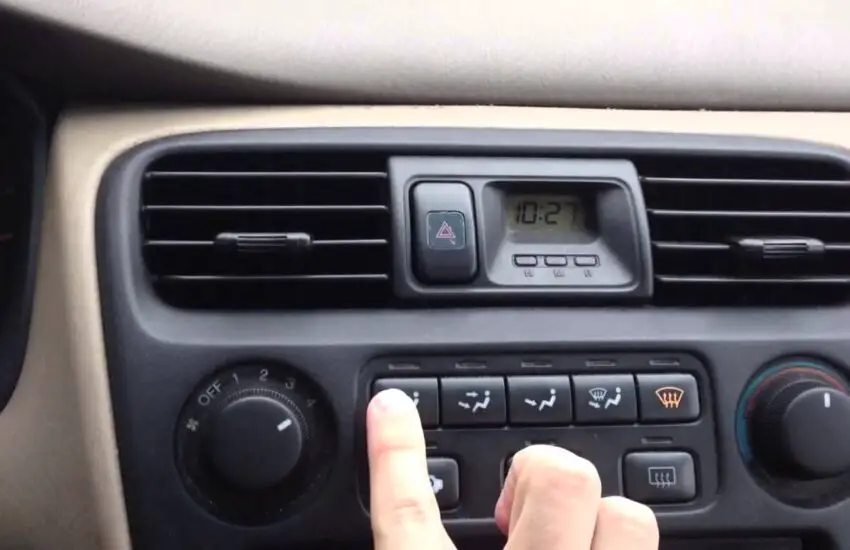
Turn on the air conditioning in your car correctly to avoid any problems. (Photo source: Jay Pichardo/YouTube)

The air conditioning mechanism of all cars works by expelling hot air from the car. So, one way to ensure rapid cooling is to ensure a reduction of hot air in the cabin.

Step 2: Disable recirculation mode

When you start the engine, disable recirculation mode. This will allow the hot air to escape through the vents and it won’t be recirculated inside.

Once you start to feel that the air is cooler than before, switch to recirculation mode. This will allow the now cooled air to circulate inside the cabin.

This is a very crucial step before turning on the air conditioning correctly. It adds to the efficiency of the car’s air conditioning.

Step 3: High-speed AC at startup

Turn on the air conditioning correctly to allow cooled air to circulate (Photo source: MaxPixels)

If your car has been parked under the scorching sun, this would be an excellent idea. The cabin, in this case, becomes quite humid.

Lower all the windows completely. Blow the manual air conditioning at full speed and keep driving for 2 to 3 miles.

When you feel that the interior has cooled down and the vents are blowing cooler air, roll up the windows. Now activate recirculation mode to reduce the strain on the air conditioner.

Step 4: Low speed on automatic air conditioning

If your car is equipped with an automatic air cooling system or air conditioning. You should always start the air conditioner at the lowest given speed. This is the shortest possible way to lower the cabin temperature. Once done, you can adjust the speed later.

Regarding automatic control, this is actually the way to turn on the air conditioning correctly. Follow these 4 maintenance tips and you will see the difference in the air conditioner’s performance.

Furthermore, proper use of the car’s air conditioning will help you save a lot of energy, extend the battery life, and increase mileage.

FAQ on properly turning on the air conditioning

1. How long should I wait before closing the windows after turning on the air conditioning?

It’s best to wait a few minutes, usually 2 to 5 minutes, to allow the air conditioner to start cooling the interior. Once you feel cooler air, close the windows to retain the coolness.

2. Should I turn off the air conditioning before reaching the desired temperature?

It’s not necessary. Modern car air conditioning systems are efficient, and it’s often more fuel-efficient to maintain a constant temperature rather than frequently turning the air conditioning on and off.

3. Can I use a sunshade or park in the shade to help the car cool down faster?

Using a sunshade or parking in the shade can significantly reduce the initial heat inside your car, allowing the air conditioner to cool the interior more easily.

4. Is it true that running the car’s air conditioning uses more fuel?

Air conditioning does use more fuel, but when used efficiently, the additional fuel consumption is relatively low compared to the comfort it provides. Proper use can minimize this impact.

5. How often should I service my car’s air conditioning to ensure it works efficiently?

It is recommended to service your car’s air conditioning system annually to check for leaks, clean the filters, and ensure it operates at maximum efficiency. Regular maintenance can extend the system’s lifespan.

Watch this video by ChrisFix to learn how to properly recharge your AC system!

https://youtube.com/watch?v=Pdq8JAlct6s%3Ffeature%3Doembed

6. Are there eco-friendly alternatives to air conditioning for cooling the car?

You can use natural ventilation by opening the windows when driving at lower speeds, or use the car’s fan without air conditioning to circulate the air. However, these methods may not be as effective in extremely hot conditions.

7. Can I use a remote start function to cool my car before getting in?

Many modern cars offer remote start options that can activate the air conditioning before you enter. This can be an effective way to cool your car in advance while saving energy.

8. Is it better to use the rear or front vents of the car to cool it down quickly?

To cool the car quickly, start by using the front vents. Once the cabin temperature becomes more comfortable, you can redirect some of the airflow to the rear vents to ensure everyone in the vehicle enjoys the cooling effect.

Remember that efficient use of your car’s air conditioning, or even when you turn on the air conditioning correctly, not only keeps you comfortable but also helps reduce your carbon footprint and save on fuel costs.

Proper management of the air conditioning is a small step that can make a big difference in your driving experience!

The AC compressor is running but not cooling

The AC compressor is running but not cooling. To stay comfortable and safe from the scorching summer heat, people often prefer air conditioning in the car. It’s heavenly to have that cool air blowing right on your face. However, sometimes your luck runs out and you encounter that AC compressor that’s running but not cooling.

No matter how high you turn that dial, it just doesn’t seem to work. Well, there are many reasons why your air conditioner isn’t blowing cool air.

How does an AC compressor work in a car?

An air conditioning compressor is a crucial component of the car’s AC system. Its main function is to compress and circulate the refrigerant gas, which is responsible for cooling the air inside the vehicle.

The AC compressor is typically driven by the engine via a belt and pulley system. It is connected to the rest of the air conditioning system, including the condenser, evaporator, and expansion valve or orifice tube, through a series of refrigerant lines. The compressor receives low-pressure, low-temperature refrigerant gas from the evaporator and compresses it into high-pressure, high-temperature gas.

An air conditioning compressor plays a vital role in maintaining the proper functioning of the AC system. If the compressor fails or malfunctions, it can lead to a loss of cooling capacity, reduced efficiency, or even a complete lack of cold air. Common problems with the AC compressor include mechanical failure, electrical issues, or refrigerant leaks.

And when the compressor is faulty, you need to diagnose and find the reason in order to have a quick method to fix the problem:

The AC compressor is running but not cooling: Possible Reasons

From refrigerant leaks to a bad compressor, even a small fault in the HVAC system can cause you trouble with your air conditioning. Let’s learn about different reasons and their solutions-

If the refrigerant is leaking

This often happens, and it’s the most common problem causing an air conditioner to blow warm air. When the refrigerant leaks, simply use the sealant available at most auto repair shops. If unsure, you can call a repairer and let them seal any leaks causing the AC compressor to run but not cool.

To detect potential leaks, AC leak detection kits are available online. You can also request the kit from your nearest auto repair shop.

Ensure all connections are intact.

Locate the front seal and O-rings and see if the switches are secure.

Make sure no hose is crimped on the fittings.

A blocked condenser hampers AC performance in the car (Photo Source: townlec)

If the condenser is blocked

The condenser is one of the important components of an HVAC system as it converts the hot refrigerant into a cold substance after undergoing the compression process. As a result, you get cool air via the airflow that passes through the front of your car.

If the condenser is blocked in some way or due to dust and debris, the overall functionality is compromised and you won’t get cool air. You can check the condenser yourself as it’s easy to locate. In most cars, it’s situated at the front of the car.

When the condenser needs to be replaced

Sometimes, a simple cleaning won’t work because the condenser might need replacement. Due to road debris and such materials, a condenser can break, and if it’s an equipment failure, only replacement will set things right.

Determining if your condenser needs cleaning or replacing is easy with a simple visual inspection. If it’s not the condenser, you can also check the compressor and get the compressor replaced.

Wiring Problems

Well, if that’s the case, it’s going to be tough to fix by yourself. In this instance, you should call an auto repairer, as it’s not safe for a novice to handle such situations.

However, if you can visually locate a broken wire, you can fix it using electrical tape or let the professional handle it for further diagnosis.

Faulty Cooling Fans

Fans play a crucial role in maintaining proper air circulation. When the fans are faulty, airflow won’t occur and you won’t get cool air. Also perform a visual inspection for this and see if the cooling fan isn’t broken. If it is, you need to replace it.

If you see that the fan isn’t broken, wiring work might be needed. Call a professional for this and resolve the issue.

Tip: It’s wise to entrust your car to a professional from time to time and ensure everything is working well.

If the compressor itself is faulty

The compressor is the unit responsible for running your air conditioning. If it’s faulty, it means no refrigerant will circulate in the system, and that means there will be no cool air. Compressors often fail due to long periods of service without maintenance or replacement.

So, if you feel all other components seem fine, the last check you can perform is on the compressor. It’s a good idea to have some hands-on experience handling minor faults in your car. Frequently reading maintenance tips can help you.

Furthermore, sometimes not using the compressor or the AC system makes it passive, and you might need to get it checked. As a solution, it’s recommended to run the air conditioner at full blast once every three weeks in winter and during monsoons when you aren’t using the AC frequently.

car air conditioning
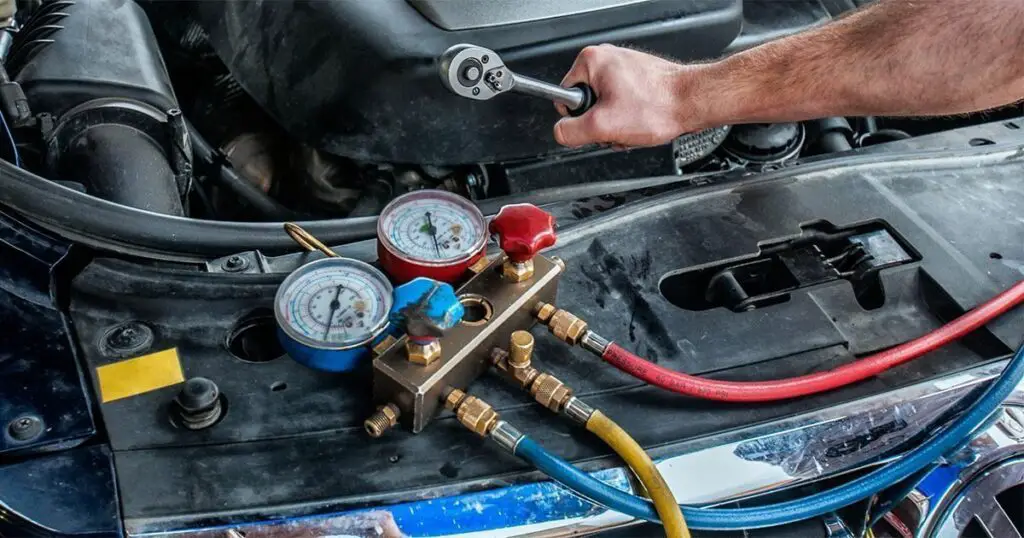
A professional auto repairer restores AC operation and cool air (Photo Source: mastermechanics)

Conclusion

There’s nothing to fear if your AC compressor is running but not cooling. Sometimes, a simple visual inspection is enough to determine which component is faulty. Moreover, you can call the auto repairer and let them handle the deeper issues.

It can be frustrating; especially in summer, and for that, you can get your air conditioning checked beforehand. This way, you’d be ready to face the summer with the best air conditioner running in your car.