P044D High Value in Exhaust Gas Recirculation Sensor C Circuit

What does it mean?


This diagnostic trouble code (DTC) is a generic powertrain code, meaning it applies to OBD-II equipped vehicles. Although generic, specific repair steps may vary by make/model.

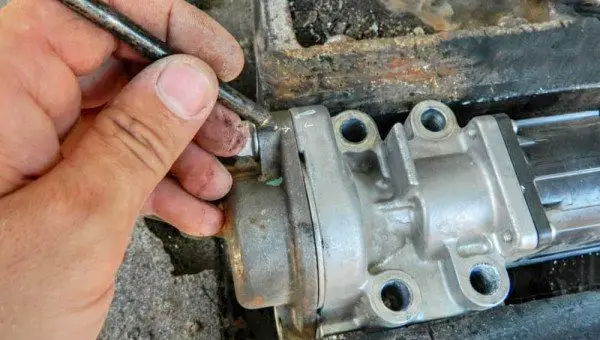
The EGR (exhaust gas recirculation) system is designed to lower combustion temperatures under certain conditions, thereby reducing nitrogen oxide (NOx) emissions. It does this by recirculating inert exhaust gases into the cylinder to burn with the air/fuel mixture. Inert exhaust gases burn slower and lower combustion temperatures. The EGR valve is computer-controlled and opens to allow exhaust gases to flow into the cylinders.

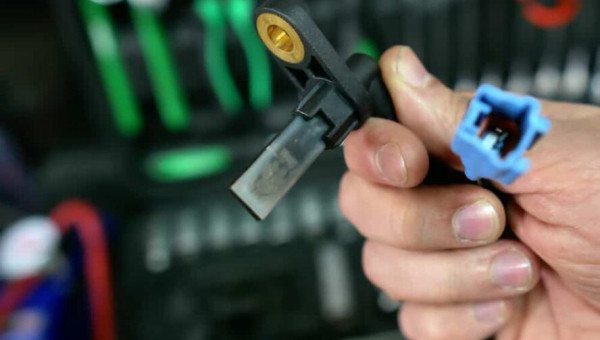
The EGR valve may be vacuum-operated. If so, a PCM-controlled EGR vacuum solenoid is used to provide vacuum to the EGR valve. When activated by the PCM, the EGR solenoid opens, allowing engine vacuum to move to the EGR valve. This engine vacuum opens the valve, allowing exhaust gases to pass through and enter the combustion chamber. Other EGR valves are electronic and directly controlled by the PCM. The PCM will activate the solenoid(s) that are integral to the EGR valve. These solenoids will open for varying durations, allowing exhaust to pass as needed. The EGR system is continuously monitored for faults. A feedback sensor on most EGR valves informs the computer of the actual EGR position. This sensor typically ranges between 0.4 and 5 volts.

If this EGR position sensor has an abnormally high reading for too long, this code may be set. Consult a vehicle-specific repair manual for your “C” circuit location.

Related EGR sensor “C” fault codes:

P044A Exhaust Gas Recirculation Sensor “C” Circuit
P044B Exhaust Gas Recirculation Sensor “C” Circuit Range/Performance
P044C Exhaust Gas Recirculation Sensor “C” Circuit Low
P044E Exhaust Gas Recirculation Sensor “C” Circuit Intermittent/Erratic

Symptoms


Symptoms of a P044D DTC may include:

Increased combustion temperatures (and NOx emissions)
MIL (Malfunction Indicator Lamp) illumination
Possible surging while driving
Possible intermittent stalling

Causes

Potential causes

of a P044D code include:

EGR sensor signal circuit shorted to B+ (battery voltage)
EGR sensor signal circuit shorted to 5-volt reference circuit at EGR
EGR sensor ground circuit open
EGR sensor signal circuit open
Faulty EGR (internal EGR sensor or solenoid failure)
Debris stuck in valve holding it open or closed

Possible Solutions


If the vehicle starts and stalls or won’t run with this code present, try disconnecting the EGR valve then restarting. If this makes no difference, remove the EGR valve and inspect for debris. Clean and reinstall. If this still doesn’t resolve the issue, block off the EGR port and try starting the engine. If this allows the engine to start, the EGR valve is stuck open and needs replacement. If disconnecting the PCM-controlled EGR valve allowed the engine to restart, there’s likely a wiring issue, possibly a short circuit holding a solenoid open.

Using a scan tool, view the EGR position on the data stream with the key on engine running and compare with desired EGR position. If it appears normal, suspect an intermittent problem. If it displays 5 volts or more, check the EGR sensor signal circuit for a short to the 5-volt reference wire or to B+. Repair as needed. Also verify there’s a good ground path on the ground circuit. Repair any open or short on the ground circuit.

On a vacuum-controlled EGR valve with an EGR solenoid: if disconnecting the vacuum source from the EGR valve allows the engine to start, suspect a faulty EGR solenoid allowing vacuum to the EGR valve constantly. Replace the EGR solenoid as needed. If this code is present and your engine starts and runs fine, suspect an open in the wiring. Inspect and repair any wiring issues. If wiring checks out, replace the EGR valve. If the wiring to and from the EGR valve

P044E Intermittent Exhaust Gas Recirculation Sensor C Circuit

What does it mean?


This is a generic powertrain diagnostic trouble code (DTC), meaning it covers all makes/models from 1996 onward. However, specific troubleshooting steps vary by vehicle.

The On-Board Diagnostic (OBD) trouble code P044E is a generic code related to an intermittent or erratic issue in the Exhaust Gas Recirculation (EGR) valve’s electrical circuit “C”.

The purpose of the EGR valve is to introduce a regulated amount of exhaust gas into the intake manifold. The goal is to keep cylinder head temperatures below 2500 degrees F. Oxygen nitrates (Nox) form when temperatures exceed 2500 degrees F. Nox is responsible for smog and air pollution.

The control computer, either the Powertrain Control Module (PCM) or the Electronic Control Module (ECM), detected an abnormally low, high, or non-existent signal voltage. Refer to a manufacturer-specific repair guide to determine what the “C” sensor is for your exact vehicle.
EGR Operating Principles

The P044E trouble code refers to the same issue across all vehicles; however, there are many types of EGR systems, sensors, and activation methods. The only similarity is that they all vent exhaust gases into the intake manifold to cool cylinder head temperatures.

Introducing spent exhaust gases into the engine at the wrong time reduces power and causes rough idling or stalling. With this in mind, the computer programming only opens the EGR when the engine speed is above 2000 RPM and closes it under load.

Related EGR “C” Sensor Fault Codes:

P044A Exhaust Gas Recirculation “C” Sensor Circuit
P044B Exhaust Gas Recirculation “C” Sensor Circuit Range/Performance
P044C Exhaust Gas Recirculation “C” Sensor Circuit Low
P044D Exhaust Gas Recirculation “C” Sensor Circuit High

Symptoms


Symptoms depend on the EGR valve’s position at the time of failure.

The service engine soon light will illuminate, and the OBD code P044E will be set. Additionally, a second code related to EGR sensor failure may be set. Code P044C relates to low sensor voltage, and P044D relates to a high voltage situation.
If the EGR valve is stuck partially open, the vehicle may not idle well or may stall.
Knocking sounds may be heard under load or at high RPM.
No symptoms at all.

Potential Causes

Faulty EGR “C” sensor.
Defect in the sensor wiring harness.
EGR valve stuck in the closed position, with carbon buildup preventing it from opening.
Lack of vacuum at the EGR solenoid.
Faulty EGR solenoid.
Faulty EGR position sensor.
Faulty EGR differential pressure feedback sensor.

Repair Procedures


All EGR valves have one thing in common: they recirculate exhaust from the exhaust to the intake manifold. Beyond that, they differ in their methods of regulating valve opening and detecting its position.

The following repair procedures represent the most common issues responsible for the majority of EGR system failures. Wiring harness or sensor failures require a service manual to determine proper wire identification and diagnostic procedures.

Keep in mind that wiring differs between manufacturers, and computers do not respond well if the wrong wire is probed. If you probe the wrong wire and send excessive voltage through the computer’s sensor input terminal, the computer may be damaged.

At the same time, if the wrong connector is unplugged, the computer could lose its programming, requiring the vehicle to be taken to a dealer to reprogram the computer.

Code P044E indicates a malfunction in the “B” circuit, so check the EGR sensor connector for corrosion, bent or pushed terminals, or loose connections. Clean any corrosion and reinstall the connector.
Remove the electrical connector and take out the EGR valve. Check for carbon buildup in the EGR’s intake and exhaust passages. Clean any carbon deposits as needed so the valve moves up and down smoothly.
Check the vacuum line from the EGR to the solenoid and replace it if defects are found.
Check the solenoid’s electrical connector for corrosion or defects.
If the vehicle is a Ford, trace the two vacuum hoses from the EGR to the Differential Pressure Feedback EGR (DPFE) sensor at the back of the manifold.
Check both pressure hoses for corrosion. Experience shows that these hoses can become clogged with exhaust carbon. Use a small pocket screwdriver or equivalent to clean the hoses of corrosion, and the sensor should resume functioning.

If the most common tests do not resolve the issue, a service manual is needed to continue testing the wiring circuits. The best solution is to take the vehicle to a service center with the appropriate diagnostic equipment. They can quickly identify and repair this type of problem.

P044F High Value of Circuit A of Switching A of the Secondary Air Injection Circuit

What does it mean?


This diagnostic code (DTC) is a generic powertrain code, meaning it applies to vehicles equipped with OBD-II. Although generic, specific repair steps may vary by make/model.

The secondary air injection (AIR) system switching valve is the computer-controlled valve that controls air injection into the engine’s exhaust system (this valve may be integrated with the AIR pump). This code deals with an issue in the SOLENOID circuit, not the operation of the AIR pump itself.

The AIR injection system reduces hydrocarbon (HC), carbon monoxide (CO), and nitrogen oxide (NOx) emissions by injecting fresh air into the exhaust ports of a cold engine or the catalytic converter of a hot engine. This helps convert hydrocarbons into water vapor (H2O) and carbon monoxide into carbon dioxide (CO2).

Generally, the electric air pump is the most common type, although there may be belt-driven air pumps with an electric clutch. The electric air pump is controlled by the PCM (powertrain control module), which grounds the AIR pump relay control circuit and provides voltage to the AIR pump and solenoid valve (which may control a vacuum-operated shut-off valve or directly control airflow). There is a check valve in the fresh air supply tube that prevents exhaust gases from flowing back into the AIR pump. The PCM monitors the driver that activates the AIR pump for faults. When the PCM commands the AIR pump relay, the control circuit voltage is naturally pulled near zero. When the relay is commanded off, the control circuit would have battery voltage present. If the PCM detects a voltage higher than expected, P044F will be set.

Other secondary air injection system fault codes include P0410, P0411, P0413, P0414, P0415, P0416, P0417, P0418, P0419, P041F, P044F, P0491, P0492.

Symptoms


Symptoms of a P044F DTC may include:

MIL (Malfunction Indicator Light) illumination
Increased exhaust emissions
Rich running engine

Causes

Potential causes of a P044F code include:

Short to ground in the control circuit
Short to voltage in the control circuit
Open control circuit due to damage, etc.
Open or short in the battery supply circuit to the solenoid
Open or short in the battery supply for the relay control circuit

Possible Solutions


If you have access to a scan tool, with KOEO (Key On Engine Off), activate and deactivate the AIR pump solenoid. If the solenoid does not operate, disconnect the solenoid and using a voltmeter, check that voltage is supplied to the solenoid when commanded and also for a good ground. If there is voltage supplied and a good ground, check for a good connection at the solenoid wiring harness connector. If the connection is good, replace the solenoid. If there is no voltage supplied to the connector when commanding the solenoid, locate the AIR pump relay and check that there is fused battery voltage on the switched side of the circuit that powers the AIR pump; if not, check for a blown fuse or open in the wiring. Repair and retest.

If battery voltage is present on the voltage supply side of the relay, a quick way to check proper solenoid and AIR pump operation is to use a fused jumper and manually activate it. To do this, connect battery voltage to the switched voltage supply of the AIR pump. This is typically terminals 30 and 87 of the relay diagram (not always). If the solenoid (and possibly the AIR pump) operates, then you know your wiring and solenoid are correct. If it does not activate, open the wiring harness and find the open or short circuit in the AIR pump solenoid supply and fix it. If connecting the solenoid to battery voltage activates the solenoid, it’s time to check for voltage present with KOEO on the PCM-controlled side of the relay. If there is none, again repair the open or short in the circuit and retest.

To check the PCM wiring of the AIR pump solenoid, grounding the control circuit that is normally operated by the PCM will tell you if the wiring is intact. Grounding the circuit at the PCM connector with KOEO should activate the AIR pump relay, which in turn should activate the AIR pump and solenoid. If this does not work, there is an open or short in the PCM control circuit. If grounding the control circuit makes the AIR pump and solenoid operate, check that the PCM has good ground paths and no connector damage or water intrusion. If this checks out, suspect an open driver in the PCM.

P0450 Malfunction of the Evaporative Emission Control System Pressure Sensor

The diagnostic code P0450 indicates a problem in the vehicle’s EVAP (evaporative) system, specifically with the EVAP pressure sensor. This system is designed to prevent fuel vapors from escaping into the atmosphere by capturing and storing these vapors until they can be burned by the engine. If this sensor detects incorrect pressure in the EVAP system or if there is a malfunction, the P0450 code is recorded.

Explanation of the EVAP System

The EVAP system captures fuel vapors from the tank and stores them in a charcoal canister. When the engine is running under favorable conditions, these vapors are drawn into the engine and burned to prevent their release into the air. This process is regulated by various components, including the EVAP pressure sensor, control valves, and a network of hoses connecting different parts of the vehicle.

Symptoms of Code P0450

  • Slight loss of fuel efficiency
  • Check Engine Light (MIL) illuminated
  • Not always obvious symptoms

Possible Causes of Code P0450

  1. Faulty EVAP pressure sensor
  2. Loose, defective, or missing fuel tank cap
  3. Clogged fuel tank overpressure valve
  4. Damaged or cracked EVAP hoses
  5. Cracked charcoal canister

Diagnostic and Repair Procedures

  1. Visual inspection: Start by inspecting the EVAP system hoses and lines, checking high-risk areas such as near sharp edges or hot components.
  2. Fuel tank cap check: Verify that the cap is properly tightened and in good condition.
  3. Diagnostic scanner: Use an OBD-II scanner to read error codes and data from the EVAP pressure sensor.
  4. EVAP pressure sensor test: Test the sensor to ensure it’s functioning correctly, following manufacturer specifications. Replace if necessary.
  5. Electrical circuit testing: If the sensor appears to be in good condition, check the associated electrical circuits for short circuits or open circuits, then replace them if needed.

Conclusion

P0450 is generally not a serious problem for vehicle operation, but it can affect emissions and fuel efficiency. Most often, repair requires checking or replacing the EVAP pressure sensor, fuel tank cap, or EVAP system components.

P0451 Evaporative Emission Control System Pressure Sensor Range / Performance

What does it mean?


This diagnostic code (DTC) is a generic powertrain code, meaning it applies to vehicles equipped with OBD-II (Dodge, Ram, Ford, GMC, Chevrolet, VW, Audi, Toyota, etc.). Although generic, specific repair steps may vary by brand/model.

If your OBD-II vehicle has displayed a P0451 code, it simply means that the Powertrain Control Module (PCM) has detected a malfunction in the Evaporative Emission (EVAP) system pressure sensor circuit.

The EVAP system uses a vented reservoir (commonly called a canister) to store excess fuel vapors until the engine is operating under the right conditions to burn them completely. It is designed to capture fuel vapors before they escape into the atmosphere.

The charcoal canister, EVAP pressure sensor, purge valve/solenoid, vent control valve/solenoid, and a complex system of metal tubes and rubber hoses that run from the fuel tank to the engine compartment are all crucial to the operation of the EVAP system.

Fuel vapor pressure, created when fuel is stored, acts as the propellant and causes vapors to be evacuated through a network of metal tubes and rubber hoses; eventually reaching the canister. Vapors from the fuel storage tank are evacuated through the overpressure valve (at the top of the fuel tank) and forced through a complex network of metal and rubber lines to the charcoal canister, where they accumulate. The canister contains a charcoal element that absorbs the fuel vapors and holds them for release at the appropriate time.

The purge control valve/solenoid is responsible for regulating intake vacuum in the EVAP canister so that fuel vapors can be drawn into the engine when conditions are ideal for them to be burned instead of released into the atmosphere. The PCM electronically controls the purge control valve/solenoid, which is the heart of the EVAP system.

The EVAP system/fuel tank pressure is monitored by the PCM using the EVAP pressure sensor. Located in the fuel tank and integrated into the fuel pump/fuel level sender assembly, the EVAP pressure sensor can be quite difficult to access. If the PCM detects that the EVAP and/or fuel tank pressure is not within a preprogrammed range, over a defined period and under certain circumstances, a P0451 code will be stored and the Malfunction Indicator Lamp (MIL) may illuminate.

Evaporative emission-related trouble codes include P0450, P0452, P0453, P0454, P0455, P0456, P0457, P0458, and P0459.

Symptoms


Symptoms of this code may include:

In most cases, no symptoms will manifest with the P0451 code
A slight decrease in fuel efficiency
MIL (Malfunction Indicator Lamp) illumination

Causes

Causes

Possible causes for this code being set are:

Faulty EVAP pressure sensor
Loose or missing fuel cap
Clogged fuel tank overpressure valve
Cracked, collapsed, or burned EVAP hoses/lines
Cracked or broken charcoal canister

Diagnostic and Repair Procedures


When diagnosing a P0451 code, I will need a diagnostic scanner, a digital volt/ohmmeter, a reliable vehicle information source like All Data DIY, and possibly a smoke machine.

I like to start with a visual inspection of the EVAP system hoses and lines, as well as electrical wiring harnesses and connectors. I focus on components routed near sharp edges or hot exhaust components. This is also a good time to remove the fuel cap and inspect the seal. Be sure to tighten it properly.

Proceed by connecting the scanner to the vehicle’s diagnostic port and retrieving all stored codes and freeze frame data. I usually note this information as it can be very helpful later in my diagnosis. Clear the codes and test-drive the vehicle until it enters OBD-II readiness mode or the code resets. EVAP codes will almost always require multiple drive cycles before they reset.

I normally use the diagnostic data stream (from the scanner) to observe the EVAP pressure sensor signal. If the system pressure meets the manufacturer’s recommended specifications, I know I’ve fixed the issue by tightening or replacing the fuel cap.

This is a pressure sensor circuit code, so I would test the EVAP pressure sensor before performing a smoke test. Testing the EVAP pressure sensor can be aggravating because it is usually located at the top of the fuel storage tank. Access the sensor and follow the manufacturer’s recommendations for testing, then replace the sensor if it does not meet specifications.

If the EVAP pressure sensor appears to be good, disconnect all associated controllers and test individual circuits with the DVOM. Replace any open or shorted circuits as necessary.

Additional diagnostic notes:

Low or high EVAP pressure can lead to a P0451 being stored
This code can be due to electrical or mechanical malfunctions

P0452 Low EVAP Pressure Sensor/Switch

What Does It Mean?


This diagnostic code (DTC) is a generic powertrain code. It is considered generic because it applies to all makes and models of vehicles (1996 and newer), although specific repair steps may vary slightly by model.

DTC P0452 is related to a malfunction in the emission system. Your PCM or powertrain control module relies on a fuel tank pressure sensor to detect fluctuations in the internal pressure of the tanks.

Depending on your car’s make, the sensor may be located in the fuel purge line coming from the fuel module at the top of the fuel tank or at the top of the tank itself.

The PCM has determined that the system pressure is abnormally low, indicating a problem in the system, not necessarily only at the sensor. This sensor is used primarily for emission control strategy only. Your fuel tank will tend to create fuel vapor pressure when temperatures are high and a vacuum when under load.

The sensor sends a voltage to the computer for analysis, the current value depends on the pressure or vacuum. The code applies to all vehicles, but they differ in sensor output. For example, the Buick sensor produces about 0.1 volt with positive pressure in the tank and up to 5 volts with negative pressure, as in a vacuum.

A Honda sensor increases the voltage signal as positive pressure builds up in the tank. In both cases, the sensors have the same purpose. They all convert pressure into a voltage that increases or decreases with the decay of pressure or vacuum.

Evaporative emission-related fault codes include P0450, P0451, P0453, P0454, P0455, P0456, P0457, P0458, and P0459.

Symptoms


The only symptom you will notice with a P0452 code is the service engine soon or check engine light will come on. In rare cases, you may smell a noticeable fuel vapor.

Causes

Potential causes of this DTC include:

Faulty fuel tank pressure sensor
Sensor harness has an open or short circuit
Faulty electrical connection to the FTP sensor
Cracked or broken vapor line to the vacuum canister
Cracked or broken positive vapor line to the tank
Pinched line
Leaking seal at the fuel pump module
Gas cap left loose causing vacuum loss
Pinched vapor line

Diagnostic Steps

and Possible Solutions


This issue leaves little to repair due to the sensor’s location and the tools needed to diagnose the problem. The sensor is located on top of the fuel tank in or near the electric fuel pump module.

The first rough action is to check all technical service bulletins for your car. This is always good practice, as they may have recalls. Secondly, you see the type of issues customers face with this model and the recommended corrective action.

Finally, most vehicles have a very long warranty on emission control devices, such as 100,000 miles, so it would be wise to check your warranty and take advantage of it if available.

To access the sensor, the fuel tank must be removed. This is a difficult and somewhat dangerous job that is best left to a technician with a lift.

More than 75 percent of the time, someone did not take the time to “click” the fuel cap closed. When the fuel cap is loose, the tank cannot create a vacuum for purging and vapor pressure does not build up, resulting in low input voltage and the setting of code P0452. Some vehicles are now equipped with a “check fuel cap” light on the dashboard that informs you to tighten your cap.

It is possible to check the vapor hoses coming from the top of the fuel tank under the vehicle to find a broken or crimped line. There are three to four lines coming from the top of the tank leading to the frame rail on the driver’s side that can be checked. But if they need to be replaced, the tank must be lowered.

The technician uses a special diagnostic tool that will test the sensor in the car and all line and tank pressures, corrected for temperature, humidity, and altitude. It will also indicate to the technician if a vapor line is faulty in any way and if the electrical connections are satisfactory.

Other EVAP DTCs: P0440 – P0441 – P0442 – P0443 – P0444 – P0445 – P0446 – P0447 – P0448 – P0449 – P0453 – P0455 – P0456

P0452 DTC Video


P0453 High Input from Evaporative Emission Control System Pressure Sensor

What does it mean?


This diagnostic code (DTC) is a generic powertrain code, meaning it applies to vehicles equipped with OBD-II. Although generic, specific repair steps may vary by brand/model.

The EVAP (Evaporative Emissions) system purges fuel tank vapors into the engine and burns them instead of releasing them into the atmosphere as harmful emissions. The EVAP system contains a pressure sensor to check system integrity.

Periodically, the EVAP system performs a pressure test to ensure there are no leaks in the system. It uses this sensor, also known as the Fuel Tank Pressure (FTP) sensor, to check for leaks. Essentially, P0453 means the PCM (Powertrain Control Module) has detected that the EVAP or FTP sensor indicates higher than normal pressure (above 4.5 volts) in the EVAP system. NOTE: On some vehicles, the FTP is part of the fuel pump in the tank.

Related evaporative emission fault codes include P0450, P0451, P0452, P0454, P0455, P0456, P0457, P0458, and P0459.

Potential Symptoms


There will likely be no noticeable symptoms with this code other than the MIL (Malfunction Indicator Lamp), commonly referred to as the check engine light. However, there may be noticeable fuel odors in some cases.

Causes

A P0453 DTC fault code can be caused by one or more of the following:

Open circuit in the FTP sensor signal wire
Short to voltage in the FTP sensor signal wire
Faulty FTP sensor
Abnormally high pressure in the fuel tank due to clogged EVAP purge lines or overfilling the tank
Loose/damaged FTP sensor connector
Loss of ground to the sensor

Possible Solutions


Using a scan tool, access the FTP sensor value with the Key On Engine Off (KOEO). The normal value is typically around 2.5 volts at atmospheric pressure (may fluctuate due to altitude). It should never exceed 4.5 volts.

1) If it is near 2.7 V with the gas cap closed, the problem is likely intermittent. Using a digital voltmeter, measure the voltage on the signal wire while trying to induce the issue by testing the entire FTP sensor wiring. If the voltage fluctuates during wiggle tests, check for connector issues; i.e., water in the connector, broken or chafed wiring.

2) If the value shown on the scan tool is above 4.5 V, disconnect the sensor (if possible) and check the voltage again. If the high voltage is still present when disconnected, inspect the wiring harness for a short to voltage on the signal wire. If the high voltage disappears when the sensor is disconnected, check for proper sensor grounding and appropriate reference voltage. If you have good ground and 5-volt reference voltage, replace the FTP sensor as it is likely shorted.

Other EVAP DTCs: P0440 – P0441 – P0442 – P0443 – P0444 – P0445 – P0446 – P0447 – P0448 – P0449 – P0452 – P0455 – P0456

P0454 Intermittent Evaporative Emission Control System Pressure Sensor

What does it mean?


This diagnostic trouble code (DTC) is a generic powertrain code, meaning it applies to OBD-II equipped vehicles (Dodge, Ram, Ford, GMC, Chevrolet, VW, Audi, Toyota, etc.). Although generic, specific repair steps may vary by make/model.

When your OBD-II equipped vehicle stores a P0454 code, it means the Powertrain Control Module (PCM) has detected an intermittent signal from the Evaporative Emission System (EVAP) pressure sensor circuit.

To capture fuel vapors before they escape into the atmosphere, the EVAP system uses a vented storage tank (commonly called a canister) to store excess fuel vapors until the engine is operating under appropriate conditions to burn them efficiently.

Vapors from the fuel storage tank are evacuated through the pressure relief valve (atop the fuel tank). The pressure created when fuel is stored acts as a propellant and causes vapor evacuation through a network of metal tubes and rubber hoses; ultimately reaching the charcoal storage canister. The canister not only absorbs fuel vapors but also holds them for release at the appropriate time.

The typical EVAP system consists of a charcoal canister, EVAP pressure sensor, purge valve/solenoid, vent control valve/solenoid, and a complex system of metal tubes and rubber hoses extending from the fuel tank to the engine compartment.

The purge control valve/solenoid, which is the hub of the EVAP system, is electronically controlled by the PCM. The purge control valve/solenoid is used to regulate intake vacuum in the EVAP canister so fuel vapors are drawn into the engine when conditions are ideal for them to be burned as fuel instead of polluting the atmosphere.

EVAP pressure is monitored by the PCM using the EVAP pressure sensor. The EVAP pressure sensor can be difficult to access as it’s typically located atop the fuel tank and integrated into the fuel pump/fuel level sender unit housing. If the PCM detects that the EVAP system pressure signal is intermittent, a P0454 code will be stored and the Malfunction Indicator Lamp (MIL) may be illuminated.

Evaporative emission related trouble codes include P0450, P0451, P0452, P0453, P0455, P0456, P0457, P0458 and P0459.

Code Severity and Symptoms


Symptoms of this code may include:

In most cases, no symptoms will present with P0454
Slight decrease in fuel efficiency
MIL illumination (malfunction indicator lamp)

Causes

Possible causes for this code being set include:

Faulty EVAP pressure sensor
Clogged fuel tank pressure relief valve
Open or shorted wiring or connectors in EVAP pressure sensor circuit
Cracked or broken charcoal canister

Diagnostic and Repair Procedures


If I need to diagnose a P0454 code, I know I’ll need a diagnostic scanner, digital volt/ohmmeter, reliable vehicle information source like All Data DIY, and possibly even a smoke machine.

A visual inspection of EVAP system hoses, lines, wiring harnesses and connectors is a good place to begin your diagnosis. Pay particular attention to components routed near sharp edges or hot exhaust components. Remember to remove the fuel tank cap, inspect the seal, and reinstall it properly.

Next, I like to continue by connecting the scanner to the vehicle’s diagnostic port and retrieving all stored codes and freeze frame data. It’s a good idea to document this information as it can prove very helpful, especially if this is an intermittent code. After that, I like to clear the codes and test drive the vehicle until it enters OBD-II readiness mode or the code resets. EVAP codes typically require multiple drive cycles (with a failure in each) before being reset.

Observe the EVAP pressure sensor signal using the scanner’s diagnostic data stream. I know I’ve corrected the situation (by tightening or replacing the fuel cap) if system pressure meets manufacturer recommended specifications.

Before performing a smoke test, I would test the EVAP pressure sensor since this is an intermittent pressure sensor circuit code. The EVAP pressure sensor location can complicate testing as it’s typically located atop the fuel storage tank. After accessing the sensor, follow manufacturer recommendations for testing and replace the sensor if it doesn’t meet specifications.

Disconnect all associated controllers and test individual circuits with the DVOM if the EVAP pressure sensor meets manufacturer specifications. Repair or replace open or shorted circuits as necessary and retest the system.

Additional diagnostic notes:

Low or high EVAP pressure can result in P0454 storage
This code can be caused by electrical or mechanical malfunctions

P0455 Evaporative Emission Control System Leak Detected

What does it mean?


This diagnostic code (DTC) is a generic powertrain code, meaning it applies to vehicles equipped with OBD-II. Although generic, specific repair steps may vary by make/model.

It indicates a fuel vapor leak or lack of purge flow in the EVAP control system. This means a significant leak has been detected.

The Evaporative Emission Control (EVAP) system prevents fuel vapors from escaping from a vehicle’s fuel system. Fuel vapors are routed through hoses to a charcoal canister for storage. Later, when the engine is running, a purge control valve opens allowing intake vacuum to siphon the fuel vapors into the engine.

Evaporative emission related fault codes include P0450, P0451, P0452, P0453, P0454, P0456, P0457, P0458, and P0459.

Symptoms

You will likely notice no driving issues.

Causes

A P0455 code most likely means one or more of the following has occurred:

A loose or improperly installed gas cap
A non-compliant gas cap (i.e., not a factory/original brand)
Other leak or damaged part in the EVAP system

Possible Solutions


With a P0455, the most common repair is to:

Remove and reinstall the gas cap, clear the codes, and drive for a day to see if the codes return.
If not, replace the gas cap and/or
Inspect the EVAP system for cuts/holes in the tubes/hoses (you may hear a vacuum noise or smell fuel), repair as necessary

Other EVAP DTCs: P0440 – P0441 – P0442 – P0443 – P0444 – P0445 – P0446 – P0447 – P0448 – P0449 – P0452 – P0453 – P0456

P0456 Evaporative Emission System – Small Leak Detected

What does it mean?


This diagnostic trouble code (DTC) is a generic powertrain code, meaning it applies to OBD-II equipped vehicles. Although generic, specific repair steps may vary by make/model.

The Powertrain Control Module (PCM) performs various tests on the EVAP system at different times. Enhanced OBD II EVAP systems are designed to prevent fuel tank vapors from escaping into the atmosphere and instead purge them into the engine to be burned.

Regular pressure tests are performed by the PCM to monitor the sealed system for leaks. The PCM monitors the EVAP system pressure by observing the Fuel Tank Pressure (FTP) sensor. When the sensor indicates a small leak in the EVAP system, this code is set.

Evaporative emission related trouble codes include P0450, P0451, P0452, P0453, P0454, P0455, P0457, P0458, and P0459.

Symptoms

potential


There will likely be no noticeable symptoms other than the Malfunction Indicator Lamp (MIL). This is because the EVAP system is a closed system and only controls fuel tank vapors, not engine management.

Causes

Usually, this P0456 code is caused by an incorrect or faulty gas cap. Filling the fuel tank with the engine running could also trigger this code, or if the cap was not properly tightened. One of the following could also be the cause:

A small leak in one of the EVAP hoses or fuel tank lines
A small leak in the purge valve or vent valve
The EVAP canister has a small leak

Possible Solutions


First, using a scan tool, activate the vent solenoid, sealing the system. Then monitor the Fuel Tank Pressure (FTP) sensor. If the system seals properly, the reading will remain constant. If not, the pressure sensor will show this. If the system is leaking slowly, use a smoke machine and watch for smoke escaping from the system at an EVAP component. Anywhere smoke is escaping from the system indicates the faulty component. Do not pressurize the EVAP system with air. This could damage the system’s purge and vent solenoids.

Other EVAP DTCs: P0440 – P0441 – P0442 – P0443 – P0444 – P0445 – P0446 – P0447 – P0448 – P0449 – P0452 – P0453 – P0455