Decoding Chrysler P1480: A Comprehensive Guide to the Engine Coolant Over Temperature Code

Understanding the Chrysler P1480 Diagnostic Trouble Code

The OBD2 trouble code P1480 is a manufacturer-specific code primarily associated with Chrysler, Dodge, Jeep, and Ram vehicles. In simple terms, this code indicates that the vehicle’s Powertrain Control Module (PCM) has detected a condition where the engine coolant temperature has exceeded a predetermined threshold for a specific duration, but the primary engine cooling fan has not activated as commanded. It is formally defined as “Engine Coolant Temperature (ECT) Over Temperature Condition – Cooling Fan(s) Inoperative.” This code is a direct warning of a cooling system failure that, if ignored, can lead to severe engine damage from overheating.

What Does P1480 Really Mean for Your Engine?

When your PCM triggers a P1480, it’s not just noting a high temperature reading. It’s identifying a critical system failure. The PCM continuously monitors coolant temperature via the ECT sensor. When the temperature rises to a point where the cooling fan should be running at high speed, the PCM checks the fan’s operational status. If the commanded state (ON) does not match the actual state (OFF or low speed), the PCM interprets this as a fault in the fan control circuit and stores the P1480 code. This often illuminates the check engine light and may trigger a dedicated temperature warning.

Common Symptoms of a P1480 Code

Drivers may notice one or more of the following symptoms when a P1480 code is present:

  • Illuminated Check Engine Light (MIL): The most common initial indicator.
  • Engine Temperature Warning Light/Gauge: The temperature gauge may read in the red zone, or a dedicated warning light may illuminate.
  • Cooling Fan Not Operating: The primary electric radiator fan fails to turn on, especially when the A/C is activated or the engine is hot at idle.
  • Engine Overheating: In severe cases, especially in traffic or under load, the engine will begin to overheat.
  • Reduced Engine Performance: The PCM may enter a “limp-home” mode to protect the engine, reducing power and RPMs.
  • A/C System Inoperative or Blowing Warm Air: Many systems disable the A/C compressor when a critical cooling fault is detected.

Diagnosing the Root Causes of P1480

Successfully repairing a P1480 code requires a systematic diagnostic approach. The fault lies within the circuit responsible for activating the high-speed operation of the engine cooling fan. Jumping straight to replacing the fan motor is a common mistake. A proper diagnosis follows the circuit from command to execution.

Primary Electrical and Component Failures

These are the most frequent culprits behind the P1480 code:

  • Faulty Cooling Fan Relay or Fuse: The high-current relay that powers the fan or its fuse can burn out, preventing power from reaching the fan motor. Always check fuses and relays first.
  • Failed Cooling Fan Motor: The electric motor itself can seize or develop an internal open circuit, rendering it inoperative even with power applied.
  • Damaged Wiring or Connectors: Corrosion, chafing, or physical damage to the wiring harness, especially at the fan connector, can break the circuit. Look for burnt pins or green corrosion.
  • Defective Fan Control Module: On some models, a separate fan control module (not just a relay) modulates fan speed. A failure here will prevent proper fan operation.

Secondary System Issues and Sensor Problems

Sometimes, the cause is related to supporting systems or incorrect data being sent to the PCM:

  • Faulty Engine Coolant Temperature (ECT) Sensor: A skewed or inaccurate ECT sensor can send false high-temperature data to the PCM, causing it to log a P1480 even if the fan is working.
  • Low Engine Coolant Level: Insufficient coolant can cause localized hot spots that the ECT sensor reads as an over-temperature condition.
  • Failing Thermostat: A thermostat stuck in the closed position will cause rapid overheating, potentially overwhelming a normally functioning fan system.
  • Issues with the Powertrain Control Module (PCM): While rare, a software glitch or internal fault within the PCM itself could prevent it from sending the correct control signal.

Step-by-Step Diagnostic and Repair Procedure

Follow this logical sequence to accurately diagnose and resolve a P1480 code. Warning: Always allow the engine to cool completely before working on the cooling system to avoid burns.

Step 1: Preliminary Inspection and Basic Checks

Start with the simplest and most common issues. Visually inspect the cooling fan for physical damage or obstruction. Check the engine coolant level in the overflow reservoir and the radiator (when cold). Using a scan tool, observe the live data from the ECT sensor to ensure it reads ambient temperature when cold and rises steadily. Verify that no other related codes (like P0480 for fan control) are present.

Step 2: Testing the Cooling Fan Circuit

Locate the cooling fan relay in the Power Distribution Center (PDC) under the hood. Swap it with a known-good identical relay (like the horn relay). If the fan now works, the relay was faulty. If not, use a multimeter to check for battery voltage at the fan motor connector with the engine hot and the A/C on (or with a scan tool bidirectional control commanding the fan ON). If you have power and ground at the connector but the fan doesn’t run, the fan motor is confirmed dead. If you lack power, you must trace the circuit back through the relay and fuse.

Step 3: Advanced Electrical Diagnostics

If the relay isn’t being commanded “ON,” you need to check the control side of the circuit. Using a wiring diagram for your specific model, check for a switched ground or power signal from the PCM to the relay coil. Test for continuity in the wires and inspect all intermediate connectors for corrosion. A test light or digital multimeter is essential here. This step may also involve testing the ECT sensor’s resistance against a temperature chart to verify its accuracy.

Final Steps: Repair, Clear Codes, and Verification

Once the faulty component is identified (relay, fan motor, wiring repair, sensor), proceed with the replacement or repair. After the repair is complete, clear the stored P1480 code with your OBD2 scanner. Start the engine, allow it to reach operating temperature, and use your scanner to command the cooling fan on. Verify that the fan operates at high speed. Finally, take the vehicle for a test drive, monitoring the live engine temperature data to ensure the code does not return and the cooling system functions normally under various loads.

Preventing Future Cooling System Issues

Regular maintenance is key to avoiding codes like P1480 and catastrophic overheating. Adhere to the manufacturer’s recommended coolant change intervals using the correct type of coolant. Periodically inspect the cooling fan for free movement and listen for unusual noises. During routine oil changes, have your technician perform a visual inspection of the cooling system components, including hoses, the radiator, and electrical connections. Addressing small issues, like a slow coolant leak or a slightly sticky thermostat, proactively can prevent a major failure and the triggering of fault codes like P1480.

Toyota to Export US-Built Tundra, Camry, and Highlander to Japan

A Strategic Reversal for Toyota

In a notable shift in its global strategy, Toyota Motor Corporation has confirmed plans to begin exporting key models manufactured in the United States to the Japanese market. Starting in 2026, the American-built Toyota Tundra pickup, Camry sedan, and Highlander SUV will be available for purchase in Japan. This move marks a significant reversal of the traditional automotive trade flow between the two nations.

Capitalizing on American Manufacturing and Demand

The decision is driven by several strategic factors. Primarily, Toyota aims to leverage the robust production capacity and expertise of its North American plants. The Kentucky facility, a cornerstone for Camry production, and the Indiana plant responsible for the Highlander and Sequoia, represent some of Toyota’s most advanced manufacturing operations globally. Exporting from these centers allows for optimal utilization of resources. Furthermore, the immense popularity of large vehicles like the Tundra and three-row Highlander in the U.S. market has led to highly refined products tailored for demanding consumers, which Toyota believes will appeal to specific segments in Japan.

Addressing Market Trends and Production Efficiency

This export initiative also responds to evolving market dynamics within Japan. While domestic demand for sedans has softened, the Camry retains a strong reputation for quality and reliability. Introducing the U.S.-built model offers a refreshed option without retooling Japanese lines. More significantly, it allows Toyota to efficiently satisfy niche demand for full-size pickup trucks and large SUVs, categories that are produced at scale in North America but would be inefficient to manufacture locally in Japan for a limited audience.

By implementing this cross-Pacific export plan, Toyota is not only optimizing its global production network but also testing new market strategies. It demonstrates a flexible approach to regional strengths, using American manufacturing prowess to serve its home market. This calculated move could set a precedent for how global automakers balance production and distribution in an increasingly interconnected industry.

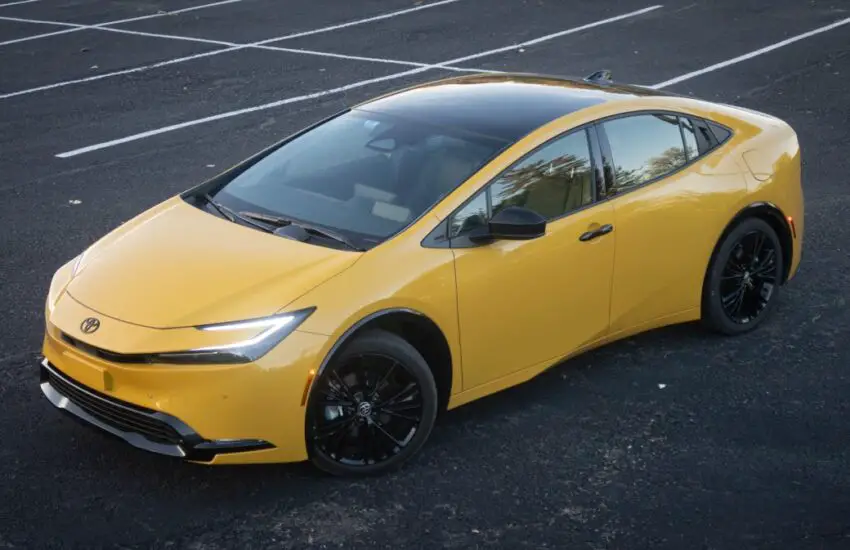
2026 Toyota Prius Nightshade Review: Style Meets Substance

The 2026 Toyota Prius Nightshade: A Practical Car Dares to be Dramatic

Every encounter with the current-generation Toyota Prius has deepened my admiration for this vehicle. Its sleek, radically redesigned silhouette was an instant revelation. I’ve consistently praised its practicality, from its spacious cabin to its easy access for passengers and pets alike. Now, after extensive time with a version boasting particularly striking finishes, I believe this hybrid icon has reached a new peak.

Dark Allure and Enhanced Presence

The Nightshade edition transforms the Prius from a stylish hybrid into a head-turning spectacle. This package applies a darkened aesthetic to key exterior elements, including the alloy wheels, badging, and trim pieces. Paired with a bold paint color, it creates a sophisticated and assertive road presence that boldly distances itself from the model’s utilitarian past. It’s proof that eco-conscious motoring doesn’t require a sacrifice in personality or visual drama.

Substance Behind the Style

Beneath its captivating exterior, the 2026 Prius retains the brilliant, efficient powertrain that defines it. The hybrid system delivers seamless acceleration and remarkable fuel economy, making every journey both engaging and cost-effective. The low center of gravity, a benefit of the battery placement, contributes to surprisingly agile handling. Inside, the cabin is a blend of modern design, intuitive technology, and the thoughtful usability that makes daily life effortless.

The Complete Package

The Prius Nightshade successfully argues that a car can be both deeply practical and emotionally compelling. It offers all the rational benefits expected from a Toyota hybrid—reliability, efficiency, and smart packaging—while wrapping them in a package that feels special and desirable. This model is no longer just a smart choice; it’s a statement, demonstrating that sustainable technology and captivating design are a perfect match for the modern driver.

Karting’s Crucial Lesson: How Lando Norris Mastered Control

The Unseen Foundation of a Champion

In the high-tech universe of Formula 1, where data streams and aerodynamic secrets dominate headlines, the true essence of a driver’s genius is often forged in a far simpler arena. Observing a talent like Lando Norris during his karting years reveals more than just a promising junior; it unveils the fundamental DNA of a world-class competitor. Karting serves as the purest laboratory for racing, stripping away technological assists and leaving only raw driver skill, instinct, and car control.

Precision Born from Simplicity

Without power steering, complex differentials, or aerodynamic grip, a kart demands absolute physical commitment and delicate input. Every steering correction, every subtle weight shift, and every millimeter of brake modulation is transmitted directly to the track. Mastering a kart teaches a driver how to find grip where there seems to be none, to manipulate the chassis through corners, and to understand the intimate dialogue between tire and tarmac. This foundational skill—feeling the vehicle as an extension of oneself—becomes second nature, forming an irreplaceable sensory base that guides a driver long after they graduate to an F1 cockpit.

The Mental Forge of Wheel-to-Wheel Combat

Beyond car control, karting is an uncompromising school of racecraft. The close-quarters, bumper-to-bumper battles teach spatial awareness, aggressive yet clean overtaking, and strategic defense from a remarkably young age. It’s here that drivers develop their race IQ, learning to read an opponent’s intentions, protect their racing line, and execute decisive moves under intense pressure. The relentless competition hones a mental toughness and a strategic mindset that data engineers cannot program.

For drivers like Norris, karting was not merely a step on the ladder; it was the formative process that sculpted the precision, racecraft, and relentless feel that define his approach in Formula 1 today. The genius of top drivers is often illuminated not by their mastery of complex systems, but by their flawless execution of these fundamental, kart-honed principles at 200 miles per hour.

Jeep Gladiator Shadow Ops: The First Factory Winch

A Historic First for the Gladiator

The rugged Jeep Gladiator has always been a capable off-road companion, but it has historically lacked one key piece of adventure gear straight from the factory: an integrated winch. This omission was notable, especially as the market for high-performance off-road pickups has expanded. Jeep has now addressed this gap with the exclusive Shadow Ops package, available solely on the top-tier Rubicon trim, marking a significant milestone for the model.

Seamless Design and Enhanced Capability

The Shadow Ops package is defined by its factory-installed Warn winch, which is seamlessly integrated into the steel front bumper. This isn’t an afterthought accessory but a core part of the vehicle’s design, maintaining approach angles and providing a clean, OEM appearance. The winch is a powerful tool for self-recovery or assisting others in challenging terrain, fundamentally boosting the Gladiator’s expedition-ready credentials.

Exclusive Shadow Ops Styling

Beyond the functional winch, the package includes unique aesthetic elements that justify its “Shadow Ops” name. The vehicle features distinctive blacked-out badging, sleek decals, and specific alloy wheels that contribute to a more stealthy and purposeful look. This cohesive design language extends the Gladiator Rubicon’s aggressive stance while highlighting its special-edition status.

A New Benchmark for Adventure Trucks

By offering a factory winch, Jeep sets a new standard in the off-road pickup segment. This move validates the needs of serious overlanders who prioritize preparedness and seamless equipment integration. The Jeep Gladiator Rubicon Shadow Ops transforms from an extremely capable truck into a truly self-reliant exploration vehicle, ready straight from the dealership to tackle remote trails and unforeseen obstacles with greater confidence and style.

Average US Car Payment Hits Record $748 Monthly

The Rising Cost of Auto Ownership

The landscape of car financing in the United States has shifted dramatically. What was once a monthly payment reserved for luxury vehicles now represents the new normal for a wide range of new cars. Recent data highlights a significant milestone, with the average monthly payment for a new auto loan reaching a record high.

A New Financial Benchmark

At the close of the third quarter, the average monthly payment for a new vehicle loan in the U.S. climbed to $748. This figure, sourced from leading credit data analysis, marks a substantial increase and reflects broader economic trends. The gap between a typical car payment and a mortgage payment is narrowing for many consumers, altering traditional budgeting priorities and putting pressure on household finances.

Factors Driving the Increase

Several key elements contribute to this record-setting monthly expense. Primarily, the sustained high prices of both new and used vehicles have pushed loan amounts higher. Concurrently, interest rates on auto loans have risen significantly from the historic lows seen in previous years. Furthermore, consumers are increasingly financing vehicles over longer loan terms, often extending to 72 or even 84 months, in an effort to manage the elevated principal amount. While this stretches the repayment period, it results in a higher cumulative interest cost over the life of the loan.

Implications for Buyers

This new financial reality requires careful consideration from potential buyers. A monthly payment approaching $750 can strain budgets and limit financial flexibility. Experts suggest that transportation costs, including loan payments, insurance, and fuel, should remain a manageable percentage of total monthly income. For many, achieving this may involve adjusting expectations, considering more affordable vehicle segments, or exploring a larger down payment to reduce the financed amount and subsequent monthly obligation.

Volkswagen ID Buzz US Exit: A Short-Lived Electric Dream

The ID Buzz’s Abrupt American Departure

Volkswagen’s highly anticipated electric revival of the iconic Microbus, the ID Buzz, has met a premature end in the United States. After just a single model year on the market, the German automaker has officially canceled the 2026 model, casting significant doubt on the vehicle’s future in North America. This decision confirms earlier reports of production suspension due to faltering consumer demand.

Behind the Sudden Market Withdrawal

The ID Buzz’s journey in the US was brief and challenging. Initially launched with great fanfare, the electric van struggled to gain traction in a competitive market. Key factors included its premium price point, which placed it in direct competition with established domestic electric vehicles and luxury brands. Furthermore, specific features and configurations tailored for European markets did not fully resonate with American consumers’ expectations for space, range, and utility.

Implications for Volkswagen’s EV Strategy

This cancellation represents a notable setback for Volkswagen’s ambitious electric vehicle strategy in a critical market. The ID Buzz was intended to be a halo vehicle, generating brand excitement and showcasing VW’s commitment to an electric future. Its withdrawal raises questions about the company’s product planning and adaptability to regional market nuances. The focus may now shift entirely to high-volume segments like SUVs and sedans for its American EV lineup.

For early adopters and fans of the design, the ID Buzz becomes an instant collector’s item. However, its uncertain future leaves a gap in the burgeoning electric family vehicle segment. The episode serves as a stark reminder that even with nostalgic design and brand heritage, success in the rapidly evolving EV landscape is not guaranteed and hinges on precise market alignment.

Chevrolet P1480 Code: Cooling Fan Relay Control Circuit Diagnosis

Understanding the Chevrolet P1480 Diagnostic Trouble Code

The OBD2 diagnostic trouble code P1480 is a manufacturer-specific code commonly encountered in Chevrolet, GMC, Cadillac, and other GM vehicles. In simple terms, this code indicates a fault in the electrical control circuit for the engine cooling fan relay. The Powertrain Control Module (PCM) or Engine Control Module (ECM) monitors this circuit. When the PCM commands the cooling fan to activate but detects an unexpected voltage level in the control circuit (typically an open or a short), it will illuminate the Check Engine Light and store code P1480. A malfunction here can directly lead to insufficient engine cooling, risking severe overheating and potential engine damage.

What Does “Cooling Fan Relay Control Circuit” Mean?

The cooling fan system is not powered directly by the PCM. Instead, the PCM uses a low-amperage signal to control a relay. This relay acts as a heavy-duty switch, allowing battery power to flow to the high-current electric cooling fan motor. The “control circuit” refers to the wiring between the PCM and the relay coil, including any fuses and connectors. Code P1480 specifically points to a problem in this low-current control side, not necessarily in the fan motor or the high-power feed circuit.

Common Chevrolet Models Affected by P1480

This code is prevalent in many GM trucks and SUVs with V8 engines, particularly those from the late 1990s through the 2000s. Key models include:

  • Chevrolet Silverado (1500, 2500, 3500)
  • Chevrolet Tahoe and Suburban
  • GMC Sierra and Yukon
  • Cadillac Escalade
  • Chevrolet Avalanche

Symptoms and Causes of a P1480 Code

Ignoring a P1480 code is not advisable, as the engine cooling system is compromised. The symptoms are directly related to the cooling fan’s inability to operate correctly.

Primary Symptoms of P1480

  • Check Engine Light: Illuminated with code P1480 stored.
  • Cooling Fan Not Operating: The most obvious sign. The fan may not turn on at all, or may not activate at the proper temperature.
  • Engine Overheating: Especially in traffic or at idle where airflow is minimal. The temperature gauge will climb into the red zone.
  • A/C Performance Issues: The cooling fan often runs when the air conditioning is engaged. A faulty circuit may cause poor A/C cooling at low speeds.
  • Possible Secondary Codes: Codes like P0480 (Cooling Fan 1 Control Circuit) or P0481 (Cooling Fan 2 Control Circuit) may also appear.

Root Causes of the P1480 Fault

The fault can originate from several points in the control circuit. A systematic diagnosis is required to pinpoint the exact cause.

  • Failed Cooling Fan Relay: The relay itself is the most common culprit. The internal coil can burn out or the contacts can weld shut or corrode.
  • Blown Fuse: Check the fuse that supplies power to the relay coil. It is often in the underhood fuse/relay center.
  • Faulty Wiring or Connectors: Damaged, corroded, or broken wires in the control circuit between the PCM and the relay. This includes poor connections at the relay socket or PCM connector.
  • Defective Engine Coolant Temperature (ECT) Sensor: While this wouldn’t directly cause a P1480, a faulty ECT sensor may not send the correct temperature signal to the PCM, preventing the fan command.
  • Faulty PCM (Less Common): In rare cases, the PCM driver circuit responsible for grounding the relay coil may have failed internally.

Step-by-Step Diagnostic and Repair Guide

This guide outlines a logical diagnostic procedure. Always consult your vehicle’s specific service manual for wiring diagrams and relay locations.

Step 1: Preliminary Checks and Visual Inspection

Begin with the basics. Locate the cooling fan relay (often labeled in the underhood fuse box diagram). Perform a thorough visual inspection:

  • Check the relevant fuse(s).
  • Inspect the relay for signs of melting, corrosion, or damage.
  • Check the wiring harness near the relay box and radiator for chafing, burns, or rodent damage.
  • Ensure the electrical connectors are fully seated and clean.

Step 2: Testing the Cooling Fan Relay

The relay can be tested off the vehicle. A standard automotive relay has terminals: 85 (coil ground, controlled by PCM), 86 (coil power, from fuse), 30 (high-power input from battery), and 87 (output to fan).

  • Bench Test: Apply 12V to terminal 86 and ground terminal 85. You should hear/feel a distinct click. Use a multimeter to check for continuity between terminals 30 and 87 when powered (closed) and no continuity when not powered (open).
  • Swap Test: Often, the relay box contains identical relays for other systems (e.g., horn, fuel pump). Swapping the cooling fan relay with a known-good identical relay is a quick test.

Step 3: Electrical Circuit Testing with a Multimeter

If the relay is good, test the circuit with the relay removed and the ignition in the ON position (engine off).

  • Power (Terminal 86): Probe the socket for terminal 86. It should have battery voltage (approx. 12V).
  • Ground Control (Terminal 85): This is the PCM-controlled side. With the ignition ON and a scan tool commanding the fan ON, the PCM should ground this circuit. Use a test light or multimeter to see if the voltage at the socket drops to near 0V when commanded.
  • Continuity Check: Check for continuity and shorts to ground/power on the control wire (from relay socket terminal 85 back to the PCM connector).

Step 4: Addressing the Fan Motor and Final Steps

Before condemning the PCM, ensure the fan motor itself isn’t seized or shorted, which could blow the fuse or damage the relay. You can apply direct battery power (with appropriate fusing) to the fan motor connector to test it. After repairs (replacing relay, fuse, or repairing wiring), clear the P1480 code with your OBD2 scanner. Start the engine, allow it to reach operating temperature, and verify that the cooling fan activates as expected. Monitor for the code’s return.

Conclusion and Professional Recommendation

Code P1480 in your Chevrolet is a clear warning of a compromised engine cooling system. While a failed relay is the most frequent and inexpensive fix, the diagnosis must be thorough to rule out wiring faults. Due to the risk of catastrophic engine overheating, this repair should be addressed promptly. If you are not comfortable with electrical diagnostics, seeking a professional technician is strongly recommended. They have the wiring diagrams, advanced scan tools to command components, and experience to efficiently trace the fault, ensuring your vehicle’s cooling system operates reliably and protects your engine investment.

Cadillac P1480 Code: Diagnosing and Fixing the Secondary Air Injection System

Understanding the Cadillac P1480 Trouble Code

The OBD2 diagnostic trouble code (DTC) P1480 is a manufacturer-specific code commonly encountered in Cadillac, GMC, and Chevrolet vehicles. Its generic definition is “Secondary Air Injection (AIR) System Insufficient Flow.” This code is directly tied to your Cadillac’s emissions control system, specifically the Secondary Air Injection System (SAIS or AIR system). When the powertrain control module (PCM) detects that the airflow from the air pump into the exhaust stream is less than expected, it illuminates the check engine light and stores code P1480. Ignoring this code can lead to increased tailpipe emissions, potential damage to the catalytic converter, and failed emissions tests.

What is the Secondary Air Injection System?

The Secondary Air Injection System is an emissions control device designed to reduce hydrocarbon (HC) and carbon monoxide (CO) emissions during a cold engine start. When the engine is cold, fuel combustion is less efficient. The AIR system helps by injecting fresh air from an electric air pump directly into the exhaust manifold or catalytic converter. This extra oxygen helps “burn off” or oxidize the unburned fuel in the hot exhaust, converting it into less harmful carbon dioxide and water vapor before the catalytic converter reaches its optimal operating temperature.

Common Cadillac Models Affected by P1480

Code P1480 frequently appears on various Cadillac models equipped with V6 and V8 engines from the early 2000s to the 2010s. Models particularly known for this issue include:

  • Cadillac SRX (especially first-generation with Northstar or High Feature V6 engines)
  • Cadillac CTS (V6 models)
  • Cadillac Escalade (GMT800 and GMT900 platforms)
  • Cadillac DTS
  • Cadillac STS

Symptoms and Causes of Code P1480 on Cadillac

Recognizing the symptoms and understanding the root causes is the first step in effective diagnosis. A P1480 code rarely causes severe drivability issues, but its symptoms are noticeable, especially during cold starts.

Primary Symptoms of a P1480 Malfunction

  • Illuminated Check Engine Light (MIL): The most common and often the only initial symptom.
  • Rough Idle on Cold Start: You may notice a slightly rougher idle for the first minute after starting a cold engine.
  • Failed Emissions Test: The vehicle will likely fail a state emissions inspection due to the active emissions-related fault code.
  • Possible Hissing Sound: A loud hissing or whistling noise may indicate a cracked air hose or a leaking check valve.
  • Reduced Engine Performance (Rare): In some cases, the PCM may enter a limp mode, slightly reducing power.

Root Causes of Insufficient Air Flow (P1480)

The P1480 code points to an “insufficient flow” condition. This means the PCM’s expected airflow parameters are not met. The culprits are typically found in the following components:

  • Faulty Secondary Air Injection Pump: The electric motor in the air pump can fail due to age, moisture intrusion, or bearing wear, leading to no or low airflow.
  • Clogged or Cracked Air Hoses/Tubes: Hoses can become brittle, crack, or melt from exhaust heat. They can also become internally clogged with carbon debris.
  • Failed Air Pump Relay: The relay that provides high-current power to the air pump can stick open or closed, preventing the pump from operating.
  • Faulty Check Valves: These one-way valves prevent hot exhaust gases from flowing back into the air pump and hoses. A stuck or leaking check valve is a very common cause.
  • Vacuum Leaks or Faulty Solenoids: The system uses vacuum-operated valves or solenoids to direct airflow. A leak in the vacuum lines or a stuck solenoid will prevent proper valve operation.
  • Electrical Issues: Blown fuses, corroded connectors, or broken wires in the air pump circuit.
  • Faulty PCM (Rare): While uncommon, a malfunctioning control module can incorrectly diagnose a properly functioning system.

Step-by-Step Diagnostic and Repair Guide for P1480

Diagnosing a P1480 code requires a methodical approach. Always start with a visual inspection before moving to electrical and functional tests. You will need a basic set of hand tools and a digital multimeter.

Step 1: Preliminary Visual and Auditory Inspection

With the engine cold, perform a thorough visual check. Look for the air pump (usually a round, black plastic unit mounted near the front of the engine). Inspect all associated hoses for cracks, disconnections, or melting. Listen carefully when you turn the ignition to “ON” (without starting the engine). You should hear the air pump run for about 30-90 seconds as the PCM performs a self-test. If you hear nothing, the pump, its fuse, or relay may be bad. If you hear a loud hissing, look for a leak.

Step 2: Testing the Air Pump and Electrical Circuit

If the pump doesn’t run during the key-on test, check the electrical supply.

  • Check the Fuse: Locate the AIR pump fuse in the underhood fuse box (refer to your owner’s manual).
  • Test the Relay: Swap the AIR pump relay with an identical one from the fuse box (e.g., the horn relay) and retest.
  • Test for Power and Ground: Using a multimeter, check for battery voltage at the pump connector when the ignition is on. Also, verify a good ground connection.

If power and ground are present but the pump doesn’t run, the pump motor is faulty and needs replacement.

Step 3: Checking the Check Valves and Vacuum System

This is a critical step. A failed check valve is a frequent failure point.

  • Physical Check: Remove the hoses connected to the check valve(s). The valve should allow air to flow in one direction (toward the exhaust) and block flow completely in the reverse direction. If air flows both ways or is completely blocked, replace the valve.
  • Vacuum Test: For systems with vacuum-operated diverter valves, use a hand-held vacuum pump to apply vacuum to the valve diaphragm. It should hold vacuum and actuate the valve. Listen for leaks.

Step 4: Clearing the Code and Verifying the Repair

After replacing any faulty components, clear the P1480 code using your OBD2 scanner. It’s best to perform a “drive cycle” to allow the PCM to run its self-tests on the AIR system. This often involves starting the engine from a cold state (after sitting for over 8 hours) and letting it idle until it reaches operating temperature. If the repair was successful, the check engine light should remain off, and the code should not return.

Cost Estimation and Professional Help

Repair costs for a P1480 code can vary widely based on the root cause and your choice between DIY and professional service.

DIY Repair Cost Breakdown

  • Air Pump: $150 – $400 for a new or quality aftermarket unit.
  • Check Valve: $30 – $80.
  • Air Hose/Kit: $40 – $150.
  • Relay or Solenoid: $20 – $60.

If you have the tools and skills, DIY repair can save significant labor costs.

When to See a Professional Mechanic

Consider taking your Cadillac to a certified technician if:

  • You are uncomfortable with electrical diagnostics.
  • The visual inspection does not reveal an obvious fault.
  • You have replaced common components (pump, valve) but the code persists, indicating a more complex vacuum or PCM issue.
  • You lack the proper tools, such as a vacuum pump or multimeter.

A professional diagnosis typically costs between $100 and $200, with total repair bills ranging from $300 to over $800, depending on parts and labor rates.

Understanding and Fixing OBD2 Code P1480 on Buick Vehicles

What is OBD2 Code P1480 on a Buick?

OBD2 diagnostic trouble code (DTC) P1480 is a manufacturer-specific code for General Motors (GM) vehicles, including Buick. Its generic definition is “Engine Coolant Fan Relay 1 Control Circuit.” This code is stored in the vehicle’s Engine Control Module (ECM) or Powertrain Control Module (PCM) when it detects an electrical fault in the control circuit for the primary engine cooling fan relay. This system is critical for managing engine temperature, especially during idle, low-speed driving, or in hot weather. When P1480 appears, it indicates the ECM cannot properly command the cooling fan to activate, posing a risk of engine overheating and potential damage.

Common Symptoms of a P1480 Code

Recognizing the symptoms of a P1480 code is the first step in addressing the problem. Drivers may experience one or more of the following signs:

Primary Warning: Check Engine Light

The most immediate symptom is the illumination of the Malfunction Indicator Lamp (MIL), commonly known as the Check Engine Light. A scan tool is required to confirm the presence of P1480.

Cooling Fan Inoperability

The primary engine cooling fan will not turn on, even when the engine temperature reaches the normal activation threshold. You may notice the fan does not run with the A/C turned on at idle, which is a common test.

Risk of Engine Overheating

Without proper fan operation, the engine temperature will rise, particularly in traffic or on hot days. The temperature gauge will climb into the red zone, and you may see steam or smell coolant.

Potential for Secondary Codes

If overheating occurs, related codes like P1258 (Engine Coolant Overtemperature – Fuel Disabled) or P0217 (Engine Overheat Condition) may also be set.

Causes and Diagnostic Procedure for P1480

Diagnosing P1480 requires a methodical approach to isolate the faulty component within the fan control circuit. The code specifically points to a problem in the *control circuit*—the wiring and signals between the ECM and the relay—not necessarily the fan motor itself.

Primary Causes of Code P1480

  • Faulty Cooling Fan Relay 1: A stuck open or shorted relay is the most common culprit.
  • Damaged Wiring or Connectors: Corroded, broken, or chafed wires in the control circuit harness, especially near the relay box or fan shroud.
  • Failed Cooling Fan Motor: A seized or shorted motor can draw excessive current or create a feedback that the ECM interprets as a circuit fault.
  • Blown Fuse: The cooling fan circuit is protected by a fuse, which may blow due to a motor or wiring short.
  • Defective Engine Control Module (ECM): While rare, a failed driver circuit inside the ECM itself can prevent proper relay control.

Step-by-Step Diagnostic Guide

Tools Needed: Digital Multimeter (DMM), scan tool with bidirectional controls, basic hand tools, and wiring diagrams for your specific Buick model.

Step 1: Preliminary Checks

Visually inspect the cooling fan relay (often in the underhood fuse/relay center), its socket, and the wiring harness for obvious damage, corrosion, or loose connections. Check the main cooling fan fuse.

Step 2: Command the Fan with a Scan Tool

Use the bidirectional controls of a professional scan tool to manually activate “Fan Relay 1.” Listen for an audible click from the relay. If it clicks, the control circuit to the relay is likely functional, pointing to a problem with the relay’s power circuit, the fuse, or the fan motor.

Step 3: Relay Testing and Swap

If no click is heard during the command test, test the relay. You can often swap it with an identical relay in the box (e.g., horn relay) to see if the problem moves. Use a DMM to check for coil resistance (typically 50-150 ohms) and switch continuity.

Step 4: Electrical Circuit Testing

  • Power & Ground: Verify the relay has constant battery power (at one switch terminal) and a good ground.
  • Control Signal: Back-probe the ECM control wire at the relay socket. It should show battery voltage (ignition on, fan off) and drop to near 0 volts when the scan tool commands the fan ON.

Step 5: Fan Motor and Final Circuit Check

Apply direct battery power and ground to the fan motor connector (with the vehicle’s wiring disconnected). If the motor doesn’t run, it is faulty. If it runs, the issue is in the power feed from the relay to the fan.

Repair Solutions and Prevention

Once the faulty component is identified, the repair is typically straightforward. Always disconnect the battery before performing electrical repairs.

Common Repairs for P1480

  • Relay Replacement: Installing a new, high-quality OEM or equivalent cooling fan relay is a common fix.
  • Wiring Repair: Splicing and soldering damaged wires, followed by sealing with heat-shrink tubing. Always repair, don’t just tape.
  • Fan Motor Replacement: If the motor is seized or shorted, the entire fan assembly or motor must be replaced. Ensure the new unit matches the amperage specification.
  • Fuse Replacement: Replace the blown fuse, but always diagnose the root cause (like a short) first to prevent it from blowing again.
  • ECM Replacement/Reprogramming: This is a last-resort repair and should only be done after all other possibilities are exhausted. It often requires professional programming.

Preventing a Recurrence

To avoid future P1480 codes, keep the engine bay clean to prevent debris from damaging wiring. During any cooling system service, be careful around the fan wiring harness. Using dielectric grease in electrical connectors can help prevent corrosion.

Conclusion

Code P1480 on your Buick is a serious warning that the engine’s primary cooling system has an electrical fault. While it can lead to overheating, a systematic diagnosis focusing on the relay, wiring, and fan motor will usually reveal a simple, fixable problem. Ignoring this code risks severe engine damage. For most DIY enthusiasts with a multimeter and a methodical approach, diagnosing and repairing P1480 is an achievable task. If you are unsure at any point, consulting a qualified automotive technician is the safest course of action to protect your Buick’s engine.