Nissan Z Heritage Edition 2026: A Surprising Tribute to the GT-R

The Nissan Z Heritage Edition 2026 is sparking conversation, though not entirely for the expected reasons. While the Z Proto concept captivated enthusiasts five years ago, the seventh-generation Z seems to have struggled to capitalize on that initial excitement. Nissan is now attempting to rekindle the flame with this special edition, which turns out to be a more obvious tribute to the legendary GT-R than to the Z’s own heritage.

A Purely Aesthetic Package

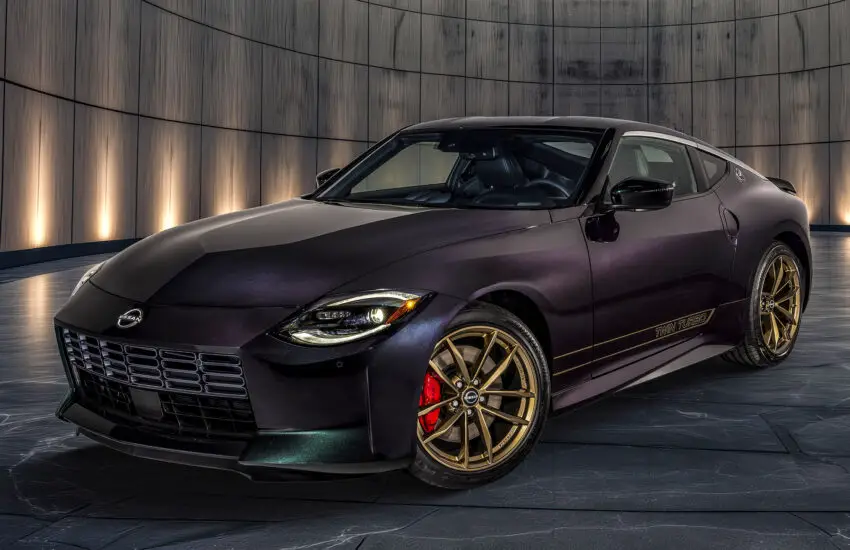
It is essential to clarify from the outset that the Heritage Edition is a purely aesthetic option. Nissan’s press release describes it as a “Z32 brought into the 21st century,” referencing the fourth-generation 300ZX. The tributes include “Twin Turbo” graphics on the sides and on the carbon fiber rear spoiler.

However, beyond these details, few elements truly recall the 300ZX. The horizontal taillights, for example, are a feature common to the entire current lineup. The real surprise comes from the color choice.

The Midnight Purple Controversy

Unlike the previous edition which sported a nostalgic orange reminiscent of the rare Fairlady Z432R, this new model is dressed in a Midnight Purple. This hue is far more significant to the Nissan GT-R lineage than to the Z’s.

Nissan itself seems to emphasize this link by presenting the car alongside a GT-R in the same color. The gold wheels, identical to those on the standard Z but simply repainted, reinforce this GT-R-inspired theme.

An Interior Lacking Boldness

Despite a great opportunity, Nissan did not seize the chance to rework the cabin. The brand merely offers “unique door sill plates and exclusive floor mats.” The interior remains entirely black, sorely lacking purple accents or specific elements that could have given it a more special character consistent with the theme.

Unchanged Mechanics

Technically, the Heritage Edition remains true to the Z’s proven recipe. It retains the same 3.0-liter twin-turbo V6 engine producing 400 horsepower. Based on the Performance trim, it benefits from upgraded tires and brakes, as well as a limited-slip differential.

It remains one of the most accessible rear-wheel drive, three-pedal sports cars, even if it may seem a bit less refined than some of its competitors.

Price and Positioning

The Heritage Edition will complement the 2026 lineup, alongside the Sport, Performance, and Nismo trims. Its price is set at $57,155 (including destination fee), which represents a $2,940 premium over a standard Z Performance. The base price of the 2026 Nissan Z starts at $44,215.
Genesis GV70 2026: Complete Test of the Luxury SUV That Surpasses BMW

Genesis is no longer the small Korean newcomer that simply follows Hyundai’s basics. Germany had better wake up, because Genesis is playing to win, and right now, it’s hitting its stride while BMW is stumbling. The 2026 Genesis GV70 arrives with a subtle facelift and updated technology, offering a sharper and more innovation-focused experience without denying what made it charming.

The Basics

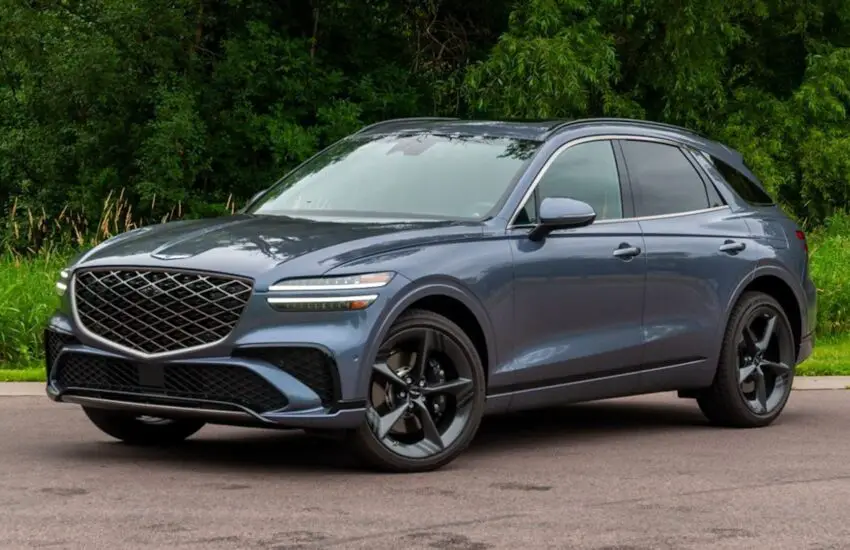
The GV70 hasn’t changed much visually, but Genesis has tweaked some details for the more observant. The Superman-style grille has gained depth, the air intakes are slightly larger, and the jewel-like LED strips in the headlights are thinner. The dashboard has received a significant technological update: the instrument screen and the touchscreen are now merged into a single 27-inch OLED display. Genesis wisely retained physical buttons for essential elements like radio volume and temperature. The new blue interior color option is superb, and the whole setup appears much more premium and ergonomic than the latest BMW X3.

Driving the 2026 Genesis GV70

The GV70’s powertrains are carried over for 2026. The base model features a 2.5-liter turbocharged engine with 300 horsepower. The model tested here was equipped with the more powerful 3.5-liter twin-turbo V6, boosting power to 375 horsepower and 391 lb-ft of torque. All GV70s come with all-wheel drive and an 8-speed automatic transmission. The turbocharged V6 is a true powerhouse, with power that exceeds what’s necessary for daily driving. It’s likely capable of 0 to 100 km/h in around 4 seconds. The 8-speed automatic transmission performs smooth gear changes, which become sharper in Sport and Sport+ modes.

Verdict

In a world where enthusiasts almost by default turn to BMW, Genesis is making a quick turn while the Germans seem to be losing focus. The refined GV70 offers all the modern technology that consumers demand, without tedious controls or distractions, all while providing lively dynamics and solid build quality. It’s strange, but suddenly, the driver’s crossover comes from South Korea and not Germany.

2025 Genesis GV70 Technical Sheet (Twin-Turbo V6)

Base Price (Sport Prestige AWD): $72,225
Powertrain: 3.5L Twin-Turbo V6 | 8-Speed Automatic Transmission | All-Wheel Drive
Power: 375 horsepower
Torque: 391 lb-ft
EPA Fuel Economy: 13 L/100km (city) | 9.4 L/100km (highway) | 11.2 L/100km (combined)

Tesla: Robotaxis, Robots, and Hope for an $8.5 Trillion Valuation

Robotaxis, Robots, and Hope form Tesla’s plan to justify Elon Musk’s colossal compensation and achieve a market valuation of $8.5 trillion. An ambitious goal that relies on technologies still under development, while the American automaker’s market share in the United States is at its lowest since 2017.

Automotive News in Brief

As competition in the electric vehicle sector intensifies, the giant Tesla is betting on futuristic projects rather than its current car sales. Meanwhile, the automotive industry is marked by several other announcements.

Recalls and New Model Launches

Ford announces a recall of nearly 1.5 million vehicles in the American market due to a faulty backup camera issue. On the new releases front, Toyota introduces the 2026 Highlander lineup, now equipped with standard all-wheel drive across the entire range. Lexus also unveils an updated version of the 2026 IS, which benefits from a slight redesign.

Future Electric Vehicles

Polestar has presented the 2026 Polestar 5 fastback, but its arrival in the American market is not yet confirmed. Lucid Motors plans to launch a mid-size electric vehicle, potentially named “Earth,” by the end of 2025, subject to securing the necessary funding. An all-terrain version is also planned. Mercedes-Benz has offered a first glimpse of the future electric C-Class, whose front end is inspired by that of the GLC EV.

Innovations and Investments

Mercedes-Benz also made a series of major announcements: an EQS prototype equipped with solid-state batteries that traveled 1,200 km on a single charge, the integration of 600 kW ultra-fast chargers into its network starting in 2026, and achieving a record charging speed of 1 megawatt. Additionally, Volkswagen is reportedly in talks to invest in the United States, with potential local production of Audi and possibly even Porsche, while planning to invest billions of euros in AI by 2030.

Max Verstappen: GT Debut at the Nürburgring This Weekend After His F1 Victory

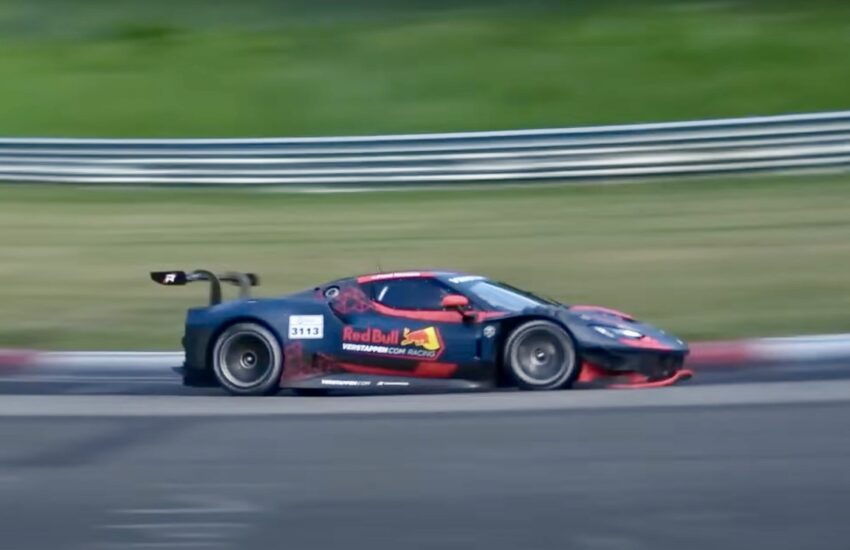
Fresh from his surprising victory at the Italian Formula 1 Grand Prix, four-time world champion Max Verstappen is set to make his GT racing debut on the legendary Nordschleife of the Nürburgring this weekend. According to the publication Auto Motor Sport, the Dutch driver will travel to Germany to obtain the necessary license to race on this mythical circuit.

A Two-Step Process to Obtain the License

To be able to drive a GT3 race car, such as the Ferrari 296 GT3 he recently drove under the pseudonym Franz Hermann, Verstappen must successfully complete a series of tests. He will begin with a theoretical exam this Friday, the first mandatory step. If he passes, he will then have to take a practical exam on Saturday, which involves finishing a race in a lower category, likely driving a Porsche Cayman GT4 CS for the Lionspeed GP team.

A Logistical Challenge for the Red Bull Champion

The regulations normally require two separate race starts to obtain the final license. However, thanks to his exceptional experience, Verstappen could fulfill this requirement by completing two stints in two different cars during the same race on Saturday. The report indicates that he will need to complete a total of 14 laps without receiving any penalties to gain the officials’ approval.

Confirmed Participation in the NLS Race

Once these formalities are completed, Verstappen is expected to participate in the Nürburgring Langstrecken Series (NLS) race two weeks later, after the Azerbaijan Grand Prix. He will drive a Ferrari 296 GT3 for the Emil Frey Racing team, with which he has already set an unofficial record on the Green Hell.

A Stated Passion for Endurance Racing

The young F1 champion has expressed his desire to engage in other disciplines, particularly endurance racing. In an interview last November, he shared his attraction to races like the 24 Hours of Le Mans and Daytona, as well as the different pace of the World Endurance Championship (WEC). Is this foray into GT racing just an escape from the pressures of F1 or the beginning of a future career change?

Ford F-150 Lightning STX: Is a True Electric Off-Road Vehicle Planned?

The F-150 Lightning STX is not a hardcore off-road electric vehicle. Recently, a camouflaged prototype suggested the arrival of a Tremor version. It was actually the new base STX model, which replaces the old XLT and comes with more aggressive Goodyear Wrangler tires. This confusion raises an essential question: Will Ford ever build a true 100% electric off-road F-150?

An answer conditioned by the future of internal combustion vehicles

The simple answer is probably “yes,” but only if internal combustion vehicles are eventually completely phased out. In the meantime, nothing is less certain. One could argue that there is no reason to develop a high-performance EV as long as the fossil fuel option exists. Although Ford has proven with its demonstrators that lithium-ion can outperform internal combustion engines on the track, consumers’ attachment to the sound and feel of a V8 remains a major obstacle.

An uncertain market and demand

Ford would likely have the technical capability to build an electric F-150 Raptor that outperforms its internal combustion counterpart. However, that does not guarantee its commercial success. Even an electric Tremor version, more suited to trails than the desert, would not necessarily appeal to customers. The absence of a direct rival to the Chevrolet Silverado EV Trail Boss or the Rivian R1T suggests that Ford does not see this niche as a priority.

An unfavorable economic context

There is no obvious reason to rush. While EV sales are stagnating and consumer enthusiasm is cooling, developing a silent version of an already hot best-seller would not represent a strategically sensible bet for the manufacturer.

The STX: a reasonable and powerful offering

The new STX is, in reality, all that most drivers need. Upgraded tires are often the only equipment necessary for occasional use. Ford even added Tremor running boards for aesthetics. It should not be forgotten that this entry-level model already produces 536 horsepower and 775 lb-ft of torque. At $63,345, the performance-to-price ratio remains exceptional.

And for those who want a Raptor, the option is still available… as long as it is powered by a twin-turbo V6 or a supercharged V8.

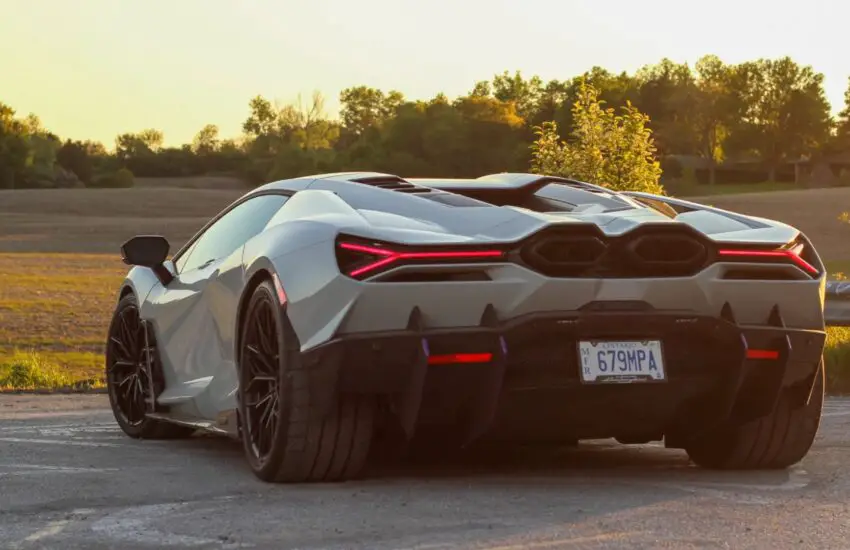
Lamborghini: Its New AI Sensor Corrects Your Driving in Real Time

Lamborghini now uses artificial intelligence to perfect real-time driving. Far from being just a software evolution, this approach marks a technological leap where AI becomes an active co-pilot, capable of sensing and adapting to the driver and their environment.

An AI that understands your driving style and emotions

During Monterey Car Week, Rouven Mohr, Chief Technical Officer of Lamborghini, detailed this vision. The brand already uses an initial form of machine learning for torque management, adapting power delivery based on the surface and driving style. The future is even more ambitious: the car could recognize the driver’s emotions and adjust its controls accordingly.

“If the car is smart enough to detect that you want to have fun, that it’s sliding a bit, the algorithm could theoretically say to itself: *OK, this driver wants a more pronounced drift angle*,” explains Mohr. “It would then manage the car’s rotation in a different way.”

A safety system that adapts to your skill

The idea goes beyond mood. Lamborghini is designing systems that adjust their software intervention “rules” based on the driver’s behavior. If your inputs are precise and your laps are clean, the electronic aids (the “nannies”) become more discreet. If you start making mistakes, the safety net automatically tightens.

The AI could even compensate for performance gaps. Mohr illustrates: “If the algorithm recognizes that in every corner, the driver uses too much steering angle, causing understeer, a by-wire steering system could learn not to give them as much angle to avoid it.”

The 6D sensor: the essential “enabler”

This intelligence requires an ultra-precise data source. Lamborghini’s physical master card is its “6D sensor,” introduced with the Fenomeno. This module, no larger than a baseball, is crucial.

Mohr describes it as the “enabling element.” The magic happens in the algorithm, but the latter is useless without a constant stream of high-quality data. “[The 6D sensor] gives the algorithm much more precise information about the car’s state in terms of roll and pitch, as it explicitly measures the body’s movement with six degrees of freedom,” he specifies.

Unlike conventional setups that use multiple independent sensors, creating data delay and approximation, the 6D provides an instant and holistic view of the vehicle’s movements. This precision is key to much finer control management.

An industry trend: BMW and the interpretation of intent

Lamborghini is not alone on this path. BMW is also developing electronic “super-brains” capable of recognizing the driver’s intent. Their system combines attention-monitoring cameras and steering wheel torque sensors to differentiate a deliberate maneuver (such as avoiding a parked vehicle) from an unintentional lane departure, thus avoiding unnecessary alarms.

McLaren and team orders in F1: a delicate quest for justice between Norris and Piastri

The quest for justice between its two hungry drivers is, at best, messy. In Formula 1, despite all its equations and data points, unknown variables often outweigh certainties. A sudden downpour during a race, a technical failure, or, as for Lando Norris this Sunday at Monza, a faulty wheel gun: all are unpredictable situations that complicate the search for fairness.

The Controversial Team Order at the Italian Grand Prix

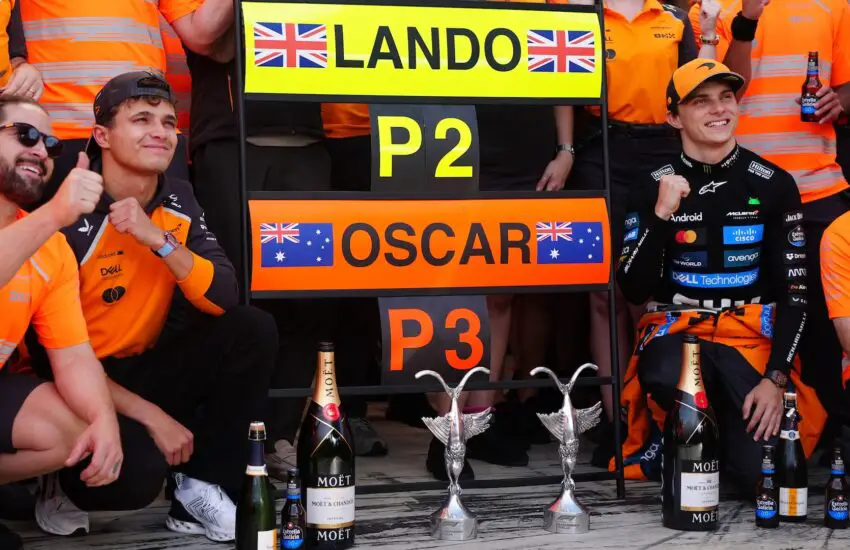
Late in the race, the two papaya arrows pitted to fit new tires. Oscar Piastri, the championship leader, docked in 1.9 seconds. But for Norris, a problem with the left wheel gun turned the stop into an agonizing 5.9 seconds. As the Australian found himself in second place, a clear radio message came through: “Oscar, it’s a bit like Hungary last year. We pitted in this order for team reasons. Let Lando pass, then you can race.” Piastri complied immediately, yielding his position to his teammate.

McLaren’s Recurring Dilemma in 2024

The British team has been navigating troubled waters since the start of the season, torn between two elite drivers competing for the same title. Last year, the “papaya rules” often seemed to favor Norris in his battle against Max Verstappen. McLaren had promised that 2025 would be different, with clear expectations. Yet, the reality on the ground and the need for quick decisions have seen last year’s debates resurface, as at Silverstone where Piastri was denied a position swap.

A Divisive Decision: Fairness or Manipulation?

As the title battle tightens – Piastri leading Norris by 34 points before Monza – team orders become more controversial. Norris assured that this procedure had been discussed and was “the fairest thing.” Piastri, though complying, questioned the logic: “We had said that a slow stop was part of racing.” Even Verstappen, the race winner, mocked: “Just because he had a slow stop?”

The Impact on the Show and Sporting Ethics

Beyond the internal dilemma, this practice opens a dangerous cycle of “rebalancing” and risks altering the fan experience. As commentator David Coulthard summarized: “As fans, we don’t want to feel there’s manipulation beyond the normal gods of racing.” Spectators want strategy, but also an organic, hard-fought, and deserved race.

The Solution: Consistency or Laissez-Faire?

The answer to McLaren’s puzzle may lie in consistency, a quality the team has shown on track this year, but not yet over the radio in split-second decisions. The lesson from Monza might be to allow a less “manufactured” race. Whether the team chooses to intervene or stay silent in the future, it defines what justice means in F1: in love, war, and the fight for the title, all is fair.

Lego BMW M S1000RR Set at -$50: Amazon Deal on the 1:5 Scale Replica

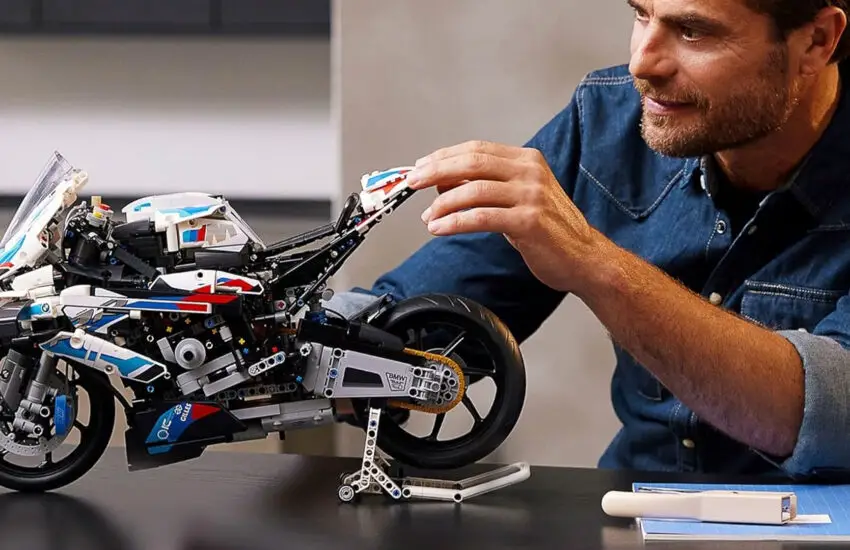
This spectacular 1:5 scale Lego Technic replica of the BMW M S1000RR is a unique and safe way to enjoy the Bavarian superbike from the comfort of your living room. And currently, it’s generously discounted on Amazon!

An exceptional offer not to be missed

$198: 1920-piece Lego BMW S1000RR kit (regular price $249.99). Take advantage of an immediate discount of over $50 on this exceptional set, a steal for mechanics and building enthusiasts.

A masterpiece of precision and detail

With its 1920 pieces, this motorcycle, which includes a display stand, measures 46 cm long, 18 cm wide, and 28 cm high. The assembly is known to be a stimulating challenge, ideal for experienced builders or teenagers accompanied by an adult. The assembly instructions are said to follow the same order as on the production line at the BMW Motorrad factory in Berlin, offering you total immersion in the manufacturing process.

Realistic technical functions

This Lego Technic model is much more than just a static display. It incorporates impressive functional mechanisms:

An operational gearbox

You can shift between three different gears, adding a layer of realism to the experience.

Active steering and suspension

The handlebars and front suspension are functional, for a more authentic feel.

A drive chain

The technical detail is advanced with the inclusion of a chain, faithful to the original.

The entertainment value for money

Beyond the assembly, which promises long hours of fun and concentration, this Lego set becomes an impressive decorative piece. Once assembled, this model will make a statement on a shelf, in an office, or in any dedicated collection. Its sale price of under $200 on Amazon makes it a perfect opportunity to treat yourself or to give a unique gift that will leave a lasting impression.

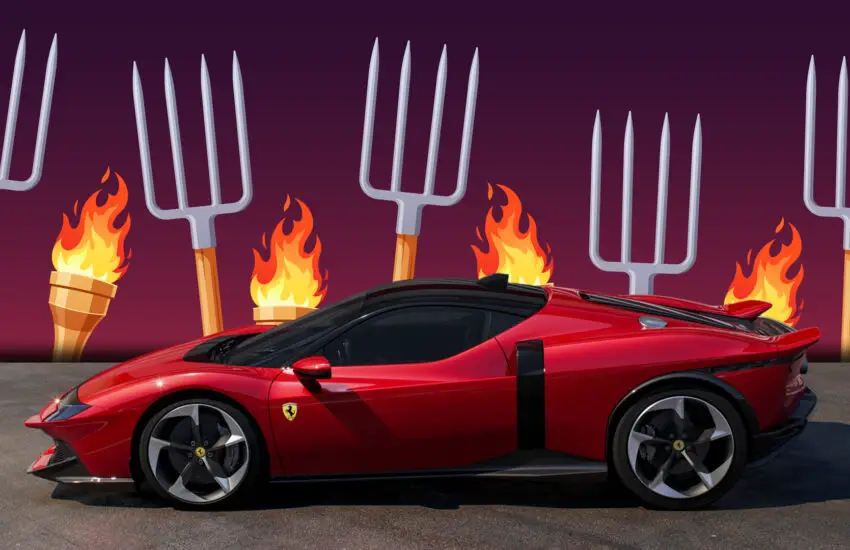
New Ferrari Testarossa 2026: Controversy and Dislike on the Internet

The new Ferrari Testarossa design has been public for about 48 hours, and the ratio of excitement to rejection on the Internet is simply incredible. Online commentators almost universally hate the car; as for me, I find it rather successful.

Resurrecting a Legend: A Risky Bet

Obviously, any car manufacturer plays with fire when reviving a legendary name. A vocal minority will always be disappointed, and there will invariably be a loud contingent of purists who prefer the old version. Die-hard fans of the original tend to commit to disliking new iterations, no matter their form. But in over a decade of following automotive news, I don’t recall a product as unanimously disapproved in online comments as this new Ferrari.

Heightened Criticism for Maranello

The Ford Mustang Mach-E also sparked polarized reactions at its debut, and I know more than one person disappointed by the new Chevrolet Blazer or Acura RSX compared to their ancestors. But a Ferrari, a car that most people will only admire without ever driving it, invites a much higher level of design criticism.

The Unambiguous Verdict of Online Communities

Articles featuring the car are flooded with negative comments. The coverage by Road & Track and Car and Driver gathered a few more charitable responses, but even the r/Ferrari subreddit seems to mostly downvote the design.

Design Analysis: Tribute or Betrayal?

One of the most frequent complaints is that the 849 Testarossa doesn’t look like the flat and wide Testarossa millennials remember. Which is true, it is different. Although the 80s icon itself didn’t look much like the 250 Testa Rossa (two words) that preceded it.

Modern Styling Elements

If the new car doesn’t have the iconic side strakes, it has its own unique side ventilation, with that vertical black line flowing into an air intake. The black bar at the front, an element appearing on many modern Ferraris, adds a retro-futuristic feel that could be interpreted as a nod to the pop-up headlights the Prancing Horse brand loved.

The rear of the new car doesn’t have the ultra-wide grille or buttresses, but it’s just as dramatic as the old one, with a huge bulge for the engine and width accentuated by spoilers. This latter feature is actually more of a reference to the 512 sports prototype from the late 60s and early 70s.

A Name That Carries Weight

I now wonder if people hate it because they genuinely find it ugly, or simply because they’re not satisfied to see the Testarossa name return on a modern machine. If it had been called something else, would opinions change? The revival of the Lamborghini Countach in 2021 was much better received, but it was also a much more restrained design.

Even as a fan, I concede that “GTO” might have been a more appropriate name to resurrect here. The black line at the front strongly resembles the nose of the 80s 288 GTO. And that car, like today’s Testarossa, had a twin-turbo V8, whereas the old Testarossa was famous for its V12.

It’s understandable that fans aren’t doing backflips to celebrate the triumphant return of a classic icon with this new 849 Testarossa. The controversy is fierce, but the debate over its design is far from over.

Why Mini Electric Cars Like the Honda N-One e Should Come to France

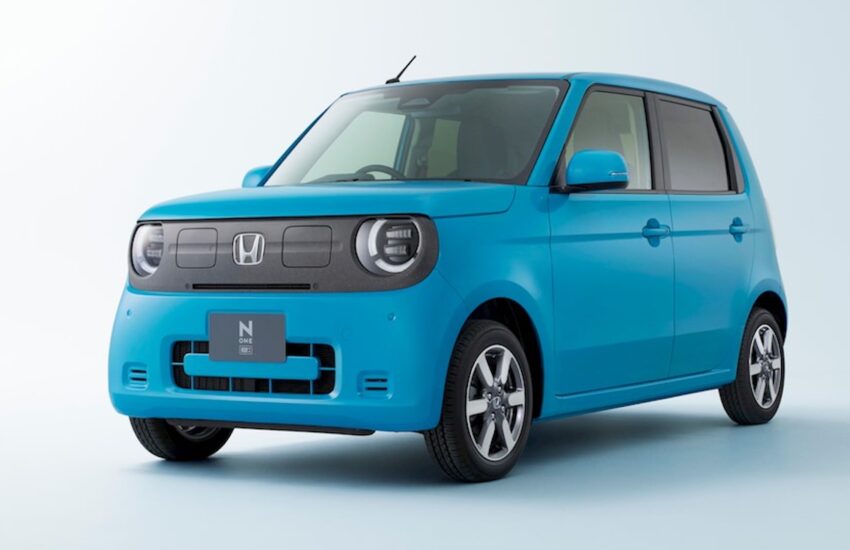
Honda has unveiled its first electric kei car, the Honda N-One e, which will be marketed at around 17,000 euros in Japan. This retro model draws inspiration from the iconic N360 of the 1960s. With its compact size, rounded design, and surprisingly spacious interior, Honda aims to dethrone the Nissan Sakura, the current queen of the mini electric vehicle market in Japan.

An Awakening Inspired by the Fiat Topolino

Generally, a kei car reserved for the Japanese market wouldn’t have caught my attention. However, the N-One e reminded me of my experience driving the Fiat Topolino in southern France this summer. This pleasant experience made me realize how perfect this type of vehicle would be for my daily trips, which rarely exceed a 10-kilometer radius from my home.

Topolino vs N-One e: An Instructive Comparison

The Honda isn’t quite in the same category as the Topolino. The N-One e is a real car, with a full interior, a rear bench seat, and a trunk. Its range is 295 km, and its top speed, although not disclosed, is surely higher than the Fiat’s 45 km/h. The Topolino, even smaller, makes do with a digital screen and a phone holder. It only offers two seats, minimal storage, and 75 km of range, but its price is only 10,000 euros.

The Daily Utility of a Mini Electric Vehicle

Although I enjoy driving a large SUV, I don’t need such a vehicle to do my shopping 5 km away, go to the nearby gym, or take my daughter to the mall 10 km away. Except for the airport, which I frequent once or twice a month, a Topolino would be more than enough for me. For more comfort, I would probably opt for an N-One e, which could even take me to the airport and back twice without recharging.

The Ideal Solution: Smart Bottle-Feeding

As many families have realized, the key is to have two cars. My wife, who works outside and has different commutes, would keep the SUV. I would be perfectly content with a mini electric car. For road trips, the SUV would be back in service. To go to dinner at the local restaurant, I would offer my little circus car, an offer she would surely refuse. Too bad for her.

A Call to Manufacturers and Authorities

I’m not saying we should all replace our SUVs with mini electric cars. But I would like to see French authorities allow the import of these efficient small vehicles, and for major manufacturers to take the risk of marketing them here, even if just experimentally. I can guarantee you they would sell at least one to an eccentric person in Indianapolis. You already know who it is.