Snap Oversteer Doesn’t Exist: Myth or Driving Problem?

If you’re an enthusiast looking for your first rear-wheel-drive sports car, you’ve certainly come across the frightening term “snap oversteer.” Another, more accurate expression could replace it: “skill issue.”

The Dark Legend of Rear-Wheel-Drive Cars

Often associated with track models and older cars with responsive chassis, “snap oversteer” evokes unmanageable racing cars, designed at the limit of stability, that spin out as soon as a weekend driver approaches their limits. This reputation earned the early Porsche 911 the nickname “the doctor killer” and fueled theories about the Carrera GT.

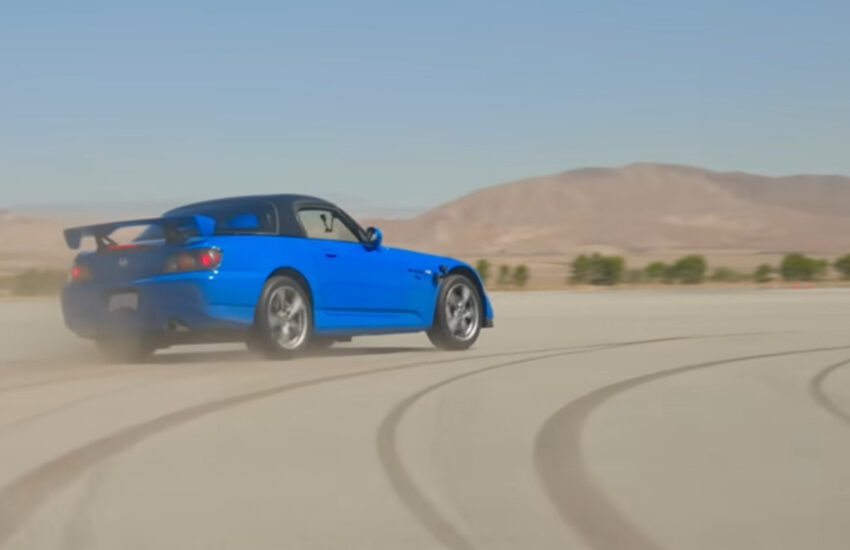
You don’t need to spend a fortune to encounter it. The Honda S2000 CR, for example, enjoys a similar reputation as a capricious car. Designed as a track model, its improvements were meant to make it faster and more responsive in the hands of a skilled driver. Some enthusiasts even consider it a “widow-maker.”

An Expert’s Verdict

But here’s the truth: “Snap Oversteer” is a myth. So, what is the common element that leads so many drivers to spin these cars? For Nik Romano, a driving instructor and race car driver, the answer boils down to two words: skill issue.

“Too often, people want to take a vehicle control course only after having a scary moment in an S2000,” explains Romano. “They are too quick to blame the Honda’s short wheelbase or front-mid engine.”

The Real Culprit: Lift-Off Oversteer

The real culprit isn’t the car, but a driver maneuver: lift-off oversteer. This phenomenon occurs when the driver lifts off the accelerator in the middle of a turn, causing a weight transfer to the front that destabilizes the rear of the vehicle.

“My inputs told the car to do that,” states Romano after spinning the Honda on a test track. He proves his point by reproducing the same maneuver with a smoother, more refined approach. The secret? Being progressive with the accelerator. With a bit of finesse, the CR’s rear stays perfectly in line.

Taming Oversteer

Even with the best intentions, oversteer can be inevitable. But it is neither violent nor unpredictable. It can be controlled and corrected by staying focused and making smooth movements. Romano demonstrates this by maintaining constant acceleration and using counter-steering to bring the car back in line when the rear starts to slide.

“Whether I subtly change the car’s balance with progressive acceleration or correct more aggressively with counter-steering, the result is the same,” he says. “I continue moving in the desired direction.”

What About Mid-Engine Cars?

What about cars with the engine placed behind the passenger compartment, like the Toyota MR2? Romano explains that a car with more weight at the rear will indeed have more inertia in a slide. This may require faster or more extensive corrections, but nothing in its fundamental design makes it unmanageable.

“The car will only ever do what you tell it to do,” concludes Romano. “And as long as you know what you’re asking of it, you can recover.”

If you’re coveting a sports car with a notorious reputation, remember this: “snap oversteer” is just oversteer you didn’t anticipate. Fix the weak link – the driver – and you’ll be ready to fully appreciate all the mechanics.
Porsche Taycan GT4 RS at the Nürburgring: Missed Record and Damaged Aerodynamics

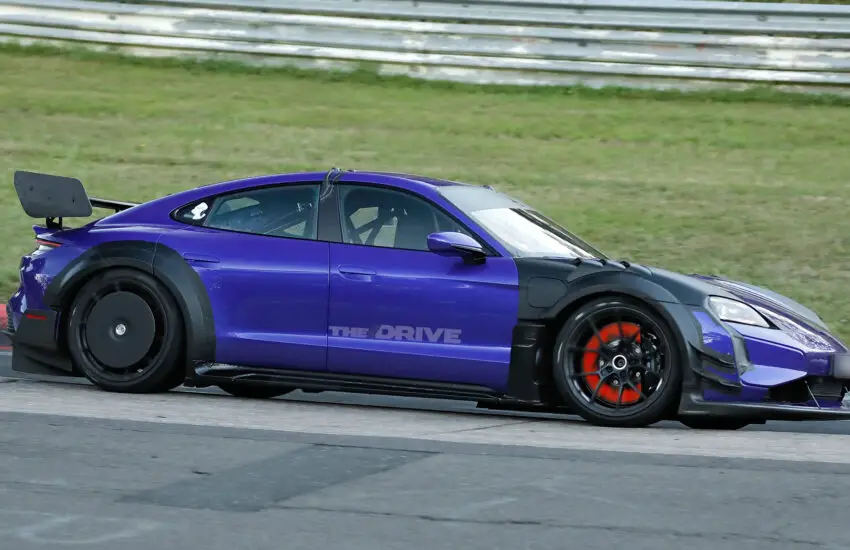
One might think that Nürburgring record attempts are cold, meticulously calculated races. The reality is often different, as evidenced by these spy shots of the most radical Porsche Taycan to date – likely a GT4 RS. These photos show that carnage is sometimes part of the price to pay for dominating the Green Hell.

Two attempts, two failures

A source indicates that Porsche attempted twice to set a record on a Wednesday, but problems ended these trials. Driven by Lars Kern, a blue Taycan sustained significant damage after hitting the ground in one of the Nordschleife’s corners. The severely damaged rear diffuser had to be held together with tape, as shown in the photos.

A purple Taycan and balance issues

A second Taycan, purple in color and sporting the same aggressive aerodynamic kit, also tried its luck. Equipped with a large fixed wing, a giant diffuser, and aerodynamic rear wheels, it did not suffer physical damage. However, according to the source, the car’s balance was “not optimal” during its fastest lap, forcing the cancellation of the timed run.

More than just a Turbo GT?

While initially thought to be Taycan Turbo GTs with a Manthey kit, this hypothesis is now ruled out. Manthey’s presence is confirmed, but in a more developmental role. The photographer even claims that these prototypes have more power than the Turbo GT, which is already capped at 1,092 horsepower.

A goal: breaking the 7-minute barrier

This future electric beast, which could be the first EV to bear the GT RS monogram, has a clear goal: to complete a lap of the Nordschleife in under 7 minutes. A significant challenge, as the Turbo GT’s current time is 7:07.55, far behind the 911 GT3 RS (6:44.848 in 2022).

Volvo: CEO Announces Inevitable Electrification of the Automotive Industry by 2030

The industry will be electric – there is no turning back. This is the firm belief of Volvo CEO Hakan Samuelsson, who has outlined a clear vision for the coming decade. According to him, in about ten years, all cars will be electric and, notably, they will also be cheaper. He predicts a profound transformation of the sector, where some legacy players will fail to adapt, allowing new leaders to emerge in this “new world.”

Automotive News in Brief

Here is an overview of the latest news shaking up the automotive industry.

Loyalty to Tesla Plummets

A surprising trend is emerging with Tesla: its owners are not just leaving, they are “fleeing.” Data indicates that brand loyalty is dropping more sharply than at any other car manufacturer, except for Dodge, signaling a significant defection of owners to other brands.

Audi Prepares an Electric Sports Car with Combustion Engine Vibes

Audi is working on a future electric sports coupe, expected in 2027. To appeal to purists, the brand with the rings is considering incorporating simulated gear shifts and broadcasting a sound through speakers that mimics the characteristic roar of its legendary five-cylinder engine. One thing is certain: it will not bear the TT name.

New Nissan Sentra Unveiled Early?

The next generation of the Nissan Sentra reportedly made a surprise early appearance in China. Its design is said to be heavily inspired by the new Nissan Leaf, particularly the front end, hinting at the brand’s future styling directions.

Reprieve for Audi’s Five-Cylinder Engine

Enthusiasts of combustion engines can breathe a sigh of relief: Audi’s famous five-cylinder engine has been granted a reprieve. Its production will not cease until 2027, when the iconic gasoline engine will bow out.

BMW Questions the Use of Apple CarPlay

Contrary to popular belief, BMW claims that the majority of its drivers do not rely as heavily on Apple CarPlay as might be thought, suggesting a more moderate use of smartphone connectivity systems than expected.

The Home Depot: Exceptional Promotions on Battery and Charger Kits

Enjoy tempting promotions at The Home Depot on complete kits including two batteries and a charger from Ryobi, Rigid, and Milwaukee brands. Whether you’re already equipped with one of these lines or looking to get started, these limited-time offers are the perfect opportunity to ensure maximum autonomy for your cordless tools for all your projects.

Offers not to be missed

Discover the current deals without delay, with discounts that can reach up to 64%.

RYOBI ONE+ 18V

The Ryobi ONE+ kit, including a 2 Ah battery, a 4 Ah battery, and a charger, is offered at the slashed price of $79, an immediate discount of 61%.

Milwaukee M18

Choose Milwaukee performance with this pack including a high-capacity 5.0 Ah battery, a 2.0 Ah battery, and a charger for only $129. A 48% saving to grab quickly.

Rigid 18V

Strengthen your arsenal with the Rigid offer: two 4 Ah batteries, a charger, and a convenient carrying bag all for $99. An incredible 64% discount awaits you.

Why invest in a battery kit?

Having spare batteries is crucial to never run out of power on your job site or during your home projects. These combos offer you excellent value for money and the flexibility needed to work without interruption.

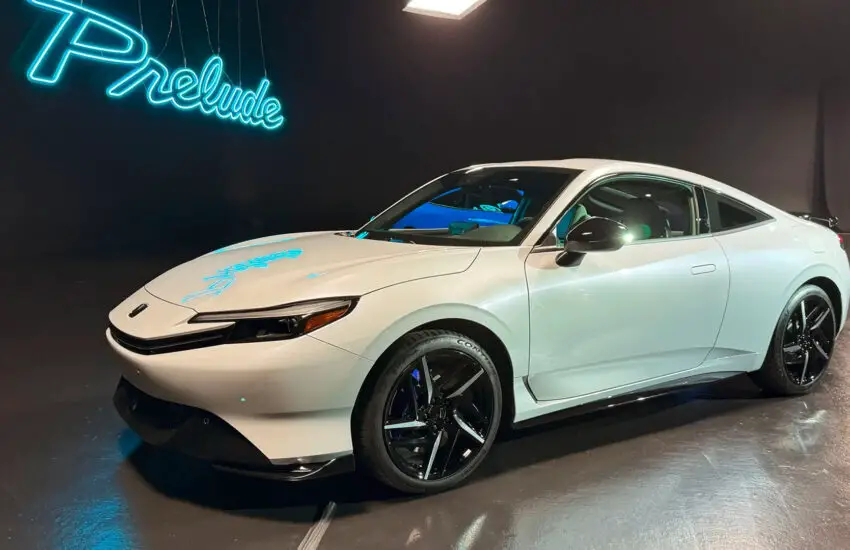
Honda Prelude 2026: Why the New Version Has No Gearbox?

The new 2026 Honda Prelude was unveiled last week, sparking some understandable complaints about the lack of a manual transmission. Honda refers to this coupe’s transmission as an “eCVT,” but in reality, the car simply doesn’t have a gearbox in the traditional sense. It uses the manufacturer’s two-motor electric hybrid technology.

A Proven Hybrid Technology

Honda has been developing its two-motor hybrid systems for over a decade, with the first one debuting on the Accord Hybrid in 2014. Each iteration has gained in efficiency. Theoretically, the latest version should offer typical electric vehicle acceleration at low speeds and remarkable fuel economy on the highway, all without ever needing to be plugged in.

Simulation for Sensation

The Prelude’s unique feature is its S+ paddle shift system on the steering wheel. Once activated, it simulates the sounds and sensations of gear shifts from a sequential gearbox. Honda presents it as follows: “With the innovative Honda S+ Shift system, the Prelude offers the ultimate electrified Honda driving experience with a responsive and engaging simulated gear shift.”

In other words, the “gear shifting” will be completely disconnected from what the transmission is actually doing. It’s the same principle as the fake gear shifts in the all-electric Hyundai Ioniq 5 N, an experience that many find surprisingly realistic.

Two Configurations for the Same System

Honda now offers two versions of its fourth-generation two-motor hybrid system:

Parallel Configuration

Found on the CR-V and Accord, it uses two electric motors side-by-side. This allows for the integration of a large, high-speed propulsion motor for better responsiveness. An additional direct-drive gear train enables light towing and improves low-speed power.

In-Line Configuration

More suitable for smaller vehicles like the Civic and soon the Prelude. The two electric motors are aligned. One drives the wheels, while the other is powered by the VTEC engine which charges the battery. Propulsion comes from a single-speed gearbox connected to the traction motor. The gasoline engine only drives the wheels via a clutch when it is most efficient, such as during highway cruising.

A Fake eCVT and an Unexpected Comparison

The term “eCVT” is therefore a misnomer: there is no variability in the gear ratio. It is a direct-drive system, whose behavior is dictated by a Power Control Unit (PCU).

Interestingly, this concept is conceptually similar to something much more exotic: the Direct Drive system of the 1,500 horsepower Koenigsegg Regera. The organization of power allocation is broadly the same, although the Swedish system is obviously far more extreme.

An Appealing Grand Touring Proposition

Even though the peak power figure has changed little since the 2000s model, the torque is higher and the technology is far more advanced. The new Prelude promises to be much more efficient, safer, more comfortable, and faster than its predecessor. It presents itself as a highly attractive entry-level grand touring proposition for those who don’t need four doors.

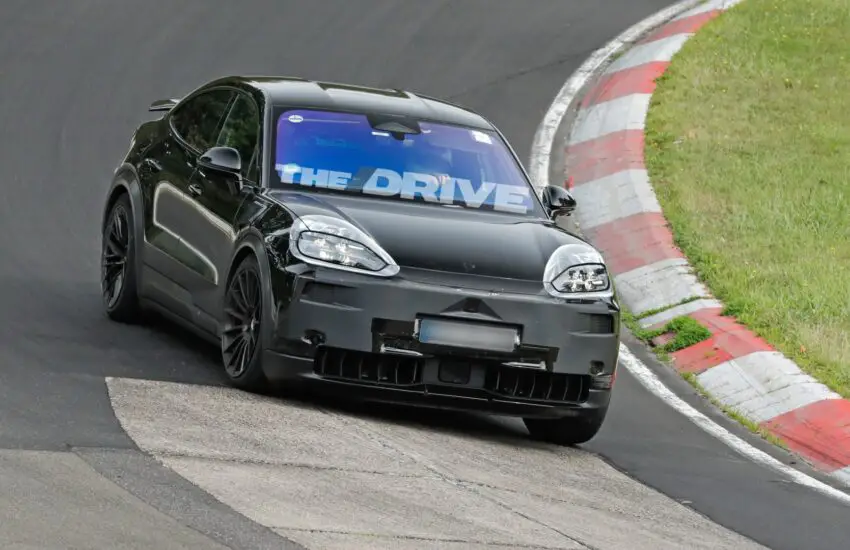
Porsche Cayenne Coupe EV Turbo GT 2026: Aggressive aerodynamics and electric performance

A new prototype of the Porsche Cayenne Coupe EV has been spotted on the Nürburgring track. This mystery version, which could well be the future Turbo GT, draws direct inspiration from the Taycan electric lineup for its naming.

The Taycan’s Legacy in Naming

For its electric models, Porsche maintains its codes by adopting the “Turbo” designation, even though it’s historically linked to supercharging. This strategy, already seen with the Taycan, appears to be confirmed for the electric SUV. The high-end version spotted would logically be named Turbo GT.

Performance That Promises to Be Stratospheric

The Cayenne EV prototypes have already demonstrated lightning-fast acceleration. This Turbo GT version is expected to approach the performance of the Taycan GT, despite being taller and less aerodynamic. Proof of its potential: the prototype showcased at the Goodwood Festival of Speed shattered the SUV record by completing the course in just 31.28 seconds.

An Aerodynamic and Controversial Design

Despite body lines reminiscent of some Tesla models, Porsche is betting on a prominent aerokit to emphasize the character of this Cayenne Coupe EV. A spoiler and a perforated rear bumper conceal these lines while improving air penetration. The raised beltline, characteristic of Coupe models, still clearly distinguishes it from the standard version.

Browse the full image gallery below to discover all the details of this prototype.

Drunk driving: A Canadian arrested while driving a Barbie Jeep

A man from Prince George, British Columbia, recently took a ride in a Barbie Jeep to get a Slurpee. Unfortunately for him, this unusual ride during rush hour ended with an arrest for drunk driving.

A Barbie Jeep Ride Gone Wrong

Last Friday, a resident of Prince George – a small town located between Vancouver and Alaska – was intercepted by police while driving a pink toy car, specifically a Power Wheels Jeep. According to Global News, the man, sporting Pit Viper-style sunglasses and a t-shirt proclaiming “Let’s do it the stupidest way possible,” had borrowed the miniature vehicle belonging to his roommate’s daughter to go to a convenience store.

The Driver’s Arguments

The driver attempted to justify his escapade: “It wasn’t a high-speed chase. I waited until it was safe, and when I crossed the road, I used my hand signals.” Despite his stated precautions and the seemingly humorous aspect of the situation, law enforcement did not find the matter so amusing.

The Legal Consequences

Breathalyzer tests revealed a blood alcohol level above the legal limit, resulting in the man receiving a 90-day driving prohibition and a court summons. It turned out that his driver’s license was already suspended, which likely explains why he had opted for this single-seat Barbiemobile instead of a conventional car.

The Legal Definition of a Motor Vehicle

Canadian authorities consider any vehicle operating on public roads and propelled by anything other than muscular force to fall under the definition of a motor vehicle. As such, it requires a driver with a valid license and insurance.

Return to Normalcy

Fortunately, the roommate’s daughter got her Barbie Jeep back intact. This story, as surreal as it may be, serves as a reminder: while law enforcement may sometimes appreciate the humor in a situation, the offense of driving under the influence in any wheeled vehicle is still severely punished.

Polestar 5 vs Porsche Taycan: Why a Half-Tonne Weight Difference?

The Polestar 5 weighs nearly half a ton more than a Porsche Taycan. This significant difference, approximately 5600 pounds (2540 kg) for the Polestar versus 4630 pounds (2100 kg) for the lightest Taycan, is explained by several fundamental technical and philosophical choices between these two electric competitors.

A Larger Battery and All-Wheel Drive

The first reason for this mass difference lies in the battery. The Polestar 5 is equipped with a 112 kWh battery pack, larger than the Taycan’s 105 kWh. According to the rule of thumb, each additional kWh adds between 6 and 8 kg. This 7 kWh difference could therefore represent a weight surplus of 42 to 56 kg for the Swedish sedan. Furthermore, the Polestar 5 will be offered exclusively with all-wheel drive (AWD), a mechanically heavier configuration than rear-wheel drive.

Divergent Philosophy and Construction

The Grand Tourer versus the Sports Car

The two manufacturers did not design their vehicles with the same vision. Polestar clearly positions the “5” as a luxury Grand Tourer, prioritizing space, acoustic comfort, and convenience technologies. The Porsche Taycan, on the other hand, retains the soul of a more radical sports car, even if it means sacrificing a bit of comfort for lightness and agility.

Different Platforms and Materials

The Polestar 5’s Performance Architecture platform uses an intensive structure of welded and riveted aluminum. To achieve its rigidity goals, it is likely that the manufacturer had to use a greater quantity of material. The Taycan’s J1.2 platform uses an intelligent mix of aluminum and steel (notably on the B-pillars and roof) to gain strength without excessively weighing down the whole.

Conclusion: Two Visions of the Electric Car

Ultimately, this weight difference is not a surprise. It perfectly illustrates two distinct philosophies: on one side, the Porsche Taycan, a sports car designed for pure performance; on the other, the Polestar 5, a comfortable and spacious electric GT. The choice between the two will therefore depend entirely on the driver’s priorities: agility or comfort.

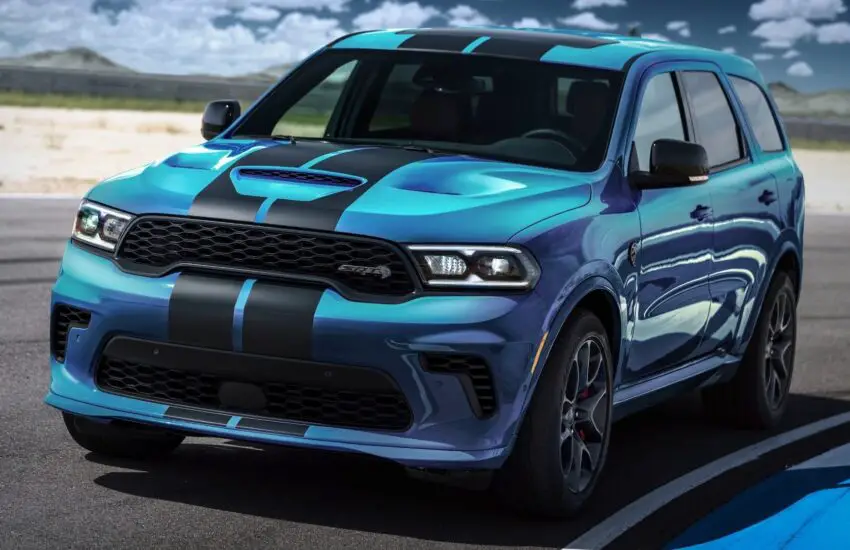
Dodge Durango Hellcat and 392 Banned from Sale in 17 U.S. States

The long-awaited return of the Dodge Durango V8 comes with a significant geographical restriction. According to information from dealer bulletins, the most powerful versions of the SUV, equipped with the 392 and Hellcat engines, will only be sold in U.S. states that do not follow California’s emissions standards, known as CARB.

Limited Availability for High-Performance Models

While the 2026 Dodge Durango lineup will start with a 360-horsepower 5.7-liter Hemi V8 available everywhere, the more aggressive engines are subject to limitations. The website MoparInsiders confirmed the news by obtaining an official statement from Stellantis: “The Durango R/T 392 equipped with the HEMI and the Durango SRT HELLCAT are available in non-CARB states. We continue to evaluate the possibility of offering the full range of V8-powered Durango to all customers.”

A Precedent for Stellantis

This decision is not a surprise for the Stellantis group. The company has already adopted a similar strategy in the past. In 2023, it reserved the electrified versions of certain Jeep models for states adhering to CARB rules, such as Colorado, Oregon, or Delaware, forcing customers to specifically order the gasoline versions.

An Underlying Regulatory Conflict

This situation reflects a broader dispute between Stellantis and the California Air Resources Board (CARB). The manufacturer had previously challenged the method of calculating its compliance with regulations, compared to that applied to other manufacturers. An agreement was reached just over a year ago, with Stellantis committing to follow California’s rules, regardless of future federal decisions.

What Future for These Models?

For now, the less fuel-efficient versions of the Dodge Durango will remain unavailable in the 17 states with the strictest standards, pending the outcome of Dodge’s “evaluations.” Orders for the 2026 Durango Hellcat and its highly customizable Jailbreak version opened last month. The future of their widespread availability therefore depends on internal and regulatory decisions.

Horse Powertrain: The Engine Manufacturer Bridging Hybrids and Electrics | The Future of the Thermal Engine

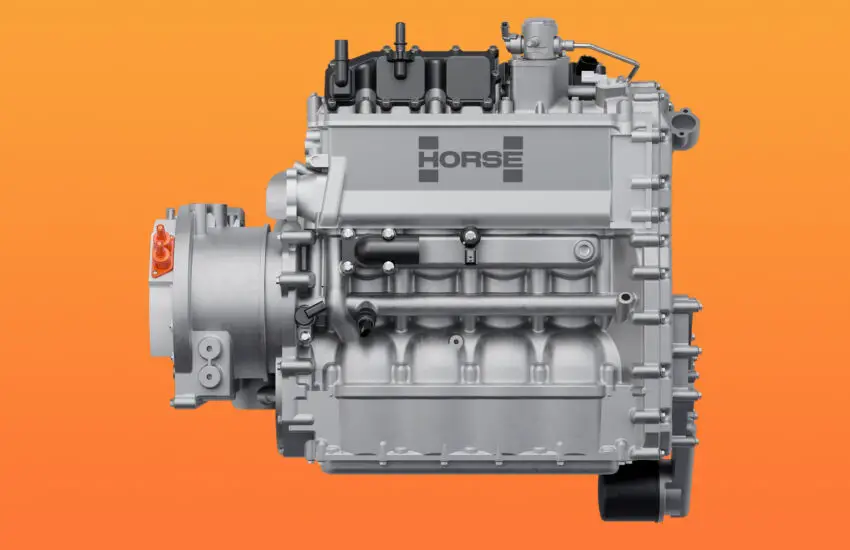
Horse Powertrain made headlines this month by presenting its new C15 engine at the IAA Mobility show in Germany. This 1.5-liter 4-cylinder block, the size of a carry-on suitcase, delivers nearly 100 horsepower and is designed as a range extender for electric vehicles. Shortly after, a Caterham Seven race car was equipped with a Horse engine. This has sparked curiosity about this little-known yet massive engine manufacturer.

Horse Powertrain: An Industrial Giant in the Shadows

Although discreet, Horse is not a newcomer. Based in Madrid, the group produces no less than eight million powertrains per year. It has 17 production sites and 5 R&D centers spread across Europe, South America, and Asia. Built on the heritage of 125 years of Renault and Geely, Horse positions itself as an independent leader in thermal and hybrid engine technologies.

A Franco-Chinese Alliance Supported by Saudi Arabia

Horse was born from a joint venture between French Renault and Chinese Geely, each holding 45% of the shares. A third entity joined the capital last year: Aramco, the Saudi national oil company, which now holds 10% of the company. Horse supplies engines and hybrid systems to the Renault and Geely group brands but also works for other manufacturers such as Mercedes, Volvo, Proton, Nissan, and Mitsubishi.

The C15 Engine: A Modular Range Extender

The big news is the C15. Its goal is to allow manufacturers to focus on their electric platforms without having to develop a small thermal range extender engine internally. Modular and adaptable, it is designed to fit into different vehicle compartments. A turbocharged version is planned for larger models. Its dimensions (50 x 55 x 27.5 cm) already include a generator, an exhaust system, and a cooling system.

Horse and the Racing World: The Caterham Case

The other facet of Horse is supplying engines for performance applications, as evidenced by the partnership with Caterham. The English brand uses the HR13DDT engine (already found in the Dacia Duster, Nissan Qashqai, and Mercedes A-Class in Europe) for its Caterham Academy program, following the discontinuation of Ford Sigma engine production. This is currently the closest gateway to the world of enthusiasts and DIY for the engine manufacturer.

The Future of Range Extender Vehicles

Electric vehicles with range extenders could gain popularity. As battery energy density improves, they might not only match the range of thermal models but significantly exceed it between charges, thanks to their small auxiliary engine. If this vision materializes, Horse engines could equip a multitude of new vehicles.