Chrysler P1498 Code: Leak Detection Pump Switch or Mechanical Fault

Understanding the Chrysler P1498 Diagnostic Trouble Code

The OBD2 trouble code P1498 is a manufacturer-specific code primarily for Chrysler, Dodge, and Jeep vehicles. Its generic definition is “Leak Detection Pump Switch or Mechanical Fault.” This code is intrinsically linked to the vehicle’s Evaporative Emission Control (EVAP) system, a critical component for managing fuel vapors and preventing their release into the atmosphere. The Leak Detection Pump (LDP) is the system’s self-diagnostic tool, actively checking for leaks in the fuel vapor lines and fuel tank. When the Powertrain Control Module (PCM) detects an illogical signal or a failure in the LDP’s internal switch circuit or its mechanical operation, it triggers P1498 and illuminates the Check Engine Light.

Role of the EVAP System and Leak Detection Pump

The EVAP system captures fuel vapors from the gas tank and temporarily stores them in a charcoal canister. During specific engine conditions, the PCM opens the purge solenoid, allowing these vapors to be drawn into the engine and burned. The Leak Detection Pump (LDP) is an electrically-operated pump that creates a vacuum in the EVAP system. It contains a special diaphragm and an internal switch that opens and closes to signal the PCM. By monitoring the time it takes for this switch to cycle, the PCM can determine if the system holds vacuum properly or has a leak.

How the PCM Determines a P1498 Fault

The PCM runs the LDP test during a drive cycle when conditions are met (e.g., fuel level between 15-85%, ambient temperature within range). It commands the LDP to run and closely monitors the feedback from the internal switch. A P1498 is set when the PCM sees one of these scenarios:

  • Switch Stuck Open/Closed: The LDP’s internal switch signal does not change state when expected.
  • Mechanical Failure: The pump’s diaphragm is torn or damaged, preventing it from creating or holding vacuum.
  • Circuit Problem: A wiring issue (open, short to ground/power) in the switch signal circuit gives an implausible reading.
  • Pump Motor Failure: The electric motor inside the LDP fails, so the pump doesn’t run at all.

Symptoms and Common Causes of Code P1498

Unlike some engine codes, P1498 may not cause obvious drivability issues like stalling or poor acceleration. Its symptoms are often subtle but should not be ignored, as they indicate a failure in the vehicle’s emission control system.

Primary Symptoms of a P1498 Fault

  • Illuminated Check Engine Light (MIL): This is the most common and often the only symptom.
  • Failed Emissions Test: The vehicle will not pass a state or local emissions inspection with an active EVAP code.
  • Possible Fuel Odor: In some cases, a compromised LDP or related hose can lead to a faint smell of gasoline, especially near the rear of the vehicle.
  • Other EVAP Codes: P1498 may appear alongside codes like P0442 (small leak) or P0455 (large leak) if the pump failure is preventing proper leak detection.

Most Frequent Causes of P1498

Diagnosis should follow a logical sequence, starting with the most common and easily accessible components.

  • Failed Leak Detection Pump (LDP): The most common culprit. The internal switch fails or the diaphragm ruptures.
  • Damaged or Disconnected Vacuum Hoses: The hoses connecting the LDP to the EVAP canister and the intake manifold can crack, dry rot, or become disconnected.
  • Faulty Electrical Connector or Wiring: Corrosion, bent pins, or chafed wires at the LDP connector or along the wiring harness.
  • Clogged or Restricted EVAP Lines: Dirt, debris, or a pinched line can prevent the LDP from operating correctly.
  • Rare: Faulty Powertrain Control Module (PCM): This is very uncommon but possible if all other components and circuits test correctly.

Step-by-Step Diagnostic and Repair Guide

Fixing a P1498 code requires a methodical approach, a quality OBD2 scanner, and a digital multimeter. Always begin with a visual inspection before moving to electrical tests.

Step 1: Preliminary Visual Inspection

Locate the Leak Detection Pump. It is typically found in the rear of the vehicle, near the fuel tank or the EVAP canister. Carefully inspect:

  • All vacuum hoses connected to the LDP for cracks, brittleness, or disconnections.
  • The electrical connector on the LDP for security, corrosion, or damaged pins.
  • The LDP itself for any signs of physical damage or corrosion.
  • The EVAP lines running from the LDP to the canister and intake manifold for kinks or blockages.

Repair any obvious issues, clear the code, and perform a drive cycle to see if it returns.

Step 2: Testing the Leak Detection Pump

If the visual check is good, test the LDP’s mechanical and electrical function. With the vehicle off, you can often hear a faint click from the LDP’s internal switch when the pump is activated by a scanner in bi-directional controls. A more thorough test involves:

  • Resistance Check: Unplug the LDP. Using a multimeter, measure the resistance across the pump motor terminals (refer to a service manual for specs, but it’s often low, around 10-30 ohms). An open circuit (infinite resistance) indicates a bad pump motor.
  • Switch Circuit Test: With the connector unplugged and the key ON (engine off), use the multimeter to check for reference voltage (typically 5V or 12V) on the appropriate wire at the harness connector. Then, check for continuity to ground on the ground wire.
  • Vacuum Test: This requires specialized tools. You can sometimes apply vacuum manually to the pump’s input port; a good pump should hold vacuum. A pump with a torn diaphragm will not.

Step 3: Clearing the Code and Verification

After replacing a faulty LDP or repairing a damaged hose/wire:

  • Clear the P1498 code and any related codes from the PCM memory using your scan tool.
  • Perform a complete drive cycle to allow the PCM to run its EVAP monitor tests. This involves a mix of city and highway driving under specific conditions.
  • Use your scanner to check the I/M Monitor Status. A successful repair is confirmed when the EVAP monitor shows “Complete” or “Ready” and the Check Engine Light remains off.

Failure to complete the drive cycle may leave the EVAP monitor “Incomplete,” which will still cause an emissions test failure.

Conclusion and Professional Recommendation

Code P1498 points directly to a fault in the self-test mechanism of your Chrysler, Dodge, or Jeep’s EVAP system. While it may not hinder performance, it is a critical emission-related fault. A systematic diagnosis starting with visual checks of hoses and connectors, followed by electrical testing of the Leak Detection Pump, will usually identify the problem. Given the importance of the EVAP system for environmental compliance and preventing fuel vapor loss, addressing a P1498 code promptly is recommended. If the diagnostic steps exceed your comfort level with a multimeter and scan tool, consulting a professional technician with experience in EVAP systems is the best course of action to ensure an accurate and lasting repair.

Tesla’s Austin Robotaxis: No Driver, But Not Alone

A New Era for Self-Driving in Texas

Elon Musk’s recent announcement regarding Tesla robotaxis operating in Austin, Texas, has sparked intense discussion. The key detail? These vehicles are reportedly navigating public roads without a human safety driver behind the wheel. This marks a significant, if controversial, step beyond current industry norms for testing autonomous vehicles.

How Driverless Cars Are Monitored

While the absence of an in-car supervisor is a bold move, it does not imply the vehicles are unsupervised. According to reports, Tesla is utilizing a “chase car” methodology. A separate, human-driven vehicle follows the autonomous Tesla at a distance, monitoring its performance. This chase car team can potentially intervene remotely or coordinate a response if the robotaxi encounters an unexpected situation, acting as a mobile safety net.

Technology and Regulatory Implications

This operational strategy leans heavily on the capabilities of Tesla’s Full Self-Driving (FSD) software. The company appears confident enough in the system’s ability to handle complex urban environments like Austin without immediate physical intervention. However, this approach raises immediate questions about local and state regulations governing autonomous vehicle testing, public safety protocols, and the definition of adequate oversight.

The move accelerates the timeline for public exposure to driverless technology but also invites scrutiny. Industry observers are keenly watching how these tests proceed, as the success or failure of this model could influence broader adoption and regulatory frameworks for autonomous ride-hailing services across the United States.

BMW P1498 Code: Secondary Air Injection System Flow Fault Explained

Understanding the BMW P1498 Fault Code

The OBD2 diagnostic trouble code P1498 is a manufacturer-specific code for BMW vehicles, indicating a fault within the Secondary Air Injection (SAI) System. In generic terms, it translates to “Secondary Air Injection System, Bank 2 – Flow Rate Too Low.” This system is a critical component of your BMW’s emissions control strategy, specifically designed to reduce hydrocarbon (HC) and carbon monoxide (CO) emissions during a cold engine start.

What is the Secondary Air Injection (SAI) System?

The SAI system, often called the “air pump” system, is an emissions device that operates for a short period (typically 30-90 seconds) immediately after a cold start. Its primary function is to inject fresh air into the exhaust ports or exhaust manifold. This extra oxygen helps to continue the combustion process of unburned fuel in the hot exhaust, creating a secondary “burn.” This rapid heating of the exhaust gases brings the catalytic converter up to its optimal operating temperature much faster, significantly reducing cold-start emissions.

How the P1498 Code is Triggered

The BMW Engine Control Module (DME) monitors the SAI system’s performance. It does this by using pre- and post-catalytic converter oxygen sensors or, in some models, a dedicated pressure sensor in the air injection line. When the engine is cold and the DME activates the SAI pump and valve, it expects to see a specific change in the oxygen sensor readings, indicating a proper flow of air into the exhaust. If the expected change is not detected—specifically for Bank 2 (the cylinder bank containing cylinders 4, 5, and 6 in an inline-6 engine)—the DME will log code P1498 and illuminate the Check Engine Light (CEL).

Common Symptoms and Causes of P1498 in BMW

Unlike a misfire, a P1498 code often doesn’t cause dramatic drivability issues. However, its presence indicates a failure in the emissions system that can have downstream effects.

Symptoms of a Faulty Secondary Air System

  • Check Engine Light (CEL): The most common and often the only noticeable symptom.
  • Failed Emissions Test: The vehicle will likely fail a state or local emissions inspection due to the active fault code and potentially higher HC/CO readings.
  • Unusual Pump Noise: A failing air pump may whine, screech, or not run at all. A healthy pump makes a distinct whirring sound for about a minute after a cold start.
  • Rough Idle on Cold Start (Less Common): In some cases, the improper air/fuel ratio during the warm-up phase can cause a slightly rough idle.

Primary Causes of Code P1498

The fault “Flow Rate Too Low” points to an obstruction or failure preventing air from reaching the exhaust manifold on Bank 2. The culprits are typically mechanical or electrical.

  • Failing Secondary Air Pump: The electric motor inside the pump can wear out, seize, or become weak, providing insufficient airflow.
  • Clogged or Faulty Secondary Air Valve (Combination Valve): This valve directs pump air to the exhaust manifold and prevents backflow of hot exhaust gases. It can become stuck closed or clogged with carbon, blocking airflow.
  • Cracked, Leaking, or Disconnected Vacuum Hoses: The air valve is often actuated by engine vacuum. A leak in the vacuum supply line will prevent the valve from opening.
  • Blocked Air Injection Lines/Tubes: The metal or rubber tubes that carry air from the pump to the valve and then to the exhaust manifold can rust through, crack, or become internally restricted.
  • Electrical Issues: Problems like a blown fuse, faulty relay, corroded wiring, or bad connections to the pump or valve solenoid.
  • Faulty DME Relay or Module (Rare): While less common, a problem with the power supply relay for the DME or the DME itself can prevent system activation.

Step-by-Step Diagnostic and Repair Guide

Diagnosing P1498 requires a methodical approach, starting with the simplest checks. You will need a basic set of tools and possibly a diagnostic scanner capable of activating BMW components.

Step 1: Visual and Auditory Inspection

On a cold engine (after sitting for several hours), start the car and immediately go to the engine bay. Listen carefully near the passenger-side firewall (common pump location) for the distinct sound of the secondary air pump running. If it’s silent, the pump isn’t receiving power or has failed. Visually inspect all associated hoses, tubes, and electrical connectors for cracks, disconnections, or corrosion.

Step 2: Checking the Secondary Air Pump

If the pump doesn’t run, check its power and ground.

  • Check the Fuse: Locate and inspect the SAI pump fuse in the glove compartment or trunk fuse panel (refer to your owner’s manual).
  • Check the Relay: Swap the SAI relay with an identical one (like the horn or fog light relay) to test it.
  • Direct Power Test: Disconnect the pump’s electrical connector. Using jumper wires, apply direct 12V power and ground from the battery to the pump terminals. If it runs, the problem is in the wiring or DME control circuit. If it doesn’t run or sounds weak, the pump is faulty.

Step 3: Testing the Secondary Air Valve and Vacuum System

  • Vacuum Test: With the engine running, disconnect the vacuum hose from the air valve. You should feel strong vacuum. If not, trace the hose back to its source for leaks or a faulty check valve.
  • Valve Operation: Apply vacuum manually (using a hand-held vacuum pump) to the valve’s nipple. You should hear it click open, and you should be able to blow air through the ports that connect to the exhaust. If it doesn’t hold vacuum or is stuck, it needs replacement.
  • Tube Inspection: Remove the air supply tube from the pump to the valve and inspect for blockages. Check the injection tubes that run to the exhaust manifold for severe rust or holes.

Step 4: Advanced Diagnostics and Clearing the Code

After performing repairs, clear the P1498 code with your OBD2 scanner. To confirm the repair, the vehicle must undergo a “drive cycle.” This involves driving the car through specific conditions (cold start, various speeds, decelerations) to allow the DME to run its self-tests on the SAI system. If the code does not return, the issue is resolved. If it comes back immediately, re-check your work or consider using a BMW-specific scanner to monitor the SAI system’s activation and sensor feedback in real-time.

Conclusion: Importance of Addressing P1498

While a BMW with a P1498 code may seem to run fine, ignoring it is not advisable. A non-functional secondary air system forces the catalytic converter to work harder during warm-up, potentially shortening its lifespan and leading to a very expensive replacement. Furthermore, you will be unable to pass mandatory emissions tests. By understanding the system’s function and following a logical diagnostic path—starting with the pump, then the valve and vacuum lines—you can effectively diagnose and repair this common BMW fault code, restoring your vehicle’s emissions integrity and performance.

Top Garage Heater Brands for 1, 2, or 3 Car Spaces

Choosing the Right Garage Heater

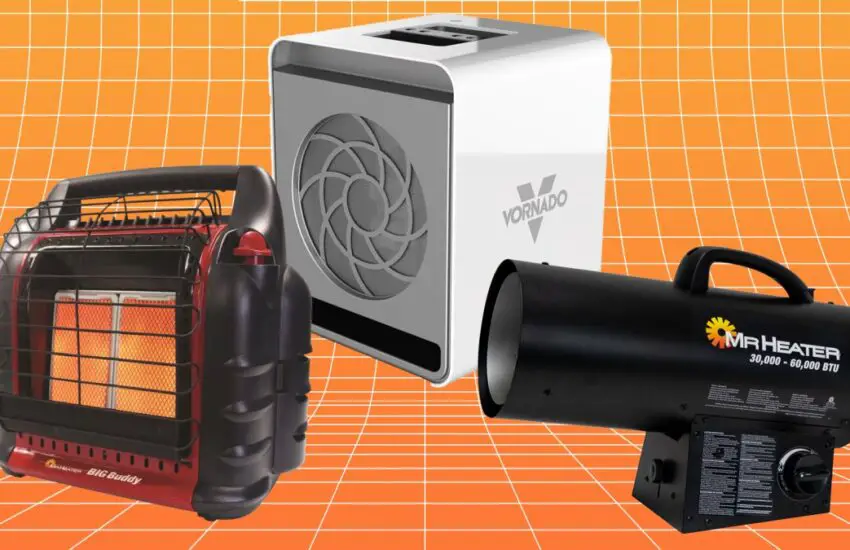
The market for garage heaters is vast, filled with portable models and hundreds of options available online at every price point. Navigating this selection can be daunting. The key is to find a unit that matches your specific garage size and usage without needing to sift through endless buying guides. For a standard residential garage, industrial-grade equipment is unnecessary, but extreme caution is advised against non-certified, low-end appliances. These can prove far more costly in the long run due to inefficiency and potential safety hazards.

Matching Heater Output to Garage Size

Selecting the correct heating capacity is the most critical step. A unit that is too small will struggle to warm the space, while an oversized heater will cycle on and off inefficiently. As a general rule, you need approximately 10,000 BTUs for every 500 square feet of well-insulated space. For a single-car garage (approx. 250-400 sq ft), a compact electric or propane heater around 5,000-8,000 BTUs is often sufficient. A two-car garage (approx. 500-600 sq ft) typically requires a 10,000-12,000 BTU unit. For a larger three-car or workshop space (750+ sq ft), look for powerful models starting at 15,000 BTUs, often in the form of a mounted gas or electric forced-air heater.

Trusted Heater Types and Brands

Different technologies suit different needs. For quick, portable heat, propane radiant heaters are popular and effective, with brands like Mr. Heater being a top choice for their safety features. For permanent, efficient heating, electric infrared heaters provide silent, targeted warmth; Dr. Infrared and Heat Storm are notable brands in this category. For whole-garage heating, gas-fired forced air units from brands such as Modine or Hot Dawg are industry standards for power and reliability. Always prioritize models with independent safety certifications from organizations like CSA or UL.

Essential Safety and Efficiency Tips

Beyond the brand, ensure your garage is properly insulated to retain heat and reduce energy costs. Regardless of the heater type, maintain clearances from flammable materials as specified by the manufacturer. Proper ventilation is non-negotiable for fuel-burning models to prevent carbon monoxide buildup. Investing in a quality, certified heater from a reputable brand is an investment in both comfort and safety for your vehicles and workspace.

EPA Shifts Stance on Aftermarket Tuning Enforcement

A New Chapter for Performance Tuning

In a significant policy shift, the U.S. Environmental Protection Agency (EPA) and the Department of Justice (DOJ) have ceased pursuing criminal charges against tuners for OBDII tampering. This move marks a pivotal moment for the automotive aftermarket industry, which has long operated under the threat of severe federal penalties for modifying vehicle emissions controls.

Understanding the Legal Shift

For years, the EPA aggressively enforced the Clean Air Act against companies and individuals selling or installing “defeat devices” intended for on-road use. This crackdown created a climate of uncertainty, where even parts marketed explicitly for “off-road use only” could lead to criminal prosecution. The recent change in enforcement priority suggests a more nuanced approach, potentially distinguishing between large-scale, malicious tampering and the performance-tuning sector.

Implications for the Aftermarket Industry

This development is widely seen as a victory for automotive enthusiasts and small businesses. It reduces the legal risk for reputable tuners who work within certain boundaries and prioritize responsible modifications. The industry can now operate with greater clarity, fostering innovation in performance parts and engine calibration software without the immediate fear of federal criminal action.

What This Does Not Mean

It is crucial to understand that this is a shift in criminal enforcement, not a repeal of the law. The Clean Air Act still prohibits tampering with emissions systems on vehicles used on public roads. Civil penalties and enforcement actions by state agencies, like the California Air Resources Board (CARB), remain fully active. The change primarily affects the DOJ’s decision to allocate resources away from prosecuting individual tuners as criminal defendants.

The landscape for vehicle modification is evolving. While the federal government appears to be stepping back from the criminal forefront, the responsibility remains on tuners and consumers to understand local and state regulations to ensure compliance and protect the environment.

Acura P1498 Code: EGR Valve Lift Insufficient – Diagnosis & Repair Guide

Understanding the Acura P1498 Diagnostic Trouble Code

The OBD2 trouble code P1498 is a manufacturer-specific code primarily associated with Honda and Acura vehicles. Its generic definition is “EGR Valve Lift Insufficient.” This code is a direct indicator that your Acura’s Engine Control Module (PCM) has detected a discrepancy between the commanded position of the Exhaust Gas Recirculation (EGR) valve and its actual, measured position. In simpler terms, the PCM is telling the EGR valve to open a specific amount, but the valve’s position sensor reports that it hasn’t opened enough (or at all) to meet that command. This failure disrupts the precise management of nitrogen oxide (NOx) emissions and can affect engine performance and fuel economy.

What is the EGR System and Why Does It Matter?

The EGR system is a critical emissions control component designed to reduce the formation of NOx during combustion. It works by recirculating a small, metered amount of inert exhaust gas back into the engine’s intake manifold. This dilutes the incoming air-fuel mixture, which lowers peak combustion temperatures. Since NOx forms primarily at high temperatures, this process effectively reduces harmful emissions. A malfunctioning EGR system, signaled by codes like P1498, can lead to failed emissions tests, engine knocking (pinging), reduced fuel efficiency, and in some cases, rough idling.

Common Acura Models Affected by P1498

Code P1498 is frequently encountered in popular Acura models from the late 1990s and early 2000s, particularly those equipped with V6 engines. Models most commonly associated with this issue include:

  • Acura TL (1999-2003)
  • Acura CL (2001-2003)
  • Acura MDX (2001-2003)
  • Acura 3.2TL
  • Honda Odyssey and Honda Pilot with similar V6 engines

Primary Causes of the P1498 Code in Your Acura

Diagnosing P1498 requires a systematic approach, as the root cause can range from simple carbon buildup to electrical failures. The code specifically points to an issue within the EGR valve’s ability to achieve its commanded lift, narrowing the focus to mechanical obstruction, control circuit problems, or sensor faults.

1. A Faulty or Sticking EGR Valve

This is the most common culprit. Over time, the EGR valve itself can become caked with hard carbon deposits from the exhaust. This carbon can physically jam the valve’s pintle, preventing it from opening fully or causing it to stick in one position. Even if the valve’s electric motor or vacuum diaphragm is functioning, the mechanical obstruction leads to insufficient lift.

2. Clogged or Restricted EGR Passages

The EGR valve is only one part of the pathway. The small metal tubes and passages in the intake manifold that carry the exhaust gas can also become completely blocked with carbon. In this scenario, even a perfectly functioning EGR valve cannot flow the required amount of gas, resulting in an “insufficient lift” condition as interpreted by the PCM.

3. Issues in the EGR Control Circuit

The PCM controls the EGR valve through an electrical circuit. Problems here can prevent the valve from receiving the proper command. Key circuit-related causes include:

  • Faulty EGR Valve Position Sensor: This sensor, often integrated into the valve assembly, directly reports the valve’s pintle position to the PCM. If it fails, it sends an incorrect signal.
  • Bad EGR Control Solenoid/Vacuum Switch Valve: On vacuum-operated EGR valves, a solenoid regulates vacuum to the valve. A faulty solenoid won’t apply the correct vacuum.
  • Wiring Harness Problems: Damaged, corroded, or disconnected wires for power, ground, or signal can interrupt communication.
  • Vacuum Leaks: Cracked or disconnected vacuum hoses leading to the EGR valve will prevent proper actuation.

4. A Failing Powertrain Control Module (PCM)

While rare, it is possible for the PCM itself to malfunction and send erratic or incorrect signals to the EGR valve. This should only be considered after all other components and circuits have been thoroughly tested and ruled out.

Step-by-Step Diagnostic Procedure for Code P1498

Follow this technical diagnostic sequence to accurately pinpoint the cause of P1498. You will need a quality OBD2 scanner capable of displaying live data, a digital multimeter (DMM), and basic hand tools.

Step 1: Preliminary Inspection and Live Data Check

Begin with a visual inspection of the EGR valve, all associated vacuum hoses, and the electrical connector for obvious damage or disconnections. Clear the code and see if it returns immediately. Then, using your scan tool, navigate to the live data stream. Look for the EGR Valve Position (or Lift) parameter. With the engine at operating temperature and idling, the commanded position is typically 0%. Gently rev the engine; you should see the commanded percentage increase and the actual position reading should closely follow it. A significant lag or no movement in the “actual” reading confirms the P1498 fault.

Step 2: Testing the EGR Valve and Passages

For vacuum-operated valves, use a hand-held vacuum pump. Apply vacuum directly to the EGR valve’s vacuum port (with the engine idling). You should feel the engine idle become rough or stall as the valve opens and exhaust gas is introduced. If the idle doesn’t change, the valve is stuck or the passages are clogged. For electrically-operated valves, you can often perform an actuator test with an advanced scan tool, or carefully apply battery voltage and ground directly to the valve terminals (consult a wiring diagram) to see if it clicks open.

Step 3: Electrical Circuit Diagnostics

Disconnect the electrical connector from the EGR valve. With the ignition ON (engine off), use your DMM to check for reference voltage (usually 5V) and a good ground at the harness connector pins according to your vehicle’s service manual. Next, check the signal wire from the position sensor. Its voltage should change smoothly as you manually move the valve pintle (if accessible). Resistance checks on the valve motor or position sensor can also be performed against factory specifications.

Repair Solutions and Prevention Tips

Once the faulty component is identified, the repair path becomes clear. Addressing P1498 promptly is essential for restoring performance and passing emissions inspections.

Recommended Repairs Based on Cause

  • For Carbon Buildup: Often, the EGR valve can be removed and cleaned thoroughly with a specialized carburetor/EGR cleaner and careful scraping. The intake manifold EGR passages must also be cleaned. This is a common and cost-effective fix.
  • For a Faulty Valve or Sensor: If cleaning doesn’t resolve the issue or the internal components are damaged, replacement of the entire EGR valve assembly is the standard repair. Use OEM or high-quality aftermarket parts.
  • For Circuit Issues: Repair or replace any damaged wiring, connectors, or vacuum hoses. Replace a faulty EGR control solenoid.

How to Prevent Future EGR Problems

Carbon buildup is an inevitable byproduct of the EGR system’s function, but its rate can be minimized. Using Top Tier detergent gasoline, ensuring your engine is properly tuned, and taking the vehicle on occasional longer drives to reach full operating temperature can help burn off deposits. There is no permanent “fix,” but proper maintenance extends the service life of the EGR system.

Ignoring a P1498 code can lead to increased emissions, engine knocking from pre-ignition, and potential damage to the catalytic converter over time. By following this detailed technical guide, you can effectively diagnose and resolve the EGR valve lift insufficient fault in your Acura, ensuring it runs cleanly and efficiently for miles to come.

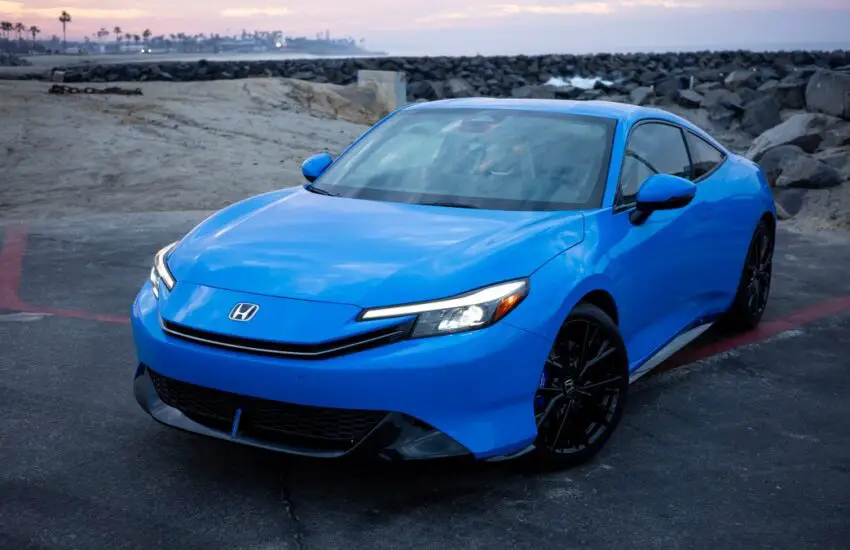
Honda Prelude 2026: Why Its Price is Firm at $43,195

The 2026 Honda Prelude’s Uncompromising Price Tag

The announcement of the 2026 Honda Prelude’s starting price of $43,195 has sparked significant discussion among automotive enthusiasts. As the first new Prelude in over two decades, expectations were high for an accessible sports coupe. However, Honda’s positioning of this hybrid grand tourer firmly in the mid-$40,000 range signals a clear strategic shift, prioritizing a premium, fully-equipped experience over a base entry point.

A Complete Package From the Start

Unlike many modern vehicles that offer a low starting price with sparse equipment, the new Prelude is launching as a fully-realized model. Project leaders have indicated there are no immediate plans for a de-contented, lower-priced variant. This approach suggests that the Prelude’s value proposition is intrinsically linked to its standard feature set, advanced hybrid powertrain, and specific driving dynamics. The price reflects not just the return of a nameplate, but the delivery of a complete grand touring philosophy without compromise.

Market Positioning and Brand Strategy

The $43,195 starting figure places the Prelude in a competitive segment with established sports coupes and premium entry-level vehicles. This pricing strategy allows Honda to position the Prelude as a halo model for its electrified lineup, showcasing its engineering without dilution. It moves the model away from its historical role as an affordable sporty car and redefines it as a modern, technology-forward GT. The decision underscores a broader industry trend where manufacturers consolidate trim levels and enhance standard equipment, improving perceived value but raising the initial cost of entry.

What the Price Represents for Buyers

For potential buyers, the fixed pricing structure means the Prelude experience is singular and defined. There is no waiting for a cheaper model year or a stripped-down version. The investment secures a vehicle that embodies Honda’s current vision for hybrid performance and design from the moment it leaves the factory. While this may limit its audience to more committed enthusiasts, it ensures a cohesive brand image and a high level of satisfaction for owners who receive the car exactly as its engineers intended.

Rivian R1S Patent Reveals New Physical Control Interface

Rivian Explores a Return to Physical Controls

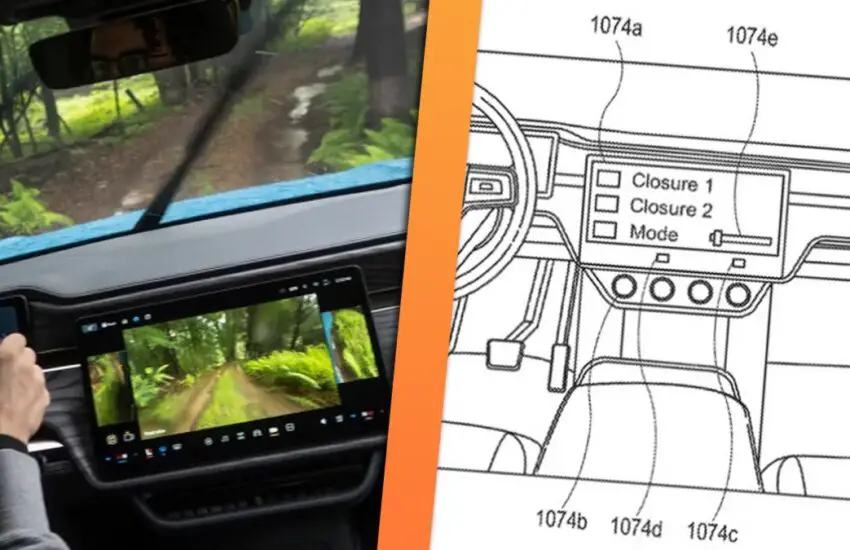
A recently published patent filing from Rivian has sparked significant interest, revealing a potential design shift for the cabin of its R1S SUV and likely the R1T pickup. The patent documents showcase conceptual illustrations of a dashboard featuring a prominent row of physical buttons or rotary dials positioned directly beneath the main central touchscreen. This move suggests Rivian is actively considering reintroducing dedicated physical controls for core vehicle functions.

Balancing Digital and Tactile Interaction

The patent highlights an industry-wide conversation about the optimal user interface in modern vehicles. While large touchscreens offer immense flexibility and a sleek, minimalist aesthetic, they can lack the immediate, tactile feedback of physical controls. Drivers often must navigate through digital menus to perform simple tasks like adjusting climate settings or audio volume, which can divert attention from the road. Rivian’s exploration of this hybrid approach aims to marry the benefits of a digital display with the intuitive usability of traditional buttons for frequently accessed features.

Potential Functions and Driver Focus

Although the patent does not specify the exact functions of the proposed controls, industry analysts speculate they would be reserved for essential operations. Likely candidates include climate control fan speed and temperature, defroster activation, audio system volume, and perhaps drive mode selection. By providing a muscle-memory, eyes-on-the-road method for these common adjustments, Rivian could enhance both convenience and safety. This design philosophy prioritizes the driver’s experience by reducing cognitive load and minimizing interactions with the central touchscreen while driving.

A Strategic Evolution in Design

This patent does not guarantee the feature will reach production, but it is a strong indicator of Rivian’s design evolution. It demonstrates the company’s responsiveness to user feedback and its commitment to refining the in-car experience. As the electric vehicle market matures, differentiating factors like superior ergonomics and intuitive interiors become increasingly important. Rivian’s potential integration of physical controls could set a new standard for blending innovative technology with user-centric, practical design in the electric vehicle segment.

MX-5 Cup Crash Mirrors Iconic *Cars* Movie Scene

When Racing Reality Meets Animated Fiction

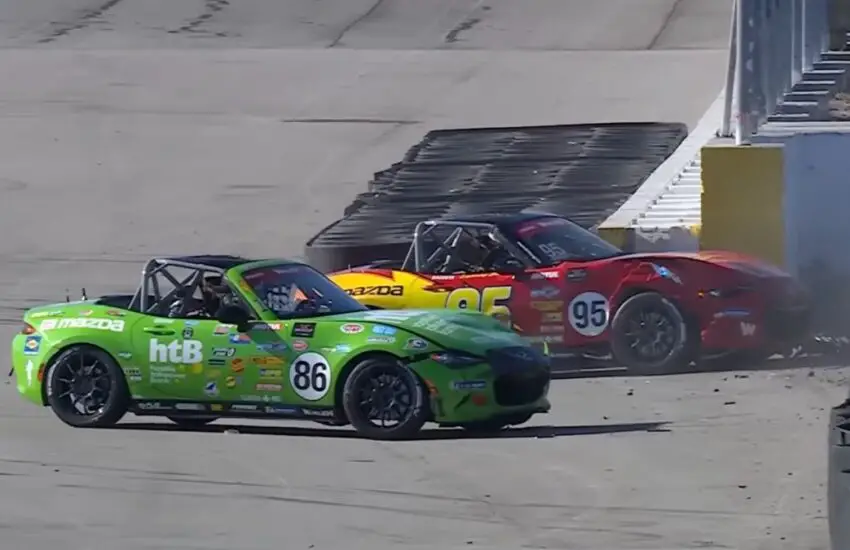
The opening rounds of the Mazda MX-5 Cup at Daytona International Speedway are always a spectacle of close-quarters drafting and bumper-to-bumper action. However, the second race of the 2024 season produced a moment that seemed lifted directly from a Hollywood script, specifically from Pixar’s beloved film, *Cars*.

A Scene Straight from Radiator Springs

During a high-speed pack battle on Daytona’s famous banking, two competitors made contact while jostling for position. The ensuing accident was a near-perfect real-world echo of the pivotal clash between Lightning McQueen and Chick Hicks in the final lap of the Piston Cup championship. One MX-5, sliding sideways and shedding parts, played the role of the spun-out McQueen, while the other car, continuing its trajectory, mirrored Hicks’ infamous “chrome horn” maneuver. The parallel was uncanny, leaving fans and commentators instantly drawing the same cinematic comparison.

The Durability of the MX-5 Platform

Thankfully, mirroring the movie’s outcome, the drivers involved emerged unscathed. The incident showcased not only the inherent safety of the purpose-built MX-5 Cup car but also the robust nature of the platform. These identical race cars are designed to withstand the intense pack racing synonymous with the series, and this event proved it. The safety crews responded promptly, and the race was soon back under green flag conditions.

A Reminder of Racing’s Dramatic Nature

This remarkable moment underscores the unpredictable and often theatrical drama of motorsport. The Mazda MX-5 Cup is celebrated for its incredibly tight competition, where races are frequently decided by thousandths of a second. Such intense racing can sometimes lead to incidents, but it also creates the unforgettable, edge-of-your-seat action that makes the series a fan favorite. The accidental recreation of a cinematic classic serves as a vivid reminder that truth on the racetrack can indeed be as compelling as fiction.

1991 Toyota Pickup at $70k: Collector’s Gem or Market Madness?

The $70,000 Question: What Defines Value?

A pristine 1991 Toyota Pickup has surfaced with an astonishing price tag of nearly $70,000. With only 69,981 miles on the odometer after 35 years, this truck is a remarkable time capsule. This valuation forces us to examine the shifting definition of automotive worth, moving beyond mere transportation to historical artifact and emotional investment.

Beyond Mileage: The Factors Driving the Price

Several key elements contribute to this truck’s premium asking price. Its exceptional, preserved condition suggests meticulous care and limited use, making it a rare “survivor” in the classic truck market. The 1990s Toyota Pickup, especially in original, unmodified form, has earned a legendary reputation for bulletproof reliability and rugged capability. This reputation fuels demand among collectors seeking icons of automotive durability. Furthermore, the market for nostalgic 4x4s and trucks has surged, with well-preserved examples becoming increasingly scarce and desirable.

Investment Potential vs. Practical Reality

Is this a sound investment? For a collector, it represents a tangible piece of automotive history with potential for appreciation, especially as internal combustion icons gain status. However, from a purely practical standpoint, the price vastly exceeds the truck’s original function. This purchase is not about utility; it is an acquisition driven by passion, nostalgia, and the desire to own a perfectly preserved symbol of an era.

The Final Verdict on Value

Labeling this as either a wise investment or pure folly depends entirely on perspective. In the traditional sense, paying a luxury price for a decades-old compact truck seems extreme. Yet, within the niche collector market, where originality and condition are paramount, such a price can be justified. This Toyota Pickup is no longer just a vehicle; it is a curated piece of automotive culture, and for the right enthusiast, that distinction may be worth every penny.