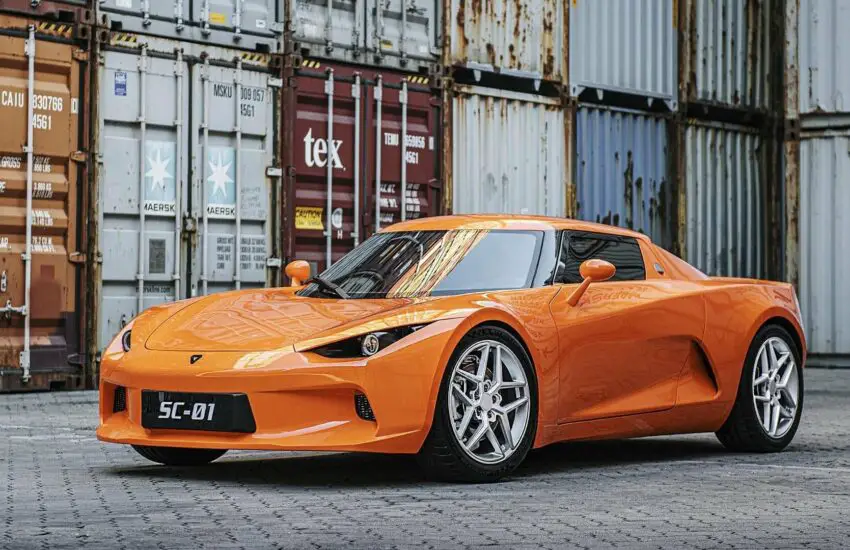
The SC-01: A Compact Chinese Electric Sports Car Arrives in Europe

A New Electric Sports Car Enters the European Arena

While many anticipated the arrival of high-profile Chinese EVs, a more compact and focused model is poised to make the first impression. The SC-01 electric sports car is preparing for its European debut, bringing a philosophy of simplicity and driving purity to a market eager for new performance options.

Focused Design and Performance

The SC-01 distinguishes itself with a clean, minimalist aesthetic. Its compact dimensions are a strategic advantage, making it well-suited for European roads and urban environments. The design prioritizes lightweight construction and aerodynamic efficiency, core tenets for engaging driving dynamics. Early specifications suggest a powertrain focused on responsive acceleration and a balanced chassis, aiming to deliver an authentic sports car feel in an electric package.

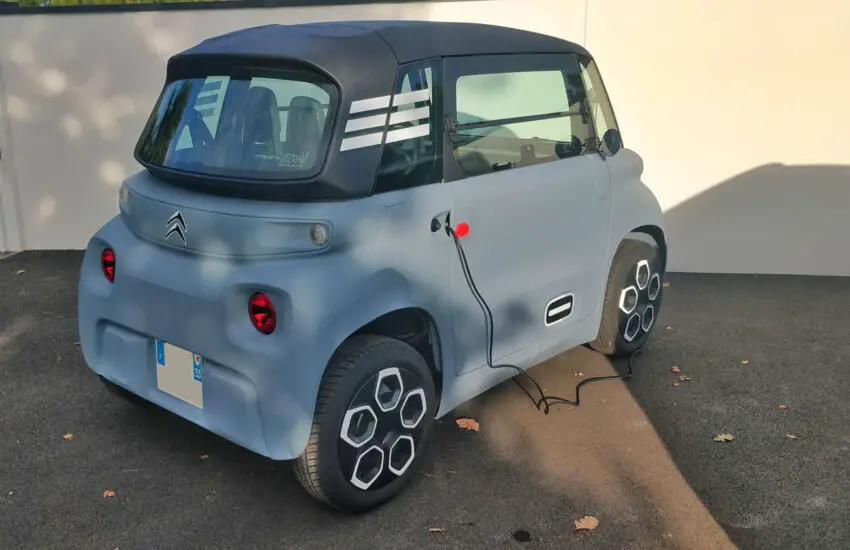
SC-01 electric sports car rear three-quarter view

Strategic Market Positioning

The vehicle’s introduction represents a calculated move. Instead of competing directly in the luxury or SUV segments, it carves out a niche as an accessible, driver-oriented electric coupe. This approach allows it to target enthusiasts looking for an unfiltered driving experience without the extreme price tag often associated with performance EVs. Its relatively modest size also suggests efficiency and easier integration into existing charging infrastructure.

Implications for the European EV Landscape

The arrival of the SC-01 signals a new phase in the diversification of Europe’s electric vehicle offerings. It demonstrates that Chinese automakers are looking beyond volume segments to cater to specific enthusiast communities. This model could pressure established manufacturers to explore similar lightweight, affordable electric sports car concepts. Its ultimate success will depend on the delivered driving experience, build quality, and value proposition, but its arrival alone is a noteworthy development in the evolving EV performance market.

Citroën Ami at 50,000 km: An Urban Warrior’s Long-Term Verdict

Beyond City Limits: A 50,000 km Endurance Test

The Citroën Ami, a compact electric quadricycle limited to 28 mph, is designed for short urban trips. However, one intensive user’s vehicle has surpassed a significant milestone: 50,000 kilometers. This journey, averaging over 10,000 km annually, provides a rare long-term review of a vehicle often dismissed as a simple city runabout. The experience challenges preconceptions about its durability and practical scope.

Performance and Reliability Under Pressure

After such extensive use, the Ami’s core mechanical and electrical components have shown remarkable resilience. The small 5.5 kWh battery, central to the vehicle’s design, reportedly maintains a consistent range. This is a key finding for potential buyers concerned about battery degradation. The electric motor and simplified drivetrain have required minimal maintenance, highlighting the advantages of its straightforward engineering. Wear and tear have primarily been on consumable parts like tires and brake pads, which are inexpensive and easy to replace.

The Real-World Ownership Experience

This long-distance test reveals the Ami’s true strengths and limitations. Its extreme efficiency makes running costs negligible compared to conventional cars. The compact size continues to be a major asset for parking and navigating dense traffic. However, the experience also confirms inherent constraints. The limited speed makes longer commutes on faster roads impractical, firmly defining its role as an urban specialist. Interior comfort and noise levels on longer drives are noted as trade-offs for its minimalist design and low price point.

A Proven Concept for Urban Mobility

Reaching 50,000 km is a testament to the Citroën Ami’s built-in robustness. It proves that the vehicle can withstand intensive daily use far beyond occasional errands. For users whose travel patterns fit within its specific urban niche, the Ami transitions from a novelty to a genuinely dependable and ultra-low-cost mobility solution. This real-world data validates its concept, demonstrating that simplicity and focused design can lead to surprising longevity.

Decoding OBD2 Code P1498: A Comprehensive Guide for Isuzu Vehicles

Understanding the P1498 Diagnostic Trouble Code in Isuzu Models

When your Isuzu’s check engine light illuminates and a scan tool reveals the generic OBD2 code P1498, you are dealing with a specific fault within the Exhaust Gas Recirculation (EGR) system. Formally defined as “EGR Valve Lift Sensor Circuit High Input,” this code is particularly common in Isuzu vehicles like the Trooper, Rodeo, Amigo, and Ascender from the late 1990s through the 2000s. The code indicates that the vehicle’s Powertrain Control Module (PCM) has detected a voltage signal from the EGR valve lift (or position) sensor that is consistently higher than the expected normal operating range. This high voltage signal is interpreted by the PCM as an implausible valve position, triggering the fault code and potentially affecting engine performance and emissions.

Core Function of the EGR System and the Lift Sensor

The EGR system is a critical emissions control component designed to reduce nitrogen oxide (NOx) emissions. It works by recirculating a small, metered amount of exhaust gas back into the engine’s intake manifold. This inert gas lowers combustion chamber temperatures, inhibiting the formation of NOx. The EGR valve controls this flow, and the EGR Valve Lift Sensor is a potentiometer attached to the valve. It provides real-time feedback to the PCM on the valve’s exact position (how far it’s open). This closed-loop feedback allows the PCM to precisely modulate the EGR valve for optimal performance and emissions.

Primary Causes of the P1498 Code in Isuzu Engines

Diagnosing P1498 requires a systematic approach, as the root cause can be electrical, mechanical, or related to vacuum control. The “high input” specification points to an open circuit or excessive resistance that is pulling the sensor signal voltage up, often to a 5-volt reference level.

1. Electrical and Wiring Issues

  • Faulty EGR Valve Lift Sensor: The internal potentiometer within the sensor can fail, providing an incorrect or out-of-range resistance value.
  • Damaged Wiring Harness: Open circuits, short to power, or corroded connectors in the sensor’s three-wire circuit (5V reference, signal return, and ground) are frequent culprits.
  • Poor Electrical Connections: Corrosion, bent pins, or loose terminals at the EGR valve connector or the PCM connector can disrupt the signal.

2. Mechanical and Vacuum System Failures

  • Failed EGR Valve: While P1498 directly points to the sensor circuit, the valve itself can be mechanically seized or carbon-clogged. A stuck valve can sometimes cause secondary sensor circuit issues.
  • Faulty EGR Vacuum Control Solenoid: Isuzu systems often use a vacuum solenoid controlled by the PCM to operate the EGR valve. A faulty solenoid or leaking vacuum hoses can prevent proper valve movement, leading to correlation faults.
  • Severe Carbon Buildup: Excessive carbon deposits in the EGR valve passages or on the valve pintle can impede movement, causing the sensor to read an unexpected position.

3. PCM Concerns (Less Common)

In rare instances, an internal fault within the Powertrain Control Module itself could lead to improper signal processing. This should only be considered after all other electrical and mechanical components have been thoroughly ruled out.

Step-by-Step Diagnostic Procedure for P1498

A proper diagnosis is key to an effective repair. Avoid the temptation to simply replace the EGR valve assembly without testing. Follow this technical diagnostic sequence.

Step 1: Preliminary Inspection and Scan Tool Data

Begin with a visual inspection of the EGR valve, vacuum lines, and electrical connector for obvious damage, corrosion, or disconnections. Using a professional-grade OBD2 scanner, observe the EGR Valve Position PID (Parameter ID) with the engine running at operating temperature. A reading that is stuck at an abnormally high percentage (e.g., 95-100%) or at 5 volts confirms a “high input” state.

Step 2: Electrical Circuit Testing

With the ignition OFF, disconnect the electrical connector from the EGR valve. Using a digital multimeter (DMM):

  • Check for 5V Reference at the appropriate pin (consult a vehicle-specific wiring diagram).
  • Check for a good Ground circuit.
  • Measure the resistance of the lift sensor across the signal and ground pins (specifications vary, but a common range is 1-6 kOhms). Gently move the valve pintle by hand; the resistance should change smoothly without open circuits.
  • Perform a continuity and short-to-power test on the signal wire back to the PCM connector.

Step 3: Mechanical and Vacuum System Checks

Manually apply engine vacuum (using a hand vacuum pump) to the EGR valve’s vacuum port. The valve diaphragm should hold vacuum and the valve stem should move. Listen for a change in engine idle when the valve is opened (with vacuum applied); a rough idle indicates the valve is functioning and passages are clear. Test the EGR vacuum control solenoid for proper resistance (usually 20-40 ohms) and its ability to hold vacuum when electrically activated.

Repair Solutions and Clearing the P1498 Code

Once the faulty component is identified, proceed with the appropriate repair. Common fixes include:

Repairing Wiring and Connectors

Repair any damaged wires using solder and heat shrink tubing. Clean corroded connector pins with electrical contact cleaner and ensure a tight connection. This is often the most cost-effective solution.

Replacing Faulty Components

  • EGR Valve Assembly: On many Isuzus, the lift sensor is integral to the valve and not sold separately. Replacing the entire EGR valve assembly is the standard repair.
  • EGR Vacuum Control Solenoid: If testing confirms a failure, replace the solenoid, ensuring all vacuum hoses are reconnected correctly and are not brittle or cracked.

Final Steps: Clearing Codes and Verification

After repairs, clear the P1498 code with your scan tool. The most important step is the verification drive cycle. Operate the vehicle under various conditions (including steady highway cruise) to allow the PCM to run its self-tests on the EGR system. The monitor should complete, and the check engine light should remain off, confirming a successful repair.

Tesla’s FSD Strategy Faces Scathing Critique from Industry Veteran

Autonomous Driving Debate Heats Up with Former Waymo CEO’s Remarks

The path to fully self-driving cars is fraught with competing philosophies, and a prominent industry voice has sharply criticized one of the most visible approaches. John Krafcik, the former CEO of Alphabet’s Waymo, has publicly questioned the foundational strategy behind Tesla’s Full Self-Driving (FSD) system, labeling it as fundamentally flawed.

A Clash of Technological Visions

Krafcik’s critique centers on what he describes as Tesla’s “severe myopia.” He argues that relying primarily on camera-based vision systems, without the redundancy of complementary sensors like lidar and radar, presents an insurmountable challenge for achieving true Level 4 or 5 autonomy. This perspective comes from a leader who oversaw the development of one of the world’s most advanced autonomous vehicle projects, which utilizes a multi-sensor suite for environmental perception.

The Core of the Controversy

The debate goes beyond mere sensor selection. Industry observers note that Krafcik’s comments highlight a deeper divide between two schools of thought. One, exemplified by Tesla, bets on incremental public road development using a massive fleet to collect data and refine a vision-based neural network. The other, championed by companies like the former Waymo under Krafcik, favors a more cautious, geofenced, and sensor-rich approach that prioritizes maximum initial safety and system redundancy before wider deployment.

This public critique adds significant weight to ongoing discussions about safety regulations, validation methods, and realistic timelines for consumer-ready autonomous vehicles. It underscores that the journey to full autonomy remains a complex technical puzzle with no consensus on the ultimate solution.

Hyundai Staria EV: The Electric Camper Van Revolution

Redefining Adventure: The Electric Staria Camper Concept

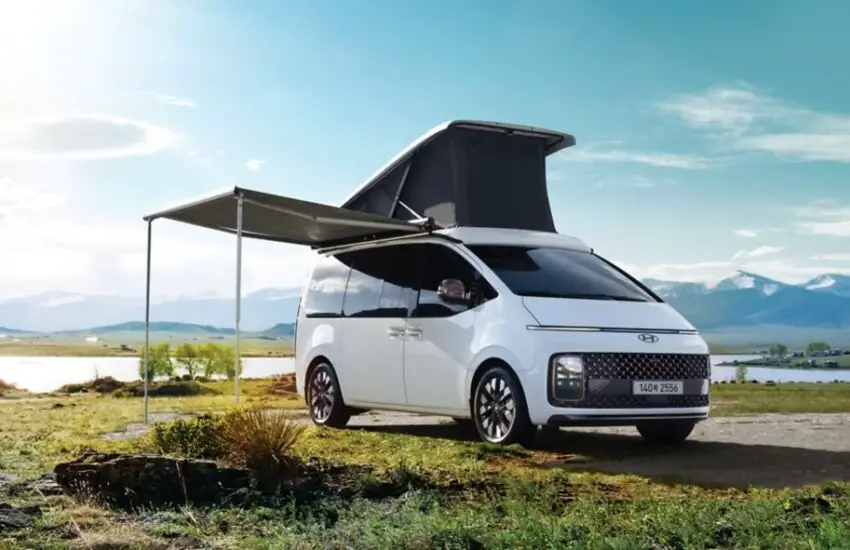
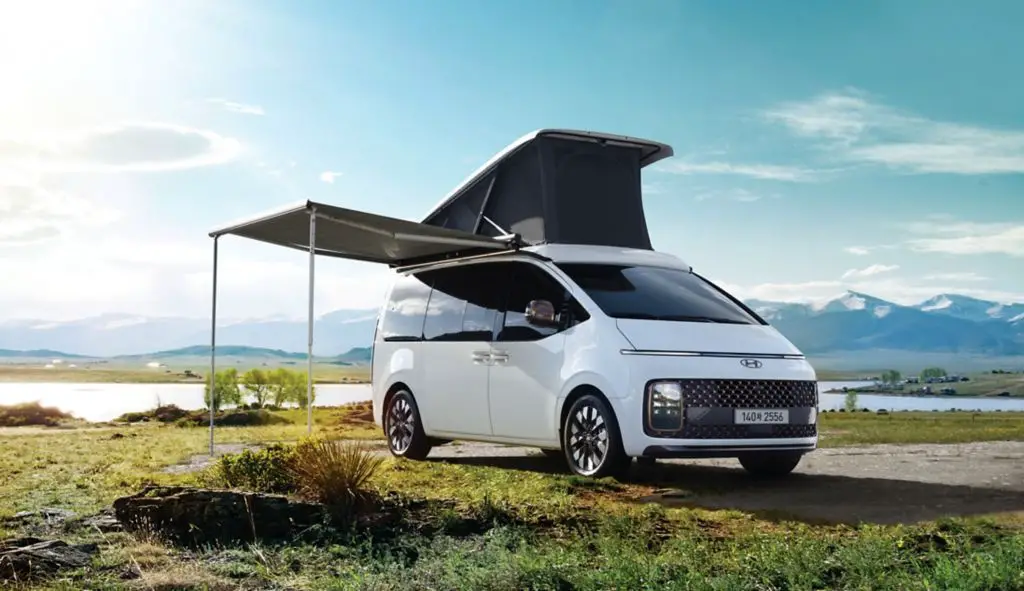
Hyundai Staria EV Camper concept vehicle with pop-up roof and outdoor awning

Hyundai is positioning its Staria people-mover for a bold new role in Europe. With the reveal of a fully-electric camper van conversion study, the Korean automaker is making a serious play for the burgeoning zero-emission vanlife market. This concept transforms the spacious MPV into a self-contained mobile home, signaling Hyundai’s ambition to become a pioneer in electric recreational vehicles.

From People Mover to Mobile Home

The conversion leverages the Staria’s boxy, spacious design and its upcoming electric powertrain. The concept features a pop-up roof to create standing room, integrated sleeping quarters, and compact kitchen facilities. This approach offers a compelling alternative to larger, more cumbersome traditional camper vans, prioritizing efficiency and ease of driving without sacrificing essential amenities for weekend getaways or extended road trips.

The Strategic Charge into a New Market

This move is strategically timed. Europe presents a growing demand for sustainable travel options and has a strong culture of caravanning. By showcasing a factory-backed camper concept based on a zero-emission vehicle, Hyundai aims to capture the imagination of eco-conscious adventurers early. It demonstrates a clear vision where electric vehicles are not just for daily commuting but are central to a new, cleaner era of leisure and exploration.

If this study progresses to a production model, it would place Hyundai among the first to offer a fully-electric, mid-sized camper van from a major manufacturer. The Staria EV Camper concept represents more than just a vehicle; it’s a statement of intent for the future of accessible and sustainable adventure travel.

OBD2 Code P1498 Honda: EGR Valve Lift Insufficient – Diagnosis & Fix

Understanding the Honda P1498 Trouble Code

The OBD-II diagnostic trouble code (DTC) P1498 is a manufacturer-specific code primarily associated with Honda and Acura vehicles. Its definition is “EGR Valve Lift Insufficient.” This code indicates that the vehicle’s Engine Control Module (ECM) or Powertrain Control Module (PCM) has detected that the Exhaust Gas Recirculation (EGR) valve is not opening as much as commanded, or the actual valve lift (position) does not match the expected value stored in the ECM’s memory.

The EGR system is a critical emissions control component. It recirculates a small, metered amount of inert exhaust gas back into the engine’s intake manifold. This lowers combustion chamber temperatures, reducing the formation of harmful nitrogen oxides (NOx). A malfunctioning EGR system, signaled by codes like P1498, can lead to poor performance, reduced fuel economy, and increased emissions.

Common Symptoms of a P1498 Code in Your Honda

When the PCM sets code P1498, it will also illuminate the Check Engine Light (CEL) on your dashboard. While the car may still be drivable, you will likely notice one or more of the following performance issues:

  • Illuminated Check Engine Light (MIL): The primary and most common symptom.
  • Engine Knocking or Pinging (Detonation): Without sufficient EGR flow, combustion temperatures rise, causing pre-ignition, especially under load.
  • Rough Idle or Stalling: The engine may idle roughly, surge, or even stall, particularly when cold.
  • Reduced Fuel Economy: Inefficient combustion can lead to a noticeable drop in miles per gallon.
  • Failed Emissions Test: Elevated NOx levels will cause the vehicle to fail a smog or emissions inspection.
  • Lack of Power: You may experience hesitation or sluggish acceleration.

Causes of the P1498 “EGR Valve Lift Insufficient” Code

The P1498 code points to a discrepancy between the commanded and actual EGR valve position. The root cause typically lies within the EGR valve assembly, its control circuits, or related passages. Here are the most frequent culprits:

1. A Faulty or Sticking EGR Valve

This is the most common cause. Over time, carbon deposits from exhaust gas can build up on the valve pintle and seat, causing it to stick in a closed or partially closed position. The valve’s internal lift sensor may also fail, sending an incorrect signal to the PCM.

2. Clogged or Restricted EGR Passages

Even if the valve itself moves, the tubes and passages that carry exhaust gas from the manifold to the intake can become completely blocked with hard carbon. This prevents any gas from flowing, making the valve’s lift irrelevant.

3. Problems in the EGR Valve Control Circuit

The PCM controls the EGR valve using a vacuum solenoid (older models) or an electric stepper motor/duty cycle solenoid (newer models). Issues here can prevent proper operation:

  • Faulty EGR control solenoid or stepper motor.
  • Damaged, corroded, or shorted wiring and connectors.
  • Blown fuse in the EGR control circuit.
  • Poor electrical ground for the EGR valve or sensor.

4. Faulty EGR Valve Position Sensor

Integrated into the valve assembly, this sensor reports the valve’s actual pintle position back to the PCM. If this sensor provides a faulty signal, the PCM will think the lift is insufficient even if the valve is moving correctly.

5. Vacuum Supply Issues (Vacuum-Controlled EGR Valves)

On older Honda models, the EGR valve is operated by engine vacuum modulated by a control solenoid. A cracked, disconnected, or collapsed vacuum hose will result in no vacuum signal reaching the valve.

Step-by-Step Diagnostic Procedure for P1498

Warning: Always allow the engine to cool completely before working on the EGR system, as components are extremely hot. Follow safety procedures.

Step 1: Preliminary Checks & Code Verification

Use an OBD2 scanner to confirm P1498 is present and clear the code. Note if it returns immediately or only under specific driving conditions. Check for any other related codes (e.g., vacuum or sensor codes). Visually inspect all wiring harnesses, connectors, and vacuum hoses (if applicable) for obvious damage, corrosion, or disconnections.

Step 2: Commanding the EGR Valve with a Scan Tool

This is a critical test. Using a bi-directional scan tool, access the PCM’s actuator controls and command the EGR valve to open to specific percentages (e.g., 25%, 50%, 75%). While commanding it, you should:

  • Hear/Feel: Listen for a clicking sound from the valve (electric types) or feel the valve pintle move.
  • Observe Data: Watch the “Desired EGR Position” and “Actual EGR Position” PID data. They should closely match. A large discrepancy confirms the problem.
  • Monitor Engine: As you command the valve open at idle, the engine RPM should drop or become rough as inert gas is introduced. No change indicates no EGR flow.

Step 3: Physical Inspection and Cleaning

If the valve doesn’t respond to commands, remove the EGR valve assembly (refer to a service manual for your specific model). Inspect the valve pintle and the mounting port on the intake manifold for heavy carbon buildup. Carefully clean the valve using a dedicated EGR/carburetor cleaner and a soft brush. Avoid getting cleaner on electrical connectors. Clean the intake manifold passage with appropriate tools.

Step 4: Electrical Testing

If cleaning doesn’t resolve the issue, electrical testing is needed. With a digital multimeter (DMM):

  • Check for power and ground at the EGR valve connector with the ignition ON.
  • Check the resistance of the valve’s motor or solenoid windings against factory specifications (often 20-30 ohms).
  • Check the continuity and resistance of the position sensor signal circuit.

Step 5: Checking for Restricted Passages

With the EGR valve removed, inspect the EGR tube that connects to the exhaust manifold. Use a flashlight and a long, flexible pick or screwdriver to check for blockages. Severe blockages may require professional cleaning or replacement of the tube.

Repair Solutions and Final Verification

Based on your diagnosis, proceed with the appropriate repair:

  • Cleaning: If carbon was the issue, reinstall the cleaned valve and components. Clear the code and test drive.
  • EGR Valve Replacement: If the valve is electrically faulty, mechanically seized, or the position sensor is bad, replacement is necessary. Use a high-quality OEM or reputable aftermarket part.
  • Circuit Repair: Repair any damaged wiring, replace blown fuses, or secure poor connections.
  • Control Solenoid Replacement: If diagnosed as faulty, replace the EGR control solenoid.
  • Passage/Tube Replacement: For severely clogged components, replacement is often easier than cleaning.

After repairs, clear the P1498 code with your scanner. Perform a test drive that includes various engine loads to allow the PCM to run its self-tests. Use your scanner to confirm that the code does not return and that the “Actual EGR Position” PID now follows the “Desired” value correctly. This ensures a complete and successful repair of the EGR valve lift insufficient fault.

Xiaomi SU7 2026: Defying Market Trends with Record Orders

The Unwavering Allure of an Electric Sedan

While the spotlight often shines on high-riding crossovers, the Xiaomi SU7 electric sedan continues to carve out a formidable and loyal following. The recent unveiling of its 2026 model variant has sent a powerful signal to the automotive industry, registering a spectacular number of pre-orders upon the opening of its reservation books. This sustained success challenges prevailing market assumptions and underscores the enduring vitality of the sedan segment in the electric era.

Beyond the Crossover Hype

The performance of the SU7 2026 is particularly noteworthy as it defies the dominant trend favoring SUVs. It proves that a well-executed sedan, focusing on driving dynamics, aerodynamic efficiency, and distinctive design, can capture significant consumer interest. Xiaomi’s deep integration of its consumer electronics expertise into the vehicle’s smart ecosystem appears to be a key differentiator, offering a seamless digital experience that resonates with a tech-savvy clientele.

Sustained Momentum in a Competitive Landscape

The impressive preliminary order tally for the 2026 model is not an isolated event but part of a consistent narrative for the SU7 line. It indicates that Xiaomi has successfully established its first automotive offering as a credible and desirable product. This achievement is pivotal for the tech giant’s long-term ambitions in the automotive sector, demonstrating an ability to not just enter the market, but to sustain momentum and build a dedicated brand presence amidst fierce competition from established EV makers.

The sedan’s success suggests that the electric vehicle market is maturing, with space for diverse body styles catering to specific driver preferences. The Xiaomi SU7 2026 stands as a testament to the fact that innovation, coupled with a clear understanding of a niche audience, can defy broader market predictions and carve out a successful path forward.

OBD2 Code P1498 Dodge: Leak Detection Pump Switch or Mechanical Fault

Understanding the P1498 Code in Your Dodge Vehicle

When your Dodge’s check engine light illuminates and a scan tool reveals the diagnostic trouble code (DTC) P1498, you’re dealing with a specific fault within the Evaporative Emission Control (EVAP) system. Officially defined as “Leak Detection Pump Switch or Mechanical Fault,” this code is common across many Dodge, Chrysler, and Jeep models. The EVAP system is designed to prevent fuel vapors from escaping into the atmosphere by capturing them in a charcoal canister and later purging them into the engine to be burned. The Leak Detection Pump (LDP) is the heart of the system’s self-test, and P1498 indicates it has failed its internal check.

What is the Leak Detection Pump (LDP)?

The Leak Detection Pump is not a traditional fluid pump. It’s an electrically operated device that uses engine vacuum to pressurize the EVAP system during the vehicle’s self-test (usually after a cold start, at certain speeds, and under specific fuel level conditions). It contains a switch that tells the Powertrain Control Module (PCM) when the pump has reached a specific point in its stroke. A P1498 code is set when the PCM detects an implausible signal from this internal switch or senses a mechanical failure in the pump’s operation during the test cycle.

Common Dodge Models Affected by P1498

This code is prevalent in Dodge vehicles from the late 1990s through the 2000s, especially those with 3.3L, 3.8L, and 4.0L engines. Key models include:

  • Dodge Caravan, Grand Caravan
  • Dodge Durango
  • Dodge Ram 1500, 2500, 3500
  • Dodge Dakota
  • Chrysler Town & Country, Jeep Grand Cherokee (same platform)

Symptoms and Causes of the P1498 Fault Code

Unlike some engine codes that cause drivability issues, P1498 is primarily an emissions-related fault. However, ignoring it can lead to a failed emissions test and potentially mask other problems.

Primary Symptoms of a P1498 Code

  • Illuminated Check Engine Light (MIL): This is the most common and often the only noticeable symptom.
  • Failed Emissions Inspection: The vehicle will not pass a state emissions test with an active EVAP system code.
  • Possible Rough Idle (Less Common): In some cases, a severe leak or malfunction might slightly affect engine vacuum and idle quality.
  • No noticeable performance issues: The vehicle typically drives normally, with no loss of power or fuel economy.

Root Causes of Dodge P1498

The code points directly to the Leak Detection Pump circuit or its mechanical function. The most frequent culprits are:

  • Failed Leak Detection Pump (Most Common): The internal diaphragm can rupture, the switch can fail, or the motor can stop working.
  • Faulty Electrical Connector or Wiring: Corrosion, bent pins, or broken wires at the LDP connector can interrupt the signal to the PCM.
  • Blocked or Pinched EVAP Hoses: A hose leading to or from the LDP or canister can be kinked, clogged, or disconnected.
  • Faulty PCM (Rare): While uncommon, a malfunctioning engine computer can send incorrect signals or misinterpret data from the LDP.
  • Severe EVAP System Leak: A large leak (e.g., loose gas cap, cracked canister) can prevent the system from pressurizing, causing the LDP test to fail.

Step-by-Step Diagnostic and Repair Guide

Diagnosing P1498 requires a systematic approach, starting with the simplest checks. You will need a basic multimeter and a quality OBD2 scanner capable of viewing live data or forcing the LDP to actuate.

Step 1: Preliminary Visual Inspection

Before testing components, perform a thorough visual check. Locate the Leak Detection Pump (typically near the EVAP canister, behind a rear wheel well or under the vehicle). Inspect:

  • All EVAP Hoses: Check for cracks, disconnections, or obvious damage from the LDP to the canister and engine.
  • LDP Electrical Connector: Ensure it is fully seated, clean, and free of corrosion.
  • Gas Cap: Ensure it is the correct OEM-style cap and is tightened securely until it clicks.

Step 2: Electrical Circuit Testing

With the key off, disconnect the electrical connector from the LDP. Using a multimeter:

  • Check for 12-volt power at the appropriate pin (refer to a vehicle-specific wiring diagram).
  • Check for ground continuity on the ground pin.
  • Check the signal wire for continuity back to the PCM and for shorts to power or ground.

If power and ground are present, the circuit is likely good, pointing to a faulty pump.

Step 3: Testing the Leak Detection Pump Itself

The most definitive test is a functional one. With a scan tool, use the “bi-directional controls” or “active tests” function to command the LDP ON and OFF. You should hear and feel a distinct clicking from the pump. If it doesn’t activate, and you have confirmed power and ground, the pump is faulty. You can also apply 12 volts directly to the pump terminals (briefly) to see if it clicks; no click indicates a dead pump.

Step 4: Checking for Large Leaks

While P1498 is a pump fault, a massive leak can sometimes cause a similar failure. Use a smoke machine designed for EVAP testing to introduce smoke into the system. Any visible smoke escaping indicates a leak in hoses, the canister, the gas tank, or at the filler neck that must be repaired.

Step 5: Replacement and Clearance

Replacing the LDP is straightforward. After securing the new part:

  • Clear the P1498 code with your scanner.
  • Drive the vehicle through a complete drive cycle. This allows the PCM to run all its self-tests, including the EVAP monitor.
  • Verify that the check engine light remains off and that the EVAP monitor shows “Ready” or “Complete” on your scan tool.

Estimated Repair Cost and Professional Help

The cost to fix a P1498 code varies significantly between DIY and professional repair. The Leak Detection Pump part itself typically ranges from $80 to $200 for a quality OEM or OEM-equivalent unit. If you perform the replacement yourself, this is your total cost. At a repair shop or dealership, expect 1 to 1.5 hours of labor, bringing the total repair bill to approximately $200 to $400, depending on local labor rates and the specific vehicle. While P1498 is not an urgent safety concern, addressing it promptly ensures your Dodge is emissions-compliant and prevents the possibility of a small issue evolving into a larger, more expensive repair.

Why Electric Car Hesitation is More Than Just Range Anxiety

Beyond the Buzz: The Real Reasons Drivers Are Hesitant

In 2025, skepticism towards electric vehicles (EVs) is frequently dismissed as a fear of new technology or an irrational attachment to gasoline. However, a deeper look reveals that modern reservations are often grounded in practical, evolving concerns that extend far beyond the familiar topic of driving range.

The Evolving Cost Equation

While purchase prices are gradually aligning with traditional cars, the total cost of ownership presents a complex picture. The concern has shifted from the initial sticker price to long-term variables like battery longevity and replacement costs. Uncertainty about the future resale value of today’s EV models adds a significant layer of financial hesitation for many potential buyers.

Infrastructure and Charging Realities

Public charging infrastructure is expanding, but consistency and reliability remain key hurdles. Drivers report concerns about charger availability on popular routes, varying payment systems, and the maintenance status of public stations. For those without access to a home charger, the daily reliance on this public network is a legitimate logistical barrier, not merely an inconvenience.

A Question of Suitability and Lifestyle

The current EV market offers more choice than ever, yet the perception persists that electric cars are not suited for all lifestyles. Towing capacity, performance in extreme climates, and the viability for long-distance family travel are frequent considerations. For many, the hesitation stems from waiting for a model that fits their specific needs as seamlessly as their current vehicle does, rather than requiring a compromise.

Understanding these multifaceted concerns is crucial. It moves the conversation from convincing skeptics to addressing the tangible challenges that remain on the road to widespread electric adoption.

2028 Porsche Panamera Spied with EV-Inspired Refresh

2028 Porsche Panamera Spotted with Electric Flair

The current Porsche Panamera is nearing the end of its lifecycle, and a refreshed model slated for 2028 has been caught undergoing winter testing on public roads. This anticipated facelift draws clear inspiration from the aesthetic of the German manufacturer’s latest electric vehicles, hinting at a bridge between its combustion and electric eras.

Design Cues from Porsche’s Electric Future

The updated Panamera’s camouflage hides significant changes, particularly at the front and rear. The prototype features revised headlights with a sharper, more horizontal design language reminiscent of the all-electric Taycan. The front bumper and air intakes appear to be restructured for a cleaner, more aerodynamic look. At the rear, a new light bar stretching across the tailgate is expected, aligning with contemporary Porsche styling.

Under the Hood: Powertrain Evolution

While this is a refresh of the existing internal combustion platform, significant powertrain updates are anticipated. Porsche will likely enhance its current lineup of V6 and V8 engines, potentially with more powerful hybrid assistance for increased performance and reduced emissions. The focus will be on refining the plug-in hybrid systems to offer greater electric-only range, serving as a technological stepping stone before a fully electric Panamera generation arrives later.

Interior and Technology Upgrades

The cabin of the 2028 Panamera is expected to receive the latest iteration of Porsche’s driver-focused infotainment system. This will likely include a curved digital instrument cluster and an updated central touchscreen with faster processing and new software features. Enhanced driver assistance systems and more sustainable material choices are also on the list of probable upgrades for the luxury four-door coupe.

A Strategic Model for a Transitional Period

The refreshed Panamera plays a crucial role in Porsche’s roadmap. It allows the brand to keep a beloved nameplate competitive and technologically relevant while the development of a dedicated electric successor continues. This update ensures the Panamera remains a formidable contender in the performance luxury segment, blending traditional Porsche performance with a clear nod to its electric future.