E.Leclerc Drives Down Cost of E85 Biofuel Car Conversion

Superethanol E85: A New Push for Affordable Conversion

The landscape for alternative fuels in France is shifting, with supermarket giant E.Leclerc making a strategic move to popularize E85 biofuel. By launching what it claims is the most accessible conversion kit offer on the market through its auto centers, the retailer aims to remove a significant financial barrier for drivers considering the switch.

What is E85 Superethanol?

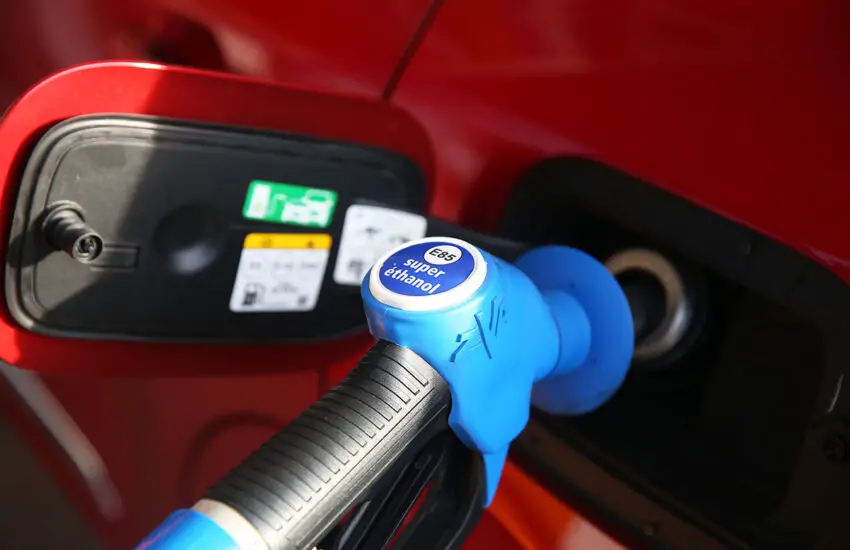
Superethanol E85 is a fuel blend containing between 65% and 85% bioethanol, a renewable resource produced from agricultural products like sugar beets and cereals, with the remainder being traditional unleaded gasoline. Its primary appeal lies in its significantly lower price at the pump and a reduced carbon footprint compared to conventional fossil fuels. However, most standard gasoline vehicles require a specific conversion kit, known as an “ethanol box,” to use this fuel efficiently and safely.

Democratizing Access Through Mass Retail

E.Leclerc’s entry into this market is notable. By leveraging its extensive network of auto service centers, the distributor can offer the conversion service at a competitive price point that challenges specialized installers. This strategy directly targets cost-conscious consumers who are interested in eco-friendlier driving but have been hesitant due to the upfront investment typically required for the vehicle adaptation. The move is expected to accelerate E85 adoption by integrating it into the mainstream automotive service sector.

Considerations for Drivers

While the economic and environmental arguments for E85 are strong, drivers should conduct thorough research. Converting a vehicle involves installing an electronic module that adjusts the engine’s injection parameters to accommodate the different chemical properties of ethanol. It is crucial to ensure the conversion is performed reliably to maintain engine warranty and optimal performance. Furthermore, drivers should verify the availability of E85 pumps in their regular travel areas to fully benefit from the switch.

BMW iX3 and Mercedes GLC Electric: A Market Shift in Motion

Electric Premium SUVs Hit the Accelerator

The landscape of the premium automotive sector is undergoing a rapid transformation. The recent launches of the new BMW iX3 and the all-electric Mercedes-Benz GLC have triggered a market response that has surpassed even the most optimistic industry forecasts. These vehicles, representing the electrified evolution of two legendary model lines, are demonstrating a powerful formula that blends brand heritage with zero-emission innovation.

Beyond Expectations: Capturing Consumer Demand

Initial sales data and dealer reports indicate an unprecedented surge in interest for both German models. This immediate commercial success highlights a pivotal moment where consumer confidence in electric vehicles has matured, particularly in the highly competitive SUV segment. Buyers are no longer viewing electric powertrains as a compromise but as a desirable upgrade, seeking the silent, instant torque and lower running costs without sacrificing the luxury, space, and status associated with brands like BMW and Mercedes-Benz.

The Winning Formula: Evolution Over Revolution

A key factor in this successful launch appears to be the strategic design approach. Both the iX3 and the electric GLC are not ground-up, alien concepts but sophisticated electrified versions of familiar, trusted, and popular platforms. This strategy reduces adoption barriers for loyal customers, offering a seamless transition into electromobility. The models retain the iconic design language, premium interior craftsmanship, and advanced technology features their brands are known for, while integrating state-of-the-art battery systems and efficient electric motors.

Signaling a Broader Industry Trend

The remarkable early performance of these two SUVs sends a clear signal to the entire automotive industry. It validates the market’s readiness for high-quality electric vehicles from established luxury manufacturers. This success is likely to accelerate electrification roadmaps across the premium segment, as competitors analyze the potent mix of brand equity and electric propulsion that has resonated so strongly with consumers, marking a definitive step towards an electric future.

OBD2 Code P149C: Exhaust Gas Recirculation (EGR) Valve Control Circuit High

Understanding the P149C Diagnostic Trouble Code

The OBD2 code P149C is a manufacturer-specific code, often associated with Chrysler, Dodge, Jeep, and Ram vehicles, but it can appear in other makes. It is defined as “Exhaust Gas Recirculation (EGR) Valve Control Circuit High.” This code indicates that the vehicle’s Powertrain Control Module (PCM) has detected an abnormally high voltage signal in the control circuit for the EGR valve. Essentially, the PCM is reading a voltage level that is outside its expected operational range when it attempts to command the EGR valve open or closed. This fault prevents the PCM from properly managing the EGR system, which can lead to drivability issues and increased emissions.

How the EGR System Works

The Exhaust Gas Recirculation (EGR) system is a critical emissions control component. Its primary function is to reduce the formation of nitrogen oxides (NOx) by recirculating a small, metered amount of inert exhaust gas back into the engine’s intake manifold. This lowers the combustion temperature. The EGR valve is the gatekeeper of this process, typically controlled by the PCM via an electrical signal (often a pulse-width modulated, or PWM, signal). The PCM monitors the valve’s position through feedback circuits to ensure it is responding correctly.

The Technical Meaning of “Circuit High”

In automotive electrical diagnostics, a “circuit high” fault (like P149C) means the PCM is seeing a voltage on the control wire that is higher than a predefined threshold—often close to battery voltage (12V) when it should be much lower or varying. This usually points to an “open” condition in the circuit. The high voltage is read because the circuit is not being properly pulled to ground by the PCM’s driver or the EGR valve itself, allowing it to “float” high.

Common Symptoms and Causes of Code P149C

When code P149C is stored, the vehicle may exhibit several symptoms, ranging from subtle to severe. It is crucial to address this code promptly to avoid potential engine damage and ensure your vehicle passes emissions testing.

Primary Symptoms

  • Illuminated Check Engine Light (MIL): The most immediate and common indicator.
  • Reduced Engine Performance: Lack of power, especially under acceleration or load.
  • Rough Idle or Stalling: Unstable engine idle speed or the engine may stall when coming to a stop.
  • Increased Fuel Consumption: The engine may run less efficiently without proper EGR flow.
  • Failed Emissions Test: Elevated NOx emissions are a direct result of a malfunctioning EGR system.
  • Engine Pinging or Knocking: Higher combustion temperatures can cause detonation.

Root Causes of the Fault

The P149C code is primarily an electrical fault. The root causes typically fall into one of the following categories:

  • Faulty EGR Valve: An internal electrical failure (open circuit) in the valve’s solenoid or motor.
  • Damaged Wiring or Connectors: Open circuits, short to power, corroded pins, or broken wires in the EGR valve control harness.
  • Poor Electrical Connections: Loose, corroded, or damaged connectors at the EGR valve or PCM.
  • Blown Fuse: A fuse protecting the EGR valve circuit or the PCM power circuit may be blown.
  • Faulty Powertrain Control Module (PCM): Although less common, a failed internal driver circuit within the PCM can cause this code.

Step-by-Step Diagnostic Procedure for P149C

A systematic approach is key to correctly diagnosing and fixing a P149C code. Always begin with a visual inspection before moving to electrical tests. You will need a digital multimeter (DMM) and a reliable vehicle service manual for wiring diagrams and specifications.

Step 1: Preliminary Visual Inspection

Start with the basics. Inspect the EGR valve, its electrical connector, and the associated wiring harness. Look for obvious signs of damage:

  • Check for carbon buildup or physical damage on the EGR valve.
  • Examine the wiring harness for chafing, burns, or cuts.
  • Inspect the connector for corrosion, bent pins, or signs of overheating.
  • Verify that all related fuses in the power distribution center are intact.

Step 2: Testing the EGR Valve

Disconnect the electrical connector from the EGR valve. Using your multimeter, measure the resistance across the valve’s control terminals (refer to service manual for exact pins and specs). Compare the reading to the manufacturer’s specification. An infinite (OL) or extremely high resistance reading confirms an open circuit inside the valve, necessitating replacement.

Step 3: Checking Wiring and Circuit Integrity

If the valve tests good, the fault lies in the wiring or PCM. With the connector still disconnected from the EGR valve, back-probe the harness connector (vehicle side).

  • Check for Power: One pin should have constant battery voltage (12V) with the ignition ON. This is the power feed.
  • Check the Control Circuit: The control wire (from the PCM) should be tested for a short to power. With the ignition ON and a scan tool commanding the EGR valve, the voltage on this wire should vary. If it is stuck at a constant high voltage (e.g., 12V), it indicates an open circuit or a short to power in that wire.
  • Continuity Test: Check for continuity (low resistance) on the control wire between the EGR connector and the PCM connector. An open circuit (infinite resistance) confirms a broken wire.

Step 4: Verifying PCM Operation

If all wiring checks out, and power and ground are present at the harness, the issue may be a faulty PCM driver. This is a last-resort diagnosis. Before condemning the PCM, double-check all previous steps and consider consulting a professional technician with advanced diagnostic capabilities to perform an active command test and monitor the PCM’s output signal directly.

Repair Solutions and Cost Considerations

Once the faulty component is identified, the repair is typically straightforward. The complexity and cost depend on the root cause.

Common Repairs

  • EGR Valve Replacement: The most common fix. Costs range from $150 to $500+ for the part, with labor adding $100-$200.
  • Wiring Repair: Splicing and soldering a broken wire or repairing a connector is relatively inexpensive ($50-$150 for labor).
  • Fuse Replacement: A minimal cost, but it’s vital to investigate why the fuse blew (often a short circuit).
  • PCM Replacement/Reprogramming: The most expensive option, ranging from $500 to over $1000, including programming.

Post-Repair Protocol

After completing the repair, clear the P149C code with your scan tool. Take the vehicle for a test drive that includes various engine loads and speeds to allow the PCM to run its monitor tests. Verify that the Check Engine Light does not return and that all drivability symptoms are resolved. A final scan to confirm no pending codes is recommended.

2025 EU Car CO2 Targets: Was Rule Flexibility a Mistake?

The 2025 Automotive Emissions Crossroads

The year 2025 represented a pivotal moment for the European automotive industry, marking a significant tightening of mandatory CO2 emission targets for new vehicle fleets. In anticipation of this challenge, regulators granted manufacturers notable flexibility in how these targets could be met. This decision, framed as a necessary adaptation to the practical hurdles of electrification, has now been tested against the published results. The central question remains: was this regulatory leniency truly justified, or did it delay vital progress?

Analyzing the Impact of Regulatory Flexibility

The flexibility mechanisms included provisions such as extended phase-in periods and adjusted compliance calculations for certain vehicle categories. Proponents argued that this breathing room was essential for preserving industrial competitiveness and managing the complex supply chain transition. Initial analysis of the 2025 fleet data reveals a mixed picture. While several manufacturers met their adjusted targets, overall sector progress toward the long-term climate goals appears less aggressive than initially projected.

Weighing Short-Term Gain Against Long-Term Necessity

Critics contend that the softened rules reduced the immediate pressure to innovate and accelerate the rollout of zero-emission vehicles. The availability of compliance shortcuts may have allowed some brands to rely longer on optimizing traditional combustion engines rather than fully committing to electric powertrains. This creates a strategic dilemma: did the flexibility ensure a stable transition, or did it inadvertently slow down the pace of environmental innovation needed to meet even more stringent 2030 benchmarks?

The final assessment suggests the 2025 flexibility was a double-edged sword. It likely prevented severe financial penalties for some manufacturers during a period of global economic uncertainty. However, the data indicates it may have also diluted the intended market-transforming effect of the regulations. The legacy of this decision will be measured by the industry’s trajectory in the subsequent years, as the window for achieving climate targets continues to narrow.

Tesla’s FSD Claims Draw Regulatory Scrutiny in China

China Challenges Tesla’s Self-Driving Promises

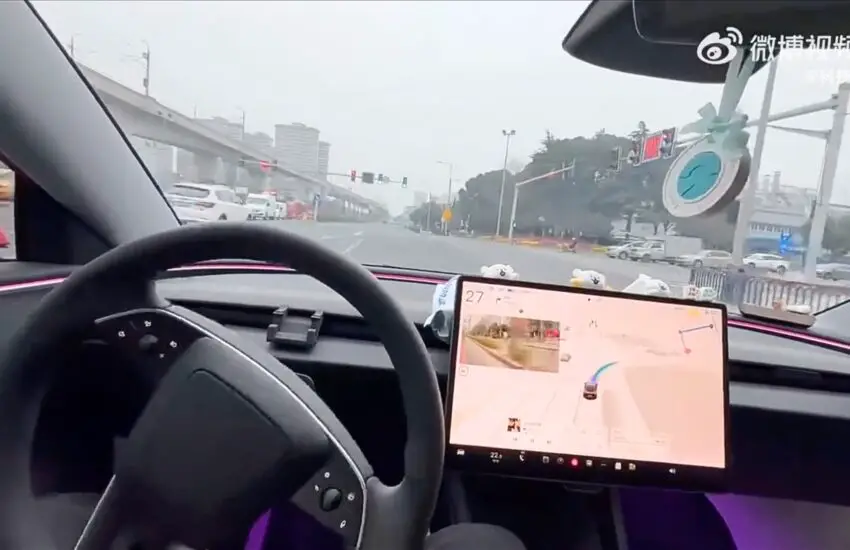
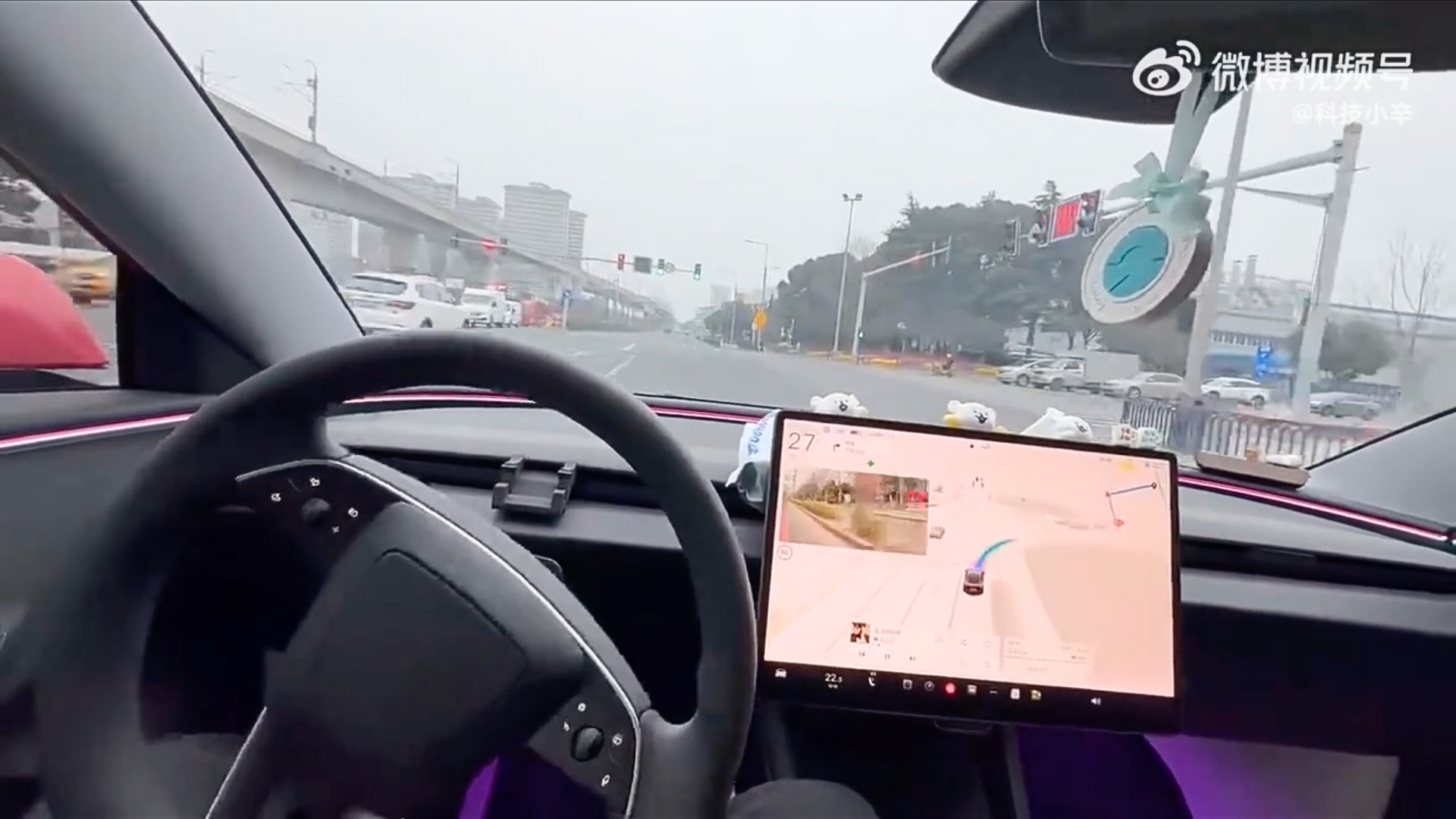
Tesla car with FSD visualization on a city street in China

Elon Musk’s ambitious statements regarding Tesla’s Full Self-Driving (FSD) technology have once again attracted regulatory attention, this time from one of the company’s most critical markets. Chinese authorities have issued a formal warning to Tesla concerning the portrayal and promotion of its autonomous driving capabilities.

Regulatory Pushback on Marketing Language

The core of the issue lies in the potential disconnect between the name “Full Self-Driving” and the system’s actual, supervised capabilities. Regulators are concerned that such terminology could mislead consumers about the product’s true nature, which requires constant driver supervision. This move by China follows similar actions taken by regulatory bodies in other regions, including the Netherlands, highlighting a growing global consensus on the need for clearer communication in the autonomous vehicle sector.

Implications for Tesla’s Strategic Market

China represents Tesla’s largest market outside the United States and a key battleground for electric vehicle dominance. The regulatory warning underscores the delicate balance the company must strike between promoting technological innovation and adhering to local advertising standards and safety expectations. How Tesla adjusts its messaging in response could significantly impact consumer perception and regulatory cooperation in the region.

This development occurs as Tesla seeks to expand the availability and functionality of its FSD system worldwide. The company has been actively collecting data in China to train its algorithms for local driving conditions. The regulatory intervention serves as a reminder that technological advancement must be paired with transparent and responsible marketing to build public trust and ensure a smooth path toward more advanced automation.

OBD2 Code P149B MINI: A Complete Technical Guide to the EGR Valve Position Sensor

Understanding OBD2 Code P149B in Your MINI

When your MINI’s check engine light illuminates and a scan tool reveals the diagnostic trouble code (DTC) P149B, it indicates a specific issue within the Exhaust Gas Recirculation (EGR) system. Technically defined as “EGR Valve Position Sensor ‘B’ Circuit High,” this code is common across many BMW and MINI models, including various MINI Cooper generations (R50, R53, R56, F56) equipped with gasoline engines. The code signifies that the Engine Control Module (ECM or DME) has detected a voltage signal from the EGR valve’s secondary position sensor (Sensor ‘B’) that is consistently outside the expected high range. This guide provides a deep technical dive into the P149B code, its implications, and a structured approach to diagnosis and repair.

What is the EGR Valve and Its Position Sensor?

The EGR system is a critical emissions control component designed to reduce nitrogen oxide (NOx) emissions. It works by recirculating a small, metered amount of inert exhaust gas back into the engine’s intake manifold. This lowers combustion temperatures, inhibiting NOx formation. The modern EGR valve is typically an electrically-operated actuator with an integrated position sensor (or often two for redundancy and accuracy—Sensor ‘A’ and Sensor ‘B’). This sensor provides real-time feedback to the ECM on the valve’s pintle position, allowing for precise control. Code P149B specifically faults the circuit for the secondary sensor (‘B’), indicating a signal voltage that is too high, suggesting an open circuit, short to power, or a failed sensor.

Symptoms and Common Causes of P149B

Ignoring a P149B code can lead to drivability issues and increased emissions. The symptoms are often noticeable, though sometimes subtle in early stages.

Primary Symptoms of a P149B Fault

  • Illuminated Check Engine Light (MIL): The most immediate and consistent indicator.
  • Reduced Engine Performance: The ECM may enter a limp mode, limiting power and throttle response to protect the engine.
  • Poor Fuel Economy: Incorrect EGR flow can disrupt optimal air-fuel mixture calculations.
  • Rough Idle or Stalling: Especially when the EGR valve is commanded to operate at idle.
  • Failed Emissions Test: Due to potentially elevated NOx levels.

Most Frequent Causes of Code P149B

  • Faulty EGR Valve Position Sensor: The internal potentiometer or Hall-effect sensor within the EGR valve assembly has failed.
  • Damaged Wiring or Connectors: Open circuits, frayed wires, or corrosion in the sensor’s harness (especially the signal or reference voltage wires).
  • Poor Electrical Connections: A loose, corroded, or oxidized connector at the EGR valve or ECM.
  • Short to Power in the Circuit: The sensor signal wire may be shorted to a 12V source, sending a permanently high signal.
  • Failed Engine Control Module (ECM/DME): A rare but possible cause where the internal circuitry for processing the sensor signal is faulty.

Step-by-Step Diagnostic Procedure for P149B

A methodical diagnostic approach is essential to avoid unnecessary part replacement. You will need a quality OBD2 scanner, a digital multimeter (DMM), and basic hand tools.

Step 1: Preliminary Checks and Code Verification

Begin by using your scan tool to confirm the presence of P149B. Clear the code and perform a test drive. If P149B returns immediately or under specific conditions (like deceleration), the fault is active. Also, check for any related codes, such as P149A (Sensor ‘A’ Circuit) or codes related to EGR flow, which can provide additional clues. Perform a visual inspection of the EGR valve, its wiring harness, and electrical connector for obvious damage, carbon buildup, or corrosion.

Step 2: Electrical Circuit Testing with a Multimeter

This is the core of the diagnosis. Locate the wiring diagram for your specific MINI model. Disconnect the electrical connector from the EGR valve.

  • Check Power and Ground: With the ignition ON (engine off), probe the connector terminals. You should find one pin with 5V reference voltage (from the ECM) and another with a clean ground (0 ohms to chassis).
  • Check Signal Circuit for Short/Open: Measure the resistance of the signal wire (for Sensor ‘B’) back to the corresponding ECM pin. It should show very low resistance (less than 5 ohms). Check for a short to power by probing the signal wire for voltage with the connector disconnected—there should be none.

If all circuit tests are good, the fault likely lies within the EGR valve assembly itself.

Step 3: Testing the EGR Valve Assembly

With the valve removed (may require cleaning heavy carbon deposits first), you can test the position sensor. Using the DMM in resistance (ohms) mode, probe the terminals corresponding to Sensor ‘B’ (refer to a service manual). Slowly move the valve pintle by hand. You should observe a smooth, continuous change in resistance without any sudden spikes or drops to infinity (open). An erratic or open reading confirms a failed internal position sensor.

Repair Procedures and Final Verification

Once the root cause is identified, the repair path becomes clear.

Repair 1: Addressing Wiring Harness Issues

If the fault is in the wiring, repair it using proper solder and heat-shrink tubing—never use twist connectors. Ensure the repair is sealed from moisture. Clean all electrical contacts with electrical contact cleaner before reconnection.

Repair 2: Replacing the EGR Valve

If the internal sensor is faulty, the entire EGR valve assembly typically must be replaced as a unit. Important: Use a high-quality OEM or reputable aftermarket part. After installation:

  • Clear all stored fault codes with your scan tool.
  • Perform an ECM adaptation reset. This often requires a more advanced scanner to reset the learned values for the EGR valve, ensuring proper calibration.
  • Complete a full drive cycle, including various engine loads and speeds, to allow the ECM to run its self-tests.

Verify the repair by confirming the check engine light remains off and that code P149B does not return.

Preventative Maintenance Tips

While sensor failure can be sudden, keeping the EGR system clean can prevent related issues. Periodically using a quality fuel system cleaner can help reduce carbon buildup. If you experience symptoms of a clogged EGR passage (common in high-mileage MINIs), consider having the intake manifold and EGR ports professionally cleaned during service.

Plug-in vs Regular Hybrid: Real-World Fuel Efficiency Compared

Plug-in vs Regular Hybrid: Which Truly Saves More Fuel?

The debate between plug-in hybrid (PHEV) and standard hybrid (HEV) vehicles often centers on real-world fuel consumption. A common assumption is that a plug-in hybrid with a depleted battery becomes less efficient than its non-plug-in counterpart. But what does a practical comparison actually reveal?

Understanding the Core Technology Difference

The fundamental distinction lies in battery capacity and usage. A standard hybrid uses a small battery that is charged solely by the engine and regenerative braking. It cannot be plugged in and primarily uses its electric motor to assist the gasoline engine, improving efficiency in stop-and-go traffic. A plug-in hybrid features a much larger battery that can be charged from an external source, allowing for significant all-electric driving range, often between 30 to 50 miles, before the gasoline engine engages.

Real-World Consumption: Context is Key

Fuel consumption is highly dependent on driving habits and charging routine. For a driver with short daily commutes who can charge nightly, a PHEV can operate predominantly on electricity, resulting in exceptionally low fuel use—potentially just a few gallons per month. The standard hybrid, however, will consistently use gasoline, albeit efficiently.

On long highway journeys where the battery is depleted, the PHEV operates as a heavier hybrid vehicle. This can lead to consumption figures that may be slightly higher than a standard hybrid designed from the ground up for efficiency, but the gap is often smaller than presumed thanks to advanced energy management systems.

Making the Right Choice for Your Needs

Your typical driving pattern dictates the optimal choice. If you have reliable access to charging and primarily take short trips, a plug-in hybrid offers the lowest possible fuel consumption. For those without consistent charging options or who frequently undertake long distances, a standard hybrid provides a simpler, consistently efficient solution without the need to plug in. The most fuel-efficient vehicle is ultimately the one whose technology aligns with your lifestyle.

BMW P149B Code: Exhaust Gas Recirculation (EGR) Valve Control Circuit High

Understanding the BMW P149B Fault Code

The OBD2 diagnostic trouble code (DTC) P149B is a manufacturer-specific code primarily associated with BMW diesel engines, particularly those equipped with the N47 and similar power units. In generic terms, P149B is defined as “Exhaust Gas Recirculation (EGR) Valve Control Circuit High.” This code is set by the vehicle’s Diesel Digital Electronics (DDE) control module when it detects an abnormally high voltage or electrical resistance in the circuit controlling the EGR valve. Unlike a mechanical blockage, this fault points directly to an electrical issue within the valve’s control system, preventing the DDE from properly modulating exhaust gas flow for optimal emissions and performance.

Technical Role of the EGR Valve in BMW Diesel Engines

The Exhaust Gas Recirculation (EGR) system is a critical emissions control component. It works by recirculating a measured amount of inert exhaust gas back into the engine’s intake manifold. This process lowers peak combustion temperatures, which in turn significantly reduces the formation of nitrogen oxides (NOx)—a key pollutant. The EGR valve is the electro-pneumatic or electric actuator that precisely controls this flow. The DDE module sends a pulse-width modulated (PWM) signal to the valve, commanding it to open or close based on real-time engine load, speed, and temperature data.

What “Control Circuit High” Specifically Means

The “High” in the code description refers to the electrical signal state. The DDE monitors the circuit for expected voltage values. A “High” fault indicates the control circuit is reading a voltage higher than the predefined threshold for a given command, or it detects an open circuit (infinite resistance). This suggests the control signal from the DDE cannot properly reach or influence the EGR valve actuator. Common underlying issues include:

  • An open circuit in the wiring harness (broken wire).
  • Excessively high resistance due to corrosion at connectors.
  • A failed EGR valve actuator (internal electrical fault).
  • In rare cases, a fault within the DDE control module itself.

Symptoms and Effects of P149B on Your BMW

When code P149B is stored, the DDE will typically illuminate the Malfunction Indicator Lamp (MIL) or “Check Engine” light on your dashboard. Since the EGR system is integral to engine management, several driveability symptoms may accompany this code, ranging from subtle to severe depending on the engine’s default “limp-home” strategy.

Primary Driver Symptoms

  • Illuminated Check Engine Light: The most immediate and common sign.
  • Reduced Engine Power / Limp Mode: The DDE may limit engine power and turbocharger boost to protect the engine from potential damage caused by incorrect EGR flow.
  • Poor Fuel Economy: With the EGR system inoperative, combustion efficiency can suffer.
  • Rough Idle or Unstable RPM: The engine may struggle to maintain a smooth idle due to incorrect air/fuel mixture.
  • Increased Emissions: You may fail an emissions test due to elevated NOx levels.

Long-Term Engine Implications

Ignoring a P149B code can lead to secondary issues. A stuck-open EGR valve (a possible related failure) can cause excessive soot accumulation in the intake manifold and throttle body, leading to further power loss. Furthermore, the engine constantly running in a fault-induced state can increase stress on other components. It is a fault that requires prompt diagnosis to restore optimal performance and emissions compliance.

Step-by-Step Diagnostic Procedure for P149B

Proper diagnosis is essential to avoid unnecessary part replacement. Follow this logical sequence to pinpoint the root cause of the high circuit condition.

Step 1: Preliminary Checks and Code Verification

Begin by using a professional-grade OBD2 scanner capable of reading BMW-specific codes. Confirm the presence of P149B and check for any accompanying codes (like those for the throttle valve or mass airflow sensor, which share the intake tract). Clear the code and perform a test drive to see if it returns immediately or under specific conditions (e.g., during acceleration). This helps determine if it’s a hard or intermittent fault.

Step 2: Visual Inspection of Wiring and Connectors

With the engine off and the key removed, locate the EGR valve (typically mounted on or near the intake manifold). Carefully inspect:

  • The electrical connector for security, bent pins, or signs of moisture/corrosion.
  • The wiring harness leading to the valve for any chafing, cuts, or melting, especially near hot exhaust components.
  • The vacuum lines (if applicable) for cracks or disconnections.

Disconnect the connector and check for green/white corrosion on the terminals.

Step 3: Electrical Testing with a Multimeter

This is the core of the diagnosis. You will need a digital multimeter (DMM).

  • Resistance Test (Ohms): Measure the resistance across the EGR valve actuator terminals (refer to a repair manual for specific values, but typically expect 5-20 ohms). A reading of “OL” (Open Line) or extremely high resistance confirms a failed valve.
  • Continuity & Voltage Drop Test: With the wiring harness disconnected from both the DDE and EGR valve, check for continuity (near 0 ohms) on each control wire. Also, check for shorts to power or ground. With the engine running, back-probe the connector to check for the commanded PWM signal from the DDE using the DMM’s frequency or duty cycle function.

Step 4: Component and Module Testing

If the wiring checks out, the fault likely lies with the component or control module.

  • EGR Valve Test: Apply a controlled power source (using a power probe or jumper wires, cautiously) to the valve terminals to see if it actuates. Warning: Consult service data for proper procedure to avoid damage.
  • DDE Output Test: Using a capable scanner, perform an output test to command the EGR valve to open and close. Listen for an audible click and observe live data for commanded vs. actual EGR position.

Repair Solutions and Replacement Guide

Once the faulty component is identified, proceed with the appropriate repair. Always use quality OEM or reputable aftermarket parts for longevity.

Repair 1: Fixing Wiring Harness Issues

If damaged wires are found, they must be repaired properly. Do not simply use electrical tape. The correct method involves:

  • Cutting out the damaged section.
  • Soldering in a new piece of gauge-matched, automotive-grade wire.
  • Sealing the connection with adhesive-lined heat shrink tubing for a waterproof, durable repair.
  • Securing the harness away from heat and moving parts.

Clean any corroded connector terminals with electrical contact cleaner.

Repair 2: Replacing the EGR Valve

If the valve fails the electrical or functional tests, replacement is necessary. The process generally involves:

  • Disconnecting the battery negative terminal.
  • Removing the electrical connector and any attached vacuum/coolant lines (note their positions).
  • Unbolting the valve from the intake manifold or EGR cooler (often 2-4 bolts).
  • Thoroughly cleaning the mating surface on the manifold before installing the new valve with a new gasket.
  • Reconnecting all lines and the electrical connector.

After replacement, clear all fault codes, perform an adaptation reset for the EGR valve using a scanner, and conduct a test drive.

Clearing the Code and Final Verification

After the repair, use your OBD2 scanner to clear the persistent P149B code from the DDE’s memory. Drive the vehicle through various load conditions (city, highway) for at least one full drive cycle. Use the scanner’s live data function to monitor the “EGR Valve Position” parameter; it should now respond smoothly to driving demands without setting a new fault. This confirms a successful repair.

BYD Seal 6 GT: A Sporty Electric Shift for the EV Giant

BYD Shifts Gears with a New Performance EV

Chinese automotive powerhouse BYD, renowned for its practical and family-friendly electric and plug-in hybrid vehicles, is signaling a bold new direction. While its current lineup predominantly features sensible sedans, estates, and SUVs, a more aggressive silhouette is emerging on the horizon. The upcoming BYD Seal 6 GT is poised to inject a potent dose of performance and excitement into the brand’s portfolio, challenging the perception of BYD as solely a maker of utilitarian EVs.

Design and Performance Promises

The Seal 6 GT, based on recent previews, breaks from traditional BYD design language. It features a dramatically sloping fastback roofline, a pronounced rear diffuser, and a distinctive rear light bar that suggests a focus on aerodynamics and sporty aesthetics. This design evolution hints at BYD’s ambition to compete in the growing performance electric segment, appealing to drivers seeking dynamism alongside zero-emission motoring. While full technical specifications remain under wraps, the “GT” moniker and aggressive styling strongly suggest enhanced power outputs and handling capabilities compared to the standard Seal sedan.

Strategic Expansion in the EV Market

The development of the Seal 6 GT represents a strategic expansion for BYD. Having secured a dominant position in the mass-market EV sector, the company is now targeting enthusiasts and a more emotionally-driven customer base. This move mirrors a broader industry trend where electrification is expanding into all automotive niches, including performance cars. By launching a model like the Seal 6 GT, BYD not only diversifies its own appeal but also directly challenges established sporty offerings from other global manufacturers, both electric and combustion-engine.

This model could serve as a technological showcase, potentially featuring advanced battery thermal management for sustained performance and a sophisticated dual-motor all-wheel-drive system. The arrival of the BYD Seal 6 GT marks a significant moment, proving that the future of electric performance will be fiercely contested by new and established players alike.

How a NASA Engineer’s Bike Ride Changed Trucking Forever

The Accidental Discovery That Reshaped an Industry

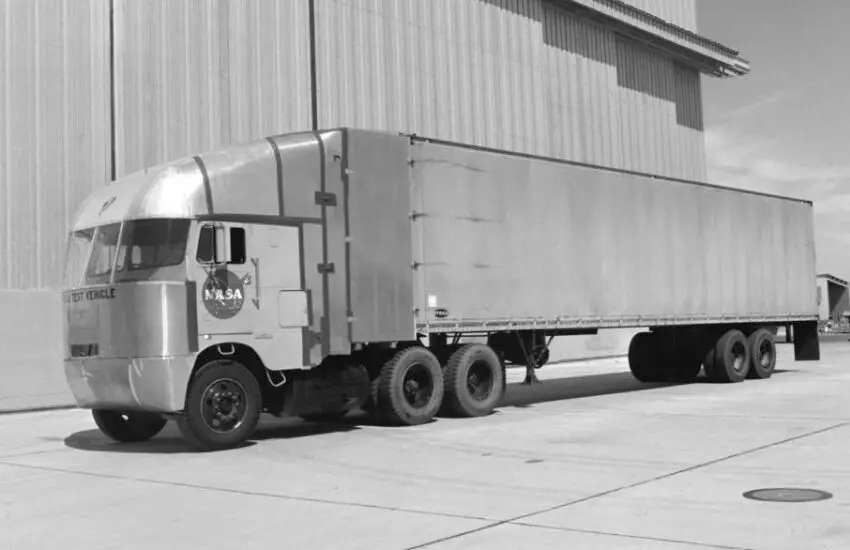
Innovation often strikes in the most mundane moments. In 1973, NASA aerospace engineer Edwin J. Saltzman was cycling to work at the Dryden Flight Research Center when a routine encounter with a passing truck led to a revolutionary insight. He felt the powerful aerodynamic wake first push him toward the shoulder, then pull him dangerously toward the vehicle. This personal experience with drag and turbulence sparked a question: if the effect was this strong on a bicycle, how much energy were trucks wasting pushing air aside on the highway?

From Wind Tunnels to 18-Wheelers

Saltzman brought his curiosity back to the NASA facility. Using the agency’s advanced wind tunnels and aerodynamic expertise—typically reserved for spacecraft and high-performance aircraft—he began testing scale models of tractor-trailers. His research quantified the enormous drag created by the blunt, boxy front of a standard truck cab. He discovered that at highway speeds, over 50% of a truck’s engine power was used just to overcome air resistance. This inefficiency translated directly into massive fuel costs and limited range.

The Birth of the “Aero Truck”

Saltzman’s team developed a simple yet transformative solution: a streamlined, sloping fairing for the roof of the truck cab. This device smoothed the airflow over the top of the cab, guiding it cleanly over the tall, square cargo trailer behind it instead of creating a turbulent, drag-inducing wall of air. The results were staggering. Testing proved that this aerodynamic add-on could reduce drag by up to 25%, leading to dramatic fuel savings of around 15% for long-haul trucks.

A Legacy of Efficiency

This serendipitous discovery, born from a bicycle commute, fundamentally transformed the transportation industry. The basic aerodynamic principles identified by Saltzman became standard. Modern trucks feature integrated, streamlined designs, side skirts, and boat tails as direct descendants of that initial NASA research. The cumulative impact is monumental, saving the global trucking industry billions of gallons of fuel, reducing operating costs, and significantly cutting carbon emissions. It stands as a powerful testament to how cross-disciplinary thinking can solve problems far beyond its original scope.