P2737 – Pressure Control Solenoid F Control Circuit Range/Performance

How severe is this DTC?

The severity of this code typically starts as moderate, but it can escalate to a more severe level quickly when not corrected in a timely manner. In circumstances that cause transmission clunking in the pinion, permanent internal damage can occur, making the issue serious.

What are some of the symptoms of the code?

Symptoms of a P2737 trouble code may include:

  • Increased fuel consumption
  • Check engine light activated
  • Transmission overheating
  • Transmission slipping during gear shifts
  • Transmission shifting harshly (gear clunking)
  • Symptoms that may resemble misfires
  • Transmission put into limp mode by the PCM

What are some common causes of the code?

Causes of this P2737 transmission code may include:

  • Faulty pressure control solenoid
  • Contaminated transmission fluid
  • Restricted transmission filter
  • Faulty transmission pump
  • Faulty transmission valve body
  • Blocked hydraulic passages
  • Corroded or damaged connector
  • Faulty or damaged wiring
  • Faulty PCM

What are the troubleshooting steps for P2737?

Before starting the troubleshooting process for any malfunction, you should research the technical service bulletins (TSBs) for the specific vehicle by year, model, and transmission. In some situations, this can save you significant time in the long run by pointing you in the right direction.

Fluid and wiring inspections

The first step is to check the fluid level and examine the condition of the fluid for contamination. Before changing the fluid, you should (if possible) check the vehicle records to verify when the filter and fluid were last changed.

A detailed visual inspection to check the condition of the wiring for obvious defects is next. Check the connectors and connections for security, corrosion, and damaged pins. This should include all wiring and connectors for the transmission pressure control solenoids, transmission pump, and PCM. Depending on the specific configuration, the transmission pump may be electrically or mechanically driven.

Advanced steps

Advanced steps always become very vehicle-specific and require appropriate advanced equipment to operate accurately. These procedures require a digital multimeter and the vehicle-specific technical references. You should always obtain the troubleshooting data specific to your vehicle before proceeding with advanced steps. Voltage requirements vary depending on the specific vehicle model. Fluid pressure requirements may also vary depending on the transmission design and configuration.

Continuity checks

Unless otherwise indicated in the technical data, normal readings for wiring and connections should be 0 ohms of resistance. Continuity checks should always be performed with the power disconnected from the circuit to avoid shorting the circuit and causing further damage. Resistance or lack of continuity is an indication of faulty wiring that is open or shorted and must be repaired or replaced.

What are the common repairs for this code?

  • Replacing fluid and filter
  • Replacing the faulty pressure control solenoid
  • Repairing or replacing a faulty transmission pump
  • Repairing or replacing the faulty transmission valve body
  • Flushing the transmission to clean passages
  • Cleaning corrosion from connectors
  • Repairing or replacing faulty wiring
  • Flashing or replacing faulty PCM

A possible misdiagnosis may include:

  • Engine misfire issue
  • Transmission pump malfunction
  • Internal transmission problem
  • Transmission issue

Hopefully, the information contained in this article will help you resolve the issue with your P2737 pressure control solenoid diagnostic trouble code(s). This article is strictly for informational purposes, and the technical data and service bulletins specific to your vehicle will always take precedence.

P2736 Pressure Control Solenoid F Control Circuit / Open

How severe is this DTC?

The severity of this code typically starts as moderate, but it can escalate to a more severe level quickly when not corrected in a timely manner. In circumstances that cause transmission clunking in the pinion, permanent internal damage may occur, making the issue serious.

What are some symptoms of the code?

Symptoms of a P2736 trouble code may include:

  • Increased fuel consumption
  • Check engine light activated
  • Transmission overheating
  • Transmission slipping during gear shifts
  • Transmission shifts harshly (gear clunking)
  • Symptoms that may resemble misfires
  • Transmission put into limp mode by the PCM

What are some common causes of the code?

Causes of this P2736 transmission code may include:

  • Faulty pressure control solenoid
  • Contaminated transmission fluid
  • Restricted transmission filter
  • Faulty transmission pump
  • Faulty transmission valve body
  • Blocked hydraulic passages
  • Corroded or damaged connector
  • Faulty or damaged wiring
  • Faulty PCM

What are the troubleshooting steps for P2736?

Before starting the troubleshooting process for any malfunction, you should research technical service bulletins (TSBs) for the specific vehicle by year, model, and transmission. In some situations, this can save you significant time in the long run by pointing you in the right direction.

Fluid and wiring inspections

The first step is to check the fluid level and examine the condition of the fluid for contamination. Before changing the fluid, you should (if possible) check the vehicle records to verify when the filter and fluid were last changed.

A detailed visual inspection to check the condition of the wiring for obvious defects is next. Check connectors and connections for security, corrosion, and damaged pins. This should include all wiring and connectors for the transmission pressure control solenoids, transmission pump, and PCM. Depending on the specific configuration, the transmission pump may be electrically or mechanically driven.

Advanced steps

Advanced steps always become very vehicle-specific and require appropriate advanced equipment to operate accurately. These procedures require a digital multimeter and vehicle-specific technical references. You should always obtain troubleshooting data specific to your vehicle before proceeding with advanced steps. Voltage requirements vary depending on the specific vehicle model. Fluid pressure requirements may also vary depending on the transmission design and configuration.

Continuity checks

Unless otherwise indicated in the technical data, normal readings for wiring and connections should be 0 ohms of resistance. Continuity checks should always be performed with the power disconnected from the circuit to avoid short-circuiting and causing further damage. Resistance or lack of continuity indicates faulty wiring that is open or shorted and must be repaired or replaced.

What are the common repairs for this code?

  • Replacing fluid and filter
  • Replacing faulty pressure control solenoid
  • Repairing or replacing faulty transmission pump
  • Repairing or replacing faulty transmission valve body
  • Flushing transmission to clean passages
  • Cleaning corrosion from connectors
  • Repairing or replacing faulty wiring
  • Flashing or replacing faulty PCM

Possible misdiagnosis may include:

  • Engine misfire issue
  • Transmission pump malfunction
  • Internal transmission problem
  • Transmission problem

Hopefully, the information in this article will help you resolve the issue with your P2736 pressure control solenoid diagnostic trouble code(s). This article is strictly for informational purposes, and the technical data and service bulletins specific to your vehicle will always take precedence.
P273A – Transmission Friction Element “G” Apply Time Range/Performance

P273A Possible Causes

  • Low tire air pressure
  • Damaged steering gear boot
  • Contaminated steering gear/rack
  • Inner tie rods
  • Internal steering failure

How to Fix Code P273A

Check the “Possible Causes” listed above. Visually inspect the wiring harness and related connectors. Check for damaged components and look for broken, bent, pushed out, or corroded connector pins.

Possible Symptoms

Check Engine Light on (or Service Engine Soon warning light)

P273A Meaning

The Power Steering Control Module (PSCM) will monitor the amount of force required to assist in steering the vehicle when the ignition is on and PSCM supply voltage is greater than 6 volts, all other Electric Power Assist Steering (EPAS) sensors are functioning properly and the EPAS system is providing assistance.

P273B – Transmission Friction Element ‘H’ Apply Time Range / Performance

P273B Possible Causes

  • Low tire air pressure
  • Damaged steering gear bellows boot
  • Contaminated gear/rack
  • Inner tie rods
  • Internal steering failure

How to Fix Code P273B

Check the “Possible Causes” listed above. Visually inspect the wiring harness and related connectors. Check for damaged components and look for broken, bent, pushed out, or corroded connector pins.

Possible Symptoms

Check Engine Light illuminated (or Service Engine Soon warning light)

P273B Meaning

The Power Steering Control Module (PSCM) will monitor the amount of force required to assist in vehicle steering when the ignition is on and PSCM supply voltage is above 6 volts, all other Electric Power Assist Steering (EPAS) sensors are functioning properly and the EPAS gear is providing assistance.

P2744 Transmission Fluid Temperature Sensor B Circuit Intermittent

Code Severity and Symptoms

The severity of this code is moderate to severe. In some cases, this code may indicate a transmission problem. It’s a good idea to address this code as soon as possible.

Symptoms of a P2744 engine code may include:

  • Check engine light
  • Poor torque converter clutch operation
  • Hard or delayed shifts
  • Vehicle stuck in limp mode

Causes

Causes of this fault code may include:

  • Faulty transmission fluid temperature sensor
  • Transmission problems
  • Wiring issues
  • Faulty PCM

Diagnostic and Repair Procedures

Start by visually inspecting the transmission fluid temperature sensor and its corresponding wiring. Look for loose connections, damaged wiring, etc. If damage is detected, repair as needed, clear the code, and see if it returns. Then check technical service bulletins (TSBs) regarding the issue. If nothing is found, you’ll need to proceed with step-by-step system diagnosis.

The following is a generalized procedure, as tests for this code vary by vehicle. To accurately test the system, you’ll need to refer to the manufacturer’s diagnostic flowchart.

Perform Preliminary Circuit Tests

Use a scan tool to monitor the transmission temperature sensor data parameter. Disconnect the TFT sensor; the scan tool value should drop to a very low value. Then connect a jumper between the terminals. If the scan tool now displays a very high temperature, the connections are solid and the ECM can recognize the input. This means the problem most likely appears to be the sensor and not a circuit or PCM issue.

Test the Sensor

Unplug the transmission fluid temperature sensor connector. Then measure the resistance between the two sensor terminals using a digital multimeter set to ohms. Start the engine and watch the meter value; the values should decrease smoothly as the engine warms up (check the engine temperature gauge on the dashboard to ensure the engine reaches operating temperature). If the engine temperature increases but the TFT resistance does not decrease, the sensor is faulty and needs to be replaced.

Check the Circuit

Check the reference voltage side of the circuit: ignition on, use a digital multimeter set to volts to check for a 5-volt reference from the PCM to one of the two transmission fluid temperature sensor terminals. If no reference signal is present, connect the meter to ohms (ignition off) between the reference voltage pin on the TFT and the reference voltage pin on the PCM. If the meter reads out of limits (OL), there is an open circuit between the PCM and the sensor that will need to be located and repaired. If the meter reads a numerical value, there is continuity.

If everything is okay up to this point, you’ll want to verify that there are 5 volts coming from the PCM at the reference voltage terminal. If there is no 5-volt reference from the PCM, the PCM is likely faulty.

Check the Ground Side of the Circuit

Connect the meter set to ohms (ignition off) between the ground terminal of the transmission fluid temperature sensor and the ground terminal of the PCM. If the meter reads out of limits (OL), there is an open circuit between the PCM and the sensor that will need to be located and repaired. If the meter reads a numerical value, there is continuity. Finally, verify that the PCM has a good ground by attaching one meter lead to the PCM ground terminal and the other to chassis ground. Again, if the meter reads out of limits (OL), there is an open circuit between the PCM and ground that will need to be located and repaired.

If everything in the circuit checks out, there may be a problem with the transmission. This is especially true if transmission fluid temperature codes are set along with other transmission codes.

P2743 Transmission Fluid Temperature Sensor B Circuit High Input

Code Severity and Symptoms

The severity of this code is moderate to severe. In some cases, this code may indicate a transmission problem. It’s a good idea to address this code as soon as possible.

Symptoms of a P2743 engine code may include:

  • Check engine light
  • Poor torque converter clutch operation
  • Hard or delayed shifts
  • Vehicle stuck in limp mode

Causes

Causes of this fault code may include:

  • Faulty transmission fluid temperature sensor
  • Transmission problems
  • Wiring issues
  • Faulty PCM

Diagnostic and Repair Procedures

Start by visually inspecting the transmission fluid temperature sensor and its corresponding wiring. Look for loose connections, damaged wiring, etc. If damage is detected, repair as needed, clear the code, and see if it returns. Then check technical service bulletins (TSBs) regarding the issue. If nothing is found, you’ll need to proceed with step-by-step system diagnosis.

The following is a generalized procedure, as tests for this code vary by vehicle. To accurately test the system, you’ll need to refer to the manufacturer’s diagnostic flowchart.

Perform Preliminary Circuit Tests

Use a scan tool to monitor the transmission temperature sensor data parameter. Disconnect the TFT sensor; the scan tool value should drop to a very low value. Then connect a jumper between the terminals. If the scan tool now displays a very high temperature, the connections are solid and the ECM can recognize the input. This means the problem most likely lies with the sensor rather than a circuit or PCM issue.

Test the Sensor

Disconnect the transmission fluid temperature sensor connector. Then measure the resistance between the two sensor terminals using a digital multimeter set to ohms. Start the engine and watch the meter value; the values should decrease smoothly as the engine warms up (check the engine temperature gauge on the dashboard to ensure the engine reaches operating temperature). If the engine temperature increases but the TFT resistance doesn’t decrease, the sensor is faulty and needs to be replaced.

Check the Circuit

Check the reference voltage side of the circuit: ignition on, use a digital multimeter set to volts to check for a 5-volt reference from the PCM to one of the two transmission fluid temperature sensor terminals. If no reference signal is present, connect the meter to ohms (ignition off) between the reference voltage pin on the TFT and the reference voltage pin on the PCM. If the meter reads out of limits (OL), there’s an open circuit between the PCM and sensor that will need to be located and repaired. If the meter reads a numerical value, there’s continuity.

If everything checks out up to this point, you’ll want to verify that there are 5 volts coming from the PCM at the reference voltage terminal. If there’s no 5-volt reference from the PCM, the PCM is likely faulty.

Check the Ground Side of the Circuit

Connect the meter set to ohms (ignition off) between the ground terminal of the transmission fluid temperature sensor and the ground terminal of the PCM. If the meter reads out of limits (OL), there’s an open circuit between the PCM and sensor that will need to be located and repaired. If the meter reads a numerical value, there’s continuity. Finally, verify that the PCM has a good ground by attaching one meter lead to the PCM ground terminal and the other to chassis ground. Again, if the meter reads out of limits (OL), there’s an open circuit between the PCM and ground that will need to be located and repaired.

If everything in the circuit checks out, there may be a problem with the transmission. This is especially true if transmission fluid temperature codes are set along with other transmission codes.

P2742 Transmission Fluid Temperature Sensor Circuit Low Input

Code Severity and Symptoms

The severity of this code is moderate to severe. In some cases, this code may indicate a transmission problem. It’s a good idea to address this code as soon as possible.

Symptoms of a P2742 engine code may include:

  • Check engine light
  • Poor torque converter clutch operation
  • Hard or delayed shifts
  • Vehicle stuck in limp mode

Causes

Causes of this fault code may include:

  • Faulty transmission fluid temperature sensor
  • Transmission problems
  • Wiring issues
  • Faulty PCM

Diagnostic and Repair Procedures

Start by visually inspecting the transmission fluid temperature sensor and its corresponding wiring. Look for loose connections, damaged wiring, etc. If damage is detected, repair as needed, clear the code, and see if it returns. Then check technical service bulletins (TSBs) regarding the issue. If nothing is found, you’ll need to proceed with step-by-step system diagnosis.

The following is a generalized procedure, as tests for this code vary by vehicle. To accurately test the system, you’ll need to refer to the manufacturer’s diagnostic flowchart.

Perform Preliminary Circuit Tests

Use a scan tool to monitor the transmission temperature sensor data parameter. Disconnect the TFT sensor; the scan tool value should drop to a very low value. Then connect a jumper between the terminals. If the scan tool now displays a very high temperature, the connections are solid and the ECM can recognize the input. This means the problem most likely appears to be the sensor and not a circuit or PCM issue.

Test the Sensor

Unplug the transmission fluid temperature sensor connector. Then measure the resistance between the two sensor terminals using a digital multimeter set to ohms. Start the engine and watch the meter value; values should decrease smoothly as the engine warms up (check the engine temperature gauge on the dashboard to ensure the engine reaches operating temperature). If the engine temperature increases but the TFT resistance doesn’t decrease, the sensor is faulty and needs to be replaced.

Check the Circuit

Check the reference voltage side of the circuit: ignition on, use a digital multimeter set to volts to check for a 5-volt reference from the PCM to one of the two transmission fluid temperature sensor terminals. If no reference signal is present, connect the meter to ohms (ignition off) between the reference voltage pin on the TFT and the reference voltage pin on the PCM. If the meter reads out of limits (OL), there’s an open circuit between the PCM and the sensor that will need to be located and repaired. If the meter reads a numerical value, there is continuity.

If everything is okay up to this point, you’ll want to verify that there are 5 volts coming out of the PCM at the reference voltage terminal. If there’s no 5-volt reference from the PCM, the PCM is likely faulty.

Check the Ground Side of the Circuit

Connect the meter set to ohms (ignition off) between the ground terminal of the transmission fluid temperature sensor and the ground terminal of the PCM. If the meter reads out of limits (OL), there’s an open circuit between the PCM and the sensor that will need to be located and repaired. If the meter reads a numerical value, there is continuity. Finally, verify that the PCM has a good ground by attaching one meter lead to the PCM’s ground terminal and the other to chassis ground. Again, if the meter reads out of limits (OL), there’s an open circuit between the PCM and ground that will need to be located and repaired.

If everything in the circuit checks out, there may be a problem with the transmission. This is especially true if transmission fluid temperature codes are set along with other transmission codes.

The car door does not close or lock

It’s not uncommon for the door of a modern automobile to refuse to lock. In this article, we will discuss how this can happen and ways to solve the problem.

In addition to locking problems, we will also address several other reasons why a car door might be hesitant to close.

How a Car Door Latch Mechanism Works

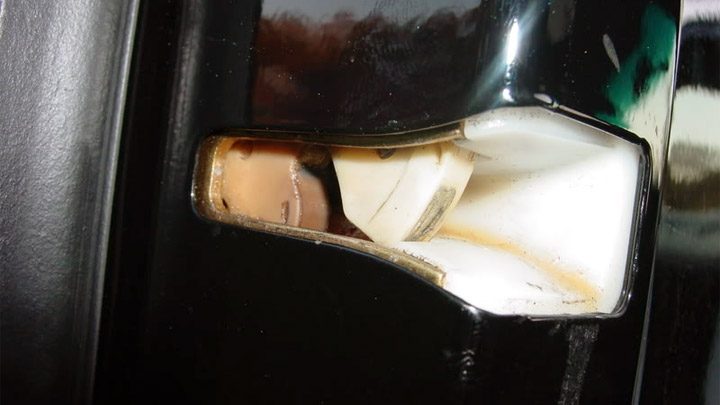
Door latch designs have been developed over the decades. Modern locking mechanisms work to keep the door secure to the adjacent pillar during driving and during an accident while allowing the door to be opened in the event of a collision. This is accomplished by the use of a jaw-type latch or a rotary tooth latch.

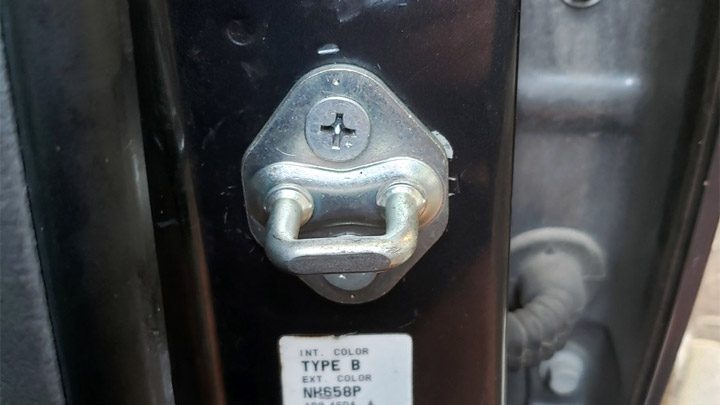
When the car door closes, one or the other of these types of latch firmly grips a headed pin or a U-shaped striker bar on the door pillar. Whether your car has a jaw or a rotary tooth-type latch, for our discussion here, we will simply use the term jaw.

When you open the car door by pulling the lever or door handle, the locking mechanism releases the jaw and the door opens. The jaw is then held in the unlocked position by the locking mechanism. When the door closes, the jaw hits the striker and is pushed back into the locked position.

Warning No. 1
If your car door refuses to close and lock properly, repeatedly attempting to close it can damage the locking mechanism. This can make a relatively inexpensive corrective action much more costly.
Warning No. 2
You might be tempted to hold the door closed with one hand and drive the car home or to a repair center. Never take this risk. You may have your seatbelt secured and feel safe, but you could lose your grip on that door. And if it opened, it could hit a passing car and cause a serious accident.

Reasons a Car Door Won’t Close All the Way

So, your car door closes but does not lock and can be opened. Or the door when closed simply bounces back open.

# 1 – Latch Jaw Stuck in Closed Position

car door won't latch

Examine the door latch that won’t close. Now examine another door that opens and closes properly. On that door, you will see what a fully open jaw looks like.

If the faulty door latch is not in the fully open position, the door will not close.

How to Fix

  1. While observing the jaw, use one hand to pull the lever or door handle as if to open the door. This should release the jaw and it should spring out into the fully open position. Release the door handle. The jaw should remain open.
  2. Using a screwdriver, try to push the jaw into the closed position. It should easily move to the closed position and “click” into place. Pull the lever or door handle again. The jaw should snap back into the open position again.
  3. Test the door’s operation. If it locks and reopens properly for three or four tries, you have solved your problem.
  4. If these steps do not resolve the issue, your car door’s locking mechanism may be faulty. Corrective action by a qualified technician will be necessary.

# 2 – Jaw Won’t Stay in Latched Position

Examine the offending door latch. If the jaw is in a position other than fully open, there may be a problem with the locking mechanism.

How to Fix

  1. Using a screwdriver, move the jaw into the fully open position. Then move it into the closed position. It should “click” into the closed position. Try to move it with the screwdriver. It should be held firmly in that position.
  2. While observing the jaw, pull the lever or door handle as if to open the door. This should release the jaw and it should snap into the open position. If it does not, the locking mechanism may have failed. It is also possible that the locking mechanism at the jaw is dry and sticking due to a lack of lubrication. Follow steps (3) and (4) to free and lubricate the jaw.
  3. You may need assistance for this step. Have your assistant hold the door opening lever or handle as if to open the door. Using a penetrating lubricant such as WD-40, lightly spray the jaw’s pivot point(s). Do not overspray. Work the jaw back and forth with the screwdriver until it moves freely. Release the door opening lever. Push the jaw into the closed position. Wipe away any sprayed lubricant.
  4. With the jaw in the closed position, pull the door opening lever. The jaw should snap into the open position. If it does not move or only moves partially to the open position, the locking mechanism may be faulty. Corrective action by a qualified technician will be necessary.

# 3 – Latch Jaw and Striker Misaligned

door striker

A sagging door can be the result of a prior minor collision which, in turn, causes the latch jaw not to align with the striker on the pillar. Alternatively, the hinge fasteners may have loosened, allowing the door to become misaligned.

How to Fix

Corrective action will require realigning the door. This can be a difficult process for a home DIY mechanic. In most cases, the car will need to be taken to a quality body shop for corrective measures.

# 4 – Frozen Latch Mechanism

In a modern car, a frozen door latch is a rare event. But it can happen.

Note: A frozen latch is only possible if the weather is extremely cold, i.e., well below freezing (32°F) and accompanied by rain, freezing rain, and/or snow.

Such an event can occur in this way:

Your car has been parked for some time outside during a storm. Precipitation accompanied by plummeting temperatures has frozen your windshield and windows. You open the door to grab your ice scraper and the door won’t close. The locking mechanism has frozen so that the jaw does not open fully or does not lock when the door is closed.

How to Fix

Three possible solutions here:

  1. First, do not slam the door. This could damage the latch jaw. Instead, with the door slightly open, pull the door opening lever or handle and let it snap several times. Often, the impact of this action will break a frozen locking mechanism. If that doesn’t work, then…
  2. Get in and start the car. Close the door as much as possible. Warm up the engine and turn the front windshield defroster to “high.” Set the heater temperature to its highest setting. This will warm the inside of the car, including the door assembly. Fifteen to twenty minutes may be needed to thaw the door locking mechanism. If this doesn’t solve the problem, there is another option…
  3. You will need warm water (at home, for example). Start the engine and defrost as described in step (2) above. While the car is warming up, fill a kettle with warm tap water (not boiling). When the car interior and the glass are fully warm, hold the door nearly closed. Now, slowly pour the warm water over the rear corner of the door above the exterior latch handle.
  4. Following each of the above procedures, close the door to see if you have solved the problem. If the door still does not lock, you will need to contact a service technician for corrective action.

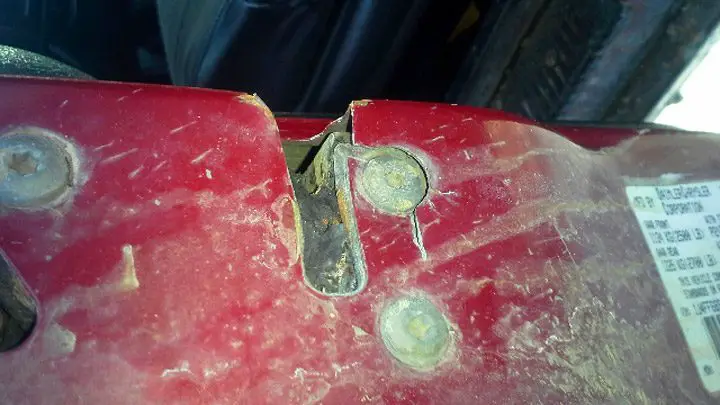
# 5 – Jaw Area Corroded

corroded door latch

With older vehicles (especially those stored outside for long periods), sufficient corrosion of the jaw area can prevent a car door from closing and locking.

How to Fix

A latch stuck due to severe corrosion may eventually be corrected by following steps (3) and (4) from the “Jaw Won’t Stay in Latched Position” section above, which deal with lubricating the jaw.

# 6 – Latch Mechanism Failure

A failure of the operational locking mechanism is very possible if none of the steps described above correct the problem.

How to Fix

If this is the case, repair or replacement of the locking mechanism by a qualified automotive technician will be necessary.

Why Is My Car Smoking: A Diagnostic Guide to Colors

One of the signs of engine and related systems malfunction is exhaust smoke. Many problems can be diagnosed by its color and structure. In this article, we explain the colors of exhaust smoke and explain the reasons for its appearance.

Table of Contents
  • 1 Why is my car smoking when being started
  • 2 Why is white smoke coming from exhaust
    • 2.1 If my car is smoking white, can I keep driving it?
  • 3 Why is my car smoking black
    • 3.1 Can I keep driving if there’s black smoke from the exhaust?
  • 4 Why is blue smoke coming out of the exhaust
    • 4.1 What happens if I keep driving when there’s blue smoke from the engine?

WHY IS MY CAR SMOKING WHEN BEING STARTED

If there is smoke from the engine only when you start it, especially in cold or dry weather, and it disappears after the engine warms up, this does not indicate a malfunction: this is how condensate evaporates from the exhaust system.

WHY IS WHITE SMOKE COMING FROM THE EXHAUST

If the exhaust smoke does not disappear after the power unit warms up, and this happens in dry and warm weather, it indicates that water is entering the engine. Usually, this happens in two ways: either when it is mixed with coolant, which indicates the loss of tightness of the cylinder head gasket or the cooling system, or with fuel if it is of poor quality.

How to get rid of white smoke from the exhaust? Follow these steps:

  1. Check the coolant level in the reservoir. Its sharp decrease indicates that the tightness of the cooling system is lost.
  2. Inspect the engine compartment: leaks can often be detected at the junction between the engine block and the cylinder head.
  3. Look in the coolant reservoir. The presence of oil in it is an indirect sign of the loss of tightness of the cylinder head gasket and, combined with white smoke, may indicate that coolant is entering the engine’s combustion chambers.
  4. Inspect the oil filler neck. There should be no white foam on it.
  5. If at least one of the above signs is detected, take your car to a garage to have it diagnosed by a professional. As part of the repair, replacing the cylinder head gasket and, possibly, grinding the contact surfaces of the engine block and cylinder head will be necessary.
  6. If there are no problems with the cooling system, try using a different gas station.
  7. Check if the fuel tank is tight. Have it repaired or replaced if necessary.
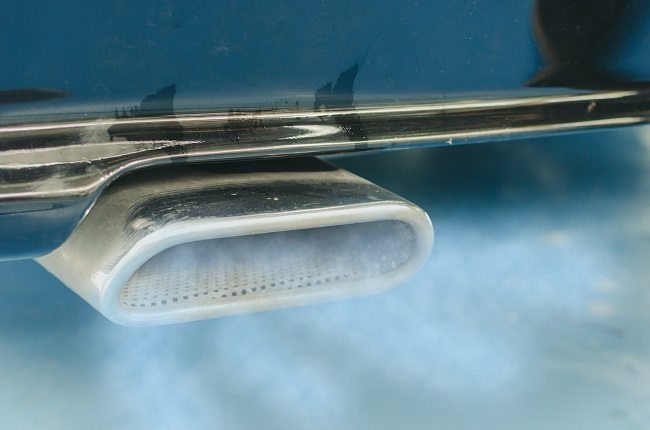
White smoke from exhaust

IF MY CAR IS SMOKING WHITE, CAN I KEEP DRIVING IT?

No, you cannot. Never postpone troubleshooting: coolant, mixed with oil, dilutes it, which impairs the lubricating properties of the latter. This can lead to the destruction of the engine’s moving parts. Therefore, even to get to a garage, use a tow truck.

Sometimes white smoke comes out from under the hood. This can be a sign of coolant boiling and engine overheating, as well as a loss of tightness in the radiator or its pipes. In this case, stop the car immediately and let the engine cool down. Then inspect the cooling system for leaks. If a serious leak is detected, continued driving is prohibited.

WHY IS MY CAR SMOKING BLACK

Thick black smoke from the exhaust pipe is a sign of an overly rich air-fuel mixture. This can be caused by a clogged air filter, due to which less air is supplied to the engine, malfunctions of the fuel pump or regulator, which leads to an increase in pressure in the fuel line.

If you have noticed a problem, proceed as follows:

  1. Measure the pressure of the fuel system with a pressure gauge.
  2. Check the injectors. To do this, use a multimeter to measure their resistance and compare the obtained values with the noted values. For more detailed diagnostics, which must be performed on a special stand, take your car to a garage.
  3. Ensure that the oxygen sensors are working correctly. First, check if the sensors are properly connected to the terminals. Clean the terminals if necessary. Disassemble the part and inspect it. The presence of deposits on the component’s protective tube indicates the need to replace it.
  4. Turn on the ignition. Connect the multimeter probes to the heater circuit. The voltage should be 12 V.
  5. Connect the probes to the signal wire and chassis ground. The multimeter reading should be 0.45 V.
  6. Remove the connector from the device. Measure the resistance between the heater terminals. The readings may vary depending on the sensor type, but should not exceed 2 to 10 Ohms.
  7. Install the new sensor in place of a faulty one.
  8. If you own a diesel car, start the diesel particulate filter regeneration mode.
  9. In diesel vehicles, thick black smoke can be caused by a clogged particulate filter.
Black smoke from exhaust

CAN I KEEP DRIVING IF THERE’S BLACK SMOKE FROM THE EXHAUST?

If your car is smoking black, you need to fix the problem as soon as possible. In fact, an overly rich air-fuel mixture burns slower than usual, which leads to local overheating of engine components. Furthermore, part of the fuel finishes burning in the muffler, which poses a risk of engine knocking and destruction of the catalyst. Spark plugs fail earlier than usual. Over time, components of the exhaust system can burn out. Sometimes the engine seizes.

WHY IS BLUE SMOKE COMING OUT OF THE EXHAUST?

If there is blue smoke from the exhaust, it indicates that oil is entering the combustion chambers. This is usually due to wear of the piston-cylinder group parts, stuck piston rings, destruction of the valve stem seals, and the use of oil of inappropriate viscosity.

Here is what you need to do:

  1. Ensure that the correct oil is used in your lubrication system. If not, change it by draining the system.
  2. Measure the compression in the engine cylinders. If it is insufficient, the tightness of the combustion chambers is lost. Further diagnostics will be necessary.
  3. Take your car to the garage: quite often, the situation where the car smokes blue is a sign of an imminent engine overhaul. It is impossible to perform it without the help of specialists.
Blue smoke from exhaust

WHAT HAPPENS IF I KEEP DRIVING WHEN THERE’S BLUE SMOKE FROM THE ENGINE?

Blue smoke itself is a sign of existing defects. But if you postpone fixing the problem, the situation will only worsen. For example, by changing the valve stem seals and piston rings in time, you can avoid major problems. But if you delay their replacement, the pistons can seize, which will lead to much higher costs.

Conclusion

Smoke from the exhaust pipe almost always indicates malfunctions in various vehicle systems. You cannot neglect this sign. After all, the sooner you troubleshoot the malfunction, the less damage you will cause to your car.

How to change a tire yourself

Whether it’s fitting a new set of tires according to the season or swapping a flat tire on the highway, changing tires is an essential skill that every driver should have in their back pocket. You can do it at the garage or wait for your breakdown service to help you on the roadside, but it’s always faster, cheaper, and often more effective to be able to do it yourself. It will make you feel good and much more confident too! Here is a step-by-step guide on how to change a tire yourself and the types of tools you’ll need to get back on the road hassle-free.

Contenthide
  • 1 What tools do you need to change a tire
  • 2 6 tips for changing tires yourself

WHAT TOOLS DO YOU NEED TO CHANGE A TIRE

What tools do you need to change a tire

Before starting to change a tire, it is essential that we have the right equipment to ensure we can swap the tires safely and effectively.

You will need the following tools:

  • Car jack
    This is the essential equipment for changing a tire. Car jacks come in different sizes, with different load capacities and different features. To change your tires at home or on the roadside, you will need a jack with a load capacity of at least 2 tons. You should also check the maximum lift height to ensure the jack will lift your vehicle high enough off the ground. The correct lift height for your car can be found in the vehicle manual; check this before buying a car jack.
  • The cross wrench
    Also known as a lug wrench or a 4-way wheel brace, the cross wrench is used to loosen the wheel nuts (or lug nuts) and to tighten them after changing the tires. Typically, the wrench widths on a cross wrench for cars are suitable for the most common wheel nut sizes. However, you should check that the cross wrench matches your wheel nut size before purchasing.
  • The torque wrench
    A torque wrench is essential for changing a tire. Using a torque wrench, you can ensure that the wheel nuts are properly tightened. Each car type has a specific torque value that is recommended, and ensuring this matches is extremely important for the wheel’s seating and grip. For most cars, the specific torque is usually between 110 Nm and 120 Nm (Newton-meters), and this depends on the vehicle model, rim size, design (steel or aluminum rims), and the number of bolts. You can find the value suitable for your wheels in the car manual.
  • Wire brush
    Pieces of rust or dirt may have accumulated on the wheel hub, on the wheel studs, and on the axle. Changing the tire can be a great opportunity to clean it, and a wire brush is the perfect tool for the job.
  • A grease pencil / some kind of marker
    This is not essential, but it is certainly useful to be able to use a grease pencil to mark the original positions of your tires. This is important when you change your tires and store the old ones for winter or summer. We suggest using the following abbreviations: FL = front left, FR = front right, RL = rear left, RR = rear right.

6 TIPS FOR CHANGING TIRES YOURSELF

  1. Find a flat surface and prepare the car.
    You must ensure you have a solid, flat surface that will prevent the car from rolling. You can also block the wheel on the opposite side with a board or a stone. If you are near a road, park as far away from traffic as possible and turn on your hazard lights. Avoid trying to change a tire on soft ground (grass) and hills. Engage the handbrake and put your vehicle in first gear or reverse if it’s a manual car, park if it’s an automatic. If you are on the roadside changing a flat tire, also make sure to set up your warning signal so that approaching drivers know there is a stationary vehicle and something is wrong. It’s also a good idea to check the spare tire before mounting it – there’s nothing worse than going to the effort of mounting a new tire only to realize it’s flat.
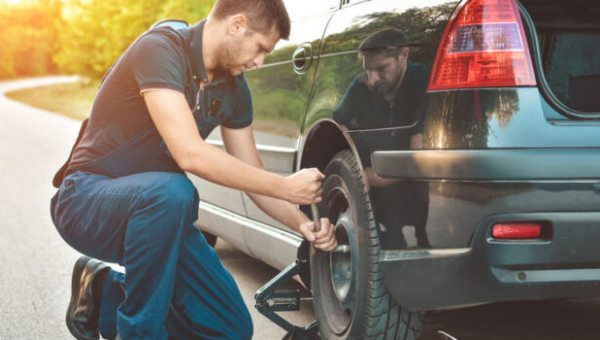
  2. Loosen the wheel nuts.
    Start by leveling the plastic hubcaps or wheel covers so that the metal wheel nuts are exposed. Using the cross wrench, loosen the wheel nuts by turning counterclockwise. At this point, you don’t want to make them too loose or remove them completely, just enough to break the resistance. Keeping the wheel on the ground when you first loosen the nuts will ensure you are turning the nuts instead of the wheel. If there is a lot of resistance and you find it difficult, you can use your knee and foot for leverage on the cross wrench.
  3. Jack up the car.
    The scissor jack is the most common and widely available jack for changing wheels yourself. It uses a screw to move the jack up and down. It is worth noting that before deciding where to place the jack, many cars have molded plastic along the bottom. If you don’t place the jack in the right spot, it will crack the plastic when you start lifting. Placing a small piece of wood underneath will also help maintain stability, if you have one handy.
    If you are unsure of the correct place to put the jack, take a look at your vehicle’s manual, but most often, the best place for the jack is on the side of the car near the flat tire. For most modern unibody cars, there is a small notch or mark just behind the front wheel arches, or in front of the rear wheel arches, where the jack is meant to be placed. For most vans or older cars that have a frame, look to place the jack on one of the frame beams just before the front tire or in front of the rear tire.
    Although it may seem obvious, it is important to mention that you should NEVER place your hands or legs under the vehicle as it would be extremely dangerous if the car fell.
    Jacking can take some time, and patience is key here, so proceed slowly until the car is 10 – to 15 cm off the ground or until the wheel you are changing is lifted a few centimeters off the ground. When lifting, make sure the car is stable. If you notice any instability, perhaps due to poor jack placement, lower the jack and resolve the issue before fully lifting the car. If you notice the jack lifting crooked or tilted, lower it and reposition it so it can lift straight.
  4. Remove the wheel nuts and the flat tire.
    Now that the car is raised, you can start removing the wheel nuts. Use the cross wrench again and make sure to keep the nuts nearby once they have been removed. Once that is done, remove the flat tire. If the car is old, it’s possible the tire is stuck due to rust. You can try hitting the inner half of the tire with a rubber mallet to loosen the tire, or use the spare wheel to hit the outer half. If you wish to clean the inside with your brush, now is the time to do it, before mounting the new tire.
6 tips for changing tires yourself
  1. Mount the new tire on the wheel.
    Center the spare or replacement tire on the wheel studs (also called hub bolts) where the wheel nuts were. Make sure to install the spare tire in the correct direction and not backwards. The valve stem of a ring tire must be turned outward, away from the vehicle. If your vehicle uses acorn-type wheel nuts, it is easy to make a mistake and put them back on backwards. Make sure the thinner part of the wheel nut faces the wheel when tightening.
    Tighten by hand as much as possible, then use the cross wrench to tighten them so they are firm and won’t slip. Do not tighten them completely yet, as we will wait for the car to be back on the ground.
  2. Lower the car and tighten the bolts.
    Once the wheel is back on the car, you can start using the jack to lower it to the ground. Again, be patient and take your time, even though it should be a bit easier than lifting the car. Remove the jack from under the car when it is back on the ground, then start tightening the wheel nuts.
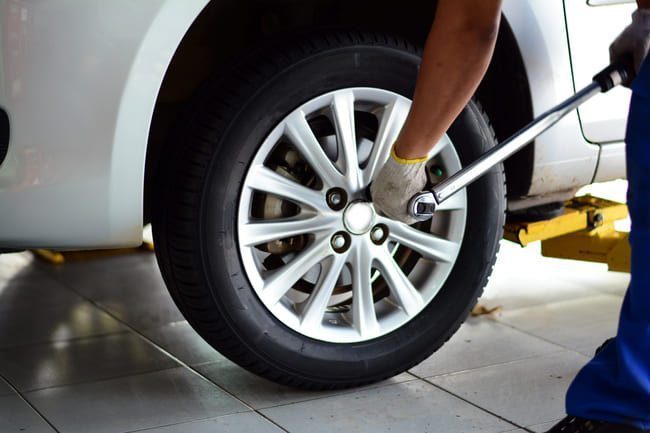
    It is important to ensure equal torque is applied to all wheel nuts. Using the cross wrench, tighten the nuts as much as possible in a star pattern – this means starting by tightening the bottom nut, then tightening the opposite stud, then moving to an un-tightened stud opposite to it, and so on, until they are all tightened. This ensures the tire is balanced, and you can check this using your torque wrench. Now, the job is done and you have changed a car tire yourself!