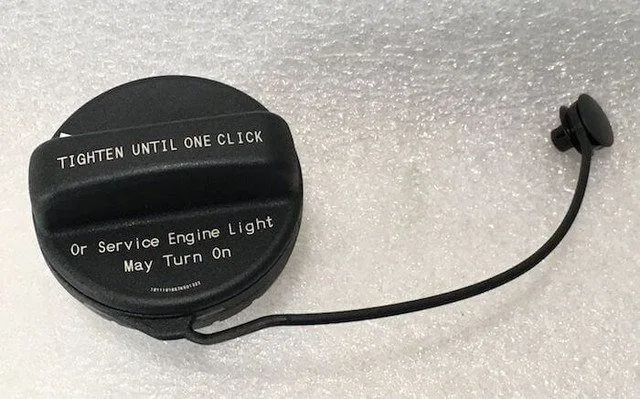
P0440 Evaporative Emission Control System Malfunction

What does it mean?


This diagnostic code (DTC) is a generic powertrain code, meaning it applies to vehicles equipped with OBD-II. Although generic, specific repair steps may vary by make/model.

It indicates that a part of the EVAP control system is no longer functioning properly. The EVAP system consists of many parts, including (but not limited to) the gas cap, fuel lines, carbon canister, purge valve, and other hoses.

The Evaporative Emission Control (EVAP) system prevents fuel vapors from escaping from a vehicle’s fuel system. Fuel vapors are routed through hoses to a charcoal canister for storage. Later, when the engine is running, a purge control valve opens, allowing intake vacuum to siphon the fuel vapors into the engine.

Symptoms


You will likely not notice any driving issues.

Causes

A P0440 code could mean that one or more of the following events have occurred:

The gas cap is not installed or is not working properly
The purge solenoid is faulty
The canister is clogged and not working properly

Possible Solutions

With an OBD-II P0440 trouble code, diagnosis can sometimes be difficult. Here are some tips to try:

Remove and reinstall the gas cap, clear the code, and drive for a day to see if the codes return.
Inspect the EVAP system for cuts/holes in the tubes/hoses
Inspect for damaged or disconnected hoses around the Evap purge solenoid
Check and/or replace the sensor
Check and/or replace the purge valve
Have a professional use a smoke machine to detect leaks

P0440 Repair Video


We are not affiliated with the producers of this diagnostic video, but we found it to be of excellent quality and worth sharing!

Other EVAP DTCs: P0441 – P0442 – P0443 – P0444 – P0445 – P0446 – P0447 – P0448 – P0449 – P0452 – P0453 – P0455 – P0456

P0441 Incorrect Purge Flow of Evaporative Emission Control System

Definition of Code P0441
Code P0441 is a generic powertrain code (OBD-II) related to the Evaporative Emission Control System (EVAP). It indicates a malfunction in the fuel vapor purge process, meaning the Powertrain Control Module (PCM) did not detect the expected flow when the purge was commanded.


EVAP System Operation
The EVAP system prevents fuel vapors from escaping into the atmosphere. It consists of:

  • Fuel tank cap
  • Fuel lines
  • Charcoal canister
  • Purge valve
  • Associated sensors and hoses

Vapors are stored in the charcoal canister and then purged into the engine via the purge valve, which is activated by intake vacuum. A vacuum switch checks the flow during this phase. If the PCM commands the purge but does not detect any flow (switch closed), code P0441 is triggered.


Common Symptoms

  • Illuminated Check Engine light (often the only visible symptom)
  • Possible slight increase in fuel consumption (rare)

Possible Causes

  • Electrical Problems: Open/short circuit in the purge solenoid, corroded connectors.
  • Mechanical Failures:
  • Faulty purge solenoid
  • Defective vacuum switch
  • Cracked EVAP lines or damaged canister
  • Restriction in the EVAP line or canister
  • PCM malfunction (rare)

Recommended Solutions

  1. Basic Checks:
  • Check the fuel tank cap seal.
  • Inspect EVAP lines for cracks or disconnections.
  • Clean corroded connectors.
  1. Specific Tests:
  • Test the purge solenoid’s resistance and power supply.
  • Check the operation of the vacuum switch.
  • Use a scanner to activate the purge and observe the flow.
  1. Common Repairs:
  • Replace the purge solenoid (most common cause).
  • Repair damaged lines or the canister.
  • For Chrysler: replace the Leak Detection Pump (LDP).
  • In case of PCM failure: reprogram or replace the module.

Related EVAP DTC Codes

  • P0440 (Leak Detected) | P0442-P0449 (Valve/Calculation Malfunctions)
  • P0452/P0453 (Fuel Tank Pressure Sensor) | P0455/P0456 (Small/Large Leaks)

Note: Accurate diagnosis with an OBD-II tool and a smoke test is often necessary to locate the fault.

P0442 Evaporative Emission Control System Leak Detected (Small Leak)

Code P0442: Leak Detected in the EVAP System
Complete Guide to Understanding and Resolving the Issue


1. What is Code P0442?

Code P0442 is a generic OBD-II code related to the powertrain, indicating a minor leak in the Evaporative Emission Control (EVAP) system. It appears on many vehicles (Ford, GMC, Jeep, Dodge, Toyota, BMW, etc.), but repair steps may vary by make or model.

How the EVAP System Works

The EVAP system captures fuel vapors to prevent their release into the atmosphere:

  • Vapors are stored in an activated charcoal canister.
  • When the engine is running, a purge valve opens to burn these vapors in the engine.
  • The PCM (Powertrain Control Module) continuously monitors the system for leaks, even very small ones (starting from 0.04 inches in diameter).

2. Symptoms of Code P0442

  • Malfunction Indicator Lamp (MIL) illuminated (“Check Engine” light).
  • No noticeable impact on driving performance.
  • Occasionally: Fuel odor near the tank or engine.

3. Possible Causes

  • Fuel cap: Loose, damaged, or non-compliant (non-OEM part).
  • Leaks in lines/hoses: Cuts, cracks, or holes in the EVAP system.
  • Mechanical failures:
  • Worn vent O-ring.
  • Faulty purge or vent valve.
  • Failed leak detection pump.

4. Repair Solutions

Simple Steps (DIY)

  1. Check the fuel cap:
  • Remove it, clean it, then reinstall it properly.
  • Clear the code with an OBD-II scanner and test the vehicle.
  • If the code returns, replace the cap with an OEM (Original Equipment Manufacturer) part.
  1. Visual inspection:
  • Examine EVAP hoses and connections for cracks or disconnections.

Advanced Diagnostics

  • EVAP leak test: Use a diagnostic tool to activate the leak detection pump and measure pressure.
  • Smoke test: Identifies the exact location of leaks by injecting smoke into the system.
  • Component checks:
  • Test the purge valve with a multimeter.
  • Check the charcoal canister for leaks.

⚠️ Note: Exact procedures depend on the vehicle model. Consult a specific repair manual or a professional.


5. Related DTC Codes

  • Other common EVAP codes:
    P0440, P0441, P0443, P0444, P0445, P0446, P0447, P0448, P0449, P0452, P0453, P0455, P0456.

6. Conclusion

Code P0442 indicates a minor leak, often related to the fuel cap or a damaged hose. While some repairs are DIY-friendly, a smoke test or mechanic’s intervention is recommended if the leak persists. Ignoring this code can lead to increased pollutant emissions and failure in emissions testing.

P0443 Evaporative Emission Control System Purge Control Valve Circuit

What does error code P0443 mean?

The diagnostic code P0443 is a generic powertrain code, meaning it applies to all vehicles equipped with an OBD-II system. It indicates a problem in the control circuit of the Evaporative Emission (EVAP) system purge valve.

Operation of the EVAP System and the Purge Valve

The EVAP system is designed to prevent gasoline vapors from the fuel tank from escaping into the atmosphere. Instead, these vapors are directed to the engine to be burned. The purge valve is a key component of this system. It is powered by a switched battery voltage (present when the ignition is on).

The Engine Control Module (ECM) controls the opening and closing of this valve by actuating the ground circuit. At specific times, the ECM grounds the circuit, which allows the valve to open and fuel vapors to be drawn into the engine.

The ECM also monitors the integrity of this ground circuit to detect potential faults. When the purge valve is not activated (at rest), the ECM expects to see a high voltage on the ground circuit. When the valve is activated (grounded by the ECM), the voltage on the ground circuit should drop to a value close to zero. If the ECM does not detect these expected voltages or if it identifies an open circuit (interruption), the code P0443 is stored.

Important Note: This error code is similar to codes P0444 (EVAP purge valve control circuit open) and P0445 (EVAP purge valve control circuit shorted).

Potential Symptoms of Code P0443

The symptoms associated with fault code P0443 can vary:

  • The most common symptom is the illumination of the Malfunction Indicator Lamp (MIL or Check Engine Light).
  • There may be no noticeable driving issues.
  • However, in some cases (if the purge valve is stuck open), you might observe a lean air-fuel mixture or engine misfire. These symptoms are usually accompanied by other EVAP system-related error codes.
  • Another possible symptom is excessive pressure in the fuel tank, manifesting as an audible “hiss” or “squeal” when removing the fuel cap. This can indicate a purge valve that is not functioning at all or is stuck in the closed position.

Possible Causes of Code P0443

For a P0443 code to be stored, there must be a problem with the purge CONTROL CIRCUIT, not necessarily with the valve itself. Often, the valve and the control solenoid are integrated into a single unit. In other configurations, it may be a separate solenoid controlling the vacuum routed to a purge valve. That said, possible causes include:

  • Faulty purge solenoid (with an internal short circuit or open circuit).
  • Damaged wiring harness (rubbing against another component, causing a short or open in the control circuit).
  • Worn, broken, or shorted electrical connector (often due to water intrusion or corrosion).
  • Failure of the driver circuit inside the Powertrain Control Module (PCM).

Possible Solutions and Diagnostic Steps

Here are possible diagnostic steps to identify and resolve the problem related to code P0443:

  1. Activation Test via Scan Tool: Use an OBD-II scan tool to command the activation of the purge solenoid. Listen carefully or try to feel a “click” from the solenoid. It should click once per command, or on some models, it may click repeatedly.
  2. Diagnosis if the solenoid does not activate:
    • If no click is heard during activation via the scan tool, unplug the solenoid connector.
    • Visually inspect the solenoid and connector for physical damage, signs of water, or corrosion.
    • Check for battery voltage on the solenoid’s power wire with the ignition on (key in ON position). If voltage is present, proceed to the next step.
    • Manually ground the control side (usually the ground wire) of the solenoid using a test wire (jumper) and see if the valve clicks.
      • If it clicks: This indicates that the solenoid is functioning correctly, but there is a problem in the control circuit (between the ECM and the solenoid).
      • If it does not click: The purge solenoid is likely faulty and needs to be replaced.
  3. Checking the Control Circuit (if the solenoid works and power is good):
    • Reconnect the solenoid.
    • Locate and remove the control circuit wire (ground) from the ECM connector. (Caution: If you are unsure of the procedure, do not attempt this step to avoid damaging the ECM).
    • With the solenoid’s ground wire disconnected from the ECM, turn the ignition on (key in ON position).
    • Manually ground the purge valve control wire.
      • If the solenoid clicks: This means there is no problem with the control wire between the ECM and the solenoid. The issue is likely with the purge solenoid control circuit inside the ECM, which will require replacing the ECM.
      • If the solenoid does not click: There is likely an open circuit (break) in the wiring between the ECM and the solenoid. You will need to locate this break and repair it.

Other mentioned EVAP error codes: P0440, P0441, P0442, P0444, P0445, P0446, P0447, P0448, P0449, P0452, P0453, P0455, P0456. These codes indicate other types of problems within the evaporative emission system.

P0444 Evaporative Emission Control System Purge Control Valve Circuit Open

What does it mean?


On vehicles equipped with Evaporative Emission Control Systems, also known as EVAP, the engine draws excessive fuel vapors from the gas tank that would otherwise be released into the atmosphere.

The fuel vapor is routed via a vacuum line to the engine intake, and the purge valve/solenoid measures the desired amount of fuel vapor, controlled by the Powertrain Control Module (PCM) or Engine Control Module (ECM). The PCM/ECM monitors the voltage to the purge control valve and detected no voltage change with the purge valve activated.

Note: This code is similar to P0443 and P0445 codes.

Symptoms

Symptoms of a P0444 trouble code may include:

Check Engine Light illuminated (Malfunction Indicator Light on)
Slightly reduced fuel economy; this will not affect engine performance

Potential Causes

Causes

of this DTC may include:

Loose or disconnected wiring harness
Open circuit in the engine wiring harness
Open circuit in the purge control solenoid
PCM/ECM malfunction

Diagnostic Steps

for P0444 DTC


Engine Wiring Harness – Check all connectors to ensure they are properly plugged in, look for loose or damaged wires. Typically, the purge control valve is powered by the battery and triggered on and off with a duty cycle via the PCM/ECM. Using the manufacturer’s wiring diagrams, identify the type of circuit used and check for battery voltage with the key on/engine off on the power side of the purge control solenoid connector using a Digital Volt-Ohm Meter (DVOM) set to the volts scale. If no battery voltage is present, trace the wiring and determine the cause of the voltage loss.

Test the continuity on the control side of the wiring harness after unplugging the solenoid plug from the purge control valve and PCM wiring harness. Identify the correct wire at the PCM and the control valve harness and check continuity using the ohms scale on the DVOM. If excessive resistance is found, repair the circuit. If there is no continuity in the circuit, check all connections for damaged wiring, loose pins, or disconnected harnesses and repair the circuit.

Purge Control Solenoid – Check continuity at the purge control solenoid connector pins after removing the harness plug using the DVOM set to the ohms scale. Verify that the resistance meets the manufacturer’s specifications. If no continuity is present, suspect that the solenoid is open internally and replace the part with a known good unit.

PCM/ECM Malfunction – Since the EVAP is only activated under certain driving conditions, it will be necessary to monitor the EVAP control operation using a capable advanced scan tool and perform a road test under the required driving conditions to activate the EVAP system. Some advanced scan tools have an internal test to manually activate the EVAP system. Verify that the PCM/ECM is commanding the EVAP system. If the system is operating correctly, it will be necessary to probe the PCM/ECM wiring harness connector using a graphing multimeter or oscilloscope with a duty cycle function, with the positive lead on the purge control valve pin and the negative lead connected to a known good ground. The duty cycle should match what is commanded by the PCM/ECM during EVAP operation. If no duty cycle is present, the PCM/ECM may be faulty.

Other EVAP DTCs: P0440 – P0441 – P0442 – P0443 – P0445 – P0446 – P0447 – P0448 – P0449 – P0452 – P0453 – P0455 – P0456

P0445 Evaporative Emission Control System Purge Control Valve Circuit Shorted

What does it mean?


On vehicles equipped with Evaporative Emission Control Systems, also known as EVAP, the engine draws excess fuel vapors from the gas tank that would otherwise be released into the atmosphere.

The fuel vapor is routed via a vacuum line to the engine intake, and the purge valve/solenoid measures the desired amount of fuel vapor, controlled by the Powertrain Control Module (PCM) or Engine Control Module (ECM). The PCM/ECM monitors the voltage to the purge control valve and has detected a voltage lower than expected.

Note: This code is similar to P0443 and P0444 codes.

Symptoms


Symptoms of a P0445 trouble code may include:

Check Engine Light illuminated (Malfunction Indicator Light on)
Slightly reduced fuel economy; this will not affect engine performance

Potential Causes

Causes

of this DTC may include:

Engine wiring harness or connector short circuit
Purge control solenoid short circuit
PCM/ECM malfunction

Diagnostic Steps

for P0445 DTC


Engine Wiring Harness – Inspect wiring harness connectors for damage, look for pinched wires, loose or bent pins, or bare wiring without insulation. Typically, the purge control valve is powered by the battery and triggered on and off with a duty cycle via the PCM/ECM. Using manufacturer wiring diagrams, identify the type of circuit used and check for battery voltage with the key on/engine off on the power supply side of the purge control solenoid connector using a Digital Volt-Ohm Meter (DVOM) set to the volts scale. If no battery voltage is present, trace the wiring to determine the cause.

Check for a short to ground by disconnecting the harness at the purge control valve solenoid and the voltage source. Using the DVOM set to the ohms scale, with the negative lead connected to a known good ground and the positive lead to each end that powers the purge control valve solenoid. If resistance is very low, suspect a short to ground and repair the wiring harness. Check for a short to ground on the control side of the harness by disconnecting the harness from the purge control valve solenoid and the PCM/ECM harness. Identify the correct wire and using the DVOM set to an ohms scale, check resistance with the negative lead connected to a known good ground and the positive lead on one of the wiring harnesses of the control circuit. If resistance is very low, suspect a short to ground and repair the wiring harness.

Purge Control Solenoid – Check continuity at the purge control solenoid connector pins after removing the plug from the harness using the DVOM set to the ohms scale. Verify that resistance meets manufacturer specifications. Look for a short to ground using the DVOM with the negative lead attached to a known good ground and the positive lead on each of the terminal pins of the purge control valve solenoid. Resistance should be very high or above the limit (OL). If very low resistance is detected, suspect the purge control valve solenoid is shorted to ground and replace it with a known good unit.

PCM/ECM Malfunction – Since EVAP is only activated under certain driving conditions, it will be necessary to monitor EVAP control operation using a capable advanced scan tool and perform a road test under the required driving conditions to activate the EVAP system. Some advanced scan tools have an internal test to manually activate the EVAP system. Verify that the PCM/ECM is commanding the EVAP system. If the system is operating correctly, it will be necessary to probe the PCM/ECM wiring harness connector using a graphing multimeter or oscilloscope with a duty cycle function, with the positive lead on the purge control valve pin and the negative lead connected to a known good ground source. The duty cycle should match what is commanded by the PCM/ECM during EVAP operation. If no duty cycle is present, the PCM/ECM may be faulty.

Other EVAP DTCs: P0440 – P0441 – P0442 – P0443 – P0444 – P0446 – P0447 – P0448 – P0449 – P0452 – P0453 – P0455 – P0456

P0446 Evaporative Emission Control System Vent Control Circuit

What does it mean?


This diagnostic code (DTC) is a generic OBD-II powertrain code. It is considered generic because it applies to all makes and models of vehicles (1996 and newer), although specific repair steps may vary by model.

The Evap purge valve has only one purpose. It closes to seal the vent so that the EVAP system can pressurize and ensure there are no leaks. The Evap purge valve is typically powered by a 12 V battery voltage with the ignition on.

The ECM driver controls the ground, and when grounded, it activates the valve (closing it). If the ECM detects a short to ground and open, or a short to battery voltage on the control circuit, P0446 will be set. The code may also refer to the ECM detecting that the EVAP system is unable to achieve or maintain vacuum during the test.

Symptoms

There will be no obvious symptoms for the driver, other than the illumination of the Malfunction Indicator Lamp (MIL).

Causes

A P0446 code could mean that one or more of the following events have occurred:

Faulty vent valve
Open, short, or excessive resistance in the vent valve control circuit
Obstruction of the purge valve
Faulty PCM

Possible Solutions


With an OBD-II P0446 fault code, here are some things to try:

Replace the vent valve
Repair open, short, or resistance issues in the control circuit
Repair an open, shorted, or resistance issue in the power circuit
Replace PCM

Other EVAP DTCs: P0440 – P0441 – P0442 – P0443 – P0444 – P0445 – P0447 – P0448 – P0449 – P0452 – P0453 – P0455 – P0456

P0447 Evaporative Emission Control System Vent Valve/Solenoid Circuit Open

What does it mean?


The powertrain control module (PCM) detected an open circuit in the circuit that controls the vent valve or the vapor solenoid for the evaporative emission systems.

When fuel is in the tank, it emits fuel vapor, while the vent line opens and allows the vapors to flow into the engine intake manifold, a charcoal canister, or into the atmosphere, depending on the vehicle. This purge valve is part of the simple yet complicated evaporative emissions system.

Symptoms

Symptoms of a DTC P0447 will include the malfunction indicator light (MIL) illuminating; you probably won’t notice any other symptoms.

Causes

Potential causes may include:

Faulty vent valve
Wiring/circuit issue
PCM fault

Possible Solutions


Here are some steps to follow to diagnose and repair this fault code:

Check your fuses; there may be a fuse that powers the vent solenoid.

Look for a chafed or rubbed wiring harness. Check both wires to see if they are open to each other, to ground, or to power.

Visually inspect the vent valve for cracks or damage.

Trace the wires to and from the PCM and check continuity using a digital voltmeter (DVOM).

If you have access to an advanced-level scan tool, activate the valve while reading the power and ground at the connector or simply use a test light wired to both terminals; it will light up if the power and ground are OK.

Using a DVOM, check the resistance of the vent; in most cases, the resistance reading should be low—refer to the manufacturer’s specifications or compare it to a new one. A value that is too high or too low indicates a faulty coil inside the valve, meaning a replacement is necessary. This code seems to be common on Dodge, Chrysler, and Jeep products. In these cases, the vent valve was faulty. With GM products (especially trucks), GM released an updated valve set.

Finally, remove the valve; you may be able to access the pivot inside, and it might just be sticking due to fuel residue. Clean it and retest.

Other EVAP DTCs: P0440 – P0441 – P0442 – P0443 – P0444 – P0445 – P0446 – P0448 – P0449 – P0452 – P0453 – P0455 – P0456

P0448 Evaporative Emission Control System Vent Valve/Solenoid Circuit Shorted

What does it mean?


This code is a generic powertrain code. It is considered generic because it applies to all makes and models of vehicles (1996 and newer), although specific repair steps may vary by model.

The Powertrain Control Module (PCM) has detected that the circuit is shorted together that controls the vent valve or solenoid for the vapor of the evaporative emission systems. In this case, the code will also be triggered when the valve is stuck closed.

When fuel is in the tank, it emits fuel vapor, while the vent line opens and allows the vapors to flow into the engine intake manifold, a charcoal canister, or into the atmosphere, depending on the vehicle. This purge valve is part of the simple yet complicated evaporative emissions system.

Symptoms

Symptoms of a DTC P0448 will include the illumination of the Malfunction Indicator Light (MIL), you will likely not notice any other symptoms.

Causes

Potential causes may include:

Faulty vent valve
Wiring/circuit issue
PCM fault

Possible Solutions


Here are some steps to follow to diagnose and repair this fault code:

Check your fuses, there may be a fuse that powers the vent solenoid.

Look for a rubbed or chafed wiring harness. Check both wires to see if they are shorted to each other, to ground, or to power.

Visually inspect the vent valve for cracks or damage.

Trace the wires to and from the PCM and check for continuity using a digital volt-ohm meter (DVOM).

If you have access to an advanced-level scan tool, activate the valve while reading the power and ground at the connector or simply using a test light wired to both terminals, it will light up if power and ground are OK.

Using a DVOM, check the resistance of the vent, in most cases the resistance reading should be low, refer to manufacturer specifications or compare it to a new one. A value too high or too low indicates a faulty coil inside the valve, thus meaning a replacement is necessary. This code seems to be widespread on Dodge, Chrysler, and Jeep products. In these cases, the vent valve was faulty. With GM products (especially trucks), GM released a new updated valve assembly.

Finally, remove the valve, you may be able to access the pivot inside and it might just be sticking due to fuel residue. Clean it and retest.

Other EVAP DTCs: P0440 – P0441 – P0442 – P0443 – P0444 – P0445 – P0446 – P0447 – P0449 – P0452 – P0453 – P0455 – P0456

P0449 Evaporative Emission Control System Vent Valve/Solenoid Circuit Malfunction

What does it mean?

This code is a generic powertrain group code. It is considered generic because it applies to all vehicle makes and models (1996 and newer), although specific repair steps may vary by model.

The Powertrain Control Module (PCM) / Engine Control Module (ECM) has detected a malfunction in the circuit that controls the vent for the vapor in the evaporative emission systems.

When fuel is in the tank, it emits fuel vapor, while the vent line opens and allows the vapors to flow into the engine intake manifold, a charcoal canister, or into the atmosphere, depending on the vehicle. This purge valve is part of the simple yet complicated evaporative emissions system.

Symptoms

Symptoms of a DTC P0449 will include the illumination of the Malfunction Indicator Light (MIL); you will likely not notice any other symptoms.

Potential causes may include:

  • Faulty vent valve
  • Wire/circuit issue
  • PCM/ECM fault

Possible Solutions

Here are some steps to diagnose and repair this fault code:

Check your fuses; there may be a fuse that powers the vent solenoid.

Look for a chafed or rubbed wiring harness. Check both wires to see if they are shorted to each other, to ground, or to power.

Visually inspect the vent valve for cracks or damage.

Trace the wires to and from the PCM/ECM and check for continuity using a digital volt-ohm meter (DVOM).

If you have access to an advanced-level scan tool, activate the valve while reading the power and ground at the connector, or simply use a test light wired to both terminals; it will light up if power and ground are OK.

Using a DVOM, check the resistance of the vent; in most cases, the resistance reading should be low. Refer to the manufacturer’s specifications or compare it to a new one. A value that is too high or too low indicates a faulty coil inside the valve, meaning replacement is necessary. This code appears to be common on Dodge, Chrysler, and Jeep products. In these cases, the vent valve was faulty. With GM products (especially trucks), GM has released an updated valve assembly.

Finally, remove the valve; you may be able to access the pivot inside, and it might just be sticking due to fuel residue. Clean it and retest.

Other EVAP DTCs: P0440 – P0441 – P0442 – P0443 – P0444 – P0445 – P0446 – P0447 – P0448 – P0452 – P0453 – P0455 – P0456