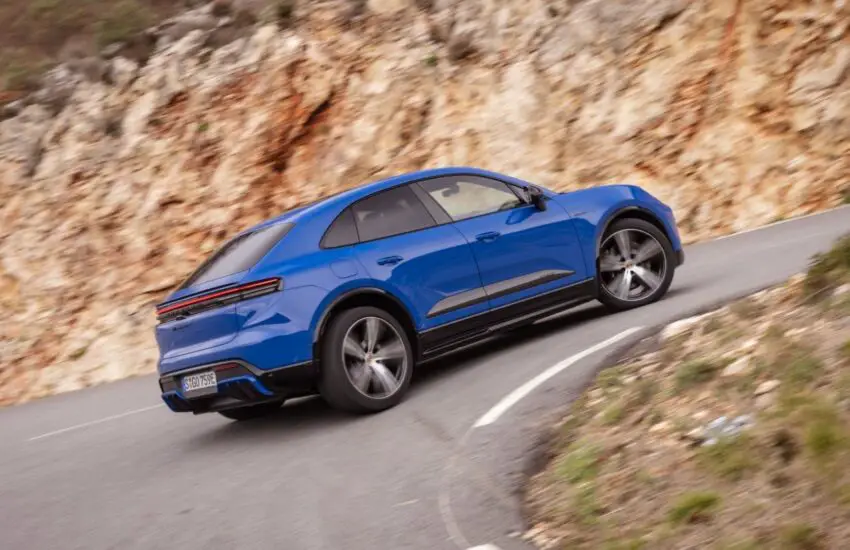
Kia EV5: The Family SUV That Balances Range and Value

Kia EV5: Pricing and Positioning for Families

Kia EV5 electric family SUV from the side profile

Kia’s electric vehicle lineup expands significantly with the arrival of the EV5, a family SUV designed to harmonize interior space, driving range, and affordability. This new model aims to bring a compelling blend of practicality and technology to a broader audience, strengthening Kia’s position in the competitive electric family car segment.

Expected Range and Performance Specifications

While official EPA figures for all markets are pending, the Kia EV5 is anticipated to offer versatile powertrain options to suit different needs. The model is expected to feature a standard-range battery for urban-focused drivers and a long-range variant for those requiring extended mileage. Front-wheel drive will likely be standard, with potential all-wheel-drive configurations offering enhanced performance and traction. The focus remains on delivering efficient and smooth electric propulsion suitable for daily family duties and longer journeys.

Interior Space and Family-Focused Technology

The EV5’s design prioritizes passenger comfort and cargo utility. Its platform is engineered to maximize cabin space, offering generous legroom and flexible seating configurations. The dashboard is expected to be dominated by a modern, curved digital display housing the infotainment and driver instrumentation. Key family-friendly features will include ample storage solutions, advanced driver-assistance systems for safety, and seamless connectivity options to keep all occupants comfortable and entertained.

Market Impact and Final Thoughts

The introduction of the Kia EV5 represents a strategic move to capture the heart of the electric SUV market. By targeting the essential metrics for families—price, space, and range—Kia has created a vehicle that promises to make electric mobility more accessible. Its success will hinge on the final confirmed specifications and how they stack up against established rivals, but the EV5 undoubtedly marks an important step in the electrification of the family car.

Battery Swap for EVs: A Global Challenge Beyond China

The Struggle to Standardize EV Battery Swapping

While rapid charging networks expand globally, an alternative model for powering electric vehicles continues to face significant hurdles outside of China. Battery swap technology, which allows drivers to exchange a depleted battery for a fully charged one in a matter of minutes, promises to eliminate charging wait times. However, its adoption in Europe and North America remains limited, caught in a cycle of logistical and commercial challenges.

Key Barriers to Widespread Adoption

The primary obstacle is the lack of standardization across the automotive industry. Unlike in China, where a few major players and supportive regulations have pushed for common standards, Western markets feature a wide array of vehicle platforms, battery chemistries, and pack designs from different manufacturers. This fragmentation makes it economically unviable to build a universal swap station network, as each would need to stock numerous incompatible battery types.

Furthermore, the business model presents high upfront costs. Establishing a network of swap stations requires massive investment in real estate, robotics, and maintaining a large inventory of expensive battery packs. This contrasts with the relatively lower infrastructure cost of deploying fast-charging points. Consumer sentiment also plays a role; many drivers are psychologically attached to their vehicle’s specific battery and may be hesitant to exchange it for a pack of unknown history and health.

A Niche Future Versus Mass Market

Despite these challenges, the model is finding niche applications. Commercial fleets, such as taxis, delivery vans, or buses operating on defined routes, present a more feasible use case. These vehicles often use standardized models and can benefit immensely from the minimal downtime offered by swapping. Some startups are focusing exclusively on these segments, avoiding the complexities of the consumer market.

The evolution of battery technology itself adds another layer of complexity. As energy density improves and charging speeds increase, the core advantage of swapping—speed—is being eroded. The future of this technology outside China likely rests not in head-to-head competition with ultra-fast charging, but in serving specific commercial sectors where operational efficiency outweighs the substantial initial investment.

Decoding Chrysler P1488: Fan Control Relay Circuit Issues Explained

Understanding the Chrysler P1488 Diagnostic Trouble Code

When your Chrysler, Dodge, or Jeep vehicle’s check engine light illuminates and a scan tool reveals code P1488, it signals a specific fault within the engine cooling system’s electrical control. Formally defined as “Fan Control Relay Circuit Open”, this OBD2 code indicates that the Powertrain Control Module (PCM) has detected an abnormal condition—specifically an open circuit—in the control circuit for the cooling fan relay. This is not a minor glitch; it directly compromises the vehicle’s primary active cooling mechanism. The PCM monitors the voltage in the relay’s control wire. When it commands the fan on but sees voltage that doesn’t match expectations (typically a constant high or low voltage indicating a broken path), it sets P1488, alerting you that the electric cooling fans may not engage as required.

Core Function of the Cooling Fan System

The electric cooling fan(s) are critical for maintaining optimal engine temperature, especially during idle, low-speed driving, or under high load conditions when airflow through the radiator is minimal. The PCM activates the fan by sending a ground signal to the control coil of the fan relay. This completes the circuit, energizing the coil, which then closes the relay’s high-current contacts, delivering battery power directly to the cooling fan motor. Code P1488 points to a failure in this low-current control circuit, preventing the PCM from commanding the relay effectively.

Symptoms and Risks of Ignoring P1488

Driving with an active P1488 code poses a direct threat to your engine’s health. The most immediate symptom is the failure of the primary cooling fan to turn on. However, depending on the vehicle’s design and the nature of the fault, symptoms can vary.

Primary Symptoms

  • Illuminated Check Engine Light (MIL): The primary indicator, storing P1488 in the PCM’s memory.
  • Engine Overheating at Idle or in Traffic: The most common and dangerous symptom, as the fan cannot provide supplemental cooling.
  • Cooling Fan Inoperative: The fan does not activate during A/C use or when the engine coolant temperature reaches the preset threshold.
  • Possible A/C Performance Issues: On many models, the cooling fan is required for proper A/C condenser operation; the A/C may blow warm at low speeds.

Potential Long-Term Engine Damage

Consistently ignoring this code can lead to catastrophic engine failure. Chronic overheating can cause:

  • Warped cylinder heads
  • Blown head gaskets
  • Cracked engine blocks or cylinder heads
  • Severe detonation and piston damage

Addressing a P1488 code promptly is not just a repair—it’s a critical preventative measure to avoid exponentially more expensive engine work.

Diagnosing the P1488 Code: A Step-by-Step Technical Guide

Diagnosis requires a systematic approach, starting with the simplest checks before moving to component testing. You will need a digital multimeter (DMM), a wiring diagram for your specific model, and possibly a test light.

Step 1: Preliminary Visual Inspection

Begin with a thorough visual check. Look for obvious issues in the engine bay:

  • Inspect the Fan Relay and Fuses: Locate the cooling fan relay in the Power Distribution Center (PDC) under the hood. Check the related fuses for burns or breaks. Swap the fan relay with an identical one (like the horn relay) to test its function.
  • Check Wiring Harnesses: Examine the wiring from the PDC to the fan relay socket and from the relay to the cooling fan motor for any chafing, cuts, burns, or rodent damage.
  • Verify Fan Motor Mechanical Binding: Try to spin the fan blade by hand (with the ignition OFF). It should rotate freely. A seized motor can blow fuses and mimic circuit faults.

Step 2: Electrical Circuit Testing

If visual inspection reveals nothing, proceed with electrical testing at the relay socket.

  • Power and Ground: With the relay removed and ignition ON, use your DMM to check for battery voltage (B+) at the socket’s power feed terminal. Check for a good chassis ground at the appropriate terminal.
  • Control Circuit Test: This is key for P1488. Back-probe the control circuit terminal at the relay socket. With the ignition ON and the engine cold, this wire should have battery voltage. When the PCM commands the fan on (you can often force this with a capable scan tool or by turning the A/C to MAX), the voltage should drop near 0 volts as the PCM provides a ground. If the voltage never changes or there is no voltage present, the open circuit is in the control wire or the PCM itself.
  • Continuity Check: With the ignition OFF, use the DMM’s continuity setting to check for an open circuit in the control wire between the relay socket and the PCM connector.

Step 3: Component Verification

Finally, test the individual components.

  • Fan Motor Test: Apply direct battery voltage and ground to the fan motor connector. If it doesn’t run, the motor is faulty.
  • PCM Consideration: A faulty PCM is rare but possible. Only suspect the PCM after all wiring, fuses, relays, and the fan motor itself have been conclusively proven to be functional. Check for technical service bulletins (TSBs) for your specific model related to cooling fan issues.

Repair Procedures and Solutions for P1488

The repair is dictated by the diagnostic findings. Always disconnect the battery before performing any wiring repairs.

Common Repairs

  • Replacing a Faulty Relay or Fuse: The simplest fix. Use an OEM or high-quality equivalent relay.
  • Repairing Damaged Wiring: Splice in new wire using solder and heat-shrink tubing for a permanent, corrosion-resistant repair. Never use twist-on connectors in the engine bay.
  • Replacing the Cooling Fan Motor/Assembly: If the motor is seized or has high resistance, replace the entire fan assembly or motor as a unit.

Clearing the Code and Final Verification

After repairs are complete, clear the P1488 code with your scan tool. The best practice is to perform a drive cycle that allows the engine to reach operating temperature and trigger the fan. Use your scan tool in live data mode to command the fan on and verify its operation. Monitor the engine coolant temperature to ensure the system is functioning correctly and that the code does not return.

Conclusion

Code P1488 on Chrysler vehicles is a serious fault that disables a vital engine protection system. While the diagnosis requires methodical electrical troubleshooting, the root cause is often a simple failed relay, a blown fuse, or a damaged section of wire. By understanding the circuit’s operation—the PCM’s ground-side control of the relay—you can effectively trace the open circuit. Ignoring this code risks severe engine damage from overheating. Addressing it promptly with a systematic diagnostic approach will restore your cooling system’s integrity and ensure your vehicle’s long-term reliability.

Leapmotor and Stellantis: A Strategic Alliance Reshaping the Auto Industry

A Bold Partnership for Global Ambitions

The strategic alliance between Chinese electric vehicle (EV) innovator Leapmotor and automotive titan Stellantis marks a significant shift in the global automotive landscape. This partnership is not merely an investment but a deep operational collaboration, granting Stellantis a substantial stake and exclusive rights to manufacture, export, and sell Leapmotor products outside Greater China. This move strategically positions Leapmotor for rapid international expansion while providing Stellantis with immediate access to competitive EV technology and cost-effective platforms.

An Aggressive Product Roadmap Unveiled

Bolstered by strong financial backing and this powerful partnership, Leapmotor is accelerating its product offensive. The company has outlined an ambitious roadmap, promising a wave of new models designed to capture market share across multiple segments. This strategy focuses on leveraging its technological strengths in areas like integrated intelligent electric vehicle architecture to deliver compelling value propositions. The upcoming launches aim to solidify its presence in key markets and challenge established competitors with advanced, yet affordable, electric mobility solutions.

Technology and Manufacturing Synergies

The core of this alliance lies in synergy. Stellantis brings its monumental manufacturing scale, established global distribution networks, and deep market expertise. Leapmotor contributes its agile, software-centric EV platforms and advanced battery integration technology. This combination allows for the potential of Leapmotor-based vehicles to be produced in Stellantis plants worldwide, dramatically reducing time-to-market and localization costs. It is a blueprint for efficiently bringing competitive EVs to Europe, North America, and other key regions.

Navigating a Competitive Future

The automotive industry’s future is being written through such strategic collaborations. The Leapmotor-Stellantis partnership exemplifies a new model where legacy manufacturers and agile EV specialists combine forces. By uniting cutting-edge innovation with global industrial muscle, the alliance is poised to disrupt traditional market dynamics. Their success will depend on seamlessly integrating operations, maintaining technological momentum, and successfully adapting products to diverse consumer preferences worldwide, setting a precedent for industry consolidation in the electric era.

Drive Electric for Under €100: The 2025 Social Leasing Window

An Unprecedented Chance for Affordable EV Access

The 2025 social leasing program for electric vehicles presents a critical opportunity for eligible households. With quotas still available, this government-backed initiative is designed to make zero-emission mobility a reality for budgets that previously excluded it. The core promise—driving a brand-new electric car for a monthly payment of less than 100 euros—is currently within reach, making timely action essential.

How the Social Leasing Model Works

This program operates as a long-term rental, typically for three years, with heavily subsidized rates. It removes the large upfront cost of purchasing an EV, bundling the vehicle, maintenance, and a warranty into a single, predictable monthly fee. The scheme specifically targets lower-income families and individuals, using strict eligibility criteria based on taxable income and commute distance to ensure it supports those most in need of affordable transport solutions.

Key Benefits Beyond the Monthly Price

The financial advantage extends far beyond the sub-€100 lease payment. Lessees benefit from significantly reduced running costs compared to petrol or diesel cars. Electricity for charging is cheaper than fuel, and electric vehicles require less routine maintenance. Furthermore, drivers gain access to clean-air zones in cities and contribute directly to lowering their personal carbon footprint, aligning personal savings with environmental responsibility.

Act Before the Opportunity Closes

The available slots in the social leasing program are limited and will close once the annual quota is filled. Interested parties must verify their eligibility through official channels and prepare necessary documentation, such as proof of income and residence. Researching the available electric models within the program is also a crucial step. This window for securing ultra-low-cost electric mobility is temporary, underscoring the need for prompt and informed action.

Chevrolet P1488 Code: EGR Cooling System Performance Explained

Understanding the Chevrolet P1488 Diagnostic Trouble Code

The OBD2 diagnostic trouble code (DTC) P1488 is a manufacturer-specific code primarily associated with General Motors (GM) vehicles, including Chevrolet, GMC, and Cadillac. This code is stored in the vehicle’s Powertrain Control Module (PCM) when it detects a performance issue within the Exhaust Gas Recirculation (EGR) cooling system. Unlike generic codes, P1488 is specific to GM’s engine management strategy, indicating that the system is not achieving the desired cooling effect for the recirculated exhaust gases. A proper understanding of this system is crucial for an accurate diagnosis and repair.

What Does “EGR Cooling System Performance” Mean?

The EGR system’s primary function is to reduce nitrogen oxide (NOx) emissions by recirculating a portion of the engine’s exhaust gas back into the intake manifold. This process lowers combustion temperatures. In many modern GM engines, especially in trucks and SUVs like the Chevrolet Silverado, Tahoe, and Suburban, the exhaust gases are routed through a heat exchanger called an EGR cooler. Engine coolant flows through this cooler, absorbing heat from the hot exhaust gases before they re-enter the engine. Code P1488 is triggered when the PCM monitors the temperature of these gases (typically via an EGR temperature sensor) and determines they are not being cooled to the expected level.

Common Symptoms of a P1488 Code

When the P1488 code is set, the Check Engine Light will illuminate. In many cases, the vehicle may not exhibit severe drivability issues initially, but underlying problems can lead to more significant concerns if ignored. Being aware of the symptoms can help in early diagnosis.

Primary Indicators

  • Illuminated Check Engine Light (MIL): This is the most immediate and consistent symptom.
  • Reduced Engine Performance: You may notice a lack of power, especially under load or during acceleration.
  • Rough Idle or Stalling: Improper EGR flow can disrupt the air-fuel mixture, causing an unstable idle.

Secondary and Potential Symptoms

  • Increased Emissions: A failed EGR cooling system can lead to higher NOx emissions, potentially causing a failed emissions test.
  • Engine Overheating: If the issue is related to a coolant flow problem, it may contribute to overall engine overheating.
  • Poor Fuel Economy: The engine control system may enter a “limp” mode or use a richer fuel mixture to compensate, reducing MPG.

Diagnosing the Root Causes of P1488

Diagnosing P1488 requires a systematic approach, as the code points to a performance issue within a subsystem. The problem could be mechanical, electrical, or related to a sensor. Jumping to replace the EGR cooler without proper diagnosis can be an expensive mistake.

Mechanical and Fluid-Related Causes

These are often the most common culprits for P1488 and involve the physical components and coolant.

  • Low Engine Coolant Level: Insufficient coolant in the system prevents proper heat transfer in the EGR cooler.
  • Clogged or Faulty EGR Cooler: Carbon buildup inside the cooler can act as an insulator, reducing its efficiency. Internal cracks or leaks can also cause failure.
  • Coolant Flow Restriction: A blocked coolant hose, a failing water pump, or a stuck thermostat can limit coolant flow to the EGR cooler.
  • Leaking EGR Cooler: A leak can allow coolant to enter the intake or exhaust system, leading to white smoke from the exhaust and coolant loss.

Electrical and Sensor Causes

The PCM relies on sensor data to monitor system performance. Faulty signals can trigger the code even if the mechanical system is functional.

  • Faulty EGR Temperature Sensor: This sensor provides the critical data to the PCM. If it provides an inaccurate reading (showing gases are too hot), it will trigger P1488.
  • Wiring and Connector Issues: Damaged, corroded, or shorted wires to the EGR temperature sensor or related solenoids can interrupt signal communication.
  • Faulty EGR Valve: While often associated with other codes, a stuck or malfunctioning EGR valve can affect flow and temperature readings.
  • PCM Software Glitch: In rare instances, a software error may cause a false code. A PCM reflash or update may be required.

Step-by-Step Diagnostic and Repair Guide

Follow this logical sequence to accurately diagnose and resolve a P1488 code. Always begin with the simplest and least expensive checks.

Initial Inspection and Verification

  • Check Coolant Level and Condition: Inspect the coolant reservoir and radiator (when cold). Look for signs of contamination or oil in the coolant.
  • Visual Inspection: Look for obvious coolant leaks around the EGR cooler, hoses, and connections. Inspect all wiring harnesses and connectors related to the EGR system for damage.
  • Scan for Additional Codes: Use an advanced OBD2 scanner to check for any other pending or confirmed codes (like P0401, P0404) that may point to a related EGR or coolant issue.

Advanced Testing Procedures

If the initial inspection doesn’t reveal the issue, proceed with these tests. You may need a scan tool with live data capabilities and a multimeter.

  • Monitor Live Data: With the engine at operating temperature, monitor the EGR temperature sensor PID (Parameter ID). Compare the reading to the intake air temperature and coolant temperature. An abnormally high EGR temp reading at idle or low load can indicate a sensor or flow problem.
  • Test the EGR Temperature Sensor: Use a multimeter to check the sensor’s resistance. Compare the value at different temperatures (cold vs. hot engine) to the specifications in the vehicle’s service manual. A sensor that does not change resistance appropriately is faulty.
  • Check Coolant Flow: With the engine warm and running, carefully feel the inlet and outlet hoses of the EGR cooler. They should be hot, indicating coolant flow. A significant temperature difference may indicate a blockage.
  • Perform a Coolant System Pressure Test: This can help identify a small internal leak in the EGR cooler that is not immediately visible.

Common Repair Solutions

Based on your diagnostic findings, the repair will target the specific failed component.

  • Top Up or Flush Coolant: If low, refill with the correct GM-approved Dex-Cool coolant. If contaminated, a full system flush is necessary.
  • Replace the EGR Cooler: This is a common repair for P1488. The process involves draining coolant, removing intake components, and swapping the cooler. Ensure all gaskets are replaced.
  • Replace the EGR Temperature Sensor: A relatively simple and inexpensive fix if testing confirms the sensor is faulty.
  • Repair Wiring or Connectors: Solder and seal any broken wires or replace damaged connectors.
  • Clear Codes and Test Drive: After repair, clear the DTCs with your scanner and perform a test drive to ensure the code does not return and that all systems are operating normally.

Conclusion and Professional Recommendation

Code P1488 on your Chevrolet is a specific alert that the EGR cooling system is underperforming. While sometimes caused by a simple low coolant level or a bad sensor, it frequently points to a failing EGR cooler. Ignoring this code can lead to increased emissions, reduced fuel economy, and in severe cases, engine damage from overheating or coolant ingestion. Due to the complexity of accessing the EGR cooler on many GM V8 engines (like the 5.3L or 6.0L), this repair can be labor-intensive. If you are not comfortable with advanced mechanical work, seeking a professional diagnosis from a certified technician is highly recommended. They have the tools, data, and expertise to pinpoint the exact cause efficiently, saving you time and potentially costly misdiagnosis.

Voices of the Electric Revolution: Diverse Driver Stories in 2025

The Many Faces of Electric Mobility

The transition to electric vehicles is being written by a remarkably diverse group of individuals. Stories from the road in 2025 reveal that early adopters no longer fit a single mold. The community is a vibrant tapestry of different ages, professions, and lifestyles, all united by a shared journey towards sustainable transportation. This collective experience provides a rich, real-world perspective on the evolution of personal mobility.

From Daily Commutes to Retirement Adventures

A common thread among drivers is the integration of EVs into vastly different daily routines. For many professionals, the electric vehicle has become a reliable partner for hectic urban commutes and business travel, valued for its low running costs and convenience. Conversely, a growing number of retirees are embracing electric cars for a new kind of freedom, using them for leisure travel and discovering that the extensive charging network now supports even lengthy road trips with ease.

A diverse group of people charging different electric car models at a public station

Technology Enthusiasts and Practical Adopters

The motivations for choosing an electric vehicle are as varied as the drivers themselves. While a significant portion of the community consists of tech-savvy individuals fascinated by innovation, performance, and connected features, an equally important group is driven by simple practicality. For these drivers, the decision is primarily financial and ecological, focusing on total cost of ownership, reduced maintenance, and a smaller environmental footprint. This blend of passion and pragmatism fuels insightful discussions and shared learning.

A Collective Force for Change

This diversity of experience is a powerful asset. It means that challenges, from home charging solutions to long-distance planning, are examined from countless angles, leading to robust, community-tested advice. The shared knowledge from such a wide range of users accelerates understanding and adoption, proving that the electric vehicle movement is being powered by everyone.

Cadillac P1488 Code: EGR Cooler Bypass Valve Control Circuit Explained

Understanding the Cadillac P1488 Diagnostic Trouble Code

The OBD2 trouble code P1488 is a manufacturer-specific code for General Motors (GM) vehicles, including Cadillac models. It is defined as “EGR Cooler Bypass Valve Control Circuit”. This code indicates a malfunction within the electrical control circuit of the Exhaust Gas Recirculation (EGR) system’s cooler bypass valve. The Powertrain Control Module (PCM) monitors this circuit for expected voltage and resistance values. When the signal falls outside the predetermined parameters—whether due to an open circuit, short to ground, short to power, or a faulty component—the PCM illuminates the Check Engine Light and stores code P1488.

While not typically an immediate drivability concern, ignoring P1488 can lead to reduced fuel efficiency, increased emissions, and in some cases, compromised engine cooling performance under specific conditions. Accurate diagnosis is crucial, as the symptoms can mimic other common issues.

Primary Causes and Symptoms of P1488 in Cadillac Vehicles

Pinpointing the root cause of P1488 requires a systematic approach, as the fault can lie in several areas of the valve’s control circuit.

Common Causes of the P1488 Code

  • Faulty EGR Cooler Bypass Valve: The most common culprit. The valve’s internal solenoid can fail electrically or the valve mechanism can become stuck open or closed.
  • Damaged Wiring or Connectors: Wires in the valve’s harness can be chafed, broken, or corroded. The electrical connector at the valve may have loose pins or corrosion.
  • Blown Fuse: A dedicated fuse for the EGR system or related engine controls may be blown, cutting power to the valve.
  • Vacuum Leak (if vacuum-operated): On some older Cadillac engines, the bypass valve may be vacuum-actuated. A cracked or disconnected vacuum hose will prevent proper operation.
  • Faulty Powertrain Control Module (PCM): While rare, a malfunction within the PCM itself could prevent it from properly controlling the valve circuit.

Typical Symptoms Associated with P1488

  • Illuminated Check Engine Light (MIL): The primary and often only initial symptom.
  • Reduced Fuel Economy: A malfunctioning EGR system can disrupt optimal air-fuel ratios.
  • Failed Emissions Test: The vehicle will not pass a state emissions inspection with an active P1488 code.
  • Possible Engine Overheating (Under Specific Load): If the valve is stuck closed, it may prevent coolant from bypassing the EGR cooler during warm-up, though this is less common.
  • No noticeable drivability issues: Many drivers report no change in engine performance, making the code easy to ignore.

Step-by-Step Diagnostic Procedure for P1488

A proper diagnosis prevents unnecessary part replacement. Follow this technical sequence, using a quality digital multimeter (DMM) and a reliable OBD2 scanner.

Step 1: Preliminary Checks and Code Verification

Begin by using your scan tool to confirm the presence of P1488. Clear the code and perform a test drive to see if it returns immediately (hard fault) or only under certain conditions (intermittent fault). Visually inspect the EGR cooler bypass valve, its wiring harness, and all associated connectors for obvious damage, corrosion, or disconnections. Check the relevant engine bay fuses.

Step 2: Electrical Circuit Testing

Locate the EGR cooler bypass valve. Consult a service manual for your specific Cadillac model (e.g., CTS, SRX, Escalade) for its exact location and wiring diagram. With the key in the OFF position, disconnect the electrical connector from the valve.

  • Test for Power: Turn the ignition to ON (engine off). Using your DMM, check for battery voltage (typically 12V) at the appropriate pin in the harness connector.
  • Test for Ground: Check the ground circuit for continuity to a known good chassis ground.
  • Test the Valve Solenoid: Set your DMM to measure resistance (Ohms). Measure across the two terminals of the valve itself. Compare the reading to the manufacturer’s specification (often between 10-100 ohms). An infinite reading indicates an open coil; a zero reading indicates a short.

Step 3: Functional Testing of the Valve

If the electrical circuits check out, test the valve’s mechanical function. For an electrically-operated valve, you can sometimes use a scan tool’s bidirectional controls to command the valve open and closed while listening for an audible click. For vacuum-operated valves, apply manifold vacuum directly to the valve’s port using a hand vacuum pump and observe if the actuator moves.

Step 4: PCM and Signal Verification

If all wiring and the valve itself test good, the issue may be a faulty control signal from the PCM. This requires advanced diagnostics, potentially checking the PWM (Pulse Width Modulation) signal from the PCM with an oscilloscope or advanced scanner. At this stage, consulting a professional technician or dealership is advisable.

Repair Solutions, Costs, and Professional Advice

Once the faulty component is identified, repairs are generally straightforward for a skilled DIYer or technician.

Common Repairs and Estimated Cost Range

  • Replacing the EGR Cooler Bypass Valve: The most frequent repair. Part costs typically range from $80 to $250, depending on the Cadillac model. Labor adds 0.5 to 1.5 hours ($50-$150).
  • Repairing Wiring/Connector: Cost is minimal for parts (wire, solder, connector) but depends on labor time for tracing and repair.
  • PCM Replacement/Reprogramming: A significant expense, ranging from $500 to $1,000+, including programming. This is always a last resort after exhaustive testing.

Professional Tip: Always use OEM or high-quality aftermarket parts for EGR system components. Cheap parts may fail prematurely and lack the correct calibration, leading to a quick return of the code.

Can You Drive with a P1488 Code?

Technically, yes, for a short period. The vehicle is usually drivable, as the code often relates to an emissions management subsystem. However, driving for extended periods can cause you to fail an emissions test and may slightly impact fuel economy. It is not recommended to ignore the code indefinitely, as it signifies a fault in a monitored engine system.

Importance of Proper Code Clearing

After completing the repair, clear the code with your scan tool. It is essential to then perform a drive cycle to allow the PCM to run its self-tests on the EGR system. This verifies the repair was successful and ensures the “monitor” is set to “ready” for emissions testing.

2025 Toyota Hilux EV: Electric Pickup Specs and Pricing

The 2025 Toyota Hilux EV: A New Chapter Begins

2025 Toyota Hilux electric pickup truck front view

Toyota has officially electrified its legendary workhorse with the launch of the 2025 Hilux EV. This strategic shift marks the Japanese automaker’s decisive entry into the all-electric utility vehicle segment, bringing its renowned reliability to a zero-emissions future. The ninth-generation Hilux redefines what drivers can expect from a battery-electric pickup.

Performance and Driving Range

The heart of the new Hilux EV is a high-capacity battery pack paired with a dual-motor all-wheel-drive system. This setup provides substantial instant torque, ensuring the pickup retains the capable performance needed for both job sites and daily driving. Toyota estimates a targeted driving range that competes strongly within the emerging electric pickup class, designed to alleviate range anxiety for commercial and private users alike.

Key Features and Capabilities

Beyond its powertrain, the 2025 Hilux EV is built on a dedicated electric architecture. It features advanced towing and payload capacities, leveraging the inherent advantages of electric motor placement for a low center of gravity and improved stability. The interior integrates a modern digital cockpit with connectivity features tailored for productivity, while exterior design cues distinguish it from its combustion-engine siblings.

Market Positioning and Pricing

As a fully electric variant, the 2025 Hilux EV commands a premium over traditional diesel models. Its pricing structure positions it as a competitive option against other electric utilities, offering a compelling total cost of ownership through lower running and maintenance costs. This model is a clear signal of Toyota’s commitment to diversifying its electrified lineup with vehicles built for durability.

2025 Jeep Wagoneer S Review: A Promising Start, Not a Finished Product

A Promising Electric SUV That Feels Rushed

The automotive world is buzzing with new electric vehicles, and the 2025 Jeep Wagoneer S enters as a bold statement from an iconic brand. Promising luxury, performance, and zero emissions, it aims to redefine the premium electric SUV segment. However, after extensive evaluation, it becomes clear this model feels more like a compelling prototype than a polished final product.

First Impressions and Performance

On paper, the Wagoneer S is impressive. Its electric powertrain delivers startling acceleration, catapulting this sizable SUV forward with a silent, urgent force that belies its stature. The handling is surprisingly agile for its class, with a low center of gravity aiding cornering confidence. The exterior design successfully translates Jeep’s bold styling into a modern, aerodynamic EV silhouette, making it instantly recognizable.

Where the Experience Falls Short

Unfortunately, the initial thrill fades upon closer interaction. The cabin, while using high-quality materials, suffers from a frustrating user interface. The overwhelming reliance on touch-sensitive controls and multiple large screens creates unnecessary complexity for simple tasks like adjusting the climate control or audio volume. This digital overreach detracts from the otherwise luxurious ambiance.

More critically, the driving experience lacks refinement. The suspension tuning seems unresolved, struggling to perfectly balance comfort and control, resulting in a ride that can feel unsettled on imperfect roads. For a vehicle in this premium price bracket, these shortcomings in basic refinement and ergonomics are difficult to overlook.

The Final Verdict

The 2025 Jeep Wagoneer S is not a bad vehicle; it is an unfinished one. It showcases tremendous potential with its powerful EV platform and striking design. However, it stumbles on the details that define a true luxury experience—cohesive interior ergonomics, polished ride quality, and seamless technology. It represents a strong, ambitious first step into full-electric territory for Jeep, but buyers may want to wait for subsequent model years that will hopefully deliver on the promise this platform clearly holds.