OBD2 Code P1478 Chrysler: Leak Detection Pump Circuit Explained

Understanding the Chrysler P1478 Diagnostic Trouble Code

The OBD2 diagnostic trouble code P1478 is a manufacturer-specific code for Chrysler, Dodge, and Jeep vehicles. It is defined as “Leak Detection Pump Solenoid Circuit”. This code is directly related to the vehicle’s Evaporative Emission Control (EVAP) system, a critical component for reducing hydrocarbon emissions and preventing fuel vapors from escaping into the atmosphere. When this code sets, it indicates that the vehicle’s Powertrain Control Module (PCM) has detected an electrical fault within the circuit controlling the Leak Detection Pump (LDP) solenoid. Unlike generic EVAP codes, P1478 specifically points to an electrical issue—such as an open, short, or high resistance—rather than a physical leak.

Technical Function of the Leak Detection Pump (LDP) System

The Leak Detection Pump is the heart of Chrysler’s enhanced EVAP leak testing strategy. It is an electrically-operated pump that creates a vacuum or pressure within the sealed fuel vapor system to test its integrity. The PCM monitors the entire process through the LDP solenoid and an integrated pressure switch.

How the LDP System Operates

The PCM initiates a leak test, typically after a cold start under specific driving conditions. It commands the LDP solenoid to open and close, allowing the pump to draw in air and create a vacuum in the EVAP canister and fuel tank. The PCM then monitors the pressure switch signal to see if the system can hold vacuum. A rapid loss of vacuum indicates a leak, triggering a different code (like P0442). Code P1478 is set when the PCM cannot properly control the solenoid itself.

Key Components in the P1478 Circuit

  • Leak Detection Pump (LDP): Contains the electric motor, solenoid valve, and pressure switch in one assembly.
  • LDP Solenoid: An electrically-actuated valve controlled by the PCM to manage vacuum/pressure pathways.
  • LDP Pressure Switch: Reports vacuum level status (open/closed) back to the PCM.
  • Powertrain Control Module (PCM): Provides power (via a relay), controls the ground circuit for the solenoid, and monitors feedback.

Common Symptoms and Causes of Code P1478

Since P1478 is an electrical circuit code, it may not always cause noticeable drivability issues, but it will illuminate the Check Engine Light (CEL) and prevent the vehicle from completing its mandatory EVAP self-tests, potentially causing a failed emissions inspection.

Primary Symptoms

  • Illuminated Check Engine Light (MIL).
  • Possible failure to pass a state emissions test.
  • Other EVAP-related codes (like P0442) may be present if the leak test cannot run.
  • In rare cases, a faint clicking or buzzing noise from the LDP area (rear wheel well or underbody) if the solenoid is shorted.

Root Causes of P1478

The fault lies in the electrical pathway between the PCM and the LDP solenoid. Common culprits include:

  • Open or Shorted Wiring: Damaged, corroded, or broken wires in the solenoid control or power circuit.
  • Failed Leak Detection Pump Assembly: A burnt-out solenoid coil or an internal electrical failure is very common.
  • Poor Electrical Connections: Corrosion or looseness at the LDP harness connector or PCM connectors.
  • Blown Fuse: A fuse supplying power to the EVAP system or the LDP relay.
  • Faulty PCM: Rare, but a failed driver circuit within the PCM itself can cause this code.

Step-by-Step Professional Diagnostic Procedure

Diagnosing P1478 requires a digital multimeter (DMM), a reliable wiring diagram, and methodical testing. Always begin with a visual inspection before taking electrical measurements.

Phase 1: Preliminary Inspection

Locate the Leak Detection Pump. It is typically mounted near the fuel tank or the rear wheel well. Visually inspect the LDP, its wiring harness, and connector for:

  • Physical damage from road debris or corrosion.
  • Burned, melted, or cracked connector housing.
  • Signs of water intrusion or green corrosion on terminals.

Check the relevant fuses in the Power Distribution Center (PDC) under the hood.

Phase 2: Electrical Circuit Testing

Test 1: Power Supply Circuit. With the key ON, engine OFF, back-probe the LDP connector. Check for battery voltage (approx. 12V) on the power supply wire (refer to diagram). No voltage indicates an open in the supply circuit or a bad fuse/relay.

Test 2: Solenoid Coil Resistance. Disconnect the LDP harness. Measure the resistance across the two terminals of the LDP solenoid. Specifications vary, but a typical reading is between 10 and 30 ohms. A reading of infinity (open) or zero (short) confirms a faulty LDP assembly.

Test 3: Control Circuit to PCM. Measure the resistance of the control wire from the LDP connector back to the corresponding PCM pin. It should be very low (less than 5 ohms). High resistance indicates corrosion or a broken wire.

Phase 3: Active Command and Final Verification

Using a bidirectional scan tool, perform an active test to command the LDP solenoid ON and OFF. While commanding it ON, you should feel and hear a distinct click from the LDP. No click, with confirmed power and ground, points to a failed solenoid. After repairs, clear the code and perform a complete drive cycle to ensure the code does not return and the EVAP monitor runs successfully.

Repair Solutions and Technical Considerations

Based on your diagnostic findings, the repair is typically straightforward.

Most Common Repair: LDP Replacement

If the solenoid resistance is out of specification, the entire LDP assembly must be replaced. It is a sealed unit; the solenoid and pressure switch are not serviced separately. Ensure the replacement part matches the original specifications. After installation, clear codes and test.

Repairing Wiring Harness Issues

For damaged wires, solder and seal the connections with heat-shrink tubing. Never use twist-on connectors in automotive environments due to vibration and corrosion risk. Clean all electrical contacts with electrical contact cleaner before reassembly.

Importance of a Complete Drive Cycle

Simply clearing the code is not enough. The PCM must complete an EVAP monitor test during a drive cycle to fully verify the repair. This often requires a mix of city and highway driving under specific fuel level conditions (typically between 1/4 and 3/4 tank). Use your scan tool to check the “Monitor Status” to confirm the EVAP system test has run and passed.


Chevrolet P1478 Code: EVAP Leak Detection Pump Control Circuit Explained

Understanding the Chevrolet P1478 Diagnostic Trouble Code

The OBD2 diagnostic trouble code P1478 is a manufacturer-specific code primarily associated with General Motors (GM) vehicles, including Chevrolet, GMC, Cadillac, and Pontiac. This code indicates a malfunction within the Evaporative Emission Control (EVAP) system, specifically pointing to a fault in the “Leak Detection Pump Control Circuit.” Unlike generic codes, P1478 is defined by GM and relates directly to the electrical control side of the EVAP leak detection pump (LDP). When this code is stored, it means the vehicle’s Powertrain Control Module (PCM) has detected an abnormal voltage, resistance, or signal in the circuit that commands the LDP to operate. The EVAP system is critical for preventing fuel vapors from escaping into the atmosphere, and a malfunction can lead to failed emissions tests and potential drivability issues.

Technical Causes and Symptoms of Code P1478

Diagnosing a P1478 code requires a systematic approach, as the root cause can be electrical or mechanical. The PCM monitors the control circuit for the leak detection pump. If the expected voltage or resistance is not within the specified range, it will set this code and illuminate the check engine light.

Primary Causes of P1478 in Chevrolet Vehicles

  • Faulty Leak Detection Pump (LDP): The most common cause. The internal motor or solenoid within the pump can fail, creating an open or short circuit.
  • Damaged Wiring or Connectors: Corroded, broken, frayed, or shorted wires in the harness between the PCM and the LDP.
  • Poor Electrical Connections: Loose, corroded, or oxidized terminals at the LDP connector or the PCM connector.
  • Blown Fuse: A dedicated fuse for the EVAP system or the LDP control circuit may be blown.
  • Failed Powertrain Control Module (PCM): Although rare, a malfunction within the PCM itself can prevent it from properly controlling the LDP circuit.

Common Symptoms Associated with P1478

  • Illuminated Check Engine Light (MIL) on the dashboard.
  • No noticeable drivability issues in many cases; the vehicle may run normally.
  • Possible failed state emissions inspection due to the EVAP monitor not running.
  • In some models, you may hear a continuous or intermittent humming noise from the rear (near the fuel tank) if the pump is stuck on.
  • Other EVAP-related codes (like P0440, P0442, P0455) may be present concurrently.

Step-by-Step Diagnostic and Repair Procedure

A proper diagnosis is essential to avoid replacing expensive parts unnecessarily. You will need a quality OBD2 scanner, a digital multimeter (DMM), and basic hand tools. Always consult the vehicle-specific service manual for wiring diagrams and exact specifications.

Step 1: Preliminary Checks and Visual Inspection

Begin with a thorough visual inspection. Locate the Leak Detection Pump, which is typically mounted near the fuel tank or in the rear quarter panel. Inspect the wiring harness and connector for any obvious damage, corrosion, or disconnection. Check the relevant fuses in the under-hood and interior fuse boxes. Clear the code and perform a test drive to see if it returns immediately, which indicates a hard fault.

Step 2: Electrical Circuit Testing with a Multimeter

Disconnect the electrical connector from the LDP. With the key in the ON position (engine off), use your DMM to check for power and ground at the connector pins according to the wiring diagram. Typically, one pin should have battery voltage (12V), and another should show a good ground. Next, test the control signal from the PCM. This often requires a back-probe test or a scan tool with bidirectional controls to command the LDP on and off while monitoring the voltage change on the control wire.

Step 3: Testing the Leak Detection Pump Itself

Measure the resistance across the terminals of the LDP motor/solenoid. Refer to service data for the exact specification (often between 10-30 ohms). A reading of infinite resistance (OL) indicates an open circuit inside the pump. A reading of zero or very low resistance indicates an internal short. You can also perform a bench test by applying direct battery voltage (briefly) to the pump terminals; a functional pump will vibrate or click audibly. Warning: Do not apply power for more than a second or two to avoid damage.

Step 4: Verifying the Repair and Clearing the Code

After repairing the faulty component (replacing the LDP, repairing wiring, cleaning connectors), clear the P1478 code with your scanner. To ensure a complete repair, you must drive the vehicle through a specific “drive cycle” to allow the PCM to run the EVAP monitor. This cycle usually involves a mix of city and highway driving under certain fuel level and temperature conditions. Use your scanner to check the I/M Monitor status; a “Ready” or “Complete” status for the EVAP monitor confirms the system is functioning and the code is resolved.

Preventative Maintenance and Conclusion

While EVAP system components are not part of routine maintenance, awareness can prevent issues. Keeping the fuel cap tight and in good condition is the simplest preventative step. During undercarriage washes or in regions that use road salt, periodically inspecting electrical connectors in the rear of the vehicle for corrosion can help.

Why Addressing P1478 is Important

Ignoring a P1478 code is not advisable. While it may not cause an immediate breakdown, it means your vehicle’s emissions control system is compromised. This will cause you to fail mandatory emissions tests. Furthermore, a stuck-open leak detection pump can drain your battery, and underlying issues like damaged wiring could potentially lead to other electrical problems.

In summary, the Chevrolet P1478 code is a targeted alert for an electrical fault in the EVAP leak detection pump circuit. Successful repair hinges on methodical diagnosis—ruling out simple wiring issues before condemning the pump or PCM. By following the technical steps outlined, you can effectively diagnose and resolve this code, restoring your vehicle’s emissions integrity and turning off that check engine light for good.

Cadillac P1478 Code: EVAP Purge Flow Sensor Circuit Low Voltage

Understanding the Cadillac P1478 Trouble Code

The OBD2 diagnostic trouble code (DTC) P1478 is a manufacturer-specific code commonly encountered in Cadillac vehicles (such as the STS, SRX, DTS, and others from the early 2000s to 2010s), as well as some other GM models. This code is defined as **”EVAP Purge Flow Sensor Circuit Low Voltage.”** It is a critical fault within the vehicle’s Evaporative Emission Control (EVAP) system, designed to prevent fuel vapors from escaping into the atmosphere. Unlike generic codes, P1478 points directly to an electrical issue with a specific sensor that monitors the purge process, making its diagnosis highly technical and system-specific.

When the powertrain control module (PCM) detects that the voltage signal from the EVAP purge flow sensor is consistently lower than the expected operating range (typically below 0.1-0.2 volts for an extended period), it will set code P1478 and illuminate the Check Engine Light (CEL). This sensor is integral to ensuring the EVAP system purges the correct amount of fuel vapor from the charcoal canister into the engine intake manifold for combustion.

Primary Causes of the P1478 Code in Cadillac

Pinpointing the root cause of a P1478 code requires a methodical approach, as it is fundamentally an electrical circuit fault. The issue lies in the signal circuit returning a voltage that is too low, which can stem from problems ranging from simple wiring faults to a failed sensor or module.

1. Faulty EVAP Purge Flow Sensor

The most common culprit. The sensor itself has an internal failure, providing an incorrect low-voltage signal to the PCM. This sensor is typically located in the EVAP purge line, near the engine.

2. Damaged Wiring or Poor Connections

Given the sensor’s location in the engine bay, wiring is susceptible to heat, vibration, and corrosion. Key issues include:

  • Shorted Signal Circuit: The sensor’s signal wire may be shorted to ground, causing a persistent low voltage reading.
  • Open or High Resistance in the 5-Volt Reference Circuit: If the PCM’s 5-volt reference supply to the sensor is interrupted, the sensor cannot generate a proper signal.
  • Corroded Connectors: Poor electrical contact at the sensor or PCM connector can distort the voltage signal.

3. Failed or Faulty Powertrain Control Module (PCM)

Although less frequent, a malfunction within the PCM itself can cause it to misread a good sensor signal. This should only be considered after all wiring and sensor tests conclusively pass.

4. Issues with the EVAP Purge Solenoid Valve

While not a direct cause of the circuit low voltage, a mechanically stuck-open purge valve can create abnormal flow conditions that might influence sensor readings. It should be checked as part of a full system diagnosis.

Symptoms and Diagnostic Procedure for P1478

A vehicle with a stored P1478 code may exhibit subtle symptoms or none at all, apart from the illuminated CEL. However, because the EVAP system is compromised, you may notice a slight decrease in fuel efficiency or, in rare cases, a faint gasoline odor. The primary risk is failing an emissions test.

Step-by-Step Diagnostic Approach

Tools Required: A professional-grade OBD2 scanner capable of reading live data, a digital multimeter (DMM), and a vehicle service manual for wiring diagrams and specifications.

  • Step 1: Code Verification & Live Data: Clear the code and perform a test drive to see if it returns. If it does, use your scanner to monitor the live data parameter for the **”EVAP Purge Flow Sensor”** or similar. Observe the voltage reading with the key on, engine off (KOEO) and at idle. A reading stuck near 0.1V or 0.2V confirms the low voltage fault.
  • Step 2: Visual Inspection: Thoroughly inspect the EVAP purge flow sensor, its wiring harness, and all associated connectors from the sensor back to the PCM. Look for obvious damage, chafing, burns, or corrosion.
  • Step 3: Electrical Testing with a Multimeter:
    • Reference Voltage: With the KOEO, back-probe the sensor connector’s reference voltage wire (consult wiring diagram). You should measure a steady 5 volts from the PCM.
    • Signal Voltage: Back-probe the signal wire. With the purge valve commanded off, expect a low voltage (~0.5-1.5V). With the purge valve commanded on via the scanner, the voltage should rise significantly (e.g., 3.5-4.5V). A signal that remains below 0.5V indicates a short or bad sensor.
    • Circuit Integrity: Check for continuity and shorts to ground in both the signal and reference circuits.
  • Step 4: Sensor Bench Test (if possible): Some sensors can be tested by applying vacuum and measuring resistance change, but voltage signal testing in-circuit is usually definitive.

Interpreting Live Data and Voltage Readings

A healthy purge flow sensor will show a dynamic voltage that changes in response to the PCM’s commands to the purge solenoid. A static, abnormally low voltage (e.g., 0.12V) under all conditions is the hallmark of P1478 and points directly to the circuit fault you must trace.

Repair Solutions and Prevention

Once the faulty component is identified, the repair is typically straightforward. Always disconnect the battery before performing electrical repairs.

1. Replacing the EVAP Purge Flow Sensor

If electrical tests confirm a bad sensor, replacement is the solution. Locate the sensor (often on the firewall or near the intake manifold), disconnect the electrical connector and vacuum/purge lines, unbolt it, and install the new unit. Use new O-rings if provided. Clear the codes and test drive.

2. Repairing Wiring Harness Damage

For damaged wires, solder and heat-shrink tubing is the professional repair method. Never use twist-on connectors in automotive engine bay environments. Ensure the repair is sealed from moisture and secured away from heat sources or moving parts.

3. Cleaning Electrical Connectors

Use electrical contact cleaner and a small brush to clean all pins in the connector and on the sensor. Apply a small amount of dielectric grease to prevent future corrosion before reconnecting.

Preventive Maintenance Tips

While EVAP components are wear items, you can minimize issues:

  • Avoid topping off the fuel tank after the pump clicks off, as this can flood the charcoal canister with liquid fuel and damage components.
  • During routine under-hood inspections, visually check the condition of EVAP system hoses and wiring for brittleness or damage.
  • Address other EVAP-related codes (like small or large leak codes) promptly, as system imbalances can stress other components.

Successfully diagnosing and repairing a P1478 code requires patience and a solid understanding of automotive electrical circuits and the EVAP system. By following a structured diagnostic procedure—starting with live data, moving to a visual inspection, and concluding with precise multimeter testing—you can accurately identify whether the fault lies in the sensor, the wiring, or elsewhere, ensuring a correct and lasting repair for your Cadillac.

Driving 100,000 km Yearly in a Short-Range EV

Proving Long-Distance EV Viability with Limited Range

Kiliam and his Honda e electric car

Driving 100,000 kilometers annually is a significant challenge for any vehicle. Doing so in an electric car with a small battery seems, to many, nearly impossible. However, the experience of one independent photographer demonstrates that intensive, sustainable mobility is achievable even with limited range.

Mastering the Art of Strategic Charging

The key to this high-mileage success lies not in the battery’s size but in the driver’s strategy. This approach involves meticulous daily route planning centered around public charging infrastructure. Reliable fast-charging networks become essential pit stops, seamlessly integrated into the workday. The driver’s routine evolved to align charging sessions with natural breaks, effectively eliminating range anxiety through habit and preparation.

Surprising Cost and Practicality Benefits

Beyond environmental benefits, the financial advantage is substantial. Compared to a conventional fuel vehicle, the annual savings on energy costs are significant, even when frequently using paid public chargers. This case also highlights an often-overlooked practicality: a compact EV is exceptionally efficient in dense urban environments, where parking and maneuvering are easier. The vehicle proves that for many professional needs, maximum range is less critical than intelligent energy management.

Redefining Perceptions of Electric Mobility

This real-world testimony challenges the predominant narrative that electric vehicles are only suitable for short commutes or as secondary cars. It provides a compelling counterpoint, showing that with adaptation and understanding of the charging ecosystem, even a modest battery can support a demanding, high-mileage lifestyle. The experience serves as a powerful example for professionals and businesses considering the switch to electric mobility, emphasizing that operational success depends more on driver planning than on sheer battery capacity.

Understanding and Fixing OBD-II Code P1478 in Buick Vehicles

What is OBD-II Code P1478 in a Buick?

OBD-II diagnostic trouble code (DTC) P1478 is a manufacturer-specific code primarily associated with General Motors (GM) vehicles, including various Buick models. This code is formally defined as “Evaporative Emission (EVAP) Leak Detection Pump Pressure Switch Circuit High Voltage”. In simpler terms, your Buick’s Powertrain Control Module (PCM) has detected an abnormal electrical signal—specifically, a voltage reading that is higher than expected—from the pressure switch inside the EVAP system’s Leak Detection Pump (LDP). This pump is a critical component of the vehicle’s emissions control system, responsible for pressurizing the fuel vapor system to check for leaks that could release harmful hydrocarbons into the atmosphere.

When code P1478 is stored, it indicates an electrical fault within the LDP circuit, not necessarily a physical leak in a hose or the gas cap. The PCM monitors the LDP pressure switch during specific self-test cycles. If the switch signal remains high (indicating an open circuit or lack of pressure change) when it should be low, or vice-versa, the PCM will illuminate the Check Engine Light and log this code. It is a common issue in popular Buick models from the late 1990s and early 2000s, such as the Buick Century, Regal, LeSabre, and Park Avenue.

Common Symptoms and Causes of P1478

A stored P1478 code may or may not present noticeable drivability symptoms, as it is primarily an emissions system fault. However, ignoring it can lead to a failed emissions test and potentially mask other related EVAP issues.

Primary Symptoms of Code P1478

  • Illuminated Check Engine Light (MIL): This is the most common and often the only symptom.
  • Failed Emissions Inspection: The vehicle will not pass a state-mandated emissions test with an active EVAP system code.
  • Possible Fuel Odor: While P1478 itself is an electrical fault, a compromised LDP can sometimes lead to minor vapor leaks detectable near the fuel tank or pump area.
  • No Drivability Issues: The engine typically runs normally; performance, fuel economy, and starting are usually unaffected.

Root Causes of P1478 in Buick Models

The “High Voltage” designation points to an open circuit or high resistance problem. The fault can lie anywhere within the circuit connecting the LDP pressure switch to the PCM.

  • Faulty Leak Detection Pump (LDP): The internal pressure switch has failed. This is a very common cause.
  • Damaged Wiring or Connectors: Corroded, broken, or shorted wires in the LDP harness, especially near the fuel tank or along the frame.
  • Poor Electrical Connections: A loose or corroded connector at the LDP or at the PCM.
  • Blown Fuse: A fuse supplying power to the EVAP system or the PCM.
  • Faulty Powertrain Control Module (PCM): This is rare, but a malfunctioning PCM can misread the signal from a properly functioning LDP.

Step-by-Step Diagnostic Procedure for P1478

Proper diagnosis is key to an effective repair. Jumping straight to replacing the LDP can be costly if the issue is a simple broken wire. Follow this systematic approach using a digital multimeter (DMM) and a quality OBD2 scanner.

Step 1: Preliminary Checks and Code Verification

Begin with basic visual and operational checks. Ensure the gas cap is tight and in good condition (though a bad cap typically sets codes like P0440/P0455). Use your OBD2 scanner to confirm the presence of P1478. Clear the code and perform a drive cycle to see if it returns immediately or only after the EVAP monitor runs. Check for any other related EVAP or fuel system codes that could point to a larger issue.

Step 2: Visual Inspection of the LDP and Wiring

Locate the Leak Detection Pump. On most front-wheel-drive Buicks (e.g., Century, Regal), it is mounted near the fuel tank, often ahead of the tank on the driver’s side. Carefully inspect:

  • The LDP electrical connector for corrosion, bent pins, or moisture.
  • The wiring harness from the connector back for any obvious damage, chafing, or rodent chewing.
  • The vacuum lines connected to the LDP for cracks, brittleness, or disconnections.

Repair any visible damage found during this inspection.

Step 3: Electrical Circuit Testing

This is the core of the diagnosis. You will need a wiring diagram for your specific Buick model. Generally, the LDP pressure switch is a simple two-wire switch.

  • Reference Voltage Check: With the connector disconnected and the ignition ON (engine off), use the DMM to check for approximately 5 volts (reference voltage from the PCM) on the designated circuit at the harness connector.
  • Ground Circuit Check: Check the other wire for a good ground connection (continuity to chassis ground).
  • Switch Resistance Test: Test the LDP itself by measuring resistance across its two terminals. The reading should change when you apply gentle vacuum or pressure to the pump’s port (simulating its operation). A switch that is always open or always closed is faulty.
  • Continuity Test: Check for continuity in both wires from the LDP connector back to the PCM connector pins.

Step 4: Functional Test with a Scan Tool

An advanced scan tool with bi-directional controls is extremely helpful. You can often command the LDP to activate. Listen for a distinct clicking sound from the pump near the fuel tank. If you can command it but the pressure switch signal doesn’t change on the scanner’s data stream, the pump or its internal switch is likely faulty. If the pump does not activate at all, the problem is likely power, ground, or the pump motor itself.

Repair Solutions and Prevention

Once the faulty component is identified, the repair is typically straightforward. Always disconnect the negative battery terminal before performing electrical repairs.

Repairing Wiring and Replacing the LDP

If the issue is damaged wiring, repair it using solder and heat-shrink tubing—never use twist-on connectors in automotive environments. If the LDP itself is faulty, replacement is the standard procedure.

  • Relieve fuel system pressure and disconnect the battery.
  • Disconnect the electrical connector and vacuum lines from the old LDP.
  • Remove the mounting bolts or bracket.
  • Install the new LDP, reconnect all lines and the electrical connector securely.
  • Reconnect the battery, clear the codes, and perform a drive cycle to complete the EVAP monitor test.

Use OEM or high-quality aftermarket parts for a reliable repair.

Preventing Future EVAP System Issues

To minimize the chance of recurring EVAP codes like P1478:

  • Always tighten the fuel filler cap until it clicks three times.
  • During undercarriage washes or in snowy regions with road salt, periodically inspect underbody components for corrosion.
  • Address any other engine performance codes promptly, as they can prevent the EVAP monitor from running and delay the detection of issues.
  • Have the EVAP system inspected as part of routine maintenance, especially on older Buick vehicles known for these systems.

While code P1478 is not an emergency that will strand you, it is an important fault in your Buick’s emissions control system. A methodical diagnostic approach will save time and money, ensuring your vehicle runs cleanly and passes its next emissions inspection.

EV Battery Price Drop Slows, Reshaping Auto Industry

The Cooling Pace of Electric Vehicle Battery Cost Reductions

A recent industry analysis presents a nuanced outlook for electric vehicle battery costs. While the long-term trend remains downward, the rate of decline is slowing more significantly than many experts had previously forecast. This shift has immediate implications for vehicle pricing, manufacturer strategy, and the broader adoption timeline for electric mobility.

Behind the Slowdown in Cost Declines

Several key factors are contributing to this deceleration. The prices of critical raw materials, particularly lithium, have stabilized at higher levels than the historic lows seen in previous years. While not at their peak, these costs create a firmer floor for battery production expenses. Furthermore, the industry is transitioning to next-generation battery chemistries, like lithium-iron-phosphate (LFP) and solid-state designs. The research, development, and scaling of these new technologies require substantial investment, temporarily offsetting gains from manufacturing efficiency.

Implications for Consumers and Automakers

For consumers, this trend suggests that the era of rapidly falling EV sticker prices may be moderating. Achieving direct price parity with internal combustion engine vehicles could take slightly longer, though total cost of ownership often remains favorable for electric models. For automakers, the pressure on margins intensifies. This environment favors large-scale manufacturers with strong supply chain control and accelerates vertical integration, where car companies seek direct stakes in mining or battery cell production to manage costs.

The trajectory confirms that the EV market is entering a new, more mature phase. Success will depend less on dramatic yearly cost breakthroughs and more on sustained manufacturing optimization, supply chain resilience, and continued technological innovation to improve energy density and performance.

Wireless Charging Hits 300 kW, Paving Way for Dynamic EV Roads

A New Milestone in Electric Vehicle Infrastructure

The dream of charging an electric vehicle while driving has taken a monumental leap forward. Recent technological validation has demonstrated wireless charging at an unprecedented 300 kW through induction technology embedded directly into roadways. This breakthrough shatters previous power records and brings the concept of dynamic, in-motion charging closer to practical reality, potentially transforming how we power transportation.

How Dynamic Induction Charging Works

This system utilizes a network of copper coils installed beneath the road surface. When a vehicle equipped with a compatible receiver passes over these coils, an electromagnetic field transfers energy wirelessly to the vehicle’s battery. The achievement of 300 kW is significant because it approaches the power level of many ultra-rapid stationary charging points, meaning vehicles could maintain or even increase their charge during transit, effectively eliminating range anxiety for compatible fleets.

Implications for the Future of Transport

The potential applications for high-power dynamic charging are vast. It is particularly promising for public and commercial transport routes. Imagine electric buses on set urban routes that never need to detour for charging, or long-haul electric trucks that could use equipped highway lanes to extend their range indefinitely. This technology could lead to smaller, lighter vehicle batteries, reducing the environmental and material cost of EVs, and enabling more efficient use of urban space by reducing the need for large charging stations.

Challenges on the Road Ahead

Despite the impressive technical feat, widespread adoption faces considerable hurdles. The cost of retrofitting existing road networks with induction coils is a major economic and logistical challenge. Furthermore, standardization is crucial; vehicles will need universal receivers to benefit from public charging roads. There are also ongoing discussions about the energy efficiency of wireless transfer compared to traditional conductive charging and the long-term durability of the road-embedded infrastructure.

This record-breaking validation is a powerful proof of concept. It demonstrates that the technical barriers to high-power wireless charging are being overcome, setting the stage for a future where roads do more than carry vehicles—they power them.

BMW P1478 Code: Auxiliary Fan Control Circuit Malfunction Explained

Understanding the BMW P1478 Diagnostic Trouble Code

The OBD2 trouble code P1478 is a manufacturer-specific code for BMW vehicles, indicating a malfunction within the Auxiliary Fan Control Circuit. This system is a critical component of the engine’s thermal management, separate from the primary mechanical engine cooling fan. When the BMW Digital Motor Electronics (DME) control unit detects an electrical fault—such as an unexpected voltage reading, an open circuit, or a short to ground—in the control path for the electric auxiliary fan, it stores this code and typically illuminates the Check Engine Light. Ignoring this fault can compromise cooling efficiency, especially during idle, low-speed driving, or in hot climates, potentially leading to engine overheating and subsequent damage.

Primary Causes of the P1478 Code in BMW Models

Diagnosing a P1478 code requires a systematic approach, starting with the most common and easily accessible components. The fault lies in the circuit that commands the auxiliary fan to operate, not necessarily in the fan motor itself (though that can be a secondary cause).

1. Faulty Auxiliary Fan Relay

The fan relay acts as the high-current switch commanded by the DME. A failed relay—with burnt contacts, a stuck coil, or internal corrosion—is one of the most frequent culprits for P1478. The DME sends the signal, but the relay fails to close the circuit to power the fan.

2. Damaged Wiring or Connectors

The wiring harness between the DME, the relay, and the fan motor is susceptible to damage. Common issues include:

  • Chafed or broken wires due to vibration or heat exposure.
  • Corroded or loose electrical connectors at the fan, relay, or DME, often caused by moisture ingress.
  • Open circuit (break in the wire) preventing signal or power flow.
  • Short circuit to ground or power causing fuse blowouts or erroneous DME readings.

3. Blown Fuse

A simple but critical check. The auxiliary fan circuit is protected by one or more fuses in the glove compartment or trunk-mounted fuse boxes. A blown fuse indicates an underlying short circuit that must be diagnosed before replacement.

4. Failed Auxiliary Fan Motor

While P1478 specifically points to the *control circuit*, a completely seized or shorted fan motor can draw excessive current, blowing fuses and creating a circuit fault that triggers the code. The motor’s bearings can fail over time, especially in older BMWs like the E46 or E39.

5. Faulty Fan Control Module or DME Issue

In some BMW models, a separate fan control module exists. Rarely, the DME control unit itself may have an internal driver circuit failure, preventing it from sending the correct pulse-width modulated (PWM) signal to activate the fan. This is a less common but more costly diagnosis.

Step-by-Step Diagnostic Procedure for P1478

Follow this technical diagnostic sequence to accurately pinpoint the cause of the P1478 code. You will need a quality OBD2 scanner, a digital multimeter (DMM), and basic hand tools.

Step 1: Initial Scan and Visual Inspection

Use your scanner to confirm the presence of P1478 and check for any related codes (e.g., cooling temperature sensor faults). Perform a thorough visual inspection of the auxiliary fan (located behind the kidney grilles), its wiring harness, and all associated connectors for obvious damage, corrosion, or debris blocking the fan blades.

Step 2: Fuse and Relay Verification

Consult your BMW’s fuse diagram to locate the fuses for the electric fan. Check them for continuity with a multimeter. Swap the auxiliary fan relay with an identical, known-good relay (e.g., horn or headlight relay) to test its function. Listen for an audible click when the relay is installed and the ignition is turned on.

Step 3: Testing Power and Ground at the Fan

With the ignition on and engine at operating temperature (or using a capable scanner to command the fan on), back-probe the fan motor connector. Check for:

  • Battery voltage (12V+) on the power wire (often a thick red or red/yellow wire).
  • A good ground on the ground wire (continuity to chassis ground).
  • If power and ground are present but the fan doesn’t run, the motor is likely faulty.

Step 4: Checking the Control Signal from the DME

This is a more advanced test. At the relay control terminals (coil side), use a multimeter or a noid light to check for the activation signal from the DME when the fan should be commanded on. A lack of signal with confirmed good power/ground at the relay coil points to a wiring issue or DME problem.

Step 5: Wiring Continuity and Short Tests

With the battery disconnected, use the multimeter’s ohmmeter function to check for continuity along the suspect wires. Also check for unwanted continuity (short) between the control/power wires and the chassis ground.

Repair Solutions and Professional Recommendations

Once the faulty component is identified, proceed with the appropriate repair. Always disconnect the negative battery terminal before beginning electrical work.

Component Replacement Guidelines

  • Relay/Fuse: Direct replacement with an OEM or high-quality equivalent part.
  • Wiring Repair: Solder and heat-shrink any repaired wires. Never use twist-on connectors in automotive environments.
  • Fan Motor Replacement: Often requires removal of the front bumper or grille assembly. Ensure the new fan is the correct part for your specific BMW model and engine.

Clearing the Code and Final Verification

After repairs, clear the P1478 code with your OBD2 scanner. The most reliable test is a road test where the engine reaches normal operating temperature. Monitor live data with your scanner to see if the DME is commanding the fan and verify its actual operation. The code should not return.

When to Seek Professional Help

If diagnostics point to a potential DME fault, or if the wiring fault is complex and embedded deep in the harness, it is advisable to consult a specialist BMW technician. They have access to advanced diagnostic software (like ISTA) for precise module coding and signal tracing.

Conclusion: Proactive Care for Your BMW’s Cooling System

The P1478 code is a clear warning from your BMW’s sophisticated engine management system that a key cooling component is offline. While the diagnosis involves methodical electrical testing, the root cause is often a simple, fixable item like a relay or fuse. Addressing this code promptly protects your engine from the risks of overheating and maintains the integrity of the entire cooling system. Regular inspection of the auxiliary fan during routine maintenance can help catch early signs of failure before a fault code even appears.

Electric Vehicles and Pedestrian Safety: New Data Debunks Myths

Silent but Safe: Reassuring Findings on EVs and Pedestrians

The quiet operation of electric vehicles has long sparked debate about potential risks to pedestrians in urban environments. A persistent concern suggests that the lack of engine noise makes EVs inherently more dangerous. However, a pivotal study from the University of Leeds provides compelling scientific data that challenges this widespread assumption, offering a more nuanced view of modern vehicle safety.

Analyzing Real-World Collision Data

The research conducted by the University of Leeds team moved beyond theoretical concerns to analyze extensive real-world traffic incident data. By comparing collision rates involving pedestrians for both electric and internal combustion engine vehicles, the study aimed to identify any statistically significant increased risk. The methodology accounted for various factors including urban density, time of day, and specific road conditions to ensure a fair and accurate comparison.

Contrary to popular belief, the analysis did not find evidence that electric vehicles are more dangerous to pedestrians. In many scenarios, the safety profiles were remarkably similar. This finding is crucial as it separates anecdotal fears from evidence-based reality, informing both public perception and future policy decisions.

Technology and Adaptive Behavior as Key Factors

Experts point to several reasons why the initial safety fears may be overstated. First, modern EVs are often equipped with advanced driver-assistance systems (ADAS), including automatic emergency braking and pedestrian detection, which can mitigate risks. Second, the study notes that pedestrians and other road users are adapting their behavior in shared spaces, becoming more visually alert regardless of vehicle type.

Furthermore, regulations in many regions now require new electric vehicles to produce an artificial sound at low speeds, a feature known as an Acoustic Vehicle Alerting System (AVAS). This technology bridges the gap between silence and safety, providing an auditory cue without sacrificing the environmental benefits of electric propulsion.

This research underscores the importance of evaluating safety through comprehensive data. As the automotive landscape evolves, continuous study will be essential, but current evidence provides reassuring clarity for the coexistence of electric mobility and pedestrian safety in our cities.

Ionity’s 500 kW Chargers Land in Norway

Ionity Deploys Ultra-Fast Charging in Norway

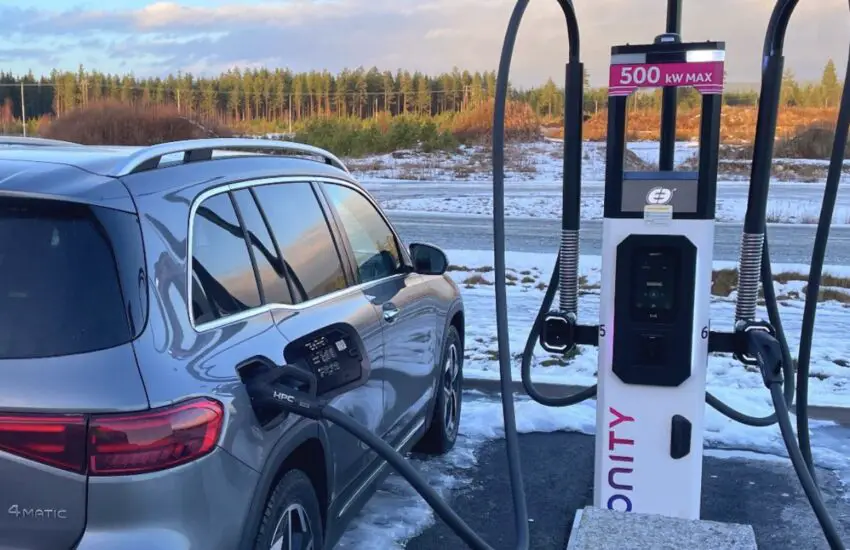
The European high-power charging network Ionity has marked a significant milestone with the launch of a next-generation charging park in Elverum, Norway. This installation is the first to feature hardware from Polish manufacturer Ekoenergetyka, enabling a record-breaking nominal power output of 500 kW per charger. This move represents a strategic expansion and technological leap for EV infrastructure in a nation at the forefront of electric mobility.

A New Benchmark for Charging Speed

The 500 kW capability sets a new standard for public charging. While current electric vehicles may not yet fully utilize this peak power, it provides substantial headroom for future models and ensures maximum charging efficiency for today’s capable cars. At this power level, compatible vehicles can add hundreds of kilometers of range in mere minutes, effectively making charging stops as quick and convenient as traditional refueling. This addresses a primary concern for potential EV adopters: long-distance travel convenience.

Ionity ultra-fast charging station in Norway

Strategic Importance for the Nordic Region

Norway’s EV adoption rate is the highest in the world, making it a critical market for charging infrastructure innovation. The deployment of this ultra-rapid hub in Elverum, a key transit point, is strategically important for improving connectivity along major routes. It demonstrates Ionity’s commitment to enhancing the Nordic charging corridor, reducing range anxiety, and supporting the growing fleet of electric vehicles in the region. This infrastructure is essential for sustaining Norway’s ambitious transition away from fossil fuels.

The Future of High-Power Charging Networks

This launch signifies more than just a new station; it highlights the ongoing evolution of charging technology and supplier ecosystems. By integrating Ekoenergetyka’s equipment, Ionity diversifies its supply chain and pushes the envelope on performance. As battery technology advances, this 500 kW infrastructure is future-proof, ready to serve the next generation of EVs that will charge even faster. This development is a clear indicator that the race for ultra-fast, reliable, and widespread charging infrastructure is accelerating across Europe.