Hydrogen engines are a type of engine that has been increasingly circulating lately. They function similarly to gasoline engines in many ways. Both use a four-stroke design for intake, compression, ignition, and exhaust.
There are considerable differences in the operation of hydrogen and fuel engines. You can browse online to find the best maintenance tips to keep your car’s engine running smoothly.
How do hydrogen engines work?
The concept of hydrogen engines is not that new since the technology for generating power from hydrogen has existed for several years.
However, what distinguishes hydrogen engines from other car engines is that the car emits steam instead of gases. There are many hydrogen engine cars, including the Chevrolet Equinox, the BMW 7 Series (745h), and the Honda FCX.
1. The difference in what your car emits
The fundamentally different vehicle produces water as a byproduct of the combustion cycle. Furthermore, due to the heat generated, NOx emissions are minimal but lower than those produced by a gasoline vehicle.
Since hydrogen is different from gas, the air-fuel ratio, compression ratio, timing, and ignition are different from those of other cars.
You might be able to use an air-fuel ratio of 180:1 and a higher compression ratio like hydrogen with a higher octane rating.
Since hydrogen is different from gas, the air-fuel ratio, compression ratio, timing, and ignition are different from those of other cars. (Photo: BMW Archives)
2. How do hydrogen engines power the car?
There are only two ways to power a modern car. The majority of today’s cars use an internal combustion engine that burns petroleum-based fuel, generates heat, and pushes the piston to move the vehicle forward.
However, electric cars run entirely on batteries, which supply electricity to the electric motor that propels the vehicle. Additionally, these hybrid cars are equipped with an internal combustion engine and an electric motor to switch between them while driving.
3. How does the technology work?
Fuel cells, a cross between the internal combustion engine and the battery, produce electricity using fuel from the tank. In this case, the fuel is hydrogen gas, not gasoline or diesel.
However, the fuel cell does not burn hydrogen but chemically combines it with oxygen from the air to produce water.
Then, electricity is released, which powers an electric motor to move the vehicle forward. The only waste produced is water.
Learn how hydrogen engines work. (Photo: latimes.com)
Hydrogen Engine, Diesel Engine, or Natural Gas Engine
Here is a table comparing diesel engines, natural gas engines, and hydrogen engines for your reference:
Aspect
Diesel Engine
Natural Gas Engine
Hydrogen Engine
Fuel Type
Diesel fuel (typically diesel oil)
Compressed Natural Gas (CNG) or LNG
Hydrogen gas
Combustion Process
Compression ignition
Spark ignition
Combustion with hydrogen and oxygen
Emissions
– Emit nitrogen oxides (NOx) and soot– May require exhaust gas aftertreatment
– Lower NOx and particulate emissions compared to diesel– Emits greenhouse gases (CO2)
– Produces only water vapor as exhaust– Considered a zero-emission vehicle
Fuel Consumption
Generally efficient
High thermal efficiency
High efficiency, similar to natural gas engines
Fuel Availability
Widely available worldwide
Access to natural gas infrastructure
Limited hydrogen refueling infrastructure
Fuel Cost
Moderate cost
Lower cost compared to diesel
Can be expensive due to limited supply
Refueling Infrastructure
Well-established
Expanding, but not as widespread as diesel
Limited availability in most regions
Energy Density
High energy density
Lower energy density than diesel
Low energy density
Engine Noise
Generally noisy
Quieter than diesel engines
Quiet operation
Cold Start Performance
May have issues in very cold climates
Performs well in cold conditions
Good cold start performance
Maintenance
Generally robust and durable
Less engine component wear
May require specialized maintenance
Environmental Impact
High greenhouse gas emissions
Reduced greenhouse gas emissions
Minimal environmental impact
Application
Common in trucks and heavy vehicles
Used in buses, fleet vehicles, and some industrial applications
Limited to niche and experimental applications
Future Trends
Evolving with emission reduction technologies
Growing popularity due to low emissions
Research and development for broader use
OEM Vehicle Availability
Widely available
Available in specific vehicle models
Limited availability, mainly experimental
Hydrogen Engine FAQ
1. Can hydrogen engines operate in medium and heavy-duty trucks and buses?
Yes, hydrogen engines can operate in medium and heavy-duty trucks and buses, and they are being studied as an alternative to traditional diesel engines in these applications.
Hydrogen fuel cell technology is particularly promising for larger vehicles due to its high efficiency and ability to offer longer ranges compared to battery electric vehicles.
2. Are specific modifications needed to the engine to run on hydrogen?
Yes, adapting an engine to run on hydrogen typically requires modifications to accommodate hydrogen’s different combustion characteristics and properties.
These modifications can include adjusting the air-fuel mixture, ignition timing, and fuel delivery system.
3. Are there different types of hydrogen engines?
Yes, there are different types of hydrogen engines, including hydrogen internal combustion engines (HICE) and hydrogen fuel cell engines.
HICE engines burn hydrogen directly, while hydrogen fuel cell engines use hydrogen to produce electricity to power electric motors.
4. What are the challenges and limitations of hydrogen engines?
Challenges include the limited availability of hydrogen refueling infrastructure, the cost of hydrogen production and storage, and the need for special handling and safety precautions due to hydrogen gas’s flammability.
5. Is hydrogen a renewable fuel source, and how is it produced?
Hydrogen can be produced using various methods, including electrolysis (using electricity to split water into hydrogen and oxygen), steam methane reforming (extracting hydrogen from natural gas), and other renewable sources.
The environmental impact of hydrogen depends on the production method used.
Watch this video from BeyondFuel to see how a hydrogen car works!
Thus, hydrogen engines offer drivers an environmentally friendly way to operate their vehicles without any issues.
The blue coolant light comes on when starting the car
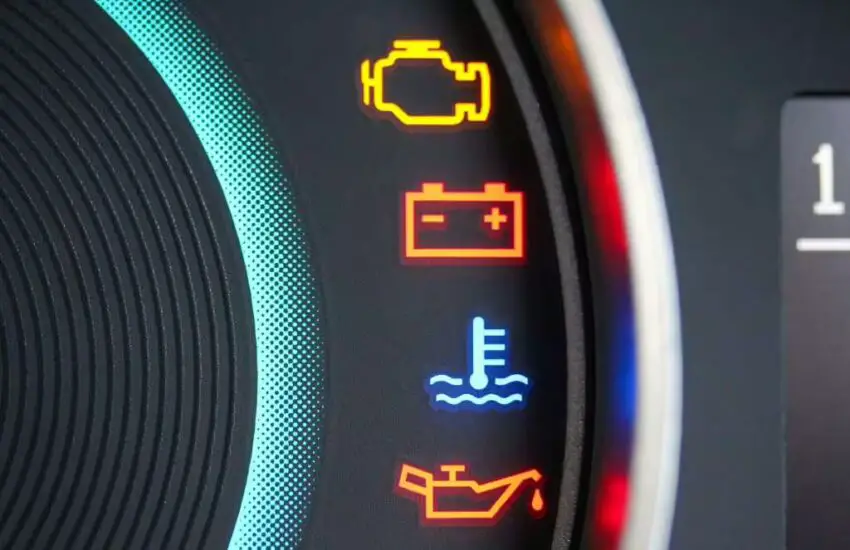
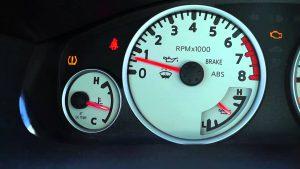
Have you ever glanced at your dashboard and noticed that a blue coolant light comes on when starting the car? Don’t panic!
It’s not necessarily a sign of imminent trouble for your vehicle. This blue light is likely your car’s coolant temperature warning indicator, and its initial illumination is actually a good thing.
Let’s dive into the world of automotive coolant and discover what this blue light means. We’ll see why it lights up when you start your engine and what it signifies for your car’s overall health.
Understanding the Cooling System
Your car’s engine generates intense heat during operation. To prevent overheating and potential damage, a vital system called the cooling system circulates a special liquid mixture throughout the engine.
This coolant absorbs heat and transports it from the engine block to the radiator, where it is released into the air.
The Role of the Coolant Light on the Car
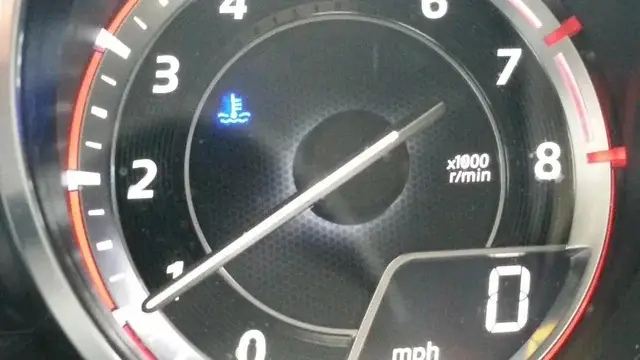
The blue light on your dashboard acts as a coolant temperature gauge. When you start your engine, it is cold, and the coolant hasn’t had time to circulate and reach its optimal operating temperature.
That’s why the blue light comes on; it simply informs you that the engine coolant is currently below its ideal temperature.
Why is the Blue Coolant Light Coming On When Starting the Car Normal?
This initial blue light indicates a positive aspect. The vehicle’s computer system performs a health check, verifying that the coolant temperature sensor is functioning correctly and is ready to monitor the engine temperature throughout your journey.
This ensures the system can effectively manage the engine temperature once it reaches its optimal range.
When the Blue Coolant Light Comes On When Starting the Car is a Warning
Although the blue light at startup is normal, other situations warrant attention. Here are some issues you should notice because you risk ignoring them!
Persistent Blue Light
The blue coolant light serves as a guardian of your engine’s temperature.
While its initial illumination at startup is normal, a blue coolant light coming on when the car starts to remain on for an extended period (usually longer than a few minutes) after you begin driving indicates a potential problem: the engine is not reaching its ideal operating temperature.
Faulty Thermostat
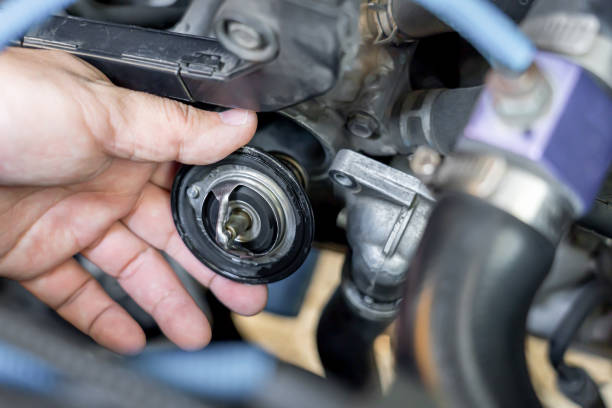
The thermostat plays a crucial role in regulating the flow of coolant to the engine. Imagine it as a valve that opens and closes based on engine temperature.
When the engine is cold, the thermostat remains closed, limiting coolant flow and allowing the engine to warm up faster.
When the engine reaches its optimal temperature, the thermostat gradually opens, allowing the hot coolant to circulate and regulate the engine temperature.
However, if the thermostat malfunctions and remains stuck in the open position, it acts like a faulty guardian. Coolant constantly circulates through the engine, regardless of its temperature.
The constant circulation of cold coolant prevents the engine from reaching its ideal operating temperature range, triggering the persistent illumination of the blue light.
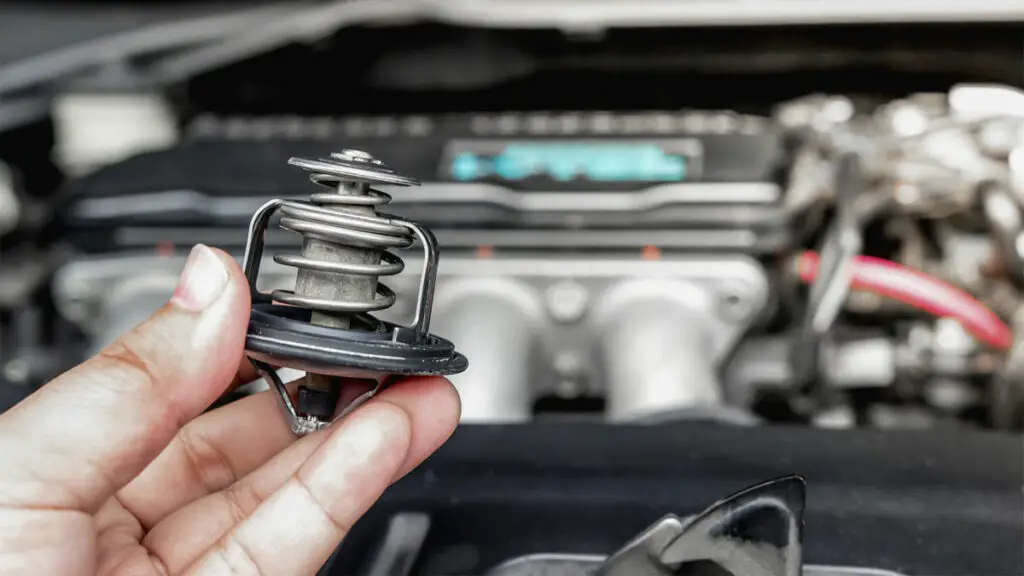
The thermostat plays a crucial role in regulating the flow of coolant to the engine. (Photo: iStock)
Coolant Level
The coolant absorbs heat and transports it to the radiator to be dissipated. But like any superhero, coolant must be present in sufficient quantity to be effective.
When the coolant level in the system falls below the recommended level due to leaks or a lack of regular maintenance, the remaining coolant faces a more difficult task. It is simply insufficient to effectively absorb and transfer all the heat generated by the engine.
This issue can lead to the engine not reaching its optimal operating temperature and the blue coolant light coming on when the car starts as a warning sign.
Faulty Coolant Circulation System
Consider the coolant circulation system as a network of highways inside your car. The water pump acts as a powerful pump, pushing coolant through this network of pipes and hoses.
The radiator functions as a heat exchanger, where the hot coolant releases its captured heat into the air.
If a component in this system fails, it can disrupt the regular circulation of coolant. A faulty water pump may not be powerful enough to circulate coolant effectively.
A clogged radiator can hinder heat release, causing the coolant to remain hot. Clogged hoses can restrict coolant flow to certain areas of the engine.
Any of these problems can prevent the engine from reaching its optimal operating temperature, causing the blue light to stay on as a warning.
Light Color Change or Flashing
The blue coolant light usually serves as a useful indicator for engine temperature. However, some car models adopt a more dramatic approach.
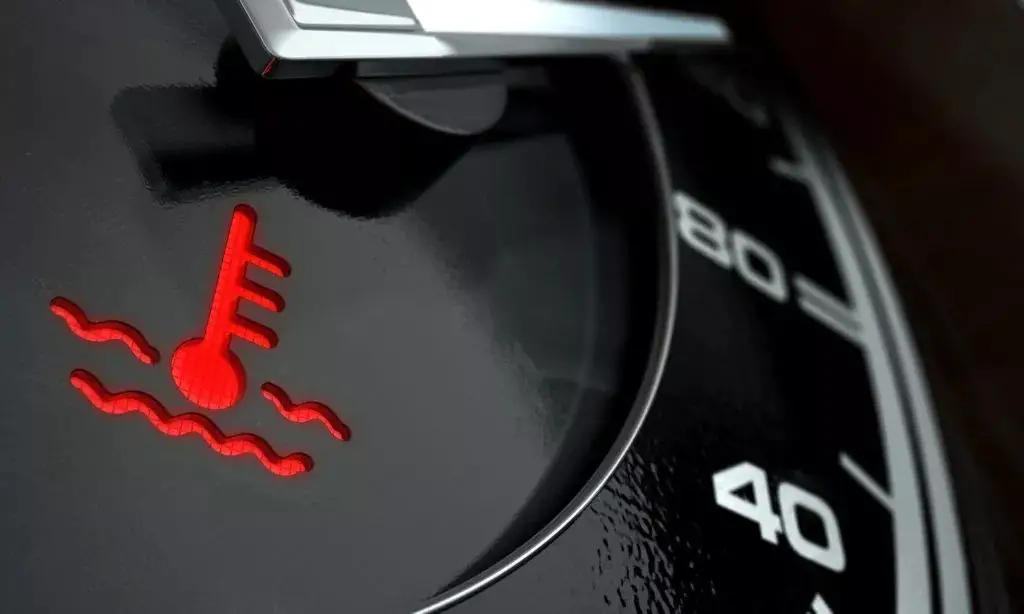
On these vehicles, the red coolant light comes on when starting the vehicle or the blue light may change color or start flashing when the coolant temperature reaches excessively high levels. This is an important warning indicating that your engine is overheating.
The thermostat plays a crucial role in regulating the flow of coolant to the engine. (Photo: iStock)
Engine Overheating
Imagine your car’s engine as that of an athlete. Just like an athlete, the engine generates a lot of heat during operation. The cooling system acts as a cooling mechanism, constantly circulating coolant to absorb this heat and transfer it away from the engine.
However, if the engine overheating warning light comes on, it means the cooling process is failing. The coolant temperature has reached a dangerously high level, and the engine is at risk of serious damage.
Engine overheating is a serious threat because extreme heat can warp metal components, causing internal friction and reducing efficiency.
In the worst case, pistons can seize or the cylinder head gasket can blow, leading to catastrophic engine damage and costly repairs.
If you see a flashing red coolant light, prioritize safety by stopping immediately and turning off the engine.
Do not ignore the red or blue coolant light coming on when starting the car. Find a safe place to pull over as soon as possible and turn off the engine.
Then, turn off all electrical accessories. This will help minimize the load on the engine and prevent additional heat production.
Do not attempt to open the radiator cap when the engine is hot. The cooling system is under pressure, and opening a hot radiator can cause burns.
Wait for the engine to cool down completely (ideally for at least 30 minutes) before attempting to check the coolant level.
Once the engine has cooled, you can check the coolant level. If the level is low, adding coolant may be a temporary solution to get you to a mechanic.
The overheating problem requires professional intervention. A qualified mechanic can diagnose the underlying cause of the overheating, whether it’s a faulty thermostat, a failing water pump, a clogged radiator, or another issue.
Impact of Weather Conditions
Extremely cold weather can lead to the blue light staying on longer after startup. This is because the engine takes longer to reach its operating temperature under such conditions.
However, if the light remains on for an unreasonable duration even in cold weather, it’s best to consult a mechanic for a check-up.
Driving Habits and the Blue Light
Short trips often don’t allow the engine to fully reach its optimal temperature. If your driving habits consist mainly of short trips, you might see the blue light come on more frequently.
Driving shouldn’t be a major concern unless the blue coolant light comes on when starting the car and stays on during long journeys.
However, you should always be cautious and pay attention to your driving habits when on the road to avoid any unforeseen events.
Pay attention to your driving habits when on the road to avoid any unforeseen events. (Photo: Reddit)
FAQ
Why does the blue coolant light stay on longer in winter?
In cold weather, the engine takes longer to reach its optimal operating temperature. The blue coolant light may stay on longer during the winter months because the coolant is colder and takes more time to warm up.
Can driving with the blue coolant light on damage my engine?
Driving with the blue coolant light on is generally safe, as it simply means the engine is still warming up. However, driving aggressively or at high speeds before the engine is warm can increase wear and tear. It’s best to drive gently until the light goes out.
Does the blue coolant light affect my fuel efficiency?
Yes, driving with a cold engine can slightly reduce fuel efficiency because the engine runs richer (using more fuel) to warm up. Once the engine reaches its operating temperature and the blue light goes out, fuel efficiency should improve.
Why does the blue coolant light sometimes come on briefly even when the engine is warm?
This can happen if the engine experiences a sudden temperature drop, for example after driving through water or if the coolant level is low. It could also indicate a sensor problem, requiring a check by a mechanic.
Is it normal for the blue coolant light to come on after the car has been parked for a short time?
This can be normal. If the car is parked and the engine cools down, especially in cold weather, the blue coolant light may come on when you restart the car until it warms up again.
Will the blue coolant light come on if my thermostat is stuck open?
If the thermostat remains stuck in the open position, the engine may not effectively reach its optimal operating temperature, causing the blue coolant light to stay on longer or come on intermittently.
Can flushing the cooling system affect the blue coolant light?
After a cooling system flush, if the coolant level is not properly filled or if there are air bubbles in the system, the blue coolant light may behave unusually. Ensure the system is properly bled and filled after a flush to avoid this issue.
Watch this video from Nate Wade Subaru to find out why the blue light comes on on your dashboard!
The blue coolant light is a valuable tool for monitoring your car’s engine temperature. While its initial appearance at startup is a normal phenomenon, pay close attention to how long it stays on and if it turns red.
By understanding this light and its function, you can ensure your engine operates at its optimal temperature, maximizing performance and avoiding overheating issues.
If you notice an abnormal blue coolant light coming on when starting the car, don’t hesitate to consult a qualified mechanic for a more in-depth diagnosis and repair to keep your car running properly.
Distribution chain or timing belt: what is the difference?
Timing chains and timing belts – Car owners often confuse these two engine parts. Both function to coordinate the rotation of the camshaft and crankshaft to control the engine’s valves and timing. However, there are crucial differences that make one superior to the other. So let’s explore the actual difference between the timing chain and the timing belt and find out which one is better.
Complete Comparison – Timing Chain vs. Timing Belt
It is difficult to answer this question because both the timing chain and the timing belt have the same function in the vehicle. Although they have the same function, each has strengths and weaknesses that make them different. So let’s start by drawing the complete difference to better understand these two engine parts.
1. Timing Belt
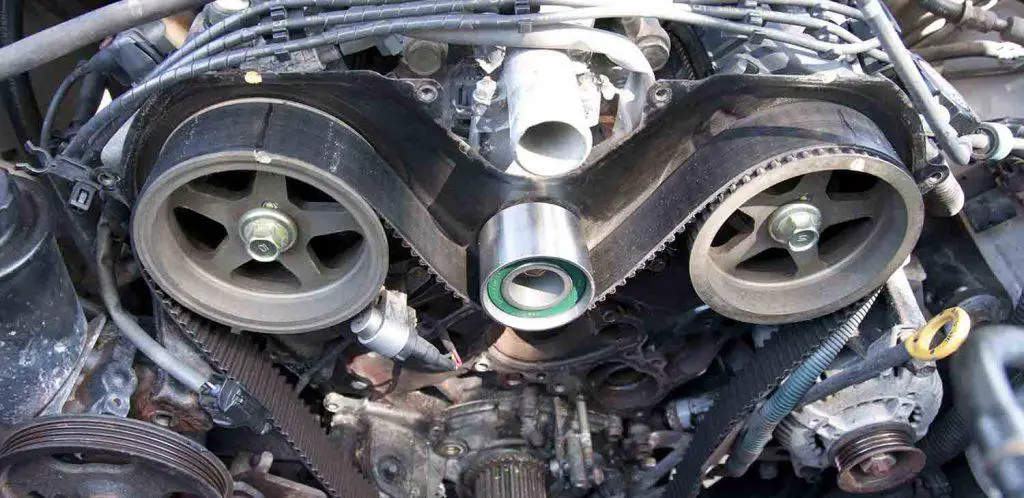
Understanding the usefulness of the timing chain versus the timing belt. Source: GoodMecano
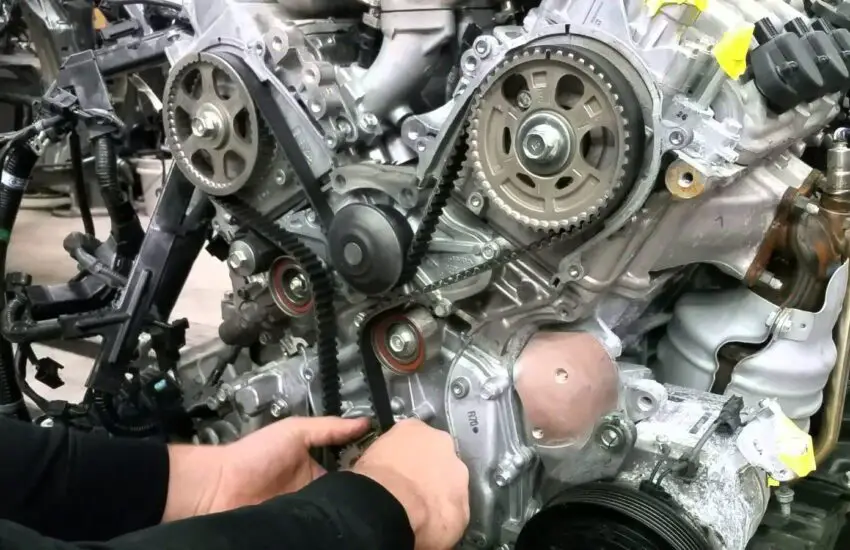
One of the key innovations of the 1960s was the timing belt. Given the complexity of a vehicle’s engine and the increasing importance of the automobile in everyone’s life, this belt was invented. It is a component of internal combustion engines that coordinates the rotation between the camshaft and the crankshaft. This belt is assembled near hydraulic timing tensioners to maintain balanced movement throughout the engine cycle and keep the timing on track.
A timing belt is made from rubber and contains fiberglass for more durability. Therefore, it typically wears out over time. When this belt rotates, it does not produce much noise and is quite quiet. Most car manufacturers advise changing these timing belts after 60,000 miles.
2. Timing Chain
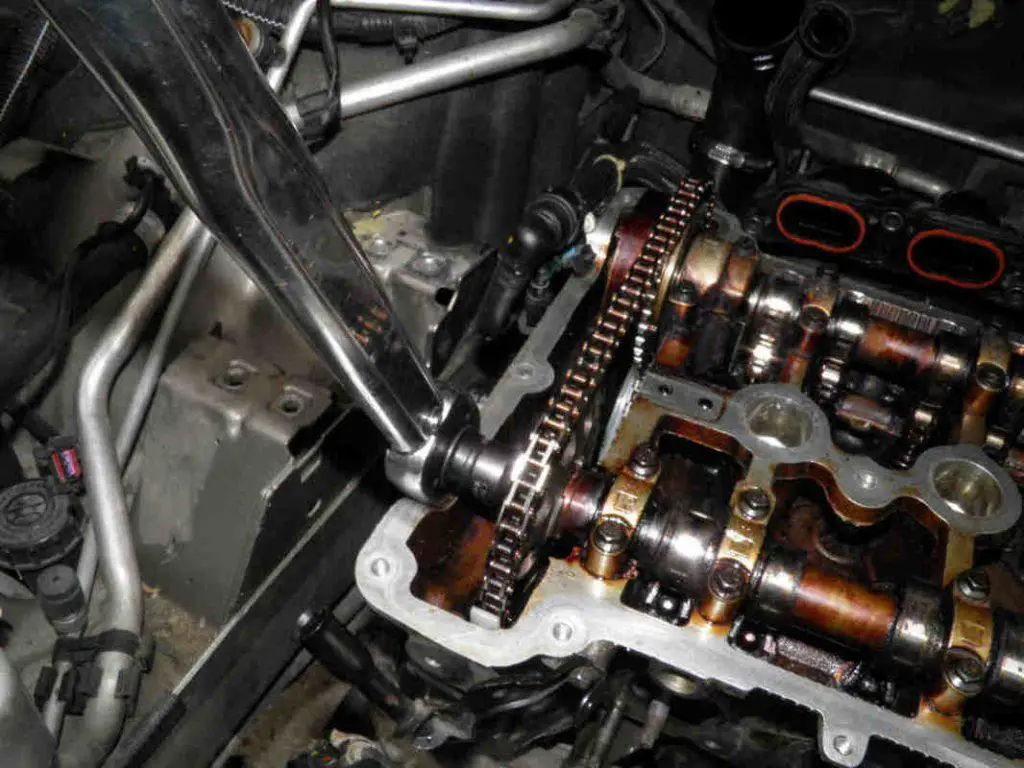
Strengths and weaknesses of the timing chain versus the timing belt. Source: DailyDriven
In contrast, a timing chain is a metal chain that connects the crankshaft and the camshaft to make them rotate in sync. One of the main advantages of using a timing chain over a belt is its long lifespan. Fortunately, these chains do not need to be replaced after a certain mileage. They can last the entire life of your car’s engine. Furthermore, they contain tensioners that contribute to their proper functioning and prevent any loosening.
Timing chains depend heavily on the engine’s oil pressure. If the oil pressure is low or inconsistent, it can affect the chain’s operation and impact the engine timing. So you can read some car maintenance tips to know how to fix these chains immediately. Unlike timing belts, timing chains are noisier, heavier, and more dangerous when they break.
3. Why is a Timing Belt More Preferred Than a Chain?
There are two main reasons for this underlying fact.
First, the production cost of a timing belt is much lower than that of a timing chain. Therefore, the marketability of a belt-driven car is much higher than that of a chain-driven car due to the huge price differences. This trend is particularly popular in the cheap car market, where prices matter the most and the majority of buyers have a negligible understanding of engineering and the pros and cons of a belt versus a chain. Generally, customers in this niche of the car market care little about what they really want from their engine compared to the main concern of their wallet. Therefore, manufacturing cars with belts is much more lucrative than those with chains.
Second, engines equipped with a timing belt are less noisy. Of course, everyone likes a quiet car, but there is also a misconception that low noise equates to a car’s quality and new condition. In the long term, a timing belt does not meet expectations, as it typically needs to be replaced every 60,000 to 100,000 miles and every five to seven years. Although a belt is inexpensive to manufacture, its replacement is costly due to the complex technical process. Furthermore, the water pump and tensioners must also be replaced along with the belt, requiring more parts and more labor.
Finally, other minor reasons can be:
Higher timing accuracy, leading to superior performance and lower gas emissions
Reduced friction and lubrication needs
Rare belt failures cause much less damage to cars than chain failures
Conclusion
Finally, we have established the main differences between the timing chain and the timing belt. Both have their strengths and weaknesses. If you want to properly maintain your vehicle, a timing belt is a better option. But for those who do not care about their car’s maintenance, they can probably stick with the timing chain.
The reasons why the timing belt is more popular in cars are the low production cost and low operating noise.
How to Detect a GPS Tracking Device on a Car?
Sometimes, car owners are unaware that someone has placed a GPS tracker to monitor their movements. This is why many want to know how to detect a GPS tracking device on a car and remove it.
Nowadays, it’s essential to have a pre-installed GPS in the vehicle. Many vehicles come equipped with a GPS to help the driver know their exact location. These devices are popular among taxi drivers as well as individual car owners.
How to Detect a GPS Tracking Device on a Car? Read Here
If you suspect that a GPS inside your vehicle has been equipped with a tracking device without your consent, follow the steps below to check if your movements are being monitored.
First, we need to understand what a GPS tracker looks like to the average person.
What is a GPS Tracker?
A GPS tracker comes in various shapes and sizes, some being more discreet than others. These are divided into two main categories: real-time GPS trackers and GPS data loggers.
On one hand, real-time GPS tracks the vehicle’s position through real-time data transmission via cell towers. On the other hand, a GPS data logger stores location data in internal memory and is only accessible in person.
Below are the guidelines to help you confirm if a GPS is present on your car and how to get rid of it.
1. Check the Exterior of the Car
Car bumpers are the best place to hide a GPS tracker. Experts recommend looking behind your car’s bumper using a mirror with an extendable handle.
You should check the car’s undercarriage. Also, don’t forget to check the wheel well. This is the first step to take when wondering how to detect a GPS tracking device on a car and remove it.
Detect a GPS tracking device on the car by checking the bumper. (Photo: Freepik)
2. Inspect the Interior
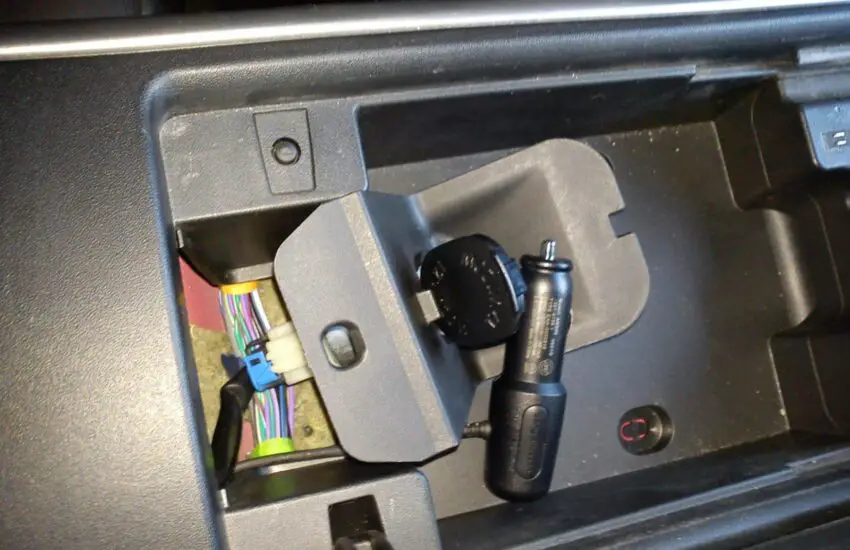
A GPS tracker that is easier to find is one plugged into either the OBD data port behind the dashboard or the 12V cigarette lighter socket.
If you don’t see a GPS tracker in the indicated location, check other parts of the interior, including the dashboard, storage compartments, under the seats, and the spare tire. This is one of the essential maintenance tips for taking care of your vehicle’s security.
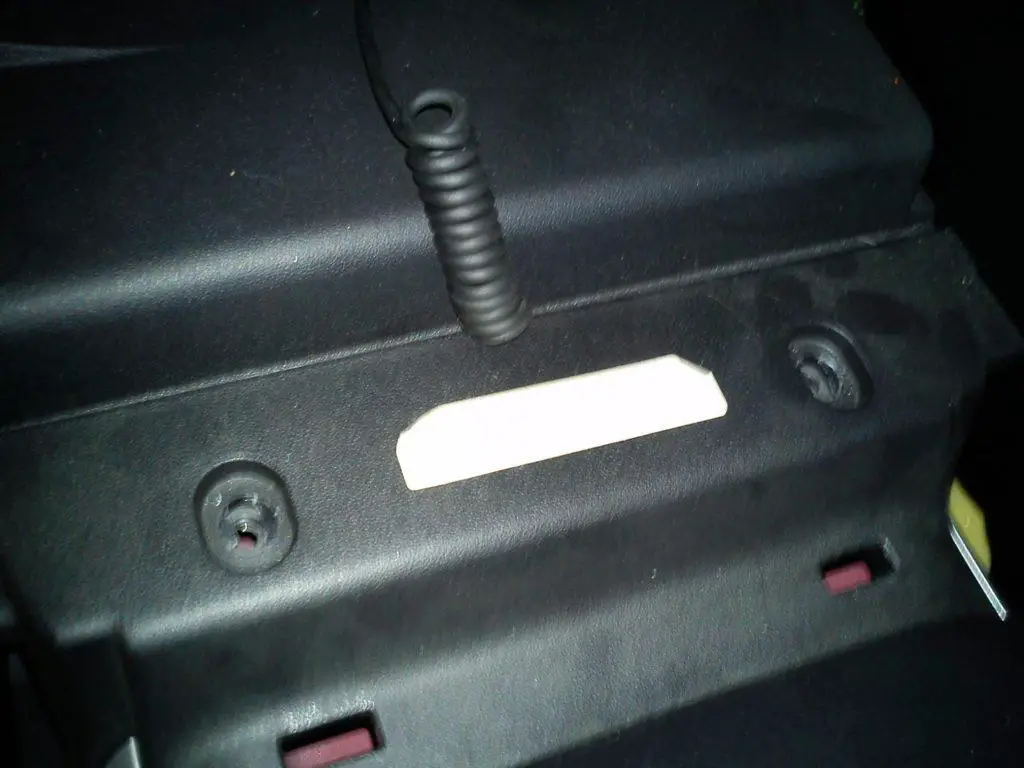
Since the plastic interior trim of current car models is easy to remove, it provides enough space to hide something. This is where you might find a hidden GPS tracker.
There are many places to hide a GPS tracking device on your car
FAQ
1. How can I physically check if my vehicle is equipped with a GPS tracking device?
You can perform a physical inspection by carefully examining the interior and exterior of your vehicle. Look for unusual or misplaced objects, wires, or magnetic attachments. Also consider using a professional bug detector.
2. Can I use a smartphone app to detect GPS tracking devices on my car?
There are smartphone apps that claim to detect GPS tracking devices, but their effectiveness may vary. It is generally recommended to use dedicated bug detectors or seek professional help for a more reliable assessment.
3. What should I do if I find a GPS tracking device on my car?
If you find a GPS tracking device on your car and you did not authorize its installation, it is essential to follow these steps:
Do not remove the device yourself, as this may be illegal in some jurisdictions.
Document its location and take photos as evidence.
Contact law enforcement to report the device.
Seek legal advice if necessary to address any privacy concerns.
4. Are there legal restrictions regarding the use of GPS tracking devices on vehicles?
The legality of using GPS tracking devices on vehicles varies by jurisdiction. In many countries, it is legal to use such devices on your own vehicle or with proper consent. However, using them on someone else’s vehicle without authorization may be illegal and constitute a violation of privacy laws.
5. How can I protect my car from unauthorized GPS tracking?
To protect your car from unauthorized tracking, you can:
Regularly inspect your vehicle for any signs of tracking devices.
Use GPS signal jammers or blockers (where legal) to disrupt tracking signals.
Install a security system to prevent tampering.
Be cautious about who has access to your car and its keys.
6. Is it possible to jam or block GPS tracking signals?
Yes, it is possible to disrupt GPS tracking signals using signal jammers or blockers. However, the use of such devices may be subject to legal restrictions and should be used responsibly and within the bounds of the law.
In Summary
So, when wondering how to detect a GPS tracking device on a car, following these guidelines will ensure your vehicle’s security.
This will not only preserve your car’s safety but also its privacy. Therefore, keep these tips in mind to avoid any infringement on your privacy.
Car engine temperature and things to avoid
Although practically everyone owns a car, not everyone necessarily knows about their car’s engine. However, you should know if your car’s engine temperature is at the right level. This will help you know if the engine, the heart of your car, is working well. And it’s important to know whether it’s a manual or automatic car.
However, not all car temperature gauges are designed to simply indicate the car’s temperature as HOT, COLD, or SAFE. There are also digital gauges, which may only indicate relatively high or low temperatures.
How to Read a Car’s Engine Temperature
It is well known that an overheating engine can be dangerous. But you may not know how to measure overheating and what to do once you know it’s overheating. This requires not only knowing how to read your gauge and recognizing the symptoms of car overheating, but also knowing how to react. Take note of these maintenance tips.
Reading the car engine temperature.
Analog Gauges
As you may have noticed, most gauges indicate temperature through a panel without numbers. They simply have C and H, or blue and red, and a point in between that indicates normal temperature. The interpretation is simple. Here’s what you need to interpret:
Normal – Everything is fine
Cold – Everything is fine. Old cars need a bit of warming up in winter. Modern cars do very well. No need for warming up. The computer provides fuel even if the engine is cold to start it.
Hot – Yes, this is worrying and you need to react.
Digital Gauges
These thermometers simply display a value in degrees Fahrenheit. If you’re a gadget enthusiast, you’ll check the meaning of temperatures on a digital thermometer. But here’s a simple tip:
Below 240° F – Everything is fine
Above 240° F – The engine is overheating. The gauge triggers a flashing light or alarm, and you need to take control of the situation.
Overheating is one of the most common engine problems that you should not ignore.
What Temperature Does a Car Engine Reach?
First, we need to understand that the engine runs well when it operates at high frequency, but the temperature is always maintained according to the manufacturer’s regulations. The normal temperature of a car engine is between 90 and 105 degrees Celsius (approximately 195 to 220 degrees Fahrenheit) (for gasoline engines, the engine temperature is regulated around 80 degrees Celsius, for diesel engines, it’s around 90 degrees). Modern car powertrains operate at a temperature of 100°-105°. In the engine cylinder, when the mixture burns, the combustion chamber heats up to 2500 degrees, and the coolant’s task is to maintain an optimal temperature within the normal range. Any error with this component will result in a higher than normal temperature, causing an overheating problem.
What to Avoid When the Car’s Engine Temperature Rises
Try these methods to avoid engine overheating. (Photo: desktopnexus)
Do not continue driving, but do not brake too hard either. If the engine is overheating, simply slow down, pull the car to the side, and turn off the engine.
Do not try to restart the engine after a few minutes thinking it has cooled down. Most of the time, engines overheat due to lack of coolant. So you need to fix the problem first.
Do not rush to open the hood immediately. You risk burning your hands. Open it carefully, after a few minutes have passed.
Never immediately remove the radiator cap or water circuit cap. The risk of explosion increases as it is under high pressure.
If the radiator needs coolant, do not rush to fill it with antifreeze. Make sure there are no leaks or bursts in the cooling system. The leak or burst could actually be the cause of the symptoms of car overheating.
Start the engine a few minutes after filling the coolant. If it heats up again, do not pretend to be an expert. If you cannot diagnose the problem or the engine continues to overheat, you should call a professional.
Remember that a car engine overheating can be a real problem. Diagnose and treat it in time.
Active Battery Saving Message
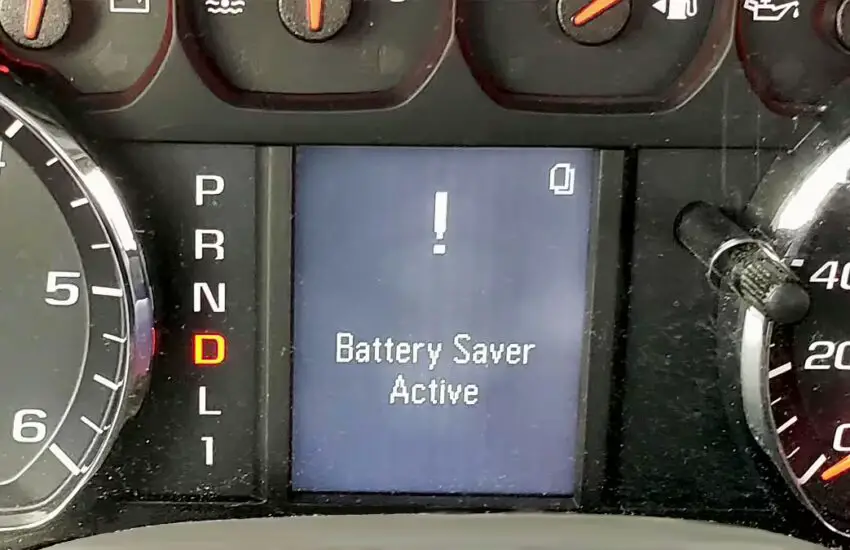
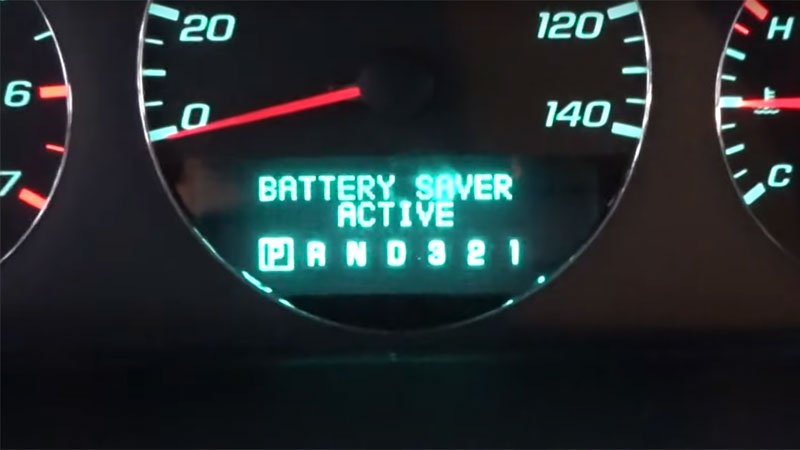
While driving on the highway, your car’s dashboard lights up and displays an unusual warning message: “Battery Saver Active.” Although this alert is often a source of confusion and concern, it’s usually a simple fix.
But what exactly does this message mean, what causes it, and what should you do immediately after seeing this warning appear?
What is “Battery Saver”?
“Battery Saver” mode is a state where the computer shuts down peripheral electrical systems to prioritize the power you need to keep driving. This happens when the battery or alternator has a problem and the supplied voltage is low.
When you’re driving on the road, your alternator is your vehicle’s primary power source. If your alternator cannot meet the vehicle’s electrical demand, you risk seeing a “Battery Saver Active” warning appear on your GM vehicle. GM brands include Buick, Chevrolet, Cadillac, and GMC.
This warning light is similar to the battery warning light found on most vehicles. The battery warning light is more generic and is not specific to General Motors.
Meaning of “Battery Saver Active”
The “Battery Saver Active” warning means the charging system is unable to properly charge the battery or the electrical consumption exceeds the alternator’s capacity. In both cases, Battery Saver mode will activate to prioritize the vehicle’s electrical needs.
In other words, Battery Saver mode allows you to keep driving for as long as possible.
If you see a “Battery Saver Active” warning, you should get to a repair shop as soon as possible. You can even test the battery voltage at an auto parts store if you cannot get to a shop quickly enough.
Causes of the Battery Saver Active Light
The battery saver system is caused by an electrical problem. The main cause is often the battery, the alternator, or a connection between the two.
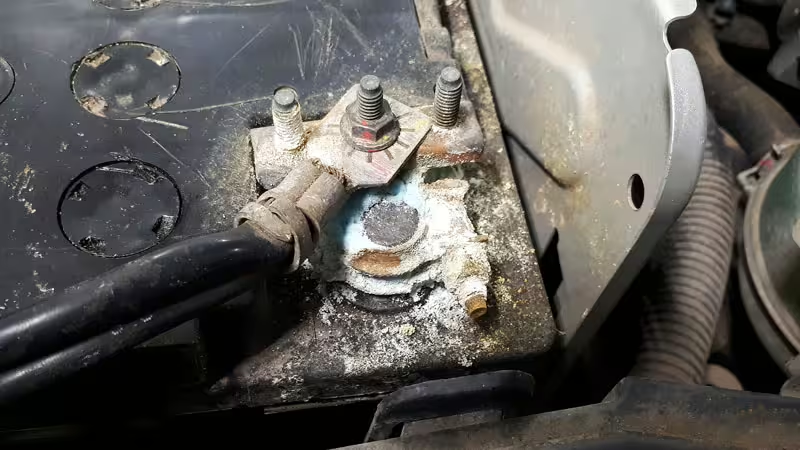
1) Corroded Battery Terminals
Corroded battery terminals are often the cause of charging problems. Check the battery cables where they attach to the battery. If you notice a brown, white, or green powder, you have corrosion or battery acid on the battery terminals.
ADVERTISEMENT
Cleaning this corrosion will give you a better connection to the battery and allow the charging system to work more efficiently. In extreme cases, corrosion can prevent you from starting the vehicle.
2) Loose Battery Cables
Just like corroded battery terminals, if your battery cables are loose, you will have a poor connection to the battery. This will impact the alternator’s charging ability, slowing down the process. It can also make starting the vehicle difficult.
3) Faulty Battery
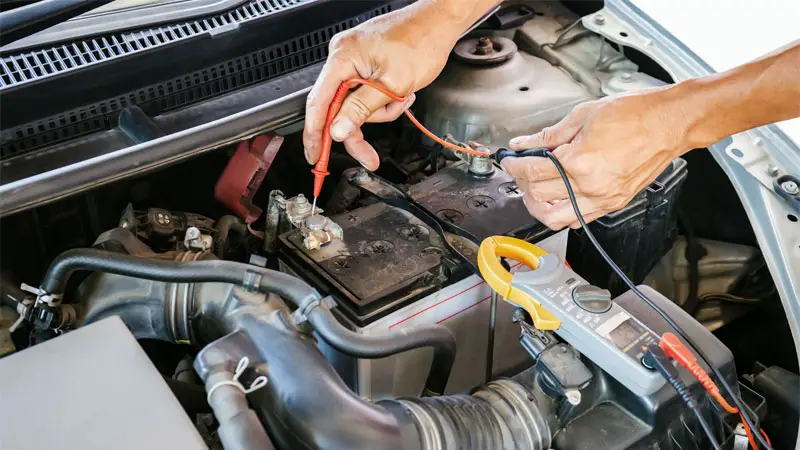
Lead-acid batteries age over time and with use. If you think your battery is faulty, you can test it with a multimeter. In extreme cases, a faulty battery will prevent you from cranking the vehicle to start it. Once your battery is completely dead, it may never regain its full power.
Sometimes, a good car battery can seem faulty due to a parasitic draw. A parasitic draw is a constant drain on the battery when the vehicle should be off.
4) Bad Ground
A bad ground can behave the same way as a faulty battery or alternator. The negative terminal on most vehicles is a ground, but you will also have ground cables throughout the engine bay for various engine components.
If there is a grounding issue, you might end up with an open circuit or a situation where a system works intermittently. Check for loose or missing ground connections when troubleshooting the “Battery Saver Active” warning light.
5) Faulty Alternator
Alternators (also called generators) allow your vehicle to run while you’re driving and also charge your battery while the vehicle is moving. The alternator has a pulley that attaches to the serpentine belt. When this pulley spins, it generates electricity.
Faulty alternators are less common than faulty batteries and battery connection problems, but alternators do sometimes have issues. If you want to test a faulty alternator, consider using a multimeter to perform a voltage drop test.
6) Aftermarket Audio System
While this is a less common cause of electrical problems, it’s still worth mentioning. If you’ve added a high-power aftermarket audio system to your vehicle without upgrading your alternator, you might find yourself in a situation where your amplifier is drawing more power than the alternator can supply.
When upgrading your audio system, it’s wise to check the specifications of your amp and alternator to ensure they are compatible. Consider upgrading to a higher-output alternator if you have a high-power amp or a large subwoofer.
Can I Drive with the Battery Saver Light On?
While it is possible to drive for a short time with this light on, you should not drive any longer than necessary.
Electricity from the battery or alternator is needed to power the ignition coils, which send an electrical arc across the spark plugs. If you run out of electricity, your car will stop running and you’ll be stranded.
The 4 Types of Ignition Systems and Their Operation
Although the automotive industry has made drastic mechanical and technological progress throughout history, there is one element that all vehicles equipped with internal combustion engines have in common: the ignition system.
If you take your precious vehicle seriously, it is helpful to know how the different types of ignition systems work, as well as their advantages and disadvantages, in order to choose the right spark plug that works most efficiently given the performance requirements of the ignition system.
Although almost all major components of a car have undergone improvements over the years, the basic principles of the ignition system have not changed for nearly a century.
In essence, it takes the electrical voltage from the battery, converts it into a much higher voltage, and then transfers this electrical current to the engine’s combustion chamber, igniting the compressed mixture of fuel and air to create combustion. This combustion generates the energy needed to operate your car.
The ignition system plays an essential role in creating the combustion necessary for your car to operate.
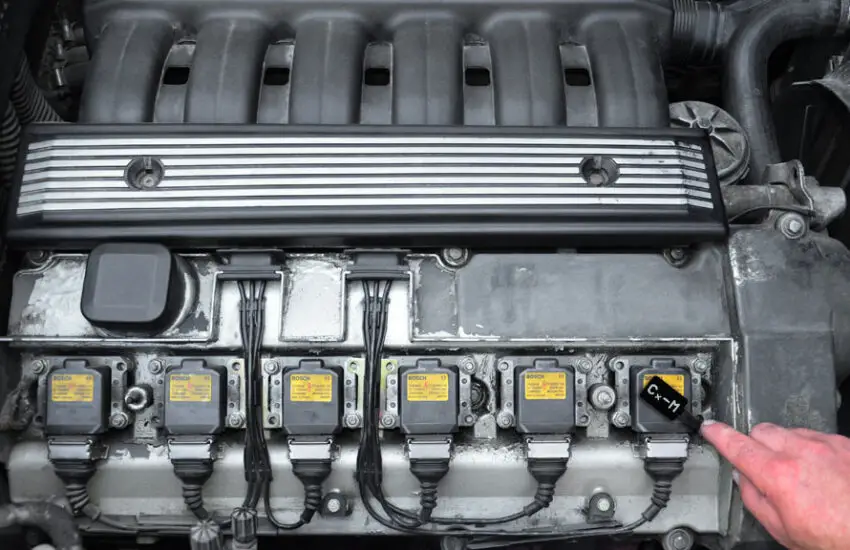
That said, the method by which the spark is created and distributed has greatly improved thanks to technological advances. Currently, there are four types of ignition systems used in most cars and trucks, in order of invention: conventional breaker point (mechanical) ignitions, high-energy (electronic) ignitions, distributorless (waste spark) ignitions, and coil-on-plug ignitions.
Breaker point (mechanical) and high-energy (electronic) ignitions are distributor-based ignitions. Another way to classify them is therefore into three broader types of ignition systems: distributor-based, distributorless, and coil-on-plug systems.
In this comprehensive guide, we will look at how each system works, as well as the resulting advantages and disadvantages, based on what it means for your engine’s performance and maintenance requirements.
What is the purpose of the ignition system?
When you put your key in your vehicle’s ignition and turn it, your engine starts and continues to run. Have you ever wondered what the complete process is behind such a simple action?
Let’s get back to basics: your engine produces energy to power your car by creating combustion, or an explosion, inside its combustion chamber, hence the name “internal combustion engine”. To generate such combustion, the ignition system plays a major role: your spark plugs provide the electrical spark that ignites the air-fuel mixture that powers the combustion chamber.
The ignition system’s spark plug ignites the air-fuel mixture, hence the name “ignition”.
For the ignition system to function correctly, it must be able to perform two tasks efficiently and accurately at the same time.
Create a spark strong and hot enough
The first task is to create a powerful spark that can jump the gap between the spark plugs. In other words, the ignition system must increase the voltage from the battery’s 12 volts to at least 20,000 volts, which is necessary to ignite the compressed air and fuel mixture in the combustion chamber to create an energy-generating explosion.
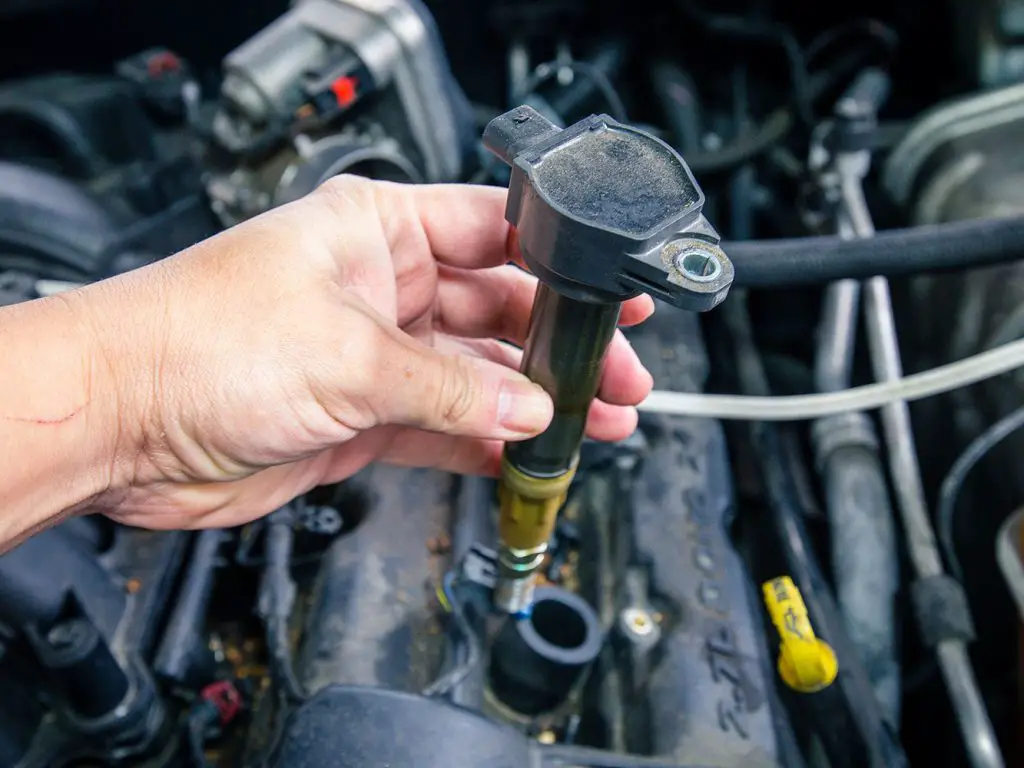
To achieve such a voltage surge, the ignition systems of all cars, except diesel models, use an ignition coil composed of two coils of wire wound around an iron core, called the primary winding and secondary winding. The ignition coil acts as an electrical power transformer.
The role of the ignition coil is to create an electromagnet by passing the 12 volts supplied by the battery through the primary winding. When the vehicle’s ignition system trigger switch cuts power to the ignition coil, the magnetic field collapses. In doing so, the secondary winding captures the collapsing magnetic field from the primary winding and converts it into 15,000 to 25,000 volts.
It then supplies this voltage to the spark plug, thus creating combustion in the engine’s combustion chamber, thereby generating the energy needed to start and run your vehicle’s engine. For the necessary spark to occur, the converted voltage delivered to the spark plug must be between 20,000 and 50,000 volts.
Ignite the spark at the right time
Simultaneously, the ignition system also has the essential role of ensuring that the spark fires at the right time during the compression stroke to maximize the power generated by the ignited air-fuel mixture. In other words, sufficient voltage must be delivered to the right cylinder at the right time, and this operation must be performed frequently.
All components work with precision and harmony for your engine to achieve optimal performance. Even the smallest timing error in a single part will lead to engine performance problems and, if prolonged, can even cause permanent damage.
The ignition system must provide sufficient spark to the correct cylinder. To ensure precise ignition timing, engineers have used several methods, which have evolved over the years.
Early ignition systems used fully mechanical distributors to control ignition timing, followed by hybrid distributors equipped with semiconductor switches and the Engine Control Module (ECM), essentially a type of simple process computer, to distribute electrical power to each cylinder.
To counter the disadvantages of these early distributors, 100% electronic ignition systems emerged, the first of which was a distributorless ignition system, where the distributor was eliminated.
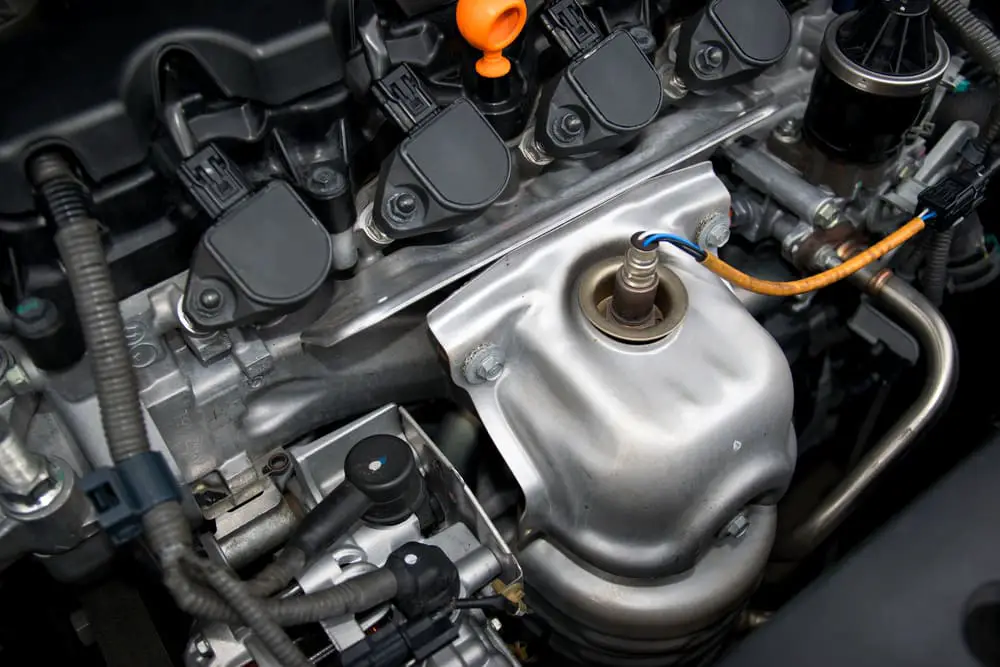
The latest invention, coil-on-plug ignition systems, significantly improved ignition timing by using an improved ignition coil that produces much higher power and generates a much hotter spark.
What is the purpose of each component of the ignition system
The components of a conventional ignition system.
Battery
When the engine runs, it also operates the alternator which generates electricity to recharge the battery. Your car’s battery stores electricity and releases it as direct current.
The battery provides twelve volts of direct current. However, to obtain a spark enabling combustion, the spark plug needs to be supplied with a voltage between 20,000 and 50,000 volts. To allow for such a significant voltage increase, the ignition coil is required.
Ignition Coil
The ignition coil converts the battery’s low voltage into the high voltage required by the spark plugs.
The ignition coil acts as an electrical power transformer. Early mechanical ignition systems rely on a coil to convert the battery’s low voltage into the high voltage required by the spark plugs.
The electrical transformation of the ignition coil works on a principle called magnetic induction. In a traditional transformer, the primary coil receives energy, i.e., direct current from the batteries. However, this charge through the primary coil is periodically interrupted. This interruption is caused by the distributor in early distributor-based ignition systems, and by a computer for more precise timing in later ignition systems. The role of the distributor will be discussed later.
The voltage in the primary coil produces a magnetic field. The periodic disruption of the current received by the primary coil causes the constant collapse of the magnetic field produced by the primary coil. Such significant movements of the primary coil’s magnetic field cause the secondary coil to create a burst of high-voltage energy at once.
The voltage generated by the secondary coil depends on the ratio between the number of turns in the primary coil and the number of turns in the secondary coil. If the secondary coil has twice as many turns as the primary coil, the output voltage will be twice the input voltage.
Thus, to increase the voltage from 12 volts to the at least 20,000 volts that spark plugs need, in a car’s ignition coil, the secondary coil has tens of thousands of times more turns than the primary coil.
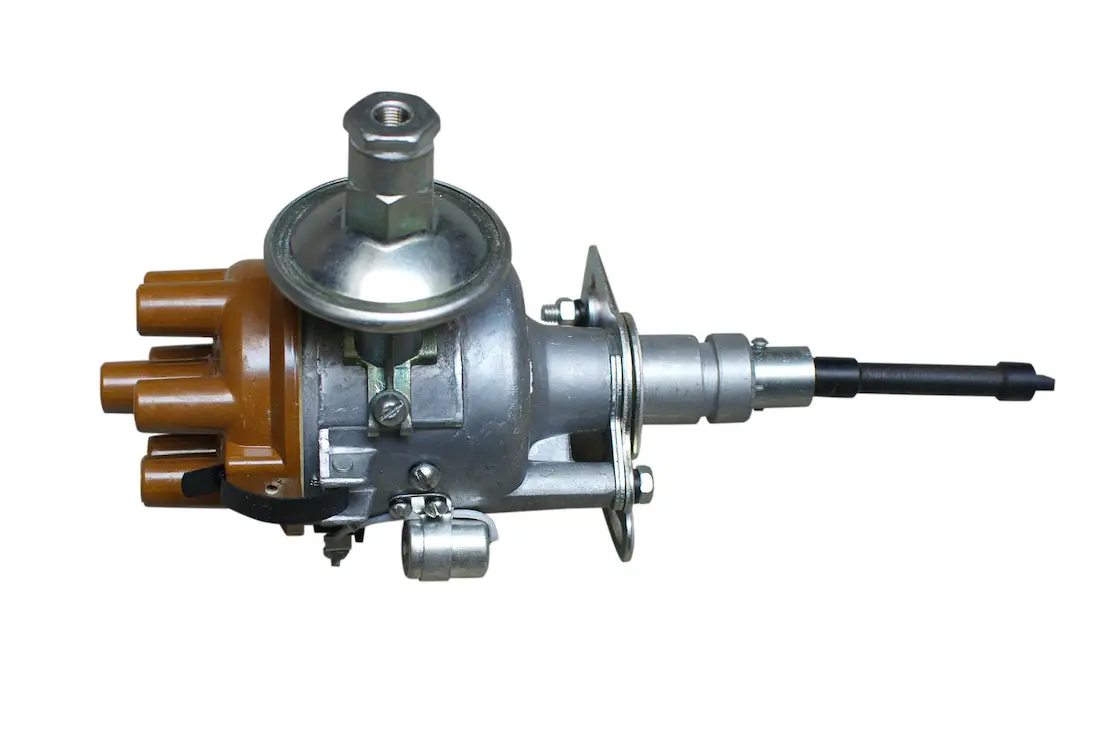
Distributor
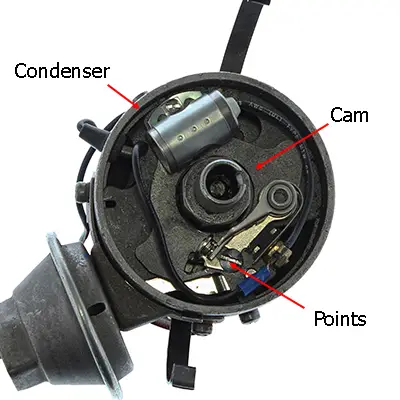
Here is how the distributor creates the aforementioned periodic discrete charges supplied to the primary ignition coil. The distributor contains a “breaker point” that grounds the primary coil circuit. This point is connected to ground by a lever. The lever is moved by a cam connected to the distributor shaft. This opens the primary coil circuit and causes the collapse that triggers the high-voltage bursts in the secondary coil.
Furthermore, while the battery and ignition coil provide the power, the distributor does significant work, precisely determining where and when this power goes to each spark plug.
The distributor decides precisely where and when this power goes to each spark plug.
The distributor contains many parts, the most important of which are a rotor that spins at engine speed and several “terminals” mounted on the distributor cap. The electrical current from the ignition coil is supplied to the rotor.
The rotor spins, and when the tip of the rotor approaches one of the terminals, an electrical arc jumps to that terminal. From there, the energy flows along a spark plug wire to the associated spark plug, thus timing the firing of each plug.
Spark Plugs and Their Wires
Spark plug wires, also called ignition wires, are insulated wires that carry energy to the spark plugs so that they can finally create the spark that causes combustion.
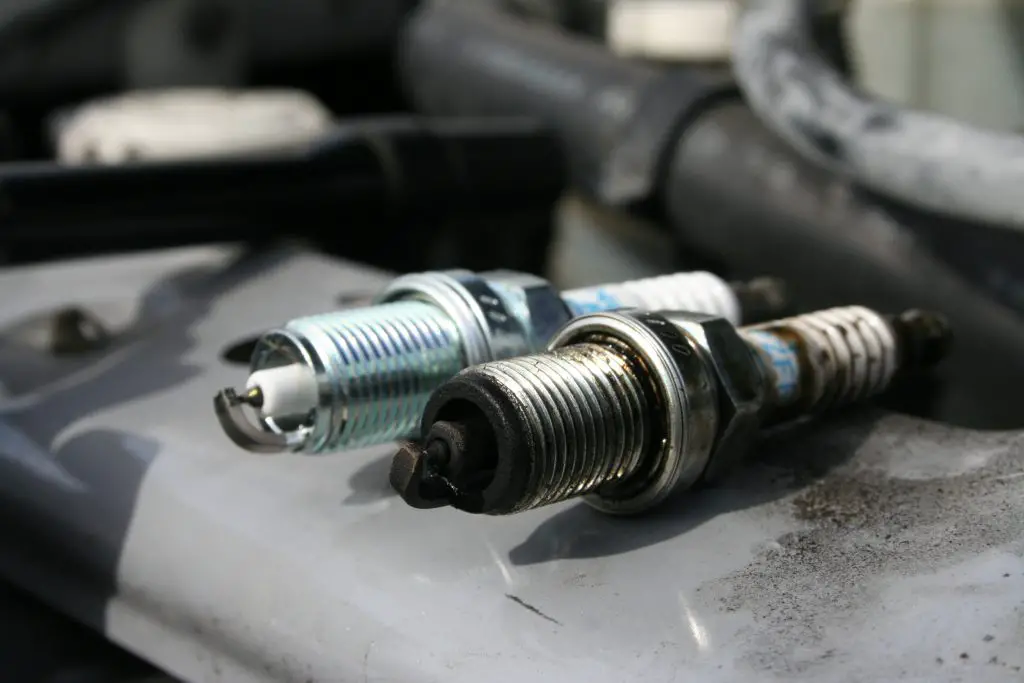
The spark plug consists of an insulated ceramic body with a central conductive metal core in the center. There is a gap between this central metal core and the tip of the electrode that connects to the metal base of the spark plug. Electricity arcs or jumps across this gap, causing the spark.
The importance of the ignition system
The key takeaway is that if the ignition system does not function properly and accurately, your car may struggle to start or not run at all.
Worn spark plugs and faulty ignition system components will affect your engine’s performance, creating a wide range of engine problems including hard starting, misfires, lack of power, poor fuel consumption, and even permanent damage if the issues are not resolved in time. Also note that these engine problems caused by faulty ignition systems can damage other critical components of your vehicle.
Regular maintenance of your ignition system is therefore essential to ensure optimal engine performance and thus smooth and safe driving. In this case, what is a sufficient frequency? At least once a year, you should perform a visual inspection of your ignition system components to check for signs of wear or failure, and then replace them immediately if necessary.
Regarding your spark plugs, be sure to inspect and replace them at the interval recommended by your vehicle’s manufacturer. Again, given the importance of the ignition system, preventive maintenance is crucial to maximize your engine’s performance and lifespan.
Understanding the 4 Types of Ignition Systems
1 Distributor-Based Breaker Point Ignition (Mechanical)
History
The oldest ignition system is the conventional breaker point ignition system, sometimes called the mechanical ignition system. It has been used since the early days of the automotive industry, particularly through the 1970s.
It is one of the two types of ignition systems that use a distributor, called distributor-based systems. Unlike the three other types of ignition systems described later, the breaker point ignition system is fully mechanical, hence its second name.
Let’s see how they work, and then, based on that, we will look at the resulting advantages and disadvantages for this type of ignition system. We will go into detail in this section, as the mechanical breaker system is the first invention and thus the basis for all subsequent models. You need to understand the operation of this system well to see the advantages and disadvantages of the later improved systems.
A Brief Description of Distributor Ignition
The first two types of ignition systems, the breaker point system and the electronic system, are both distributor-based, unlike the other two distributorless systems. So, let’s learn the basics of how a distributor-based system works.
A distributor is an enclosed rotating shaft with mechanically timed ignition. The main function of the distributor is to route the secondary, or high-tension, current from the ignition coil to the spark plugs in the correct firing order and for the appropriate duration.
In the case of a fully mechanical distributor, the distributor is connected to the camshaft by gears and driven by the camshaft. Inside, the multi-lobe cam on the distributor shaft moves other parts of the distributor, essentially acting as a mechanical switch that starts and stops the power flow to the ignition coil.
Once the coil generates sufficient voltage, it moves to the top of the coil and into the top of the distributor cap. There, a rotating disc attached to the distributor shaft distributes the electrical current to each of the spark plug wires in order. The current travels along the spark plug wires to the spark plugs and causes ignition.
How Breaker Point Ignition Works
A distributor-based breaker point ignition system has two electrical circuits, the primary and secondary circuits.
Wiring diagram of a distributor-based breaker point ignition system.
An ignition coil consists of two coils of wire wound around an iron core, called the primary winding, or primary coil, and secondary winding, or secondary coil.
The primary circuit consists of the primary coil, the “breaker points”, and the vehicle’s batteries. It operates only on the battery’s low current and is controlled by the breaker points and the ignition switch.
Meanwhile, the secondary circuit consists of the secondary windings of the coil, the high-tension coil wire on external coil distributors, the spark plugs, the spark plug wires, the distributor rotor, and the distributor cap.
When the ignition key is turned on, the primary coil receives low-tension direct current from the batteries, which passes through the distributor’s breaker points and returns to the battery. This current flow forms a magnetic field around the ignition coil.
Now here is how the “breaker point” comes into play.
As mentioned above, the distributor contains a “breaker point” that grounds the primary coil circuit. This breaker point is connected to ground by a lever, which is moved by a cam connected to the distributor shaft.
Through the distributor rotor spinning at engine speed, when the engine turns, the cam on the distributor shaft rotates until the high point of the cam causes the breaker point tips to separate. Instantly, this sudden separation stops the flow of current through the primary coil.
The cam lobes push on the spring-loaded arm attached to the breaker points; this opens and closes the points in time with the engine’s rotation.
This causes the magnetic field produced by the primary coil around the coil to collapse. The capacitor absorbs the energy and prevents electrical arcing from forming between the breaker points at each separation. In other words, the capacitor therefore plays a role in the rapid collapse of the magnetic field, necessary to create a high voltage surge in the secondary coil.
Such sudden and continuous changes in the primary coil’s magnetic field cut across the secondary coil, creating a voltage surge high enough to bridge the gaps between the rotor and the distributor terminals, as well as the gaps between the spark plug electrodes.
Assuming the entire system is properly timed, the spark reaches the air-fuel mixture in the designated cylinder at the precise moment, and
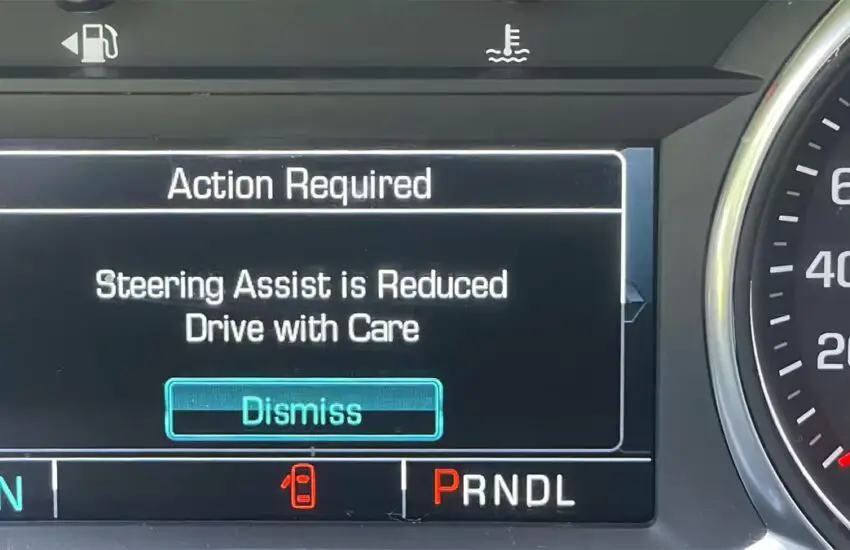
Steering assistance is reduced, drive carefully” (causes and solutions)
If a “Reduced Steering Assist, Drive With Care” warning message recently appeared on your dashboard, you’re likely both alarmed and concerned about upcoming expensive repairs. But how serious is it really?
Keep reading to learn how steering assist works, possible causes of this message, and most importantly, how to fix it.
What is Steering Assist?
Steering Assist is a supplementary system that works alongside the power steering system. Its role is to increase the assistance provided by the power steering system using various sensors located around the vehicle. Steering Assist can help with lane centering or even semi-autonomous driving in some cases.
Many brands offer some form of steering assistance, and this feature may be called different names depending on the manufacturer.
Steering assist is also known as Lane Keep Assist (GM, Jaguar, Land Rover, Mazda, Subaru), Road Departure Mitigation (Honda/Acura), Steering Intervention, Lane Departure Alert with Steering Assist (Toyota), and Autopilot (Tesla).
How Does It Work?
While it sounds like a feature from a video game, the concept is actually quite similar to the autopilot you’d find in Mario Kart that prevents you from falling off the map.
Steering assist systems use different sensors around the vehicle to determine where the vehicle is in the lane and where the driver intends to go. These sensors may include cameras, engine temperature, a yaw sensor, and a steering angle sensor.
Through lane change assistance and lane centering, the vehicle detects the lines on the road that determine where your lane is. When you start to drift toward one of the lines, the power steering motors apply a slight amount of steering lock to keep you centered in your lane.
More sophisticated steering assist systems are considered semi-autonomous. There are different levels of autonomous driving. If you plan to use these systems, it’s very important that you familiarize yourself with your owner’s manual to understand the limitations of your specific vehicle.
Causes of Reduced Steering Assist
There are several common causes of reduced steering assist, and some of them might not be what you’d expect.
ADVERTISEMENT
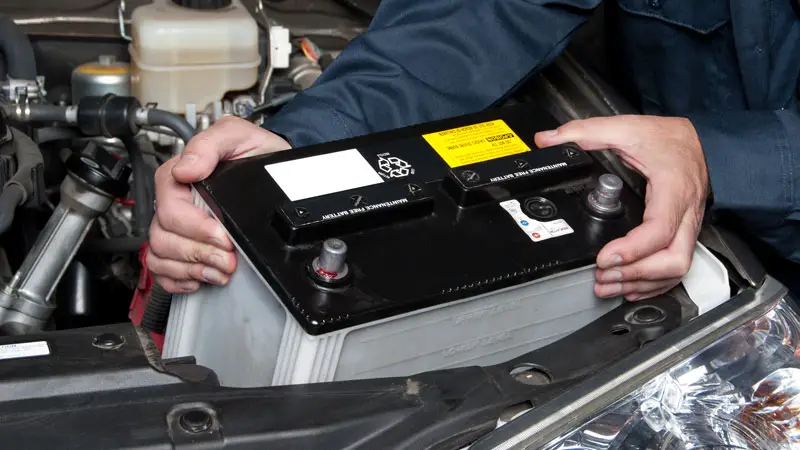
1) Battery Problems
A faulty car battery or low battery voltage can cause problems with the steering assist system. These issues are typically accompanied by other warning lights you might expect to see with a faulty battery.
To fix this issue, the solution is often to replace the battery. Sometimes, the battery is dead because the alternator is faulty. A faulty alternator won’t be able to charge the battery sufficiently, which might require you to get a jump start.
2) Faulty Steering Assist Module
The steering assist module controls the operation of the steering assist system. A problem with this particular computer would make the steering assist system unusable, and the only solution would be to replace the module.
ADVERTISEMENT
3) Code Stored in the Steering Assist Control Module
Depending on the code, a code stored in the steering assist module can cause the system to shut down, even if the system is functioning normally. You can try clearing the codes to see if the system returns to normal operation.
Note that clearing codes often doesn’t fix the root cause of the problem, especially if the issue is intermittent. If the error code reappears, it’s best to start doing some diagnostic work to see what’s happening with the steering assist system.
4) Inclement Weather
The Steering Assist system relies on different sensors distributed throughout the vehicle, some of which may be cameras or optical sensors. If the view of these cameras is obstructed by heavy rain, fog, or snow, they may not be able to see the lines on the road.
ADVERTISEMENT
Inclement weather can disrupt all kinds of driving assistance systems. It’s important to remain vigilant at all times while operating the vehicle, even if some level of semi-autonomous driving is offered in your vehicle.
The solution is often as simple as cleaning all the external sensors that provide data for steering assistance. Your owner’s manual should specify where these sensors are located.
5) Thermostat Problem
While it may not seem related, some GM models will display the “Reduced Steering Assist, Drive With Care” message when the thermostat is stuck open. You can tell your thermostat is stuck open because your coolant temperature gauge indicates the engine is cold, even after driving for 20 minutes or more.
ADVERTISEMENT
This issue is often also accompanied by a P0128 code – Coolant Thermostat (Coolant Temperature Below Thermostat Regulating Temperature).
There is a Technical Service Bulletin (TSB) for this problem and you should be able to have it repaired at the dealership. The service bulletin number for this particular issue is 17-NA-158.
Why would the steering assist system be affected by the coolant temperature, which seems unrelated? To quote the bulletin: "The reduced steering assist issue is caused by an invalid coolant temperature signal from the ECM. The steering module looks for a valid coolant temperature so it can compensate for cold, thick grease. When grease cools, it becomes thicker and harder to move. This can result in a heavier than normal steering feel. The steering module, when it thinks it's cold due to the coolant temperature value, provides extra assistance to account for the heavier conditions. Since the coolant value on the CAN bus became invalid, this function of the steering module became inoperative."
If your vehicle is under warranty, this issue should be covered at no cost to you. This particular issue should be covered by your powertrain warranty, even if your bumper-to-bumper warranty has expired.
Accelerator Pedal Position Sensor Problems and Solution
Just like other sensors, automobiles are also equipped with an accelerator pedal position sensor. This sensor also causes accelerator pedal position sensor problems.
The sensor, as its name suggests, works to adjust to the pressure applied to the accelerator pedal.
It operates based on the pressure the driver applies to the accelerator pedal. This ensures the air-fuel mixture ratio and sends it accordingly to the engine to increase or decrease the speed.
Whenever the sensor fails, the driver starts to encounter different problems. Today, we will discuss these problems and what you should ultimately do.
Recognizing Accelerator Pedal Position Sensor Problems
A faulty accelerator sensor directly affects the accelerator pedal response and fuel consumption, which only worsens the problem. So, here are the symptoms you can read and identify if the problem exists with the accelerator pedal sensor.
Your car does not respond well when the pedal is pressed
This is one of the accelerator pedal position sensor problems where, no matter how hard you press the pedal, the car does not respond accordingly.
This situation easily means the problem is from the pedal sensor. Therefore, if the same happens to you, it’s a clear sign that your accelerator pedal sensor is the culprit.
Your car does not seem to gain speed
No matter the pressure applied to the pedal, the car does not seem to follow the action.
This means your car stops going faster after a certain point, regardless of the pressure on the pedal. This is because the pedal sensor fails to send signals further.
Accelerator Pedal Position Sensor Problems (Photo Source: PC Online)
Your car does not even make noise
If the accelerator pedal does not work at all or your car does not even emit a humming sound, the pedal sensor is faulty. No matter how many times you press the pedal, it just doesn’t seem to work.
You have poor fuel consumption
Poor fuel consumption is a common problem when the accelerator sensor fails.
Sometimes, you don’t see much difference in the accelerator or the car’s acceleration, but you notice mileage that is too low than it should be.
This is another sign that you need to have your car’s accelerator pedal sensor checked.
If the car does not idle smoothly
It is simple to conclude that the problem is from the accelerator sensor if the idle seems rough.
If your car shakes and consumes more fuel, it’s better to have the sensor checked. To learn more about how to keep your car for years, check out the maintenance tips.
Accelerator Pedal Position Sensor Problems and Solutions (Photo Source: istockphoto)
Accelerator Pedal Position Sensor FAQ
Please note that these are approximate figures, and actual costs may vary. Request an accurate quote from a local mechanic for precise prices.
Are there preventive measures to avoid accelerator pedal position sensor problems?
Regular vehicle maintenance, including keeping the sensor and its connections clean and free of debris, can help prevent sensor problems. Additionally, avoiding harsh driving habits can extend the sensor’s lifespan.
Can a faulty accelerator pedal position sensor affect other vehicle systems?
A faulty sensor can affect engine performance, transmission, and overall handling. It is essential to address sensor problems promptly to avoid further damage.
What should I do if I encounter problems with the accelerator pedal position sensor?
If you suspect problems with the sensor, it is advisable to have your vehicle inspected by a qualified mechanic. They can diagnose the issue and recommend necessary repairs or replacements to restore your vehicle’s performance and safety.
How long does it typically take to replace an accelerator pedal position sensor at a mechanic?
The replacement process can vary depending on the vehicle’s make and model, but it typically takes a qualified mechanic about 1 to 2 hours to replace the sensor.
Can a faulty sensor cause the vehicle to stall or experience sudden power loss while driving?
A faulty sensor can lead to power loss and even engine stalling, as it affects the engine’s ability to respond effectively to accelerator inputs. This can be a safety issue, especially in traffic or on highways.
Can resetting the vehicle’s ECM resolve minor accelerator pedal position sensor problems?
In some cases, resetting the ECM (clearing error codes) can temporarily resolve minor sensor problems. However, it is crucial to address the root cause of the issue for a lasting solution.
Are there recalls or known issues related to accelerator pedal position sensors in specific vehicle models?
Some car manufacturers have issued recalls related to accelerator pedal position sensors. It is advisable to check for recalls or Technical Service Bulletins (TSBs) that may apply to your vehicle.
Conclusion
Well, whatever sign you recognize among these accelerator pedal position sensor problems, your car needs immediate repair.
Until then, set the vehicle to Limp mode, which allows the driver to safely get the car off a busy road or when stuck in the middle of the highway.
Furthermore, it is not safe to drive the car to the mechanic because you have no control over the accelerator. Call a mobile mechanic and eliminate the problem!
Advantages and disadvantages of different types of tires
Tires play an important role in your vehicle’s performance and safety. They are the only point of contact between your vehicle and the road, impacting traction, handling, fuel efficiency, and driving comfort. With a wide variety of tire types available at our Edmonton tire shop, it is essential to understand their advantages and disadvantages to make an informed decision.
In this blog, we will explore different types of tires and their pros and cons, helping you choose the one that best suits your vehicle.
All-Season Tires:
Advantages:
Versatility: A set of all-season tires is designed to perform adequately in various weather conditions, including dry, wet, and light winter conditions. They offer a good balance between performance and longevity.
Cost-Effective: These tires are often provided as standard equipment on many vehicles, making them readily available and more affordable compared to specialized tires.
Low Road Noise: All-season tires tend to provide a quieter ride due to their design, making them ideal for daily driving.
Disadvantages:
Limited Performance: While all-season tires offer acceptable performance in different conditions, they do not excel in extreme winter or high-performance scenarios. Specialized tires can provide superior performance in specific conditions.
Compromised Traction: All-season tires often sacrifice some traction capabilities to achieve their versatility, which can impact handling and braking performance, especially in slippery conditions.
Winter Tires:
Advantages:
Superior Winter Performance: Winter tires are specifically designed to provide enhanced traction and control in cold weather and on ice and snow. They have unique tread patterns and softer rubber compounds that remain flexible at low temperatures.
Improved Braking: Having winter tires in Edmonton can significantly reduce braking distances on snow and ice, offering better safety during the winter months.
Tread Longevity: By using winter tires only during the cold season, you can extend the lifespan of your all-season or summer tires, as they are not subjected to harsh winter conditions. Additionally, Revolution Motors offers tire changes in Edmonton if you need to switch to your winter tires.
Disadvantages:
Reduced Performance in Warm Weather: Winter tires tend to have reduced performance and wear out more quickly in warm weather. It is important to switch back to all-season or summer tires once the cold season is over.
Increased Road Noise and Decreased Fuel Efficiency: The deeper treads of winter tires can generate more noise and have a slight impact on fuel economy compared to other tire types.
Summer Tires:
Advantages:
Enhanced Performance on Dry and Wet Roads: Summer tires feature a unique rubber compound and tread pattern designed for optimal grip in warm weather. They provide excellent traction on dry and wet roads, improving handling and braking performance.
Improved Cornering Capabilities: The stiffer sidewalls and specialized tread patterns of summer tires allow for tighter turns and better control during spirited driving.
Reduced Braking Distances: Summer tires offer shorter braking distances on dry pavement, increasing safety during sudden stops.
Disadvantages:
Limited Winter Performance: Summer tires are not suitable for cold temperatures, as their rubber compound hardens, reducing traction and handling on snow or ice. Switching to winter or all-season tires is necessary in colder climates.
Faster Wear: With their softer rubber, summer tires tend to wear out more quickly, especially on abrasive roads. Regular monitoring and rotation are essential to maximize their lifespan.
Performance Tires:
Advantages:
Exceptional Performance: Performance tires are designed for sports cars and high-performance vehicles, offering outstanding grip, cornering capabilities, and precise handling. They provide an exhilarating driving experience on dry and wet surfaces.
Improved Braking: These tires are often equipped with advanced braking technologies, allowing for shorter braking distances and enhanced safety during aggressive driving maneuvers.
Attractive Aesthetics: High-performance tires often feature sleek designs and low-profile sidewalls, enhancing the overall appearance of your vehicle.
Disadvantages:
Reduced Tread Life: The softer rubber compound used in high-performance tires sacrifices longevity for improved grip and performance. They tend to wear out more quickly, requiring more frequent replacements.
Harsh Ride and Road Noise: High-performance tires have stiffer sidewalls and less rubber between the road and the vehicle, resulting in a firmer and less comfortable ride. Additionally, aggressive tread patterns can generate more road noise.
Choosing the right type of tires for your vehicle depends on various factors, including climate, driving conditions, and personal preferences. All-season tires are versatile and affordable, while winter tires excel in cold and snowy conditions. Summer tires offer excellent performance on dry and wet surfaces, and high-performance tires provide exceptional grip and handling.