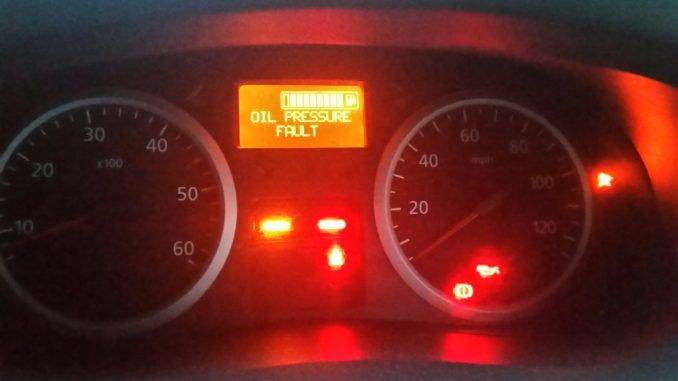
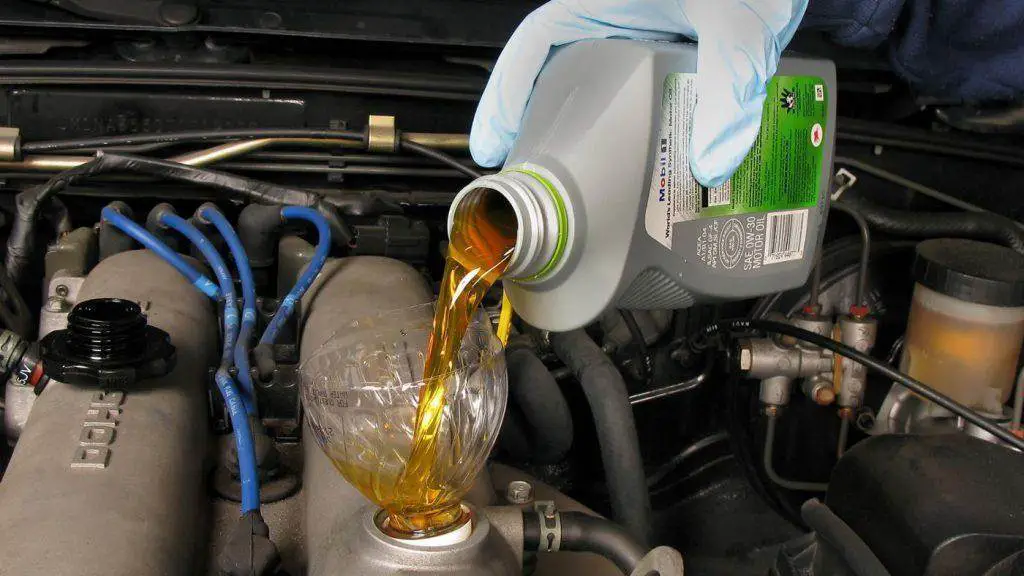
The oil light comes on when stopped: find the reasons
It can be a frustrating experience when the oil warning light comes on regularly but your car stops. And some drivers may not know what to do in this situation. Don’t worry! In this article, we will address the most likely culprit behind your problem: the oil light comes on when stopped.
Why My Oil Light Comes On When Stopped: 5 Possible Causes!
Engine oil plays an important role in maintaining engine performance. It is extremely important to ensure your car always has enough lubricating oil, not only to make your vehicle more durable but also to ensure user safety. To inform drivers about the engine oil condition, car manufacturers have integrated a warning light system to alert about engine oil-related issues.
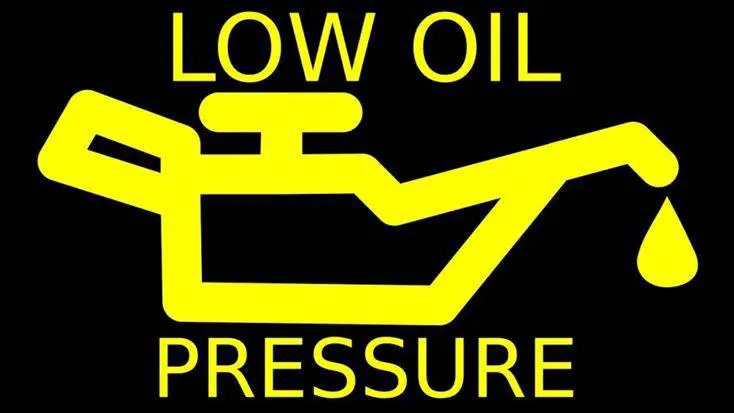
Usually, you notice the oil light comes on and off while driving, but when this light comes on when your car stops, it’s a very rare problem. And what are the reasons, let’s find out! As we all know, oil pressure will increase and decrease depending on your engine’s RPM. When the engine stops or idles, the oil pressure decreases and as the RPM increases, the oil pressure increases. At that moment, the oil warning light comes on if the oil pressure drops too low. But that’s not the only reason, there are other causes you can consider:
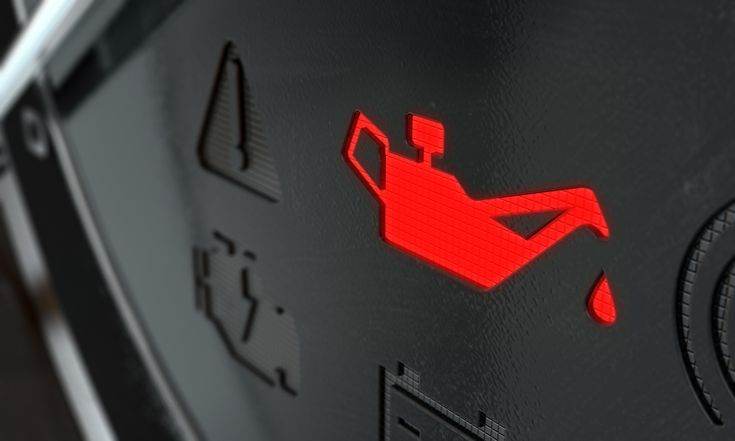
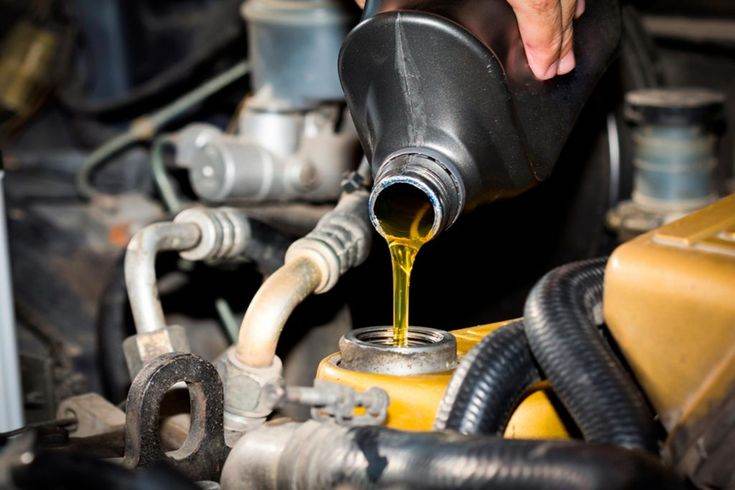
What Does It Mean When the Oil Light Comes On (Photo: pinterest.com)
Faulty Oil Pump
No matter how much oil you fill without a functioning oil pump, it’s worthless. The engine oil pump creates oil pressure in the engine. If the pump doesn’t work, the oil pressure will drop and thus trigger the oil alert when your engine stops. You can change the oil pump if it starts to show signs of wear. It should last somewhere between 60,000 and 70,000 miles in a properly maintained and regularly serviced vehicle.
Dirty Engine Oil
One of the other reasons why the oil light comes on when the car is stopped is that the engine oil is dirty or old. Failing to maintain, check, and periodically replace the oil as needed will cause the oil and some other fluids to degrade. Then, the sludge formed from the metamorphic oil will cause sensors such as the oil pressure sensor to detect and turn on the oil indicator. Therefore, it is necessary to change the oil and clean the engine part regularly to prevent dirty oil from causing the oil light to come on.
Low Oil Pressure
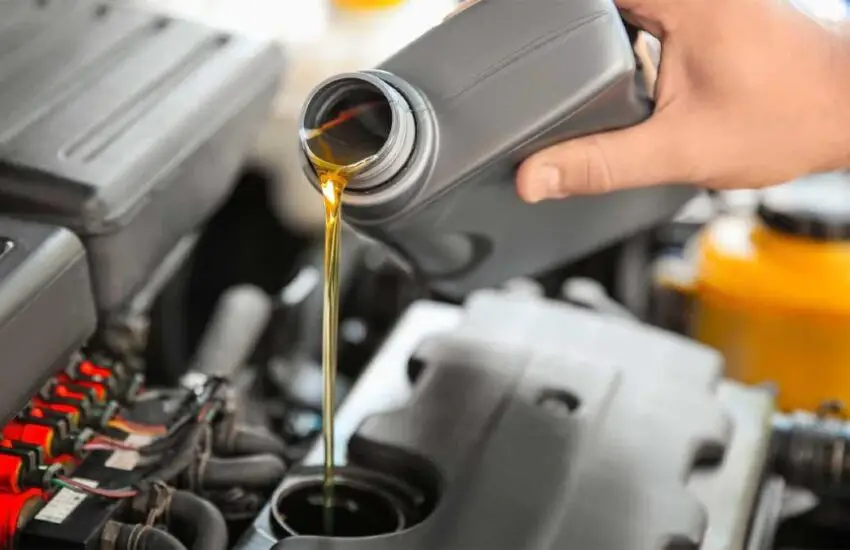
Low oil pressure is one of the reasons why the oil light comes on and off (Photo: pinterest.com)
Low oil pressure is a case where the oil in the tank is still full, but not of sufficient quality, as this can be due to the car owner using the wrong type of oil. This problem can occur when the temperature difference between warm and cold seasons is significant. So, in summer, your car may use high viscosity oil (10W – 30), the cold season should be changed to 5W-30 to be appropriate. Otherwise, the oil warning light will come on even when your car stops. In addition to having to change the oil regularly, one must choose an oil with a viscosity index suitable for the weather temperature.
Worn Engine Bearing
Faulty or worn engine bearings can be the main reason why the engine light illuminates your car’s dashboard. Typically, an oil pump delivers a fixed amount of fluid (i.e., 20 gallons per minute). when there are signs of wear or a leak in the clearance between the engine bearings or the hydraulic lifter, your engine will lose oil pressure. Therefore, excessive clearance between the bearings due to excessive bearing wear will lead to a loss of oil pressure, especially at low RPM when the pump is running at its slowest speed.
Faulty Oil Pressure Sensor
After checking all the details, but I still can’t find the reason why the oil light comes on. It is possible that the oil pressure sensor has been damaged due to long-term dirt buildup and frequent exposure to high temperatures. However, sometimes the circuit of the warning light on the dashboard encounters problems. The quality and condition of the engine oil are measured by an oil pressure sensor. The pressure sensor will send a signal through the pressure light so that users have information, check it, and handle it promptly. Please regularly monitor the sensor’s resistance to promptly detect abnormal signs causing damage.
These are the 5 most common causes. Why does my oil light come on when I stop? Make sure to properly diagnose the causes to find the most suitable solutions. Because the process of using lubricating oil is very important for the vehicle’s operation. Therefore, when there are problems that cause the oil light to come on, it is necessary to check and handle it in time before the car’s condition gradually worsens.
Some Tips When Changing Engine Oil
Fill just the right amount of engine oil up to the reference line, neither too little nor too much. Check the oil level gauge on the vehicle or use a dipstick for vehicles that don’t have a measuring device.
Regularly clean the engine and vehicle parts.
Regularly check the oil pressure sensor. The engine should not be overloaded, causing high temperatures and reducing the machine’s durability.
Use oil with an index suitable for the temperature.
Take your car to the nearest mechanic’s garage, to have it checked and handled quickly if you notice the oil warning light comes on.
Does Running the Air Conditioner in Summer Keep a Car Engine Cooler?
You know that turning on your car’s air conditioning in summer gives you a cool and refreshing feeling, but have you ever wondered if it has an effect on the engine?
Some people think that running the AC will make your engine hotter due to all the extra work it has to do. Many others think exactly the opposite. According to them, the air conditioning transfers some of the heat from inside a vehicle to the outside via vents designed to move hot air away from the passengers (instead of keeping them warm).
Which theory is true? Let’s find out.
Does a Running Air Conditioner Cool a Car Engine?
No.
In order to better understand how air conditioning affects a car engine, we need to know the basics of how an internal combustion engine works. Ignoring all other factors, such as fuel and oil consumption (which depend on driving conditions), running the AC will cause greater power consumption from your engine in order to compress the refrigerant gas that is cooled.
The extra power used by the AC will make your engine hotter, which could lead to higher operating costs for gasoline and oil consumption (unless you are very careful with AC usage).
A running AC does not cool the engine. (Credit: PxFuel)
With the air conditioning on, you will literally hear the engine noise because of its harder and faster rotation. It spins at a higher speed to combat the extra heat generated by the engine.
Furthermore, a car engine is designed to operate best at a maximum temperature between 195 and 220 degrees Fahrenheit. Running the AC adds to this temperature, making your engine less efficient.
But don’t worry too much. These side effects of using the AC in summer are generally minimal and will not cause major damage if you take care of the engine properly.
So, where does this leave us? In general, running the AC will increase your car’s power consumption, with a corresponding decrease in energy efficiency. But you can still enjoy a pleasant drive without harming the engine.
A good way to avoid the drawbacks of running the air conditioning in summer is to try a new approach: use it not as an internal cooling system, but rather for its air conditioning function. If you are going to drive a short distance, turn it on for a few minutes when the car is idling in the driveway. This will pre-cool your car and keep the interior cool during the short trip.
Another good option is to open the windows when it’s not too hot. Remember that you can also run your air conditioner for a short period before getting on the highway, then turn it off as soon as you start driving. This way, you’ll enjoy the benefits without having to worry about negative side effects.
Conclusion
Running your air conditioner in summer can have negative effects on a car’s engine. However, this is completely normal, and you can let the air conditioner run on those hot days. If the engine overheats, take the car to a repair shop as there may be other internal issues.
Top 7 Signs You Need an Oil Change
Many people may know that your engine oil’s role is to lubricate engine parts and prevent engine overheating, but always neglect routine oil changes. Skipping regular oil changes may not seem serious, but it will make the engine less efficient, which will harm performance, power, and mileage as well as your delicate engine’s longevity.
Note that relying solely on mileage to schedule an oil change is not enough, as the oil can become contaminated well before those marks and cause permanent engine damage. Learn the signs that you need an oil change to know in time when to change the oil to guarantee optimal engine performance and lifespan.
Why You Need to Change Oil Regularly
The Role of Engine Oil
A general rule is that anything that creates friction in your vehicle’s engine or any mechanical element will harm engine performance and energy efficiency. That’s where engine oil comes in. Engine oil helps absorb the engine’s heat and lubricates the moving metal parts that would otherwise grind together, thus ensuring proper operation and further preventing engine overheating.
Good engine oil should be free of contaminants and have a smooth, viscous texture to flow freely and lubricate properly. Photo credit: Machinery Lubrication
That’s why it’s important to change all your truck’s fluids on time to ensure it’s always in perfect condition. Lubricating your engine parts with good engine oil and changing the oil regularly helps optimize engine performance, power, and mileage. Regular oil changes reduce engine wear and extend the car engine’s lifespan. It can even make your high-mileage car run longer. Furthermore, clean, quality oil allows the engine to run cleaner, which will reduce exhaust emissions.
How Oil Gets Dirty
Over time, all types of engine oil, even the highest qualities, become contaminated with dirt and carbon, which can lead to excessive engine wear. There’s certainly the oil filter that catches the deposits that accumulate over time to keep the oil clean and smooth. However, as the oil ages, the amount of deposits in the oil can be excessive, and the filter may not be able to extract everything.
Recommended Oil Change Interval
You can check the recommended oil change interval for your car in the owner’s manual. The recommended interval for an oil change is about every 3,000 to 5,000 miles, before winter, or whenever your manufacturer recommends it. Also consider checking the engine oil level once every two weeks and before any long trip.
However, as mentioned above, relying solely on these fixed mileage intervals is not reliable, and you should look for various signs that you need an oil change.
Switching from Traditional Oil to Synthetic Oil
While traditional, cheaper non-synthetic oil needs to be changed every 3,000 to 5,000 miles, synthetic oils can last between 5,000 and 10,000 miles between oil changes. They create better lubrication between moving parts, thus better preventing engine overheating. They also perform better and do not deteriorate in high-heat and high-stress situations.
Synthetic oils also offer much better performance in cold weather, whereas non-synthetic oils would become too thick to do their job properly, while providing excellent protection at extreme temperatures. Some synthetic oil brands are specially designed to be more robust in terms of deposit protection, cold-weather pumpability, and high-heat stability.
Overall, they are better food for your engine and will help keep your engine healthier and more efficient longer. The only major drawback of synthetic oil is that it is significantly more expensive, typically twice as much as conventional oil of equivalent viscosity.
Preventing Oil from Thickening
Engine oil thickens in winter, making the pump work harder, it won’t circulate efficiently, and will thus directly chase away your engine’s performance and mileage.
One solution is to switch entirely to a lighter oil if you live in consistently cold climates or when winterizing your vehicle before winter arrives. It is recommended to switch to a 0W30 or 0W40 oil to speed up oil flow in below-freezing conditions.
Switching from a thick 20W50 to a thinner 5W30 will make a noticeable difference in terms of responsiveness. For most light trucks, 10W30 should be a good compromise, but consult your owner’s manual for factory recommendations. Even if you cannot use lighter oil, regular oil changes will prevent your oil from thickening excessively over time.
Also remember that you will likely need a thicker oil if you are hauling or towing a mobile home behind. That said, consult your owner’s manual and always follow your manufacturer’s recommendations. Because unless you are frequently towing or hauling, thicker viscosity oils might not be necessary for your vehicle.
The Consequences of a Delayed Oil Change
It depends on how long you’ve delayed the change. All vehicles come with a number provided by the manufacturer that indicates how many miles you can expect your oil to last. However, it often refers to the lowest miles you can safely drive without changing the oil.
So, there’s nothing to fear if you drive a little more than the recommended miles. However, if you’ve been overdue for a long time, that old oil can cause serious, permanent damage to various engine parts and lead you to costly repairs and replacements.
If you skip a regular oil change, your engine will run less efficiently, and it can lead to engine overheating, as the oil can no longer properly lubricate the parts to prevent them from heating up. Consequently, you will encounter one or more abnormalities, including deteriorated performance and energy efficiency, increased emissions, and starting problems.
7 Signs You Need an Oil Change
Dark and Dirty Oil
Fresh oil keeps the engine healthy by lubricating all the parts and helping them move smoothly. However, the older it gets, the more its molecules break down and create problems for the vehicle.
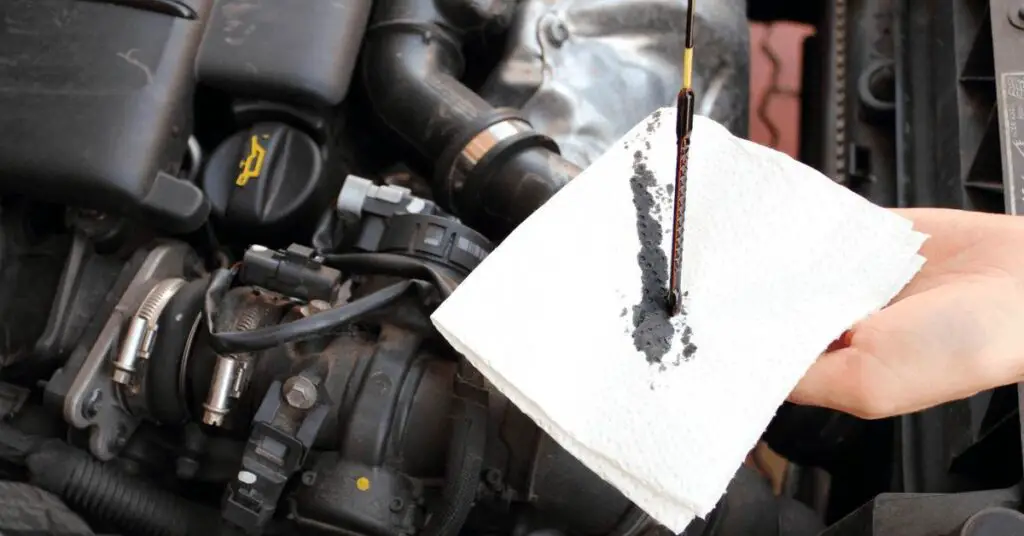
How to tell if engine oil is bad? The oil’s color and smell can be signs that you need an oil change. Fresh oil has an amber color. However, it becomes black and greasy after collecting dirt and particles from the engine parts. It’s best to check the oil every month to see if it has changed color. You should know the original color of the oil you use, and even better its smell, to facilitate your car’s long-term maintenance.
Dark or blackened oil is one of the surest signs that you need an oil change. Photo credit: I Love Engineering
Pull out the dipstick, wipe it with a cloth, and insert it back into the cylinder. Remove it and check the oil’s color. Rub it on a white paper towel to be sure. If the color is dark red or very dark to almost look black, then the oil is quite old. If you’re still unsure, another telltale sign that you need an oil change is if the oil smells burnt when you sniff that dipstick.
An important note, however, because a common confusion is how dark is considered “dark.” All engine oil becomes darker as it goes through engines, and in some cases, oil can become noticeably darker in a short time or almost immediately, so relying solely on color is not always a reliable sign that you need an oil change.
A helpful tip is to also check the consistency whenever you inspect your oil level. Over time, oil can pick up grime and dirt, and all those small particles will make the fluid less smooth and more gritty. If your oil has a lot of grit, it’s a certain sign that you need an oil change.
*Note: Sometimes you might notice that the engine oil color is somewhat milky or creamy. Well, that indicates that the oil contains water. It could be engine coolant getting into the oil due to a leaking head gasket. This also happens when you drive short distances and the engine cannot produce enough heat to burn off that water. Instead, it creates water vapor, which mixes with the oil.
Thus, a creamy engine oil color doesn’t necessarily need to be replaced if it’s due to short trips. You just need to drive the engine enough so that those water vapors can evaporate.
Loud Engine Noise
Fresh oil creates a thin shield between engine parts to protect them from friction and keep the engine quiet while driving. Thus, any strange noise coming from under the hood is a sign that you need an oil change, and you should schedule a car oil change with a mechanic as soon as possible.
However, heat and other engine conditions break down the lubricant, causing engine parts to create a knocking or rattling noise when the car is moving.
You might also hear a ticking noise while your engine is warming up. This is because as soon as you start your vehicle, the oil is immediately circulated to lubricate the engine. If the engine oil is old and is no longer smooth but gritty with contaminants, the oil won’t do its job properly and won’t move as freely through the system. This ticking noise comes from the valves having to work very hard just to circulate the oil effectively.
Shaking at Idle
Without proper lubrication, your engine won’t run as well, so the high level of friction present in your engine can cause abnormal vibrations or shaking movements at idle. If you notice this issue, it’s best to avoid idling as much as possible until you can get your oil changed.
Exhaust Smoke
Sometimes, a thin white vapor comes out of the exhaust pipe in cold weather, which is normal and disappears when your engine warms up, so it’s not a cause for concern. However, if it’s actual smoke, check the oil level as well as its color and texture. You shouldn’t see anything coming out of your exhaust pipe, and when you do, it’s a sure sign that something is wrong, including contaminated engine oil.
That said, if you see thick white smoke from your exhaust, the reason could be an oil leak or faulty engine parts like cracked head gaskets, which would mean a very costly, lengthy, and inconvenient inspection and replacement, so you should take your vehicle to a repair shop to have it checked.
Smell of Oil Inside the Vehicle
This should never happen. If it does, it could mean engine overheating or an oil leak. As this can lead to a serious problem, take your car to a service center immediately and opt for an oil change.
Lower Fuel Economy Than Usual
As above, quality, contaminant-free engine oil allows the engine to run at optimal efficiency, and the direct result of that is better mileage. Therefore, one of the obvious signs that you need an oil change is decreased fuel economy. If after a long trip, you notice your car is suddenly using much more fuel than usual, you should expect to get your oil changed as soon as possible.
Oil Change Light or Check Engine Light Comes On
Another sign that you need an oil change is the oil change light coming on. The dashboard has an oil change light that illuminates when the oil level is too low in the system. Once you see the light, use the dipstick to check the level and change it if it’s insufficient.
Note that if your car doesn’t have an oil change light or if your oil problem is very severe, the Check Engine light may come on on your dashboard. Of course, various mechanical issues can trigger this, so if this light comes on, it’s best to have a mechanic perform an inspection to determine if the old oil is the only culprit, or if something else triggered this light.
The general rule is to get the car’s oil changed every 3,000 miles or every three months, whichever comes first. However, you can extend it to 6,000 miles or six months if your vehicle is new. Remember that changing your engine oil is a simple but most helpful service you can provide to your automobile. Doing it regularly will keep your car in good condition and extend its lifespan.
Do electric cars need oil changes?
Engine oil is an extremely important factor that helps your car operate more efficiently. So, do these types of oils work in electric cars? Or simply put: do electric cars need an oil change? This concern will be clarified in our article.
Do Electric Cars Need Oil Changes?
What fluids do electric cars need (Photo: pinterest.com)
Traditional gasoline and diesel engines require oil to lubricate the many moving parts of the engine as well as the transmission. The pistons, valves, and other engine parts must slide smoothly against each other at very high speeds, so oil is added to the engine to lubricate these close interactions.
Adding oil to the engine will prevent overheating. Over time, microscopic metal particles accumulate in the oil from all the engine contacts, so it is necessary to change the oil and provide new oil for the engine to run better. If you do not change the oil, the engine will wear out quickly and reduce the car engine’s lifespan.
But on the other hand, in an electric vehicle, none of this happens. Unlike internal combustion engine vehicles, electric cars operate using batteries and electric motors. There are no engine pistons, valves, or moving parts that require lubrication, so oil changes are not necessary for electric vehicles.
Electric vehicles are an important goal for the automotive industry, paving the way for a greener future. Electric vehicles do not need to use engine oil to lubricate moving parts like internal combustion engine cars. So “Do electric vehicles need oil changes?”
Our answer is “Electric cars do not need regular oil changes.” Instead, new fuel sources are being sought to optimize the performance of electric vehicles and help reduce the problem of environmental pollution. However, if the vehicle is a gasoline/electric hybrid vehicle and it still has the same engine as a conventional vehicle, it will still need an oil change.
Only electric vehicles do not need to change engine oil. Although oil changes are not necessary, electric vehicles still need to change other fluids such as coolant, brake fluid, and transmission oil.
Which Parts Do You Need to Lubricate on Electric Cars?
The powertrain of the most popular electric vehicle has eliminated up to 20 moving parts compared to an internal combustion engine vehicle. Therefore, maintenance will be increasingly simpler, but there are still important parts of electric vehicles that need to be lubricated. Electric vehicle lubricants are manufactured based on research into the specific properties of electric motors to achieve superior performance.
Electric vehicle lubricants have higher technical requirements than internal combustion engine oils. They are made with the aim of ensuring vehicle specification performance, improving anti-wear performance, reducing friction, increasing performance, electrical and insulating compatibility, as well as cooling the electric motor and battery system.
Electric vehicles absolutely do not require oil drains, oil changes, or regular maintenance. (Photo:blog.evsolutions.com)
EV Battery Cooling System
For the operation of electric vehicles, battery temperature is a big issue, so lithium-ion batteries are the part that needs to be checked and have coolant added periodically. Because electric cars, if not guaranteed for their cooling capacity, can lead to a very dangerous fire and explosion situation. This is the most important category in electric car maintenance.
Like the coolant in gasoline and diesel cars, drivers must regularly check and add battery coolant for electric cars to ensure the most stable and safest operation. Many electric cars have caught fire, perhaps because owners let the batteries overheat. So, keeping the coolant at the standard level is the best method.
Lubricating the Electric Motor
The electric motor not only helps the vehicle operate and move but also plays a role in energy regeneration. It can be simply understood that when using the brake or decelerating, the powertrain generates electrical energy and recharges it into the battery, thereby increasing the vehicle’s performance. Electric vehicle models can be equipped with one or more electric motors to form a drive system similar to cars using internal combustion engines such as FWD, RWD, AWD, etc.
Compared to gasoline engines with hundreds of components that need to be checked periodically, the electric motor has a much simpler structure. However, this is not a reason for users to be subjective in controlling and maintaining electric motors. Some tasks to pay attention to when maintaining this part include: cleaning the motor; checking and lubricating bearings and electrical conductors.
EV Transmissions
Most electric car gearboxes today are single-speed gearboxes, with a much simpler structure than manual transmissions and the automatic transmissions of cars using internal combustion engines (some electric car models don’t even have a transmission). Due to such a simple structure and lubrication with high-quality synthetic oil, the electric car’s gearbox is almost free from worrying damage and has great durability. Thus, this part does not require too much time and expense in electric car maintenance.
The category that requires the most attention when maintaining electric car gearboxes is the lubricating oil. Vehicle owners only need to check, top up, and replace the lubricating oil if necessary to ensure ideal performance and avoid damaging mechanical components.
The Brake Pads
Electric cars use regenerative braking with a mechanism of reversing the electric motor to slow down the wheels. Thus, the brake pads will not wear out as much as the brakes on gasoline and diesel cars. Even so, brake pads are still an item that requires electric vehicle owners to periodically check and add brake fluid, albeit with a lower frequency than internal combustion engine cars.
When the brake pads and discs are pressed together to stop, hydraulic fluid is present in normal cars. The function of this fluid absorbs water from the air over time. If the oil is not flushed regularly, it can corrode the braking system. This means that electric vehicles still need regular fluid changes. Brake fluid must be replaced every two years on most major electric vehicles such as Tesla vehicles or changed every 5 years for Nissan brand vehicles.
Other parts: when talking about lubrication for electric cars, attention must also be paid to some other details that do not require high frequency such as the airbag safety system, brake fluid, cabin air filter, system lights, steering components, and suspension.
Summary
Do electric cars need oil changes? Electric vehicles absolutely do not require oil drains, oil changes, or regular maintenance. However, the internal parts of the car also have little need for replacement or repair because there are very few moving parts inside.
Different from gasoline cars, which have internal combustion engine oil and many parts such as spark plugs, valves, fuel tanks, mufflers, drive belts, hoses, catalytic converters, etc., electric cars only use a simple single-speed transmission. Therefore, when comparing the cost of use and oil changes, it can be seen that using electric cars is more economical. If you are considering purchasing an electric vehicle, the information in this article may be useful to you.
Questions to ask about hybrid car maintenance
Are you considering buying a hybrid car? If so, congratulations! It’s the future of automotive transport. But before buying one, there are certain things you need to know about hybrid car maintenance. You should ask yourself a few essential questions to ensure you’re ready to take on this responsibility.
Essential Questions to Ask About Hybrid Car Maintenance
Hybrid vehicles are becoming increasingly popular as people today are more environmentally conscious. But with this new technology comes a new set of questions about maintaining it. Here are the five most important questions you should ask yourself about maintaining these cars.
Is the Maintenance Cost of a Hybrid Car Higher Than a Gasoline Car?
This is a common question people ask about hybrid cars. The inherent technology in these models is different from that of gasoline vehicles. Yet, does it add something significant to the maintenance cost? You might have difficulty finding a qualified mechanic or repair shop, leading to additional labor costs.
Toyota Prius: a famous plug-in hybrid. (Credit: Ralf Roletschek / Wikimedia Commons)
Do Hybrid Cars Have Exclusive Maintenance Needs?
No, hybrid cars do not have exclusive maintenance needs. You will need to change the oil, replace filters, and perform other routine maintenance tasks on your hybrid vehicle just as you would on a regular car. Battery life was a concern in older hybrids, but current models do not have this issue.
Are There Tax Benefits to Buying a Hybrid Car?
One of the advantages of owning a hybrid car is that you might be able to claim a tax deduction for the purchase and maintenance costs of your vehicle. You can get a federal tax credit for certain plug-in hybrid models. To learn more about this, speak with a financial advisor.
Has There Been a Recall on the Model You Want to Buy?
It’s important to research the car model you’re interested in. And one of the best ways to do this is to check for recalls on that model. Fortunately, most hybrid cars have not been recalled, but you should still check this.
Is It Possible to Maintain the Car Yourself?
You can perform minor tasks like inflating tires or checking fluid levels in your garage. However, the electrical part of hybrid vehicles has complicated technology. Only a qualified mechanic can solve issues with such an engine. Moreover, entrust your car to a qualified mechanic for routine maintenance tasks. This will ensure a longer lifespan for the car’s components.
Do Hybrid Cars Offer Exclusive Benefits Over Gasoline Vehicles?
Like gasoline vehicles, they have their own advantages and disadvantages. These positives can influence your purchasing decision:
Better for the environment as they emit less pollution.
Save money on gas in the long run.
More reliable than gasoline cars.
A hybrid is a good choice if you’re looking for a car that’s friendly to both the environment and your wallet.
Conclusion
Buying a car is a big financial commitment. And you should be more cautious before investing in new technology. By asking these questions about hybrid car maintenance, you can be sure they will run smoothly for years.
How to Disable Traction Control on Your Car
Anti-skid helps provide a safe driving experience throughout the driving process. That’s why some drivers have decided to activate the traction control system while driving. However, in certain conditions like being stuck in snow or mud, leaving traction control activated can be a disadvantage as it may cut power to your drive wheel. In this situation, you should deactivate this system, but the question is how to disable anti-skid. Let’s follow along:
It’s a very simple process, and we will describe the step-by-step instructions to disable traction control.
What is anti-skid used for? The main function of this system is to ensure vehicle grip. (Photo: pinterest.com)
What does traction control do on your car?
A traction control system or TCS is an active safety feature installed on vehicles to help your car remain stable during acceleration as well as when driving on slippery roads. The main function of this system is to ensure vehicle grip.
There is also a function to ensure traction, but the application of TCS is completely different from ABS. If the anti-lock braking system (ABS) has an effect during emergency braking, the TCS function is responsible for controlling traction when your car is moving.
Anti-skid features automatic operation based on early detection of wheel slip. As a result, vehicle safety will be ensured during travel in all weather and terrain conditions. This function is very effective when the vehicle accelerates suddenly or drives on slippery roads.
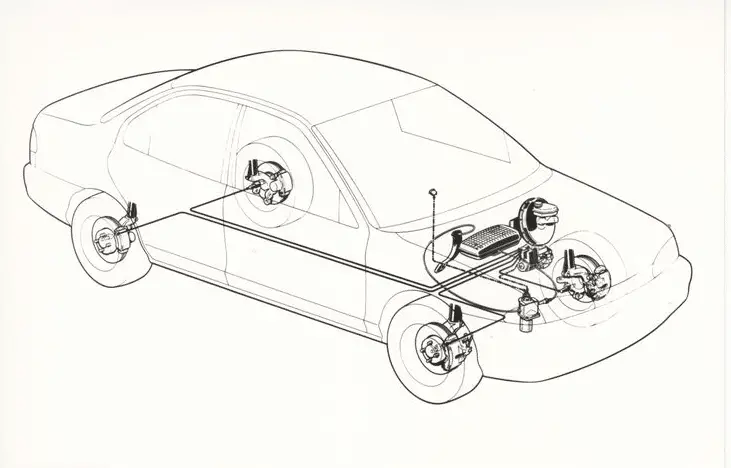
The TCS has a fairly simple structure, including a speed sensor shared with the anti-lock braking system and a cable connected to the automatic traction control valve (ATC), linked to the ECU.
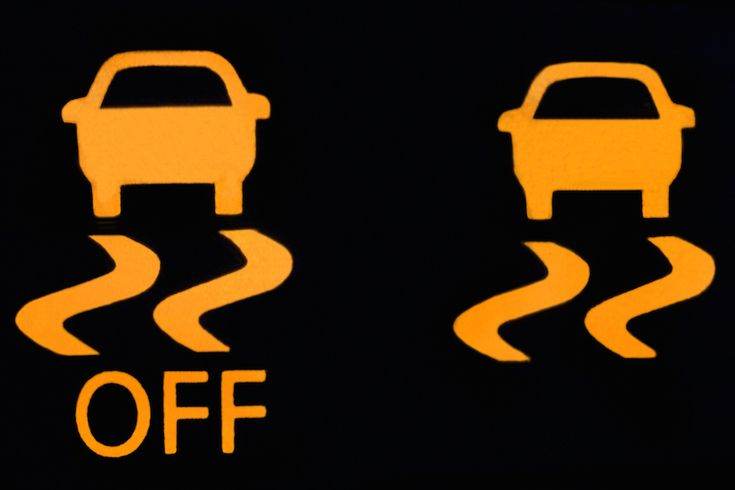
Therefore, the cost of installing this system is not too expensive. The anti-skid function is controlled by a push button on the vehicle with the TC/TCL/ESC symbol. In some cases, the driver can deactivate this function.
Traction control systems in cars are usually started automatically when the vehicle is moving. However, the manufacturer still provides a control button to turn the anti-skid system on/off on the dashboard, steering wheel, or gear lever.
Because the anti-skid system does not always work. In some cases, the TCS interferes with the vehicle’s operational capability. At that point, the driver can actively disable the TCS and turn it back on later.
If you are driving on everyday roads, in icy or snowy conditions, it’s better to drive with the anti-skid system on, as it will prevent you from losing control and your tires from skidding. However, this is not always correct when applying this function; let’s move to the next part to learn more:
When should you disable traction control?
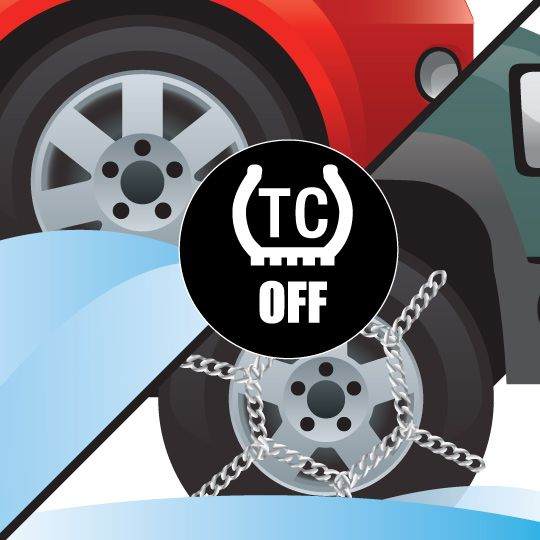
The most common case for disabling the anti-skid function is when your vehicle is stuck on muddy or icy roads. (Photo: pinterest.com)
The traction control system is such a great safety feature, so why on earth would you want to disable traction control? The most common case for disabling the anti-skid function on cars is when your vehicle is stuck on muddy or icy roads, or when the vehicle gets bogged down…
At that moment, the wheels are usually not synchronized with each other, and there will be more drive wheels spinning, which is the kind of thing we will need to spend a lot of time moving your car forward and backward. When you turn off the traction control button, it will allow you to perform this maneuver to get out of that messy situation.
If the TCS is activated, the system will be able to detect and slow down the wheel. This makes it difficult for the car to get out of the mud. A misunderstanding is that traction control increases traction. Our answer is “No” because it simply allows your vehicle to go straight.
When the car’s tires start to spin and move forward, the anti-skid system slows down the wheel rotation to reduce wheel speed. Now, disabling this function will help you easily pass the obstacle. Thus, this function will be turned off when you are stuck in ice or mud.
In what other case would drivers disable anti-skid? Another rare case for disabling anti-skid is when you want to drift. Drifting is a driving technique that intentionally oversteers the vehicle to make the wheels skid.
So, if you want to drift, you need to disable the TCS. When anti-skid is disabled, you have full control over your car’s power. It would be a disadvantage for the car’s performance if you limited your car’s speed when you are on the track and the TSC is activated.
There are two most common situations where we recommend disabling the traction control system because there is no point in activating this system. If you keep the TCS on under these circumstances, it can sometimes consume a lot of fuel and cause your tires to wear out.
How to disable traction control on your car?
It is very simple to disable the anti-skid system. In our article, we will show you 2 methods to disable this system with and without using the button:
When anti-skid is disabled, you have full control over your car’s power. (Photo: pinterest.com)
Method 1: Using a button
Step 1: Locate the traction control button
Basically, the first thing you need to do is locate the button that turns off traction control. So you should look around the dashboard area, and the button will most likely be accessible by either your right hand or your left hand.
Normally, it is probably located to the right or left of your steering wheel. After that, you should look for a button that has either a picture of the traction control logo or an acronym for the traction control system (VSA, TCS, TC, or TCL depending on the car’s model and brand).
Step 2: Turn off the TCL button
When you have located the button, you are going to press and hold it down for several moments. And by pressing this button, you will hear a “beep” sound, and you will probably see a symbol on your dashboard.
At that point, the multi-information display on your dashboard will notice that the traction control system is disabled. When you look at the dashboard, you will notice that the traction control light comes on, and this lets you know that you have disabled traction control. Now, you have achieved your goal.
Step 3: Turn off the Vehicle Stability Control (VSC)
There is a second part of this process that you need to do, which is to turn off the VSC for the entire system. You will hold the button with the VAC symbol for 3 seconds until you see the notification on your dashboard. At that point, you will get a complete shutdown of the safety system, and you can now perform your maneuver to get through the blockage on the road.
Method 2: Without using a button
Some cars do not have a traction control button, which is why we will show you how to disable the TCS without a button.
Step 1: Turn your ignition: You will insert your key into the ignition and turn it on.
Step 2: Turn on the hazard lights: This is a very important step to let other vehicles know that your car is not moving to minimize accidents.
Step 3: Press the pedal 5 times: This step will be quite easy; you just need to press the accelerator pedal 5 times while keeping your vehicle in park and not allowing it to exceed this number; this is important to remember.
Step 4: Check if traction control is disabled: After completing the above steps, if you hear the sound and notice the notification on your dashboard, it means your task is successful.
Step 5: Turn off the hazard lights
FAQ
Why is my anti-skid light on?
In some cases, the TCS light indicates that your vehicle’s anti-skid system is active and working properly. Traction control is necessary to maintain grip in slippery conditions.
Some TCS lights come on in rainy or snowy weather and then go away. When this happens, it means the system is activated due to low-traction road conditions (black ice, snow, or rain) and is helping the vehicle maintain traction.
However, if the traction control light stays on during driving in fair weather or if the light flashes intermittently, it means there are problems in your car’s system that need to be checked. This may indicate that the system is hard-coded or malfunctioning.
This problem can be caused by a faulty speed sensor that alerts the vehicle’s computer of a possible loss of grip. Alternatively, there could be a problem with the traction computer system. A flashing TCL can also mean the system is not fully functional, so it is important to be vigilant when viewing in bad weather.
Simply put, a TCL light on can indicate the system is working properly in certain situations. Anti-skid is designed to detect when the tires are not in contact with the road in icy or muddy conditions. But when you notice this light flashing or coming on in sunny weather, then you need to take precautions.
Should anti-skid be on or off?
We will tell you the truth about whether it is better to drive with anti-skid on or off. We will go over a simple answer: “It is safe to drive with traction control disabled in normal weather conditions, but it is important that you activate the system if you are likely to hit a slippery road or in bad weather conditions.”
As we know, TCS is a standard safety feature in many vehicles nowadays. It will be activated when you start your engine. The system will intervene when it detects a difference between the vehicle’s speed and the wheel rotation. It can be said that this system will be beneficial for any type of vehicle regardless of the car’s drivetrain.
But in several situations, activating traction control will be more harmful than good for your car, such as when you are stuck stationary in sand, mud, or snow. This will lead to greater engine power consumption and prevent your car from moving forward.
How to reset the anti-skid light?
Sometimes you will notice the traction control light comes on even in fair weather, and you want to reset this light first instead of visiting the mechanic. Is there a way to reset the traction control light? There are several ways to reset the TCL.
Corresponding to each different vehicle type, you will have a few ways to do this process. But we will share the most common way: First, you need to disconnect the positive cable from your battery. After that, you will press the accelerator pedal 3 times in a row. So why do we need to do this? This step will discharge the electrical system and restart your car’s computer.
Then, you will reconnect the cable and start the engine, letting it run for a few minutes. Now, the process is finished. If the traction control light continues to be faulty, you need to entrust your car to a trusted mechanic.
Main Popular Causes of Car Engine Vibrations
Engine vibrations in a car can be the result of a number of problems. Although it is assumed that the vibrations come from the engine, the axles could actually be the real cause. If you are driving a used car, the problem probably occurs more frequently and now is the time to learn more about its common causes and find solutions. Here we discuss in detail the causes of engine vibrations. Read them carefully to see if you are experiencing any of the symptoms that cause the car’s engine vibrations.
Popular Causes of Car Engine Vibrations
1 # Cause of Engine Vibrations: Crankshaft Damper
Certain engine problems can cause vibrations in your car.
If you feel that the engine is shaking, the crankshaft damper can be a factor to consider when diagnosing the causes of engine vibrations. This is because the main function of this component is to reduce vibrations. In diesel engines, its use is more extensive. If there is a chance that it is faulty or has stopped working for good, your engine will shake even more. You should contact a mechanic whenever you encounter this problem.
2# Cause of Engine Vibrations: Faulty Engine Mount
A faulty engine mount is another cause of engine vibration
This is another cause of engine vibration. This component keeps the engine attached to the chassis. In addition, it also reduces vibrations from a running engine. This part doesn’t just get damaged. Reckless driving can be the cause. Similarly, you should see a mechanic to repair your car.
3 # Cause of Engine Vibrations: Spark Plug Issues
The spark plug may be damaged and needs to be removed
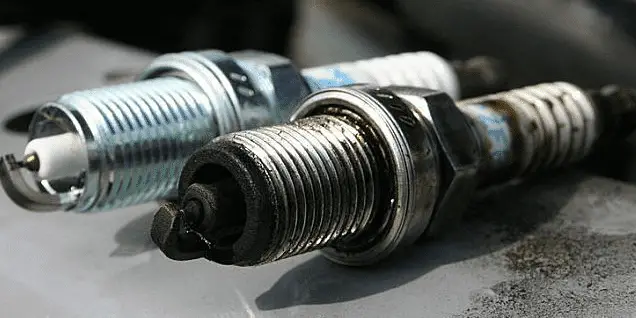
If there is a problem with your vehicle’s spark plugs, the engine will vibrate more than usual. Spark plug removal can be done at home if you have all the necessary tools and knowledge to accomplish the task.
4 # Cause of Engine Vibrations: Extreme Weather Conditions
Car shaking in cold weather is very common
In freezing weather, the engine vibrates more than normal. No further action should be taken if this problem resolves itself when the car is driven in normal weather. In cold weather, the engine cannot operate at its optimal level, so vibrations increase.
5 # Cause of Engine Vibrations: Car Axle
The car axle should be the reason where the vibration comes from.
Often it seems that the engine shaking problem is rooted in the engine itself, when in reality, it’s the axles that need to be addressed. When your car is in a collision, the axles can be damaged, even if there is no apparent sign of damage. So, you should call a mechanic if you feel an increase in vibrations, just after a collision.
6 # Cause of Engine Vibrations: Wheel Problems
One of the most serious causes of engine vibrations is related to the wheel. A misaligned wheel or worn wheel bearings could be the problems if you feel the vibrations are coming directly from the steering wheel. Another cause could be deformed ball joints that cause annoying vibrations at driving speeds.
7 # Cause of Engine Vibrations: Tire Problems
This is the most common of all reasons because nearly 80% of car vibrations are related to tires. These vibrations can be corrected by tire balancing, tire rotation, or tire replacement.
8 # Cause of Engine Vibrations: Braking Problems
If the vibration appears when you press the brake, your car may have a problem with broken or worn brake discs. Significant wear can warp the brake discs, which prevents the brake pads and calipers from gripping them during braking.
These are some of the common engine vibration problems that could affect your driving experience, it’s better to look into one of these causes of car engine vibration and find out what the exact reason is. Another great suggestion for you to avoid this problem is to choose a great car with energy efficiency, reliability, and affordable price from our list of quality used cars.
To solve this problem more easily, watch the video to see how they fix engine vibrations
Low transmission fluid, tire problems, or a brake error can all cause the car’s engine shaking. But here we will talk about the cylinder, which is usually the main reason causing vibrations in your engine. Here are the steps to follow:
Step 1: Locate the Source of the Problem
Here are the key tips for all car owners
In order to solve any problem, you need to find its source, and the same goes for cylinder misfires. The easiest way for drivers is to check the diagnostic codes. The check can help you determine if your cylinders have one, several, or no misfires. The OBD-II scanner is a useful tool for this task that can be sold in all auto parts stores. As simple as it may seem, this first step will save you a lot of time and effort, rather than looking for a solution without a way out.
It’s best if you find that your cylinders have no problems. However, if they really have misfires, the reasons usually come from one of the four systems: control sensors, fuel supply, air supply, or computer. Drivers can check the amount of air, fuel, or ignition failure.
Step 2: Analyze the Problem
It is very important to analyze the type of problem you are experiencing
Understanding the problem from the start can be very helpful in this step, as different problems have different ways of solving: if you have single-cylinder misfires, this is often caused by engine failure. However, multiple random cylinder misfires can usually be caused by external sources rather than the engine itself. Finally, mechanical failure and an unbalanced rotating assembly cause no misfire codes.
Single Cylinder Misfire
The culprits of this problem are usually fuel injector problems or ignition failures. The advice for drivers here is to check the spark plugs, ignition coil, and spark plug wires. If the cylinder coil is broken, it is quite easy to determine and repair. However, many engines use one coil to power two cylinders, so if that single coil has a problem, both cylinders also die.
Also, if you get a lean status notification diagnostic code, you most likely have a faulty fuel injector.
Multiple Random Misfires
Many drivers don’t know this, but problems that affect the engine entirely like this are usually caused by “engine support” systems such as: air intake, fuel supply, or electronic systems. A dirty air flow sensor, sensor failure, and vacuum air leak can be potential culprits. Of course, air restrictions in the intake can also cause vibrations for your automobile.
Mechanical Failures
Problems with the camshaft, damaged head gasket, broken piston ring,… are mechanical problems, and they often make your car shake due to cylinder misfires. If you get no misfires, there is a high chance that you have an unbalanced rotating assembly, causing engine shaking. Many engines use balance shafts or a harmonic balancer to reduce the car’s engine shaking, so if you have one, check it, as it could be your source of the shaking problem.
Step 3: Replace Damaged Car Parts
The reasons for high side low pressure, low side high pressure
Your car’s air conditioning system can encounter various problems. A typical issue is when the unit doesn’t blow cold air, which can be troublesome in hot weather. Several causes can lead to this condition, including compressor problems, low refrigerant levels, issues with the heating or AC controls, and more. A symptom indicating a complication in the air conditioning is low pressure on the AC low side.
How to Take Pressure Readings
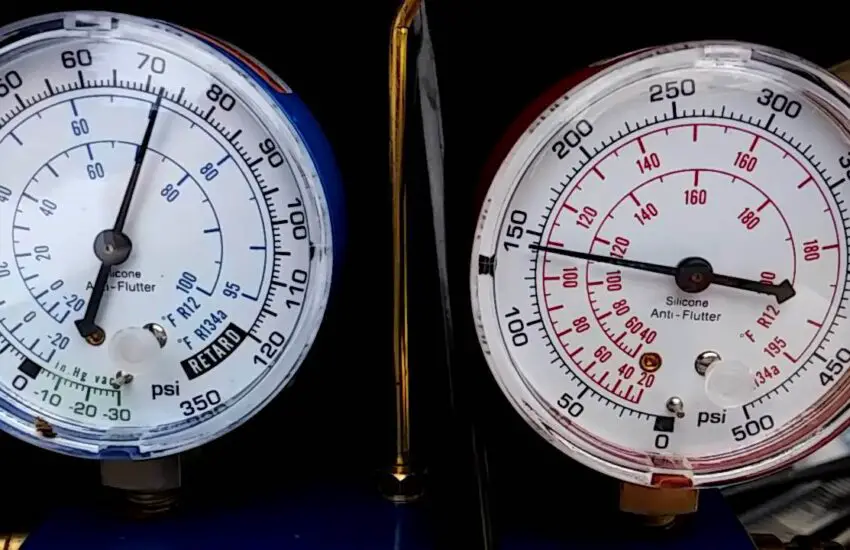
Several factors contribute to this condition. In fact, temperature is directly related to the system’s pressure. You can measure the refrigerant pressure at a given temperature. There is a temperature chart for refrigerant pressure that you can find available online.
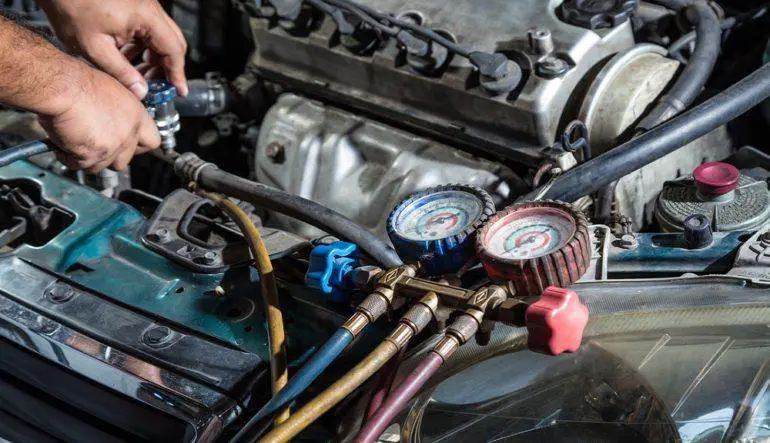
To measure the pressure, connect a gauge set to the AC system and record the pressures on the low and high sides. Check the ambient temperature and see if the pressures match the numbers in the pressure chart.
Compare the pressure readings with the pressure chart. (Photo: autoowls)
Matching readings mean you don’t have to worry about the freon level. Readings higher than the chart indicate an overcharged system, while lower readings confirm a low refrigerant level and a possible leak. On the other hand, there might be a significant leak when the pressure is zero.
You can refer to the car air conditioning pressure chart below for more information:
Ambient Temperature (°F)
Low Pressure (PSI)
High Pressure (PSI)
65
25-35
135-155
70
35-40
145-160
75
35-45
150-170
80
40-50
175-210
85
45-55
225-250
90
45-55
250-270
95
50-55
275-200
High and Low Side Pressure in Your Car’s Air Conditioning System
The high side starts from the discharge side of the compressor and moves through the condenser where heat is transferred to condensation, then to the receiver-drier and ends at the expansion valve. The compressor creates high pressure by compressing the low-pressure vapor from the evaporator so that the high-pressure vapor can release heat at the condenser. This pressure change occurs again at the expansion valve where the refrigerant is slowed and the pressure changes.
While the low side starts at the expansion valve which creates low-pressure refrigerant that moves to the evaporator where it transfers heat from inside the vehicle and goes to the compressor where it turns into high pressure and the whole process repeats again.
AC Low Side High, High Side Low : Why Does It Happen?
The low-side pressure reading should be between 25 and 30 psi and the high side between 200 and 250 psi. But if you see the AC low side high, high side low, such as the low side is 100 and the high side is 150, there might be problems with one of the internal components.
The possible reason could be an excessive amount of freon going to the evaporator. It could also be a faulty thermal bulb unable to pick up temperature signals or a TXV stuck in the open position.
It could also be a problem with the orifice tube. This tube works as an expansion valve to regulate the amount of refrigerant flowing to the evaporator. When its opening becomes larger than the usual size, more refrigerant goes to the evaporator and creates pressure discrepancies. The same issue arises when the O-ring on the outside of the orifice tube wears out.
Check the valves on both sides. (Photo: hummerforums)
Before deciding to replace the compressor, other components you can check are the pressure switch, expansion valve, and compressor clutch. The switch is located near the expansion valve. Use an ohmmeter to see if it gives the correct reading. Also, check if the compressor clutch engages and spins the compressor when the AC is turned on. Similarly, the fan should also spin when you turn on the system.
When all these components seem to be working correctly and the AC low side high, high side low problem persists, you may need to change the compressor to fix the unit. However, it’s always better to consult a mechanic before deciding to replace a part.
Do You Charge the AC on the High or Low Side?
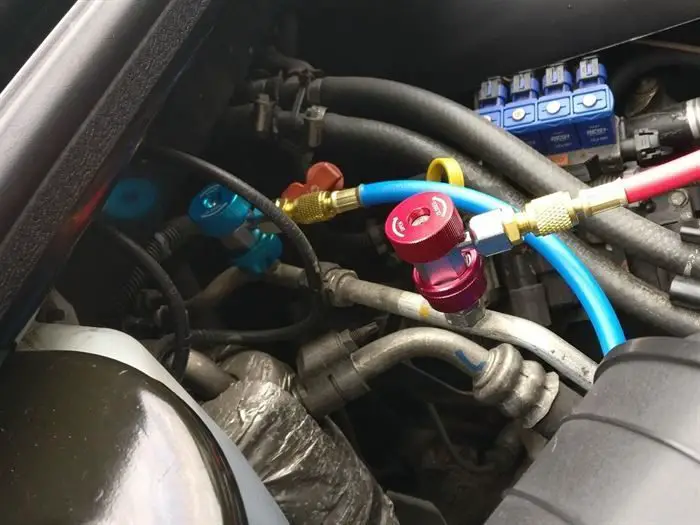
We will need to recharge the car’s air conditioning system with new refrigerant when the system isn’t cooling properly. But the question is whether you should charge the car’s AC on the low or high side? You can certainly charge your car’s AC from the high side, however, high-side refrigerant charging is sometimes dangerous and can damage your car’s system.
Watch the video to learn more:
When charging high-pressure gas, note that the engine is not running, the low-pressure valve is completely closed, and the high-pressure valve is completely open. Fill a tank with enough gas, then close the high-pressure valve. Note that it’s necessary to choose a charger suitable for the system’s capacity.
Can you charge the AC system from the low side? Yes, you can. The low-side port is important because it’s the point you connect to recharge the AC refrigerant. Its position varies in each vehicle, but in almost all cars, it will start at the compressor. It’s recommended not to charge until it’s 75 degrees or warmer for your vehicle’s AC unit to recharge.
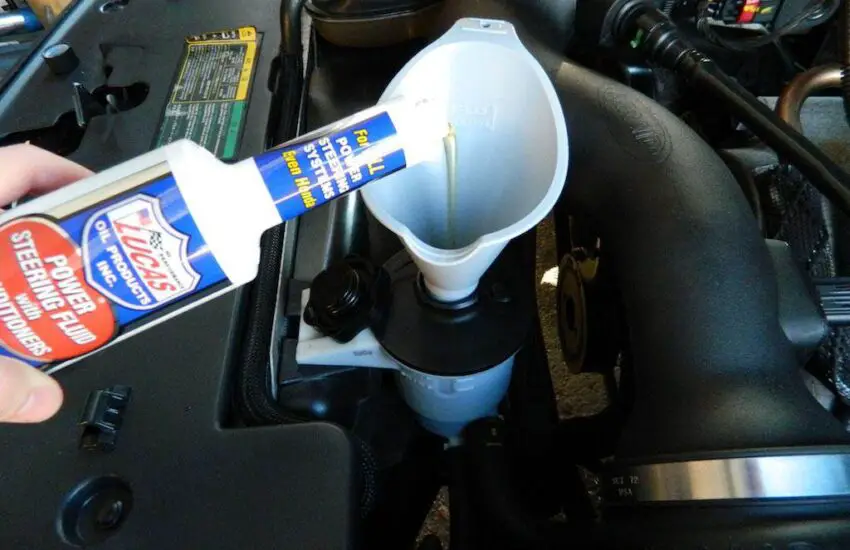
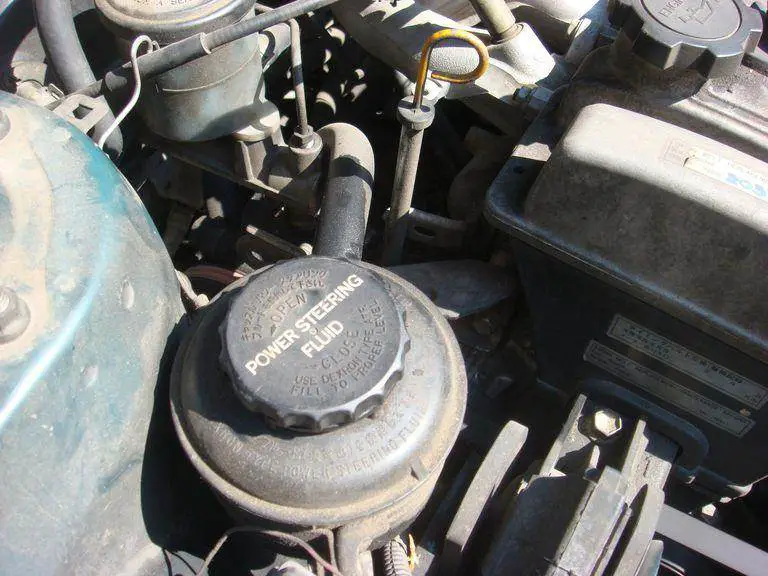
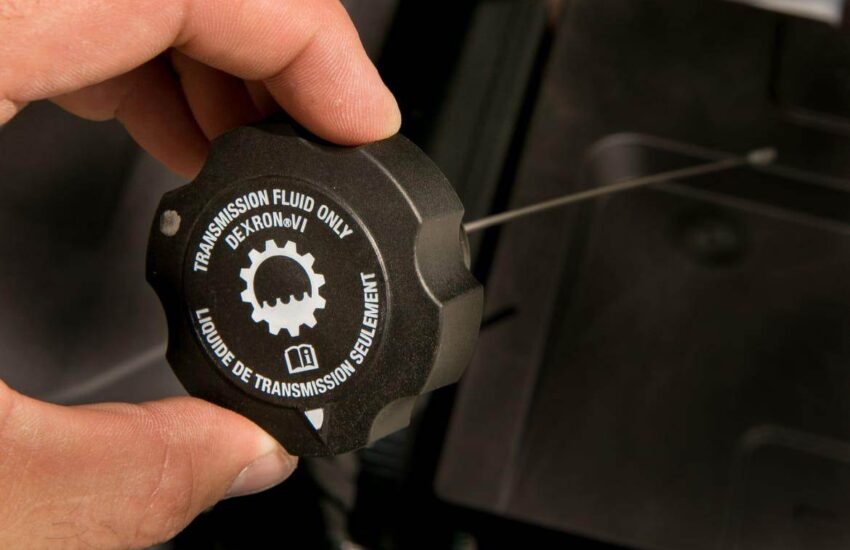
Can You Use Transmission Fluid for the Power Steering Pump?
Flushing transmission fluid, radiator, brake, and engine fluid is part of a car’s regular maintenance program. Does power steering also need to be flushed? If so, can you use transmission fluid for the power steering pump? Is there a possibility of ruining the power steering components by doing this, or do both fluids have the same properties? If you are considering using transmission fluid in the power steering, this article will help you get the answers.
Is a Power Steering Flush Necessary?
Any automobile equipped with a hydraulic power steering system needs power steering fluid. It works with the power steering pump to make turning the steering wheel smoother.
Over time, the fluid collects metal particles and sludge. The thick grit resembles sand that enters the rack and pinion seals and eventually ruins them.
The owner’s manual does not mention flushing power steering fluid as routine maintenance. But, you should do it to keep the car in good condition. When flushing becomes mandatory rather than an optional task, many people ask the question: can I use transmission fluid for power steering fluid? Let’s find out the differences between the types of fluids before answering the question.
Flushing the old fluid is necessary. (Photo: gobdp)
Power Steering Fluid vs ATF
Many people want to know if they can use transmission fluid in the power steering pump. Is power steering fluid the same as transmission fluid? A comparison between them will help you understand whether replacing one fluid with the other is safe.
Automatic transmission fluid (ATF) is a red-colored fluid that emits a distinct sweet smell, while power steering fluid (PS) is clear, amber, or pinkish and smells like burnt marshmallow.
Both are hydraulic fluids. But the biggest difference is that ATF contains detergents and friction modifiers. The detergents filter out grease and dirt that can enter the power steering system and damage the pump and hydraulic valves of the steering rack. The friction modifiers, on the other hand, help control excessive heat buildup from the valves and pump.
PS fluid also reduces friction between the different components of the system and excessive temperature buildup. Its other tasks are to provide hydraulic pressure to the system components and lubricate the steering pump and gearbox. But, can you use transmission fluid for the power steering pump? Let’s find out.
Can You Use Transmission Fluid for the Power Steering Pump?
It depends on the make and model of the vehicle. Some people see no problem with it, while others are completely against it unless it’s an absolute emergency.
The argument against the practice seems stronger because using the wrong oil in high volume can deteriorate and destroy parts of a system. Both ATF and PS fluids are hydraulic types, but they are not the same.
Transmission fluid serves for cleaning and friction. Being sticky and heat-resistant in nature, it improves friction between the clutch pack components for better grip. In contrast, PS fluid is mainly for lubrication and reducing friction between the various parts of the power steering system. ATF will work for a while, but it will affect the pump and gearbox seals in the long term. Using the approved PS fluid for your vehicle model is the right way to avoid any problems.
Is It Possible to Replace PS Fluid with Transmission Fluid in Any Vehicle?
So, can you use transmission fluid for the power steering pump? The answer is no! Then why do so many people speak in favor of it?
Well, you can use ATF in the power steering pump of vehicles manufactured in the late 70s or earlier. These older cars do not have the sophisticated and lightweight materials used in cars produced in the 90s and later. The power steering system of vintage vehicles is made of raw materials that can handle ATF since it is also a hydraulic fluid.
Modern cars have subtle engineering and delicate components. Every system needs the oil and fluid specifically designed for them. Thus, using a different fluid that does not meet the requirements of a specific system is harmful to it.
You can replace the fluid in older cars. (Photo: Wikimedia)
Many Ford and GM models accept fluid exchange, whereas you will simply ruin a BMW, Audi, Honda, or Mercedes-Benz by doing so. The best way to determine the answer to the question – can you use transmission fluid for the power steering pump – is to consult your car’s owner’s manual. It will clearly mention whether the car needs standard power steering fluid or can also run on ATF. Some models may require specific types of hydraulic fluid. For example, a Lexus LX470 will do fine with ATF, but a BMW requires a special synthetic fluid called Pentosin CHF 11S. If your car was manufactured in the 90s or later, check the owner’s manual before making a rash decision.
Should We Mix Transmission Fluid with PS Fluid?
ATF is essentially used to reduce friction and for cleaning, while PS fluid is mainly used to lubricate power steering parts. But can two types of fluids be mixed together? As we know, PS fluid and transmission fluid are both hydraulic fluids, so mixing them is not supposed to be a problem. However, since they both have different material compositions, it may lead to an issue if they are mixed and certain set requirements are not met.
One thing to note is that power steering fluid contains oil, whereas transmission fluid does not contain any oil element in its formula. Therefore, it is quite possible that there will be leaks if these fluids are used in a system with rubber parts, as oil can cause the rubber to expand. Based on this, power fluid may cause a problem.
Transmission Fluid Low Symptoms You Should Know
Transmission fluid is nothing less than the lifeblood of the transmission system. It preserves all the system’s components, allowing them to function correctly. And symptoms of low transmission fluid level can lead to irreparable wear of parts.
The damage will be even worse in an automatic car because the automatic transmission fluid (ATF) also acts as an antifreeze to prevent the engine from overheating.
What is transmission fluid used for?
Its main function is to lubricate the transmission system. Lubrication helps transfer power from the engine to the ground.
The torque converter also uses the fluid to transfer the engine’s rotational force to the transmission. The fluid also absorbs the heat created inside the system and distributes it through the radiator.
Driving with low transmission fluid is extremely dangerous because it could lead to transmission failure and other costly repairs. You need to know what happens if your transmission fluid is low and act immediately when symptoms appear.
Low Transmission Fluid Symptoms: 10 Alerts to Keep in Mind
Transmission fluid does not need to be changed for the entire lifespan of a vehicle. However, depending on the car you drive, you may need to flush it several times or change it every 50,000 miles.
The low fluid level can be the result of a leak through a cracked or worn component. In this case, you need to repair the damaged part and refill with fluid.
Be aware of the low transmission fluid symptoms. (Photo: demotix)
How to know if transmission fluid is low? Be wary of these low transmission fluid symptoms.
Gear Shifting Problem
The first sign when your car experiences a low transmission fluid level is a gear shifting problem. Dirt or grime in the fluid is the main reason for a slow transmission response.
Whether you drive a manual or automatic transmission, the gearbox oil must be clean and free of any dirt residue so it can flow inside the parts without any hitches.
Dirty oil will lead to an overly slow shift response. Low manual transmission fluid symptoms will make shifting extremely difficult.
Erratic Shifting
Erratic shifting causes the gear to shift too late or too early. It’s one of the signs of automatic cars with low transmission fluid. You can be sure of the problem if there is a clunking noise accompanying it.
The hydraulic pressure must be precise and operate smoothly to change gears in an automatic transmission. A lack of fluid will disrupt the rhythm of the shift timing.
Transmission Surging
The condition causes the vehicle to lurch forward before falling back during normal driving operations. Insufficient fluid force is the sole reason for these jerky movements.
surging transmission
Delayed Gear Engagement
The gear lever will produce a delayed response when you move it into “Drive” or “Reverse” mode. A low fluid level means low pressure in the transmission, resulting in a delay in shifting.
The response time is about 2 to 3 seconds, which is enough to tell you there is a problem with the transmission fluid.
Gear Slipping
Low transmission fluid symptoms also include the engaged gear slipping. It doesn’t let the gear stay in the mode you selected.
If the fluid level is correct, the culprit must be the buildup of residue that prevents the fluid from flowing freely.
The Transmission Overheats
One of the most important functions of the fluid is to maintain the transmission temperature at a normal level. When there isn’t enough fluid to lubricate the components, there will be a huge amount of friction, leading to the production of excessive heat.
You will encounter an overheated transmission in case of delayed shifting, gear slipping, power loss, or other related issues, as some signs indicate that the transmission fluid is low.
When you experience low transmission fluid level symptoms, immediately pull the car over to allow the components to cool down. When the temperature has returned to normal, try driving to a maintenance workshop.
Call a towing service if the symptoms persist. Remember that the transmission system will suffer severe damage if the temperature exceeds 240°F.
check fluid level
Noises
If your transmission is in good working order, you shouldn’t hear any noises while driving since it should shift smoothly. Unusual noises vary not only by manufacturers and models but also between transmission types.
When shifting gears, manual gearboxes frequently create a loud clunking or grinding noise, while automated transmissions moan or hum.
The noises may suggest that the fluid level is low, but you won’t be able to detect the problem on your own. To avoid laborious repairs due to the low transmission fluid sound, have the issue checked by a professional expert as soon as possible.
Burning Smells
Any bad smell emanating from your vehicle should guide you to the nearest maintenance center.
There are various reasons why your automobile may start emitting a burning smell, one of which is the presence of overheated transmission fluid. This symptom can indicate a low fluid level.
When a gearbox becomes too hot, the friction between components increases, causing significant buildup and damaging the transmission. If kept in this state, the transmission will eventually become injured and non-functional.
Slow Acceleration
If your car is slow to start or unresponsive when accelerating from a stop, it could be due to a transmission problem.
car accelerate slower
If you notice that you might be driving with low transmission fluid with these symptoms above, bring your car to the trusted local service workshop and have it inspected and serviced immediately.
The Warning Light is On
When a Check Engine light appears on your dashboard, you should always bring it to a repair shop to have it checked. This light can appear for various reasons, one of which is a problem with your transmission fluid.
How to Check Transmission Fluid?
If your car starts showing any of these low transmission fluid symptoms, you need to check the fluid level to be sure. Use a dipstick to see if the fluid level matches that mentioned in the owner’s manual.
You should also look for any change in color or smell, as bad fluid also leads to many transmission problems. Perform the dipstick test at least once a month and do a fluid change if the color turns brown or black, or if the fluid emits a burning smell.
If the oil level is lower than it should be, take the car to a garage to discover the source of the problem – either a leak or a damaged component. The dipstick will let you know if the problem comes from the fluid level or not.
Watch the video below by George Melnik to learn how to check the transmission fluid level!
Did you enjoy our article on low transmission fluid symptoms above? If you have any questions related to this topic, feel free to leave them in the comments section. We greatly appreciate your input and will answer your question shortly.