
P033E Knock Sensor 4 Circuit Intermittent (Bank 2)

What does it mean?

This diagnostic trouble code (DTC) is a generic powertrain code, meaning it applies to OBD-II equipped vehicles (Dodge, Ram, Ford, GMC, Chevrolet, VW, Toyota, etc.). Although generic, the specific repair steps may vary by make/model.

In instances where I have been faced with diagnosing a stored P033E code, it has been indicative of the powertrain control module (PCM) detecting an intermittent knock sensor signal for engine bank two. The knock sensor 4 designation may refer to a particular sensor (in a multi-sensor setup) or it may point to a specific cylinder. Bank 2 refers to the engine bank that does not contain cylinder number one. Consult a reliable vehicle information source for the knock sensor system configuration for the vehicle in question.

Typically threaded directly into the engine block, the knock sensor is a piezoelectric sensor. The location of sensors in a multi-sensor system can vary by manufacturer, but most are located on the sides of the block (between the cylinder head coolant jacket freeze plugs). Knock sensors that are located on the sides of the engine block are often screwed directly into engine coolant passages. When the engine is hot and the engine cooling system is under pressure, removing these sensors can result in severe hot coolant burns. Before removing any knock sensor, allow the engine to cool and always dispose of coolant properly.

A piezoelectric sensing crystal is at the heart of the knock sensor. When shaken or vibrated, the piezoelectric crystal produces a small amount of voltage. Since the knock sensor control circuit is normally a one-wire ground circuit, the voltage generated by vibration is recognized by the PCM as engine noise or vibration. The severity of the vibration encountered by the piezoelectric crystal (inside the knock sensor) determines the level of voltage produced in the circuit.

If the PCM detects a degree of knock sensor voltage indicating spark knock; it may retard ignition timing and no knock sensor control code may be recorded. If the PCM detects a level of knock sensor voltage that indicates more severe engine noise (like a connecting rod contacting the inside of the engine block), it may interrupt fuel delivery and ignition spark to the affected cylinder and a knock sensor code will be stored.

A very small voltage is always produced by the knock sensor when the engine is running. This is because slight vibration is unavoidable, no matter how smoothly the engine is running. If the PCM detects an unexpected signal from knock sensor 4, such as battery voltage, complete battery ground, or pulsing voltage, a P033E code will be stored and a MIL may be illuminated.

Related knock sensor/circuit malfunction codes include P0324, P0325, P0326, P0327, P0328, P0329, P0330, P0331, P0332, P0333, and P0334.

Code Severity and Symptoms

A stored P033E code could be indicative of a severe internal engine failure. For this cause, it should be addressed with some urgency.

Symptoms of this code may include:

Decreased engine performance
Hesitation upon acceleration
Loud noises from the engine area
Decreased fuel efficiency

Causes

Possible causes for setting this code are as follows:

Faulty knock sensor
Internal engine malfunction
Misfire/s
Contaminated or poor quality fuel
Faulty knock sensor control wiring and/or connectors
Incorrect PCM or PCM programming error

Diagnostic and Repair Procedures

To diagnose a P033E code, a diagnostic scanner, digital volt/ohmmeter, and a reliable vehicle information source will be needed. If the engine feels like it is knocking or is excessively noisy, resolve this issue before attempting diagnosis for any knock sensor code.

Consult your vehicle information source for technical service bulletins (TSBs) that coincide with the symptom(s) displayed and the code(s) stored in the vehicle in question. If the issue you are experiencing is common; the correct TSB can help lead to a successful diagnosis. Follow the diagnostic steps in the TSB and you will likely arrive at the correct solution.

I like to start with a visual inspection of all wiring harnesses and connectors related to the system. I look for burned, corroded, or otherwise broken wires and connectors that may create an open or shorted circuit. Knock sensors are often located in the lower portion of the engine block. This makes them susceptible to damage when heavy components (like starters and motor mounts) are replaced. System connectors, wiring, and fragile knock sensors are frequently broken during nearby repairs.

Connect the scanner to the vehicle diagnostic connector and retrieve all stored codes and freeze frame data. Note this information for use in the diagnostic process. Clear the codes and test drive the vehicle to see if they reset.

If the P033E resets, start the engine and use the scanner to observe live knock sensor data. If the scanner indicates that the knock sensor voltage is not within manufacturer specifications, use the DVOM to test the live data at the knock sensor connector. If the signal at the connector is within specifications, suspect a wiring problem between the sensor and the PCM. If the voltage at the knock sensor connector is not within specifications, suspect a faulty knock sensor.

Additional Diagnostic Notes:

Multi-knock sensor systems are arranged differently from vehicle to vehicle. Be careful to address the correct knock sensor for the displayed code
Beware of hot, pressurized coolant when removing knock sensors that are threaded into engine coolant passages
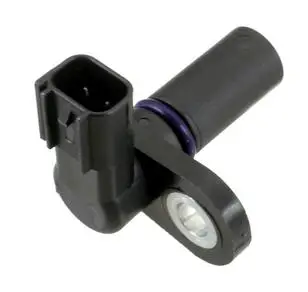

P033F ISO/SAE Reserved

P011E, P011F ISO/SAE reserved

P0340 Camshaft Position Sensor Circuit Malfunction

What is the P0340 Code?

The P0340 code is a generic OBD-II code related to the powertrain. It indicates a problem in the Camshaft Position Sensor (CPS) circuit. Although it applies to most vehicles manufactured since 1996 (Toyota, Ford, Nissan, Honda, etc.), repair steps may vary by model.

Common Symptoms

  • Hard starting or complete failure to start.

  • Rough idling or engine stalling.

  • Loss of power during acceleration.

  • Illumination of the check engine light (⚠️).


Possible Causes

The issue may stem from:

  1. Electrical failure:

    • Damaged wires, short circuits, or corroded connectors.

    • Open circuit (signal interruption).

  2. Hardware problems:

    • Faulty camshaft position sensor (CPS).

    • Defective crankshaft sensor.

  3. PCM failure:

    • Faulty engine control module (rare case).


Diagnostic Procedure

  1. Visual inspection:

    • Check the CPS wiring and connectors (corrosion, exposed wires).

  2. Electrical tests:

    • Measure sensor voltage (typically 12V) and circuit continuity.

    • Compare values with manufacturer specifications.

  3. Sensor verification:

    • Test the CPS with a multimeter or oscilloscope (expected sine wave signal).

  4. Cross-diagnosis:

    • Check the crankshaft sensor, often related to the CPS.


Recommended Solutions

  • Replace the CPS if tests confirm its failure.

  • Repair the circuit: Replace damaged wires or connectors.

  • Reset the PCM after repair to clear the code.

  • Consult a professional if PCM issues are suspected.


Key Points to Remember

  • Do not automatically replace the CPS: 30% of cases are related to wiring.

  • Use an advanced diagnostic tool to analyze live data (e.g., cycle report, CPS signal).

  • On some models (e.g., Honda, Toyota), incorrect timing belt adjustment can trigger this code.

P0341 Camshaft Position Sensor Circuit Range/Performance

Meaning

The powertrain control module (PCM) has detected an anomaly in the camshaft position sensor (CPS) signal. This sensor transmits two critical pieces of information:

  1. Top dead center (TDC) on the compression stroke
  2. The angular position of the camshaft
    The code is triggered when the received signal does not match the expected values, often due to:
  • An erratic or absent signal
  • A mechanical misalignment
  • Electromagnetic interference

Common Symptoms

  • 🟠 Illumination of the check engine light (MIL)
  • Extended or failed starts
  • Unstable idle (if engine is running)
  • Loss of power (“limp mode”)
  • ⛽ Increased fuel consumption
  • Possible engine stalling

Possible Causes

(Ranked by frequency)

Cause Failure Mechanism
1. Electrical Issues Wiring near spark plug wires (interference)
Oxidized/damaged connectors (CPS or PCM)
Chafed/damaged wires
2. Component Failures Faulty camshaft sensor
Damaged reluctor wheel
3. Other Origins Incorrect engine timing
Spark plug/coil failure (false positive)

Diagnostic Procedure

Step 1: Preliminary Checks

  • Check the wiring condition:
    • Distance from high-voltage components (spark plugs, coils)
    • Absence of burns, exposed wires, or corrosion
  • Inspect the connectors (CPS and PCM): bent/broken pins

Step 2: Mechanical Inspection

  • Examine the reluctor wheel via the sensor housing (missing/deformed teeth)
  • Check the sensor shaft play (misalignment fault)

Step 3: Advanced Tests

  • Measure the CPS voltage (oscilloscope recommended):
    • Expected square wave signal (amplitude 0-5V or 0-12V depending on model)
  • Check the sensor resistance (manufacturer specifications)
  • Analyze related codes (P0340, P0342, etc.)

⚠️ Special Case: On some engines without a physical CPS, this code often indicates ignition failures (spark plugs, coils, or HT wires).


Recommended Solutions

Confirmed Failure Intervention
Faulty wiring Reroute/repair harnesses
Damaged connector Replace the connector or plug
CPS sensor faulty Replace the sensor (check gasket seal)
Damaged reluctor wheel Replace the camshaft (costly)
Ignition problem Test spark plugs/coils/HT wires

Key Technical Data

  • Timing tolerance: Deviation > 2-5° cam triggers the code
  • Quick test: Disconnect the CPS at idle → Engine should stall (otherwise PCM fault)
  • Statistics: 70% of P0341 codes are related to wiring or connectors (workshop data)

Critical recommendation: Always reset the PCM adaptations after repair. Use a diagnostic tool to clear the code and verify proper operation over 2 drive cycles.


Related Codes:
P0340 (Intermittent signal) – P0342 (Low signal) – P0343 (High signal)
P0345-P0349 (Bank 2 faults) – P0365-P0369 (Circuit “B” faults)

P0342 Low Camshaft Position Sensor “A” Circuit

What does it mean?


This is a generic powertrain diagnostic trouble code (DTC), meaning it covers all makes/models from 1996 onward. However, specific troubleshooting steps vary by vehicle.

Automotive trouble code P0342 is one of many generic malfunction codes related to the camshaft position sensor (CPS). Trouble codes P0335 to P0349 are all generic CPS-related codes indicating different reasons for failure.

In this case, code P0342 indicates that the sensor signal is too weak or not strong enough. The signal is weak enough to be vague and difficult to interpret. P0342 refers to the sensor for Bank 1 “A”. Bank 1 is the engine side that contains cylinder #1.
Description and correlation of crankshaft and camshaft position sensors

In today’s vehicles, it is important to understand what these sensors are and how they interact. All distributorless ignition vehicles use a crank and cam sensor to replace the module and trigger wheel found in an electronic distributor.

The crankshaft position sensor (CPS) signals the engine control module the location of the pistons relative to top dead center in preparation for fuel injection and spark plug firing.

The camshaft position sensor (CMP) signals the position of the camshaft intake lobe relative to the CPS signal and the opening of the intake valve for fuel injection on each cylinder.
Description and location of sensors

The crank and cam sensors provide an “on/off” signal. Both are either Hall effect or magnetic.

A Hall effect sensor uses an electromagnetic sensor and a reluctor. The reluctor is shaped like small cups with squares cut out on the sides, making it look like a fence. The reluctor rotates while the sensor is stationary and mounted very close to the reluctor. Whenever a post passes by the sensor, a signal is produced, and when the post passes, the signal turns off.

A magnetic sensor uses a fixed sensor and a magnet attached to the rotating part. Whenever the magnet passes by the sensor, a signal is produced.
Locations


A Hall effect crank sensor is located on the harmonic balancer at the front of the engine. The magnetic sensor may be located on the side of the engine block where it uses the center of the crankshaft for a signal, or it may be in the housing where it uses the flywheel as a trigger.

The camshaft sensor mounts at the front or rear of the camshaft.

Note: In the case of GM vehicles, this code description is slightly different; it refers to low CMP sensor circuit input conditions.

Symptoms

Symptoms may include:


    Check engine light (malfunction indicator) illuminated and code P0342 set
    Lack of power
    Stumbling
    Hard starting

Potential causes

Causes

of this DTC may include:


    Faulty camshaft position sensor
    Sensor harness open or shorted
    Poor electrical connections
    Faulty starter
    Bad wiring to starter
    Bad battery

Diagnostic and repair procedures


Consult technical service bulletins (TSBs) for anything related to this code. TSBs are a list of complaints and failures handled at the dealership level and the recommended fixes from manufacturers.

    Check battery condition. A weak battery can cause the code to set.
    Check all starter wiring. Look for corrosion, loose connections, or frayed insulation.
    Check the connector on the camshaft sensor. Look for corrosion and bent pins. Apply dielectric grease to the pins.
    Check the starter for excessive draw indicating a weak starter.
    Replace the camshaft position sensor.

Example photo of a camshaft position sensor (CMP):

Related camshaft trouble codes: P0340, P0341, P0343, P0345, P0346, P0347, P0348, P0349, P0365, P0366, P0367, P0368, P0369, P0390, P0391, P0392, P0393, P0394.

P0343 Low Camshaft Position Sensor “A” Circuit

What does it mean?


This is a generic powertrain diagnostic trouble code (DTC), meaning it covers all makes/models from around 2003 onward.

The code appears more common on VW, Kia, Hyundai, Chevrolet, Toyota, and Ford vehicles, but any brand vehicle can be affected. Specific troubleshooting steps vary by vehicle.

These vehicles may have a single camshaft in-block or a single overhead camshaft (SOHC) or dual (DOHC), but this code is strictly concerned with the incoming signal from the Bank 1 camshaft position sensor(s) being missing, typically at engine start-up. It is an electrical circuit fault. Bank #1 is the engine bank that contains cylinder #1.

The PCM uses the camshaft position sensor to tell it when the crankshaft sensor signal is correct, when a given crankshaft position sensor signal is timed to cylinder #1 for timing, and it is also used for fuel injector timing/injection start.

P0340 or P0341 codes may also be present alongside P0343. The only difference between these 3 codes is the duration of the issue and the type of electrical problem encountered by the sensor/circuit/engine controller. Troubleshooting steps can vary by manufacturer, camshaft position sensor type, and wire colors.

Symptoms


Symptoms of a P0343 engine code can include:

Check Engine Light illuminated
Bucking or Surging
Stalls, but may restart if the issue is inconsistent
May run fine until restarted; will not restart

Potential Causes


Typically, the causes for this code are:

Open in the ground circuit to the camshaft position sensor
Open in the signal circuit between the camshaft position sensor and the PCM
Short to 5 volts in the camshaft position sensor signal circuit
Faulty camshaft position sensor – internal short to voltage

Diagnostic and Repair Procedures


A good starting point is always searching for a Technical Service Bulletin (TSB) for your specific vehicle. The vehicle manufacturer may have a PCM flash/reprogram to cover this issue, and it’s worth checking before finding out you’ve taken a long/wrong path.

Next, locate the camshaft and crankshaft position sensors on your specific vehicle. Since they share common power and ground circuits, and this code focuses on the camshaft position sensor’s power and ground circuits, it makes sense to check them for any damage to either.

Example photo of a camshaft position sensor (CMP):

Once located, visually inspect the connectors and wiring. Look for chafing, rubbing, bare wires, burns, or melted plastic. Separate the connectors and carefully inspect the terminals (the metal parts) inside the connectors. See if they look corroded, burnt, or perhaps greenish compared to the normal metal color you’re probably used to seeing. You can get electrical contact cleaner at any auto parts store if terminal cleaning is needed. If not available, find 91% rubbing alcohol and a soft plastic bristle brush to clean them. Then let them air dry, get some dielectric silicone compound (same as used for bulb sockets and spark plug wires), and apply a bit where the terminals make contact.

If you have a scan tool, clear the diagnostic codes from memory and see if this code returns. If not, the connections were likely your problem.

If the code returns, we’ll need to test the sensor and its associated circuits. There are typically 2 types of camshaft position sensors: Hall effect or magnetic sensor. You can usually tell which you have based on the number of wires from the sensor. If there are 3 wires from the sensor, it’s a Hall effect sensor. If it has 2 wires, it will be a magnetic pickup type sensor.

This code will only be set if the sensor is a Hall effect sensor. Disconnect the harness going to the camshaft position sensor. With a digital voltmeter (DVOM), test the 5V power circuit going to the sensor to ensure it’s powered (red lead to the 5V/12V power circuit, black lead to a good ground). Check with a wiring diagram or diagnostic chart whether this sensor is supplied with 5 volts or 12 volts. If there are 12 volts at the sensor when there should be 5 volts, repair the wiring from the PCM to the sensor for a short to 12 volts, or possibly a faulty PCM.

If that’s okay, with a DVOM, check that the camshaft position sensor signal circuit is at 5V (red lead to the sensor signal circuit, black lead to a good ground). If there is no 5 volts at the sensor, or if you see 12 volts at the sensor, repair the wiring from the PCM to the sensor, or again a faulty PCM.

If that’s fine, check that you have a good ground at each sensor. Connect a test light to the positive 12V battery (red terminal) and touch the other end of the test light to the ground circuit going to the camshaft sensor circuit ground. If the test light does not illuminate, that would indicate the circuit problem. If it lights up, wiggle the wiring harness going to each sensor to see if the test light flickers, indicating an intermittent connection.

Related camshaft fault codes: P0340, P0341, P0342, P0345, P0346, P0347, P0348, P0349, P0365, P0366, P0367, P0368, P0369, P0390, P0391, P0392, P0393, P0394.

P0344 Camshaft Position Sensor “A”, Intermittent Circuit

What does it mean?

This is a generic powertrain diagnostic trouble code (DTC), meaning it applies to all makes/models from 2003 onward. The code appears more commonly on Dodge, Chrysler, Ford, Honda, Jeep, BMW, and Acura vehicles, but any brand vehicle can be affected. Specific troubleshooting steps vary by vehicle.

These vehicles may have a single camshaft in-block or a single overhead camshaft (SOHC) or dual (DOHC), but this code strictly concerns the fact that the incoming signal from the camshaft position sensor(s) of Bank 1 is missing at a time when it shouldn’t be. It’s an electrical circuit fault and is intermittent in nature. It’s not present all the time. Bank #1 is the engine bank that contains cylinder #1.

The PCM uses the camshaft position sensor to tell it when the crankshaft sensor signal is correct, when a given crankshaft position sensor signal is timed to cylinder #1 for timing, and it is also used for fuel injector timing/injection start.

P0340 or P0341 codes may also be present along with P0344. The only difference between these 3 codes is the duration of the problem and the type of electrical issue experienced by the sensor/circuit/engine controller. Troubleshooting steps may vary by manufacturer, camshaft position sensor type, and wire colors.

Symptoms

Symptoms of a P0344 engine code can include:

Check Engine Light illuminated
Intermittent stumbling or surging
Intermittently stalls, but restarts immediately

Potential Causes

Typically, causes for this code are:

Intermittent open in the camshaft position sensor power circuit
Intermittent short to ground in the camshaft position sensor power circuit
Intermittent open in the ground circuit to the camshaft position sensor
Intermittent open in the camshaft position sensor signal circuit
Intermittent short to 5 volts in the camshaft position sensor signal circuit
Intermittent short to ground in the camshaft position sensor signal circuit
Damage to the camshaft position sensor tone ring
Crankshaft position sensor occasionally producing intermittent signals

Diagnostic and Repair Procedures

A good starting point is always searching for a Technical Service Bulletin (TSB) for your specific vehicle. The vehicle manufacturer may have a PCM flash/reprogram to cover this issue, and it’s worth checking before finding out you’ve taken a long/wrong path.

Next, locate the camshaft and crankshaft position sensors on your specific vehicle. Once located, visually inspect the connectors and wiring. Look for chafing, rubbing, bare wires, burns, or melted plastic. Disconnect the connectors and carefully inspect the terminals (the metal parts) inside the connectors. See if they look corroded, burnt, or perhaps greenish compared to the normal metallic color you’re probably used to seeing. You can get electrical contact cleaner at any auto parts store if terminal cleaning is needed. If not available, find 91% rubbing alcohol and a soft plastic bristle brush to clean them. Then let them air dry, get some dielectric silicone compound (same as used for light bulb sockets and spark plug wires) and apply some where the terminals make contact.

If you have a scan tool, clear the diagnostic codes from memory and see if this code returns. If not, the connections were likely your problem.

If the code returns, we’ll need to test the sensor and its associated circuits. The next steps will be determined by the type of sensor you have: Hall effect or magnetic sensor. You can usually tell which you have based on the number of wires from the sensor. If there are 3 wires from the sensor, it’s a Hall effect sensor. If it has 2 wires, it will be a Magnetic Pick-up type sensor.

Hall Effect Sensor

If it’s a Hall effect sensor, disconnect the harness going to the camshaft and crankshaft position sensors. With a digital voltmeter (DVOM), test the 5V power circuit going to each sensor to ensure it has power (red wire to 5V power circuit, black wire to a good ground). If there’s no 5 volts at the sensor, repair the wiring from the PCM to the sensor, or possibly a faulty PCM.

If that’s okay, with a DVOM, check that you have 5V on each signal circuit going to each sensor to ensure it has a signal circuit (red wire to sensor signal circuit, black wire to a good ground). If there’s no 5 volts at the sensor, repair the wiring from the PCM to the sensor, or possibly a faulty PCM.

If that’s okay, check that you have a good ground at each sensor. Connect a 12V test light and touch the other end of the test light to the ground circuit going to each sensor. If the test light doesn’t illuminate, that would indicate the circuit problem. If it lights up, wiggle the wire harness going to each sensor to see if the test light flickers, indicating an intermittent connection.

Magnetic Pick-up Sensor

If it’s a magnetic pick-up type sensor, we can check the sensor itself to see if it’s working properly. We’ll test it for:

Resistance
A/C voltage output
Short to ground

With the sensor disconnected, connect the two wires of your ohmmeter to the 2 terminals of the camshaft/crankshaft position sensor. Read the ohms resistance and compare it to your vehicle’s specifications: typically 750 – 2000 ohms. While still on ohms, disconnect 1 wire of your ohmmeter from the sensor and connect it to a good vehicle ground. If you get an ohms reading other than infinite or OL, the sensor has an internal short to ground. Remember not to touch the metal part of the wires with your fingers, as this could affect your readings.

Reconnect both wires of your DVOM to the 2 terminals of the camshaft/crankshaft position sensor. Set your meter to read A/C voltage. While cranking the engine, read the AC voltage output on your DVOM. Compare to manufacturer specifications for your vehicle. A good rule of thumb is typically 0.5 V AC.

P0345 Camshaft Position Sensor Circuit Malfunction, Bank 2

What does it mean?

This diagnostic code (DTC) is a generic powertrain code. It is considered generic because it applies to all makes and models of vehicles (1996-newer), although specific repair steps may vary slightly by model.

It indicates that a problem has been detected in the Bank 2 camshaft position sensor circuit.

Since it says circuit, it means the problem could be in any part of the circuit – the sensor itself, the wiring, or the PCM. Don’t just replace the CPS (camshaft position sensor) and think that will definitely fix it.

Symptoms

Symptoms may include:

Hard starting or no start
Rough running / misfires
Loss of engine power

Causes

A P0345 code could mean that one or more of the following events have occurred:

a wire or connector in the circuit could be grounded / shorted / broken
the camshaft position sensor may have failed
the PCM may have failed
there is an open circuit
the crankshaft position sensor may have failed

Possible Solutions

With a P0345 OBD-II trouble code, diagnosis can sometimes be difficult. Here are some tips to try:

Visually inspect all wiring and connectors in the circuit
Check the continuity of the circuit wiring
Check the operation (voltage) of the camshaft position sensor
Replace the camshaft position sensor if necessary
Also check the crankshaft position circuit
Replace the circuit wiring and/or connectors as needed
Diagnose/replace the PCM as needed

P0346 Camshaft Position Sensor A Circuit Range/Performance, Bank 2

What does it mean?

This is a generic diagnostic trouble code (DTC) from the powertrain group, meaning it applies to all makes/models from 1996 and newer. As a side note, the code may be more commonly seen on Toyota, Lexus, Hyundai, Audi VW Volkswagen, Chevrolet, Scion, and Ford vehicles, but any brand vehicle can be affected. Specific troubleshooting steps vary by vehicle.

This P0346 code essentially means that the Powertrain Control Module (PCM) has detected a problem with the “A” camshaft signal for Bank 2. Bank 2 refers to the bank of cylinders in the engine that does not contain cylinder #1.

Description and correlation of crankshaft and camshaft position sensors

In today’s vehicles, it’s important to understand what these sensors are and how they interact. All distributorless ignition vehicles use a crank and cam sensor to replace the module and trigger wheel found in an electronic distributor.

The Crankshaft Position Sensor (CPS) signals the engine control module the location of the pistons relative to top dead center in preparation for fuel injection and spark plug firing. The CMP signals the position of the camshaft intake lobe relative to the CPS signal and the opening of the intake valve for fuel injection on each cylinder.

Description and location of sensors

The crank and cam sensors provide an “on/off” signal. Both are either Hall effect or magnetic.

A Hall effect sensor uses an electromagnetic sensor and a reluctor. The reluctor is shaped like small cups with squares cut out on the sides, making it look like a fence. The reluctor spins while the sensor is stationary and mounted very close to the reluctor. Whenever a post passes by the sensor, a signal is produced, and when the post passes, the signal is turned off.

A magnetic sensor uses a fixed sensor and a magnet attached to the rotating part. Whenever the magnet passes by the sensor, a signal is produced.

Locations

A Hall effect crank sensor is located on the harmonic balancer at the front of the engine. The magnetic sensor may be located on the side of the engine block where it uses the center of the crankshaft for a signal, or it may be in the bell housing where it uses the flywheel as a trigger. The camshaft sensor mounts to the front or rear of the camshaft. P0346 specifically refers to Bank 2, which is the bank of cylinders that does not contain cylinder #1.

Symptoms

The car will likely run with this set of codes, as it is often intermittent and also because the PCM can often run the vehicle in “limp-in/limp-home” mode even with a cam sensor signal problem. There may be no noticeable symptoms other than:

    Malfunction Indicator Lamp (MIL) illumination (i.e., Check Engine Light)
    Lack of power
    No start condition possible
    Stumbling

Causes

A P0346 code can mean that one or more of the following events have occurred:

    Faulty Camshaft Position Sensor (CMP)
    Poor wiring connection to the cam sensor
    Short or open electrical condition in the associated wiring
    Weak/bad battery

Possible Solutions

A good starting point is always to check for a Technical Service Bulletin (TSB) for your specific vehicle. The vehicle manufacturer may have a PCM flash/reprogram to address this issue, and it’s worth checking before finding out you’ve taken a long/wrong path. Off-hand, we are aware of a service bulletin where the fix is to recalibrate the PCM. This bulletin number is EG010-05.

Example picture of a Camshaft Position Sensor (CMP):

Often, replacing the sensor fixes this code, but not necessarily. Therefore, it’s important to check the following points:

     Check the battery condition. A weak battery can cause the code to set.
     Visually inspect the sensor wiring for any signs of burning, discoloration indicating melting or chafing. Also look for corrosion or bent pins.
     Visually inspect the cam sensor for any damage
     Visually inspect the reluctor wheel through the cam sensor port (if possible) for any missing teeth or damage
     If the reluctor is not visible from outside the engine, visual testing can only be done by removing the camshaft or intake manifold (depending on engine design)
     Replace the camshaft position sensor

Related camshaft fault codes: P0340, P0341, P0342, P0343, P0345, P0347, P0348, P0349, P0365, P0366, P0367, P0368, P0369, P0390, P0391, P0392, P0393, P0394.

P0347 Camshaft Position Sensor “A” Circuit Low (Bank 2)

What does it mean?

This is a generic powertrain diagnostic trouble code (DTC), meaning it covers all makes/models from 1996 onward. However, specific troubleshooting steps vary by vehicle.

The P0347 automotive fault code is one of many generic malfunction codes related to the camshaft position sensor (CPS). Fault codes P0335 through P0349 are all generic CPS-related codes indicating different failure reasons.

In this case, code P0347 indicates the sensor signal is too weak or not strong enough. The signal is weak enough to be vague and difficult to interpret. P0347 refers to Bank 2 Sensor “A”. Bank 2 is the engine side that does not contain cylinder #1.
Description and correlation of crankshaft and camshaft position sensors

It’s important in today’s vehicles to understand what these sensors are and how they interact. All distributorless ignition vehicles use crank and cam sensors to replace the module and trigger wheel found in an electronic distributor.

The crankshaft position sensor (CPS) signals the engine control module the location of pistons relative to top dead center in preparation for fuel injection and spark plug firing.

The camshaft position sensor (CMP) signals the position of the camshaft intake lobe relative to the CPS signal and the opening of the intake valve for fuel injection on each cylinder.
Description and location of sensors

Crank and cam sensors provide an “on/off” signal. Both are either Hall effect or magnetic.

A Hall effect sensor uses an electromagnetic sensor and a reluctor. The reluctor is shaped like small cups with squares cut out on the sides, making it look like a fence. The reluctor rotates while the sensor is stationary and mounted very close to the reluctor. Whenever a post passes by the sensor, a signal is produced, and when the post passes, the signal turns off.

A magnetic sensor uses a fixed sensor and a magnet attached to the rotating part. Whenever the magnet passes by the sensor, a signal is produced.
Locations

A Hall effect crank sensor is located on the harmonic balancer at the front of the engine. The magnetic sensor may be located on the side of the engine block where it uses the center of the crankshaft for a signal, or it may be in the housing where it uses the flywheel as a trigger.

The camshaft sensor mounts at the front or rear of the camshaft.

Symptoms

Symptoms may include:

  • Check engine light (malfunction indicator) illuminated with P0347 code set
  • Lack of power
  • Stumbling
  • Hard starting

Potential Causes

Causes of this DTC may include:

  • Faulty camshaft position sensor
  • Sensor harness open or shorted
  • Poor electrical connections
  • Faulty starter
  • Bad wiring to starter
  • Poor battery

Diagnostic and Repair Procedures

Check technical service bulletins (TSBs) for anything related to this code. TSBs are a list of complaints and failures handled at the dealership level and the fixes recommended by manufacturers.

  1. Check battery condition. A weak battery can cause the code to set.
  2. Check all starter wiring. Look for corrosion, loose connections, or frayed insulation.
  3. Check connector on camshaft sensor. Look for corrosion and bent pins. Apply dielectric grease to pins.
  4. Check starter for excessive draw indicating a weak starter.
  5. Replace camshaft position sensor.

Example photo of a camshaft position sensor (CMP):