
How Car Air Conditioning Works

Car air conditioning is a vital feature of a car. Its main task is to cool and remove humidity from the air. So, how does car air conditioning work? This article reveals it to you.

Here’s how a car air conditioner works

A car air conditioning system works like a home or office air conditioning system. It is crucial, especially in hot weather.

In the modern world, it is difficult to find a current car without an air conditioning system. The system provides you with a comfortable and relaxed drive, particularly during the summer season.

Some people do not know how a car’s air conditioning system works. Some assume it’s cold air in the vehicle.

But this is not true; the system does not have the ability to create cold air. Instead, it removes the heat and humidity that are already inside your vehicle.

This process leaves your car in a relaxed state, allowing you to enjoy your drive.

The AC system works by regulating the airflow in the car to a precise temperature. Furthermore, it ensures there is no moisture content.

Therefore, the system allows you to better cool and heat the interior of your vehicle. Additionally, it also defrosts the windshield, giving you a clear view.

Understanding the different components of the air conditioning system is crucial. This will help you understand how the process works better. Moreover, you need to know how they function.

Operation of Air Conditioning System Components
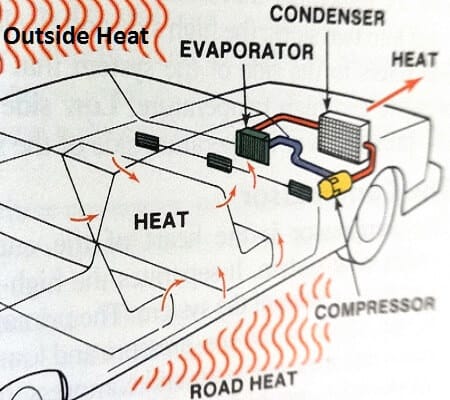
car ac diagram inside

With global warming, the weather has changed lately. Most regions of the world have experienced hot and cold seasons. As a result, an air conditioning system in a vehicle becomes indispensable.

With global warming, the weather has changed lately. Most regions of the world have experienced very hot and cold seasons. Therefore, an air conditioning system in a vehicle becomes indispensable.

As a result, car manufacturers have developed a car air conditioning system. This helps to cool and warm the car.

Refrigerant gas is the most useful product in this system. It refers to a gas used to pressurize the air conditioning system.

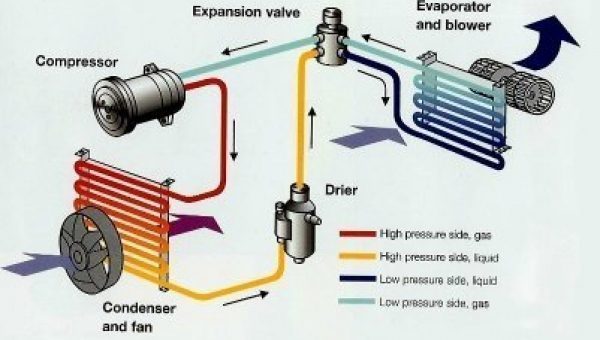
All air conditioning systems use similar components for the system to function. These are the compressor, the receiver-drier, the thermal expansion valve, the condenser, and the evaporator.

Find more details on each component discussed below.

1. Refrigerant
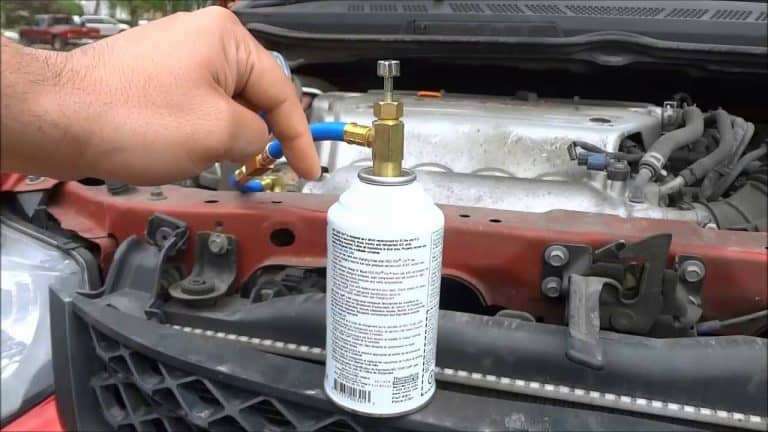
Although it is not a component of the car’s air conditioning system, it is the system’s lifeline. It is not possible to experience cooling comfort in your vehicle without the refrigerant.

At low temperature and pressure, it takes a gaseous form. Furthermore, it takes a liquid form when subjected to high pressures and temperatures.

Thus, this gas is essential and plays an important role in the air conditioning system. Every vehicle has a specified amount of refrigerant used to fill the system.

In passenger vehicles, it is typically about three or four pounds of refrigerant maximum.

2. The Compressor
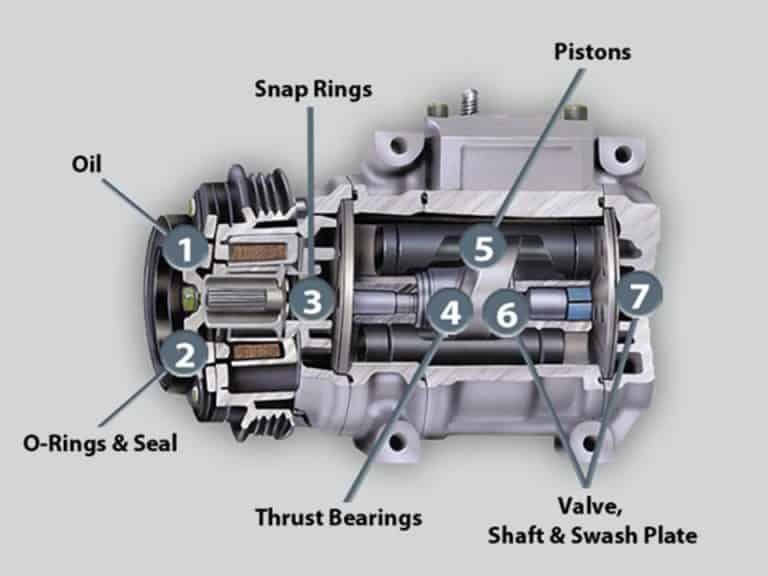
compressor in a car ac

The compressor is an essential element of the car’s air conditioning system. It is a pump attached to the engine’s crankshaft, which drives it by giving it power.

Its main function, as its name suggests, is to compress the refrigerant. The refrigerant enters the compressor in a gaseous state and under low pressure.

When you turn on your air conditioner, you compress the vaporized or gaseous refrigerant in this component. The purpose of compression is to ensure it is under high pressure.

The pump drive forces the gas towards the condenser. Compressors can only compress gases and not liquids.

3. The Condenser
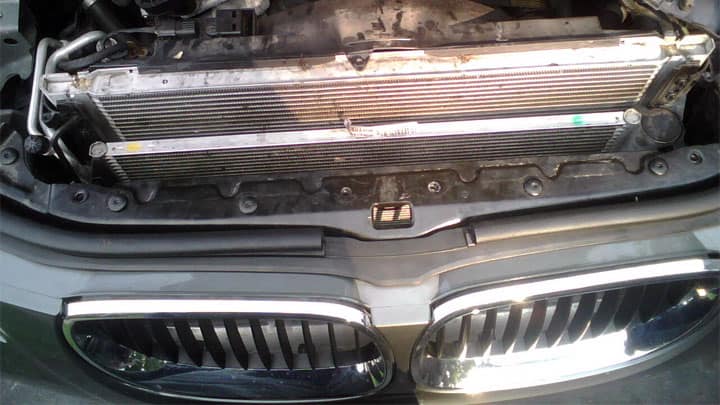
bad-ac-condenser

The main task of a condenser in this system is to condense the refrigerant from the compressor. Condensation occurs as a result of rapid cooling by hot or warm air.

The moisture or water vapor in the hot air forms a liquid state after condensation.

In the modern car air conditioning system, it is the most recognizable part.

At this stage, you transition the refrigerant from the gaseous state to the liquid form. You achieve this condensation by pressurizing the refrigerant.

The condenser cools the refrigerant with the air circulating around the tubes. The cooling process turns the gas into a liquid.

Thus, the refrigerant turns into a high-pressure fluid. At this point, it is ready to enter the next component.

4. Receiver-Drier
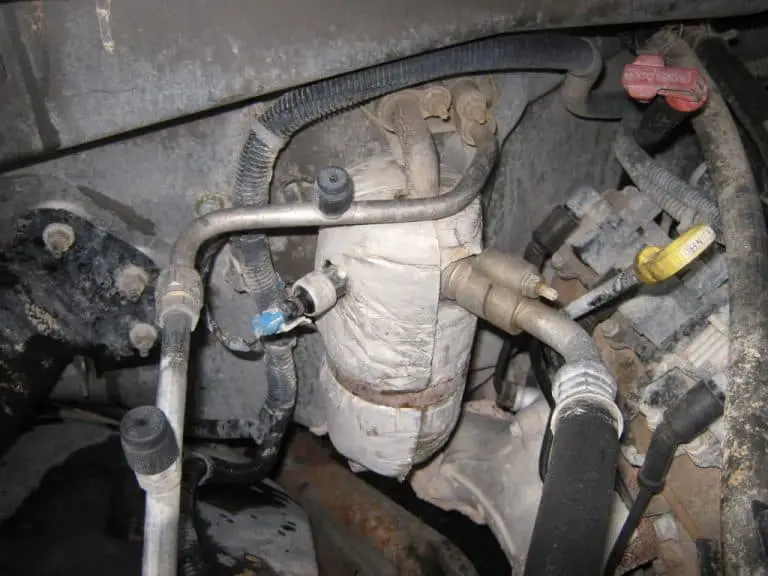
Receiver-drier

This component acts as a reservoir. It prepares the liquid for transfer to the evaporator. Yet, in this reservoir, there are desiccants, which is a drying agent. Desiccants are small granules that attract water.

Removing the water element at this stage is essential. If you do not remove it at this stage, it can turn into ice crystals.

These ice crystals are capable of damaging the entire air conditioning system. The desiccants at this stage remove all water elements, thus protecting the system as a whole.

The collapse of your vehicle’s air conditioning system can make your driving uncomfortable. Although you can open your windows during the hot season, it is not very helpful.

Windows can lead to excess wind when you drive fast, making you uncomfortable. Furthermore, it can let in undesirable substances such as dust.

5. Thermal Expansion Valve

Thermal Expansion Valve

In this valve, the expansion of the liquid occurs by changing the high pressure to low pressure. The expansion minimizes the pressure on the refrigerant.

As such, it further prepares the fluid before transferring it to the evaporator.

The valve’s design helps it detect pressure and regulate the refrigerant flow. This also allows for the regular operation of the system.

The moving parts of the valve can sometimes wear out, requiring replacement.

Furthermore, instead of using the valve in question, you can use an orifice tube. Yet, it performs the same task, which allows the expansion of the refrigerant.

This also reduces the pressure, before the refrigerant enters the next component.

Moreover, the orifice tube has no moving parts. It allows the refrigerant to flow at a constant rate.

But, over time, it gets clogged by debris. A system that uses an orifice tube turns off and restarts the system. It does this to control the refrigerant flow.

6. The Evaporator

The Evaporator

The evaporator is the central part of the air conditioning system. Its location is in the cabin, on the passenger side.

All other AC components are located in the engine compartment. The evaporator has a similar design to a radiator.

But it is smaller and has tubes and fins. The design of these tubes and fins contributes to heat absorption.

When the refrigerant enters the evaporator coil, it freezes at zero degrees Celsius. The low temperatures are the reason why you must remove all water. Furthermore, the refrigerant enters the evaporator coil as a low-pressure fluid.

However, this refrigerant does not freeze at zero degrees. But its boiling point is relatively low; the heat from the passenger compartment is enough to boil the R-134a in this component.

After boiling, the R-134a changes to a gaseous state, which helps it absorb heat.

For vehicles that use the orifice tube system, it works differently. The system has an accumulator located between the compressor and the evaporator.

Sometimes this tube releases excess refrigerant to the evaporator.

The compressor can only compress gas and not liquid. Thus, the accumulator draws in the excess fluid before it enters the compressor.

Additionally, the evaporator absorbs moisture in the vehicle, thus giving you a cool feeling.

Dirt, moisture, and pollen condense on the evaporator coil. If water starts dripping under your car after stopping, it’s the AC evaporator.

Such drips should not worry you and your vehicle is in good condition.

The Air Cooling Process in an AC System

This process begins at the vehicle’s air conditioning compressor. This is where the compression of the refrigerant into the high-pressure state occurs.

Compression causes the liquefaction of the refrigerant. It then heads to the condenser, through high-pressure lines.

The condenser allows the liquid to mix with the outside air. The mixture causes the atmosphere to absorb heat from the liquid.

Next, the fluid flows either into the orifice tube or the expansion valve. Here, it transforms into a gaseous form on the low-pressure side of the air conditioning system.

It then flows into the accumulator containing a desiccant bag. The bag collects unwanted moisture, among other impurities.

The clean refrigerant then flows into the evaporator through the tubing. In this state, it can collect heat from the air passing through the fins. This process leaves cooler air.

Conclusion

Finally, you now understand “how car air conditioning works”. All components work together by each contributing their part.

However, all elements are essential. If one part fails, the entire process collapses. Thus, you must ensure that every part is in good condition.

The car’s air conditioning system has three tasks to perform. First, cooling the car’s interior is very important, especially during the hot season. This ensures you have cool temperatures in your car.

Furthermore, heating the interiors during cold seasons is also important. You need heat in your car when it’s cold outside.

Finally, defrosting the windshield is the most crucial task of the air conditioning system. It is generally frustrating to keep struggling to see through your windshield.

As a result, it can affect your driving, leading to an accident.
PCM vs ECM vs ECU vs TCM – What is the Difference

There was a time when vehicles weren’t equipped with sophisticated computer systems. These cars and trucks used pneumatic and mechanical systems to regulate idle, valve timing, and fuel supply. Today, vehicles are equipped with several actuators and sensors connected to computers, ensuring everything works as it should. Some of these computers include the PCM, ECM, ECU, and TCM.

But what’s the difference between PCM and ECM, ECU and TCM? Are they all the same things with different names or do they each have a unique job? We examine each module to determine how it’s used in your vehicle.

PCM, ECM, ECU, TCM Meanings
  • TCM = Transmission Control Module
  • ECM = Engine Control Module
  • ECU = Engine Control Unit
  • PCM = Powertrain Control Module

What is a PCM?

PCM stands for Powertrain Control Module. In one module, this technology combines both the TCM and ECM, which is why it’s found in newer models. Before this technology, a TCM and ECM were needed to do the same job.

A Powertrain Control Module manages your vehicle’s emissions, transmission, and charging systems. As a powertrain module, it’s also responsible for overseeing the transmission and engine.

The PCM manages more operations than the ECM and TCM could alone. With the sensors in place and data transferred, it makes quick adjustments to ensure optimal engine efficiency and performance. Over time, it also learns more about operations to make it even more efficient.

Some of the aspects managed by the PCM include:

  • ABS braking
  • Gear shifting
  • Air/fuel ratio
  • Emissions
  • Variable valve timing
  • Charging rate
  • Idle
  • Fuel injection
  • Ignition timing
  • Electronic differential performance

Of course, this list could go on because the PCM acts as the heart and brain of the modern vehicle.

What is an ECM or ECU?

Car Engine Control Unit

ECM stands for Engine Control Module, while ECU stands for Engine Control Unit. Although these two have a different name, the modules are essentially the same thing.

These electronic modules control several vehicle systems, including ABS, airbags, cruise control, and air conditioning. However, the engine is what the module is primarily responsible for. It optimizes performance and ensures efficiency by controlling ignition, fuel injection, and airflow.

Using various sensors, the ECM interprets data, determining which systems need to be adjusted. It chooses the response to follow to create optimal running conditions. The manufacturer programs it to work with a specific vehicle, so it cannot be swapped with another ECU.

The ECM works in conjunction with air-fuel sensors, MAF sensors, oxygen sensors, crankshaft and camshaft position sensors, coolant temperature sensor, throttle position sensor, and EGR valve sensor to ensure everything works as it should. Upon startup, the ECM will undergo a full system check to ensure proper performance. If something isn’t working correctly, it can also put the vehicle into limp mode until repairs are made.

What is a TCM?

TCM stands for Transmission Control Module. It may also be called TCU or Transmission Control Unit, but TCU should not be used to describe this because it can also mean Telematics Control Unit.

The TCM enables gear shifting in automatic vehicles. The manual transmission car will not contain a TCM because the driver manages gear changes.

Various sensors are used to transmit information to the TCM, allowing the transmission to shift gears in an optimized way for better performance and fuel efficiency.

Some of the sensors working with the TCM include wheel speed sensors, turbine speed sensor, transmission fluid temperature sensors, vehicle speed sensor, and throttle position sensor. Additionally, the TCM monitors acceleration rate, road gradient, vehicle speed, and deceleration rate for optimized control.

Faulty Module Symptoms

The PCM, ECM, and TCM will all create symptoms when malfunctioning, most of which are performance issues.

  • Engine won’t start
  • Transmission not shifting smoothly
  • Poor fuel economy

Engine Won’t Start

When any of these vital modules deteriorates, the engine may not start at all. When you start the engine, any fault can cause the system to shut down to protect it from further damage.

Additionally, the engine may run with issues. If you notice misfires, stuttering, rough idle, or stalling, it could be due to a faulty module. When this happens, you may also see warning lights on the dashboard.

Transmission Not Shifting Smoothly

When the modules deteriorate, they can affect the transmission’s operation. You might notice rough gear shifts and inappropriate shift times.

There may also be some hesitation when you press the accelerator pedal. When shifting issues occur, they are often related to the TCM on older vehicles and the PCM on modern models.

Poor Fuel Economy

For optimal fuel efficiency, the engine and transmission must operate as intended. Whenever part of the balance is thrown off, fuel efficiency can suffer.

You might first notice issues when taking the vehicle for emissions tests. However, if you monitor your fuel economy and notice a decrease, you might find the problem early.

Replacing a Defective Module

The average cost to replace an ECM is often between $500 and $1,000, while the average replacement cost for a TCM or PCM is similar. Using an OBDII scanner can help you determine if any of the modules are faulty.

Additionally, there are times when a simple reconfiguration or reprogramming by the dealer can be done to fix the issue. If the update doesn’t resolve the situation, a replacement would be necessary.

Aftermarket modules are available and help you save money, but they don’t always work as they should. The car manufacturer didn’t make the aftermarket chips, so they may require specific software to function correctly.

Some car manufacturers go further and discourage the use of aftermarket modules, for example by creating a problem that can only be solved with the proper module. If you drive a new vehicle, you might also void your powertrain warranty if you use anything other than the OEM module.

Although you can replace the module yourself with basic tools, you might not want to. New modules require programming that is best done at the dealership.

What is ASC? Features and Technical Specifications

ASC (Automatic Stability Control) is a system that was installed on Jaguar and BMW cars. It first appeared in 1997. It limits engine power, thereby helping to prevent skidding. The system improves vehicle dynamics and handling on slippery roads and also prevents skidding.

HOW ASC WORKS

ASC is closely related to the anti-lock braking system and shares a common control unit with it. Through the ABS sensors, the control unit monitors wheel speed. If one of them starts to slip, the engine control unit (DME) intervenes. It sends a command to the engine to limit the output power. This is achieved by cutting off one or more fuel injectors. Ignition timing and throttle position can also be adjusted.

The system activates automatically when the key is turned in the ignition switch. When driving with snow chains or on sand or fresh snow, it is advisable to deactivate the system by pressing the button on the center console. Hold the button down for a few seconds to deactivate the system.

POPULAR CARS EQUIPPED WITH ASC

  • Jaguar XJ8
  • BMW 5 Series E39, 3 Series E46, 6 Series E63, 7 Series E65, E66, E67

REASONS FOR MALFUNCTION

  • !Failure of the wheel speed, crankshaft position, or mass air flow sensor.
  • !Malfunction of the throttle body.
  • !Damage to the electrical wires of the sensors, relays, or a control unit.
  • !Installation of tires with different tread patterns on an axle.

What is ESC? Description and Operating Principle

ESC stands for Electronic Stability Control. This system is installed on Hyundai, Chevrolet, Škoda, Kia, Lada, and other vehicles. It improves the car’s road holding and helps prevent accidents. It also assists the driver in maintaining the intended path. It is a complex solution that often includes additional functions such as emergency braking assistance, rollover mitigation, and trailer stability assistance.

HOW THE ESC OPERATES

The ESC works closely with other driving aids such as ABS and ASR. It automatically turns on when the key is turned in the ignition switch. It continuously compares the vehicle’s actual trajectory with the intended one to eliminate any difference if necessary.

Readings from the steering wheel angle sensor, accelerator pedal position sensor, and brake light switch are used to monitor the driver’s actions. Meanwhile, the yaw rate sensor, longitudinal and lateral acceleration sensors, and wheel speed sensors provide information about the car’s actual path.

The ABS works in combination with the ESC to maintain the intended trajectory by applying braking force to certain wheels. Additionally, engine torque limitation commands are sent to the engine control unit.

When the system is activated, the corresponding indicator light flashes on the dashboard. The system can be deactivated by pressing the button on the center console.

POPULAR VEHICLES EQUIPPED WITH ESC

  • Chevrolet Captiva, Cruze;
  • Skoda Octavia III, Fabia III;
  • Hyundai Elantra V, Sonata V;
  • Lada Vesta GFL;
  • Kia Soul I, Rio II, Carens IV.

CAUSES OF MALFUNCTIONS

  • The system lost its settings after disconnecting the battery terminal.
  • A blown fuse.
  • Failure of the Haldex coupling.
  • Incorrect readings from ABS sensors.
  • Broken electrical wiring.
  • Overheating of the control unit.

How to Check Spark Plugs (9 Conditions to Look For)

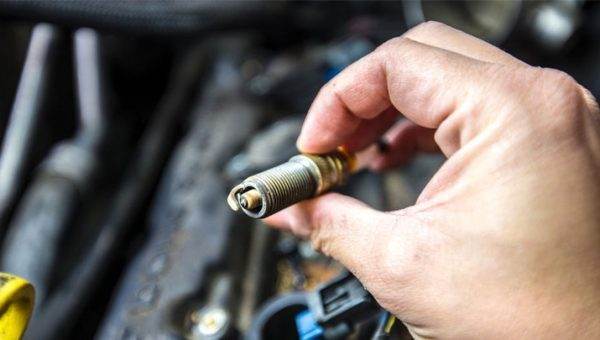
A wide variety of gasoline piston engines are offered in today’s automobiles. One thing they all have in common is spark plugs. And spark plugs are a periodic maintenance item in your car.

A properly functioning spark plug will transmit the electrical signal from the car’s battery to the ignition coil and create a spark to ignite the air/fuel mixture present in each cylinder.

If a spark plug is not working properly for any reason, it can manifest in various ways, ranging from rough idling to poor acceleration and various other symptoms.

This article aims to provide guidance in analyzing your engine’s performance based on a visual inspection of its spark plugs.

Why Modern Day Spark Plugs Last So Long

As already mentioned, the spark plug’s role is to ignite the air-fuel mixture in each of your engine’s cylinders. Modern plugs perform this role admirably. Not so long ago, spark plugs had to be replaced every 10,000 to 12,000 miles.

Today, spark plugs can last up to 100,000 miles without needing maintenance. What has changed?

#1 – Fuel Injection

First, today’s car and truck engines are fuel-injected. Thus, air-fuel mixtures are well controlled by the engine’s computerized control module (ECM). We know that excessively high temperatures are a major enemy of spark plugs. But well-controlled air-fuel mixtures allow for more consistent combustion at lower temperatures than was possible in engines years ago.

#2 – Unleaded Gas

Second, the removal of lead from domestic gasoline has also helped extend spark plug life. When leaded fuels were common, lead deposits on the tips of spark plugs encouraged plug corrosion and prevented proper spark operation, thus negatively affecting their performance.

#3 – Better Materials

Third, we find that today’s spark plugs are made from much more durable materials than those of previous years. The electrical current-carrying component (especially the center electrode) of today’s plugs is often made of expensive platinum, iridium, or copper.

These advanced materials ensure that the spark plug anodes do not burn out as quickly and will carry electrical current more efficiently than older spark plug designs. The most common spark plug types using these advanced materials and their benefits are discussed here.

To help achieve the best engine life and performance, purchasing the highest quality spark plugs is highly recommended. And this includes reaching the manufacturer’s recommended mileage for plug replacement.

Spark Plug Removal

replace spark plugs

Tools Required

As with any automotive maintenance job, having certain tools on hand will make your life easier. For spark plug removal and reinstallation, the following basic set of hand tools and consumables is required:

  • 3/8″ ratchet
  • 3/8″ drive universal joint
  • 3/8″ drive extensions (3″, 6″, and 10″)
  • Spark plug boot removal tool (required for older engines)
  • Spark plug gap gauge
  • 3/8″ drive torque wrench (10 to 80 ft-lb)
  • 3/8″ drive spark plug socket (one of the sizes below):
    • 13/16″ (or 20 mm) for most full-size cars.
    • 9/16″ (or 14 mm) for Ford and newer Asian cars.
    • 11/16″ (or 18 mm) for older BMW cars.
    • 14 mm bi-hex for newer BMW cars.
    • (additional information on spark plug socket sizes HERE)
  • Tube of silicone dielectric grease
  • Workshop manual for your specific vehicle

To access the spark plugs, you will need the following additional hand tools:

  • Set of 3/8″ drive sockets
  • Set of combination wrenches (includes sizes from 3/8″ (10 mm) to 1/2″ (13 mm))
  • Set of screwdrivers
  • Small Channellock pliers
  • Shop vacuum with a thin flat suction nozzle (for cleaning around spark plug holes)

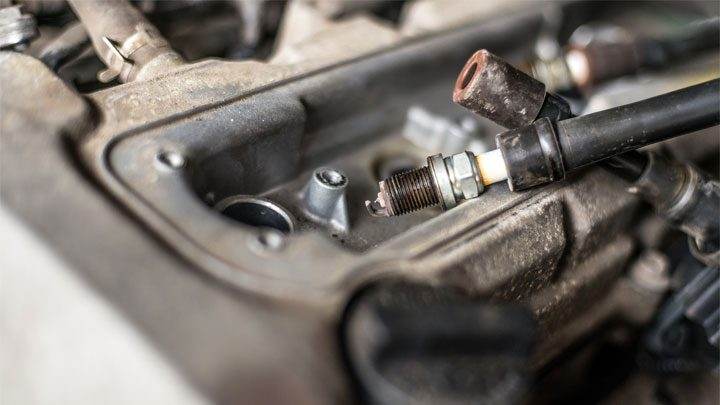
How to Remove Spark Plugs to Check Their Condition

Spark plugs are relatively simple to remove. Accessing them can be the main stumbling block. This can be especially true if your car’s engine is a transverse V6. For V6 engines, the plugs closest to the driver can often be the most troublesome to work on.

  1. Open the hood. Place an old but clean bath towel on each fender to minimize the risk of your belt buckle scratching the paint. Now, assess the engine layout. Determine the best way to access the spark plugs. Remove any cover(s) and/or insulating panels that prevent access to the plugs.
  2. Items such as wiring harnesses, hoses, and electrical modules blocking access to the plugs will need to be removed (or moved aside) to access the area directly above each plug.
  3. In most modern cars, each spark plug will have an electronic module (the ignition coil) above each of the spark plugs. For older cars, a single large-diameter wire will go to the top of each spark plug. In this case, no coil will be present.
Tip:
It will prove useful to mark each spark plug location and each spark plug wire or coil pack connector so you can reattach them to the appropriate location during reassembly. Furthermore, some coils only fit one specific location. Observe how the coils are positioned so you can replace them correctly. Sometimes taking a photo or two with your smartphone will be helpful for properly reinstalling parts.
  1. If there is an ignition coil above each spark plug, it will need to be removed. Each coil will have a low-voltage cable connected to a connector. This cable must be unplugged.
    • Study this connector. It will likely have a latch that needs to be moved or pressed to release it. Often these latches are a contrasting color. Using a screwdriver, release this latch. Remove the connector from the coil housing.
    • Remove the fastener holding the coil in place and remove the coil from the spark plug.
Tip:
Have a plastic tray or bucket on hand to keep all removed parts in one place. This way, you can easily find the parts to reinstall later.
  1. If there is no ignition coil above each spark plug, use the boot removal tool to remove the spark plug boot directly from the spark plug. Always grasp the boot as close to its base as possible. Gently wiggle the boot while pulling to help it come loose. Never remove a boot by grabbing its associated spark plug wire.
  2. Using the appropriately sized socket, extension, and universal joint if necessary, remove the spark plug. Make a note or label for each plug so you know which cylinder each one came from. If the spark plug hole is accessible, wipe the flat or tapered seat of the cylinder head with a clean cloth. With your Shopvac (or household vacuum), use the flat suction nozzle to vacuum dirt from that area.

Note: be careful to avoid dropping small parts or dirt into the spark plug hole. Even a small screw dropped into the combustion chamber could severely damage the engine.

Spark Plug Conditions and Colors

Living at the top of the combustion chamber, each spark plug will be affected and marked by everything that happens there. Therefore, inspecting each spark plug can reveal a lot about how your engine is operating.

This is where knowing which cylinder each spark plug came from can be useful. You may later need to inform your service technician about the cylinder that has a problem.

#1 – Normal Condition

spark plug in good condition

The insulator around the center electrode is grayish-white or yellowish-gray to brown. The side electrode is clean. This tells us that the combustion processes are normal.

There may be very slight oil burning, but nothing to worry about. Your engine is running well.

#2 – Sooted/Carbon Fouled

Plug surfaces evenly coated with dull black deposits.

Cause: Engine running too rich (too much fuel); dirty air filter; air-fuel mixture control at engine startup not working properly; excessive short-distance driving; incorrect spark plug.

#3 – Oil Fouled

oil fouled spark plug

Plug parts have a wet or shiny black coating.

Cause: Excess oil in the combustion chamber due to: oil level too high; crankcase ventilation system not working properly; piston rings and/or valve stem seals are very worn or broken.

#4 – Lead Fouling

Plug parts coated with a brownish-yellow glaze that may include a greenish tint. The glaze can be thin or thick and/or partially flaked.

Cause: Use of leaded fuel (usually not available in the US) or use of fuel additives containing lead.

#5 – Ash Fouling

ash fouled spark plug

Plugs coated with a thick, light-colored compound resembling ceramic. Brittle. Can be chipped with a fingernail or jackknife.

Cause: Excessive use of fuel and/or oil additives.

#6 – Center or Side Electrode Eroded/Melted Away

The center insulator may also be blistered or soft.

Cause: Spark plug and combustion chamber overheating due to poor quality fuel (octane rating too low); ignition timing too advanced; pre-ignition; engine running lean; incorrect spark plug.

#7 – Heavy Wear of Center Electrode

worn center electrode spark plug

Electrode partially or completely worn away.

Cause: Spark plug has exceeded its service life; plug gap too large; incorrect spark plug.

#8 – Heavy Wear on Side Electrode

Electrode partially or completely worn away.

Cause: Poor quality fuel (octane rating too low); pre-ignition; excessive use of fuel and/or oil additives.

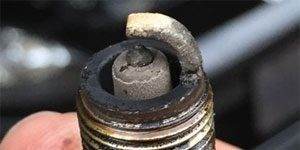
#9 – Center Electrode Insulator Nose Fractured

spark plug broken insulator nose

Small piece of insulator missing.

Cause: Mechanical damage (the plug was dropped); excessive deposits along the center electrode; the plug has exceeded its service life.

Notes:
  • Old spark plugs cannot be successfully cleaned. At a minimum, the plug conditions indicated in points 2 through 9 above will require the installation of new plugs.
  • Obvious spark plug conditions in points 2, 3, 6, and 8 should encourage further evaluation of the engine, fuel, and ignition systems by a qualified maintenance technician for corrective action.

Installing New Spark Plugs

  1. Unpack your new spark plugs. Generally, spark plugs come from the manufacturer with the proper gap. However, it is wise to check this gap before installing them. The gap dimensions can be found in your workshop manual.
    • Using the gap tool, check the gap between the center and side electrode. Spark plugs with multiple side electrodes (two or more) will have a factory-set gap and do not need to be checked.
    • Using the bending tab on the gap tool, slightly bend the side electrode to achieve the proper gap. Do not bend the electrode excessively. A very slight gap change should suffice. Check and properly adjust the gap for each plug.
  2. Firmly press a new plug into the spark plug socket. Guide the socket and plug to the spark plug threaded hole. This may be easier to do with an extension on the socket.
  3. Now turn the socket clockwise (CW) by hand to screw the plug into the hole. The spark plug should screw in easily. If not, there may be cross-threading. In this case, do not force it, but remove it and realign it. Then try tightening it by hand again. Screw the plug in all the way.
  4. Find the spark plug torque value in your workshop manual. If your torque wrench is adjustable, set it to this value. Tighten the plug with the torque wrench.
  5. Apply a light coat of dielectric grease to the inside diameter of the spark plug boot. Firmly press the spark plug wire or coil boot onto each spark plug. Reinstall the power connector on each ignition coil.
  6. Repeat steps 2 through 4 for each spark plug.
  7. Reinstall all parts previously removed to access the plugs. Reposition wiring harnesses, hoses, and/or modules that were temporarily moved aside for access. Ensure that no wires or hoses are now contacting hot surfaces like exhaust manifolds.
  8. The plugs are now installed. You can start the engine. It should start and run properly.

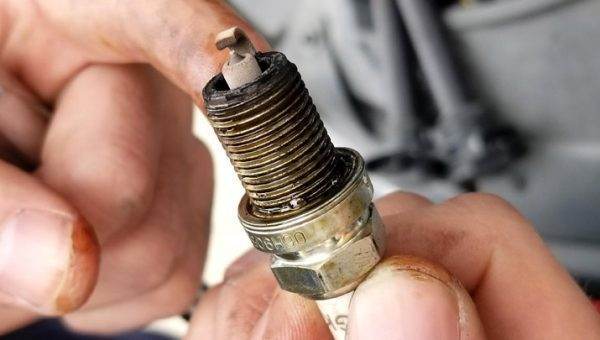
Causes of oil on spark plug threads (and in the wells)

Perhaps you’re performing routine maintenance and discovered oil on your spark plug threads. Or maybe you were investigating why your vehicle had low oil levels and found your spark plugs covered in oil.

Either way, now that you’ve found it, you’re likely asking a few questions. Are you supposed to have an oil leak in the spark plug wells? Is it serious and what’s causing it?

We’ll answer all these questions here and – spoiler alert – it’s not normal. You’ll want to fix it as soon as possible.

Reasons There’s Oil On Your Spark Plugs

Once you’ve discovered oil on your spark plugs, it’s time to find out why it’s there. It’s not like there’s a leaking spark plug gasket – so what’s happening? We’ve highlighted the most common reasons why there might be oil on your spark plugs below.

#1 – Leaky O-Ring Seal

Although your spark plugs don’t have gaskets, they use O-rings. These O-rings keep oil and everything else on one side of the spark plug and the other side stays dry.

If you only have oil on a single spark plug, you might have a leaking O-ring. This is one of the best outcomes if you have oil on your spark plugs. However, you still need to address the issue as soon as possible. Leaking O-rings can cause your engine to misfire and lead to more significant damage.

#2 – Blown Head Gasket

bad head gasket

While coolant in your compression chamber is what most people associate with a blown head gasket, another fluid that could leak is oil. When this happens, it’s common for oil to enter the combustion chamber.

You’ll notice excessive smoke and there will be oil on the tip of your spark plugs. You’ll need to replace the head gasket before the problem worsens and leads to more serious issues. The good news is that head gaskets are cheap – the bad news is that it’s a labor-intensive process.

#3 – Worn/Leaking Valve Guides

Valve guides ensure that your intake and exhaust valves remain in the proper position at all times. Not only that, but they have seals that prevent oil from entering the combustion chamber.

If these seals give way, then oil enters the combustion chamber, and it’s a quick hop, skip, and a jump away from getting onto the spark plug threads.

Like other components here, the valve guides themselves aren’t that expensive, but they require a lot of labor and time to replace, which can lead to a hefty bill at the repair shop.

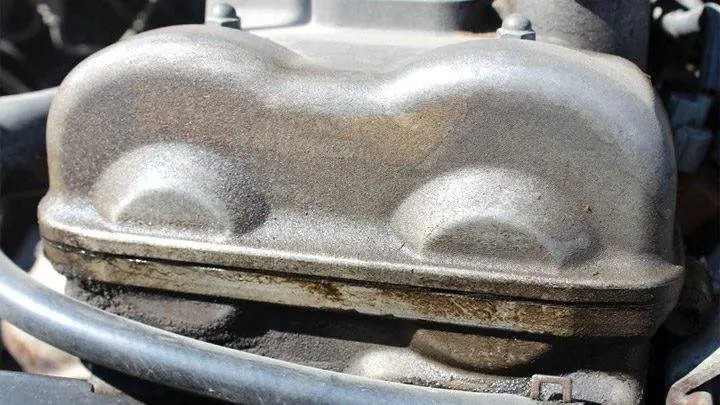
#4 – Valve Cover Gasket Leaking

valve cover gasket leak

Your vehicle uses valve cover gaskets to keep oil near the components that need it and away from those that don’t. One of the components it keeps oil away from are the spark plugs. But if the valve cover gasket is leaking, oil can easily seep into the spark plugs.

Like head gaskets, valve cover gaskets are cheap, but replacing them is labor-intensive.

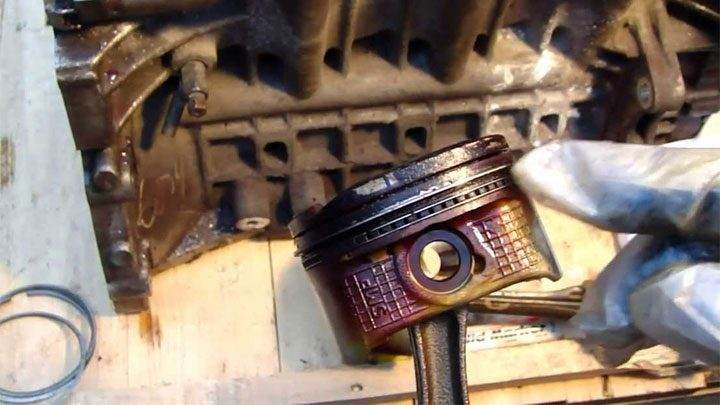
#5 – Damaged Piston Compression Rings

Around each piston in your engine, there are compression rings that prevent oil from seeping into the combustion chamber. But when these compression rings are damaged, nothing stops oil from entering the combustion chamber.

These rings ensure everything runs smoothly and prevent larger problems. So, if you suspect damaged compression rings, it’s best to repair them as soon as possible.

#6 – Damaged Piston

symptoms of bad piston rings and valve seals

Although damaged or cracked pistons are rare, it’s not entirely unheard of. Combustion chambers get extremely hot, and as pistons age, this heat can become too much for them. If you have a cracked piston, you’ll need an engine rebuild, which is not a cheap process.

However, if you let the problem go, you risk breaking down on the side of the road and potentially completely destroying your engine. Cracked or damaged pistons are not an issue you can ignore.

How to Get Oil Out of Spark Plug Wells

If there’s oil in the spark plug wells, you might be wondering what you need to do to remove it. The truth is that it’s more important to find the source of the problem and fix it.

That’s because the oil will enter the compression chamber and burn. As long as there’s no more oil leaking, that’s the end of your problem.

So, while oil on your spark plugs is a big issue, you don’t need to disassemble your engine to clean it. Once you’ve found and fixed the faulty component, you should be good to go.

However, if you’re concerned about the excess oil, all you need to do is spray some carburetor cleaner into the spark plug holes and let the oil drain into the combustion chamber. Reinstall the spark plugs and let your engine burn off the excess oil.

Can You Drive With Oil On Your Spark Plugs?

In short, yes, you can drive with oil on your spark plugs, but you’ll want to figure out how it got there. That’s because oil on your spark plugs is not a normal condition, and it could be a much more serious problem.

Oil on the spark plugs isn’t the issue – it’s how the oil got there that can damage your engine.

Can you Clean and Reuse Spark Plugs?

clean spark plug

Absolutely! Once you’ve completed the necessary repairs to prevent oil from coming back, use a carburetor cleaner to spray the electrode and threads and let it all dry. Once dry, reinstall the spark plugs and you’re good to go!

Key Fob Programming – 7 Easy Steps for Reprogramming

A remote keyless entry system is a type of electronic locking system used in modern vehicles to control access to the car. As the name suggests, the system uses a handheld device to lock or unlock the vehicle’s doors. Keyless entry systems can use traditional fob remotes or advanced smart keys.

What is a Remote Keyless Entry System and Do I Need Key Fob Programming?

Key fobs, also known as keyless entry remotes, are useful for controlling the locks, trunk, panic alarm, and even the remote starter of your car from hundreds of feet away.

Vehicle security has evolved significantly over the years. Early vehicles used mechanical locks and key combinations to unlock car doors. Nowadays, modern vehicles are equipped with sophisticated locking systems that are safer than their predecessors. While the automotive industry is moving towards keyless entry systems, mechanical door locks are still widely used.

Like other mechanical locks, traditional car locks can be picked. On the other hand, keyless entry locks are harder to break because the locks are electronic and secured with codes that are difficult to decipher.

A more advanced form of keyless entry key allows the car owner to open the car doors and start the engine without physically pressing a button or inserting a mechanical key. These so-called “smart keys” rely entirely on sensors to unlock the doors and start the ignition. However, smart keys still use mechanical keys as a backup.

How the Remote Security System Works

key fob programming

The remote system affects two aspects of vehicle security: entry and ignition. The system uses transmitters, transceivers, or transponders. These devices communicate by emitting and receiving radio signals. When the onboard computer receives a signal from the receiver, it then sends a signal to the car door actuators to unlock or lock them.

All key fobs operate at a frequency between 300 and 400 MHz. To prevent other car owners from accessing your vehicle, the remote signals must be unique. The keyless entry system uses “rolling” or “hopping” codes to generate this unique signal. The codes are changed each time the remote is used. Hence the name rolling or hopping.

In addition to excluding other remotes, rolling codes deter thieves from using code grabber devices, as the codes are refreshed every time the remote is used. Key fob codes are also encrypted, making it extremely difficult for thieves to decipher the signals.

Some key fobs come with engine immobilizer devices for added security. The system is designed to prevent the engine from being hot-wired by preventing fuel from flowing to the engine. Just like the keyless entry system, the engine immobilizer works via radio signals and uses rolling codes that are refreshed with each use.

Immobilizer devices provide extra security, especially when the mechanical key provided with the key fob is duplicated. The duplicate key will not be recognized by the vehicle even if it is an exact copy. The key fob must contain the code that the vehicle’s ignition system identifies for it to work.

The more advanced smart key system works exactly like keyless entry remotes. Smart keys also use radio signals and rolling codes. However, the difference is that smart keys use sensors to detect the proximity of the smart key (and the person holding it) to the vehicle. The smart key system automatically unlocks the doors, disengages the immobilizer, and starts the ignition when it detects that the key is nearby.

What You Need to Reprogram When Key Fob Programming is Questioned (Software, Tools, etc.)

Replacing the remote is not as simple as replacing your TV remote. The remote must be reprogrammed for the onboard computer to recognize the new remote. You may also need to program new remotes that you want to use as spares.

Reprogramming your remote can be done manually or using programming devices. Most modern vehicles have built-in remote programming functions. The programming procedure may vary from model to model, but the crucial steps are the same. Basically, the car is manually set to programming mode to recognize the key fob to be programmed.

Key fobs can also be reprogrammed using dedicated key programming devices or software applications. (Provide examples of devices and software)

How to Reprogram Key Fob Remotes?

Before programming your remote, make sure its battery is sufficiently charged to power the device. To program remotes without an immobilizer, follow these steps:

Step 1: Enter your vehicle and lock the doors.

Step 2: Ensure the door locks are engaged to not disrupt the reprogramming process.

Step 3: Insert your car key into the ignition switch and turn it to the “ON” position.

Step 4: While the key is in the “ON” position, press the “Lock” button on the remote.

Step 5: Turn the key back to the “OFF” position.

Step 6: Repeat steps 3, 4, and 5 in quick succession, at least four times until you can hear the lock cycle.

Step 7: Test the reprogrammed remote to see if it works.

Step 8: If everything checks out, congratulations! You have successfully programmed your remote.

How to Reprogram Smart Key Fobs with Immobilizer Devices?

Reprogramming smart remotes with immobilizer devices is more challenging than standard keyless entry remotes. This is because the immobilizer system has its own security code. This is also true when programming remotes with duplicate mechanical keys.

Before programming your duplicate key fob, ensure the blank key blade is machined to match the profile of the original key. To program smart keys, follow these steps:

Step 1: Insert the unprogrammed duplicate key into the ignition switch,

Step 2: Connect your programming device to your vehicle’s OBD2 port.

Step 3: Run the programming software compatible with your vehicle and programming device. (See example above)

Step 4: Carefully follow the instructions provided by your programming device.

Step 5: Wait for the programming device to program your remote with a new code.

Step 6: Check if the key is recognized by your vehicle by starting the ignition.

Step 7: If everything is in order, you have successfully programmed your key.

What are the different types of electric car chargers

With the depreciation of fossil fuels, new ways of converting energy into locomotion are multiplying. Whether it’s hydrogen fuel cells or electric batteries, the share of modern cars using alternative means to propel themselves is increasing. Electric cars and vehicles in particular are seeing an expansion of infrastructure to support them. EV charging stations are becoming more common, and the era of worrying about finding a place to charge an electric car is over. In 2021, how much it cost to charge an electric car became a more pressing concern than where to find an electric car charger in the first place.

DIFFERENT TYPES OF CHARGERS

There are several ways to break down EV charging types: by the equipment used, the charging rate of the device, the type of current used, and whether the device is public or private.

ELECTRIC CAR CHARGING EQUIPMENT

Electric vehicle power devices come in different forms, but the automotive industry has generally defined charging equipment as follows:

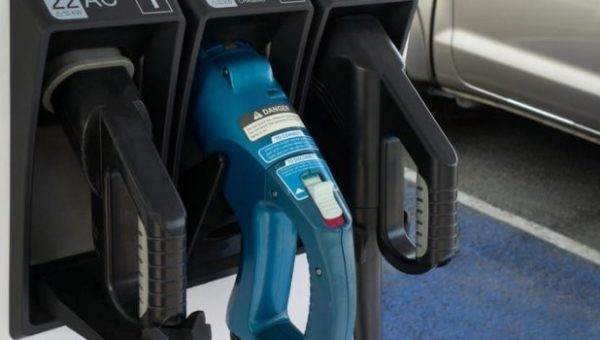
Socket – This is the charger’s interface for inserting the cable.

Plug – This is the car charger’s plug that connects the cable to the device’s socket.

Cable – The cable that transfers electrical currents from the device to the vehicle.

Connector – The part that connects the cable to the vehicle’s input and thus to the vehicle.

Vehicle Socket – The electric car charging socket that accepts the cable’s connector.

To ensure a vehicle can be charged, it needs a plug that fits the sockets of devices in the area where it is driven. Therefore, efforts have been made to standardize plugs worldwide. There are three main types of car charger plugs currently used:

Type 2 Connectors – Type 2 (also known as EU type, Mennekes, or IEC 62196) is the standard plug in Central and Western Europe, parts of South America, the Arabian Peninsula, South Africa, Australia, and New Zealand.

SAE J3068 AC6 Connectors – These are mechanically identical to Type 2 connectors. The differences mainly lie in the types of currents and voltages for which the devices are designed. This type has been adopted throughout North and Central America, including the Caribbean, as well as in South Korea.

GB/T 20234.2 Connectors – These connectors are incompatible with the other two types. Unlike the other two, GB/T uses a female vehicle input and a male connector. This variant is used exclusively in China.

CHARGING RATE

This metric is important for choosing where to power your electric car, as it determines how long it takes to recharge the electric vehicle. The charging rate mainly depends on the device providing electricity to the vehicle, but at higher rates, the car’s ability to accept current becomes the bottleneck. Overall, you can sort these devices into four general categories:

Electrical Grid – Electric cars usually come with a plug that can be connected to the electrical grid to recharge the vehicle from there. The charging rate is about 2 kW and can take over a day to fully charge most vehicles from a flat battery. EV manufacturers recommend using it only in emergencies.

Slow Chargers – If you’ve ever wondered how to charge your electric car at home, slow chargers with a power of 3 kW are becoming more common in households with an electric vehicle. This allows plugging in an electric vehicle overnight when it’s not in use. The time it takes to fill the vehicle’s battery capacity becomes irrelevant.

Fast Chargers – Publicly accessible stations are usually of the fast charger type, with speeds starting at 7 kW. Fast chargers significantly reduce time compared to slow variants, making them more suitable for recharging vehicles on the road.

Rapid Chargers – The latest technology in the field, these can exceed the ability to accept a charge even from modern electric vehicle models. The rate is typically between 120 and 350 kW. Rapid chargers are unknown for private homes and are usually only found in selected locations.

CURRENT

There are two types of current, alternating (AC) and direct (DC). Most vehicles use direct current, but some models (like the Renault Zoe) use alternating current instead to charge the electric vehicle. Typically, an electric car requires DC power, as batteries store it that way, then pass it to a transformer that converts it to alternating current for the motor to use.

OTHER THINGS TO CONSIDER

There is another variable to keep in mind when acquiring EV charging equipment: the cable length. While it’s true that longer cables suffer from power loss due to increasing resistance, electric car power cables do not reach lengths where this would be a problem. For lengths between 4 and 10 meters, the consideration of which cable size to use for an electric car charger in the UK is determined by utility and price factors. Shorter cables significantly reduce the distance from which the electric car can be parked from a charging point. Meanwhile, longer ones cost more, weigh more, and take up more space. If you can afford it, you should generally opt for longer cables. Naturally, the type of cable you buy must match the electric car charging sockets you are likely to encounter.

Solid-State Car Batteries – The Future is Here

If you haven’t heard about solid-state car batteries, you will. In 2022, all-solid-state cells will enter the automotive qualification process and could be commercialized as early as 2025.

ELECTRIC CAR BATTERIES

If you currently own an electric or hybrid car, you probably know that it is powered by lithium-ion, lead-acid, nickel-metal hydride, or ultracapacitor batteries. Most electric vehicle batteries will last about 10 to 20 years before needing replacement. Replacing an EV battery can be a costly endeavor, which makes many new car buyers hesitant to purchase an electric car. Charging time can also be a challenge, ranging from about 30 minutes to up to half a day depending on your battery size or the speed of your charging station. This brings us to:

SOLID-STATE CAR BATTERIES

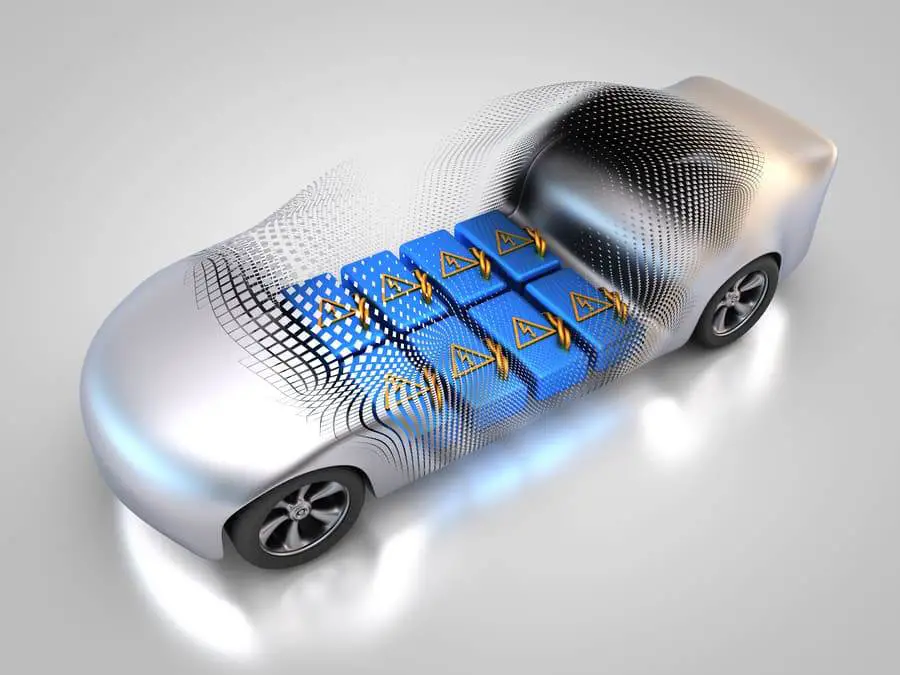
Solid-state car batteries

Although not necessarily cheaper, solid-state batteries with higher energy density promise to store up to 50% more energy, recharge faster, and be more stable and safer than lithium-ion batteries. Solid-state batteries are not made of heavy liquid electrolytes as is the case with lithium-ion batteries; instead, they contain solid electrolytes. Solid electrolytes can be ceramic, glass, or other solid materials.

As is the case with most new technologies, they are likely to be expensive when they first hit the market, with their cost decreasing as demand increases. It is also very likely that they will become cheaper to manufacture than previous EV batteries. Another advantage is that they could extend the lifespan of electric vehicles to match that of conventional gasoline cars (about 10 to 15 years).

SOLID-STATE BATTERY CARS

Electric vehicles offer us the opportunity to travel, explore, and experience freedoms that public transportation does not provide, without having a major impact on our environment.

You may not be convinced that an electric vehicle is right for you, and there are certain drawbacks, such as price, lack of charging stations, and short driving ranges. However, with the advent of solid-state battery vehicles, new innovations, and mass production, this will very likely change in the not-too-distant future.

Solid-state battery cars are definitely on the horizon. Many consumers have been hesitant to switch from a conventional car to an electric vehicle, but the promised innovations will more than likely convince them to reconsider their options.

WHO WILL BE FIRST?

Toyota has always been a name in electric vehicle technology since they introduced their hybrid technology to the market in 1997 and can currently count over 15 million drivers among their customers. Always seeking new innovations, Toyota stated in 2020 that they were working on prototypes using solid-state batteries and confirmed in 2022 that they plan to start selling vehicles using solid-state batteries as early as 2025. However, it has been stated that the first vehicles equipped with these innovative batteries will not be fully electric but hybrids, with the first car to receive the new battery possibly being the Prius.

Car Batteries – Lifespan and Charging

Car batteries don’t last forever. The standard lifespan is about three to four years. Just like your home battery or your cell phone, it needs to be recharged from time to time. You don’t need to go to your local garage for this – you can simply recharge it at home – or even while driving.

CHARGING AT HOME

Charging the electric car at home

Make sure to consult your owner’s manual, as well as your charger’s manual, for instructions. If you’re using a contemporary microprocessor-controlled smart charger, you don’t need to disconnect your battery to charge it. If you’re using an older charger, it’s recommended to disconnect it before charging.

SIMPLE CHARGING STEPS

Ensure the terminals are clean and free of any corrosion.

If your battery is dry, do not attempt to recharge it. You can, if necessary, add distilled water or drinking water just above the plates, but do not overfill.

Read all instructions provided by the battery and charger manufacturers.

Locate the positive and negative terminals and connect the corresponding charger cables. If it’s inside the vehicle, ensure the car’s system is protected against electrical surges and that the charger doesn’t have high charging voltages that could damage the vehicle’s electrical system. If you only need to charge it to start your engine, 2 to 4 hours are sufficient. If a full charge is necessary, expect it to take about 10 to 24 hours.

NOT USING YOUR CAR? HOW TO KEEP IT CHARGED

Some drivers rely on public transport during the week and only take their car out on weekends. Others may decide to avoid driving in winter due to hazardous road conditions. If your car is fairly new and in good condition, it will take about two weeks before the battery discharges. To avoid this when you need your car the most, it’s important to note a few key points:

  • iAvoid turning your car on and off, it doesn’t help – but does more harm than good. Instead, take your car out for a short 15 to 20-minute drive once a week. Doing this will add some charge.
  • iIf you have more than one car, alternate between them, giving each a chance to recharge during use.
  • iDo not keep your car in freezing temperatures.
  • iMake sure your lights are off when you’re not driving. Most cars will remind you of this with a signal when you open your car door.
  • iIf you have a dashcam, unplug it. Leaving it plugged in can drain the battery when your car isn’t used regularly.

CHARGING WHILE DRIVING

Charging while driving

Here, we have another option: charging your car without a charger. Since it’s charged by your alternator, it can be charged at a much faster rate while driving. 30 minutes are enough to recharge it by driving on the highway. It will take longer if you’re driving in the city, perhaps an hour or two.

MY BATTERY IS COMPLETELY DEAD. WHAT NOW?

If you haven’t had the chance to recharge it by driving or other means, it will most likely be “dead.” Don’t worry, you can bring it “back from the dead.” Jumper cables and a working car with a full charge are all you need to get your car back on the road.

CHARGING A COMPLETELY FLAT BATTERY

Look closely and check that there are no cracks and no acid leakage. If you see any of these, do not attempt to start your car as you could injure yourself or others.

Wear rubber gloves and safety glasses before touching the flat car battery to avoid harmful sulfuric acid that might be discharged. If there’s corrosion on your cables, clean them as thoroughly as possible with a stiff-bristled brush.

Carefully drive the working car next to the one with the flat battery. Place the cars side by side, nose to nose or facing each other. Ensure the jumper cables are long enough to reach from one car to the other. Do not be tempted to connect two jumper cables together if the first pair is too short. This could melt the cables and cause a fire.

Open the compartment of each car where the batteries are located. Note the positive and negative terminals of each. A plus symbol (+), or sometimes a red symbol, indicates the positive terminal – a minus symbol (-) indicates the negative terminal.

The order in which you attach the jumper cables makes a difference, so make sure to follow the correct sequence. First, connect one end of the positive jumper cable to the dead battery, then connect the positive end of the jumper cable to the charged battery. Now connect one end of the negative jumper cable to the negative terminal of the charged and working battery. It’s important to “ground” the car containing the dead battery when starting, so now connect or attach the ground cable to any clean part free of any oxidation or paint.

Next, start the engine of the car with the charged battery. When you start the engine, the charging system will begin to charge the dead one. After starting the engine, wait at least five minutes to allow it to recharge. If you need to get a full charge, it will take longer.

Now try to start the engine. The engine should turn over effortlessly. If it doesn’t, let it pass another five minutes and continue charging.

Once charging is complete, disconnect the jumper cables from each car in the reverse order of how you connected them. Not doing so could cause sparks or even an explosion.

The ground cable should be disconnected first, then the cable on the negative terminal of the one you used to recharge yours. Finally, the cable connected to the positive terminal of the formerly discharged battery. Let the car that had the dead battery continue running for at least five minutes, allowing the alternator to recharge it.

You can now let it idle for another 20 minutes or take your car out for a short drive. It’s likely that it will be fully charged by then. It’s possible, however, that if it hasn’t been fully charged, you may need to buy a new one.