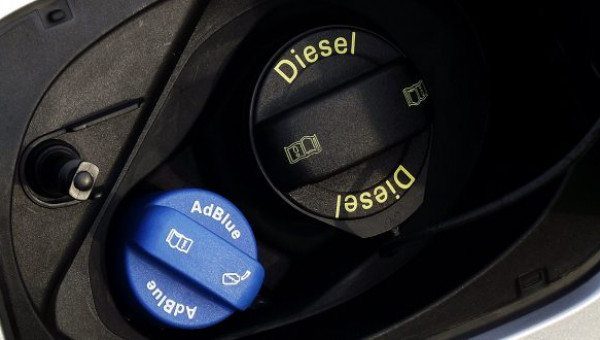
Many Mercedes-Benz diesel cars such as the E220, C220, S350, G350, ML350, ML250 equipped with BlueTec technology use AdBlue® diesel exhaust fluid (DEF). AdBlue fluid is sprayed into the exhaust gases and reduces NOx emissions.
Like it or not, your vehicle is packed to the brim with computers. While these computers are a dream come true when everything is working as intended, they can quickly turn into a nightmare when circuits start failing.
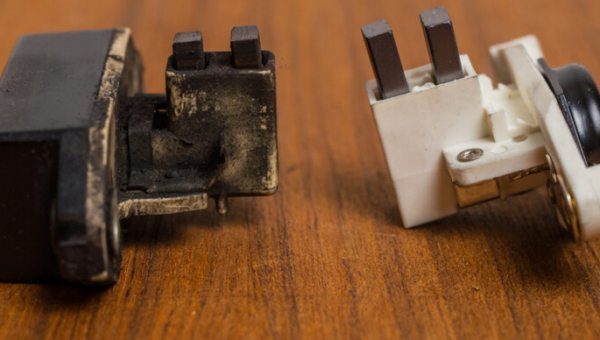
Your vehicle’s charging system contains tons of components. But while the battery and alternator get all the love, another crucial element is the voltage regulator.
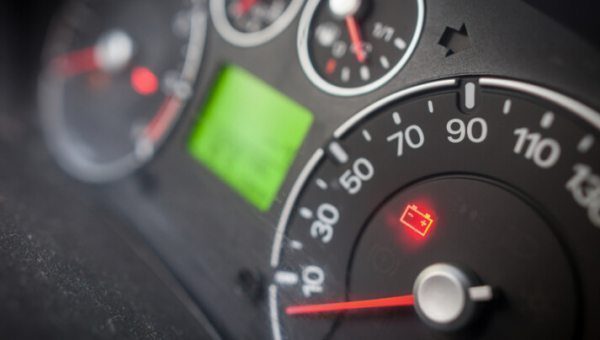
Causes of a Car Battery Warning Light Illuminated While Driving
It can always be a problem when you see an unexpected light on your dashboard. Your worries are more than doubled when you also don’t understand what that light indicates.
Car batteries have many different specifications that you need to be aware of. Modern cars use many electronic components and you need to get the right battery for your car.
What are ignition coils and how to tell if they are faulty
With broken ignition coils, your car won’t go anywhere. Check out our guide to keep your car on the road.
When it comes to ignition system parts, ignition coils are by far the most important. Without an ignition coil, the entire ignition system wouldn’t work. But it seems that spark plugs get all the credit. People know and regularly change their spark plugs, and spark plug brands like Champion and NGK regularly sponsor everything from F1 to rally, but when it comes to ignition coils, people don’t exactly know how they work or what they do.
The truth, however, is that ignition coils are vital to the ignition system and can cause serious problems if they go wrong. They could also be the cause of some of the common ignition problems that drivers face daily.
Read on to discover our complete guide on what ignition coils are, what they do, and how to spot when your coils aren’t working as they should.
WHAT ARE IGNITION COILS?
The purpose of ignition coils is to amplify the battery voltage so that a spark plug can ignite the engine’s air-fuel mixture. A fully charged car battery has a voltage of about 12.6 V, but several thousand are needed to produce the spark that jumps the gap.
An ignition coil is normally made up of two sets of coils, a primary and a secondary, around an iron core and in a metal housing. This one is then linked to the distributor and then to the spark plugs. The output (called low voltage current) comes from the battery and is transformed by the coil into up to 45,000 volts (called high voltage current) before reaching the spark plugs.
Some ignition systems use one coil to provide the spark to all cylinders, but most newer models use an individual coil for each cylinder.
In older cars, these will look like a small metal cylinder with wires coming out of it, one connecting it to the battery, the other to the distributor.
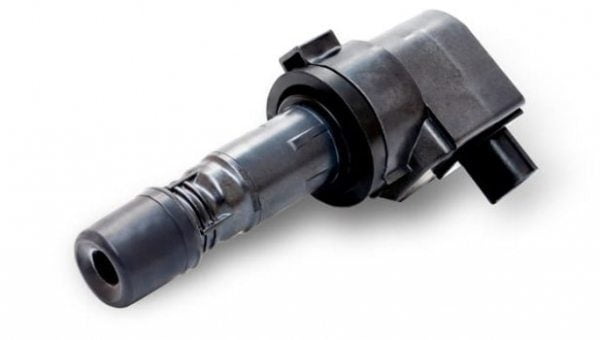
In modern cars, coils can be of all shapes and sizes, including a single coil that looks like a long plastic tube – also known as a pencil coil or plug well coil – one that incorporates an ignition module and another that looks like a plug you might find in your home.
You may also find coils arranged in series and called cassette or sequence coils, or coil rails.
HOW DO IGNITION COILS WORK?
An ignition coil is essentially a small “step-up” transformer. It relies on electromagnetism and induces a high voltage from a low voltage. The primary winding has relatively few turns of heavy copper wire and the secondary winding has thousands of turns of very fine copper wire. Both windings are wound around each other.
The primary winding is connected to the battery voltage and its ground can be turned on and off by the engine control unit (ECU). The secondary winding is connected to the spark plug. When the current is turned on, the primary wire receives the low voltage from the battery and generates a magnetic field around it.
However, the instant the flow is interrupted by the distributor or in more modern ignition systems, the electronic control unit (ECU), the magnetic field collapses, creating or inducing a higher voltage in the secondary wire that moves to the spark plug. The magnetic iron core allows electrical energy to pass between the two coils.
WHAT PROBLEMS CAN THERE BE?
Given the location of the ignition coils right above the engines, meaning they have to withstand the weight of the very hot combustion process in what is already a very hot engine compartment. An ignition coil always heats up, but normally, this doesn’t cause too much of a problem. For sensitive equipment parts like copper wiring, this is tough.
During the induction process, the coils alternately become hot and cold and are subjected to strong vibrations from the engine. This can cause the coil winding to break over time, as well as cracks in the insulation and housing.
The main reason for ignition coil failure, however, is due to voltage overload. This happens when the spark plugs are worn and the electrode gaps are outside the specified limits or in case of damaged wiring and wires.
Over time, the coil’s output voltage can reach damaging levels, causing short circuits when it burns through the insulation. The lifespan of an ignition coil is about 100,000 miles, so it should be a while before it causes you problems.
WHAT ARE THE SYMPTOMS OF IGNITION COIL PROBLEMS?
The symptoms are largely those associated with ignition system components. It is important to note that any one of these alone does not signal that there is a problem with the ignition coil, so it is important to check all parts of the ignition system to determine if it is the cause.
1. MISFIRING ENGINE, REDUCED POWER, AND ROUGH IDLE
Malfunctioning ignition coils will almost certainly cause performance problems for the engine. Since high voltage is needed for the spark plug to ignite the air-fuel mixture, if it’s not there, the car won’t start properly or the engine might misfire while driving. This can also mean that the car doesn’t accelerate as it should or that there is an overall loss of power, because the fuel doesn’t ignite. This will also lead to reduced fuel consumption.
2. CHECK ENGINE LIGHT COMES ON
This one is a clear symptom that something is wrong. Although it’s not the only reason why the dashboard’s check engine light might come on, if an ignition coil is faulty and not working as it should, the ECU will recognize it and turn on the Check Engine light. The computer may have detected that a coil is burnt out or short-circuited and needs to be replaced. If this happens, it’s best to take the car to a garage to have the ECU scanned and check the code to see if a faulty ignition coil is the culprit.
3. CAR IS NOT STARTING
A problem that surely won’t take you long to notice! This can really be due to a spark plug, the distributor, or a number of other factors, but a faulty ignition coil can also prevent the vehicle from starting. For cars that use a single ignition coil as the spark source for all cylinders, a faulty coil will affect the operation of the entire engine. If the coil fails completely, it means there will be no spark and therefore no engine.
For things like ignition coils, it’s best to have them checked at a garage to be sure that’s really the problem. Although spark plugs can be replaced relatively easily, coils are a bit more difficult to repair or replace, so it’s best to leave them to professionals.
HOW CAN I TEST MY IGNITION COILS TO SEE IF THEY ARE THE PROBLEM?
If your car has a distributor-based ignition system, all spark plugs will be affected, but if it’s a modern car with electronic ignition, only one plug might be, or two if they share the same coil. This can make it difficult to determine what the problem is.
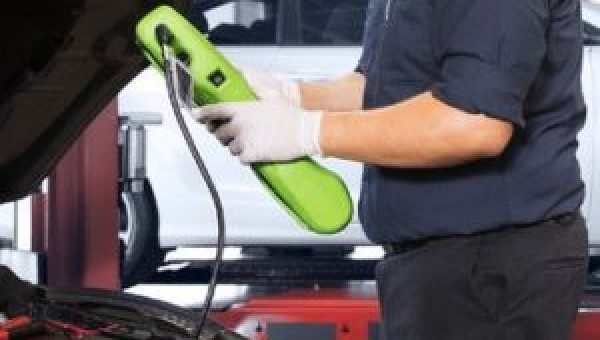
Fortunately, for cars built after 1996, they will have an OBD II (On-Board Diagnostic) port with ignition misfire detection, and you can query it using a diagnostic tool, check for code P030X, X being the number of the cylinder that is faulty. This will let you know if the ignition coil is the problem or not.
Of course, a faulty cylinder can be caused by all sorts of ignition and fuel supply problems, not just a faulty coil. For this reason, you should remove and check the spark plug and, if there is a distributor, the HT cable.
Check the safety and integrity of the coil itself. Additionally, you can perform an ohm test of the ignition coil using a multimeter, which will check that the primary and secondary resistance of the coil meets specifications. This will be indicated in your car’s user manual.
Engine Remapping: Superior Tech Trend or More Risk Than Reward
Ask someone to imagine what car maintenance and performance enhancement look like, and chances are they’ll think of a person in overalls covered in grease using various tools and fluids to modify the mechanical parts of an engine or replace an old, rusty part with a shiny, new metal one. Performance is traditionally seen as something that comes from enhancing a car’s mechanics—repairing, modifying, or otherwise tinkering with a vehicle’s physical components.
Contents
1What is engine remapping?
2Why might I need to remap my engine?
3Will engine remapping benefit my car?
4What are the risks of remapping?
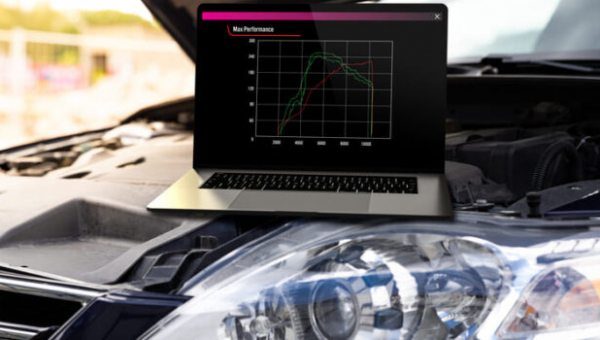
For some time now, however, it’s not just upgrading the mechanics of car engines that can boost performance, but also electronic and computer technology, which is now an integral part of the cars we drive. In one of the opening scenes of “The Fast and the Furious”—the first installment of the extremely popular car movie franchise—drivers tap on their laptops, see graphics appear, and somehow alter the performance of their top supercars at the push of a button. It seemed like science fiction and something ordinary car owners would never experience. But it’s something we can experience. That something is engine remapping.
WHAT IS ENGINE REMAPPING?
Engine remapping (also covered under the general term “tuning” in the US or known as “chipping”) refers to the process of modifying your car’s engine computer or Engine Control Unit (ECU). “Maps” and “modes” are a range of data tables that take into account both what’s happening with the car in real-time and driver feedback to determine what to do with the engine. They are essentially computer algorithms that work in the background while you drive and impact many engine operations, such as ignition timing, sensors, air/fuel ratio, and turbo boost pressure.
Like software on a phone or laptop, this software that dictates how engine functions operate can be modified, rewritten, or overwritten to change how the car operates and optimize your car’s performance.
During an ECU remap, we typically access the car’s ECU via the car’s onboard diagnostic port (or simply the OBD port). Since around 2002, a new standard, OBDII, has made direct access to the information stored on the car’s computer possible with the right equipment and protocols (an OBD scanner), allowing drivers to see all engine operations and how they are performed.
The ECU can be remapped to alter almost all of its functions in a way the driver might desire. Professional F1 or rally racing teams widely use engine remapping. They often have a variety of different engine maps that demand different things from the engine. For example, they can change the torque produced when the throttle is opened to account for the possibility of wheel spin when accelerating out of a corner, to handle rain, to account for high altitude, or maps to save engine power for qualifying laps. It’s all about customization.
For the average driver, this isn’t a realistic possibility, as it requires a lot of trial and error to tune an engine from scratch and determine how to affect the various parameters and reconfigure the software. Fortunately, engine remaps can be purchased and installed for you. You can choose from a range of generic engine remaps offering improvements or modifications, or custom remaps. By the time you have an ECU remap installed in your car, it has been thoroughly tested and developed to deliver optimal engine performance.
WHY MIGHT I NEED TO REMAP MY ENGINE?
The reason you might want to change how your car operates may not be immediately obvious. If the car is already installed with the manufacturer’s software, surely that gives the car optimal performance? That would make sense, but unfortunately, it’s not necessarily the case.
When a manufacturer develops a new car, they must account for all possible conditions a car will face in all the different regions where the car will be sold. Since most mainstream manufacturers target the global market, that’s a lot to consider. This means, therefore, that instead of simply optimizing the ECU software to deliver the best performance or fuel efficiency, they have to compromise on the map to account for these potentially different operating conditions. These conditions could include owners using substandard fuels, extreme temperatures or altitudes, different emission laws, and unfortunately, even the possibility that the vehicle isn’t regularly maintained according to the manufacturer’s recommended instructions. If they think poor-quality fuel or engine oil will be used,
A bit more cynically, it’s a relatively open secret that manufacturers program their models’ ECUs so that they don’t operate at maximum output. This is so they can release a “sportier” model with a more efficient engine by simply making small design changes. It’s also possible that performance was deliberately toned down before the car left the factory just to meet product planning targets and specifications.
WILL ENGINE REMAPPING BENEFIT MY CAR?
On the surface, it seems there’s no shortage of reasons to seek a new map for your ECU to get the most out of your engine, but what are the specific benefits that engine remapping can offer you?
Remapping can enhance engine performance, which essentially means more speed and more power. The amount of fuel injected into the cylinders, the ratio between fuel and air, and when the spark plug ignites all affect the power you get from the engine. These are all things that can be changed if an engine is remapped, depending on how the programmers designed the remap.
For example, a recent study looked at the role of fuel injection pressure on performance and found that increasing the injection pressure increased engine power by about 12%. By increasing the injection pressure, the fuel particles became smaller, fuel atomization improved, and ignition occurred more quickly, resulting in more power on the piston, greater resulting torque, and a more powerful engine.
The proposed increase in horsepower—brake horsepower, of course, depends on what type of engine you have, but it could be an increase of up to 40 – 50bhp (brake horsepower) for a turbo engine and a bit lower for standard engines. This means that ultimately, the car doesn’t have to work as hard to produce excellent results and overall better performance. Many remapping services also offer a torque increase of up to 80 Nm (Newton meters), and ultimately, the car will feel much faster!
If the manufacturer has limited the power available to the engine or made the throttle less responsive to limit the torque produced in the engine, a remap can make the power delivery much more linear, which will make the vehicle more lively to drive and the engine more flexible.
Similarly, many proponents of remapping claim that it’s also possible to have a positive impact on a vehicle’s fuel efficiency. In theory, if the car has to do less work to operate at a normal level, then less fuel will be used to achieve that level of performance, and fuel economy will be improved. That said, however, it all depends on driving style. Rapid gear changes, sharp and quick accelerations, speeding, and sudden braking can have a negative effect on your fuel economy, increasing consumption by up to 40%. A sudden software change is unlikely to help counter that. The combination, however, of remapping and gentle driving will undoubtedly offer better fuel efficiency than good driving alone.
A good example of this might be that the improvement in torque produced by the engine after remapping means the driver no longer has to downshift to maintain speed (since more torque is available at a lower RPM range) on a slope or doesn’t have to change gears as frequently in traffic. All these small things contribute to an improvement in fuel economy.
WHAT ARE THE RISKS OF REMAPPING?
First of all, before we get carried away with the endless benefits of remapping, it should be noted that not all cars can be remapped, usually due to their age. Typically, cars produced before 2000 are too old and lack the necessary car remapping software to optimize vehicle performance. Those after, especially those after 2002 with OBDII, will be able to be remapped.
It’s also important to understand that remapping your own car is not advisable. Unless you work as a software developer in the automotive industry or are already an industry expert, there’s a lot that can go wrong if you do it alone. Choosing a reputable company to perform the remapping is the best way to avoid disaster. More established companies that provide a remapping service will offer a lifetime warranty on the replacement software, giving you a safety net if you notice problems in the future. If you try to remap yourself or don’t use an expert, the worst-case scenario is that your car’s ECU could be completely damaged, resulting in the engine shutting down entirely. A new ECU will be a very large expense afterward.
Engine remapping could also have a considerable knock-on effect on your insurance premiums. Historically, insurers were hesitant to insure any car that had been modified, and the price was increased if you had tuned your engine electronically. Nowadays, this isn’t always the case, but it’s very important that you inform your insurance company of this (or any other) modification. If you don’t, you risk making your policy invalid if you need to make a claim. It’s worth seeing how a remap would affect your premiums before proceeding with the procedure; increased performance may not be worth the price hike!
If you have a fairly new car, one of the biggest drawbacks is that remapping your engine will almost certainly void the manufacturer’s warranty. This isn’t necessarily a problem if the remap itself goes wrong, as you may have a warranty for the new software itself, but if something goes wrong with your car and the warranty isn’t valid, it would cause serious headaches. You can remap your car once the warranty has expired, or you can be prepared to take the risk—it’s up to you.
Finally, it’s possible that in trying to get great performance for your engine, you end up putting extra strain on it and could damage your car. As mentioned above, manufacturers will often limit an engine’s power and torque from the factory. The car’s standard tires, brakes, and suspension are suited to that chosen power output during the production process. So, if you wish to alter your car’s speed, it might not be able to safely handle the increase in speed and power.
With all these risks, opting for a new map for your engine might seem like a gamble. While this is true to some extent, with proper careful planning, research, and consideration, remapping an engine could allow you to achieve significant gains in performance, improve your fuel economy, and enjoy your driving even more than before.
Seat belts: how do they work and what types are there
Buckle up to everything you need to know about seat belts.
What do kangaroos, Hugh Jackman, and the seat belt all have in common? They are all Australian exports… at least in a way. Victoria, Australia, was the first country in the world to adopt legislation making seat belts mandatory in all passenger vehicles in the 1970s, after many studies proved they reduced injuries and deaths in road collisions. The United States followed in the 1980s and the rest of the world quickly caught on.
Today, finding a car without a seat belt is quite a strange experience. As a friend’s father took me for a ride in his classic Aston Martin when I was a child, I remember my muscle memory making me reach for the seat and my shock when I found nothing but the leather upholstery.
There is a good reason why cars are equipped with seat belts and the law regarding them exists for a reason. There isn’t just one type of seat belt, however, and here we will give you all the information you need about the different types of seat belts, what they do, and what the laws are regarding them. Buckle up and let’s get started!
WHAT ARE SEAT BELTS FOR?
The main, and relatively obvious, purpose of seat belts is to reduce the risk of injury or death for passengers in the event of an accident or collision on or off the road. The seat belt keeps passengers as static as possible despite sudden stops or changes in momentum. When a car hits something, it loses its forward momentum. However, anyone in the car is traveling at the same speed and will not lose their forward momentum upon collision. This is where the seat belt comes in. Proper use of the seat belt will keep you in place, so you are less likely to hit the dashboard, wheel, or seat in front of you.
If worn correctly, a seat belt distributes the stopping force over the body of the person wearing the seat belt, particularly the pelvis and rib cage. These two areas of the body are more robust and stable than other parts, so by directing the force there, the belt minimizes the effect of the collision on the body. The webbed fabric of the seat belt is strong but flexible and this should allow for a small amount of movement when working correctly, again to minimize injury or shock. It must, however, be well-fitted.
To give you an example of this, not being restrained in the back of a car during a 30 mph accident means the force of hitting the front seat would be between 30 and 60 times that of your own body weight. That’s a lot of force!
Even if you are a careful driver, there is no guarantee that other reckless, occasional, or aggressive drivers will obey traffic signs and rules. It might not be a collision, but being suddenly cut off by someone or another driver failing to yield can force you to make a sudden or emergency stop. In these cases, your seat belt will protect you from head and neck injuries.
Seat belts also provide a stable driving position. This ensures you don’t move in tight turns and helps you focus on driving safely and reduces the risk of obscured vision. A driver wearing a seat belt therefore generally has better control of the wheel when having to perform sudden forced maneuvers, needing to brake hard, or reacting to other difficult scenarios or obstacles on the road.
With all this in mind, the seat belt will also save you money. If you still need to be convinced to wear one while knowing it can protect you, at least think about the costs of medical emergencies, the loss of work hours if you are injured, and the cost of treating disabilities resulting from accidents. This shouldn’t be the main reason you wear one, but it’s certainly true that an injury will cost you money.
WHAT DOES THE LAW SAY?
Sometimes people complain that seat belts are uncomfortable, too tight, or that they don’t need to wear one because they are just going to the shops or visiting a friend down the street. Unfortunately, the law disagrees and there are strict seat belt laws, although there are a few important exceptions to UK seat belt legislation.
Under the law, if the vehicle seat you are sitting in is equipped with a seat belt, you must wear it. Similarly, only one person can use a seat belt at a time. This applies to both front and rear car seats. Failure to comply with this legislation can result in a fine of up to £500.
In most cases, you must also wear a seat belt during pregnancy. There may be circumstances where your doctor grants you an exemption, but in general, you must wear one at all times.
Wearing a seat belt in case of disability is also mandatory by law. Again, you can be exempted, but this exemption will need to come from your doctor. You may also need to adapt your vehicle to make this possible.
Some older vehicles are not equipped with seat belts (the classic car I mentioned earlier). You cannot carry children under 3 years old in this type of vehicle without a seat belt. Children over 3 years old must sit in the rear seats during a journey.
SEAT BELTS FOR CHILDREN
There are also rules for all children traveling in the car with you, regardless of their age.
Children under 13 or 135 centimeters tall must be seated in a child car seat suitable for their height or weight. If they are over 135 cm or 13 years old, they must wear a seat belt. If this does not happen, the driver of the car receives the same fine as if they had not worn a seat belt.
SITUATIONS WHERE YOU ARE NOT REQUIRED TO WEAR A SEAT BELT
In some cases, you are not required to wear a seat belt in your car.
If you are reversing a vehicle, you are allowed to remove your seat belt to have a better range of vision and to be able to turn more easily in the seat.
If you are a driving instructor giving a lesson to a learner, you can also remove your seat belt to help see more clearly where the car is going.
If you are driving a vehicle for emergency services, you are also exempt from wearing a seat belt, although this is of course highly recommended!
If you are investigating a mechanical fault as a passenger in a commercial vehicle, you are also not required to wear a seat belt, just as if you were driving a utility vehicle for deliveries if there is no more than 50 meters between stops.
If you are a licensed taxi driver (there is currently no decision on whether this applies to Uber drivers) while you are “hiring” or carrying passengers.
MEDICAL EXEMPTIONS FROM WEARING A SEAT BELT
Provided you have proof of authorization from your doctor, there are also several medical reasons why you might not have to wear a seat belt.
Doctors can issue a “Certificate of Exemption from Compulsory Seat Belt Wearing” and you must keep it in your vehicle while driving. The police will ask to see it if they stop you for driving without a seat belt and you must inform the vehicle insurer if you have a medical reason for not wearing a seat belt.
DIFFERENT TYPES OF SEAT BELT
The typical modern seat belt has a fabric strap that fastens around the driver or passenger. It is connected to a retractor. The retractor is designed with a spool around which the fabric winds. When the user pulls the belt, the spool rotates counterclockwise and allows the fabric to be moved further. When the seat belt is released, the belt winds back onto the spool. This rewinding action is due to a spring that provides the rotational force to the strap spool.
The retractor also has a seat belt mechanism designed to lock the belt in place if the car stops suddenly, causing the seat belt to tighten around the passenger. This stops any unwanted movement. There are several main types of seat belts that cars can be equipped with.
Also called a lap belt, the 2-point seat belt goes directly over the user’s knees to connect to the buckling mechanism and has no shoulder straps. We often find them in buses or in the center seat of cars, but otherwise, they are quite rare as they do not offer the safety and support of other types of seat belts.
A 3-point seat belt is a step forward and has a belt that goes over the user’s shoulder and then crosses their lap. This offers more support for the body and more area to distribute pressure in a collision. These seat belts distribute the force of an impact over the chest, pelvis, and shoulders, thus reducing the risk of injury to users in an accident. The design prevents more injuries than the lap belt alone, so the 3-point belt is the one primarily installed by car manufacturers.
There is also a 4-point seat belt that has two shoulder straps instead of one. This custom-style seat belt is also known as a racing car seat belt. They are similar to those found in a child’s car seat. The difference between them is that the car seat has a strap that goes between the legs; not the racing car seat belt.
Regarding animals, there is no specific dog seat belt, but they must also be secured using an appropriate restraint device or placed in a dog crate. This also applies to other pets.
Are Car Batteries Universal?
When it comes to car batteries, there is no one-size-fits-all solution. Several things need to be considered before making a new battery purchase. But if car batteries are not universal, how do you know which battery is best for your car, truck, or SUV? Learn what types of vehicle batteries exist and the most important factors when choosing a car battery to help you find the right battery for your vehicle.
Different Types of Car Batteries
Although the main function of a car battery is to start the car (except for electric/hybrid vehicle batteries, which keep it running), not all batteries are made exactly the same way! Just like vehicle models and versions, batteries come in different types and “levels” – varying in size, power, and features.
Flooded Lead-Acid Battery
A flooded lead-acid battery, also called a wet cell battery, is the most commonly installed type of battery in modern vehicles. Flooded lead-acid batteries are relatively affordable and easy to find. They can be recharged easily and can also operate in many types of climates.
However, a lead-acid battery may have a shorter lifespan than its higher-performing counterparts, especially in extreme heat and cold conditions. Additionally, as its name suggests, flooded lead-acid batteries are literally filled with liquid – an electrolyte solution (aka battery acid). This means that wet cell batteries must be kept upright, which limits their use in certain vehicles. Furthermore, the “liquid” nature of the battery acid inside them makes them more prone to leaks and resulting corrosion, which may require maintenance.
There are two more specific classifications within the broader category of wet cell batteries – SLI (short for Starting, Lighting, and Ignition batteries) and Deep Cycle batteries.
SLI Battery
SLI batteries are designed to provide the short but powerful energy discharge needed to start the engine of most non-electric passenger cars. Although SLI batteries can help power electronic accessories, they are not intended for long-term power supply, as the alternator remains charged. Using your SLI battery to power car accessories while the engine is not running can deplete its charge and shorten its overall lifespan.
Deep Cycle Battery
On the other hand, deep cycle batteries offer a dual punch – they can provide the necessary surge to start an engine or supply a constant flow of energy over a continuous period. Deep cycle batteries are often found in recreational vehicles and boats, which often require electrical power when the engine is not running.
Valve Regulated Lead-Acid Battery
Another type of battery is a Valve Regulated Lead-Acid (VRLA) battery. This type of car battery generally requires less maintenance than the standard flooded lead-acid battery because it is sealed. There are two types of VRLA batteries: gel cell and absorbed glass mat.
Gel Battery
Gel batteries contain a gel solution as opposed to a liquid solution inside the battery. And while these batteries function like flooded lead-acid batteries, they are much more durable. These batteries have higher resistance to heat, physical shock, and fluid evaporation, allowing them to last longer in many cases.
Absorbed Glass Mat (AGM) Battery
Absorbed glass mat batteries use glass mats to hold the electrolyte fluid inside the battery, as opposed to the fluid freely flooding the plates inside the battery. Absorbed glass mat batteries function like flooded lead-acid batteries. However, since these batteries are sealed, there is little risk of battery acid spillage.
Electric Vehicle Batteries
As eco-friendly cars become more common, it is essential to recognize the importance of specialized electric vehicle batteries, or EVBs. Most electric vehicles currently on the market are equipped with lithium-ion batteries, which can be very expensive, making them inaccessible to some consumers.
Cost and performance are currently two of the most important factors to consider in an ever-changing world. Engineers and designers are looking for new ways to create a battery that lasts as long as possible while offering a more cost-effective solution.
Different Car Battery Group Sizes
Like your favorite pair of jeans, the right car battery (whether it’s an AGM or an SLI) should fit your car perfectly – and that’s where battery sizes, officially called “group sizes,” come into play!
The group size of a car battery is determined by its length, width, and height. The correct battery group size for your car can usually be found in your owner’s manual or by using our car battery search tool.
Different Types of Car Battery Terminals
It is also important to note that some vehicle models and years require batteries with different types of terminals and configurations. Terminals connect the battery to the car. The most common terminal types found on vehicles today include SAE, JIS, and L terminals.
SAE terminals are cylindrical in shape. In terms of size, the positive post is usually larger than the negative one. On the other hand, JIS terminals are smaller and thinner, hence their nickname “pencil posts.” Like SAE terminals, the positive terminal is larger than the negative terminal in JIS terminals.
Finally, L terminals, which are mainly found in European brands and other types of vehicles (such as lawnmowers, for example), look like small L-shaped brackets. The vertical end of L terminals usually has a hole in the middle where the battery cables can be bolted on.
Additionally, some vehicle makes and models require different terminal configurations – top post or side post. As their names suggest, this refers to the location of the terminals relative to the battery. For proper installation, it is important to follow the manufacturer’s specifications and ensure that all battery cables can easily connect to their respective terminals.
Different Car Battery Cold Cranking Amps
Have you ever noticed that your engine takes a bit longer to turn over on cold winter mornings? You’re not alone! It’s not uncommon for batteries to have a “harder time” getting engines started when operating in extreme temperatures. That’s why the Battery Council International established a standard unit to measure, report, and compare each battery’s ability to provide power at freezing temperatures. This standard battery measurement unit is known as CCA – cold cranking amps.
However, CCA is still a valuable measurement for your battery purchasing decisions, especially if you live in a particularly cold climate. When deciding which battery to buy for your car, a good rule of thumb is to always get one that meets or exceeds your manufacturer’s CCA recommendations.
How to Choose the Best Battery for My Car?
Choosing the right battery for your vehicle is an essential form of maintenance that can help it run longer and more easily. If you’re looking for the best battery for your car, the initial cost is undoubtedly a factor, but it shouldn’t be the only thing you consider.
Remember:
Your Manufacturer’s Recommendations: Checking the manufacturer’s recommended service information to help you find the right battery for your car is perhaps the most critical factor in your battery purchasing decision. The manufacturer knows your car best – they built it!
Your Primary Purpose for the Vehicle: If you use your vehicle for particularly demanding tasks, such as frequently taking short trips or carrying heavy loads, you might benefit from a more performance-oriented battery.
Your Local Climate: If you drive in an area with particularly harsh winters, check that the replacement battery you get meets at least the minimum cold cranking amp requirements for your environment.
Your Vehicle’s Electrical Accessories and Features: Cars with more electronic features, such as automatic start-stop and heated seats, may require AGM batteries.