Ford Performance Unleashes Whipple Supercharger for F-150 Lobo

Powering Up the Street Truck

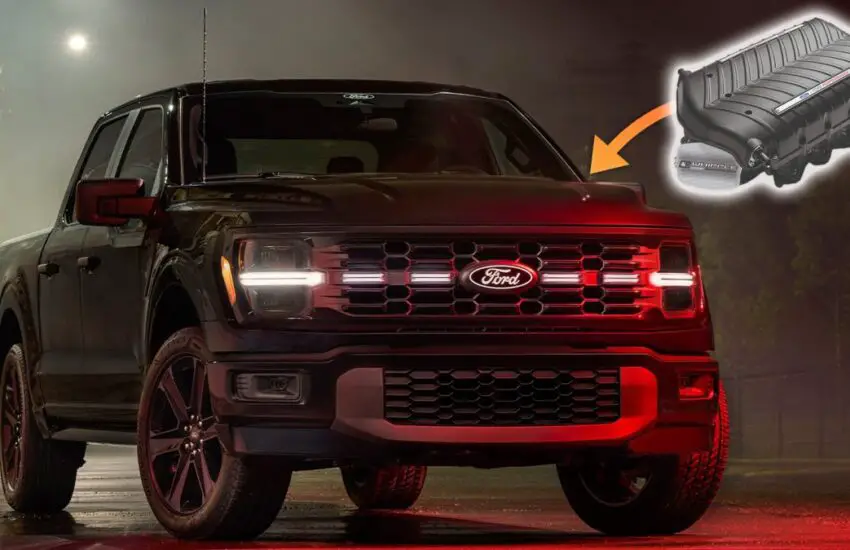
Ford’s F-150 Lobo stands out as a unique “street truck” variant, featuring a lowered stance and a distinctive hood that sets it apart from the standard workhorse F-150. However, enthusiasts noted that its visual aggression wasn’t fully matched by a significant power increase over conventional models. Ford Performance has now answered those calls with a definitive performance upgrade: an authorized Whipple supercharger kit engineered specifically for the Lobo.

Engineered for Bolt-On Power

This factory-backed supercharger system is designed as a comprehensive, turn-key solution. The kit includes a Whipple twin-screw supercharger, a high-flow air intake, an upgraded cooling system, and all necessary hardware and software. The key component is a dedicated Ford Performance calibration that optimizes the engine’s computer for forced induction, ensuring reliable performance and maintaining emissions compliance. This official package allows owners to substantially increase horsepower and torque while preserving factory drivability and warranty coverage when installed by a certified technician.

Transforming the Lobo’s Character

The addition of forced induction fundamentally changes the Lobo’s driving dynamics. The Whipple supercharger provides immediate throttle response and a linear power delivery, filling the gap between the truck’s aggressive styling and its previously standard output. The result is a street truck that delivers on the performance promise of its lowered, muscular appearance. This upgrade caters directly to owners seeking to differentiate their Lobo not just aesthetically, but with authentic, measurable performance gains that enhance both daily driving and spirited acceleration.

A New Tier for Factory Performance

By offering this supercharger kit, Ford Performance Parts is effectively creating a new factory-sanctioned performance tier for the F-150 lineup. It signals a commitment to serving the enthusiast market with genuine components that integrate seamlessly with the vehicle’s existing systems. For Lobo owners, it represents the ultimate factory-approved modification, bridging the gap between a showroom-floor vehicle and a custom performance machine without the uncertainties of aftermarket tuning.
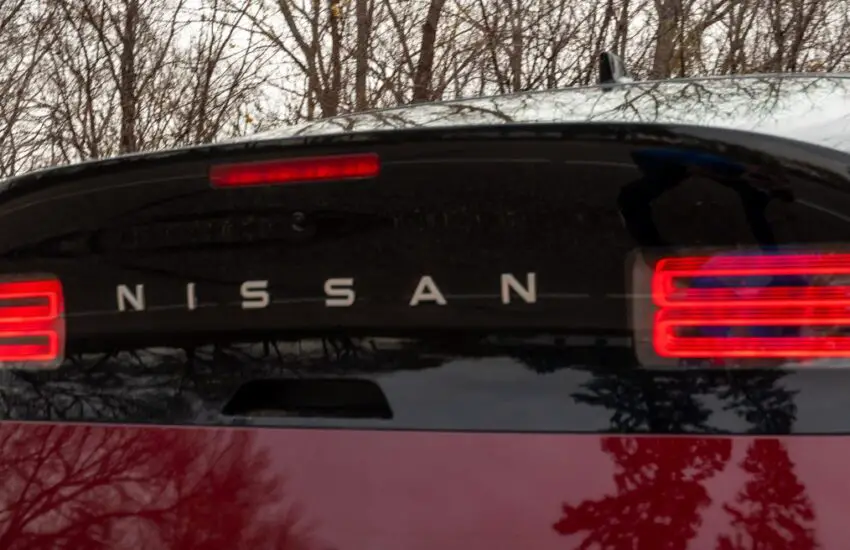

Nissan’s New CEO Considers Sale Amidst Corporate Crisis

Nissan’s Leadership Faces Pivotal Strategic Crossroads

The global automotive industry is undergoing a seismic shift, and Nissan Motor Corporation finds itself navigating particularly turbulent waters. In a stark assessment of the company’s future, the newly appointed CEO has presented a candid outlook, openly acknowledging that a potential sale of the iconic Japanese automaker is not off the table. This startling admission signals a profound moment of reckoning for a company once at the pinnacle of automotive innovation.

Mounting Financial and Operational Pressures

The core of the crisis stems from a confluence of severe financial strains and strategic missteps. Years of fluctuating profitability, intense competition in key markets like China and North America, and the costly global transition to electric vehicles have eroded Nissan’s financial resilience. The company’s performance has lagged behind key rivals, leading to diminished market confidence and pressing questions about its long-term viability as an independent entity. This precarious position forces the leadership to evaluate all possible strategic avenues to ensure survival.

Strategic Reassessment and Alliance Uncertainties

This period of introspection extends to Nissan’s historic alliance with Renault and Mitsubishi. While the partnership has delivered significant synergies in the past, its future structure and balance of power are now under intense scrutiny. The CEO’s comments suggest a comprehensive review is underway, where traditional alliances may be reconfigured or even supplanted by more radical corporate actions. The industry is watching closely to see if this signals a potential unraveling of one of the auto world’s most enduring partnerships.

Implications for the Global Auto Industry

A potential sale or major strategic pivot by Nissan would send shockwaves through the global sector. It could trigger a new wave of consolidation, as larger conglomerates or new mobility players might see value in acquiring Nissan’s manufacturing footprint, technology portfolio, and brand legacy. For employees, suppliers, and global operations, the uncertainty creates a challenging environment. The CEO’s primary task is to stabilize operations while navigating these existential strategic choices, a challenge that will define the automaker’s trajectory for decades to come.

Subaru WRX Winter Test: The Unstoppable Sports Car

The Subaru WRX: An Unstoppable Winter Revelation

The Subaru WRX has long been celebrated for its rally-bred performance and everyday usability. However, its true character is often fully revealed under the most demanding conditions. Equipped with a proper set of winter tires, this sports sedan transforms into an unstoppable force, challenging the very notion of a seasonal performance car.

Engineering Meets All-Weather Confidence

At the heart of the WRX’s winter prowess is Subaru’s legendary Symmetrical All-Wheel Drive system. This isn’t a reactive system; it’s a proactive mechanical setup that constantly provides optimal traction to all four wheels. When paired with dedicated winter tires, the grip on snow and ice is nothing short of transformative. The system manages power delivery with such intelligence that it allows for controlled, predictable handling where other rear or front-wheel-drive sports cars would falter.

Performance Redefined for the Cold

The turbocharged boxer engine delivers its power in a linear, manageable way that is perfectly suited for low-traction scenarios. The combination of immediate throttle response from the turbo and the tenacious grip from the AWD and tires means confidence is instilled from behind the wheel. You discover that fun driving isn’t reserved for dry summer roads; it can be found in the precise control of a power slide on a snow-covered backroad or the secure feeling when navigating a slushy highway.

This capability redefines the WRX’s practicality. It becomes a singular vehicle that doesn’t need to be garaged for winter. It handles the commute with the security of a dedicated SUV but retains the soul and engagement of a true performance machine. The cabin, while focused on the driver, offers the space and comfort needed for daily duties, making it a genuinely all-season companion.

Ultimately, the Subaru WRX with winter tires is more than just a car prepared for cold weather. It is a revelation of engineering integrity, proving that thrilling performance and absolute security are not mutually exclusive, regardless of what the forecast holds.

Ayrton Senna’s Throttle Technique: The Art of Controlled Aggression

The Unconventional Genius of Senna’s Right Foot

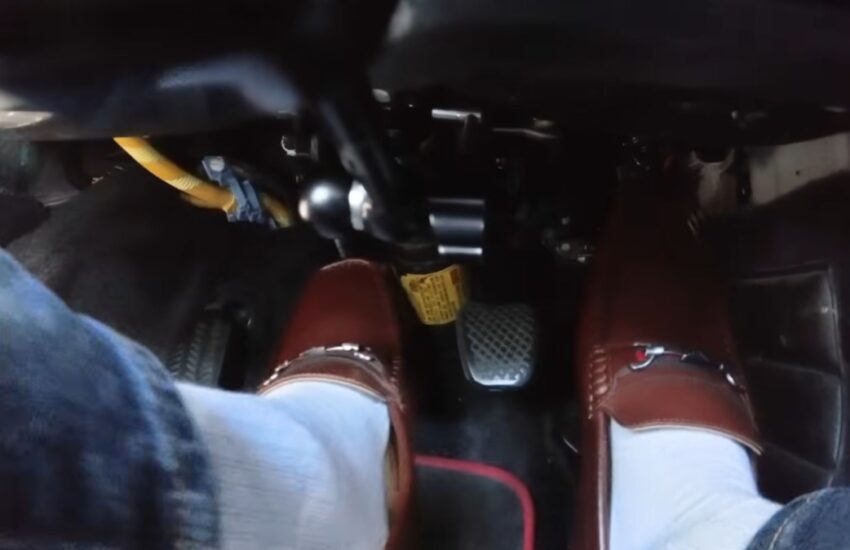
In the pantheon of Formula 1 legends, Ayrton Senna stands apart not just for his three world championships, but for a driving style that defied conventional engineering wisdom. While modern drivers are coached on smooth, linear inputs, Senna’s throttle technique was famously abrupt, a method often described as “stabbing” the pedal. This seemingly wild approach was, in fact, a calculated masterpiece of car control and psychological warfare.

Physics Defied: The Method Behind the Madness

Senna’s technique involved applying full throttle extremely early in the corner exit, often while the car was still at a significant steering angle. In a rear-wheel-drive car with immense power, this should, in theory, induce uncontrollable oversteer. Senna, however, used minute, lightning-fast corrections at the wheel to catch the ensuing slide, effectively using the engine’s power to pivot the car towards the exit. This “point-and-squirt” style straightened the car faster than a gradual application of throttle, allowing for earlier and harder acceleration down the following straight.

More Than Mechanics: A Psychological Weapon

The technique served a dual purpose. On a physical level, it maximized exit speed. On a psychological level, it was intimidating. Rivals behind him would see his car snap into oversteer and correct, a visible display of extreme commitment and car control that seemed to border on the impossible. It created an aura of invincibility, a statement that he was operating at a limit they could not perceive, let alone reach.

Today’s precision-engineered hybrid cars with complex traction control systems have made this specific technique largely obsolete. However, Senna’s underlying principle—the relentless pursuit of a faster, more aggressive line by mastering car balance at its absolute limit—remains the ultimate benchmark for driver commitment. His throttle wasn’t just a pedal; it was a paintbrush, and the track was his canvas.

Toyota’s Fake Dining Room: A Secret Weapon for US Success

The Unconventional Research That Fueled Toyota’s Rise

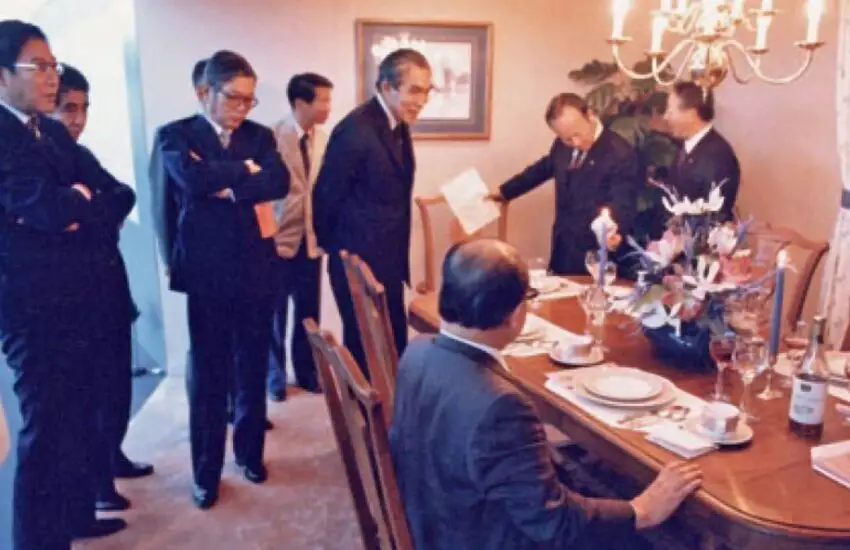
In the competitive landscape of the 1980s, Toyota faced a significant challenge: deeply understanding the American consumer. While data on sales and preferences was available, the Japanese automaker sought a more intuitive, human-centric insight. Their innovative solution was as simple as it was brilliant: building a full-scale, fake American dining room at their headquarters in Japan.

Beyond Numbers: Capturing the American Lifestyle

This replica room was meticulously designed with authentic furniture, appliances, and décor imported directly from the United States. The goal was not to study aesthetics, but ergonomics and daily life. Toyota engineers and designers would sit at the table, use the kitchen, and move through the space. This immersive experience provided tangible, physical understanding of the average American’s stature, how they moved in domestic settings, and their spatial needs—factors vastly different from those in Japan.

Engineering Comfort for a New Market

The insights gained were directly translated into vehicle design. This hands-on research informed critical aspects like seat dimensions, pedal placement, headroom, and overall cabin spaciousness. It allowed Toyota to engineer cars that felt instinctively comfortable and accommodating to American drivers and families, moving beyond mere specification sheets to genuine user comfort.

A Legacy of Cultural Empathy in Design

This fake dining room symbolizes a core principle of Toyota’s global strategy: cultural empathy as an engineering requirement. By literally stepping into their customers’ shoes—and homes—they bridged a vast cultural and physical gap. This commitment to deeply understanding local needs was a cornerstone in building the trust and popularity that propelled Toyota from a serious challenger to a dominant force in the crucial North American market, demonstrating that true innovation often lies in the depth of understanding, not just technological advancement.

From Show Car to Desert Racer: The AWDROLA’s Mint 400 Challenge

The AWDROLA’s Radical Transformation

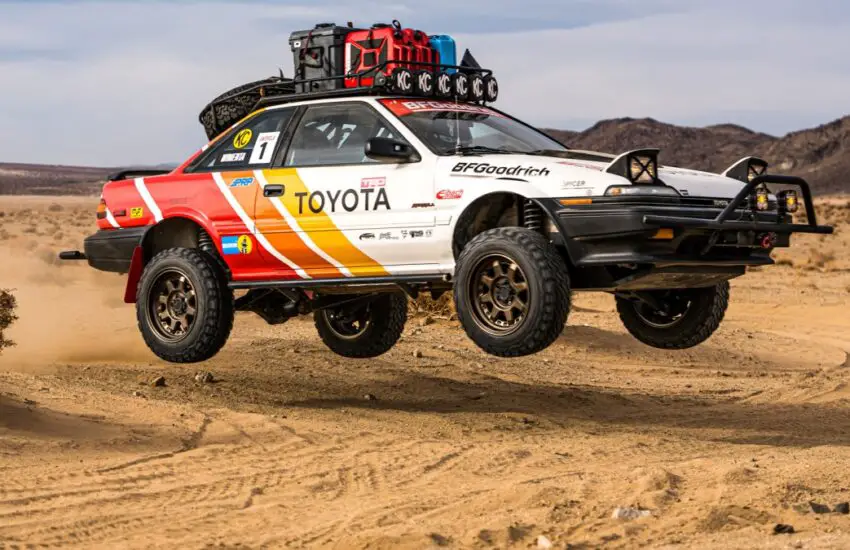
The journey from a polished show car to a hardened desert racer is a path few vehicles complete. The “AWDROLA,” a 1989 Toyota Corolla GT-S (AE92), is attempting just that. Having gained fame on the show circuit at events like SEMA, this iconic hatchback, adorned with classic desert racing stripes, is now being tested in the ultimate crucible: the legendary Mint 400 race in the Nevada desert.

Engineering for the Extreme

Transitioning from convention center carpet to brutal desert silt requires a fundamental re-engineering. The AWDROLA’s build focused on creating a durable, capable off-road machine while retaining its charismatic Toyota shell. A custom long-travel suspension system was essential to absorb the massive impacts of desert whoops and jumps. The drivetrain received a significant upgrade, with a robust all-wheel-drive system replacing the original configuration, giving the lightweight Corolla the traction needed for loose surfaces.

Proving Grounds: The Mint 400

The Mint 400 is not a gentle introduction to off-road racing. Known as “The Great American Off-Road Race,” it presents a relentless challenge of rugged terrain, dust, and endurance. For the AWDROLA, this race is the final validation of its build. It moves beyond being a visual spectacle to prove its functionality and resilience under extreme competitive stress. Success here would cement its legacy not just as a show-stopper, but as a genuine, competitive desert racer.

A New Blueprint for Builds

This project represents a growing philosophy in the automotive world: the pursuit of genuine capability over static presentation. The AWDROLA demonstrates that a car can be both aesthetically celebrated and mechanically formidable. Its attempt at the Mint 400 inspires a new conversation about the purpose of custom builds, championing the idea that true innovation is proven under the harshest conditions, far from the glow of show lights.

WEC Cancels Qatar Race, Casting Shadow on F1 Calendar

WEC Calls Off Qatar Event Amid Regional Tensions

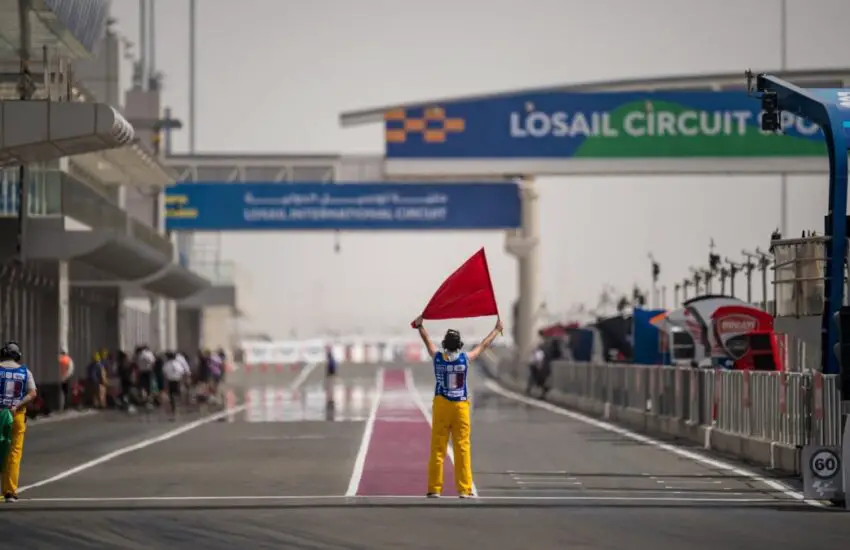
The Fédération Internationale de l’Automobile (FIA) has officially announced the cancellation of the World Endurance Championship (WEC) round scheduled to take place in Qatar. This decisive move stems from an assessment of the current geopolitical climate in the Middle East, prioritizing participant safety above all else. The announcement immediately raises questions about other major motorsport events slated for the region in the coming months.

Safety Concerns Prompt Calendar Change

In an official statement, the FIA cited the evolving regional situation as the primary reason for withdrawing the event. The governing body emphasized that the safety of teams, drivers, officials, and fans is non-negotiable and forms the cornerstone of all its decisions. This preemptive cancellation suggests significant concerns that could extend beyond a single series, potentially affecting the entire international motorsport circuit’s schedule in the area.

Formula 1’s Upcoming Races Under Scrutiny

The WEC’s decision places immediate pressure on the Formula 1 calendar, which features multiple events in the Gulf region. The sport is scheduled to hold Grands Prix in Qatar, Bahrain, and Saudi Arabia in the early part of the season. While each country presents a distinct geopolitical profile, the WEC’s withdrawal will inevitably lead to intensified security evaluations by F1 officials, race promoters, and competing teams. The logistics and contracts involved make a last-minute cancellation complex, but the precedent set by the FIA’s endurance racing division cannot be ignored.

Broader Implications for International Sport

This development highlights the intricate relationship between global sports and international stability. Major events like the WEC and Formula 1 rely on guaranteed safety and stability to operate. When a leading sanctioning body like the FIA alters plans for one of its flagship series, it sends a powerful signal to the entire industry. All stakeholders will now be closely monitoring official communications from Formula One Management regarding any potential adjustments to the F1 calendar, awaiting reassurance or further changes.

Gridlife Acquisition: A New Era for American Motorsport Culture

Gridlife Acquisition: A New Era for American Motorsport Culture

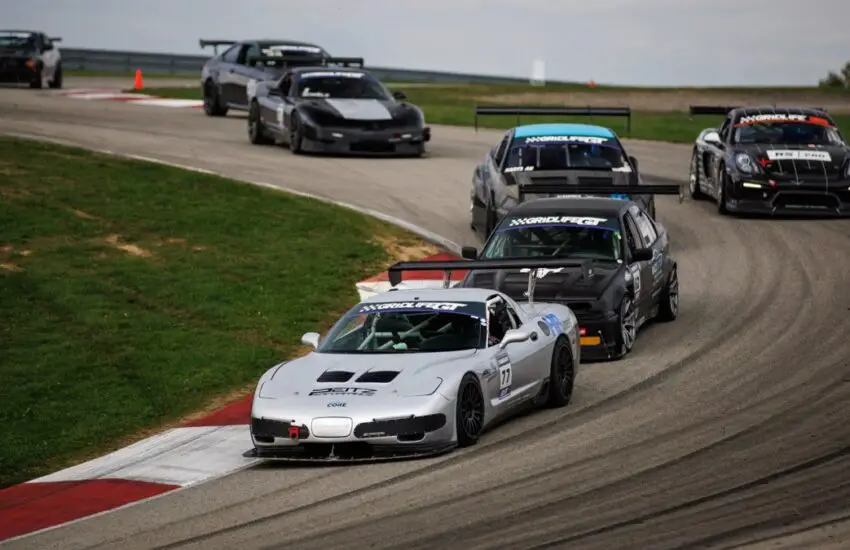
The recent acquisition of Gridlife marks a pivotal moment for grassroots and enthusiast motorsport in North America. More than just a series of events, Gridlife cultivated a unique community where high-octane track action seamlessly blended with festival vibes, creating a cultural phenomenon distinct from traditional professional racing.

Beyond the Track: The Gridlife Phenomenon

Gridlife successfully built a bridge between competitive motorsport and popular car culture. Its event portfolio was diverse, catering to a wide spectrum of enthusiasts. From amateur track day participants seeking to improve their lap times to professional-level drifting competitions and wheel-to-wheel Time Attack battles, Gridlife offered a platform for all. The integration of music festivals, car shows, and vendor markets transformed race weekends into immersive experiences, attracting audiences beyond the core motorsport fanbase.

Implications of the Ownership Change

While specific details of the acquisition remain private, the change in ownership signals a significant transition. For the community, the central questions revolve around continuity and vision. Will the new stewardship preserve the distinctive festival atmosphere and accessible competition structure that defined the brand? Strategic investment could potentially expand the event calendar, enhance broadcast capabilities, and improve facilities, raising the profile of grassroots motorsport. However, maintaining the authentic, community-driven ethos will be crucial for its continued success.

The Road Ahead for Enthusiast Racing

This development highlights the growing commercial appeal and cultural weight of enthusiast motorsport. Gridlife’s model proved that there is a substantial, engaged audience for events that prioritize experience and community alongside competition. The acquisition likely reflects a belief in the scalability of this model. The future direction of Gridlife under new ownership will be closely watched, as it could set a precedent for how grassroots motorsport ecosystems evolve, balancing growth with the core values that built their loyal following.

Retro Gaming Meets Classic Car: A Steam Deck Dashboard Mod

Retro Gaming Meets Classic Car: A Steam Deck Dashboard Mod

The world of car customization is constantly evolving, blending technology with tradition in unexpected ways. One of the most intriguing recent trends involves integrating modern gaming hardware into vintage vehicles. This fusion creates a unique driving experience, merging the tactile feel of classic automotive engineering with the digital versatility of contemporary portable computing.

Transforming the Driving Experience

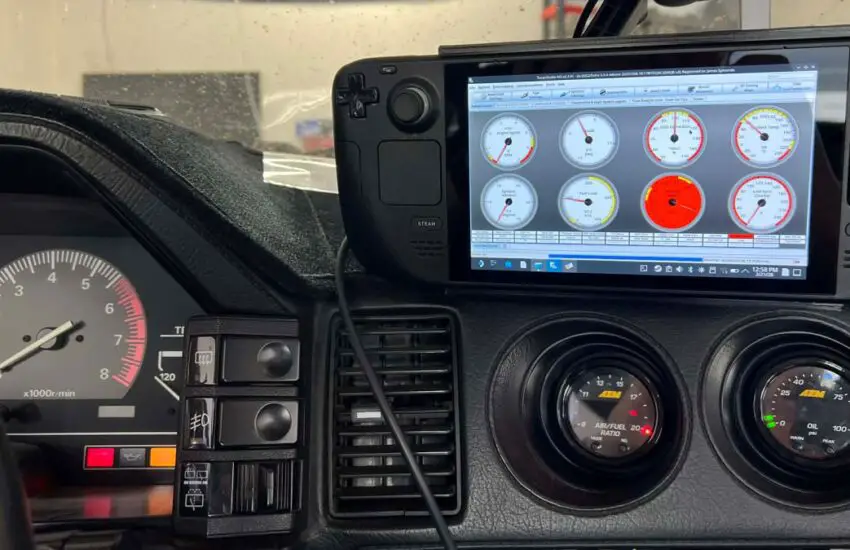
Imagine having the full power of a gaming PC and media center seamlessly built into your classic car’s dashboard. This innovative modification does exactly that. By securely mounting a handheld gaming console, enthusiasts gain access to navigation, music libraries, performance diagnostics, and of course, gaming—all from the driver’s seat. This setup turns a stationary charging period or a passenger’s wait into an opportunity for entertainment, without compromising the vehicle’s original interior aesthetics when done thoughtfully.

Technical Considerations for a Safe Installation

Executing this modification requires careful planning. The primary concern is safety; the mounting solution must be extremely robust to prevent the device from becoming a projectile in sudden stops. Power management is another critical factor, requiring a clean, regulated power source from the vehicle’s electrical system to avoid damaging the sensitive electronics. Furthermore, the installation must not interfere with airbag deployment, critical sightlines, or essential vehicle controls. Using custom brackets and professional-grade adhesives or fasteners is often necessary for a secure and reliable fit.

More Than Just a Gaming Console

While the gaming capability is a standout feature, the utility of this mod extends far beyond. The device can serve as a high-end media center, a digital gauge cluster for monitoring engine parameters via an OBD-II adapter, or a sophisticated GPS navigation system. For the true automotive enthusiast, it represents the ultimate fusion of their passions, bringing a piece of cutting-edge technology into the analog cockpit of a beloved classic car. It’s a testament to personalized innovation, where the journey and the destination are both enhanced by a touch of modern ingenuity.

The BMW i8’s Secret: An Exhaust That Composes Music

The Symphony of Engineering: Inside the BMW i8’s Exhaust

The BMW i8 was a masterpiece of contradiction. It defied easy categorization, blending futuristic design with innovative engineering. One of its most fascinating and lesser-known features was its ability to produce a distinctive, almost musical exhaust note—a remarkable feat considering its modest internal combustion engine.

An Unlikely Instrument

At the heart of the i8’s powertrain lay a 1.5-liter turbocharged three-cylinder gasoline engine, paired with an electric motor. While potent in combination, a small three-cylinder engine is not typically associated with an exhilarating soundtrack. BMW’s engineers faced a unique challenge: to create an acoustic character worthy of the i8’s stunning, supercar-like appearance. The solution was not brute force, but clever acoustic engineering.

Engineering the Soundtrack

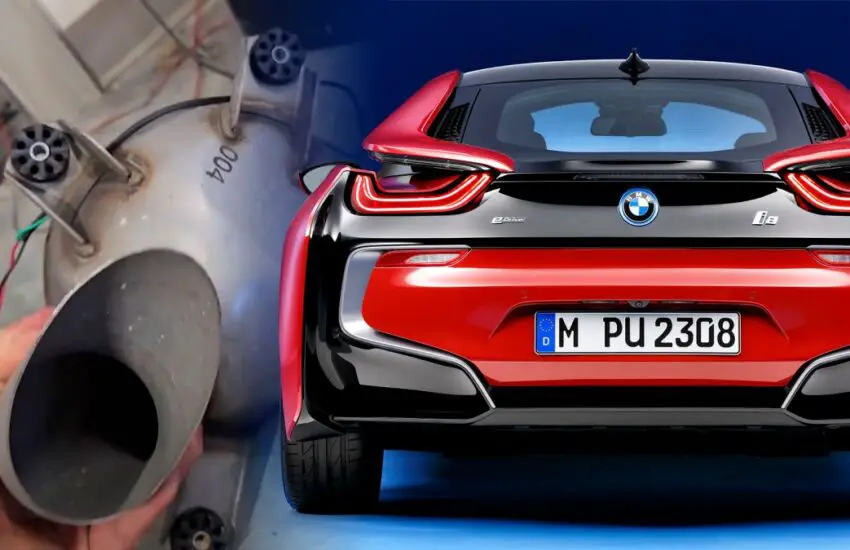
The i8’s exhaust system was meticulously tuned to act as a resonant chamber. Specific frequencies within the exhaust flow were amplified and refined, transforming the raw mechanical sound into a more composed and engaging note. This process involved precise calculations on the geometry of the exhaust pipes, resonators, and the muffler to highlight certain harmonic tones while canceling out less desirable ones. The result was a sharp, metallic, and surprisingly rich exhaust note that elevated the driving experience beyond the engine’s physical specifications.

More Than Just Noise

This “musical” exhaust was a key part of the i8’s emotional appeal. It provided an auditory feedback that connected the driver to the hybrid powertrain’s behavior, especially during aggressive acceleration when the gasoline engine worked in concert with the electric motor. The sound was a crafted personality trait, ensuring the i8 felt alive and engaging, bridging the gap between its eco-friendly hybrid technology and its aspirational sports car ethos. It stands as a testament to how sensory details can define a car’s character as much as its performance figures.