Electric Van Life: Real-World Fleet Experiences

The Electric Van Transition: Beyond the Hype

The shift to electric vans is accelerating across industries, from last-mile delivery to skilled trades. While the environmental and long-term economic promises are clear, the day-to-day reality for fleet managers and drivers involves a significant adaptation of habits and logistics. Understanding the practical challenges and benefits is key to a successful transition.

Range and Charging: The Daily Logistics Puzzle

The most frequently cited concern, real-world range, is often a matter of planning. Drivers report that advertised ranges can be affected by factors like payload, use of heating or air conditioning, and urban stop-start driving. The solution lies in integrating charging into the daily workflow. Many fleets successfully utilize overnight depot charging, while others depend on public fast-charging networks during lunch breaks or between jobs. The availability of reliable charging infrastructure remains a pivotal factor in operational efficiency.

Total Cost of Ownership and Performance

From a financial perspective, the narrative is positive. Users highlight substantially lower “fuel” and maintenance costs—with fewer moving parts, there’s less to service or repair. The instant torque of electric motors is also a noted advantage for urban driving, providing responsive acceleration and smooth operation. However, the higher initial purchase price requires a longer-term view on investment, often justified by the reduced running expenses over the vehicle’s lifespan.

Adapting to a New Operational Rhythm

The successful adoption of electric vans ultimately hinges on adaptation. This means planning routes with charging points in mind, potentially scheduling high-energy tasks differently, and training drivers on efficient driving techniques to maximize range. For many businesses, the operational changes are manageable and are outweighed by the benefits of quieter operation, zero tailpipe emissions, and a modernized fleet image.

Jeep Compass Electric Launches with Immediate Incentives

Jeep Compass Electric Hits the Market with Promotional Push

The all-electric Jeep Compass has arrived, and Jeep is making an assertive entry into the compact electric SUV segment. From the moment of its launch, the vehicle is being supported by a notable promotional offer. This strategy is designed to boost its appeal in a fiercely competitive market, combining this immediate incentive with the benefits of available ecological bonuses to create a compelling financial proposition for early adopters.

Strategic Pricing and Launch Incentives

Understanding the importance of a strong market entry, Jeep has structured an attractive launch package for the Compass Electric. The promotional pricing is aimed at reducing the initial cost barrier, making the electric SUV more accessible. This move is not just about selling cars; it’s about establishing a foothold in the electric vehicle landscape and inviting consumers to experience the Jeep brand’s transition to electrification without delay.

Eligibility for Ecological Bonuses

A key component of the Compass Electric’s launch strategy is its eligibility for government ecological incentives. These bonuses, which vary by region, can significantly lower the effective purchase price for qualified buyers. When combined with the manufacturer’s own launch promotion, the total savings present a powerful argument for choosing the Compass Electric over other vehicles in its class, enhancing its value proposition from day one.

Positioning in a Competitive Segment

The compact electric SUV market is crowded with compelling options. Jeep’s decision to lead with both promotional pricing and the clarity of ecological bonus eligibility is a direct challenge to its rivals. It signals a commitment to not just participate in the electric revolution but to compete aggressively. The Compass Electric aims to blend Jeep’s iconic adventurous spirit with zero-emissions driving, and this financial strategy ensures it gets immediate attention from consumers making their shortlists.

This launch approach underscores a broader industry trend where attractive initial offers are crucial for capturing market share in the rapidly evolving electric vehicle sector. For potential buyers, it represents a timely opportunity to invest in electric mobility with a recognized brand, supported by substantial upfront financial advantages.

BMW P14A6 Code: Comprehensive Guide to Fuel Pump Control Module Issues

Understanding the BMW P14A6 Diagnostic Trouble Code

The OBD2 diagnostic trouble code P14A6 is a manufacturer-specific code for BMW vehicles, indicating a fault within the fuel delivery system’s electronic control. Specifically, it points to a malfunction in the Fuel Pump Control Module (FPCM), also known in BMW terminology as the EKP (Elektrische Kraftstoffpumpe) module. This critical component is responsible for precisely regulating the voltage and speed of the vehicle’s electric fuel pump. When the engine control module (DME) detects an irregularity in the EKP’s operation or communication, it logs code P14A6, potentially leading to significant drivability issues.

What is the Fuel Pump Control Module (EKP)?

The EKP is a solid-state electronic control unit that acts as an intelligent intermediary between the DME and the in-tank fuel pump. Unlike older systems that ran the pump at full battery voltage, modern BMWs use the EKP to apply a pulse-width modulated (PWM) signal. This allows for variable pump speed, which optimizes fuel delivery, reduces pump noise, minimizes electrical load, and enhances efficiency. It’s typically located in the trunk area, under the rear seat, or in the fuel pump access hatch.

Common Symptoms of a P14A6 Fault

Drivers and technicians may notice several warning signs before or after the check engine light illuminates with code P14A6. Symptoms can range from intermittent to severe:

  • Check Engine Light (CEL) or Engine Malfunction Light: The primary indicator, often accompanied by reduced power messages on the iDrive screen.
  • Hard Starting or Extended Cranking: The engine struggles to start due to insufficient initial fuel pressure.
  • Engine Stalling or Hesitation: Particularly under load or during acceleration, as the fuel supply becomes inconsistent.
  • Loss of Power / Limp Mode: The DME may enter a failsafe mode, severely limiting engine performance to protect the vehicle.
  • Failure to Start (No-Start Condition): In a complete EKP failure, the fuel pump receives no power, preventing the engine from starting altogether.
  • Whining or Unusual Noise from Fuel Pump: An irregular voltage supply can cause the pump to operate erratically and noisily.

Root Causes and Diagnostic Procedure for P14A6

Diagnosing P14A6 requires a systematic approach to isolate the fault among the EKP module itself, its power and ground circuits, the fuel pump, or the communication network. Jumping straight to replacing the EKP can be an expensive mistake if the root cause is elsewhere.

Primary Causes of the P14A6 Code

  • Failed Fuel Pump Control Module (EKP): The most direct cause. Internal electronic components, such as MOSFET transistors or voltage regulators, can fail due to heat, age, or electrical overload.
  • Faulty or Failing Electric Fuel Pump: A pump drawing excessive current (amperage) can overload and damage the EKP module.
  • Electrical Issues: Corroded, loose, or damaged wiring harness connectors, especially at the EKP or fuel pump. Poor grounds (often located near the module) are a frequent culprit.
  • Blown Fuse or Faulty Relay: The EKP module is fed by a dedicated fuse (often 20A or 30A) and sometimes a relay. These should be checked first for power integrity.
  • Problems with Power Supply (BSD Bus): The EKP communicates with the DME via a single-wire bus called the Bit-Serial Data (BSD) line. A short or open on this circuit will cause communication faults.
  • Software Glitch: In rare cases, a corrupted module software map may require reprogramming or an update.

Step-by-Step Diagnostic Approach

Follow this logical sequence using a professional-grade OBD2 scanner and a digital multimeter (DMM):

  1. Code Verification & Live Data: Clear the code and perform a test drive to see if it returns immediately. Use a BMW-specific scanner to check live data for fuel pump duty cycle and commanded voltage.
  2. Visual Inspection: Locate the EKP module and inspect its connector for corrosion, bent pins, or signs of heat damage (melting, discoloration). Check the associated fuse.
  3. Power & Ground Circuit Test: With the ignition on, use a DMM to verify battery voltage (approx. 12V) at the EKP’s power supply pin. Check for continuity to a known good ground from the EKP’s ground pin.
  4. Fuel Pump Circuit Test: Disconnect the fuel pump connector. Measure the pump’s resistance across its terminals. Specifications vary, but a reading of less than 1 ohm or an open circuit indicates a faulty pump.
  5. BSD Line Check: Test the BSD communication wire for continuity between the EKP connector and the DME. Check for shorts to power or ground.
  6. Component Swap Test: If electrical checks are good, substituting the EKP module with a known-good unit is the most conclusive test.

Repair Solutions and Technical Considerations

Once the faulty component is identified, the repair path becomes clear. Due to the safety-critical nature of the fuel system, proper procedure is essential.

Replacing the Fuel Pump Control Module (EKP)

If the EKP is confirmed faulty, replacement is necessary. Important: The new module often requires coding/programming to the vehicle using BMW ISTA, Rheingold, or compatible diagnostic software. This process registers the module with the DME and ensures proper operation. Simply plugging in a new, uncoded module may not resolve the issue and could trigger additional faults. Always disconnect the vehicle’s battery before beginning work.

Replacing the Electric Fuel Pump

If diagnostic tests point to a failed fuel pump (e.g., high current draw, low/no pressure), it must be replaced. It is a highly recommended practice to also replace the EKP module if the old pump has failed. A failing pump can send voltage spikes or excessive current back through the EKP, causing latent damage that may lead to a premature failure of the new pump. Replacing both as a set is a prudent, long-term repair strategy.

Addressing Wiring and Connector Issues

Repair any damaged wires using proper solder and heat-shrink tubing—never use twist connectors. Clean corroded terminals with electrical contact cleaner. Ensure all ground points are clean, tight, and free of corrosion. After repairs, clear all fault codes and perform a thorough test drive under various load conditions to verify the fix is complete and the P14A6 code does not return.

Preventative Measures and Final Thoughts

While EKP failure is often unpredictable, keeping the fuel tank above a quarter full can help prevent the fuel pump from overheating. Using high-quality fuel and replacing the fuel filter at recommended intervals also reduces strain on the entire system. Code P14A6 is a serious fault that directly impacts drivability and safety. A methodical diagnostic approach is key to an efficient and cost-effective repair, ensuring your BMW’s sophisticated fuel delivery system is restored to optimal performance.

Cadillac F1 Unveils Striking Black and Silver 2026 Livery

Cadillac F1 Reveals 2026 Challenger in Super Bowl Spectacle

The long-awaited visual identity of the Cadillac Formula 1 team is finally public. The American manufacturer chose the global stage of Super Bowl LVIII to unveil the livery for its 2026 contender, ending months of speculation. The premiere occurred during a commercial slot, showcasing a sleek and aggressive design that sets the tone for the brand’s ambitious entry into the pinnacle of motorsport.

A Design of Modern Heritage

The 2026 Cadillac F1 car features a dominant palette of gloss black and metallic silver, creating a sophisticated and technical aesthetic. The livery cleverly integrates dynamic red accents, a nod to Cadillac’s racing heritage, which streak along the car’s bodywork. This color scheme emphasizes the car’s sculpted shapes and aero elements, projecting an image of precision and performance. The design successfully balances a modern Formula 1 look with distinctive brand cues that are unmistakably Cadillac.

Key Partners Revealed

The unveiling also confirmed the team’s founding commercial partners, whose logos are prominently displayed on the chassis. While full details of the partnerships are still emerging, the presence of these brands underscores the commercial confidence in the project. The integration of sponsor branding appears seamless, complementing the livery’s lines rather than disrupting them. This professional presentation highlights the team’s preparation as it builds towards its competitive debut.

The Road to the 2026 Grid

This livery reveal is a major milestone for the Cadillac F1 project, transforming it from a conceptual announcement into a tangible reality for fans. The 2026 season will mark the debut of new technical regulations, making Cadillac’s entry particularly strategic. The team will now intensify its development program, with this livery destined to adorn the actual chassis that will hit the track for pre-season testing. The reveal has successfully generated significant global buzz, positioning Cadillac as a serious and stylish new competitor in the Formula 1 landscape.

OBD2 Code P14A6: Comprehensive Guide to the Engine Oil Pressure Sensor Circuit

Understanding OBD2 Code P14A6: A Critical Engine Protection Alert

When the check engine light illuminates and a diagnostic scan reveals code P14A6, your vehicle’s Engine Control Module (ECM) or Powertrain Control Module (PCM) has detected a significant malfunction within the engine oil pressure sensor circuit. This is not a generic OBD2 code but a manufacturer-specific code, most commonly associated with brands like Ford, Lincoln, and Mercury. Unlike a simple low oil pressure warning, P14A6 points to an electrical or signal integrity issue with the sensor or its wiring, preventing the ECM from accurately monitoring a vital engine parameter. Ignoring this code can lead to a lack of crucial data, potentially masking a genuine low oil pressure condition and risking catastrophic engine damage.

What Does the Engine Oil Pressure Sensor Do?

The engine oil pressure sensor, often called the oil pressure sending unit or switch, is a critical component for engine health. Its primary function is to convert mechanical oil pressure into an electrical signal (usually a variable voltage) that the ECM can interpret. This data is used for:

  • Driver Information: Illuminating the oil pressure warning light on the dashboard or displaying pressure on a gauge.
  • Engine Management: Informing ECM strategies, potentially influencing idle speed or variable valve timing systems.
  • Engine Protection: Providing a failsafe signal; a complete loss of signal or a reading of zero pressure may trigger a limp mode or other protective measures.

Technical Definition of Code P14A6

Diagnostic Trouble Code (DTC) P14A6 is formally defined as “Engine Oil Pressure Sensor Circuit.” The “circuit” aspect is key—it indicates the fault lies in the electrical pathway between the sensor and the ECM. This includes the sensor itself, the wiring harness, connectors, and the ECM’s internal circuitry responsible for processing the signal. The ECM sets this code when the signal from the oil pressure sensor is implausible, out of expected range, open, or shorted for a predetermined period.

Common Symptoms and Causes of P14A6

A stored P14A6 code will almost always trigger the check engine light (MIL). However, the observable symptoms can vary depending on whether the fault is intermittent or permanent, and how the vehicle’s computer is programmed to react.

Primary Symptoms of a P14A6 Fault

  • Illuminated Check Engine Light (MIL): The most consistent symptom.
  • Oil Pressure Warning Light: This light may be on constantly, flicker, or behave erratically, independent of actual oil level.
  • Inaccurate Oil Pressure Gauge Reading: The gauge may read zero, pegged at maximum, or fluctuate wildly.
  • No Obvious Symptoms: In some cases, the code may be stored without any noticeable drivability issues, which can be deceptive.
  • Engine Performance Issues: Some modern engines may enter a conservative limp mode, reducing power to protect the engine from perceived low pressure.

Root Causes of the P14A6 Diagnostic Trouble Code

Diagnosis should follow a logical progression from simple to complex. The most frequent causes include:

  • Faulty Engine Oil Pressure Sensor: The most common culprit. Internal electrical failure, a stuck diaphragm, or a damaged piezoresistive element.
  • Damaged Wiring or Connectors: Chafed, broken, or corroded wires in the sensor circuit. Loose, oily, or corroded electrical connectors at the sensor or ECM.
  • Poor Electrical Ground: A bad ground connection for the sensor or the ECM can corrupt the signal.
  • Low Engine Oil Level: While P14A6 is a circuit code, critically low oil can sometimes create a signal the ECM interprets as a fault. Always check oil level first.
  • Actual Mechanical Oil Pressure Problems: A failing oil pump, severe bearing wear, or a clogged oil pickup tube can cause genuine low pressure, but the sensor circuit may still be flagged if the signal is erratic.
  • Faulty ECM/PCM: Rare, but a failure of the internal analog-to-digital converter or power supply circuit for the sensor is possible.

Step-by-Step Diagnostic and Repair Procedure

Professional diagnosis of P14A6 requires a digital multimeter (DMM), a scan tool capable of viewing live data, and access to vehicle-specific wiring diagrams. Warning: Always ensure the engine is cool and the ignition is off before beginning electrical tests.

Step 1: Preliminary Checks and Live Data Analysis

Begin with the basics. Check the engine oil level and condition using the dipstick. Next, use your scan tool to clear the code and see if it returns immediately. If it does, access the live data stream. Look for the Engine Oil Pressure Sensor PID (Parameter ID). With the key on, engine off, the reading should typically be 0 psi or a very low value. Start the engine; the pressure should rise immediately to a normal range (e.g., 20-60 psi at idle, higher with RPM). An erratic, static, or implausible reading (like 120 psi at idle) confirms a sensor or circuit issue.

Step 2: Visual and Electrical Inspection of the Circuit

Locate the oil pressure sensor, usually near the oil filter housing or on the engine block. Perform a thorough visual inspection:

  • Check for oil leaks at the sensor body, which can degrade the connector.
  • Inspect the wiring harness for damage, burns, or chafing.
  • Disconnect the sensor connector and check for corrosion, bent pins, or oil contamination.

Consult the wiring diagram to identify the sensor’s pins: typically, a 5V reference voltage from the ECM, a signal return wire, and a ground. With the connector disconnected and the key on, use your DMM to verify the presence of the reference voltage (usually 5V) and a good ground.

Step 3: Testing the Oil Pressure Sensor

If power and ground are present at the harness connector, the next step is to test the sensor itself. The testing method depends on the sensor type:

  • 3-Wire Variable Resistance Sensor: Measure resistance between the signal and ground pins on the sensor itself. Resistance should change smoothly as you apply light pressure to the sensor port (with a hand vacuum pump) or compare to a known-good sensor’s specs.
  • Simple Switch-Type Sensor: Often used just for a warning light. It should show open circuit with no pressure and continuity (0 ohms) when pressure is applied.

A sensor that shows an open circuit, short circuit, or no change in resistance is faulty and must be replaced.

Step 4: Wiring Integrity and ECM Verification

If the sensor tests good, the fault lies in the wiring or ECM. Perform a continuity test on each wire between the sensor connector and the ECM connector. Also check for a short to power or ground on the signal wire. If all wiring checks out, and reference voltage is present, a faulty ECM becomes a stronger possibility, though this is a last-resort diagnosis.

Step 5: Repair, Clear Codes, and Test Drive

Once the faulty component is identified:

  • Replace the oil pressure sensor, using thread sealant as specified by the manufacturer (often not Teflon tape).
  • Repair any damaged wiring with solder and heat-shrink tubing.
  • Clean corroded connectors with electrical contact cleaner.

Clear all codes with your scan tool. Start the engine, verify the oil pressure warning light goes off, and confirm that live data shows a normal, responsive oil pressure reading. Perform a test drive to ensure the code does not return.

Conclusion: The Importance of Addressing P14A6 Promptly

Code P14A6, while specifically related to an electrical circuit, serves as a guardian for one of your engine’s most critical systems: lubrication. Diagnosing and repairing it correctly restores the ECM’s ability to monitor oil pressure accurately, ensuring you receive a legitimate warning if a real mechanical problem arises. By following a structured diagnostic approach—starting with oil level, moving to live data, and then performing systematic electrical tests—you can efficiently resolve this code and maintain your engine’s health and longevity. Never ignore this alert; the cost of a sensor or wiring repair is minimal compared to the expense of a failed engine due to undetected low oil pressure.


Nissan Shifts Gears: PHEVs and EREVs Take Priority Over Pure EVs

Nissan’s Strategic Pivot: A New Roadmap for Electrification

In a significant strategic shift, Japanese automaker Nissan is recalibrating its electrification strategy. Moving away from an exclusive focus on pure battery electric vehicles (BEVs), the company is now prioritizing the development and production of plug-in hybrid (PHEV) and extended-range electric vehicles (EREV). This pivot marks a notable departure from the industry’s recent all-in push for pure electric mobility and reflects a more pragmatic, consumer-driven approach.

Responding to Market Realities and Consumer Demand

The decision stems from a clear assessment of global market trends and consumer behavior. While BEV adoption continues, the pace has been uneven across regions, with concerns over charging infrastructure, upfront costs, and range anxiety still prevalent. Nissan’s new direction acknowledges that hybrid technologies serve as a crucial transitional bridge, offering drivers the benefits of electric driving for daily commutes with the flexibility and range assurance of a gasoline engine for longer journeys. This approach aims to cater to a broader customer base not yet ready to commit to a fully electric vehicle.

The Technology Focus: PHEVs and EREVs

Nissan’s renewed focus will center on two key technologies. Plug-in Hybrid Electric Vehicles (PHEVs) allow for a substantial all-electric range, typically between 30-50 miles, before a gasoline engine engages. Extended-Range Electric Vehicles (EREVs), like the technology showcased in the Nissan Qashqai e-POWER, operate primarily on electric power, using a gasoline engine solely as a generator to recharge the battery, eliminating range anxiety. By investing in these platforms, Nissan aims to deliver greater efficiency and lower emissions without asking consumers to drastically change their driving habits.

Implications for the Automotive Industry

Nissan’s strategic reorientation sends a powerful signal to the automotive industry. It suggests a more diversified and nuanced path to carbon neutrality, where multiple electrified solutions coexist to meet varied global needs. This move could encourage other manufacturers to similarly broaden their portfolios, ensuring that the transition to sustainable transportation is inclusive and adaptable. The coming years will reveal how this hybrid-centric strategy positions Nissan against competitors who remain heavily committed to pure electric vehicle platforms.

Ferrari Luce EV: Inside the Ive & Newson Design Revolution

Ferrari Luce Electric: The Cabin Redefined

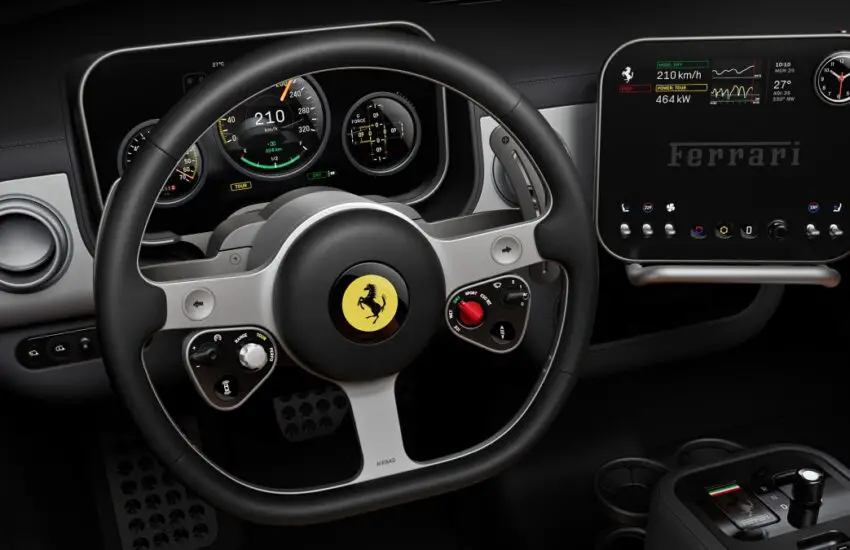
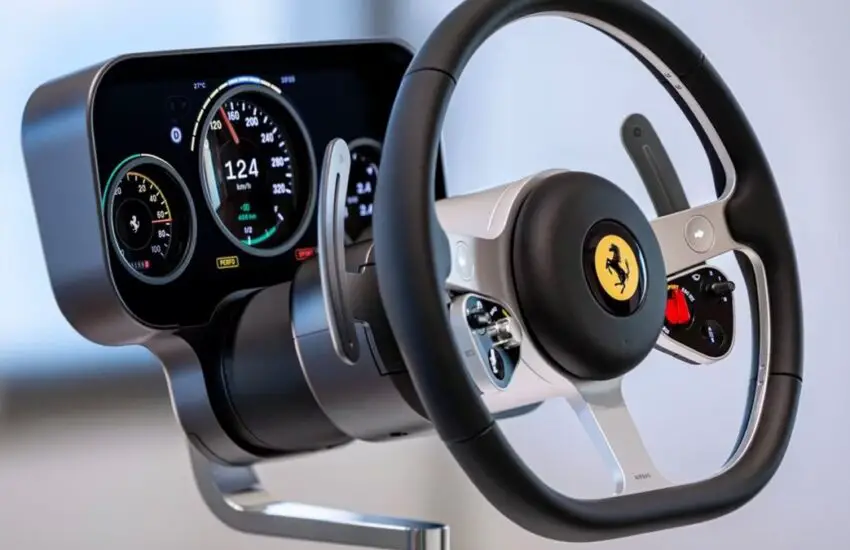
The future of Ferrari’s design language has been revealed, and it bears the signature of two iconic creators. The Italian marque has unveiled the interior of its upcoming all-electric Ferrari Luce, a collaborative masterpiece from former Apple design chief Jony Ive and renowned industrial designer Marc Newson. This is more than a new cabin; it is a profound statement on the intersection of automotive passion and minimalist philosophy.

A Radical Departure from Tradition

This project marks a definitive turning point in Ferrari’s history. Moving beyond the brand’s classic, driver-centric cockpits filled with tactile switches, the Luce’s interior embraces a new ethos of serene simplicity. The design duo has applied a philosophy of reduction, stripping away visual clutter to focus on essential form and premium materials. The result is an environment that feels more like a luxurious lounge than a conventional sports car interior, anticipating the different sensory experience of electric performance.

The Philosophy of Calm Technology

Evident throughout the cabin is the influence of Ive’s “calm technology” principle, honed over decades at Apple. Interfaces are expected to be seamlessly integrated, likely through expansive, intuitive digital displays that appear only when needed. Traditional dials and buttons give way to a cleaner, more contemplative space. Materials play a starring role, with sustainable fabrics, machined metals, and novel composites creating a unique tactile landscape that prioritizes quality and sustainability over ostentatious decoration.

Shaping the Future of Electric Grand Touring

The Ferrari Luce’s interior is a bold preview of how ultra-luxury electric vehicles will define their character. Without the need to design around a combustion engine, the focus shifts entirely to passenger experience, comfort, and a new kind of emotional connection. This cabin suggests a future where Ferrari’s legendary performance is matched by an unprecedented level of interior sophistication and digital elegance, setting a new benchmark for the electric grand tourer segment.

Decoding Nissan P14A5: A Technical Guide to the EVAP System Pressure Sensor

Understanding the Nissan P14A5 Diagnostic Trouble Code

The OBD2 trouble code P14A5 is a manufacturer-specific code for Nissan and Infiniti vehicles. In technical terms, it is defined as “Evaporative Emission System Pressure Sensor/Switch Circuit”. This code indicates a malfunction within the circuit of the EVAP (Evaporative Emission Control) system’s pressure sensor, often referred to as the fuel tank pressure (FTP) sensor. Unlike generic codes, P14A5 is tailored to Nissan’s proprietary diagnostic protocols, pinpointing an electrical issue—such as an open, short, or implausible signal—rather than a physical leak. When this sensor fails, the vehicle’s Powertrain Control Module (PCM) cannot accurately monitor vapor pressure in the fuel tank, potentially leading to failed emissions tests and compromised fuel system efficiency.

Technical Causes and Symptoms of P14A5

A P14A5 code is triggered when the PCM detects a voltage signal from the EVAP pressure sensor that falls outside its expected operating range for a specified duration. This is strictly an electrical circuit fault. Understanding the root cause is essential for an effective repair.

Primary Causes of the P14A5 Code

  • Faulty EVAP System Pressure Sensor: The most common culprit. The sensor’s internal circuitry can fail, providing no signal, a constant signal, or a erratic signal to the PCM.
  • Damaged Wiring or Connectors: Corrosion, chafing, or rodent damage to the wiring harness connecting the sensor to the PCM can cause open or short circuits.
  • Poor Electrical Connections: Loose, corroded, or oxidized pins at the sensor connector or the PCM connector disrupt the signal.
  • Blown Fuse: A fuse supplying power to the EVAP system components (like the vent control valve) may be blown, affecting the sensor’s circuit.
  • Rare: Faulty Powertrain Control Module (PCM): While uncommon, an internal fault within the PCM itself can prevent it from properly reading the sensor signal.

Common Symptoms Associated with P14A5

  • Illuminated Check Engine Light (MIL): This is the primary and often only initial symptom.
  • Failed Emissions Test: The vehicle will likely fail a state or local emissions inspection due to the active EVAP system fault.
  • Possible Fuel Odor: While P14A5 itself is electrical, a related fault or subsequent testing might involve open EVAP valves, leading to a faint gasoline smell.
  • No Drivability Issues: Crucially, this code typically does not cause rough running, stalling, or loss of power. The engine will run normally.

Step-by-Step Diagnostic Procedure for P14A5

Professional diagnosis requires a digital multimeter (DMM) and a quality OBD2 scanner capable of viewing live data. Always consult the vehicle’s factory service manual for specific values, connector locations, and pinouts.

Step 1: Preliminary Inspection & Code Verification

Begin with a thorough visual inspection. Locate the EVAP pressure sensor (typically on or near the fuel tank or charcoal canister). Check its connector for corrosion, bent pins, and secure attachment. Inspect the associated wiring harness for any obvious damage. Use your scanner to confirm the P14A5 code is present and clear it. If it returns immediately or after a drive cycle, proceed with electrical testing.

Step 2: Checking Sensor Power and Ground

With the ignition ON (engine OFF), back-probe the sensor connector. You should find three wires: a 5-volt reference supply from the PCM, a signal return wire to the PCM, and a ground. Using the DMM:

  • Check for battery voltage (often via a fused circuit) on the power wire.
  • Check for a stable 5-volt reference from the PCM.
  • Verify the ground circuit has continuity to chassis ground (less than 1 ohm resistance).

Any deviation here points to a wiring or PCM issue.

Step 3: Testing the Sensor Signal and Itself

Reconnect the sensor and use your scanner to view live data. Look for the “Fuel Tank Pressure” or “EVAP Pressure” parameter. With the ignition ON and engine OFF, the reading should be around 0 psi (atmospheric pressure). A fixed value (e.g., 0.0, 5.0, or -5.0) indicates a faulty sensor or circuit. For a definitive test, disconnect the sensor and measure its resistance across its terminals while applying light vacuum/pressure; the resistance should change smoothly. No change confirms a bad sensor.

Step 4: Circuit Integrity Test

If the sensor tests good, the fault lies in the wiring. Disconnect the battery and the connectors at both the sensor and PCM. Use the DMM in ohmmeter mode to check for:

  • Open Circuit: Infinite resistance on the signal or reference wire.
  • Short to Power/Ground: Check for continuity between the signal wire and chassis ground or battery positive.

Repair any wiring faults found with solder and heat shrink tubing.

Repair Solutions and Technical Considerations

Once the faulty component is identified, the repair is typically straightforward. However, post-repair verification is critical.

Replacing the EVAP Pressure Sensor

If the sensor is faulty, replacement is the only option. The part is usually held by one or two bolts and a quick-connect fitting for the vapor hose. Important: Ensure the new sensor is an OEM or high-quality equivalent. After installation, clear all codes and perform a complete EVAP system monitor drive cycle to ensure the PCM can run its self-tests and report “Ready” status for emissions.

Clearing the Code and Verification Drive Cycle

Simply clearing the code with a scanner is not a repair verification. You must perform a drive cycle that meets the conditions for the EVAP monitor to run. This typically involves driving the vehicle at various steady speeds (e.g., highway and city) with a specific fuel level (often between 1/4 and 3/4 tank). Use your scanner to monitor the I/M Monitor status until the EVAP monitor shows “Complete” or “Ready” with no codes returned.

When to Seek Professional Help

If you lack the tools (advanced scanner, DMM) or confidence in electrical diagnostics, consulting a professional technician is wise. They have access to technical service bulletins (TSBs) that may apply to your specific Nissan model and year, which can outline known issues and updated repair procedures for the P14A5 code.

2027 Hyundai Elantra Spied: A Radical C-Pillar Design Emerges

2027 Hyundai Elantra: A Bold New Silhouette Spotted

New spy shots from the Arctic Circle reveal that Hyundai is developing a comprehensive redesign for its popular Elantra compact sedan. Despite the thick camouflage, the 2027 prototype showcases a significant departure from the current model, signaling a confident and unconventional design direction for the future of the four-door sedan.

Decoding the Unconventional C-Pillar

The most striking feature of this test mule is its radically redesigned C-pillar, the structural element connecting the rear door to the rear window. Moving away from the fastback-inspired slope of the current generation, this new iteration appears far more angular and formal. The prototype hints at a squared-off, almost classic sedan profile, suggesting Hyundai may be drawing inspiration from the timeless lines of traditional three-box sedans while injecting a strong dose of modern flair.

This substantial architectural shift indicates more than a simple facelift. The entirely new bodywork promises to alter the car’s proportions and interior space, potentially offering improved rear headroom and a distinctive character on the road. The heavy cladding suggests significant changes are also expected at the front and rear, likely aligning with Hyundai’s latest design language.

Commitment to the Sedan Segment

In an automotive market increasingly dominated by SUVs, this prototype serves as a clear statement of intent. Hyundai is reaffirming its commitment to the sedan segment by investing in a ground-up redesign. The decision to test in extreme cold-weather conditions points to a focus on refining powertrain performance and chassis dynamics for the next generation.

While technical specifications remain under wraps, this development mule confirms that the Elantra’s evolution is a priority. The bold design choices, particularly the atypical C-pillar treatment, demonstrate Hyundai’s willingness to take risks and redefine what a compact sedan can look like for the latter half of this decade.

Ferrari Luce: The Electrifying Name for an Electric Era

Ferrari Luce: A Name Illuminating the Future

The automotive world has been anticipating Ferrari’s first all-electric model for years. While known internally by project codes and publicly as the “Elettrica,” the legendary marque has now revealed the official name that will grace its groundbreaking vehicle: Luce. This choice is far more than a simple badge; it is a profound statement of intent and philosophy for Ferrari’s electric future.

The Meaning Behind the Light

“Luce” is the Italian word for “light.” This name operates on multiple symbolic levels for Ferrari. Primarily, it represents the shift from internal combustion to electric power—a new source of energy and propulsion that is clean, instantaneous, and silent. It signifies the illumination of a new path for the brand, one that maintains its core values of performance and emotion while embracing innovative technology. The name also hints at the vehicle’s expected design philosophy, suggesting a machine that is agile, brilliant, and perhaps even visually luminous.

Bridging Heritage and Innovation

Ferrari is a master of narrative, and “Luce” expertly connects its storied past to its ambitious future. The name evokes the legacy of Enzo Ferrari himself, for whom passion and vision were guiding lights. It also aligns with the company’s tradition of using evocative Italian names—like Roma, Portofino, or SF90 Stradale—that capture an emotion or an ideal. By choosing “Luce,” Ferrari signals that its electric vehicle will not be a mere compliance product but a true Ferrari at heart, designed to deliver the same thrilling “luminous” experience its drivers expect.

A New Dashboard for a New Dawn

Accompanying the name reveal is news of a completely new dashboard interface, reportedly designed by a former Apple design lead. This partnership underscores the “Luce” ethos: merging cutting-edge digital technology with exquisite craftsmanship. The cabin is poised to become a driver-centric “cockpit of light,” with interfaces that are intuitive, immersive, and focused on enhancing the connection between driver and machine, a principle paramount to the Ferrari experience.

The announcement of the Ferrari Luce marks a pivotal moment. It confirms that the prancing horse’s electric era will be defined not by compromise, but by a radiant new interpretation of performance, luxury, and passion.