
P0043 Low B1S3 HO2S Heater Control Circuit

Meaning of Code P0043

Fault code P0043 indicates that the Powertrain Control Module (PCM) has detected an abnormally low voltage in the control circuit of the Heated Oxygen Sensor (HO2S) Bank 1, Sensor 3.

  • Bank 1: The side of the engine where cylinder number 1 is located
  • Sensor 3: The third O2 sensor from the engine (usually located after the catalytic converter)
  • Heater Function: Allows the O2 sensor to quickly reach its optimal operating temperature to reduce pollutant emissions during cold starts

⚠️ Affected Brands: Nissan, Toyota, Mazda, Mitsubishi, Lexus, Infiniti, Volkswagen, Audi, Skoda, Seat


Symptoms of Code P0043

  • 🚨 Check Engine Light On (MIL) – most common symptom
  • 📉 Normal Engine Performance in most cases
  • ⚠️ Increased Pollutant Emissions during cold starts
  • 📝 Fault Code Stored in the computer’s memory
  • 🔧 Risk of Failing Emissions Test due to excessive pollution

Probable Causes of Code P0043

  1. Faulty O2 Sensor – burned-out heating element or internal failure
  2. Damaged Wiring – cut, rubbed, pinched, or short-circuited wires
  3. Oxidized or Corroded Connectors – poor electrical connection
  4. Electrical Power Issue – blown fuse, faulty relay
  5. Ground Problem – faulty ground connection
  6. Faulty PCM – rare case (internal control module defect)

Diagnosis and Troubleshooting of Code P0043

1. Preliminary Visual Inspection

  • Check the Bank 1, Sensor 3 sensor and its connector
  • Look for burned or damaged wires near the exhaust system
  • Inspect connectors for corrosion or poor contact
  • Check the condition of the fuse associated with the heater circuit

2. Electrical Circuit Tests

Power Supply Test

  • Key in ON position (engine off) → Measure voltage at the power terminal
  • If 0V → Check fuse, relay, and power wiring

PCM-Controlled Ground Test

  • Disconnect the sensor → Check ground continuity
  • Ground should be open with key OFF, and closed at startup
  • If ground is always present → probable PCM problem

3. O2 Sensor Heater Test

  • Measure the resistance of the heating element (consult manufacturer data)
  • Infinite resistance = Heater open → Replace sensor
  • Correct resistance but code persists → Check wiring to PCM

Common Repairs for P0043

  • Replace faulty O2 sensor (Bank 1, Sensor 3)
  • Repair damaged wiring by soldering and using heat shrink tubing
  • Clean or replace corroded connectors
  • Replace blown fuse
  • Update or replace PCM (last resort solution)

Technical Tips and Precautions

Required Tools

  • Digital multimeter
  • Professional OBD2 scanner
  • Electrical contact cleaner
  • Set of appropriate wrenches and sockets

Safety Precautions

  • ⚠️ Work on a cold engine to avoid burns
  • ⚠️ Disconnect the battery before any work on wiring
  • ⚠️ Use protective equipment (gloves, safety glasses)

Vehicle Impact

  • This code generally does not affect engine performance
  • Risk of failing emissions test due to excessive emissions
  • Potentially increased fuel consumption

Conclusion and Call to Action

Code P0043 indicates a problem in the post-catalytic converter O2 sensor heater circuit. Although often without immediate impact on driving, it should not be ignored to avoid emission problems and failing emissions tests.

🔹 Start with a visual inspection of wiring and connectors
🔹 Proceed with electrical tests to identify the source of the problem
🔹 Replace the sensor if necessary using quality parts
🔹 Consult a professional if diagnosis exceeds your skills

Need additional help? Consult our complete guide on O2 sensor diagnosis or contact our team of experts for personalized assistance.

🔧 Remember to clear fault codes after repair and perform a road test to verify the problem is resolved.
P0044 Heated Oxygen Sensor Control Circuit High (Bank 1 Sensor 3)

Code P0044: Heated Oxygen Sensor (HO2S) Heater Control Circuit Malfunction (Bank 1, Sensor 3)

Fault code P0044 indicates an electrical problem in the heater circuit of the oxygen sensor (HO2S) located downstream of the catalytic converter on bank 1. This sensor #3 is crucial for monitoring the efficiency of the catalytic converter. Its heating element allows for quick activation for optimal emission control.

Meaning and Role of the Fault

  • Heater’s Role: To quickly heat the sensor to reduce its closed-loop operation time (usually under 60 seconds).
  • Detected Fault: The Powertrain Control Module (PCM) identified an abnormally high voltage in the heater control circuit.
  • Possible Electrical Architectures:
    Type 1: The PCM controls the +12V power supply (via a relay), the ground is permanent.
    Type 2: The +12V power supply is permanent (via a fuse), the PCM controls the ground.

Symptoms of Code P0044

  • ⚠️ Malfunction Indicator Lamp (MIL) illumination on the dashboard.
  • No notable engine symptoms (the fault does not affect the air-fuel mixture). The vehicle may operate normally.
  • Potential failure of the emissions test.

Main Causes of P0044 Fault

Priority Cause Details
1 Faulty O2 Sensor Open or short-circuited heating element (most common cause).
2 Wiring Problems Chafed, cut, or melted wires (especially near the exhaust), oxidized or loose connectors.
3 Electrical Circuit Fault Depending on the architecture:
Type 1: Short circuit to battery voltage (B+) or open control circuit.
Type 2: Short circuit to ground or open ground circuit.
4 PCM Failure Rare; investigate after eliminating all other causes.

Diagnostic Procedure for Code P0044

Required Tools: Digital multimeter, OBD2 scanner, vehicle technical documentation.

  1. Identify the Architecture (Type 1 or 2)
    Consult your vehicle’s specific electrical diagram to determine the circuit type.
  2. Visual Inspection (30 min)
    Check the sensor harness (Bank 1, Sensor 3):
    • Signs of burning or chafing on the exhaust.
    • Exposed wires, especially at the sensor entry point.
    • Connector: bent pins, corrosion, poor connection.

    Correction: Replace the harness or repair and insulate damaged wires.

  3. Electrical Tests (Example for Type 2 – Ground Control)
    • Step 1: Ignition “ON” → Measure voltage between the +12V supply pin and ground: Expected: ~12V. If absent → check the fuse.
    • Step 2: Measure continuity between the “controlled ground” pin and ground: Expected: ≈ 0 Ω. If ∞ → open circuit.
  4. Sensor Test
    Disconnect the connector → Measure the heater element resistance (dedicated pins):
    • Normal Value: 5–20 Ω (consult documentation for exact value).
    • Anomaly: ∞ Ω (open circuit) or ≈ 0 Ω (short circuit) → The sensor is faulty.

Common Repairs for Code P0044

  • 🔧 Replacement of the O2 Sensor (Bank 1, Sensor 3) – Most common solution.
  • 🔧 Electrical Harness Repair: Soldering wires and protecting with heat-shrink tubing.
  • 🔧 Cleaning or Replacing Connectors: Use electrical contact cleaner spray.
  • 🔧 Replacement of a Blown Fuse.

⚠️ Important Tip:
Do not replace the PCM without first:

  • Checking and testing the sensor and its wiring.
  • Confirming the presence of electrical signals (+12V and ground) according to your vehicle’s architecture.

Technical Data and References

Parameter Typical Value
Heater Element Resistance 8–15 Ω (at 20°C)
Supply Voltage 12V (battery)
Activation Time < 60 sec after a cold start

Reference: SAE J2012 Standard (OBD-II Global).

Need Help?

Does this diagnosis seem complex? Consult a professional mechanic for an accurate diagnosis and guaranteed repair. Use a reliable OBD2 scanner to clear the code after repair and verify it does not return.

P0045 Turbo/Supercharger Boost Control A Circuit Open

Code P0045: Open Turbocharger/Supercharger Boost Control Circuit (Circuit A)

🔴 Severity and Risks

This error code indicates a serious problem requiring immediate attention. An open circuit in the turbo control system can lead to:

  • Significant power loss and poor acceleration.
  • Risk of engine knocking (detonation) due to an unbalanced air-fuel mixture.
  • Overboost or underboost that can damage pistons, seals, or the turbocharger itself.
  • Illumination of the Malfunction Indicator Lamp (MIL) and activation of a limp mode.

🚨 Common Symptoms

  • Obvious lack of power (the turbo is not working).
  • Abnormal whistling sounds from the engine (indicating an air leak or damaged turbo).
  • Appearance of a warning message on the dashboard (e.g., “Reduce Engine Power”).
  • Black or white smoke from the exhaust (incorrect combustion mixture).

🔧 Main Causes of Code P0045

  1. Open electrical circuit: Cut wires, corroded connectors, or blown fuse.
  2. Control solenoid failure: Wastegate solenoid or bypass valve stuck or short-circuited.
  3. Turbo mechanical problem: Seized variable geometry turbine (VGT) vanes, oil leak, or damaged turbine.
  4. Faulty sensor: MAP (Manifold Absolute Pressure) sensor or vane position sensor faulty.
  5. PCM failure: Rare, but a software error or faulty internal circuit can be the cause.

📋 Step-by-Step Diagnostic Procedure

Step 1: Visual Inspection

  • Visually inspect the wiring and connectors around the turbo for any damage, corrosion, or looseness.
  • Inspect the intake system for potential air leaks (cracked hoses, worn seals).

Step 2: OBD2 Data Reading

  • Use a bidirectional OBD2 scanner (like Autel MaxiCOM or Snap-On Solus) to:
    • Manually activate the control solenoid and observe its response.
    • Analyze live data: Boost Pressure PID value and VGT vane position.

Step 3: Control Solenoid Test

  • Measure the resistance across the solenoid terminals and compare it to the manufacturer’s specifications (typically between 10 and 30 Ω).
  • Perform a functional test by briefly applying 12V to check for the characteristic “click” sound.

Step 4: Sensor Verification

  • Test the MAP sensor: Check for 5V (power supply), ground, and a variable signal that changes with pressure.
  • Test the VGT position sensor: Its resistance should vary depending on the vane position.

Step 5: Turbo Mechanical Inspection

  • Manually check the movement of the variable geometry vanes for possible seizure due to carbon buildup.
  • Check the axial and radial play of the turbine. Excessive play indicates wear requiring turbo replacement.

💶 Solutions and Estimated Repair Costs

Problem Solution Average Cost
Faulty Solenoid Replacement €50 – €200
Damaged Wiring Repair or Replacement €80 – €300
Seized/Damaged Turbo Cleaning or Replacement €400 – €2500
Faulty MAP Sensor Replacement €80 – €250
PCM Reprogramming Software Update €100 – €300

❌ Common Mistakes to Avoid

  • Ignoring air leaks: Even a small leak can completely skew the boost pressure.
  • Forcing the engine: Avoid high RPMs until the problem is resolved to prevent further damage.
  • Using non-approved parts: Lower quality solenoids may not meet specifications and cause recurring problems.

📖 Practical Case

Vehicle: Volkswagen Golf GTI 2.0 TSI
Problem: Code P0045 and severe power loss.
Diagnosis: Wastegate solenoid stuck in open position (infinite resistance measured).
Solution: Solenoid replacement (€120 part) and cleaning of electrical connectors. Problem completely resolved.

🚗 Frequently Affected Vehicles

  • Ford: Focus ST, Fiesta ST (EcoBoost engines).
  • Volkswagen / Audi: Golf GTI, A3, Q5 (TFSI and TDI engines).
  • Chevrolet: Cruze Diesel, Silverado (Duramax engines).

🛠️ Professional Tips

  1. Invest in a quality bidirectional OBD2 scanner to actively test actuators.
  2. For seized variable geometry turbos, use a specific decarbonizing cleaner (like Wynns Turbo Cleaner) before considering a costly replacement.
  3. Always check your vehicle’s Technical Service Bulletins (TSB). Some models (e.g., Ford TSB 18-101) have PCM software updates to resolve these issues.

⚠️ Warning: An untreated P0045 code can lead to serious engine damage. If the diagnosis is beyond your skills, consult a specialized mechanic without delay.

🔧 Need help with your vehicle?

Don’t let a turbo problem endanger your engine. today for a professional diagnosis and reliable repair.

P0046 Turbo/supercharger boost control performance range of circuits

Code P0046: Turbocharger/Supercharger Boost Control “A” Circuit Performance Issue

Fault code P0046 is a generic powertrain code (OBD-II) indicating a performance problem within the “A” boost control circuit. It applies to vehicles equipped with a turbocharger or supercharger (Ford Powerstroke, Chevrolet/GMC Duramax, Toyota, Dodge, Jeep, Chrysler, VW, etc.). Specific diagnostic procedures may vary by make and model.

Role of Turbocharger and Supercharger

The turbocharger and supercharger are air pumps that compress intake air to increase engine power. A supercharger is mechanically driven by the crankshaft via a belt, while a turbocharger uses exhaust gas energy.

Control System Operation

Many modern vehicles use a Variable Geometry Turbocharger (VGT). This system uses adjustable vanes controlled by the Powertrain Control Module (PCM), typically via a solenoid or electric motor. A dedicated position sensor informs the PCM about the vane status.

On traditional fixed-flow systems, boost pressure is regulated by a wastegate or bypass valve that opens to release excess pressure. The PCM monitors this system using a Manifold Absolute Pressure (MAP) sensor.

Code P0046 is triggered when the PCM detects a performance anomaly in this system’s control circuit, whether it’s a VGT turbo or traditional system.

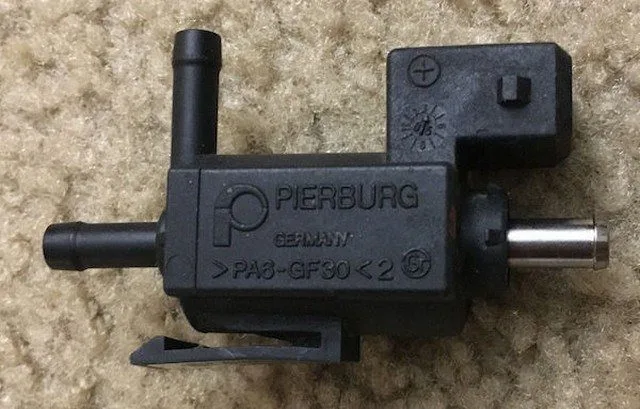
Example of boost control solenoid:

Turbocharger boost control solenoid

Related Fault Codes

  • P0045: Turbocharger/Supercharger Boost Control “A” Circuit Open
  • P0047: Turbocharger/Supercharger Boost Control “A” Circuit Low
  • P0048: Turbocharger/Supercharger Boost Control “A” Circuit High
  • P0049: Turbocharger/Supercharger Turbine Overspeed
  • P004A: Turbocharger/Supercharger Boost Control “A” Circuit Intermittent/Erratic

Severity and Symptoms of Code P0046

This code’s severity is moderate to severe. Malfunction can lead to power loss, dangerous overboost (risk of engine knock and damage), or premature turbocharger wear. Diagnosis should be performed as soon as possible.

Common Symptoms:

  • Engine power loss (insufficient boost)
  • Engine knock and risk of engine damage (excessive boost)
  • Malfunction Indicator Light (MIL) illumination
  • Abnormal turbocharger noises

Possible Causes of Code P0046

  • Faulty or stuck boost control solenoid
  • Failed boost pressure (MAP) sensor or position sensor
  • Damaged or clogged turbocharger/supercharger
  • Wiring issues (short circuit, open circuit, corrosion)
  • Vacuum leaks (if system uses vacuum actuator)
  • Rare PCM module failure

Diagnosis and Repair Procedures

Always start with visual inspection: check connectors, wiring for damage, and look for vacuum or air leaks. Consult Technical Service Bulletins (TSB) for your vehicle.

General Testing Method:

  1. Solenoid Test: Using a bidirectional scan tool, activate and deactivate the boost control solenoid at idle (~1200 RPM). Observe if engine RPM changes and if position/pressure sensor PID values on the scan tool vary. No change indicates solenoid, sensor, or circuit issues.
  2. Electrical Circuit Test: Check for power and ground at solenoid connector (solenoid must be commanded during test). Use wiring diagram to trace any faulty circuits.
  3. Turbo/Compressor Inspection: Remove intake duct and visually inspect turbine/compressor for physical damage or debris accumulation.
  4. Sensor Test: Test position/pressure sensor (typically 3 wires: 5V reference, ground, signal) according to manufacturer specifications.
  5. Solenoid Test: Measure solenoid resistance and compare to manufacturer specifications. You can also power it directly (12V) to test mechanical operation (clicking sound).

⚠️ Warning: This is a generic procedure. For accurate diagnosis, always refer to specific vehicle manufacturer procedures.

Need Help?

Diagnosing boost-related codes can be complex. If unsure about your diagnosis, consult a professional mechanic to avoid costly engine damage.

P0047 Turbo/Supercharger Boost Control A Circuit Low

The default code P0047 indicates a low value in the “A” control circuit of the turbocharger or supercharger. This is a serious issue that affects the boost pressure and your engine’s performance.

What does the P0047 code mean?

The P0047 code is a generic powertrain-related code. It signals that the Powertrain Control Module (PCM) has detected an abnormally low voltage or signal in the “A” circuit that controls the turbocharger or supercharger. This code applies to many brands (Toyota, Ford, VW, Hyundai, etc.), but specific diagnostic procedures may vary.

How the Boost System Works

Boost systems (turbocharger or supercharger) increase engine power by forcing extra air into the cylinders. The PCM precisely regulates the boost pressure via a control solenoid. A “low” signal in this circuit prevents the system from functioning correctly.

Symptoms of the P0047 Code

  • Malfunction Indicator Lamp (MIL) illuminated on the dashboard
  • Noticeable lack of engine power (insufficient boost)
  • Sluggish response during acceleration
  • Potentially increased fuel consumption

Possible Causes of the Fault

  1. Faulty or stuck boost control solenoid
  2. Wiring problem (cut wires, corroded connectors, short circuit)
  3. Malfunction of the turbocharger or supercharger itself
  4. Failing boost pressure sensor (MAP)
  5. Vacuum issue (if the system uses a vacuum actuator)
  6. Rare PCM failure

How to Diagnose and Repair the P0047 Code?

⚠️ Warning: These procedures are general. Always consult manufacturer-specific information for your vehicle.

1. Visual Inspection

Start with a thorough inspection of all components. Look for air or vacuum leaks, bare wires, loose or corroded connectors, and any apparent physical damage to the turbo and its lines.

2. Control Solenoid Test

Using a diagnostic tool, activate and deactivate the control solenoid (“active test”) and observe the reaction. An audible click should be heard, and the pressure/position values on the scan tool should change. You can also test the solenoid’s resistance with a multimeter and compare it to the manufacturer’s specifications.

3. Electrical Circuit Check

Check for power (12V) and ground at the solenoid connector. Use a wiring diagram to identify the wires and test their integrity (continuity, absence of short to ground).

4. Mechanical Check

Inspect the turbocharger blades (if accessible) to ensure they are not damaged or clogged with carbon deposits. Check the proper operation of the wastegate.

Related Codes

  • P0045: Boost Control Circuit “A” Open
  • P0046: Boost Control Circuit “A” Range/Performance
  • P0048: Boost Control Circuit “A” High

Is it Safe to Drive with a P0047 Code?

It is strongly advised not to drive for an extended period with this code. Uncontrolled boost can lead to a total loss of power, engine overheating, or, in extreme cases, severe engine damage.

💡 Pro Tip: This diagnosis often requires specialized tools. If you are not comfortable with these procedures, consult a professional mechanic for an accurate diagnosis and reliable repair.

P0048 Turbo/Supercharger Boost Control A Circuit High

Code P0048: Turbocharger/Supercharger Boost Control “A” Circuit High

The generic diagnostic trouble code P0048 indicates an electrical issue in the “A” circuit controlling the boost, whether generated by a turbocharger or a supercharger. This code is common to many OBD-II equipped vehicles (Toyota, Ford, GMC, Jeep, etc.), but specific diagnostic procedures may vary.

Role of the Boost System

Turbochargers and superchargers are air pumps that increase engine power by forcing more air into the engine. They can be controlled in two main ways:

  • Variable Geometry Turbochargers (VGT): Use movable vanes regulated by a solenoid or actuator, controlled by the PCM (Powertrain Control Module).
  • Traditional Systems: Use a wastegate or bypass valve, often controlled by a solenoid and engine vacuum.

Code P0048 is triggered when the PCM detects that the electrical signal sent to the “A” control solenoid is abnormally high compared to the expected values.

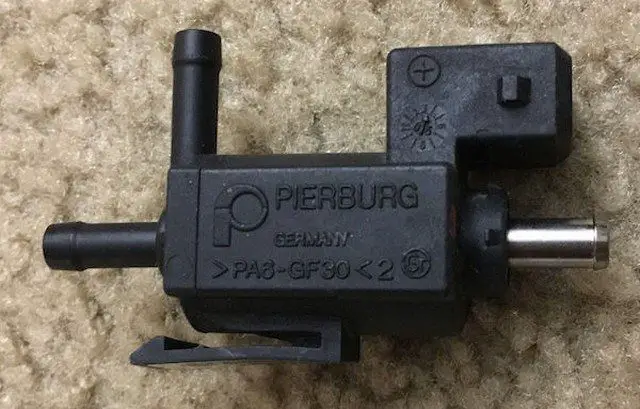
Turbocharger boost control solenoid

Symptoms and Severity of Code P0048

The severity of this code is moderate to severe. Uncontrolled overboost can cause engine knocking and severe engine damage. It is imperative to address this issue promptly.

Symptoms include:

  • Malfunction Indicator Lamp (MIL) illuminated
  • Unstable engine idle
  • Loss of power
  • Engine knocking sounds

Possible Causes of Code P0048

Several failures can cause this code:

  • Electrical Problems: Shorted wiring, corroded or loose connectors.
  • Faulty Control Solenoid: Internal failure causing resistance out of specification.
  • Faulty Sensor: Boost pressure sensor (MAP) or vane position sensor (VGT) providing incorrect information to the PCM.
  • Vacuum Leaks: (On pneumatically controlled systems) Leaks in hoses or the wastegate diaphragm.
  • PCM Failure: Rare, but possible.

Related Codes

P0045, P0046, P0047, P0049, P004A.

Diagnostic Procedures

1. Visual Inspection: Carefully inspect the wiring, connectors, and hoses for damage, corrosion, or leaks. Consult the manufacturer’s Technical Service Bulletins (TSB).

2. Diagnostic Tool Test: Using a bidirectional scan tool, activate and deactivate the control solenoid. Observe the parameter data (PIDs) and engine RPM. A lack of change indicates a problem.

3. Electrical Tests:

  • Check for power and ground at the solenoid connector.
  • Measure the solenoid’s resistance and compare it to the manufacturer’s specifications.
  • Test the solenoid and associated sensor wiring for short circuits or open circuits.

4. Mechanical Inspection: Check the physical condition of the turbocharger/supercharger and ensure there is no carbon buildup or damage to the vanes (VGT).

Repair and Prevention

The repair depends on the identified root cause: replacing the solenoid, repairing the wiring, replacing the MAP sensor, or fixing vacuum leaks. For complex diagnostics, consult vehicle-specific wiring diagrams and strictly follow the manufacturer’s diagnostic flowchart.

🚗 Need Help? If the diagnosis is beyond your skill level, consult a professional mechanic equipped with an advanced diagnostic tool to avoid any risk of engine damage.

P0049 Turbocharger / Compressor Turbine Overspeed

Code P0049: Definition and Meaning

Fault code P0049 is a generic OBD-II code related to the powertrain. It indicates that the onboard computer (PCM) has detected an overspeed of the turbocharger turbine or mechanical supercharger. This condition, if not addressed, can lead to serious and costly damage to the engine and the forced induction system.


Symptoms of Code P0049

Recognizing the symptoms quickly is crucial to prevent worsening damage. Common signs include:

  • 💥 Whistling or abnormal noise coming from the turbocharger during acceleration.
  • Excessive black smoke from the exhaust (overly rich mixture).
  • 🌡️ Engine overheating and decreased performance.
  • Engine knocking (detonation) due to excessively high intake air temperature.
  • ⚠️ Malfunction Indicator Lamp (MIL) illuminated on the dashboard.

Possible Causes of Overspeed

Several failures can trigger the P0049 code:

  • Wastegate failure: It remains stuck closed, preventing the release of excess pressure.
  • Faulty MAP (Manifold Absolute Pressure) sensor: Sends an incorrect signal to the PCM.
  • Boost control solenoid valve problem: Does not control the wastegate correctly.
  • Leaks or blockages in air or vacuum lines: Distorts pressure reading or control.
  • Mechanical failure of the turbocharger: Worn bearings or blades.

Diagnosis and Repair Procedures

1. Preliminary Checks

  1. Use an OBD-II scanner to confirm the code and read live data (boost pressure).
  2. Visually inspect the entire system: air pipes, vacuum hoses, electrical connectors. Look for leaks, disconnections, or corrosion.
  3. Consult the manufacturer’s Technical Service Bulletins (TSBs) for known fixes.

2. Key Component Tests

  • Test the MAP sensor with a multimeter (DVOM) by comparing the values with the manufacturer’s specifications.
  • Check the operation of the wastegate and its control solenoid. Ensure it moves freely and is not stuck.
  • Perform a pressure test (leak test) on the intake system to identify any air leaks.

3. Repair Solutions

  • Replace the faulty MAP sensor.
  • Clean, repair, or replace the faulty wastegate or its solenoid.
  • Tighten, repair, or replace damaged pipes and hoses.
  • In the most severe cases, replace the turbocharger or supercharger unit itself.

Conclusion and Recommendation

Code P0049 is a serious alert that should not be ignored. Driving with an overspeeding turbocharger exposes your engine to a high risk of major failure. Accurate diagnosis is essential to target the repair and avoid unnecessary expenses.

💡 Tip: If you do not have the necessary equipment or expertise, it is highly recommended to entrust the diagnosis and repair to a professional mechanic specialized in turbocharged engines.

P004A Turbocharger/Supercharger Boost Control B Circuit Open

🔧 Code P004A: Open Turbocharger/Supercharger Boost Control “B” Circuit

Fault code P004A indicates an open circuit problem in the “B” boost control system of the turbocharger or mechanical supercharger. This fault directly affects boost pressure management and requires intervention to prevent engine damage.


📌 Meaning of Code P004A

Code P004A indicates that the Powertrain Control Module (PCM) has detected an open circuit in the boost pressure regulation system, typically associated with the Variable Geometry Turbocharger (VGT) or mechanical supercharger.

  • Affected System: Variable Geometry Turbocharger (VGT), mechanical supercharger, sensors, solenoids, wiring, PCM.

⚠️ Severity and Risks

The severity of this fault is moderate to severe. An open circuit can lead to:

  • Risk of overboost, which may damage the engine
  • Engine underperformance with noticeable power loss
  • Illumination of the check engine light
  • Engine knocking (detonation) in case of uncontrolled overpressure

🚨 Common Symptoms

  • 🚨 Check Engine Light illuminated
  • 💨 Noticeable power loss during acceleration
  • 🔥 Knocking or engine detonation noises
  • 🌪️ Delayed turbo response or abnormal whistling sounds
  • 📈 Increased fuel consumption

🔍 Possible Causes of Code P004A

  1. Wiring Problems: Open circuit, cut wires, corroded or loose connectors
  2. Faulty Control Solenoid (boost control solenoid valve)
  3. Faulty Sensor: Manifold Absolute Pressure (MAP) sensor or VGT vane position sensor
  4. Damaged Turbo/Supercharger: Stuck VGT vanes, air leaks
  5. Vacuum Leaks in the control system (if applicable)
  6. PCM Failure (rare but possible)

🔧 Step-by-Step Diagnostic Procedure

1. Preliminary Visual Inspection

  • Inspect the “B” circuit wiring between the PCM, solenoid, and turbo
  • Look for exposed wires, burns, corrosion, or loose connectors
  • Clean oxidized connectors with appropriate contact cleaner spray

2. Technical Service Bulletin Consultation

  • Check Technical Service Bulletins (TSB) specific to your vehicle

3. Control Solenoid Testing

  • Measure the solenoid resistance and compare to manufacturer specifications
  • Use a bidirectional scanner to activate the solenoid and observe its response

4. Sensor Testing

  • Check the MAP sensor: measure voltage and resistance
  • Verify the VGT position sensor with a multimeter or oscilloscope

5. Turbocharger Inspection

  • Check the condition of VGT vanes (blockage, debris, wear)
  • Inspect for air leaks at intake and exhaust pipes

🛠️ Common Repairs

  • Wiring Repair: soldering cut wires, replacing connectors
  • Replacement of faulty control solenoid
  • Cleaning VGT vanes or replacing turbocharger
  • Replacing faulty MAP sensor or position sensor
  • Repairing vacuum leaks in the system
  • Software update or PCM reprogramming

❌ Common Mistake to Avoid

⚠️ Do not replace the turbo without checking the wiring and solenoid first!

A simple open circuit or faulty connector could be the cause of the problem without requiring complete turbocharger replacement.


💡 Expert Technical Tip

Use a high-end diagnostic scanner (such as Autel or Snap-On) to access real-time data (PID): boost pressure, VGT vane position, and solenoid duty cycle. This approach enables precise diagnosis and avoids unnecessary replacements.

🔧 Need Additional Help?

Share your vehicle’s make, model, and year in the comments below to get diagnostic advice specific to your case!

⚠️ Warning: If you are not familiar with forced induction systems, it is recommended to consult a professional mechanic to avoid damaging your engine.

P004B Turbo / Supercharger Boost Control B Circuit Performance

What is the P004B Code?

The generic diagnostic trouble code P004B is a powertrain code that means “Turbocharger/Supercharger Boost Control ‘B’ Circuit Range/Performance.” It applies to OBD-II equipped vehicles with a turbocharger or mechanical supercharger (Ford Powerstroke, Chevrolet/GMC Duramax, Ram/Cummins, Toyota, VW, etc.). Although generic, specific diagnostic procedures can vary by make and model.

How the Boost System Works

Turbochargers and superchargers are air pumps that compress the air entering the engine to increase its power. Their proper operation is crucial for performance.

Variable Geometry Turbocharger (VGT)

Many modern vehicles use a Variable Geometry Turbocharger (VGT). This type of turbo has adjustable vanes controlled by the Powertrain Control Module (PCM), typically via a solenoid or electric motor. A dedicated position sensor informs the PCM about the vane position.

Traditional Turbocharger

On traditional systems, boost pressure is controlled by a wastegate or a bypass valve, which opens to release excess pressure. The PCM monitors this system using a Manifold Absolute Pressure (MAP) sensor.

In the P004B code, the letter “B” indicates a performance problem within the control circuit, not a specific symptom or single component. This code is triggered when the PCM detects a performance anomaly in the boost control solenoid circuit.

Turbocharger boost control solenoid

Symptoms and Severity of the P004B Code

The severity of this code is moderate to severe. A fault can lead to a loss of power or, conversely, overboost which can cause engine knocking and severe engine damage. It is recommended to address this issue as soon as possible.

Common Symptoms

  • Lack of engine power due to insufficient boost pressure.
  • Engine knocking (detonation) and risk of engine damage due to overboost.
  • Illumination of the Malfunction Indicator Lamp (MIL) on the dashboard.
  • Possibility of limp mode, limiting vehicle performance.

Possible Causes of the P004B Fault

  • Faulty boost pressure (MAP) sensor or turbo position sensor.
  • Faulty or clogged turbocharger or mechanical supercharger.
  • Malfunctioning boost control solenoid.
  • Wiring problem (cut wires, corroded or loose connectors).
  • Vacuum leaks (if the system uses a vacuum actuator).
  • Rare internal PCM failure.

Diagnosis and Repair Procedures

Always start with a thorough visual inspection. Look for air or vacuum leaks, loose electrical connections, damaged wires, or physically damaged components. Consult Technical Service Bulletins (TSBs) issued by the manufacturer for known issues.

General Diagnostic Procedure

⚠️ Warning: This procedure is generic. For accurate diagnosis, always refer to the manufacturer’s specific data (wiring diagrams, resistance values, test procedures).

  1. Diagnostic Tool Test: Using a bidirectional scan tool, activate and deactivate the control solenoid. The engine RPM (around 1200 RPM) and the position/pressure sensor PID value should change. If only the RPM changes, suspect the sensor. If nothing changes, suspect the solenoid, turbo, or its wiring.
  2. Electrical Circuit Test: Check for power and ground at the solenoid connector (the solenoid must be commanded during the test). Follow the wiring diagram if an anomaly is found.
  3. Turbocharger Inspection: Remove the intake duct and inspect the turbine and compressor for any damage, excessive axial play, or presence of oil/debris.
  4. Solenoid Test: Measure the solenoid’s internal resistance with a multimeter and compare it to the manufacturer’s specified values. You can also power it directly (12V) to test its physical operation (click).
  5. Sensor Test: For a 3-wire sensor (power, ground, signal), verify that all three signals are present and stable.

Related Codes

  • P004A: Turbocharger/Supercharger Boost Control “B” Circuit Open
  • P004C: Turbocharger/Supercharger Boost Control “B” Circuit Low
  • P004D: Turbocharger/Supercharger Boost Control “B” Circuit High
  • P004F: Turbocharger/Supercharger Boost Control “B” Circuit Intermittent

Conclusion and Call to Action

The P004B code indicates a performance problem in the boost control circuit. Accurate diagnosis is essential to avoid damaging the turbocharger or engine. If the diagnostic procedures are beyond your expertise, promptly consult a professional mechanic equipped with the appropriate tools and technical data to resolve the issue effectively and safely.

Low Value of Circuit B of the Turbocharger/Supercharger Boost Control P004C

Code P004C: Turbocharger/Supercharger Boost Control “B” Circuit Low

The diagnostic trouble code P004C is a generic powertrain code indicating that the Powertrain Control Module (PCM) has detected an abnormally low electrical signal in the “B” circuit controlling the turbocharger or supercharger. This issue can affect engine performance and requires specific attention.

Understanding the Boost System

Turbochargers and superchargers are air pumps that increase the amount of air entering the engine, thereby boosting its power. A turbocharger is driven by exhaust gases, while a supercharger is mechanically driven by the crankshaft.

Modern vehicles often use a Variable Geometry Turbocharger (VGT). This system features movable vanes whose position is electronically adjusted by a solenoid or motor, controlled by the PCM, to optimize boost pressure across all engine speeds. A position sensor sends data back to the PCM.

On traditional fixed-geometry systems, pressure is regulated by a wastegate or bypass valve, controlled either by vacuum or electrically. The PCM monitors the pressure via a dedicated sensor (MAP sensor).

The letter “B” in code P004C designates a specific subset of the control circuit.

Symptoms of Code P004C

  • 📈 Lack of Engine Power: Noticeable loss of performance due to insufficient boost.
  • ⚠️ Malfunction Indicator Lamp Illuminated: The Check Engine light turns on the dashboard.
  • 🌫️ Excessive Exhaust Smoke (possible in some cases).

Severity: Moderate to Severe. A prolonged fault can damage the turbocharger/supercharger or, in rare cases, the engine itself.

Potential Causes of Fault P004C

  • 🔧 Faulty Control Solenoid: The electrical component that activates the control system.
  • 📏 Failed Sensor: Boost pressure sensor (MAP) or vane position sensor (VGT) is out of service.
  • 🔌 Wiring Problems: Short circuit, loose connection, corrosion, or damaged wire in the “B” circuit.
  • 🌀 Faulty Turbo/Supercharger: Internal mechanical wear or seizure.
  • 🧠 PCM Failure (rare): The Powertrain Control Module itself is at fault.
  • 🌬️ Vacuum Leaks: If the system uses a vacuum-operated actuator.

Diagnosis and Repair Procedures

WARNING: This is a generalized procedure. Always consult the specific diagnostic diagrams from your vehicle’s manufacturer for an accurate resolution.

  1. Visual Inspection: Start by inspecting the turbocharger/supercharger, wiring, and connectors associated with the control circuit. Look for any signs of damage, corrosion, loose connections, or vacuum leaks.
  2. Check for TSBs: Verify the existence of any Technical Service Bulletins (TSBs) issued by the manufacturer for your model, which might document this known issue.
  3. Diagnostic Tool Test: Using a bidirectional scan tool, activate and deactivate the control solenoid. Observe if the engine RPM changes and if the pressure/position value (PID) on the scan tool changes accordingly.
    • If the RPM changes but the sensor value does not → suspect the sensor or its circuit.
    • If nothing changes → suspect the solenoid, wiring, or turbo/supercharger.
  4. Solenoid Electrical Test: Check for power and ground at the solenoid connector (the solenoid must be commanded during the test). Measure the solenoid’s internal resistance and compare it to the manufacturer’s specifications.
  5. Mechanical Inspection: Remove the intake duct and visually inspect the turbine and/or compressor for any physical damage or obstruction.
  6. Sensor Test: Test the pressure/position sensor (typically 3 wires: +5V, ground, signal) using a multimeter and compare the readings to the specifications.

Related Codes

  • P004A: Turbocharger/Supercharger Boost Control “B” Circuit Open
  • P004B: Turbocharger/Supercharger Boost Control “B” Circuit Range/Performance
  • P004D: Turbocharger/Supercharger Boost Control “B” Circuit High
  • P004F: Turbocharger/Supercharger Boost Control “B” Circuit Intermittent

🔧 Need Help?

Diagnosing a P004C code can be complex and often requires specialized equipment. If you are not comfortable with these procedures, consult a qualified mechanic for an accurate diagnosis and safe repair.