P0394 Camshaft Position Sensor “B”, Intermittent Circuit, Bank 2

What does it mean?

This is a generic powertrain diagnostic trouble code (DTC), meaning it covers all makes/models from 2003 onward. Specific troubleshooting steps vary by vehicle.

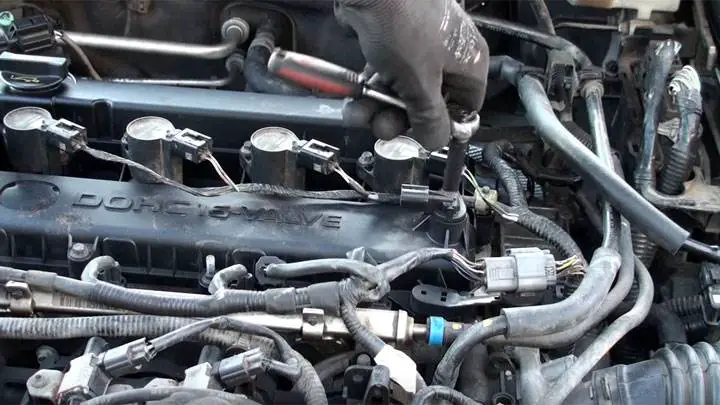
These vehicles may have a single block camshaft or a single overhead camshaft (SOHC) or dual (DOHC), but this code is strictly concerned with the incoming signal from the Bank 2 “B” camshaft position sensor(s) missing at some point when it shouldn’t be. It’s an electrical circuit fault and is intermittent in nature. It’s not present all the time. Bank #2 is the engine bank that does not contain cylinder #1.

The PCM uses the camshaft position sensor to tell it when the crankshaft sensor signal is correct, when a given crankshaft position sensor signal is timed to cylinder #1 for timing, and it is also used for the timing/start of fuel injector injection.

P0390 or P0391 codes may also be present along with P0394. The only difference between these 3 codes is the duration of the issue and the type of electrical problem encountered by the sensor/circuit/engine controller. Troubleshooting steps may vary by manufacturer, camshaft position sensor type, and wire colors.

Symptoms

Symptoms of a P0394 engine code may include:

Check Engine Light illuminated
Intermittent misfiring or surging
Intermittently stalls, but restarts immediately

Potential Causes

Typically, causes for this code are:

Intermittent open in the “B” camshaft position sensor power circuit
Intermittent short to ground in the “B” camshaft position sensor power circuit
Intermittent open in the “B” camshaft position sensor ground circuit
Intermittent open in the camshaft position sensor signal circuit
Intermittent short to 5 volts in the camshaft position sensor signal circuit
Intermittent short to ground in the camshaft position sensor signal circuit
Damaged camshaft position sensor tone ring
Crankshaft position sensor occasionally producing intermittent signals

Diagnostic and Repair Procedures

A good starting point is always searching for a Technical Service Bulletin (TSB) for your specific vehicle. The vehicle manufacturer may have a PCM flash/reprogram to cover this issue, and it’s worth checking before finding out you’ve taken a long/wrong path.

Next, locate the “B” camshaft position sensor and crankshaft position sensor on your specific vehicle. Once located, visually inspect the connectors and wiring. Look for chafing, rubbing, bare wires, burns, or melted plastic. Disconnect the connectors and carefully inspect the terminals (the metal parts) inside the connectors. See if they look corroded, burnt, or perhaps greenish compared to the normal metallic color you’re probably used to seeing. You can get electrical contact cleaner at any auto parts store if terminal cleaning is needed. If not possible, find 91% isopropyl alcohol and a soft plastic-bristled brush to clean them. Then let them air dry, get some dielectric silicone compound (same as used for light bulb sockets and spark plug wires) and apply a small amount where the terminals make contact.

If you have a scan tool, clear the diagnostic codes from memory and see if this code returns. If not, the connections were likely your problem.

If the code returns, we’ll need to test the sensor and its associated circuits. The next steps will be determined by the type of sensor you have: Hall effect or magnetic sensor. You can usually tell which you have based on the number of wires coming from the sensor. If there are 3 wires from the sensor, it’s a Hall effect sensor. If it has 2 wires, it will be a magnetic pickup type sensor.
Hall Effect Sensor

If it’s a Hall effect sensor, disconnect the harness going to the camshaft and crankshaft position sensors. With a digital voltmeter (DVOM), test the 5V power circuit going to each sensor to ensure it has power (red wire to 5V power circuit, black wire to a good ground). If there’s no 5 volts at the sensor, repair the wiring from the PCM to the sensor, or possibly a faulty PCM.

If that’s okay, with a DVOM, check that you have 5V on each signal circuit going to each sensor to ensure it has a signal circuit (red wire to sensor signal circuit, black wire to a good ground). If there’s no 5 volts at the sensor, repair the wiring from the PCM to the sensor, or possibly a faulty PCM.

If that’s okay, verify you have a good ground at each sensor. Connect a 12V test light and touch the other end of the test light to the ground circuit going to each sensor. If the test light doesn’t illuminate, that would indicate the circuit problem. If it lights up, wiggle the wire harness going to each sensor to see if the test light flickers, indicating an intermittent connection.

Magnetic Pickup Sensor

If it’s a magnetic pickup type sensor, we can check the sensor itself to see if it’s working properly. We’ll test it for:

Resistance
A/C voltage output
Short to ground

With the sensor disconnected, connect both wires of your ohmmeter to the 2 terminals of the camshaft/crankshaft position sensor. Read the ohms resistance and compare it to your vehicle’s specifications: typically 750 – 2000 ohms. While still on ohms, disconnect 1 wire of your ohmmeter from the sensor and connect it to a good vehicle ground. If you get an ohms reading other than infinite or OL, the sensor has an internal short to ground. Remember not to touch the metal part of the wires with your fingers, as this could affect your readings.

Reconnect both wires of your DVOM to the 2 terminals of the camshaft/crankshaft position sensor. Set your meter to read A/C voltage. While cranking the engine, read the a/c voltage output on your DVOM. Compare to the manufacturer’s specifications for your vehicle. A good rule of thumb is typically 0.5 V AC.

Related camshaft fault codes: P0340, P0341, P0342, P0343, P0345, P0346, P0347, P0348, P0394, P0365, P0366, P0367, P0368, P0369, P0390, P0391, P0392, P0393.
P0395 – P03FF ISO/SAE Reserved

P00C0 – P00FF ISO/SAE Reserved

P0344 Code (Symptoms, Causes, and How to Fix It)

This formidable engine control unit strikes fear into the hearts of drivers worldwide. But don’t panic when a P0344 code is the result. Although it sounds alarming, this trouble code is often caused by minor issues.

Let’s explore the meaning and common culprits behind the P0344 code and how to get your engine running again without breaking the bank.

What Does Code P0344 Mean?

OBD-II Trouble Code P0344 Description
Intermittent Camshaft Position Sensor “A” Circuit (Bank 1)

The P0344 diagnostic trouble code alludes to a detected lack of stability in the camshaft position sensor’s return signal. Simply put, the vehicle’s ECM/PCM has determined that the return signal from its corresponding camshaft position sensor is erratic or intermittent.

This, in turn, compromises the ECM/PCM’s ability to use this sensor’s anticipated feedback to formulate further engine strategy.

To better understand the complexities of the P0344 diagnostic trouble code, it’s best to first familiarize yourself with the role of the camshaft position sensor in modern engine operation.

Camshaft Position Sensor

Today’s electronically monitored engines rely heavily on data from a number of sensors to formulate engine operating strategy, and few of these sensors are as critical as those related to engine timing, with the camshaft position sensor being the most precise of these sensors.

Without valid feedback from an engine’s camshaft position sensor, a vehicle’s ECM/PCM is unable to accurately determine proper fuel injection timing, as no high-end timing measurements are retained or recorded. Furthermore, other engine functions, such as variable valve timing, are also canceled.

In the case of DTC P0344, a vehicle’s operating software momentarily loses connection with the engine’s camshaft position sensor, thereby failing to execute several timing-sensitive functions as it otherwise would.

As a result, a number of serious drivability-related symptoms often appear, including timing/starting difficulties.

Symptoms of Code P0344

The P0344 diagnostic trouble code is often accompanied by a number of secondary symptoms, some of which tend to be quite alarming in nature. Recognizing such symptoms will be advantageous when it comes to diagnosing and repairing an issue.

Here are some of the most common symptoms associated with DTC P0344.

  • Check Engine Light illuminated
  • Intermittent rough idle
  • Hesitation under load
  • Unexplained stalling

Causes of Code P0344

The P0344 diagnostic trouble code can be triggered by any one of several underlying issues, some of which often prove more difficult to identify than others. As in all cases, understanding the potential causes of such a problem can make all the difference when attempting to perform a timely repair.

Here are some of the most common causes of DTC P0344:

  • Open/shorted cam sensor power circuit
  • Open/shorted cam sensor ground circuit
  • Open/shorted cam sensor return circuit
  • Faulty camshaft position sensor
  • Damaged camshaft tone ring

Is Code P0344 Serious?

Generally speaking, the P0344 diagnostic trouble code is considered by most to be rather serious in nature. This is largely due to the many drivability-related symptoms that often accompany faults of this nature.

Any issue that could potentially leave you and your vehicle stranded is not a problem to be taken lightly or overlooked.

Intermittent hesitation and stalling are both potential symptoms of an active P0344 diagnostic trouble code. Continuing to drive with your vehicle in such a condition can pose a serious risk to persons and property, should your vehicle stall unexpectedly in traffic (especially at highway speeds).

In all cases, the cause of a vehicle’s P0344 diagnostic trouble code should be thoroughly diagnosed and repaired at the first available opportunity. This is the only reliable way to ensure that your car operates safely and effectively.

If you do not feel comfortable performing the repairs yourself, schedule an appointment with a trusted automotive repair shop or dealership at your earliest convenience.

How to Fix Code P0344

The following steps can be used to assist you in diagnosing and repairing the root cause of your vehicle’s P0344 trouble code. As always, a factory-specific manual (such as Haynes, Chilton, or an online source) should be consulted for your particular vehicle model before attempting such repairs.

#1 – Check for Additional DTCs

Before beginning the diagnostic process, it is important to check for any potential additional DTCs. Any detected DTCs should be thoroughly diagnosed before proceeding.

#2 – Inspect the Camshaft Position Sensor

One should begin by carefully inspecting their engine’s camshaft position sensor for any signs of excessive stress or damage. Any obvious damage to the camshaft position sensor itself will require replacement.

Likewise, any damage to the sensor’s wiring harness should be repaired or replaced immediately.

#3 – Analyze Freeze Frame Data

Next, display all freeze frame data associated with the storage of the P0344 DTC. Determine the number of times the camshaft sensor’s return signal was interrupted, as well as how frequently such failures occur.

Likewise, you should attempt to determine any common denominators, in terms of recorded data, that might help isolate the cause of this fault.

#4 – Determine Sensor Type

At this point, further diagnosis will require you to identify the type of camshaft sensor with which your vehicle is equipped.

If your vehicle’s camshaft position sensor is equipped with 2 wires, it is a magnetic sensor. If this sensor has 3 wires, it is a Hall effect sensor.

#5 – Testing Magnetic Sensors

If your vehicle’s camshaft position sensor is of a magnetic sensor configuration, resistance should be checked across both terminals of this sensor itself with it disconnected. This resistance reading should be compared to the figures specified by your vehicle’s manufacturer.

Additionally, these two terminals should also be probed while an assistant attempts to crank the engine in question, with your meter set to A/C volts. Again, this reading should be compared to manufacturer specifications, although 0.5 V AC is generally satisfactory.

#6 – Test the Hall Effect Sensor

If your vehicle’s camshaft position sensor is of the Hall effect type, a multimeter should be used to test the corresponding wiring harness to ensure that a power source (5V) and a satisfactory ground are present.

If both values are present at the sensor itself, live data derived from your OBD2 scan tool should be consulted to verify that appropriate feedback is being provided to the PCM.

Code P0328 (Symptoms, Causes, and How to Fix It)

Has your vehicle recently been faced with a bothersome check engine light, caused by an active P0328 fault? If so, you’re probably asking yourself many questions about the meaning of this fault and how to proceed.

Continue reading to find out exactly what a P0328 code means, its probable causes, its severity, and most importantly, how to fix it.

What does the P0328 code mean?

OBD-II Trouble Code P0328 Description

Knock Sensor 1 – Circuit High Input (Single Sensor or Bank 1)

The P0328 diagnostic trouble code indicates a high input voltage condition present in a vehicle’s knock sensor circuit. In the case of this specific DTC, the fault in question refers to the Bank 1 knock sensor, if the vehicle in question is equipped with a “V” configuration engine.

This feedback indicates a general anomaly within this sensor’s monitoring circuit, calling into question the accuracy of the monitoring.

To better understand this principle, one must first understand how a knock sensor works. Generally speaking, the knock sensor is designed to detect pre-ignition “ping” or “knock,” thereby allowing for spark timing retardation in response.

Sensors of this type also tend to detect other acoustic anomalies, such as those associated with rod knock or piston slap.

In the case of DTC P0328, the vehicle’s ECU has determined that the input voltage from the Bank 1 knock sensor has exceeded its intended operating threshold.

Most knock sensors operate on a 5-volt reference circuit, meaning the out-of-spec voltage in question would have remained in the high end of this spectrum for a prolonged period.

The P0328 diagnostic trouble code, in itself, does not solely indicate a faulty knock sensor, nor an actual pre-ignition event, although the possibility of either should not be overlooked.

In many cases, a short circuit condition is actually responsible for a fault of this nature, which places increased importance on meticulously checking the integrity of the related circuit.

Symptoms of the P0328 Code

The P0328 trouble code is often accompanied by a multitude of secondary symptoms, a few of which can be quite noticeable. Recognizing these signs often proves essential when attempting to speed up the overall diagnostic and repair process.

Here are some of the most common symptoms associated with DTC P0328.

  • Illuminated Check Engine Light
  • Abnormal Engine Noises (Knocking/Rattling)
  • Reduced Engine Performance
  • Irregular Idle

Causes of the P0328 Code

The P0328 diagnostic trouble code can be caused by one of several underlying issues, some of which tend to be easier to isolate than others. Understanding these potential causes can save time and effort when attempting to establish a solid diagnosis.

Here are some of the most common causes of a P0328 code.

  • Faulty Knock Sensor
  • Damaged Knock Sensor Circuit Wiring
  • Interference in the Knock Sensor Signal
  • Fuel with Poor Octane Rating
  • Incorrect Fuel Pressures
  • Internal Engine Damage
  • PCM Failure

Is the P0328 Code Serious?

The P0328 diagnostic trouble code is generally considered to be rather serious in nature, due to some of the potential underlying problems that such a fault often signifies.

In the “best-case scenario,” the vehicle’s knock sensor might simply be faulty, or the electrical circuit for this sensor could be compromised. On the other hand, however, actual knock could truly exist, indicating a much more severe condition.

Even if the detected “knock” or “ping” is strictly the product of pre-ignition, prolonged operation in this state can eventually lead to accelerated engine wear or engine damage.

This stems from the simple fact that pre-ignition indicates combustion that is not ideal or optimally efficient. This, in turn, places excessive stress on a number of internal engine components.

In any case, the root cause of a vehicle’s P0328 trouble code must be carefully diagnosed and repaired as soon as possible. This will most likely prevent further engine damage. If you do not feel comfortable performing such repairs yourself, schedule an appointment with a trusted automotive service center at your earliest convenience.

Regardless of the specifics, diagnosing and resolving the underlying issue causing the P0328 trouble code in your vehicle should be a top priority. Taking prompt action can help prevent any risk of engine damage.

If you lack the necessary skills or tools to resolve this issue yourself, schedule an appointment with a reputable repair shop as soon as possible.

How to Fix the P0328 Code

You can identify and resolve the issue triggering the P0328 code in your car by following these troubleshooting steps. But before performing any repairs yourself, always consult the factory service manual for your exact make and model.

#1 – Check for Additional DTCs

Before beginning the diagnostic process, use a scan tool to check for any additional DTCs. All logged codes should be carefully diagnosed before continuing.

#2 – Inspect the Knock Sensor/Mounting

Start by carefully inspecting your vehicle’s knock sensor for any signs of damage. Likewise, the knock sensor itself should be checked for proper mounting and mounting tightness before continuing.

#3 – Check Wiring Condition

Next, all wiring related to the affected knock sensor should be carefully inspected for any signs of damage. Along the same lines, the knock sensor connector should be checked to ensure it is tight and free of corrosion.

#4 – Check Engine Integrity

At this point, it will be necessary to verify that your vehicle’s engine has not suffered any type of internal mechanical failure. Check engine coolant and oil levels by carefully checking for mixing of these two fluids.

Next, start the engine, revving it several times while listening carefully for abnormal noises. Any abnormal noise heard should be thoroughly investigated.

#5 – Check Freeze Frame Data

If no other issues are apparent, analyze the freeze frame data related to this fault. Check all knock sensor-related PIDs for obvious irregularities. If possible, replicate the conditions represented.

#6 – Test the Knock Sensor with a Meter

Although directly testing a knock sensor can be tricky, a few tests can be performed to check the sensor’s general functionality.

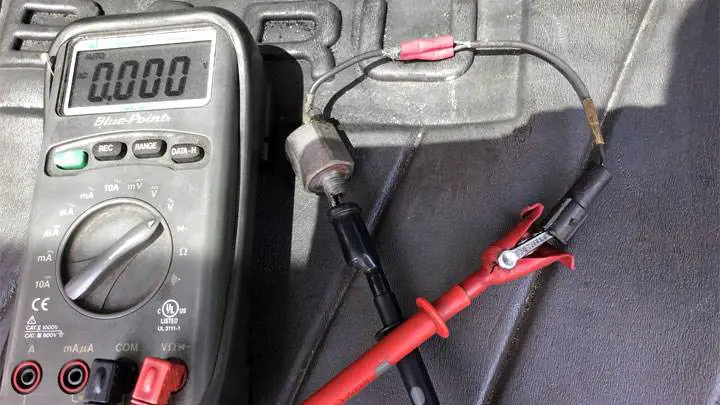
A multimeter can be used to measure between the 2 wires connected to this sensor while checking for continuity. A lack of continuity would indicate a faulty sensor.

Furthermore, these two wires can be back-probed and checked individually with the positive lead of a multimeter, while grounding them to a reliable ground. Ideally, the output of such a sensor should be between 0V and 4.9V.

P0300 Code Chevrolet – Engine Misfire Detected

What are the possible causes of Chevrolet DTC P0300?

NOTE: The listed causes may not be a complete list of all potential issues, and there could be other causes.

Possible Causes

  • Faulty spark plug(s)
  • Faulty ignition coil(s)
  • Clogged or faulty fuel injector(s)
  • Intake air leak
  • Fuel injector harness is open or shorted
  • Poor electrical connection in the fuel injector circuit
  • Ignition coil harness is open or shorted
  • Poor electrical connection in the ignition coil circuit
  • Insufficient cylinder compression
  • Incorrect fuel pressure

How to fix Chevrolet DTC P0300?

Review the Possible Causes mentioned above and visually inspect the corresponding wiring harness and connectors. Make sure to check for any damaged components and inspect the connector pins for signs of breakage, bending, push-out, or corrosion.

Code P0300 – Chevrolet Technical Notes

Code P0300 indicates that one or more cylinders are misfiring or experiencing random misfires.

Diagnostic Steps

  1. Check for intake leaks; intake gaskets are a common cause of multi-cylinder misfires.
  2. If no leaks are found, the next step is to replace the spark plugs.
  3. If the problem persists, further testing is required to diagnose the issue (see “Possible Causes”).

Diagnosing 2002 Chevrolet Blazer P0300 Misfires

What are the possible symptoms of Chevrolet code P0300?

  • Check Engine Light on (or Engine Maintenance Warning Light soon)
  • Lack/loss of power
  • Hard starting
  • Engine hesitation

Chevrolet Code P0300 – Description

A misfiring cylinder causes slight variations in crankshaft rotation speed. The Engine Control Module (ECM) can detect these variations by closely monitoring the signal from the crankshaft position sensor.

System Operation

  • Camshaft position sensors are used to determine which cylinder is misfiring.
  • If the ECM detects a misfire rate sufficient to cause emission levels to exceed mandatory standards, a Diagnostic Trouble Code (DTC) will be set.
  • Under certain driving conditions, a misfire rate may be high enough to cause the catalytic converter to overheat, potentially damaging it.
  • The Malfunction Indicator Lamp (MIL) flashes when the converter overheats and damaging conditions are present.

DTC Triggering Conditions

The DTC will be set when the ECM detects:

  • A variation in crankshaft rotation speed indicating a misfire rate sufficient to cause emission levels to exceed a predetermined value.
  • A misfire rate high enough to damage the catalyst.

What is OBD?

OBD stands for On-Board Diagnostics. OBD-II (OBD two) is the latest industry standard, introduced in 1996 vehicle models. It monitors nearly all engine controls, as well as some other vehicle components (chassis, body, etc.).

The most useful aspect of OBD for most drivers is the ability to read vehicle information. You can read fault codes and even monitor real-time statistics such as RPM, vehicle speed, etc.

Explanation of OBD2 Codes

OBD-II codes consist of several parts. Here is an example of an OBD2 code:

P0131

Here is an explanation of what each digit in the code means:
First character – System

The first character identifies the system related to the fault code.

     P = Powertrain
     B = Body
     C = Chassis
     U = Undefined


Second digit – Code type

The second digit identifies whether the code is a generic code (the same on all OBD-II equipped vehicles) or a manufacturer-specific code.

     0 = Generic (this is the digit zero – not the letter “O”)
     1 = Enhanced (manufacturer-specific)

Third digit – Subsystem

The third digit indicates the type of subsystem related to the code

     1 = Emissions management (fuel or air)
     2 = Injector circuit (fuel or air)
     3 = Ignition or misfire
     4 = Emissions control
     5 = Vehicle speed and idle control
     6 = Computer and output circuit
     7 = Transmission
     8 = Transmission
     9 = SAE reserved
     0 = SAE reserved

Do I have an OBD-II vehicle?

Some vehicles from model years 1994 and 1995 have OBD-II. If your vehicle is from 1996 or newer, U.S. federal law requires all cars and light trucks sold in North America to be OBD-II compliant. This includes all domestic vehicles (Ford, Dodge, GM, etc.) and imported/foreign vehicles (Toyota, Honda, etc.).

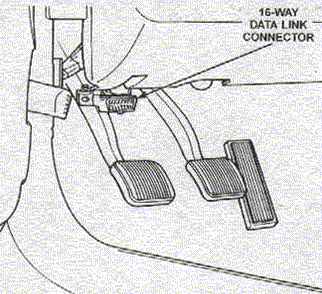
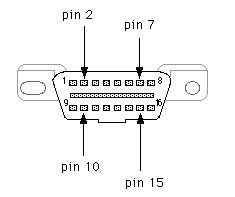
The foolproof way to know if your vehicle is OBD-II compatible is to look for the standard DLC (data link connector) that all OBD II vehicles have. It looks like this (16-pin connector) and will typically be located under the driver’s side of the dashboard:

Other possible DLC connector locations include:

     Behind a removable trim on or under the dashboard
     Near the gear shift
     Inside the center console next to the driver (seen on a Volvo, you need to open the console cover to access it)
     Under the passenger side of the dashboard (seen on a Ford Thunderbird)

Now, if your vehicle is 1996 or newer, you definitely have OBD-II. If your vehicle is older than 1996, the presence of the DLC may or may not indicate that you have OBD-II. To check, look under the hood for a VECI label. The VECI label will indicate whether the vehicle is equipped with OBD II or not. Sorry, we don’t have a photo of the VECI label.

We found a very helpful service that locates the DLC (data link connector) for your vehicle; you can either enter your VIN or year/make/model, go to the Innova DLC search tool.


How to reset the “check engine” light?

Once you have properly diagnosed and resolved the issue that triggered the OBD fault code, you can reset or clear the engine/service engine soon light quickly using one of two methods.

Note: The code (i.e., the CEL/SES light) usually disappears after a number of driving cycles, perhaps a few days. You can choose to wait it out or follow one of these methods.

The cheap, easy, and free method

Simply disconnect your battery, turn on the headlight switch for about five to ten minutes, and reconnect the battery. It’s quite simple, but it will likely cause you to lose your radio presets and maybe other small things like that.

Using a scan tool

Most scan tools, if not all, have the ability to erase or reset codes without using tools or touching the battery. Consult your tool’s manual to learn how to do this with your specific model.

What is an OBD-II Code Reader?

Introduction

Until recently, an OBD-II code reader tool was not typically found in the DIYer’s toolbox. However, for working on vehicles from 1996 and newer, it can be very useful.

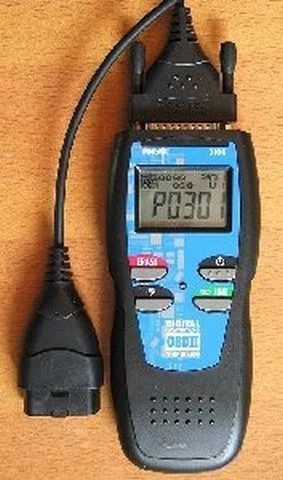
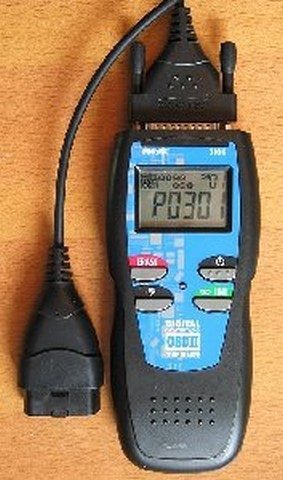
An OBD-II code reader is an electronic device that allows you to connect to your vehicle’s OBD diagnostic port and access technical information. Check other frequently asked questions for more information about OBD.

The reader enables you to view all recorded diagnostic trouble codes (DTCs), making it easier to troubleshoot issues with cars and trucks.

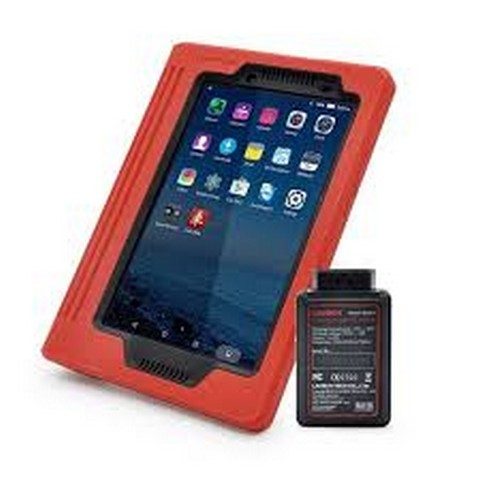
OBD code readers come in a variety of shapes and sizes. Some work in conjunction with a laptop and software. In these cases, you essentially get a cable and software. In other instances, the unit is portable and performs all the same functions but in a neat handheld package.

Features

The characteristics of each OBD code reader depend on the brand and model. However, it is common for most readers to have:

LCD screen display
Display diagnostic trouble codes (DTCs)
Ability to reset/clear DTC codes
Access “freeze frame” data to see what was happening when the code was triggered

High-end OBD code readers may have more advanced features such as:

Languages other than English
Code definitions directly on the unit
Display freeze frame data

Additionally, some manufacturers sell performance chips/tuners that include the OBD code reader function.
Pricing

OBD-II code readers vary in price. They range from affordable ($85) to several hundred dollars or more.