
P0385 – Malfunction of the Crankshaft Position Sensor B Circuit

What does it mean?

This diagnostic trouble code (DTC) is a generic powertrain code, meaning it applies to OBD-II equipped vehicles. Although generic, specific repair steps may vary by make/model.

The crankshaft position sensor (CKP) measures the location of the crankshaft and transmits this information to the PCM (Powertrain Control Module). Depending on the vehicle, the PCM uses this crankshaft position information to properly time the spark, or on some systems, it is only for misfire detection and does not control spark timing.

The CKP sensor is fixed and works in harmony with a reluctor ring (or toothed ring) that is attached to the crankshaft. When this reluctor ring passes in front of the CKP sensor, the magnetic field created by the CKP sensor is interrupted, which creates a square wave voltage signal that the PCM interprets as the crankshaft position. If the PCM detects that there are no crankshaft pulses or if it sees a problem with the pulses on the output circuit, P0385 will be set.

Related Crankshaft Position Sensor B fault codes:

P0386 Crankshaft Position Sensor B Circuit Range/Performance
P0387 Crankshaft Position Sensor B Circuit Low Input
P0388 Crankshaft Position Sensor B Circuit High Input
P0389 Crankshaft Position Sensor B Circuit Intermittent

Symptoms

NOTE: If the crank sensor is used only for misfire detection and NOT for spark timing (this varies by vehicle), the vehicle should start and run with an illuminated MIL (Malfunction Indicator Lamp). Additionally, some vehicles require multiple key cycles to illuminate the MIL. If this is the case, there may be no MIL illumination until the issue becomes frequent enough over time. If the crank sensor is used for both misfire detection and spark timing, the vehicle may or may not start. Symptoms may include:

The vehicle may not start (see above)
The vehicle may run rough or misfire
MIL illumination

Causes

A P0385 “Check Engine Light” code could be caused by:

Damaged CKP sensor connector
Damaged reluctor ring (missing teeth or not rotating due to a sheared keyway)
Open sensor output
Sensor output shorted to ground
Sensor output shorted to voltage
Faulty crankshaft sensor
Failed PCM

Possible Solutions

Using a scan tool, check whether, when the engine is cranking or running, there is an RPM signal.
If there is no RPM reading, visually inspect the B crank sensor connector for any damage and repair if necessary. If there is no visible damage and you have access to a scope, you can check the CKP 5-volt square wave pattern. If you don’t, get a resistance reading for your crank sensor from a repair manual. (There are so many different types of crank sensors that there is no way to indicate here which resistance value is correct). Then check the CKP sensor resistance by disconnecting the B sensor and measuring the resistance. (It is best to check resistance readings from the PCM connector. This rules out any wiring issues from the start. But this requires some mechanical skill and should not be performed if you are not familiar with automotive electrical systems). Does the sensor meet resistance specifications?
If not, replace the CKP sensor. If it does, recheck the resistance reading from the PCM connector. Is the reading still correct?
If not, repair the open or shorted B crank sensor wiring and check again. If the reading is correct, the problem is intermittent or the PCM may be at fault. Try reconnecting and checking the RPM signal again. If there is now an RPM signal, test the wiring harness to try to induce the fault.

This code is basically identical to P0335. This P0385 code refers to the “B” crankshaft position sensor, while P0335 refers to the “A” crankshaft position sensor. If you have code P0385, your vehicle is equipped with two crank position sensors (CPS). Other crank sensor codes include P0016, P0017, P0018, P0019, P0335, P0336, P0337, P0338, P0339, P0385, P0386, P0387, P0388, and P0389.
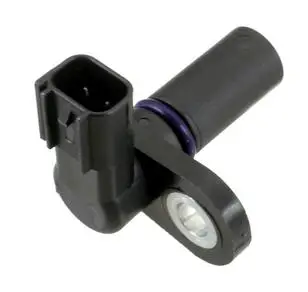

P0386 Crankshaft Position Sensor Range / Performance

What does it mean?

This diagnostic code (DTC) is a generic powertrain code. It is considered generic because it applies to all makes and models of vehicles (1996 and newer), although specific repair steps may vary slightly by model.

The crankshaft position sensor (CKP) is typically a two-wire sensor: one signal and one ground. The CKP sensor usually consists of a permanent magnet sensor mounted in front of a reluctor wheel (toothed) attached to the crankshaft.

As the reluctor wheel passes by the crank sensor, an A/C signal is produced that varies with engine speed. The PCM (Powertrain Control Module) uses this A/C signal to interpret engine RPM. Some crank sensors are Hall effect sensors instead of permanent magnet sensors. These are three-wire sensors, with power, ground, and signal wires. They also have a reluctor wheel with blades and “windows” that change the voltage signal to the PCM, providing an RPM signal. I will focus on the former, as they are simpler in design and more common.

The crankshaft reluctor has a specific number of teeth, and the PCM can determine the crankshaft position using only the signature pattern from this sensor. The PCM also uses this sensor to determine cylinder misfires by measuring the positions of the reluctor teeth in the CKP sensor signal. In conjunction with the camshaft position sensor (CMP), the PCM can determine the timing for spark and fuel injection. If the PCM detects a loss of signal from the CKP sensor (RPM signal) even momentarily, P0386 may set.

Note: This DTC refers to the “B” sensor. Refer to a vehicle-specific repair manual to confirm the location of your “B” crankshaft position sensor. In the case of some GM (Cadillac) engines, the “B” sensor is the upper one while the “A” sensor is the lower one, but check to be sure. This code is essentially the same as P0336 but refers to the “B” sensor.

Related Crankshaft Position B Sensor Fault Codes:

P0385 Crankshaft Position B Sensor Circuit Malfunction
P0387 Crankshaft Position B Sensor Circuit Low Input
P0388 Crankshaft Position B Sensor Circuit High Input
P0389 Crankshaft Position B Sensor Circuit Intermittent

Symptoms

Symptoms of a P0386 DTC may include:

Intermittent stalling and no start
No start
MIL (Malfunction Indicator Lamp) illumination
Intermittent misfires

Causes

Potential causes of a P0386 code include:

Faulty crank sensor
Damaged reluctor ring (missing teeth, debris lodged in the ring)
Reluctor ring dislodged/stripped from its fixed position
Chafing of the wiring harness causing a short circuit
Open wiring in the CKP circuit

Possible Solutions

Crankshaft sensor issues are sometimes intermittent, and the vehicle may start and run for a while until the problem occurs. Try to replicate the complaint. When the engine stalls or if the engine does not start and keeps cranking, start the engine while observing the RPM reading. If there is no RPM reading, check if a signal is coming from the crank sensor. It is best to use an oscilloscope, but since most DIYers do not have access to one, you can use a code reader or the tachometer to check the RPM signal.

Visually inspect the CKP harness for any damage or cracks in the wiring insulation. Repair as needed. Ensure the wiring is not improperly routed near high-tension spark plug wires. Check for any loose connections or broken locks at the sensor connector. Repair as needed. Obtain a resistance specification for the crank sensor. Remove it and test it. If it fails, replace it. If it checks out, inspect the reluctor ring for damage, broken teeth, or debris lodged in the ring. Make sure the reluctor ring is not dislodged. It must be stationary on the crankshaft. Carefully repair/replace as needed. Note: Some reluctor rings are located in the transmission bell housing or behind the front engine cover and are not easily accessible.

If the vehicle stalls intermittently and after stalling, you have no RPM signal and you have verified that the CKP sensor wiring is good, try replacing the sensor. If that does not take care of it and you cannot access the reluctor ring, seek assistance from an automotive professional.

P0387 Low Input in Crankshaft Position Sensor B Circuit

What does it mean?

This diagnostic trouble code (DTC) is a generic powertrain code, meaning it applies to OBD-II equipped vehicles (Jeep, Nissan, Dodge, Ram, BMW, Ford, GM, etc.). Although generic, the specific repair steps may vary by make/model.

When I have diagnosed a stored P0387 code (in the past), it’s because the Powertrain Control Module (PCM) detected a low voltage input signal from the secondary crankshaft position sensor (CKP) circuit. The B sensor typically refers to a secondary CKP sensor in a system that uses multiple CKP sensors.

CKP sensors are responsible for monitoring engine speed (RPM) and crankshaft position. These two factors are used in various engine management scenarios but are particularly important for ignition (spark) timing and fuel delivery.

The crankshaft position, especially relative to the camshafts, is one of the key factors used by the PCM to calculate ignition spark timing. Camshafts rotate at half the speed of the crankshaft, so it is important for the PCM to be able to distinguish between the engine’s intake and exhaust strokes (rotations). The CKP sensor and each camshaft position sensor (CMP) have at least one dedicated circuit to provide the PCM with an input signal, a 5-volt reference signal, and a ground.

CKP sensors are typically Hall effect electromagnetic types. They are mounted externally on the engine in very close proximity (usually only a few thousandths of an inch) to a circuit completing the engine ground. This engine ground is typically a reluctor ring (with precision-machined teeth) attached to one end of the crankshaft or integrated into the crankshaft itself.

The CKP sensor is mounted so that the crankshaft’s reluctor wheel passes very close to its magnetic tip. As the crankshaft rotates, the raised areas (on the reluctor wheel) complete an electromagnetic circuit with the sensor. When the gaps between the teeth pass the CKP sensor, the circuit is briefly interrupted. These circuit interruptions create voltage fluctuations that the PCM perceives as a waveform pattern.

With the engine running, the PCM constantly compares the input signals from the CKP and CMP sensors. If the CKP input signal voltage is lower than expected under certain circumstances, a P0387 code will be stored, and a MIL may be illuminated.

Other B Crankshaft Position Sensor malfunction codes include P0385, P0386, P0388, and P0389.
Code Severity and Symptoms

When a P0387 is stored, the engine will likely not run, and this code should be classified as severe. Even if the engine starts and runs, there is a high risk of a no-start condition, and there will be driving repercussions.

Symptoms of this code may include:

Engine does not start
Tachometer (if applicable) does not register RPM when the engine is cranked
Hesitation during acceleration
Poor engine performance
Reduced fuel economy

Causes

Possible causes for this code being set are:

Faulty CKP sensor
Open or shorted wiring to the CKP sensor
Corroded or fluid-soaked connector at the CKP sensor
PCM programming error or faulty PCM

Diagnostic and Repair Procedures

Before diagnosing a P0387 code, I need access to a suitable diagnostic scanner, with an integrated digital volt/ohmmeter (DVOM) and an oscilloscope. I will also need access to All Data DIY (as a reliable source for vehicle information).

A viable starting point for any code diagnosis is a visual inspection of the wiring harnesses and connectors related to the system. Since petroleum-based fluids compromise the protective insulation of wiring and lead to short or open circuits (and a stored P0387), circuits, electrical sensors, and/or connectors that have been contaminated by engine oil, coolant, or power steering fluid should be examined carefully.

If everything looks okay, connect the scanner to the vehicle’s diagnostic port and retrieve all stored trouble codes and freeze frame data. I like to note this information down as it can be helpful if the P0387 proves to be intermittent.

Test voltage at the CKP sensor in question. A five-volt reference is typically used for CKP sensor operation, but check the manufacturer’s specifications for the vehicle in question. There should also be a ground signal and one or more output circuits. If the reference voltage and ground circuits are detected at the CKP sensor connector, proceed to the next step.

After disconnecting the electrical connector from the CKP sensor in question, test it according to the manufacturer’s specifications using the DVOM. If the CKP sensor resistance levels do not meet the manufacturer’s specifications, replace it. If the CKP sensor matches the specifications, proceed to the next step. Reconnect the CKP sensor in question. Attach the oscilloscope’s positive test lead to the signal output wire and connect the negative lead to the sensor’s ground circuit. Now, power on the oscilloscope and select the appropriate voltage setting. With the engine running, observe the waveform on the oscilloscope, focusing on unexpected spikes or glitches. If spikes or glitches are observed, carefully wiggle the wiring harness and connector of the CKP sensor in question to determine if the issue is a loose connection or a faulty sensor. If missing voltage blocks are noticed in the waveform pattern, suspect a broken or worn reluctor ring or that the magnetic tip of the CKP sensor contains excessive metallic debris. If no issues are detected in the waveform, proceed to the next step.

Connect the oscilloscope test leads to the CKP sensor signal input and ground circuits near the PCM connector and observe the waveform pattern. If the waveform pattern near the PCM connector is different from what was seen when the test leads were connected near the CKP sensor, suspect an open or shorted circuit between the CKP sensor connector and the PCM connector. If this is the case, disconnect all associated controllers and begin testing individual circuits with the DVOM. Shorted or open circuits must be repaired or replaced. If the waveform pattern is identical to what was seen when the test leads were connected near the CKP sensor, suspect a faulty PCM or a PCM programming error.

Additional Diagnostic Notes:

Some manufacturers recommend replacing CKP and CMP sensors as a set
Use technical service bulletins to aid the diagnostic process

P0388 High Input from Crankshaft Position Sensor B Circuit

What does it mean?

This diagnostic trouble code (DTC) is a generic powertrain code, meaning it applies to OBD-II equipped vehicles (Jeep, Nissan, Dodge, Ram, BMW, Ford, GM, etc.). Although generic, specific repair steps may vary by make/model.

In the past, when I’ve diagnosed a stored P0388 code, it was due to the powertrain control module (PCM) detecting a high input voltage signal from the secondary crankshaft position sensor (CKP). In a system using multiple CKP sensors, the B sensor typically refers to a secondary CKP sensor.

CKP sensors monitor engine speed (RPM) and crankshaft position. The crankshaft position is used by the PCM to calculate ignition spark timing. Camshafts rotate at half the speed of the crankshaft, so it’s important for the PCM to distinguish between the engine’s intake and exhaust strokes (rotations). The CKP sensor and each camshaft position sensor (CMP) have one or more dedicated circuits providing the PCM with an input signal, a 5-volt reference signal, and a ground.

CKP sensors are typically Hall-effect electromagnetic types and are mounted externally on the engine. They’re placed in very close proximity (usually only a few thousandths of an inch) to an engine ground-completing circuit. This engine ground is typically a reluctor ring (with precision-machined teeth) attached to either end of the crankshaft or integrated into the crankshaft itself. Systems with multiple CMP sensors may use a reluctor ring at one end of the crankshaft and another machined at the crankshaft center.

Typically, the CKP sensor is mounted so the crankshaft’s reluctor ring passes within a few thousandths of an inch of its magnetic tip. As the crankshaft rotates, the raised areas of the reluctor ring complete an electromagnetic circuit with the sensor. The indentations (between raised areas) briefly interrupt the circuit. The PCM perceives these rapid circuit completions and interruptions as a waveform pattern representing voltage fluctuations.

The PCM constantly compares input signals from the crankshaft position and camshaft position sensor circuits. If the CKP input voltage is too high over a defined time period, a P0388 code will be stored and a MIL may be illuminated.

Other B crankshaft position sensor fault codes include P0385, P0386, P0387, and P0389.
Code severity and symptoms

When a P0388 is stored, a no-start condition will likely accompany it. For this reason, this code should be classified as severe. If the engine starts and runs, the risk of no-start remains high in the near future.

Symptoms of this code may include:

Engine will not start
Tachometer (if equipped) does not register RPM when engine is cranked
Hesitation during acceleration
Poor engine performance
Reduced fuel economy

Causes

Possible causes for setting this code include:

Faulty CKP sensor
Open or shorted wiring to CKP sensor
Corroded or fluid-soaked connector at CKP sensor
PCM programming error or faulty PCM
Alternator overcharging affecting PCM operation

Diagnostic and repair procedures

Access to a proper diagnostic scanner with integrated digital volt/ohmmeter (DVOM) and oscilloscope will be necessary before diagnosing a P0388 code. As a reliable vehicle information source, I’ll also need access to All Data DIY.

Most successful code diagnostics begin with visual inspection of all wiring harnesses and connectors related to the system. Petroleum-based fluids can compromise wiring’s protective insulation and cause short or open circuits (and a stored P0388), therefore, circuits, electrical sensors, and/or connectors that have been contaminated by engine oil, coolant, or power steering fluid should be carefully inspected.

Connect the scanner to the vehicle’s diagnostic port to retrieve stored trouble codes and freeze frame data. Note this information as it will help if P0388 proves intermittent. Test drive the vehicle (if possible) to see if the code resets. If it does:

Locate a system wiring diagram from the vehicle information source and check voltage at the CKP sensor. Typically, a five-volt reference is used for CKP sensor operation, but check manufacturer specifications for the vehicle in question. A ground signal and one or more output circuits should also be present. Proceed to next step if reference voltage and ground signals are detected at CKP sensor connector.

Using the DVOM, disconnect the electrical connector from the CKP sensor in question and test it according to manufacturer specifications. Replace the CKP sensor if resistance levels don’t meet manufacturer specifications. If CKP sensor resistance values match manufacturer specifications, proceed to next step.

After reconnecting the CKP sensor in question, attach the oscilloscope’s positive test lead to the signal output wire and connect the negative lead to the CKP sensor ground circuit. Power the oscilloscope and select appropriate voltage setting. Start the engine and observe the waveform pattern on the oscilloscope. Focus on unexpected spikes or dips. If spikes or dips are detected, carefully wiggle the wiring harness and connector of the CKP sensor in question to determine if the problem is a loose connection or faulty sensor. If there’s a broken or worn reluctor ring, or if the CKP sensor’s magnetic tip has excessive metal debris attached, it may cause missing voltage blocks in the waveform pattern. Proceed to next step if no issues are found in the waveform pattern.

Locate the PCM connector, insert the oscilloscope test leads into the CKP sensor input signal and ground circuits, and observe the waveform pattern. Suspect an open or shorted circuit between the CKP sensor connector and PCM connector if the waveform pattern near the PCM connector differs from what was seen when test leads were connected near the CKP sensor. If so, disconnect all associated controllers and test individual circuits with the DVOM. Shorted or open circuits will need repair or replacement. You may have a faulty PCM or PCM programming error if the waveform pattern is identical to what was seen when test leads were connected near the CKP sensor.

Additional diagnostic notes:

Some manufacturers recommend replacing CKP and CMP sensors as a set
Use technical service bulletins to facilitate the diagnostic process

P0389 Intermittent Crankshaft Position Sensor B Circuit

What does it mean?

This diagnostic trouble code (DTC) is a generic powertrain code, meaning it applies to OBD-II equipped vehicles (Honda, GMC, Chevrolet, Ford, Volvo, Dodge, Toyota, etc.). Although generic, the specific repair steps may vary by make/model.

If your vehicle has a stored P0389 code, it means the Powertrain Control Module (PCM) has detected an intermittent or erratic voltage signal from the secondary crankshaft position sensor (CKP). When an OBD II system uses multiple CKP sensors, the B sensor typically refers to a secondary CKP sensor.

Engine speed (RPM) and crankshaft position are monitored using the CKP sensor. The PCM calculates ignition spark timing using the crankshaft position. When you consider that camshafts rotate at half the speed of the crankshaft, you see why it is so important for the PCM to be able to distinguish between the engine’s intake and exhaust strokes (rotations). The CKP sensor circuit includes one or more dedicated circuits to provide the PCM with an input signal, a 5-volt reference signal, and a ground.

CKP sensors are most often electromagnetic, Hall effect variety. They are usually mounted on the outside of the engine and placed in very close proximity (usually only a few thousandths of an inch) to a circuit completing the engine ground. The engine ground is typically a reluctor ring (with precision-machined teeth) attached to either end of the crankshaft or integrated into the crankshaft itself. Some systems with multiple CKP sensors may use a reluctor ring at one end of the crankshaft and another machined at the center of the crankshaft. Others will simply mount sensors in multiple positions around a single reluctor ring.

The CKP sensor is mounted so that the reluctor ring passes within a few thousandths of an inch of its magnetic tip as the crankshaft rotates. The raised areas (teeth) of the reluctor ring complete an electromagnetic circuit with the sensor, and the indentations between the raised areas briefly interrupt the circuit. The PCM recognizes these continuous circuit completions and interruptions as a waveform pattern representing voltage variations.

The input signals from the CKP sensors are constantly monitored by the PCM. If the input voltage from the crankshaft position sensor is too low over a defined period, a P0389 code will be stored and the MIL may be illuminated.

Other B crankshaft position sensor fault codes include P0385, P0386, P0387, and P0388.
Code Severity and Symptoms

A no-start condition will likely accompany a stored P0389 code. Therefore, this code could be classified as severe.

Symptoms of this code may include:

Engine will not start
Tachometer (if applicable) does not register RPM when the engine is cranked
Hesitation during acceleration
Poor engine performance
Reduced fuel economy

Causes

Possible causes for this code being set are:

Faulty CKP sensor
Open or shorted wiring to the CKP sensor
Corroded or fluid-soaked connector at the CKP sensor
PCM programming error or faulty PCM

Diagnostic and Repair Procedures

You will need a diagnostic scanner, along with a digital volt/ohmmeter (DVOM) and an oscilloscope, before diagnosing a P0389 code. A reliable source of vehicle information, such as All Data DIY, will also be required.

A visual inspection of all wiring harnesses and connectors related to the system is a good place to start your diagnosis. Circuits that have been contaminated by engine oil, coolant, or power steering fluid should be inspected carefully, as petroleum-based fluids can compromise the protective insulation on wiring and lead to short or open circuits (and a stored P0389).

If the visual inspection yields no results, connect the scanner to the vehicle’s diagnostic port and retrieve all stored fault codes and freeze frame data. Writing down this information may prove useful if the P0389 proves to be intermittent. If possible, test drive the vehicle to see if the code resets.

If the P0389 resets, find a wiring diagram for the system from your vehicle information source and check the voltage at the CKP sensor. A five-volt reference is normally used for CKP sensor operation, but check the manufacturer’s specifications for the vehicle in question. One or more output circuits and a ground signal will also be present. If the reference voltage and ground signals are detected at the CKP sensor connector, proceed to the next step.

Using the DVOM, test the CKP sensor in question according to the manufacturer’s recommendations. If the CKP sensor’s resistance levels are not within the manufacturer’s recommendations, suspect it is faulty. If the CKP sensor’s resistance matches the manufacturer’s specifications, proceed to the next step.

Attach the oscilloscope’s positive test lead to the signal output wire and connect the negative lead to the CKP sensor’s ground circuit after reconnecting the CKP sensor in question. Choose the appropriate voltage setting on the oscilloscope and turn it on. Observe the waveform pattern on the oscilloscope with the engine idling in Park or Neutral. Monitor for voltage spikes or glitches in the waveform pattern. If anomalies are detected, test the wiring harness and connector (for the CKP sensor) to determine if the issue is a loose connection or a faulty sensor. If the magnetic tip of the CKP sensor contains excessive metal debris or if there is a broken or worn reluctor ring, this can cause missing voltage blocks in the waveform pattern. Proceed to the next step if no issues are found in the waveform pattern.

Locate the PCM connector and insert the oscilloscope test leads into the CKP sensor input signal and ground circuits, respectively. Observe the waveform pattern. If the waveform pattern near the PCM connector is different from what was seen when the test leads were connected near the CKP sensor, suspect an open or shorted circuit between the CKP sensor connector and the PCM connector. If this is the case, disconnect all associated controllers and test the individual circuits with the DVOM. You will need to repair or replace any shorted or open circuits. The PCM may be faulty, or you may have a PCM programming error, if the waveform pattern is identical to what was seen when the test leads were connected near the CKP sensor.

Additional Diagnostic Notes:

Some manufacturers recommend replacing CKP and CMP sensors as a set
Use technical service bulletins to assist in the diagnostic process

P0390 Camshaft Position Sensor Fault Code

What does it mean?

This diagnostic trouble code (DTC) is a generic powertrain code, meaning it applies to OBD-II equipped vehicles. Although generic, specific repair steps may vary by make/model.

This P0390 trouble code indicates a problem has been detected in the Bank 2 camshaft position sensor circuit.

Since it says circuit, this means the problem could be in any part of the circuit – the sensor itself, the wiring, or the PCM. Don’t just replace the CPS (camshaft position sensor) and assume that will definitely fix it.

Note: The “B” camshaft sensor is typically the sensor on the exhaust camshaft. This code is basically identical to P0345, but refer to a vehicle-specific repair manual to identify the correct sensor on your vehicle/engine.

Symptoms

Symptoms may include:

Hard starting or no start
Rough running/misfires
Loss of engine power

Causes

A P0390 code could mean one or more of the following has occurred:

A wire or connector in the circuit could be grounded/shorted/broken
The camshaft position sensor may have failed
The PCM may have failed
There is an open circuit
The crankshaft position sensor may have failed

Possible Solutions

With a P0390 OBD-II trouble code, diagnosis can sometimes be tricky. Here are some things to try:

Visually inspect all wiring and connectors in the circuit
Check continuity of the circuit wiring
Check operation (voltage) of the camshaft position sensor
Replace the required BS camshaft position sensor
Also check the crankshaft position circuit
Replace circuit wiring and/or connectors as needed
Diagnose/replace PCM as required

P0391 Camshaft Position Sensor B Circuit Range/Performance, Bank 2

What does it mean?

This is a generic powertrain diagnostic trouble code (DTC), meaning it covers all makes/models from 1996 and newer. Specific troubleshooting steps vary by vehicle.

This P0391 code essentially means that the Powertrain Control Module (PCM) has detected a problem with the “B” camshaft signal for Bank 2. Bank 2 refers to the cylinder bank in the engine that does not contain cylinder #1.

Description and correlation of crankshaft and camshaft position sensors

In today’s vehicles, it is important to understand what these sensors are and how they interact. All distributorless ignition vehicles use a crank and cam sensor to replace the module and trigger wheel found in an electronic distributor.

The Crankshaft Position Sensor (CPS) signals the engine control module the location of the pistons relative to top dead center for fuel injection and spark plug firing. The CMP signals the position of the camshaft intake lobe relative to the CPS signal and the opening of the intake valve for fuel injection on each cylinder.
Description and location of sensors

The crank and cam sensors provide an “on/off” signal. Both are either Hall effect or magnetic.

A Hall effect sensor uses an electromagnetic sensor and a reluctor. The reluctor is shaped like small cups with squares cut out on the sides, making it look like a fence. The reluctor rotates while the sensor is stationary and mounted very close to the reluctor. Whenever a post passes by the sensor, a signal is produced, and when the post passes, the signal turns off.

A magnetic sensor uses a fixed sensor and a magnet attached to the rotating part. Whenever the magnet passes by the sensor, a signal is produced.
Locations

A Hall effect crank sensor is located on the harmonic balancer at the front of the engine. The magnetic sensor may be located on the side of the engine block where it uses the center of the crankshaft for a signal, or it may be in the bell housing where it uses the flywheel as a trigger. The camshaft sensor mounts at the front or rear of the camshaft. P0391 specifically refers to Bank 2, which is the cylinder bank that does not contain cylinder #1.

Symptoms

The car will likely run with this set of codes, as it is often intermittent and also because the PCM can often operate the vehicle in “limp-in/limp-home” mode even with a cam sensor signal problem. There may be no noticeable symptoms other than:

    Malfunction Indicator Lamp (MIL) illumination (i.e., Check Engine light)
    Lack of power
    No start condition possible
    Stumbling

Causes

A P0391 code can mean that one or more of the following events have occurred:

    Faulty “B” Camshaft Position Sensor (CMP)
    Poor wiring connection to the “B” cam sensor
    Short or open electrical condition in the associated wiring
    Weak/bad battery

Possible solutions

A good starting point is always to search for a Technical Service Bulletin (TSB) for your specific vehicle. The vehicle manufacturer may have a PCM flash/reprogram to cover this issue, and it is worth checking before finding out you’ve taken a long/wrong path.

Example photo of a Camshaft Position Sensor (CMP):

Often, replacing the sensor fixes this code, but not necessarily. Therefore, it is important to check the following points:

     Check the battery condition. A weak battery can cause the code to set.
     Visually inspect the sensor wiring for any signs of burning, discoloration indicating melting or rubbing. Also look for corrosion or bent pins.
     Visually inspect the cam sensor for any damage
     Visually inspect the reluctor wheel through the cam sensor port (if possible) for any missing teeth or damage
     If the reluctor is not visible from outside the engine, visual testing can only be done by removing the camshaft or intake manifold (depending on engine design)
     Replace the “B” camshaft position sensor

Related camshaft fault codes: P0340, P0341, P0342, P0343, P0345, P0346, P0347, P0348, P0349, P0365, P0366, P0367, P0368, P0369, P0390, P0392, P0393, P0394.

P0392 Camshaft Position Sensor B Circuit, Bank 2

What does it mean?

This is a generic powertrain diagnostic trouble code (DTC), meaning it covers all makes/models from 1996 onward. However, specific troubleshooting steps vary by vehicle.

Automotive trouble code P0392 is one of several generic malfunction codes related to the camshaft position sensor (CPS). Fault codes P0390 through P0394 are all generic CPS-related codes indicating different failure reasons.

In this case, code P0392 indicates the sensor signal is too weak or not strong enough. The signal is sufficiently weak to be vague and difficult to interpret. P0392 refers to Bank 2 sensor “B”. Bank 2 is the engine side that does not contain cylinder #1.
Description and correlation of crankshaft and camshaft position sensors

In today’s vehicles, it’s important to understand what these sensors are and how they interact. All distributorless ignition vehicles use crank and cam sensors to replace the module and trigger wheel found in an electronic distributor.

The crankshaft position sensor (CPS) signals the engine control module the piston locations relative to top dead center for fuel injection and spark plug firing.

The camshaft position sensor (CMP) signals the intake camshaft lobe position relative to the CPS signal and the intake valve opening for fuel injection on each cylinder.
Description and location of sensors

Crank and cam sensors provide an “on/off” signal. Both are either Hall effect or magnetic.

A Hall effect sensor uses an electromagnetic sensor and a reluctor. The reluctor is shaped like small cups with squares cut out on the sides, making it resemble a fence. The reluctor rotates while the sensor is stationary and mounted very close to the reluctor. Whenever a tooth passes the sensor, a signal is produced, and when the tooth passes, the signal turns off.

A magnetic sensor uses a fixed sensor and a magnet attached to the rotating part. Whenever the magnet passes the sensor, a signal is produced.
Locations

A Hall effect crank sensor is located on the harmonic balancer at the front of the engine. The magnetic sensor may be located on the side of the engine block where it uses the center of the crankshaft for a signal, or it may be in the bell housing where it uses the flywheel as a trigger.

The camshaft sensor mounts at the front or rear of the camshaft.

Symptoms

Symptoms may include:

Check Engine Light illuminated (malfunction indicator lamp) with P0392 code set
Lack of power
Stumbling
Hard starting

Potential Causes

Causes

of this DTC may include:

Faulty “B” camshaft position sensor
Sensor harness open or shorted
Poor electrical connections
Faulty starter
Bad wiring to starter
Poor battery

Diagnostic and Repair Procedures

Check Technical Service Bulletins (TSBs) for anything related to this code. TSBs are a list of complaints and failures handled at the dealership level and the recommended fixes from manufacturers.

Check battery condition. A weak battery can cause the code to set.
Check all starter wiring. Look for corrosion, loose connections, or frayed insulation.
Check connector on camshaft sensor. Look for corrosion and bent pins. Apply dielectric grease to pins.
Check starter for excessive draw indicating a weak starter.
Replace “B” camshaft position sensor on bank 2

Example photo of a camshaft position sensor (CMP):

Related camshaft fault codes: P0340, P0341, P0342, P0343, P0345, P0346, P0347, P0348, P0349, P0365, P0366, P0367, P0368, P0369, P0390, P0391, P0393, P0394.

P0393 Low Input in Camshaft Position Sensor “B” Circuit, Bank 2

What does it mean?

This is a generic powertrain diagnostic trouble code (DTC), meaning it covers all makes/models from 2003 onward. The code appears more common on Kia, Hyundai, Chevrolet, Toyota, and Ford vehicles, but any brand vehicle can be affected.

Specific troubleshooting steps vary by vehicle.

These vehicles may have a single in-block camshaft or a single overhead camshaft (SOHC) or dual (DOHC), but this code is strictly concerned with the incoming signal from the Bank 1 ‘B’ camshaft position sensor(s) being missing, typically during engine startup. It is an electrical circuit fault. Bank #2 is the engine bank that does not contain cylinder #1.

The PCM uses the camshaft position sensor to tell it when the crankshaft sensor signal is correct, when a given crankshaft position sensor signal is timed to cylinder #1 for timing, and it is also used for the timing/start of fuel injector fuel injection.

P0390 or P0391 codes may also be present alongside P0393. The only difference between these 3 codes is the duration of the issue and the type of electrical problem encountered by the sensor/circuit/engine controller. Troubleshooting steps may vary by manufacturer, camshaft position sensor type, and wire colors.

Symptoms

Symptoms of a P0393 engine code may include:

Check Engine Light illuminated
Engine misfiring or surging
Stalls, but may restart if the issue is intermittent
May run fine until restarted; will not restart

Potential Causes

Typically, causes for this code are:

Open in the ground circuit for the Bank 2 ‘B’ camshaft position sensor
Open in the signal circuit between the ‘B’ camshaft position sensor and the PCM
Short to 5 volts in the camshaft position sensor signal circuit
Faulty camshaft position sensor – internal short to voltage

Diagnostic and Repair Procedures

A good starting point is always checking for a Technical Service Bulletin (TSB) for your specific vehicle. The vehicle manufacturer may have a PCM flash/reprogram to address this issue, and it’s worth checking before discovering you’ve taken a long/wrong path.

Next, locate the camshaft and crankshaft position sensors on your specific vehicle. Since they share common power and ground circuits, and this code focuses on the camshaft position sensor’s power and ground circuits, it makes sense to check them for any damage to either. Once located, visually inspect the connectors and wiring. Look for chafing, rubbing, bare wires, burns, or melted plastic. Disconnect the connectors and carefully inspect the terminals (the metal parts) inside the connectors. See if they appear corroded, burnt, or perhaps greenish compared to the normal metal color you’re used to seeing. You can get electrical contact cleaner at any auto parts store if terminal cleaning is needed. If not available, find 91% isopropyl alcohol and a soft plastic-bristled brush to clean them. Then, let them air dry, get some dielectric silicone compound (same as used for bulb sockets and spark plug wires), and apply a small amount where the terminals make contact.

If you have a scan tool, clear the diagnostic codes from memory and see if this code returns. If not, the connections were likely your problem.

If the code returns, we’ll need to test the sensor and its associated circuits. There are generally 2 types of camshaft position sensors: Hall effect or magnetic pickup sensor. You can usually tell which you have based on the number of wires from the sensor. If there are 3 wires from the sensor, it’s a Hall effect sensor. If it has 2 wires, it will be a magnetic pickup type sensor.

This code will only set if the sensor is a Hall effect sensor. Disconnect the harness going to the camshaft position sensor. With a digital volt-ohm meter (DVOM), test the 5V power circuit going to the sensor to ensure it has power (red lead to the 5V/12V power circuit, black lead to a good ground). Check with a wiring diagram or diagnostic chart whether this sensor is supplied with 5 volts or 12 volts. If there are 12 volts at the sensor when there should be 5 volts, repair the wiring from the PCM to the sensor for a short to 12 volts, or possibly a faulty PCM.

If that’s okay, with a DVOM, check that the camshaft position sensor signal circuit has 5V (red lead to the sensor signal circuit, black lead to a good ground). If there is no 5 volts at the sensor, or if you see 12 volts at the sensor, repair the wiring from the PCM to the sensor, or again a faulty PCM.

If that checks out, verify you have a good ground at each sensor. Connect a test light to the positive 12V battery terminal (red clip) and touch the other end of the test light to the ground circuit going to the camshaft sensor circuit ground. If the test light does not illuminate, that would indicate the circuit problem. If it lights up, wiggle the wire harness going to each sensor to see if the test light flickers, indicating an intermittent connection.

Related camshaft fault codes: P0340, P0341, P0342, P0343, P0345, P0346, P0347, P0348, P0349, P0365, P0366, P0367, P0368, P0369, P0390, P0391, P0392, P0394.