How to Handle a Customer’s Car Breakdown: Auto Technician’s Guide

As an automotive technician, whether beginner or experienced, making a mistake in vehicle diagnosis is a situation that happens 100% of the time. Regardless of your skill level, it will eventually occur. Understanding and accepting this reality is VITAL for progressing in this profession. It is equally crucial to learn how to manage this diagnostic error and its consequences, especially when it leads to damage to the customer’s vehicle.

Immediate steps to take after the incident

The first rule is transparency. As soon as you notice the problem, immediately inform your supervisor and the customer. Attempting to conceal the mistake will almost always worsen the situation and permanently damage the workshop’s trust and reputation. Offer sincere apologies and take responsibility for the action.

Analyzing the causes of the error

Step back to understand precisely what went wrong. Was it a lack of information, a procedure not followed, insufficient training on a specific model? This analysis is essential to prevent the same situation from recurring in the future.

Proposing a solution and repairing trust

Once the problem is identified, propose a concrete and quick solution to the customer. This almost always involves fully covering the necessary repairs to restore the vehicle to its proper condition, at no cost to the customer. Your proactive attitude and willingness to do the right thing are key to turning a negative experience into proof of seriousness and professionalism.

Learning from the experience

Every mistake is a learning opportunity. Document what happened, share this learning with your colleagues during a workshop briefing, and possibly adjust your work procedures. Adopting this constructive approach helps strengthen the overall quality of your service.
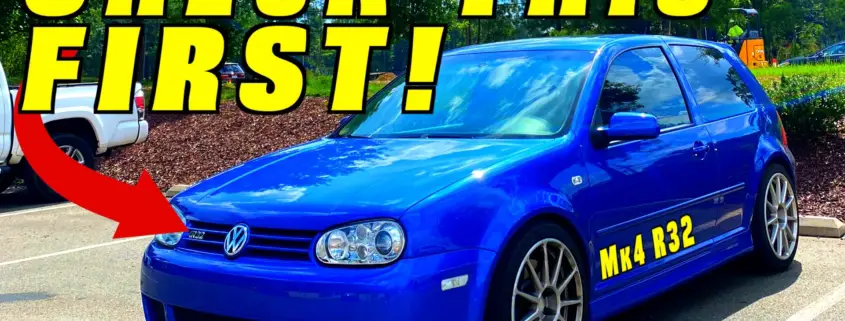
Complete Guide: Everything to Check Before Buying a Used Volkswagen R32 MK4

“What should I check before buying an R32? What are the inspection points for a MK4?” As an enthusiast, I constantly come across this question. This comprehensive guide is designed to assist you in purchasing a used Volkswagen R32 MK4 and help you avoid unpleasant surprises.

Crucial mechanical points to inspect

The mechanics are the heart of any car, and the R32 is no exception. A thorough inspection is essential.

Engine and transmission

Start the engine cold and listen for any abnormal noises (knocking, rattling). The VR6 should start easily and run smoothly. Check the oil level and its condition; oil that’s too black or milky is a warning sign. Test the DSG gearbox (if equipped): gear changes should be smooth, without jerking or stalling. For manual models, check the clutch (slipping, pedal stiffness).

Chassis and braking

Visually inspect the CV joint boots and suspension arm bushings. A road test is essential: the steering should have no play and the handling should be stable, without abnormal vibrations. Listen for any clunking sounds when turning or going over speed bumps. Test the braking effectiveness and check the condition of the discs and pads.

Body and interior condition

The R32 is an icon, preserving its overall condition is essential for its value.

Corrosion and paint

The MK4 is known for its rust resistance, but certain points deserve special attention: the wheel arches, the bottom of the doors and the trunk sill. Examine the paint from different light angles to spot defects or color differences that might indicate accident repairs.

Equipment and interior

Check the proper functioning of all equipment: air conditioning, radio, heated seats, and especially the essential soundaktor (the active soundproofing valve in the cabin). Check the condition of the “Recaro” leather seats, which are often prone to wear, and the Alcantara-covered steering wheel.

The ultimate verification: history and road test

Never buy without performing these final checks.

Documentation and history

Request a complete maintenance record with supporting invoices. Verify the mileage consistency, ownership history and ensure there are no hidden defects. A check via a vehicle history report is highly recommended.

The essential road test

Set aside time for a meaningful road test. Take the wheel and feel the car’s behavior at different speeds. Listen, feel and observe. Let it reach operating temperature and redo some checks. Your intuition is often the best guide.

How to Replace and Improve Car Speakers: Complete Guide (Riveting, Mounts)

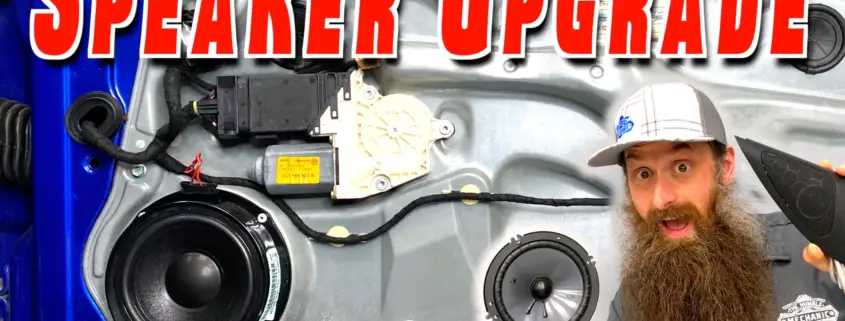
Replacing your car or pickup’s speakers is one of the most rewarding audio upgrades. This guide explains, step by step, how to remove the old original speakers often secured by rivets and how to install your new models professionally and durably.

Why Replace Original Speakers?

Car manufacturers often equip their vehicles with low-end speakers to reduce costs. Replacing them with quality aftermarket models is the most effective solution for achieving clearer sound reproduction, deeper bass, and much better audio immersion, all without changing the original car stereo.

Required Materials and Tools

Before starting, gather the following materials:

Tools

• An electric drill
• Metal drill bits (with a diameter suitable for the rivets)
• A Phillips screwdriver
• A drift or a punch
• A utility knife

Materials

• Your new speakers
• Adapter mounts or adapter rings (if necessary)
• Self-tapping screws and nuts
• Universal speaker connectors

Step 1: Remove the Old Speaker and Its Rivets

The first step is to access the speaker. Remove the grille or door panel that protects it. In many vehicles, especially VWs, the original speakers are held in place by rivets and not screws.

How to Cleanly Remove Rivets?

1. Use a drill with a drill bit slightly larger in diameter than the rivet’s center hole.
2. Place the tip of the drill bit in the center of the rivet.
3. Drill at medium speed until the rivet head comes off.
4. Once the head is removed, you can take out the remaining rivet and free the speaker.
5. Gently unplug the electrical connector.

Step 2: Prepare for the Installation of the New Speakers

Do not reuse the original rivets! For a robust and high-quality installation, use self-tapping screws and nuts on a suitable mount or directly on the door metal.

Using Adapter Mounts or Rings

Plastic or MDF adapter rings are essential to ensure perfect compatibility with the original locations and prevent any vibration. Securely screw the ring onto the door, then screw the new speaker onto the ring.

Step 3: Adapting Tweeters (MK4 Original Housing)

For tweeters, installation may require a small modification. For example, on a VW Golf MK4, it is possible to remove the original tweeter from its plastic housing using a utility knife to carefully cut it out. You can then place and glue your new tweeter inside it for an invisible and aesthetic installation.

Step 4: Connection and Final Test

Connect the cables to the terminals of your new speakers, respecting the polarity (+ and -). Reinstall the door panel and perform an audio test to ensure everything works perfectly before closing everything up permanently.

Conclusion

Replacing your car speakers is a project within reach for many DIY enthusiasts. By following this method for clean rivet removal and using suitable mounts, you ensure a solid installation and audio results far superior to the original equipment.

How to Renovate Your Garage Floor in One Day: Complete Guide from Start to Finish

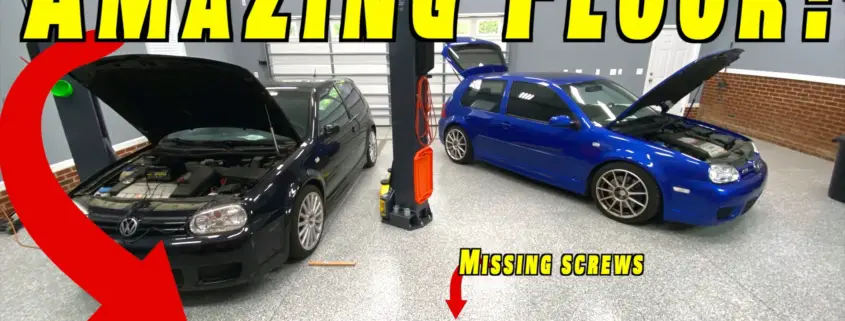
Discover how to apply a garage floor coating, whether with epoxy or a similar treatment like the two-layer polyaspartic with flakes we used. There are numerous different treatments for garage floors: special paint, tiles, epoxy resin, and many others. Most epoxy-type treatments for garage floors can be completed in a single day with the right method and products.

The Different Types of Garage Floor Coatings

The market offers a wide range of solutions to protect and beautify your concrete. The choice depends on your budget, how you use your garage, and the desired aesthetic result.

Epoxy Resin

Epoxy is a popular choice for its durability and resistance to chemical stains and abrasion. It provides a shiny, seamless finish that is relatively easy to maintain.

Polyaspartic

Polyaspartic, like the two-layer system used here, is a derivative of epoxy. Its main advantage is its extremely fast drying time, often allowing the garage to be back in service within just 24 hours. It also offers excellent UV resistance.

Concrete Floor Paint

A more economical but generally less durable option. It can be an acceptable solution for lightly used garages.

Tiles and Pavers

This is a modular solution that does not require the application of liquid products. It is simple to install and replace, but the cost can be higher.

Key Steps for a Successful Result

Preparation is the most crucial step to ensure the longevity of your coating. A poorly prepared floor will inevitably lead to premature peeling.

1. Cleaning and Surface Preparation

The concrete must be perfectly clean, dry, and degreased. Stripping or grinding (sanding) is often necessary to open the pores of the concrete and ensure optimal adhesion.

2. Applying the Primer

This base coat is essential for the finish to adhere. It seals the concrete and creates a uniform base.

3. Applying the Finish Coat and Flakes

Apply the chosen resin and immediately sprinkle the decorative flakes randomly for an aesthetic and anti-slip effect.

4. Applying the Clear Protective Coat (Top Coat)

This final layer, often made of polyaspartic, seals the flakes and provides additional resistance to impacts, UV rays, and chemicals. It is what gives that deep, professional shine.

Conclusion

Renovating your garage floor in one day is entirely achievable, especially by opting for fast-drying products like polyaspartic. Success lies in meticulously following the preparation steps and the manufacturer’s instructions. The final result will radically transform your space, making it cleaner, brighter, and much easier to maintain.

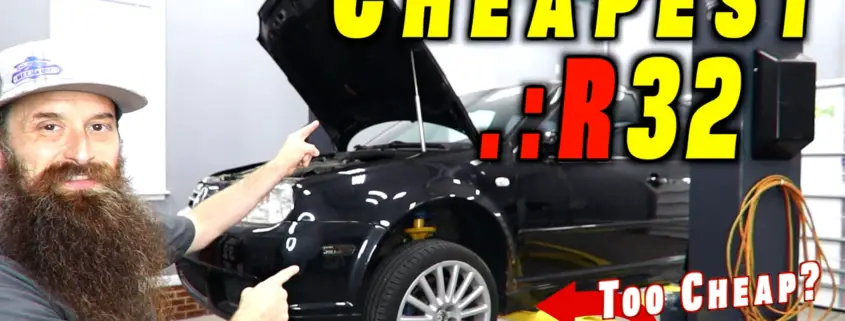
The Cheapest Volkswagen R32 in the USA: A Raw Diamond to Restore

The cheapest Volkswagen R32 Mk4 in the United States has just joined our collection. This 2004 model, acquired for a bargain price, is a true enthusiast’s project. It requires significant restoration work, but its potential is immense. Let’s dive into the inspection of this strong-willed legend.

In-depth Inspection of the Volkswagen R32 Mk4

The vehicle’s overall condition is rough, which is expected for a model at this price. The visual inspection begins immediately to assess the extent of the necessary work.

The VR6 Engine: Heart of the Beast

The legendary 3.2-liter VR6 engine is present but shows signs of wear and lack of maintenance. A complete overhaul will be essential to restore its full power and characteristic sound.

Chassis, Suspension, and Braking

Like many Mk4s, the running gear requires special attention. The suspension appears worn, and the brakes will need to be fully inspected, if not replaced, to ensure optimal safety.

Restoration Plan for this R32

Our plan is to restore this R32 to its former glory. The project will follow several key steps: a complete mechanical overhaul, restoration of body elements, and renewal of wear parts to achieve a result faithful to the spirit of the original version.

Complete Guide: Timing Chain Replacement and Adjustment on TSI Engine

Replacing the timing chain is a crucial procedure for 2.0-liter TSI engines. Timing chain failures, as well as tensioner failures, are indeed very common on 2.0t TSI engines, whether in Volkswagen or Audi vehicles. These failures often manifest as a faulty tensioner or wear and elongation (stretch) of the chain itself. This guide explains the procedure for replacing a timing chain on a TSI engine, how to time it correctly, and how to synchronize the balance shaft.

Why the TSI Timing Chain is a Critical Point

TSI and TFSI engines are known for their performance, but one of their historical weak points remains the timing system. A failing tensioner or an overly worn chain can lead to camshaft desynchronization, ultimately causing serious engine damage. It is therefore essential to intervene at the first warning signs, such as a metallic rattling noise during a cold start.

Key Steps for Replacement and Timing

1. Preparation and Removal of the Old Chain

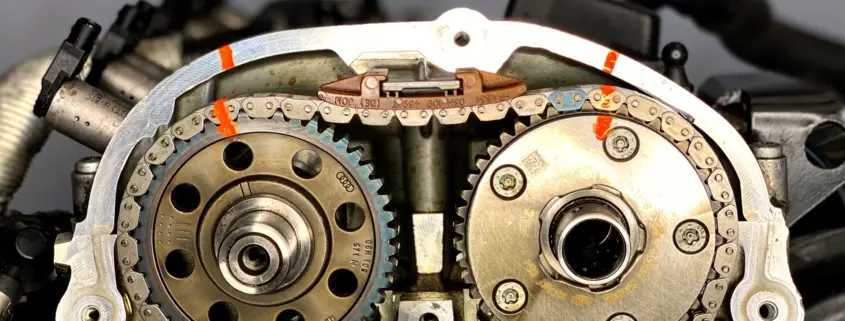
The first step is to set the engine to Top Dead Center (TDC) and securely lock the timing sprockets. Then, remove the various accessories and the timing cover to access the chain. The removal of the old timing kit (chain, tensioner, guides) must be done carefully.

2. Installation and Timing of the New Chain

Installing the new timing chain is a precision operation. It is imperative to scrupulously follow the timing marks for the camshafts and the crankshaft. Use the engine-specific timing tools to perfectly lock the shafts and ensure perfect synchronization.

3. Timing the Balance Shaft

On many TSI engines, a balance shaft must also be retimed after the procedure. This step is crucial to ensure proper engine balance and avoid any vibration once the engine is reassembled. A dedicated tool is usually necessary to position this shaft correctly.

Conclusion

Replacing the timing chain on a TSI engine is a complex operation that requires method, appropriate tools, and great precision. Incorrect timing can be catastrophic for the engine. If you do not have the necessary experience or tools, it is highly recommended to entrust this task to a qualified professional.

How to Install a Boost Gauge Display on Golf R MK7.5 and MQB

Adding a boost gauge display to your Volkswagen Golf GTI, Golf R, or any other MQB model from VW and Audi is an excellent initiative to monitor your engine’s performance. The PolarFIS presents itself as an elegant and integrated solution to access a multitude of data directly on the instrument cluster screen. This innovative module captures information from the vehicle’s CAN-BUS network and displays it clearly and legibly, whether on the standard dashboard or the infotainment screen, depending on the models and configurations.

The Benefits of the PolarFIS System for Your Boost

Opting for the PolarFIS to visualize your boost pressure offers undeniable advantages over analog gauges or additional displays. The first strength of this system lies in its perfect and discreet integration: no need to drill into the dashboard or install unsightly mounts. All essential data, including turbo pressure, is accessible at a glance without taking your eyes off the road. Moreover, the PolarFIS goes far beyond a simple boost gauge by displaying a wide variety of engine parameters in real-time.

Extended Features Beyond the Boost Gauge

The module is not limited to displaying boost. It transforms your cluster into a true control station, giving you access to information such as temperatures (water, oil, air), steering wheel angle, lambda sensor values, estimated power and torque, and much more. It is a comprehensive diagnostic and monitoring tool that integrates perfectly with the original electronics of your MQB vehicle.

Installation Guide and Compatibility

The installation of the PolarFIS is designed to be accessible to enthusiasts. The process is generally non-invasive and mainly involves connecting the module between the ECU and the CAN network. It is crucial to check the compatibility of your specific vehicle model before purchase, although the MQB platform is widely covered, including models like the Golf 7 / 7.5, Audi A3, S3, Seat Leon, and many others. Always follow the manufacturer’s instructions carefully for a successful and risk-free installation.

Installing an Oil Catch Can on Golf R MK7 & MK7.5 MQB – Complete Guide

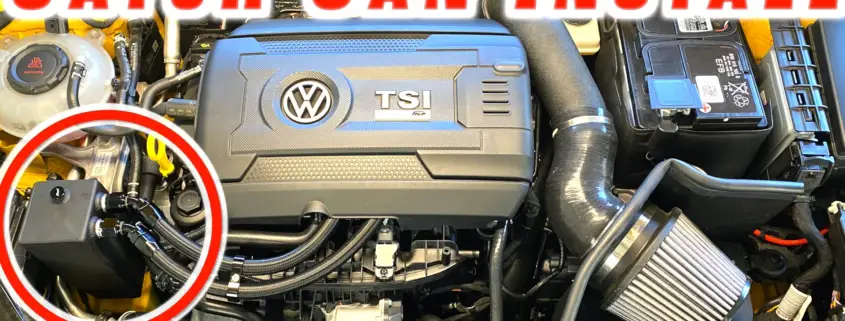
In this video, we proceed with the installation of the Racingline Oil Catch Can designed for MQB platforms. This detailed tutorial will show you how to install an oil catch can on most Volkswagen and Audi models from the MQB range, replacing the original PCV valve and oil separator. Installation on a Golf R specifically requires relocating certain components for optimal and clean mounting.

Why Install an Oil Catch Can?

An oil catch can is an essential accessory for turbocharged engines. It captures oil vapors and combustion residues circulating in the Positive Crankcase Ventilation (PCV) system before they can clog and damage the turbocharger and intake lines. This helps maintain engine performance in the long term.

Key Installation Steps

Our video guide walks you through the process step by step. We start by removing the OEM parts, then proceed to install the new Racingline kit. Special attention is given to repositioning certain components, a crucial step specific to the Golf R to ensure perfect operation and a clean installation.

Materials and Prerequisites

Before starting, make sure you have the MQB-compatible Racingline Oil Catch Can kit as well as basic tools. The process is accessible to most automotive enthusiasts with a bit of method and patience.

Golf R: 10 Months of Evolution and Modifications on a Rare Model

It’s already been 10 months since this Golf R joined the family! And to top it all off, did you know that it’s one of only 13 imported into the United States? Owning such a rare vehicle is a truly unique feeling. Of course, being the sole owner of a one-of-a-kind example (1/1) would have been the holy grail, but we’re not going to complain! The past few months have been marked by a series of modifications and upgrades…

The Recent Evolutions of the Golf R

The recent period has been intense for this German sports car. Many upgrades have been planned and installed, aimed at improving both its pure performance and its daily driving character. Each modification has been carefully considered to respect the vehicle’s spirit while adding a personal touch.

The Privilege of Owning a Rare Model

Driving a car produced in such a limited series is a unique experience. This rarity gives the Golf R a special aura and a collector’s aspect that goes beyond mere automotive use. It’s a privilege that adds an extra dose of excitement to every outing.

Stage 2 Crackle Tune vs Sans Tune: Comparison on Golf R | Explanations

Stage 2 Crackle Tune vs no tune, the debate is on. It is entirely possible to make your exhaust line crackle and pop without resorting to engine remapping. However, the results will be much more subtle and random. The option of a tune specifically dedicated to crackles and bangs proves to be an infinitely more effective and spectacular solution for those seeking this aggressive sound signature.

How does a Crackle Tune work?

Today, we will break down how reprogramming the ECU (Engine Control Unit) can cause these characteristic crackles and detonations upon throttle lift-off. The technical principle generally relies on a deliberate enrichment of the air-fuel mixture and a slight shift in ignition timing. This allows unburned fuel to enter the overheated exhaust manifold, where it ignites explosively, creating the sought-after pop or bang.

Is it wise to tune your ECU solely for pops?

It is crucial to note that having your ECU reprogrammed solely to achieve bangs and crackles is not necessarily a trivial decision. This practice, although very popular, can potentially have long-term consequences on the longevity of certain components such as the turbocharger or catalytic converter, especially if the mapping is aggressive. The choice between a stage 2 crackle tune and no tune should therefore be carefully considered by weighing the pros and cons.