
Fuel pump control module circuits P025B

What does it mean?

This generic powertrain diagnostic trouble code (DTC) generally applies to all OBD-II equipped vehicles with a fuel pump control module. This may include, but is not limited to, vehicles from Ford, Chevrolet, Dodge, Chrysler, Audi, VW, Mazda, etc.

In older systems, vehicles required very little fuel pressure. Nowadays, however, with the invention of fuel injection and other systems, our vehicles require higher fuel pressures.

The Engine Control Module (ECM) meets our fuel needs by relying on the fuel pump module to regulate pressures in the fuel system. The fuel pump itself is responsible for delivering fuel to the engine.

A failure here is most likely extremely obvious because your car may not even start. The 3 main elements an internal combustion engine needs to run are: air, fuel, and spark. If any of these is missing, your engine will not run.

The ECM sets P025B and related codes when it monitors one or more conditions outside a specific electrical range in the fuel pump control module or its circuit. This can be due to a mechanical or electrical problem. Working with/around such a volatile substance, it is somewhat dangerous to diagnose or repair anything here, so make sure you are properly trained and familiar with the hazards involved.

The P025B Fuel Pump Control Module Range/Performance code is set when the ECM recognizes an out-of-range condition in the fuel pump module or its circuits. This is one of four related codes, which are P025A, P025B, P025C, and P025D.
How severe is this DTC?

I would say the severity of this code would be determined by your symptoms. If your car won’t start, it would be severe. On the other hand, if your vehicle is running normally and fuel consumption is not affected and this code is active, it’s not a very serious situation. That said, neglecting any fault can lead to delays and additional costs.

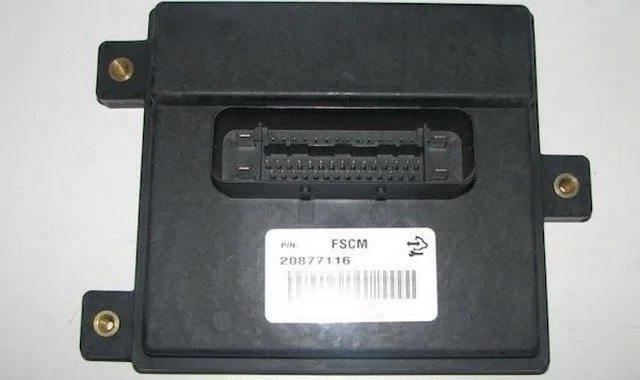
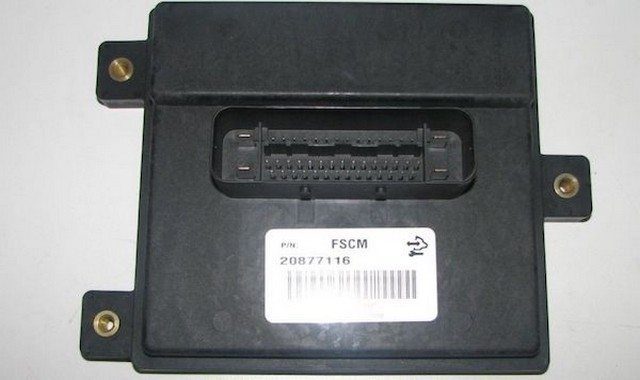
An example of a fuel pump control module:
What are some of the symptoms of the code?

Symptoms of a P025B fault code may include:

Engine does not start
Hard starting
Engine stalling
Poor fuel consumption
Inaccurate fuel level
Fuel smell
Poor engine performance

What are some of the common causes of the code?

Causes

of this code may include:

Faulty fuel pump module
Faulty fuel pump
Debris screen in the fuel pump
Wiring problem (e.g., frayed, melted, cut/open wire, etc.)
Connector problem (i.e., melted, disconnected, intermittent connections, etc.)
ECM problem

What are the troubleshooting steps for P025B?

Be sure to check the Technical Service Bulletins (TSBs) for your vehicle. Access to a known fix can save you time and money during diagnosis.
Tools

Some things you might need when diagnosing or repairing fuel pump circuits and systems:

OBD code reader
Multimeter
Basic socket set
Ratchet and wrench sets
Basic screwdriver set
Battery terminal cleaner
Service manual

Safety Tips

Let the engine cool down
Chock the wheels
Wear PPE (Personal Protective Equipment)

NOTE: ALWAYS check and record the integrity of your battery and charging system before proceeding with troubleshooting.
Basic Step #1

If your car won’t start, there is a very easy backyard diagnostic approach. If your vehicle is equipped with a fuel pump mounted inside the fuel tank, you can tap the tank with a rubber mallet to potentially dislodge debris from the pump while someone tries to start the vehicle. If your vehicle starts when you do this, your diagnosis is complete; you need to replace the fuel pump itself.

NOTE: Whenever you diagnose/repair anything involving the fuel system, make sure there is no fuel leak. Working with fuel with metal tools is an avoidable hazard. Be aware!
Basic Step #2

Take a look at the connectors and wires. Given the location of most fuel pumps and circuits, they can be difficult to access. You may need to raise the vehicle in some way (ramps, jacks, stands, hoist, etc.) to get better access to the connectors. Typically, the pump harness is sensitive to extreme conditions, with most being routed under the vehicle. Make sure the connectors are properly secured and are not damaged.

NOTE: Sometimes these harnesses are routed along frame rails, rocker panels, and other places where wire pinching is common.
Basic Tip #3

Test your pump. Testing the fuel pump may not be an easy task. If the fuel pump connector is accessible, you can use your multimeter to perform a series of tests to check the operation of the fuel pump itself.

NOTE: Refer to your service manual to find out which specific tests can be performed here. There is no generic test here, so make sure you have the correct information before proceeding.
Basic Step #4

Is there a fuse involved? Perhaps a relay? If so, check them. Specifically, a blown fuse could potentially cause an open circuit condition (P025A).
Basic Step #5

To check the integrity of the wires in the circuit, you might be able to disconnect the circuit at both the fuel pump and the ECM. If this is possible, you can perform a series of tests to determine:

1. if there is a fault in the wires and/or
2. what type of fault is present.
P025C Fuel Pump Module Control Low

What does it mean?

This generic powertrain diagnostic trouble code (DTC) generally applies to all OBD-II equipped vehicles with a fuel pump control module. This may include, but is not limited to, vehicles from Ford, Chevrolet, Dodge, Chrysler, Audi, VW, Mazda, etc.

In older systems, vehicles required very little fuel pressure. Nowadays, however, with the invention of fuel injection and other systems, our vehicles require higher fuel pressures.

The engine control module (ECM) responds to our fuel needs by relying on the fuel pump module to regulate pressures in the fuel system. The fuel pump itself is responsible for delivering fuel to the engine.

A failure here is most likely extremely obvious because your car may not even start. The 3 main elements an internal combustion engine needs to run are: air, fuel, and spark. Any one of these is missing and your engine will not run.

The ECM activates P025C and related codes when it monitors one or more conditions outside a specific electrical range in the fuel pump control module or its circuit. This can be due to a mechanical or electrical issue. Working with/around such a volatile substance, it is somewhat dangerous to diagnose or repair anything here, so make sure you are properly trained and familiar with the dangers involved.

P025C Fuel Pump Module Control Low Code is set when the ECM monitors a specific electrical value lower than the desired level in the fuel pump module or its circuits. This is one of four related codes, which are P025A, P025B, P025C, and P025D.

How severe is this DTC?

I would say the severity of this code would be determined by your symptoms. If your car does not start, that would be severe. On the other hand, if your vehicle is running normally and fuel consumption is not affected and this code is active, it is not a very serious situation. That being said, neglecting any fault can lead to delays and additional costs.

An example of a fuel pump control module:

P025D High Fuel Pump Control Module

Code P025D: Definition, Symptoms, Causes, and Diagnosis


📌 Quick Overview

  • Definition: An electrical or mechanical issue in the fuel pump control module (ECM detected excessively high voltage).
  • Severity: Variable (from urgent if the vehicle won’t start, to moderate if symptoms are mild).
  • Symptoms: Failure to start, stalling, excessive fuel consumption.
  • Common Causes: Faulty fuel pump, damaged wiring, failed ECM.

1. Meaning of Code P025D

Code P025D indicates that the ECM (Engine Control Module) has detected an abnormally high voltage in the fuel pump control module circuit. This module regulates the fuel pressure delivered to the injectors, which is crucial for engine operation.

Key Function:

  • The fuel pump draws fuel from the tank and pushes it to the engine under pressure.
  • The control module adjusts the pressure based on engine demands (acceleration, RPM, etc.).
  • Excessively high voltage can damage the pump or disrupt pressure, affecting performance.

2. Severity and Risks

  • Emergency:
    • If the vehicle does not start (fuel starvation), the code is critical.
  • Long-Term Risks:
    • Engine damage if the air-fuel mixture is too lean.
    • Premature wear of injectors or the pump.

3. Common Symptoms

  • 🚗 Engine won’t start or hard starting.
  • ⚠️ Frequent stalling, especially during acceleration.
  • Excessive fuel consumption (up to 30% more).
  • 🌫️ Fuel odor (leak or incomplete combustion).
  • 📉 Poor engine performance (loss of power, hesitation).

4. Possible Causes

Category Detailed Causes
Electrical – Damaged wiring (frayed wires, short circuits).
– Corroded or loose pump connector.
Mechanical – Faulty fuel pump.
– Fuel filter clogged with debris.
Electronic – Failure of the pump control module.
– Defective ECM or programming error.

5. Diagnostic Steps

Required Tools:

  • OBD-II scanner (to read code P025D and live data).
  • Digital multimeter (to measure voltage and continuity).
  • Model-specific repair manual (wiring diagrams, reference values).

Procedure:

  1. Preliminary Checks:
    • “Tap Test”:
      • Gently tap the fuel tank with a rubber mallet while an assistant attempts to start the engine.
      • If the engine starts, the pump is likely faulty (debris blocking the screen).
  2. Visual Inspection:
    • Check fuses and relays related to the fuel pump (replace if blown).
    • Inspect wiring and connectors under the vehicle (look for pinched or melted wires).
  3. Fuel Pump Test:
    • Measure voltage at the pump terminals (should be ~12V with ignition on).
    • Test pump resistance (consult manual for expected values).
  4. Control Module Check:
    • Use the scanner to check live data (fuel pressure, module signal).
    • Compare with manufacturer specifications.
  5. Advanced Diagnostics:
    • If the module is suspected, test it with a replacement module.
    • Check Technical Service Bulletins (TSB) for software updates or known fixes.

6. Common Solutions

  • 🔧 Replace the fuel pump: Average cost €150–€500 (part + labor).
  • 🔌 Repair wiring: Solder or replace damaged wires.
  • 💻 Update the ECM: Requires professional diagnostic tool.
  • 🛠️ Clean the fuel filter: If clogged, replace it (cost €20–€80).

7. Safety Tips

  • ⚠️ Avoid sparks: Do not smoke and disconnect the battery before working on the system.
  • 🧤 Wear gloves and safety glasses: Fuel is irritating and flammable.
  • 🔥 Let the engine cool down before any intervention to avoid burns.

8. Frequently Affected Models

  • Ford Focus (recurring fuel pump issues).
  • Chevrolet Silverado (fragile wiring near the tank).
  • Audi A4 (control module failures).

Conclusion

Code P025D signals a critical malfunction in the fuel delivery system. Prompt diagnosis is essential to avoid a complete breakdown or costly damage. If technical skills are lacking, entrust the vehicle to a certified mechanic.

⚠️ Reminder: Incorrect fuel pressure can damage the engine. Act without delay!


In Summary:

  • 🔍 Check the pump, fuses, and wiring first.
  • 🔧 Prioritize electrical repairs before replacing the pump.
  • 🛠️ Consult a professional if symptoms persist.

P025E & P025F ISO/SAE Reserved

P011E, P011F ISO/SAE reserved

P0260 Intermittent Fuel Injection Pump B Control

What does it mean?

This generic powertrain/engine diagnostic code can generally apply to all engines equipped with an OBD-II diesel engine (e.g., Ford, Chevy, GMC, Ram, etc.), but appears more frequently in some Mercedes Benz and VW vehicles.

Although generic, the exact repair steps may vary depending on the year, make, model, and powertrain configuration.

The “B” injection pump fuel metering control circuit is typically mounted inside/on the side of the injection pump bolted to the engine. The “B” injection pump fuel metering control circuit generally consists of a fuel rail pressure (FRP) sensor and a fuel quantity actuator.

The FRP sensor converts the amount of diesel fuel supplied by the fuel quantity plunger to the injectors into an electrical signal for the Powertrain Control Module (PCM).

The PCM receives this voltage signal to determine the amount of fuel it will deliver to the engine based on engine operating conditions. This code is set if this input does not match the normal engine operating conditions stored in the PCM’s memory, even for a second, as indicated by this diagnostic code. It also checks the FRP sensor’s voltage signal to determine if it is correct at initial key-on.

The P0260 Intermittent Injection Pump Fuel Metering Control “B” (Cam/Rotor/Injector) code may have been set due to mechanical issues (usually EVAP system mechanical problems) or electrical issues (FRP sensor circuit). These cannot be overlooked during the troubleshooting phase, especially when dealing with an intermittent issue. Refer to a vehicle-specific repair manual to determine which part is the “B” circuit for your particular application.

Troubleshooting steps may vary by manufacturer, FRP sensor type, and wire colors.
How severe is this DTC?

The severity depends on the failure. In case of mechanical failure; severe. In case of electrical failure, less severe, which the PCM can adequately compensate for.
What are some of the symptoms of the code?

Symptoms of a P0260 trouble code may include:

Malfunction Indicator Light (MIL) illumination
Decreased fuel economy

What are some common causes of the code?

Causes

of this P0260 code may include:

Open in the signal circuit to the FRP sensor – possible
Short to voltage in the signal circuit to the FRP sensor – possible
Short to ground in the FRP sensor signal circuit – possible
Open in power or ground at the FRP sensor – possible
Failed FRP sensor – probable
Failed PCM – unlikely

What are the P0260 troubleshooting steps?

A good starting point is always to check the Technical Service Bulletins (TSBs) for your vehicle. Your issue may be a known problem with a known fix issued by the manufacturer and can save you time and money during diagnosis.

Next, locate the FRP sensor on your vehicle. This sensor is typically found mounted inside/on the side of the injection pump bolted to the engine. Once located, visually inspect the connector and wiring. Look for chafing, rubbing, bare wires, burns, or melted plastic. Disconnect the connector and carefully inspect the terminals (the metal parts) inside the connector. See if they look burned or have a greenish tint indicating corrosion. Use electrical contact cleaner and a plastic bristle brush if cleaning the terminals is necessary. Let it dry and apply electrical grease where the terminals make contact.

If you have a scan tool, clear the diagnostic codes from memory and see if the P0260 code returns. If not, the connections were likely your problem.

If the P0260 code returns, we will need to test the FRP sensor and its associated circuits. With the key off, disconnect the electrical connector from the FRP sensor. Connect a black wire from the digital voltmeter to the ground terminal at the FRP sensor wiring harness connector. Connect the red wire from the digital voltmeter to the power terminal at the FRP sensor wiring harness connector. Turn the key to the engine-off position. Check the manufacturer’s specifications; the voltmeter should read 12 volts or 5 volts. If not, repair the power or ground wire or replace the PCM.

If the previous test passes, we will need to test the signal wire. With the connector still disconnected, move the red voltmeter wire from the power wire terminal to the signal wire terminal. The voltmeter should now read 5 volts. If not, repair the signal wire or replace the PCM.

If all previous tests have passed and you continue to get a P0260, this would most likely indicate a failing FRP sensor/fuel quantity actuator, although a faulty PCM cannot be ruled out until the FRP sensor/fuel quantity actuator has been replaced. If in doubt, seek help from a qualified automotive diagnostician. PCMs must be programmed or calibrated to the vehicle to be installed correctly.

P0261 Cylinder 1 Injector Circuit Low

What does it mean?

This diagnostic trouble code (DTC) is a generic powertrain code, meaning it applies to vehicles equipped with OBD-II. Although generic, specific repair steps may vary by make/model.

The OBD fault code P0261 is a generic powertrain code common to all vehicles. Although the code reference is the same, the repair procedure may vary somewhat by manufacturer.

This code implies that the Powertrain Control Module (PCM) has experienced a low voltage situation involving the fuel injector for cylinder number 1 in the firing order.

In short, this fuel injector is malfunctioning for one of many reasons. It is important to diagnose and repair this type of issue as soon as possible.

When a fuel injector malfunctions, it causes ripples throughout the system, meaning the engine’s operating parameters change due to mixed signals to the PCM.

If the fuel injector’s spray pattern is reduced, a lean mixture results. The ripple effect begins. The oxygen sensor reports a lean mixture to the PCM. In response, it enriches the fuel mixture for all cylinders. Fuel economy drops.

The cylinder with the faulty injector causes a lean mixture which in turn causes a higher cylinder head temperature leading to detonation. The knock sensor detects the detonation, signals the PCM which responds by retarding the timing. Now the engine runs poorly and lacks power.

This isn’t the end of the ripple effect, but it reflects the general idea.

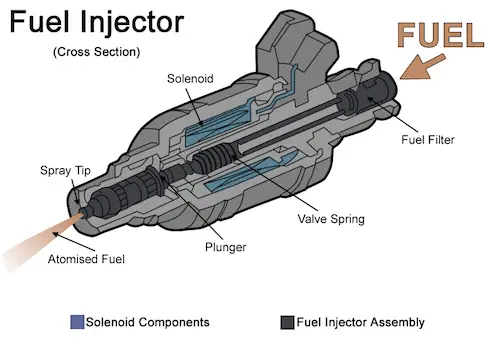
Cross-section diagram of a typical automotive fuel injector

Symptoms

Symptoms displayed for a P0261 code may include:

The check engine light illuminates and the P0261 code is set
The engine will run rougher than normal
A lack of power
A significant drop in fuel economy will result

Causes

Possible causes of this DTC include:

Dirty fuel injector supplying cylinder number one
Faulty fuel injector
Clogged fuel injector
Open or short in the fuel injector harness
Loose or corroded fuel injector connector

Diagnosis / Repair

Generally, this type of problem is either a loose or corroded electrical connector on the injector, a clogged (dirty or blocked) injector, or a bad injector needing replacement.

In over 45 years, I’ve found that loose or corroded connectors were the cause of the electrical fault most of the time. I’ve only found a few cases where the low voltage wiring became shorted or open (when it hasn’t been disturbed).

The majority of electrical problems were related to the alternator, starter solenoid wiring, oxygen sensor wiring due to its immediate proximity to the exhaust, and the battery. The majority of electrical work involved correcting items installed by the customer, such as high-power stereo systems and other poorly installed parts or equipment.

Fuel injectors are powered by the fuel pump relay. The PCM activates the relay when the key is turned on. This means that as long as the key is on, the injectors have power.

The PCM activates the injector by providing the ground at the necessary time and for the appropriate duration.

Check the connector on the fuel injector. This is a plastic connector attached to the injector with a metal clip around the connector. Pull on the connector to see if it comes off easily. Remove the wire tie and disconnect the connector from the injector.
Inspect the harness connector for corrosion or pushed-back pins. Ensure the two blades are not bent on the injector itself. Correct any faults and apply dielectric grease and install the electrical connector.
Start the engine and listen to the injector to ensure it is operating. Use a long screwdriver on the injector and the handle to your ear and you can hear it clearly. If it doesn’t make a very audible “clicking” noise, it either has no power or it has failed.
If it wasn’t clicking, remove the connector from the injector and check for power with a voltmeter. No power means the wiring from the fuel pump relay is faulty or has a loose connection. If it has power, probe both terminals on the harness connector and if the PCM injector driver is working, the voltmeter will show rapid pulses. If pulses are observed, replace the injector.
If the injector was operating, it is either clogged or dirty. Try cleaning it first. An injector flush kit is inexpensive and will benefit the remaining injectors, potentially preventing a recurrence. If flushing doesn’t solve the problem, the injector must be replaced.

Buy an “inline” fuel injector flush kit online or at an auto parts store. It will consist of a can of high-pressure injector cleaner and a hose with an end for the injector cleaner can threads.

Pull the fuse for the fuel pump.
Start the vehicle and let it run until it dies from lack of fuel.
Remove and plug the fuel return line attached to the fuel pressure regulator. This is to prevent the cleaner from going back into the fuel tank.
Remove the Schrader valve in the test port on the fuel rail. Install the fuel line from the flush kit onto this test port. Screw the can of high-pressure fuel injector cleaner onto the fuel line from the flush kit.
Start the engine and let it run until it runs out of fuel. It will run solely on the can of cleaner.
When the engine stops, turn the key off, remove the line from the flush kit, and replace the Schrader valve. Install the fuel pump fuse.

P0262 Cylinder 1 Injector Circuit High

Meaning of Code P0262

Code P0262 indicates excessive current consumption in the fuel injector circuit of cylinder #1. This issue can lead to injector malfunction (incorrect flow, blockage, or internal short circuit), disrupting the air-fuel mixture and damaging other components (spark plugs, O2 sensor, catalytic converter).


Probable Causes

  1. Electrical Problems:

    • Damaged wiring harness between the PCM (Powertrain Control Module) and the injector.

    • Corroded, loose, or bent pin injector connector.

    • Internal short circuit in the injector (resistance out of specification).

  2. Mechanical Failure:

    • Clogged or dirty injector (carbon deposits).

    • Premature wear due to ethanol in fuel (reduced lubrication).

  3. Other Causes:

    • Fuel pressure regulator issue.

    • Leak in the fuel circuit.


Symptoms

  • Check engine light on (code P0262 stored).

  • Unstable idle or repeated stalling.

  • Loss of power and hesitant acceleration.

  • Increased fuel consumption.

  • Engine knocking (detonation) and high pollutant emissions.


Diagnostic Procedure

Step 1: Visual Inspection

  1. Check the injector connector:

    • Look for twisted, pushed back, or oxidized pins.

    • Clean the connector and apply dielectric grease to improve contact.

  2. Inspect the electrical wiring:

    • Check wires for cuts, chafing, or short circuits.


Step 2: Injector Test

  1. Acoustic Test:

    • Start the engine.

    • Place a screwdriver against the injector (tip on the injector, handle to your ear).

    • A regular click indicates normal operation. No sound = faulty injector.

  2. Resistance Measurement:

    • Disconnect the injector.

    • Measure the resistance between the terminals with an ohmmeter.

    • Normal Values: 0.5 to 2.0 Ω.

    • Out of Range = Injector to be replaced (short circuit or damaged winding).


Step 3: Injector Cleaning

  1. Use an inline cleaning kit:

    • Disconnect the fuel pump fuse.

    • Install the kit on the fuel rail via the Schrader valve.

    • Pinch the return line to increase pressure.

    • Let the engine run with the cleaner until it stalls.

  2. Reset the code with an OBD-II scanner.

    • If the code reappears, replace the injector.


Repair Procedure

  1. Injector Replacement:

    • Choose a compatible injector (avoid uncertified parts).

    • Update PCM parameters if necessary (recalibration).

  2. Electrical Circuit Repair:

    • Repair or replace damaged wires.

    • Secure the connector with the retaining clip.


Technical Tips

  • Avoid Ethanol: Prefer ethanol-free fuels (e.g., SP98) to extend injector lifespan.

  • Preventive Maintenance:

    • Use an injector cleaning additive every 10,000 km.

    • Regularly check electrical connections.

  • Check TSBs (Technical Service Bulletins): Some manufacturers publish specific solutions for P0262 (e.g., software updates).


Risks if Ignored

A faulty injector can cause:

  • Catalytic converter overheating (high replacement cost).

  • Spark plug damage (pre-ignition or stalling).

  • PCM deterioration (due to voltage spikes).

P0263 Contribution / Cylinder 1 Balance

Explanation of Code P0263: “Cylinder 1 Contribution/Balance”


Severity

  • Level: 🟠 Moderate to High (risk of damage to the catalyst or engine if not addressed).
  • Urgency:
  • Loss of power and increased consumption.
  • Risk of pre-ignition/detonation (knocking).

Common Symptoms

  • 🚨 Engine light on (MIL) with code P0263.
  • 🌀 Irregular idle or vibrations.
  • 🐌 Poor acceleration (lack of power).
  • Excessive fuel consumption.

Main Causes

  1. Faulty fuel injector:
  • Injector clogged (dirt, carbon deposits).
  • Internal leaks or faulty electrical circuit (coil failure).
  1. Electrical problem:
  • Corroded injector connector or damaged wires.
  • Faulty fuel pump relay.
  1. Insufficient fuel pressure:
  • Weak fuel pump or clogged filter.
  1. Mechanical problems:
  • Low compression in cylinder 1 (worn rings, faulty valve).

Diagnostic Procedure

Step 1: Visual Inspection

  • Check the injector connector: Corrosion, bent pins, or broken wires.
  • Check the fuel pump fuse (often in the fuse box under the hood).

Step 2: Injector Test

  • Acoustic test: Use a mechanical stethoscope to listen for the injector “click”.
  • Electrical test:
  • Measure the injector resistance (typical value: 10-20 Ω).
  • Check the supply voltage (12V) with a multimeter.

Step 3: Compression Test

  • Remove the spark plug from cylinder 1 and use a compression tester.
  • Normal values: 120-180 psi (depending on the engine).
  • Maximum deviation: ≤ 10% between cylinders.

Step 4: Injector Cleaning

  • In-line cleaning kit:
  • Connect a can of injector cleaner (e.g., Wynns) directly to the fuel rail.
  • Run the engine with the cleaner to remove deposits.

Solutions & Costs

Problem Solution Average Cost
Clogged injector Ultrasonic cleaning or replacement €50 – €300
Faulty connector Connector replacement €20 – €80
Weak fuel pump Replacement €200 – €600
Compression problem Engine overhaul (rings, valves) €1000 – €3000

Mistakes to Avoid

  • Ignoring related codes (e.g., P0201, P0301): They may indicate a common issue.
  • Cleaning the injector without prior testing: An electrically faulty injector must be replaced.
  • Forgetting the fuel filter: Replace it if necessary (every 30,000 km).

Practical Case

  • Problem: Code P0263 on a Peugeot 308 1.6 HDi with unstable idle.
  • Diagnosis: Injector 1 clogged (carbon deposits).
  • Solution: Ultrasonic cleaning (€80) + fuel filter replacement.

Pro Tips

  1. Use a cleaning additive: Such as Liqui Moly Diesel Purge to maintain injectors.
  2. Test the pump relay: Swap it with an identical relay (e.g., headlight relay) for verification.
  3. Check the pressure regulator: Unstable pressure can disrupt injection.

If the problem persists after repair, consult a professional for an in-depth analysis of the injection system or engine! 🔧🚗💨

P0264 Cylinder 2 Injector Circuit Low

P0264 Cylinder 2 Injector Circuit Low

What Does It Mean?

The OBD fault code P0264 is a generic powertrain code common to all vehicles. Although the code reference is the same, the repair procedure may vary somewhat by manufacturer.

This code implies that the Powertrain Control Module (PCM) has experienced a low voltage situation involving the fuel injector for cylinder number 2 in the firing order.

In short, this fuel injector is malfunctioning for one of many reasons. It is important to diagnose and repair this type of problem as soon as possible.

When a fuel injector malfunctions, it causes ripples throughout the line, meaning the engine’s operating parameters change due to mixed signals to the PCM.

If the fuel injector’s spray pattern is reduced, a lean mixture results. The ripple begins. The oxygen sensor signals a lean mixture to the PCM. In response, it enriches the fuel mixture to all cylinders. Fuel economy drops.

The cylinder with the faulty injector causes a lean mixture which in turn causes a higher cylinder head temperature leading to detonation. The knock sensor detects the detonation, signals the PCM which responds by retarding the timing. Now the engine runs poorly and lacks power.

This isn’t the end of the ripple effect, but it reflects the general idea.

Cross-section diagram of a typical automotive fuel injector

Symptoms displayed for a P0264 code may include:

  • The check engine light comes on and the P0264 code is set
  • The engine will run rougher than normal
  • A lack of power
  • A large drop in fuel economy will result

Possible causes of this DTC include:

  • Dirty fuel injector supplying cylinder 2
  • Faulty fuel injector
  • Clogged fuel injector
  • Open or short in the fuel injector harness
  • Loose or corroded fuel injector connector

Diagnostic / Repair

Generally, this type of problem is either a loose or corroded electrical connector on the injector, a clogged (dirty or blocked) injector, or a bad injector requiring replacement.

In over 45 years, I have found that loose or corroded connectors were the cause of the electrical fault most of the time. I have only found a few cases where the low voltage wiring became shorted or open (when it hasn’t been disturbed).

The majority of electrical problems were related to the alternator, starter solenoid wiring, oxygen sensor wiring due to the immediate proximity of the exhaust, and the battery. The majority of electrical work involved correcting items installed by the customer, such as high-power stereo chains and other poorly installed parts or equipment.

Fuel injectors are powered by the fuel pump relay. The PCM activates the relay when the key is turned on. This means that as long as the key is on, the injectors have power.

The PCM activates the injector by supplying the ground at the necessary time and for the appropriate duration.

Check the connector on the fuel injector. This is a plastic connector attached to the injector with a metal clip around the connector. Pull on the connector to see if it comes off easily. Remove the wire tie and remove the connector from the injector.
Inspect the harness connector for corrosion or pushed-back pins. Make sure the two blades are not bent in the injector itself. Correct any faults and apply dielectric grease and install the electrical connector.
Start the engine and listen to the injector to make sure it is operating. Use a long screwdriver for the injector and the handle for your ear and you can hear it clearly. If it does not make a very audible “clicking” noise, it either has no power or it has failed.
If it did not click, remove the connector from the injector and check for power with a voltmeter. No power means the fuel pump relay wiring is faulty or has a loose connection. If it is powered, probe both terminals on the harness connector and if the PCM injector driver is working, the voltmeter will show rapid pulses. If pulses are observed, replace the injector.
If the injector was operating, it is either clogged or dirty. Try cleaning it first. The injector flush kit is inexpensive and will benefit the remaining injectors, potentially preventing a recurrence. If flushing does not solve the problem, the injector must be replaced.

Buy an “in-line” fuel injector flush kit online or at an auto parts store. It will consist of a can of high-pressure fuel injector cleaner and a hose with one end for the fuel injector cleaner can threads.

Pull the fuse to the fuel pump.
Start the vehicle and let it run until it dies from lack of fuel.
Remove and plug the fuel return line attached to the fuel pressure regulator. This is to prevent the cleaner from going back into the fuel tank.
Remove the Schrader valve in the test port of the fuel rail. Install the fuel line from the flush kit onto this test port. Screw the can of high-pressure fuel injector cleaner onto the fuel line from the flush kit.
Start the engine and let it run until it runs out of fuel. It will run solely on the can of cleaner.
When the engine stops, turn off the key, remove the line from the flush kit, and replace the Schrader valve. Install the fuel pump fuse.

P0265 Cylinder 2 Injector Circuit High

What Does Code P0265 Mean?

Code P0265 is a generic OBD-II diagnostic code related to the powertrain. It applies to all OBD-II-compliant vehicles, although repair procedures may vary slightly by manufacturer or model.

This code indicates abnormally high current consumption by the fuel injector in cylinder #2, which typically points to an electrical circuit malfunction or the injector itself. Although this code is universal, some manufacturers may be more prone to this issue due to faulty injector batches or specific components.

It is important to address this type of malfunction quickly, as a faulty injector can lead to:

  • Damage to the spark plug,
  • Engine knocking (detonation),
  • Incorrect oxygen sensor readings,
  • Catalytic converter deterioration,
  • And other internal damage.

Before starting repairs, it is recommended to consult the technical service bulletins (TSBs) available for your vehicle. Look for those related to code P0265 to find specific manufacturer recommendations.


Possible Symptoms of Code P0265

Here are the common signs you may observe:

  • Illumination of the check engine light,
  • Unstable idle or engine misfiring,
  • Loss of power, especially during acceleration,
  • Decreased fuel economy.

Common Causes

Probable causes of this code include:

  • Damaged wiring harness between the PCM (engine control module) and the injector,
  • Faulty or corroded electrical connector on the injector,
  • Fuel injector with an internal short circuit,
  • Clogged or dirty injector.

Diagnosis and Repair

Based on field experience, the most common causes are a loose or corroded connector, or a faulty injector.

Fuel-Related Issues

The use of fuels containing ethanol (such as E10) can affect injector lubrication and cause premature wear. The water vapor generated by these fuels alters the lubricating properties of gasoline, which harms sensitive components.

Small engine manufacturers often advise against using ethanol-containing fuels, as it significantly reduces their lifespan.


Recommended Diagnostic Steps

  1. Connector Inspection:
    • Inspect the connector for injector #2.
    • Look for bent, loose, or corroded pins.
    • Apply dielectric grease, reconnect firmly, and ensure the metal clip is properly in place.
  2. Injector Sound Test:
    • With the engine running, use a screwdriver as a stethoscope (ear against the handle and tip on the injector).
    • A regular clicking sound indicates normal operation; no noise may indicate a failure.
  3. Resistance Test:
    • Disconnect the injector and measure the resistance between its terminals using an ohmmeter.
    • A normal value is between 0.5 and 2.0 ohms.
    • Outside this range, the injector is likely short-circuited.
  4. Injector Cleaning:
    • If the injector seems functional but is dirty, try a direct injection cleaning kit.
    • Remove the fuel pump fuse, and crank the engine until it stops.
    • Connect the kit to the pressure test port on the fuel rail.
    • Pinch the fuel return line.
    • Start the engine to run it solely on the cleaner until it shuts off completely.
    • Restore all original connections.
  5. Code Clearing:
    • Use an OBD-II diagnostic tool to clear the code.
    • Restart the engine and check if code P0265 reappears.
    • If it does, consider replacing the injector.
