How to Use a Test Lamp on Positive and Ground Wires

There are simple electronic tools for automobiles that provide faster results than more advanced tools. Automotive test lights are one such simple yet useful tool. Also called a circuit tester or test lamp, it allows checking for the presence or absence of electricity in a circuit. Easy to use, this tool gives faster results than a digital multimeter. So, how to use a test light?

You can use a test light to check both positive and ground circuits. If a component has issues, but the fuse appears to be in good condition, this tester can trace the wiring path to identify the source of the problem.

How to use a test light to check positive voltage

If you want to know how to use a circuit tester on a car safely, follow these guidelines. It is a simple and straightforward process that does not require any advanced mechanical skills.

–This procedure is for a 12V vehicle, meaning the vehicle’s portable electronic devices are powered via a 12V outlet.

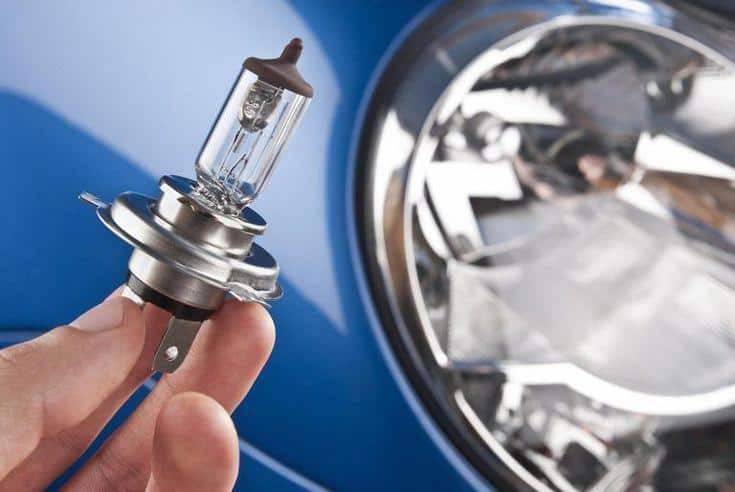
Check if the light works. (Photo source: amazon)

Testing the test light

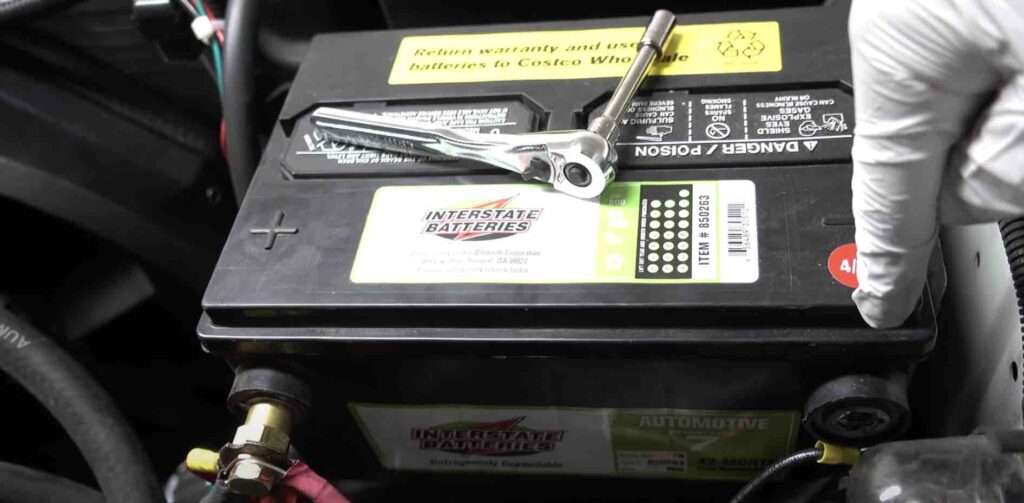
Well, you need to confirm if your tool is working correctly, right? To find out, attach it to a ground source such as a metal surface of the car or the negative terminal of the battery.

Press the lamp’s probe onto a power source such as the positive battery cable, a fuse, or the positive battery terminal. The tester works if the light illuminates.

Using the test light

You can use the test light to test many circuits such as a fuse, an alternator, a fuel injector, and many other things. You can check a blown fuse without disconnecting it from the fuse box.

The task is more than simple. Find the fuse box, connect the clip part of the test light to a metal part, and probe the fuse with the probe tip. The light will illuminate if the fuse is still working.

When a component, like a cooling fan, is not working, the first thing we do is change the fuse. But the problem could come from other parts.

This test light can ensure whether the fuse is powered or not. Instead of wasting time replacing a good fuse, you can move on and check if the switches or control units are causing the issue. Thus, the tool actually speeds up diagnosing a circuit.

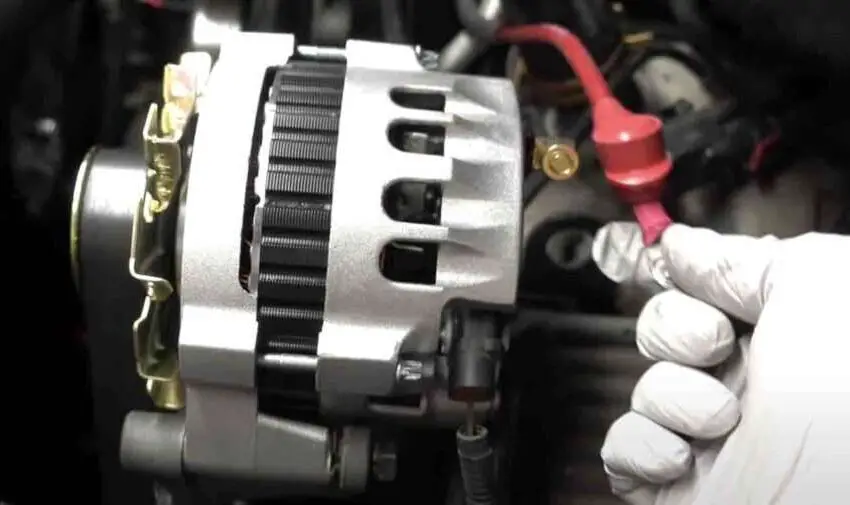
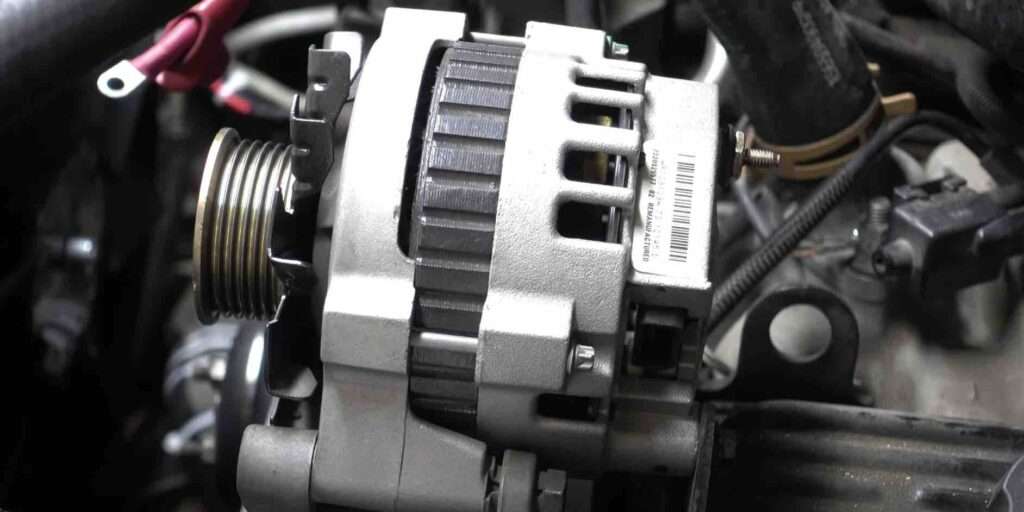
The alternator to battery must produce electricity to recharge the battery and power a car’s electronics. How to know if the alternator is doing its job?

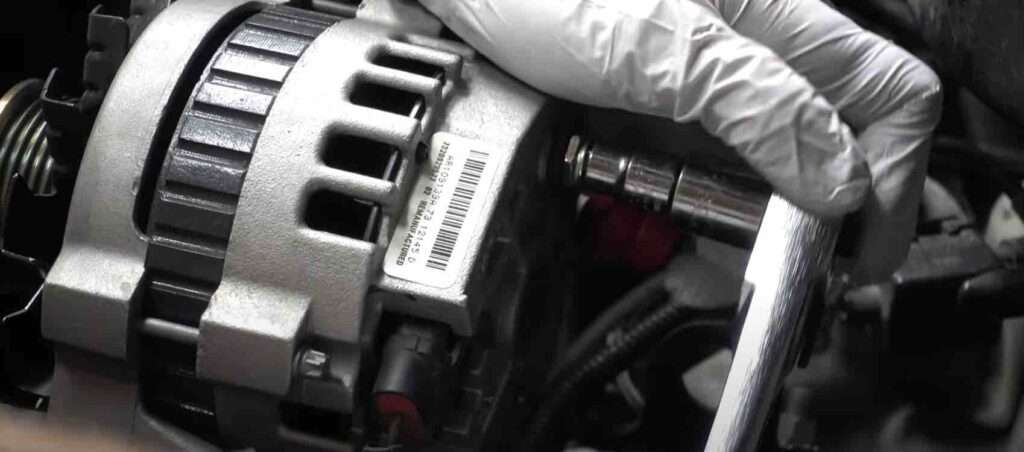
A test light makes this job a breeze. If it indicates that the large terminal of the alternator is powered, you can be sure the alternator is working correctly.

Checking the condition of a fuel injector could be another application of this handy tool.

Attach the clip to the negative terminal of the battery, then bring out the probe end to the trigger side of the injector circuit. The light will illuminate if the fuel injector is working.

How to use a test light for a ground circuit

You have learned how to test positive voltage with a test light. Sometimes, you might also need to test a ground circuit. Do you know how to do that?

Don’t worry. There is nothing complicated about it.

To check the ground, you must first see if the circuit has electricity on the positive side. If yes, move on to examining the grounding point.

Connect the clip end of the test light to the positive end and use the probe point to probe the ground wire of that circuit. A lit light indicates everything is working fine.

In this case, you need to test other parts of this circuit to find the problem.
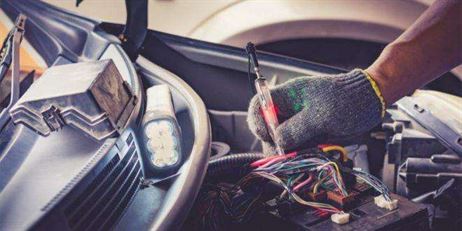
A lit light indicates the circuit is working. (Photo source: emanualonline)

If the light does not illuminate, you need to carefully examine the ground path. Fixing ground issues is comparatively easier than fixing a positive side.

Carefully check the ground wire connection point to see if there is rust, paint, or anything else. Such a thing can act as an insulator and obstruct the energy flow. Cleaning this connection point is likely to solve the problem.

Useful tips

By now, you probably have a clear idea about how to use a test light. If so, these tips will be helpful to you, as they will make the job even easier.

  • This tool has two reversible leads. This means there is no fixed wire for the positive wire or the ground wire.
  • Most test lights are likely to have a probing tip. This feature allows you to examine a circuit without detaching any wires, as you can simply pierce the plastic insulation of a wire with this pointed tip.

FAQ on using a test light on positive and ground wires

  1. Is it safe to use a test light on live (positive) wires?

Using a test light on live wires can be safe when done correctly. However, it is essential to exercise caution and follow safety precautions.

Ensure you have a good ground connection, wear appropriate safety equipment, and avoid touching the metal parts of the probe when testing live wires.

  1. How can a test light help diagnose ground wire problems?

When using a test light on ground wires, it helps identify if a ground wire is properly connected or if there is a break in the ground circuit. If the test light does not illuminate when connected to a ground wire, it suggests a grounding problem that needs to be addressed.

  1. Can using a test light damage electrical components or wires?

When used correctly, a test light should not damage electrical components or wires.

However, if the test light is used improperly, such as connecting it to a high-voltage source or accidentally shorting wires, it can potentially cause damage. Always exercise caution and follow proper procedures.

  1. Can a test light be used to check the continuity of a wire?

A test light is generally not used to check continuity (whether a wire is uninterrupted). Instead, a multimeter or continuity tester is more suitable for this purpose. These tools can determine if a wire has a continuous path or if it is broken or disconnected at some point.

  1. Can a test light help detect parasitic battery drain issues in a vehicle?

A test light can be used to identify parasitic battery drain issues in a vehicle.

By disconnecting the negative battery terminal and placing the test light in series between the disconnected cable and the battery terminal, you can check if there is abnormal current draw.

If the test light illuminates brightly, it indicates excessive current consumption, which can help identify the source of the drain.

  1. Are there any precautions to take when using a test light in a car’s electrical system?

When using a test light in a car’s electrical system, it is crucial to disconnect the negative battery terminal before testing.

This prevents accidental short circuits and ensures safety. Additionally, be careful when probing wires to avoid damaging delicate electrical components or causing unintended short circuits.

Watch this video by JoeCanDoIt to learn how to use an automotive test light, a simple and quick process!

https://youtube.com/watch?v=bmCGgDtCAYA%3Ffeature%3Doembed

Final words

In conclusion, knowing how to use a test light on positive and ground wires is a valuable skill for diagnosing vehicle electrical problems. This tool allows you to efficiently locate voltage and grounding issues.

However, always prioritize safety, use insulated tools, and disconnect the battery if necessary.

With these skills, you can save time and money by effectively identifying and resolving electrical issues, ensuring your vehicle’s electrical system operates optimally.
How many volts is a car battery

So, how many volts is a car battery? The simple answer is: the average voltage of car batteries is 12 volts DC. But voltage is not a fixed number. In fact, there is a whole car battery voltage chart, and if you want to know the overall condition of the battery, a voltage test seems to be the right option.

Regular testing of electrical systems and batteries is part of car maintenance. Do it at least twice a year to reduce the risk of sudden failure. A voltage test will help you determine the battery’s state of health.

How Many Volts Is a Car Battery? The Ideal Voltage

Before knowing how many volts a car battery is, do you know what the voltage of a car battery is?

The battery is one of the most important components of a car, as it powers the vehicle and all the electronic components it contains. It provides the necessary charge to start the engine, and without it, your car wouldn’t start at all. If the car has a low-voltage battery, the vehicle no longer performs as well as before.

Measuring the voltage will give you an idea of the current state of charge of a battery. Comparing it to the ideal car battery voltage range will help determine the battery’s condition.

The voltage of a fully charged car battery (without being connected to an external device) ranges from 13.7 to 14.7 volts. It will drop to 12.4 volts when the charge is at 75% and to 12 volts when it is at 25%.

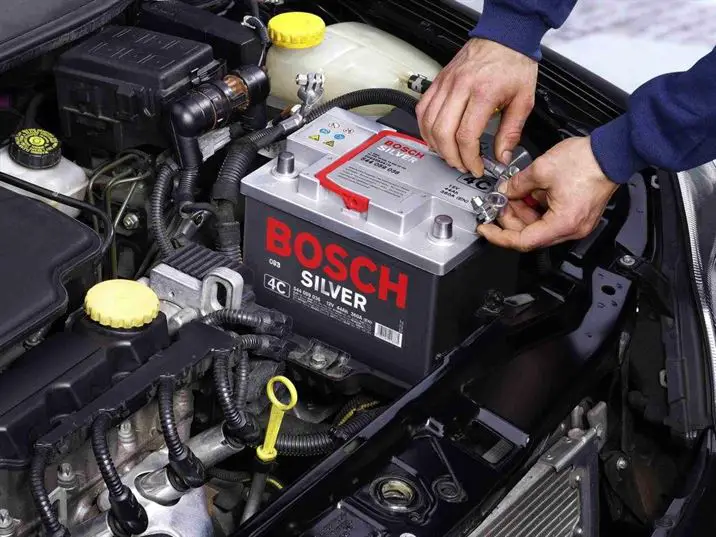
The voltage of a fully charged car battery ranges from 13.7 to 14.7 volts; it will drop to 12.4 volts. (Photo: carcarejoondalup.com.au)

What is the normal voltage of a car battery when it is out of battery? In this case, the voltage drops to 11.9 V. So, the voltage must be at least 12 for a car battery to have the capacity to operate.

It is important to note that car batteries are designed to operate within a specific voltage range, and vehicle electrical systems are designed to accommodate this voltage. It is not advisable to exceed or significantly deviate from these voltage levels, as this could damage electrical components or cause malfunctions in the vehicle’s systems.

How to Test a Car Battery’s Voltage

Using a voltmeter is the simplest way to measure a battery’s voltage at a given time. It’s useful because you can compare the readings with previous results to deduce whether the battery is functioning properly.

Set the voltmeter to its maximum value and touch its positive and negative cables to the positive and negative terminals of the battery, respectively. If the device is working, it will display accurate readings.

Don’t have a voltmeter to test how many volts a car battery has? Well, you can still check the battery’s condition by turning off the engine and turning on the headlights. However, it won’t be possible to know the voltage readings.

  1. Dim headlights indicate that the battery is draining and there is no charge production from the alternator.
  2. Brighter lights when starting the engine imply that the alternator is producing current to some extent, but not enough.
  3. Similar brightness during engine idling indicates that the battery and alternator are functioning well.

Another way to check how many volts a car battery has is by using a multimeter. These devices are inexpensive and readily available. So before checking, you should let the car sit for a while. You can leave your car overnight or longer, then test it. This is better than just testing it after the engine has been running. Otherwise, the result may not be accurate.

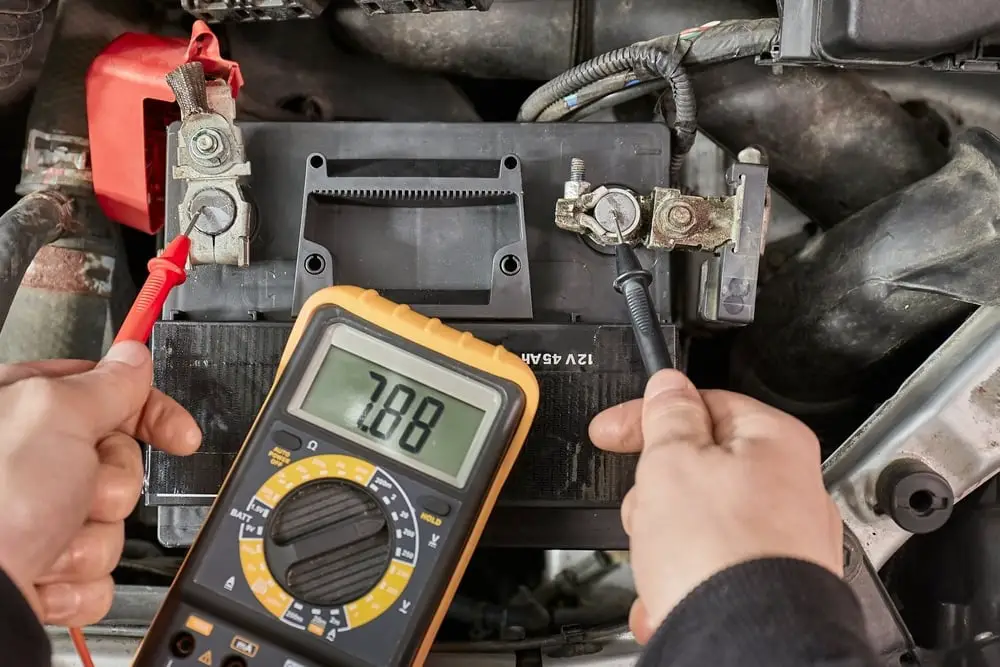
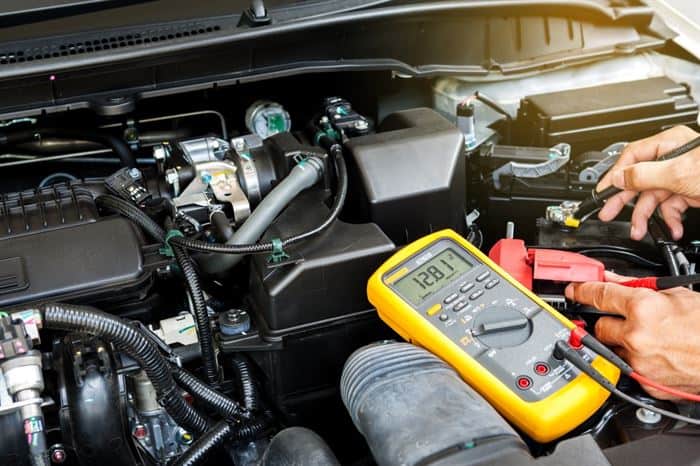
First, set the DCV to 20. Then, touch the battery’s negative terminal with the black wire and the positive terminal with the red wire. This will allow you to see the battery voltage on the multimeter’s display. The voltage should be around 12.4 to 12.6 volts. Anything lower than that tells you the battery is not fully charged.

An important thing to note is that if you see a negative reading, it simply means you have taken the leads the wrong way and are touching positive to negative, negative to positive. What you need to do is simply reverse them and touch them to the opposite terminals.

Car Battery Load Test

A functioning battery will generate between 9.5 and 10.5 volts over 30 seconds during load tests. A reading in this range indicates a healthy battery, capable of storing enough energy and running the car’s electrical devices smoothly. You will need a battery load tester to perform the inspection.

What should you do if the battery fails the load test and the voltmeter readings are below 12 volts at regular intervals? You can try to jump-start the car or boost its performance by adding distilled water. If both methods fail, you need to change the battery unit.

If the battery fails the load test and the voltmeter readings are below 12 volts at regular intervals, try jump-starting the car (Photo: pipsisland.com)

How Often Should You Test Your Battery?

So, besides the importance of knowing how many volts a car battery is, how to test car batteries, you need to know how often to test the battery. Just as your car needs frequent maintenance, the battery should also be checked. As specialists recommend, you should test the battery every 6 months.

If your car has a good battery and stable voltage, that’s good news. But what if the battery has a problem? By testing consistently, you’ll know what to do when the voltage is low. If you leave your car for a long time, for example, all winter, you should test the battery before taking it out and starting to use it.

Summary

So, you have the answer to the question: how many volts is a car battery? It’s supposed to be 12 volts DC. Learn how to test your car battery so you can check the battery voltage when needed. Remember to follow our maintenance tips to better understand your car and know how to care for it.

How to Program a Dodge Key Fob Without a Working Key

If you want to replace the key fob of a new Dodge car, knowing key fob programming becomes essential. But when no working key is available, the situation becomes complex. The only thing you can do is learn how to program a Dodge key fob without it working and perform the steps accordingly.

How to Program a Dodge Key Fob

The procedure for programming a Dodge key fob involves a few simple steps that you can perform according to the following guidelines.

  1. Enter the Dodge car of any model and sit in the driver’s seat. Within 10 seconds, press and release the “LOCK BUTTON” on the remote five times. In this step, timing is crucial.
  2. Now, press the “UNLOCK BUTTON.” While holding it, insert the key into the car’s ignition and turn it to “RUN” mode. Do not remove your finger from the “UNLOCK BUTTON.”
  3. While pressing the “UNLOCK BUTTON,” also press the “PANIC BUTTON” for a full second. Then, release both buttons simultaneously.
  4. Now, hold down the “UNLOCK” and “LOCK” buttons together before releasing them simultaneously.
  5. Again, press the “UNLOCK BUTTON.”
  6. From now on, the Dodge car should recognize the key fob.
Programming a Dodge key fob is an easy task. (Source: Quote Inspector)

How to Program a Dodge Key Fob Without It Working

If the key fob is not working, it becomes more difficult to program it. However, there is also a solution to this problem called the Manual Programming Procedure, which does not require a scan tool.

Step 1: Connect pin 1 or pin 4 of the 16-pin data link connector to the chassis ground.

Step 2: Close all vehicle doors and turn off the ignition key.

Step 3: Turn the ignition key to the Accessory ON position.

Step 4: It is now time to turn off the ignition. As a result, the door locks will cycle once in programming mode.

Step 5: For each key fob, press any button three times in a row to execute the code programming.

Step 6: Once programming is complete, the door lock cycle will occur again.

What to Do If the Key Fob Battery Is Dead

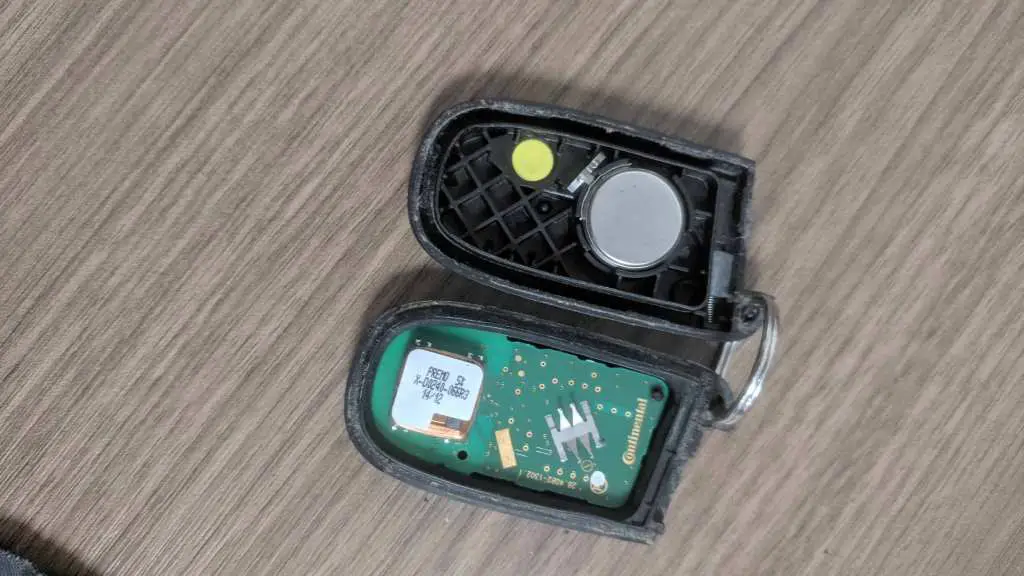
Sometimes, the remote control battery is dead or its charge is too low to function. In this situation, try this trick to open the doors of the Dodge vehicle:

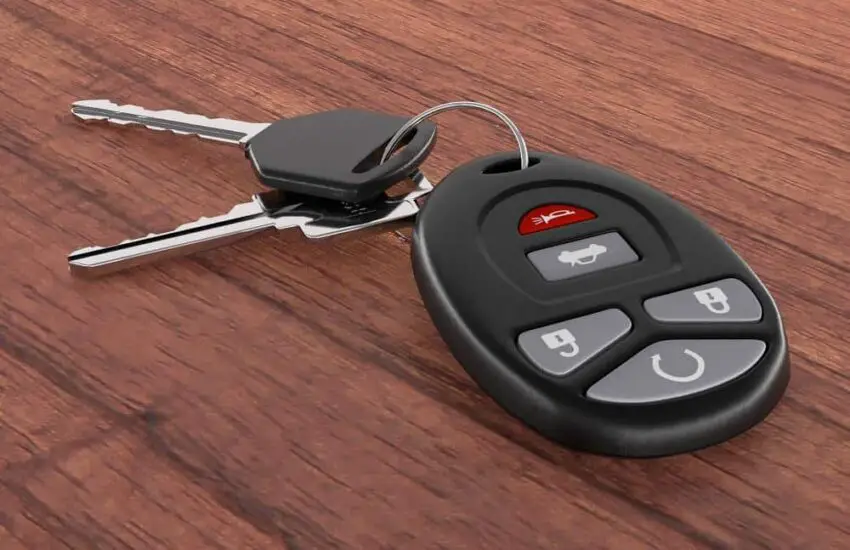
The good news is that there may be a hidden key inside the key fob. To locate it, flip the key fob over to access the opposite side and slide the switch from the upper left corner to remove the silver key. Now, this key can easily unlock the car doors.

Put the key back inside the key fob for safety reasons. Press the start button with the Dodge key fob and press the brake with your feet.

Sometimes, the remote control battery is dead or its charge is too low to function. (Photo: Dale Howard Auto Center)

Dodge Key Fob Program FAQ

  1. Can I program a Dodge key fob myself without it working?

You can program a Dodge key fob without it working by following the specific steps outlined in your vehicle’s owner’s manual or by seeking advice from Dodge customer support.

The process typically involves a series of actions, including entering the vehicle and using the ignition switch.

  1. What information do I need to program a Dodge key without a working key?

To program a new Dodge key fob, you will generally need the vehicle identification number (VIN) and the new key fob itself. Some vehicles may also require a PIN code, which can be obtained from a Dodge dealer or customer service.

  1. Are there different Dodge key fob programming procedures depending on the model or year?

The programming procedure may vary depending on the Dodge model and model year. It is essential to consult your vehicle’s owner’s manual or search for instructions specific to your particular Dodge model.

  1. Can I program multiple Dodge key fobs using this method?

You can generally program multiple Dodge key fobs using the programming method described in your owner’s manual. The process typically allows you to program multiple key fobs to work with your vehicle.

  1. Are there any safety precautions I should take when programming a Dodge key fob?

Although programming a key fob is generally a straightforward process, it is essential to carefully follow the safety precautions and instructions provided.

Watch this video from Tomahawk DIY for more safety precautions and advice when programming a Dodge key fob!

https://youtube.com/watch?v=-LEmmCAOiyA%3Ffeature%3Doembed

Make sure you are in a secure location and have all the necessary information and components before starting the programming process.

  1. What should I do if I encounter difficulties or have questions during the programming process?

If you encounter difficulties or have questions while programming a Dodge key fob, it is advisable to consult your vehicle’s owner’s manual for troubleshooting guidance or contact Dodge customer service or a dealer for assistance.

They can provide advice and support to ensure the programming process is successful.

  1. Can a locksmith or automotive technician help you learn how to program a Dodge key fob without it working?

Professional locksmiths or automotive technicians experienced with Dodge vehicles can assist you in programming a new key fob if you are unsure of the process or encounter difficulties.

  1. Is it possible to program a Dodge key fob without it working for all Dodge models?

The ability to program a Dodge key fob without a working key may vary by model and model year.

While most modern Dodge vehicles support this process, it is essential to consult your vehicle’s specific documentation or contact Dodge customer support for accurate information regarding your model.

Conclusion

If you are curious about how to program a Dodge key fob without it working, follow these steps. Thus, programming a Dodge key fob should be a simple process. But it is also possible for beginners to face a problem. In that case, follow the suggestions from expert Dodge vehicle specialists.

Why Headlights Don’t Work but High Beams Do

Automotive headlight technology is not complex. But they can fail in several ways, which can confuse a new car owner. If your headlights stop working suddenly, you need to determine what type of failure it is and take the necessary steps. This time, we will discuss the reasons why the headlights don’t work but the high beams do.

Why Don’t the Headlights Work But the High Beams Do?

Remember that most headlight problems are related to the electrical supply or the bulbs. There are specific elements to check when you face this problem. You can still drive when the high beams work, but this is by no means a safe practice, especially at night. Keeping your high beams on constantly will blind oncoming drivers, thus increasing the risk of accidents.

Here are the main reasons why the headlights don’t work, but the high beams are:

Burnt-out bulbs could be the cause. (Photo Source: vk)

Bulbs

Bulbs are the first things to check when your low beams don’t work. The reasons are simple. When you turn on the headlights, it’s almost always the low beams. High beams are only required on specific occasions. Thus, normal headlights burn out faster than high beams.

Want to change them yourself? Be careful because the installation procedure for one type of bulb differs from another. Poor quality work means you will spend more money on bulbs.

Fuse or Relay

Every automotive electrical system is equipped with fuses to protect against many electrical problems. A power surge blows these fuses. If this happens to the headlight circuits, the bulbs won’t light up.

Many headlights are equipped with a relay that diverts electrical power between the low beams and high beams. When it fails, it might still send power to the high beams but not to the low beams.

Sockets

All bulbs are plugged into a socket. Corrosion, a poor ground, or other issues can damage the sockets and disrupt the power flow to the bulbs. If only the low beam sockets are faulty, it will result in the headlights malfunctioning but the high beams working.

It is unusual for both sockets to be damaged at the same time. But the lights are wired together in some vehicles. Thus, any problem with one will also stop powering the other. No high beams will be affected as they are on a separate circuit.

Call a mechanic if you are a noob. (Photo Source: picfair)

Wiring

The headlights will not receive power if their wiring is bad. Connections to the wires can come loose, or some rodents might chew on them. In this case, the high beams will work if their cables are in good condition.

So these are the most likely reasons for disrupting the headlights’ operation without affecting the high beams. Troubleshooting these issues is easy, but call a mechanic if you have no idea about headlights and experience in handling electrical systems and circuits.

Headlights Don’t Come On But High Beams Work: Try to Fix Them

If your headlights don’t come on but the high beams work, it can indicate a few possible problems. Here are some troubleshooting steps you can follow:

Check the Fuses

Locate your vehicle’s fuse box and check the fuse related to the headlights. Refer to your vehicle’s owner’s manual to find the specific fuse for the headlights. If the fuse is blown, replace it with a new one of the same amperage. Test the headlights to see if they work.

Inspect the Headlight Relay

The headlight relay controls the electrical power to the headlights. A faulty relay can prevent the low beams from turning on while allowing the high beams to function. Locate the headlight relay, usually found in the engine compartment fuse box or a separate relay box. Replace the headlight relay with another similar relay (like the horn relay) and see if the low beams start working. If so, the original relay may be faulty and needs replacement.

Check the Headlight Switch

The headlight switch may have a separate setting or position for low beams and high beams. Make sure the switch is correctly set to the low beam position. If the switch is faulty, it may not make the proper contact to activate the low beams. Consider replacing the headlight switch if necessary.

Inspect the Wiring and Connections

Examine the wiring and connections associated with the headlights. Look for any loose, damaged, or corroded connections. Repair or replace any faulty wiring or connectors as needed.

Remember to exercise caution when working with your vehicle’s electrical components. If you are unsure about a step, it is best to seek professional help to avoid potential damage or injury.

Simple Step-by-Step Guide on How to Repair a Car Cigarette Lighter

This is a quick guide on how to fix a car cigarette lighter, so if you want to simply repair the cigarette lighter in a car, then this guide is for you. Imagine driving on a long trip when you notice your phone’s battery flashing the low battery red light and you think to yourself, “No problem, I’ll just plug it into my car charger.

But then you realize that your car’s cigarette lighter socket, which also serves as a charging port, is no longer responding and has broken down. Very frustrating, right?

Don’t worry, that’s what this article is for as we look at the steps to fix a cigarette lighter in a car.

Let’s examine the nuances of why this happens and how you can fix it yourself, saving time and money. But before that, let’s see why you should fix it even if it’s not a major problem for your vehicle.

Why Should You Care?

Well, cigarette lighter ports were originally only for lighting cigarettes, but the time when they served only to light cigarettes is long gone. In today’s vehicles, that small socket is a lifeline for powering all the necessary useful gadgets that make life on the road easier for us. Imagine a road trip without your GPS or a car full of bored children with dead tablets. That doesn’t sound fun, does it?

Why Do You Need to Fix Your Cigarette Lighter?

Your car’s cigarette lighter can be a source of many inconveniences and problems in your car if it stops working. Although we all have different reasons for wanting to fix the lighter port, below are some of the common reasons why you might want to fix them.

  • Avoid costly mechanical repairs down the road.
  • It’s very convenient to have the socket working properly (you can charge your gadgets wherever you are).
  • It’s easy to fix minor faults like blown fuses, sockets, etc., in your car, and a cigarette lighter is no exception.

Common Causes of a Bad Cigarette Lighter in a Car

Some of the common causes of a faulty or defective cigarette lighter in a car can range from minor and insignificant issues to slightly more complex problems. Often, it can be as simple as a blown fuse. Other times, it might be due to a loss of electrical power to the socket or something as simple as a stuck gum wrapper inside. Whatever the reason, the solution is usually within your reach.

Diagnosing and How to Fix a Cigarette Lighter in a Car Step by Step

#1. Checking and Replacing the Fuse

The heart of the problem often lies in a blown fuse. Located in your car’s fuse box, it’s usually a simple fix. Grab your car’s manual (yes, the one gathering dust in the glove box) and locate the fuse box. Once you’ve found the fuse responsible for the cigarette lighter, inspect it. If it’s broken or blown, replacing it is straightforward. Remember to always match the new fuse’s amperage rating to the old one.

#2. Dealing with a Stubborn Fuse

If the new fuse blows immediately, it’s a sign of a more serious problem, possibly a short circuit somewhere in the wiring. This might require a bit more elbow grease or, in complex cases, professional intervention.

#3. Cleaning the Lighter Socket

Sometimes, the problem isn’t electrical but physical. The socket can become a haven for all sorts of debris, from crumbs to small pieces of paper. A good cleaning often gets it working again. Just make sure the car is off and use a non-conductive tool to gently remove any debris.

#4. Inspecting the Lighter Itself

Remove the lighter element and inspect it. Signs of burning or corrosion can indicate that the lighter itself is the problem. Replacing it is usually as simple as going to an auto parts store and buying a new one.

#5. Testing the Electrical Pathway

Using a multimeter, you can test the power to the socket. Set the multimeter to measure voltage and touch one probe to the center of the socket and the other to the side. A healthy reading should be around 12 volts. Any number significantly lower indicates a problem with the socket itself.

#6. The Role of Plugged-in Devices

In our desire to turn our cars into mobile charging stations, we often overload the cigarette lighter socket with various devices. Sometimes, unplugging them can solve the problem. It’s also good practice to check the devices themselves: a faulty charger can sometimes be the cause.

Additional Tips and Tricks

  • Stay Safe: Always ensure your car is off and the keys are removed from the ignition before attempting any repairs.
  • Spare Fuses: Keeping a small assortment of spare fuses in your glove box can save the day.
  • Regular Cleaning: Make a habit of regularly cleaning the lighter socket to prevent any buildup that could cause problems in the long term.

Conclusion

A non-functioning car cigarette lighter can range from a minor inconvenience to a significant obstacle, especially in today’s device-focused world. However, with a bit of know-how and some basic tools, most problems related to it can be solved at home. This not only saves you a trip to the mechanic but also gives you a better understanding of your car’s inner workings. Remember, when it comes to car repairs, safety is paramount. If in doubt, seeking professional help is the wisest course of action.

How to improve alternator wiring

Do I want more amperes from my alternator or how can I improve the alternator’s amperage are common questions among car owners, and the good news is yes; there are various methods you can use to extract more amperes from your alternator, and I will discuss them in detail here in this guide.

Can I get more amperes from my alternator and how to improve the alternator’s amperage?

I will demonstrate which steps can help achieve this, as well as the benefits associated with it over time, while addressing whether a high-amperage alternator will damage my vehicle’s issues. So, what are the benefits of upgrading alternator amperage upgrade options or upgrading the benefits of upgrading alternator amperage or downgrading alternators?

Benefits of Higher Amperage Alternators

The output amperage of an alternator determines its battery recharge rate; higher amperage alternators charge faster due to their greater capacity to produce current at higher rates than those with lower amperages.

Increased amperage improvements may be possible; however, to be truly effective, you must also check that your cable harnesses can handle these increased amperage loads.

Improved alternator amperes ensure that your vehicle can meet any additional power demand, thus offering several benefits:

benefits of a higher amperage alternator

1) Improved Energy Efficiency:

Upgrading your car’s alternator allows it to produce more power at lower speeds, thereby reducing fuel consumption by up to 30% and improving mileage per gallon and emission levels in your exhaust system due to less gasoline burned during operation. This results in higher mileage per gallon as well as a reduction in its exhaust system emissions due to fewer burns during an operation.

2) Improved Engine Performance:

An upgraded alternator provides additional power to other engine components, such as spark plugs and injectors, to increase their efficiency for smoother acceleration and higher output power when most needed. Additionally, reducing the pressure on other parts like starters or air conditioning compressors, by not having to work against the weaker electrical current of standard units, can also extend battery life.

3) Extended Battery Life:

4.0 A better alternator means a longer battery life! Higher ratings mean more efficient battery charging cycles and, ultimately, more durable batteries before needing to be replaced or recharged.

How to get more amperes from the alternator.

To maximize alternator power, two strategies could help. Installing a smaller diameter pulley on the alternator shaft could increase the armature’s rotation speed and thus produce more amperes at any given engine speed, while maintaining cooling through higher fan speeds.

Secondly, consider upgrading or replacing it with a model designed to deliver higher output, for example by using high-performance parts such as robust rotors and stators available from spare parts suppliers as upgrades; both modifications should be relatively simple changes that can be accomplished using basic tools in a few hours.

Is a 145-ampere alternator sufficient?

Generally, most cars should not require more than 145 amperes from alternators as long as their electrical system is not overloaded by additional accessories and all unnecessary wiring requirements are safely met by this amount of output power from an alternator rated at 145 amperes for the correct and safe operation of an alternator rated at this level. In addition to having 40 amperes more than what many cars need today to operate optimally and safely.

This extra capacity protects against unexpected loads or surges that could otherwise compromise a car’s electrical system.

How much power can a 200-ampere alternator handle?

A 200-ampere alternator has the capacity to handle up to 2,400 watts when all its components are operating at optimal efficiency levels and working together optimally.

A 200-ampere alternator provides enough current to run multiple accessories at the same time; their respective amperage usage dictates their total power in terms of watts.

As an example, connecting multiple accessories directly to a single terminal could result in an abnormally low voltage drop and decreased output power for a particular accessory.

How many watts does a 100-ampere alternator support?

On average, 100-ampere alternators support up to 1,200 watts depending on their type and size. Most commonly, these 100-ampere alternators have peak output capacities up to this amount of power.

Engine speed (RPM), voltage regulator settings, and battery condition all play a crucial role in how many watts a 100-ampere alternator is capable of producing. The amount depends on factors such as input voltage and rated output current as well as the battery’s state of health.

What size alternator is needed for 3000 watts? Generating up to 3,000 watts requires at least 250 amperes; however, various factors must also be considered, such as engine performance and fuel economy, when selecting an alternator capable of creating that much power.

Fuel tank capacity is essential when working with high power like this, as higher power requires more electricity from the battery, creating additional pressure on both components.

Ensure all wire connections can handle maximum current consumption without overheating or short-circuiting due to poor insulation quality; otherwise, any increase in load could cause severe damage.

Alternator Amperage by VIN

To determine your vehicle’s alternator amperage by VIN, consult its owner’s manual or see a mechanic who has access to specialized tools like an oscilloscope or a digital multimeter (DMM).

Digital multimeters provide technicians with an effective method to measure output voltage at different points to calculate the current flowing through individual components of their systems, thus helping them accurately diagnose any potential issues within them.

Will a high-output alternator damage my car?

A high-output alternator will generally not harm, damage, or injure your car, but you must ensure that the new higher amperage is compatible with your vehicle’s model and your car’s electrical system load. Keep in mind that upgrading to a high-output alternator may also require upgrading the battery or wiring and proper installation to avoid potential issues.

How to Improve Alternator Amperage

Increasing your alternator’s amperage is a way to give more electricity to your vehicle if you need power-hungry accessories, thus providing essential extra power during their operation. Here is a step-by-step guide on how you can proceed:

Step 1: Acquire the Necessary Equipment

To properly install your high-amperage alternator replacement on your vehicle and obtain replacement wires suitable for its higher output amperage. Your alternator manufacturer should specify which gauge will best meet these requirements.

Step 2: Disconnect the Battery

Before starting work on any aspect of your vehicle’s electrical system, always disconnect its battery starting with its negative terminal. This ensures that no short circuits occur or you get injured during this step.

Step 3: Unbolt Your Existing Alternator

will a high-output alternator damage my car

Release tension on the alternator belt and detach it from its pulley on the alternator, disconnect all cables behind it, then unbolt its mounting brackets before disconnecting all wiring connections at the back of the alternator.

Here are the steps to follow to remove an alternator. Caution, do not take the necessary steps to reinstall the new alternator.

how to improve alternator amperage
  1. Step 1: Disconnect Your Battery: Before starting work on your car, make sure to disconnect its battery to avoid accidental electrical discharge. Start by disengaging its negative terminal.
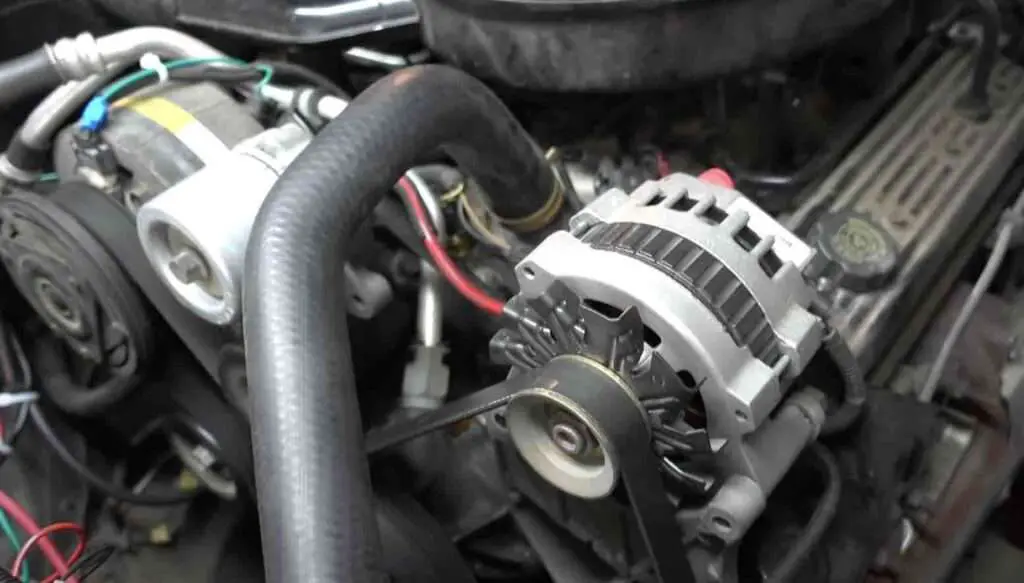
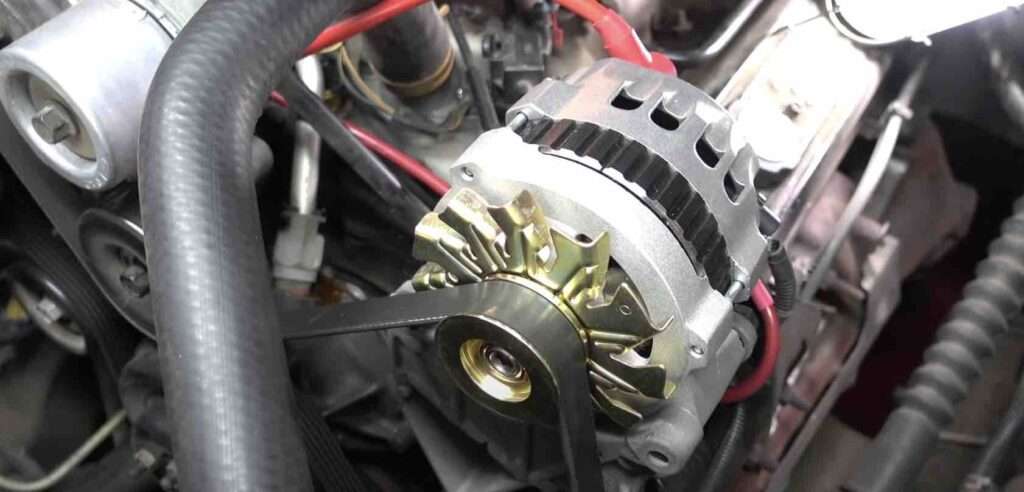
  2. Second Step: locate your alternator : Your alternator is usually located near the front of your engine. For easy access, it may be situated on top for convenient viewing; in some vehicles, it can even be found at the base. An alternator looks like a round device with a pulley attached in front.
  3. Step 3: Loosen the Tensioner: To remove an alternator, you will first need to loosen the tension of the serpentine belt by turning a bolt on a belt tensioner; this usually involves turning one or more bolts located in its pulley that maintain a tight belt tension; as soon as you loosen a bolt on this tensioner pulley, it will move and the belt tensioner will loosen. However, on some vehicles, additional measures might need to be taken, such as loosening an appropriate bolt directly on the alternator itself to relieve the effects of belt tension.
  4. Step 4: Removal of the Alternator Belt: Once the belt is loosened, simply slide it off its pulley at the alternator pulley. Be careful not to disconnect it completely from its engine, as this would prove more difficult if you attempted to reroute it later.
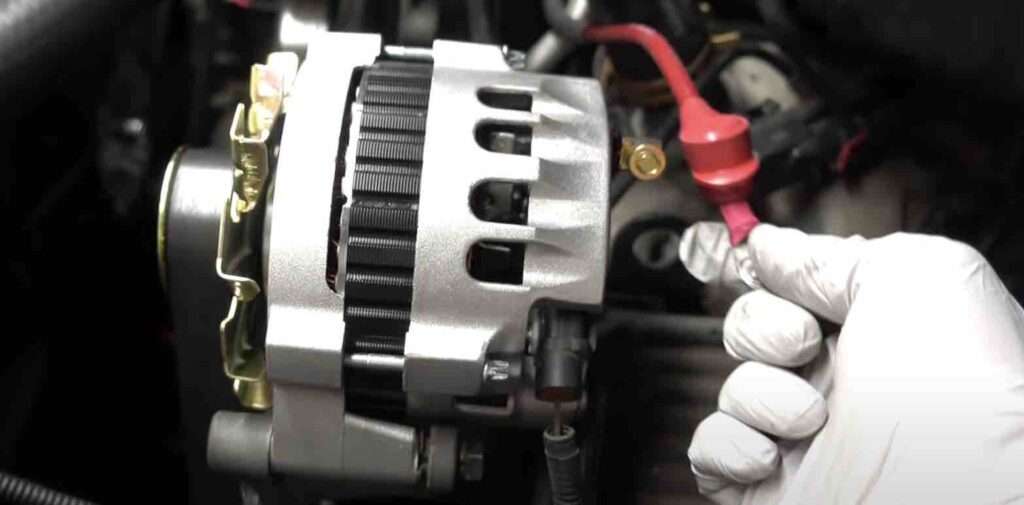
  5. Step 5: Disconnect the Alternator Wiring: Your alternator likely has one or two wire connections at its rear end: a large wire that carries its output directly to the battery and another smaller plug used to control it via signals from your vehicle’s computer system. Unbolt both connections by loosening their bolts; unplug or plug the smaller connector to remove it.
  6. Step 6: Unbolt the Alternator: Your alternator is usually secured in place with two to three bolts located near its front or rear bracket. Be careful when unbolting these bolts so that they are safely kept for future reinstallation of your alternator.
  7. Step 7: Disassemble and Install an Alternator: Once all wiring has been disconnected and bolts removed, you should be able to lift and gently slide your alternator out of its bracket. Jiggle it a few times until it is free.

Step 4: Install the New Alternator

will a high-output alternator damage my car

Install your new high-amperage alternator using the mounting brackets. Secure its higher gauge wiring using wire crimping tools if necessary to secure its connections to its connectors.

Step 5: Replace the Wiring

How to improve alternator amperage

Securing your new alternator may require an increase in amperage to function properly; if this happens, upgrade its wires from the alternator to the battery using thicker gauge wires – as a general rule, lower gauge numbers indicate thicker wires that can carry more current.

If this proves impossible, consider upgrading their gauge or simply replacing them with wires from another alternator of higher output amperage – in any case, the alternator should connect better.

Or you can also replace the existing alternator wiring from the alternator to the battery with thicker gauge wires from the alternator; otherwise, replace them as soon as you install its replacement alternator-battery cable using thicker gauge wires than the current.

Step 6: Reconnect Your Battery and Test the System

Reconnect your battery and test the system starting with the positive terminal, then moving to the negative, reconnect all cables to their appropriate terminals before starting your vehicle and measuring its voltage with a multimeter; an efficient charging system should display about 14 volts on this indicator.

Remember that each vehicle varies in terms of make and model; therefore, these steps may differ depending on how your installation proceeds.

Conclusion Before upgrading your alternator to increase amperage, several aspects must be carefully considered; among these, compatibility is the main concern.

And I have shown you in this article how to improve alternator amperage while highlighting the benefits of a higher amperage alternator and addressing the question of whether a high-output alternator will harm my car.

How to Disable a Car Alarm Without a Remote

Here are some tips that can help you know how to disable a car alarm without a remote control system. Car alarms are the knights in shining armor when an intrusion into your vehicle is detected.

It’s like a security alarm that the car generates when a thief attempts to break into your car. While it is one of the finest inventions, sometimes you feel like breaking the alarm system simply because it won’t turn off.

Another nightmare occurs when you don’t have a remote control. So what?

How to Disable a Car Alarm Without a Remote Control? Tips & Tricks

Turning off the alarm can sometimes be tricky, as it would be like trying to steal your own car. Car manufacturers try to make the process more delicate, but here are some tips that can help you learn how to disable car alarms without a remote control.

1. Using the Keys Can Be Useful

If your alarm remote is lost or not working, the best idea is to try unlocking the car manually. This trick may or may not work, but it is the first step in trying to stop that annoying alarm.

Insert the keys into the driver’s side lock to unlock it. If the door opens and the alarms still don’t trigger, try locking and unlocking with the keys several times.

In case the driver’s side lock doesn’t open, try opening the passenger side door. This is the simplest trick to disable the car alarm without a remote control.

Tips for disabling a car alarm without a remote control. (Photo: madamelilica)

2. Turn the Ignition to “ON”

If you manage to unlock your car with the keys, the next step is to turn on the ignition. This should help stop the alarm. Even if it doesn’t solve the problem, frequently turn the dashboard lights on and off before restarting the engine.

This trick is useful most of the time and is capable of giving you back peace of mind. You can also refer to maintenance tips for a complete guide to disabling the alarm.

3. Door Tricks to Avoid Hassles

Many car alarms operate on the principle of door sensors. This further implies that exiting with the doors can help disable the alarm.

Start by inserting the keys into the driver’s door, then turn it twice to the right and then twice to the left. Now, put the keys in the ignition and try to start the car.

You can also try inserting the key into the driver’s door and holding it there for two seconds before turning it to open the door.

4. Disconnect the Battery

If none of the tricks listed above work, this trick to stop a car alarm without a key might help you.

Since the car alarm needs to be powered by an electronic component, eliminating the battery connections could do the trick. Removing the battery should, on one hand, turn off the alarm and, on the other hand, reset it.

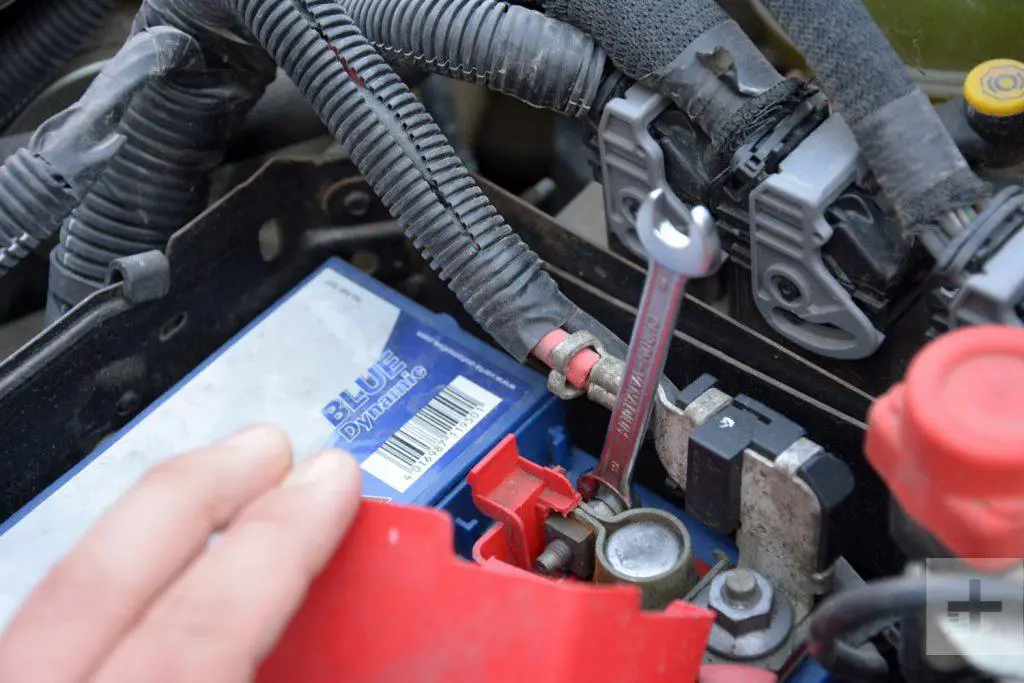
All you have to do is open the hood, locate the battery, and disconnect its negative terminal with a wrench. You can reconnect it after a minute or two has passed.

Ways to know how to disable a car alarm without a remote control. (Photo: Digital Trends)


FAQ on Disabling a Car Alarm Without a Remote Control

  1. What to do if my key doesn’t work to disarm the alarm?

If your key doesn’t work to disarm the alarm, there might be a problem with the key or with the alarm system itself. In such cases, it’s best to contact a professional mechanic or your car manufacturer for assistance.

  1. Can I disconnect the car battery to stop the alarm permanently?

Disconnecting the car battery can stop the alarm temporarily, but it won’t necessarily disable the alarm system permanently. Some car alarms have backup power sources, and you may need to address the root cause of the alarm activation.

  1. Why did my car alarm go off in the first place?

Car alarms can be triggered by various factors, including unauthorized entry, break-in attempts, vibrations, or even electrical issues. Identifying the cause of the alarm activation is essential to prevent it from happening again.

  1. How can I prevent my car alarm from going off accidentally?

To prevent accidental alarm activations, make sure all doors, windows, and trunk are properly closed before locking the car.

Additionally, check the sensitivity settings of your alarm system, if adjustable, and consider having the system repaired if it triggers too easily.

  1. Can I permanently disable my car alarm if it’s causing problems?

Permanently disabling a car alarm may be inadvisable, as it can affect your vehicle’s security. Instead, consider having a professional inspect and repair the alarm system to address any issues.

  1. Is it possible to replace a lost or faulty remote for my car alarm?

Yes, you can usually replace a lost or faulty remote for your car alarm. Contact your car manufacturer or an authorized dealer to get a new remote and have it programmed to work with your vehicle.

  1. What should I do if my car alarm keeps going off for no reason?

If your car alarm keeps going off for no apparent reason, consult your vehicle’s owner’s manual for guidance on troubleshooting or temporarily disabling the alarm. If the problem persists, seek professional help to diagnose and fix the issue.

The 6 Symptoms of a Bad Mass Strap

Symptoms of a Bad Ground Strap, If you are like most people, you haven’t heard of the ground strap, even though it has a very important function to perform. If you start to notice some of the symptoms of a bad ground strap, you may want to learn more about this vital component. 

We have gathered the main symptoms of a bad ground cable, as well as some useful tips for diagnosing the problem. We also show you the location of this part, explain its function, and discuss the replacement cost before answering your main questions. 

Symptoms of a Bad Ground Strap

When the ground strap is faulty, you will notice flickering headlights or warning lights on the dashboard. It can also prevent the battery from charging, lead to low battery voltage, and cause difficulty starting the car. You may also notice strange electrical system malfunctions that don’t seem logical.

Some of these symptoms can also be caused by other problems, but let’s take a closer look. 

1. Flickering Headlights

As with any charging system malfunction, you may face flickering headlights. When the ground strap is damaged or not connected properly, the electrical circuit encounters more resistance while powering the headlights. The result is a flickering sensation or dimming over time.

If you only notice the flickering once, the ground strap may have come loose but remained in a good position. Most likely, the problem will persist, and you will need to tighten the ground strap or replace it. 

2. Dashboard Warning Lights

With so many different warning lights on the dashboard, it can be difficult to try to figure out what the vehicle is trying to tell you. With this problem, you may see the battery warning light on the dashboard, indicating that the battery is getting low and cannot charge properly.

Yet, a bad ground connection is not the only cause of this problem. It can also be due to faulty wiring or a defective alternator. If you need to drive the car a little further when this light comes on, turn off all electrical equipment, such as the radio and air conditioning. This step helps you preserve the battery a little longer. 

3. The Battery Does Not Charge Properly

As we just mentioned, the battery may stop charging when the ground strap is faulty. The car must have a good ground to charge the battery.

Again, a dead car battery is not solely due to the ground cable. It may legitimately be time to replace it, or you may have a failing alternator. For this reason, it is important to perform a full diagnosis before replacing anything. 

4. Low Battery Voltage

If your vehicle’s electrical system doesn’t seem to have as much power as usual, there may be a problem with the ground strap. A digital multimeter can help you discern the amount of voltage coming from the battery terminals.

This reading should be around 12.6 volts with the car not running. If it is lower than that, you might have a dead battery or a grounding issue. 

5. Problems Starting Your Car

There are many reasons why your car won’t start, but you should never overlook the possibility of a bad ground connection. If the ground is the cause, you will hear clicking noises when you try to start the car.

This noise comes from the starter solenoid as it repeatedly opens and closes. Without a proper ground connection, the starter cannot get the correct voltage, but this also happens if your battery is dead. 

6. Various Strange Electrical Problems

When there is a bad ground, you may notice difficulties in the electrical system, especially when it is under immense load. For example, you may notice that things become problematic when your air conditioning is running and your aftermarket stereo system has a subwoofer. 

If you try to use two functions at once, such as power windows and high beams, you may notice that one of them is not getting the power it needs. Any strange electrical problem should be examined as a possible bad ground connection. 

What is the Function of a Ground Strap?

The vehicle’s ground cable connects the negative terminal of the battery to the chassis. The car’s ground strap provides the grounding connection that links the engine to the car’s body. With the engine connected to these areas, an alternative path for electricity is created.

For safety reasons, most electrical components must be grounded. By grounding the connection, a complete circuit is created where electricity can flow along a defined path. Electricity flows freely from the positive terminal of the battery to the electrical components where it is needed. After that, it passes through the ground connection. 

In case of a short circuit or power surge, the ground connection provides protection against damage. It dissipates into the ground connection. Electrical devices that rely on a ground connection include: 

  • Air conditioning compressor
  • Radiator fans
  • Stereo system
  • Ignition system
  • Alternator

You can learn more about your car’s ground connections by consulting the diagram available in your service manual.

Where is the Ground Strap Located?

The ground cable runs from the negative terminal of the battery to the chassis. It looks like a battery cable. Because it is prone to corrosion, the connection can sometimes be compromised. 

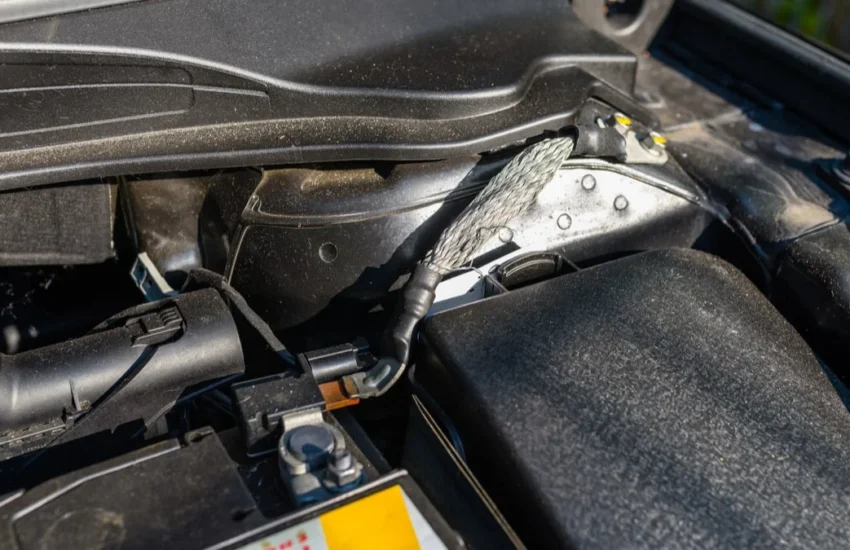
The ground strap runs from the engine to the chassis. Although it’s called a strap, it looks more like braided steel to create a strap.

Over time, this steel strap can fray and become damaged. It is subjected to weather conditions, vibrations, heat, and hot oil leaking from the engine. If the strands of the strap deteriorate too much, they will break, reducing the effectiveness of the ground strap. 

How to Test a Ground Strap?

Your first test should be a visual inspection of the ground strap. Look for the plain black cable. It will be connected to the negative terminal of the battery and the car’s chassis. Check that the entire cable is not damaged. Even a small amount can cause electrical interference. 

Your car has several ground connections, including the one that goes to the engine block. Make sure to locate all of them to check for damage.

If you find no physical damage, you can test the connection with a multimeter. The digital multimeter is inexpensive and handy for such diagnostics. 

  1. Park your car in a dry place, such as a garage. The area must be completely dry.
  2. Remove all your jewelry since you will be working with electricity. 
  3. Set your multimeter to 20 V DC.
  4. Touch the red probe to the positive (red) terminal of the battery and the black probe to the negative (black) terminal of the battery. This reading should be about 12.6 volts.
  5. Place the black probe on the ground connection. It should continue to read 12.6 volts. Anything well below that indicates a bad ground strap.
  6. Connect your black probe to a part of the engine block that is metal. This tests the ground connection with the engine. It must match the specifications in your service manual. If not, you need to replace or reconnect the cable. 

If your tests reveal nothing, you may want to check for a blown fuse, especially if you cannot start the car. If your symptoms are flickering headlights, sporadic electrical issues, and battery charging problems, your alternator may also be failing. 

How Much Does it Cost to Replace a Ground Strap?

It is not expensive to replace a ground cable. You can spend between $150 and $250 to have the ground cable replaced by a professional. The part only costs about $20 to $40, while labor can add another $130 to $210. 

On some vehicles, it is difficult to access the ground cable, which would lengthen the installation time. However, you can probably figure out how to do it yourself if you have a few basic tools and a high-quality service manual. These manuals give you the diagrams and provide step-by-step instructions. 

If you are unsure of the procedure, it’s better to pay a professional to handle it. As mechanics, we prefer drivers to ask for help rather than do something that could damage the electrical system. You could end up with a much higher repair bill if you fry something electronic because you are unsure of the procedures. 

Why is a Ground Strap Necessary?

The ground cable is the negative battery cable that completes a circuit from the battery to the chassis. It is necessary to prevent electrical overloads or short circuits from damaging the car’s valuable components. However, when it is not properly connected or is worn out, it can cause electrical malfunctions. 

What is the Difference Between a Ground Wire and a Ground Strap?

The ground strap is usually a braided metal strip that connects the engine to the car’s chassis. In comparison, the ground wire or cable is used to connect the negative terminal of the battery to the vehicle’s chassis. Other electronic equipment may also use some form of ground wire. 

Will a Car Start Without a Ground Strap?

No, the starter will not receive the voltage it needs to start the car without the ground cable or strap. Even if you could drive the car for a short period, the battery would stop charging, leaving you stranded anyway. That’s why it’s a good idea to replace the ground strap at the first signs of trouble. 

How to Know if the Grounding is Correct?

You can use a digital multimeter to get readings from the battery terminals and the ground to see if it has been properly grounded. Compare the readings with the specifications in your service manual to ensure everything is working correctly. If the ground is bad, replace it or tighten the connection to avoid problems. 

How to Install Ground Straps?

Remove the old ground straps and connect the sturdy cable to the negative terminal of the battery. The other end connects to the metal of the engine block or chassis. Make sure both connections are tight and clean. Ensure there is enough length so the ground is not torn under torque.

With a bad ground strap or a loose connection, many problems can occur. It is best to fix the connection at the first signs of trouble, so you don’t end up stranded somewhere. With some basic mechanical expertise, you can replace the broken cable yourself. 

However, some cars have a difficult configuration, making it harder to access the strap and its grounding points. In that case, you might be better off paying a professional to handle the replacement for you, unless you have a bit more free time and a good service manual to consult. 

1. What is a Ground Strap? (Function and Importance)

  • Content:
    • Technical definition: “The ground strap is a cable connecting the engine/chassis to the battery, allowing the return of electrical current.”
    • Explanatory diagram (example: [Insert an image of a ground strap on a Volkswagen engine]).
    • Consequences of a faulty strap: electrical malfunctions, accelerated corrosion, etc.

2. How to Test a Faulty Ground Strap? (DIY)

  • Content:
    • Tools needed: multimeter, socket wrench.
    • Steps:
      1. Measure the resistance between the engine and the battery (expected value: < 0.5 Ω).
      2. Check for corrosion at the terminals.
      3. Test the voltage with the engine running (less than 0.1V drop).

3. Real Workshop Cases (Case Studies)

  • Content:
    • Example 1: “A 2015 Audi A4 with flickering headlights – Cause: oxidized ground strap.”
    • Example 2: “A Peugeot 308 that won’t start – Solution: replacement of the ground strap.”

4. FAQ on Ground Straps

  • Questions/Answers:
    • “Can a ground strap cause a total breakdown?” → Yes, if the circuit is interrupted.
    • “What is the replacement cost?” → €20 to €80 depending on the model.
    • “Can I use a jumper cable as a ground strap?” → No, risk of overheating.

5. Comparison: Ground Strap vs. Battery Cable

How long do electric car batteries last?

Whether you’ve decided to purchase an electric car or currently own one, you’re bound to have some questions. One of the most frequently asked questions is: how long do electric car batteries last?

In this article, we discuss everything you want to know about the EV battery. We look at its lifespan, the typical battery warranty, and highlight a few ways to protect the EV battery’s lifespan. 

How Long Do Electric Car Batteries Last?

The majority of electric car manufacturers agree that the battery should last 200,000 miles or more. Based on normal driving standards, this could be 10 to 15 years on average. However, Tesla is working on creating a million-mile battery, which would significantly improve lifespan. 

Still, it’s impossible to tell you precisely how long the battery will last in the long term. Many factors affect its lifespan, beyond the company that manufactured it and the car it’s in. 

When you compare this lifespan to that of a typical internal combustion engine battery, you see a big difference. Most traditional vehicles contain a battery that only lasts about five years. Furthermore, these batteries aren’t as essential as in the electric vehicle. Electric cars require fewer battery replacements and less maintenance overall than comparable gasoline or diesel cars, making them even more attractive to today’s consumers.

What is the Warranty Period for an Electric Car Battery?

No one wants to deal with replacing an electric car battery, which is why it’s important to know the length of the car manufacturer’s warranty. The federal government requires all manufacturers to offer a minimum warranty of eight years and 100,000 miles on the battery. However, California requires a battery warranty of 10 years/150,000 miles.

Over the years, technology will only improve. Companies will be able to create not only more durable batteries but also batteries offering longer range. 

Why Do Electric Vehicle Batteries Degrade?

There are many reasons why electric vehicle batteries degrade. One of the most significant factors includes the temperatures at which the batteries are used and stored. If you use the batteries in a hotter area, their lifespan might not last as long. Heat is hard on batteries, as is extreme cold. For optimal lifespan, you want to use the batteries in a temperate climate. 

Additionally, charging cycles affect the battery’s potential. Charging cycles are defined as the discharging and charging that occurs. One might think that not using the battery would extend its life, but that’s not necessarily the case either. Even without using the battery, it will continue to degrade.

How to Maintain an EV Battery for a Longer Lifespan

1. Follow the Car Manufacturer’s Guidelines

As with any car, you should always follow all guidelines set by the manufacturer. This tip couldn’t be truer than with an electric car. In the owner’s manual, you’ll find the best guidelines for creating optimal battery performance. 

Each manufacturer recommends something different, so it’s important to follow these guidelines more than any others. Each company uses different battery technology, so the car manufacturer knows what’s best. 

2. Monitor Temperatures

EV batteries don’t handle extreme temperatures well. Generally, a liquid-cooled battery has better retention because it’s able to maintain lower temperatures. However, you should still think about how you use and store the batteries.

If you can drive and park at moderate temperatures, you should see the longest lifespan. Even if you can’t, you can take some steps to protect the batteries. Park in a shaded spot to keep temperatures low and keep your vehicle in a garage to ensure a more controlled climate. 

3. Avoid Fast Charging

With fast chargers available everywhere, consumers are flocking to this technology to stay on the road. That said, fast charging isn’t necessary all the time. You can use DC fast charging occasionally, such as when you’re on a trip. 

Nevertheless, you want to minimize how often you use this technology. Charging it more slowly will better maintain the battery’s lifespan. There are some chargers that offer you different rates for better customization. For example, EV Connect allows you to choose the solution that best fits your needs. 

4. Don’t Overcharge

You don’t want to leave your electric vehicle plugged in longer than necessary. What you might not know is that you can easily overcharge EV batteries, which reduces their lifespan. Overcharging causes detrimental effects on the battery’s negative electrode.

When you overcharge the EV battery, dendrites begin to form on the anode. This formation can lead to a sudden change in voltage, causing an increase in the battery’s internal resistance. When you overcharge the battery, you’ll also see a rise in internal temperature, leading to the possibility of a battery fire or thermal runaway. 

What Happens to Old Electric Vehicle Batteries?

Once an EV battery reaches the end of its lifespan, you want to know what will happen to it. Manufacturers continue to work on ways to best reuse or recycle dead batteries. If the battery is completely dead, it needs to be separated from the metals it contains. These metals will be reused and the rest will be disposed of. However, only about half of these materials are currently recyclable. We expect this to change over the next few years.

If the batteries still have some capacity, there are other ways to use them. Batteries can be moved to the home as backup since they work very well with solar panels to provide some electricity. 

Cost of Replacing an Electric Car Battery

In most cases, you won’t need to pay for the electric car battery replacement if it fails prematurely. In case of a manufacturing defect, replacing EV batteries should be covered by the extended warranty offered by manufacturers. You should know your car’s battery warranty and remember to transfer it, if applicable, if you buy a used EV.

The cost of replacing an EV battery depends on several factors. If the batteries are low capacity, they won’t cost as much as a Tesla battery. On top of that, you need to account for the money spent on labor to replace the batteries. Only qualified technicians should work on your electric vehicle, as it’s dangerous to handle the system. It’s not the same as replacing the battery in your gasoline car. You should never attempt to do it yourself at home.

That said, you could spend between $5,000 and $20,000 to install new batteries. The good news is that prices have dropped significantly over the past year when considering the increase in capacity. With this in mind, we should continue to see the same trend. You might spend just as much on batteries in a few years, but they should have a longer lifespan and better range, thus ensuring much better value.

How to Clean Car Seat Belts

How to Clean Car Seat Belts: The Complete Beginner’s Guide. Most seat belts are devices that get dirty easily but are often overlooked. Drivers typically soil their seat belts with sweat, food stains, or coffee spills. Many people don’t know how to clean seat belts; therefore, in this article, we will guide you on how to proceed.

What Material Are Car Seat Belts Made Of?

Car seat belts are essential for ensuring driver safety, as they help minimize injuries resulting from body impact during an accident. However, it’s important to note that seat belts can get dirty and develop yellowish stains due to factors like sweat or food spills. If left unattended, these long-term stains can promote mold growth, compromising both aesthetics and health. Therefore, drivers should take proactive steps to clean their seat belts.

Car seat belts are technically produced to ensure driver safety even when the belt is pulled and stretched. The fabric that makes up the belt is a woven mesh, carefully designed to have extremely high tensile strength – approximately 3,000 to 6,000 lbs.

The seat belt material is typically 100% woven polyester. Nylon was once the most popular material, but it is more prone to stretching and wear. Even minor damage or wear on the belt will significantly reduce its tensile strength. Therefore, the difference between polyester and nylon is minimal but extremely important.

How to Clean Seat Belts in 3 Simple Steps

Required Items

  • Hand clamp
  • Scrubbing pad
  • Small soft brush
  • Sponge towel
  • Fabric cleaner
  • All-purpose cleaner
  • White vinegar
  • Dish soap
  • Plastic cup
  • Stiff-bristled brush

Steps for Washing the Car Seat Belt

You might be surprised to learn that cleaning seat belts is not extremely difficult. Once you have gathered all these necessary items, you are ready to start cleaning by following the simple steps below.

Step 1: Pull and Stabilize the Belt

Gently pull the seat belt out of the retractor to find mold and sources of foul odors. The belt should be pulled forward until it can’t go any further so that drivers can wash it completely. Use a metal clamp to prevent the belt from retracting into the coil while you work on it.

Step 2: Use the Cleaning Liquid

How to clean seat belts (photo source: TestDrive/Perpetual Radio Networks)

For a Normal Stain

Next, use a car seat belt cleaner to remove dirt. Lightly spray fabric cleaner onto the fibers and scrub with a medium to stiff-bristled brush, avoiding circular motions by scrubbing up and down. Most stains can be cleaned with an all-purpose cleaner that can be safely used not only on seat belts but also for the health of car owners.

For a Stubborn Stain

It is recommended for drivers to create the mixture by filling a cup with warm water and adding 3 tablespoons of all-purpose cleaner. Expert car owners usually create this cleaning mixture for tough stains. Use the minimum amount of cleaner and liquid needed to remove the stain and avoid oversaturating or spreading discoloration.

The powerful potion to wipe away nasty stains (photo source: popsugar.co.uk)

For Mold and Unpleasant Odors

To create a wonderful mixture, car owners can follow this recipe: non-bleach dish soap, warm water, and vinegar. Mix 1 tablespoon of dish soap in a cup of warm water, then add about 30 ml of vinegar. It is advisable to stir the mixture gently until completely combined.

The steam machine is the powerful weapon for this job (photo source: AUTO CARE/Youtube)

Next, gently scrub the strap. Vinegar is excellent for killing odors and is a natural antibacterial agent to minimize future mold problems. If you have access to a steam machine, spray a fabric cleaner on the belt and blow pressurized steam onto the strap to remove dirt and kill germs. Steam is also useful for minimizing the amount of moisture used and, consequently, the drying time required.

Step 3: Gently Scrub the Belt

One of the most powerful cleaning tools available to car owners is the stiff-bristled brush. The brush can be used to restore the seat belt to its optimal condition. Car owners should scrub from bottom to top to avoid wearing out the belt threads. Remember to use the brush gently and not move it in a circular motion.

Use the minimum amount of cleaner and liquid needed to remove the stain and avoid oversaturating or spreading discoloration. By doing this, the nasty stains and mold will be completely eliminated.

After that, it is also recommended to use a microfiber towel to remove moisture.

Cleaning car seat belts (photo source: togwt1980.blogspot.com)

Step 4: Let the Belt Dry

Finally, dry with a cloth towel by pressing the belt between your hands and running the fibers from top to bottom, to avoid damaging the belt threads. The belts must be dry before pulling and retracting to prevent mold from growing inside.

It usually takes overnight or longer for the belts to dry completely. If the belt is retracted and retains moisture, mold and bacteria will grow inside the coil, so allow enough time for proper airing.

How Often Should We Clean the Car Seat Belt?

Seat belts are designed to be rolled up and hidden, so they are often overlooked during car cleaning. However, in reality, seat belts are one of the sources of bad odors in cars.

Most compact cars are equipped with five seat belts: the driver’s seat belt, the passenger seat belt, and the other three on the rear seats.

For the passenger seat belt, the car owner can clean it at any time if someone often sits in that position. If the user frequently drives alone, cleaning is only required every six months to remove accumulated dust and dirt. The same applies to the rear seat belts. If there are often children or pets in the vehicle, the vehicle owners should clean the seat belts as often as the driver’s seat belt.

In Conclusion

We hope you find a detailed and helpful answer to the question of how to clean seat belts. Additionally, you can browse online to find the best maintenance tips and get more information on cleaning car seat belts.