
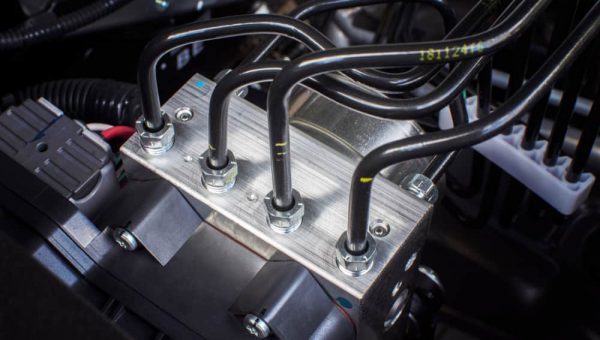

The Anti-lock Braking System or ABS is an advanced safety feature found in almost all vehicles nowadays.
The ABS system consists of the ABS module and ABS sensors located on each tire. The entire system works in tandem to ensure that your vehicle does not skid or become uncontrollable during sudden braking maneuvers.
The ABS control unit is the main processing module of the entire anti-lock braking system or ABS system of your vehicle. All modern vehicle models come with a pre-installed anti-lock braking system.
The main components of the ABS system are the control module, valves, and sensors. The control unit essentially receives all the information, records it, and makes it available to the vehicle’s engine system to ensure that the brakes are applied safely without the vehicle skidding.
Signs of a Bad ABS Control Module
The ABS control module is a life-saving component in a car. But like any other component, it has a shelf life, after which it may show signs of deterioration.
If the module fails, you will be prone to accidents, as hydroplaning and skidding will be much harder for your car to control during sudden braking. Fortunately, an ABS module failure is easy to detect.
1. Unresponsive Brake Pedal
On some vehicles, braking is directly connected to the ABS control module. This means that the entire braking function is activated after passing through the ABS module. If this happens and the module fails, your entire braking system will no longer be able to respond.
Either you cannot apply the brakes at all, or the brakes do not react quickly enough for you to brake to a safe distance. This is a potentially fatal problem, so it is best to have the issue repaired by a mechanic as soon as possible.
2. More Force Required to Brake
If the ABS module fails, it sends incorrect information to the braking system. This causes the brake calipers to act out of character, and you need more force to apply the brake.
Not only that, but your vehicle will also take much longer to stop, with the possibility that it may not stop at all. If you feel this effect over time, you should make an appointment with a certified mechanic.
3. ABS Light Turns On
The ABS has its own warning light that activates as soon as there is a problem with the brakes. The ABS control module is monitored by the car’s onboard computer so that the ABS light on your dashboard illuminates in case of a malfunction.
This ABS light can indicate a problem with the ABS sensors or the ABS control module, so it is best to go to a mechanic to find out the exact issue. A high-end error code scanner can usually tell you where the problem lies.
4. Locked Brakes
A malfunctioning ABS control module can sometimes cause exactly what the system strives to avoid, which is the brakes locking up. If you feel that your car’s brakes are locking up accidentally or if they are completely locked and your car cannot move at all, you may have a problem with the control module.
What is an ABS Control Unit?
The Anti-lock Braking System (ABS) control unit is an electronic module that functions like a computer. The information generated by the sensors installed on the ABS system, such as wheel speed sensors, is received by the ABS ECU. The ECU then uses this data, processes it, and generates electronic signals to ensure that the vehicle’s ABS system effectively prevents the vehicle from losing traction and remains stable on the road.
It can be considered the processor and brain of the entire anti-lock system. Depending on the vehicle’s speed, it also generates commands on the pressure to apply to the vehicle’s wheels when the driver presses the brake pedal.
The control unit is attached directly to the brake lines to make its application efficient. The main function of the ABS control unit is to prevent any of the wheels from locking up while driving. This is achieved by applying and releasing the brakes abruptly in rapid succession.
The time between each brake application, the braking frequency, and the number are precisely adjusted by the control unit to ensure that the alternating brakes are applied as long as the vehicle is in danger. The data it uses from the sensor includes how the tires are rotating, any slipping events between the vehicle’s wheels, and any difference detected by the sensor.
Where is the ABS Control Unit Located?
ABS Control Module
In most modern vehicles, common designs usually require the ABS control unit module to be installed and mounted in the engine compartment. It may also be located in the chassis rail on the left side of the vehicle or generally on the driver’s side.
If the control unit module is installed in the frame rail on the driver’s side, the replacement procedure may differ from the case where it is installed in the engine compartment. You may need to lift the vehicle using a hydraulic jack or jack stand to reach the module when attempting to replace it.
Cleaning the ABS Control Module
The ABS control module can also deteriorate due to dust buildup and deposits. Since it is an electrical and mechanical component, it is necessary to clean it regularly to ensure its proper functioning.
Things You Will Need
- Fan
- Clean microfiber cloth
- Alcohol or cleaner
Cleaning Process
The cleaning process requires patience. First, you need to locate the sensor, and we have already indicated where you can find it. Once you have found the control module, inspect it for signs of wear. It is possible that the control module is covered in dust and damaged by deposits.
Continue by using the fan on a low setting. You do not want the dust to contaminate other components. Try to cover the entire area evenly. When you are done, you will have cleaned all the fresh dust that had settled on the control module. Now it is time to use the cloth to remove all the dirt that has settled on the module.
The remaining dirt can be cleaned with alcohol. Wipe the cloth with a little alcohol and clean the surface of the module, ensuring that no liquid comes into contact with an electrical component. Finally, let the module dry.
Diagnosing a Bad ABS Control Unit
Diagnosis is important for the ABS control unit, as the same problem can also be caused by other faulty parts. Different parts are connected to the ABS control unit, so the diagnostic procedure also includes tests for other systems, as the symptoms may be caused by a different problem.
The problem may start with a glowing light on your car’s dashboard. However, it is not enough to ensure that the problem is due to the ABS control unit, and it may also be due to other parts of the ABS system as well as other systems connected to the ABS system.
To diagnose exactly what the problem is and if the control unit is faulty, the best device that proves effective here is the OBDII scanner. The generated error codes can be a very good way to learn more about the cause of the problem. The OBDII scanner will be able to effectively read the error codes from the OBDII system. You can use a user manual or the maintenance manual provided by the manufacturer to compare and read the error codes with those indicated in the manual to learn more about the problem.
You can use the error codes to determine if the problem is related to the ABS control unit. If so, it is generally recommended to have the control unit module replaced. Some vehicles require an ABS control unit that also has a built-in function to control your vehicle’s traction system. It is also generally recommended to refresh the brake fluid after installing a new ABS control unit.
Replacing a Faulty ABS Control Unit
A faulty or failing ABS control unit can also affect a number of other systems in your vehicle, such as the traction control system, electronic stability control system, and tire pressure monitoring system, as all these systems are interconnected and networked. It is generally best to replace the control unit when there are no physical defects. Here we provide you with easy-to-follow step-by-step instructions on how to replace your ABS system’s control unit.
- Make sure to keep a maintenance manual or owner’s guide provided by your company with you.
- Get all the tools you would need for the replacement as well as the parts, i.e., socket sets, protective clothing, and screwdrivers.
- Ensure your vehicle is parked on a level surface.
- Keep the emergency brakes on.
- Disconnect the battery or remove the cable from the negative terminal.
- Locate your vehicle’s ABS control module by referring to the maintenance manual.
- Remove all electrical connectors and cables from the control unit module.
- Remove the screws and fasteners that secure the module.
- Remove the module from its place.
- Match the old module with the new one.
- Properly clean the mounting surface.
- Carefully install the new module.
- Hold it in place first with the screws before connecting the wires.
- Connect the wires and other electrical connections to the module.
- Reconnect the battery to activate the connection.
- Start your vehicle and see if the ABS warning light turns off after a while.
- You may need to clear the error codes in some vehicles.