Understanding and Fixing OBD2 Code P1483 in Audi Vehicles

What is OBD2 Code P1483 on an Audi?

OBD2 diagnostic trouble code P1483 is a manufacturer-specific code for Volkswagen Group vehicles, including Audi. In simple terms, it indicates a fault within the Secondary Air Injection (SAI) System. The full definition is typically “Secondary Air Injection System, Bank 1 – Insufficient Flow.” This system is a critical part of your Audi’s emission control strategy, specifically designed to reduce harmful exhaust emissions during a cold engine start.

How the Secondary Air Injection System Works

The SAI system’s primary function is to introduce fresh air into the exhaust manifold immediately after a cold start. This extra oxygen helps the hot exhaust gases ignite and burn off unburned hydrocarbons (HC) and carbon monoxide (CO) more completely in the catalytic converter. This process rapidly heats up the catalytic converter to its optimal operating temperature, minimizing cold-start emissions. The system is only active for a short period (usually 30-90 seconds) after starting a cold engine.

Why Code P1483 is Triggered

The Audi’s Engine Control Module (ECM) monitors the SAI system’s performance. It uses signals from the pre-catalytic converter oxygen sensors (lambda sensors) to detect the change in oxygen content when the SAI system is activated. If the expected oxygen level increase is not detected, or if other parameters like pump current draw are out of spec, the ECM interprets this as “insufficient flow” and stores the P1483 code, illuminating the Check Engine Light (CEL).

Common Symptoms and Causes of P1483 in Audi

While sometimes the P1483 code may not present obvious drivability issues, ignoring it can lead to failed emissions tests and potential long-term damage to the catalytic converter.

Symptoms of a P1483 Fault

  • Illuminated Check Engine Light (MIL): The most common and often the only initial symptom.
  • Failed Emissions Test: High HC or CO readings due to inefficient cold-start catalysis.
  • Abnormal Noise from Engine Bay: A loud whirring, buzzing, or rattling noise from a failing secondary air pump.
  • Rough Idle (Less Common): On some models, a significant leak or fault can slightly affect idle stability after a cold start.
  • Other Related Codes: Codes like P0411 (Secondary Air Injection System Incorrect Flow Detected) may also appear.

Primary Causes of P1483 Code

  • Failing Secondary Air Pump (Combi Valve / Electric Air Pump): The electric motor seizes, wears out, or draws incorrect current. This is a very frequent culprit on Audis, especially in regions with road salt where corrosion is accelerated.
  • Faulty or Clogged SAI Check Valves: These one-way valves prevent hot exhaust gases from flowing back into the pump and hoses. They can become clogged with carbon or fail mechanically.
  • Cracked or Disconnected Vacuum Hoses: The system often uses vacuum-operated valves. Dry, brittle, or cracked vacuum lines will cause a loss of control.
  • Defective Vacuum Solenoid Valve (N112 or similar): This ECM-controlled solenoid regulates vacuum to the SAI valve. A faulty solenoid will prevent the valve from opening.
  • Blocked or Cracked Air Injection Hoses: The rubber hoses connecting the pump to the valve and engine can deteriorate, crack, or become internally obstructed.
  • Electrical Issues: Problems like corroded connectors, broken wires, blown fuses, or poor grounds supplying the secondary air pump or solenoid.
  • Faulty Engine Control Module (ECM): Rare, but a malfunctioning control unit can incorrectly diagnose the system.

Diagnostic and Repair Procedures for Audi P1483

A systematic approach is key to correctly diagnosing a P1483 code. Always start with a visual inspection before replacing parts.

Step-by-Step Diagnostic Guide

1. Initial Visual and Auditory Inspection: With a cold engine, start the car and listen near the passenger side firewall (common pump location). You should hear a distinct whirring sound for about a minute. No sound points to a dead pump, electrical issue, or vacuum problem. Visually inspect all associated hoses and connectors for cracks, disconnections, or damage.

2. Check System Vacuum and Valve Operation: Using a hand vacuum pump, apply vacuum to the SAI valve’s diaphragm. It should hold vacuum and the valve mechanism should move. Apply vacuum with the engine running to verify it opens the valve to the exhaust manifold.

3. Test the Secondary Air Pump Electrically:

  • Check the pump’s fuse and relay (consult your Audi’s owner manual for locations).
  • Use a multimeter to check for battery voltage at the pump’s electrical connector when the engine is started cold (you may need an assistant).
  • Measure the pump’s resistance if specifications are available; a very high or infinite reading indicates an open circuit inside the motor.

4. Perform an Active Test with a Scan Tool: A professional-grade OBD2 scanner or diagnostic software like VCDS (VAG-COM) is invaluable. You can use the output tests to actively trigger the secondary air pump and the vacuum solenoid. This allows you to verify both electrical activation and mechanical function in a controlled manner.

Common Repair Solutions

  • Replacing the Secondary Air Pump: A very common repair. Ensure you purchase a quality OEM or reputable aftermarket unit. On many Audi models (e.g., 2.0T TFSI), the pump is located under the intake manifold, requiring more labor.
  • Replacing SAI Check Valves and Hoses: Often, it’s recommended to replace the check valves and the associated rubber hoses as a set when replacing the pump, as they are prone to age-related failure.
  • Replacing the Vacuum Solenoid or Lines: If diagnostics point to a vacuum control issue, replace the solenoid (N112) and any brittle vacuum lines in the circuit.
  • Clearing the Code and Test Drive: After repairs, clear the DTC with your scanner. The ECM will need to run through a few drive cycles, including cold starts, to verify the fix and extinguish the CEL.

Important Technical Notes for Audi Models

The P1483 code is prevalent on many Audi models from the 2000s and 2010s, including the Audi A4 (B7, B8), A6 (C6), Q5, and vehicles with the 2.0T FSI/TSI and 3.2L VR6 engines. Access to the system can be tight. Using a factory repair manual or a reliable online database for component location and removal steps is highly advised. Addressing a P1483 promptly not only ensures your Audi passes emissions testing but also protects your costly catalytic converter from premature failure due to prolonged exposure to unburned hydrocarbons.

OBD2 Code P1483: Comprehensive Guide to the Engine Coolant Fan Control Circuit

Understanding the P1483 Diagnostic Trouble Code

When your vehicle’s onboard diagnostics system triggers the OBD2 code P1483, it signals a specific malfunction within the engine’s critical cooling system. Technically defined as “Engine Coolant Fan Control Circuit,” this code indicates that the Powertrain Control Module (PCM) has detected an electrical fault in the circuit responsible for operating the primary engine cooling fan. This is not a generic code; it points directly to the control side of the fan system, which is essential for preventing engine overheating, especially during idle, low-speed driving, or in high ambient temperatures. Ignoring a P1483 code can lead to severe engine damage due to overheating, making timely diagnosis and repair paramount.

What Does the P1483 Code Specifically Mean?

The PCM monitors the voltage and current in the cooling fan control circuit. Code P1483 is set when the actual electrical values (like voltage drop or current flow) deviate from the expected parameters programmed into the PCM’s memory. This discrepancy can be caused by an open circuit (broken wire), a short to ground or power, a failed control component, or excessive resistance in the circuit.

Primary Function of the Engine Cooling Fan System

The engine cooling fan is a vital component that draws air through the radiator and condenser to dissipate heat. It is typically controlled by the PCM based on inputs from:

  • Engine Coolant Temperature (ECT) Sensor: The primary input.
  • A/C Pressure Sensor or Switch: Engages the fan when the A/C system is active.
  • Vehicle Speed Sensor: May deactivate the fan at high speeds where ram air is sufficient.

The PCM uses this data to energize a relay, which then provides high current to the fan motor.

Common Symptoms of a P1483 Code

Drivers and technicians may notice several warning signs when code P1483 is present. The symptoms are directly related to the cooling fan’s inability to operate as commanded.

Primary and Direct Symptoms

The most immediate and concerning symptom is the cooling fan not turning on when it should. You may observe this with the A/C switched on (fans should run) or when the engine temperature gauge climbs into the hot zone while idling. The Check Engine Light will be illuminated, and the code will be stored in the PCM’s memory.

Secondary and Resulting Symptoms

If left unaddressed, the failure of the cooling fan can lead to more serious issues:

  • Engine Overheating: Especially in traffic or on hot days.
  • Poor A/C Performance: The condenser cannot reject heat efficiently without airflow.
  • Reduced Engine Performance: The PCM may enter a “limp-home” mode to protect the engine.
  • Risk of Severe Damage: Potential for warped cylinder heads, blown head gaskets, or even engine seizure.

Diagnosing the Root Causes of Code P1483

Effective repair begins with accurate diagnosis. The causes of P1483 range from simple electrical faults to more complex module failures. A systematic approach is required to isolate the exact fault.

Electrical and Wiring Issues (Most Common)

These are frequent culprits and should be inspected first:

  • Damaged Wiring Harness: Look for chafed, pinched, or burnt wires near the fan shroud, relay box, or engine.
  • Poor Electrical Connections: Corrosion, looseness, or bent pins at the fan motor connector, relay socket, or PCM connectors.
  • Open or Short Circuits: A broken wire (open) or a wire touching ground/power (short) in the control circuit.

Component Failures

Individual parts within the circuit can fail:

  • Faulty Cooling Fan Relay: The relay that switches power to the fan motor may be stuck open or closed, or have corroded contacts.
  • Failed Cooling Fan Motor: An internally shorted or open motor will draw incorrect current, triggering the code.
  • Blown Fuse: Always check the relevant cooling fan fuse in the power distribution center.

Control Module and Sensor Problems

Less common, but critical to verify:

  • Faulty Powertrain Control Module (PCM): Rare, but a damaged driver circuit within the PCM itself can cause this code. This should be a last-resort diagnosis.
  • Issues with Input Sensors: While not a direct cause of P1483, a faulty ECT sensor sending a false “cool” signal may prevent the PCM from attempting to activate the fan, masking other problems.

Step-by-Step Diagnostic & Repair Procedure

Follow this logical sequence to diagnose and resolve a P1483 code. Always consult your vehicle’s specific service manual for wiring diagrams and specifications.

Step 1: Preliminary Checks and Visual Inspection

Begin with the basics. Check the coolant level. Perform a thorough visual inspection of all wiring related to the cooling fan, relay, and fuse box. Look for obvious damage, corrosion, or disconnections. Listen for the relay “click” when the A/C is turned on or the engine reaches temperature.

Step 2: Testing the Fan Motor and Power Circuit

Using a wiring diagram, identify the fan motor’s power and ground wires. You can often apply direct battery voltage (with appropriate fused jumper wires) to the fan motor connector to test the motor itself. If the fan runs with direct power, the motor is likely good, and the fault lies in the control circuit or power supply.

Step 3: Testing the Control Circuit and Relay

  • Relay Test: Swap the cooling fan relay with an identical one from another circuit (e.g., horn relay). If the problem moves, replace the relay.
  • Circuit Testing: With a digital multimeter (DMM), check for battery voltage at the relay’s power terminal. Check for a good ground. Use the DMM to check for continuity and excessive resistance in the control wire from the PCM to the relay.
  • PCM Command Test: Using a scan tool with bidirectional controls, command the cooling fan ON. Use the DMM to verify that the PCM is providing a ground signal (or voltage signal, depending on design) to the relay control circuit.

Step 4: Final Verification

After repairs are made, clear the P1483 code with your scan tool. Start the engine and allow it to reach operating temperature, or use the bidirectional controls to activate the fan. Verify that the fan operates correctly at all commanded speeds and that the code does not return after a complete drive cycle. Monitor live data for proper ECT sensor readings to ensure the entire system is functioning.

Understanding and Fixing OBD2 Code P1482 in Volkswagen Vehicles

What is OBD2 Code P1482 in a Volkswagen?

When your Volkswagen’s check engine light illuminates and a scan tool reveals trouble code P1482, it indicates a specific fault within the Exhaust Gas Recirculation (EGR) system’s auxiliary cooling circuit. Formally defined as “EGR Cooling Fan Control Circuit,” this code is manufacturer-specific, meaning it primarily applies to Volkswagen Group vehicles, including Audi, Skoda, and SEAT models, particularly those with TDI diesel engines. The Engine Control Module (ECM) sets this code when it detects an electrical malfunction in the circuit controlling the dedicated cooling fan for the EGR cooler. This fan is crucial for managing the temperature of recirculated exhaust gases, ensuring optimal engine performance, emissions control, and preventing heat-related damage to the EGR valve and associated components.

Symptoms and Common Causes of P1482

Ignoring a P1482 code can lead to degraded performance and potential long-term engine issues. Recognizing the symptoms is the first step in addressing the problem.

Primary Symptoms of a P1482 Fault

  • Illuminated Check Engine Light (MIL): The most immediate and common indicator.
  • Reduced Engine Performance: The ECM may implement a “limp mode” to protect the engine, resulting in a noticeable lack of power.
  • Poor Fuel Economy: An inefficient EGR system can disrupt the air-fuel mixture, leading to increased fuel consumption.
  • Potential Overheating of EGR Components: Without proper cooling, the EGR valve and cooler can overheat, leading to premature failure.
  • Failed Emissions Test: A malfunctioning EGR system will cause elevated levels of nitrogen oxides (NOx).

Root Causes of the P1482 Code

  • Failed EGR Cooling Fan Motor: The fan motor itself can wear out, seize, or develop internal electrical faults.
  • Blown Fuse or Faulty Relay: A simple blown fuse in the fan’s power circuit or a stuck/open relay is a frequent culprit.
  • Damaged Wiring or Connectors: The wiring harness to the fan can suffer from chafing, corrosion, or rodent damage. Loose or oxidized electrical connectors are also common.
  • Faulty EGR Cooler Fan Control Module: Some models use a separate control unit for the fan. This module can fail internally.
  • Defective Engine Control Module (ECM): While rare, a software glitch or internal fault in the ECM itself can incorrectly trigger the P1482 code.

Step-by-Step Diagnostic Procedure for P1482

A systematic approach is essential to correctly diagnose a P1482 code. Avoid parts swapping; follow these technical steps to identify the exact fault.

Step 1: Preliminary Inspection and Code Verification

Begin with a visual inspection. Locate the EGR cooling fan (typically near the EGR valve/cooler assembly). Check for obvious physical damage, debris blocking the fan blades, or disconnected wiring. Use your OBD2 scanner to confirm the P1482 code is present and clear it. If the code returns immediately, the fault is active and present.

Step 2: Electrical Circuit Testing

Consult a vehicle-specific wiring diagram. With a digital multimeter (DMM), check for power and ground at the fan connector with the ignition on or the engine running (as specified for your model). Test the fan fuse and relay by swapping with identical, known-good components from another circuit in the fuse box. Use the DMM to check for continuity in the wiring between the fan connector, relay, fuse, and ECM pins, looking for open or shorted circuits.

Step 3: Component Testing

If power and ground are present at the connector, test the fan motor directly. You can often apply 12 volts directly to the fan motor terminals (using fused jumper wires) to see if it spins. If it doesn’t run with direct power, the fan motor is definitively faulty. If a separate control module exists, it may require advanced diagnostic scanning for communication and output tests.

Step 4: ECM and Final Verification

If all wiring, fuses, relays, and the fan itself test good, the issue may lie with the ECM’s driver circuit. This requires professional-level diagnosis, potentially with an oscilloscope to check for a control signal from the ECM. After repairs, clear all codes and perform a test drive to ensure the P1482 code does not return and the EGR cooling fan operates as intended.

Repair Solutions and Technical Considerations

Once diagnosed, the repair path becomes clear. Here are the common fixes and important technical notes for Volkswagen models.

Common Repairs for P1482

  • Replacing the EGR Cooling Fan Assembly: This is the most common fix. Ensure you purchase a high-quality OEM or reputable aftermarket part compatible with your specific VW engine code (e.g., CJAA, CBEA).
  • Repairing Wiring Harness: Solder and heat-shrink any damaged wires. Replace damaged connectors entirely for a reliable, long-term repair.
  • Replacing Fuses and Relays: Always replace with fuses of the exact same amperage and relays of the correct part number.
  • Updating ECM Software: In some cases, a Technical Service Bulletin (TSB) may exist for your model that addresses false P1482 codes via a software flash at the dealership.

Volkswagen-Specific Technical Notes

The P1482 code is prevalent in Volkswagen 2.0L TDI diesel engines (2009-2014) found in Jetta, Golf, Passat, and Beetle models. The EGR system in these engines is complex, featuring a high-pressure and a low-pressure loop, with the cooling fan managing temperatures in the low-pressure EGR cooler. Accessing the fan can be challenging, often requiring the removal of the intake manifold or other components. Furthermore, after repairing a P1482, it is highly recommended to perform an EGR system adaptation using a professional scan tool (like VCDS or ODIS) to recalibrate the EGR valve and ensure the system operates within specified parameters. Neglecting this adaptation can lead to persistent performance issues or the quick return of related fault codes.

OBD2 Code P1482 Oldsmobile: Comprehensive Guide to the Cooling Fan Relay Circuit

Understanding OBD2 Code P1482 in Your Oldsmobile

When your Oldsmobile’s check engine light illuminates and a scan tool reveals the diagnostic trouble code (DTC) P1482, it indicates a specific electrical fault within the engine cooling system. Officially defined as “Cooling Fan Relay Control Circuit,” this code is a manufacturer-specific code commonly found in GM vehicles, including various Oldsmobile models like the Alero, Intrigue, Aurora, and Silhouette from the late 1990s and early 2000s. The Powertrain Control Module (PCM) monitors the control circuit for the cooling fan relay. If the PCM detects an unexpected voltage level (typically an open or short) in this circuit for a predetermined amount of time, it will log code P1482. This is a serious code as it directly impacts the vehicle’s ability to manage engine temperature, potentially leading to overheating and severe engine damage if ignored.

Primary Symptoms and Causes of P1482

Recognizing the symptoms of a P1482 code is crucial for preventing engine damage. The most common signs are directly related to the failure of the engine cooling fan to operate correctly.

Common Symptoms of Code P1482

  • Illuminated Check Engine Light (MIL): The primary indicator that a fault has been detected and stored.
  • Engine Overheating at Idle or Low Speed: The most critical symptom. Without the electric cooling fan running, heat builds up when the vehicle is stationary or moving slowly.
  • Cooling Fan Never Turns On: The fan fails to activate even when the engine coolant temperature reaches the preset threshold.
  • Cooling Fan Runs Continuously: In some circuit fault scenarios, the fan may run non-stop as soon as the ignition is turned on, draining the battery.
  • No Abnormal Symptoms: In intermittent cases, the code may be stored without immediate noticeable issues, but the fault is latent.

Root Causes of the P1482 Fault Code

  • Failed Cooling Fan Relay: The relay itself is the most frequent culprit. Internal contacts can burn out or weld shut.
  • Faulty Cooling Fan Motor: A seized or shorted fan motor can draw excessive current, damaging the relay or its control circuit.
  • Open or Shorted Wiring: Damaged, corroded, or broken wires in the control circuit between the PCM, relay, and fan.
  • Blown Fuse: A blown fuse in the cooling fan power circuit will prevent the system from operating.
  • Poor Electrical Connections: Corrosion or looseness at the relay socket, fan connector, or PCM connector.
  • Defective Powertrain Control Module (PCM): While rare, a faulty PCM that cannot properly control the relay ground circuit can trigger this code.

Step-by-Step Diagnostic Procedure for P1482

A systematic approach is essential to correctly diagnose and fix a P1482 code. Always start with the simplest and most common causes before proceeding to more complex tests. Ensure the engine is cool before beginning any work.

Step 1: Preliminary Visual Inspection

Begin with a thorough visual check. Locate the cooling fan relay in the underhood fuse/relay center (consult your owner’s manual). Inspect the relay for signs of melting or corrosion. Check all related fuses. Trace the wiring harness from the relay to the fan motor for obvious damage, chafing, or burnt insulation. Examine the electrical connectors for tightness and corrosion.

Step 2: Testing the Cooling Fan Relay and Circuit

Using a digital multimeter (DMM), you can test the relay. First, perform a bench test: apply 12V to the relay coil terminals (85 and 86) and listen for a click. Use the ohmmeter to check for continuity between the high-current terminals (30 and 87) when energized. Next, test the circuit in the vehicle. With the ignition on and engine cold, use a scan tool to command the cooling fan on. If it doesn’t run, check for battery voltage at the relay’s power input terminal (30). If power is present, swap the relay with a known-good identical one (e.g., horn relay) to see if the fan operates.

Step 3: Testing the Cooling Fan Motor

A faulty motor can cause the failure. Disconnect the electrical connector at the fan motor. Using jumper wires, apply direct 12-volt battery power and ground to the motor terminals (observing polarity). If the motor does not run, it is defective and must be replaced. Warning: Ensure the fan blades can spin freely and are not obstructed.

Step 4: Checking PCM Control Signal and Wiring

This step requires a multimeter or a test light. Back-probe the relay control circuit wire (from PCM pin) at the relay socket with the connector connected. When the PCM commands the fan on (via scan tool), this circuit should be grounded by the PCM, causing the test light to illuminate or the voltage to drop near 0V. If there is no ground signal from the PCM, the issue could be an open wire or a faulty PCM. Check the wiring for continuity and resistance to ground/short to power between the PCM connector and the relay socket.

Repair Solutions and Prevention Tips

Once the faulty component is identified, the repair is typically straightforward. Always use quality replacement parts to ensure longevity.

Common Repairs for Code P1482

  • Replace the Cooling Fan Relay: A direct swap with a new, high-quality relay. Ensure it matches the original specifications.
  • Replace the Cooling Fan Motor/Assembly: If the motor is seized or shorted, the entire fan assembly or just the motor may need replacement.
  • Repair Wiring Harness: Solder and seal any broken or damaged wires. Use conduit to protect the repaired section.
  • Clean Electrical Connectors: Use electrical contact cleaner and a brush to remove corrosion from all pins and sockets.
  • Replace Blown Fuse: Install a new fuse of the correct amperage. Investigate why it blew (e.g., shorted motor).

How to Prevent Future Cooling Fan Issues

  • Regularly inspect the cooling fan operation by letting the car idle until it reaches normal temperature and observing the fan engagement.
  • Keep the radiator and condenser fins clean from debris, bugs, and dirt to reduce the thermal load on the system.
  • Maintain the proper coolant level and mixture to ensure efficient heat transfer.
  • Address any other cooling system issues (like a faulty thermostat) promptly to reduce strain on the electric fan.

Successfully diagnosing and repairing an Oldsmobile P1482 code restores a critical engine management function. By following this technical guide, you can systematically identify the fault—whether it’s a simple relay or a more complex wiring issue—and ensure your vehicle’s cooling system operates reliably, protecting your engine from costly overheating damage.

OBD2 Code P1482 Land Rover: Comprehensive Diagnosis & Repair Guide

Understanding OBD2 Code P1482 on Your Land Rover

When the check engine light illuminates on your Land Rover’s dashboard and a scan tool reveals the diagnostic trouble code (DTC) P1482, it indicates a specific fault within the vehicle’s emissions control system. Formally defined as “Secondary Air Injection System Bank 1,” this code is common in various Land Rover models, including the Discovery (LR3/LR4), Range Rover (L322, L405), and Range Rover Sport. The Secondary Air Injection System (SAIS) is a critical component for reducing cold-start emissions. When code P1482 is stored, it signifies that the vehicle’s Powertrain Control Module (PCM) has detected an electrical or functional malfunction in the system’s control circuit or components on engine bank 1. Addressing this issue promptly is essential not only for passing emissions tests but also for maintaining optimal engine performance and preventing potential damage to other components like the catalytic converters.

Primary Causes and Symptoms of P1482

The P1482 code is triggered when the PCM perceives a discrepancy between the commanded state and the actual state of the secondary air injection system’s control circuit. This is rarely a simple sensor error and typically points to a failure in a physical component or its wiring.

Most Common Causes of P1482

  • Failed Secondary Air Injection Pump: The electric air pump itself is a frequent failure point. It can seize, become clogged with debris, or suffer from internal motor or brush wear, preventing it from delivering the required airflow.
  • Faulty Air Injection Valve or Solenoid: This valve directs the pumped air into the exhaust ports. It can fail mechanically, become stuck open or closed, or its internal solenoid can develop an electrical fault (open or short circuit).
  • Damaged Wiring or Connectors: Corrosion, chafing, or rodent damage to the wiring harness connecting the pump, valve, and PCM can interrupt power or signal, leading to this code.
  • Blocked or Cracked Air Hoses: The rubber hoses that route air from the pump to the valve and engine can deteriorate, crack, or become disconnected, causing leaks or blockages.
  • Blown Fuse or Relay: A simple but often overlooked cause. The SAIS pump circuit is protected by a fuse and controlled by a relay. A failed relay or blown fuse will prevent the system from operating.
  • Faulty PCM (Less Common): In rare instances, the issue may stem from an internal fault within the Powertrain Control Module itself, though this should be a last-resort diagnosis.

Recognizable Symptoms of a P1482 Fault

  • Illuminated Check Engine Light (MIL) on the instrument cluster.
  • Possible “Reduced Engine Performance” message on higher-end models.
  • No noticeable drivability issues in many cases; the fault is often only apparent during the cold-start emission cycle.
  • In some instances, a loud whining or grinding noise from the engine bay if the air pump bearings are failing.
  • Failed emissions test due to elevated hydrocarbon (HC) or carbon monoxide (CO) levels during a cold-start test.

Step-by-Step Diagnostic Procedure for P1482

A systematic approach is key to correctly diagnosing and repairing a P1482 code. Avoid the costly mistake of replacing parts randomly. Follow this technical diagnostic sequence.

Step 1: Preliminary Checks & Code Verification

Begin by using a professional-grade OBD2 scanner to confirm the presence of P1482 and check for any accompanying codes (like P0410 or P0411). Clear the codes and perform a cold-start drive cycle to see if P1482 returns. This confirms an active fault. Visually inspect the SAIS components (typically located near the front fender or engine valley), air hoses, and electrical connectors for obvious damage, disconnections, or corrosion.

Step 2: Electrical Circuit Testing

Consult a Land Rover-specific wiring diagram. Locate the fuse and relay for the secondary air pump. Test the fuse for continuity and swap the relay with a known-good identical one (e.g., horn relay). Using a digital multimeter (DMM), check for battery voltage at the pump’s power supply wire with the key on. Also, check for continuity and resistance to ground on the control circuit from the PCM. Look for shorts to power or ground.

Step 3: Component Functional Testing

With the engine cold, you can command the SAIS on using a capable bi-directional scan tool. Listen for the distinct sound of the air pump activating. If it doesn’t run, apply direct battery power and ground to the pump terminals to see if it operates, confirming a wiring/control issue versus a pump failure. Check the air injection valve for proper operation (you may hear it click when commanded) and test its solenoid resistance against factory specifications.

Step 4: Airflow and Vacuum Tests

If the pump runs, disconnect the output hose and feel for strong airflow when the system is activated. A weak or non-existent flow indicates a clogged pump inlet filter or a failing pump. Inspect all hoses for cracks, leaks, or internal collapse. Ensure the one-way check valve (if equipped) is functioning and only allows flow in one direction.

Repair Solutions and Technical Considerations

Once the faulty component is identified, proceed with the repair. Land Rover’s SAIS is known for reliability issues, especially in older models, so consider the following.

Component Replacement Guide

  • Air Pump Replacement: When replacing the pump, it’s often advisable to replace the associated air filter (if separate) and inspect the connecting hoses. Use OEM or high-quality aftermarket parts to ensure longevity.
  • Valve/Solenoid Replacement: The control valve is often mounted on or near the cylinder head. Ensure the mating surfaces are clean and use new gaskets or O-rings. Diagnose the wiring to the valve before replacement.
  • Wiring Repair: Repair any damaged wires using solder and heat-shrink tubing. Never use twist-on connectors in the engine bay. Ensure connectors are clean, tight, and protected with dielectric grease.

Advanced Option: System Bypass/Delete

For older Land Rovers where SAIS failure is recurrent, some owners and specialists opt for a permanent solution: a secondary air injection system delete. This involves physically removing the pump, valve, and related hardware and installing a software tune (remap) in the PCM to permanently disable the system and the associated fault codes. Critical Note: This modification is illegal for street-driven vehicles in many regions (including the US and EU) as it violates emissions regulations. It should only be considered for off-road or competition vehicles where emissions compliance is not required.

Post-Repair Protocol

After completing the repair, clear all DTCs from the PCM’s memory. Perform a complete drive cycle, including multiple cold starts, to allow the PCM to run its self-tests on the SAIS. Verify with your scan tool that the code does not return and that all monitors have run and passed. This confirms a successful repair.

Mansory’s Golden Spectre: Electrifying Luxury Redefined

A Gilded Revolution for the Electric Rolls-Royce

When Rolls-Royce unveiled the Spectre, it marked a silent, elegant entry into the electric era. German tuner Mansory, known for its audacious style, has now reimagined this icon, transforming it from a whisper of luxury into a roaring statement of opulence. The result, the ‘Equist.a Linea Oro’, is a dramatic departure from traditional Rolls-Royce restraint, presenting a vision of extreme, unapologetic grandeur.

Ostentatious Design and Carbon Fiber Accents

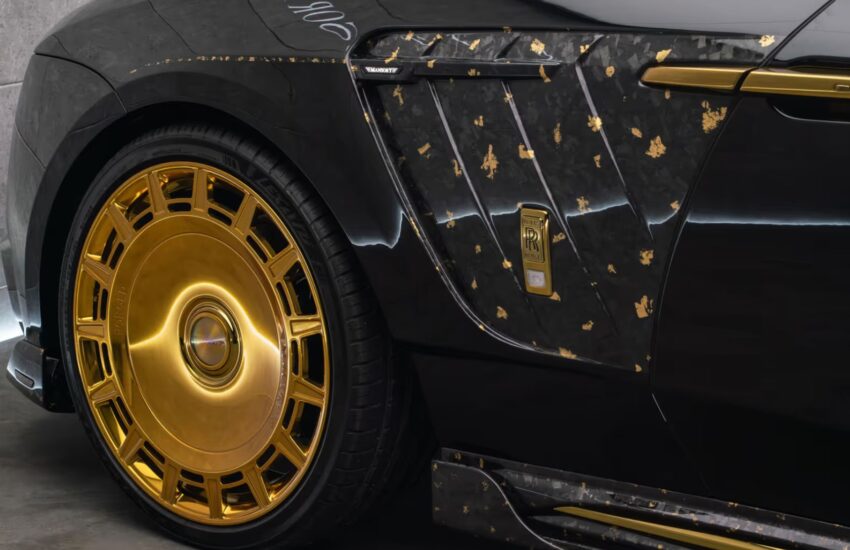
The Mansory treatment is immediately visible. The Spectre’s graceful lines are augmented with an extensive body kit crafted from forged carbon fiber, featuring a new front splitter, side skirts, and a pronounced rear diffuser. The most striking element is the lavish, hand-applied gold foil finish that adorns the carbon fiber components and specific body panels, creating a dazzling contrast. Custom 22-inch forged wheels complete the imposing stance, ensuring this electric vehicle commands attention from every angle.

Interior Opulence and Bespoke Detailing

Inside the cabin, Mansory continues its theme of bespoke extravagance. The interior is retrimmed in high-quality leather, available in countless color combinations, often accented with the same gold tone used externally. Elaborate embroidery, custom piping, and replaced trim pieces in forged carbon fiber redefine the cockpit. Every surface is an opportunity for personalization, turning the cabin into a personalized lounge that matches the exterior’s bold declaration.

Performance Enhancements for the Electric Powertrain

Beyond aesthetics, Mansory has also unlocked additional performance from the Spectre’s silent electric powertrain. Through a software optimization, the twin electric motors now produce increased power and torque, translating to sharper acceleration and even more effortless cruising capability. This upgrade ensures that the vehicle’s dynamic performance aligns with its dramatic visual transformation, offering a complete package of enhanced luxury and power.

The Mansory Rolls-Royce Spectre ‘Equist.a Linea Oro’ stands as a unique proposition. It redefines the boundaries of electric luxury, proving that zero-emissions motoring can be as visually commanding and individually expressive as any traditional supercar.

OBD2 Code P1482 Isuzu: Comprehensive Guide to EGR Valve Position Sensor Issues

Understanding OBD2 Code P1482 in Isuzu Vehicles

When your Isuzu’s check engine light illuminates and a diagnostic scan reveals trouble code P1482, you’re dealing with a specific issue within the Exhaust Gas Recirculation (EGR) system. This Diagnostic Trouble Code (DTC) is defined as “EGR Valve Position Sensor Circuit Low Input.” Primarily affecting models like the Isuzu Trooper, Rodeo, Ascender, and certain pickup trucks, P1482 indicates that the Engine Control Module (ECM) has detected a voltage signal from the EGR valve position sensor that is consistently lower than the expected operating range. This sensor is critical for precise EGR valve operation, which is essential for reducing nitrogen oxide (NOx) emissions and managing combustion temperatures. Ignoring this code can lead to increased emissions, potential drivability problems, and failed state inspections.

Technical Causes and Symptoms of P1482

The P1482 code points to an electrical fault in the feedback circuit of the EGR valve position sensor. Unlike a simple mechanical blockage, this is a circuit-level issue where the ECM’s expected signal is not met. Understanding the root causes is the first step toward an effective repair.

Primary Causes of the P1482 DTC

  • Faulty EGR Valve Position Sensor: The internal potentiometer or wiring within the sensor itself can fail, sending an incorrect low-voltage signal to the ECM.
  • Damaged or Corroded Wiring and Connectors: The wiring harness connecting the sensor to the ECM can suffer from chafing, heat damage, or corrosion, especially at connector terminals, leading to high resistance or a short to ground.
  • Poor Electrical Connections: Loose, bent, or oxidized pins in the sensor or ECM connectors can interrupt the signal.
  • Failed EGR Valve Assembly: In many Isuzu models, the position sensor is integrated into the EGR valve. A mechanical failure in the valve (like a seized pintle) can prevent the sensor from moving and generating a correct signal.
  • Issues with the ECM Power or Ground Circuit: Although less common, problems with the 5-volt reference circuit or sensor ground shared with other components can trigger this code.

Common Symptoms Associated with P1482

  • Illuminated Check Engine Light (MIL).
  • Noticeable decrease in fuel economy.
  • Engine hesitation, rough idle, or stumbling during acceleration.
  • Increased engine knocking or pinging (pre-ignition) under load due to higher combustion temperatures.
  • Vehicle may fail an emissions test due to elevated NOx levels.
  • In some cases, no drivability issues are immediately apparent, making diagnosis reliant on scanner data.

Step-by-Step Diagnostic Procedure for P1482

A methodical approach is key to correctly diagnosing a P1482 code. Jumping straight to replacing the EGR valve can be costly and ineffective if the issue lies in the wiring. Follow this professional diagnostic sequence.

Step 1: Preliminary Inspection and Code Verification

Begin by recording the freeze frame data associated with the P1482 code. Clear the code and perform a test drive to see if it returns immediately or under specific conditions (e.g., during deceleration). Conduct a thorough visual inspection of the EGR valve, its wiring harness, and all associated connectors. Look for obvious damage, carbon buildup at the valve ports, or disconnected plugs.

Step 2: Electrical Circuit Testing with a Multimeter

Locate the connector for the EGR valve position sensor. With the key in the ON position (engine off), back-probe the connector to test:

  • Reference Voltage (Vref): Typically 5 volts from the ECM. A low reading indicates a short or problem in the ECM circuit.
  • Signal Voltage: Measure the voltage on the signal wire while manually operating the EGR valve (if possible). It should change smoothly between approximately 0.5V and 4.5V. A persistently low voltage (e.g., below 0.5V) confirms the “Low Input” condition.
  • Ground Circuit: Check for continuity to a known good ground. Resistance should be very low (less than 5 ohms).

Perform resistance checks on the wiring harness for opens or shorts to ground/power.

Step 3: Sensor and Valve Functional Testing

Using a bi-directional OBD2 scanner, command the EGR valve to open and close while observing the live data parameter for “EGR Valve Position (%)” or “EGR Valve Command.” The actual position reading should closely follow the commanded percentage. A stuck, unresponsive, or erratic reading points to a faulty valve/sensor assembly. You can also physically check the valve’s pintle for free movement (engine cold).

Repair Solutions and Prevention

Once the faulty component is identified, the repair path becomes clear. Always use quality OEM or reputable aftermarket parts for longevity.

Common Repair Procedures

  • Repairing Wiring/Connectors: Solder and heat-shrink any damaged wires. Clean corroded connector pins with electrical contact cleaner and use dielectric grease to prevent future corrosion.
  • Replacing the EGR Valve Position Sensor: If the sensor is separate, this is a straightforward replacement. Ensure the new sensor is properly calibrated or aligned if required.
  • Replacing the Complete EGR Valve Assembly: For integrated units (common on Isuzu), replace the entire valve. This often solves both mechanical and sensor issues. Thoroughly clean the EGR intake passage in the manifold before installation to prevent immediate re-clogging.

Post-Repair Protocol and Prevention Tips

After completing the repair, clear all codes. Perform a test drive that includes various engine loads and RPMs to ensure the code does not return and that the EGR system is functioning correctly. Monitor live data to verify proper valve operation. To prevent recurrence:

  • Use high-quality fuel and perform regular engine maintenance.
  • Address any engine performance codes (like misfires) promptly, as they can lead to excessive carbon buildup.
  • Periodically inspect engine bay wiring for security and signs of heat damage.

Successfully diagnosing and repairing a P1482 code restores your Isuzu’s emissions compliance, optimizes fuel efficiency, and ensures smooth engine performance.

Nio’s Electric SUV Success Strains China’s Supply Chain

Soaring Demand for Premium EV Creates Component Shortage

The Chinese automotive market, the world’s largest, is witnessing a remarkable industrial shift. The spectacular resurgence of domestic automaker Nio is being driven by the premium segment, where its latest electric SUV, the ES8, is experiencing explosive demand. This success is so profound that it is now causing significant strain on the component supply chain, highlighting both the brand’s triumph and the growing pains of rapid electrification.

A Turnaround Story Fueled by Premium Electric Vehicles

Nio’s journey reflects a dramatic turnaround. Once facing financial uncertainty, the company has redefined its trajectory by focusing exclusively on the high-end electric vehicle market. The strategy is paying off handsomely. The Nio ES8, a full-size, six-seater electric SUV, has struck a chord with Chinese consumers seeking luxury, performance, and cutting-edge technology. Its innovative features, including a battery swap system and advanced autonomous driving capabilities, have set a new benchmark in the segment.

When Success Outpaces Production Capacity

The overwhelming market reception has led to an unforeseen challenge: a shortage of critical components. Since its launch, order volumes have consistently exceeded the most optimistic forecasts. This surge has exposed vulnerabilities in the supply chain for specialized semiconductors, premium battery cells, and other high-end parts essential for a luxury EV. The bottleneck is not due to a lack of manufacturing capability but to the sheer speed at which demand has escalated, outpacing the ability of suppliers to scale up production.

Broader Implications for the Global EV Industry

This situation underscores a critical phase in the global electric vehicle revolution. As consumer appetite for premium EVs accelerates, the entire supply ecosystem is being tested. The component shortage affecting Nio is a microcosm of a wider industry issue, where the race for electrification depends on complex, globally sourced parts. It signals that future success for automakers will hinge not only on design and software but equally on securing resilient and scalable supply chains to translate demand into delivery.

Toyota bZ4X 2025 Review: Key Upgrades Tested

Refreshed Toyota bZ4X: A More Compelling Electric SUV

Toyota bZ4X 2025 front three-quarter view driving

Toyota has refined its first global electric SUV for the 2025 model year. This restyled bZ4X incorporates meaningful updates aimed at enhancing its appeal in a competitive segment, addressing initial feedback to create a more polished ownership experience.

Targeted Enhancements for Daily Use

The most significant improvements are found in areas that matter most to drivers. Toyota has focused on optimizing the thermal management system for the battery, which contributes to more consistent charging performance, especially in varied climates. Interior material quality sees a noticeable uplift, with softer-touch surfaces and revised trim elevating the cabin ambiance. The infotainment system benefits from software refinements for more intuitive responsiveness.

Driving Dynamics and Efficiency

On the road, the bZ4X retains its core character as a comfortable and predictable cruiser. The updates do not radically alter its driving dynamics but refine them. Steering feel is precise, and the ride quality remains a strong point, effectively isolating occupants from road imperfections. Range figures see a slight optimization thanks to aerodynamic tweaks and system efficiency gains, making it a dependable companion for daily commutes and longer journeys.

A Stronger Position in the Market

This mid-cycle refresh successfully sharpens the bZ4X’s value proposition. By listening to customer and critic feedback, Toyota has strengthened the SUV’s weaknesses without compromising its inherent strengths of reliability, spaciousness, and comfort. It emerges as a more complete and competitive package, solidifying its role in Toyota’s evolving electric vehicle lineup.

GMC P1482 Code: Diagnosing and Fixing the EGR Valve Power Circuit

Understanding the GMC P1482 Diagnostic Trouble Code

When your GMC Sierra, Yukon, Silverado, or other GM truck or SUV’s check engine light illuminates and a scan tool reveals code P1482, you’re dealing with a specific electrical fault in the vehicle’s emissions control system. Officially defined as “Exhaust Gas Recirculation (EGR) Valve Power Circuit,” this code indicates that the Powertrain Control Module (PCM) has detected an abnormal voltage condition in the power supply circuit for the EGR valve. Unlike codes pointing to valve flow or position sensor issues, P1482 is fundamentally an electrical problem, meaning the PCM cannot properly command the EGR valve to operate due to a break, short, or excessive resistance in its power feed or ground.

What is the EGR Valve and Why is it Important?

The Exhaust Gas Recirculation (EGR) valve is a critical emissions component. Its primary function is to recirculate a small, metered amount of inert exhaust gas back into the engine’s intake manifold. This process lowers peak combustion temperatures, which in turn significantly reduces the formation of harmful nitrogen oxides (NOx). A malfunctioning EGR system, as signaled by P1482, can lead to failed emissions tests, reduced fuel efficiency, and in some cases, engine knocking or pinging under load due to increased combustion temperatures.

Technical Definition of Code P1482

In technical terms, DTC P1482 is set when the PCM monitors the voltage on the EGR valve control circuit and finds it outside the expected operating range—typically too low. The PCM supplies a switched power source to the EGR valve (often a solenoid or a pintle motor). The code triggers when this circuit is open (infinite resistance), shorted to ground (near zero resistance), or has excessively high resistance, preventing the valve from receiving the correct voltage and amperage to function.

Common Symptoms of a P1482 Code in GMC Vehicles

While sometimes the check engine light is the only noticeable symptom, many drivers will experience one or more of the following issues, especially on common engines like the 5.3L V8 or 6.0L V8.

Primary Symptoms

  • Illuminated Check Engine Light (MIL): The most immediate and common sign.
  • Failed Emissions Inspection: The vehicle will not pass a state emissions test with an active P1482 code.
  • Reduced Engine Performance: You may notice a lack of power, especially during acceleration or when towing.

Secondary Symptoms

  • Engine Knocking or Pinging: Audible “pinging” sounds under load due to increased combustion temperatures.
  • Rough Idle or Stalling: Irregular idle or occasional stalling can occur, though less common with this circuit code.
  • Decreased Fuel Economy: The engine control system may enter a conservative “limp” mode, reducing efficiency.

Root Causes and Diagnostic Steps for P1482

Diagnosing P1482 requires a methodical approach, starting with the simplest and most common causes before moving to more complex components. You will need a quality digital multimeter (DMM) and a wiring diagram for your specific GMC model.

Most Frequent Causes of P1482

  • Blown Fuse: Check the EGR valve fuse in the underhood fuse box. This is the easiest and most common fix.
  • Faulty Wiring or Connectors: Look for damaged, corroded, or loose wires at the EGR valve connector and along the circuit back to the PCM. Rodent damage is a common culprit.
  • Bad EGR Valve: An internal short or open in the valve’s solenoid or motor can cause the code.
  • Poor Electrical Ground: A corroded or loose ground connection for the EGR circuit or PCM.
  • Faulty Powertrain Control Module (PCM): Rare, but a failed driver circuit within the PCM itself can be the cause.

Step-by-Step Diagnostic Procedure

Step 1: Preliminary Checks. Visually inspect the EGR valve wiring harness and connector for obvious damage, burns, or corrosion. Locate and physically check the relevant fuse.

Step 2: Voltage Test at the EGR Connector. With the ignition ON (engine OFF), back-probe the power wire at the EGR valve connector. Refer to a wiring diagram for the correct pin. You should measure battery voltage (approx. 12V). If voltage is present, the issue is likely a bad valve or ground. If voltage is absent or very low, the problem is in the power feed circuit.

Step 3: Circuit Resistance and Continuity Tests.

  • Power Circuit: With the battery disconnected, check for continuity between the EGR power pin and the fuse terminal. Also check for a short to ground in this wire.
  • Ground Circuit: Check the resistance of the ground wire from the EGR connector to a known good ground. It should be very low (less than 5 ohms).

Step 4: Component Testing. Measure the resistance across the terminals of the EGR valve solenoid/motor. Compare the reading to the manufacturer’s specification (often between 10-100 ohms). An infinite reading (open) or a zero reading (short) confirms a faulty valve.

Repair Procedures and Prevention Tips

Once the faulty component is identified, the repair can be undertaken. Always disconnect the battery before performing electrical repairs.

How to Fix the P1482 Code

  • Replace a Blown Fuse: Simply install a new fuse of the correct amperage. If it blows again immediately, there is a short circuit that must be found.
  • Repair Wiring: Solder and heat-shrink any broken wires. Replace entire harness sections if damage is extensive. Ensure all connections are clean and tight.
  • Replace the EGR Valve: After confirming the valve is faulty, replacement is straightforward. Remove the electrical connector and mounting bolts, swap the valve, and reconnect. Use a new gasket if applicable.
  • Clean Ground Points: Locate, disconnect, clean with a wire brush, and re-tighten the relevant ground connections.

Clearing the Code and Final Verification

After completing the repair, clear the P1482 code using your OBD2 scanner. The best practice is to perform a drive cycle to allow the PCM to run its self-tests on the EGR system. Monitor for the code’s return. If it does not return, the repair was successful. If it comes back immediately, re-evaluate your diagnosis, as there may be an intermittent fault or another issue in the circuit.

Preventive Maintenance Advice

To avoid recurrence of electrical codes like P1482, periodically inspect visible sections of the engine wiring harness, especially in areas prone to heat or rodent activity. Keeping the engine bay clean and addressing minor electrical issues promptly can prevent larger problems. Using dielectric grease in electrical connectors can also help prevent corrosion.