Porsche considers virtual gear shifts for its electric vehicles

Porsche is now considering simulated gear shifts in its electric vehicles, a surprising reversal after initially opposing the idea. Last year, a development driver for the brand described such systems as “unnecessary.” However, as demonstrated by the Hyundai Ioniq 5 N, the lack of practical value doesn’t prevent a feature from being entertaining and enhancing the driving experience.

An Evolving Engineering Perspective

Porsche’s initial stance was logical from a technical standpoint. A gear shift in a combustion engine involves a brief interruption of power, which is a drawback during acceleration. For an electric motor that doesn’t need it, it seemed reasonable to simply avoid it.

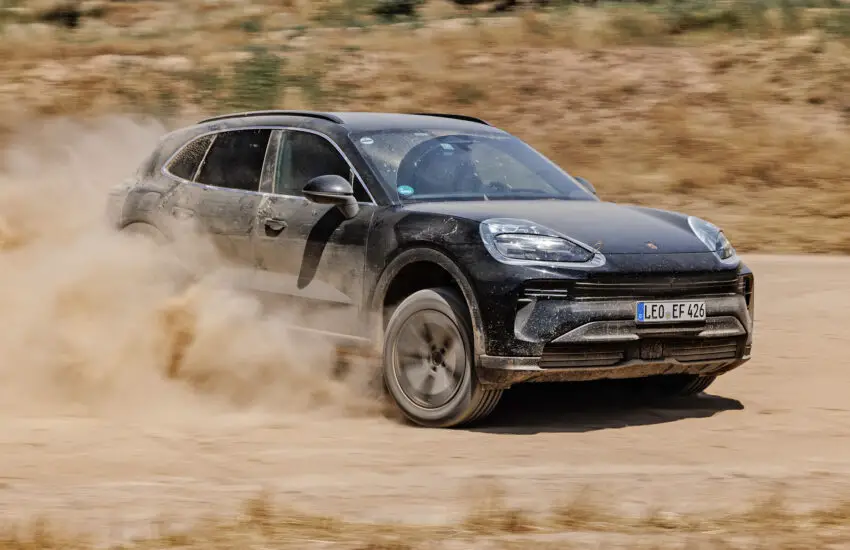
However, during a test drive of the electric Cayenne prototype, Sascha Niesen, head of Cayenne prototype validation at Porsche, hinted that the brand is no longer so firmly against the idea.

A Prototype with a Simulated Eight-Speed Gearbox

Not only is Porsche open to the idea, but it has already built a prototype equipped with a simulated eight-speed gearbox, complete with engine sounds. These are not synthetic beeps but authentic sounds, those of a traditional V8, specifically recorded from a Cayenne V8.

“We recorded the sounds both for the interior of the cabin and for the exterior, the sound coming from the exhaust,” explained Niesen. Adapting this sound to electric motors, which operate at very different RPMs, requires fine-tuning to modulate the sound over a much wider RPM range.

“Virtual Gear Shifts” Requiring Hardware

Niesen confirmed that “virtual gear shifts” are under study. Unlike a simple software update, their implementation would require additional hardware, such as paddle shifters on the steering wheel, which are absent on the current Cayenne EV prototype.

Porsche has indeed built a concept vehicle with these paddles. Niesen, who drove it in March, admits he was initially skeptical, fearing an artificial gimmick designed by “software geeks.” But the project was actually led by experienced engineers who had worked on the brand’s dual-clutch and torque converter automatic transmissions.

An Authentic Feel That Surprises

“They know what they’re doing,” he stated. “They managed to give it the feel of a real torque converter automatic. I couldn’t tell the difference.” The result convinced him, exceeding all his expectations.

An Option for Driver Engagement, Not a Requirement

Niesen acknowledges that not all customers demand this feature, especially in the EV world. However, there is a market for this level of driving engagement. The added value lies in the fact that it can be activated or deactivated at will.

“That’s the key,” he emphasizes. “You have to give the customer the option to be more engaged, but in an EV, it can’t be mandatory.” He draws a parallel with continuously variable transmissions (CVTs) that introduced simulated gears for a more natural feel, even though it wasn’t necessary.

Often, in the battle between needs and wants, it’s the wants that prevail. Porsche seems to have understood that the thrill of driving can also come from a good simulation.
IndyCar iRacing Game 2026: Release Date, Consoles, and Features

The first standalone IndyCar game in two decades will be released next year, as announced by iRacing Studios. This dedicated simulation is scheduled for the “second half” of 2026 and will be available on Xbox Series consoles, PlayStation 5, and on PC via Steam, including the Steam Deck.

A Strategic Partnership and a Highly Anticipated Release

iRacing officially welcomed IndyCar to its simulation platform in early 2024, following the racing league’s abrupt split from Motorsport Games. Many hoped this iRacing-IndyCar partnership would go beyond mere support on the PC simulator. A situation similar to NASCAR, which also partnered with iRacing after terminating its exclusive contract with Motorsport Games, an agreement that had resulted in the disastrous NASCAR 21 Ignition.

The Promising Features of the IndyCar Game

According to iRacing’s press release, the 2026 IndyCar game will feature “a robust, multi-tiered career mode, officially licensed drivers from the NTT INDYCAR SERIES and INDY NXT by Firestone, as well as an online multiplayer mode.” It will be developed by a “dedicated team” using an enhanced version of the Orontes engine, which was the foundation of ExoCross, the futuristic racing game with rich physics released by iRacing last year.

The Growth and Strategy of iRacing Studios

iRacing Studios has grown significantly in recent years and now includes several teams developing different games on unique technologies, beyond its eponymous PC simulation platform. Tony Gardner, President of iRacing, stated: “Our INDYCAR title will benefit from this growth, as it will be the sole priority of one of these teams. The game will also integrate elements such as car and track assets, technology, and driving characteristics developed for other iRacing Studios products.”

A Release That Marks Racing Video Game History

The last contemporary IndyCar game on consoles was Codemasters’ IndyCar Series 2005 for PlayStation 2 and Xbox, although it was released in 2004 and all its content was based on the 2003 season. Hopefully, next year’s game will mark the beginning of a more regular release schedule for the years to come. America’s premier open-wheel racing series, along with its fans, certainly deserve it.

Why does Porsche use giant camouflage on the headlights of its prototypes?

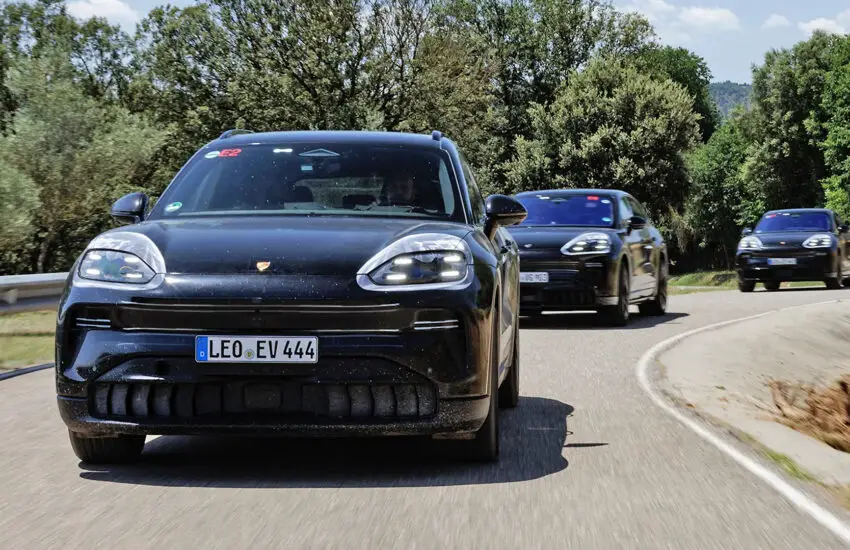
If you follow spy shots of new models, you’ve probably noticed a trend at Porsche. While most manufacturers dress their prototypes in complex patterns to confuse onlookers, Porsche adopts a different strategy: a matte black wrap adorned with stickers mimicking headlights and taillights that are much larger than the real ones. This tactic aims to conceal the true light signatures from a distance, to the point where the vehicle could be mistaken for another brand. This is precisely why the electric Cayenne prototypes feature rear stickers reminiscent of Hyundai’s pixelated lights.

Porsche’s Camouflage Strategy Decoded

When asked about this, Sascha Niesen, head of Cayenne prototype validation, explained the logic behind this choice. “Either you have a previous vehicle that you want to make look like this one, or you want it to look like something completely different,” he says. At the front, the camouflage takes the shape of an existing headlight to hide the new, slimmer light signature. At the rear, the fake light bar, inspired by the Ioniq 5, distracts the eye from the genuine Porsche light bar hidden beneath.

A Rigorous Approval Process

At Porsche, even the camouflage is subject to a demanding validation process. Draft designs are presented to Michael Steiner, the board member in charge of development, who gives final approval. Several designs are tested on one vehicle before being selected for the entire test fleet.

The Advantage of Black Over Zebra Camouflage

For Sascha Niesen, black remains the best option. “Honestly, we don’t really know why other companies use that zebra pattern on their prototypes, because it screams ‘Hello, I’m a prototype!’ Everyone looks. For us, it’s always just black.” He illustrates his point with an anecdote: during a charging stop, three black Porsches went unnoticed while a zebra-camouflaged Audi Q6 immediately attracted all the attention.

Lamborghini Diablo: Why the brand cannot go back

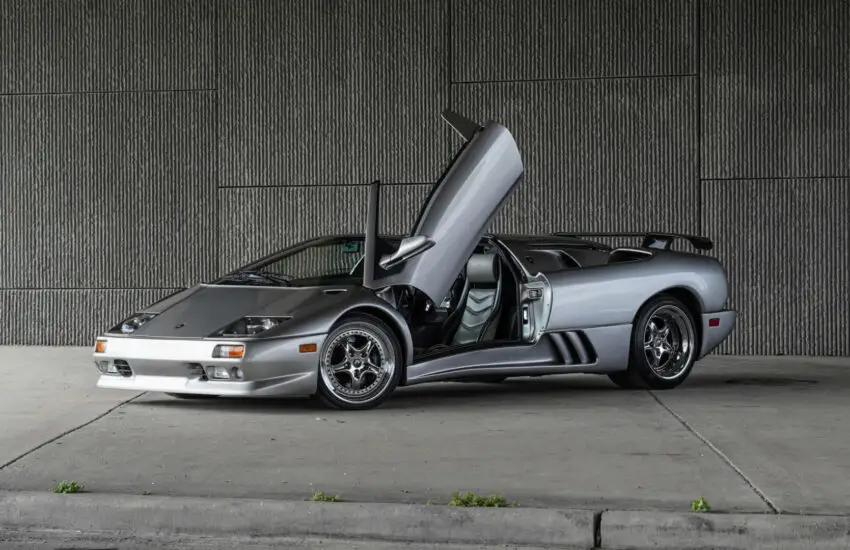
Do you miss the Diablo? I do. It used to sit on my wall, alongside Viper, Ferris Bueller, and depending on the space, at least one Boondock Saint. If you’re from Generation X or an older Millennial, maybe that resonates with you. And if you’re wealthy, you might be hoping to acquire your own poster-worthy performance machine. But where is its equivalent today?

Lamborghini’s Answer: Current Technology

We asked Rouven Mohr, Lamborghini’s technical director, and Mitja Borkert, head of design. Their answer is simple: it’s here, in the showroom.

“Sometimes there’s this debate in the automotive world that new technology is bad and boring. That the old is cool and exciting. That’s not true, to be honest,” says Mohr.

80s and 90s Supercars: Spaceships of Their Time

The hero supercars of the 1980s and 1990s may seem archaic and analog by today’s standards, but for their time, they were at the forefront of automotive technology.

“When the Diablo was state of the art, it was like a spaceship,” explains Mohr. “And our job is to define the next level of spaceships.”

Nostalgia and Tribute at Lamborghini

This doesn’t mean nostalgia has no place at Lamborghini, or that classic design codes won’t be referenced in their modern cars. But expect tributes rather than recreations.

Borkert explains his philosophy by comparing it to music: “I like to explain our design language as the songs of an artist who has stayed at the top of the charts for 62 years. A good concert builds steadily towards a climax. I always play a different song from the previous one. Artists who constantly play the same thing disappear. I like artists who have lasted for decades.”

Depeche Mode and Lamborghini DNA

“I’m a child of the 80s,” continues Borkert. “My band is Depeche Mode. To me, they’re a band that has kept its DNA for 40 years, but always offered a new interpretation. They’ve constantly redefined themselves.”

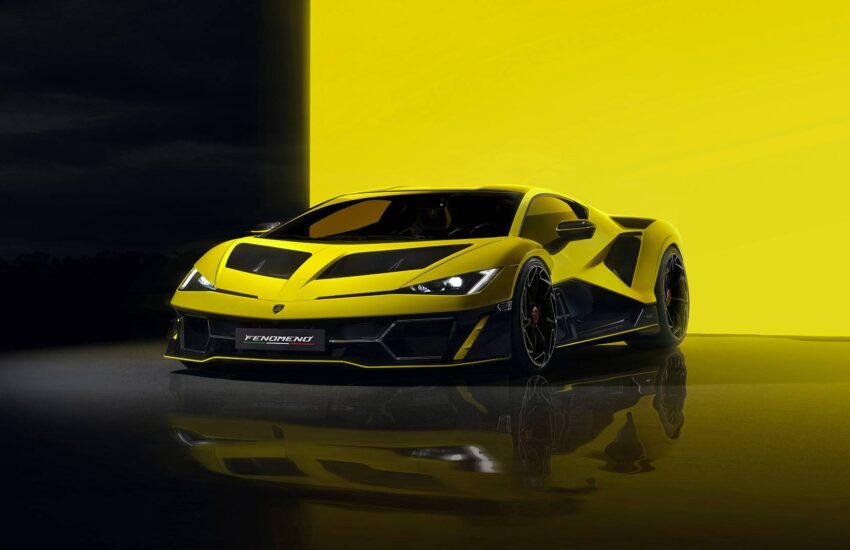
Mohr and Borkert believe the Fenomeno embodies this philosophy.

Building Tomorrow’s Icons

“Those old cars represented the pinnacle of technology of their time,” says Mohr. “So, to appreciate what they were, we need to create current cars that aim for excellence, so that in 50 years, we can look back and appreciate them.”

“Even though I love the old models privately, and I own many of them, technology progresses, as does the world. It’s a playground where, for now, we’re operating in the 1%, maybe less.”

And he concludes: “Trust the engineers, and there will be really cool stuff.”

Lamborghini has not reached the power limit of its V12

In 2025, Lamborghini still manufactures V12 engines. The Italian manufacturer continues to find ways to make them more powerful without resorting to forced induction. The “few-off” Fenomeno is proof of this, featuring the brand’s most powerful V12 to date: 823 horsepower, which is nine more than the Revuelto.

Intentional Room for Improvement

Rouven Mohr, Lamborghini’s technical director, emphasizes that this power is deliberately limited. He explains that the decision to add only nine horsepower was a “portfolio choice” and not a technical limitation. The naturally aspirated 6.5-liter engine would have even more to offer.

Meticulous Optimization

Where do these nine additional horsepower come from? Mohr specifies that it comes from rigorous parts selection, minimized tolerances, and reduced friction. It’s a fine-tuning, not a major design change like altering the compression ratio.

Synergy with Hybridization

The Fenomeno is also a hybrid. Its tri-motor electric powertrain is more powerful, increasing from 187 horsepower (Revuelto) to 241 horsepower. The total power of this sharply angled car thus reaches 1,065 horsepower.

A Revolutionary Battery

Mohr details that the battery, although the same size, uses a different cylindrical cell technology than the standard (pouch), offering more energy and power. This change required a redesign of the cooling system.

Untapped Electric Potential

Each electric motor could theoretically develop 147 horsepower without modification. Switching to an 800-volt system would increase power but would require a different inverter and a heavier battery, which is not relevant for Lamborghini at this stage.

The Future of the Naturally Aspirated V12

Mohr’s statements open the door to speculation. Could the 6.5-liter V12 reach 900 horsepower without turbos? Could the combined power approach 1,300 horsepower? Whatever the case, Lamborghini continues to push the development of its iconic combustion engine, defying all predictions of its demise.

Porsche Cayenne Electric 2026: Prototype Test of an Exceptional Electric SUV

Imagine: a German automaker renowned for its sports cars finds itself with its back against the wall, the ground giving way beneath its feet. It saves itself in the only way possible: by creating an SUV. If you don’t know the story, ask ChatGPT what happened when Porsche pulled itself out of the rut with the first Cayenne SUV in 2002. Today, 23 years later, Porsche is once again going through a tricky period and is banking on what it hopes will be a revolutionary SUV to overcome it. But this time, without a V8.

The Genesis of the Electric Cayenne

Porsche has good reason to be nervous. It took more than a decade for the public to admit that building the best SUV in the world wasn’t the end of its sports car heritage. As the electric vehicle market slows and trade wars complicate matters, Porsche has even announced that it will continue to produce the third-generation combustion-engine Cayenne alongside this new electric arrival until the 2030s. Its future depends on it.

New Engines, New Technologies, Over 1000 HP

The Electric Cayenne is built on a reworked version of the PPE platform from the Electric Macan. It features an 800-volt architecture, a 113 kWh battery, and a dual-motor powertrain. The big news? In-house developed motors, liquid-cooled between the rotors and stators, allowing them to deliver their maximum power continuously.

Available in base, S, and Turbo versions, the top model’s maximum power will exceed 1000 horsepower, enabling a 0 to 100 km/h sprint in under 3 seconds. The promised range is over 560 km (WLTP estimate). Fast charging is a key argument: 400 kW for a 10% to 80% charge in just 16 minutes, even if current infrastructure struggles to keep up.

A 100% Porsche Driving Experience

Behind the wheel, the magic happens. The optional variable-angle steering (5 degrees) and Active Ride suspension work wonders. The Turbo version, agile and visceral, offers a phenomenal leap over the base model. The performance and feel gap between the models is similar to that found in the combustion-engine range.

A V8 Sound… Artificial but Successful

A point that will spark debate among purists: the sound. The “Porsche Electric Sound System” is an “exhaust” note that can be added to all models. Developed from a recording of a Cayenne V8 on a test bench, modulated to suit the wider rev range of electric motors, it surprises with its realism. Carefully calibrated, it adds a palpable emotion to the driving experience.

Unexpected Off-Road Capabilities

Despite its weight, the Electric Cayenne impresses off-road. Its off-road mode completely changes the throttle calibration, making it incredibly progressive. The traction control software is formidably effective, finding grip by itself on the most technical slopes. Only the downhill braking still requires a bit of finesse.

Verdict: An Exceptional Electric SUV

The Porsche Electric Cayenne is simply superb. It takes up the bold bet of the first Cayenne by building a car that lives up to its ambitions. Its technical excellence is undeniable. Its success with American, and global, customers, however, will depend on its final price and the evolution of the charging infrastructure. But technically, Porsche has stuck the landing.

Cadillac F1 dismisses Christian Horner: CEO puts an end to recruitment rumors

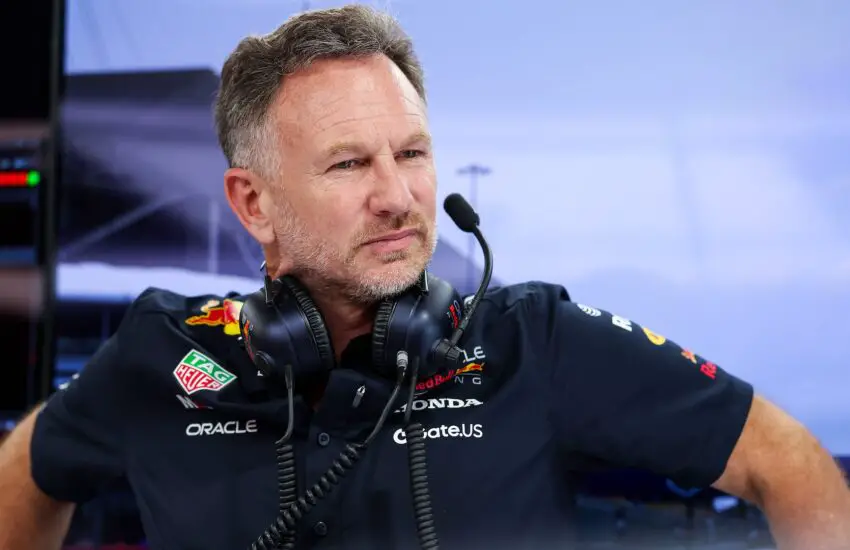
“No interview” and “no plan” to recruit Christian Horner. That’s the categorical statement from Dan Towriss, CEO of the Cadillac Formula 1 team, who firmly denied the rumors circulating on social media. These speculations linked the former Red Bull Racing boss to the new American structure following his tumultuous dismissal last month.

An official denial at the press conference

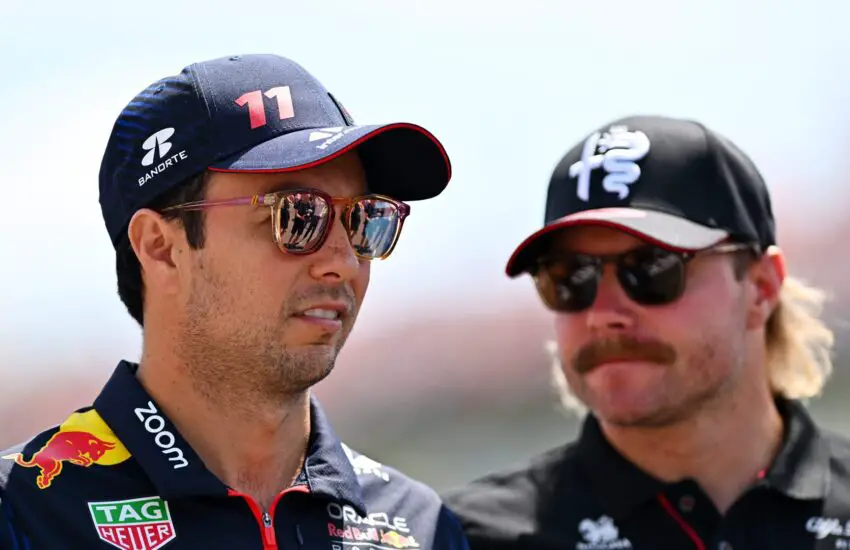
Speaking at a press conference announcing the team’s first drivers, Sergio Perez and Valtteri Bottas, Dan Towriss wanted to put an end to all speculation. “There has been no interview with Christian Horner, and there is no plan to do so,” he stated. “I want to officially put an end to this rumor. Our support, trust, and approval go entirely to [our current team principal] Graeme Lowdon.”

The shadow of the scandal and perception in the paddock

While opinions on Christian Horner vary in the Formula 1 paddock, the general perception is that he has become persona non grata in the boardrooms of many manufacturers. This status stems directly from the 2024 Google Drive scandal and the controversial handling of the inappropriate behavior allegations by Red Bull. Many believe the matter was mishandled and that it illustrates how the powerful often manage to avoid the consequences of their actions.

A question of morality in F1 recruitment?

The question arises as to whether this scandal, or another factor, will prevent Christian Horner from finding employment in Formula 1 again. The history of motorsport shows a certain short-term amnesia, as evidenced by Flavio Briatore’s return after a race-fixing scandal. Perhaps morality simply isn’t a decisive criterion in the hiring decisions of some teams. Regardless, the Cadillac management does not appear interested in the services of the former Red Bull director.

Sergio Perez and Valtteri Bottas: The First Drivers of the Cadillac F1 Team

Sergio Perez makes a return to Formula 1 with Cadillac after a somewhat tense separation with Red Bull Racing last year. He will be joined by Valtteri Bottas, who will leave his role at Mercedes at the end of this season. Both veteran drivers have been hired on equal terms and with multi-year contracts, confirmed Dan Towriss, the team’s CEO.

An official announcement awaited

Towriss was accompanied by General Motors President Mark Reuss for the press conference announcing the team’s first drivers. They did not disclose the specifics of the contracts regarding their duration or compensation. This announcement confirms rumors that had been circulating since the team’s creation, rumors that had intensified in recent weeks.

A rigorous selection process

“This is a significant moment for us that required a lot of effort to get here,” said Towriss. “There was a lot of speculation, but after a thorough review process led by our team principal Graeme Lowdon, I am happy to confirm the signing of Valtteri Bottas and Sergio Perez for the inaugural season of the Cadillac Formula 1 Team in 2026.”

Experience and leadership prioritized

The team has bet on the experience and leadership of both drivers rather than on young talents. Their technical acumen and feedback will be crucial for the development of the car under the new 2026 regulations.

A crucial synergy for development

Mark Reuss emphasized the importance of this relationship between the drivers and the technical team. “The drivers’ feedback will be decisive in Cadillac’s history. It’s a winning combination.” The development of GM’s own power unit is reportedly still on track for the end of the decade.

An exciting internal duel in prospect

An internal duel for the lead driver status is expected between Perez and Bottas. Both have played supporting roles against superstar teammates: Bottas behind Lewis Hamilton and Perez behind Max Verstappen. Bottas boasts stronger statistics with 10 wins and 67 podiums, compared to 6 wins and 39 podiums for Perez.

In March 2026, two Cadillacs powered by Ferrari will make their debut at Albert Park, marking the arrival of a new competitor for both teams and drivers.

Tesla refuses $60M settlement and loses $243M Autopilot lawsuit

A jury has imposed a $243 million fine on Tesla in the case related to the fatal 2019 Model S accident, which was equipped with Autopilot. This decision comes after the manufacturer rejected a settlement proposal of $60 million, revealed in a court fee request.

Today’s Automotive News

Ongoing Test: The 2025 Ford Mustang GTD

The journalist is currently behind the wheel of the 2025 Ford Mustang GTD, although driving impressions cannot yet be shared.

Audi Unveils the Q3 Sportback

Audi has introduced the Q3 Sportback, a version with a sporty look and redesigned roofline, positioning itself as a less practical but more stylish alternative to the standard Q3.

Genesis GV60 Magma: Rivalry Through Software

The head of Genesis, Hyundai’s luxury division, announced that the GV60 Magma will compete with BMW M and Mercedes-AMG by standing out through its software, not just its hardware.

Conflict in California Over Direct Sales

The California New Car Dealers Association has filed a lawsuit against American Honda and Sony Mobility. The dispute concerns the attempt to sell the Afeela electric car directly to consumers, bypassing the Honda and Acura dealership network.

Auction of a Mercedes-Benz Owned by Senna

The Mercedes-Benz 190 E 2.3-16 owned by Formula 1 legend Ayrton Senna will be auctioned in November by RM Sotheby’s. Its estimated value is between 255,000 and 290,000 euros.

Porsche 911 Turbo Mystery: New GT3 RS or Return of the GT2?

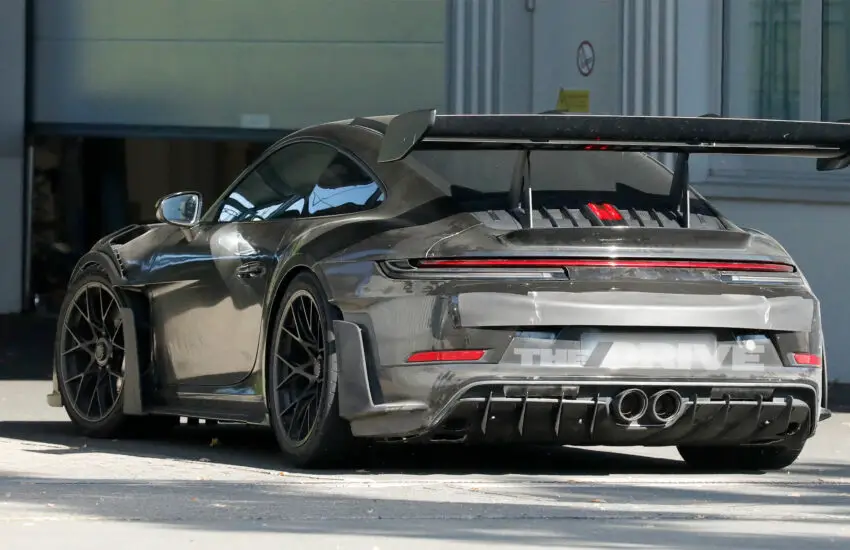
A turbocharged Porsche 911 prototype has been spotted at the Nürburgring, raising questions about its identity. Is it the future GT3 RS, forced to abandon its naturally aspirated engine to comply with Euro 7 standards, or the long-awaited return of the legendary GT2? The clues are piling up.

A Discreet Presence but Notable Modifications

Externally, the prototype is almost indistinguishable from a current 911 GT3. However, a keen eye will notice subtle but significant changes at the rear. The body panel located just below the taillights and above the license plate area is carefully camouflaged, likely to conceal new air intakes. The rear diffuser has also been reworked, now featuring four vertical blades on each side of the two central exhaust outlets, compared to three previously. Two additional exhaust outlets pointing towards the ground complete this revised setup.

The Revealing Sound of Turbocharging

The most convincing evidence lies not in appearance, but in sound. A video captured at the iconic circuit reveals the characteristic noise of a forced-induction engine, an unmistakable “whoosh” that contrasts sharply with the high-pitched scream of the current GT3’s naturally aspirated six-cylinder. This sound betrays the presence of at least one turbo, confirming that this test mule hides a radically different powertrain.

Scenario 1: The End of an Era for the GT3 RS

The first scenario is that of a 992.2 GT3 RS forced to adopt turbocharging to meet future Euro 7 anti-pollution standards. This transition would mark the end of the naturally aspirated engine and its 9,000 rpm redline, a sacred characteristic for purists. A pragmatic evolution but one that would represent a true revolution in the GT3 series’ DNA.

Scenario 2: The Triumphant Return of the GT2

The other hypothesis, far more exciting for some, is the return of the 911 GT2. Unlike the GT3, turbocharging is in the GT2’s DNA. Absent from the 992 generation, the last GT2 RS ended production in 2020. Based on the same flat-six engine block, a new GT2 could easily surpass the 690 horsepower of its predecessor. Rumors even suggest the addition of hybridization derived from endurance racing, promising stratospheric performance.

Conclusion: An Unbearable Wait

One thing is certain: Porsche is developing a new supercharged 911 with extreme performance. The question remains whether it will wear the GT3 RS badge, marking a historic break, or that of the GT2, for a spectacular comeback. The answer will only come with time, fueling enthusiasts’ speculations.