Ford’s Electric Gamble: New Models Fail to Spark Financial Turnaround

Ford’s EV Division Remains a Financial Burden

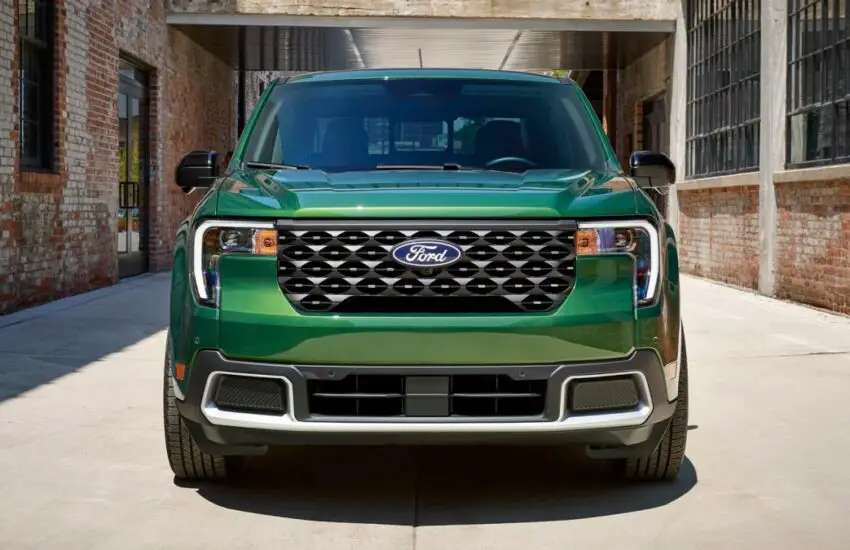
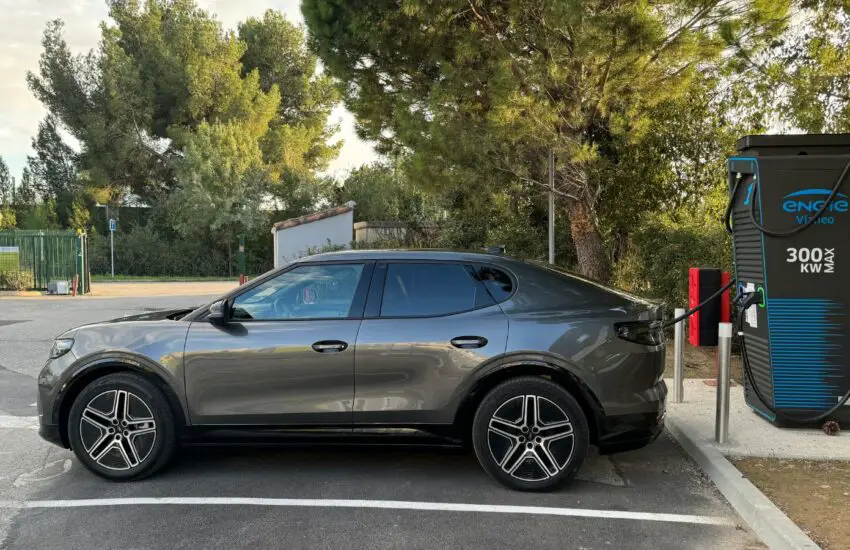
Ford Motor Company entered a critical phase, banking on a wave of new electric vehicles to finally achieve profitability in the EV sector. The automaker pinned significant hopes on models like the Explorer and the upcoming Capri, designed to attract a mainstream audience and establish a stronger foothold in the competitive electric market. Despite these launches, the latest financial reports reveal a persistent and challenging reality: Ford’s electric vehicle business continues to operate at a substantial loss, weighing heavily on the company’s overall finances.

The High Cost of Scaling Electric Production

The financial strain stems from the immense costs associated with developing new EV platforms, securing raw materials for batteries, and constructing manufacturing infrastructure. While sales of electric models are growing, the pace is not yet sufficient to offset these enormous upfront investments. Furthermore, a recent slowdown in EV demand growth in some markets has intensified price competition, squeezing potential profit margins. Ford finds itself in a difficult position, needing to invest billions to compete with rivals while its traditional gasoline-engine business subsidizes the electric future.

Strategic Adjustments and Future Outlook

In response to these pressures, Ford has already begun to adjust its strategy. The company has delayed some planned investments in battery production and postponed the launch of certain future electric models. It is also shifting focus toward hybrid vehicles, which are seeing surging demand and offer a more immediately profitable pathway. The central question for Ford and its investors is whether the current generation of electric vehicles can reach a financial breakeven point before the next wave of even greater investment is required. The journey to electric profitability appears longer and more costly than initially projected.

Electrician’s Choice: Why the VW ID.Buzz Works for Business

An Electrician’s Verdict on the Electric Van

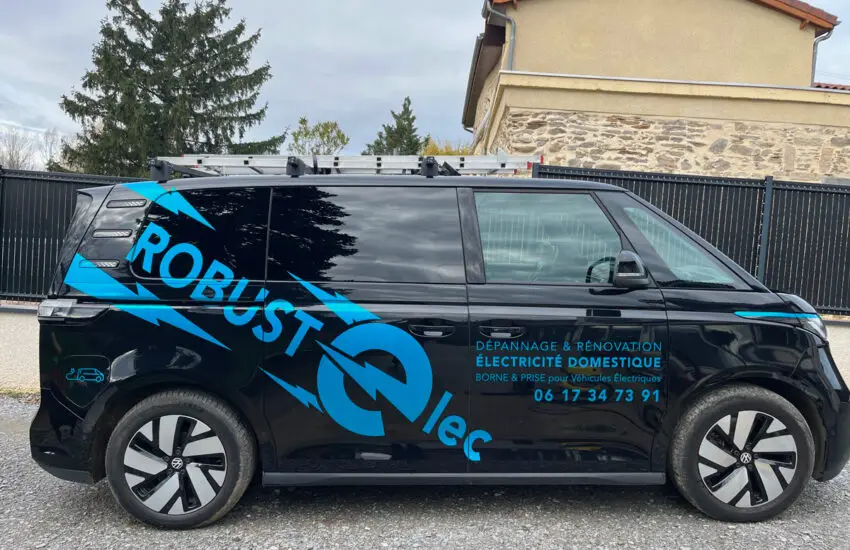
Choosing an electric commercial vehicle is a strategic decision for tradespeople. For Cédric Conterno, a specialist in domotics and energy solutions, the Volkswagen ID.Buzz Cargo has become an integral part of his daily workflow. His experience highlights the practical realities of integrating an EV into a demanding service profession.

Blending Professional Needs with Personal Appeal

The decision was not purely utilitarian. Cédric sought a vehicle that could efficiently handle his tools and equipment for client visits while also offering a design and driving experience that suited personal use. The ID.Buzz’s distinctive style and car-like handling met this dual need, proving that a work vehicle doesn’t have to sacrifice driver enjoyment for functionality.

Performance and Practicality on the Job

For daily professional use, range and charging are critical. Cédric reports that the van’s range comfortably covers his typical circuit of appointments. The ability to charge overnight at his home or utilize public fast-charging stations during longer days has eliminated any operational anxiety. The spacious, configurable cargo area securely stores his valuable tools and domotics equipment, while the quiet, zero-emission operation is a benefit when working in residential areas.

A Sustainable Statement for a Modern Business

Beyond practicality, the vehicle aligns with the forward-thinking ethos of his energy-focused business. Arriving at a client’s home in an electric van reinforces his commitment to modern, sustainable technology. It serves as a mobile showcase for innovation, often sparking conversations with clients about energy efficiency and smart home integration.

This real-world experience demonstrates that for modern tradespeople, the right electric van is more than just transport; it’s a tool for efficiency, a brand statement, and a seamless blend of professional and personal life.

France Bets Big on Lithium for Electric Battery Sovereignty

State Investment Signals Strategic Battery Shift

Lithium extraction in an open-pit mine

The French government’s decision to take a stake in the lithium mining project led by Imerys in the Allier region represents a significant strategic pivot. This move underscores a national commitment to securing a domestic supply chain for electric vehicle (EV) batteries, reducing dependence on foreign imports, particularly from China.

Securing the Raw Material Foundation

Electric batteries are the cornerstone of the automotive industry’s transition. By investing directly in lithium extraction, France is addressing the most critical and geopolitically sensitive link in the battery value chain. The Échassières project in the Allier aims to become a major European source of lithium hydroxide, a key component for high-performance batteries. This initiative is not merely an industrial project but a pillar of France’s and the European Union’s broader industrial and climate strategy.

Building a Complete European Ecosystem

This state-backed investment is designed to catalyze a wider ecosystem. The goal extends beyond mining to encompass the entire battery production pipeline, from refining and cell manufacturing to assembly and recycling. France and Germany are actively fostering a network of “gigafactories” to localize production. Controlling the source of raw materials mitigates supply risks and price volatility, offering long-term stability to European car manufacturers.

The strategic importance of batteries now parallels traditional sectors like aerospace. National sovereignty in this field is deemed essential for economic independence, job creation in new industries, and meeting ambitious carbon neutrality targets. This investment marks a clear recognition that the race for electrification is won not just on the road, but deep within the supply chain.

Jony Ive’s Ferrari: A Human-Centric Revolution for Car Interiors

Beyond the Screen: A New Philosophy for the Driver’s Seat

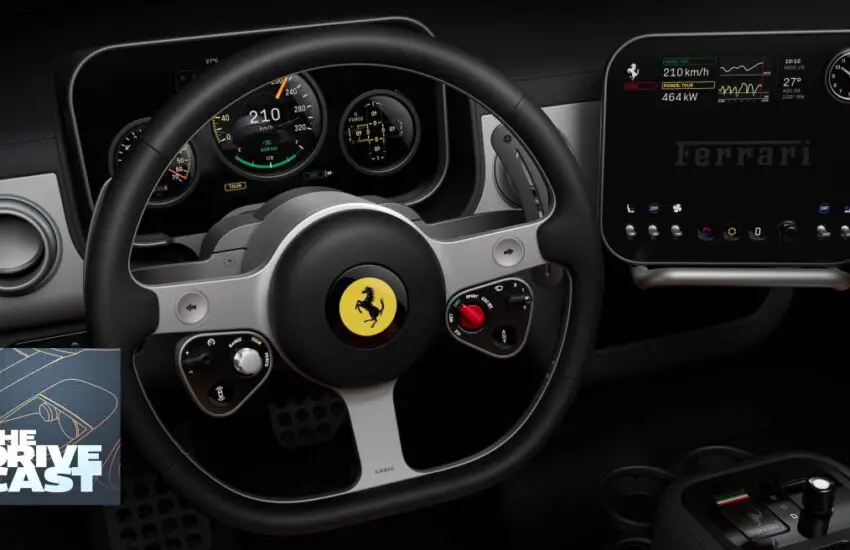
The modern car cabin has become a battleground of technology, dominated by sprawling touchscreens and complex menus. This trend, often at odds with the tactile joy of driving, has reached a critical point. In a bold move, Ferrari has enlisted legendary designer Jony Ive and his collaborator Marc Newson to reimagine the experience for its first fully electric vehicle. This partnership signals a potential paradigm shift from digital overload to human-centric design.

The Legacy of Tactile Intuition

Jony Ive’s legacy at Apple was built on a fundamental principle: making profound technology feel simple and intuitive. The iPhone succeeded not just as a screen, but as a physical object that invited touch and understood human interaction. Applying this philosophy to a Ferrari interior suggests a move away from purely visual interfaces. The goal is likely to restore a sense of physical connection, where controls communicate through material, texture, and precise haptic feedback, creating an interface that engages the driver’s senses beyond sight.

Redefining Luxury in the Electric Era

For Ferrari, electrification is more than a change in powertrain; it’s an opportunity to redefine automotive luxury for a new era. By partnering with designers from outside the automotive industry, Ferrari is seeking a disruptive perspective. The challenge is to create a cabin that feels inherently futuristic and electrically born, yet retains the emotional resonance and visceral engagement synonymous with the prancing horse. The result may not be a removal of screens, but their integration into a holistic environment where technology serves the driver, not the other way around.

This collaboration represents a significant test. Can the minimalist, user-obsessed ethos of consumer tech successfully merge with the high-performance, emotional world of supercars? If successful, Ive and Newson may not just design a new Ferrari interior, but could chart a new course for how humans interact with all vehicles, proving that the future of cabin design lies in thoughtful reduction, not just technological addition.

2027 Range Rover Spied Testing New Design in Arctic Circle

2027 Range Rover: A Mid-Cycle Refresh Emerges from the Cold

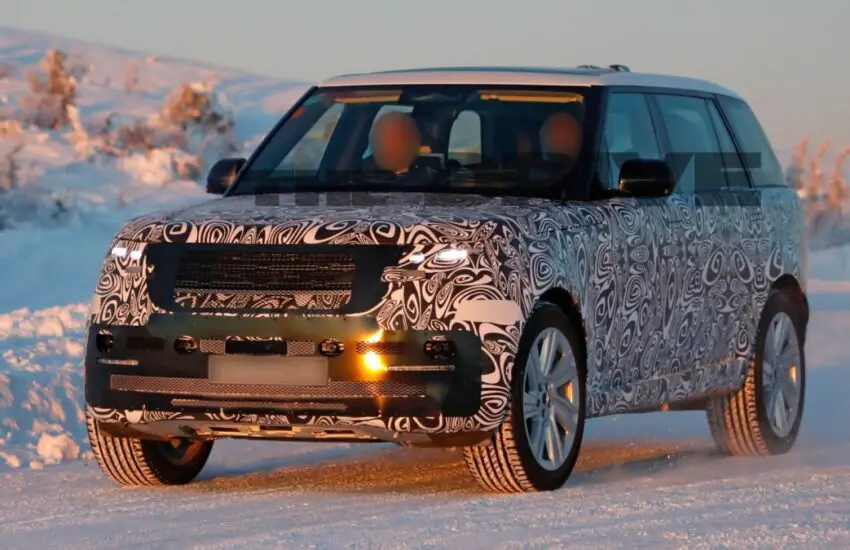
The iconic Range Rover, launched in its current generation in 2021, is preparing for a significant update. Spotted undergoing rigorous cold-weather testing near the Arctic Circle, the prototype signals Land Rover’s commitment to keeping its flagship SUV at the forefront of the luxury segment. This mid-cycle enhancement aims to inject fresh appeal while retaining the model’s quintessential presence.

Evolutionary Styling and Modernized Features

Heavily camouflaged prototypes reveal key changes are in store. The most noticeable updates are expected at the front and rear, with revised lighting signatures featuring slimmer, more technologically advanced LED units. The grille and bumper designs will likely be subtly reshaped for a more contemporary look. Inside, anticipate a next-generation iteration of the Pivi Pro infotainment system with enhanced processing power, new connectivity options, and potentially an expanded use of sustainable luxury materials.

Refined Powertrains and Enhanced Capability

While full specifications remain under wraps, the 2027 update will focus on refining the existing powertrain lineup. This includes further optimization of the sophisticated plug-in hybrid systems for improved electric-only range and efficiency. Engineers are also fine-tuning the suspension and drivetrain electronics to elevate the SUV’s peerless blend of on-road comfort and off-road prowess, a hallmark tested in the extreme Arctic conditions.

This strategic update ensures the Range Rover continues to meet the evolving expectations of luxury clients, blending timeless sophistication with cutting-edge technology and performance.

Nissan Braces for Major Loss and Strategic Overhaul

Nissan Confirms Multi-Billion Dollar Annual Loss

The Japanese automotive giant Nissan has issued a stark financial forecast, anticipating a net loss of approximately $4.2 billion for the current fiscal year. This projection signals one of the most challenging periods in the company’s recent history and underscores the severe impact of global market shifts and internal restructuring efforts.

This anticipated loss is not an isolated figure but a symptom of broader issues, including declining sales in key markets, increased competition, and the costly transition toward electric vehicle development. The automotive industry worldwide is undergoing a significant transformation, and Nissan’s financial results highlight the pressures of adapting to new technologies and changing consumer demands.

Deep Cost-Cutting Measures Announced

In response to this financial downturn, Nissan’s leadership has announced a comprehensive plan involving deep and strategic cost reductions. The initiative extends beyond simple budget trimming, aiming for a fundamental restructuring of global operations. Key areas of focus include optimizing production capacity, streamlining the model lineup, and reducing fixed costs across all regions.

The plan is expected to involve consolidating manufacturing plants and making difficult decisions about underperforming markets. The goal is to create a leaner, more agile company capable of returning to profitability while investing in future growth areas like electrification and autonomous driving.

Navigating a Path to Recovery

This financial forecast and the subsequent restructuring plan represent a critical juncture for Nissan. The company is tasked with balancing immediate fiscal responsibility with the long-term investments required to remain competitive. Success hinges on executing its recovery plan efficiently while maintaining brand value and market share during a period of significant contraction.

Industry analysts will be closely watching Nissan’s ability to manage this transition. The coming months will be pivotal in determining whether these drastic measures can stabilize the company’s finances and position it for a sustainable comeback in the evolving global automotive landscape.

2026 Porsche Macan GTS Electric: The Driver’s EV SUV

2026 Porsche Macan GTS Electric: Beyond the 4S

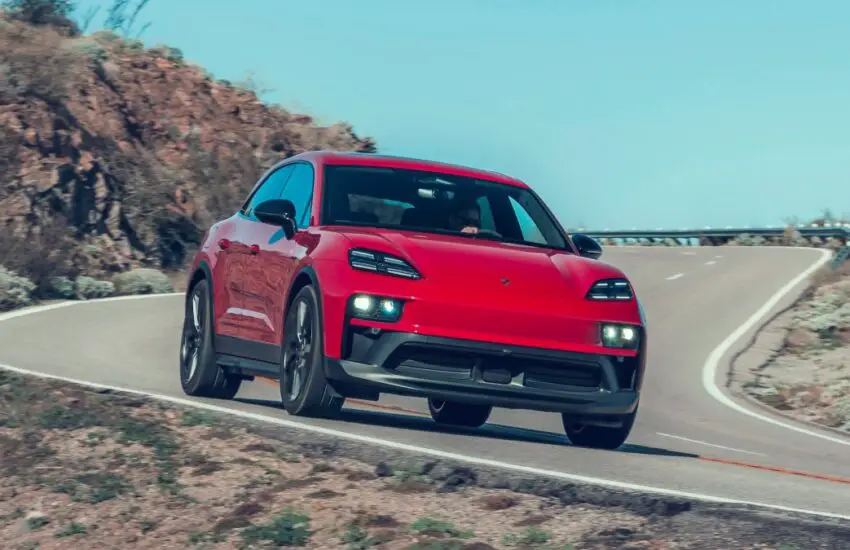
The term “high-performance SUV” is now a reality, thanks in large part to pioneers like the Porsche Macan. For the 2026 model year, this icon takes on its next great challenge: dismantling the myth that electric vehicles lack soul. Enter the new Porsche Macan GTS Electric, positioned to offer an experience that surpasses even the potent 4S variant.

The New Apex of Electric Performance

Sitting at the top of the electric Macan lineup, the 2026 GTS is engineered for the driving purist. It builds upon the formidable PPE platform with specific tuning that targets sharper dynamics and increased power output. While exact figures are still under wraps, expectations point to a dual-motor setup delivering significantly more thrust than the Macan 4S, targeting a sub-4-second 0-60 mph time. The focus is not just on straight-line speed, but on creating a cohesive and thrilling driving character.

Engineered for Engagement

Porsche’s engineers have focused their efforts on chassis calibration for the GTS. Expect a lowered and stiffened suspension, more aggressive torque vectoring, and rear-axle steering as standard. The goal is transformative agility, reducing the perception of weight and size to deliver handling reminiscent of a sports car. The regenerative braking system will also be tuned for a more responsive and intuitive feel, allowing for greater control during spirited driving.

A Cabin Focused on the Driver

Inside, the GTS treatment continues with distinctive accents. The cabin features classic GTS cues like Race-Tex suede finishes, contrasting stitching, and darkened trim elements. The latest version of Porsche’s curved digital dashboard places all essential driving information directly in the driver’s line of sight, while sustainable materials underscore the vehicle’s forward-looking ethos. This cockpit is designed to be an immersive environment, connecting the pilot to the machine and the road ahead.

Redefining the Electric SUV Segment

The 2026 Macan GTS Electric is more than just a new trim level; it’s a statement of intent. It aims to prove that electric powertrains can enhance, rather than diminish, driver engagement. By prioritizing precise handling, explosive performance, and a focused interior, this GTS is poised to become the benchmark for enthusiasts seeking a zero-emissions SUV that truly delivers on the Porsche promise.

Toyota Century Coupe: A V12 Hybrid Power Move Against Rolls-Royce

The Century Coupe: Toyota’s Bold Ascent to Automotive Royalty

The unveiling of the Toyota Century Coupe concept was far more than a design exercise. It served as a definitive statement of intent, signaling Toyota’s ambition to challenge the very pinnacle of the luxury automotive world, dominated by Bentley and Rolls-Royce. The latest rumors suggest this audacious move is gaining serious momentum, potentially powered by a groundbreaking hybrid V12 powertrain.

Beyond the Sedan: A New Expression of Japanese Luxury

While the existing Century sedan is a revered symbol of Japanese craftsmanship and understated elegance for chauffeur-driven executives, the coupe variant represents a dramatic evolution. It is designed for the owner who wishes to take the wheel, blending the Century’s legendary serenity with a more personal, dynamic driving proposition. This shift in focus directly targets the core of the European grand touring coupe segment.

The Heart of the Rumor: An 800-Horsepower Hybrid V12

The most compelling speculation centers on the powertrain. Reports suggest Toyota could be developing a hybrid-assisted V12 engine, capable of producing around 800 horsepower. Such a system would achieve two critical goals: providing the immense, silken power expected in this class while addressing increasingly stringent global emissions regulations. This technological marvel would be the ultimate expression of “Omotenashi” (Japanese hospitality) translated into performance.

A Global Challenge Forged in Japanese Craftsmanship

A production Century Coupe would not compete on badge prestige alone. Its weapon would be a unique blend of cutting-edge hybrid technology and unparalleled traditional craftsmanship. Expect interiors showcasing fine wool cloth, exquisite woodwork, and meticulous attention to detail that rivals the finest European ateliers. This fusion of the modern and the artisanal could redefine expectations in the ultra-luxury space.

If these rumors materialize, the Toyota Century Coupe will transcend its role as a mere concept. It would emerge as a formidable contender, proving that the future of ultimate luxury may arrive not just with a storied emblem, but with a blend of Japanese precision, innovation, and quiet confidence.

Trump EPA Targets Start-Stop Engine Technology

The Controversy Over Start-Stop Systems

Start-stop technology, designed to automatically shut off a vehicle’s engine at idle to reduce fuel consumption and emissions, has been a point of contention since its widespread adoption. While praised by environmental regulators for its efficiency benefits, the feature has drawn consistent criticism from a segment of drivers. Common complaints include perceived wear on engine components, noticeable delays in acceleration, and the general annoyance of the engine cycling on and off in heavy traffic.

Regulatory Shift Under the Trump Administration

In a move aligning with its broader deregulatory agenda, the Trump-era Environmental Protection Agency (EPA) signaled a potential policy reversal concerning this technology. Then-EPA Administrator Lee Zeldin indicated the agency was preparing action in response to feedback from “numerous” citizens dissatisfied with the system. The proposed measure aimed to revise the federal emissions testing procedures that effectively incentivize automakers to install start-stop systems to achieve compliance with Corporate Average Fuel Economy (CAFE) standards.

Implications for Automakers and Emissions

Such a regulatory change would have significant ramifications. By altering how fuel economy is calculated for vehicles equipped with start-stop, the EPA could remove a key compliance tool for car manufacturers. This would force the industry to re-evaluate strategies for meeting stringent emissions targets, potentially accelerating investment in alternative technologies like hybridization or full electrification. Critics of the proposed change argued it could lead to a measurable increase in greenhouse gas emissions from the transportation sector, undermining long-term environmental goals.

The Lasting Impact on Automotive Policy

While the ultimate fate of this specific proposal shifted with subsequent administrations, the debate it sparked remains relevant. It highlighted the ongoing tension between immediate consumer comfort and long-term environmental mandates. The episode also underscored how federal testing protocols directly influence the technologies that become standard in vehicles, shaping the driving experience for millions. The discussion around start-stop systems continues to inform broader conversations about the practical implementation of emissions-reducing technology in everyday consumer products.

Ford’s Affordable Gas Pickup: A New Budget Truck for 2029

The Quest for an Affordable American Truck

The American auto market faces a significant challenge: a glaring lack of accessible new vehicles. With options under $20,000 virtually extinct and even models below $30,000 becoming rare, the Ford Maverick emerged as a standout success by proving demand for a simpler, value-oriented pickup. Building on this momentum, Ford is reportedly developing a new, budget-friendly gasoline-powered pickup slated for a 2029 release, aiming to further democratize truck ownership.

A Strategic Move in an Evolving Market

This move represents a strategic pivot. While the industry focuses heavily on electric vehicles, Ford recognizes a persistent and substantial market for affordable internal combustion engine trucks. This new model is expected to slot below the Maverick in both price and potentially size, targeting first-time truck buyers and those prioritizing straightforward utility over luxury or high performance. It addresses a segment often overlooked as manufacturers chase higher margins with feature-laden vehicles.

What to Expect from the New Model

Details remain closely guarded, but industry analysts anticipate a no-frills approach. The truck will likely utilize proven, efficient gasoline engine technology and a platform engineered for cost-effectiveness to hit a aggressive price point. Expect a focus on core pickup capabilities—a usable bed, respectable towing, and durable construction—with advanced technology and premium materials reserved for higher trims or optional packages. This philosophy echoes the original appeal of compact trucks, offering transportation and tool first, status symbol second.

The development of this model underscores a critical observation: affordability is itself a powerful feature. By 2029, this new Ford pickup could serve as a crucial entry point into the brand, fostering long-term customer loyalty. Its success will depend on Ford’s ability to balance cost-cutting with the rugged reliability buyers expect, carving out a unique space in a crowded and increasingly expensive automotive landscape.