MG S5 EV Long-Term Test: Real-World Charging and Range Analysis

MG S5 EV: Putting Range and Charging to the Test

The compact electric SUV segment is fiercely competitive, with efficiency and practicality being key battlegrounds. The MG S5 EV enters this arena promising a compelling blend of value and capability. A critical part of that promise lies in its real-world driving range and, just as importantly, how quickly its battery can be replenished. This long-term analysis focuses squarely on these pivotal aspects for daily commuting and longer journeys.

Real-World Efficiency and Driving Range

Official range figures provide a baseline, but real-world conditions tell the full story. During extended testing in varied scenarios—including city traffic, highway cruising, and mixed rural roads—the MG S5 EV demonstrated consistent energy consumption. Factors like climate control use, driving style, and ambient temperature naturally influence the results. The vehicle’s regenerative braking system proved effective in urban environments, helping to maximize range by recovering energy. The available driving modes allow drivers to tailor performance and efficiency to their needs, directly impacting the distance achievable on a single charge.

Charging Performance and Practicality

For any EV, charging speed is a crucial metric that defines usability. The MG S5 EV’s compatibility with DC fast-charging networks is a significant advantage. Testing at high-power charging stations revealed how the battery management system handles rapid energy intake, particularly between 20% and 80% state of charge. The time required to add substantial range during a road trip break is a key finding. Furthermore, the experience of using a standard AC home charger for overnight replenishment highlights the car’s suitability for routine, convenient charging. The integration of the charging port and the clarity of the onboard charge status information contribute to the overall ownership experience.

Verdict on Long-Distance Travel

Combining the observed range with the documented charging speeds provides a clear picture of the MG S5 EV’s potential for longer voyages. The effective travel rhythm—driving time versus charging time—becomes apparent. This analysis considers how the vehicle’s capabilities align with typical European driving patterns and charging infrastructure. The balance it strikes between a usable real-world range and pragmatic charging stops ultimately defines its position as a viable choice for drivers seeking an electric SUV for all purposes, not just city confines.

Mercedes Reinvents Electric Braking with Wheel-Hub Motors

Beyond the Brake Pedal: Mercedes’s Electrifying Vision

The familiar hydraulic brake system, a cornerstone of automotive engineering for over a century, may be nearing its end in the electric age. Mercedes-Benz is pioneering a radical shift by developing a braking system that could eliminate traditional mechanical components entirely. This move is not merely an incremental upgrade but a fundamental rethinking of how vehicles slow down and stop, enabled by the unique capabilities of electric drivetrains.

The Power of the Wheel-Hub Motor

At the heart of this revolution is technology from YASA, the British axial-flux motor specialist acquired by Mercedes-Benz. YASA’s ultra-lightweight, high-torque wheel-hub motors are integrated directly into the wheels. This design provides unprecedented individual control over each wheel. By reversing their function, these powerful motors can act as ultra-responsive generators, converting the vehicle’s kinetic energy back into electricity with exceptional efficiency. This process, known as regenerative braking, becomes the primary method for deceleration.

Close-up of an advanced wheel-hub motor on a Mercedes concept chassis

Benefits of a Brakeless Future

The potential advantages of this system are substantial. Removing conventional brake calipers, discs, and hydraulic lines reduces unsprung weight significantly, which can improve handling, ride comfort, and energy consumption. It also frees up valuable space within the wheel design for enhanced aerodynamics or larger batteries. Furthermore, braking purely through regeneration maximizes energy recapture, potentially extending driving range. The system’s digital precision allows for incredibly fast and finely tuned braking responses, enhancing safety and enabling new advanced driver-assistance features.

Challenges on the Road Ahead

Despite the promise, the path to eliminating mechanical brakes entirely is complex. Engineers must develop flawless redundancy to ensure fail-safe stopping power in all scenarios, including a full electrical system failure or extreme braking demands. Regenerative braking effectiveness can also vary with battery charge level and temperature. Mercedes’s solution will likely involve retaining a minimal, backup mechanical system for emergencies, but the goal is to make its use an exceptionally rare event, marking a true paradigm shift in vehicle design.

Ford’s Compact PHEV Bronco Targets European Market

A New Direction for Ford’s European Strategy

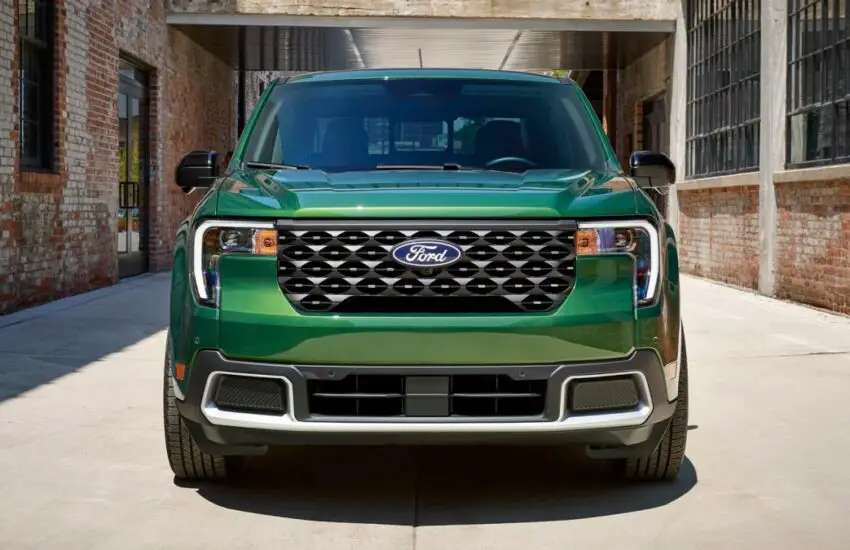
Ford is charting a new course for its European lineup with the development of a compact, plug-in hybrid Bronco. This move signals a strategic pivot, tailoring one of its most iconic nameplates to meet the specific demands of European consumers. While the rugged, full-size Bronco models continue their success story in North America, this upcoming variant is designed with a focus on urban practicality and reduced environmental impact.

Designed for European Roads and Regulations

The European-bound Bronco is expected to be a significantly smaller SUV, aligning with the continent’s preference for compact, agile vehicles suited to narrower city streets and tighter parking spaces. The core innovation lies under the hood: a plug-in hybrid electric (PHEV) powertrain. This technology offers the best of both worlds, providing substantial all-electric range for daily commutes while retaining a combustion engine for longer journeys and adventure-ready capability.

Blending Heritage with Electrified Efficiency

Despite its downsized dimensions and electrified heart, the model will likely retain key Bronco design cues that communicate its off-road heritage. Expect a bold front grille, boxy silhouette, and removable roof options. The PHEV system aims to deliver lower tailpipe emissions, appealing to environmentally conscious drivers and helping Ford comply with stringent EU emissions standards. This model represents a crucial step in Ford’s plan to electrify its European offerings.

Positioning in a Competitive Segment

This compact Bronco PHEV will enter a fiercely competitive segment, challenging established compact SUVs and crossover models. Its unique selling proposition will be its combination of Bronco-branded adventurous styling, versatile capability, and the fuel efficiency of a plug-in hybrid. If executed successfully, it could carve out a distinctive niche, attracting buyers seeking a vehicle that stands out from conventional compact SUVs while offering modern, efficient propulsion.

The Uncertain Future of Small City Cars in Europe

Will the Peugeot 108 Make a Comeback?

The automotive landscape in Europe is undergoing a seismic shift, leaving the fate of beloved small city cars like the Peugeot 108 hanging in the balance. Once a staple of urban mobility, the A-segment has faced immense pressure from stricter emissions regulations and changing consumer preferences favoring SUVs and crossovers. The potential return of models such as the 108 is no longer just a business decision for manufacturers; it has become a litmus test for the future of affordable, compact urban vehicles on the continent.

Regulatory Hurdles and Market Forces

European Union policies are the primary force shaping this segment. Stringent CO2 emission targets and the massive investment required for electrification make developing a new, profitable mini-car exceptionally challenging. The economics are tough: the cost of advanced powertrains and safety technology is harder to absorb in a low-price vehicle. Consequently, many automakers have withdrawn from the segment to focus resources on larger, more profitable electric vehicles.

A Persistent Niche of Demand

Despite these challenges, a genuine demand for compact, efficient, and easy-to-park city cars persists. In dense urban environments across Europe, the practical advantages of a small footprint and low running costs remain highly relevant. This enduring need suggests a market opportunity, potentially for electric versions of these vehicles, if they can be offered at an accessible price point.

The Path Forward for Compact Cars

The future of models like the Peugeot 108 likely hinges on a combination of strategic decisions from Stellantis and the evolving regulatory framework. The potential development of a shared platform for affordable electric mini-cars across multiple brands could improve viability. Ultimately, the return of the small city car depends on aligning European environmental ambitions with the practical necessity of accessible urban transportation.

Norway’s Gas Car Sales Hit Record Low in 2025

Norway’s Electric Revolution Leaves Little Room for Gas Cars

The latest registration data from Norway solidifies its position as the undisputed global leader in electric vehicle adoption. Figures from November 2025 reveal a stunning milestone: over 97% of all new passenger cars registered in the country were 100% battery-electric vehicles (BEVs). This leaves a minuscule market share for traditional internal combustion engine cars, including petrol, diesel, and even non-rechargeable hybrids.

A Deliberate Path to Electrification

This historic low for fossil-fuel car registrations is not a coincidence but the result of a consistent and ambitious national strategy. For decades, Norway has implemented a powerful package of incentives designed to make electric vehicles the obvious choice for consumers. These include significant tax exemptions, reduced tolls and ferry fares, access to bus lanes in congested areas, and extensive charging infrastructure development. The policy framework has effectively made electric cars cheaper to buy and more convenient to own than their gasoline counterparts.

Beyond Passenger Cars: The Next Frontier

With the passenger car market rapidly electrifying, focus is now shifting to heavier transport segments. The Norwegian government and industry are increasingly targeting electric solutions for vans, trucks, and public transport. The success in the passenger vehicle sector provides a proven blueprint and generates crucial economies of scale for battery technology, which is essential for decarbonizing these more challenging modes of transport.

A Global Blueprint in the Making

Norway’s trajectory offers a compelling case study for other nations. It demonstrates that with a clear, long-term policy vision combining financial incentives and infrastructure support, a rapid transition away from fossil-fueled transportation is achievable. The near-total dominance of EVs in new car sales shows that consumer behavior can shift dramatically when the economic and practical advantages are aligned. The Norwegian model continues to inspire and inform climate and transport policies worldwide.

Volkswagen ID.Buzz Cargo Long Wheelbase Boosts Electric Van Utility

Extended Range and Capacity: The New Long ID.Buzz Cargo

Volkswagen Commercial Vehicles has significantly expanded the practicality of its electric van lineup with the introduction of a long-wheelbase version of the ID.Buzz Cargo. This move directly addresses a key demand from business users, filling a notable gap in the initial model range. The extended chassis, previously exclusive to the seven-seat passenger variant, now brings enhanced load space and versatility to the commercial electric vehicle segment.

Enhanced Practicality for Business Users

The primary advantage of the long-wheelbase ID.Buzz Cargo is its substantially increased cargo capacity. The extended body translates directly into a larger, more usable load area behind the driver’s cabin. This allows for greater volumetric capacity for tools, equipment, and parcels, making it a more viable option for a wider array of trades and delivery services. The vehicle maintains the iconic and friendly design of the ID.Buzz but now packages it with the serious utility professionals require.

Maintaining Electric Efficiency

Despite its larger dimensions, the long-wheelbase Cargo model is expected to retain the core electric powertrain benefits of its shorter sibling. Drivers can anticipate a similar driving experience with quiet, instant torque and zero local emissions, crucial for urban operations and low-emission zones. The vehicle is likely to support fast-charging capabilities, ensuring minimal downtime for businesses with demanding schedules. This combination of increased space and electric efficiency positions it as a compelling alternative to traditional diesel vans.

The arrival of the long-wheelbase ID.Buzz Cargo marks a strategic evolution for Volkswagen’s electric commercial vehicle ambitions. By offering a configuration that prioritizes cargo volume, it moves beyond niche appeal to challenge conventional vans in the burgeoning electric light commercial vehicle market. This development underscores the automotive industry’s shift towards providing viable, zero-emission solutions for every facet of commercial transport.

Electric Car News: Tesla’s Mystery Model & Rival Updates

Is Tesla’s “New” Car Really New?

The electric vehicle world is buzzing with speculation following Tesla’s latest announcement. The automaker has teased a “new” vehicle, but industry analysts suggest this may not be a ground-up creation. Instead, it appears to be a significant evolution of an existing platform, potentially a major refresh or a specific new variant. This strategy blurs the line between a model update and a new launch, raising questions about Tesla’s approach to refreshing its lineup in a highly competitive market.

Legacy Automakers Accelerate Their EV Plans

While Tesla captures headlines, traditional manufacturers are making decisive moves. Lexus is preparing to unveil a next-generation electric SUV, promising a blend of the brand’s renowned luxury with a dedicated EV architecture for improved performance and range. Meanwhile, the iconic Renault 5 is making a triumphant return, reimagined as a compact, affordable EV. Its retro-modern design and focus on urban mobility position it as a strong contender in the European market.

Hyundai and Jaguar Forge Ahead with Innovation

Hyundai continues to build on the success of its IONIQ series, with rumors pointing to an expansion of its high-performance N line into the electric sphere. This move would bring thrilling driving dynamics to zero-emission vehicles. On the luxury front, Jaguar is undergoing a radical transformation, phasing out its internal combustion engines to become an all-electric brand by 2025. The upcoming Jaguar models promise to combine sleek, modern aesthetics with cutting-edge technology, aiming to redefine British electric luxury.

The electric vehicle landscape is shifting rapidly, with each player employing distinct strategies. From Tesla’s iterative yet impactful updates to the bold, brand-defining transitions from legacy automakers, the competition is driving faster innovation and more choices for consumers worldwide.

1000 HP Electric Motors: The End of Traditional Rear Brakes?

How 1000-Horsepower Motors Are Replacing Rear Brakes

The future of high-performance braking may not involve brakes at all. A groundbreaking shift in electric vehicle (EV) design is seeing ultra-powerful electric motors, capable of delivering 1000 horsepower, take on a dual role. Beyond propulsion, these advanced motors are being engineered to function as highly efficient rear braking systems, potentially rendering conventional brake components obsolete.

The Power of Regenerative Braking

This revolution is powered by regenerative braking technology. In an electric vehicle, the motor can also act as a generator. When the driver lifts off the accelerator or applies the brakes, the system reverses the motor’s function. It captures the vehicle’s kinetic energy, converts it back into electrical energy, and feeds it into the battery. This process creates significant deceleration force directly at the wheels.

For internal combustion engine vehicles, slowing down wastes energy as heat through friction brakes. In contrast, regenerative braking recaptures that energy, extending range and reducing wear. In high-performance EVs with exceptionally powerful motors, the regenerative force can be so substantial that it handles the majority of everyday braking demands.

Axial Flux Motors: The Key to Braking Performance

The enabling technology behind this is the axial flux motor, championed by companies like UK-based YASA. Unlike traditional radial flux motors, axial flux designs are lighter, more compact, and offer superior torque density. This means a relatively small motor can produce immense power and, crucially for braking, generate very high levels of regenerative torque almost instantaneously.

This capability allows a 1000 HP axial flux motor to provide deceleration force powerful enough to manage most braking scenarios for the rear axle. The conventional friction brakes are relegated to a backup role for emergency stops or holding the vehicle at a standstill. This leads to reduced brake dust, lower maintenance, and significant weight savings—a critical factor for performance and efficiency.

Implications for Future Vehicle Design

The integration of motor and brake system opens new avenues for automotive engineers. With smaller or no traditional rear brake calipers and discs, designers can reimagine suspension geometry, wheel design, and aerodynamic underbodies. It represents a fundamental step toward more integrated, efficient, and simplified vehicle architectures, where one sophisticated component replaces multiple conventional ones.

DeLorean Aerodynamics: Can the Time Machine Hit 88 MPH?

Putting the Time Machine to the Test

For decades, fans have wondered about the engineering behind the most famous car in cinematic history. A new interactive 3D model now allows for a detailed aerodynamic analysis of the Back to the Future DeLorean, simulating its performance in a virtual wind tunnel. This digital experiment goes beyond the flux capacitor to answer a fundamental question: could its iconic design actually handle the legendary 88 mph time-travel threshold?

A Design Built for Drama, Not Drag

The initial findings reveal significant aerodynamic challenges. The DeLorean DMC-12’s iconic stainless steel body, featuring sharp angles, gull-wing doors, and a flat front end, creates considerable aerodynamic drag. The model shows turbulent airflow separation around the front bumper and wheel wells, generating drag that would require substantial power to overcome. The famous louvered rear engine cover also presents a complex airflow scenario, potentially creating a low-pressure zone that increases resistance.

The Power of Movie Magic

This analysis highlights the stark difference between cinematic fantasy and automotive engineering. While the film’s Mr. Fusion and plutonium reactor provided fictional power, a stock DeLorean’s underpowered V6 engine struggled against its own shape. The virtual tunnel data suggests reaching 88 mph would demand significantly more horsepower in reality to counteract the poor drag coefficient. This makes Doc Brown’s modifications seem all the more necessary.

An Icon Beyond Physics

Ultimately, this aerodynamic scrutiny does nothing to diminish the car’s legendary status. It instead reinforces that the DeLorean was designed as a visual symbol of the future—a rolling piece of sculpture. Its aerodynamic inefficiency is part of its unique character, a testament to an era of bold, angular design. The analysis provides a fascinating scientific perspective on a cultural icon, proving that some legends are built more for the silver screen than for the speedometer.

Lando Norris Seals 2025 F1 Title in Dramatic Abu Dhabi Finale

The Unlikely Champion Claims His Crown

The 2025 Formula 1 World Championship concluded in breathtaking fashion under the floodlights of the Yas Marina Circuit. In a finale that will be remembered for decades, McLaren’s Lando Norris secured his first drivers’ title, defeating the reigning champion Max Verstappen in a season-long duel defined by razor-thin margins and intense psychological warfare. This victory marks a seismic shift in the sport’s hierarchy, crowning a new king after years of Verstappen and Red Bull dominance.

A Season Forged in Early Fire

The battle lines were drawn from the opening rounds. Norris’s narrow victory over Verstappen at the Australian Grand Prix in March was a declaration of intent, proving McLaren had the raw pace to challenge the established order. That moment ignited a ten-month war of attrition, characterized by strategic masterstrokes, controversial team orders, and sharp public exchanges that fueled the rivalry both on and off the track. Each race weekend became a high-stakes chess match between two of the sport’s fiercest competitors.

Overcoming Adversity and Pressure

Norris’s path to glory was far from straightforward. The middle phase of the season saw Verstappen and Red Bull reassert their traditional strength, building a significant points lead. Critics questioned McLaren’s consistency and Norris’s ability to handle championship pressure. However, a stunning series of performances after the summer break, including crucial wins in Singapore and Austin, showcased a new level of maturity from the British driver, steadily eroding Verstappen’s advantage and setting up the winner-takes-all showdown in Abu Dhabi.

The Decisive Duel in the Desert

The championship finale was a microcosm of the entire season: a pure, unadulterated head-to-head fight. Starting from the front row together, Norris and Verstappen traded the lead multiple times, their battle uncompromising yet clean. Ultimately, it was Norris’s relentless pace in the final stint on a different tire strategy that made the difference. As he crossed the finish line, a mere heartbeat ahead of his rival, the McLaren garage erupted, celebrating the culmination of a perfect strategic gamble and a driver performing at the absolute peak of his powers.

A New Era Begins

Lando Norris’s 2025 championship triumph is more than a personal achievement; it signals the dawn of a new competitive era in Formula 1. It is a testament to McLaren’s remarkable engineering resurgence and the unwavering belief of a team and driver who refused to be intimidated by a dynasty. The sporting world now looks to 2026, wondering if this is the start of a Norris reign or merely the beginning of an even fiercer rivalry.