Lexus LS Farewell: The End of a Luxury Sedan Icon

The Final Bow of a Legendary Challenger

For decades, the luxury sedan throne was uncontested. Then, in 1989, the Lexus LS arrived, not merely to compete but to redefine the segment. It challenged established norms with its relentless focus on quality, whisper-quiet ride, and benchmark reliability. Now, as production is set to conclude, we reflect on the legacy of the model that once forced the entire luxury world to raise its game.

A Legacy Forged in Disruption

The original LS 400 was a seismic event. It delivered a level of fit-and-finish and smoothness that embarrassed rivals at a significantly lower price. This wasn’t just a new car; it was a statement of intent from Toyota’s new luxury division. The LS’s legendary reliability and customer care created a cult following, proving that luxury could be both opulent and dependable. For years, it was the only true alternative that made the established German marques genuinely nervous.

The Quiet Evolution and Final Chapter

Over subsequent generations, the LS evolved, introducing bold spindle grille styling, cutting-edge technology, and even a stunningly crafted V8 hybrid model. It continued to prioritize serenity and craftsmanship, offering an uniquely Japanese take on luxury. However, the market shifted decisively towards SUVs, and the sedan’s competitive edge softened. The current model, while supremely competent, no longer commands the segment’s spotlight as it once did.

An Enduring Impact on Luxury

The impending end of LS production marks the closing of a significant chapter. Its influence, however, is permanent. The LS proved that a newcomer could triumph through excellence, fundamentally altering the luxury landscape. It forced competitors to improve quality, refine their rides, and consider value. As the final models leave the factory, the Lexus LS departs not with a whimper, but as a celebrated icon whose shockwaves are still felt in every luxury car built today.

Audi RS5 2027 Weight Shock: A New Heavyweight Champion

The 2027 Audi RS5’s Staggering Weight Revealed

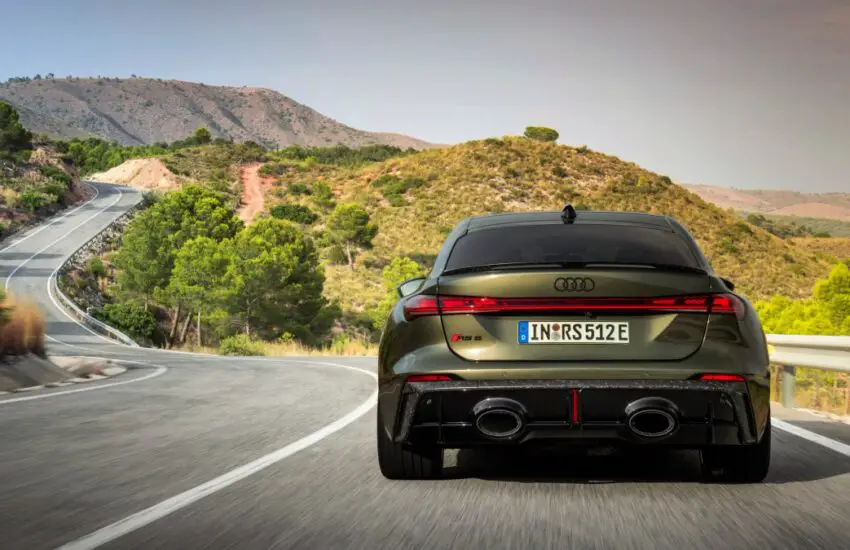
The upcoming Audi RS5 for the 2027 model year is set to redefine expectations, but not in the way performance enthusiasts might hope. Official figures confirm a curb weight of 5,192 pounds, a number that places this midsize sports coupe in a surprising new category. This represents a monumental shift in vehicle philosophy and engineering for the iconic RS line.

A Dramatic Leap from Its Predecessor

The most direct comparison highlights the scale of change. The previous-generation Audi RS5 had a curb weight of 3,825 pounds. The new model therefore gains a staggering 1,376 pounds. This increase is equivalent to carrying an extra subcompact car onboard at all times. Such a dramatic weight gain fundamentally alters the vehicle’s dynamics, posing significant challenges for acceleration, braking, and handling balance.

Heavier Than an Electric Sedan and Pickups

To fully grasp the significance, contextual comparisons are essential. The 2027 RS5 now outweighs a fully electric Porsche Taycan, a vehicle that carries a large battery pack. Even more remarkably, it tips the scales beyond certain four-door configurations of the body-on-frame Ford F-150 pickup truck. This positions the new RS5 as a true heavyweight, forcing a re-evaluation of its performance envelope and driving character.

Implications for Performance and Engineering

This record mass will compel Audi’s engineers to deploy every available technology to maintain the RS5’s performance credentials. Expect vastly more powerful braking systems, reinforced chassis components, and potentially a significant power uplift from the powertrain simply to match the acceleration of the lighter outgoing model. The focus will inevitably shift from agile nimbleness to immense, stable power and next-generation traction management systems to harness it.

Jeep Trackhawk Legend Poised for Electrifying Return

The High-Performance SUV Awaits Its Next Chapter

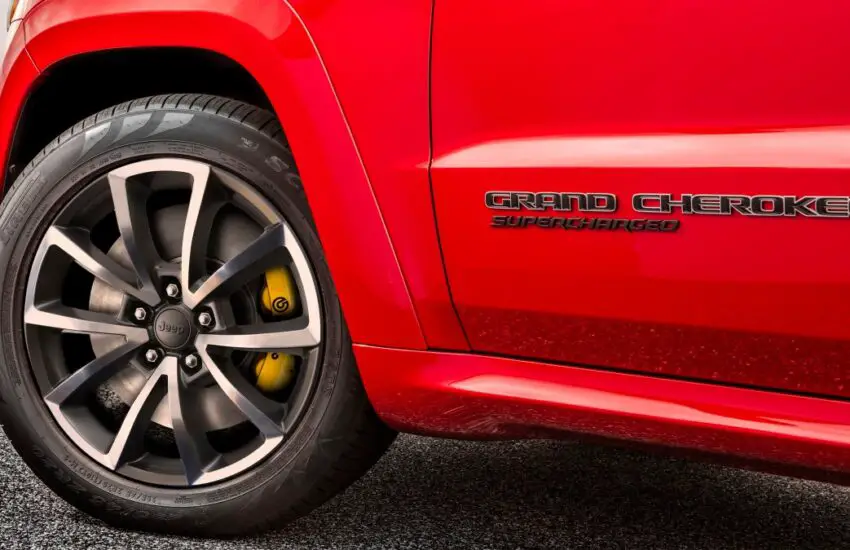
In the annals of automotive performance, few SUVs have commanded respect like the Jeep Grand Cherokee SRT and its formidable successor, the Trackhawk. These models transformed the robust Grand Cherokee into a tarmac-devouring powerhouse, famously equipped with a supercharged 6.2-liter HEMI V8 that delivered over 700 horsepower. Their absence from the current lineup has left a void for enthusiasts craving brutal acceleration in a practical package. New industry insights suggest this legendary nameplate is being prepared for a dramatic comeback.

Evolving Power for a New Era

The automotive landscape has shifted significantly since the original Trackhawk’s reign. Stricter emissions regulations and the industry-wide push toward electrification present both a challenge and an opportunity. The next-generation Trackhawk is unlikely to feature the traditional supercharged V8. Instead, speculation points toward Jeep leveraging Stellantis group technology, potentially utilizing a sophisticated hybrid or even a fully electric powertrain. The goal remains unchanged: to deliver earth-shattering performance that lives up to the Trackhawk badge, but with a modern twist.

Anticipated Features and Market Position

Expect the revived model to build upon the advanced platform of the latest Grand Cherokee. This would provide a foundation for cutting-edge suspension systems, massive performance brakes, and a driver-focused interior laden with technology. The new Trackhawk would likely compete in the increasingly crowded high-performance SUV segment, going head-to-head with vehicles offering both traditional and electrified powertrains. Its unique selling proposition will remain the combination of Jeep’s legendary capability aura with breathtaking straight-line speed and dynamic handling.

While official details and timelines remain guarded, the preparation for the Trackhawk’s return signals Jeep’s commitment to its performance heritage. The successor will need to balance the raw, visceral character of its predecessor with the efficiency and instant torque of new-age propulsion. For fans of extreme SUVs, the wait for this legend’s next act is officially on.

The Missing Trail: Why Jeep’s Rugged Grand Cherokee Trims Vanished

The Curious Case of the Disappearing Off-Road Grand Cherokee

For decades, the Jeep brand has been synonymous with off-road capability. From the legendary Wrangler to the storied Cherokee, the promise of adventure beyond the pavement has been a core tenet. This makes the gradual disappearance of dedicated off-road versions of the Grand Cherokee a puzzling shift for a heritage-rich marque.

A Shift in Consumer Demand and Brand Strategy

The primary driver behind this change is a fundamental evolution in the luxury SUV market. Modern Grand Cherokee buyers increasingly prioritize on-road refinement, advanced technology, plush interiors, and superior towing capacity over raw rock-crawling ability. Jeep has strategically pivoted the Grand Cherokee to compete directly with premium rivals like the BMW X5 and Land Rover Discovery, focusing on comfort and sophistication. This repositioning has made specialized, less profitable off-road trims less viable from a production standpoint.

The Rise of the Trailhawk and Its Niche

It’s important to note that off-road prowess hasn’t been entirely abandoned. For a time, the Grand Cherokee Trailhawk trim served as the dedicated off-road variant, featuring enhancements like all-terrain tires, underbody skid plates, an electronic limited-slip differential, and the renowned Quadra-Drive II 4×4 system. However, its availability has become inconsistent, often limited to specific model years or markets, reflecting its niche status within the broader Grand Cherokee lineup.

Where Does the Off-Road Spirit Live Now?

Jeep has effectively compartmentalized its model range. The uncompromising, body-on-frame Wrangler and the robust Gladiator pickup now serve as the brand’s true off-road flagships. The Grand Cherokee, particularly in its newer generations, has been tasked with conquering a different terrain: the upscale family SUV segment. This specialization allows each model to excel in its designated role without compromise, even if it means some traditionalists feel the Grand Cherokee has softened its rugged edge.

Lamborghini Urus SE Performante Spied with Radical New Design

Next-Gen Urus Performante Prototype Emerges

Development of the most extreme Lamborghini Urus yet is in full swing. New spy shots have captured prototypes of the anticipated Urus SE Performante undergoing rigorous testing. This model, expected for the 2027 model year, previews a significant evolution for the super SUV, with a bold new design element taking center stage.

A Defining Roof Light Bar

The most striking feature visible on these test mules is a full-width illuminated light bar integrated into the roof. This distinctive signature, likely employing advanced LED technology, runs across the top of the vehicle and appears to be a key design identifier for the Performante variant. It signifies Lamborghini’s intent to make this model visually unmistakable, even at a distance.

The Performante Legacy Intensified

In the Lamborghini lexicon, the “Performante” badge is reserved for models that push the boundaries of performance and driving dynamics. Applied to the Urus SE, this suggests a comprehensive overhaul focused on weight reduction, increased power, and sharper handling. Expectations point to an enhanced plug-in hybrid system building upon the standard Urus SE’s powertrain, delivering even more staggering acceleration and improved efficiency.

Aggressive Aerodynamics and Handling

Beyond the roof light, the prototype showcases a more aggressive body kit. Expect extensive use of carbon fiber for components like the front splitter, side skirts, and a prominent rear diffuser. These elements will work in concert with an advanced active aerodynamics system to increase downforce and stability at high speeds. The chassis will undergo significant revisions, including a lowered suspension, recalibrated active anti-roll bars, and performance-oriented tuning for the rear-wheel steering system to transform its cornering prowess.

The Lamborghini Urus SE Performante is shaping up to be a formidable statement. It aims to blend the practicality of an SUV with the heart and soul of a hypercar, setting a new benchmark for performance in the segment.

Ridge Racer R4’s Iconic Cars Reborn in Detailed Lego Models

From Digital Dream to Plastic Brick Reality

For a generation of gamers, Ridge Racer Type 4 on the original PlayStation represented the pinnacle of arcade-style racing. Beyond its groundbreaking graphics and legendary soundtrack, R4 was celebrated for its roster of stunning, fictional cars. These vehicles, each with a distinct personality tied to their in-game racing teams, lived only on screen and in the imaginations of fans. Now, one dedicated fan has undertaken an incredible project: faithfully reconstructing these digital legends using Lego bricks.

Capturing the Soul of a Pixel-Perfect Machine

The challenge of translating a video game car into a physical model is immense. The original designs are often sleek, flowing, and devoid of the angular limitations of real-world engineering. The builder’s skill lies in interpreting these curves and aggressive silhouettes using the Lego system’s inherently blocky geometry. Key details like the distinctive headlight clusters, signature spoilers, and unique body kits of cars from teams like Pac-Man Club, Racing Team Solvalou, and Dig Racing must be meticulously recreated. The goal is to achieve instant recognition, where a single glance at the model evokes the feel of pushing the car to its limits on the fictional circuits of the game.

A Testament to Enduring Fandom

This project is more than a display of technical Lego mastery; it is a profound act of preservation and tribute. Ridge Racer Type 4 holds a special place in gaming history, and its cars are central to that legacy. By building them in Lego, the fan is creating tangible artifacts from a purely digital culture. These models serve as a bridge between the virtual nostalgia of the late 90s and the physical, tactile world of today. They celebrate the artistry of the original game designers while showcasing the creative potential of Lego as a medium for modern fan art.

Such builds resonate deeply within both the gaming and Lego communities, reminding enthusiasts that passion can transform pixels into something you can almost hear roaring to life on your desk.

2DIE4: The Ultimate Le Mans Documentary Experience

2DIE4: A Front-Row Seat to Racing’s Greatest Test

For any motorsport enthusiast, the 24 Hours of Le Mans represents the pinnacle of endurance, strategy, and raw human will. While television broadcasts capture the speed, they often miss the soul of the event. The documentary “2DIE4” succeeds where others fall short, delivering an immersive cinematic journey into the heart of this legendary race.

More Than Just a Race Film

This film transcends typical race coverage by weaving together multiple narratives. It goes beyond the cockpit to explore the meticulous engineers, the sleepless pit crews, and the passionate fans who transform a French town into a global racing cathedral. The documentary masterfully contrasts the deafening roar of the race track with the tense, quiet anticipation in the garage, building a comprehensive portrait of the event’s immense scale.

The Human Drama of Endurance

The true power of “2DIE4” lies in its focus on human endeavor. Viewers are taken on an emotional rollercoaster, sharing in the drivers’ focus during the night stints, the team’s agony over a mechanical setback, and the collective exhaustion and triumph as the checkered flag falls. It captures the essence of Le Mans: a battle not just against competitors, but against time, fatigue, and technology itself.

With stunning cinematography and unparalleled access, “2DIE4” is essential viewing. It provides a profound appreciation for the coordination, sacrifice, and sheer passion required to compete in and complete this monumental event. This documentary doesn’t just show you the race; it makes you feel its weight and its glory.

From Snow Anxiety to Snowplow Joy: My Winter Transformation

Conquering the Winter Blues

For years, the first forecast of snow filled me with a sense of dread. It meant hazardous roads, shoveling drifts, and being trapped. After a few mild winters in my New York State home, this season delivered a relentless series of storms. The mounting snowpack felt like a physical weight of anxiety. My perspective shifted unexpectedly, however, when my neighbor offered me the keys to his aging but capable snowplow.

The Unexpected Thrill of the Plow

What I discovered was a profound and simple joy. Sitting in the elevated cab, with the powerful rumble of the diesel engine and the glow of the amber lights cutting through the twilight, I found an unexpected focus. The world narrowed to the blade in front of me, transforming an overwhelming blanket of white into neat, organized lines. The mechanical rhythm of pushing, angling, and stacking snow was deeply satisfying. Each cleared driveway and passable lane felt like a tangible accomplishment against the chaos of nature.

More Than Just Clearing Snow

This wasn’t about professional snow removal with its long hours and highway pressures. This was a personal mission. The act of plowing became a form of active meditation and community service. I was not just clearing my own path, but helping to reclaim our shared roads and access. The machine, once a symbol of winter’s burden, became my tool for engagement. The cold, silent landscape was no longer intimidating but a canvas for my work.

A New Relationship with Winter

My fear of snow has melted away, replaced by a respectful passion for managing it. I now watch weather reports with anticipation, not apprehension, considering the strategy for the next storm. The snowplow taught me that sometimes, facing a challenge head-on with the right tool can transform dread into delight. Winter’s beauty is now something I interact with, not just observe from behind a window.

OBD2 Code P14D5: A Complete Technical Guide to the Exhaust Pressure Sensor Circuit

Understanding OBD2 Code P14D5: Exhaust Pressure Sensor Circuit Low

When the check engine light illuminates and a diagnostic scan reveals code P14D5, it indicates a specific electrical fault within the vehicle’s exhaust aftertreatment monitoring system. Formally defined as “Exhaust Pressure Sensor Circuit Low,” this code is a manufacturer-specific diagnostic trouble code (DTC), most commonly associated with diesel-powered vehicles from manufacturers like Ford, GM, and Ram. The code signifies that the Engine Control Module (ECM) or Powertrain Control Module (PCM) has detected a voltage signal from the exhaust pressure sensor that is consistently below the expected normal operating range. This sensor is critical for monitoring backpressure in the exhaust system, which is directly tied to the health and regeneration cycles of the Diesel Particulate Filter (DPF). Ignoring this code can lead to failed DPF regenerations, reduced fuel economy, and potential damage to the turbocharger.

Technical Causes and Symptoms of P14D5

The root cause of a P14D5 code is an electrical anomaly in the sensor’s signal circuit. The ECM expects to see a voltage signal that varies with exhaust pressure. A “low” condition means the signal is stuck low, near 0 volts, or is not changing appropriately. This failure mode prevents the ECM from accurately assessing exhaust backpressure, disrupting several key engine management functions.

Primary Causes of the P14D5 Fault Code

  • Faulty Exhaust Pressure Sensor: The sensor itself has an internal failure, such as a damaged piezoresistive element or internal short circuit, causing it to output an incorrect low signal.
  • Damaged Wiring or Connectors: This is a frequent culprit. A short to ground in the sensor’s signal wire, a broken wire (open circuit), or corrosion/loose pins in the electrical connector can all create a low voltage condition.
  • Poor Electrical Ground: A compromised ground connection for the sensor or the ECM can distort the reference voltage, leading to erroneous low readings.
  • Blocked or Damaged Pressure Sensing Lines: The sensor is often connected to the exhaust manifold or DPF via a small rubber or metal tube. If this tube is kinked, melted, clogged with soot, or disconnected, the sensor cannot read accurate pressure.
  • Faulty Engine Control Module (ECM): While rare, an internal fault within the ECM’s analog-to-digital converter circuit for this sensor input can cause the code. This should only be considered after all other possibilities are eliminated.

Common Symptoms Associated with P14D5

  • Illuminated Check Engine Light (MIL) or Service Engine Soon warning.
  • Possible reduced engine power or limp-home mode activation to protect the engine and DPF.
  • Poor fuel economy due to inhibited DPF regeneration cycles.
  • Active or frequent failed DPF regenerations, potentially leading to DPF clogging.
  • In some cases, no drivability issues are immediately noticeable, but the risk of DPF damage increases over time.

Step-by-Step Diagnostic Procedure for P14D5

A systematic approach is essential to correctly diagnose and repair a P14D5 code. Jumping straight to replacing the sensor can be an expensive mistake if the issue lies in the wiring or pressure line. Always begin with a visual inspection and progress to electrical testing.

Step 1: Preliminary Visual and Physical Inspection

Start with the engine off and cool. Locate the exhaust pressure sensor, typically mounted on the firewall, valve cover, or near the turbocharger/DPF assembly. Inspect the sensor’s electrical connector for corrosion, bent pins, or looseness. Next, trace the small pressure tube from the sensor to its tap point on the exhaust system. Look for cracks, kinks, melting, or disconnections. Ensure the tap point on the exhaust pipe is not clogged with carbon deposits.

Step 2: Accessing Live Data with a Scan Tool

Connect a capable OBD2 scan tool that can read manufacturer-specific live data parameters. With the engine running at idle, observe the “Exhaust Pressure” or “DPF Pressure” sensor reading. It should show a low pressure (often in kPa or PSI). Then, have an assistant gently rev the engine to around 2000-2500 RPM. A functioning sensor will show a clear and rapid increase in pressure reading. If the value is stuck at zero, very low, or does not change, it confirms the fault. Also, check the sensor’s reported voltage in the data stream.

Step 3: Electrical Circuit Testing with a Multimeter

This is the definitive test. You will need a digital multimeter (DMM) and access to the sensor’s wiring diagram for your specific vehicle.

  • Reference Voltage (Vref): With the key on, engine off, back-probe the sensor connector’s Vref wire (typically 5 volts from the ECM). You should read a steady ~5V. If low or absent, check the wiring to the ECM.
  • Signal Voltage: Back-probe the signal wire with the connector plugged in and the key on. At idle, note the voltage (e.g., 0.5V-1.5V). Rev the engine; the voltage should increase smoothly. A static low voltage (e.g., 0.1V) indicates a sensor or wiring short to ground.
  • Ground Circuit: Check the resistance between the sensor ground terminal and the engine block. It should be very low (less than 5 ohms).
  • Check for Shorts: Perform a continuity test between the signal wire and ground (with the connector disconnected). There should be no continuity (infinite resistance). If there is continuity, you have a short to ground in the wiring harness.

Step 4: Testing the Pressure Sensor and Tube

If the wiring checks out, test the sensor mechanically. Carefully remove the pressure tube from the sensor. Using a hand-held vacuum/pressure pump (Mityvac), apply a small amount of pressure or vacuum to the sensor’s port while monitoring the signal voltage with your DMM. The voltage should change linearly and smoothly with the applied pressure. No change confirms a failed sensor. Also, use the pump to ensure the pressure tube itself is not obstructed.

Repair Procedures and Final Verification

Once the faulty component is identified, proceed with the repair. Always use OEM or high-quality replacement parts, especially for sensors, to ensure accurate readings and longevity.

Common Repair Solutions

  • Replacing the Exhaust Pressure Sensor: If the sensor fails the electrical or mechanical test, replacement is necessary. Use a torque wrench to install the new sensor to the specified tightness (usually in inch-pounds) to avoid damage.
  • Repairing Wiring Harness: For damaged wires, solder and heat-shrink the repair. Never use twist-on connectors in the engine bay. Replace the entire connector if pins are corroded.
  • Cleaning or Replacing the Pressure Tube: Clear any blockages with appropriate cleaners or replace the tube entirely if damaged. Ensure all connections are snug to prevent exhaust leaks from affecting the reading.

Clearing the Code and Performing a Road Test

After repairs are complete, clear the P14D5 code from the ECM’s memory using your scan tool. This will also turn off the check engine light. It is crucial to then perform a thorough road test. Drive the vehicle through various load conditions (city and highway) for at least 15-20 minutes. Use your scan tool to monitor the live exhaust pressure data, ensuring it responds correctly to engine load. Finally, re-scan the vehicle to confirm that the P14D5 code does not return and that no new related codes are present. A successful repair will restore normal DPF regeneration function and optimal engine performance.

GMC P14D4 OBD2 Code: Comprehensive Guide to Fuel Pump Control Module Issues

Understanding the GMC P14D4 Diagnostic Trouble Code

The OBD2 code P14D4 is a manufacturer-specific diagnostic trouble code (DTC) primarily associated with General Motors (GM) vehicles, including GMC trucks and SUVs like the Sierra, Yukon, and Acadia. This code indicates a malfunction within the Fuel Pump Control Module (FPCM) system. Specifically, P14D4 is defined as “Fuel Pump Control Module Driver Circuit.” When this code is stored, it signifies that the vehicle’s Powertrain Control Module (PCM) has detected an irregularity—such as an open, short to ground, or short to voltage—in the control circuit for the FPCM. This is a critical code, as the FPCM is responsible for managing the voltage and operation of the vehicle’s electric fuel pump, directly impacting fuel delivery and engine performance.

Role of the Fuel Pump Control Module (FPCM)

Modern GMC vehicles utilize a Fuel Pump Control Module to precisely regulate the fuel pump’s speed and output. Instead of running at full voltage continuously, the FPCM modulates the pump’s duty cycle based on engine demand (e.g., idle vs. acceleration). This improves efficiency, reduces noise, and ensures optimal fuel pressure. The PCM sends a pulse-width modulated (PWM) signal to the FPCM, which then powers the fuel pump accordingly. A fault in this communication or power circuit triggers code P14D4.

Common Symptoms of a P14D4 Code in Your GMC

Ignoring a P14D4 code can lead to drivability issues and potential vehicle stalling. The symptoms can range from intermittent to severe, depending on the nature of the circuit fault.

Primary Drivability Issues

  • Illuminated Check Engine Light: The most immediate sign. The light may be steady or flashing under severe misfire conditions.
  • Hard Starting or Extended Crank: The engine takes longer than usual to start due to insufficient initial fuel pressure.
  • Engine Stalling: Sudden engine shutdown, especially at idle or low speeds, when the fuel pump circuit fails completely.
  • Lack of Power or Hesitation: The engine may feel sluggish, hesitate during acceleration, or fail to reach higher RPMs due to inadequate fuel delivery.

Secondary and Safety-Related Symptoms

  • Failure to Start (No-Start Condition): A complete failure of the FPCM or its circuit can prevent the fuel pump from running, leaving the vehicle inoperable.
  • Reduced Fuel Economy: Inefficient pump operation can lead to excessive fuel consumption.
  • Diagnostic Confusion: The P14D4 may set alongside other fuel-related codes (like P0230 for the fuel pump primary circuit), complicating diagnosis.

Diagnosing the Root Cause of P14D4

Accurate diagnosis is crucial to avoid unnecessary part replacement. The issue could lie in the wiring, connectors, the FPCM itself, or even the PCM. A systematic approach is required.

Step-by-Step Diagnostic Procedure

Begin with a professional-grade OBD2 scanner to confirm the code and check for related codes. Clear the code and perform a test drive to see if it returns. Then, proceed with these steps:

  • Visual Inspection: Locate the FPCM (often in the rear near the fuel tank or under the vehicle). Inspect the wiring harness and connectors for obvious damage, corrosion, chafing, or loose pins.
  • Check Power and Ground: Using a digital multimeter (DMM), verify that the FPCM has battery voltage (typically at a fuse) and a clean, solid ground connection.
  • Test the Control Signal: Back-probe the FPCM control circuit from the PCM. With the ignition on, you should observe a varying PWM signal. A missing or static signal points to a wiring issue or faulty PCM.
  • Test FPCM Output: Check the output circuit from the FPCM to the fuel pump for power and continuity. A faulty FPCM may receive a good signal but not output power to the pump.

Technical Service Bulletins (TSBs) and Common Failures

Always check for manufacturer-released TSBs related to P14D4 or FPCM issues for your specific GMC model year. Common root causes include:

  • Failed Fuel Pump Control Module: The internal electronic drivers fail, making it the most common culprit.
  • Damaged Wiring Harness: Wires can be pinched, corroded, or damaged by road debris or rodents.
  • Poor Electrical Connections: Corrosion or bent terminals at the FPCM or PCM connectors.
  • Faulty Fuel Pump: A shorted or failing fuel pump can overload and damage the FPCM driver circuit.
  • Rare PCM Failure: A fault within the PCM itself failing to generate the control signal.

Repair Solutions and Professional Recommendations

Once the faulty component is identified, repairs can be planned. Due to the location of the FPCM and the critical nature of fuel system work, some repairs are best left to professionals.

FPCM Replacement and Wiring Repair

If the FPCM is confirmed faulty, replacement is necessary. Use a high-quality OEM or reputable aftermarket module. When repairing wiring:

  • Use solder and heat-shrink tubing for permanent, corrosion-resistant connections—never just twist and tape.
  • Replace entire harness sections if damage is extensive.
  • Ensure all connections are clean, tight, and properly sealed against moisture.

After repair, clear all codes, perform a fuel pressure test to verify system operation, and conduct a thorough road test to ensure the P14D4 does not return.

When to Seek a Professional Mechanic

While a skilled DIYer with proper tools can tackle this, consider professional help if:

  • You lack advanced electrical diagnostic tools (DMM, oscilloscope) or experience.
  • The FPCM is located in a difficult area requiring fuel tank or vehicle lowering.
  • Diagnosis points to a potential PCM issue, which requires programming.
  • The problem is intermittent and difficult to replicate.

Addressing a P14D4 code promptly is essential for the reliability and safety of your GMC. A malfunctioning fuel system can leave you stranded. By understanding the code’s meaning, following a logical diagnostic path, and performing quality repairs, you can restore your vehicle’s fuel system to proper working order and ensure optimal performance.