Cadillac P1502 Code: Idle Air Control (IAC) System Low RPM Explained

Understanding the Cadillac P1502 Diagnostic Trouble Code

The OBD2 trouble code P1502 is a manufacturer-specific code for General Motors vehicles, including Cadillac. Its generic definition is “Idle Air Control (IAC) System – Low RPM.” This code is set when the vehicle’s Powertrain Control Module (PCM) detects that the actual engine idle speed is significantly lower than the target idle speed commanded by the computer, and the IAC system is unable to correct it. Unlike a simple sensor failure, P1502 indicates a performance or control system fault within the idle speed management circuit.

What is the Idle Air Control (IAC) System?

The Idle Air Control system is a critical component for managing your Cadillac’s engine idle speed. When you release the throttle, the throttle plate closes, but the engine still needs air to run. The IAC valve, typically mounted on the throttle body, acts as a computer-controlled air bypass. The PCM commands the IAC valve to open or close a small passage, allowing precise amounts of air to enter the intake manifold, thereby controlling idle speed for conditions like cold starts, accessory load (A/C, power steering), and maintaining stability.

How the PCM Triggers Code P1502

The PCM constantly monitors engine speed (RPM) via the crankshaft position sensor. It compares this real-time RPM to a pre-programmed target idle speed based on coolant temperature, electrical load, and transmission gear. If the actual RPM falls below the target by a certain threshold (e.g., 200-300 RPM) for a specified period, and the PCM’s adjustments via the IAC valve have no effect, it will log code P1502 and illuminate the Check Engine Light. It’s a clear sign the idle control loop has failed.

Symptoms and Common Causes of P1502 in Cadillacs

Ignoring a P1502 code can lead to drivability issues and potential stalling, which is a safety hazard. Recognizing the symptoms is the first step in diagnosis.

Primary Symptoms of a P1502 Fault

  • Unstable or Rough Idle: The engine may shake, surge, or hunt for a stable RPM.
  • Stalling: The engine may frequently stall when coming to a stop, when the transmission is shifted into Drive or Reverse, or when accessories are engaged.
  • Low Idle Speed: The tometer consistently reads an idle speed far below normal (e.g., 400-500 RPM instead of 600-750).
  • Hard Starting: Difficulty starting, especially when the engine is warm, due to incorrect air/fuel mixture at startup.
  • Illuminated Check Engine Light: The MIL is on with code P1502 stored, often alongside codes like P0507 (Idle Air Control System RPM Higher Than Expected) or fuel trim codes.

Most Frequent Causes of Code P1502

  • Faulty or Clogged IAC Valve: Carbon buildup can jam the valve pintle, or the internal motor can fail.
  • Severe Vacuum Leaks: Unmetered air entering the intake manifold downstream of the throttle body confuses the PCM, making IAC adjustments ineffective.
  • Dirty or Faulty Throttle Body: Heavy carbon deposits around the throttle bore or plate can restrict airflow and interfere with the IAC passage.
  • Electrical Issues: Problems in the IAC valve circuit, such as damaged wiring, poor connectors, or a blown fuse.
  • Failed PCM (Less Common): In rare cases, the engine control module itself may have an internal fault preventing proper IAC driver control.

Step-by-Step Diagnosis and Repair for P1502

A systematic approach is key to fixing P1502 efficiently. Always begin with a visual inspection and the simplest, most common fixes before replacing components.

Step 1: Preliminary Inspection and Basic Checks

Start with the engine off. Visually inspect the air intake duct, vacuum hoses (especially the PCV hose and brake booster line), and all connections around the throttle body and intake manifold for cracks, disconnections, or leaks. Use a scan tool to check live data for other related codes and monitor engine parameters like Long-Term Fuel Trim (a high positive trim often indicates a vacuum leak).

Step 2: Cleaning the Throttle Body and IAC Valve

This is often the cure. Remove the air intake duct to access the throttle body. Using a throttle body cleaner and a soft brush or cloth, thoroughly clean the throttle bore, the back of the throttle plate, and the IAC valve passage. For removable IAC valves, take them out and clean the pintle tip and seat. Never spray cleaner directly into the IAC motor housing. After cleaning, clear the code and perform an idle relearn procedure (specific to your Cadillac model) as the PCM’s memory for throttle position is often reset.

Step 3: Testing the IAC Valve and Electrical Circuit

With a multimeter, test the IAC valve’s resistance across its terminals (refer to a service manual for specs, typically 40-80 ohms). An open or shorted reading indicates a bad valve. Next, check for power and ground at the IAC connector with the key on. Using a bidirectional scan tool or a dedicated tester, command the IAC valve to extend and retract; you should feel and hear a distinct clicking or see the pintle move.

Step 4: Advanced Diagnostics and Component Replacement

If cleaning and electrical tests pass, perform a smoke test on the intake system to locate elusive vacuum leaks. Inspect the EGR valve if applicable, as a stuck-open EGR valve at idle can act like a major vacuum leak. If all else fails, and the IAC valve is confirmed dead, replacement is necessary. Use a high-quality OEM or OEM-equivalent part. After replacement, always perform the idle relearn procedure to allow the PCM to recalibrate.

Preventative Maintenance Tips

  • Use top-tier fuel and consider periodic fuel system cleaner to reduce carbon deposits.
  • Replace the engine air filter at recommended intervals to prevent dirt from entering the throttle body.
  • Include throttle body inspection and cleaning as part of major service intervals (e.g., every 60,000 miles).
  • Address any minor drivability issues promptly to prevent strain on the IAC system.

In conclusion, the Cadillac P1502 code is a direct message from your vehicle’s computer that the idle speed control system is underperforming. While it can cause frustrating symptoms like stalling, it is typically repairable by a diligent DIYer or technician. By following a logical diagnostic path—starting with inspection and cleaning, then moving to electrical tests—you can resolve this issue, restore smooth idle performance, and ensure your Cadillac runs as intended.

Understanding and Fixing OBD-II Code P1502: Buick Idle Air Control Circuit Malfunction

What is OBD-II Code P1502 on a Buick?

OBD-II diagnostic trouble code (DTC) P1502 is a manufacturer-specific code for General Motors (GM) vehicles, including Buick. It is defined as “Idle Air Control (IAC) System – Low RPM” or more generically as an Idle Air Control Circuit Malfunction. This code indicates that the vehicle’s Powertrain Control Module (PCM) has detected an irregularity in the circuit or performance of the Idle Air Control valve. The IAC valve is a critical component for managing engine idle speed, and a P1502 fault directly impacts drivability, fuel economy, and emissions.

When functioning correctly, the IAC valve, typically mounted on the throttle body, bypasses a small amount of air around the closed throttle plate to control idle speed. The PCM commands the valve to extend or retract a pintle, opening or closing an air passage. Code P1502 is set when the PCM’s commanded position does not match the expected engine RPM response, or when a fault is detected in the valve’s electrical control circuit.

Common Symptoms of a P1502 Code in Your Buick

Ignoring a P1502 code can lead to worsening performance and potential stalling. Drivers typically report one or more of the following symptoms, which may be intermittent at first.

Erratic or Unstable Idle Speed

The most telltale sign. The engine idle may surge up and down (hunt) or settle at an abnormally high or low RPM. You might see the tachometer needle fluctuating while stopped.

Engine Stalling

A severe symptom occurs when the IAC valve fails to open enough to allow sufficient air for idle. The engine can stall when coming to a stop, when the A/C compressor engages, or when shifting into gear (Drive/Reverse).

Poor Cold Start or Warm-Up Behavior

The IAC valve is responsible for providing a higher idle (fast idle) during cold starts. A malfunction can cause the engine to start and immediately die or struggle to maintain RPM until warm.

Illuminated Check Engine Light (CEL)

The P1502 code will trigger the CEL. In some cases, the vehicle may also enter a limp-home mode, limiting power and RPM to protect the engine.

Rough Idle and Increased Emissions

An incorrect air/fuel mixture at idle leads to a rough-running engine and can cause the vehicle to fail an emissions inspection due to high hydrocarbon (HC) levels.

Diagnosing the Root Causes of Buick Code P1502

Effective repair requires accurate diagnosis. Code P1502 points to a system fault, which can be electrical, mechanical, or related to air/vacuum leaks. A systematic approach is essential.

Primary Cause: Faulty Idle Air Control Valve

The IAC valve itself is the most common culprit. Carbon buildup can jam the pintle, or the internal motor can fail electrically.

  • Carbon Fouling: Soot and varnish from the PCV system can coat the valve tip and the bypass passage in the throttle body, restricting movement.
  • Internal Motor Failure: The electric stepper or rotary motor inside the valve can wear out or develop an open/short circuit.

Electrical Circuit Issues

The wiring between the PCM and the IAC valve is critical. Problems here can mimic a bad valve.

  • Damaged, frayed, or corroded wiring or connectors at the IAC valve or PCM.
  • Poor electrical grounds for the PCM or engine.
  • Blown fuse in the IAC valve control circuit (check vehicle-specific diagrams).

Vacuum Leaks

Unmetered air entering the engine intake manifold can skew the PCM’s idle control strategy, potentially triggering P1502. Inspect all vacuum hoses, the intake manifold gasket, and the throttle body gasket.

Throttle Body Problems

A severely dirty throttle body (especially around the throttle plate bore) can restrict the IAC’s ability to control airflow. A malfunctioning throttle position sensor (TPS) can also send incorrect data to the PCM.

Less Common: Faulty Powertrain Control Module (PCM)

While rare, a malfunctioning PCM that cannot properly control the IAC valve driver circuit can set this code. This should only be considered after all other possibilities are conclusively eliminated.

Step-by-Step Repair Guide for Code P1502

Warning: Always disconnect the negative battery terminal before performing electrical work. Have a professional OBD2 scanner capable of reading live data and performing actuator tests.

Step 1: Preliminary Inspection & Live Data Check

Clear the code and see if it returns immediately. Use your scanner to monitor IAC valve “position counts” or “steps” at idle. Command the IAC valve open and closed using the scanner’s bidirectional controls; you should hear a buzzing/clicking sound and see the engine RPM change accordingly. If there’s no response, the valve or circuit is likely dead.

Step 2: Visual and Electrical Inspection

  • Locate the IAC valve (on the throttle body). Inspect the wiring harness and connector for damage, corrosion, or loose pins.
  • With the connector disconnected and ignition OFF, check for power (reference voltage) and ground at the connector pins using a digital multimeter (DMM) per a service manual.
  • Measure the IAC valve’s coil resistance across its terminals and compare to factory specifications (typically between 40-80 ohms). An open (infinite) or short (0 ohms) reading indicates a bad valve.

Step 3: Clean the IAC Valve and Throttle Body

If the valve tests okay electrically, remove it according to service procedures. Clean the valve pintle and the mating passage in the throttle body using a dedicated throttle body cleaner and a soft brush. Never force the pintle in or out. Reinstall with a new gasket if applicable.

Step 4: Test Drive and Relearn Procedure

After cleaning or replacing the IAC valve, reconnect the battery. Start the engine and allow it to reach normal operating temperature. The PCM may need to perform an idle relearn procedure. This often involves idling with no electrical loads (lights, A/C off) for 10-15 minutes, followed by a drive cycle. Consult your Buick’s service information for the exact relearn steps.

Step 5: Verify the Repair

Use your OBD2 scanner to clear any stored codes. Drive the vehicle for a complete drive cycle. If the Check Engine Light does not return and idle quality is restored, the repair was successful. Continue to monitor live IAC data to ensure it is responding smoothly to load changes (like turning on the A/C).

Conclusion: Restoring Smooth Buick Operation

Code P1502 is a common but addressable issue on Buick and other GM vehicles. It primarily points to a fault in the idle speed control system, with a clogged or failed IAC valve being the leading cause. By following a logical diagnostic path—starting with simple visual and electrical checks, progressing to cleaning, and finally component replacement—you can effectively resolve this problem. Addressing P1502 promptly not only restores smooth idling and prevents stalling but also ensures optimal fuel efficiency and keeps your Buick’s emissions system operating correctly. For complex electrical diagnostics, consulting a detailed vehicle wiring diagram or a professional technician is always recommended.

Jeff Gordon Builds His Own Corvette ZR1X LT7 V8 Engine

From NASCAR Legend to Engine Assembler

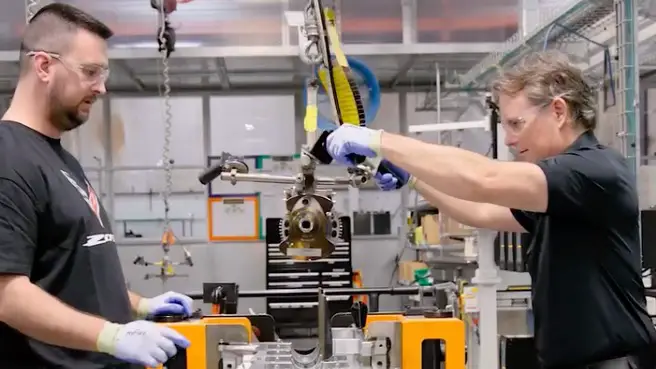
Jeff Gordon’s legacy is cemented on the racetrack, with four NASCAR Cup Series championships and 93 wins. But recently, the Hall of Famer traded his steering wheel for a torque wrench. Gordon embarked on a unique personal project: assembling the heart of his own Chevrolet Corvette ZR1X—the formidable LT7 V8 engine.

A Hands-On Experience at the Corvette Plant

The project took Gordon to the iconic Corvette Assembly Plant in Bowling Green, Kentucky. This was not a ceremonial appearance; it was a deep, hands-on immersion into the engineering of American performance. Under the guidance of skilled technicians, Gordon meticulously worked on the components of the twin-turbocharged 5.5-liter LT7 powerplant. This engine, renowned for its 1,000+ horsepower output in the track-focused ZR1X, represents the pinnacle of Chevrolet’s production engine technology.

Blending Driver Feel with Mechanical Precision

For a driver of Gordon’s caliber, understanding a car extends far beyond the cockpit. Building an engine from key components provides an intimate knowledge of its tolerances, strengths, and character. The process of assembling the LT7—from the block and forged internals to the complex twin-turbocharging system—offers a perspective no test drive ever could. It bridges the gap between driver intuition and mechanical reality, creating a deeper connection between man and machine.

This endeavor highlights a growing trend among automotive enthusiasts and professional drivers alike: the desire for a more profound, hands-on role in the creation of their vehicles. For Gordon, taking delivery of his Corvette ZR1X will now carry a significantly different meaning. The car will not just be a high-performance machine, but a personal achievement—a testament to the skill required to build the engine that will propel it.

BMW P1502 Code: Idle Air Control Valve Malfunction Explained

Understanding the BMW P1502 Diagnostic Trouble Code

The OBD2 trouble code P1502 is a manufacturer-specific code, primarily associated with BMW vehicles. In simple terms, this code indicates a malfunction within the idle speed control system. The vehicle’s engine control module, known as the DME (Digital Motor Electronics), has detected an irregularity with the Idle Air Control (IAC) valve or its associated circuit. This valve is a critical component for managing engine idle speed, ensuring smooth operation when the throttle is closed, and compensating for various engine loads from accessories like the A/C compressor or power steering pump.

What Does the Idle Air Control Valve Do?

The IAC valve, sometimes called an idle speed control valve or auxiliary air valve, is an electronically controlled actuator. It bypasses a small, metered amount of air around the closed throttle plate directly into the intake manifold. By adjusting this bypass air flow, the DME can finely tune the engine’s idle speed to maintain a stable RPM regardless of changing conditions. A failure here directly impacts drivability at low speeds and during stop-and-go traffic.

How the DME Triggers Code P1502

The DME constantly monitors the expected engine speed versus the actual engine speed. It sends a command signal (usually a Pulse Width Modulated signal) to the IAC valve to adjust its opening. If the actual idle speed deviates significantly from the target value for a sustained period, or if the electrical feedback from the valve is out of expected range (open circuit, short circuit), the DME will log code P1502 and illuminate the Check Engine Light.

Symptoms and Common Causes of P1502 in BMWs

Ignoring a P1502 code can lead to worsening drivability issues and potentially leave you stranded. Recognizing the symptoms is the first step in diagnosis.

Primary Symptoms of a Faulty IAC System

  • Erratic or Rough Idle: The engine RPM may surge up and down unpredictably while stopped.
  • Stalling: The engine may frequently stall when coming to a stop, when the A/C cycles on, or when shifting into gear.
  • High or Low Idle Speed: Idle may be consistently too high (e.g., 1200 RPM) or too low (e.g., 500 RPM), causing vibration.
  • Hard Starting: Difficulty starting, especially when the engine is warm, as the correct air/fuel mixture for idle isn’t established.
  • Check Engine Light: Illumination of the MIL (Malfunction Indicator Lamp) is the most common initial sign.

Root Causes of the P1502 Code

The code points to the IAC system, but the fault can be electrical, mechanical, or even a related issue.

  • Faulty Idle Air Control Valve: The most direct cause. The internal motor or mechanism can wear out, become clogged, or fail electrically.
  • Carbon Buildup: Heavy carbon deposits on the valve pintle or in the bypass passage in the throttle body can restrict or jam valve movement.
  • Electrical Issues: Damaged wiring, corroded connectors, or a poor electrical connection to the IAC valve.
  • Vacuum/Intake Air Leaks: Unmetered air entering the intake manifold after the Mass Air Flow (MAF) sensor can confuse the DME, making idle control impossible.
  • Faulty Throttle Body: Issues with the throttle position sensor or the throttle plate itself can interfere with idle control logic.
  • DME/ECU Software Glitch: In rare cases, a software error may cause a false code (more common after certain repairs or battery disconnections).

Step-by-Step Diagnosis and Repair for P1502

A systematic approach is key to correctly fixing a P1502 code and avoiding unnecessary parts replacement.

Step 1: Preliminary Checks and Visual Inspection

Begin with the basics. Use a professional OBD2 scanner to confirm the code and check for any accompanying codes (like P0505 or P0506 for idle speed, or air leak codes). Perform a thorough visual inspection of the engine bay.

  • Inspect the IAC valve wiring harness and connector for damage, corrosion, or loose pins.
  • Check all intake air hoses, vacuum lines, and the intake boot (notorious on older BMWs) for cracks, tears, or loose clamps.
  • Listen for audible hissing sounds indicating a vacuum leak.

Step 2: Testing the Idle Air Control Valve

First, locate the IAC valve. On most BMWs, it’s attached to the throttle body. You can perform several tests:

  • Resistance Test: Disconnect the electrical connector. Using a multimeter, measure the resistance between the valve’s terminals. Consult a repair manual for your specific model for the exact specification (typically between 7-13 ohms). A reading of infinite (open) or zero (short) indicates a faulty valve.
  • Actuation Test: With the connector off and the valve removed, apply 12 volts from the battery to the terminals (check polarity). You should hear and see the valve pintle move in and out. No movement means a mechanical/electrical failure.
  • Command Test with Scanner: Many advanced scanners can “activate” or “cycle” the IAC valve. If you can command it and observe a change in idle speed (or hear it click), the valve and its circuit are likely functional.

Step 3: Cleaning as a First Repair Attempt

If the valve tests okay electrically, it is likely gummed up. Cleaning is a cost-effective first repair.

  • Remove the IAC valve from the throttle body according to service procedures.
  • Spray a dedicated throttle body and intake cleaner onto the valve pintle and internal passages. Avoid immersing electric valves in cleaner.
  • Use a soft brush to gently remove carbon deposits. Allow it to dry completely.
  • While the valve is off, inspect and clean the corresponding air passage in the throttle body.
  • Reinstall, clear the code, and perform an idle adaptation procedure using your scanner or the BMW-specific method (ignition on/off cycles, driving cycle).

Step 4: Replacement and Final Procedures

If cleaning fails or electrical tests are bad, replacement is necessary.

  • Source a quality replacement IAC valve, preferably OEM or a reputable aftermarket brand.
  • Replace the valve, ensuring all gaskets or O-rings are renewed to prevent vacuum leaks.
  • Reconnect the electrical connector securely.
  • Clear the P1502 code with your scanner.
  • Critical: Perform an idle adaptation or throttle adaptation routine. This “teaches” the DME the new valve’s parameters. This step is often missed and can cause persistent idle issues. Use a BMW-compatible diagnostic tool for this procedure.

Prevention and Long-Term Reliability

To prevent a recurrence of the P1502 code, regular maintenance is essential. Using high-quality fuel can minimize carbon buildup. Include the throttle body and IAC valve passage inspection as part of major service intervals (e.g., every 60,000 miles). Promptly address any small vacuum leaks, as they force the IAC valve to work harder to compensate, leading to premature wear. Ensuring your vehicle’s battery and charging system are healthy prevents voltage spikes that can damage sensitive electronic components like the IAC valve. By understanding and addressing the P1502 code proactively, you maintain the smooth, refined idle characteristic of your BMW.

Understanding and Fixing OBD2 Code P1502 on Audi Vehicles

Decoding OBD2 Code P1502: The Audi Idle Control Malfunction

When your Audi’s check engine light illuminates and a scan reveals the generic OBD2 code P1502 – Idle Air Control System Malfunction, it indicates a fault within the system responsible for managing your engine’s idle speed. Unlike simpler cars with a dedicated Idle Air Control (IAC) valve, modern Audis integrate this function into the electronic throttle body (also known as the E-Gas system). The Engine Control Module (ECM) uses this system to precisely regulate the amount of air bypassing the throttle plate to maintain a stable, consistent idle under varying loads from accessories like the A/C compressor or power steering. A P1502 code is triggered when the ECM detects an electrical or mechanical fault, or an implausible signal, within this critical control loop.

Primary Causes of P1502 in Audi Models

Diagnosing P1502 requires a systematic approach, as the root cause can range from simple carbon buildup to complex electronic failures. The issue is common across many Audi models, including the A4, A6, A8, and Q5/Q7, particularly those with the prevalent 2.0T FSI/TFSI, 3.0L, and other VW group engines.

1. Throttle Body Contamination and Mechanical Issues

This is the most frequent culprit. Over time, oil vapors and carbon from the crankcase ventilation system accumulate on the throttle plate and bore. This sticky residue can:

  • Restrict the movement of the throttle plate, causing it to stick or bind.
  • Create an air leak if the plate cannot fully close to its learned “home” position.
  • Interfere with the internal gears of the throttle body actuator motor.

2. Faulty Electronic Throttle Body (Actuator)

The throttle body itself is an integrated assembly containing an electric motor, gear train, and dual potentiometers (position sensors). Internal failures can include:

  • A worn-out or seized electric motor.
  • Failed throttle position sensors (TPS).
  • Stripped or damaged internal plastic gears, a known issue on some older models.

3. Wiring and Connector Problems

Corrosion, damaged wires, or a poor connection at the throttle body harness connector can interrupt the signal or power to the actuator. This is often accompanied by other related codes for sensor circuits.

4. Supporting Sensor Failures

The ECM relies on data from other sensors to calculate the correct idle air demand. Faults in these can lead to a P1502:

  • Mass Air Flow (MAF) Sensor: A dirty or failing MAF provides incorrect air mass data.
  • Engine Coolant Temperature (ECT) Sensor: If it reports an incorrect cold temperature, the ECM will command a faulty high idle.
  • Vacuum Leaks: Unmetered air entering the intake manifold after the MAF sensor confuses the ECM’s air/fuel calculations.

5. Software or Adaptation Issues

Sometimes, the problem is not hardware but the ECM’s learned values. After a battery disconnect or certain repairs, the throttle body’s “basic setting” adaptation may be lost or corrupted, requiring a reset with a professional scan tool.

Symptoms of a P1502 Fault Code

Drivers often notice these performance issues before even scanning for codes:

  • Erratic or High Idle: The RPM may surge up and down or settle at an abnormally high level (e.g., 1200-1500 RPM).
  • Rough Idle and Stalling: The engine may shake violently at a stoplight or even stall, especially when the A/C cycles on or when turning the steering wheel.
  • Poor Throttle Response: A noticeable lag or hesitation when accelerating from a stop.
  • Check Engine Light (CEL): The CEL is always on with a stored P1502. In some cases, the ECM may trigger a “limp mode,” severely limiting engine power and RPM.

Step-by-Step Diagnostic and Repair Procedure

Follow this logical sequence to accurately diagnose and resolve a P1502 code. Always begin with the simplest and most cost-effective checks.

Step 1: Advanced Scan Tool Diagnostics

Use a professional-grade OBD2 scanner like VCDS (VAG-COM), OBDeleven, or a capable bi-directional tool. Don’t just read the code—look at live data:

  • Check the throttle position sensor readings (usually specified in %). They should be smooth and responsive.
  • Monitor the specified and actual idle RPM. A large discrepancy points to a control issue.
  • Check for related codes (P0121, P0122, P0222, P0223, P0506, P0507) which can pinpoint sensor or circuit faults.

Step 2: Visual Inspection and Throttle Body Cleaning

a) Inspect: Remove the intake hose from the throttle body. Manually (with the engine OFF and key removed) try to move the throttle plate. It should move smoothly with slight spring pressure. Look for excessive carbon buildup.
b) Clean: Use a dedicated throttle body cleaner and a soft cloth or brush. Do not use carburetor cleaner, as it can damage coatings. Gently clean the plate and bore, ensuring no cleaner soaks into the motor shaft seals. Allow it to dry completely.

Step 3: Check for Vacuum Leaks and Supporting Sensors

Inspect all intake hoses, vacuum lines, and the PCV system for cracks or disconnections. Test the MAF sensor by unplugging it with the engine running. If the idle improves, the MAF is likely faulty. Verify the ECT sensor reading matches ambient temperature on a cold engine.

Step 4: Perform Throttle Body Adaptation (Basic Settings)

After cleaning or installing a new throttle body, an adaptation must be performed. This procedure teaches the ECM the throttle’s open and closed positions. This is a menu-driven function in VCDS/VAG-COM under the engine module. Failure to do this will almost certainly result in a persistent P1502 or poor idle.

Step 5: Throttle Body Replacement

If cleaning and adaptation fail, and wiring checks are good, the throttle body assembly is likely faulty. Replacement is straightforward but can be costly for genuine Audi parts. Ensure you purchase a high-quality OEM or OEM-equivalent part. After installation, perform the adaptation procedure again.

Conclusion and Final Recommendations

Code P1502 on your Audi is a serious fault that directly impacts drivability and emissions, but it is often repairable. Starting with a thorough cleaning and adaptation resolves a significant majority of cases. Investing in a VAG-specific diagnostic tool is invaluable for both diagnosis and the essential adaptation process. If the problem persists after these steps, a deeper electrical diagnosis or professional mechanic’s expertise is recommended to inspect wiring harness integrity and ECM functionality. Addressing a P1502 promptly will restore your Audi’s smooth idle and precise throttle response, ensuring both performance and reliability.

BMW’s Website Briefly Exposes Upcoming M Models

BMW’s Accidental Online Reveal

In the digital age, even the most guarded automotive secrets can slip through the cracks. BMW recently experienced such a moment when its official online configurator and shop briefly displayed confidential information about several upcoming high-performance models. This inadvertent leak provided a rare, unfiltered glimpse into the brand’s future M and M Performance lineup before any official announcement.

The Models Spotted in the Leak

Sharp-eyed enthusiasts discovered placeholder listings for several exciting vehicles. Among them was the next-generation BMW M5, which is confirmed to feature a plug-in hybrid powertrain, marking a significant shift for the iconic super sedan. The leak also hinted at a new BMW X3 M and its coupe-style sibling, the X4 M, suggesting updates are on the horizon for these popular performance SUVs. Furthermore, details on new M Performance Parts for various models were also visible, indicating a continued expansion of factory-approved customization options.

What This Reveals About BMW’s Strategy

This digital slip-up does more than just reveal model names; it offers insight into BMW M’s strategic direction. The confirmation of a hybrid M5 underscores the division’s commitment to balancing formidable performance with evolving efficiency standards. The appearance of updated X3 M and X4 M models highlights the enduring importance of the high-performance SUV segment to the brand’s portfolio. Such leaks, while unplanned, often validate long-standing industry rumors and fuel anticipation within the automotive community.

The Rarity of Modern Leaks

While website leaks were more common a decade ago, manufacturers have significantly tightened their digital security. This makes BMW’s recent oversight a notable exception. Modern car launches are meticulously choreographed, making these accidental previews valuable for enthusiasts seeking clues about future products. The information, though quickly removed, has already shaped discussions and set expectations for BMW’s next wave of performance vehicles.

Ford’s Software-Defined Reality Check

Ford’s Pivot to a Software Future

Ford Motor Company has openly acknowledged a significant gap in its electric vehicle strategy. The automaker has stated that its current-generation EVs, like the F-150 Lightning and Mustang Mach-E, are not “software-defined vehicles.” This admission highlights a critical transition phase as legacy automakers scramble to match the tech-centric approach of newer rivals.

The Meaning of Software-Defined

A truly software-defined vehicle (SDV) is built on an electrical and software architecture that allows its core features—from performance and battery management to infotainment and autonomous functions—to be extensively updated and enhanced via over-the-air (OTA) software updates. This creates a car that can improve and evolve long after it leaves the factory, offering new functionality and personalization to owners.

The Limitation of Ford’s Current EVs

While Ford’s existing electric models do receive periodic OTA updates, these are largely focused on minor fixes, tweaks, or infotainment improvements. They lack the deep, centralized computing architecture required to fundamentally upgrade vehicle performance, efficiency, or advanced driver-assist systems. This limits their long-term value and adaptability compared to SDVs from competitors like Tesla.

The Road Ahead for Ford

Ford’s future hinges on its next-generation EV platform, promised for the mid-2020s. This new architecture is being designed from the ground up to be software-first, aiming to deliver more affordable EVs with greater capability and upgrade potential. The success of this pivot is crucial for Ford to remain competitive, improve profit margins, and build a lasting relationship with customers through continuous digital innovation.

Honda’s F1 Engine Vibrations Threaten Aston Martin Battery

A New Era, A Daunting Challenge

The renewed partnership between Aston Martin and Honda in Formula 1 is a high-stakes gamble set against the backdrop of the sport’s 2026 power unit revolution. This fresh start, while promising on paper, is proving to be a formidable engineering challenge. The collaboration is not merely an evolution but a ground-up development under new regulations, creating a perfect storm of complexity where critical issues are emerging early in the process.

The “Battery Killer” Vibration

At the heart of the current difficulties lies a severe and abnormal vibration emanating from the internal combustion engine. This is not a minor resonance but a fundamental threat to the car’s hybrid system. Engineers have described the phenomenon in stark terms, noting its potential to violently shake the Energy Recovery System (ERS) battery pack. Such sustained, high-frequency vibrations can compromise electrical connections, damage sensitive battery cells, and lead to catastrophic failures on track.

Implications for the 2026 Project

This vibration issue transcends a simple reliability fix. It strikes at the core of the integrated power unit design required for 2026, where the internal combustion engine and hybrid components must work as a single, harmonious system. Resolving it requires deep collaboration between Honda’s engine specialists and Aston Martin’s chassis and electrical teams to isolate the source and redesign components for damping. The problem also risks diverting crucial resources and delaying the simulation and testing schedule for the entire car.

A Race Against Time

With the 2026 season as the absolute deadline, the team faces a relentless race against time. Identifying the root cause—whether it’s combustion harmonics, mechanical imbalance, or a resonance with the chassis—is the immediate priority. The solution will likely involve a combination of software mapping for the engine, physical modifications to mounting points, and reinforced battery housing. The success or failure of this technical battle will define the competitiveness of the Aston Martin Honda partnership from its very first lap.

Understanding and Fixing Volkswagen OBD2 Code P1501: Idle Air Control System

Decoding Volkswagen P1501: A Technical Overview

When your Volkswagen’s check engine light illuminates and a scan tool reveals code P1501, you’re dealing with a specific fault in the engine’s idle speed control system. Formally defined as “Idle Air Control System Malfunction,” this Diagnostic Trouble Code (DTC) indicates that the Engine Control Module (ECM) has detected an irregularity in the circuit or performance of the components responsible for managing engine idle speed. Unlike generic codes, P1501 is often manufacturer-specific, making it prevalent in VW, Audi, Seat, and Skoda vehicles. Proper diagnosis is crucial, as this code can point to issues ranging from a simple dirty valve to complex electrical faults, all of which can significantly impact drivability and emissions.

What Does the Idle Air Control System Do?

The idle air control (IAC) system is a critical component of your Volkswagen’s engine management. Its primary function is to maintain a stable and consistent engine idle speed under all conditions, regardless of engine load from accessories like the A/C compressor, power steering, or alternator. In modern Volkswagens, this function is typically integrated into the Electronic Throttle Body (ETB), also known as the Electronic Power Control (EPC) system. The ECM calculates the required idle speed and commands the throttle body’s motor to open or close a small bypass passage, allowing a precise amount of air to bypass the main throttle plate.

How the ECM Triggers Code P1501

The Engine Control Module constantly monitors the actual engine speed (RPM) against its target idle speed. It also monitors the signal and feedback from the throttle body actuator. Code P1501 is set when the ECM detects one of the following conditions:

  • The actual idle speed deviates significantly from the programmed target for a sustained period.
  • There is an open or short circuit in the throttle body actuator motor or its wiring.
  • The throttle body fails to respond correctly to ECM commands during idle adaptation routines.
  • Correlated data from sensors like the Mass Airflow (MAF) sensor conflicts with the expected idle air flow.

This code is often accompanied by the illumination of both the Check Engine Light (CEL) and the EPC (Electronic Power Control) warning light on the dashboard.

Common Symptoms and Root Causes of P1501 in Volkswagens

Ignoring a P1501 code can lead to poor drivability and potential safety issues. Recognizing the symptoms is the first step toward a solution. The causes are typically electrical or mechanical failures within the idle control circuit.

Primary Symptoms of a P1501 Fault

Drivers may experience one or more of the following issues:

  • Erratic or High Idle Speed: The engine may idle inconsistently, surging up and down, or remain stuck at a high RPM (e.g., 1500-2000 RPM).
  • Low Rough Idle or Stalling: The engine may idle very roughly, dip dangerously low, or stall completely when coming to a stop.
  • Illuminated Warning Lights: The persistent illumination of the CEL and often the red EPC light.
  • Poor Drivability: Hesitation, lack of power, or an unresponsive throttle, especially at low speeds.
  • Failed Emissions Test: Due to incorrect air/fuel ratios at idle.

Most Frequent Causes of Code P1501

The root causes are often interconnected. A systematic approach is needed to pinpoint the exact issue:

  • Faulty or Dirty Throttle Body: Carbon buildup on the throttle plate and bore can restrict movement and disrupt the delicate air bypass, making it the #1 culprit.
  • Vacuum Leaks: Unmetered air entering the intake manifold after the MAF sensor confuses the ECM, preventing correct idle control. Check all vacuum hoses, the PCV system, and intake gaskets.
  • Electrical Issues: Damaged wiring, corroded connectors, or poor grounds to the throttle body or ECM can interrupt communication.
  • Failed Throttle Body Assembly: The internal electric motor or position sensors within the throttle body can fail.
  • Faulty Mass Airflow (MAF) Sensor: An incorrect MAF reading provides false load data to the ECM, leading to incorrect idle commands.
  • Software/Adaptation Issues: Sometimes, the ECM’s learned adaptation values for idle become corrupted and require a reset.

Step-by-Step Diagnostic and Repair Guide for P1501

Successfully resolving P1501 requires a logical diagnostic sequence. Jumping straight to part replacement can be costly and ineffective. Always begin with a professional-grade OBD2 scanner, preferably one capable of VW-specific functions like VCDS (VAG-COM) or OBDeleven.

Step 1: Advanced Scan and Data Review

Clear the code and perform a throttle body adaptation using your scanner. Take the vehicle for a test drive to see if the code returns immediately. If it does, use your scanner to view live data:

  • Engine RPM: Compare actual vs. specified idle.
  • Throttle Position Sensor: Check for smooth operation and correct readings at idle (usually 2-5%).
  • Mass Airflow Sensor Rate: Verify it’s within spec at idle (typically 2-5 g/s for a 4-cylinder, depending on engine).
  • Short Term & Long Term Fuel Trim: High positive trims (+10% or more) often indicate a vacuum leak.

Step 2: Visual and Mechanical Inspection

With the engine off, inspect the throttle body for heavy carbon deposits. Check all associated intake ducting and vacuum lines for cracks, disconnections, or brittleness. Listen for audible hissing sounds with the engine running. Inspect the throttle body electrical connector for corrosion, bent pins, or looseness.

Step 3: Cleaning the Throttle Body (Common Fix)

If carbon buildup is evident, cleaning is a vital first repair step.

  • Disconnect the battery (negative terminal first).
  • Remove the intake ducting to access the throttle body.
  • Using a throttle body-specific cleaner (not carb cleaner) and a soft cloth, carefully clean the throttle plate, bore, and the small bypass air channel. Do not force the plate open.
  • Reassemble, reconnect the battery, and perform a throttle body adaptation using your scan tool. This step is mandatory for the ECM to relearn the clean throttle body’s parameters.

Step 4: Electrical and Component Testing

If cleaning doesn’t resolve the issue, deeper testing is required. With a multimeter, check for power, ground, and signal continuity at the throttle body connector per your vehicle’s wiring diagram. Test the resistance of the throttle body motor if specifications are available. Consider testing the MAF sensor by unplugging it; if idle improves, the MAF is likely faulty.

Step 5: Replacement and Finalization

If all else fails, replacement of the throttle body assembly is usually the solution. When installing a new or replacement throttle body:

  • Ensure the part number matches your specific engine code.
  • Always perform a full throttle body adaptation and possibly an ECM software update/coding with a professional scanner.
  • Clear all fault codes and test drive the vehicle through multiple drive cycles to ensure the repair is complete.

Addressing P1501 promptly restores smooth operation, ensures proper emissions control, and prevents potential damage from chronic incorrect idle conditions.

Understanding and Fixing Subaru OBD2 Code P1501: Idle Air Control Valve Malfunction

What is Subaru OBD-II Code P1501?

When your Subaru’s check engine light illuminates and a scan tool reveals Diagnostic Trouble Code (DTC) P1501, it indicates a specific fault within the engine’s idle speed control system. Formally defined as “Idle Air Control Valve Malfunction,” this code is set when the Engine Control Module (ECM) detects an electrical or functional problem with the Idle Air Control (IAC) valve or its control circuit. The IAC valve is a critical component responsible for managing engine idle speed by regulating the amount of air bypassing the closed throttle plate. A malfunction can lead to poor drivability, stalling, or erratic idle, making diagnosis and repair essential for vehicle performance and longevity.

Technical Causes and Symptoms of P1501 in Subaru Vehicles

Code P1501 is triggered when the Subaru ECM’s commanded signal to the IAC valve does not match the expected engine response (idle speed). This discrepancy can stem from several mechanical, electrical, or computational issues.

Primary Causes of DTC P1501

  • Faulty Idle Air Control (IAC) Valve: The most common culprit. The valve’s internal motor can fail, or its mechanical plunger can become stuck due to severe carbon buildup.
  • Carbon and Grime Buildup: Over time, the IAC valve passage in the throttle body and the valve itself can become clogged with carbon deposits, restricting movement and airflow.
  • Electrical Circuit Problems: This includes damaged wiring, poor electrical connections at the IAC valve connector, corroded pins, or a blown fuse supplying the valve.
  • Vacuum Leaks: Unmetered air entering the intake manifold after the Mass Air Flow (MAF) sensor can confuse the ECM, making it seem like the IAC valve is not responding correctly.
  • Faulty Throttle Body: Issues with the throttle body assembly, such as a stuck throttle plate or a faulty Throttle Position Sensor (TPS), can interfere with idle control.
  • Software/ECM Glitch: In rare cases, a temporary software anomaly in the Engine Control Module can set this code.

Common Symptoms Drivers Experience

  • Illuminated Check Engine Light (MIL)
  • Erratic, fluctuating, or hunting idle speed (RPM goes up and down)
  • Abnormally high idle speed (e.g., idling at 1500-2000 RPM)
  • Abnormally low idle speed leading to rough running
  • Engine stalling when coming to a stop or at idle
  • Difficulty starting, especially when cold
  • Poor fuel economy

Step-by-Step Diagnostic Procedure for P1501

A methodical approach is key to correctly diagnosing P1501. Always start with the simplest and most common causes before moving to complex component replacement.

Step 1: Preliminary Checks and Code Verification

Begin by recording the freeze frame data associated with the code. Clear the DTC and perform a test drive to see if it returns immediately or under specific conditions (cold start, A/C on, etc.). This helps determine if the fault is hard (persistent) or intermittent. Visually inspect the engine bay for any obvious vacuum hose disconnections or damage.

Step 2: Inspect and Clean the IAC Valve and Throttle Body

This is often the fix. Locate the IAC valve (typically attached to the throttle body). For many Subaru EJ and FB engines, it’s on the side of the throttle body.

  • Disconnect the battery and the electrical connector from the IAC valve.
  • Remove the valve according to service manual procedures.
  • Inspect the valve tip and the bore in the throttle body for heavy carbon deposits.
  • Clean both using a dedicated throttle body and intake cleaner and a soft brush or cloth. Never use carburetor cleaner or harsh solvents, as they can damage sensitive coatings and seals.
  • Ensure the valve plunger moves freely (if applicable to your design).

Reinstall, reconnect, clear codes, and perform an Idle Air Volume Learn (IAVL) procedure as outlined in your Subaru service manual.

Step 3: Electrical Circuit Testing

If cleaning doesn’t resolve the issue, test the valve and its circuit. Using a digital multimeter (DMM):

  • Resistance Test: Measure the resistance across the IAC valve terminals. Consult a service manual for specifications (typically between 7-13 ohms for many Subarus). An open (infinite) or short (zero) reading indicates a bad valve.
  • Voltage Test: With the key in the “ON” position (engine off), back-probe the connector. One pin should have battery voltage (12V), and the ECM should provide a pulsed signal on the control wire.
  • Check for continuity in the wiring harness between the IAC connector and the ECM for breaks.

Step 4: Checking for Vacuum Leaks and Other Components

Use a smoke machine or propane enrichment method to check for intake vacuum leaks downstream of the MAF sensor. Inspect the intake hose, PCV hoses, and brake booster line. Also, verify the operation of the Throttle Position Sensor (TPS) data with a scan tool to ensure it reads 0% at idle and moves smoothly to 100% at wide-open throttle.

Repair Solutions and Professional Recommendations

Repair 1: Cleaning and Relearning

For many vehicles, especially with higher mileage, a thorough cleaning of the IAC valve and throttle body is sufficient. The critical post-repair step is the Idle Relearn Procedure. This resets the ECM’s baseline for idle airflow. The process varies by model year but often involves: warming the engine to operating temperature, turning off all electrical loads, idling for a set time, and sometimes a specific drive cycle. Consult a factory service manual for the exact steps for your Subaru.

Repair 2: Component Replacement

If the IAC valve fails electrical tests or is mechanically seized, replacement is necessary. Always use a high-quality OEM or reputable aftermarket part. After installation, you must perform the idle relearn procedure. In some cases, if the throttle body is integrated or severely damaged, the entire throttle body assembly may need replacement.

When to Seek Professional Help

While a DIYer can often handle the cleaning and basic tests, seek a professional Subaru technician if:

  • You are uncomfortable with electrical diagnostics.
  • The code persists after cleaning and a confirmed good IAC valve.
  • You suspect a deeper issue with the ECM itself.
  • The required idle relearn procedure is complex and requires a professional scan tool.

A skilled technician has access to factory service information, advanced scan tools for bidirectional testing of the IAC valve, and smoke machines for precise leak detection.

Conclusion

Subaru DTC P1501 is a common but addressable fault centered on the idle air control system. Starting with a visual inspection and a thorough cleaning of the IAC valve and throttle body passage resolves a significant majority of cases. A structured diagnostic approach—checking the valve’s electrical integrity, its circuit, and for vacuum leaks—will isolate the root cause. Remember that completing the repair with the proper idle relearn procedure is not optional; it is essential for the ECM to correctly manage idle speed. Addressing P1501 promptly will restore smooth engine operation, prevent stalling, and ensure optimal drivability of your Subaru.