Intermittent OBD Codes: Pro Methods for Diagnosing Ghost Failures

1. Introduction

  • Why intermittent codes are frustrating: high garage costs, risk of unexpected breakdown.
  • Concrete example: A P0301 code (cylinder 1 misfire) that only appears when hot.

2. Common Causes of Intermittent Codes

  • Worn wiring: Chafed or oxidized wires (e.g., camshaft sensor on Peugeot 308).
  • Dirty connectors: Moisture or corrosion (common in older vehicles).
  • End-of-life sensors: Oxygen sensor or pressure sensor failing intermittently.
  • Electrical issues: Poor ground, weak battery, faulty alternator.

3. Essential Tools

  • OBD2 scanner with recording function (e.g., BlueDriver, Autel MaxiScope): Captures real-time data.
  • Smoke tester (e.g., OEM Tools 25600): Detects micro air or evaporation leaks.
  • Multimeter with Min/Max function: Measures voltage variations on sensors.
  • Portable oscilloscope (e.g., Hantek 1008C): Analyzes CAN Bus signals or injectors.

4. Diagnostic Methods

  • Method 1: Recording data while driving
    • Set up the scanner to record parameters (e.g., RPM, sensor voltage) during a drive.
    • Identify correlations between codes and driving conditions (e.g., P0171 code during acceleration).
  • Method 2: Simulating failure conditions
    • Shake wiring harnesses with the engine running to reproduce an intermittent connection.
    • Use a hairdryer to heat a suspect sensor (e.g., oxygen sensor).
  • Method 3: Thorough visual inspection
    • Check cable routes near hot parts (e.g., turbo) or moving components (steering, suspension).

5. Practical Cases

  • Case 1: P0456 code (minor EVAP leak) on a Volkswagen Golf VII – Leak detected via smoke tester at the fuel cap.
  • Case 2: Intermittent U0401 code (invalid ECM data) on a Renault Scénic – Problem solved by cleaning the engine control unit connectors.

6. FAQ

  • “Can an intermittent code disappear on its own?”
    Yes, but it remains stored in the ECU memory until cleared.
  • “What cheap tool for beginners?”
    The Creader 7021 or the Torque Pro app with an ELM327 adapter.

7. Mistakes to Avoid

  • Clearing codes without diagnosing the cause.
  • Neglecting electrical grounds (e.g., corroded ground cable on the chassis).

Additional SEO Tips

  • Use targeted subheadings: “How to diagnose an intermittent P0300 code,” “Best scanner for ghost faults.”
  • Include internal links to your articles on “Essential OBD2 Tools” or “Repairing a Pressure Sensor.”
  • Add an infographic on diagnostic steps or a demonstration video of a smoke tester.

Advanced Diagnostics with UDS (Unified Diagnostic Services): Everything You Need to Know About Modern Vehicle Protocol

1. Introduction

  • Why UDS Replaces Classic OBD-II: Complexity of modern vehicles (ADAS, hybrids, safety systems).
  • Practical Example: Diagnosing a preheating error on a 2023 BMW requires UDS to access the specific control unit.

2. UDS vs OBD-II: Key Differences

  • Advanced Features:
    • Access to non-engine control units (ABS, airbags, air conditioning).
    • ECU reprogramming (software updates).
    • Predictive diagnostics (real-time data analysis).
  • Communication Protocols: CAN ISO-TP (higher throughput) vs standard CAN.
Feature OBD-II UDS
Access to Control Units Engine, transmission All (including ADAS, BSI)
Reprogramming Limited Complete (ECU flash)
Security None Authentication required

3. Essential Tools for UDS

  • Professional Scanners:
    • Autel MaxiSys Ultra (access to premium brands like Audi, Mercedes).
    • Bosch MD-Scan 4 (specialized in hybrids and electric vehicles).
    • Launch X431 Pro V (frequent software updates).
  • Open-Source Software:
    • SavvyCAN (UDS frame analysis on CAN network).
    • UDSim (UDS dialogue simulation for testing).

4. Decoding UDS Codes

  • Structure of a UDS Code: DTC format on 3 bytes (e.g., DTC C1234-21).
    • Example: C1234 = Braking control unit, 21 = Faulty electrical circuit.
  • Common Codes:
    • U0100: Loss of communication with ECU.
    • U3003: Insufficient 48V battery voltage (hybrid vehicles).
    • C1201: Brake pressure sensor failure.

5. Practical Cases

  • Case 1: Reprogramming the ECU of a Tesla Model 3 after a stuck software update.
  • Case 2: Diagnosing a U3003 code on a Toyota Prius (hybrid battery issue).
  • Case 3: Resetting the ABS control unit on a Peugeot 508 after sensor replacement.

6. Security and Access

  • Authentication: Security keys (e.g., Seed & Key) to unlock sensitive functions.
  • Risks:
    • Bricking a control unit if mishandled.
    • Legal penalties if emissions are modified (in Europe).

7. FAQ

  • “Can I use a classic OBD2 scanner for UDS?”
    Answer: No, unless the tool supports CAN ISO-TP and UDS protocols.
  • “What is the cost of a professional UDS scanner?”
    Answer: Between €1,000 (Launch X431) and €5,000 (Autel MaxiSys Ultra).
  • “Does UDS work on electric vehicles?”
    Answer: Yes, essential for batteries, chargers, and electric motors.

8. Tips for Beginners

  • Start with refurbished used tools (e.g., Snap-On Modis Ultra).
  • Train via YouTube tutorials (channels like ScannerDanner).
  • Avoid manipulating critical control units (airbags, ADAS) without expertise.

SEO Optimization

  • Internal Links:
    • “Diagnosing CAN Bus Errors”
    • “OBD-III: Myth or Reality?”
    • “2024 Professional Scanner Comparison”
  • Alt Tags for Images:
    • “UDS vs OBD2 Protocol Diagram”, “Example of UDS Code on Audi Control Unit”

Proposed Infographic

  • UDS Diagram: Communication flow between scanner and control units.
  • Comparison Table: UDS tools (price, brand compatibility, key features).

Code P0128 (Thermostat Stuck Open): Symptoms, Risks, and Cost-Effective Repair

The fault code P0128 indicates a problem with engine temperature regulation, often related to a thermostat stuck in the open position. This malfunction prevents the engine from reaching its optimal temperature, impacting performance, fuel consumption, and longevity. Discover how to identify, repair, and avoid risks at a lower cost.


Symptoms of a Stuck Open Thermostat (P0128)

  • 🚨 Engine temperature too low (needle stays below 90°C).
  • 🚨 Weak cabin heating (air not very hot).
  • 🚨 Increased fuel consumption (+10 to 20% in city driving).
  • 🚨 Check engine light on (P0128 code stored).
  • 🚨 Increased pollutant emissions (catalytic converter less efficient).

Risks of Ignoring a P0128 Code

  • 🔥 Premature engine wear: Oil that is too cold does not lubricate parts properly.
  • 🔥 Catalytic converter damage: The air-fuel mixture remains rich, overloading the catalytic converter.
  • 🔥 Battery strain (hybrid vehicles): The engine runs longer to compensate for the increased consumption.

Causes of the P0128 Code

  1. Faulty thermostat (broken spring or mechanical wear).
  2. Damaged thermostat gasket (coolant leak).
  3. Faulty temperature sensor (sends incorrect data to the PCM).

Cost-Effective Repair in 4 Steps

1. Confirm the Diagnosis

  • Use an OBD2 scanner to verify the P0128 code.
  • Check the actual engine temperature via the diagnostic tool (compare with PCM data).

2. Test the Thermostat

  • Start the cold engine.
  • Touch the top of the radiator and the thermostat outlet hose: if these parts heat up immediately, the thermostat is stuck open.

3. Replace the Thermostat (Cost: €50 to €150)

  • DIY:
    • Partially drain the coolant.
    • Remove the thermostat housing (depending on the model).
    • Install a new thermostat (check the opening temperature, e.g., 87°C).
    • Refill and bleed the cooling system.
  • Garage: Allow 1 to 2 hours of labor (average cost: €80 to €150).

4. Check the Temperature Sensor

  • Measure its resistance with a multimeter (expected values: ~2000Ω when cold, ~300Ω when hot).

FAQ: Saving on P0128 Repair

Q: Can you drive with a stuck open thermostat?
Yes, but avoid long trips: increased consumption and accelerated wear are to be expected.

Q: OEM or aftermarket thermostat?
Prefer brands like Gates, Wahler, or Febi (€15 to €40), as reliable as manufacturer parts.

Q: P0128 code recurring after replacement?
Check the coolant (level, quality) and the ECT sensor.


Conclusion

A P0128 code should not be ignored, but its repair remains affordable. By replacing the thermostat yourself or opting for an independent garage, you can limit costs to less than €150 in most cases. Act quickly to preserve your engine and avoid more serious breakdowns!

Diagnosis of High Voltage Battery Systems in Electric Vehicles: A Comprehensive Guide

Electric vehicles (EVs) are revolutionizing the automotive industry, and at the heart of this transformation are high-voltage batteries. These batteries are the pillars of electric propulsion, but their diagnosis requires a specific approach and a deep understanding. This article aims to guide you through the complexities of diagnosing high-voltage battery systems, with an emphasis on safety and accuracy.

Operation of High-Voltage Batteries

A typical high-voltage battery system includes cell modules, a battery management system (BMS), and high-voltage cables. The battery cells, typically lithium-ion, store electrical energy. The BMS plays a crucial role in monitoring and controlling the temperature, voltage, and cell balance, thus ensuring the safe and efficient operation of the battery.

Common High-Voltage Battery Error Codes

High-voltage battery issues can trigger a variety of specific OBD-II error codes, such as:

  • Pxxxx: Isolation problems (indicating a risk of electric shock).
  • Pxxxx: Cell imbalance (meaning that some cells have different charge levels).
  • Pxxxx: Overheating (indicating a risk of thermal damage).

Each error code provides valuable information about the nature of the problem, allowing technicians to target their diagnostic efforts.

Diagnostic Methods and Required Tools

Diagnosing high-voltage battery systems requires specialized tools, including:

  • High-voltage multimeters: to safely measure battery voltage.
  • EV-specific diagnostic tools: to analyze BMS data and identify error codes.
  • Isolation tools: to check the integrity of electrical insulation.

Diagnostic procedures include measuring battery voltage, checking isolation, and analyzing BMS data.

Essential Safety Precautions

Safety is paramount when working on high-voltage battery systems. Here are some essential precautions:

  • Always disconnect the high-voltage battery before starting work.
  • Wear appropriate personal protective equipment (PPE), such as insulated gloves and safety glasses.
  • Use only insulated tools that comply with EV safety standards.
  • Only qualified professionals are authorized to work on this type of battery.

Additional Tips

  • Always consult the vehicle manufacturer’s service manual for specific instructions.
  • Use clear and concise language, suitable for a diverse audience.
  • Adding a tutorial video is a plus.
  • Highlight the risks faced by unqualified individuals.

Conclusion

Diagnosing high-voltage battery systems is a complex task that requires technical expertise and constant vigilance. By following safety procedures and using the appropriate tools, technicians can effectively diagnose and repair high-voltage battery issues, ensuring the reliability and safety of electric vehicles.

🚨 Code P0300 – Multiple Misfire Detected: Symptoms and Repair

📌 What Does Code P0300 Mean?

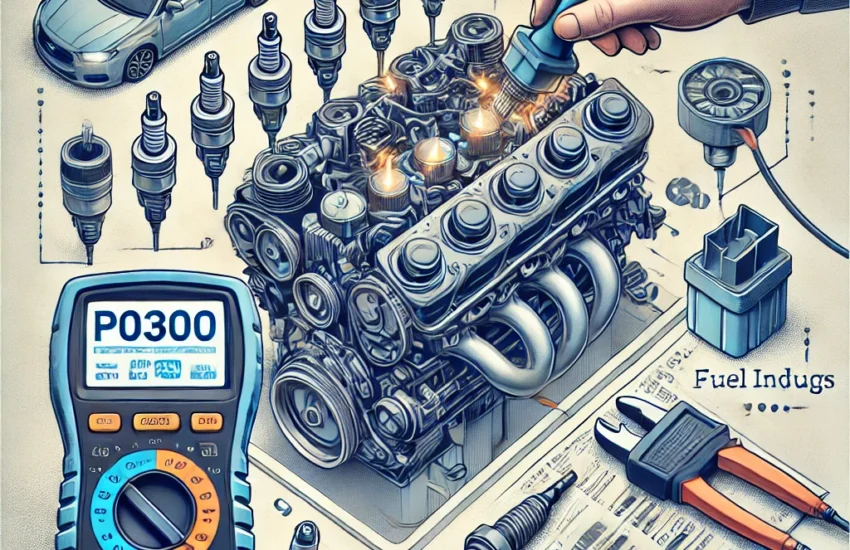
The error code P0300 indicates random misfires in multiple cylinders of the engine. This means the engine is not burning fuel properly, which can lead to power loss, excessive fuel consumption, and engine damage if not repaired promptly.


🚨 Symptoms of Code P0300

  • 🚗 Engine shaking at idle or during acceleration
  • 🔥 Power loss and hesitation during acceleration
  • 💨 Increased pollutant emissions (black smoke or gasoline smell)
  • ⚠️ Check Engine light on
  • Excessive fuel consumption

⚠️ Possible Causes of Code P0300

🔍 The main causes include:

  1. Worn or dirty spark plugs
  2. Faulty ignition wires or ignition coils
  3. Clogged or malfunctioning fuel injectors
  4. Engine compression issues (valves, piston rings, head gasket)
  5. Poor fuel quality or insufficient fuel pressure
  6. Failure of the crankshaft position sensor (CKP) or camshaft position sensor (CMP)
  7. Faulty engine control module (ECM/PCM) (rare)

🛠️ How to Fix Code P0300?

🔍 1️⃣ Check Spark Plugs and Coils

  • Remove the spark plugs and check their condition (wear, fouling, burnt electrodes).
  • Test the ignition coils with a multimeter or swap them between cylinders to see if the problem moves.

2️⃣ Inspect the Fuel System

  • Check fuel pressure with a pressure gauge.
  • Clean or replace the fuel injectors if necessary.
  • Ensure you are using good quality fuel.

⚙️ 3️⃣ Check Engine Compression

  • Use a compression tester to ensure each cylinder has proper pressure.
  • Low compression may indicate a faulty head gasket, burnt valve, or worn piston rings.

🖥️ 4️⃣ Scan and Clear OBD-II Codes

  • After repairs, use an OBD-II tool to clear the P0300 code and perform a road test.

📌 Conclusion

Code P0300 is a serious issue that can damage the engine if left untreated. A thorough inspection of the ignition system, fuel system, and engine compression is necessary to identify the exact cause and effectively repair the vehicle.

Why do OBD fault codes return after repair?

You’ve repaired your vehicle, cleared the OBD fault codes… but the check engine light comes back on! A common problem that frustrates many car owners. In this article, we explain the reasons behind these recurring codes, the mistakes to avoid, and professional solutions to fix them for good.


1. Why Do OBD Codes Return After Repair?

  • Underlying Issue Not Fully Resolved: Example: A P0171 (System Too Lean) code may reappear if an air leak in the intake isn’t detected.
  • Faulty or Misaligned Sensors: A failing O2 sensor can send incorrect data to the ECU.
  • Reset Errors: Some systems (like the EGR valve system) require a relearn procedure after repair.
  • Intermittent Issues: Damaged wiring can cause sporadic faults.

2. Steps to Diagnose a Recurring Code

  1. Use an Advanced OBD2 Tool:
    • Software like INPA, Delphi DS150E, or Autel MaxiCOM to access real-time data.
  2. Check the “Freeze Frame Data”:
    • Analyze the vehicle’s conditions (RPM, temperature) at the time the fault occurred.
  3. Test the Related Components:
    • Measure injector resistance, fuel pressure, or check the evaporative system for leaks.
  4. Inspect Wiring and Connectors:
    • Corrosion or broken wires? A common issue on older vehicles.

3. Permanent Solutions to Prevent Recurrence

  • ECU Update: Some faults (e.g., P0401 – Insufficient EGR Flow) require reprogramming the engine control unit.
  • Replacing Faulty Parts with OEM Components: Low-quality parts can trigger errors.
  • Cleaning Critical Systems:
    • Clean the EGR valve and throttle body to prevent P0403 or P0507 codes.
  • Adaptive Reset:
    • Relearn the ECU values after replacing the battery or a sensor.

4. Recommended Tools for Professionals and Enthusiasts

  • Advanced OBD2 Scanners:
    • Autel MaxiCheck MX808 (hybrid system analysis).
    • Launch X431 V+ (multi-brand diagnostics).
  • Specialized Software:
    • FORScan (for Ford, Mazda) or VCDS (Volkswagen).

5. FAQ: Common Questions About Recurring OBD Codes

  • “Why does my P0300 (Random/Multiple Cylinder Misfire Detected) code return after changing the spark plugs?”
    Answer: Check the ignition coils or mass airflow sensor.
  • “Should I replace the ECU if a U0100 (Lost Communication with ECM/PCM) code persists?”
    Answer: First inspect the CAN network and electrical grounds.

Conclusion

Recurring OBD codes are not inevitable! With a methodical approach and the right tools, you can identify the source of the problem and ensure a lasting repair. Consult our OBD code database for detailed explanations of each fault.

Introduction to OBD-II Error Codes

Modern vehicles use the OBD-II (On-Board Diagnostics) system to monitor engine performance and emissions. When a problem occurs, the system generates an error code, turning on the famous check engine light. Understanding these codes allows drivers to act quickly, avoiding costly repairs. Here is an explanation of the 10 most common OBD-II codes and how to resolve them.


1. P0420 – Catalyst System Efficiency Below Threshold

  • Meaning: The catalytic converter is not functioning properly.
  • Causes: Faulty catalytic converter, defective oxygen sensor, or exhaust leak.
  • Solution: Replace the catalytic converter or check the oxygen sensors.
  • DIY Repair? Possible for sensors, but the catalytic converter often requires a professional.

2. P0171/P0174 – System Too Lean (Bank 1 or 2)

  • Meaning: The engine is receiving too much air or not enough fuel.
  • Causes: Air leak (cracked hoses), dirty MAF sensor, or clogged injectors.
  • Solution: Inspect hoses, clean the MAF sensor, or check fuel pressure.

3. P0300 – Random/Multiple Cylinder Misfire Detected

  • Meaning: The engine is misfiring across multiple cylinders.
  • Causes: Faulty spark plugs or coils, clogged fuel filter, or injection problem.
  • Solution: Replace spark plugs, check coils, or clean injectors.

4. P0442 – Evaporative Emission Control System Leak Detected (Small)

  • Meaning: A leak has been detected in the fuel evaporation system.
  • Causes: Loose fuel cap, punctured EVAP system hose.
  • Solution: Tighten the fuel cap or replace damaged hoses.

5. P0128 – Coolant Thermostat (Coolant Temperature Below Thermostat Regulating Temperature)

  • Meaning: The engine is not reaching its optimal temperature.
  • Causes: Thermostat stuck open, faulty temperature sensor.
  • Solution: Replace the thermostat or sensor.

6. P0401 – Exhaust Gas Recirculation Flow Insufficient Detected

  • Meaning: The EGR valve is clogged or malfunctioning.
  • Causes: Carbon buildup in the valve, faulty EGR sensor.
  • Solution: Clean the EGR valve or replace it.

7. P0700 – Transmission Control System Malfunction

  • Meaning: Generic problem related to the transmission.
  • Causes: Worn transmission fluid, faulty sensors, or electronic issues.
  • Solution: Consult a specialist for an in-depth diagnosis.

8. P0135 – O2 Sensor Heater Circuit Malfunction (Bank 1, Sensor 1)

  • Meaning: Malfunction of the oxygen sensor (lambda sensor).
  • Causes: Damaged sensor, cut wiring, or computer issue.
  • Solution: Replace the oxygen sensor or repair the wiring.

9. P0507 – Idle Air Control System RPM Higher Than Expected

  • Meaning: The engine is idling too fast.
  • Causes: Air leak, dirty throttle valve, or faulty sensor.
  • Solution: Clean the throttle valve or look for leaks.

10. P0455 – Evaporative Emission Control System Leak Detected (Large)

  • Meaning: A major leak has been detected (e.g., cracked fuel tank).
  • Causes: Missing fuel cap, detached EVAP hose.
  • Solution: Check the system’s seal and replace faulty parts.

When to Consult a Professional?

Some codes, such as those related to the catalytic converter (P0420) or transmission (P0700), often require a mechanic’s intervention. If DIY solutions do not resolve the issue, or if the light flashes (indicating engine risk), go to a garage quickly.


Recommended Tools

  • OBD-II Scanner (e.g., Bluetooth models for smartphones).
  • Multimeter for testing sensors.
  • MAF sensor/EGR valve cleaner.

Conclusion

Understanding OBD-II codes saves you a lot of stress! Although some repairs are DIY-friendly, do not hesitate to call an expert for complex problems. Find other diagnostic guides on eobdcode.com to maintain your vehicle with confidence. 🚗💡

P0100 MAF Circuit Malfunction

What is the P0100 Code?

The P0100 trouble code is a generic OBD-II code related to the Mass Air Flow (MAF) sensor circuit. It indicates that the Powertrain Control Module (PCM) has detected a signal outside the normal operating range of the MAF sensor. This code applies to many brands (Toyota, Nissan, Volkswagen, Ford, Mercedes, etc.), but specific diagnostic procedures may vary.

Role of the MAF Sensor

The Mass Air Flow (MAF) sensor is located in the intake duct, between the air filter and the manifold. It measures the volume and density of air drawn into the engine. The PCM uses this data, along with other parameters, to calculate the amount of fuel needed for optimal combustion, ensuring power, efficiency, and low emissions.

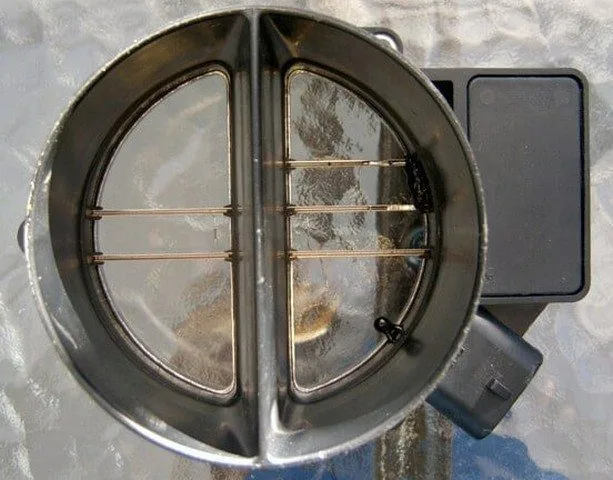
Photo of a mass air flow (MAF) sensor in an intake duct
Example of a MAF sensor location.

Symptoms of the P0100 Code

The appearance of the P0100 code is often accompanied by several symptoms:

  • 📈 Malfunction Indicator Light (MIL) illuminated
  • ⚡ Rough idle or engine shaking
  • 💨 Black smoke from the exhaust (rich mixture)
  • 🔁 Stalling or difficulty starting
  • 📉 Noticeable drop in performance and fuel consumption

Potential Causes of the Malfunction

Several factors can cause a P0100 code:

  • Dirty or contaminated MAF sensor by dust, oil, or dirt.
  • Faulty or inoperative MAF sensor.
  • Electrical issue: damaged wiring, oxidized connector, or poor contact.
  • Air leaks in the intake circuit, downstream of the sensor.
  • A clogged air filter can also disrupt the reading.

How to Diagnose and Repair a P0100 Code?

Here is a step-by-step method to diagnose the fault:

  1. Visual inspection: Check the condition of the connectors, wiring, and look for any air leaks.
  2. Cleaning the MAF sensor: Use a specific MAF sensor electrical cleaner. This is a simple and inexpensive first step.
  3. Checking real-time values: Using an OBD2 diagnostic tool, observe the live data from the MAF sensor at idle and under load to spot any inconsistencies.
  4. Checking the air filter: Replace it if it is dirty.
  5. Consulting TSBs: Look for any technical service bulletins specific to your model for known issues.

Pro tip: If replacing the sensor is necessary, always prefer an original equipment manufacturer (OEM) part over a cheap aftermarket part to ensure accurate measurements and long lifespan.

Related Codes

Other codes related to the MAF circuit may appear: P0101 (Range/Performance), P0102 (Low Signal), P0103 (High Signal), and P0104 (Intermittent Signal).

⚠️ Warning: Automotive diagnostics can be complex. If you are not comfortable with these procedures, it is highly recommended to consult a qualified professional for an accurate diagnosis.

P0101 MAF Circuit Range/Performance

What is the P0101 Code?

The P0101 trouble code is a generic powertrain code applicable to most OBD-II equipped vehicles (Nissan, Chevrolet, Toyota, Ford, VW, Mercedes, BMW, Audi, Honda, etc.). It indicates a problem with the Mass Air Flow (MAF) sensor circuit’s range or performance. Although generic, specific diagnostic procedures may vary by vehicle make and model.

Role of the MAF Sensor

The Mass Air Flow (MAF) sensor is located in the intake duct, downstream of the air filter. Its function is to measure the volume and density of air entering the engine. The Powertrain Control Module (PCM) uses this data, along with other parameters, to calculate the amount of fuel needed for optimal combustion, ensuring power, efficiency, and low emissions.

The P0101 code is triggered when the PCM detects that the electrical signal from the MAF sensor is outside the expected range of values compared to other engine parameters.

Note: Many MAF sensors also incorporate an Intake Air Temperature (IAT) sensor, which is crucial for the PCM’s calculations.

Symptoms of the P0101 Code

  • 📛 Malfunction Indicator Lamp (MIL) illuminated (“Check Engine”)
  • ⚡ Rough idling or stalling engine
  • 🚗 Hesitation and power loss during acceleration
  • ⛽ Poor fuel economy
  • 💨 Black smoke from the exhaust (rich fuel mixture)
  • 🔧 Hard starting

Possible Causes of the Fault

  • 🧹 Dirty or contaminated MAF sensor (dust, oil)
  • 🔌 Faulty or inoperative MAF sensor
  • 🌬️ Air leaks in the intake circuit (downstream of the sensor)
  • 🔋 Wiring or connector issues (short circuit, open circuit, poor connection)
  • 🧲 Clogged or dirty air filter
  • ⚠️ Clogged catalytic converter (especially on some GMC/Chevrolet models)

How to Diagnose and Fix a P0101 Code

  1. Visual Inspection: Check the wiring, connector, and overall condition of the MAF sensor. Look for signs of corrosion, frayed wires, or poor connections.
  2. Check for Air Leaks: Thoroughly inspect the intake circuit for any cracked, hardened, or poorly connected hoses.
  3. Cleaning the MAF Sensor: Use a specific MAF sensor electrical cleaner. Gently spray the wires or hot film and allow it to dry completely before reassembly.
  4. Check the Air Filter: Replace it if it is dirty.
  5. Using a Diagnostic Tool: With a scan tool, monitor the MAF sensor’s real-time values (g/s) and oxygen sensor readings to check for consistency.
  6. Backpressure Test: If suspected, perform an exhaust backpressure test to rule out a clogged catalytic converter.
  7. Consult TSBs: Check your manufacturer’s Technical Service Bulletins (TSBs) for any known issues related to the P0101 code on your model.

💡 Pro Tip: When replacing, prefer an OEM quality MAF sensor. Low-quality aftermarket parts are often the cause of repeat visits to the shop and recurring problems.

Related Codes

  • P0100: MAF Circuit Malfunction
  • P0102: MAF Circuit Low Input
  • P0103: MAF Circuit High Input
  • P0104: MAF Circuit Intermittent

Photo of a Mass Air Flow (MAF) sensor in an intake duct

Need Help?

Diagnosing a P0101 code can be complex. If basic troubleshooting steps haven’t resolved the issue, consult a qualified mechanic for an in-depth diagnosis using professional tools.

P0102 Mass Air Flow MAF Circuit Low

What is the P0102 Code?

The P0102 trouble code is a generic powertrain code indicating a Mass Air Flow (MAF) sensor circuit reporting a value that is too low. It applies to most vehicles equipped with the OBD-II standard (Toyota, Nissan, Ford, Volkswagen, Mercedes, etc.). Although generic, specific diagnostic procedures may vary between manufacturers.

Role of the MAF Sensor (Mass Air Flow Sensor)

The MAF sensor is located in the air intake duct, between the air filter and the intake manifold. Its role is crucial: it measures the volume and density of the air drawn into the engine. The Powertrain Control Module (PCM) uses this data, together with other values (O2 sensor, air temperature), to calculate the amount of fuel needed for optimal combustion, thus ensuring power, reduced consumption, and low emissions.

Note: Many MAF sensors also incorporate an Intake Air Temperature (IAT) sensor.

Symptoms of the P0102 Code

A P0102 code typically illuminates the Malfunction Indicator Lamp (MIL) and may be accompanied by the following symptoms:

  • Malfunction Indicator Lamp (MIL) illuminated
  • Engine idling roughly or stalling
  • Hard starting
  • Hesitation and power loss during acceleration
  • Black smoke from the exhaust (overly rich mixture)
  • Noticeable increase in fuel consumption

Possible Causes of the P0102 Code

Several malfunctions can cause this code:

  • Dirty or contaminated MAF sensor (most common cause)
  • Faulty or inoperative MAF sensor
  • Air leaks downstream of the sensor (intake duct, hoses)
  • Electrical problem (cut wiring, oxidized connector, poor contact, short circuit)
  • Excessively dirty air filter or oiled air filter having contaminated the sensor
  • Problem with the MAP (Manifold Absolute Pressure) sensor circuit

How to Diagnose and Repair a P0102 Code?

Here is a step-by-step diagnostic method to identify and resolve the cause of the P0102 code.

1. Visual Inspection

  • Inspect the MAF sensor’s wiring and connector for any signs of wear, corrosion, or damage.
  • Check the entire air intake system to locate any potential leaks (cracks, loose hoses).

2. Cleaning the MAF Sensor

  • Disconnect the sensor and spray a specialized MAF sensor electrical cleaner onto the wires or hot film. Allow it to dry completely before reassembly.
  • Inspect and replace the air filter if it is dirty. Avoid oiled “washable” type air filters.

3. Advanced Diagnostics

  • Using an OBD2 diagnostic tool, monitor the MAF sensor’s live data (g/s) at idle and at various engine speeds. An abnormally low or static value confirms a problem.
  • Check for the presence of any Technical Service Bulletins (TSB) issued by the manufacturer for your model.

4. Replacement

  • If cleaning and electrical checks have not resolved the problem, the MAF sensor is likely faulty.
  • Tip: Always prefer a quality OEM sensor (original equipment) over a low-end aftermarket model to ensure reliability and longevity.

Conclusion

The P0102 code is often simple to resolve by thoroughly cleaning the MAF sensor. If replacement is necessary, investing in a quality part is essential to restore your engine’s performance and efficiency.

Need help diagnosing your vehicle? Consult a professional mechanic for an accurate diagnosis.