
P0063 Heater Control Circuit Low B2S3 HO2S

What is the P0063 Code?

The diagnostic trouble code P0063 is a generic powertrain code. It applies to most vehicles from 1996 and newer. It indicates a problem with the heater control circuit of the Heated Oxygen Sensor (HO2S) for Bank 2, Sensor 3.

Role of the HO2S Sensor

Heated Oxygen Sensors (HO2S) are essential components used by the Powertrain Control Module (PCM) to analyze the oxygen content in the exhaust gases. The specific “Bank 2, Sensor 3” sensor is primarily used to monitor the efficiency of the catalytic converter. An integrated heating element allows it to quickly reach its optimal operating temperature, which reduces emissions during cold starts and enables the engine to enter closed-loop operation faster.

Heater Circuit Operation

The PCM controls the sensor heater in two main ways, depending on the manufacturer:

  • The PCM directly controls the voltage supply (via a relay or not), while the ground is provided by the vehicle’s chassis.
  • A constant 12-volt supply (B+) is provided to the sensor, and the PCM controls the circuit by managing the ground through an internal driver.

The P0063 code is triggered when the PCM detects an abnormally low voltage on this control circuit. Bank 2 refers to the side of the engine that does not contain cylinder number 1.

Symptoms of the P0063 Code

Symptoms are often subtle but may include:

  • Illumination of the Malfunction Indicator Lamp (MIL) on the dashboard.
  • A slight increase in pollutant emissions.
  • Generally, no noticeable driving symptoms are felt.

Possible Causes of the Fault

Several elements can cause the P0063 code:

  • Failure of the heating element in the oxygen sensor (Bank 2, Sensor 3).
  • Physically damaged HO2S sensor (impact, corrosion).
  • Control circuit shorted to ground or faulty power circuit.
  • Internal PCM failure (the heater control driver is faulty).
  • Damaged electrical wires, cut or melted near the exhaust.

Diagnosis and Possible Solutions

To diagnose and resolve a P0063 code, follow these steps:

1. Visual Inspection

Perform a thorough inspection of the sensor (Bank 2, Sensor 3) and its wiring harness. Look for signs of burning, friction, or physical damage. Ensure the wiring is properly routed and away from hot exhaust parts. If damage is visible, repair or replace the affected components.

2. Electrical Test

Disconnect the HO2S sensor connector. With the ignition on (engine off), check for the presence of:

  • Either a 12-volt supply at the connector (depending on the system).
  • Or a ground control managed by the PCM (using a multimeter).

This will tell you which type of circuit your vehicle uses and allow you to verify its integrity.

3. Sensor Test

If the wiring is intact, remove the sensor and inspect its sensing element for contamination or damage. Using a multimeter in ohmmeter mode, measure the resistance of the sensor’s heating element according to the manufacturer’s specifications. An infinite resistance (open circuit) or zero resistance (short circuit) confirms sensor failure. In this case, replacement of the oxygen sensor is necessary.

4. Replacement and Reset

After replacement, use a diagnostic tool to clear the P0063 trouble code from the PCM’s memory and perform a drive cycle to verify that the fault does not reappear.

Conclusion

The P0063 code often points to an electrical problem in the heater circuit of a specific oxygen sensor. Although symptoms are often minor, it is important to repair it to ensure the proper functioning of the emissions control system and avoid potential failure during an emissions test.

⚠️ Pro Tip: Accurate diagnosis often requires a multimeter and specification data. If you are not comfortable with these procedures, it is recommended to consult a professional mechanic for an accurate diagnosis.
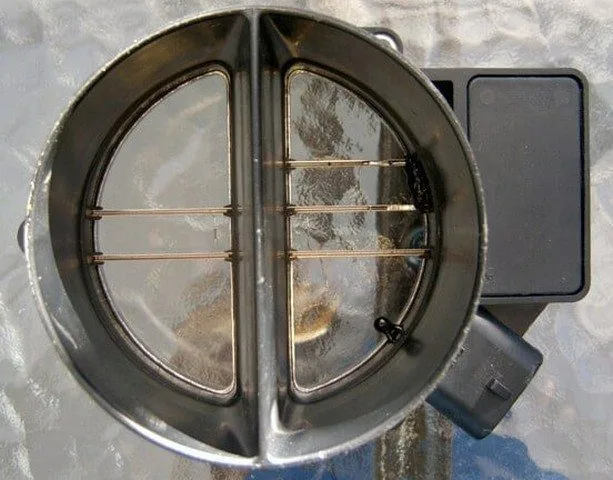
P0064 High HO2S Heater Control Circuit (Bank 2 Sensor 3)

What is the P0064 Code?

The P0064 trouble code is a generic powertrain code (OBD-II). It indicates a problem with the heater control circuit of the Heated Oxygen Sensor (HO2S) located at Bank 2, Sensor 3. This fault specifically concerns the heating part of the sensor and not its exhaust gas measurement function.

Role of the HO2S Sensor and Its Heater

The Heated Oxygen Sensor (HO2S) is a crucial component of the engine management system. The Powertrain Control Module (PCM) uses data from the Bank 2, Sensor 3 primarily to monitor the efficiency of the catalytic converter.

The heater element integrated into the sensor allows it to reach its optimal operating temperature more quickly. This reduces the time needed to reach “closed loop” operation, which is essential for precise emission control and optimal air-fuel mixture. The PCM continuously controls and monitors the heater circuit to detect any voltage or current anomalies.

Symptoms of the P0064 Code

Symptoms are often subtle. You might observe:

  • Illumination of the Malfunction Indicator Lamp (MIL) on the dashboard.
  • A slight increase in fuel consumption.
  • Potentially higher pollutant emissions.
  • Generally, no noticeable driving symptoms (loss of power, misfires) are felt.

Possible Causes of the P0064 Fault

Several causes can be at the origin of this code:

  • Faulty O2 Sensor: The internal heater element of the Bank 2, Sensor 3 sensor is burnt out or faulty.
  • Wiring Problem: Damaged, chafed, melted, or corroded cables, especially near the sensor or the exhaust.
  • Short Circuit: The heater control circuit is shorted to ground (ground-controlled systems) or to power (B+).
  • Open Circuit: A break in the heater’s power, ground, or control wire.
  • PCM Problem: An internal failure of the engine control module is rare, but possible.

Diagnosis and Solutions to Repair the P0064 Code

⚠️ Warning: Always work on a cold engine to avoid any risk of burns.

1. Visual Inspection

Start with a thorough inspection of the Bank 2, Sensor 3 sensor and its wiring harness. Look for obvious signs of damage: melted wires, burnt insulation, oxidized or loose connector. Ensure the wiring is properly routed and away from hot engine parts and the exhaust line.

2. Electrical Check of the Sensor

Disconnect the HO2S sensor connector. Using a multimeter, measure the resistance across the terminals of the heater element (usually the two wires of the same color, often white). Consult manufacturer data for the expected resistance value. An infinite resistance (OL) indicates an open heater element: the sensor must be replaced.

3. Circuit Check

With the connector disconnected and the ignition on (engine off), check for the presence of:

  • For +12V controlled systems: Measure the voltage on the heater power wire. You should find +12V. Check the integrity of the ground wire.
  • For ground-controlled systems: Check for the presence of constant +12V on one heater wire. The PCM controls the ground on the other wire.

If power and ground are correct but the fault persists, the sensor is very likely faulty. If power or ground is absent, look for a wiring or fuse problem.

4. Replacing the O2 Sensor

If all checks point to a faulty oxygen sensor, proceed with its replacement. Use a suitable deep socket wrench to loosen the old sensor. Apply anti-seize compound to the threads of the new sensor (if it is not pre-greased) and tighten it to the torque specified by the manufacturer. Reconnect the electrical connector.

5. Clearing Codes

After repair, use an OBD2 diagnostic scanner to clear the trouble code from the PCM’s memory. Perform a drive cycle to ensure the code does not reappear.

Conclusion

The P0064 code is often caused by a faulty oxygen sensor or its wiring. Although it doesn’t always affect driving, it must be corrected to ensure the proper functioning of the anti-pollution system and avoid a potential failure during an emissions test.

Call to Action: Electrical diagnosis requires specific skills. If you do not feel comfortable with these procedures, entrust the diagnosis and repair to a professional mechanic.

P0065 Performance of the Pneumatic-Assisted Injector Control Range

Code P0065: Air Assisted Injector Control Range Performance

What is code P0065?

The generic diagnostic trouble code (DTC) P0065 is a powertrain code that applies to vehicles equipped with an air assisted fuel injector. While present on various brands (Subaru, Jaguar, Chevy, Dodge, VW, Toyota, Honda), it primarily appears on Subaru and Jaguar models. Specific repair steps may vary by brand, model, and engine.

How the Air Assisted Injector Works

Similar to a conventional injector, the air assisted injector uses air to optimize fuel atomization during injection. This system is typically activated during cold starts, when the engine requires a richer air/fuel mixture. Uniform spraying is crucial, as a single injector mounted on the throttle body or intake often supplies multiple cylinders.

Cause and Triggering of the Code

The ECM (Engine Control Module) activates the check engine light and records code P0065 when it detects an anomaly in the air assisted injector circuit. This is usually an electrical issue, but an internal injector malfunction can also be the cause. This code is often associated with DTCs P0066 and P0067.

Severity of Code P0065

The severity is moderate. The code does not affect engine performance at normal operating temperature, but repeated cold starts with a too lean mixture can cause long-term damage. Therefore, repair is recommended.

Common Symptoms

  • Hard starting in cold weather
  • Exhaust smoke
  • Poor cold performance
  • Misfires
  • Excessive fuel consumption

Possible Causes

  • Damaged wiring harness
  • Vacuum leak at the injector or pipes/clamps
  • Faulty fuse or relay
  • Defective air assisted injector
  • ECM problem
  • Corrosion or overheating of pins/connectors

Required Tools

  • OBD-II code reader
  • Multimeter
  • Socket and wrench set
  • Screwdriver
  • Battery terminal cleaner
  • Repair manual

Safety Tips

  • Let the engine cool down before working
  • Use wheel chocks to block the wheels
  • Wear personal protective equipment (PPE)

Diagnostic Steps

1. Check Technical Service Bulletins (TSBs)

Check TSBs for your vehicle. A known fix may simplify diagnosis.

2. Inspect for Vacuum Leaks

Locate the injector (usually on the throttle body) by consulting the manual. Inspect pipes and seals for possible leaks. With the engine running, listen for abnormal hissing sounds. Use a vacuum gauge to measure intake vacuum and compare it to specifications.

Tip: Replace any cracked hoses to avoid future problems.

3. Electrical Test of the Injector

Measure the resistance at the injector terminals with a multimeter. Refer to the manual for reference values.

Caution: Use appropriate connectors to avoid damaging the pins.

4. Inspect Connectors

Check the injector’s electrical connector for corrosion or defects. Inspect the condition of the harness and its routing to avoid chafing.

Important: Always disconnect the battery before any electrical work.

5. Circuit Test

Test the continuity of the wires between the injector and the ECM with a multimeter. Perform a voltage drop test to check circuit integrity.

6. Real-World Condition Test

If your diagnostic tool allows, monitor the injector’s operation while driving to compare actual values with expected values.

Conclusion

Code P0065 indicates a problem with the air assisted injector. Although not critical, it requires investigation to avoid future complications. If the diagnostic steps exceed your skills, consult a professional mechanic for reliable repair.

P0066 Air Assisted Injector Control Circuit or Circuit Low

What is the P0066 Code?

The error code P0066 is a generic powertrain code. It indicates a malfunction in the air-assisted injector control circuit or a low circuit. This code primarily affects Subaru and Jaguar vehicles but can also appear on other brands (Chevy, Dodge, VW, Toyota, Honda) equipped with a pneumatic injection system. Diagnostic steps may vary depending on the manufacturer and model.

Function of the Air-Assisted Injector

The air-assisted injector optimizes fuel atomization by introducing air into it, which improves the spray and distribution of the air-fuel mixture. It is mainly used during cold starts, when the engine requires a richer mixture. A fault in its circuit can disrupt this process.

Severity and Symptoms of the P0066 Code

The severity of this code is moderate. Although it generally does not affect engine performance when warm, it can cause:

  • Difficult cold starts
  • Excessive smoke from the exhaust
  • Misfires and poor acceleration
  • Increased fuel consumption
  • Poor performance in cold weather

Failure to repair it can eventually damage the engine.

Possible Causes of the P0066 Code

  • Broken or damaged wires in the wiring harness
  • Vacuum leak at the injector, pipes, or clamps
  • Faulty fuse or relay
  • Defective air-assisted injector
  • Connector issue (corrosion, overheating)
  • Failure of the ECM (Engine Control Module)

Tools Required for Diagnosis

  • OBD2 diagnostic tool
  • Multimeter for electrical tests
  • Set of sockets and wrenches
  • Set of screwdrivers
  • Electrical contact cleaner
  • Vehicle-specific repair manual

Safety Tips

  • Let the engine cool down before any intervention.
  • Wear personal protective equipment (PPE).
  • Chock the vehicle’s wheels.
  • Disconnect the battery before working on the electrical circuit.

Diagnostic Procedure for the P0066 Code

1. Checking for Vacuum Leaks

Locate the air-assisted injector (usually mounted on the throttle body). With the engine running, listen for abnormal hissing sounds indicating an air leak. Visually inspect the pipes and clamps. Replace any cracked or worn components.

2. Electrical Test of the Injector

Using a multimeter, measure the resistance at the injector terminals. Compare the reading with the value specified in the repair manual. An out-of-range value indicates a faulty injector.

3. Inspection of Connectors and Wiring

Inspect the injector’s electrical connector for corrosion, bent pins, or damage. Check the condition of the wiring harness along its entire length to identify any chafing or wear.

4. Circuit and ECM Testing

Test the continuity of the wires between the injector and the ECM using the multimeter. Perform a voltage drop test to verify the integrity of the circuit. If everything is normal, an issue with the ECM itself is possible.

5. Using an Advanced Diagnostic Tool

If your scan tool allows it, activate the air-assisted injector and monitor its real-time data (control parameters) to identify any operational anomalies.

Conclusion and Call to Action

The P0066 code is often related to a simple electrical issue, such as a bad connector or a cut wire. However, accurate diagnosis is essential to avoid unnecessary part replacements.

Having trouble diagnosing this code? Consult a professional equipped with a diagnostic tool suitable for your vehicle without delay. Use a specific repair manual to obtain the correct resistance values and procedures for your model.

P0067 High Air Assisted Injector Control Circuit

What is the P0067 code?

The diagnostic code P0067 is a generic powertrain code. It indicates an electrical problem in the air assisted injector control circuit. Although it can appear on various brands (Subaru, Jaguar, VW, Toyota, etc.), it is primarily encountered on Subaru and Jaguar vehicles. Repair steps may vary depending on the model.

Function of the Air Assisted Injector

This injector uses air to improve fuel atomization, which is crucial for cold starts. A cold engine requires a richer air/fuel mixture. The introduced air allows for a finer and more uniform spray, optimizing fuel distribution to the cylinders.

Why the Code Illuminates

The Engine Control Module (ECM) detects an abnormally high electrical value in the circuit and triggers the check engine light. This code is often associated with codes P0065 and P0066.

Severity of the P0067 Code

The severity is moderate. The vehicle will operate normally once the engine is warm, but difficult cold starts with a lean mixture can cause long-term damage. Repair is recommended.

Symptoms of the P0067 Code

  • Hard starting in cold weather
  • Exhaust smoke
  • Poor engine performance when cold
  • Misfires
  • Increased fuel consumption

Possible Causes of the P0067 Code

  • Damaged or cut wiring harness
  • Vacuum leak at the injector or pipes/clamps
  • Faulty fuse or relay
  • Faulty air assisted injector
  • Problem with the ECM
  • Corrosion or overheating of pins/connectors

Tools Needed for Diagnosis

  1. OBD2 scanner
  2. Digital multimeter
  3. Socket and wrench set
  4. Screwdriver set
  5. Electrical contact cleaner
  6. Vehicle repair manual

Safety Instructions

  • Let the engine cool down before any work.
  • Chock the vehicle’s wheels.
  • Wear personal protective equipment (safety glasses, gloves).
  • Always disconnect the battery before working on the electrical circuit.

Diagnostic Procedure for Code P0067

Step 1: Checking for Vacuum Leaks

Consult the manual to locate the injector (often on the throttle body). With the engine running, listen for any abnormal hissing indicating an air leak. Visually inspect the intake pipes and seals. Replace any cracked or worn hoses.

Step 2: Injector Test

Using a multimeter, measure the resistance across the injector terminals. Compare the obtained value with that specified in the repair manual. A significant deviation indicates a faulty injector.

Tip: Use appropriate multimeter connectors to avoid damaging fragile pins.

Step 3: Connector and Wiring Inspection

Inspect the electrical connector of the injector for any corrosion, overheating, or damage. Check the condition of the wiring harness along its entire length to identify potential chafing or wear.

Step 4: Electrical Circuit Test

Test the continuity and resistance of the wires between the injector and the ECM. A voltage drop test can also reveal poor circuit integrity.

Step 5: Real-World Condition Test (if possible)

If your scan tool allows it, activate the air assisted injector and monitor its operating values in real-time. Compare them with the target values.

Step 6: Checking Technical Service Bulletins (TSB)

Before replacing parts, consult your vehicle’s Technical Service Bulletins (TSB). The manufacturer may have issued a known fix for this specific problem, saving you time and money.

Conclusion and Call to Action

Diagnosing the P0067 code requires a methodical approach, starting with the simplest checks (leaks, connectors). If the troubleshooting steps above do not resolve the issue, it is highly recommended to consult a professional mechanic with the expertise and diagnostic equipment specific to your vehicle model.

P0068 MAP / MAF – Throttle Position Correlation

What is the P0068 Code?

The P0068 fault code is a generic powertrain code that indicates an abnormal correlation between the Throttle Position Sensor (TPS) and the Mass Air Flow (MAP/MAF) sensor. This issue, present in most vehicles (1996 and newer), indicates a disparity in the air intake data received by the Powertrain Control Module (PCM), preventing it from properly regulating the air-fuel mixture and ignition timing.

Symptoms of the P0068 Code

  • ⚠️ Check Engine Light illuminated
  • 🔁 Rough idling or engine misfires
  • 📉 Loss of power and difficulty accelerating
  • ⛽ Increased fuel consumption
  • 🚗 Possible stalling or very rough idle

Possible Causes of the P0068 Fault

  • 🔧 Air leak or vacuum leak between the MAF sensor and the intake manifold
  • 🧽 Dirty or clogged air filter
  • 🔌 Corroded, loose, or damaged electrical connectors
  • 📏 Faulty MAF or MAP sensor
  • 🚗 Malfunctioning Throttle Position Sensor (TPS)
  • 🛢️ Throttle body carbon buildup (carbon deposits)
  • 🧩 Intake manifold leak
  • 🧹 Obstruction in the air intake duct or MAP sensor hose

Diagnosis and Solutions for the P0068 Code

To diagnose and resolve a P0068 code, follow these methodical steps. Equip yourself with a multimeter, test probe, carburetor cleaner, and intake cleaner.

1. Visual Inspection and Cleaning

  • Check and replace the air filter if necessary.
  • Inspect the hoses and clamps between the MAF sensor and the throttle body (tightness, cracks).
  • Check the condition of the vacuum lines on the manifold.
  • Clean the throttle body and carbon deposits using an appropriate product.

2. Checking Connectors and Sensors

  • Disconnect and inspect the sensor connectors (MAF, MAP, TPS) for corrosion or damaged pins.
  • Use contact cleaner to improve the connection if necessary.

3. Testing the MAF Sensor (Mass Air Flow Sensor)

  • Engine off, ignition on. Connect the multimeter to the MAF connector (3 wires: +12V, ground, signal).
  • Check for 12V at the power terminal. Absence = fuse or wiring problem.
  • Check the ground (should be < 100 mV).
  • If power and ground are correct but the problem persists, the MAF sensor is likely faulty.

4. Testing the TPS Sensor (Throttle Position Sensor)

  • Ignition on, engine off. Connect the multimeter to the signal wire (often blue) and ground.
  • The voltage should be approximately 0.5V at closed throttle and gradually increase to ~5V at wide open throttle. An irregular variation indicates a faulty TPS.

5. Testing the MAP Sensor (Manifold Absolute Pressure Sensor)

  • Ignition on, engine off: voltage approximately 5V.
  • Engine at idle: voltage between 0.5V and 1.5V (depending on altitude).
  • The voltage should react instantly to throttle opening (drop then rise). No reaction = faulty sensor.

6. Searching for Air Leaks

  • Start the engine and spray carburetor cleaner around the manifold and gaskets.
  • A change in engine RPM indicates a leak. Caution: Handle with care to avoid contact with eyes.

Conclusion

The P0068 code is often related to an air intake or sensor problem. Always start with the simplest checks (leaks, filters, connectors) before replacing expensive sensors. If the problem persists after these checks, consultation with an advanced diagnostic tool (such as Tech II) or a professional is recommended.

💡 Tip: Not sure you can perform these checks yourself? Entrust the diagnosis to a qualified mechanic for an accurate diagnosis and reliable repair.

P0069 Manifold Absolute Pressure – Barometric Pressure Correlation

What is the P0069 code?

The error code P0069 indicates an inconsistency between the readings from the Manifold Absolute Pressure (MAP) sensor and the Barometric Pressure (BARO) sensor. This generic powertrain diagnostic code applies to most OBD2-equipped vehicles but is more common in certain Audi, Ford, Mazda, Mitsubishi, Saturn, and VW models.

The MAP sensor converts engine vacuum into an electrical signal for the Powertrain Control Module (PCM). The PCM also uses data from other sensors, such as the Mass Air Flow (MAF) sensor and the Throttle Position Sensor (TPS), to calculate engine load and altitude. The P0069 code triggers when the signals from the MAP and BARO sensors show an abnormal correlation, either at startup or at full throttle.

Symptoms of the P0069 code

  • Malfunction Indicator Lamp (MIL) illuminated
  • Hesitation or jerking during acceleration
  • Reduced engine performance
  • Decreased fuel economy

Possible causes

  • Common cause: Clogged or cracked vacuum line between the intake manifold and the MAP sensor
  • Common cause: Poor engine condition (spark plugs, clogged air filters, etc.)
  • Possible cause: Faulty MAP or BARO sensor
  • Rare cause: PCM (Powertrain Control Module) failure

Solutions and diagnostic procedures

Preliminary advice: Check your manufacturer’s Technical Service Bulletins (TSBs). A known fix may exist for your model.

  1. Visual inspection: Locate the MAP sensor near the intake manifold. Inspect electrical connectors and wiring for any signs of wear, corrosion, or damage. Clean the terminals with an appropriate product if necessary.
  2. Vacuum circuit check: Verify the seal and absence of obstruction in the vacuum line connecting the manifold to the sensor. Engine vacuum must be properly transmitted.
  3. Using a diagnostic tool: Clear the codes and perform a drive test. If the P0069 code returns, measure the MAP sensor values (PID) with the scan tool. At sea level, the KOEO (Key On Engine Off) reading should be approximately 100 kPa. It should vary significantly at idle and during acceleration.
  4. Replacement: If all other causes are ruled out, replacing the MAP sensor is the most likely solution. A faulty PCM is rare but cannot be ruled out until after sensor replacement.

Important note: Replacing a PCM requires vehicle-specific programming. It is recommended to consult an automotive diagnostic professional for complex steps.

Need help?

Don’t let an engine pressure issue affect your performance and safety. If the diagnosis seems complex, consult a qualified mechanic for accurate and guaranteed resolution.

P006A MAP – Mass or Volumetric Air Flow Correlation Bank 1

What is the P006A Code?

The generic fault code P006A applies to vehicles equipped with an OBD-II (On-Board Diagnostics) standard. It indicates that the Powertrain Control Module (PCM) has detected an inconsistency or correlation difference between the signals from the Manifold Absolute Pressure (MAP) sensor and those from the Mass Air Flow (MAF) or Volume Air Flow (VAF) sensor for engine bank 1.

Operation of MAP and MAF/VAF Sensors

The correct air-fuel ratio is crucial for engine performance, efficiency, and emission control. The PCM relies on data from several sensors to calculate it:

The MAP (Manifold Absolute Pressure) Sensor

It measures the pressure (or vacuum) in the intake manifold, providing the PCM with a signal in kilopascals (kPa) or inches of mercury (inHg). This data helps estimate the engine load.

The MAF (Mass Air Flow) or VAF (Volume Air Flow) Sensor

It directly measures the amount of air drawn into the engine. The PCM uses this information to precisely adjust fuel injection. “Unmeasured air,” for example from an air leak, disrupts this calculation and can trigger this fault code.

Symptoms of the P006A Code

  • Engine hesitation, stumbling, or stalling during acceleration
  • Unstable or irregular idle
  • Noticeable decrease in engine performance
  • Reduced energy efficiency (increased fuel consumption)
  • Excessive emissions (smoke from the exhaust)
  • Malfunction Indicator Lamp (MIL) illuminated on the dashboard

Possible Causes of the P006A Code

  • Faulty MAP sensor: Incorrect pressure data.
  • Faulty or dirty MAF or VAF sensor: Dirt or a malfunction distorts the air flow measurement.
  • Wiring problems: Damaged wires, oxidized, loose, or corroded connectors.
  • Air (vacuum) leaks: A cracked intake duct, damaged manifold gasket, or detached hose allows unmeasured air to enter.
  • Engine mechanical problem: Insufficient engine vacuum due to a more serious issue.
  • Faulty PCM: A failure of the control module itself (rare).

Diagnosis and Troubleshooting of the P006A Code

Diagnosis requires an OBD2 scanner, a digital multimeter (DVOM), and possibly a vacuum gauge.

  1. Checking for air leaks: Visually inspect the entire air intake circuit, from the air filter to the manifold, looking for cracks, bent hoses, or loose connections.
  2. Engine vacuum test: Using a vacuum gauge, measure the vacuum at idle. A low or unstable value indicates a leak or mechanical problem.
  3. Inspection of connectors and wiring: Check the condition and cleanliness of the MAP and MAF sensor connectors. Verify the absence of cut wires or short circuits with a multimeter.
  4. Reading live data: With a scanner, observe the live values from the MAP and MAF sensors at idle and during slight accelerations. Compare them to the manufacturer’s specified ranges.
  5. Electrical testing of sensors: Using the multimeter and manufacturer’s data, test the sensor supply voltage (usually 5V or 12V), ground, and return signal.
  6. Cleaning or replacement: A dirty MAF sensor can often be cleaned with a specialized product. If electrical tests are bad, replace the faulty sensor (MAP or MAF).
  7. PCM update: In rare cases, a PCM software update may resolve the issue (check your manufacturer’s technical service bulletins).

Conclusion

The P006A code indicates a discrepancy between two sensors essential for proper engine operation. Although often caused by an air leak or a dirty sensor, a methodical diagnosis is essential to identify the root cause and perform the appropriate repair. Ignoring this code can lead to increased fuel consumption, power loss, and long-term damage to the catalytic converter.

Need help diagnosing this code on your vehicle? Consult a professional garage equipped with the diagnostic tools suitable for your car brand.

P006B MAP – Exhaust Pressure Correlation

Code P006B: MAP Sensor / Exhaust Pressure Sensor Divergence

The generic diagnostic trouble code P006B indicates that the Powertrain Control Module (PCM) has detected an inconsistency between the data from the Manifold Absolute Pressure (MAP) sensor and the Exhaust Pressure Sensor (EPS). This code is primarily found on diesel vehicles (Ford Powerstroke, GMC, Chevrolet, Dodge) and directly impacts performance, fuel consumption, and the emissions control system.


Sensor Roles and Symptoms

  • MAP Sensor: Measures the air pressure in the intake manifold (in kPa or Hg) to help the PCM calculate the optimal air-fuel mixture.
  • Exhaust Pressure Sensor (EPS): Monitors the backpressure of the exhaust gases to ensure the efficiency of the DPF (Diesel Particulate Filter), the catalytic converter, and the overall engine performance.

⚠️ Common Symptoms:

  • Excessive exhaust smoke (black or blue)
  • Noticeable increase in fuel consumption
  • Loss of power and decreased engine performance
  • Unstable engine idle and unbalanced air-fuel mixture
  • Malfunction Indicator Lamp (MIL) illuminated

Possible Causes of Code P006B

  1. Hardware Failures
    • Faulty or dirty MAP or EPS sensor
    • Damaged wiring (cut wires, short circuits, corroded or loose connectors)
    • Presence of vacuum leaks in the intake system
  2. Software or PCM Issues
    • PCM programming error or internal timing issue
    • Software failure requiring an update

Step-by-Step Diagnostic Method

1. Visual Inspection

  • Visually inspect the wiring and connectors of both sensors, especially near the exhaust (heat source).
  • Look for signs of burning, corrosion, physical damage, or poor connections.

2. Using an OBD2 Scanner

  • Read the trouble codes and freeze frame data.
  • Clear the codes and perform a road test to see if P006B reappears.

3. Electrical Tests (Multimeter)

  • Check the sensor supply voltage (expected 5V) and ground.
  • Measure the signal from each sensor and compare it to the manufacturer’s specified ranges.
  • Test the circuit continuity between the sensors and the PCM.

4. Advanced Verification

  • If everything seems normal, consult Technical Service Bulletins (TSBs) for known issues.
  • As a last resort, consider reprogramming or replacing the PCM.

Best Practices and Recommendations

  • Prioritize other codes: Address any associated codes first (e.g., P0106, P0470).
  • Use a repair manual for precise reference values (e.g., AllData, Mitchell1).
  • On diesel vehicles, a DPF cleaning may be necessary.

🔧 Need Help? If the diagnosis is beyond your expertise, consult a mechanic specialized in diesel systems to avoid damaging other components.


Conclusion

Code P006B is a serious fault that requires a thorough check of the sensors, wiring, and PCM. A structured approach with the right tools is essential to identify the root cause and restore your vehicle’s optimal performance.

P006C MAP – Turbocharger/Compressor Inlet Pressure Correlation

Code P006C: Definition and Explanation

The diagnostic trouble code P006C is a generic powertrain code (DTC) indicating that the Powertrain Control Module (PCM) has detected an inconsistency between the signals from the Manifold Absolute Pressure (MAP) sensor and the turbocharger inlet pressure sensor. This code primarily affects vehicles equipped with forced induction (turbocharger or supercharger).

Symptoms of Code P006C

When this trouble code is stored, you may observe one or more of the following symptoms:

  • ➤ Reduced engine performance
  • ➤ Noticeable decrease in boost efficiency
  • ➤ Hesitation during acceleration
  • ➤ Air-fuel mixture too rich or too lean
  • ➤ Abnormal whistling sounds from the intake system

Possible Causes of P006C Fault

Several factors can cause this code:

  • Faulty MAP sensor
  • Malfunctioning turbo pressure sensor
  • ➤ Damaged wiring or connector (short circuit or open circuit)
  • ➤ Vacuum leak or restriction in the air intake
  • ➤ Clogged air filter
  • ➤ PCM failure or need for update

Diagnosis and Troubleshooting of Code P006C

1. Preliminary Visual Inspection:

  • Check the condition and connection of the MAP and turbo pressure sensors.
  • Inspect intake hoses and ducts for possible disconnections or leaks.
  • Check the air filter and replace if necessary.

2. Required Tools:

  • OBD2 scanner, digital multimeter (DVOM), vacuum gauge, technical information source (e.g., AllData, Mitchell1).

3. Diagnostic Steps:

  • Start by measuring engine vacuum using a vacuum gauge.
  • Use a scanner to read trouble codes and freeze frame data.
  • Test the power supply (5V) and ground of the sensor connectors with a multimeter.
  • Measure sensor resistance (with power off) and compare to manufacturer specifications.
  • Check each sensor’s signal (with power on) by referring to pressure/voltage curves.
  • Verify continuity and absence of short circuits in the wiring up to the PCM.

4. Special Cases:

  • If all tests are conclusive, PCM reprogramming or replacement may be necessary.
  • Check Technical Service Bulletins (TSB) for recurring issues with your vehicle model.

Conclusion and Call to Action

Code P006C directly affects your engine’s performance and efficiency. Prompt intervention is recommended.

💡 Tip: If you’re not comfortable with these procedures, consult a professional mechanic equipped with advanced diagnostic tools.

Need help interpreting your sensor values? Use our interactive guide or contact an online expert for a personalized diagnosis.