
P0059 Heater Resistance HO2S, Bank 2, Sensor 1

Code P0059: Definition and Explanation

The P0059 trouble code is a generic powertrain code applicable to most vehicles from 1996 onward (Ford, Chevrolet, GMC, Mazda, etc.). It indicates that the Powertrain Control Module (PCM) has detected an abnormal resistance in the heater circuit of the upstream oxygen sensor (O2 sensor) located before the catalytic converter on bank 2 (the bank that does not contain cylinder 1).

Role of the HO2S Sensor and Its Heater System

The oxygen sensor (HO2S) measures the proportion of oxygen in the exhaust gases. To become operational quickly after a cold start, it is equipped with an internal heater. The PCM supplies battery voltage (min. 12.6 V) to this circuit via a fuse or relay until the engine reaches its operating temperature. Code P0059 is triggered when the PCM detects a resistance in this circuit that is outside the specified range.

Symptoms of Code P0059

It is recommended to address this issue promptly to avoid damaging the catalytic converter. Symptoms include:

  • ⛽ Poor fuel economy
  • 🌫️ Black smoke from the exhaust (rich mixture)
  • 🔧 Hard cold starts (lean mixture)
  • ⚠️ Malfunction Indicator Lamp (MIL) illumination
  • 📟 Possibility of other related trouble codes

Possible Causes of the Fault

The main causes of a P0059 code are:

  • 🔌 Faulty oxygen sensor (most common cause)
  • 🔋 Blown fuse or damaged fuse connection
  • 🧵 Damaged, cut wiring, or corroded/disconnected connector
  • ⚡ Faulty control relay
  • 💻 Rare PCM failure

Diagnosis and Solutions

Before starting, consult your manufacturer’s Technical Service Bulletins (TSBs) to check if the problem is a known issue.

Recommended Diagnostic Steps:

  1. Visual Inspection: Inspect the sensor’s wiring and connectors, especially near hot (exhaust manifold) or sharp components.
  2. Fuse Check: Test all relevant fuses and fuse connections under load using a digital multimeter (DVOM).
  3. Code Reading: Use an OBD2 scanner to read all trouble codes and freeze frame data. Clear the codes and perform a road test to see if P0059 returns.
  4. Sensor Test: With a cold engine, check the scanner’s live data stream. The heater circuit voltage should be close to battery voltage. Use a multimeter to test the sensor’s resistance (refer to manufacturer data for correct values).
  5. Wiring Check: Disconnect the connectors and test the heater circuit wires for continuity and the absence of a short to ground.

Pro Tips:

  • A repeatedly blown fuse often indicates a short to ground in the heater circuit.
  • After repair, drive the vehicle to complete the OBD2 drive cycles and verify that the fault does not return.

Conclusion and Call to Action

Code P0059 often points to a faulty oxygen sensor. A methodical diagnosis with the right tools helps identify the exact cause and avoid unnecessary, costly repairs.

🔧 Not comfortable performing these steps? Leave the diagnosis to a professional mechanic. Use our trusted garage finder service near you to get a fast, free quote.
P005A Cam B Profile Control Circ Perf Bank 1

Code P005B: Camshaft B Profile Control Circuit Performance Issue (Bank 1)

Fault code P005B is a generic OBD-II code related to the powertrain. It indicates a performance or blockage issue in the camshaft profile control circuit “B” for cylinder bank number 1. While it can affect many brands (Volvo, Chevrolet, Ford, Dodge, Porsche, etc.), repair procedures vary significantly depending on your vehicle’s model, year, and engine.

Role of the Camshaft and Variable Profile

The camshaft is a key component of the engine. It controls the opening and closing of the intake and exhaust valves via lobes, in perfect synchronization with the crankshaft. Modern engines often use a variable camshaft profile system. This system dynamically adjusts the behavior of the lobes (via switchable rocker arms, for example) to optimize engine performance and efficiency at different RPMs, without physically changing the shape of the lobes.

Identifying Camshaft B and Bank 1

The designation “Bank 1” indicates the side of the engine that contains cylinder number one. The letter “B” typically refers to the exhaust camshaft (the letter “A” is often reserved for the intake). As this convention is not universal, it is essential to consult the specific technical documentation for your vehicle for accurate identification.

Severity and Symptoms of Code P005B

The severity of this code is generally considered moderate, but it can worsen quickly. It is advisable to perform a diagnosis promptly to avoid potential collateral damage. Common symptoms include:

  • Unstable or low idle
  • Decreased engine performance (lack of power, slow acceleration)
  • Reduced fuel economy
  • Abnormal throttle response
  • Altered power bands (e.g., lack of power at high RPM)

Possible Causes of Fault P005B

  • Engine oil-related issue: Incorrect level, dirty or contaminated oil, unsuitable viscosity, neglected maintenance.
  • Failure of the variable profile system’s oil control solenoid.
  • Camshaft profile control valve stuck or seized.
  • Electrical problem: Damaged wiring, short circuit, faulty connector.
  • Engine Control Module (ECM) failure (less common).

Diagnosis and Troubleshooting of Code P005B

Step 1: Engine Oil Check

This is the essential first step. Check the oil level and condition. Black, contaminated oil, or oil with a viscosity that does not match the manufacturer’s recommendations is a common cause. Perform a complete oil and filter change if necessary, strictly adhering to the intervals and technical specifications.

Step 2: Visual Inspection of Wiring and Connectors

Locate the wiring harness and connectors related to the camshaft B control circuit (refer to the repair manual for identification). Carefully inspect the wires for any signs of wear, burning, or cuts. Ensure the connectors are properly plugged in and their locking tabs are not broken. Cleaning the contacts with a suitable product is recommended.

Step 3: Advanced Diagnosis

If the previous steps have not resolved the issue, diagnosis requires professional intervention. Using an advanced scan tool, a technician can test the control solenoid, check live operating values, and measure voltage in the circuit to isolate the fault (mechanical component, electrical issue, or ECM).

⚠️ Important Tip: Given the complexity of variable camshaft systems, it is highly recommended to entrust the final diagnosis and repair to a qualified mechanic with the appropriate tools and technical documentation.

Is your check engine light on? Don’t take risks. Have your vehicle diagnosed by an expert to identify and resolve the root cause of code P005B.

P005B Camshaft Profile Control B Circuit Stuck Bank 1

Code P005B: Camshaft “B” Profile Control Circuit Stuck (Bank 1)

The generic diagnostic trouble code P005B indicates a problem within the control circuit for the exhaust camshaft (B) profile on engine bank 1. This code, related to the powertrain, applies to many vehicles equipped with the OBD-II standard, including models from brands such as Audi, Chevrolet, Dodge, Fiat, Ford, Hyundai, Land Rover, Porsche, and Volvo. Precise diagnostic procedures can vary depending on the make, model, year, and engine configuration.

Understanding the Role of the Camshaft and its Variable Profile

The camshaft’s function is to control the opening and closing of the valves. It is mechanically connected to the crankshaft via a timing belt or chain. The “profile” refers to the shape of the cam lobes. Variable profile systems (VVT, VCT) adjust this profile in real-time, for example via switchable rocker arms or a hydraulic device, to optimize cylinder filling and engine efficiency at different speeds and loads.

Decoding Code P005B

The term “Bank 1” indicates the side of the engine where cylinder number 1 is located. The letter “B” generally designates the exhaust camshaft, while “A” corresponds to the intake. However, this convention can vary. It is imperative to consult the technical documentation specific to your vehicle for accurate identification.

The Engine Control Module (ECM) triggers code P005B and illuminates the Malfunction Indicator Lamp (Check Engine) when it detects an electrical or hydraulic anomaly (stuck) in the control circuit for this variable profile.

Severity Level and Symptoms

Severity: Medium to High. Although the vehicle may remain drivable, ignoring this code can lead to a loss of performance, increased fuel consumption, and potentially more serious engine damage. It is recommended to perform diagnostics promptly.

Common symptoms include:

  • Illuminated check engine light
  • Reduced performance and poor acceleration response
  • Noticeable decrease in fuel economy
  • Unstable idle or rough running
  • Loss of power in certain RPM ranges

Potential Causes of the Fault

The origins of code P005B are often multiple:

  • Engine oil-related issues: Degraded, contaminated oil, incorrect viscosity, or insufficient level.
  • VVT solenoid/actuator failure: The component controlling the oil flow to the mechanism is faulty or stuck.
  • Electrical problems: Cut wires, oxidized or loose connectors, short circuit in the control circuit.
  • Engine Control Module (ECM) failure: Less common, but possible.

Diagnostic Procedure and Solutions

Step 1: Engine Oil Check
Check the oil level, quality, and viscosity. Black, abrasive, or incorrectly specified oil is a frequent cause. Replace the oil and filter if necessary, strictly using the standard recommended by the manufacturer.

Step 2: Visual and Electrical Inspection
Locate the variable profile control solenoid on bank 1 (camshaft B). Meticulously inspect the electrical connector, wires, and harness for any signs of damage, corrosion, or poor contact. Clean the connectors with a suitable product. Using a multimeter, test the solenoid’s resistance and check for the presence of control voltages sent by the ECM, referring to the specific values in the workshop manual.

Step 3: Professional Intervention
If basic checks do not resolve the issue, diagnosis often requires the use of an advanced scan tool to analyze the ECM’s live data. Replacing the faulty solenoid is a common solution. If the problem persists, it could be a stuck internal mechanism or a more complex failure requiring the intervention of an expert mechanic.

⚠️ Call to Action
Code P005B affects the core of your engine management. To avoid more costly repairs, consult a professional for an accurate diagnosis if you are not proficient with these checks. Always use a vehicle-specific repair manual to ensure correct procedures.

P005C Cam B Profile Control Circ Perf Bank 2

What is the P005C fault code?

The P005C fault code is a generic OBD-II powertrain code that indicates a problem with the camshaft profile control circuit performance or a stuck circuit for bank 2. This code applies to many vehicles, including Volvo, Chevrolet, Ford, Dodge, Porsche, Land Rover, Audi, Hyundai, and Fiat. The exact diagnostic steps may vary depending on the make, model, year, and engine configuration.

Role of the Camshaft and Code Explanation

The camshaft controls the opening and closing of the engine valves. Its profile (the shape of its lobes) is crucial for engine efficiency. Variable profile systems can adjust this profile in real-time to optimize performance and fuel economy at different RPMs.

The mention of “Bank 2” is essential. Bank 1 always contains cylinder number 1. Therefore, bank 2 is the opposite side of the engine. Additionally, the letter (A, B, C…) often specifies which camshaft is involved (intake or exhaust). Consult your vehicle’s repair manual for precise identification.

The Engine Control Module (ECM) triggers the P005C code when it detects an electrical or hydraulic anomaly in the camshaft profile control circuit for bank 2.

Severity of the P005C Code

The severity of this code is moderate to high. Although the vehicle may remain drivable, ignoring this issue can lead to a loss of performance, increased fuel consumption, and eventually more serious engine damage. It is recommended to perform diagnostics as soon as possible.

Symptoms of the P005C Code

  • Check Engine light illuminated
  • Poor drivability and loss of power
  • Reduced fuel economy
  • Abnormal response to acceleration
  • Irregular idle speed
  • Altered power ranges

Possible Causes of the P005C Code

  • Engine oil-related issues: Incorrect, contaminated, or low oil level
  • Profile control solenoid failure (VVT)
  • Mechanical problem: Stuck or faulty profile control valve
  • Electrical problems: Cut wires, short circuit, poor connections
  • Engine Control Module (ECM) failure (rare)

How to Diagnose and Repair the P005C Code?

Step 1: Checking Engine Oil

Check the oil level, quality, and cleanliness. Black, contaminated, or incorrect viscosity oil is a common cause. Replace the oil and filter if necessary, using only the manufacturer’s recommended specification.

Step 2: Visual and Electrical Inspection

Locate the Variable Valve Timing (VVT) control solenoid on bank 2. Inspect the electrical connector and wiring harness for any signs of damage, corrosion, or looseness. Use a wiring diagram specific to your vehicle. Clean the terminals with contact cleaner and ensure the connector is securely fastened.

Step 3: Advanced Tests

If the previous steps do not resolve the issue, advanced tests are necessary:

  • Electrical testing of the VVT solenoid (resistance, supply voltage).
  • Engine oil pressure test.
  • Mechanical inspection of the profile control valve.

These operations often require the use of a scan tool and a multimeter. If in doubt, consult a professional mechanic.

Conclusion and Call to Action

The P005C code points to a malfunction in the variable valve timing system. Although checking the oil is a good starting point, diagnosis can be complex.

⚠️ Unsure if you can perform these repairs yourself?

Entrust your vehicle’s diagnosis to a professional. Incorrect diagnosis can lead to costly and ineffective repairs. to get an accurate quote and reliable repair.

P005D Camshaft Profile Control B Circuit Stuck Bank 2

What is the P005D Code?

The generic fault code P005D indicates a problem in the Camshaft B Profile Control Circuit on engine bank 2. This code, related to the powertrain, affects many brands (Volvo, Chevrolet, Ford, Dodge, Audi, Hyundai, etc.). Diagnostic and repair steps may vary depending on the model and engine configuration.

Function of the Camshaft and Variable Profile

The camshaft controls the opening and closing of the valves. Variable profile systems (VVT, VCT) dynamically adjust valve timing to optimize performance, torque, and fuel consumption at different engine speeds. The P005D code indicates that the Engine Control Module (ECM) detects a malfunction or blockage in the electrical circuit controlling this system on bank 2, camshaft B (typically the exhaust).

Severity of the P005D Code

The severity is moderate to high. Although the vehicle may remain drivable, ignoring this code can lead to performance loss, increased fuel consumption, and eventually costly internal engine damage. It is recommended to perform a diagnosis as soon as possible.

Symptoms of the P005D Code

  • Check engine light illuminated
  • Reduced performance and acceleration response
  • Increased fuel consumption
  • Irregular idle or poor driving quality
  • Power loss or altered “power bands”

Possible Causes of the P005D Code

  • Engine oil-related issues: Low level, incorrect oil, contaminated or aged oil (sludge)
  • Failure of the camshaft profile control solenoid (VVT)
  • Electrical problem: Cut wires, damaged or loose connectors, short circuit
  • Mechanical VVT system valve stuck or blocked
  • Internal Engine Control Module (ECM) problem – rare

How to Diagnose and Fix the P005D Code?

Step 1: Checking Engine Oil

The first step is to check the quality and level of the engine oil. Dirty, contaminated, or incorrect viscosity oil is a common cause.

  • Check the oil level and condition.
  • If the oil is black or shows signs of sludge, replace the oil and filter.
  • Use only the viscosity and oil specification recommended by the manufacturer.
  • Refer to the maintenance manual for proper oil change intervals.

Step 2: Visual and Electrical Inspection

Locate the Variable Profile (VVT) Control Solenoid on bank 2, camshaft B (refer to the repair manual).

  • Inspect the wiring harness and connectors for any signs of damage, corrosion, or looseness.
  • Clean the connectors with an electrical contact cleaner.
  • Using a multimeter, check for continuity and the absence of short circuits in the control circuit wires.
  • Test the resistance of the VVT solenoid (values should match those specified by the manufacturer).

Step 3: Advanced Diagnosis and Replacement

If the previous steps have not resolved the issue:

  • Use an advanced scan tool to check live data from the camshaft position sensor and VVT solenoid commands.
  • Replacing the faulty VVT solenoid is often necessary.
  • In rare cases, an internal mechanical problem (stuck valve) or ECM failure may be the cause.

Important Tip: This diagnosis can be complex. If you do not have the necessary tools or expertise, consult a professional mechanic for an accurate diagnosis.

Call to Action: The P005D code should not be ignored. To avoid potential engine damage, seek professional diagnosis at the first sign of symptoms.

P005E Turbo/Supercharger Boost Control B Low Voltage

Code P005E: Definition and Explanation

The diagnostic trouble code P005E is a generic OBD-II powertrain code that indicates a low voltage value in the boost control B supply voltage circuit. It applies to many vehicles, including Chevrolet, GMC Duramax, Dodge, Ram Cummins, Isuzu, Ford, Vauxhall, and VW. Precise diagnostic steps may vary by brand, model, year, and engine configuration.

Role of the Boost System

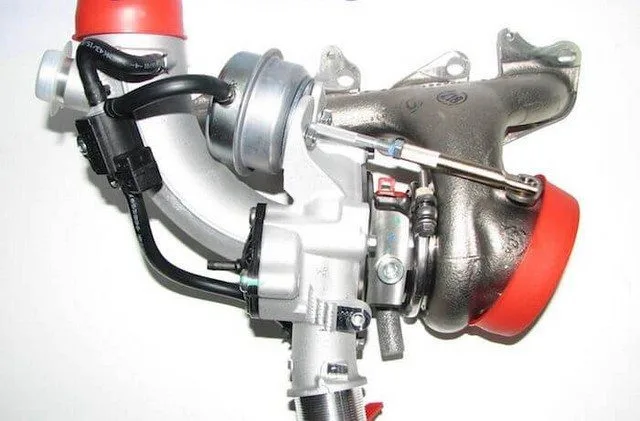
Forced induction systems (turbocharger, supercharger) use engine energy (exhaust gases, belt drive) to increase the amount of air entering the combustion chambers, thereby improving volumetric efficiency and power.

To regulate boost pressure, a control module (often called a wastegate or control solenoid) mechanically adjusts the turbocharger vanes. This system is managed by the Engine Control Module (ECM) to maintain an optimal stoichiometric air-fuel mixture. The letter “B” typically distinguishes a specific circuit, connector, or group within the system.

Severity of Code P005E

The severity is moderate to high. A fault in the boost control system can lead to a dangerous air-fuel mixture (too rich or too lean), causing power loss, excessive fuel consumption, and potentially serious engine damage. The ECM often triggers a limp mode (safe mode) to protect the engine, drastically limiting performance.

Common Symptoms of P005E Fault

  • Noticeable and irregular power loss
  • Abnormal response during acceleration
  • Difficulty climbing hills
  • Activation of safety mode (limp mode)
  • Excessive fuel consumption
  • Intermittent poor driving symptoms

Possible Causes of Code P005E

  • Faulty boost control solenoid (stuck, broken lever)
  • Corrosion or poor contact in connectors, pins, or grounds
  • Wiring issue (frayed wires, open circuit, short circuit)
  • Internal ECM failure
  • Soot buildup on turbocharger vanes
  • Boost control module problem
  • Exhaust system leak

Diagnostic Procedure for Code P005E

Step 1: Visual and Mechanical Inspection

WARNING: The engine and turbocharger can be extremely hot. Ensure the engine is cool before any intervention.

Locate the boost control solenoid (usually mounted on the turbocharger). Check that its lever moves freely without being stuck, broken, or bent. On some models, the lever is adjustable.

Step 2: Connector and Seal Check

Inspect the solenoid’s electrical connector and the control module for any signs of corrosion, water intrusion, or physical damage. A corroded assembly will most likely need replacement.

Step 3: Wiring Inspection

Follow the wiring harness connecting the solenoid to the ECM. Look for any signs of heat damage, frayed wires, or burns. Cables are often routed near intense heat sources.

Step 4: Advanced Diagnostics

For accurate diagnosis, using a scan tool is necessary to check the voltage and resistance values of the “B” control circuit. Consult manufacturer-specific technical data (wiring diagram) for reference values. If in doubt, entrust the diagnosis to a professional mechanic.

Conclusion and Call to Action

Code P005E should not be ignored. A faulty boost system can lead to costly repairs. If you are not comfortable with these diagnostic steps, immediately consult a specialized garage for a thorough diagnosis and reliable repair.

P005F Turbo/Supercharger Boost Control B Voltage High

Code P005F: High Voltage in Boost Pressure Control Circuit B

The generic diagnostic trouble code P005F falls under the powertrain category. It indicates that the Engine Control Module (ECM) has detected an abnormally high voltage in the boost pressure control “B” circuit. This code primarily affects vehicles equipped with a turbocharger or a supercharger (forced induction).

Role of the Boost Pressure Control System

Forced induction systems use exhaust gas energy (turbocharger) or a belt drive (supercharger) to increase the amount of air entering the cylinders, thereby enhancing engine power.

To precisely regulate boost pressure, the ECM controls an actuator – often a solenoid or a wastegate valve. This system helps maintain an optimal (stoichiometric) air-fuel mixture. If the ECM loses control over this pressure, it may put the engine into a reduced power mode (“limp mode”) to prevent serious damage.

Severity of Code P005F

The severity is moderate to high. A fault in the boost pressure control circuit can lead to an imbalanced air-fuel mixture, significant power loss, increased fuel consumption, and, in extreme cases, engine damage. It is recommended to perform diagnostics as soon as possible.

Common Symptoms

  • Engine power loss (limp mode)
  • Abnormal response during acceleration
  • Increased fuel consumption
  • Irregular engine operation
  • Malfunction Indicator Light (MIL) illumination

Possible Causes

  • Faulty wastegate solenoid or actuator (stuck or broken lever)
  • Wiring issue (short to ground or power, broken wire)
  • Oxidized, corroded, or loose electrical connectors
  • Internal failure of the Engine Control Module (ECM)
  • Clogged turbocharger vanes (soot buildup)
  • Leak in the exhaust or intake circuit

Basic Diagnostic Steps

⚠️ Warning: Boost system components become extremely hot. Only work on a cold engine and wear protective equipment if necessary.

  1. Visual Inspection: Locate the boost control solenoid (usually mounted on the turbo). Check the physical condition of the actuator lever and its movement (it should move manually without binding).
  2. Connector Inspection: Carefully inspect the solenoid’s electrical connector. Look for any signs of corrosion, oxidation, burning, or moisture.
  3. Wiring Inspection: Trace the wiring harness connected to the solenoid. Check for frayed, melted, or heat-damaged wires.
  4. Electrical Measurements: Using a multimeter, check the circuit voltage and continuity according to manufacturer specifications. Look for a short to +12V that would explain the high voltage.

Tip: Technical specifications (voltage values, resistance) vary significantly between manufacturers. Consulting the vehicle-specific technical documentation is essential for accurate diagnosis.

Conclusion and Call to Action

Code P005F indicates a serious electrical problem in the boost pressure management system. While some basic checks can be performed by a skilled DIYer, accurate fault diagnosis often requires the expertise and equipment of a professional.

Experiencing this issue? Avoid damaging your engine. Consult a qualified mechanic for a thorough diagnosis and reliable repair.

P0060 HO2S Heater Resistance, Bank 2 Sensor 2

What is the P0060 Code?

The P0060 trouble code is a generic powertrain code. It indicates a malfunction in the heater circuit of the downstream oxygen sensor (lambda sensor) located after the catalytic converter (sensor 2) on the bank of cylinders that does not contain cylinder number 1 (bank 2). This issue can affect most OBD-II equipped vehicles (Chevrolet, Ford, GMC, Mazda, Pontiac, Isuzu, etc.), although specific diagnostic procedures may vary by make and model.

Function of the Lambda Sensor and Its Heater Circuit

The lambda sensor measures the proportion of oxygen in the exhaust gases. Its integrated heating element allows for rapid warm-up to ensure optimal operation, especially when cold. The Powertrain Control Module (PCM) continuously monitors the resistance of this heater circuit. The P0060 code is triggered when the measured resistance exceeds the programmed tolerance values in the PCM.

Symptoms of the P0060 Code

This fault is considered serious because it affects the air-fuel mixture, particularly during cold starts. Common symptoms include:

  • Hard starting in cold weather
  • Increased fuel consumption
  • Black smoke from the exhaust (overly rich mixture)
  • Illumination of the Malfunction Indicator Lamp (MIL)
  • Possibility of related trouble codes

Possible Causes of the P0060 Fault

Several components can be the source of this code:

  • Damaged wiring (chafing, burning, cutting) or an oxidized/disconnected connector
  • The lambda sensor itself is faulty (heater element failure)
  • A blown fuse or a faulty relay supplying the heater circuit
  • A problem with the PCM (less common)

Diagnosis and Solutions for Resolving the P0060 Code

Preliminary Tip: Consult your manufacturer’s Technical Service Bulletins (TSBs). This might be a known issue with a specific correction procedure.

Recommended Diagnostic Steps:

  1. Visual Inspection: Meticulously examine the sensor’s wiring and connectors, especially sections exposed to heat (exhaust) or sharp edges.
  2. Checking Fuses and Relays: Test all fuses and the relay associated with the lambda sensor heater circuit with a multimeter, under load to avoid false positives.
  3. Using an OBD2 Scanner:
    • Read and note all present trouble codes.
    • Clear the codes and perform a road test to see if the P0060 returns immediately.
    • On a cold engine, observe the scanner’s live data regarding the heater circuit status. The voltage should be close to battery voltage (≥12.6V).
  4. Electrical Tests with a Multimeter (DVOM):
    • Measure voltage and continuity on the circuit.
    • Measure the resistance of the lambda sensor’s heating element (refer to the manufacturer’s specifications). Always disconnect the connector before taking this measurement.

Note: A repeatedly blowing fuse typically indicates a short circuit in the heater circuit.

Conclusion and Call to Action

Diagnosing the P0060 code requires a methodical approach, starting with the simplest checks (fuses, wiring). If the problem persists after these checks, replacing the lambda sensor is often the solution.

Don’t feel comfortable performing these procedures? Entrust the diagnosis and repair of your vehicle to a certified professional. They have the necessary tools and expertise to resolve the issue effectively and guarantee the repairs.

P0061 HO2S Heater Resistance, Row 2, Sensor 3

What is the P0061 code?

The P0061 error code is a generic powertrain-related code. It indicates that the Powertrain Control Module (PCM) has detected an abnormal resistance in the heater circuit of oxygen sensor (lambda sensor) #3, located downstream of the catalytic converter on bank 2 (the engine side that does not contain cylinder #1). This fault prevents the sensor from reaching its operating temperature quickly, disrupting proper engine operation, especially when cold.

Symptoms and Severity of the Fault

This code is considered serious and should not be ignored. Common symptoms include:

  • ❄️ Hard starting in cold weather
  • ⛽ Engine overheating or excessive fuel consumption
  • ⚫ Black smoke from the exhaust (rich fuel mixture)
  • ⚠️ Illumination of the Malfunction Indicator Lamp (MIL)
  • 📟 Possible appearance of other related fault codes

Possible Causes of the P0061 Code

Several components can be the source of this problem:

  • 🔌 Damaged, loose, or corroded wiring
  • 🛠️ Faulty O2 sensor (heater element failure)
  • ⚡ Blown fuse or faulty relay
  • 🔋 Ground or power supply voltage issue

Diagnosis and Solutions

Before any intervention, consult your manufacturer’s Technical Service Bulletins (TSBs) to check if the problem is known and subject to a recall or specific procedure.

Recommended Diagnostic Steps:

  1. Visual Inspection: Check the condition of the wires and connectors, especially near hot parts (exhaust) or sharp edges.
  2. Fuse Check: Test the relevant fuses and relays with a multimeter, under load to avoid false positives.
  3. Using an OBD2 Scanner: Read the fault codes and live data. Observe the heater circuit voltage of the sensor when the engine is cold. It should be close to the battery voltage.
  4. Resistance Test: Using a multimeter, measure the resistance of the lambda sensor’s heating element (refer to the manufacturer’s specific values). Remember to disconnect the connectors before any measurement.

Common Repairs:

  • Replace the faulty oxygen sensor (this is often the solution)
  • Repair or replace the damaged wiring harness
  • Replace a blown fuse or faulty relay

Important Tip: After repair, clear the codes and perform a drive cycle so the PCM can recalibrate the values and turn off the MIL.

Conclusion

The P0061 code indicates a serious problem with your lambda sensor’s heater circuit. Accurate diagnosis helps avoid unnecessary part replacement. If you are not comfortable with these procedures, consult a professional mechanic for a reliable diagnosis.

💡 Need Help? Share your vehicle’s exact model and any additional fault codes in the comments to get more precise advice!

P0062 Heated Oxygen Sensor Control Circuit Bank 2 Sensor 3

What is the P0062 Code?

The P0062 error code is a generic OBD-II code related to the powertrain. It indicates a malfunction in the heater control circuit of the heated oxygen sensor (HO2S), specifically the third downstream sensor (B2S3) on engine bank 2. This code applies to most vehicles (from 1996 onwards), including brands like Volkswagen, Ford, GM, Dodge, and many others.

Role of the Oxygen Sensor and Its Heater

Modern vehicles use heated oxygen sensors to monitor the oxygen content in exhaust gases, both before and after the catalytic converter. Their feedback allows the engine control module (PCM/ECM) to continuously adjust the air/fuel mixture to maintain an optimal ratio of 14.7:1, which is essential for performance and emission control.

The integrated heater circuit in the sensor allows it to reach its operating temperature more quickly, especially during a cold start, ensuring accurate data from the beginning.

Symptoms of the P0062 Code

  • Illumination of the Malfunction Indicator Lamp (MIL) on the dashboard.
  • No other visible symptoms (loss of power, increased fuel consumption) are common, as the heater mainly functions during startup.
  • In the long term, a faulty sensor can prevent monitoring of the catalytic converter’s efficiency, potentially leading to a failure in emissions testing.

Possible Causes of the P0062 Fault

  • Internal sensor failure: Heater circuit open inside the HO2S sensor.
  • Wiring problem: Damaged, corroded, or loose power or ground wires in the heater circuit.
  • Poor ground: Corrosion or break in the exhaust system ground strap (for 3-wire sensors).
  • Control module (PCM/ECM) failure: A rare but possible failure of the control circuit within the module.

Diagnosis and Solutions for Repairing the P0062 Code

⚠️ Safety First: Always allow the exhaust system to cool completely before any intervention to avoid serious burns.

  1. Visual Inspection: Examine the wiring and connector of the B2S3 sensor for any obvious signs of damage, corrosion, or debris.
  2. Heater Resistance Test:
    • Disconnect the oxygen sensor connector.
    • Using a multimeter (DVOM) in Ohms (Ω) mode, measure the resistance between the heater circuit pins (refer to the repair manual to identify the pins).
    • Infinite resistance (OL) or a reading outside specifications indicates a faulty sensor that needs replacement.
  3. Ground Test: With the multimeter in Ohms mode, check for continuity between the ground pin of the connector and a known good chassis ground. A lack of continuity indicates a wiring or grounding issue.
  4. Power Supply Test:
    • Reconnect the sensor and use the multimeter in DC Volts mode.
    • During a cold start, probe the heater’s power supply wire (refer to the manual).
    • Battery voltage (approx. 12V) should be present briefly. Its absence points to a wiring or PCM problem.

Conclusion and Call to Action

Although the P0062 code does not directly affect driving, it should not be ignored. A faulty oxygen sensor can mask a more serious problem with the catalytic converter. If the diagnostic steps are beyond your skills, consult a professional mechanic for an accurate diagnosis and reliable repair. Use a quality OBD2 scanner to confirm the code and clear the warning light after repair.