
P0594 Cruise Control Servo Control Circuit / Open

What Does It Mean?

This is a generic powertrain diagnostic trouble code (DTC) and generally applies to OBD-II vehicles with cruise control. Vehicle makes may include, but are not limited to, Dodge, Chrysler, Ram, Jeep, Hyundai, BMW, Vauxhall, Mini, Chevrolet, etc.

There are many benefits that come with the cruise control function. On long trips, there’s no need to constantly monitor and adjust speeds based on traffic and traffic laws. You press a button or two, and a combination of sensors, solenoids, modules, etc., ensures the vehicle keeps moving at the specified speed until you, or possibly external influences, deactivate or adjust the speed accordingly. Not to mention, the vehicle will have a good idea of how to maintain fuel economy at a good level throughout the journey, as when we drive, we don’t necessarily take everything into account to reduce costs.

Fortunately for us, the ECM (Engine Control Module) is responsible for the smooth but effective operation of the cruise control. The proper functioning of the systems relies on many sensors, switches, modules, VSS, etc. One of them being the cruise control servo. Most of the time, these are responsible for throttle control when you set and/or adjust the cruise control. By controlling the throttle and adjusting accordingly, with this servo, the ECM can adjust the speed easily and effectively. Many times, these servos are mechanically controlled via vacuum lines and throttle cables. The servo’s vacuum is controlled by solenoids which are, in turn, controlled by the ECM, which can interpret all other values before specifying throttle position, speed, etc. This fault refers to the circuit involved; refer to the service manual to determine exactly which physical circuit you are working on/diagnosing.

The P0594 Cruise Control Servo Circuit/Open and related codes (P0525, P0595, and P0596) are set when the ECM monitors a malfunction in the cruise control servo circuit. In the case of P0594 specifically, it is set when a general failure or an open electrical condition is detected in said circuit.

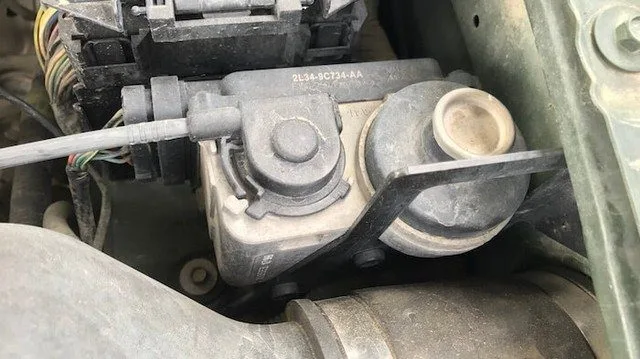
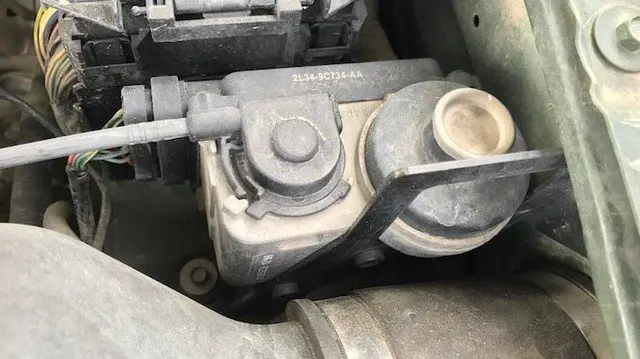
Example of a Cruise Control Servo:

P0594 Cruise Control Servo
How Severe Is This DTC?

I will set the severity of this code to medium. Regarding most OBD2 cruise control error codes, they are quite minor. That being said, in this case, because the cruise control servo is not only directly connected to throttle control via a cable but is sometimes responsible for throttle position, it would be more severe than most.

To emphasize a point, if you neglect an active OBD2 fault, you risk not being aware of new fault codes. Even without symptoms, if not monitored, OBD2 error codes can lead to more serious and costly problems.
What Are Some of the Symptoms of the Code?

Symptoms of a P0594 diagnostic code may include:

Inoperative cruise control
Erratic cruise control operation
Vehicle speed is stuck
Limited vehicle speed with cruise control activated
Inaccurate setting of vehicle speed compared to desired or set speed
Specific cruise control functions faulty/erratic

What Are Some of the Common Causes of the Code?

Causes

of this P0594 cruise control code may include:

Faulty/damaged cruise control servo
Cruise control servo cable broken/stuck/disconnected/misadjusted
Wiring problem
ECM (Engine Control Module) problem
Water intrusion module
Connector problem

What Are the Diagnostic and Troubleshooting Steps for P0594?

The first step in the troubleshooting process for any malfunction is to check the Technical Service Bulletins (TSBs) for known issues with the specific vehicle.

Advanced diagnostic steps become very vehicle-specific and may require the appropriate advanced equipment and knowledge to operate accurately. We include the basic steps below, but refer to a repair guide specific to the year/make/model/powertrain for steps specific to your vehicle.
Basic Step #1

Generally speaking, cruise control servos are mounted somewhere in the engine compartment. Most of the time, they are near the throttle body; after all, they control the vehicle’s speed using it. Once located, perform a general visual inspection. Look at the cable, check that it is not fraying, bending, corroding, or showing any signs of malfunction. If the servo cable does not move freely when checking the throttle, the ECM may interpret it as a performance problem.

What does the servo look like? These are typically vacuum-controlled, so their physical condition could indicate a problem. It is important to check all vacuum lines going to the servo itself. Any cracked or deteriorated lines should be considered a sign of your vacuum system’s health. Therefore, I recommend replacing all related vacuum lines as they are inexpensive and could save you problems in the future.
Basic Step #2

On the electrical side of things, check the connector on the servo. Any broken tabs or loose connections should be repaired. The harness may run through tight areas and/or moving parts, so be aware of chafing areas that could cause a problem and repair broken/damaged wires.
Basic Step #3

Depending on the capabilities of your OBD2 scan tool, you can potentially monitor the servo’s operation with it connected to the vehicle. Sometimes, you may receive percentages or electrical values. Regardless, you can compare the values to its physical operation by watching it under the hood, with the wheels on the ground. This is an older procedure that can be problematic, especially when dealing with more modern vehicles. That said, always ensure that diagnostic/repair procedures are also recommended by your vehicle’s manufacturer. If you neglect to do your research here, you could easily damage other vehicle components.

P0595 Low Speed Cruise Control Servo Control Circuit

What Does It Mean?

This is a generic powertrain diagnostic trouble code (DTC) and generally applies to OBD-II vehicles with cruise control. Vehicle makes may include, but are not limited to, Dodge, Chrysler, Ram, Jeep, Hyundai, BMW, Vauxhall, Mini, Chevrolet, etc.

There are many benefits that come with the cruise control function. On long trips, there’s no need to constantly monitor and adjust speeds according to traffic and traffic laws. You press a button or two, and a combination of sensors, solenoids, modules, etc., ensures the vehicle keeps moving at the specified speed until you, or possibly external influences, deactivate or adjust the speed accordingly. Not to mention, the vehicle will have a good idea of how to maintain fuel economy at a good level throughout the journey, as when we drive, we don’t necessarily take everything into account to reduce costs.

Fortunately for us, the ECM (Engine Control Module) is responsible for the smooth but effective operation of the cruise control. The proper functioning of the systems relies on many sensors, switches, modules, VSS, etc. One of them being the cruise control servo. Most of the time, these are responsible for controlling the throttle when you set and/or adjust the cruise control. By controlling the throttle and adjusting accordingly, with this servo, the ECM can adjust the speed easily and effectively. Many times, these servos are mechanically controlled via vacuum lines and throttle cables. The servo’s vacuum is controlled by solenoids, which are in turn controlled by the ECM, which can interpret all other values before specifying throttle position, speed, etc. This fault refers to the circuit involved; refer to the service manual to determine exactly which physical circuit you are working on/diagnosing.

The P0595 Cruise Control Servo Control Circuit Low and related codes (P0525, P0594, and P0596) are set when the ECM monitors a malfunction in the cruise control servo circuit. In the case of P0595 specifically, it is set when a low voltage electrical condition is detected in said circuit.

Example of a Cruise Control Servo:


P0595 Cruise Control Servo
How Severe Is This DTC?

I will set the severity of this code to medium. Regarding most OBD2 error codes for cruise control, they are quite minor. That being said, in this case, because the cruise control servo is not only directly connected to throttle control via a cable but is sometimes responsible for throttle position, it would be more severe than most.

To emphasize a point, if you neglect an active OBD2 fault, you risk not being aware of new fault codes. Even without symptoms, if not monitored, OBD2 error codes can lead to more serious and costly problems.
What Are Some of the Symptoms of the Code?

Symptoms of a P0595 diagnostic code may include:

Inoperative cruise control
Erratic cruise control operation
Vehicle speed is stuck
Limited vehicle speed with cruise control activated
Inaccurate setting of vehicle speed compared to desired or set speed
Specific functions of the cruise control(s) faulty/erratic

What Are Some of the Common Causes of the Code?

Causes

of this P0595 cruise control code may include:

Faulty/damaged cruise control servo
Cruise control servo cable broken/stuck/disconnected/misadjusted
Wiring problem
ECM (Engine Control Module) problem
Water intrusion in the module
Connector problem

What Are the Diagnostic and Troubleshooting Steps for P0595?

The first step in the troubleshooting process for any malfunction is to check the Technical Service Bulletins (TSBs) for known issues with the specific vehicle.

Advanced diagnostic steps become very vehicle-specific and may require the appropriate advanced equipment and knowledge to operate accurately. We include the basic steps below but refer to a repair guide specific to the year/make/model/powertrain for steps tailored to your vehicle.
Basic Step #1

Generally speaking, cruise control servos are mounted somewhere in the engine compartment. Most of the time, they are near the throttle body; after all, they control the vehicle’s speed using it. Once located, perform a general visual inspection. Look at the cable, check that it is not fraying, bending, corroding, or showing any signs of malfunction. If the servo cable does not move freely when checking the throttle, the ECM may interpret it as a performance issue.

What does the servo look like? These are typically vacuum-controlled, so their physical condition could indicate a problem. It is important to check all vacuum lines going to the servo itself. Any cracked or deteriorated lines should be considered a sign of your vacuum system’s health. Therefore, I recommend replacing all related vacuum lines as they are inexpensive and could save you problems in the future.
Basic Step #2

On the electrical side of things, check the connector on the servo. Any broken tabs or loose connections should be repaired. The harness may run through tight areas and/or moving parts, so be aware of chafing areas that could cause a problem and repair broken/damaged wires.
Basic Step #3

Depending on the capabilities of your OBD2 scan tool, you can potentially monitor the servo’s operation with it connected to the vehicle. Sometimes, you may receive percentages or electrical values. Regardless, you can compare the values to its physical operation by watching it under the hood, with the wheels on the ground. This is an older procedure that can be problematic, especially when dealing with more modern vehicles. That said, always ensure that diagnostic/repair procedures are also recommended by your vehicle’s manufacturer. If you neglect to do your research here, you could easily damage other vehicle components.

High Speed Cruise Control Servo Control Circuit

What Does It Mean?

This is a generic powertrain diagnostic trouble code (DTC) and generally applies to OBD-II vehicles with cruise control. Vehicle makes may include, but are not limited to, Dodge, Chrysler, Ram, Jeep, Hyundai, BMW, Vauxhall, Mini, Chevrolet, etc.

There are many benefits that come with the cruise control function. On long trips, there’s no need to constantly monitor and adjust speeds according to traffic and traffic laws. You press a button or two, and a combination of sensors, solenoids, modules, etc., ensures the vehicle keeps moving at the specified speed until you, or possibly external influences, deactivate or adjust the speed accordingly. Not to mention, the vehicle will have a good idea of how to maintain fuel economy at a good level throughout the journey, as when we drive, we don’t necessarily take everything into account to reduce costs.

Fortunately for us, the ECM (Engine Control Module) is responsible for the smooth but effective operation of the cruise control. The proper functioning of the systems relies on many sensors, switches, modules, VSS, etc. One of them being the cruise control servo. Most of the time, these are responsible for controlling the throttle when you set and/or adjust the cruise control. By controlling the throttle and adjusting accordingly, with this servo, the ECM can adjust the speed easily and effectively. Many times, these servos are mechanically controlled via vacuum lines and throttle cables. The servo’s vacuum is controlled by solenoids, which are in turn controlled by the ECM, which can interpret all other values before specifying throttle position, speed, etc. This fault refers to the circuit involved; refer to the service manual to determine exactly which physical circuit you are working on/diagnosing.

The P0596 Cruise Control Servo Control Circuit High and related codes (P0525, P0594, and P0595) are set when the ECM monitors a malfunction in the cruise control servo control circuit. In the case of P0596 specifically, it is set when a high voltage electrical condition is detected in said circuit.

Example of a Cruise Control Servo:


P0596 Cruise Control Servo
How Severe Is This DTC?

I will set the severity of this code to medium. Regarding most OBD2 error codes for cruise control, they are quite minor. That being said, in this case, because the cruise control servo is not only directly connected to throttle control via a cable but is sometimes responsible for the throttle position, it would be more severe than most.

To emphasize a point, if you neglect an active OBD2 fault, you risk not being aware of new fault codes. Even without symptoms, if not monitored, OBD2 error codes can lead to more serious and costly problems.
What Are Some of the Symptoms of the Code?

Symptoms of a P0596 diagnostic code may include:

Inoperative cruise control
Erratic cruise control operation
Vehicle speed is stuck
Vehicle speed limited with cruise control activated
Inaccurate setting of vehicle speed compared to desired or set speed
Specific cruise control functions faulty/erratic

What Are Some of the Common Causes of the Code?

Causes

of this P0596 cruise control code may include:

Faulty/damaged cruise control servo
Cruise control servo cable broken/stuck/disconnected/misadjusted
Wiring problem
ECM (Engine Control Module) problem
Water intrusion module
Connector problem

What Are the Diagnostic and Troubleshooting Steps for P0596?

The first step in the troubleshooting process for any malfunction is to check the Technical Service Bulletins (TSBs) for known issues with the specific vehicle.

Advanced diagnostic steps become very vehicle-specific and may require the appropriate advanced equipment and knowledge to operate accurately. We include the basic steps below but refer to a repair guide specific to the year/make/model/powertrain for steps specific to your vehicle.
Basic Step #1

Generally speaking, cruise control servos are mounted somewhere in the engine compartment. Most of the time, they are near the throttle body; after all, they control the vehicle’s speed using it. Once located, perform a general visual inspection. Look at the cable, check that it is not fraying, bending, corroding, or showing any signs of malfunction. If the servo cable does not move freely when checking the throttle, the ECM may interpret it as a performance issue.

What does the servo look like? These are typically vacuum-controlled, so their physical condition could indicate a problem. It is important to check all vacuum lines going to the servo itself. Any cracked or deteriorated lines should be considered a sign of your vacuum system’s health. Therefore, I recommend replacing all related vacuum lines as they are inexpensive and could save you problems in the future.
Basic Step #2

On the electrical side of things, check the connector on the servo. Any broken tabs or loose connections should be repaired. The harness may run through tight areas and/or moving parts, so be aware of chafing areas that could cause a problem and repair broken/damaged wires.
Basic Step #3

Depending on the capabilities of your OBD2 scan tool, you can potentially monitor the servo’s operation with it connected to the vehicle. Sometimes, you may receive percentages or electrical values. Regardless, you can compare the values to its physical operation by watching it under the hood, with the wheels on the ground. This is an older procedure that can be problematic, especially when dealing with more modern vehicles. That said, always ensure that diagnostic/repair procedures are also recommended by your vehicle’s manufacturer. If you neglect to do your research here, you could easily damage other vehicle components.

P0597 Open Thermostat Heater Control Circuit

What does it mean?

This is a generic powertrain diagnostic trouble code (DTC), meaning it applies to all makes/models from 1996 onward. However, specific troubleshooting steps vary by vehicle.

Codes P0597, P0598, and P0599 all refer to an electronically controlled engine thermostat. These are generic codes, meaning they apply to all vehicles using this type of thermostat control, though only a small number of manufacturers use this system. Therefore, this trouble code article is essentially identical for all three codes.

Engine code P0597 indicates a failure has occurred in this system where the control voltage is absent. Mostly, vehicles manufactured in Germany such as BMW, Mercedes, Audi, Mini, Volkswagen, Opel, and Jaguar use this system.

The electronically controlled thermostat consists of various temperature and load sensors, a computer program, and the control unit with an integrated thermostat.
Concept

By electronically controlling coolant flow or engine temperature, partial throttle increases fuel economy and reduces emissions, while lowering temperature under load increases power.

Symptoms

Symptoms vary depending on the thermostat’s position at the time of failure, but there is unlikely to be a noticeable difference in vehicle operation.

    The check engine light illuminates and one of the above codes is set
    The temperature gauge may read abnormally high if the thermostat failed in a partially closed position; conversely, it will read lower than normal if the thermostat failed in a fully open position

Potential Causes

Experience shows the issue is usually a loose or corroded electrical connector or the electric thermostat itself is at fault. Sometimes the Motronic computer (engine management) fails, but this is the least likely cause.

    A loose or corroded connector on the thermostat
    A coolant leak will trigger the code
    The thermostat itself has failed
    A short circuit or open circuit has occurred in the wiring harness between the computer and the thermostat
    The Motronic computer has failed

Diagnostic and Repair Procedures for Code P0597

    Remove and inspect the electrical connector. Eliminate any corrosion using baking soda or by scraping. Apply electrical grease and ensure a tight connection.
    Inspect the coolant level in the radiator. Low coolant levels will set a code by causing the electronic thermostat to overheat.
    Remove the electrical connector and check the resistance values on the thermostat. For this procedure, you will need a service manual or the necessary information available online.

This information should include pin identification and location, wire colors, pin values in volts at specific temperatures and resistances. These values and the diagnostic flow vary by manufacturer and engine size.

You will also need an infrared temperature probe and a volt/ohmmeter.

    Determine the engine temperature with the temperature probe
    Start the engine and test the voltage on the Motronic side of the harness as per instructions. If it is within limits, continue testing. If there was no voltage or it was out of range, replace the Motronic unit
    Compare the resistance on the thermostat side of the harness to the thermostat. If the resistance is out of range, replace the thermostat unit
    If tools are not readily available, take the vehicle to a reputable shop that has access to the necessary information. This is a simple diagnosis with the right tools

P0598 Low Thermostat Heater Control Circuit

What does it mean?

This is a generic powertrain diagnostic trouble code (DTC), meaning it covers all makes/models from 1996 onward. However, specific troubleshooting steps vary by vehicle.

Codes P0597, P0598, and P0599 all refer to an electronically controlled engine thermostat. These are generic codes, meaning they apply to all vehicles using this type of thermostat control, though only a small number of manufacturers use such systems. Therefore, this trouble code article is essentially identical for all three codes.

Diagnostic code P0598 indicates a failure in this system where the control voltage is low. Mostly, vehicles manufactured in Germany such as BMW, Mercedes, Audi, Mini, Volkswagen, Opel, and Jaguar use this system.

The electronically controlled thermostat consists of various temperature and load sensors, a computer program, and the control unit with an integrated thermostat.
Concept

By electronically controlling coolant flow or engine temperature, partial throttle increases fuel economy and reduces emissions, while reducing temperature under load increases power.

Symptoms

Symptoms vary depending on the thermostat’s position at the time of failure; however, there is unlikely to be a noticeable difference in vehicle operation.

    The check engine light comes on and one of the above codes is set
    The temperature gauge may read abnormally high if the thermostat failed in a partially closed position; conversely, it will read lower than normal if the thermostat failed in a fully open position

Potential Causes

Experience shows that the issue is usually a loose or corroded electrical connector or the electric thermostat itself is at fault. Sometimes the Motronic computer (engine management) fails, but this is the least likely cause.

    A loose or corroded connector on the thermostat
    A coolant leak will trigger the code
    The thermostat itself has failed
    A short circuit or open circuit occurred in the wiring harness between the computer and the thermostat
    The Motronic computer has failed

Diagnostic and Repair Procedures

    Remove and inspect the electrical connector. Eliminate any corrosion using baking soda or by scraping. Apply electrical grease and confirm a tight connection.
    Inspect the coolant level in the radiator. Low coolant levels will set a code by causing the electronic thermostat to overheat.
    Remove the electrical connector and check the resistance values on the thermostat. For this procedure, you will need a service manual or the necessary information available online.

This information should include pin identification and location, wire colors, pin voltage values at specific temperatures, and resistances. These values and the diagnostic flow vary by manufacturer and engine size.

You will also need an infrared temperature probe and a volt/ohmmeter.

    Determine the engine temperature with the temperature probe
    Start the engine and test the voltage on the Motronic side of the harness as per instructions. If it is within limits, continue testing. If there was no voltage or it was out of range, replace the Motronic unit
    Compare the resistance on the thermostat side of the harness to the thermostat. If the resistance is out of range, replace the thermostat unit
    If tools are not readily available, take the vehicle to a reputable shop that has access to the necessary information. This is a simple diagnosis with the right tools

High Thermostat Heater Control Circuit

What does it mean?

This is a generic powertrain diagnostic trouble code (DTC), meaning it covers all makes/models from 1996 onward. However, specific troubleshooting steps vary by vehicle.

Codes P0597, P0598, and P0599 all refer to an electronically controlled engine thermostat. These are generic codes, meaning they apply to all vehicles using this type of thermostat control, though only a small number of manufacturers use this system. Therefore, this trouble code article is essentially identical for all three codes.

Code P0599 indicates a failure has occurred in this system where the control voltage is high. Mostly, vehicles manufactured in Germany such as BMW, Mercedes, Audi, Mini, Volkswagen, Opel, and Jaguar use this system.

The electronically controlled thermostat consists of various temperature and load sensors, a computer program, and the control unit with an integrated thermostat.
Concept

By electronically controlling the coolant flow or engine temperature, partial throttle increases fuel economy and reduces emissions, while reducing temperature under load increases power.

Symptoms

Symptoms of a P0599 code vary depending on the thermostat’s position at the time of failure; however, it’s unlikely there will be a noticeable difference in vehicle operation.

    The check engine light comes on and one of the above codes is set
    The temperature gauge may read abnormally high if the thermostat failed in a partially closed position; conversely, it will read lower than normal if the thermostat failed in a fully open position

Potential Causes

Experience shows the problem is usually a loose or corroded electrical connector or that the electric thermostat itself is at fault. Sometimes the Motronic computer (engine management) fails, but this is the least likely cause.

    A loose or corroded connector on the thermostat
    A coolant leak will trigger the code
    The thermostat itself has failed
    A short circuit or open circuit has occurred in the wiring harness between the computer and the thermostat
    The Motronic computer has failed

Diagnostic and Repair Procedures

    Remove and inspect the electrical connector. Eliminate any corrosion using baking soda or by scraping. Apply electrical grease and confirm a tight connection.
    Inspect the coolant level in the radiator. Low coolant levels will set a code by causing the electronic thermostat to overheat.
    Remove the electrical connector and check the resistance values on the thermostat. For this procedure, you will need a service manual or the necessary information available online.

This information should include pin identification and location, wire colors, pin values in volts at specific temperatures and resistances. These values and the diagnostic flow vary by manufacturer and engine size.

You will also need an infrared temperature probe and a volt/ohmmeter.

    Determine the engine temperature with the temperature probe
    Start the engine and test the voltage on the Motronic side of the harness according to instructions. If it is within limits, continue testing. If there was no voltage or it was out of range, replace the Motronic unit
    Compare the resistance on the thermostat side of the harness to the thermostat. If the resistance is out of range, replace the thermostat unit
    If tools are not readily available, take the vehicle to a good shop that has access to the necessary information. This is a simple diagnosis with the right tools

P0400 Exhaust Gas Recirculation Flow Malfunction

📌 What does the P0400 code mean?

The DTC P0400 code is a generic OBD-II code related to the Exhaust Gas Recirculation (EGR) system. It indicates that the flow of exhaust gases to the cylinders is insufficient or nonexistent, according to data measured by the Powertrain Control Module (PCM).

This system is designed to reduce NOx emissions by reinjecting a small amount of exhaust gas into the intake.


🔧 EGR Valve Function

The EGR valve (Exhaust Gas Recirculation) is vacuum-operated or electronically controlled. It opens to allow exhaust gases to return to the cylinders, thereby regulating the combustion temperature.


⚠️ Symptoms of P0400

  • Check Engine Light on (MIL)
  • Often no noticeable driving symptoms
  • Possibly: rough idle or engine knocking
  • Long-term: increase in NOx in exhaust gases, leading to more pollution

❗ Possible Causes of P0400 Code

  • Clogged EGR passage (carbon deposits)
  • Faulty EGR valve
  • Defective EGR control solenoid
  • Damaged wiring harness or connector
  • Cracked, loose, or disconnected vacuum lines
  • Faulty PCM (rare)

🛠️ Possible Solutions

1. Test using an OBD-II diagnostic tool

  • Activate the EGR valve with the engine running.
    • If the engine stumbles or stalls: the valve is working, intermittent issue (wiring or partial blockage)
    • If no reaction: EGR ports likely clogged

2. Manual EGR valve test (if possible)

  • Remove the valve and clean it, along with the EGR passages in the intake
  • Ensure the valve opens and closes freely

3. EGR solenoid check

  • Often requires a diagnostic tool (the solenoid operates via PWM electrical pulses, not continuous voltage)

4. Vacuum system inspection

  • Check all vacuum hoses connected to the EGR valve
  • Look for cracks, leaks, or loose connections

5. Wiring harness inspection

  • Visually inspect the solenoid’s wiring harness and connector for corrosion, broken pins, or cut wires

6. EGR valve replacement

  • If all tests are negative, replace the EGR valve

🔁 Other related EGR codes:

  • P0401 – Insufficient EGR flow
  • P0402 – Excessive EGR flow
  • P0403 – EGR control circuit malfunction
  • P0404 to P0409 – Specific EGR sensor or control issues

P0401 Insufficient EGR Flow

What does it mean?

This diagnostic trouble code (DTC) is a generic powertrain code, meaning it applies to vehicles equipped with OBD-II. Although generic, specific repair steps may vary by make/model.
EGR stands for Exhaust Gas Recirculation. It is part of the vehicle’s emissions system and is used to reduce combustion temperature and pressure to control nitrogen oxides. The EGR system typically includes three components: the EGR valve, an actuator solenoid, and an EGR differential pressure sensor (DPFE). These elements work together to provide the correct amount of recirculation based on engine temperature, load, etc. Code P0401 means the OBD has detected an insufficient amount of EGR flow.

Symptoms

You may notice driving issues such as engine knocking (i.e., pre-ignition, pinging) when the engine is under load or the vehicle is at higher speeds. There may also be other symptoms.

Causes

A P0401 code most likely means one or more of the following events has occurred

  • The DPFE (EGR) sensor is faulty and needs replacement
  • There is a blockage in the EGR (tube), most likely carbon buildup
  • The EGR valve is defective
  • The EGR valve may not open due to lack of vacuum

Possible Solutions

When fixing this code, it’s quite common for people to simply replace the EGR valve only to have the OBD code return. The EGR valve is not always the culprit.

Use a vacuum pump and open the EGR valve while monitoring engine RPM and DPFE voltage. There should be a noticeable difference in RPM with the EGR open
Clean the EGR valve and/or tube to remove deposits
Check voltage at the DPFE, compare it to specified values (refer to a repair manual for your specific model)
Replace the DPFE sensor (with a high-quality/OEM sensor)
Replace the EGR valve

Related EGR codes: P0400, P0402, P0403, P0404, P0405, P0406, P0407, P0408, P0409

P0402 EGR Excessive Flow Detected

🚗 Diagnostic Code P0402: Excessive Exhaust Gas Recirculation (EGR)


❓ What Does It Mean?

Code P0402 is a generic OBD-II code related to the Exhaust Gas Recirculation (EGR) system. This system helps reduce combustion temperature and pressure to limit nitrogen oxide (NOx) emissions.

The EGR system consists of three main components:

🔧 EGR Valve – Manages the flow of recirculated exhaust gases
Actuator Solenoid – Controls the opening and closing of the valve
📟 Differential Pressure Feedback Sensor (DPFE) – Monitors the flow of recirculated gases

A P0402 code indicates an excessive amount of recirculated gases detected by the OBD-II system.


⚠️ Symptoms

If your vehicle has this code, you might notice:

🚦 Unstable idle or engine stalling
💨 Excessive black smoke from the exhaust
Loss of engine power
🔧 Illumination of the Check Engine Light


🔍 Possible Causes

This code can be triggered by several issues:

🛠️ Faulty DPFE sensor
🛢️ Blockage in the EGR circuit (carbon buildup)
🔌 Faulty or stuck open EGR valve
⚙️ Malfunctioning actuator solenoid
🚗 Lack of vacuum preventing EGR valve opening


🛠️ Possible Solutions

Check the voltage at the DPFE sensor at idle and when the EGR is open
Clean or replace the EGR valve if it’s clogged with carbon
Replace the DPFE sensor, which is often the main cause of the problem
Verify proper operation of the EGR solenoid and vacuum system

⚠️ Warning! Many people replace the EGR valve directly, but often the problem comes from the DPFE sensor.


📋 Related EGR Codes

The following codes are also related to the EGR system and may appear along with P0402:

🔹 P0400 – EGR circuit malfunction
🔹 P0401 – Insufficient EGR flow
🔹 P0403 – EGR solenoid control problem
🔹 P0404-P0409 – Specific EGR sensor or control issues


🏁 Conclusion

Code P0402 indicates an excessive amount of recirculated exhaust gases, which can affect engine performance. A quick inspection of the DPFE sensor and EGR valve can avoid costly repairs and extend engine life.

If you have doubts, consult a professional for an accurate diagnosis! 🔧👨‍🔧

P0403 Exhaust Gas Recirculation Circuit Malfunction

Meaning of Code P0403

The P0403 code indicates a malfunction in the EGR valve control circuit. This crucial system helps to:

  • 🔄 Reduce nitrogen oxide (NOx) emissions
  • Improve fuel efficiency
  • 🚗 Optimize engine performance

The PCM detects an anomaly in the electrical circuit controlling the EGR solenoid.


EGR System Operation

  • 🌀 Principle: Recirculates exhaust gases into the intake
  • Control: By electric solenoid (PCM command)
  • 🔧 Key components:
    • EGR valve
    • Control solenoid
    • Pressure/flow sensors

Symptoms of Code P0403

  • 🚨 Check Engine light on
  • Unstable idle or stalling
  • 🐌 Loss of power during acceleration
  • 💨 Increased pollutant emissions
  • Higher fuel consumption

Possible Causes

1. Electrical Failure

  • 🔌 Faulty EGR solenoid
  • 🛠️ Wiring problem (break, short circuit)
  • 💧 Connector corrosion

2. Mechanical Problems

  • 🚪 Stuck EGR valve (clogging)
  • 🌀 Obstructed EGR circuit (carbon deposits)
  • 🔥 Engine vacuum fault

3. Other Causes

  • 💻 PCM failure (rare)
  • Electrical supply problem

Diagnosis and Repair

🔧 Required Tools:

  • OBD2 scanner (for test activation)
  • Digital multimeter
  • Test lights
  • Carburetor cleaner (for cleaning)

📋 Diagnostic Procedure:

1. EGR Solenoid Test

  1. Scanner activation: Check for characteristic “click”
  2. Electrical test:
    • Measure resistance (compare to specifications)
    • Check 12V power supply and ground

2. Electrical Circuit Inspection

  • Wire continuity (from PCM to solenoid)
  • No short circuit to ground
  • Connector condition

3. Mechanical Verification

  • EGR valve cleaning (if stuck)
  • Vacuum line check
  • Carbon deposit inspection

Corrective Solutions

  • 🔄 EGR solenoid replacement (if faulty)
  • 🔌 Repair of damaged wiring
  • 🧼 Complete EGR system cleaning
  • 💻 PCM reset after repair

Related Codes to Check

Code Description
P0400 Insufficient EGR flow
P0401 Insufficient EGR flow detected
P0402 Excessive EGR flow detected
P0404 EGR circuit out of range

Consequences of Not Repairing

  • Increased pollutant emissions
  • 💸 Risk of catalytic converter damage
  • 🚗 Degraded engine performance
  • Excessive fuel consumption

Conclusion

The P0403 code indicates a critical problem in the exhaust gas recirculation system. Prompt intervention helps to:

  • 🌿 Reduce pollution
  • Restore engine performance
  • 💰 Avoid more costly repairs

Professional advice: If the problem persists after component replacement, check the engine vacuum pressure and the PCM condition.

Is your vehicle showing this code? Describe your symptoms for personalized help!