
P0524 Engine Oil Pressure Too Low

What does it mean?

The vehicle’s main computer, called the Powertrain Control Module (PCM), controls many of the vehicle’s sensors, controls, and electronic components. One sensor, called the oil pressure sensor or sender, detects the amount of (mechanical) oil pressure in the engine and transmits it as a voltage reading/value to the PCM. In some vehicles, this oil pressure value is then relayed to a gauge in the instrument cluster to show the driver the oil pressure; other times this gauge is not present, but there will be a warning light if there is a problem.

This specific engine code P0524 is triggered when the PCM sees a value that is too low in the engine oil pressure sensor/sender. If the engine oil pressure actually drops too low, the engine can be permanently damaged, so if you notice low oil pressure, it is essential that you stop and shut off the vehicle as soon as it is safe to do so.

Note: This code is severe; you must act immediately to diagnose and repair it. This code is related to P0520, P0521, P0522, and P0523.

Symptoms

Symptoms of a DTC P0524 may include:

  •     Malfunction Indicator Lamp (MIL) illuminated (i.e., Check Engine light)
  •     Oil pressure warning light illuminated
  •     Oil pressure gauge reading low or zero
  •     Abnormal engine noise

Potential causes of a P0524 code include:

  •     Low oil pressure
  •     Low oil level
  •     Incorrect oil viscosity
  •     Contaminated oil (fuel, coolant, etc.)
  •     Faulty oil pressure sensor
  •     Signal shorted to ground in the sensor electrical circuit
  •     Worn internal engine components (oil pump, worn bearings, etc.)

Diagnostic and Repair Steps

The absolute first step here with an engine code P0524 is to check the oil level and condition. It should be full and not appear contaminated. Also, check the vehicle’s maintenance history. If the engine has not received oil changes using the proper viscosity oil at regular intervals, the likelihood increases that the problem could be due to internal components (i.e., physically low oil pressure). Correct any issues found.

Check for applicable TSBs (Technical Service Bulletins) for your vehicle before going too far into diagnostics. Off-hand, there is a known TSB for some Chrysler, Jeep, Ram, and Dodge vehicles where the fix is to reprogram the PCM (bulletin # 18-008-08). We also know of another Mazda TSB that might involve replacing the engine’s internal oil pump (bulletin # R088/12).

Ideally, the next step is to use a mechanical pressure gauge to test the actual oil pressure in the engine. As a DIYer, you might want to skip to the next step and first check all the wiring and the sensor if you don’t have access to this gauge. You should always locate a gauge and test the actual pressure. If the engine’s actual oil pressure is low, you don’t need to worry about the sensor and wiring; the problem is internal to the engine.

Visually inspect the wiring and connectors of the oil pressure sensor. Look for broken or frayed wires, burnt spots, loose or exposed cables, etc. Refer to a model-specific resource for the sender’s location. Do the same for the wiring and connectors leading to the PCM.

Use a digital volt ohmmeter (DVOM) to check the sensor itself and the associated wiring, and if it does not meet the manufacturer’s specifications, you must repair/replace it.
P0525 Cruise Control Servo Control Circuit Range/Performance

What does it mean?

This is a generic diagnostic trouble code (DTC) for the powertrain group and generally applies to OBD-II vehicles with cruise control. Vehicle brands may include, but are not limited to, Dodge, Chrysler, Ram, Jeep, Hyundai, BMW, Vauxhall, Mini, Chevrolet, etc.

There are many benefits that come with the cruise control function. On long trips, there’s no need to constantly monitor and adjust speeds based on traffic and traffic laws. You press a button or two, and a combination of sensors, solenoids, modules, etc., ensures the vehicle keeps moving at the specified speed until you, or possibly external influences, deactivate or adjust the speed accordingly. Not to mention, the vehicle will have a good idea of how to maintain fuel economy at a good level throughout the journey, as when we drive, we don’t necessarily take everything into account to reduce costs.

Fortunately for us, the ECM (Engine Control Module) is responsible for the smooth but effective operation of the cruise control. The proper functioning of the systems relies on many sensors, switches, modules, VSS, etc. One of them being the cruise control servo. Most of the time, these are responsible for controlling the throttle when you set and/or adjust the cruise control. By controlling the throttle and adjusting accordingly, with this servo, the ECM can adjust the speed easily and effectively. Often, these servos are mechanically controlled via vacuum lines and throttle cables. The servo’s vacuum is controlled by solenoids, which in turn are controlled by the ECM, which can interpret all other values before specifying throttle position, speed, etc. This fault refers to the circuit involved; refer to the service manual to determine exactly which physical circuit you are working on/diagnosing.

The P0525 Cruise Control Servo Control Circuit Range/Performance and related codes (P0594, P0595, and P0596) are set when the ECM monitors a malfunction in the cruise control servo control circuit. In the case of P0525 specifically, it is set when an out-of-range or performance malfunction is detected in said circuit.

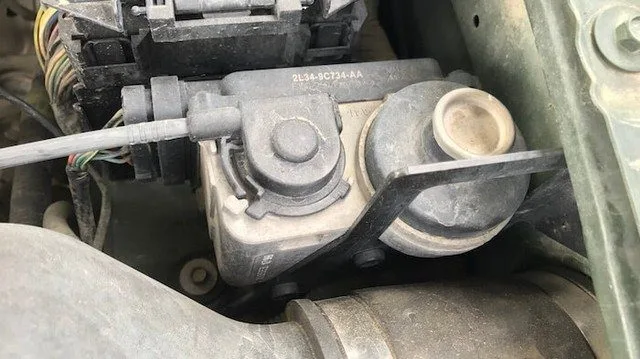
Example of a cruise control servo:

How severe is this DTC?

I will set the severity of this code to medium. Regarding most OBD2 error codes for cruise control, they are quite minor. That being said, in this case, because the cruise control servo is not only directly connected to throttle control via a cable but is sometimes responsible for throttle position, it would be more severe than most.

To emphasize a point, if you neglect an active OBD2 fault, you risk not being aware of new fault codes. Even without symptoms, if not monitored, OBD2 error codes can lead to more serious and costly problems.
What are some of the symptoms of the code?

Symptoms of a P0525 diagnostic code may include:

Inoperative cruise control
Irregular cruise control operation
Vehicle speed is stuck
Vehicle speed limited with cruise control activated
Inaccurate setting of vehicle speed compared to desired or set speed
Specific functions of the cruise control(s) faulty/irregular

What are some common causes of the code?

Causes

of this P0525 cruise control code may include:

Faulty/damaged cruise control servo
Cruise control servo cable broken/stuck/disconnected/misadjusted
Wiring problem
ECM (Engine Control Module) problem
Water intrusion module
Connector problem

What are the diagnostic and troubleshooting steps for P0525?

The first step in the troubleshooting process for any malfunction is to check the Technical Service Bulletins (TSBs) for known issues with the specific vehicle.

Advanced diagnostic steps become very vehicle-specific and may require the appropriate equipment and advanced knowledge to operate accurately. We include the basic steps below but refer to a repair guide specific to the year/make/model/powertrain for steps tailored to your vehicle.
Basic Step #1

Generally, cruise control servos are mounted somewhere in the engine compartment. Most of the time, they are near the throttle body; after all, they control the vehicle’s speed using it. Once located, perform a general visual inspection. Look at the cable, check that it is not fraying, bending, corroding, or showing any signs of malfunction. If the servo cable does not move freely when checking the throttle, the ECM may interpret it as a performance issue.

What does the servo look like? These are usually vacuum-controlled, so their physical condition could indicate a problem. It’s important to check all vacuum lines going to the servo itself. Any cracked or deteriorated lines should be considered a sign of the health of your vacuum system. Therefore, I recommend replacing all related vacuum lines as they are inexpensive and could prevent future problems.
Basic Step #2

On the electrical side of things, check the connector on the servo. Broken tabs or loose connections should be repaired. The harness may run through tight areas and/or moving parts, so be aware of friction areas that could cause a problem and repair broken/damaged wires.
Basic Step #3

Depending on the capabilities of your OBD2 scan tool, you can potentially monitor the servo’s operation with it connected to the vehicle. Sometimes, you may receive percentages or electrical values. Regardless, you can compare the values to its physical operation by watching it under the hood, with the wheels on the ground. This is an older procedure that can be problematic, especially when dealing with more modern vehicles. That said, always ensure that diagnostic/repair procedures are also recommended by your vehicle’s manufacturer. If you neglect to do your research here, you could easily damage other vehicle components.

Cooling Fan Speed Sensor Circuit

What does it mean?

Some vehicles are equipped with a sensor at the end of the cooling fan that detects movement during vehicle operation. The sensor is used to determine if the fan is operating on a vehicle equipped with a fan clutch or to verify that the fan speed commanded by the Powertrain Control Module (PCM) or Engine Control Module (ECM) matches the actual fan speed detected on an electric fan-equipped vehicle. The sensor used is a 3-wire Hall effect sensor that uses a 5-volt reference source from the PCM, a ground wire, and a signal wire to the PCM to determine the fan speed. In the case of DTC P0526, it means that the PCM/ECM has determined there is a fault with the sensor or the wiring.

Note: Be careful not to touch an electric fan, as it could turn on even when the vehicle is not running. This code is similar to P0527, P0528, and P0529.

Symptoms The symptoms of a DTC P0526 may include:

Illumination of the Malfunction Indicator Lamp (also known as Check Engine Light) The vehicle may overheat or run hotter than normal

Potential causes of a P0526 code include:

  • Faulty fan clutch or electric fan
  • Open circuit in the cooling fan sensor harness or loose connection Faulty PCM/ECM
  • Faulty cooling fan speed sensor
  • Broken accessory belt

Possible Solutions

Fan Clutch – Visually check that the fan is spinning while the engine is running. If the fan is not spinning, it could be due to a broken accessory belt or a faulty fan clutch. Replace the accessory belt, fan clutch, or cooling fan as necessary. Electric Fan Equipped – Visually check that the fan turns on and off when the PCM/ECM commands the fan to operate as the engine reaches certain temperatures. The fan may automatically activate when the air conditioning is turned on. If the fan does not operate, check the electrical harness connector, fuses, or relays that operate the electric fan. Some fans may be activated using an on/off relay or activated by Pulse Width Modulation (PWM) for variable speed fans. Repair the electric fan circuit, replace the electric fan, motor, or fan module as needed. Cooling Fan Sensor Harness – Check for loose connections and damaged wires that may have come into contact with the cooling fan. Disconnect the cooling fan sensor connector and the PCM connector and check the resistance using a Digital Volt-Ohm Meter (DVOM) with leads at each end of the power wire, signal wire, and ground wire (if connected to the PCM/ECM). Some vehicle manufacturers have issued a Technical Service Bulletin (TSB) for replacing the sensor cable harness. Replace or repair the harness. PCM/ECM – Disconnect the harness connector from the cooling fan sensor with the vehicle key in the on position/engine off. Check the 5-volt reference source from the PCM using a wiring diagram for reference, with the DVOM set to the volts scale, with the positive lead on the power wire and the negative lead to a known good ground. Check the ground using the DVOM positive lead connected to a good power source (positive battery terminal) and the negative lead on the harness ground wire. Replace the PCM/ECM if the reference voltage is not provided. Cooling Fan Speed Sensor – Disconnect the sensor harness connector and test for continuity using the DVOM set to the ohms scale between the power and ground wires; resistance should be present between the two wires. The signal wire can only be tested during actual fan operation by probing the harness connector with the DVOM set to the volts scale, or a graphing multimeter with the positive lead on the signal wire and the negative lead to a known good ground, as the Hall effect sensor used operates by creating a magnetic field that changes voltage while the fan is spinning. As the fan speed increases, the voltage should also increase. It may be necessary to monitor the fan speed using an advanced scan tool to verify that the actual fan speed matches the commanded fan speed. Replace the cooling fan speed sensor if a component failure is detected.

P0527 Fan Speed Sensor Circuit Range / Performance

What does it mean?

Some vehicles are equipped with a sensor at the end of the cooling fan that detects movement during vehicle operation. The sensor is used to determine if the fan is operating on a vehicle equipped with a fan clutch or to verify that the fan speed commanded by the Powertrain Control Module (PCM) or Engine Control Module (ECM) matches the actual fan speed detected on a vehicle equipped with an electric fan.

The sensor used is a 3-wire Hall effect sensor that uses a 5-volt reference source from the PCM, a ground wire, and a signal wire to the PCM to determine the fan speed. For a P0527 to be triggered, the PCM/ECM has determined that the actual fan speed does not match the desired or commanded speed.

Note: Be careful not to touch an electric fan, as it may turn on even when the vehicle is not running. This code is similar to P0526, P0528, and P0529.

Symptoms

Symptoms of a DTC P0527 may include:

    Illumination of the Malfunction Indicator Lamp (also known as the Check Engine Light)
    The vehicle may overheat or run hotter than normal

Causes

Potential causes of a P0527 code include:

    The fan clutch or electric fan is not operating at the desired or commanded speed

Possible Solutions

Fan Clutch Equipped – Visually check that the fan is spinning while the engine is running. If the fan spins very slowly during a cold start, replace the fan clutch. It may be necessary to use an advanced scan tool to see the actual fan speed versus the desired fan speed.

Electric Fan Equipped – Visually check that the fan turns on and off when the PCM/ECM commands the fan to operate as the engine reaches certain temperatures. The fan may automatically activate when the air conditioning is turned on. Some fans may be activated using an on/off relay or activated by Pulse Width Modulation (PWM) for variable speed fans.

It may be necessary to use an advanced scan tool to see the actual fan speed versus the commanded fan speed. If the fan speed is below specifications, replace the electric fan assembly or the fan motor.

P0528 Fan Speed Sensor Circuit No Signal

What does it mean?

Some vehicles are equipped with a sensor at the end of the cooling fan that detects movements during vehicle operation. The sensor is used to determine if the fan is operating on a vehicle equipped with a fan clutch or to verify that the fan speed commanded by the Powertrain Control Module (PCM) or Engine Control Module (ECM) matches the actual fan speed detected on an electric fan-equipped vehicle.

The sensor used is a 3-wire Hall effect sensor that uses a 5-volt reference source from the PCM, a ground wire, and a signal wire to the PCM to determine the fan speed. A P0528 means that the PCM/ECM has determined there is a fault with the sensor or the wiring.

Note: Be careful not to touch an electric fan, as it may turn on even when the vehicle is not running. This code is similar to P0526, P0527, and P0529.

Symptoms

Symptoms of a DTC P0528 may include:

• Illumination of the malfunction indicator lamp (also known as Check Engine Light)
• The vehicle may overheat or run hotter than normal

Causes

Potential causes of a P0528 code include:

• Faulty fan clutch or electric fan
• Open circuit in the cooling fan sensor harness or connector
• Faulty PCM/ECM
• Faulty cooling fan speed sensor
• Broken accessory belt

Possible Solutions

Fan Clutch Equipped – Visually check that the fan is spinning while the engine is running. If the fan is not spinning, it may be due to a broken accessory belt or a faulty fan clutch. Replace the accessory belt or fan clutch assembly.

Electric Fan Equipped – Visually check that the fan turns on and off when the PCM/ECM commands the fan to operate as the engine reaches certain temperatures. The fan may automatically activate when the air conditioning is turned on. If the fan does not operate, check the electrical harness connector, fuses, or relays that operate the electric fan. Some fans may be activated using an on/off relay or Pulse Width Modulation (PWM) for variable speed fans. Repair the electric fan circuit, replace the electric fan, fan motor, or control module.

Cooling Fan Sensor Harness – Check for loose connections and damaged wires that may have come into contact with the cooling fan. Disconnect the cooling fan sensor connector and the PCM connector, and check resistance using a Digital Volt-Ohm Meter (DVOM) with leads at each end of the signal wire. Some vehicle manufacturers have issued a Technical Service Bulletin (TSB) for replacing the sensor cable harness. Replace or repair the harness.

PCM/ECM – Disconnect the fan speed sensor harness and the PCM/ECM harness. Using a DVOM with positive and negative leads connected to each end, check for excessive resistance in the signal wire circuit. Back-probe the signal wire using a DVOM set to the volts scale or a graphing multimeter at the sensor harness and PCM/ECM, with the positive lead on the signal wire and the negative lead to a known good ground, to determine if voltage is present from the fan speed sensor. If the signal is present but not received by the PCM/ECM, replace the PCM/ECM.

Cooling Fan Speed Sensor – Disconnect the sensor harness connector and test continuity using a DVOM set to the Ohms scale between the power, ground, and signal wires. No resistance should be present between the signal wire and the ground or power wires. If resistance is present, there may be an internal short circuit.

The signal wire can only be tested during actual fan operation by probing the harness connector with the DVOM set to the volts scale or a graphing multimeter, with the positive lead on the signal wire and the negative lead to a known good ground. The Hall effect sensor used operates by creating a magnetic field that changes voltage as the fan spins. As the fan speed increases, the voltage should also increase. Replace the cooling fan speed sensor if a component failure is detected.

P0529 Intermittent Fan Speed Sensor Circuit

What does it mean?

Some vehicles are equipped with a sensor at the end of the cooling fan that detects movement during vehicle operation. The sensor is used to determine if the fan is operating on a vehicle equipped with a fan clutch or to verify that the fan speed commanded by the Powertrain Control Module (PCM) or Engine Control Module (ECM) matches the actual fan speed detected on a vehicle equipped with an electric fan.

The sensor used is a 3-wire Hall effect sensor that uses a 5-volt reference source from the PCM, a ground wire, and a signal wire to the PCM to determine the fan speed. Specifically, a P0529 fault code means that the PCM/ECM is not receiving a stable output voltage from the fan sensor’s signal wire.

Note: Be careful not to touch an electric fan, as it may turn on even when the vehicle is not running. This code is similar to P0526, P0527, and P0528.

Symptoms

Symptoms of a P0529 DTC may include:

    Illumination of the Malfunction Indicator Lamp (also known as the Check Engine Light)
    The vehicle may overheat or run hotter than normal

Causes

Potential causes of a P0529 code include:

    Loose connection in the cooling fan sensor harness or the PCM/ECM harness
    Faulty PCM/ECM
    Faulty cooling fan speed sensor

Possible Solutions

Cooling Fan Sensor Harness – Check for loose connections and damaged cables that may have come into contact with the cooling fan. Disconnect the cooling fan sensor connector and the PCM connector and check the resistance using a Digital Volt-Ohm Meter (DVOM) with leads at each end of the power cable, signal cable, and ground (if they are connected to the PCM/ECM). Some car manufacturers have issued a Technical Service Bulletin (TSB) for replacing the sensor cable harness. Replace or repair the harness.

PCM/ECM – Disconnect the fan speed sensor harness and the PCM/ECM harness. Using a DVOM with positive and negative leads connected to each end, check for excessive resistance in the signal wire circuit. Back-probe the signal wire using a DVOM set to the volts scale or a graphing multimeter on the sensor harness and the PCM/ECM, with the positive lead on the signal wire and the negative lead on a known good ground, to determine if voltage is present from the fan speed sensor. If the signal voltage is steady and increases with increasing fan speed, suspect a faulty PCM/ECM.

Cooling Fan Speed Sensor – Check the sensor mounting at the end of the cooling fan assembly for a loose mount or a loose connector. Disconnect the sensor harness connector and test for continuity using the DVOM set to the ohms scale between the power, ground, and signal wires; no resistance should be present between the signal wire and the ground or power wires. If resistance is present when manually rotating the fan, there may be an internal short circuit.

The signal wire can only be tested during actual fan operation by probing the harness connector with the DVOM set to the volts scale, or a graphing multimeter with the positive lead on the signal wire and the negative lead to a known good ground, since the Hall effect sensor used operates by creating a magnetic field that changes the voltage while the fan is spinning. As the fan speed increases, the voltage should also increase. Replace the cooling fan speed sensor if the wiring is good and the signal voltage sometimes drops.

P052A Cold Start A Camshaft Position Over-Advanced Timing Bank 1

What Does It Mean?

This is a generic powertrain diagnostic trouble code (DTC) and generally applies to OBD-II vehicles. Vehicle brands may include, but are not limited to, VW, Audi, Ford, Nissan, Hyundai, BMW, Mini, Mercedes-Benz, Jeep, etc.

The ECM (Engine Control Module) is a high-performance computer that manages and monitors the vehicle’s engine ignition system, mechanical positioning of rotating assemblies, fuel injection, emission systems, exhaust, transmission, among countless other systems.

Another system that the ECM must monitor and adjust accordingly is the Variable Valve Timing (VVT) system. Basically, this system allows the ECM to monitor the mechanical timing between the camshaft and the crankshaft. This increases overall engine operating efficiency, not to mention the benefits of fuel economy. The truth is, your engine’s ideal timing would adjust based on varying conditions. For this reason, they designed the VVT system.

P052A (Cold Start, Camshaft Position Timing Over-Advanced, Bank 1) is a code that alerts the operator that the ECM has monitored a VVT position that is “too” advanced for the camshaft timing on Bank 1, typically due to a cold start. The failure of this VVT self-test stems from the camshaft timing calibration maximum being exceeded or it remaining in an advanced position. Bank 1 is the engine side that contains cylinder number 1.

Note: The “A” camshaft is either the intake camshaft, left or front. Left/Right and Front/Rear are determined as if you were sitting in the driver’s seat.
How Severe is this DTC?

The P052A code is an issue that should be reported to a mechanic immediately as it is a very complex, not to mention serious, problem. The ECM is significantly affected by this type of issue, which is why a technician should take a look at your vehicle if this fault code or related codes appear. Typically, the ECM did not detect the desired response to some electronic commands to the VVT and a code was set.

Since the problem is caused by the variable valve timing system, which is a hydraulically controlled system, its functionality under light acceleration conditions, when driving on flat roads, or at cruising speeds will be impaired. Not to mention the constant switching of the system to address issues causes excessive oil consumption and the appearance of fault codes when oil pressure drops, which affects the VVT system’s functionality.
What are some of the symptoms of the code?

Symptoms of a P052A diagnostic code may include:

Poor engine performance
Reduced fuel economy
Possible misfires on startup
Cold starting problems

What are some of the common causes of the code?

Causes

of this P052A fault code may include:

Faulty crankshaft position sensor
Damaged camshaft position sensor
Faulty intake valve timing control solenoid valve
Faulty intake valve intermediate lock control solenoid valve
Signal pickup part of the camshaft has accumulated debris
Incorrectly installed timing chain
Foreign matter contaminating the oil groove for intake valve timing control

What are the diagnostic and troubleshooting steps for P052A?

The first step in the troubleshooting process for any malfunction is to check the Technical Service Bulletins (TSB) for known issues with the specific vehicle.

Advanced diagnostic steps become very vehicle-specific and may require the appropriate advanced equipment and knowledge to operate accurately. We include the basic steps below, but refer to a repair guide specific to the year/make/model/powertrain for steps specific to your vehicle.

Be sure to check technical service bulletins that might provide possible solutions to any issues, as most vehicles have evolving software in their ECMs. If replacement is necessary, it is best to use a brand new factory ECM and program the latest software. This step will require you to go to an authorized service center for your vehicle’s brand.

NOTE: Remember that an ECM can easily be replaced when there was actually a faulty engine sensor, which can be the result of an overlooked detail in the initial diagnosis. This is why professional technicians will follow some kind of flowchart when inspecting a fault code to avoid misdiagnosis. It is always a good idea to refer to the service information for your specific model first.

That said, it would be a good idea to test for camshaft leaks immediately, as they can produce more problems down the road if not monitored. Refer to your service manual for specific diagnostic procedures and component locations.

Depending on the type of camshaft position sensor you have (e.g., Hall effect, variable reluctance sensor, etc.), diagnostics vary by brand and model. That said, the sensor must be powered to monitor the shaft positions. If found defective, replace the sensor, reset the codes, and test the vehicle.

Since “cold start” is in the code description, you should probably take a look at your cold start injector. It may also be mounted on the cylinder head and somewhat accessible. The injector harness is extremely sensitive to drying out and cracking due to conditions, causing an intermittent connection. And very likely also a cold start problem. Be very careful when disconnecting any injector connector during diagnosis. As mentioned, they tend to be extremely brittle.

This article is strictly for informational purposes only, and the technical data and service bulletins for your specific vehicle should always take priority.

  • Add to Lexicon
    • No word list for French -> French…
    • Create a new word list…
  • Copy

P052B Cold Start A Camshaft Position Retarded, Bank 1

What Does This Mean?

The P052B code is a generic powertrain diagnostic trouble code (DTC) applicable to OBD-II vehicles. It particularly concerns brands such as VW, Audi, Ford, Nissan, Hyundai, BMW, Mini, Mercedes-Benz, Jeep, etc.

The engine control module (ECM) is a high-performance computer that manages and monitors many vehicle systems, such as ignition, fuel injection, transmission, emissions, and much more.

One of the systems monitored by the ECM is the variable valve timing (VVT) system, which adjusts the timing between the camshaft and the crankshaft to optimize engine performance and efficiency, especially based on operating conditions.

The P052B code indicates that the ECM has detected a VVT position that is too retarded during a cold start for the bank 1 camshaft (the side containing cylinder number 1). This occurs when the timing remains too retarded beyond the specified limits.

Note: The “A” camshaft is typically the intake camshaft (left or front). The terms left/right or front/rear are defined as if you were sitting in the driver’s seat.


Severity of Code P052B

The P052B code is serious and should be inspected promptly by a mechanic.
Indeed, it indicates that the VVT system is not responding correctly, which can:

  • Affect engine performance

  • Cause excessive oil consumption

  • Lead to the appearance of additional codes related to low oil pressure

Without intervention, these issues can worsen and severely damage the engine.


Symptoms of Code P052B

The most common symptoms associated with P052B include:

  • Poor engine performance

  • Reduced fuel economy

  • Misfires during startup

  • Difficulties with cold starting


Possible Causes of Code P052B

The code can be caused by several factors, including:

  • Faulty crankshaft position sensor

  • Damaged camshaft position sensor

  • Faulty intake valve timing control solenoid valve

  • Faulty intake valve intermediate lock control solenoid valve

  • Debris accumulation on the camshaft signal pickup

  • Improper installation of the timing chain

  • Contamination by foreign particles in the VVT system oil grooves


Diagnostic and Troubleshooting Steps

  1. Search for Technical Service Bulletins (TSBs):
    First, check if there are any TSBs related to your vehicle. They may contain known solutions.

  2. Inspection of Camshaft and Crankshaft Position Sensors:
    Depending on the sensor type (Hall effect, variable reluctance…), test their power supply and operation.

  3. Checking the VVT System:
    Test oil pressure, inspect control solenoid valves, and look for leaks or contamination.

  4. Verification of the Cold Start Injector:
    Inspect the injector and its wiring harness. Connectors can be fragile and cause intermittent issues.

  5. Inspection of the Timing Chain:
    Ensure it is properly installed and without abnormal wear.

  6. Resetting Codes and Testing:
    Once repairs are completed, clear the codes and perform a road test to confirm the issue is resolved.

Important: Incorrect diagnosis can lead to unnecessary replacement of the ECM. Always follow a diagnostic flowchart appropriate for your vehicle.


Final Note

This article is for informational purposes only.
For accurate diagnosis and repair, always refer to the specific technical bulletins and service manual for your vehicle.

P052C Cold Start A Camshaft Position Timing Over-Advanced Bank 2

Code P052C: Definition

This is a generic OBD-II code related to Variable Valve Timing (VVT). This code indicates an anomaly during the synchronization of the camshaft movement in the engine, particularly during a cold start.

The code P052C means:

*”Cold Start – Camshaft Position Too Advanced (Bank 2)”*

This code can lead to engine performance issues and increased fuel consumption, as the engine does not operate optimally due to improper camshaft timing.

Bank 2 = The side of the engine without cylinder number 1 (determined from the driver’s seat). This means this code relates to the rear area of the engine, where other cylinders are located.


It is important to understand that camshaft timing plays a crucial role in managing the intake and exhaust of gases, thus influencing the engine’s overall performance.

This detection by the ECM can be caused by several factors, including sensor failures or mechanical problems within the VVT system that require specific attention.

Main Cause

The ECM (Engine Control Module) detects that the camshaft is too advanced during a cold start on bank 2, due to:

  • Exceeding the maximum allowed angle,
  • Or being stuck in an advanced position.

Severity

⚠️ Serious problem requiring quick intervention:

  • Disruption of engine management,
  • Excessive oil consumption,
  • Risk of damage to the VVT system.

When the engine runs poorly, it can also cause overheating, which may lead to costly repairs if not addressed promptly.


Common Symptoms

  • Poor engine performance, which may manifest as a loss of power during acceleration.
  • Overheating or misfires at startup, often accompanied by abnormal noise from the engine.
  • Difficulty with cold starts, especially in cold weather when the engine struggles to turn over.
  • ⛽ Increased fuel consumption, leading to additional costs for the driver.
  • Poor engine performance,
  • Overheating or misfires at startup,
  • Difficulty with cold starts,
  • ⛽ Increased fuel consumption.

Possible Causes

  • Faulty crankshaft/camshaft position sensor, which can cause incorrect readings at the ECM.
  • Improperly installed timing chain, which can affect the synchronization of engine components.
  • Debris in the VVT system, potentially clogging oil channels and affecting the solenoid valve operation.
  • Contaminated oil passages, which can impair engine lubrication.
  • Faulty intake VVT solenoid valve, which may not open or close properly, impacting VVT performance.
  • Failed locking solenoid, leading to malfunctions in the variable timing system.
  1. Faulty Sensors:
    • Crankshaft/camshaft position sensor.
  2. Mechanical Problems:
    • Improperly installed timing chain,
    • Debris in the VVT system,
    • Contaminated oil passages.
  3. Electrical Failures:
    • Faulty intake VVT solenoid valve,
    • Failed locking solenoid.

What to Do?

  • Do not ignore the check engine light: It could indicate a serious problem requiring immediate attention.
  • Check sensors and solenoid valves to ensure they are functioning correctly.
  • Analyze ECM data with a specialized tool to obtain precise error codes and information about the engine’s condition.
  • Thoroughly inspect the timing chain and oil condition to prevent major failure.
  1. Do not ignore the check engine light: The risk of engine damage is real.
  2. Professional diagnosis required:
    • Check sensors and solenoid valves,
    • Analyze ECM data with a specialized tool,
    • Inspect the timing chain and oil condition.
  3. Consult technical bulletins: ECM software updates may exist for your model.

🔧 Important:

  • Avoid DIY repairs: This complex system often requires intervention from a trained and experienced professional.
  • Clean engine oil: Ensure regular oil changes to prevent contamination.
  • Original parts: Use manufacturer-made components to guarantee compatibility and performance.
  • Avoid DIY repairs: This complex system requires expertise.
  • Clean engine oil: An oil change may resolve some cases (if contamination is present).
  • Original parts: Prefer manufacturer components for repairs.

Summary: P052C indicates an abnormal camshaft offset during a cold start. Its diagnosis requires specific equipment and in-depth knowledge of the VVT system → Consult a specialized mechanic.

ℹ️ Source: Manufacturer technical data (VW, Audi, Ford, Hyundai, BMW, etc.). This code is essential to understand for proper engine operation and the longevity of modern vehicles.

These causes can vary depending on the engine type and VVT system design, making diagnosis all the more important to avoid future problems.

In summary, regular engine maintenance monitoring and awareness of symptoms can prevent major problems associated with code P052C.

It is recommended to consult a specialized mechanic for a thorough diagnosis, especially if strange symptoms appear. Code P052C can be a sign of a major malfunction requiring prompt attention.

P052D Cold Start A Camshaft Position Retarded, Bank 2

What Does It Mean?

This is a generic powertrain diagnostic trouble code (DTC) and generally applies to OBD-II vehicles. Vehicle brands may include, but are not limited to, VW, Audi, Ford, Nissan, Hyundai, BMW, Mini, Mercedes-Benz, Jeep, etc.

The ECM (Engine Control Module) is a highly capable computer that manages and monitors the vehicle’s engine ignition system, mechanical positioning of rotating assemblies, fuel injection, emission systems, exhaust, transmission, among countless other systems.

Another system that the ECM must monitor and adjust accordingly is the Variable Valve Timing (VVT) system. Basically, this system allows the ECM to monitor the mechanical timing between the camshaft and the crankshaft. This increases overall efficiency in engine operation. Not to mention the benefits of fuel economy. The truth is that your engine’s ideal timing would adjust based on varying conditions. For this reason, they designed the VVT system.

P052D (Cold Start, Camshaft Position Timing Over-Retarded, Bank 2) is a code that alerts the operator that the ECM has monitored a VVT position that is “too” retarded for camshaft timing on bank 2. Normally due to a cold start. The failure of this VVT self-test stems from exceeding the minimum camshaft timing calibration or it remains in a retarded position. Bank 2 is the side of the engine that does not contain cylinder number 1.

Note: The “A” camshaft is either the intake camshaft, left or front. Left/Right and Front/Rear are determined as if you were sitting in the driver’s seat.
How Severe Is This DTC?

The P052D code is an issue that should be brought to a mechanic’s attention immediately as it is a very complex problem, not to mention, serious. The ECM is largely affected by this type of issue, which is why a technician should take a look at your vehicle if this fault code or related codes appear. Typically, the ECM did not detect the desired response to some electronic commands to the VVT and a code was set.

Since the problem is caused by the variable valve timing system, which is a hydraulically controlled system, its functionality under light acceleration conditions, when driving on flat roads or at cruising speeds will be diminished. Not to mention the constant switching of the system to address issues causes excessive oil consumption and the appearance of fault codes when oil pressure drops, which affects the VVT system’s functionality.
What Are Some of the Symptoms of the Code?

Symptoms of a P052D diagnostic code may include:

Poor engine performance
Reduced fuel economy
Possible misfires on startup
Cold start problems

What Are Some of the Common Causes of the Code?

Causes

of this P052D fault code may include:

Faulty crankshaft position sensor
Damaged camshaft position sensor
Faulty intake valve timing control solenoid valve
Faulty intake valve intermediate lock control solenoid valve
Signal pickup part of the camshaft has accumulated debris
Timing chain improperly installed
Foreign objects contaminating the oil groove for intake valve timing control

What Are the Diagnostic and Troubleshooting Steps for P052D?

The first step in the troubleshooting process for any malfunction is to search Technical Service Bulletins (TSBs) for known issues with the specific vehicle.

Advanced diagnostic steps become very vehicle-specific and may require the appropriate advanced equipment and knowledge to operate accurately. We include the basic steps below, but refer to a year/make/model/powertrain specific repair guide for steps specific to your vehicle.

Be sure to check technical service bulletins that might provide possible solutions to any issues, as most vehicles have scalable software in their ECMs. If a replacement is necessary, it is best to use a brand new factory ECM and program the latest software. This step will require you to go to an authorized service center for your vehicle’s brand.

NOTE: Remember that an ECM can easily be replaced when there was actually a faulty engine sensor, which can be the result of an overlooked detail in the initial diagnosis. This is why professional technicians will follow some kind of flowchart when inspecting a fault code to avoid misdiagnosis. It is always a good idea to refer to your specific model’s service information first.

That said, it would be a good idea to test for camshaft leaks immediately, as they can produce more problems down the road if not monitored. Refer to your service manual for specific diagnostic procedures and component locations.

Depending on the type of camshaft position sensor you have (e.g., Hall effect, variable reluctance sensor, etc.), diagnostics vary by brand and model. That said, the sensor must be powered in order to monitor the position of the shafts. If found faulty, replace the sensor, reset the codes, and test the vehicle.

Since “cold start” is in the code description, you should probably take a look at your cold start injector. It may also be mounted on the cylinder head and somewhat accessible. The injector harness is extremely sensitive to drying out and cracking, due to conditions, causing an intermittent connection. And very likely also a cold start problem. Be very careful when disconnecting any injector connector during diagnosis. As mentioned, they tend to be extremely brittle.

This article is strictly for informational purposes only and technical data and service bulletins for your specific vehicle should always take precedence.