What will happen if I drive without transmission fluid
When heading to the office, home, or any other dream destination, if you’re low on transmission fluid, the first thing that comes to mind is how long can I drive without transmission fluid? Alternatively, what will be the consequences of driving without this fluid?
Well, the answer to this question lies in the type of transmission built into cars. Simply put, whether the transmission is manual or automatic will determine the repercussions of driving without this fluid.
Aftermath when you drive without transmission fluid
Just like engine oil, transmission fluid is also essential for the proper functioning of a car. It allows all the components of the gearbox to shift gears easily without causing noise.
That’s why, with several types of transmission fluid available on the market, one must first consult the mechanic to find the ideal fluid for the car.
Now, without further ado, let’s find out what happens in automatic and manual cars when thinking about driving without transmission fluid.
Automatic transmission cars
In a car’s automatic transmission system, the fluid has a crucial role to play: it helps the torque converter transfer all the power to the engine. Moreover, the internal clutches also need this fluid for their proper functioning inside the car’s system.
In other words, when you drive without transmission fluid, the hydraulic pump will wear out, leading to the gear firmly locking in neutral. As a result, the car won’t move at all.
Manual transmission cars
Conversely, a manual transmission reacts differently to a no-fluid situation. Even if one can drive without transmission fluid, it will generate some signs of problems later.
Overheated transmission
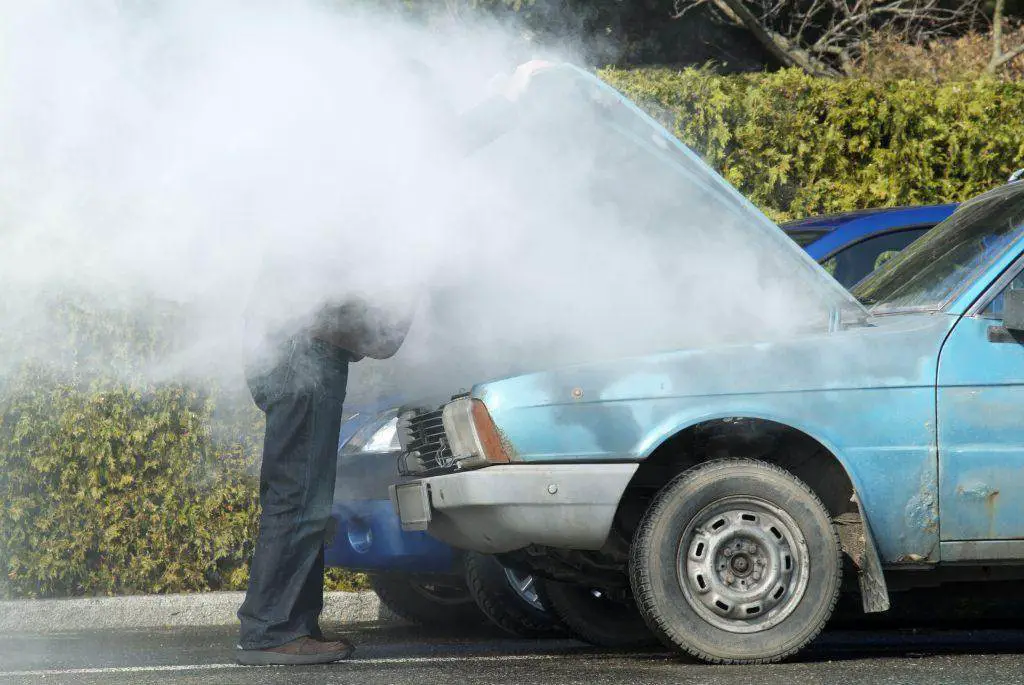
Driving without transmission fluid causes transmission overheating. (Photo: Driving Geeks)
Transmission fluid keeps the entire unit cool, which prevents the system from overheating. Thus, if you drive the vehicle without this fluid, you might smell a burning odor.
Grinding noise
When the clutch is fully engaged while there is no transmission fluid, you might hear a grinding sound when shifting gears. The main reason for this issue lies in the car’s unlubricated clutch parts, which struggle to shift gears smoothly during gear changes.
As a result, the speed synchronizer wears out, producing an annoying noise, which can be completely damaged if car maintenance is not performed in time.
Delayed gear engagement
The absence of transmission fluid means a negligible amount of pressure in the transmission system. Consequently, when shifting gears, one must wait for some time (2-3 seconds) before the car shifts to the desired gear.
Gear slipping
While driving without transmission fluid, the gear may suddenly slip, forcing the gear lever back to neutral.
Transmission failure
Finally, if any of the above transmission effects are not repaired in time, you may need to request a complete replacement of this system at later stages.
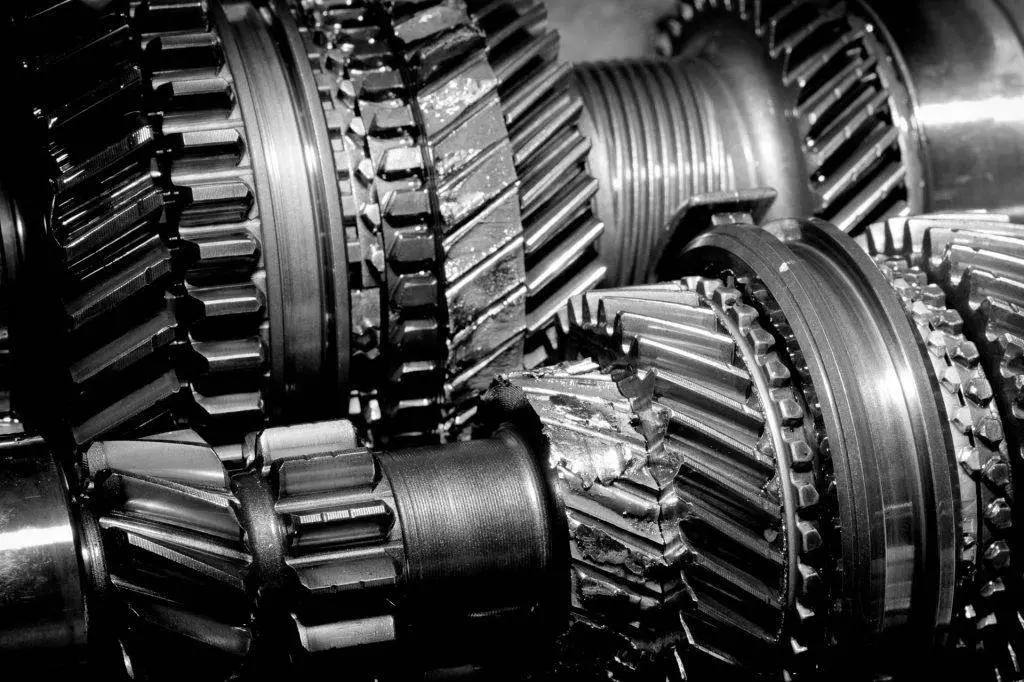
Driving without transmission fluid leads to transmission failure. (Photo: BMW Blog)
How long can you drive without transmission fluid?
As mentioned earlier, you should never drive your vehicle if you know the transmission levels are low. This will create additional problems and damage other engine components.
If you disregard the advice and think that driving a short distance wouldn’t affect you, you might wake up brutally.
Some mechanics claim you can drive up to 16 km with low transmission fluid levels, but the ball is in your court as it leaves your transmission weak and prone to damage.
Even though we’ve highlighted some of the signs you might receive when your transmission is low, there’s no guarantee your automobile will indicate it, and you might find out you only realize it when it’s too late. Therefore, you must stay on top of maintenance inspections.
Your engine may not start if you run out of fluid. Transmission fluid, like fuel in a car, is necessary to connect the engine to the gears. The main contrast lies between automatic and manual transmission automobiles.
Driving an automatic car means your car shifts gears for you, and if it detects the transmission fluid is low, it will refuse to start, unlike a manual vehicle, where the driver must decide if it’s safe to drive.
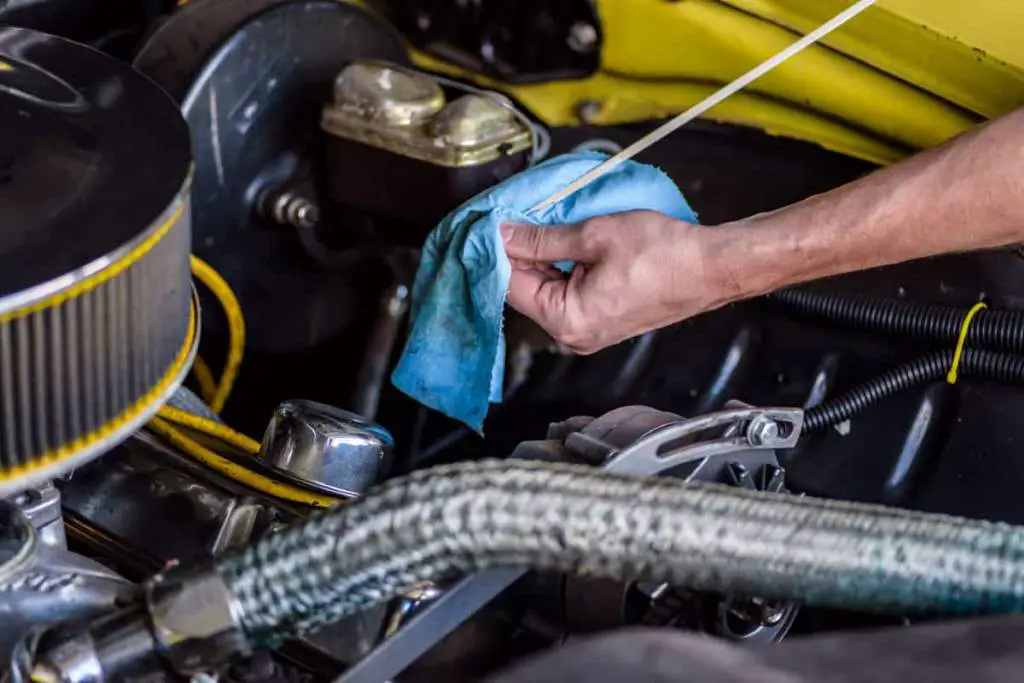
You should never drive your vehicle if you know the transmission levels are low. (Photo: VEHQ)
FAQ on driving without transmission fluid
How do I add transmission fluid to my car?
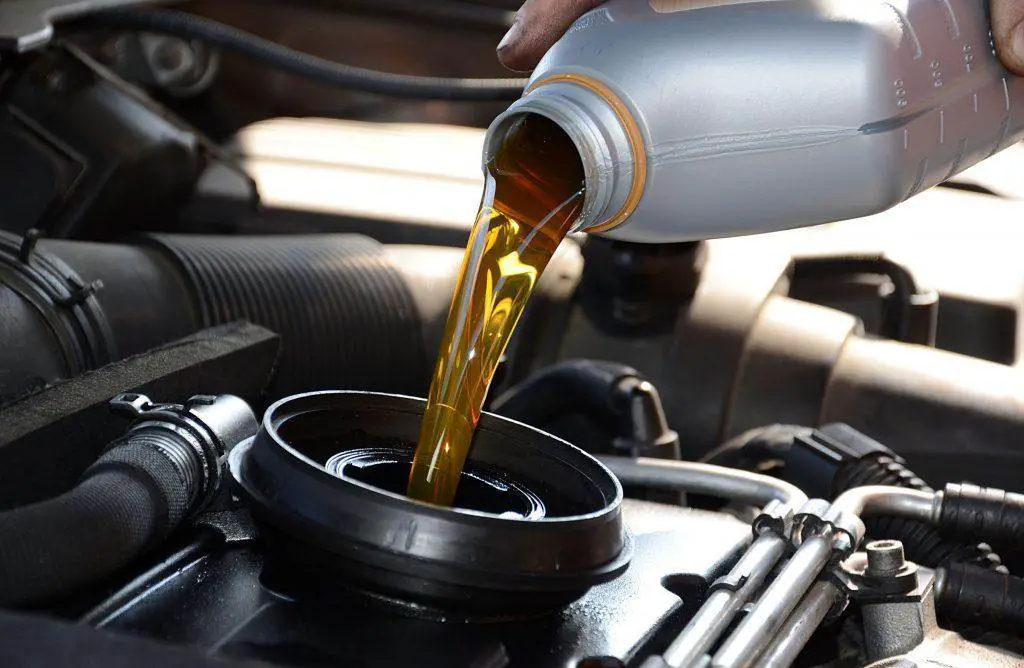
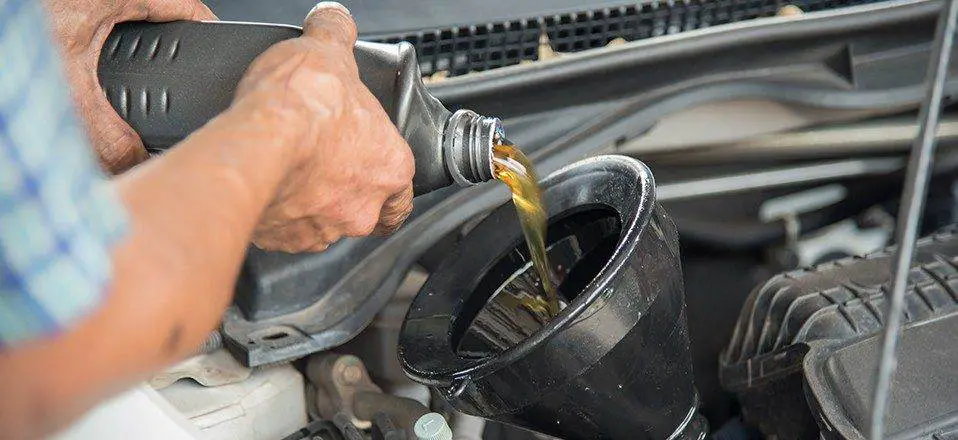
It’s similar to adding oil to add transmission fluid. To start, remove the dipstick and insert a funnel. Transmission fluid can then be freely poured into the funnel.
How much transmission fluid should I put in?
Again, the marks on the dipstick can be used to check the oil. Use them to determine the fluid level. Repeat this several times when refilling your engine to ensure you have the right amount.
Is it possible to lose transmission fluid without a leak?
Even though they are necessary components for each other, transmission fluid cannot leak into your engine.
Is jerking caused by a lack of transmission fluid?
Yes. A low level of transmission fluid can cause abrupt or jerky gear changes. If your vehicle is shaking, you should check the transmission levels.
Will my car run better if I change the transmission fluid?
After changing the fluid, your transmission will operate more easily, meaning your engine will also run more smoothly.
Engine lock-up is one of the worst things that can happen. It essentially means your car’s transmission is working so hard that it simply stops.
Watch this video by ChrisFix to learn how to perform an oil change, a transmission fluid change, a coolant flush, and a way to handle other important fluids in your vehicle!
In a nutshell, if you always drive without transmission fluid, be prepared to pay tons of money for the replacement of the entire transmission system.
Low Tire Pressure Light On, But Tires Are Fine: How to Fix
According to the National Highway Transportation Safety Administration, approximately 11,000 accidents and 200 deaths can be attributed each year to tire failures, with the majority of cases caused by underinflated tires. To ensure optimal stability, control, handling, and braking performance, your tires must be consistently inflated to the optimal air pressure specified by your vehicle manufacturer.
To ensure this, most newer vehicles today are equipped with a tire pressure monitoring system that displays a warning light on your dashboard when a tire is significantly low on air. However, there is a common issue of seeing a low tire pressure light when the tires are fine.
So, what is the reason for this problem and how can it be fixed? Continue reading to find out. However, before addressing the reasons for the continuous illumination of the tire pressure light and its solutions, you must first understand the basics of the technology measuring tire pressure inside the car.
Tire Pressure Monitoring System: What is it for?
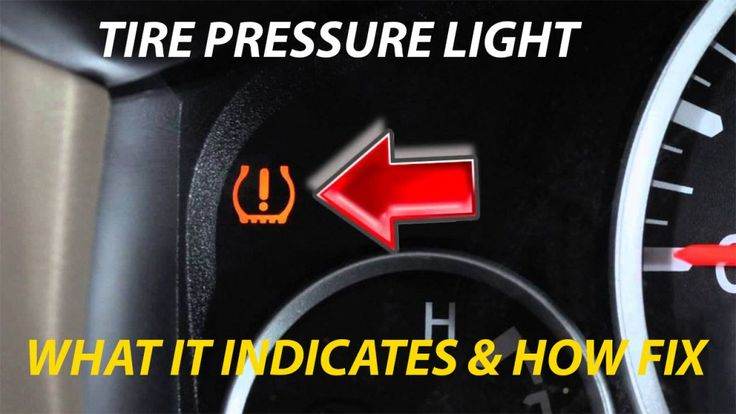
TPMS Sensor Light On: What’s the Problem? (Photo: pinterest.com)
Car tires must be properly inflated to the optimal air pressure specified by your vehicle manufacturer. Underinflated and overinflated tires can impair handling and braking, lead to faster and uneven wear of your tires, and thus compromise your safety on the roads.
Underinflated tires are more problematic and represent the majority of tire-related accidents. Underinflation means more contact with the road surface, leading to rapid heat buildup, which, in the worst case, can completely separate the tread from the wheel and make the vehicle uncontrollable.
Most new vehicles are equipped with a TPMS, which stands for Tire Pressure Monitoring System. A TPMS is an electronic unit installed on the tire rim that generates tire pressure information for the car’s computer system.
When the pressure in a tire is significantly lower than the recommended pressure, the TPMS illuminates a light on the dashboard. However, this does not allow you to check the exact pressure. So, just because the light is not on doesn’t mean your tire pressure is correct. Furthermore, older vehicles may not have a TPMS installed.
There are two types of TPMS with their own advantages and disadvantages: direct and indirect. Direct TPMS systems use sensors inside each tire to directly measure pressure. Indirect TPMS systems use wheel speed sensors to indirectly calculate pressure.
When the car starts, the TPMS light normally illuminates for a second or two to indicate that the system is working. The light may look like a tire with an exclamation point inside, or it may simply say “TPMS”.
If a tire has low pressure, the TPMS light on the dashboard will illuminate. It may flash or stay on. So, what causes the TPMS to illuminate when the tires are fine?
Reasons Behind the Low Tire Pressure Light But Tires Are Fine
Often, when the tires are not flat or underinflated, the low-pressure light on the dashboard illuminates. There are many perfect reasons why this can happen:
Extremely Cold Weather
It is quite common for the low tire pressure light to come on, but the tires are fine, a problem that occurs on very cold winter mornings. Warm air expands, takes up more space, and is less dense, but inside the confined space of a tire, this expansion leads to an increase in air pressure. In contrast, cold air becomes dense and takes up less space, so inside a tire, this condensation leads to a decrease in air pressure.
A car tire might measure 30 PSI at 80-degree temperatures during the day, but early the next morning when the temperature drops to 30 degrees, as it is often coldest overnight, it might return a reading of only 25 PSI.
On days when the temperature varies considerably, say between 40 and 50 degrees F between day and night, your tire pressure can vary by about 3 PSI to 5 PSI. That’s why it’s quite normal on a cold winter morning to find your dashboard’s low-pressure light on, but once you start driving, the tires warm up. The air inside the tire will expand, thus increasing the air pressure and the light will go out. So you see the low tire pressure light but the tires are fine.
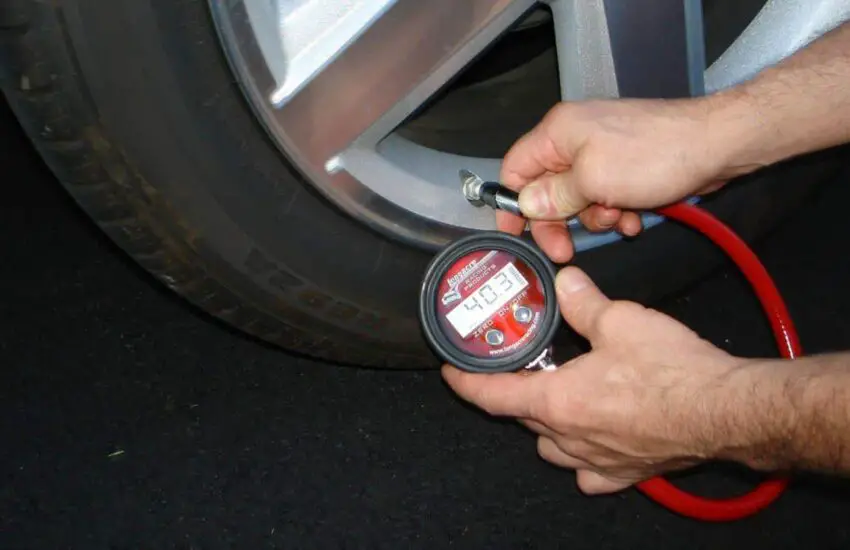
However, if the light does not go out once the tires are warmed up, you need to grab your pressure gauge to measure the exact pressure of your tires and inflate them to the correct optimal pressure level.
Recent Tire Rotation or Replacement
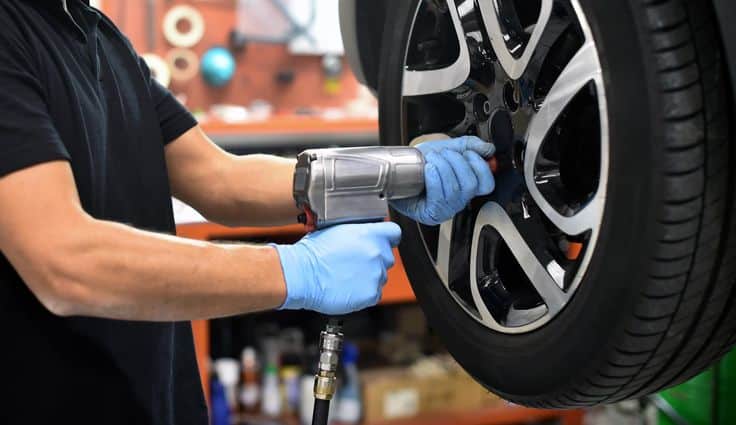
Recent tire rotation can be the cause of the tire pressure check light. (Photo: pinterest.com)
As mentioned earlier, the TPMS is located on the tire rim. So, there is a chance that this electronic unit could be damaged during the tire rotation or replacement process. Therefore, whenever you consider changing a car’s tires, check from time to time for the problem of the low tire pressure light but tires are fine to avoid having to return to the auto shop later.
Furthermore, you might replace old tires with a different tire that doesn’t have a TPMS like the others or doesn’t have the correct TPMS specified by your car manufacturer. When this happens, it’s as if your vehicle has to go through a relearning process, which can trigger the TPMS light but the tire pressure is good.
In this case, to turn off the light, simply drive your vehicle casually at a constant speed for about 10 minutes. If this doesn’t solve the problem, you will probably need to take your car to a mechanic for external recalibration.
Faulty TPMS Sensor
If you have used a pressure gauge and confirmed that all four tires are properly inflated to the optimal level specified by your car manufacturer, but every time you start the car, the pressure light comes on and stays on, it means the TPMS is not working properly. In this case, it is best to consult a mechanic to inspect and possibly replace the TPMS.
Physical sensors are subject to wear and tear over time, particularly at the seals, valve caps, or sensor core. These sensors also operate with onboard batteries, whose lifespan is limited to about 5 to 7 years (up to 10 years in the best case). A weak battery and age-related wear can cause the TPMS sensor to malfunction and trigger a low tire pressure light but tires are fine problem.
Another reason for TPMS sensor malfunction is the presence of a substance other than air or nitrogen in the tire, such as puncture repair sealants used when fixing a flat tire.
Forgotten Spare Tire
It might be that you just replaced your spare tire, which has been sitting there for some time without attention or care. Not all spare tires are equipped with TPMS, but if it is and the tire pressure in the spare tire is too low, it could trigger the warning light.
Almost all tires gradually lose pressure over time through the inflation valve, even with a spare tire or if the vehicle is stored and rarely driven. There is a cap, but the role of the valve stem dust cap is to prevent dirt from entering rather than better retaining air. So, even though it is recommended to check your tire pressure at least once a month, it’s still a good idea to check your spare tire as well and inflate it to the optimal pressure so that you always have a properly inflated spare tire to swap at any time.
Air Loss Due to Physical Impacts
A sudden loss of air pressure in tires is quite common and can cause the TPMS light to illuminate even though you properly inflated your tires just a few days ago. The pressure loss is likely caused by driving on very rough terrain or hitting a curb, which can cause a momentary separation of the seal between the tire and the rim, thus letting a small amount of air pass.
Other common reasons for air leaks that can cause the low tire pressure light but tires are fine problem include damage to the rim due to physical impacts on the road like flying pebbles or debris, or a faulty tire valve that gradually purges air.
Low Tire Pressure Light But Tires Are Fine: How to Fix
Now that we are well informed about the causes of the low tire pressure light but tires are fine problem, let’s address this issue.
You have the choice to reset the TPMS yourself or seek professional help. But be aware that, by law, any auto shop must resolve the issue before letting you leave. So, in rare cases where troubleshooting and repair take longer than expected, your car will be held hostage until the problem is fixed.
Locate the Reset Button
Positioned inside the glove box (a compartment inside the dashboard), you will find it easily in front of the passenger seat. If you cannot locate it, look for a button marked “SET”, or consult the car manual.
Note: The position of this button may vary depending on the car’s make and model.
Press the Reset Button
The next step in the process is to press the located button for three seconds. Once the light flashes three times on the dashboard, it means the TPMS is reset. After that, turn off the engine and restart it after five seconds (from the moment the light flashes).
This would solve the problem. But it is important to note here that the TPMS reset process can vary depending on the car model. Therefore, consult the vehicle manual before proceeding.
However, if the above solution does not work for you, take your car to the nearest mechanic for a thorough inspection.
Sometimes, you can’t do it yourself…
Some vehicles like Subarus will not allow you to reset your TPMS sensors yourself. You will need a special tool, available only at auto repair shops, auto parts stores, and tire dealers.
In this case, the TPMS sensor receives a unique identifier that must be registered with the ECU, along with pressure information as well as the position and temperature of the tires at that time. Once you rotate or replace your tire, to fill your tire, one or more of this information will change, requiring the sensor to be recalibrated with the special tool above.
Chinese automaker Jetour has successfully demonstrated the remarkable amphibious capabilities of its Zongheng G700 plug-in hybrid SUV by completing an unprecedented crossing of the Yangtze River. This groundbreaking achievement showcases the vehicle’s ability to transition seamlessly from land to water navigation, marking a significant milestone in automotive engineering.
Advanced Water Navigation System
The Zongheng G700 employs a sophisticated water propulsion system that enables stable aquatic movement. Unlike conventional vehicles modified for water use, this SUV was designed from the ground up with amphibious functionality integrated into its core architecture. The vehicle maintains full operational capabilities while navigating waterways, with sealed compartments and specialized buoyancy systems ensuring safety during aquatic transitions.
Hybrid Powertrain Performance
Powered by an advanced plug-in hybrid system, the G700 delivers impressive performance both on roads and in water. The electric motor components have been specially engineered to function efficiently in aquatic environments, while the combustion engine provides extended range for longer journeys. This dual-environment capability makes the vehicle particularly suitable for regions with challenging terrain and frequent water obstacles.
Practical Applications and Market Position
This amphibious SUV addresses specific transportation needs in areas where water crossings are common, eliminating the dependency on bridges or ferries. The demonstration across one of China’s major rivers proves the vehicle’s reliability in real-world conditions. While amphibious vehicles have existed in niche markets for decades, the Zongheng G700 represents the first mass-market oriented SUV with genuine dual-environment capabilities from a major manufacturer.
The successful Yangtze crossing establishes new benchmarks for vehicle versatility and opens possibilities for future automotive innovations. As urban flooding becomes more frequent in many regions, such amphibious technology could become increasingly relevant for everyday transportation needs.
How to reset the steering angle sensor without a scanner
If you find yourself in a situation where you need to reset the steering angle sensor but don’t have a scanner, don’t worry! In this guide, we will walk you through a step-by-step process to guide you on how to reset the steering angle sensor without a scanner?
What is a Steering Angle Sensor?
The steering angle sensor (SAS) is responsible for providing information about the steering wheel’s rotation speed, sending signals to the car’s control system to determine the steering direction.
The steering angle sensor uses different voltages to obtain information about the angle and direction of rotation, then sends this signal to the ECU so the system knows which direction the driver wants the car to move. At this point, the ECU uses an algorithm to align the steering wheel with the wheels, thus ensuring precise steering angle and direction. This principle helps the vehicle avoid unexpected obstacles and achieve balance in dangerous turning situations.
Regarding the operating principle, as we mentioned, the SAS is an electronic device that measures the steering angle and sends a voltage signal to the Electronic Stability Control (ESC). When the system receives information from the sensor, an automatic algorithm calculates the gear ratio between the steering angles to ensure that the steering angle control works normally.
It is clear that the steering angle sensor (SAS) plays a crucial role in modern vehicles, providing important data to various safety systems such as Electronic Stability Control (ESC) and Anti-lock Braking Systems (ABS). So what will happen to your car if this sensor is damaged:
Can you drive with a faulty steering angle sensor (Photo: Your Mechanic)
What Happens When a Steering Angle Sensor Fails?
Although it is manufactured using modern technology and installed in a location less exposed to dust, the steering angle sensor (SAS) can still suffer damage. Therefore, it is essential for car owners to be attentive to some signs that may indicate the need for prompt intervention:
Electronic Stability Control Light On
One of the main functions of the SAS is to provide data to the vehicle’s stability control system. The ESC system uses information sent by the steering angle sensors, speed sensors, and acceleration sensors to detect steering wheel movements, thus helping the vehicle move in the correct direction.
Therefore, when the steering angle sensor is faulty or no longer able to collect information, the signal sent to the computer will be inaccurate. At this point, error codes will be sent directly to the engine control module, and the warning light will immediately illuminate to alert the operator.
Inaccurate Steering Wheel Alignment
A faulty SAS can cause poor steering wheel alignment even when driving straight. You may notice that the steering wheel is off-center or tilted to one side when driving in a straight line.
Unresponsive and Strange Steering
A bad steering angle sensor can lead to awkward or unpredictable steering behavior. You might experience sudden changes in steering response or find it difficult to maintain a stable course while driving.
Warning Lights on the Car’s Dashboard
In some cases, a faulty SAS can trigger warning lights on the dashboard, such as the Check Engine light or the airbag warning light. These lights may indicate a broader issue related to the vehicle’s electronic systems but can be influenced by the SAS malfunction.
Lack of Power Steering
Limited functionality of driver assistance systems: The SAS is crucial for various driver assistance systems, including lane departure warning, adaptive cruise control, and collision avoidance. If the steering angle sensor malfunctions, these systems may not function correctly or may not engage at all.
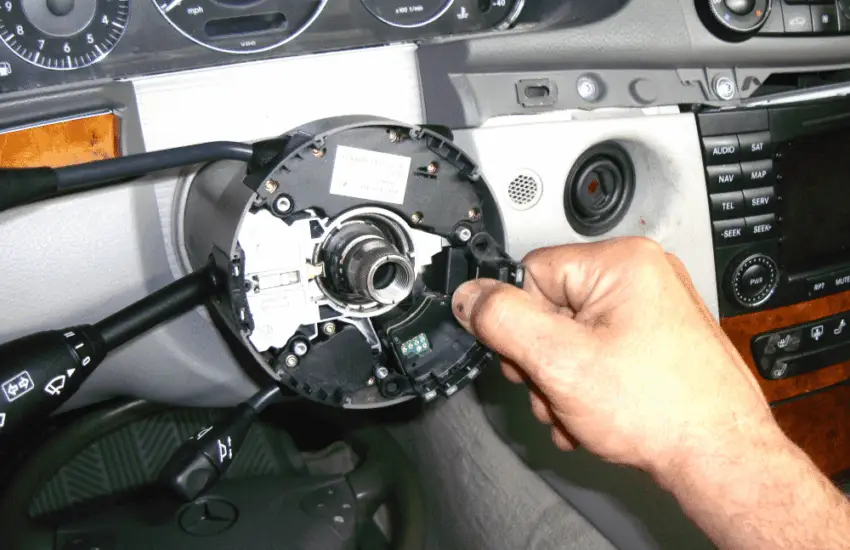
How to bypass the steering angle sensor? (Photo: delphiautoparts.com)
How to Reset the Steering Angle Sensor Without a Scanner?
Generally, the steering angle sensor needs to be reset or calibrated after the steering system components have been aligned or replaced. For example: the steering wheel, airbag spring, steering column, etc. Or in other situations like a malfunction of the stability and traction control system or after steering-related repairs. So if you want to save money on this process, let’s learn how to reset your steering angle sensor without a scanner with our easy DIY guide in this part:
Step 1: Turn off the engine and remove the key from the ignition.
Step 2: Locate the steering angle sensor. It is usually located near the steering column or integrated into the steering rack.
Step 3: Disconnect the battery cables. Start by disconnecting the negative (black) cable, followed by the positive (red) cable. This step is important to ensure safety and avoid any electrical issues.
Step 5: Wait at least 15 minutes to allow the vehicle’s electrical system to fully discharge. Meanwhile, turn the steering wheel fully to the left and hold it for a few seconds, then turn it fully to the right and hold it for a few seconds. This action helps recalibrate the sensor’s neutral position.
Step 6: After the waiting period, reconnect the battery cables. Start by connecting the positive (red) cable, followed by the negative (black) cable.
Step 7: Start the engine and turn the steering wheel from lock to lock several times. This action helps the vehicle system recognize the new position of the steering angle sensor. Once the adjustment process is complete, the vehicle should remain stationary on a flat surface for 5 seconds or more.
Step 8: Take the vehicle for a road test. Pay attention to the steering response and stability. If the steering does not function properly or if warning lights remain on the dashboard, it is recommended to have the vehicle inspected by a professional mechanic.
When the steering angle sensor is not functioning correctly, it can affect the accuracy of these systems, potentially compromising the overall stability and safety of your vehicle. The sensor provides crucial information about the steering wheel’s position and angle, which are used by the vehicle’s electronic systems to make necessary adjustments and interventions.
Driving with a bad steering angle sensor can lead to unpredictable handling, reduced stability, and potentially compromised braking performance. It can also cause other safety devices, such as the stability control system, which relies on accurate steering angle data, to malfunction. Therefore, it is recommended to reset or replace this sensor in a timely manner to avoid undesirable risks.
In Conclusion
To conclude this topic, we wish to affirm that if your steering angle sensor encounters problems, besides taking the car to a mechanic or repair center, resetting the sensor is one of the cases where the car owner can do it themselves proactively. You can now hit the road hassle-free!
Ferrari’s Engine Evolution: V6, V8, V12 Development Continues
Ferrari’s Commitment to Combustion Engine Innovation
Ferrari is actively advancing its V6, V8, and V12 engine technologies, reinforcing its dedication to high-performance internal combustion powertrains. Ernesto Lasalandra, the company’s Research and Development Director, recently emphasized this strategy during a Financial Markets Day presentation. The Italian automaker is balancing its legacy of engineering excellence with the need to meet stringent environmental standards, ensuring that each engine type evolves to deliver enhanced power and efficiency.
Strategic Focus on Diverse Engine Platforms
Ferrari’s multi-faceted approach involves refining each engine configuration to suit different vehicle models and driving experiences. The V6 engines, often integrated with hybrid systems, are pivotal for achieving lower emissions without sacrificing the thrilling dynamics Ferrari is known for. V8 units continue to be the heart of many mid-range models, receiving updates for improved responsiveness and fuel economy. Meanwhile, the iconic V12 remains the pinnacle of Ferrari’s engineering, symbolizing uncompromised performance and acoustic excellence in flagship supercars.
Navigating Environmental Regulations
As global emissions regulations tighten, Ferrari is investing in research to keep its combustion engines compliant and competitive. Innovations in materials, combustion efficiency, and lightweight design are central to this effort. The brand’s ability to adapt these engines to hybrid technologies allows it to reduce carbon footprints while maintaining the visceral driving sensations that enthusiasts crave. This dual focus on sustainability and performance underscores Ferrari’s strategy to lead in the luxury sports car segment.
The Future of Ferrari’s Powertrains
While electric vehicle development progresses, Ferrari’s ongoing investment in V6, V8, and V12 engines highlights a belief in the enduring appeal of thermal powertrains. The company aims to set new benchmarks in horsepower, torque, and reliability, ensuring that each engine iteration builds on its storied heritage. By prioritizing innovation across all platforms, Ferrari is positioning itself to offer a diverse lineup that caters to purists and modernists alike, without compromising on its core values of speed and sophistication.
Low Oil Pressure: Causes and Solutions
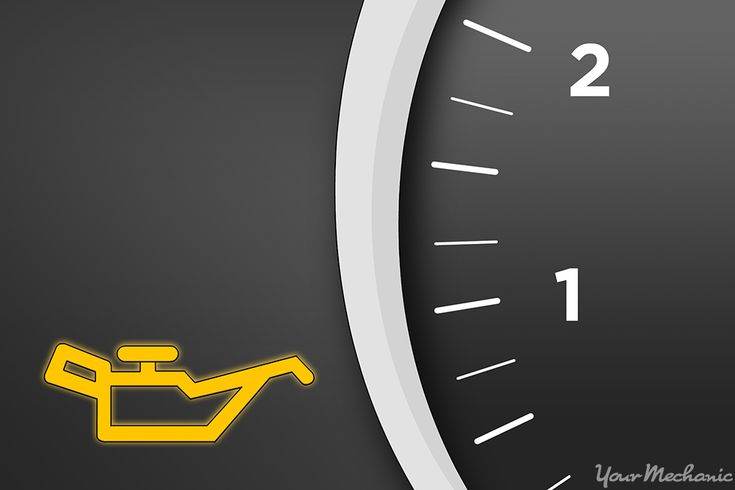
The flashing oil pressure light on the dashboard gauge could be the first sign of low oil pressure in your car. Ignoring it for a while will lead to problems with the valves or hydraulic lifters and create various noises under the hood. If you continue driving, you will eventually send the engine into a coma.
What are the causes and solutions for low oil pressure?
Oil ensures the lubrication of a motor’s internal components. Low oil levels can lead to engine overheating and increased friction between its various parts. Continuous friction and rubbing will cause components to wear out fairly quickly. Knowing the reasons for low oil pressure will help you resolve the issue immediately as soon as you spot a warning sign.
1. Insufficient Oil Quantity
This seems to be the most common reason, as car owners often forget to check the oil level and refill it. This happens when you fail to perform regular car tune-ups or inspections. Sometimes, a leak in part of the oil transport pathway will lead to a significant loss of oil pressure.
Forgetting to refill oil is a common cause of low pressure. (Photo: QualityTrade)
To resolve these issues, you need to check the oil supply lines and replace damaged components. Fill the tank to the proper level and your car will be operational again.
2. Dirty Oil Filter
Another answer to “what causes low oil pressure?” is a dirty oil filter. Oil passes through the filter before going from the pump to the bearings and oil pans. When the filter is clogged with dirt and debris, it creates greater resistance than usual to the oil flow. There comes a point where it no longer lets oil pass through. The only solution to this problem is to replace the clogged filter.
3. Damaged Relief Valve
This is an overpressure valve that ensures the oil pressure does not become too high. However, a worn or leaking valve allows oil to flow more freely into the engine, thus reducing the pressure.
4. Worn Bearings
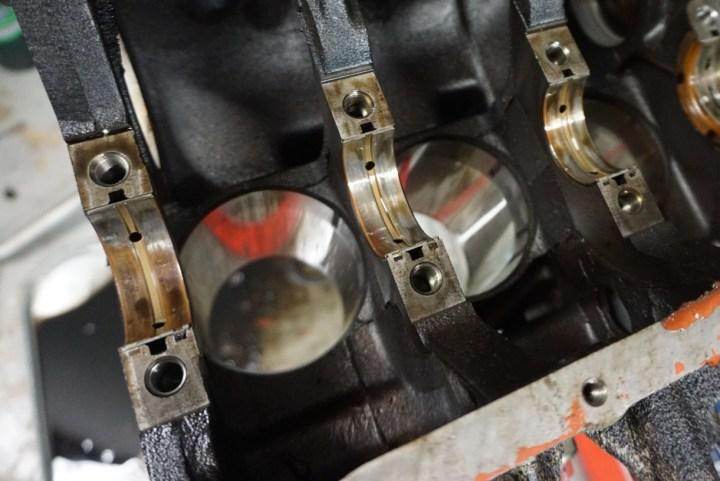
One of the possible causes of low oil pressure is bearing wear. If you have driven the car for long enough, low oil pressure can occur due to the wear of the connecting rod bearings and main bearings. Bearings also play an important role in maintaining proper oil pressure. The correct bearing clearances keep the pressure at the desired level. When they wear out, they allow too much clearance, which leads to a significant pressure drop. This also results in increased engine noise and knocking. Excessive clearance elsewhere in the engine (not in the bearings) can also cause a pressure drop. This can happen in the camshaft journals, lifter bores, and transmission bearings.
Worn bearings also keep oil pressure low. (Photo: Anpadeh)
The only way to correct excessive clearance is to replace the bearings and refurbish some other associated engine parts. Adding a higher volume oil pump could be a solution as it will improve oil flow and increase the pressure a bit in the process. However, the clearance problem will still be present. Therefore, it will need to be replaced at some point.
5. High Oil Viscosity
High viscosity oil is thicker than regular oil, causing it to flow a bit slower. During the winter season, the flow can become so slow that it prevents the oil from reaching the proper pressure level.
Watch the video below to learn how to fix a low oil pressure light in your car:
Related Questions and Answers
1. Can I drive a car with low oil level?
When you are driving on the road and your oil light comes on, you need to take it seriously. It means there is a problem with the lubrication system and your car cannot drive safely. If this situation occurs, the first thing to do is to pull over and then turn off the engine as soon as possible. By doing this, you can save your life and prevent further damage to your car’s engine.
2. How much does it cost to replace the oil pump?
When it comes to changing your car’s oil pump, you need to calculate the cost of purchasing a new oil pump and the labor cost to install it, unless you can install it yourself. The average price of a new oil pump ranges from $200 to $300 depending on your car model. The labor cost is about $200 to $300, as it requires more skills from an experienced mechanic and takes more than an hour. In general, the total price is around $300 to $600 depending on who does the work.
3. The Important Role of Oil Pressure
A motor’s lubrication system consists of the oil filter, pump, hardware, and lubrication lines. The system’s pressure is created by the resistance that the oil must overcome in the lines to reach the lubricated parts. The pump’s function is to force the lubricant through the system. It provides the necessary pressure and flow to allow the lubricant to reach the farthest part.
When you find that the oil pressure is low, it means there is a problem with your engine. It also indicates that your engine may be lacking lubricant. An engine devoid of lubricant can cause metal parts to touch metal parts and damage the machine. An engine may stop working within a few minutes or even a few hours, depending on the severity of the situation. Repair costs can be quite high as you need to replace most of the parts.
The oil pressure light only comes on when the car is warm at idle (Photo: pinterest.com)
4. How to get rid of low oil pressure?
To avoid the risk of low oil pressure, here are a few things to do:
Make sure to regularly inspect the oil level and check for leaks from your engine and your garage floor.
When it’s time to change the oil and filter, make sure to do it immediately. The recommended lubricants are high-quality products that include the correct viscosity grade and appropriate quality standards specified by the API (American Petroleum Institute) in the car’s manual/engine.
If there is a problem with the pressure sensor and you are not aware of it, avoid driving your car as soon as possible. In this situation, the best solution is to take your car to a mechanic to inspect the condition of the oil and engine.
Observe if there is blue smoke coming from the exhaust pipe, especially on high-mileage cars.
5. Low Oil Pressure at Idle: Causes and Solutions
Symptom of low oil pressure at idle: The oil pressure light only comes on when the car is warm at idle. After a few revs, the light goes out and stays off under load.
Here are the most common symptoms and causes to inspect:
Symptoms
Causes
Solutions
Limp mode
Dirty pickup at the oil pump
Replace the oil pump
Engine noises
Engine lacking oil
Refill oil
Oil level/pressure light on the dashboard
The type of oil is not correct
Change engine oil + filter
Broken engine
Broken oil pump
Change the oil pump
Faulty instrument cluster
Change the instrument cluster
Faulty oil pressure sensor
Change the oil pressure sensor
Internal oil leak inside the engine
Repair the internal oil leak
Did you enjoy our article? If you have any questions, feel free to leave them below and we will discuss them in more detail.
Is an engine flush good or bad for cars
Is engine flushing good or bad? You will hear many arguments from both sides on various online forums. However, most automotive experts will suggest not doing it, while mechanics and people running auto maintenance shops will advocate for it.
What is an engine flush?
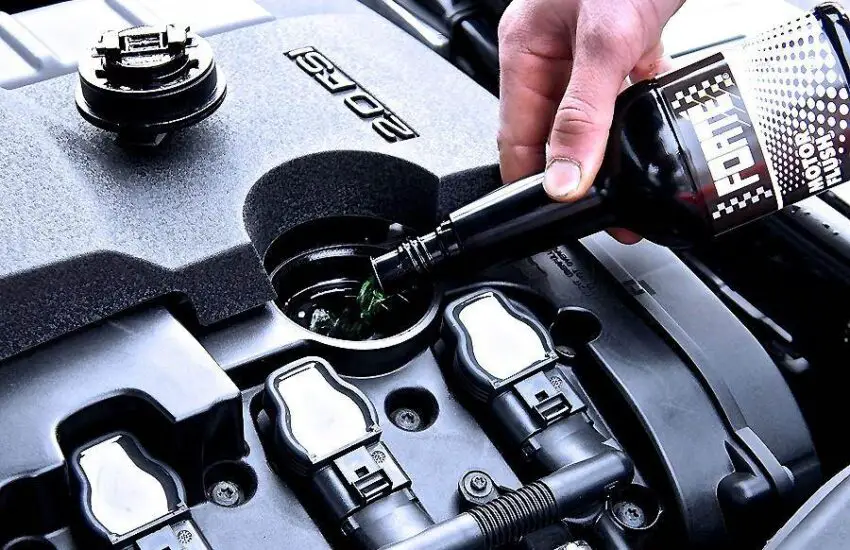
An engine flush is a process of cleaning the sludge and grime deposited in your engine over the years. You need to add a chemical additive to the oil and pour the mixture through the oil filler cap.
Let the car idle for 10 to 15 minutes, allowing the oil mixed with additives to circulate through all engine parts and dissolve dirt deposits. Then, you need to flush the oil, replace the oil filter, and refill the engine reservoir with fresh oil.
Like synthetic or synthetic blend engine oils, engine flush contains additives that clean the internal moving components of the engine and enhance performance.
The fundamental idea behind engine flushing is that it will remove any trace of combustion-related buildup in your engine, leaving it clean and more functional.
An engine flush is a process of cleaning the sludge and grime deposited in your engine over the years. (Photo: AvtoTachki)
The detergent and dispersant packages already included in modern engine oils do an excellent job of cleaning lubricated surfaces and preventing sludge deposits from forming on them. But these additives only have a limited shelf life.
Oil sludge can also accumulate in areas you don’t want if you don’t replace your oil as often as you should. In this situation, an engine flush might be your best choice.
Benefits of flushing an engine
An effective engine flush will help dissolve sludge and remove deposits, thereby restoring your engine to a like-new condition. Therefore, it can be the first step in getting a neglected car back to its original state.
Engine flushing can also increase fuel efficiency. Internal contamination of your engine can cause oil degradation and an increase in viscosity.
Sludge and deposits that accumulate on engine components can also increase resistance, leading to a loss of gasoline. To maximize fuel efficiency and save money, cleaning your engine with an engine cleaner can allow parts to operate more easily.
The ability of an engine flush to reduce emissions is a benefit that will only gain importance in the coming years.
Due to the possibility of piston ring sticking, which we explained earlier, oil can enter the combustion chamber and ignite.
The ability of an engine flush to reduce emissions is a benefit. (Photo: Schröders)
When the consumed oil leaves the engine, it will produce dangerous deposits, which will increase exhaust emissions. The best oil flush solution helps free stuck rings and reduces oil consumption, thereby reducing pollutants.
Disadvantages of flushing an engine
However, there are some possible risks associated with using engine flush, and many people have claimed that it can damage the engine.
According to Ford, engine flush products should not be used. “Do not use oil additives or other engine treatments,” the company advises. They could damage the engine under certain circumstances.
If you use one and an engine problem occurs later, your warranty will be voided. Perhaps one of the most concerning aspects is the following. Your warranty may be worthless even if the engine is not damaged.
And if something else is wrong with your automobile that has nothing to do with the engine, you may no longer be able to have it repaired by the manufacturer under warranty.
Because they fear that the chemicals could react with the rubber or plastic components of the engine while removing dirt and sludge and lead to premature deterioration and engine failure, many manufacturers advise against using engine flush.
Some car enthusiasts fear that engine flushing could transfer chunks and deposits from the engine’s key parts, thereby allowing them to damage more crucial components.
Some people are also convinced that an engine flush treatment could only partially remove dirt. (Photo: Spinny)
Instead of being concentrated in just a few places, the sludge can then spread more widely throughout the engine, which can lead to a further drop in performance.
Engine flushes can pose the most risks when used in high-mileage vehicles. The engine seals of vehicles with a long lifespan may be worn and leaking.
In these situations, the mixture of oil and sludge works effectively as a sealant, keeping them alive and concealing their actual condition.
It is absolutely not worth flushing the engine if this is the case with your engine.
It would be better to leave things alone and avoid disturbing the sludge, which could be the only effective defense against oil leaks beyond the seals of the old engine. If you use it in this circumstance, your engine risks leaking or worsening.
How does sludge form inside the engine?
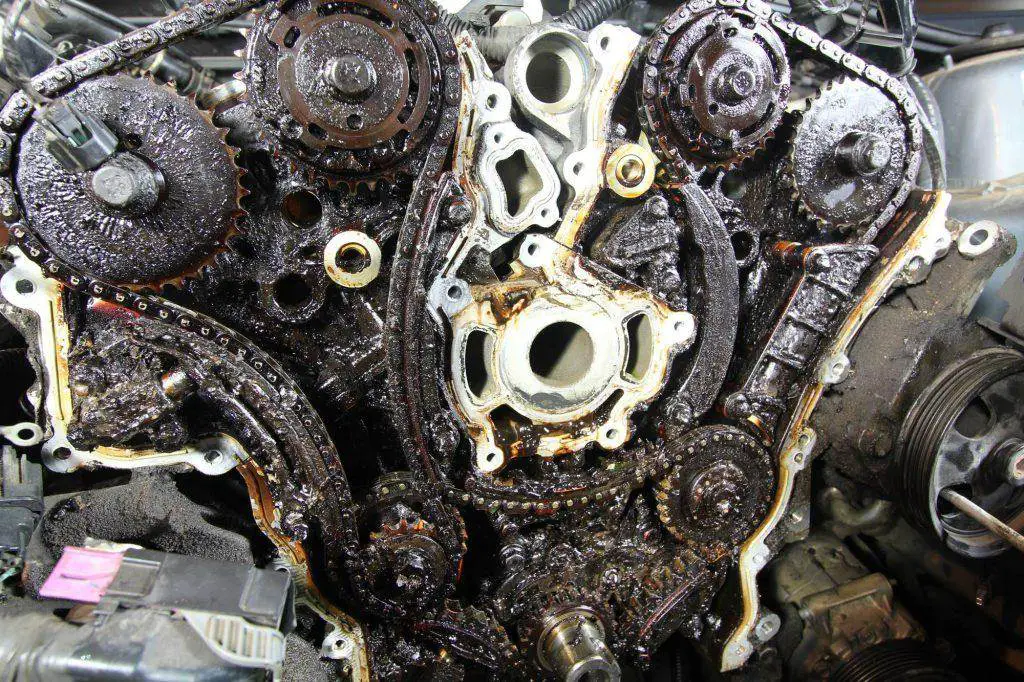
Failing to change the oil regularly is the main reason for the formation of deposits and sludge inside the engine components.
Some drivers have the habit of waiting too long between oil changes, and some don’t even care about it unless the engine shows a warning sign.
Flushing can remove sludge buildup. (Photo: Mechanic)
The two other common causes of grime buildup are:
Driving mainly with stops and starts
Leaving the car in the garage for months
Not driving the car for a long period will block the engine components. This happens mainly in winter when condensation forms because the extreme cold does not allow the oil to circulate through all the engine parts.
Is doing an engine flush a good or bad thing?
Flushing is not necessary for an engine that changes the oil at the intervals prescribed by the manufacturer or based on mileage and driving conditions. Furthermore, the owner’s manual never suggests flushing the engine.
However, a flush is not a bad idea if you are spending money on a used car that has traveled 100,000 km or more and is used to not changing the oil regularly.
Not changing the oil can create a visible buildup of sludge in cars that travel well under 100,000 km.
Thick layers of deposits can cause serious driving problems, the engine light coming on, a severely damaged crankshaft, blockage of the oil pickup tube, and other engine problems.
Since flushing removes dirt and impurities from the engine mechanism, it is not a bad option when needed. Furthermore, it cleans the engine components and keeps the new oil free from dirt and other particles.
Engine flush can save an old car. (Photo: Unsplash)
Watch this video by Owen Lucas to learn more about how to properly flush an engine!
So, if you are faced with the dilemma of whether engine flushing is good or bad, you must make a decision after examining the vehicle’s condition. If it is an old car and has traveled many kilometers, you should choose this option.
Flushing will clean the engine and allow the car to run for many more kilometers. However, a well-maintained and serviced car that regularly changes its oil will not need it. The truth is that most cars will never need an engine flush.
Rivian Delays Kick Turn Feature Launch Quietly
Rivian’s Understated Feature Postponement
During a recent weekend gathering, I met friends who had traded their first-generation Rivian R1T Quad for a second-generation R1S Quad. When I inquired if they had tried the 360-degree maneuver using the Kick Turn function, I was met with puzzled looks and surprised exclamations. After showing them a video of myself performing a Kick Turn in a 2026 Rivian R1T Quad, we discussed how this innovative feature had been subtly delayed without widespread announcement.
What is the Kick Turn Feature?
The Kick Turn function represents one of Rivian’s most anticipated technological advancements for its R1T and R1S models. This capability allows these electric vehicles to execute a complete 360-degree rotation in tight spaces by independently controlling each wheel’s torque and direction. Originally showcased in prototype demonstrations, this feature promised to revolutionize urban parking and off-road maneuvering situations where space is limited.
Reasons Behind the Quiet Delay
Industry analysts suggest several factors contributed to Rivian’s discreet postponement of the Kick Turn launch. Primary concerns include ongoing software refinement to ensure safety across various road conditions and regulatory compliance across different markets. The complex integration of vehicle dynamics control with Rivian’s quad-motor system requires extensive testing to prevent potential drivetrain stress and maintain battery efficiency during the maneuver.
Customer Impact and Expectations
Early adopters who anticipated this feature’s inclusion in recent vehicle deliveries have expressed mixed reactions. While some understand the need for thorough development, others expected clearer communication about the timeline. Rivian’s approach reflects their commitment to delivering polished features rather than rushing implementations, though the quiet nature of this delay has left some enthusiasts discovering the postponement through indirect channels.
The automotive community continues to monitor Rivian’s progress with this innovative feature, recognizing that such advanced vehicle dynamics technology requires careful development to meet safety and performance standards.
White Smoke from Exhaust Main Causes
You never want to see smoke coming from your car’s exhaust pipe. In most cases, a thin white smoke coming from your exhaust in winter is completely normal and not a cause for concern. However, whenever you notice thick puffs of white smoke from the exhaust, it’s a sign that something is wrong with various components of your engine, whether it’s white smoke from the exhaust on startup or white smoke from the exhaust during acceleration.
The most common reasons for thick white smoke from the exhaust involve a malfunction requiring immediate repairs or the replacement of faulty parts, many of which are very expensive. And if you continue to drive in this condition, you risk other serious and costly damage to your engine.
To avoid this, you need to understand the different root causes of white smoke from the exhaust and master the maintenance steps to troubleshoot and resolve these issues. The cost of repair or replacement is also included in each case.
Exhaust Emissions: What is Normal?
Before explaining why thick white smoke from the exhaust is a sign of a problem, you must first understand where exhaust gases come from and what is normal. Inside your engine’s combustion chamber, a spark ignites the mixture of fuel and air, creating a series of combustions or explosions contained within the cylinder.
The direct byproducts of such explosions are exhaust gases that are channeled to the exhaust system. Before exiting through your tailpipe, these gases pass through the muffler to reduce noise and a catalytic converter to reduce harmful emissions.
Under normal conditions, you should not see exhaust coming out of your tailpipe. Especially in winter, you can sometimes see a thin veil of white smoke, which is just water vapor. This is completely normal and will disappear after a short time.
It is important to understand that while the appearance of thin white smoke is normal, if it is thick and comes out in visible bursts, you will need to perform an inspection of different parts to diagnose the source of the problem.
What Does White Smoke from the Exhaust Mean?
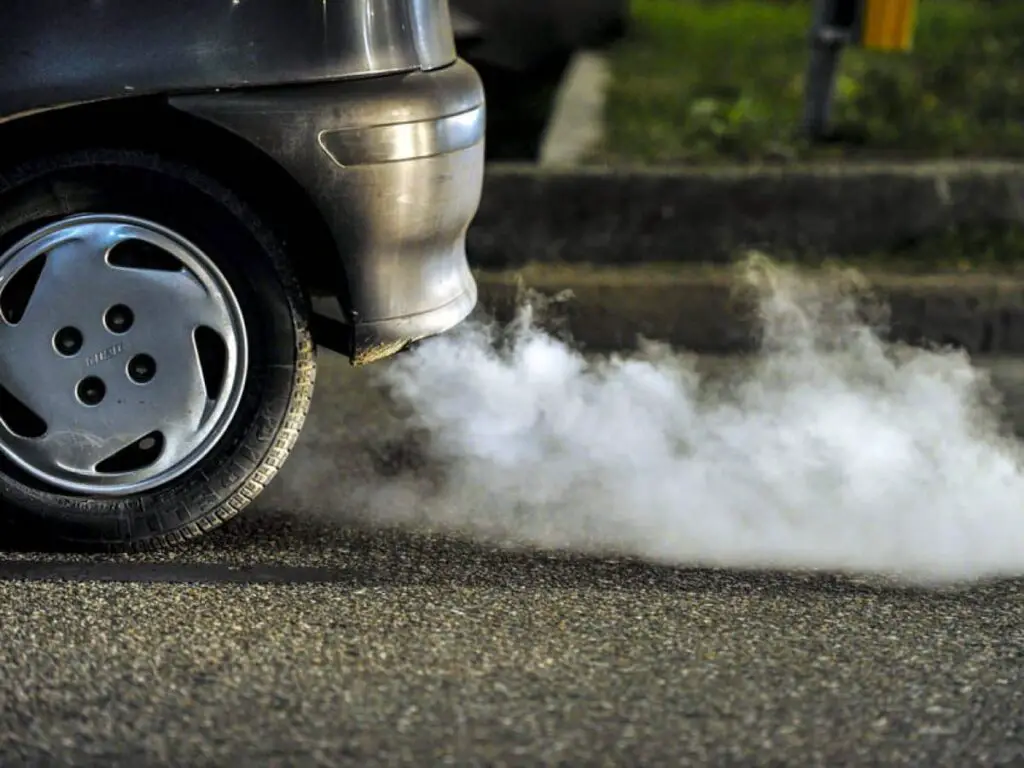
Thick bursts of white smoke from the exhaust mean a problem with your engine components. (Photo: GoMechanic)
Thick white smoke from the exhaust suggests that coolant or water has inadvertently entered the combustion chamber, which should never happen. When coolant or water burns inside the engine block, it produces thick white smoke that comes out of your tailpipe.
A common phenomenon is white smoke emitted in thick bursts. Never ignore it and let it persist. The most common reasons for this event include cracks on vital engine parts, including damage to the cylinder head, head gasket, or engine blocks.
Even if it’s just a small crack, the damage can easily worsen if you continue driving and delay replacing the cracked component.
This could lead to further contamination of the engine oil or engine overheating, which could result in permanent engine damage. You would then need to replace the completely failed engine, which is expensive and a task best left to professionals.
That said, below are the 9 most common reasons why white smoke is coming from the exhaust, and below is how to troubleshoot and deal with each culprit.
Reasons for White Exhaust Smoke
Thin White Smoke: Condensation Buildup
Thin white smoke on startup that disappears afterwards is usually the result of condensation buildup in the exhaust system. This tends to happen in winter or on cold mornings.
The smoke should be thin, not too visible, and only come out in small quantities at startup, and will burn off fairly quickly once your engine warms up, especially after about 30 seconds to a minute.
This is not a sign of a problem, but if it occurs in conjunction with other phenomena like reduced engine performance or hard starting, it may indicate a more serious problem within your engine.
Coolant Leak: Damaged Coolant Reservoir
Sometimes, if the coolant reservoir is damaged or cracked, coolant can leak into the engine’s combustion chamber. This leaking coolant is then burned in the cylinders, creating thick white smoke in the exhaust pipe.
Coolant leaks from a cracked coolant reservoir are usually less significant than the leak sources listed below, but it can happen when you are fixing another problem nearby and accidentally damage the reservoir. In any case, you will need to replace the damaged reservoir.
Coolant Leak: Crack in the Cylinder Head, Engine Block, or Head Gasket
While a cracked coolant reservoir is rare, when most mechanics hear about thick smoke coming from the exhaust, they assume the worst. This is usually due to a crack in the cylinder head, head gasket, or engine block, none of which are very quick or inexpensive to replace, and are not a maintenance job for a novice.
Cracks in these parts are caused by constant engine overheating due to low coolant levels, due to a coolant leak, and constant engine temperature fluctuations. They allow coolant or oil to seep into the cylinders, which are then burned and produce thick smoke.
Cracked Cylinder Head
Whenever your cylinder head is cracked or damaged in any way, coolant leaks from it and mixes with the engine oil. Once this happens, the oil will be contaminated.
It doesn’t have to be a large crack; a small crack is enough to create thick puffs of white smoke from your tailpipe. As the coolant continues to mix with the engine oil, the white smoke will begin to give off a distinct sweet smell that won’t go away.
Cracked Head Gasket
A cracked head gasket must be replaced. (Photo: BlueDevil Products)
The head gasket is a thin sheet of metal located between the cylinder head and the block, sandwiching the top and bottom of most engines. Its main function is to form a seal between the two parts and helps prevent coolant leaks from the cover surrounding the engine.
One of the reasons cracks form on the head gasket is simply normal wear and tear. When this happens, the coolant is no longer contained in the engine’s cooling channels but enters the cylinder, where it is burned. A cracked head gasket cannot be repaired; it will need to be replaced immediately.
Cracked Engine Block
The worst-case scenario is that your entire engine block is cracked. If this is indeed the culprit, prepare for an expensive and lengthy replacement. In this case, you will likely need professional service.
Most engine blocks are made of cast iron or aluminum alloy, so they last a long time under constant high heat conditions and can effectively dissipate heat from the engine.
However, the engine is a complex system that requires every component to work with absolute precision. If one of the components is not working as it should, the block can overheat, making it brittle and deteriorating.
In addition to white smoke from the exhaust, there are a few common symptoms indicating that the block may be getting too hot. These may include discolored coolant, puddles of fluid under your car, frozen coolant in the radiator, and poor performance.
Problems with Fuel Injection
Bad Fuel Injector
A fuel injector is essentially a spray nozzle that delivers fuel to the combustion chamber as input for combustions. Contrary to what many people expect, the injector does not control when or how much fuel is sent; it “injects,” meaning it acts only to restrict or allow its passage at the right time.
For optimal combustion in the engine chamber, it must inject fuel at precise times, meaning even the slightest variation can throw the system off balance.
If the fuel injector leaks, sticks open, or malfunctions, the chamber no longer receives the correct amount of fuel at the right time.
When there is too much fuel in the engine that needs to burn and be expelled, the result is white smoke from the car, sometimes tinged with gray. It is also possible that your fuel injectors are clogged, making them effectively useless.
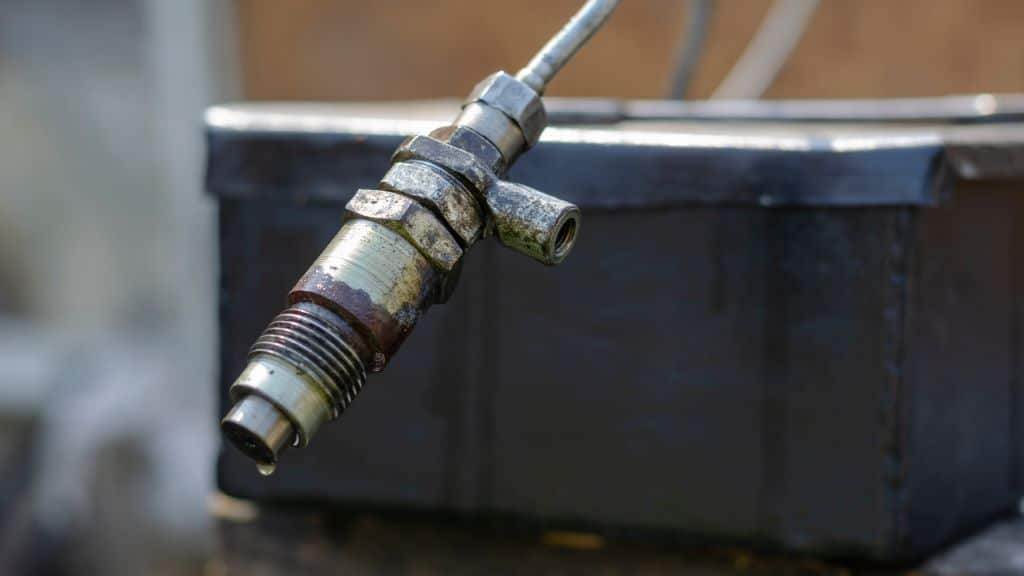
It is possible that your fuel injectors are clogged, making them effectively useless. (Photo: Stringer Auto Repair)
Overall, the reason fuel injectors fail is mainly due to contaminants in the fuel. One way to avoid this is to replace the fuel filter regularly, at least every 2 years or so. However, it is not advisable to inspect the injection or try to change it yourself, as it is a job best left to mechanics.
Diesel Engines Only: Injection Pump Timing is Off
If your engine runs on diesel, the white smoke coming from the exhaust pipe is likely due to a problem related to the injection pump timing. The pump is responsible for injecting diesel into the cylinders.
As with the fuel injector in a gasoline engine, if the pump timing is off and diesel is not delivered to the engine chamber at precise times, it can result in excess diesel, causing thick white smoke coming from the exhaust pipe.
Other signs of injection pump failure include starting problems, poor idling, reduced performance, difficult driving, reduced RPM limit, and poor fuel economy.
Engine Control Unit Error
Alternatively, there is nothing wrong with the fuel injector, but you might have a faulty or simply failing engine control unit that disrupts the fuel injector timing. This simply means you need to reset or repair the engine control unit so it can correct the fuel pump injector timing.
Often, to reprogram the computer, it is enough to disconnect your car’s battery for a few minutes. In case this does not solve the exhaust smoke problem, it is best to take your car to a certified mechanic who knows the engine of your vehicle’s make and model.
White Smoke Tinted Blue Due to an Oil Leak
Sometimes the smoke from the exhaust is tinged blue, although many people are unable to distinguish it. White smoke tinged with blue suggests that your engine is burning oil.
The only thing that should be inside a combustion chamber is the precise mixture of air and fuel. If oil somehow gets into the cylinder, it will ignite with the air-fuel mixture, resulting in a thick cloud of bluish smoke coming out of the tailpipe, which may look like white smoke to some people. Other signs include engine misfires and increased gasoline consumption.
How can oil seep into the combustion chamber? This is likely due to leaking piston rings or valve seals, allowing oil to flow inside.
When oil leaks, the engine components are not properly lubricated by the oil, meaning they will start to wear out prematurely. This will lead to a whole other series of expensive repairs and replacements that no car owner would want to face.
In most cases, you shouldn’t have to worry about leaking piston rings or valve seals before the 100,000-mile mark. One way to extend their lifespan is to switch to a high-mileage engine oil.
How to Troubleshoot and Repair White Smoke from the Exhaust?
Check the Coolant Level
If you want additional proof that you are experiencing a problem with coolant entering your engine block when it should be contained, you must first check the coolant level. If you notice the level is low and you don’t see a coolant leak from the coolant reservoir, it supports the theory that the leak is due to a crack in the head gasket, cylinder head, or engine block.
Additionally, it is advisable to invest in an engine block leak detection kit that uses chemistry to detect if your coolant is contaminated.
The first step is to open the hood. However, remember that the engine must be sufficiently cooled before removing the radiator cap or reservoir cap. If the engine is hot, let it cool for at least an hour before attempting to check the coolant.
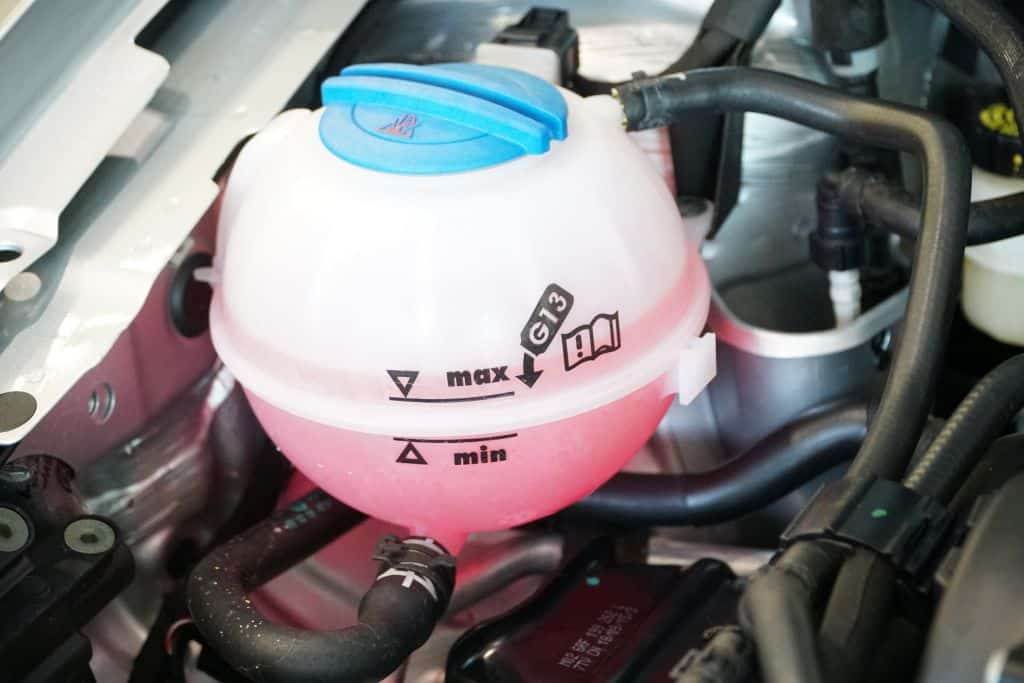
If the engine is hot, let it cool for at least an hour before checking the coolant. (Photo: Instant Cooling)
Next, with your vehicle parked on a level surface, open the coolant reservoir and look into the coolant chamber to check the coolant level.
Look for marks on the side of the plastic overflow bottle indicating “Low” and “Full” or similar terms, then take a funnel and fill the reservoir until the level reaches “Full”. One solution is to insert a stick into its reservoir and check how much coolant it contains.
If the amount of coolant is adequate, proceed to inspect the other engine components below for any crack or damage that could lead to the coolant mixing with engine oil or fuel.
It is advisable to also perform a cooling system pressure check to try to determine which part is actually causing the leak (pressure is applied to the system up to the range specified
2026 Honda Passport TrailSport: 5000-Mile Review
Living with the 2026 Honda Passport TrailSport
Our long-term 2026 Honda Passport TrailSport has just rolled past the 5,000-mile mark. It feels like only yesterday we first slid behind the wheel with just 255 miles on the odometer, meaning we’ve personally added 4,745 miles of diverse daily commutes and weekend adventures. This journey has provided a comprehensive look at what this rugged SUV offers in real-world conditions.
Performance and On-Road Manners
The TrailSport’s powertrain delivers confident acceleration across various driving scenarios. We’ve noticed the suspension effectively absorbs road imperfections while maintaining composed handling on winding roads. The all-wheel-drive system provides reassuring traction during sudden downpours and light off-pavement excursions, though we primarily tested its capabilities on maintained gravel and forest service roads.
Interior Comfort and Practicality
Spending significant time inside the cabin revealed thoughtful ergonomics and durable materials. The seats proved supportive during extended drives, while the intuitive infotainment system minimized distraction. Cargo space easily accommodated outdoor gear for weekend trips, with the rear seats folding flat to create a generous loading area. Road and wind noise remained well-controlled even at highway speeds.
Efficiency and Real-World MPG
Over our 5,000-mile evaluation, we observed fuel economy figures consistent with Honda’s estimates. The balance between capability and efficiency appears well-calibrated for an SUV in this class. We recorded best mileage during steady highway cruising, with expected decreases during more spirited driving or when carrying heavier loads.
TrailSport Enhancements in Practice
The TrailSport-specific components, including all-terrain tires and upgraded suspension, demonstrated their value beyond mere aesthetics. These features provided additional confidence when venturing off the beaten path while maintaining civilized on-road behavior. The distinctive exterior styling continues to draw positive attention after months of ownership.
As we continue our evaluation, the 2026 Honda Passport TrailSport has established itself as a compelling blend of everyday comfort and adventurous capability. The first 5,000 miles have proven its readiness for both suburban errands and spontaneous explorations.