

What does it mean?
This is a generic powertrain code, meaning it covers all makes/models from 1996 onward. However, specific troubleshooting steps vary by vehicle.
The P0705 diagnostic trouble code (DTC) refers to an external or internal switch on the transmission whose function is to signal the powertrain control module (PCM) or transmission control module (TCM) the gear shift position – P, R, N, and D positions (Park, Reverse, Neutral, and Drive). Reverse lights may also operate via the transmission range sensor (TRS) if it is an external component.
The code tells you that the computer has recognized a failure in the TRS sensor. The sensor sends either an incorrect signal or no signal to the computer that identifies the gear position. The computer receives signals from the vehicle speed sensor as well as the TRS.
When the vehicle is moving and the computer receives conflicting signals, such as the TRS signal indicating the vehicle is in park, but the speed sensor indicates it is moving, the P0705 code is set.
External TRS failure is common as age and mileage accumulate. It is exposed to weather and elements, and like any printed circuit board, it tends to corrode over time. The advantage is that it is not an expensive repair and easy to replace with little automotive repair experience.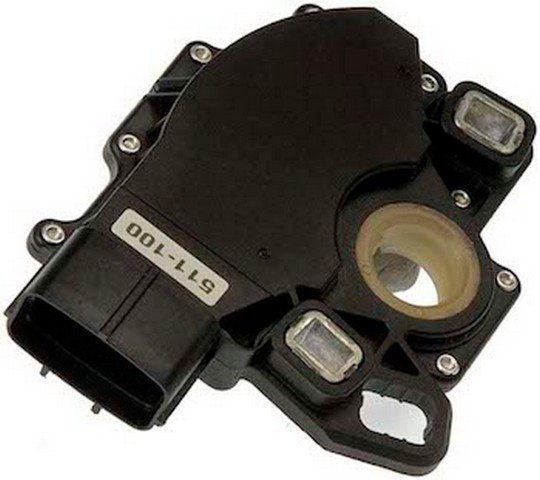
Later models with the transmission range sensor located in the valve body are a different ball game. The range sensor is separated from the neutral safety switch and the reverse light switch. Its mission is the same, but its replacement has become a more serious matter both in difficulty and expense. The simplest method to determine which type is used on your vehicle is to search for the part on your local auto parts website. If it is not listed, it is internal.
Symptoms
Symptoms of a P0705 DTC may include:
Malfunction Indicator Light (MIL) illumination with P0705 DTC code set
Reverse lights may not work
It may be necessary to move the gear shift lever slightly up and down for better contact to allow the starter to engage and start the engine.
It may be impossible to engage the starter
In some cases, the engine only starts in neutral
May start in any gear
Irregular shift RPM
Decreased fuel economy
Transmission may display delayed engagement
Toyota vehicles, including trucks, may display erratic instrument readings
Causes
Potential causes of this DTC may include:
TRS is loose and poorly adjusted
Transmission range sensor is faulty
Bad connector at the external TRS, loose, corroded, or bent pins
Wiring harness shorted on the external sensor due to rubbing on the transmission linkage
Blockage in the valve body internal TRS orifice or faulty sensor
Diagnostic Steps and Possible Solutions
Replacing an internal TRS requires using a Tech II for diagnosis, followed by draining the transmission and removing the pan. The sensor is located at the bottom of the valve body, which is responsible for all transmission functions. The sensor is continuously immersed in hydraulic fluid, which causes housing issues. Many times, hydraulic flow is restricted or the O-ring has caused the problem.
Regardless, this is a complicated process best left to a transmission specialist.
Replacing external transmission range sensors:
Block the wheels and set the parking brake.
Place the transmission in neutral
Locate the transmission shift linkage. On front-wheel drive vehicles, it will be located on top of the transaxle. On rear-wheel drive vehicles, it will be on the driver’s side
Remove the electrical connector from the TRS sensor and inspect it carefully. Look for corroded, bent, or pushed-back (missing) pins in the sensor. Check the connector on the harness for the same, but in this case, there are female ends that must be in place. The harness connector can be replaced separately if it cannot be salvaged by cleaning or straightening the female connectors. Place a small amount of dielectric grease in the connector before reconnecting
Look at the wiring harness location and ensure it is not rubbing on the shift linkage. Check for broken or shorted wires due to lack of insulation
Check that the sensor is not loose. If it is loose, set the parking brake and transmission in neutral. Turn the key and rotate the TRS until the reverse lights come on. At this point, tighten the two TRS bolts. If the vehicle is a Toyota, you must rotate the TRS until a 5mm drill bit fits into the housing hole before tightening
Remove the nut holding the shift lever and lift the lever
Remove the electrical connector from the sensor
Remove the two bolts securing the sensor to the transmission. Unless you want to practice magic and turn this ten-minute job into several hours, do not drop the two bolts into no man’s land
Lift the sensor from the transmission
Look at the new sensor and ensure the markings on the shaft and housing, where it is marked “neutral,” are aligned
Install the sensor on the shift lever shaft and install and tighten the two bolts
Plug in the electrical connector
Reinstall the shift lever and tighten the nut
Additional note: The external TR sensor found on some Fords may be referred to as an MLPS or manual lever position sensor.
Related transmission range sensor codes: P0705, P0706, P0707, P0708, and P0709.