
What does it mean?
This is a generic powertrain diagnostic trouble code (DTC) that applies to many OBD-II vehicles (1996-newer). This may include, but is not limited to, vehicles from Mazda, Honda, Dodge, Ford, BMW, VW, etc. Although generic, the exact repair steps may vary depending on the year, make, model, and powertrain configuration.
OBD-II trouble codes P0666, P0667, P0668, and P0669 are associated with the internal temperature sensor circuit of various modules. This circuit includes the powertrain control module (PCM), engine control module (ECM), and/or transmission control module (TCM).
The purpose of the PCM/ECM/TCM internal temperature sensor circuit is to monitor the temperature of various sensors housed within the control modules. Malfunctions are identified through the control module’s self-test failure process. In some automobiles, all three modules are integrated into a consolidated unit, typically referred to as the PCM.
When the PCM, ECM, or TCM detects an electrical signal lower than expected (outside the normal operating range) in the internal temperature sensor circuit, code P0668 is set, and the check engine light or transmission warning light illuminates.
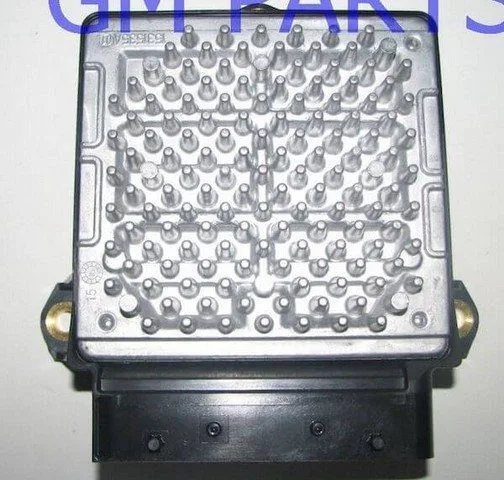
An example of a Transmission Control Module TCM:
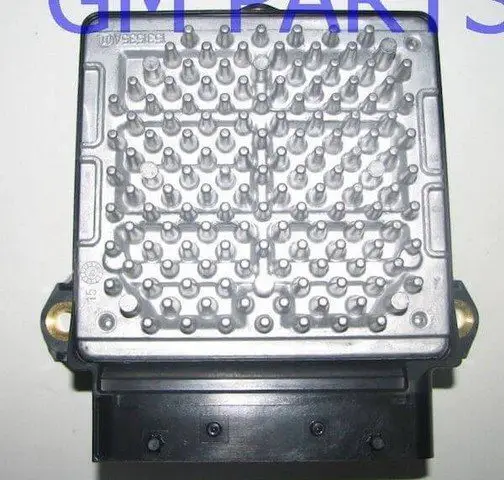
P0668 TCM
How severe is this DTC?
The severity of this code can vary greatly, from a simple check engine light or transmission warning light on a vehicle that starts and runs, to a vehicle that may stall or not start at all. The code can be serious depending on the specific nature of the issue.
What are some of the symptoms of the code?
Symptoms of a P0668 trouble code may include:
Engine does not start
Engine may stall
Incorrect shifting
Transmission warning light on
Check engine light on
What are some common causes of the code?
Causes
of this P0668 code may include:
Corroded or damaged connector
Loose or faulty control module ground strap
Faulty or damaged wiring
Faulty PCM, ECM, or TCM
What are the troubleshooting steps for P0668?
The first step in the troubleshooting process for any malfunction is to search for Technical Service Bulletins (TSBs) for the specific vehicle by year, model, and powertrain. In some cases, this can save significant time in the long run by pointing you in the right direction.
The second step is to locate all control modules within this circuit and perform a thorough visual inspection of the associated wiring to check for obvious defects such as chafing, rubbing, exposed wires, or burn marks. This process should also include ground straps and wires. Next, check the connectors for security, corrosion, and damaged pins. This process should include the PCM, ECM, and TCM, depending on the specific vehicle and control module configuration. Vehicle-specific technical data will help you locate components and configure the control module.
Advanced Steps
Advanced steps become very vehicle-specific and require appropriate advanced equipment to perform accurately. These procedures require a digital multimeter and vehicle-specific technical references. The specific technical data will include troubleshooting charts and the proper sequence to follow to help you make an accurate diagnosis.
Voltage Checks
Specific troubleshooting guidelines must be referenced to determine the required voltage ranges for the different control modules. These references will include pin numbers and voltage requirements associated with the PCM/ECM/TCM internal temperature sensor/circuit. Most, but not all, control modules require a reference voltage of around 9 volts. Voltage requirements vary depending on the specific year and model of the vehicle.
If this process identifies a missing power source or ground, continuity tests may be required to verify the integrity of the wiring, connectors, and other components. Continuity tests should always be performed with the power disconnected from the circuit, and normal readings for wiring and connections should be 0 ohms of resistance. Resistance or lack of continuity indicates faulty wiring that is open or shorted and must be repaired or replaced. A continuity test between the different control modules and the chassis will confirm the serviceability of the ground straps and wires. The presence of resistance indicates a loose connection or possible corrosion.
What are the common repairs for this code?
Cleaning corrosion from connectors
Repairing or replacing faulty wiring
Repairing or replacing faulty ground straps
Flashing or replacing the PCM, ECM, or TCM
Misdiagnosis can lead to the PCM, ECM, or TCM being replaced unnecessarily, often done in error when faulty wiring connections are the actual cause of this code. Additionally, on vehicles equipped with two or more control modules, the wrong module may be mistakenly replaced.
I hope the information in this article has helped point you in the right direction to fix the issue with your PCM/ECM/TCM internal temperature sensor/circuit fault code. This article is strictly for informational purposes, and the specific technical data and service bulletins for your vehicle should always take priority.