
What Does It Mean?
This diagnostic trouble code (DTC) is a generic powertrain code, meaning it applies to all vehicles from 1996 onward (Dodge, Chrysler, Hyundai, Jeep, Mazda, etc.). Although generic, specific repair steps may vary by make/model.
When your OBD-II-equipped vehicle has a malfunction indicator lamp (MIL) and a stored code P0518, it means the powertrain control module (PCM) has detected an intermittent issue with the idle air control (IAC) actuator circuit. If there are other more specific IAC codes, those should be diagnosed and repaired first.
The IAC system centers around a linear servo motor that controls a piston regulating the amount of air allowed to bypass the throttle plate and enter the intake manifold. Controlling the amount of air bypassing the throttle plate helps manage engine idle speed. When the throttle plate is closed (at idle), very little air is allowed into the engine through the throttle body. The engine cannot maintain idle with this small amount of air and would likely stall. An auxiliary air (vacuum) source must be provided so the engine can keep running with the throttle plate closed. Of course, this auxiliary vacuum source would harm engine performance and fuel efficiency when the throttle plate is open (during acceleration). Hence the need for a fully adjustable, PCM-controlled vacuum source.
The IAC valve piston housing is manufactured with two separate openings allowing air to pass through. The IAC valve is typically bolted to the intake manifold, on or near the throttle body. It’s positioned so that when open (piston retracted from the opening), ambient air can flow through it into the manifold, and when closed (piston blocking the opening), ambient air cannot pass through.
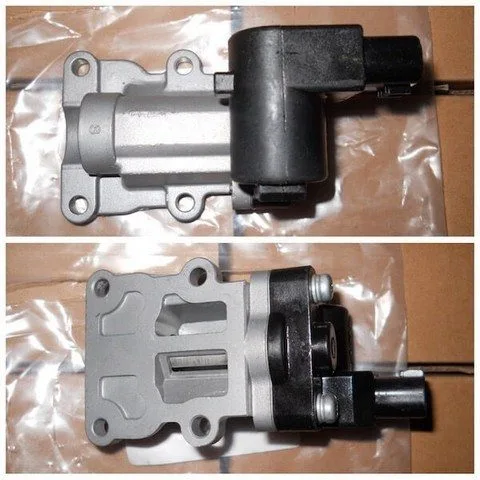
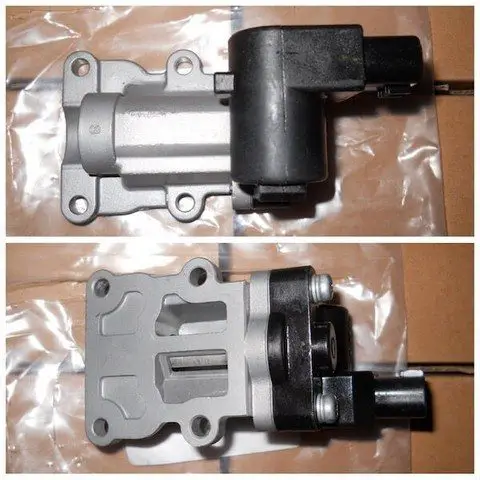
An example of an idle air control (IAC) valve:
The IAC is rarely fully open or closed but remains constantly moving, controlled by the PCM. The PCM uses input signals from oxygen sensors, throttle position sensors, and various other sensors to determine how much air should bypass the throttle plate. When the voltage and ground signals to the IAC valve are adjusted (by the PCM), the valve responds accordingly. If engine RPM levels don’t match the desired programmed parameters, a P0518 code will be stored and an MIL may illuminate.
Related idle air control system circuit trouble codes include:
P0508 Idle Air Control System Circuit Low
P0509 Idle Air Control System Circuit High
P0511 Idle Air Control Circuit
P0518 Intermittent Idle Air Control Circuit
Severity and Symptoms
A malfunctioning idle air control system can cause the engine to stall or idle at unexpectedly high RPM. This code should be treated as severe and addressed urgently. Symptoms of a P0518 code may include:
High engine RPM level
Engine stalling, especially at idle
Unusual noises from the throttle body area
Other IAC-related codes
Causes
Possible causes of this code include:
Faulty IAC motor/valve
Engine vacuum leak
Open or shorted IAC control wires or connectors
Carbon buildup in throttle body or IAC valve
PCM programming error or faulty PCM
Diagnostic and Repair Procedures
A good starting point is always checking technical service bulletins (TSBs) for your specific vehicle. Your issue might be a known problem with a published manufacturer fix, potentially saving time and money during diagnosis.
To diagnose a P0518 code, you’ll need a diagnostic scanner, a digital volt/ohmmeter (DVOM), and a reliable vehicle information source (All Data DIY will suffice).
Start by inspecting all wiring and electrical connectors in the IAC system, repairing any that are damaged, corroded, or burnt. Also check the engine for vacuum leaks that could contribute to uncontrollable engine RPM levels. If vacuum leaks are found, repair them and recheck the system.
Next, connect the scanner to the vehicle’s diagnostic connector and retrieve all stored codes and freeze frame data. Document this information in case the code is intermittent. Clear the codes and test drive the vehicle to see if the code returns. If other IAC-related codes are stored, diagnose and repair those first. Also check all technical service bulletins and safety recalls for the vehicle and the specific malfunction. After completing repairs, drive the vehicle normally and allow the PCM to enter readiness mode before declaring the problem fixed.
As a simple method to test the IAC system when engine idle speed is very high, carefully unbolt (preserving the gasket or seal) the IAC valve from the engine and use a shop rag and your fingers to control engine idle speed. If you can control a high idle condition after removing the IAC valve, you know the IAC system isn’t functioning properly. If you cannot control idle speed, suspect a significant vacuum leak. Major engine vacuum leaks can include PCV valves/hoses, vacuum hoses, brake booster, check valve or hoses, stuck open EGR valve, EGR gasket leak, or intake manifold gasket leak.
Consult your vehicle information source for the recommended method of testing the IAC motor with the DVOM. Replace the IAC motor/valve if it doesn’t meet manufacturer specifications.
Additional Diagnostic Notes:
Disconnect all related controllers before testing circuit resistance with the DVOM