
What does it mean?
This generic powertrain diagnostic trouble code (DTC) generally applies to many OBD-II vehicles. This may include, but is not limited to, vehicles from Chevrolet, GMC, Dodge, Cadillac, Chrysler, Jeep, etc.
So, you need to diagnose a stored P050D code. This means that the Powertrain Control Module (PCM) has detected a rough engine idle during a cold start. A cold start is a term used to describe an engine driving strategy that is implemented only when the engine is at (or below) ambient temperature.
The engine speed is monitored (by the PCM) using the input signal data voltage from the Crankshaft Position Sensor (CKP) and the Camshaft Position Sensor (CMP).
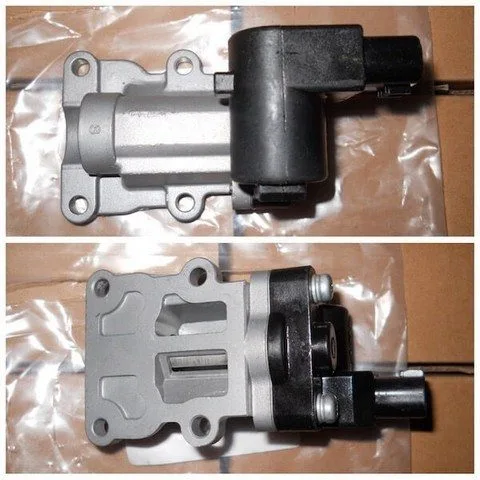
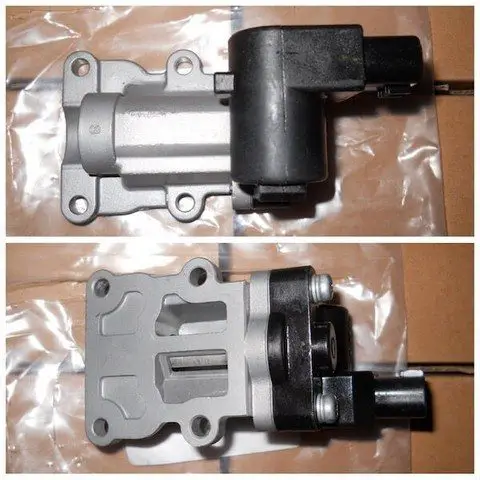
The idle RPM level is also controlled by the PCM. To accomplish this continuous task, the intake airflow must be regulated under closed throttle conditions. The PCM regulates the engine’s intake air at idle with an electronically controlled device called an Idle Air Control (IAC) valve. If air enters the engine that is not regulated by the PCM, it can cause a rough engine idle on cold start and a P050D code to be stored. If lean exhaust codes or codes related to the IAC accompany the P050D, diagnose and repair them before attempting to diagnose the P050D.
An engine misfire can also contribute to rough idle under cold start conditions. If misfire codes are stored, you will also want to diagnose and repair them before diagnosing a P050D. Chances are that if you fix the misfire, you will also repair the rough idle on cold start.
If the rough idle occurs only under cold start conditions, a faulty Engine Coolant Temperature (ECT) sensor may be the cause of your problem. The engine driving strategy is very different under cold start conditions. If the PCM receives an inaccurate engine temperature signal on a cold start, a rough idle can be created due to insufficient fuel supply or incorrect ignition timing advance. An ECT sensor code may also be recorded. As you probably guessed, you will need to diagnose and repair any ECT sensor-related codes before the P050D.
If, under cold start conditions, the PCM detects a rough idle that cannot be stabilized within the programmed parameters, a P050D code will be recorded and a Malfunction Indicator Lamp (MIL) may illuminate. Several ignition cycles (with a fault) may be required for the MIL to illuminate.
Idle Air Control (IAC) Valve:
How severe is this DTC?
A rough idle or poor idle quality under cold start conditions could be an indicator of a more serious problem. A P050D code should be addressed as soon as possible and considered severe.
What are some of the symptoms of the code?
Symptoms of a P050D engine code may include:
Rich / Lean exhaust
Cold driving problems
Other driving-related codes
Engine whistling or suction noise
What are some of the common causes of the code?
Causes
of this code may include:
Vacuum or air intake leaks
Faulty spark plugs, spark plug boots, or ignition coils
Insufficient fuel pressure / volume
Faulty ECT sensor
Shorted or open circuits or connectors
What are the P050D troubleshooting steps?
Diagnose and repair any other engine driving-related codes before attempting to diagnose the P050D.
You will need a reliable source of vehicle information, a diagnostic scanner, and a digital volt/ohmmeter (DVOM) to accurately diagnose a P050D code.
Your vehicle information source can provide you with diagnostic flowcharts, wiring diagrams, connector face views, connector pinout diagrams, and component testing procedures and specifications that will help you accurately diagnose a P050D code.
Retrieve all stored codes and freeze frame data by connecting the scanner to the vehicle’s diagnostic port. Note this information as it will be useful during the diagnostic process. Then, clear the codes and let the engine cool down completely before performing a road test of the vehicle.
If the code does not reset and the PCM enters readiness mode, you may be dealing with an intermittent code. In some cases, the conditions that led to the code being stored may need to worsen before an accurate diagnosis can be made.
If the code resets immediately, start by focusing on the factors that have the most impact on cold driving.
Excessive air intake
Too much air entering the intake, at a time when it demands a richer fuel mixture, can create a rough idle.
Check for vacuum leaks. Hoses and intake lines should not be cracked or collapsed. Listen for whistling or suction noises and remember to listen around the throttle body, intake manifold gasket, brake booster, and PCV valve.
The air intake hose (from the air filter housing to the throttle body) should have no cracks or holes.
The IAC valve plays an important role in cold driving. Make sure the valve and seat are clean and free of debris.
Ensure the throttle plate is clean and free of carbon coking.
Check the EGR valve position; it must be closed at idle. If it is open, it creates a vacuum leak.
Low fuel pressure
Make sure the fuel tank contains good, clean fuel.
If the fuel pressure is low, check that the fuel filter is not clogged.
Engine misfire
A misfire will also create a rough idle on cold start. Misfires are much more likely to occur once the engine has reached its normal operating temperature, but I have witnessed cases where a misfire could only be detected under cold start conditions.
Check the spark plugs, spark plug boots, and ignition coils for signs of oil or water/coolant contamination.
Technical Service Bulletins (TSBs) that match the vehicle in question, as well as the code and symptoms presented, should assist in your diagnosis.