- Brake lights will stay on continuously or not illuminate when the pedal is pressed
- It will be difficult or impossible to shift out of park
- The vehicle may stall when brakes are applied during cruise control speed
- Cruise control does not engage
Potential Causes
There are several components in this circuit, each of which can sufficiently compromise the circuit to set this code.
- The most common is the brake light switch whose failure is due to wear.
- The brake light fuse will sometimes blow due to moisture in the circuit or a burned-out brake light.
- Brake light bulb failure is another cause, often due to water infiltration in the lens.
- The wiring harness, specifically loose connectors or pushed-back pins, will cause a correlation problem between the switch and the PCM.
- Finally, the PCM itself may have failed.
Diagnostic Steps and Possible Solutions
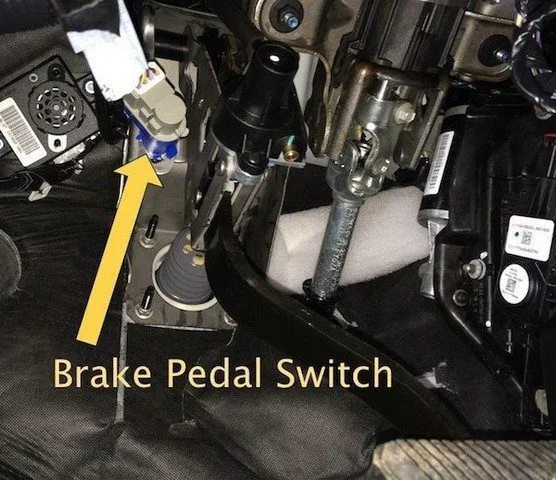
The brake light switch is located under the dashboard at the top of the brake pedal arm. The brake booster lifts the pedal to its fully extended position. The brake light switch is mounted on a crossmember support bracket directly behind the brake pedal mounting bracket. The only method to access the switch is to move the front seat back, lie on your back, and look under the dashboard. You will see a bracket housing a switch near the top of the brake pedal arm. The switch will have four or six wires.
The switch rests in the bracket so that its activation rod is in contact with the brake pedal arm when the pedal is fully extended. At this point, the switch is pressed when the brake pedal arm cuts off the power. When the brake pedal is pressed, the arm extends, turning on the switch and activating the brake lights. When the pedal is released, the arm presses the rod again to turn off the brake lights.
Diagnostic Steps
Ask an assistant to check the brake lights. Ensure they work by turning them on and off and that the bulbs are good.
If the brake lights are on continuously, the brake light switch is either misadjusted or defective. The same applies if they do not work. Move the driver’s seat back and look under the dashboard. Tighten the tabs of the electrical connector on the brake light switch and remove the connector.
With the voltmeter, check the voltage on the red wire in the connector. Place the black wire on a good ground and the red wire in the red wire terminal. You should have 12 volts; if not, check the wiring from the fuse block.
Plug the connector into the switch and probe the white wire with the pedal pressed. You should have 12 volts with the pedal pressed and no voltage with the pedal extended. If there is no voltage, replace the brake light switch. If there is voltage on the white wire with the pedal extended, replace the switch.
If the switch is of the adjustable type, check the adjustment. The switch must be in good contact with the pedal arm and fully pressed.
If the brake lights work correctly but you still have the code, check the remaining wires on the brake light switch. Remove the connector and probe the remaining wires for power. Note the location of the power wire and reinstall the connector. Back-probe the wire next to the power wire with the pedal pressed. If there is no power, replace the switch.
If the last test had power when the pedal was pressed, the switch is good. The problem exists in the wiring to the computer or with the computer itself.
Locate the computer and the STP terminal, back-probe the computer terminal to ground. If 12 volts show on the voltmeter, the computer is faulty. If there is low or no voltage, replace or repair the wiring harness from the computer to the switch.
Additional Notes
Please note that some vehicles are equipped with driver-side knee airbags. Therefore, be cautious when working around airbags.
Here is the brake pedal switch shown on a 2011 Ford F-150
What Does It Mean?
The Powertrain Control Module (PCM) of your vehicle has set this code P0504 in response to a detected failure in the brake light circuit. The vehicle’s computer monitors all circuits for abnormalities such as lack of voltage or an out-of-range condition.
The brake light switch is connected to several circuits, all of which can lead to a dangerous situation. The brake switch itself consists of two signal outputs, and if there is a malfunction in the switch, it is detected and sets this code. This is not an expensive proposition in terms of part cost or labor involved in replacement. The safety factor requires repair as soon as possible.
Symptoms
- Brake lights will stay on continuously or not illuminate when the pedal is pressed
- It will be difficult or impossible to shift out of park
- The vehicle may stall when brakes are applied during cruise control speed
- Cruise control does not engage
Potential Causes
There are several components in this circuit, each of which can sufficiently compromise the circuit to set this code.
- The most common is the brake light switch whose failure is due to wear.
- The brake light fuse will sometimes blow due to moisture in the circuit or a burned-out brake light.
- Brake light bulb failure is another cause, often due to water infiltration in the lens.
- The wiring harness, specifically loose connectors or pushed-back pins, will cause a correlation problem between the switch and the PCM.
- Finally, the PCM itself may have failed.
Diagnostic Steps and Possible Solutions
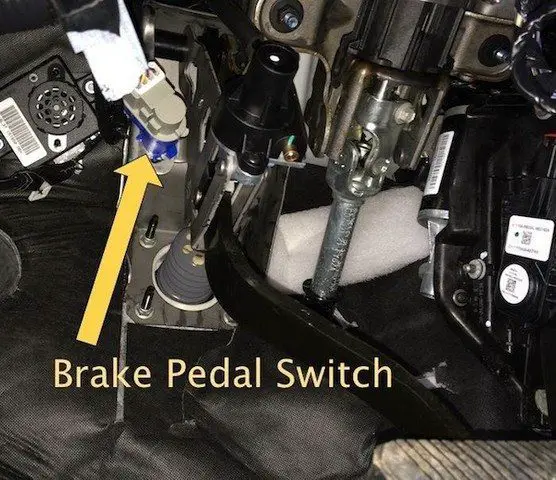
The brake light switch is located under the dashboard at the top of the brake pedal arm. The brake booster lifts the pedal to its fully extended position. The brake light switch is mounted on a crossmember support bracket directly behind the brake pedal mounting bracket. The only method to access the switch is to move the front seat back, lie on your back, and look under the dashboard. You will see a bracket housing a switch near the top of the brake pedal arm. The switch will have four or six wires.
The switch rests in the bracket so that its activation rod is in contact with the brake pedal arm when the pedal is fully extended. At this point, the switch is pressed when the brake pedal arm cuts off the power. When the brake pedal is pressed, the arm extends, turning on the switch and activating the brake lights. When the pedal is released, the arm presses the rod again to turn off the brake lights.
Diagnostic Steps
Ask an assistant to check the brake lights. Ensure they work by turning them on and off and that the bulbs are good.
If the brake lights are on continuously, the brake light switch is either misadjusted or defective. The same applies if they do not work. Move the driver’s seat back and look under the dashboard. Tighten the tabs of the electrical connector on the brake light switch and remove the connector.
With the voltmeter, check the voltage on the red wire in the connector. Place the black wire on a good ground and the red wire in the red wire terminal. You should have 12 volts; if not, check the wiring from the fuse block.
Plug the connector into the switch and probe the white wire with the pedal pressed. You should have 12 volts with the pedal pressed and no voltage with the pedal extended. If there is no voltage, replace the brake light switch. If there is voltage on the white wire with the pedal extended, replace the switch.
If the switch is of the adjustable type, check the adjustment. The switch must be in good contact with the pedal arm and fully pressed.
If the brake lights work correctly but you still have the code, check the remaining wires on the brake light switch. Remove the connector and probe the remaining wires for power. Note the location of the power wire and reinstall the connector. Back-probe the wire next to the power wire with the pedal pressed. If there is no power, replace the switch.
If the last test had power when the pedal was pressed, the switch is good. The problem exists in the wiring to the computer or with the computer itself.
Locate the computer and the STP terminal, back-probe the computer terminal to ground. If 12 volts show on the voltmeter, the computer is faulty. If there is low or no voltage, replace or repair the wiring harness from the computer to the switch.
Additional Notes
Please note that some vehicles are equipped with driver-side knee airbags. Therefore, be cautious when working around airbags.
Here is the brake pedal switch shown on a 2011 Ford F-150