
P042F Exhaust Gas Recirculation Control A Stuck Closed
What does it mean?
This is a generic powertrain diagnostic trouble code (DTC) that applies to OBD-II vehicles. This may include, but is not limited to, vehicles from Ford, Chevrolet/GM/Cummins, Dodge/Ram, Isuzu, Pontiac, Toyota, BMW, Mercedes, etc. Although generic, the exact repair steps may vary depending on the year, make, model, and powertrain configuration.
If your vehicle has stored a P042F code, it means the Powertrain Control Module (PCM) has detected a problem with the Exhaust Gas Recirculation (EGR) valve control system.
In the case of P042F, the valve appears (to the PCM) to be stuck in the closed position. The designation A applies to a particular position or step of the lowered EGR valve control system, which is explained below.
The EGR system is responsible for allowing the engine to consume some of the unburned fuel from the exhaust system. The EGR system is necessary to reduce harmful levels of nitrogen oxides (NOx) created as a byproduct of gasoline and diesel engine operation.
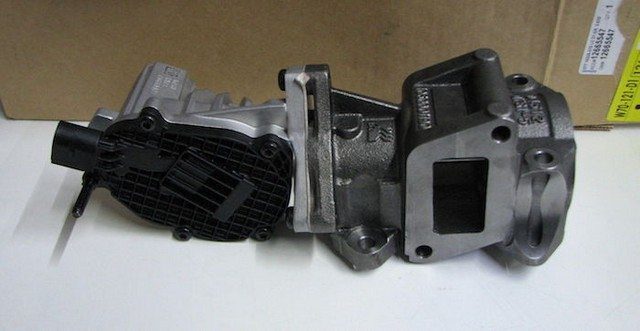
The focal point of the EGR system is an electronically controlled valve (EGR) that opens to allow exhaust gases to re-enter the engine’s intake. The PCM uses input signals from the Throttle Position Sensor (TPS), Vehicle Speed Sensor (VSS), and Crankshaft Position Sensor (CKP) to determine when conditions are suitable for opening/closing the EGR valve.
Vehicles that exhibit this type of code are equipped with a lowered EGR valve. The lowered EGR valve operates in stages depending on the degree of throttle opening, the amount of load placed on the engine, and the speed at which the vehicle is moving.
In some models, the position of the EGR valve piston is also monitored by the PCM. If the desired position of the EGR valve (as commanded by the PCM) is different from the actual position, a P042F code will be stored and a Malfunction Indicator Lamp (MIL) may illuminate. Other vehicles use data from the Manifold Absolute Pressure (MAP) sensor and/or the Differential Pressure Feedback EGR (DPFE) sensor to determine whether the EGR valve is in the desired position (or not). Most vehicles will require several ignition cycles (with a failure) before the MIL illumination occurs.
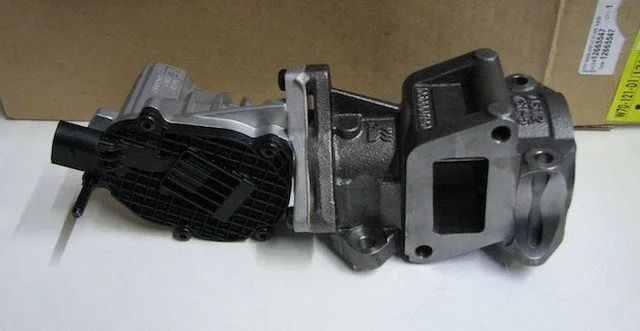
Photo of the Exhaust Gas Recirculation (EGR) Valve:
P042F EGR Valve
How severe is this DTC?
Since the closed position of the EGR valve does not present any serious issues from a driving perspective, a P042F code can be addressed as soon as possible.
What are some of the symptoms of the code?
Symptoms of a P042F fault code may include:
There will likely be no exposed symptoms with this code. Slightly decreased fuel efficiency.
What are some of the common causes of the code?
Causes of this P042F code may include:
- Faulty EGR valve
- Faulty EGR control solenoid/valve
- Open or shorted wiring/connectors in the EGR control circuit
- Faulty DPFE sensor
- Faulty EGR valve position sensor
- PCM malfunction or PCM programming error
What are the troubleshooting steps for P042F?
A diagnostic scanner, a digital volt/ohmmeter, and a reliable source of vehicle information are among the tools needed to diagnose a P042F code.
Visual inspection of all cables and connectors related to the EGR system is an ideal precursor to diagnosing a P042F code. Repair or replace any corroded or burnt components as necessary.
Continue by connecting the scanner to the diagnostic port and retrieving all stored codes and freeze frame data. Note all of this as it will prove useful if the P042F is an intermittent code. Now, clear the codes and test-drive the vehicle to see if the code resets.
If the code resets, connect the scanner and observe the data stream. Check the desired EGR position (usually measured as a percentage) and the actual EGR position, as shown on the data stream display. Within a few milliseconds, they should be identical.
The DPFE and MAP sensors should reflect that the EGR valve has opened and/or closed (as desired). If MAP sensor or DPFE sensor codes are present, they may be related to P042F and should be treated as such.
If the desired EGR position differs from the actual position, follow the manufacturer’s recommendations for testing the EGR actuator solenoids with the DVOM. Lowered EGR valves may use multiple solenoids to affect the full operating spectrum of the EGR system.
If the EGR system for the vehicle in question uses a DPFE sensor, follow the manufacturer’s recommendations for testing it. Connector pinout charts and vehicle wiring diagrams found in your vehicle information source will facilitate testing. Replace faulty sensors as necessary and retest the system.
The DVOM can be used to test individual circuits between the PCM connector and the EGR valve connector. All associated controllers must be disconnected from the circuit before testing begins.
Once repairs are made, allow the PCM to enter readiness mode before assuming they were successful.