
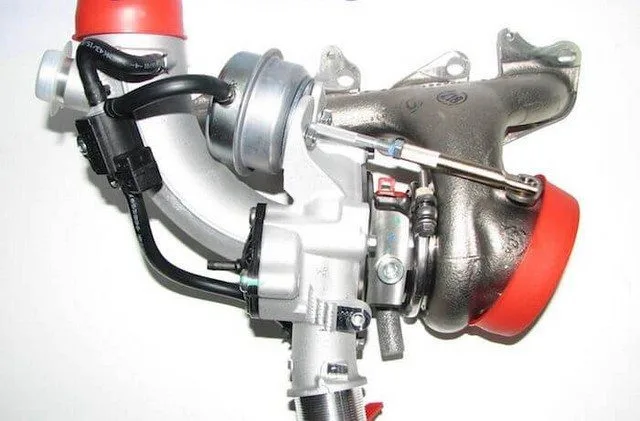
What is the P0299 code?
The OBD-II trouble code P0299 is a generic powertrain code that indicates a turbocharger or supercharger underboost problem. The engine control module (PCM/ECM) detected that the boost pressure is lower than the expected value by at least 4 psi for 5 seconds.
Symptoms of the P0299 code
- 📛 Check engine light illuminated (MIL)
- ⚡ Significant loss of engine power (“limp mode”)
- 🌫️ Black smoke from the exhaust (on diesel engines)
- 🔊 Whistling or abnormal noise coming from the turbocharger
- ⛽ Increased fuel consumption
- 🚗 Poor acceleration and sluggish response
Possible causes of the P0299 fault
The causes of a P0299 code are numerous and mainly concern the boost system:
- Air leaks in the intake circuit (pipes, connections, intercooler)
- Faulty turbocharger (seized blades, bearing wear, excessive axial play)
- Faulty MAP sensor (boost pressure sensor)
- Defective or stuck wastegate valve or dump valve
- Wastegate control solenoid out of service
- Clogged or obstructed air filter
- Seized variable geometry turbo (VGT) actuator (on some turbos)
- EGR system problem or insufficient engine oil pressure
Diagnosis and solutions for the P0299 code
🔧 Recommended diagnostic steps
- Check for other present trouble codes and address them first.
- Visually inspect the intake circuit to identify any air leaks (cracked pipes, loose clamps).
- Check the condition of the air filter and replace it if necessary.
- Using an OBD-II diagnostic tool, check the MAP sensor data in real time.
- Test the operation of the wastegate and its control solenoid.
- Inspect the turbocharger for any abnormal play or damage.
🛠️ Common repairs
- Tighten or replace faulty intake pipes.
- Clean or replace the air filter.
- Replace the faulty MAP sensor.
- Unstick, clean, or replace the wastegate or dump valve.
- Replace the turbocharger if it is damaged.
Affected models and specificities
This code is common on many brands:
- Ford (EcoBoost, Powerstroke on F-150, Explorer, Escape): Check the wastegate solenoid and VGT actuator.
- VW / Audi (A4, Golf, Passat, Q5): Often related to the dump valve (N75) or leaks in the circuit.
- Chevrolet / GMC (Cruze, Sonic, Duramax): Check the turbo resonator (common failure).
- BMW, Mercedes, Dodge, Ram, Hyundai are also frequently affected.
💡 Tip: Always consult the Technical Service Bulletins (TSBs) specific to your vehicle to identify known manufacturer issues.
Conclusion and call to action
The P0299 code should not be ignored. A loss of boost pressure puts abnormal strain on the engine and can lead to more serious and costly damage. Although some simple checks can be done yourself, accurate diagnosis often requires the expertise of a professional and the use of specific tools.
🧰 Need help diagnosing or repairing your P0299?
Join our automotive support community on our forums! Ask your questions for free and benefit from advice from mechanics and enthusiasts to solve your turbocharger problem.
Share your experience or ask your question now!