
What Does It Mean?
This diagnostic code (DTC) is a generic powertrain code, meaning it applies to vehicles equipped with OBD-II. Although generic, specific repair steps may vary by brand/model.
The OBD II fault code P0287 is described as Cylinder 9 Contribution/Balance. Essentially, this code indicates that cylinder number nine in the firing order is experiencing a fuel-related issue.
It is also a generic code, meaning it is common to all manufacturers. The reference is the same; however, the manufacturer of a specific model may have encountered a defective part or installation error.
Always access online Technical Service Bulletins (TSBs) for your specific vehicle year and model. Look for related TSBs and the factory-recommended repair procedure.
The Powertrain Control Module (PCM) monitors the power output of each cylinder by comparing the acceleration or increase in crankshaft speed during the power stroke of each cylinder.
When one or more cylinders provide less power than the rest of the cylinders, the P0287 fault code is set.
While the PCM performs this test to determine if a fuel injector is functioning correctly, an automotive technician can perform a similar test to locate internal engine problems. By pulling one spark plug at a time while the engine is running, they note the RPM drop on each cylinder.
All cylinders should be within 5% of each other. Any cylinder with a lesser RPM drop should be repaired. Both tests are similar in that they both compare crankshaft RPM.
This is an issue that should be resolved as soon as possible to avoid any potential damage.
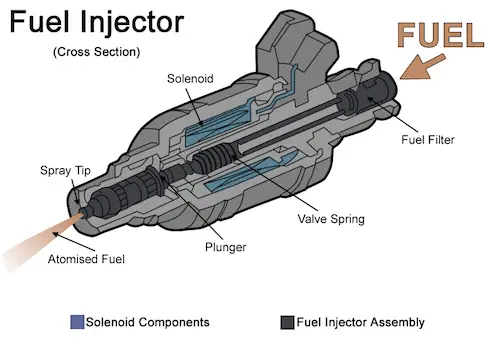
Cross-section diagram of a typical automotive fuel injector

Symptoms
Symptoms displayed for a P0287 code may include:
- Check engine light on and P0287 code set
- Reduced power and acceleration
- Rough idle
- Decreased fuel economy
Causes
Based on my experience, this code refers to less power produced in cylinder number nine. An electrical problem would set a code for a high or low voltage situation for that injector.
A lack of fuel for cylinder number nine is the most likely cause. The injector may have completely failed or it is dribbling a small amount of fuel rather than the normal cone spray. This would be due to dirt or contamination of the inlet filter on the injector.
- Possible faulty electrical connector on the fuel injector due to terminal corrosion or pushed-back pins
- Dirty or clogged fuel injector
- Fuel injector failure
Diagnostic and Repair Procedure
Inspect the electrical connector on the fuel injector. Look at the harness side for corrosion or pushed-back pins. Check the injector for bent pins. Correct any defects and add dielectric grease to the connector terminals and reinstall the connector.
Start the engine. Use a long screwdriver with the handle to your ear and the blade on the injector, and listen for the characteristic “clicking” noise indicating it is operating. No noise means either it is not powered or the injector has failed.
Using a wire probe on a voltmeter, probe the red power wire at the injector. It should indicate battery voltage. If no voltage is present, there is an open in the wiring between the injector and the fuel pump relay. If voltage is present and the injector is operating, it is likely clogged and needs cleaning.
Purchase a “direct fuel injector flush kit” from an auto parts store. It consists of a pressurized can of injector cleaner and a hose fitting for the injection rail.
Remove the fuel pump fuse from the main fuse and relay box on the driver’s side fender.
Start the engine and let it run until the fuel pressure is depleted and it stalls.
Pinch the fuel return line using a needle-nose vise grip.
Remove the Schrader valve from the fuel pump test port on the fuel rail. Install the hose onto the test port.
Thread the can of injector cleaner onto the hose and wait a few seconds for the pressurized cleaner to fill the injection rail. Start the engine and let it run on the cleaner until it stalls.
Remove the cleaning hose from the test port and reinstall the Schrader valve. Remove the vise grip from the return line and install the fuel pump fuse.
Clear the fault code and reset the PCM using a common code reader.
Start the engine. If the rough idle continues and the code returns, replace the fuel injector.